





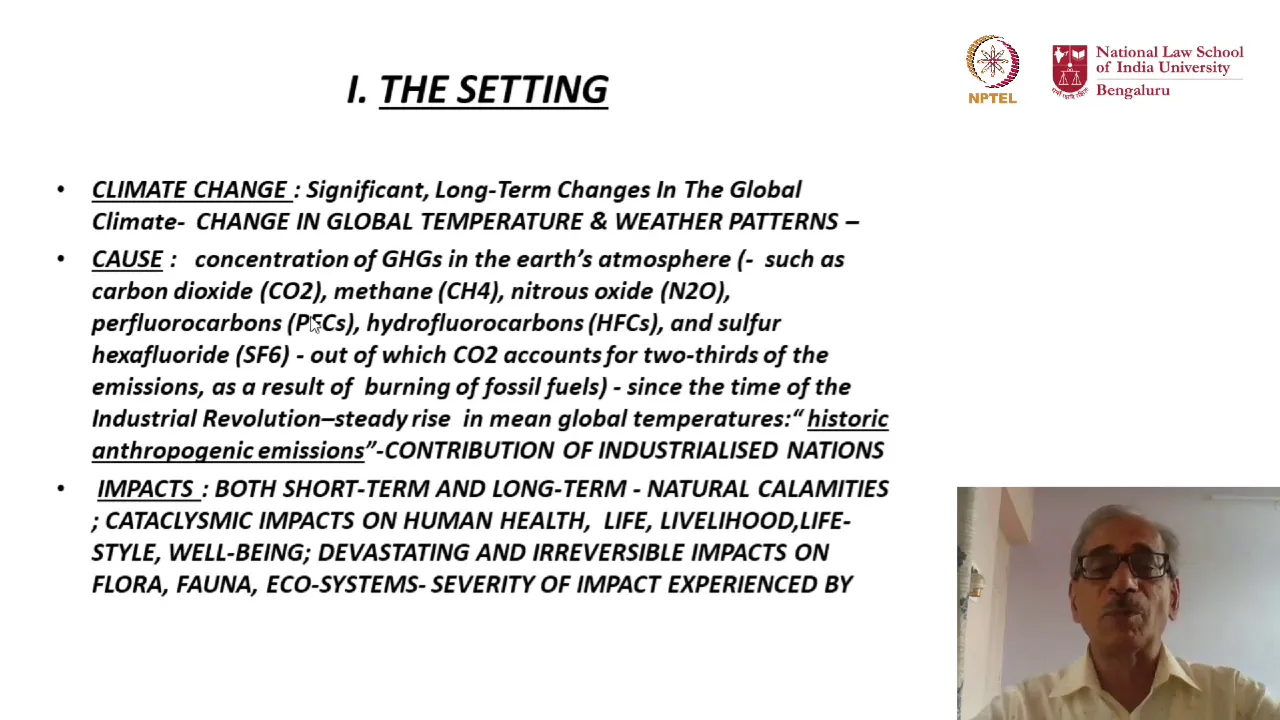



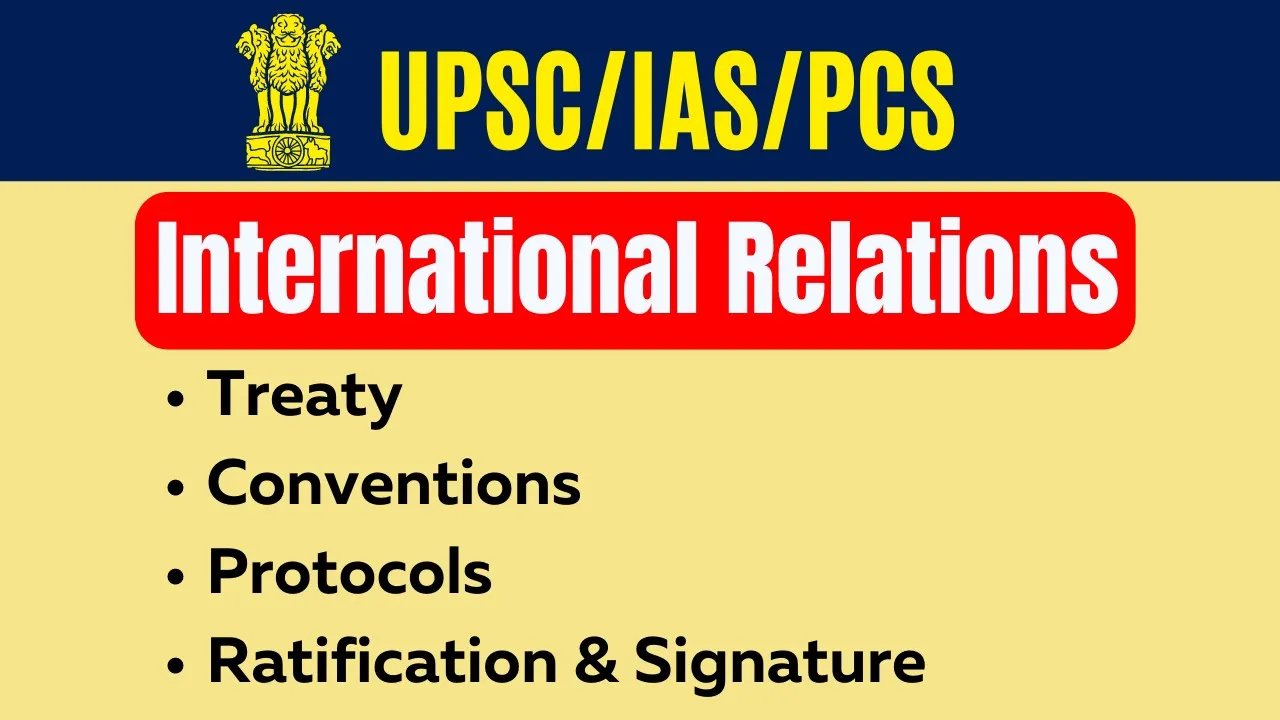


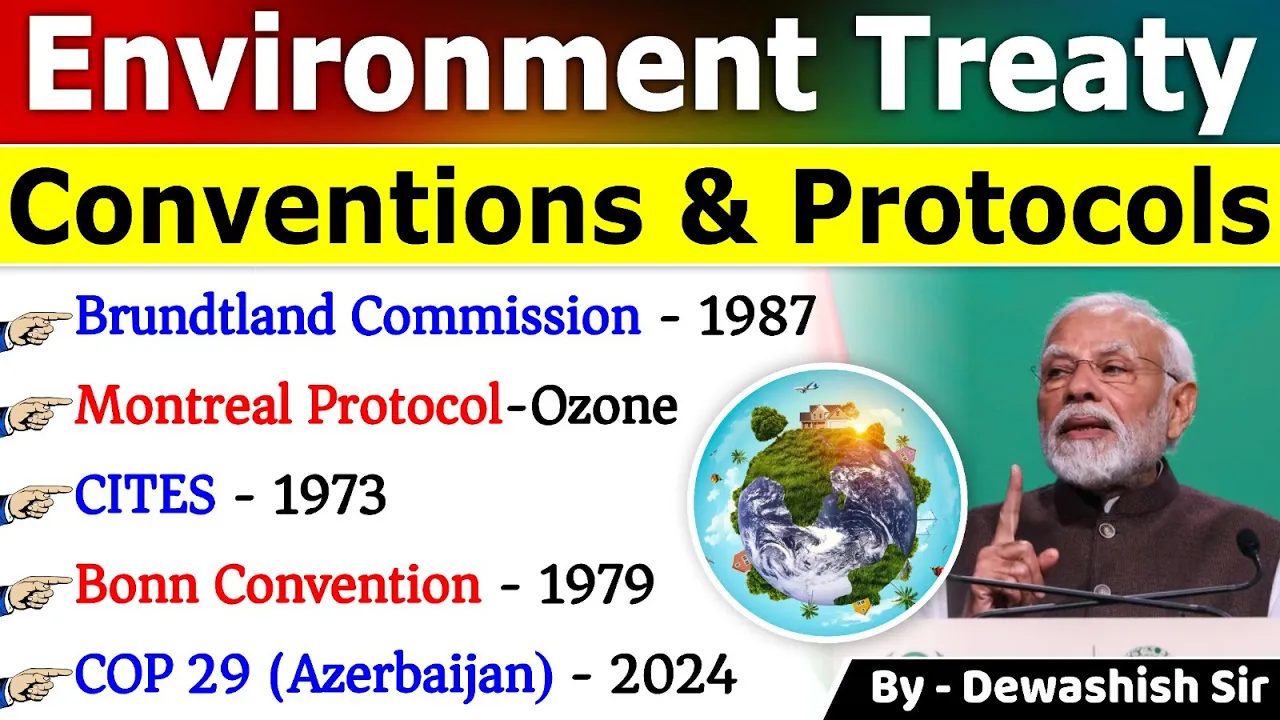



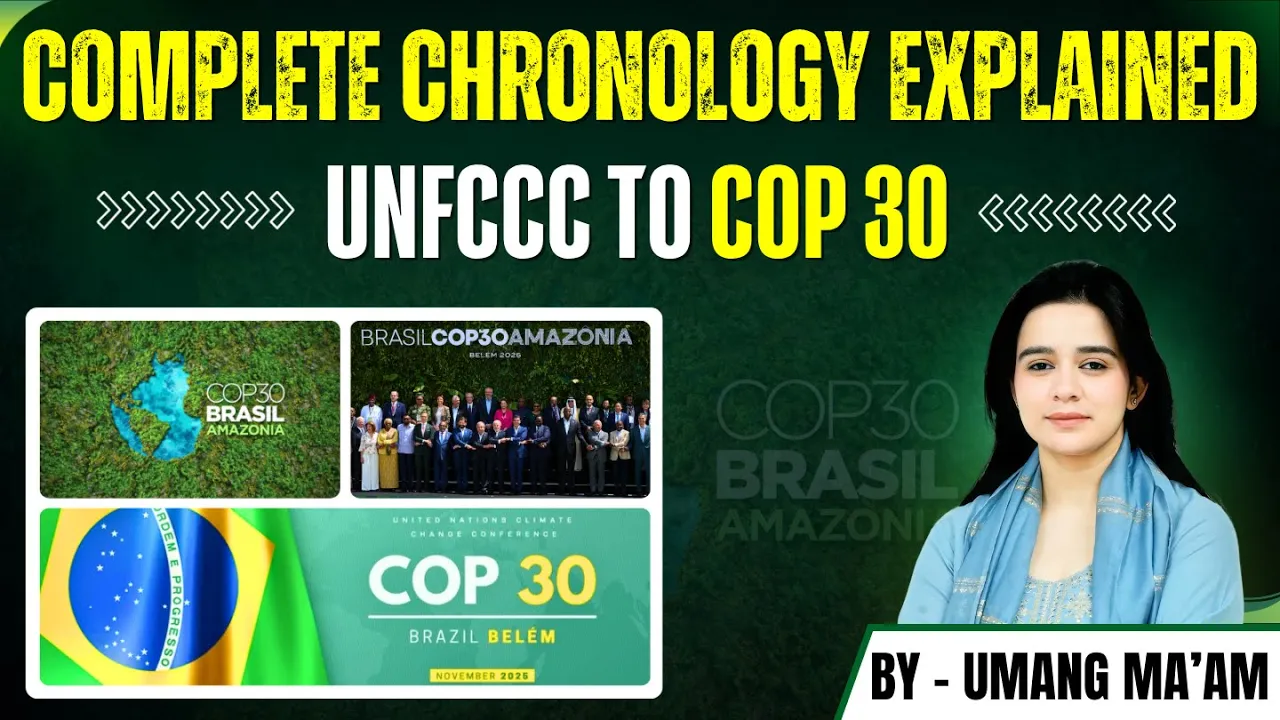










International environmental conventions are legally binding agreements that address global environmental challenges through coordinated international action. The Montreal Protocol (1987) successfully phased out ozone-depleting substances like CFCs through amendments (London, Copenhagen, Montreal, Kigali), demonstrating effective international cooperation. The UNFCCC, established at the 1992 Rio Earth Summit, provides the framework for climate change action, with the Paris Agreement (2015) introducing Nationally Determined Contributions (NDCs) and the principle of Common but Differentiated Responsibilities (CBDR), which assigns greater responsibility to developed countries based on their historical emissions. The Kyoto Protocol (2005) set binding emission reduction targets for developed countries through mechanisms like Emissions Trading, Clean Development Mechanism, and Joint Implementation. These conventions collectively aim to limit global temperature rise to 1.5-2°C above pre-industrial levels, with developed countries committing to provide financial support (e.g., $100 billion annually) to developing countries for climate action.
Environmental Conventions Part 2 | UPSC CSE Prelims Foundation | Day 11
Added:welome friends on behalf of all India Civil Service coaching Center UPS CC Foundation because part one part two part friends remember that so up to so that is where why we are studying conven convention listen to me properly convention this is for dep for oone diation Rio Earth Summit is a conference the conference for environment United Nations framework convention on climate change United Nations convention for combating desertification United Nations convention for biodiversity but understand this un FC for climate change soate CH against science andology geography West Tropic of Capricorn VI convention VI convention VI is a place so convention 198 198 it is a international effort to protu the ozone layer so but not include legally binding reduction so B guelin convention so B protocol and substances that deplete the layer the Montreal protocol so Montreal protocol is for the substances that deplete the ozone layer1 Montreal 201 Amendment to the Montreal Montreal protocol they are facing down the production and consumtion of H f c so Montreal protoc CFCF alternate for CFC so cfcc PH down the production and consumption of hfc and avoid much of the projected global increase and Associated climate change so climate change okay London Amendment Amendment montal Amendment the so London am CFC andb am face in developed countries so facing out of this CFC and this methal chloroform developed country 2005 develop okay so Copenhagen Amendment hydr hcfc CFC Chlor pH complete pH out in 1996 in developed countries BR 199 19911 1991 c91 200 2024 500 19 at 1991 Lev 1950 faing out okay friends so mtal Amendment 1997 the face out of hcfc in developing countries and me Brom both developed and developing countries in 2005 201 developed country developing country5 2015 and trade 2004 Chlor dep remember friends Al CFC is a global warming gas amendment to Montreal until I have divided into three classes okay so government again Ministry of environment Forest andate CH interational day for the preservation of global conception of 8 8% of depleting buttal so that you have to understand and 2018 United Nations report andos concentration would return to 1980 values so8 by so return to 1980 values but byit United Nations conference on environment and development so u n e and d e okay friends R is a place in Brazil so R city is there Rio 10 Rio okay friends convention on climate change other convention is biological diversity comic R declaration Agenda 21 and Forest principles Agenda 21 21 principles Forest principles principle common but differentiated responsibility responsility so common responsibility but differentiated responsibility ma'am common but differentiated responsibility but differentiated responsibility thep clate in the common but differentiated responsibilities so developed countries will have more responsibility developing countries will have less responsibility so this is both will have the responsibility but it is differentiated so common but differentiated responsibility okay this will will be helpful for the environmental production and sustainable development Economic Development equity and environmental production so stainable development like Equity so equality is giving two one apple for each development suain sustainable development so intergenerational parity and intragenerational parity definition inter and inational Par development development sustainable development it ising and 21 longterm progress 2 and no Nation alone can together no Nation alone can together we can okay friends so this and next United Nations conference on sustainable development United Nations conference on sustainable development 202 22 June 2012 to Mark the 20th anary so7 2002 World Summit of sustainable development plus 10 okay friends so sustainable agriculture agriculture intensive crops system of rication suain now coming to the most important convention unfccc United Nations framework convention on climate change bman inmany UNC 197 members almost whole world M automatically all members are automatically considered member of the unfccc unfccc has one all member states of the United Nations United Nations members Conference of parties okay meeting c c 2 3 conference decision decision develop 13 road map andali action plan techology techy 14 okayy cop5 2009 30 billion in fast Start Finance but C 16 2010x green climate fund important friends cimate fate 2010 cment tooc 1850 18% compared to 199 levels important 2013a framework for and small and people mostly it will be developed developing countries and underdeveloped countries and 2015 again Paris agreement very important one so Paris agreement devop develop gas agreement not only developed so C principle of common butti responsibility intend nationally determined contribution DC nationally determined contribution deted contri so determined contribution global Global stock develop develop they are emitting a lot of carbon dioxide they have to give it to the developing countries so1 billion every year rich countries Okay C 26 202 zero Target by 2070 car so uh uh so whatever you emitting you are observing so or you sinking so it is becoming Net Zero so Net Zero and also PH down of based power based powery hro small Hydro power wind energy to 2022 G Global Shield financing facility Global Shi financing so G7 is giving us finances to protect us from from the disas carbon Market Mar mechanism having okay okay and or 400 of carbon diox industry uh say textile industry okay textile industry okay okay okay manufacturing industry IND so I'm able to fund the textile industry soex industry is very happy they also gaining money and they will also promote carbon reduction through this buying of credits so carbon credit mechanism okay but carbon credit mechanism is very very important for you carb okay friends longm low development so that you have to remember protocol it is the first International treaty said legally binding so Kyoto Protocol legally binding was adopted 25 years7 agreement develop parement so Paris agreement is now the agreement for climate change okay so Kyoto Protocol it is based on the principles and provisions of the convention and follow its annexed based structure uh one anex a anex one anex a anex b oneop they have to fund the countries sorry agreement okay friends so ano protocol is this sets binding emission targets for industrialized countries so anex B sorry it is anex B not anex anex industrial okay friends and it only binds developed countries but differentiated responsibility and respective capabilities respective capabilities responsibility okay 5% okay so add up to an average 5% emission reduction compared to 1990 so 1990 2008 to 2012 T this is the first Target time first commitment period in the period so that is the target level Market based gas interal trading will show so emission trading mechanism the countries that emit less than they are allowed to can sell this amount to Industrial trading mechm develop clean development mechanism developed country veled country developing countries developing countri going to developing countries and reducing their emission or developing countries coming to this developed country and reducing theion developed and developing countries that emit less than they are allowed or can sell this amount to industrialized countries so develop in countries they are selling the credit or the certificate to developed country developed country going to this developing country or funding the developing country and reducing their emission and Joint implan indmar frop so that is joint implementation both uh clean development mechanism and Joint Implement implementation countries can invest in emission reduction project and gain credit points so joint implementation clean development mechanism and emission trading mechanism it trading methods in the method m friends remember that okay advc Advanced so protocol did not comp okay the United State 1998 so us is not a member but Paris agreement 194 parties they are required to reduce their emission but nationally determined contribution ultimate 2 so that you have to understand and okay commod developed country 5% ruction 1990 20123 to 2020 amendment to 2013 202 list of G to be reported and several amendments to several articles of the implementation okay so protocol commitment period green gas okay Global stock taking it's a periodic review mechanism established under the Paris agreement so Global stock take is under Paris agreement eight steps to keep the global temperature rise within the Ambit of 1.5° so 2° 1.5 you know sorry and non-carbon dioxide we have to reduce substantially non-carbon dioxide emission like methane emissions uh the glob meth also known as c21 legally binding okay Kyo protocol Paris agreement Paris agreement is legally binding 201's first comprehensive climate agreement both developed country developing and parement important global warming gas and supporting countries tempure fining special goal shares soate Rel terms zero emission what is net zero emission I already told you Z andb neutrality off off carbon offsetting and offsetting usually involves paying another party someone else to save emiss and carbon foodprint measures the amount of carbon dioxide what is carbon foodprint carbon credits ctif so Financial mean financing mechan okay adaptation F green environment fund it is a facility it is a organization okay in the organization special climate change fund least developing developed countries okay andage fund okay so funding methods global environment facility it is a instrument okay conven convention stockh conven so green climate fund special climate change fund least developed countries fund least developed okay and Los and Dage standing committe on finance organization to assist all the countries in carrying out it function regard to the convention's financial framework so Financial frame Chate f so remember andage requirement so current state 20 30 emission must be 43% below 2019 2ow at least fa hold rise within 1.5° but daily.
Indonesia so these are the event which is telling us we have to do something for the climate change we have to reduce this climate change and Rec 2 28 Okay C 283 Global renewable and Energy Efficiency pledge okay the Los and damage okay okay friends and global global renewable and energy efficienc renable triple nuclear energy nuclear enery is renewable so this is what you have to understand and so that leadership group for industry transition and Global River Cities National mission for leading person in the in the particular organization Global River Cities countries Australia USA India and Japan so climate work we will work for the reducing this climate change India is the third largest emit sois agreement T of carbo bil mostly the coal natural gas thecity solar Hydro nuclear electricity so that is what we are doing and Africa India also supporting Africa groups in the world 25y so ESP hyro sorry foraster resure infrastructure and India along with UK and Australia infrastructure for resilient Island States so will also be part of green grits initiative so green grits ini we have national action plan on climate change so napcc so unfc nacc National Action Plan onate conduct of Nationwide public awareness of new and renew and it was launched in 20 and thermal so primary a GD parity and with coal based thermal power by 2030 friends GD parity now coal National mission for enhanced Energy Efficiency Ministry ofy conservation act so friends okay National solar Mission National mission for enhanced efficiency sustainable habit Urban settlement sh development sustaining theay ecosystem National mission for GRE sustainable agriculture friend strategic knowledge for clate soal mission on sustainable development Ministry of Water Resources the mission for sustaining the Himalayan ecosystem Science and Technology Department green India Mission Ministry of environment sustainable agriculture Ministry of Agriculture strategic knowledge again Ministry of science and technology is not very important okay solar power 12.5% small h renewable renewable energy sources okay bio gas Gober gas.
2.69 201 okay Sor okay so sorry.
2.
okays 24 electricity consumtion so question which one of the following is associated with the issue of control and faing out which one of the following is associated with the issue of control and phasing out of the use of ozone depleting substances so protocol it is Montreal protocol consider the following statements under ramsar convention it is mandatory on the part of the government to protect and conserve all the wetlands in the territory of India is it mandatory let's see the Wetland rules 20110 were framed by the government of India based on the recommendations of ramar convention Wetlands rules also ENC compose the drainage area or catchment regions at of the rainforest and tropical forest are the lungs of the earth then Wetlands function as its kidneys kidneys it will maintain the sedimentation balance and soil stabilization so so if a wetland of international importance is brought under the montrex record what does it imply changes and ecological character are occurring likely so a consider the following okay this is your homework consider the following Wetlands Confluence of rivers okay so you will be telling me the right answer okay with reference to the I and sites sites which of the following is correct you I is an organ of United Nation and sites is an international agreement correct are you United Nations organization okay friends iucn runs thousands of field projects around the world to better manage natural environments correctly sites is a legally binding states have joined it but this convention does not take place of national laws okay climate neutral un FCC secretary okay Global Alliance for smart agriculture Paris membership not not create any binding legally binding India was instrumental in the okay CFC chlorocarbon known as the answer is all the TU okay so plastic form elect compon but not in the tires so this is wrong so answer is 1 34 only okay the lamp is switched on the mercury in the lamp causes the emission of ultraviolet radiation so again anex one countries certifi devop protocol so three is right so answer should be this or this or this so let's see in the next class 2016 question sdg were first proposed in 1972 by a global Think Tank called the club of from yes the sustainable development goals are to be achieved by 2013 yes okay so uh two is correct but 1972 first proposed in 197 no no UNCC meeting inis the agreement was signed by all the members and it will go into effect in 2017 the agreement aims to limit the greenhouse gas emissions not not exceed 2° C or even 1.5° C and developed countries acknowledged their historical responsibilities and bombing and committed to donate thousand 100 so answer is all members of the countries 2017 okay so answer is uh two only okay intended nationally determined contribution okay is sometimes seen in the news in the context of plan of action outlined by countries to combat climate change in the indc so we have seen Vienna convention ozone depletion unfccc convention OC Paris agreement green climate funds so with that note I'm leaving here so
Up Next
Climate Policy Failure: The Exxon Factor and Lost Opportunities
@ClimateTown
625.9K views•2021-01-21

Life in Biosphere 2: Sustainable Ecosystems & Human Survival
@TED
334.9K views•2009-06-16
Microplastics Everywhere: How Plastic Impacts Our Lives
@TEDx
100.9K views•2018-05-08
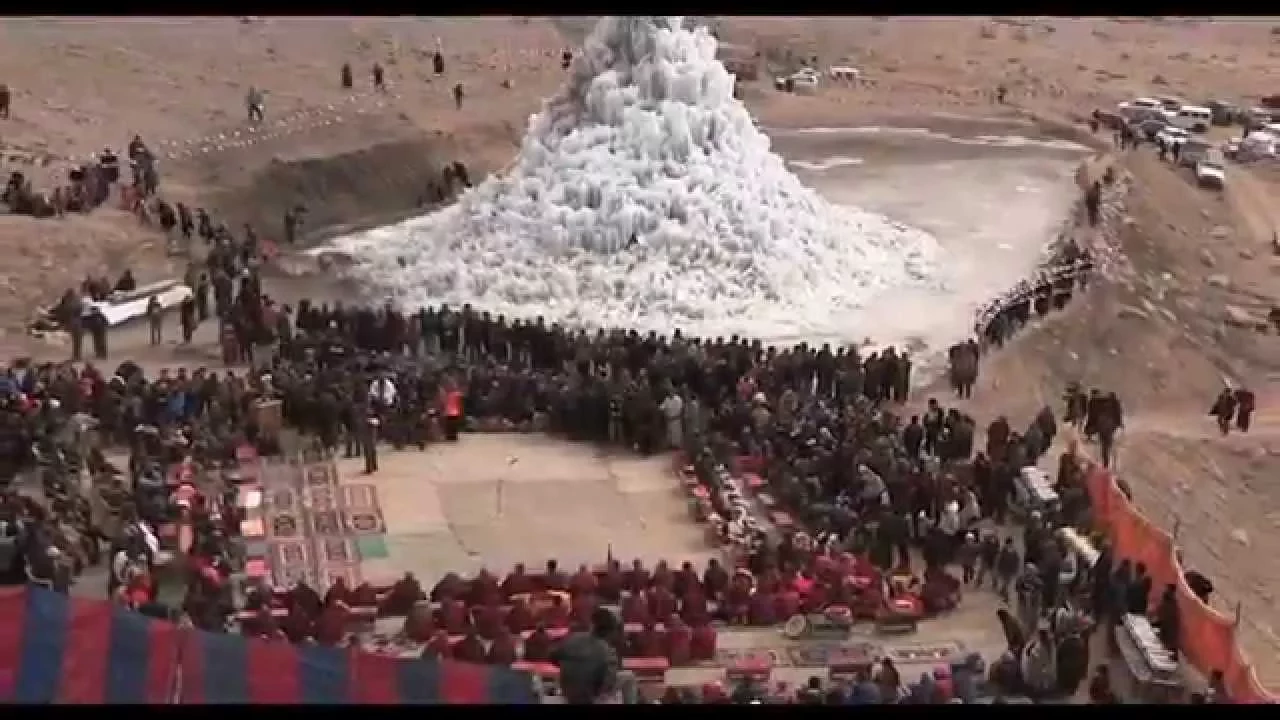
Ice Stupa Artificial Glaciers: Solving Ladakh's Water Crisis
@SonamWangchuk66
3.2M views•2015-05-03
Related Study Plans & Knowledge Roadmaps
Structured learning paths in Environmental Science