















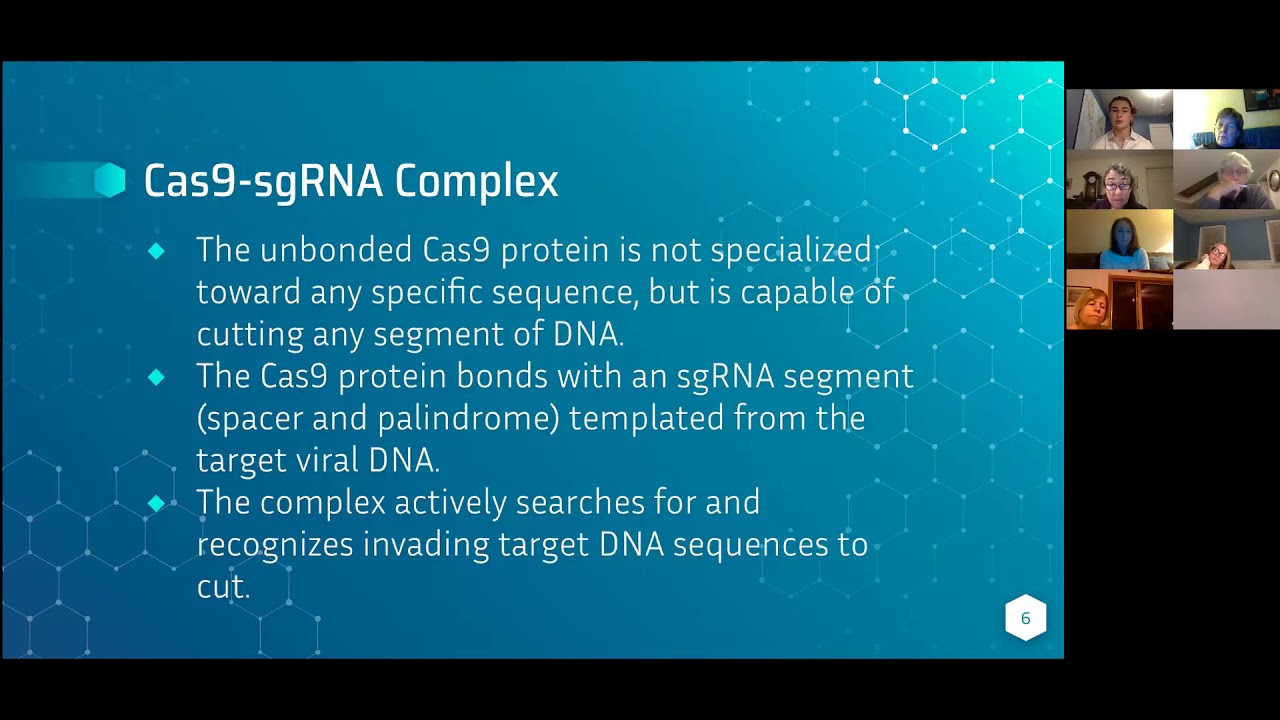

CRISPR-Cas9 is a revolutionary gene editing technology derived from bacterial adaptive immune systems, where the Cas9 enzyme, guided by RNA, can precisely cut DNA at specific locations, enabling scientists to edit genomes with unprecedented speed and accuracy; this technology, first described by Jennifer Doudna and colleagues in 2012, has transformed genetic research and holds promise for treating genetic diseases while raising important ethical considerations about its applications.
CRISPR Systems: Nature's Toolkit for Genome Editing | Jennifer Doudna Lecture
Added:The structure and function of DNA and RNA, including complementary base-pairing rules.
The central dogma of molecular biology (how genetic information flows from DNA to RNA to proteins).
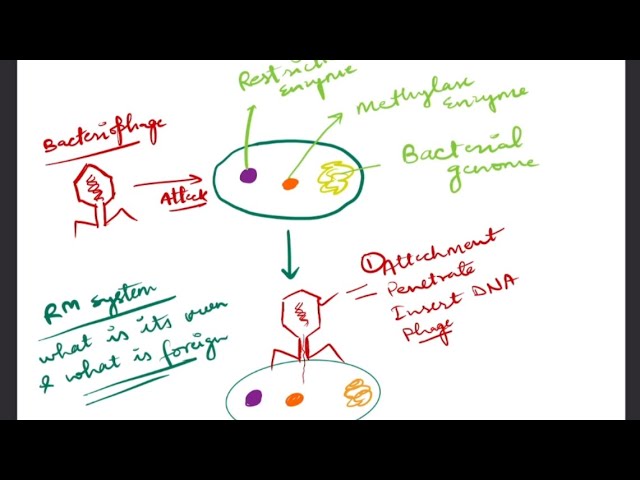
Basic mechanisms of bacterial immunity against viral infections (bacteriophages).
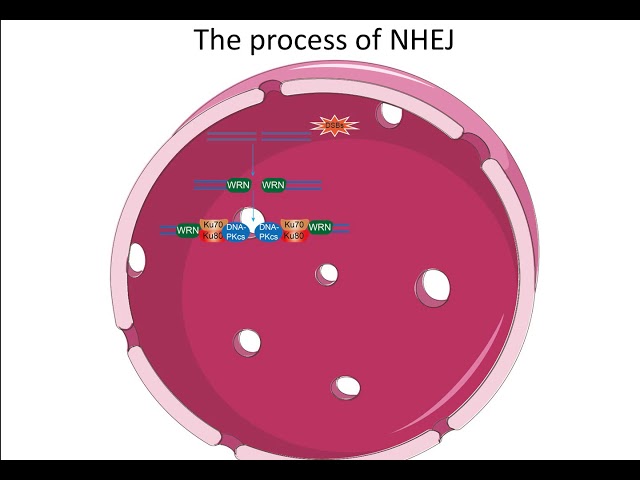
Standard DNA repair pathways in eukaryotic cells, specifically Non-Homologous End Joining (NHEJ) and Homology-Directed Repair (HDR).
Advanced genome editing technologies, such as base editing and prime editing, which do not require double-stranded DNA breaks.
Delivery methodologies for CRISPR therapeutics, including lipid nanoparticles (LNPs) and viral vectors (AAVs).
The bioethics and regulatory landscape surrounding somatic vs. germline genetic modification in humans.
Applications of CRISPR beyond therapeutics, such as gene drives for pest control, crop engineering for climate resilience, and diagnostic tools like SHERLOCK.
21.8K views376likes1:05:25Original Release: 2018-02-01
welcome everyone I'm senior Provost Lori weingartz and it's my pleasure to welcome you all to the Carnegie Mellon University's Dickson Prize award presentation and lecture today we're honored to have dr. Jennifer Doudna our Dickson Prize in science recipient on campus at Carnegie Mellon she'll be giving her lecture entitled CRISPR systems nature's toolkit for genome editing in a short while but first some thank yous are in order to Professor Emeritus guy berry and his colleagues on the Dickson prize committee thank you for making such an excellent choice in the selection of dr. Doudna as this year's honoree also thank you to dr. Aaron Mitchell of our Biological Sciences Department who brought dr. down his candidacy to the table dr. Mitchell who you will hear from shortly as serving as our faculty host for her visit I'd also like to take this opportunity I believe to recognize dr. Michael McQuaid is he with us today my trustee I was hoping he could join us ah there you are welcome he's joining us and also I want to he's one of our port of trustee members of our board of trustees so welcome and also I want to thank everyone else for joining us today we have a standing-room-only crowd so welcome everybody is one of Carnegie Mellon's most important scientific events of the year the Dickson Prize lecture honors leaders in science for their accomplishments and marks important trends and New Directions of scientific thought the Dickson Prize in science at CMU is the sister award of the Dickson Prize in medicine at the University of Pittsburgh both awards were established by dr. Joseph Dickson who was a prominent Pittsburgh surgeon and his wife Agnes Fisher Dickson with this prize dr. and mrs. Dickson hoped to bring as much prestige and honor as possible to the two universities and to the city of Pittsburgh Carnegie Mellon has bestowed the Dixon prize on leading scientist since 1970 and each year we've been able to bring some of the country's most forward-thinking scientists to our Pittsburgh campus scientific fields have changed dramatically over those forty eight years through the Dixon prize CMU has consistently held a front-row seat during this area of era of transformation which is a true honor for our faculty for our students and the entire university community the Dixon prize is a wonderful opportunity for Carnegie Mellon to recognize leaders in diverse areas of science whose work has made significant contributions we especially consider the work of those investigators whose research relates to our complements programs at Carnegie Mellon the Dixon Prize recipient where you're honoring today dr. Jennifer Doudna is here to give us a view into her work and the question it poses both for today and for the future dr. Doudna is a professor at the University of California at Berkeley in the department of molecular and cell biology as well as the department of chemistry and she's a member of the Howard Hughes Medical Institute and the Lawrence Berkeley National Lab Doudna and her colleagues rocked the research world in 2012 by describing a new broadly applicable way of editing the DNA of any organism using an RNA guided protein found in bacteria this discovery reduced the time and work needed to edit genomic DNA this technology called CRISPR Castine has opened the floodgates of possibility for human and non-human applications of gene editing including assisting researchers in the fight against serious chronic diseases such as HIV sickle-cell disease and muscular dystrophy a process that used to take ten to fifteen highly specialized scientists now enables one person to make precise edits to DNA strands potentially accelerating discovery of treatments for these genetic diseases from an economic and scalability perspective many of these edits have implications for proving quality of life efficiency of research processes and product life cycles we've already seen advances in crop in crop and livestock livestock applications as a result of dr. Daoud nose discoveries dr. stoutness work is also at the center of the genetic ethics debate as this process could potentially be used to create so-called designer babies while we've not yet seen a person with an edited genome as far as I know as the process evolves and become simpler dr. Doudna is leading the conversation on how ethical boundaries should be drawn this past summer her book co-authored with Sam Sternberg a crack in creation was published the book provides a personal account of her research and examines the societal and ethical implications of gene editing like the Dixon prize awardees before her doctor Doudna is a highly renowned scholar and scientist she was elected to the National Academies of Sciences in 2002 and to the Institute of Medicine in 2010 she's also a foreign member of the Royal Society and has received many additional honors including the breakthrough prize in life sciences the Heineken Prize for biochemistry and biophysics the BBVA foundation frontiers of knowledge award and the Japan prize for original and outstanding achievements in science and technology again it is such a great honor to have dr. Jennifer Doudna here with us this afternoon to accept a Dickson Prize in science for the year of 2017 now I'd like to welcome dr. Mitchell to the stage to say a bit more about dr. Donna please join me well it is a special honor to give my perspective on the work of dr. Jennifer Doudna I've come to know her work because it has enabled numerous projects in my laboratory because it's given me more ideas for projects than I could ever hope to pursue in my lifetime and because I've given a course about genome editing in which her studies are central for the past two years from reading all of her papers and thinking very deeply I have learned something important dr. Donna is among the most imaginative insightful and accomplished scientists of our time the goal of her research is to elucidate the mechanisms by which RNA mediates gene regulation this objective may sound fairly narrow at first blush until one realizes that RNA has a central role in almost everything that a cell does so dr. Donna's objective in essence is to use RNA as an entry point in order to elucidate the mechanisms behind almost everything that a cell does dr. Donna has been recognized most recently for her seminal contributions to the genome editing field and CRISPR technology the subject of her talk today her work extends far beyond that though to the understanding of the natural biology of CRISPR systems the mechanistic roles of micro RNAs in the regulate and regulation and higher organisms and the insidious devices that viruses use to override our natural defenses so you can see that dr. Doudna actually is well on her way to understanding the mechanisms behind just about everything that a cell does dr. Daoud in his methodology draws from many disciplines but she is especially known for her work on structural biology those papers of hers are a distinct pleasure to read because without exception they make very tight connections between the structures that she has discovered and the biological activities of the molecules in question she's also used the structural information to engineer variant proteins that do things more rapidly and with higher fidelity than the versions that Nature has provided us I learned the most surprising and inspiring facet of dr. Daoud in his pioneering work in structural biology from a lovely portrait of her that appeared in new york times a few years ago she began her work in this very technical and specialized field as a postdoctoral researcher with no formal training in the area she chose the approach simply because it was the best way to address the questions that she found most compelling and significant at the time the inspiration that I hope we can all take away from this is not for all of us to go into structural biology and especially not without much training but to choose as dr. Doudna always does the best tools to address the most compelling and most significant questions and now to present the 2017 Dixon prize award I asked dr. weingartz to the podium again [Applause] [Music] and please join me in welcoming dr. donut to the stage as well [Applause] [Music] [Applause] [Music] dr. down on behalf of Carnegie Mellon University I'm pleased to present you with the 2017 Dixon prize and recognition of your scientific contributions in the area of biochemistry congratulations [Applause] [Applause] No good afternoon everyone it's an incredibly exciting moment for me to be here I am really just really touched and honored to have this opportunity to accept the Dixon prize and to visit with all of you here at CMU and I want to say in a special thank you to Laurie Weingarten Aaron Mitchell Takei Barry and his colleagues and and also to the students that I met with today it's just been a really fun day of talking about science about innovation about how discoveries come about and how they can create the future really and take us in directions that we could have never anticipated and that's really the story that I want to share with you today because you know as you heard in that very nice generous introduction I am trained as a biochemist and I still think of myself that way we've done a lot of structural biology over the years but fundamentally I got into science because I really wanted to understand how molecules work and I wanted to understand something about the underlying evolutionary basis at the molecular level for life as we know it currently how how it came to be this way and I've addressed this by by you know really studying different aspects of RNA molecules and the way they control the flow of genetic information in cells and that that as I'll explain to you here shortly that's really how I got into working on CRISPR systems which are bacterial adaptive immune systems something that even you know ten years ago or so just a handful of labs around the world were investigating and I think the story really starts with the discovery of the structure of DNA when I think about you know if we think about gene editing certainly it begins with understanding the the double helix of DNA which was of course reported back in the 1950s but this also is kind of the interesting beginning of my own story in science because I was given a copy of James Watson's famous book the double helix back when I was probably in middle school and when I got that book I read it and was kind of had my mind blown by by understanding how scientists could have an idea and do experiments to figure out something even as complicated and tiny as the structure of DNA and it really kind of gave me the idea that that was the kind of thing I wanted to do with my life I wanted to spend my life doing that kind of experimentation I didn't know exactly what but I knew that that was sort of very captivating to me and so then I went off to I went off to to college and I was actually a chemistry major in college with a focus on biochemistry and we were taught the the central dogma of biology and my in the one sort of you know it sort of introductory biology course that I took which is shown right here which is the idea that cells encode genetic information in DNA that's the importance of understanding its structure and that that information that's encoded is is conveyed to the cell and is sort of implemented through a process that involves copying DNA into molecules of RNA and then and then translating those RNA molecules if they're messenger RNAs mRNAs into proteins and that the proteins do all of the interesting things in the cell so you know when I sort of grew up in science I thought well DNA is really interesting because it's the code and proteins are really interesting because they're the the actors but in the middle is this kind of boring you know throwaway copy of the genome called RNA and I never paid much attention to it but interestingly enough when I got into graduate school I had the good fortune to make my way to the lab of Jack szostak and in the at the time he was a he was actually a yeast geneticist he was studying recombination of DNA but he told me when I came to his lab as a first-year graduate student he said well actually I've gotten very interested in the origin of life and I want to understand how RNA molecules might have been involved in the very early steps that gave rise to life as we know it on earth and so that really set the stage for what I've ended up kind of thinking about in a way for my whole career which is the functions of RNA molecules themselves and as you heard in the introduction from dr. Mitchell I started my professional career thinking about the molecular structures of RNA and we were in those days focused on catalytic RNA so RNA molecules that can do interesting chemical reactions in cells and and then when I moved my laboratory so I started my professional life at Yale University as a assistant professor and then I was recruited away to Berkeley eight years later and when I moved to UC Berkeley I really wanted to start studying the ways that RNA molecules control the flow of genetic information in cells and we we were in those days working on very tiny pieces of RNA called micro RNAs that are made by animal and plant cells where they perform roles in defending plants in particular against viruses and in animal cells and in humans in controlling the timing and the levels of proteins that are made in cells in all sorts of different interesting pathways and so we were as biochemists studying how these very tiny micro rna's are made and how they're able to act in conjunction with proteins to control the output of the genome and in an interesting way that was actually what got me into inter crispers because I was sitting in my office at Berkeley one day and it was probably around 2005 or 2006 or so and I got a call from a colleague Gillian Banfield who's shown here and and Jill is a member of our faculty in the College of Natural Resources she does work on bacteria but not in a an experimental setting she actually works in the environment so she collects soil samples and looks at what kinds of microbes are occupying those environmental niches by doing deep sequencing of the DNA that corresponds to the genomes of those bugs and also of course the kinds of viruses that they're interacting with in their environment and she called me up because she said Jennifer I I I don't know you well but I know that you work on RNA and I've made a discovery in my lab that I think is it will be interesting to you and so of course I was interested in finding out what that might be and we met up to to discuss this and it turned out that she had come across a number of examples of very unusual DNA sequences in the bacterial genomes of many of the organisms that her lab was uncovering and these were these had come to be called crispers which stands for clusters of regularly interspaced short palindromic repeats say that five times fast and but we call them crispers and what these are is a pattern of DNA sequences that are occurring in the bacterial chromosome so this is a circular bacterial chromosome here is DNA and in at a particular location in the chromosome is a if it has a CRISPR it has a repeating sequence of DNA shown by the black diamond that occurs over and over and in between these repeats are unique sequences of DNA that initially didn't seem to match to anything that had been identified at that point so nobody knew really what these were and it was a very unusual kind of repetitive pattern of sequences that scientists had started to to uncover in various settings but had no idea what they might be doing and the reason these were started to be of interest and interesting to jill was that the previous year three bioinformatics teams had published papers that pointed out that in many of these CRISPR arrays and bacterial genomes there were sequences in these these these what are called spacer sequences between the repeats that corresponded to DNA sequences from viruses that infect these bacteria so it was the first hint that these might actually represent some kind of an adaptive immune system in bugs some way that bugs could acquire DNA sequences from viruses and store them in these arrays and then somehow possibly use to protect cells from future viral infection and what was intriguing about these arrays was that they didn't occur in isolation they were actually found in close proximity to genes these were DNA sequences that were known to encode proteins that were CRISPR associated or cast they were called cast genes and nobody knew the functions of any of those proteins but they had interesting similarities to proteins that carry out DNA repair DNA cutting DNA manipulations in different ways so the hypothesis was maybe these crispers are actually an adaptive immune system in bacteria and so from that very early conversation with Jill Banfield I got intrigued and I thought well this this would be amazing if bacteria have some RNA based way of protecting themselves from viruses and I was hooked so I'm gonna tell you sort of three aspects of the work that we've been doing on these CRISPR systems over the last decade or so I'm first going to tell you about our work on an enzyme called Kass 9 this is a protein that's part of the CRISPR system that is a programmable DNA cutter that means it's an enzyme that can be programmed with little pieces of RNA that come from the CRISPR array to find and cut a particular DNA sequence and by understanding how this protein works it was possible to harness it as a for a very different purpose namely for gene editing I'm gonna I'm gonna tell you about that I'm gonna say a little bit about how we think about approaching the use of gene editing to cure genetic disease and I'm gonna give you one example of the work that we have going on currently in the laboratory to think about treating neurological disease with with gene editing and finally I want to say a few words at the end about what I call responsible progress namely thinking about how we ensure that gene editing which is a very exciting but also a very very powerful technology how we ensure that it's used in a responsible fashion going forward so so first of all to tell you about how we got into the studying this particular protein cast line so this is a cartoon that illustrates what is currently understood or was understood even a you know a few years ago about CRISPR adaptive immune systems and bacteria and so on what I'm showing you in this cartoon is a segment of a bacterial cell so here's the the bacterial cell cell membrane and we've got a viruses that are infecting this cell and injecting their DNA into the cell and when an infection like that occurs the DNA goes in and it contains the codes for the the program that's necessary to make more viruses so it quickly takes over the cells machinery unless it's a bacterial cell it has a CRISPR system and if it has a CRISPR system then what the cell can do is to detect that foreign DNA and integrate a small piece of it into the CRISPR array and it does that on one end of the array so a little segment of DNA is inserted it's flanked by copies of these repeat elements so it's sort of marked in the cell as part of this CRISPR array and then the cell is able to make an RNA copy of that array initially has a long piece of RNA that's chopped into smaller units each containing a sequence that comes from a virus and those RNAs then assemble with one or more of the cast proteins to form an effector complex a complex protein RNA that's able to search the cell looking for a sequence of DNA that matches the letters in the RNA molecule and if a match is found then the proteins in this complex are able to cut up the DNA so it's a great way that the cell can program this protein to find and cut viral DNA that it's been exposed to in the past and so you know in the lab we actually when I first started working on these systems we started by working on this sort of middle intermediate step which is si speaks to my expertise thinking about how these RNA molecules are made and how they work but we we we quickly started to investigate this downstream step here namely interference and how the cell is able to use these protein RNA complex is to actually recognize and cut DNA and over the years we've now actually worked on all the aspects of this pathway but I really want to focus on our work on this sort of interference step so one of the things to appreciate about CRISPR systems and in biology is that you're in bacteria is that they're highly diverse and and this is a cartoon taken from a review article that was published now and two years ago in 2016 that showed that you could divide these CRISPR systems largely into two classes the top class here are are sort of characterized by having multiple proteins that come together to form these effector complexes and those were the ones that we began investigating early on but there's also this class down here called class two that are distinct because they each have a single large protein that is responsible for protecting the cell from viruses and sort of an RNA guided way and that was not understood or early on it was simply known genetically that each of in bugs that had these types of CRISPR systems if you made a genetic knockout of these these large genes then the cell lost its ability to defend itself against viruses using the CRISPR pathway so I I went to a conference in in Puerto Rico in 2011 and I met a colleague a Manuel sharpen TA who had complementary expertise to my own she's a medical microbiologist and in talking with her at that conference we began discussing a system that she had been investigating in her own lab of a type of bacteria that has one of these so-called class two systems shown right here that had this large gene called Cass 9 that was known genetically to be essential for CRISPR function in these bugs but at the time nobody knew what this protein encoded by Cass 9 miscast 9 protein what it actually did and so at that meeting we decided to team up to figure out the answer to this question what is the function of Cass 9 how does it work what does it do and so his biochemist we to purify this enzyme and test its activity in a purified setting so we could add crispr RNA to it we could add DNA to it and start to ask can we get can we observe any kind of chemical reaction when we when we put these molecules together and initially the answer was no nothing was really working until we realized that this is a system that is actually operating through the actions of and the guiding functions of two separate pieces of RNA and so this was the work of two talented scientists Martin Jenek in my laboratory and Christoph choynski and Emmanuel's Levin these guys figured out that casts 9 is an amazing enzyme shown in the blue sort of blobby structure here that holds on to DNA this molecule at the top at a position that matches the 20 nucleotides of of this part of the RNA sequence that comes from the CRISPR array this molecule right here importantly this doesn't work this chemistry doesn't work unless this enzyme has a second RNA present in the complex called tracer which is the red molecule and are a type of RNA that is found in these bacteria it's actually important for producing the functional units of RNA from the CRISPR array but we figured out that it actually sticks around by base pairing interactions and forms a binding site sort of a handle for the caste 9 protein to hold on to when the protein holds on to these two RNAs it's it's able to carry out the chemistry shown here by opening up the DNA at the position matching these 20 letters of the RNA and generating a double-stranded break by two chemical active sites in the enzyme that cut to the two strands of the DNA so it's not cutting it randomly it's cutting it at this very precise position that's marked by the RNA molecule and furthermore Martin genic in my lab was you know studying very good biochemist he was figuring out what what parts of this RNA molecule and this RNA molecule are essential for this chemistry to happen and that led to a realization that we could actually link together the two separate RNAs into what we call a single guide RNA and RNA that would have both the targeting information and the handle forecast binding in the same piece of RNA and once we did that experiments and show that this RNA could then be designed with a desired sequence here that would direct this protein to cut any DNA sequence of interest this was for us I think really the moment kind of that proverbial moment when we realized that a project that had started as a fundamental research project that was curiosity driven could you know had really sort of led us to an understanding of a molecular function that could be harnessed for a very different purpose and so when we published that work in 2012 with a manual we proposed this as an RNA guided tool for gene editing so to explain how we go from a DNA cleaver to something that can edit DNA let me show you just a short video that illustrates how we envisioned this system operates inside of a cell like our own animal or a plant cell so here we are zooming into the cell and in animals and plants the DNA is inside the nucleus and not only that it's highly compacted it's packaged the blue DNA here is wrapping around green histone proteins to form structures called nucleosomes somehow this bacterial enzyme caste 9 has to search through that DNA and it's able to find a single sequence in the DNA that matches its guide RNA molecule and when that occurs it unwinds the DNA makes a cut and then hands off the broken ends of the DNA to repair enzymes in these cells and those repair enzymes are able to fix the the broken DNA sometimes by inserting a new piece of DNA like shown here or sometimes by just making a very small change to the DNA in the process of sealing it back together and this property of cells to be able to repair double-stranded break in DNA was not new to us that had been appreciated for a long time the challenge was how do you introduce those double-stranded breaks at a desired place where you might want to trigger a change to the genomic sequence of DNA in the cells have changed the genetic program of the cell in that way and that's really what the CRISPR caste 9 molecule with its RNA guide enables is an easy way to reprogram this caste 9 protein for DNA cutting at a desired sequence to trigger that kind of change so so since that that 2012 publication one of the things that my lab has been very keen to understand is is really to answer this fundamental question what is the mechanism of DNA recognition so at the sort of the simplest level we know that this is a property of base pairing that happens between the RNA molecule this sequence right here and the DNA but as I've tried to indicate in this cartoon that ability of the RNA to interact with the DNA requires the DNA to be unwound so this is a DNA double helix embedded in a complex compacted structure in the cell and somehow this enzyme has to find that that matching DNA sequence and then unwind it to allow this RNA DNA hybridization to occur so one of the things that's emerged over the years from our research and the research of others that are working in this field is that this is a protein that undergoes a very large structural change when it binds to RNA into DNA and that's really one of its the fundamental ways that it operates and I'm going to show you one illustration of this so this is a little movie that was made by comparing different crystallographic structures of the Cassadine protein in its different functional states going from the protein alone to a protein bound to its guide RNA and then to a protein that's associated with its guard RNA guide on a matching DNA molecule this little video is this animation was put together by first-year grad student in my lab van LaFrance and so with what you're seeing here is the crystallographic structure of casts 9 morphing to the state that the protein assumes when it's bound to its guiding RNA the orange molecule and so you saw there was a very large structural change it opens up a channel in the center of the protein that contains the RNA guide and when this molecule binds to a matching sequence of DNA there's an additional structural change in the protein to accommodate that RNA DNA helix and then finally the cleaver one of these cleaving domains in the enzyme has to actually rotate swing into place so that it can cut the DNA it's clearly a protein that's evolved to have these really interesting structural states that allow it to cut DNA only when it's actually attached to a matching DNA sequence it doesn't randomly cut or even bind to DNA in the cell it really is looking for matching DNA sites and then and only then generating a double-stranded DNA break can I play that again sure I can play that again yeah so here's it starts with the protein alone and then this part of it structure changing quite dramatically to accommodate the RNA guide this molecule right here that contains the sequence which is in the center that has the matching letters to DNA so it's a you know it's a really kind of a very cool machine that allows DNA binding by accommodating the the rna-dna hybrid with this additional change to the structure and then and only then this chemical cleaver swinging into place so chemistry can happen and the DNA can get cut we have lots of data that I'm not going to show you today that really supports this model so we've done not only crystallography we've done electron microscopy and we've done a lot of experiments where we put different pairs of chemical dyes on the surface of the protein and watch we can actually monitor the change in distance between the dyes as a function of these different conformational States so it's really an interesting system for the kind of studies that one can do and and also to look at how this chemical this conformational change affects the function of this enzyme in a gene editing context and this is just showing you that more recently it's we've been able to actually trap this protein on a double strand a true sort of double stranded DNA substrate with its bound guide and this is a again a little movie that shows zooming into the structure you can see the rna-dna hybrid there the blue and orange molecule in the center and this is showing you how both strands of the DNA are accommodated so the DNA is literally held open by the protein and then you can see the RNA kind of you know snaking through the structure of the protein it's really kind of an integral part of this protein this piece of RNA and then the chemical cleaver in the enzyme here in this image in green that then has to rotate into place so that it can actually cut the DNA so it's a really kind of a very interesting little machine and one thing just to keep in mind is that this DNA unwinding happens without any external energy source so I like to show this little model of a you know a masseuse right and sort of coaching coaxing the DNA strands apart and Castine does this without hydrolyzing ATP or GTP which are the typical molecules that are coupled to energetic changes in in cells this doesn't happen with this enzyme somehow it's coaxing the strands apart without without an external source of energy and we think that largely this is due to favourable thermodynamics so for those of you that study nucleic acid structure you might know that when you have two strands of DNA that are hybridized you have a helix of DNA that's actually less stable then when we have a strand of RNA that's hybridized to DNA and that's even less stable than we when we have two strands of RNA that are hybridized to each other just in a sort of an energetic sense so this is an end that takes advantage of that because we're swapping a DNA DNA hybridization for an rna-dna hybrid that's actually more stable the trick is for this enzyme to get that annealing process started between the RNA guide and the DNA once it gets going we think it slips up as long as there is base pairing complementarity that then triggers the structural change in the enzyme that leads to DNA cutting so that's that's sort of what we've been doing mechanistically and and one of the things that has happened over the last few years as my sort of many of members of my lab been working on the mechanism of caste 9 is that you know we've increasingly gotten really excited about the opportunities to use that mechanistic understanding to a tackle one of the big challenges going forward with gene editing which was alluded to in the introduction which is the opportunity to use gene editing to actually cure genetic disease it's kind of an amazing thing to think that we're really on the threshold of a technology that's going to enable that making a change to the DNA not not having to treat somebody chronically with small molecules or pills they have to take for their whole life to treat a disease but actually to treat it at its source by correcting the code in the DNA and how would one actually do that and I think there are three sort of big challenges when we think about this going forward and lots of lots of other challenges too but these are three of the big ones one is delivery how do we actually get these gene editing molecules into the cells where they would need to be active to create a cure for disease secondly how do we control the way the DNA repair happens because as I told you the Cassadine protein is a great chemical cleaver of DNA that's programmable but the editing actually happens after that it happens in the cell with natural machinery in the cell so how do we understand that well enough that we can really control exactly how that editing is happening in every single cell we're not there yet but it's the field is definitely moving in that direction and then finally there's a number of ethical challenges that come up with editing especially for particular kinds of app patience and I'm gonna just talk about that briefly at the at the end of the top but I wanted to share with you a few slides that just illustrate some of the work that's going on in my own lab that is very I couldn't have imagined doing this even a few years ago but it's just been so exciting to have the opportunity to work with colleagues on ways that we might address neurological disease one of the arguably most challenging kinds of applications of gene editing because of the challenge of getting these gene editing complexes into the brain so this is just a slide that shows that and I think you're familiar here with the concept that a number of neurological disorders actually originate or at least are exacerbated by by the sequence of DNA that that are in in the cells and this is just showing that Parkinson's Alzheimer's Huntington's and ALS are all diseases where we know some of the of the genetic causes and in some cases like in the case of Huntington's which is a fortunately fairly rare disorder but that has been studied for a long time we actually know exactly where mutations occur in one gene that are responsible for this neurological disorder that patients will get often when they're in their 20s to 40s it's a degenerative disease and there's no treatment for it right now so it's a terrible thing when families know they have this trait in their family you know it's a really a horrifying thing to know that you might have this and if you have this gene that you have a predisposition to getting this disorder and there's really nothing that can be done for it except palliative kinds of care so so a few years back Brett Stoll came to my laboratory as a postdoctoral fellow who was interested in asking the question whether we could really develop the CRISPR cast line technology in ways that would eventually allow treatment or even cure of disorders like Huntington's and and so when he came to the lab we started thinking about this question of delivery and at the time there were sort of several ways that people had been working on delivering the Tass 9rn a complex into cells and and I'm just going to show you some of them here so one way is to do it by encoding the Cassadine protein and its guide RNA in a DNA molecule so that DNA goes into the cell and then it gets copied into RNA and the RNA gets translated into protein and it assembles with a piece of guide RNA that's also encoded here and then you get editing a second way is to use a virus to introduce the the encoded sequence the sequence encodes caste line in its guide RNA into cells you can also use direct delivery of messenger RNA that encodes the protein and this can be done by encapsulating it into lipid nanoparticles or other kinds of nanoparticles so these are all ways that had been delivery methods that have been used for other kinds of molecules and could be adapted quickly for for delivery of caste line but it's biochemists we started wondering whether we might actually be able to think of a different way of doing the delivery that might have certain advantages and the idea was could we actually use a non genetically encoded form of caste 9 main namely doing what we do is biochemists in the lab which is taking our purified caste 9 protein assembling it with guide RNAs that would direct it to the huntingtin gene and delivering that somehow directly into cells and in a an important advantage of this kind of strategy when you have a non genetically encoded delivery mechanism is that you don't have to worry about this editing molecule hanging around in cells for a long time because the protein has a very short lifetime about 24 hours in cells that means that it goes in does its business generating a cut that gets repaired and then that chemical cleaver is degraded so we don't have to worry about it hanging around for a long time and potentially leading to unintended cuts in the DNA that would generate undesired edits potentially so with that idea in mind Bret started to do experiments to ask whether this approach would actually work and so the idea was to take purified Cassadine protein assemble it with guide RNA in vitro that means just in taking these purified molecules and mixing them together and then adding them to cells and we were doing this initially just in in cultured cells and he had another I thought very very good idea he took advantage of cells that had been made in mice that have been engineered in they're having their genome a piece of DNA that encodes a red protein called tomato and when this tomato protein with the gene for the the red protein is initially encoded in such a way that it's turned off so it doesn't get made but he designed editing complexes that would edit the DNA leading to a an activation of this tomato gene an expression of the red protein which turns the cells red so as a very idea was to use that strategy to easily visually detect cells that had been edited so this is just showing again a cartoon of how the idea for doing this where you have these cast line proteins that can edit the DNA ahead of the cat of the tomato gene turning it on and turnin the cells red and so so that idea let me just show you what this actually looks like so if you do this in cells that are growing in a dish in the lab you can actually introduce that protein RNA complex just by very gentle disruption of the cell membranes these complexes go in and we were very gratified to see that the more of this RNA protein complex or RMP that we added to the sample these cells the more red cells were observed and you can actually quantify that you can separate the red cells from the non red cells and you can figure out roughly how many cells have gotten edited and we could get a very nice kind of dose response here the more of this editor we added to the cells the more cells got edited so it's fine in the lab but how would you actually do this what if you wanted to be able to do that kind of editing in cells of a brain and you can't you can't easily how are you gonna disrupt the brain cell membranes and you probably wouldn't want to do that anyway and so how do you how do you get this in and so another idea that bread had this was really based on some work a guy named Carlos vargas who was doing did a lot of the pioneering work on earlier technologies for gene editing molecules called zinc finger nucleases and the idea that Barbara slab had had presented and we adapted it here was to introduce on to the Cassadine protein sequences of protein that would be cell penetrating so these are charged little pieces of protein that have the ability to penetrate cell membranes and so Brett generated a series of these protein cast line complexes with different numbers of these cell penetrating peptides on the surface and and then he was able to show that when you mix cells drawing in a dish with these proteins if you have no penetrating peptides on the protein we got no editing without any kind of artificial disruption of the cell membranes but if we had these penetrating peptides on the protein now we saw red cells so we could and we could quantify this and this is just showing that the more of these penetrating peptides were on the cell surface of Casner and the more editing we saw and we could actually quantify that further and I won't drag you through this this gel analysis in detail but this was just a way of really quantifying how much change to the DNA had actually occurred in us in a given number of cells by doing using a system of that could actually allow us to detect edited DNA and separate it from non edited DNA and this is just showing that we could test the activity of these proteins that have the penetrating peptides on the surface and show that they behaved exactly the same in terms of their chemistry as the non modified protein and then I really just want to show you this result here so this is now fast-forwarding so we said ok we have modified cassadine proteins that can get into cells what happens if we actually inject these into an animal brain and so here we're using this TD tomato reporter Mouse and that just means that we have now a whole Mouse that has in its genome this tomato gene again downstream of a DNA sequence that gets edited by the caste line complexes that we're making and to deliver it we have a tiny tiny needle that gets inserted into the skull and it actually goes in to a part of the brain where we can eject a very small volume of these modified protein cast line RNA complexes and then observe the amount of editing by simply sectioning the brain at different times after this injection to see how many cells turn red and as you can see here on the right hand side we were really gratified to see that we could see these fairly large volumes of cells that get edited around in sort of a volume around the site of injection we've now done a lot of this kind of work with this mouse model and also now increasingly with an actual mouse model of Huntington's disease and we're very excited to to find that we can edit about 30% of the cells in a given volume it's really depends on the the amount of the Cassadine protein that we inject and furthermore we're now in the process which kind of midstream in doing experiments with this Huntington's model a mouse model to figure out if we can actually see a therapeutic benefit to the animals and we were excited to you know we think we are and so that we think this is actually going to be a strategy that's going to be really very exciting to develop going forward and I want to share one other observation with you and that is that some very interesting kind of fundamental biology came out of this because what we found and again I'm not going to drag you through all of these panels here but this is an experiment that we did to look at so again we we can tell when cells have been edited by looking at when they turn red and then we can also stain them with different antibodies that tell us what type of cell it was whether it whether it was a particular type of neuron or some other type of cell based on the proteins that are on the surface that these antibodies will bind to and these experiments when we do them showed us that well we get very nice editing in different kinds of neurons we saw no editing and a different type of cell called astrocytes and and that's very interesting because these cells are all you know the right so they're in very close proximity and so there's something really different about the way these cells we think uptake the caffeine protein and the way they might respond to this DNA cutter something that we're following up right now to just understand fundamentally what's distinct about these different cell types and the way they respond to editing and I'm just gonna in the last couple of minutes I just want to say a little bit about what I call responsible progress so this is a slide that just illustrates the large number of organisms that have now been edited using CRISPR cast line and it's all sorts of things right it's a animals plants fungi you know animals that have been or organisms that have been intractable in the past to genetic manipulation are now can be edited and studied at a very detailed level using gene editing so it's been really really exciting it's just the pace of research over the last few years has increased just tremendously with the you know this technology coupled with other technologies for imaging and DNA sequence analysis that have been coming online and and this has also led to some really interesting applications and I'm just going to share a couple with you one is the possibilities of using CRISPR cast nine and in agriculture and this was a paper that was published last summer from a academic labs a clippin at Cold Spring Harbor labs that was able to use cast nine to tomato plants to be able to carry a much heavier yield of tomatoes and I'm a tomato farmer so I was very excited disease but I think it's really a harbinger of what's coming it really shows that in the future and maybe the not distant future we're going to see agricultural products plants but also animals that will have precision gene editing carried out that lead to traits that are desirable and rather than having to spend years of time breeding in the laboratory to get to something like this and in the process introducing who knows what random mutations in the DNA you can instead go in with a very precise tool make one tweak and have a result like this I think it's a really just gives you it sort of it's an exciting sort of time and in biology for that reason and I also want to just say a couple of words about germline editing so the type of editing that I was talking about with Huntington's disease and treating diseases like that involves somatic cell editing making DNA changes that are not heritable but what about editing the germline what if we were to edit eggs or sperm or embryos where the resulting DNA changes become part of the whole organism and are then passed on to future generations and this became you know this is something that became possible very quickly with CRISPR Castine and mice and rats and other kinds of organisms in early 2014 it was done in monkeys where it was possible to make a precise change to the DNA in monkey embryos and have resulting monkeys that were normal except they had this one little change to their DNA and this immediately made people start asking could this happen in humans and this was actually a cover of The Economist magazine of all things you know already two years ago under the banner editing humanity and people thinking about designer babies and you know how soon were we gonna see designer babies and and so in the course of all of this I I really realized that you know as a person who was kind of you know they're at the genesis of this this technology that I really needed to be involved in that public discussion about how we would proceed to use this and hopefully to use it in a responsible fashion and so that has led to a large number of meetings and and and reports that have been generated but I wanted to mention one in particular which is the the report on human genome editing published just about a year ago by the National Academies that looked very deeply at this question of human germline editing and make us made a set of recommendations and I think the interesting thing there is that the recommendations were to proceed with caution but not to necessarily stop and I think what we've seen just in the last few months in fact is that groups are moving ahead with sort of testing the validity and the and the the technical aspects of editing in embryos and the jury's out we don't really understand fully what how these technologies are going to work yet in embryos but I think it's a technology that's coming and it really does I think you know illustrate to all of us that this is something that is not science fiction anymore right we're really it's really it's a technology that's really almost here and we have to be thinking about the implications and how we would feel about this being used in in vitro fertilization clinics for example and I just want to call to your attention that one of the organizations that I've been involved with in my my home town is called the innovative genomics Institute this was founded by me and some colleagues a few years back it's a Berkeley UCSF academic partnership and we do not only research and sort of resource that make resources available we also do a lot of work on the ethics and societal implications of gene editing and I encourage you if you're interested to check us out on the web and we have a blog and we do we try to do a lot of outreach to roofs we do a lot of work with high school teachers now to kind of help them talk to their students and teach them about gene editing but wait we're making a CRISPR kit that's going to be made available through add gene org for example that will be for teaching kids about how gene editing works and that's it I just want to say thank you to my lab a huge thanks to an incredible group of people that are have become highly independent as I'm off doing events you know they are back in the lab working away and it's just been an incredible honor and pleasure to work with these folks over the years and and then of course we have been blessed with incredible academic collaborators I've listed some of them here but I really want to highlight Immanuel sharp and TA in particular who was the scientist who really was our partner in doing all of this work on CRISPR Castine and of course we couldn't do anything without funding and we're very grateful for these agencies and and I think I like to always give a special shout out to the National Science Foundation that gave me a very small but critical grant in the early days of CRISPR in my lab that helped us get started on this whole wild adventure and thank you very much [Applause] we have some time for questions hello so one of the most remarkable things about this search and and cleave mechanism is just how big the search space is so can you say something about how how long it takes and how what sort of error rate or redundancy there is I mean you know in the human genome say there's three billion nucleotides and that's a lot of searching what's the sort of kinetics of such an approach for the cell yeah it's a great question and I don't I don't really have a great answer for you we've done some work with live cell imaging where you can fluorescently label cast 9 and then watch its kinetic behavior inside the nucleus of a living cell we've done this in Mouse cells and what those experiments show is that it's a protein that has really rapid kinetics so it's search it's certainly moving around the DNA very quickly it's able to get into even really highly compacted parts of the genome with apparent kinetic ease we don't know exactly how that operates at a molecular level but we haven't been able to really calculate the time it takes you know you'd love to know that right like how long does it take one molecule of cassadine to find a target site in the human genome for example and it's been really hard to actually calculate that because we don't really know how many molecules are in the nucleus right so when we do an experiment like what I described with the the brain cell Nerone neuron neuronal cell editing if we do that in a dish where we add the protein to the cells we see evidence for editing within about two hours of adding the cast line to the cells so that sounds like wow that's pretty fast but what we don't know is how many molecules actually got into the cell nucleus that are doing that searching and likewise we don't really know what the kinetics are of interacting with off targets so sort of you know closely matched but not perfectly matched DNA sequences except to say that there's a lot of evidence now from many labs that there's a lot of that going on but most of the time those sites don't get cut so there's a distinction between cast 9 binding cast line cutting so my guess is you probably have to have a fair number of cast nine molecules in the nucleus because a lot of them may get hung up at places in the DNA where they're not actually making a cut actually that was very closely related to my question it was more about well the number of molecules but how many pieces of RNA do you think cast nine has to bump into before it finds the right one and then go find its target area on the DNA how many pieces of RNA or DNA yeah like I said my question was very similar to hers yeah so so once it once it finds its RNA guide right than that that complex seems to be very high affinity it doesn't really fall apart until it gets you know degraded so that's a very tight interaction but the binding then then searching and cutting DNA seems to have different kinetics it's really rapidly binding and releasing DNA and that's probably essential for its search mechanism and I didn't I didn't mention this but we have data showing that it doesn't bind and slide along DNA to find a target site rather it's binding and releasing DNA very quickly and that's actually probably a good thing because I think if it were a process of enzyme that could bind and slide it would probably immediately get stuck and sort of hung up in chromatin for example but that doesn't happen I think because of this rapid release kind of action I see I was really curious whether you thought it was existing in some sort of scaffolding complex but sounds like not so with the speed of things that's what we think okay thank you keep this one going did you say at the beginning that purified DNA purified caste 9 with the guy no problem opening that's right okay yeah hi thank you very much great talk and thanks for making the trip to CMU what are the implications for the the epigenome it all of this I mean I'm sitting here thinking well does it matter and does you know the epigenome wraps around the DNA and controls it and you can activate a DNA by for example methylation loss but how did how does this alt have you thought about that how it ties together yeah so so she's asking about the epigenome meaning DNA that's been chemically methylated for example and and ways that the cell controls the expression of genes without actually modifying the actual DNA sequence and you know the interesting thing about caste 9 is that it's a it's a great platform for any kind of DNA manipulation site-specific manipulation and you know there's been a number of nice papers on this not from us from from many others there's a beautiful paper that just came out and sell from Rudolf jaenisch for example where he showed that you could do really nice epigenetic modification of the genome in a targeted fashion using a modified version of caste 9 so I think that opens the door to yet another whole interesting realm of biology where we can really explore how much epigenetic changes are controlling things and you know in the end I wonder if that might actually be a better way to do clinical sort of applications because you don't have to worry about DNA recombination and things like that due to cutting or cancer exactly so right thinking about cell proliferation right we have time for one more question brief question so I've been looking and it seems that most of the cast proteins that are in use for gene editing are from human pathogens like a Staphylococcus in years but from what I know it was originally discovered in archaea is there a reason that the the human pathogens are in use more than the other versions so crazily enough up until very recent some very recent work that we did with Jill Banfield there were no examples of cast line in any archaea so there's lots and lots of CRISPR systems in archaea but no no cast lines none of this type right so they're they're mostly only in bacteria and furthermore for reasons that are not entirely understood yet the ones that have been the most effective for gene editing that at least the ones have been tested for that so far have been those coming from these pathogenic bacteria and I don't I can't explain why that is but that's just that's the observation so you might be bringing this up because there was recent work posted on a preprint server the bio archive that showed that people have some people at least have an Tabo antibodies to these cast line proteins because maybe they've been exposed to those bacteria over there the you know they're a lifetime and nobody knows yet if those levels of antibodies will you know interfere with with cast 9 but even if they did I would argue that I think there's lots of other cast lines in nature that are yet to be tested for this that could be useful and also there's just a huge amount of going on right now in you know various kinds of bioengineering laboratories that are engineering these proteins in different ways so I think that's not likely to be a showstopper for this I hope that you will be able to stay for the reception which is easy to find right in this room after we thank dr. Daoud into one more time for a spectacular time thank you very much [Music] [Applause]
Up Next

42:40
Optimizing Homology Directed Repair (HDR) with CRISPR-Cas9 | Webinar Insights
@Labroots
7.3K views•2016-04-01
14:12
Quantitative Real-Time PCR (qPCR): Principle, Method & Data Analysis
@animatedbiologywitharpan
129.2K views•2023-09-06
23:33
Microbial Degradation of Plastics: Biodegradation Pathways & Sustainability
@majeedhammad
2.9K views•2021-04-11
16:04
CRISPR and Genetic Engineering: How Gene Editing Works and Why It Matters
@kurzgesagt
30.5M views•2016-08-10
Related Study Plans & Knowledge Roadmaps
Structured learning paths in Biotechnology
biotechnology
AAV Production: Transfection, Prep & qPCR
01Introduction to Gene Therapy and AAV Biology
02Mammalian Cell Culture: Suspension HEK293 Cells
03Upstream Bioprocessing: Triple-Transfection Optimization
+ 2 more learning modules
18h5 modules
Explore Roadmap
biotechnology
Building Gut-on-a-Chip: PDMS, Cells & TEER
01Foundations of Microfluidics and Gut Anatomy
02Cleanroom Fabrication & PDMS Soft Lithography
03Epithelial Cell Culture and On-Chip Seeding
+ 2 more learning modules
26h5 modules
Explore Roadmap
biotechnology
Optimizing CFPS: E. coli Extract & Yield
01Fundamentals of Molecular Biology and Translation
02Introduction to Cell-Free Protein Synthesis (CFPS)
03Preparing E. coli Crude Lysate (The Extract)
+ 2 more learning modules
19h5 modules
Explore Roadmap
biotechnology
Haematococcus PBR: Design, Stress & Astaxanthin
01Biology and Life Cycle of Haematococcus pluvialis
02Bench-Scale Photobioreactor (PBR) Design and Engineering
03Culture Media Formulation and Inoculation
+ 2 more learning modules
15h5 modules
Explore Roadmap