

















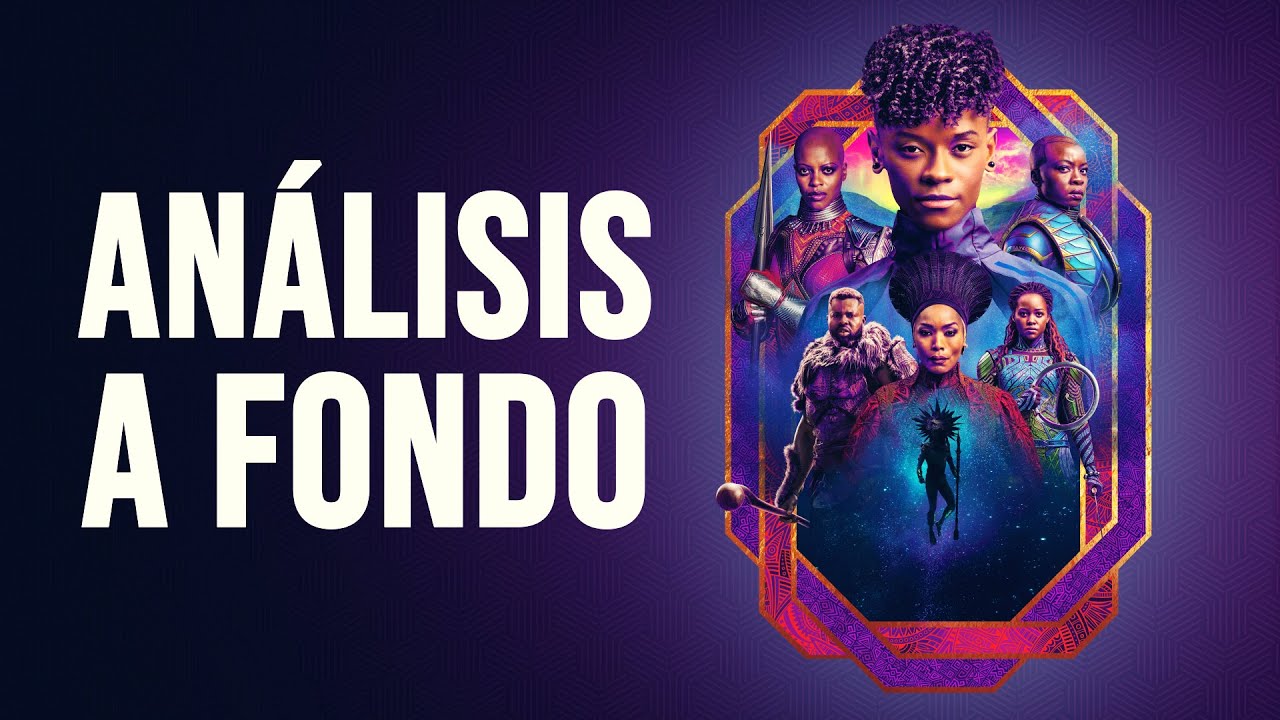
Marvel's Black Panther uses the superhero genre to explore complex social issues including black identity, colonialism, and the African diaspora experience, demonstrating how blockbuster films can address layered ethical questions through dramatic conflict without oversimplification; the film employs potent symbolism such as Wakanda representing what African nations could have become without colonial exploitation, while characters like T'Challa and Erik Killmonger embody the philosophical debate between nonviolence and armed resistance, ultimately showing that effective leadership requires balancing tradition with progress and that healthy communities depend on interconnected support systems.
Black Panther Symbolism: Identity, History, and Afrofuturism
Added:An introductory understanding of Afrofuturism as a cultural, aesthetic, and literary movement that blends technology, science fiction, and African diaspora history.
A foundational grasp of the history of European colonization of Africa and the subsequent processes of decolonization.
Familiarity with the concepts of Pan-Africanism and the cultural connections between continental Africans and the African diaspora.
Basic political theory concepts regarding foreign policy, specifically the ideological debate between isolationism (national self-preservation) and globalism (international intervention and aid).
An advanced ideological analysis comparing the philosophical positions of T'Challa and Killmonger to historical Civil Rights leaders such as Martin Luther King Jr. and Malcolm X.
Engagement with Post-colonial theory and critical texts, such as Frantz Fanon's 'The Wretched of the Earth', to further analyze systemic oppression and resistance.
Exploration of contemporary Afrofuturist literature and media (e.g., works by Octavia Butler or Nnedi Okorafor) to see how speculative fiction addresses historical trauma and black futures.
An investigation into real-world geopolitics regarding African resource management, specifically contrasting Wakanda's fictional 'Vibranium' economy with the real-world 'resource curse' affecting resource-rich nations.
331K views12.4Klikes14:06Original Release: 2018-03-18
Marvel has gotten political before...but never so profoundly or successfully as in Ryan Coogler's groundbreaking Black Panther.
The movie does a masterful job of discussing complex issues like black identity, history, colonialism, technology, globalism vs. isolationism and the future -- [What happens now determines what happens to the rest of the world.]
but it carries on all these conversations through story -- it draws on potent symbolism and a clash between characters who all make compelling cases for their sides.
We're used to so many superhero movies where it's pretty clear who's right and who's wrong.
But Black Panther shows the superhero movie's power to actually process layered ethical questions through dramatic conflict, without oversimplifying, and actually enhancing it's entertainment value through all these nuance and complexity.
[I hope this movie kind of opens up] [all ideas of what a blockbuster is,] [what it could be.]
This is the first Marvel movie to feature an almost entirely black cast, and it's breaking all kinds of box office records.
So the story of T'Challa's transformation into the black panther is truly a historic movie whose significance can't be overstated.
[My kid, I get to take my kid to go see a black superhero movie.]
[And he gets to see the image of himself as the man.]
[I'm not only excited for that, but then Halloween,] [I can't wait to see little white kids] [dressing up as Black Panther, man!]
Before we go on, be sure to hit subscribe, and click the bell to get notifications on all of our new videos.
Let's start by looking at how Black Panther captures so much of history and culture through symbolism.
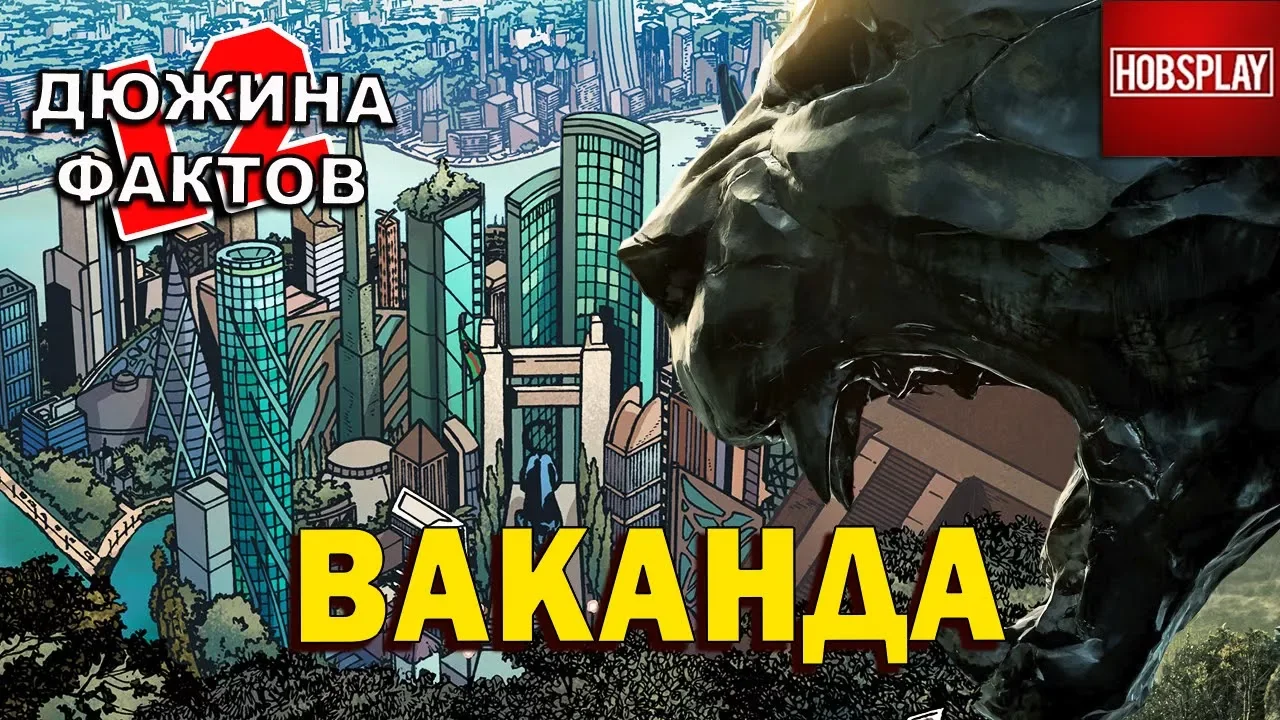
Wakanda is a country "hidden in plain sight."
So this symbolic message is that the world is overlooking the power of black people, but this power is far greater than the world could ever imagine.
[It's a third world country.
Textiles, shepherds, cool outfits.]
[All a front.]
In the post-credits scene at the UN, T'Challa is asked what his country could possibly have to offer the rest of the world, and he smiles knowingly.
[How much more are you hiding?]
When Klaue steals Wakanda's vibranium, this has an obvious colonial feel to it -- vibranium is a valuable natural resource and it's being taken from the country that owns it.
[They have this natural resource that Wakanda thrives off of,] [They mine it, they use it in technology.]
Klaue is a white South African, which reminds us of the history of apartheid and the growth in equalities that still exist today as a result in South Africa.
We also get the early scene in the London museum where a white woman lectures Erik Killmonger about African artifacts, but she gets the origins of key artifact wrong.
Erik corrects her, and then steals these valuable items, but not before reminding her that her people stole them to begin with.
So in all these moments the story is urging us not to forget how much white society has taken and appropriated from black communities.
And we should be awared that the so-called "expert" academic and historical accounts we trust are also flawed and incomplete.
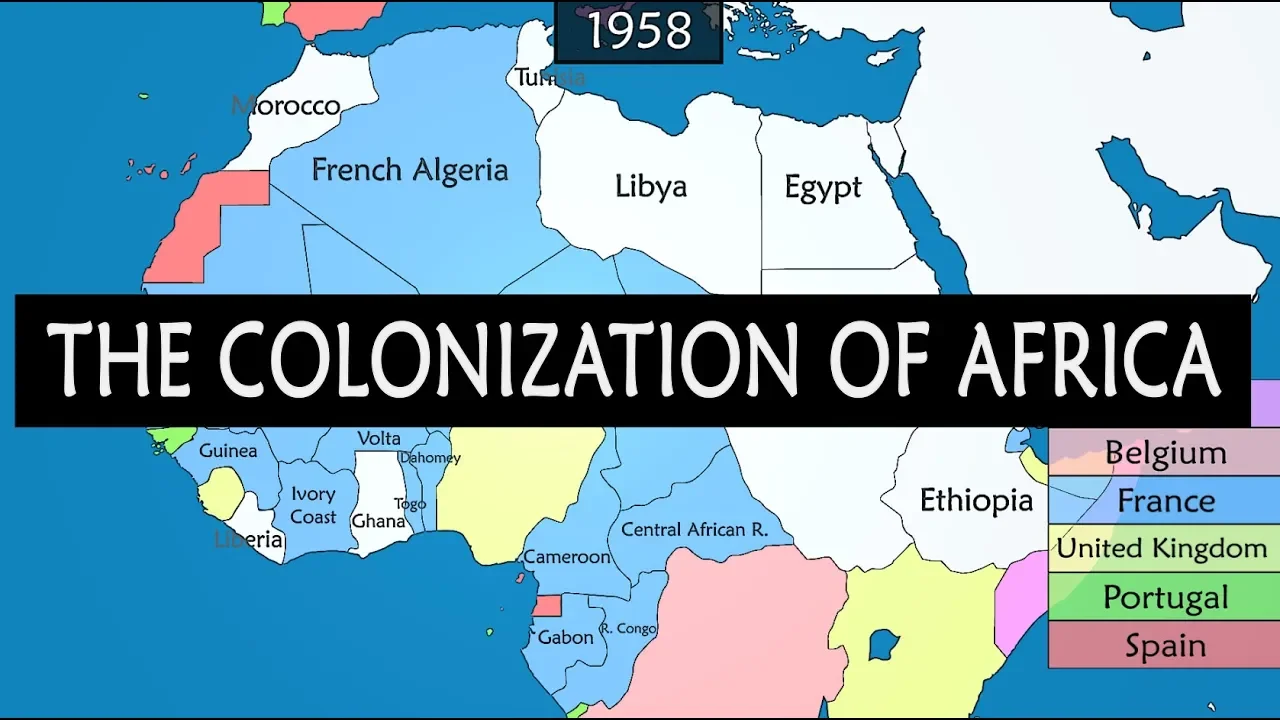
So the film's implicit historical commentaries help us understand Wakanda's fear of losing everything if it reveals itself to the world... because we know what colonialism has done to so many real countries.
Wakanda is a vision of what an African country could or would be if it wasn't damaged by imperialism and exploitation.
Black Panther's multinational cast comes from countries including the U.S.
the UK, Kenya, Guyana, and Tobago.
And the "superpower" most on display in this superhero story is blackness itself.
[To Be African is to be human.]
The Wakandanas offer role models that young black men and women can look up to and aspire to be.
[When I was a kid,] [I got the chance to see Christopher Reeve,] [I got the chance to see Michael Keaton,] [But I didn't get a chance to see Chadwick Boseman,] [Chadwick Boseman looks like me.]
[He looks like my son.]
When Okoye is forced to wear a wig, she just wants to get it off her head.
This white beauty ideal is like an uncomfortable costume to her.
[For the Dora, a big theme for them is the symbolism of their bald head] [When they become Dora Milaje they shave their heads] [Something that's present in the comics] [And we ran with it in this film] [So for her it's a dishonor for her to cover her bald head.]
The empowered warriors of Wakanda offer a beauty standard that's based on strength and embracing the natural.
And this is reflected in the lighting by DP Rachel Morrison.
The cinematography here helps reverse a longstanding industry bias.
Kodak's "Shirley cards" -- used to calibrate their printing -- only featured pale skin tones for decades.
Jean-Luc Godard even called Kodak film "racist" and refuse to use it to shoot in Mozambique, because it was so poorly optimized for dark skin.
So Morrison's work in Black Panther -- together with the images of DPs like Bradford Young, Matthew Libatique and James Laxton -- helps to undo this historical bias to use white skin as the default in cinema.
Morrison makes dark skin tones look absolutely stunning, while still going for high-contrast images and saturated, vibrant tones.
But even though the film is linking blackness across national borders, it's also acknowledging that black Americans have long been deprived of a meaningful connection to Africa.
They can't trace their ancestors because of the history of slavery.
[This spooky thing called slavery happened] [and my entire ethnic identity was erased.]
Erik still has Wakanda inside him -- but the movie's showing how being cut off from your heritage like this is tragic.
When T'Challa drinks the heart-shaped herb and gets to talk with his father, he's in his beautiful homeland, glimpsing all of the black panther ancestors that came before him.
But when Erik gets to visit his father, he enters their old apartment in Oakland -- he sees a TV full of empty static -- and he had a vision of his father is alone, cut off from his ancestors.
So the central conflict in the movie is also this complex relationship between Africans and the African diaspora, especially African-Americans.
The movie does something clever by initially setting up Klaue as the one-dimensional villain that we might expect going in.
But then Klaue is killed and it's revealed that this story is really about the far more personal and heartbreaking battle between Erik and T'Challa -- both of whom we feel for immensely.
One of the reasons the movie works so well is that Erik is a villain who's right.
His anger is justified.
[Growing up in the States,] [the system of oppression really shaped his trajectory,] [lose your entire family,] [let that fester and grow into some rage.]
Even T'Challa actually agrees that Erik was terribly wronged by T'Challa's father and country.
[Killmonger is complex,] [because he's gotta have a valid point.]
At the end of the film, Erik says he wants to be buried in the ocean, like his ancestors who jumped from slave ships because they'd rather die than live in bondage.
It's important that Erik sees slaves as his true ancestors, and not the Wakandans.
For him, the African and the African-American identities are irreparably divided by the history of mass enslavement.
In addition to representing the African versus African-American experiences, T'Challa and Erik symbolize the historical debate between black leaders over whether to achieve progress through peace or aggression.
Philosophically, T'Challa aligns with Martin Luther King Jr.'s philosophy of nonviolence, and Erik aligns more with Malcolm X's "by any means necessary" outlook, which largely inspired the Black Panthers.
In Erik's childhood Oakland home we see a poster of Huey Newton, the leader of the Black Panthers.
The Black Panther comic incidentally was created slightly before the party was formed, although the character of Erik Killmonger was created after.
Both sides of this debate want the same thing, they just have different beliefs about what will achieve the solution, and that's what makes the clash between T'Challa and Erik tragic.
[It's my responsibility to make sure that] [Wakanda does not fall into the hands of a person like you.]
The image of the two fighting black panthers falling through the air visually captures the wrestling of ideas.
Erik could have easily been the hero if this were another movie.
In some ways he is a more interesting or dynamic character than T'Challa.
He wasn't born a prince -- he's actually struggled.
[He's so passionate about what he cares,] [and he'll go through any length] [to achieve his dreams and his goals.]
Though Erik has let his anger and hatred take over his entire being -- to the point where he no longer has the capacity to create a positive future.
in the same way Wakanda is what an African country could be if it weren't been touched by colonialism, T'Challa is what Erik could have been if he hadn't lost his father and grown up exposed to suffering, prejudice, and crime.
But besides Erik's understanding of social injustice, he doesn't have the qualities we look for in a leader...and T'Challa does.
[You get to decide what kind of king you're going to be.]
T'Challa is benevolent and respects women, while Erik is authoritarian and violent towards women.
This is a dealbreaker in a community that values women like Wakanda does.
[In comic books you have these female characters that are quite of importance to the country of Wakanda.]
T'Challa is the right hero for this movie because his heart is in the right place and he gradually learns how to be a leader, rather than coming in with a rigid point of view that can't evolve.
What's interesting, though, is that in the end T'Challa clearly does take some of Erik's ideas to heart.. So by the end of the film T'Challa's worldview is the happy medium between Erik's POV and his father's original isolationist nonviolent POV.
Which means he is basically ending up with Nakia's point of view, and doing what she's been telling him to do all that long.
It might have been a much shorter movie if he'd just listened to his girlfriend!
In a way the evil history perpetrated by white people is the ultimate villain here.
But because you can't fight with the past, the legacy of that historic evil is reflected through the continuing conflicts between black characters.
A key difference between Black Panther and other superhero movies is that this is about a community, not just one guy.
[He's an African king.]
[His first responsibility is to his people.]
In most superhero movies, the hero has to reconcile private and public identities -- but here the whole country of Wakanda has to do that.
[So it's about Panther, but it feels equal about Wakanda.]
Black Panther suggests that the key to a healthy community is balancing tradition and progress.
That's what's so unique about Wakanda: at first we see these beautiful, natural landscapes... then it's revealed that we're looking at an extremely advanced city.
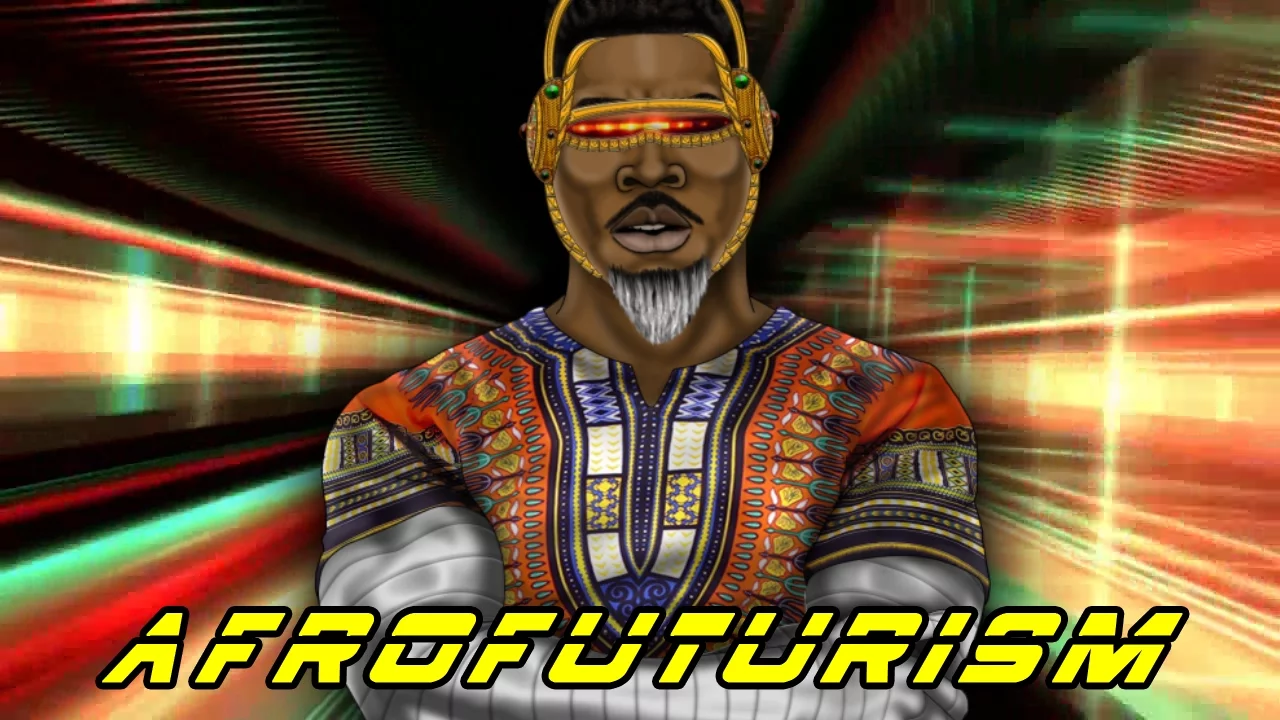
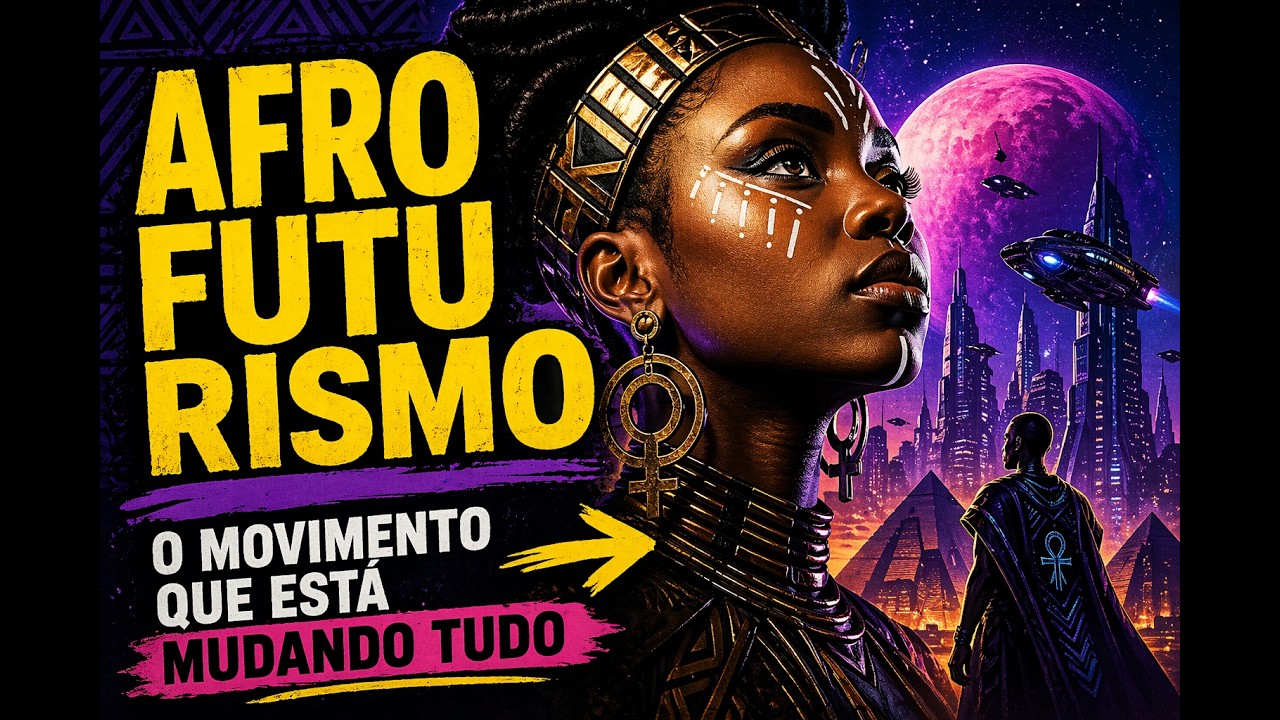
So the film has a theme of afrofuturism -- it's offering an optimistic vision of the future where black people can determine what's next for them and for the world at large.
And the only "superpowers" we actually see in this movie all come from technology, or from a natural source.
[You've been taking bullets,] [charging it up with kinetic energy.]
So this symbolizes that the keys to progress are applied human intellect and the gifts of the natural world.
The film shows that Wakanda is also strong because of the black women who hold up their community.
[It's now or never.]
And it underlines the importance of a father in a man's life.
The disappointing father is something of a recurring trope in the Marvel universe.
[Stark!
He's a sickness!]
[Aw Junior, you're gonna break your old man's heart.]
-- but here the question of fathers and sons takes on a more profound cultural significance.
Wakanda emphasizes masculine rites of passage and black fathers who are role models.
Erik has the inverse experience.
His dad is taken from him unjustly.
So this symbolizes that systemic social wrongs are really to blame for absentee fathers in underserved communities.
T'Challa realizes through his father's mistake that he has a moral responsibility to address the larger world's problems.
Also T'challa warns M'Baku that if he doesn't help them, then Killmonger will come after the Jabari next.
That's a clear warning for us all about the importance of caring what happens to the communities around us, because we're all much more interconnected than we often realize.
Ultimately in many ways this is still a classic Marvel movie.
It has the traditional hallmarks: strength and justice are lauded, the hero grapples with daddy issues, cool pop-music and pulse-racing fight sequences, and humor.
[Did he freeze?]
[Like an antelope in headlights.]
[You finished?]
So what's perhaps most compelling about Black Panther is that it fits the whole Marvel superhero formula, but it shows what that formula is actually capable of.
[Let's go!]
It infuses this fun blockbuster with a complex villain, a deep social commentary, and an investigation of the enduring wrongs that are the legacy of our shared world history.
So Black Panther opens the door for other more thoughtful, diverse and deep blockbusters to follow in its footsteps.
[Show-off!]
It's hard to believe, but Black Panther is only Ryan Coogler's third feature film.
So today we want to highlight his first feature, 2013's Fruitvale Station.
Fruitvale Station is inspired by the police shooting of a man named Oscar Grant.
It follows Oscar, played by Michael B. Jordan, on what he doesn't know is the last day of his life.
[I'm trying to get back on my feet.
I really need this job.]
It's a really intimate, moving film at the punch of 90 minutes long.
Thanks so much for watching.
If you're new, please subscribe and hit the bell to get notifications for all of our new videos.
And if you can afford it, please consider supporting us on Patreon.
[Next stop, Fruitvale Station.]
Up Next

6:11
Chest X-Ray Interpretation: A Systematic Approach
@RadiologyNation
69K views•2017-07-19

12:54
Triumph of Orthodoxy Icon: Byzantine Art & History Explained
@BenCallan
2.1K views•2024-08-06

9:49
FastAPI vs Flask vs Django: Choosing the Right Python Web Framework
@TechWithTim
302.5K views•2024-05-26

1:42
Game of Thrones Opening Credits: A Cinematic Analysis
@gameofthrones
46.3M views•2011-04-18
Related Study Plans & Knowledge Roadmaps
Structured learning paths in General & Interdisciplinary Studies
general-studies
Elevator Engineering: History, Physics & Cities
01From Hoists to Safety Brakes: The Dawn of Vertical Lift
02Hydraulic vs. Traction: The Engineering Physics of Elevators
03Modern Speed, Safety, and Algorithms
+ 2 more learning modules
12h5 modules
Explore Roadmap
general-studies
Rubber: Material Science, History & Geopolitics
01Origins of Natural Rubber & Mesoamerican History
02The Chemistry of Natural Rubber & Vulcanization
03The Geopolitics of the Rubber Boom & Colonization
+ 2 more learning modules
12h5 modules
Explore Roadmap
general-studies
Containerization: Evolution, Logistics & Trade
01Ancient Trade & Bulk Cargo: Amphorae to Barrels
02The Industrial Revolution & Cardboard Packaging
03The Containerization Revolution: Malcom McLean
+ 2 more learning modules
12h5 modules
Explore Roadmap
general-studies
Textile Tech: Evolution, Labor & Global Impact
01Pre-Industrial Textiles: Handloom & Cottage Industry
02Mechanization: The Spinning Jenny to the Power Loom
03The Factory System & Global Labor Transformation
+ 2 more learning modules
10h5 modules
Explore Roadmap