




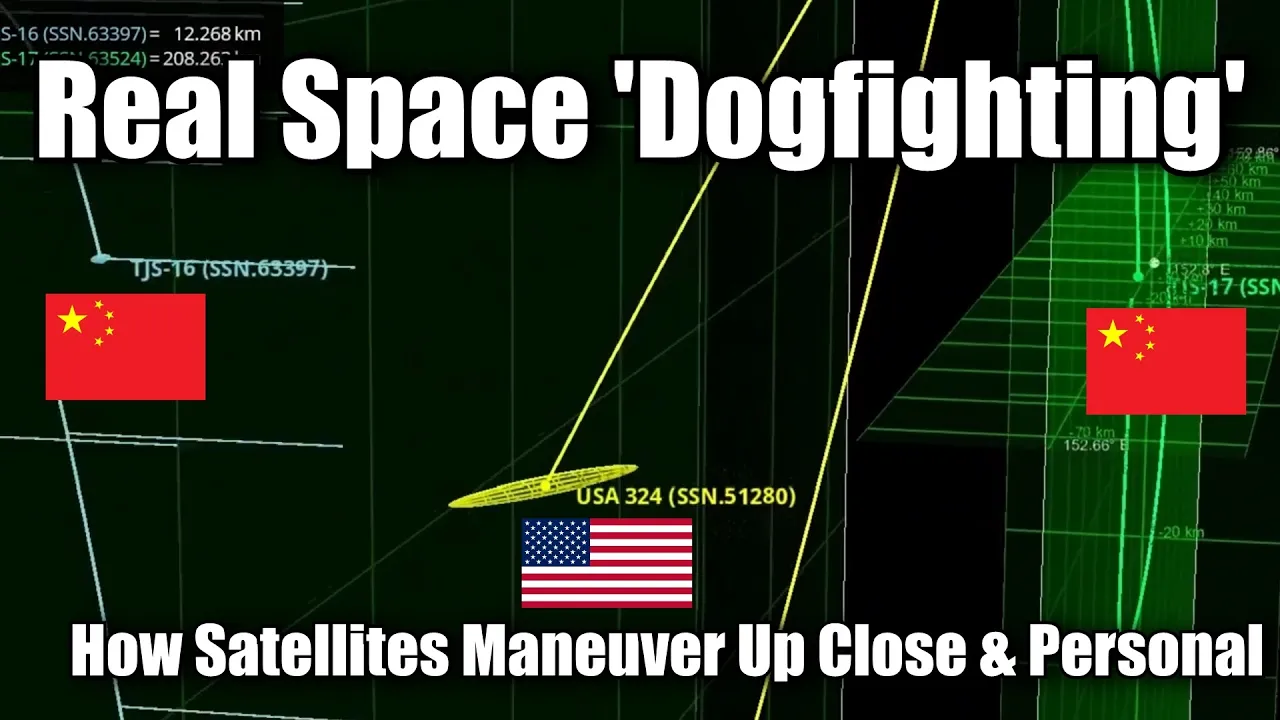
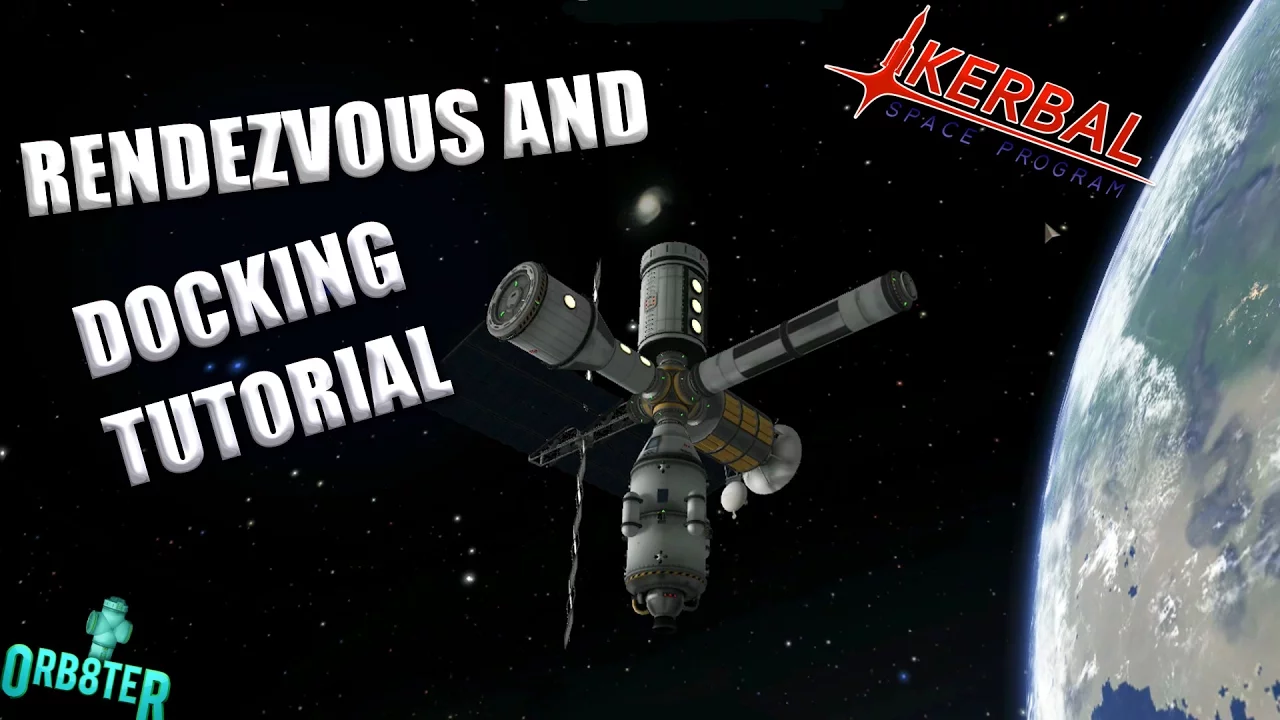
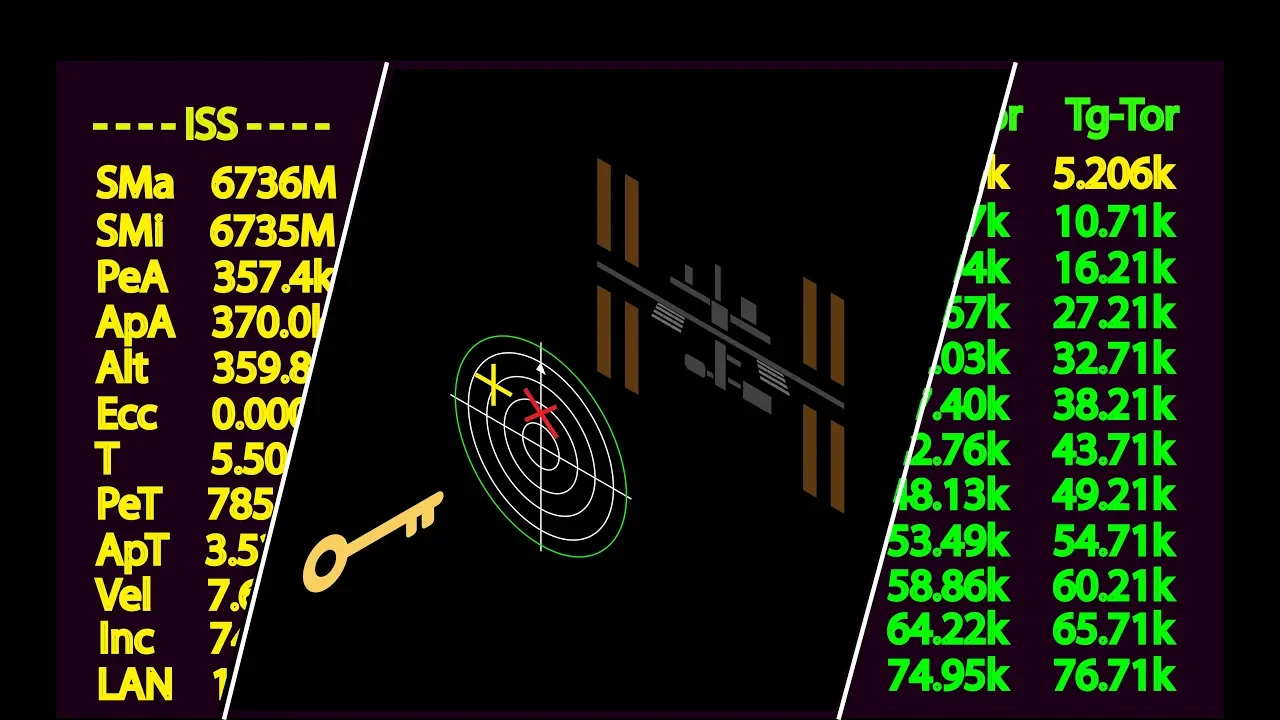
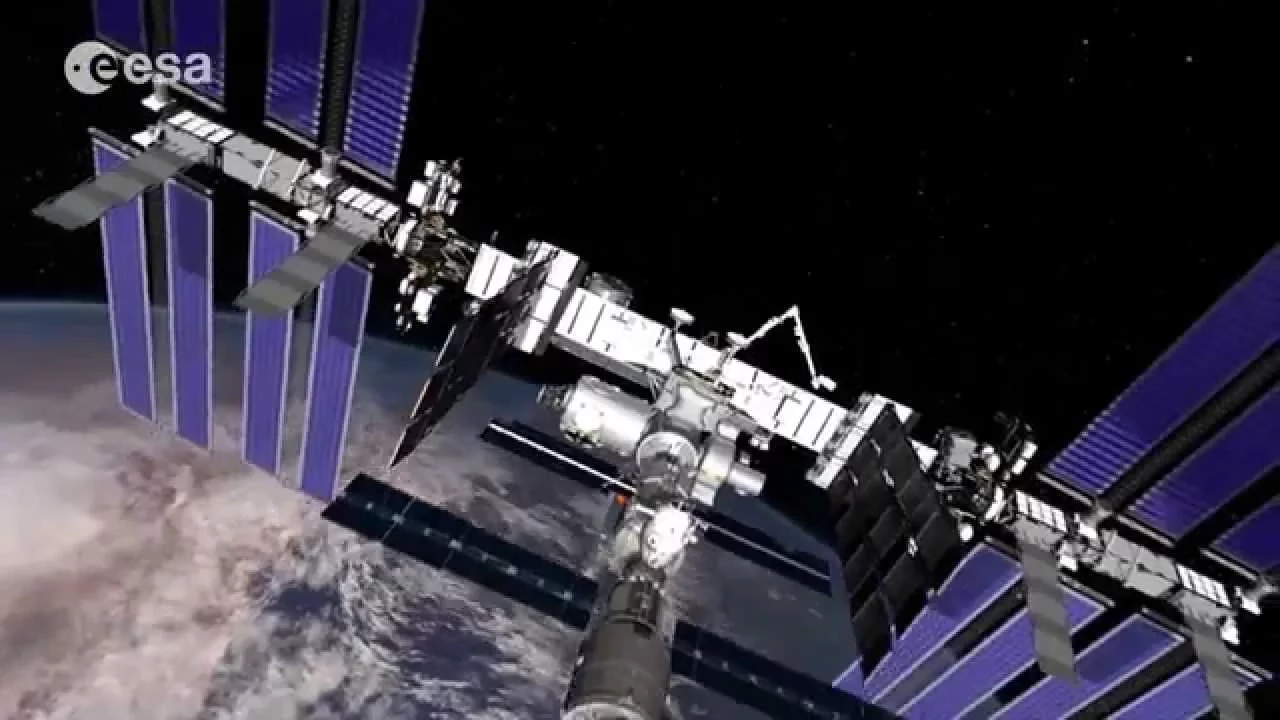














This video demonstrates the concept of orbital rendezvous, where spacecraft meet and dock in orbit, as exemplified by Mercury III's rendezvous with Sputnik 2. The mission required precise orbital maneuvers including lowering apogee to 143 km, raising orbit to 437 km, and performing a 9.5 m/s burn to cancel relative velocity. The video also illustrates how space race competition drives technological advancement, with the US government providing 3.5 million funds to accelerate their space program and catch up to the Soviet Union's lead in space exploration.
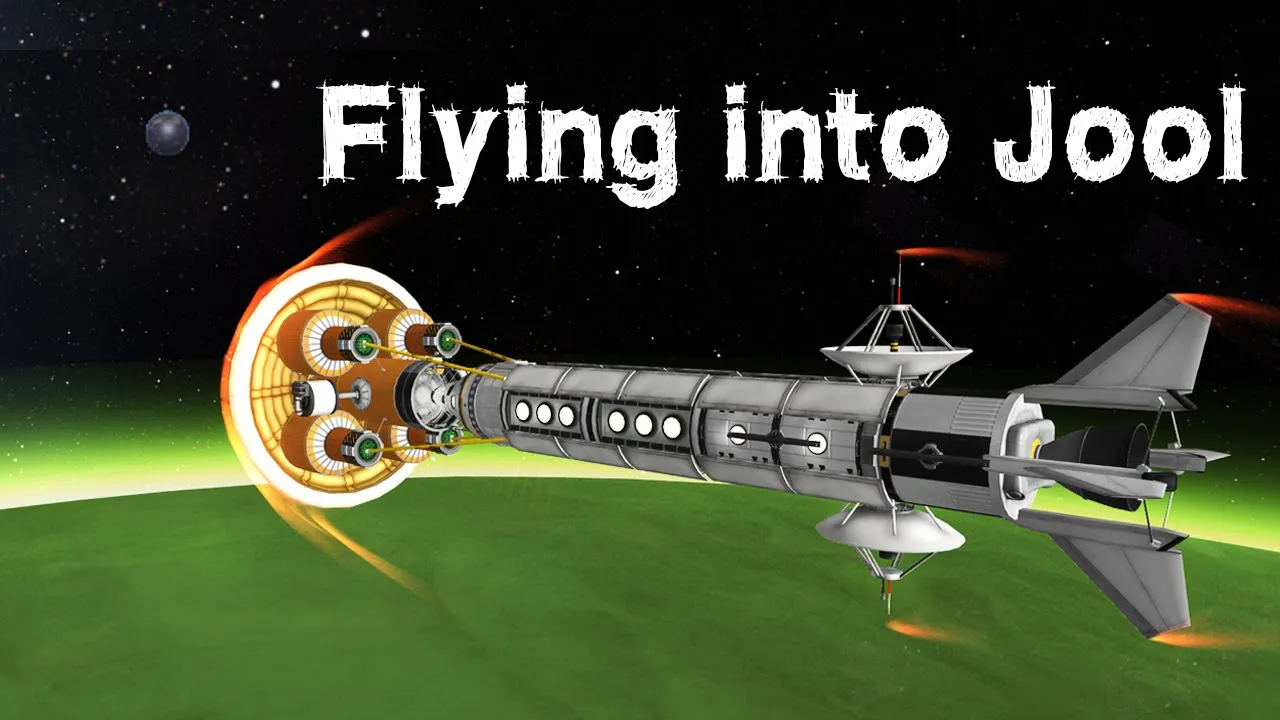
Soviet Satellite Inspections in Kerbal Space Program | 1960
Added:Fundamentals of orbital mechanics, including Kepler's laws of planetary motion, Hohmann transfer orbits, and the concept of Delta-V.
The historical context of the early Cold War Space Race (circa 1957–1961), highlighting the geopolitical rivalry between the United States and the Soviet Union.
Basic principles of orbital rendezvous, relative velocity, and proximity operations required to intercept and match orbits with another spacecraft.
The fundamental differences between simplified arcade space physics and real-world aerospace engineering constraints, such as propellant ullage, limited engine restarts, and real-scale planetary gravity wells.
The history and technical design of early Anti-Satellite (ASAT) weapon programs, such as the Soviet 'Istrebitel Sputnikov' (satellite destroyer) project.
Advanced interplanetary trajectory design, including the use of gravity assists, launch window calculations, and porkchop plots.
The engineering evolution of early lunar probes, comparing the trajectory designs and scientific payloads of the Soviet Luna program and the American Pioneer/Ranger programs.
Modern space situational awareness (SSA) technologies and the diplomatic/security implications of contemporary co-orbital satellite inspection missions.
56.1K views1.9Klikes54:02Original Release: 2021-08-14
welcome back to for all kerbal kind the first decade has passed we are now on to 1960 and the soviet union has a clear lead over us in the space race so let's go ahead and jump in to the next episode here now there is something i do want to talk about while we load up the save we have moved our save from 181 to 110 one and that has mostly gone surprisingly smooth we have to sort of adjust our craft in the editor but they still load like we have to replace fins and various things that have sort of messed up in translation between 181 and 110 one some of the contracts have disappeared now like for instance the communications network contract is just sort of not there and i believe i accepted that towards the end of last episode so that is a discrepancy between that one and this one i'm not sure if they're further along in the contract tree i guess also apparently this is showing up every single time i'm just gonna do hide this window at startup okay so yeah that's something like if we go into contracts here you see six of seven archives uh it's not like it auto completed or anything anyone here uh active our yeah communications network satellite contract non-existent i don't remember if we accepted that or not but it doesn't exist anywhere in here which is very interesting and there was i think a few things have moved in the uh r d building as well in the tech tree uh most notably hydrazine has moved from this here we haven't moved here temporarily but it does not actually live here anymore this is just here for debugging purposes it actually has moved not one two or three but four tech nodes down the line to docking and crew transfer this is where hydrazine lives now so explorer 7 that used hydrazine technically shouldn't have used it but we've talked to beardie about this and we're allowing the craft to exist but we'll just say that it was a one-off thing and we're not able to really produce it again until we research a lot so that's pretty much where we're at right now and i gotta say this year we've gotta do something to catch up to the soviets or so help me crack and i don't know if we're gonna have a chance at this february 11 1960 after a month and a half initially flying past the moon at a great distance explorer 7 approaches lunar space once again all the while streaming data at a very slow rate of speed back down to the earth a small burn of 69 meters per second is all that's needed to capture into orbit of the moon for good the small explorer turns itself away from the sun for a moment to fire its thruster anti-tangent at perilune due to an unknown reason while this happens its center of mass is ever so slightly shifted according to telemetry causing the rcs thrusters to fire in an attempt to hold attitude during the burn despite this fuel efficiency loss this successfully slows its relative speed to the moon anyway enough to remain in a highly eccentric orbit providing a broad range of altitudes for pictures and data to be taken what little fuel remains can be used to further lower explorer 7's orbit but will most likely be saved for very conservative station keeping alright mission success we have plenty more funds to do things with and we have plenty of science to do things with so what we're gonna do is head into the mission control and what we're met with is absolutely insane crude lunar flyby right we have an advance of three and a half million funds is going to give us so much money to speed up our program to speed up research to speed up our builds to upgrade our facilities to match their capabilities maybe even surpass their capabilities but we'll have to see the catch is well we have to launch a crude ship to fly by the moon that's probably going to be gemini or of course chemin i it's the beginning of the decade of course i have confidence in this and instead of just dawdling over it anymore working i just boom we did it we're making moves okay first thing we're going to do is buy a new launch pad and we have a 150 ton launch pad we're gonna just completely gloss over the 350 ton launch pad and grab a 700 ton launch pad the next thing we're gonna do is research and development another half a million to upgrade this plus 50 research rate once it's complete that's another half a million funds gone the next thing we're going to buy is mission control upgrade this will give our max active contracts a limit of 10 instead of 7 this is gonna just pay for itself immediately so click in uh 45 days the vehicle assembly building will have upgraded and it still has the stats of what we're getting here if i hover over this we'll get a second build queue which will start at absolutely nothing and then we'll get plus 25 on our current line so uh the next thing we're going to spend a ton of money on is upgrade points all right so this is what we're left with 195 points in the vab 192 points in r d of course there's a few points in wallops here which wallops we are pretty much putting on the back burner right now this space race is really kicking off it's really getting spicy so our main focus is going to be this site here at brownsville all right as much as i want to get to this engine right here the rl10 i'm actually going to go down here and get early interplanetary avionics and probes first because of the aforementioned mars window coming up there's actually a margin of venus window coming up at the end of the year and the beginning of next year and i want to make sure i can build missions for those ahead of time so we're grabbing this one and we will have plenty of time to build something my goodness and one last thing i want to grab explorer seven and i want to lower our periapsis ever so slightly my god that is a beautiful sight of the moon and the earth behind explorer seven the camera's kind of pointing the wrong way but that's okay we've got work to do 18 kilometers that's a bit risky that's a bit that's a bit uh that's a bit of a risky biscuit right there uh let's see god damn that is low i think that we're fine i think that that that that will be fine i really hope explorer seven doesn't crash into the surface i couldn't be bothered to turn it around right now though because i'm pretty confident that that is fine but that is where we're gonna leave it at a pair loon of 18.4 kilometers very low that's going to get us a lot of low science and that's kind of the goal we have unlocked the communications node right before our next mercury flight so that means we're going to go ahead and spend 100k to upgrade our tracking station and now that is going to take that's only going to take 23 days and we'll have level 3 dsn that's pretty nice in theory that will be enough to communicate between earth and mars or venus in theory we'll have to test that out builds for that are going to be waiting for this node here in 40 days and since we have 25.7 science now it's been trickling down i think all from explorer 7 which is which is really really nice because take a look at this early power generation and storage level one solar panels are doing much better in hinged solar panels this has a lot of uh procedural things about it that'll be really nice so we're gonna do that because our solar panels really leave a lot to be desired so that means in 78 days we will have i think the technology that i would like to send things interplanetary and now honestly this money sitting right here 733 000 funds is sort of burning a hole in my pocket if it's just sitting there sure that's a safety blanket right but i think i would rather invest that money into our build speeds and research speeds and let that money work for us so i'm gonna go ahead and slap in a bunch more points and i went ahead and put eight in rate one vab and eight in the r d building march 26 1960 while the astral foundation is making great strides in both lunar exploration and crude space flight the united states still falls behind the soviet union by a long shot realizing this the us government steps in with a huge sum of cash and a signed agreement to send a crude spacecraft around the moon and back before march of 1965.
this significant goal repurposes future mission plans for mercury 3 and onwards but today eileen sits atop the catless a for her second orbital flight now if you're wondering what about peter well the seat was initially planned for peter but he once again has refused to be strapped into a largely uncontrollable tin can while sent into space with the possibility of a more advanced maneuverable mercury capsule being flown soon he has opted to sit out until that day comes midday the catless a lightsaber engines and eileen is away [Music] five and a half minutes after liftoff mercury two pulls away from the catalyst eileen is in orbit of the earth here she will stay for the next 24 hours communicating with ground control stations monitoring fuel oxygen and voltage levels and on this particular flight photographing the earth from her window and a small periscope underneath the spacecraft these pictures will be much higher quality than anything current weather satellites are capable of and in all reality is probably the most exciting thing eileen has done yet she'll be taking pictures of cloud formation's significant geographic locations and if possible a few certain soviet launch sites and factories the locations of which are classified information but before all of this takes place on her first orbit around the earth flight control conveys their wishes for eileen to slightly raise her orbit at apogee this is met with immediate warranted confusion as the mercury 2 only has reentry thrusters at its disposal for any kind of translation control all three of which are needed to bring eileen back home safe at the desired location on earth well it turns out flight has thought about this and recommends a one-of-a-kind maneuver to raise her orbital velocity something they have decided to call the seesaw since pitch control is only located at the front of the spacecraft eileen is the first orient prograde before then pitching up and down back and forth to provide thrust in the forward direction [Music] this maneuver proved quite nauseating in practice and eileen promptly utilizes a sick bag stowed in the capsule to keep herself from well hurling all over the console but the seesaw works mercury 2 is now in its desired orbit the stars are very clear on the night side of the earth and in a few moments when she's feeling a bit better of course eileen will have plenty of time to observe them as well as the entire planet earth during the day simply feeling lucky to be where she is now [Music] after 25 hours in orbit of the earth a ground station in the hawaiian islands instructs eileen when to fire her retro thrusters for re-entry unlike mercury 1 the retro burn is initiated at the correct time and eileen is on course to splash down in the gulf of mexico frequently monitoring dc voltage in the capsule it's clear electric charge is dwindling jettisoning the retro pack and reorienting to reentry attitude flight estimates about 20 minutes before the capsule goes dark even after shutting down the scrubber and o2 pressurizer given that time frame unless something goes horribly wrong cutoff will occur while still falling through the atmosphere which simply means eileen must manually deploy her shoots and prepare for splashdown prepared for this eileen sends down a short see you guys on the ground flight as plasma begins to form around the spacecraft [Music] parachutes deploy and eileen falls safely to the ocean just as planned that's two orbital flights under her belt now and a lot of photographs have been taken that the astral foundation is eager to study so after mercury 2 we have a bunch more science here which is awesome and i think we almost got 400 000 funds from the flight eileen's retirement date has been pushed back by 270 days as for additional contracts we're gonna grab the second lunar orbiter contract this requires a less loose orbit of the moon we have to bring the appaloon below half a million meters and we'll also grab this one it's a rather simple satellite mission that will net us about a hundred thousand funds total uh it's something that actually disappears once we complete it to stimulate the transfer of the payload back to the customer so it's sort of like we're doing some commercial work uh but we have over a year to complete it and it's not really gonna take all that much 100k funds i mean we'll accept that because we have room for more contracts we're gonna have room for three more uh in a week or two when the mission control actually upgrades as well the next orbital flight one crew mission requires us to stay in orbit for a day and seven and a half hours so longer than the other mercury flights this shouldn't be an issue we just have to uh rework the next mercury a little bit for that but i'm not gonna accept it yet uh we're gonna accept it once the mission control upgrades uh this one here orbital flight with maneuvers and two plus crew we're gonna have to wait for chimney because you know two plus crew and staying up for a week that's not something that mercury is capable of right now our seventh contract is gonna be the first mars flyby because we have what seven years so we're gonna spend 600 000 funds on more points here and what we're going to do with them is we're going to put 12 into r and d we're going to put 8 into rate 2 for our vab and 10 into rate 1 for our vab and as for our 50.9 science there are two tech notes i would like to grab that will further help our interplanetary probes on their way so this first one is stability because we have this ranger slash mariner propulsion system which burns hydrazine which is freaking really good i it's a very low thrust uh two ignition engine the very low failure rate i think this will help tiny probes out a lot so we're gonna grab that one and then we also go down here to early human space flight era science this will give us the infrared radiometer and the orbital perturbation experiment this one is a 10 year long experiment it requires something to be in high inclination so we're going to be sending some satellites out with these but our interplanetary definitely will have this one i'm thinking so i'll research that one as well now let's time warp ahead to our mission control being completed there we go the building popped up there so now we can get three more contracts and we are going to grab orbital flight one crew which by the looks of things over time i guess these have cycled and the reach specified orbit is different now it's only 18 hours and that is something that mercury 3 is capable of without any further modifications so okay that's perfect we'll accept that contract we're going to take first millennia orbit satellite just to get the funds and just to see if there's anything past that that i'm missing out on if i don't do it so we're gonna accept that and then lastly we're gonna grab the venus flyby contract this only gives us three years to complete it but i'm pretty sure we've got a shot at doing this and if we have to decline it we only lose about 6 000 funds so we'll grab that we have 10 contracts we're maxing out our funds as much as possible and with the advanced funds from those contracts we are going to grab a few more points here some to our vab first line and then one more here to our r d as well and warp to complete r d building is going to be complete there we go we added some more buildings and this is gonna speed things up a whole lot hopefully so two launch events happened from the soviets in april the first of which is pagoda six and if we clear up all of our other satellites there we are left with this in a very low polar orbit of the earth and we're unsure exactly what it is but we have some suspicions about it and another one that was launched towards the moon and launched on the 14th of april and was captured into a polar orbit here and that is uh significant they now have three orbiters around the moon except was able to capture into a lower orbit now this is something we're looking to do as well now that we have some launch vehicles capable of it all we have to do is find the time to slot a mission for it june 9th 1960 a brand new catless b sees its debut flight tonight its mission veiled in secrecy what very few members of the public know about tonight's launch is that it's labeled as a test article for future mercury missions this couldn't be further from the truth previous mercury flights and the culmination of space flight knowledge so far has been testing enough for the spacecraft sitting aboard the catalyst right now and inside this new iteration of mercury sits peter kerman finally agreeing to fly in a tin can given its new and improved capabilities once an orbit of the earth flight gives peter the go ahead for launch and the mission is on its way [Music] so why the secrecy if this is merely a technological evolution of mercury surely the public would be more than happy to see its tax dollars hard at work especially a demonstration of new technology that could rival the soviet union well mercury iii's objective will be to rendezvous with sputnik 2 the first satellite to orbit the earth 5 and a half years ago the hope is to gain insight on soviet technology by getting up close and personal with it and what better way to keep that secret than to do it in earth orbit now this comes with some complications namely sputnik's orbital inclination of 45.9 degrees due to lifting off during late hours this requires the catalyst to fly over the east coast of the united states rather than over the ocean something that could be catastrophic should a failure occur but katlus's reliability has been stellar thus far and so the mission is decidedly considered a low-risk black op five minutes after liftoff and peter is in orbit of the earth now begins the second half of the journey a much more time consuming one somehow making his way to a tiny satellite currently on the other side of the planet flight control immediately begins to calculate maneuvers as peter monitors the spacecraft after a few moments flight calls up to peter saying the initial orbit is higher than intended and reaching sputnik will only be possible if it is lowered and then raised again in a dozen or so orbits this will allow mercury to catch up the sputnik over time but it will take almost all of his orbital fuel to do this but the decision is made mercury 3 is go for transfer peter corrects the slight inclination error in his trajectory on the first orbit and then is ready to lower his orbit at the next perigee [Music] the initial orbit was 680 by 143 kilometers peter is instructed to lower his apogee to 312 kilometers on the first orbit unfortunately this is determined to be ineffective at catching up to sputnik during the second orbit peter is instructed to further lower his apogee to 143 kilometers this will put mercury 3 in a very very low circular orbit any lower and they would risk dealing with the atmospheric drag pulling him back to the earth his orbit will serve as a parking orbit waiting for the right moment to raise the apogee and hopefully meet sputnik at some point in time twelve and a half hours later peter is instructed to burn 86 meters per second of his remaining 169 meters per second of fuel to raise his orbit this will bring mercury's closest approach to sputnik to roughly 437 kilometers away now that's still pretty far but over the course of three and a half orbits the two craft will creep closer and closer to each other before peter simply has to burn 3.5 meters per second placing the two craft trajectories on a 9.5 meters per second very close pass further along in that same orbit at a precise time mercury burns that final 9.5 meters per second to cancel relative velocity the two craft are now side by side performing the first orbital rendezvous in space flight history now is peter's chance to test out the new translation controls present on the mercury spacecraft in addition to pitch yaw and roll peter is able to move laterally as well using this new maneuverability he brings himself to a stop merely nine meters from sputnik the site is out of this world [Music] mercury iii this is flight how's it going up there good to hear your voice flight 5 5 on uhf doing real good up here how about you just fine we hear you just fine mercury three you know the routine oxygen go suit cabin pressure is go fuel is well expectedly low but we're still go for re-entry uh i'm a bit worried about voltage flight but all batteries are go any deviations from the previous checkup oh no deviation flight but we're sitting right on the line here okay yeah we see on telemetry peter this will be your last orbit before retro burn clock's still running yeah time to retro is go flight roger that mercury three checkup complete um we got another test for you peter uh okay flight can't say i'm preoccupied with anything at the moment so go ahead well peter we're gonna lose you before the sun sets but nasa wants you to give translation controls a whirl it's gonna get real dark but from what you've been telling us we think the horizon will be a good place for alpha to sit in relation to you what do you think well flight yeah alpha has been absolutely still it's a hell of a sight uh translation could not be easier i think i've really gotten the hang of it here we'll go copy that get to here you're going to have to do your best not to lose sight of alpha and let us know how it goes we'll do flight will do copy that hey uh peter can you turn off the recorder i'd like with yourself after taking a few dozen photographs of the satellite the sun begins to approach the horizon meaning very soon sputnik will be in near complete darkness peter has to get creative in order to maintain station keeping with nothing but the small window in front of him and a periscope below peter maneuvers his tin can in such a way that directly in front of him sputnik is contrasted by the fleeting sunlight bleeding through the atmosphere on the horizon of the earth using this the stars above the horizon and the city lights beneath him visual tracking is maintained sustainably though it is noted the task would likely be much easier with an external light of sorts and a larger window to view through this will be mercury 3's final orbit of the earth for all intents and purposes tethered to the sputnik 2 satellite once daylight again appears peter will pull away and come back home to a targeted splashdown quite a way south of los angeles where the u.s navy is already awaiting recovery on 9 60 late at night mercury 3 launched from brownsville in a 45 degree inclination northeast on a trajectory over the east coast of the united states it is believed to be an uncrewed test of higher inclinations and an advanced capsule design capable of orbital maneuvering this is partially a lie in reality mercury 3 was crewed by peter kerman with the intended goal of orbital rendezvous with sputnik 2 for observational informational and demonstrative purposes on june 10th 23 hours from liftoff mercury 3 has completed its goal departed from station keeping and now has returned to the earth the astral foundation attempted to forward the following sentiment it's an honor to visit the first kerbal made object to orbit the earth this relic holds significance not only to the story of your people but to the story of all kerbal kind through a time of conflict and world tension between our powers we salute you the us government blocks this message from being sent several decades from now the documents and photographs taken from this mission will likely be declassified but for now the entire operation is not spoken of outside of closed doors so this uncrewed test flight of the mercury enhanced capsule is complete we were unable to complete the orbital flight one crew contract because our perigee was lower than 190 kilometers for that period of time which means we'll probably have to do this again i did not pay attention to the orbital parameters very closely uh something else of note is the rendezvous contract apparently the game accidentally completed it for me a little bit before we actually launched the mission and that would have given me 202 000 funds which i had in reserve already so that's all taken care of and i didn't spend that money peter's retirement date has pushed back to 1962 sometime and all in all we have lots of money and lots of science again these are gained from gaining science so i'm gonna put those right into our r d speed i figure after a successful black ops flight like that we're gonna want a bunch of money here and just dump them all into the first rate of the av and just get that even higher now it's a decision between going to this node and going to this node right now because this node will give us the titan ii upgrades to those engines which will allow us to fly the gemini capsule gemini capsule here is gonna have to wait for this node here and itself so that's 100 science so 137 science and i could get this now to speed up that process but i really think that we'll be able to utilize this engine and so that's what i think we are going to do 52 days to unlock that one alright alright our deadline to complete this orbital flight one crew is in 164 days and i just don't think with the upcoming planetary windows that we're gonna be able to squeeze this in so we're gonna have to cancel that contract which brings our funds down a little bit but we'll be able to accept it again at a later time when we have more time to do so august 8 1960 our attention turns to the wallops launch site now ready for the third flight of a scout rocket scout 3 now has improved lighter avionics for each stage of the vehicle and the scout satellite is more advanced as well solar panel technology has improved the previous satellite is still having difficulties holding charge but that should now be a thing of the past additionally more than simple communications scientific data will be collected on orbital perturbation in an inclined low earth orbit the astral foundation is looking to study trajectory deviations due to gravity and or other factors and scout theoretically fits the bill a very inexpensive bill that is two seconds after liftoff the algol booster fails explosively teams recover what they can from the wreckage and clear the launch site for the next launch august 16th 1960 another scout rocket in storage was quickly assembled after the failed launch on the 8th a week and a day later scout 4 attempts this same mission unfortunately this launch meets the same fate 11 seconds after liftoff the range safety officer detonates the vehicle into a ball of fire before it can fall back to the surface the first stage of scout has a predicted chance of failure of only 1.33 percent so these back-to-back catastrophes are going to cause the foundation to scratch their heads for a while scout five begins construction nonetheless two scouts failed in a row and they have about a one percent chance of failure that is just crap luck i'm really hoping that that's all the bad luck we'll see this year if you roll this out on the 150 ton pad we're down to 1558 funds so if sincom1 fails we do have a fail safe to be able to roll out marketer one and that is scrapping discover three for an unknown amount of funds hopefully enough to actually cover the cost of rolling out marketer so fingers crossed everyone september 12 1960 catless b sees its second operational flight in the hands of the foundation its payload today is a satellite called singcom1 intended to reach a geostationary orbit the soviets have managed this feat last year and though their intentions are still unclear an orbit that high would provide fantastic communications coverage for practically an entire side of the earth at a time better than any low earth satellites are capable of that's for certain late in the evening the mission lifts off from brownsville [Music] five minutes after liftoff sincom1 is in orbit of the earth and pushes away from the catalyst the transfer stage to reach geostationary altitude is an upgraded pathfinder upper stage now called cable the stage is under-fueled to minimize launch mass and still provide enough thrust to reach the correct velocity for the transfer the burn now complete maneuver is plotted to both circularize and plane change the final orbit after adjusting to the correct attitude sinccom is spin stabilized by cable and then let go it will now remain stable and pointing the right way for its final burn reaching the right altitude at the right time singcom lights its final kickstage [Music] the goal is a perfectly circular 35793 1772 kilometers altitude orbit with an inclination of zero degrees this is not perfectly met by any means but is close enough for all intents and purposes and there exists 14 meters per second of delta v from helium field thrusters for a small correction if desired if anyone were able to see the earth from syncom's point of view it would appear motionless in the dark void behind it this satellite only broadcasts on a slow speed uhf frequency and relay capabilities prove to be ineffective so cincom1 really only exists as a proof of concept back down on earth though a possible plan for a small network of geosats hits the drawing board mission is successful i haven't included any other build time lapses in the video so far and i think this is actually going to be the only one just that i can try to keep the video length under one hour there's a whole lot of information i have to cram into this because of a whole year of playing through but what we're seeing on the screen here is our first interplanetary probe and if you know the shape of some early interplanetary probes you'll probably be able to tell that this is based off of the mariner probe now the mariner probe was nasa's interplanetary probe to mars and venus in the mid 60s and we're launching it in 1960. this one is specifically called markinger one we had to put a k in there somewhere okay i know beardy said in his video it was kind of a stretch but we gotta put the k in there somewhere but anyways the whole struggle with the build of this spacecraft was making it weigh as absolutely little as possible at first it was just trying to figure out okay how much mass do i have to work with and i came to the conclusion that i have about.2 tons to work with anymore and we won't have the delta v to really reach our targets so yeah this thing is absolutely tiny and it's a struggle because we need it to have full avionics control we need that heavy very power hungry antenna to communicate with earth from interplanetary distances and we need well along with the avionics control some fuel and some thrusters and we need all those science experiments as well so it's a struggle of having fuel having electric charge having science experiments and all that weighing only 0.2 tons and launching this vehicle is a brand new uh a few upper stages it's going to be launched on a catalyst but we've also built two upper stages both present on the conceptualized atlas vega i would have liked to use the centaur upper stage but we don't have the rl-10s yet pretty much at the beginning of the year i spent about 15 to 20 hours and i did a few live streams on twitch of just building launch vehicles with the new technology we unlocked from the engines tech node we unlocked earlier on in the year and i'm not gonna be showing that footage on the stream like i said just to keep the video time low but yeah a lot of work went into that and the catless vega was the only thing that was able to lift enough tonnage into low earth orbit specifically three and a half tons now we're not pushing the burn times to the limit on this one there's actually some delta v leeway and that is simply because both of the upper stage engines have about a 10 or 15 chance of engine failure and full burn failure so it is very very likely that these engines will fail but the mars window and venus window that are coming up are just too good to miss so i am rolling the dice and hoping for the best september 16 1960 astronomers from all over the world have been gazing up to the stars studying them and wondering about them a handful of small dots in the sky are understood to be planets and only through the use of telescopes has kerbal kind of been able to identify different characteristics about these distant tiny dots in the sky their location is predictable some are known to have many moons some rings some with atmospheres and one such dot is the planet mars practically nothing is known of this distant world that so consistently circles our horizon it has an atmosphere which some have come to assume is like our own suspicions of seasonal plant growth or little green men depending on who you ask well the astral foundation sets out to more closely analyze this planet better than any instruments on the surface of the earth will ever be able to a camera among various other scientific instruments is to be carried by a spacecraft called markinger marketer 1 will lift off on a brand new iteration of the catless launch vehicle one with not one but two upper stages the catless vega [Music] nine minutes after liftoff soaring above the southern tip of florida marketer one is in orbit a maneuver just shy of four kilometers per second is plotted for the transmars injection burn the astral foundation has yet to establish a dedicated communications network though thankfully a ground station is in the right place and the right time to monitor tmi the stage is set [Music] despite an initial failure and immediate relight of the vegas stage the injection burn is now complete and the hard part is over the transfer stages final objective will be to orient marketers attitude towards where the sun will be when we reach the daylight side of the earth and then release the space probe for its journey to another world now separated and on its own s-band ground stations pick up communications with spacecraft once line of sight is established meanwhile flight control begins calculating any errors in the trajectory and mapping a small correction to ensure a very very close flyby of mars mercury finally arrives 385 days from now roughly 20 meters per second of delta v is all that's needed to adjust attitude correct the trajectory reorient solar panels towards the sun and then perform a final velocity adjustment afterwards according to all calculations and models on october 6 1961 marketer 1 will be just skimming above the atmosphere of mars and should all things go well transmitting pictures and scientific data from the mysterious planet back to eager scientists on earth several months before the launch of markinger intelligence picked up on a possible soviet mission to also fly past the planet mars though intel suggests this spacecraft has been put into orbit and spent the last two months around the earth so realistically it's assumed the spacecraft has somehow failed but it's always possible another may be launching anytime soon but it appears as if both powers have seized the opportunity to explore this distant planet simultaneously marketer one is a success but we won't see the funds for that until october next year so we're gonna do is warp ahead to our next mission which should hopefully get us some funds but first we have a tech node unlocking and oh my goodness 37 explorer 7 has been trickling down science from the moon as little time as it spends in technically low space above the moon it's been trickling down some science as it collects it from that point and 37 science is exactly the amount of science that we need to unlock 1962 orbital rocketry perfect and that that went to 37 at the exact moment that the tech node for the the last tech node finished that's amazing november 15th 1960 yet another catalyst is ready for launch in brownsville this time the payload consists of not one but three satellites the development of a tli stage in lunar orbiter weighing 1.3 tons gives the catless b some breathing room in terms of launch capacity initially proposed to be launched on a titan 1 icbm the foundation has opted out of development costs associated with a new launch vehicle at this point in time so to fill the mass gap the payload fairing and orbital avionics system has been fitted to accommodate two scout vehicles and their kick stages once in orbit the plan is to first release the scout satellites and have their boosters simultaneously perform an inclination change to reach an orbit that deviates greatly from the lunar plane then afterwards explorer 8 will initiate its mission to orbit the moon five minutes after liftoff and the catalyst b has burned through all of its propellant telemetry blares a warning light at flight control their trajectory is sub-orbital and the vehicle has only 10 minutes before re-entering the atmosphere and falling back to earth everyone blows up into a frenzy with no time at all to figure out how to save the satellites let alone their primary goal they immediately come up with a two-part plan step one fire the scouts the orbit is much lower than planned clearly and it's not likely the scout rideshare satellites are able to reach their desired inclination of 50 degrees to meet their scientific experiment orbital parameters but by orienting anti-normal and just a sliver above the horizon there's a chance the scout rs 1 and 2 will be able to reach orbital velocity and reach close to 50 degrees inclination there's a chance both satellites are stabilized at orientation and fire their motors simultaneously after nearly completing the burn scout rs2's engine experiences a failure and shuts down leaving its inclination at 40 degrees srs-1 on the other hand gets closer to its goal reaching 45.4 degrees although this won't do for experiments to run at least the two satellites will live in earth orbit and not burn up in the atmosphere now quickly back to explorer 8 for step 2. there's no time to wait for the proper translunar injection the mission was planned for they have to fire early while not necessarily aligned to the lunar plane very closely a maneuver is planned to burn mostly prograde but also a fair bit radial out to bleed delta v in order to keep the spacecraft from entirely leaving earth's sphere of influence on accident from there well the plan is to see what happens really explorer 8 is saved from imminent doom however reaching the moon has become tenfold more difficult the probe has spin stabilized and its transfer stage can only stay attached for a matter of hours or else all electric charge will be drained furthermore the projected orbit is still technically suborbital despite an apogee just a bit further from the moon's altitude from the earth this leaves mission planners no choice but to orient the craft in a way that it will achieve pro-grade attitude in six days at its orbit's apogee explorer 8 holds roughly 1 400 meters per second of delta v which can be used by both fore and aft-facing rcs thrusters and an aft facing larger thruster for when higher thrust-to-weight ratio is desired reaching apogee explorer 8 is able to perform a very small pulse to ensure that it stays out of earth's atmosphere at perigee projecting the trajectory forward reveals a lunar encounter as eventually expected on a trajectory like this the peculiar thing is all models suggest in roughly 75 days the orbit will flip 90 degrees and go almost perfectly polar due to encountering the moon's gravity in the end this will provide a situation for more science gain since one of the science experiments identical to the ones found on scout currently require an inclination above 50 degrees along with one other experiment now running it's not a total loss definitely a mess of a flight profile but there's still hope for explorer 8 because who knows how the moon will affect our trajectory further on into the future seemingly out of nowhere scout rs2 suddenly relights its solid stage it appears something has caused the remaining solid fuel to burn off and this rapidly brings srs2 back from earth orbit to a steep suborbital trajectory where it will rapidly be destroyed this unfortunately means only one of the two rideshare scouts is able to stay in orbit regardless both have technically failed their goal and the astro foundation will definitely think twice about undertaking questionable launches such as this all right that mission admittedly did not go to plan uh but that was a very very fun mess that i had to deal with and who knows where explorer 8 will end up in the future that's gonna wrap up all the launches for this year but there are some sort of housekeeping things i need to take a look at before we close the episode uh first of all our funds we have 14 and a half thousand funds that's barely enough to roll out some of our next missions here i have to decide which one of these is going first we can accept two contracts we're definitely going to re-accept this one and we're gonna have to fly a mercury flight just to get a little bit of money uh because we desperately desperately need it maybe we'll figure out if we can get some science from it as well but we have all of the mercury capsule science at this point so i kind of don't think so we'll accept that and now we're a little bit out of the red i don't think we're going to have time to meet this deadline of the first weather satellite so we're going to do is we're going to cancel it which brings us a little bit back into the red there but then we're able to accept it again and only lose 3 000 funds while doing so now three more options are present to us early navsat which doesn't give us all that much and the satellite goes away after completing it we have orbital flight with maneuvers and two plus crew this is going to have to wait for gemini which we are a hundred science away from and this only has a deadline of 233 days truthfully it's not guaranteed we have gemini in that short amount of time so this what this would turn into is a contract where we accept decline and accept again but we'd be losing about 20 000 funds every time we do so i guess the equivalent of the government saying hey nasa we need to put two kerbals up in orbit and nasa's saying sure we can do that and then the deadline comes around saying yeah we're gonna need an extension on that now the third one right here first crude lunar orbit gives us one and a half million funds and that would be enough to unlock all the new parts that we are unlocking making sure that we get the science and vehicles ready for gemini and beyond as fast as possible arguably i was not the best with money this episode and we would definitely need to be more frugal and more tactical about how we spend this money especially since it has a five year duration but you cannot decline or you you cannot cancel the contract you just succeed or fail is that going to be enough time is the important question well if you think about it not a whole lot more than five years ago we put our first satellite in orbit of the earth and now we've been putting kerbals up in orbit we've sent something to mars we're uh struggling to get to lunar orbit with solids and spin stabilized probes but still that is undeniable progress and with every successful contract we actually end up do getting our progress is exponentially increasing in the short term it will help us complete all these contracts that we have accepted and by their deadlines in the long term ho boy but you know what what is a space race if the stakes aren't high we've accepted it we're not going back from that now we have one and a half million funds instead of practically nothing but oh man it's gonna be interesting to see if we can pull that off and interesting to see what happens to us if we can't but i'm pretty sure i'm pretty sure that we're able to all right let's add these new contracts into our kerbal alarm clock window so we can see all the deadlines here in one place and well all i can say is we've got our work cut out for us that's gonna be it for this episode of for all kerbal kind there have been several suspicious satellites in polar orbit the soviets have launched as well as a few other missions that i won't talk about you'll have to go watch his video to see all the juicy details about them which should be linked in the end screen in the description below there's going to be another delay on the next episode because i will be on vacation for a week but soon enough we'll try to get back to that every other sunday schedule i want to thank you guys so much for being so patient waiting for these videos and as always peace out [Music] [Music] you
Up Next

6:22
Cinematic Color Theory and Emotion: A Masterclass Guide
@CookeOptics
57.9K views•2019-07-11

12:54
Triumph of Orthodoxy Icon: Byzantine Art & History Explained
@BenCallan
2.1K views•2024-08-06

9:49
FastAPI vs Flask vs Django: Choosing the Right Python Web Framework
@TechWithTim
302.5K views•2024-05-26

1:42
Game of Thrones Opening Credits: A Cinematic Analysis
@gameofthrones
46.3M views•2011-04-18
Related Study Plans & Knowledge Roadmaps
Structured learning paths in General & Interdisciplinary Studies
general-studies
Elevator Engineering: History, Physics & Cities
01From Hoists to Safety Brakes: The Dawn of Vertical Lift
02Hydraulic vs. Traction: The Engineering Physics of Elevators
03Modern Speed, Safety, and Algorithms
+ 2 more learning modules
12h5 modules
Explore Roadmap
general-studies
Rubber: Material Science, History & Geopolitics
01Origins of Natural Rubber & Mesoamerican History
02The Chemistry of Natural Rubber & Vulcanization
03The Geopolitics of the Rubber Boom & Colonization
+ 2 more learning modules
12h5 modules
Explore Roadmap
general-studies
Containerization: Evolution, Logistics & Trade
01Ancient Trade & Bulk Cargo: Amphorae to Barrels
02The Industrial Revolution & Cardboard Packaging
03The Containerization Revolution: Malcom McLean
+ 2 more learning modules
12h5 modules
Explore Roadmap
general-studies
Textile Tech: Evolution, Labor & Global Impact
01Pre-Industrial Textiles: Handloom & Cottage Industry
02Mechanization: The Spinning Jenny to the Power Loom
03The Factory System & Global Labor Transformation
+ 2 more learning modules
10h5 modules
Explore Roadmap