









![ÁLGEBRA - Derivadas I [CICLO FREE]](https://i.ytimg.com/vi/gOFGeYS_N4Y/maxresdefault.jpg)











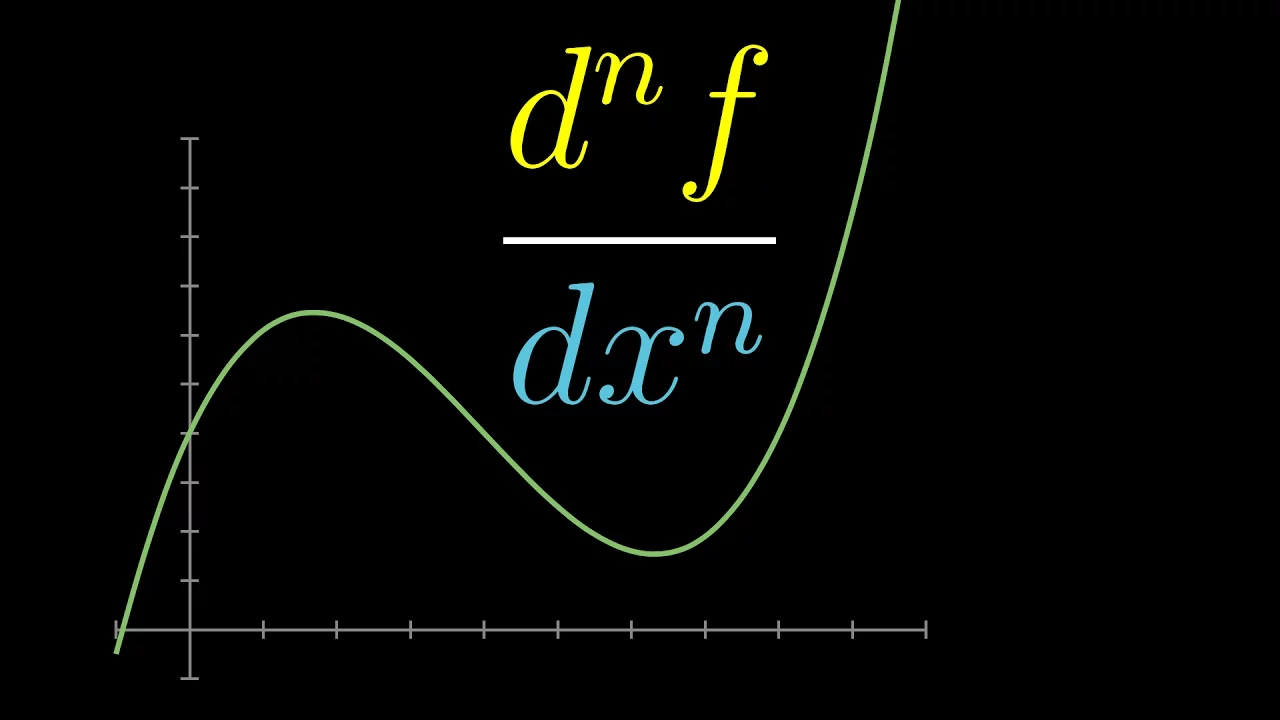



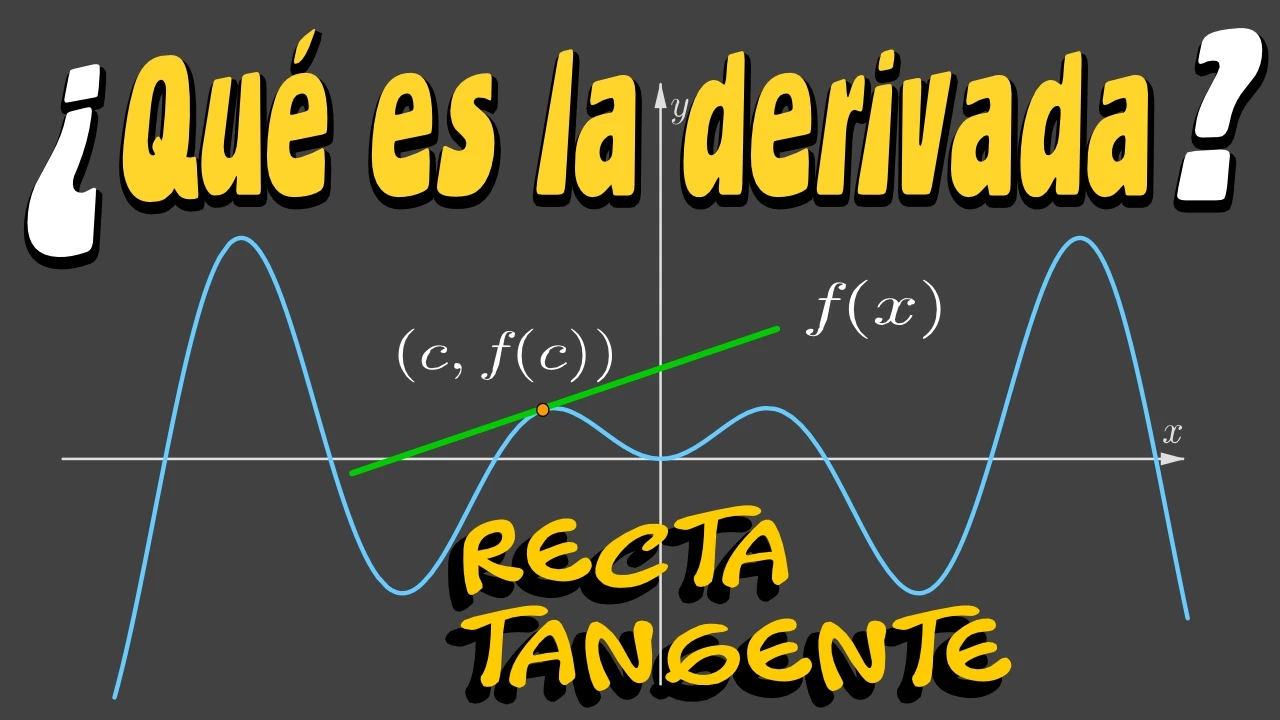
A derivative represents the slope of a curve at a specific point, which mathematically equals the rate of change of a function. In the context of motion, the derivative of position with respect to time gives velocity, and the derivative of velocity gives acceleration. For example, when position is a straight line (constant velocity), the derivative (slope) is constant; when position is a parabola (accelerating motion), the derivative (velocity) changes with time. Derivatives are not defined at sharp points or discontinuities where a tangent line cannot be drawn.
What Is a Derivative? An Introduction to Calculus 1 Concepts
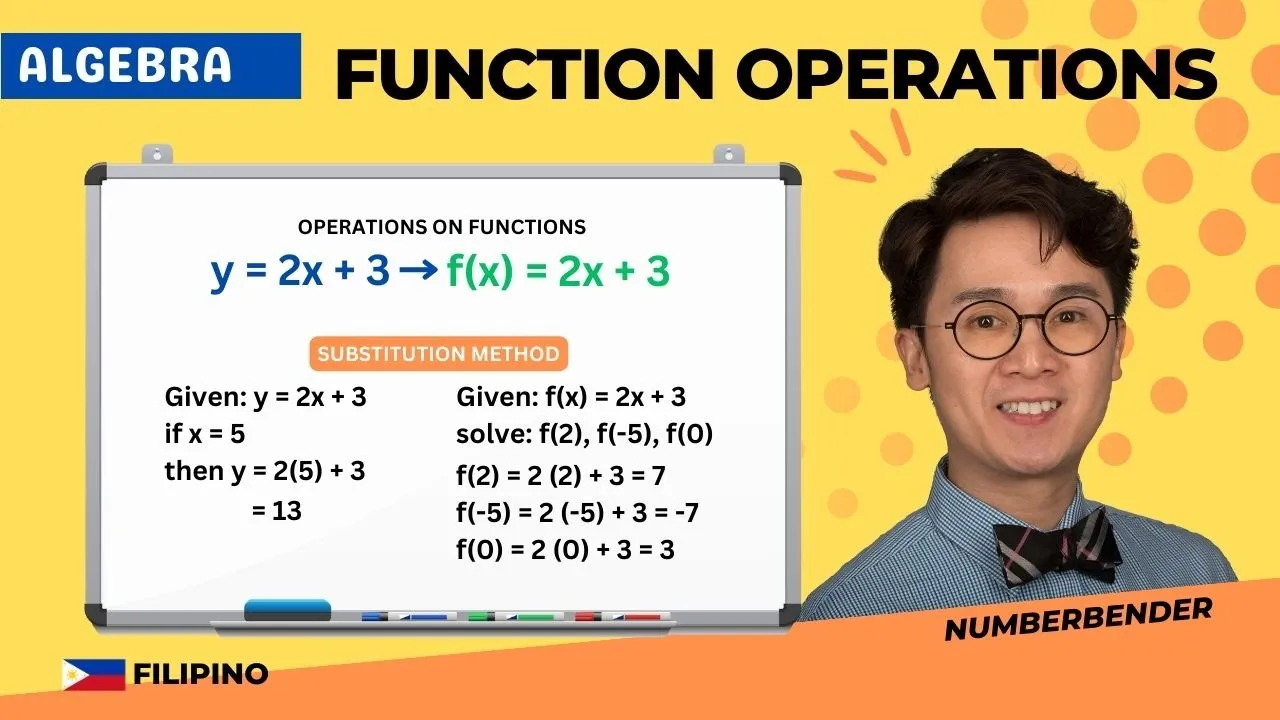
Added:Understanding functions, function notation, and how to manipulate algebraic expressions.
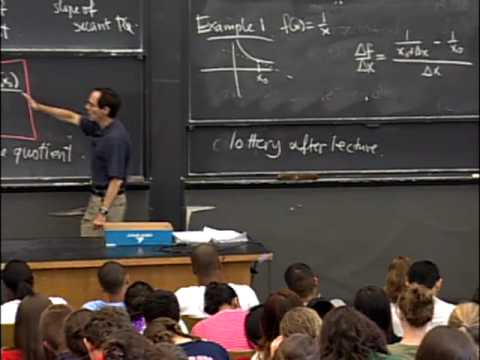
The geometric concept of slope, particularly finding the slope of a line passing through two points (secant line).
The mathematical concept of limits, which is essential for understanding how a secant line transitions into a tangent line.
Basic physics concepts of average rate of change, such as average speed or velocity.
Basic rules of differentiation (Power, Product, Quotient, and Chain Rules) to compute derivatives without using the limit definition.
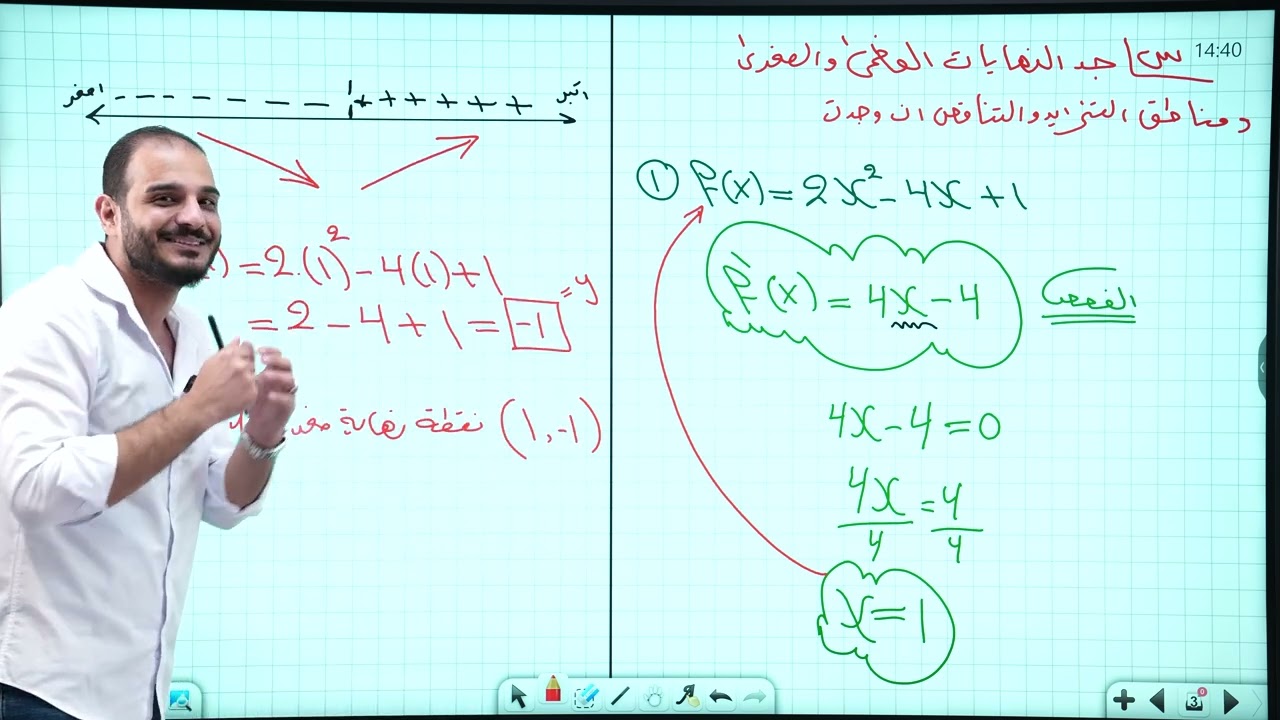
Using derivatives for curve sketching, including finding critical points, local extrema, and intervals of increase or decrease.
Real-world optimization problems, such as maximizing area or minimizing costs using the first derivative.
Understanding higher-order derivatives, specifically how the second derivative relates to concavity and physical acceleration.
213.5K views4Klikes25:27Original Release: 2016-02-04
hi and welcome to the calculus one video tutor the purpose of this DVD course is to teach you about calculus obviously the way we're going to do that is we're going to work a lot of example problems in each and every section before we go into that stuff I just want to give you my two-minute speech on on calculus and why it's important um the first thing I really want to say is first of all put all of your fears aside okay calculus has this bad reputation of something really hard to understand something really complicated because gez they named it calculus I mean calculus just sounds mean okay so I want you to take those thoughts I want you to put them on the back burner because they're not true I'm going to teach you how to do calculus and it's going to seem like third grade math that's my goal okay my goal is to work every step step by step by step and to do enough problems so that you feel comfortable doing them on your own and the goal is that getting that experience will help you go into your homework and into your tests and um do well right off the bat now the other thing wanted to say is that I'm not going to work problems of every type I'm not going to cover every single topic that you might cover in class so what you're going to need to be willing to do on your end is to pick up the book and to work additional problems I promise you I've tutored a lot of people in this subject and in other subjects in math and really the way you do it is just like football or hockey or soccer you have to practice it Okay so I'll do my part I will teach you the the I won't say the shortcuts but the the the quick and the straight truth on how to do the problems I'm not going to have a lot of theory I'm going to explain what I need to explain to you mainly I'm going to show you how to do it by working examples so watch the DVD course from beginning to end and I promise you that if you do that and if you uh make sure you understand what I'm talking about before I go on and we will be in good shape um okay so let's move into the the topic of this particular section of the class the first section which is um the concept of a derivative okay um there are two main things that you're going to have to learn in calculus one if you have to just boil them down the first one is called the derivative and we're going to devote the next several sections to that and then the second topic really is called an integral and they have goofy really scary sounding names okay um but instead of just telling you what a derivative is I want to show you what a derivative is so let me try to do that let's say this this pen here okay is moving along at a constant speed like this it's not speeding up you know it's not slowing down it's just marching across your field of view like this at a constant speed okay so if it were doing this okay and and if you were in your car and it were going along like this then you would say it would be going at like I don't know 10 miles an hour constantly the needle at 10 miles an hour okay so it goes across constant like this so if we were to plot the position the position of of this pin as a function of time what would it look like if we did that we would have a graph like this and this would be time and this would be uh position I'm going to say POS for position okay and then along this axis you would have little tick marks for Time 1 second two second 3 seconds 4 seconds so on and then on this axis you would have you know your distance you know how far away have you have you gone from the origin okay so this could be like one feet you know one foot two foot three foot and so on so if this pin is going along your field of view at a constant rate what would this graph look like I think you'll you could convince yourself that this graph is going to look like a straight line because each unit of time that I go forward it goes It goes forward in position every time I go 1 second it goes up the same amount in position so as I go forward in time it goes forward in position by the same increment each time I go one second it goes up a certain amount each and every time okay something that that would accelerate if I were to accelerate this in front of you then it it might look something like this because as I go forward in time it might just scoot on by faster than you can really keep up with it but that's not what I'm really after here so this is called um the graph of of this pen as it goes across your field of view at a constant at a constant velocity so then if you were to write this as an equation you might have the position as a function of time would equal and I'm just going to say in words here a straight line okay obviously a straight line um okay and in in equation terms uh that's just u m which would be the slope of the line times time if you go back and remember from your algebra the formula for a line in the most basic sense is just some slope times a time it goes through the origin here so there's no there's no y inter the Y intercept zero so it's just p is equal to Mt where m is just a slope it's a number 1 2 3 4 it's just a slope okay now if I asked you the question okay that this is a graph of the position of this as a function of time as it goes across your field to view then how could you plot the velocity or the speed is another way to say this of this pen that goes across your field of view how would you do that well I already told you and when I set this up to to kind of explain this to you that this pen is moving along your field of view at a constant speed I already told you that so it's kind of I kind of already gave you the answer um the answer is well it's moving across your field of view at a constant speed and so if it's moving across your field of view at constant speed the velocity must be a constant in other words as I March forward in Time 1 second two seconds 3 seconds 4 seconds 5 Seconds as I March forward in time the velocity does not change it's constant it's constant in this case at you know 3 m/s or something like this or whatever speed you want to represent if it's if it's going faster well then the line will be up here and if it's going slower well then the line will be down here but in this case I just pick I just picked a number okay if you were to write this as an equation the velocity is a function of time you would say the vity is function of time is constant because I just told you that plus it looks like it's constant isn't it okay and then finally we're going to draw one more quick graph here as a function of time what is the acceleration of this pin that goes across your field of view well I think you can convince yourself that since it's going across your field of view at a constant velocity I've kind of again also already told you implicitly it's not accelerating acceleration is when you speed up or you slow down but when you go straight across at a constant velocity the acceleration is zero so the acceleration as a function of time is going to be right here at zero and it's going to be hard to see with all this black ink everywhere but it's right here along the axis all right so we have a pin that goes across your field of view at constant velocity its position is going forward at a constant rate per unit time its velocity is a constant because it's not speeding up or slowing down and again because it's not speeding up or slowing down its acceleration is a flat zero because this is zero down here and if we had to write this as a function we would say the acceleration as a function of time equals can you guess what the big fat zero because there is no acceleration for this problem that I'm giving you here all right now you will be surprised probably if I tell you that we just took two derivatives on the board in um not in equation form or not you know rigorously with a bunch of equations but we've done I have already explained to you what derivative was I just didn't tell you it was a derivative okay big picture is and you're going to have to remember this but it's not going to be hard to remember the derivative of something is just the slope of it okay or you could say the calculus books like to say it's the rate of change okay so if you look at this graph here okay the position graph um when you take the derivative of the position you get the velocity when you take the derivative of the Velocity you get the acceleration so these are two derivatives we've taken a derivative here and we arrived at this so the velocity is the derivative of the position and when you take the derivative of the velocity you get the acceleration so all this derivative business what does it really mean I'll say it one more time the derivative is the slope of your curve okay in this case it's not really a curve it's just a line so the line has a fixed constant slope think about it from algebra the equation of a line is M * T where m is the slope and M is constant so here m is a constant the slope of this curve is a constant so when we take the derivative of position and get the velocity the slope of this curve is what we're what we're saying is a derivative and the slope is a constant so it's a constant here the velocity is the derivative which is the slope of this and since the slope is a constant the velocity is a constant okay now let's look at this again the derivative of a curve or function or anything like this is the slope of the curve in this case this is a a flat line okay what's the slope of the line well it's flat okay you should remember from your algebra that the slope of this is just zero there is no slope slope increases as you go up with your lines like this eventually your slope gets to Infinity if you go straight up and down because it's infinitely steep okay but when you're flat like this it's like going up a mountain top you see you go up the mountain this is real gradual slope almost zero you see I live in Houston slope is zero around here there's really no Hills but when you get to Colorado you go up the mountains slope gets higher okay so here the slope of this is zero so the derivative of velocity in this case this curve which is the acceleration is zero and it's zero for all values of time because the slope of this is zero for all values of time and this is a constant because the slope of this is a fixed constant for all values of time okay so I want to go ahead and formalize a few of these things um that we've just talked about not really so much formalize it but just sort of write it down a little bit so you can see what the heck I'm talking about in words or in equations okay the slope of the position function which is this guy is the velocity function that is a fact that is just calculus 101 basic fact the slope of the position is the velocity okay the slope of the Velocity is the acceleration that is a fact a universal law of nature that is calculus 101 basic physics basic calculus and just to beat it beat it into your head just so that you uh are with me here the slope of a curve is what we call a derivative all right you have successfully tackled in a conceptual way what we're going to spend the first half of calculus one on okay in your class you're going to learn about derivatives for about a month and a half or maybe almost two months and you're going to learn about integrals that is what a derivative is from here on out we're going to talk about some mumbo jumbo and I'm going to show you how to take derivatives of more complicated functions than just lines okay and they're going to become in nature after a while and I'm going to teach you how to do that hopefully without too much pain uh before we do that I want to go ahead and just give you a little bit of a flavor for something that's not quite so simple so before we jump into a bunch of equations I'm going to give you another example kind of like that one that we just did just a second ago except it's not going to be quite so simple and the point of them is that you'll be able to compare the two the two uh examples that we just did together okay so what if we have a pin that goes across your field of view and it accelerates as it goes across so it's speeding up you see it starts out slow and then it speeds up like this well if we were to draw the position P of T I'm going to call this the position as a function of time what would that look like well as you start off in time it's going a certain speed then it's getting faster and faster and faster and faster and then it goes like this well your POS position as you get farther in time is going to go rapidly up because I'm speeding up so it's going to look like this so for this particular example I'm going to say p of T equals t^2 okay remember the uh equation of a parabola kind of looks like this curve like this so I'm just going to say that this position function is a parabola which is given by this equation here okay now you might look at me and say okay smart guy how are you going to take the derivative of this function when it's not a line okay I mean I already told you the derivative is the slope of the curve okay but this curve is changing so what slope do you use I mean what do you what do you do here well when you think about it here near the origin the slope is very shallow because I'm just starting out because I'm just starting to speed up okay and as I go up the curve the slope of this curve gets steeper and steeper and steeper eventually gets real steep as I get up there so that's why I chose to do this problem because it is a little bit um more thought-provoking what I really want to show you is that the slope of this curve uh let me back up and just say not the slope of the curve the slope of the line tangent to the curve here is pretty shallow okay the slope of a line t tangent to the curve here looks more like this and then if I'm going to go up here the slope of the line just barely touching the curve there looks something like that so when I say the slope of the line tangent I mean a line that barely touches in one point okay that's how you would look at the slope so obviously the slope is changing as you go up the curve because you're speeding up okay that's why this problem is a little bit more challenging than the one before so then I ask you what would the velocity look like same thing we did last time V of T velocity is a function of time okay well I already told you that it was speeding up right so the velocity must be increasing as I go up in time okay that means when I start out here I have a certain velocity and it's getting bigger and bigger and bigger and I'm speeding up and I'm speeding up and that's why my velocity is going up up up up this would be like sitting in your car and constantly pressing on the gas pedal down down down down you start 10 m hour 20 M hour 30 miles hour 40 mil hour what are you doing you're accelerating that's what you're doing so your speed is going up okay so the derivative of the position again gives you the Velocity in this case your slope here which is is the slope of the tangent line to the curve is very low so your velocity is low because the the slope of of this of this line tangent to the curve is the derivative of this and the derivative of this is velocity as you march up the Curve Your slope gets bigger so the derivative gets bigger and your velocity is bigger the slope of this little um guy tangent to the line to the curve here is bigger still and since the slope of the line tangent is the derivative and the derivative is the velocity velocity goes up so as the slope goes up velocity goes up and so you've taken a derivative there in graphical means so if you're going to write it down then you could say V of T is 2 * T let's say Okay um in fact this is the exact derivative here but I haven't shown you how to calculate it in terms of functions yet but this is the derivative of t^2 is 2T and this is a line with a certain slope okay so it describes this equation right here now I ask you what is the acceleration a of T well we already said that in the in the initial problem statement that you're speeding up right so we know that we're accelerating so then you have to ask yourself the derivative of the Velocity is the acceleration that's another way of saying what is the slope of this curve well the slope is constant the slope did not change unlike this the slope is constant because this is a straight line so I'm going to go up here to two Okay and I'm going to draw a line here constant slope which is a constant acceleration so that means as I move forward my acceleration I'm accelerating at a constant speed like this could be accelerating It 2 m/s squared or something like that constant acceleration I'm constantly increasing my velocity by the same amount each time that I that I um go forward in time okay so this is a the acceleration would be a constant in this case it's equal to two and so you have constant acceleration so you have gotten an introduction a basic introduction to derivatives the big picture to remember here is derivative of something is just the slope of the line tangent to the curve you know if it's just a line it's just the slope if you have something curvy well then at each point there's going to be a line tangent to that curve and the slope of that line is called the derivative it just so happens that position velocity and acceleration are just really familiar things for us to talk about because you all Drive in your cars and you know what those terms those terms mean but you could take the derivative of any function at all the function could be describing the pressure change in a vessel it could describe um the trajectory of a spacecraft anything like this okay any any function you write down you can take the derivative of it when you do that you're taking the slope you're looking at the slope you're looking at how does that line change or how does that curve change uh with respect to time or with respect to something else that you might be looking at okay cool let's go forward and let's let's make this a little bit more Concrete in terms of what your book is going to actually tell you I'm just going to write some stuff down here that I want you to remember the derivative is by definition equal to the slope of the line tangent to the curve at a point okay at a given point so the slope could change as you go up and then your derivative would change okay so in order to I'm going to teach you a little bit of the um the way that you write this down I'm going to show you the symbols and calculus that we use to talk about derivatives remember we said that velocity was the derivative of the position well you write that like this the velocity okay is equal to P Prime of T remember P of T is the position when you put this Prime here this means derivative okay so you have the position function you take the derivative of it which is the rate of change the slope of that tangent line and what you get back is called the velocity another way to write this these are exactly equivalent ways to write it is the derivative of P of t with respect to T so you would say in words DP DT here you would say p Prime of T in either case you're saying the same thing what you're saying is give me the slope of whatever function I'm talking about P of T A of T U of T it doesn't matter so in this case you're taking the derivative of p with respect to time because time is the the dep the independent variable there and so this is the terminology here P Prime of T dpdt you'll see both of them in your books they mean the same thing they're just different ways to write it and similarly the acceleration as a function of time is equal to V Prime of T you take the derivative of the Velocity that's what this Prime means and you get back the acceleration and in order to write it in this way you would say d v DT okay so the derivative of the Velocity is equal to the acceleration now I'm going to show you something that might confuse you a little bit but I promise you that I'll make it clear this is also equal to pble Prime of T do you have any idea what that might mean okay well one little Prime means first derivative it means I give you a function take the derivative of it which means take a look at the slope and then you'll get a function back and that will be called the derivative when you have two little Marks here that means do the derivative two times so take one derivative and you get some function back and then you take the derivative again you look at the slope again so two times total and you get you get that so if you remember we had our position graph I'll put P our velocity graph and then our acceleration graph and I said this was a velocity was the derivative of position and then acceleration was the derivative of velocity so that's what we're writing here well if you start with position and you go here's the first derivative here's the second derivative well you arrive at the acceleration so what we're saying is the acceleration is the second derivative of the position one two it's really not not rocket signs first derivative is velocity second derivative of the position is the acceleration so the other way to write this in terms of that that D business here is d^2 V D t^2 it's just notation I'm just trying to teach you notation here what you're saying is I've taken the second derivative second derivative of the oh I have a a typo here the second derivative of the position with respect to time and that's equal to the acceleration okay so it's just notation okay now the next thing I want to really say though is that just to kind of Point things out make things clear let's say you have some random curve looks kind of crazy and then here there's some sharp point or something okay well clearly if I want to look at the slope of this curve as I go along here would be like the slope here so the derivative would be whatever the value of the slope is uh which is a positive value if I'm looking at this in this at this instant the slope looks something like this the slope of the line tangent to this curve which is a negative a negative slope because it's going the other way right um so that's another value of slope and so at every point you've got a value of the slope based on the line tangent to this curve okay so it's changing constantly as you go up and down the slope is changing at this point you have a cusp the derivative is not defined here the derivative not defined basically the rule of thumb the thing you really need to remember is in order to take the derivative you need to have a smooth function you can't have a discontinuity or a sharp point or anything like that or a step function you have to have a smooth curve in order to take a look at that line tangent to it because when you think about it how would you draw the line I mean you got a single point here would it be here would it be here I don't know so you can't really do that
Up Next

8:00
Derivative Definition Explained Intuitively | Calculus Basics
@TheMathSorcerer
6.4K views•2015-06-11

4:43
Elliptic Curve Cryptography Explained: ECC, ECDSA, ECDH
@PracticalNetworking
28.5K views•2024-10-21
10:44
Fourier Series Introduction: The Big Idea Explained
@DrTrefor
387K views•2021-05-03
6:00
The Mathematical Impossibility of Accurate World Maps
@Vox
23.3M views•2016-12-02
Related Study Plans & Knowledge Roadmaps
Structured learning paths in Mathematics
mathematics
Tensor Calculus: Vectors to Riemann Curvature
01Mathematical Foundations: Linear Algebra & Calculus
02Covectors, Dual Spaces, and Tensor Basics
03The Metric Tensor and Index Gymnastics
+ 2 more learning modules
40h5 modules
Explore Roadmap
mathematics
Gödel's Incompleteness: Logic, Proofs & Limits
01Introduction to Formal Systems & Hilbert's Dream
02Set Theory, Cardinality, and Cantor's Diagonal Argument
03Arithmetization and Gödel Numbering
+ 2 more learning modules
14h5 modules
Explore Roadmap
mathematics
Galois Theory: Fields, Groups & Solvability
01Foundations of Abstract Algebra: Groups & Fields
02Polynomials & Field Extensions
03Splitting Fields & Symmetries
+ 2 more learning modules
24h5 modules
Explore Roadmap
mathematics
Non-Euclidean Geometry: Models & Geodesics
01Euclid's Fifth Postulate and the Birth of New Geometries
02Hyperbolic Space and the Poincaré Disk Model
03Geodesics: Defining Straight Lines in Curved Spaces
+ 2 more learning modules
15h5 modules
Explore Roadmap