










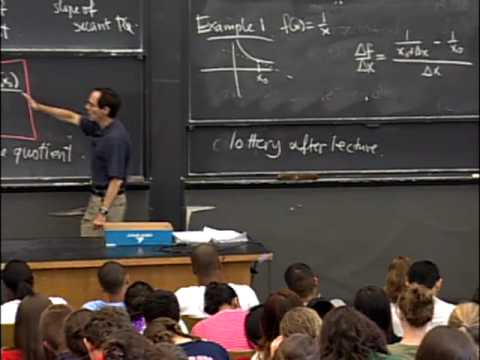


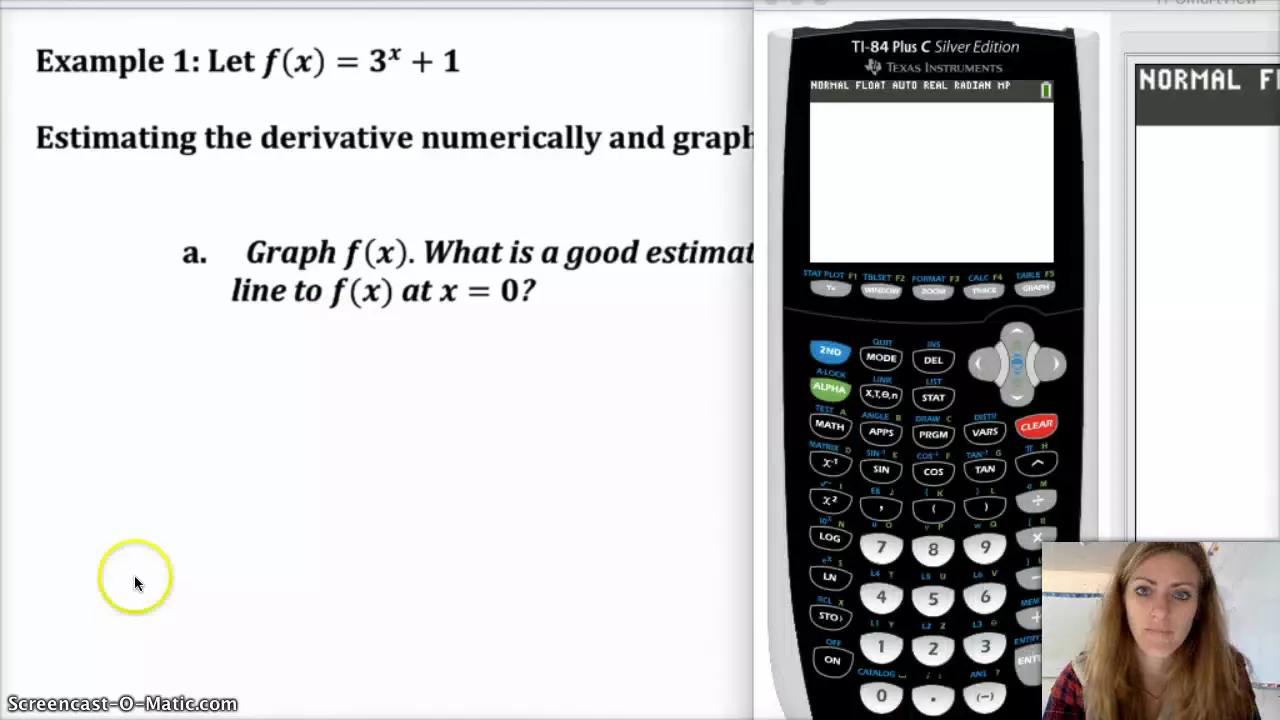










The derivative of a function at a point is defined as the limit of the slopes of secant lines connecting that point to nearby points on the curve as the distance between them approaches zero; this limit equals the slope of the tangent line to the curve at that point, extending the concept of slope from straight lines to curved functions.
Derivative Definition Explained Intuitively | Calculus Basics
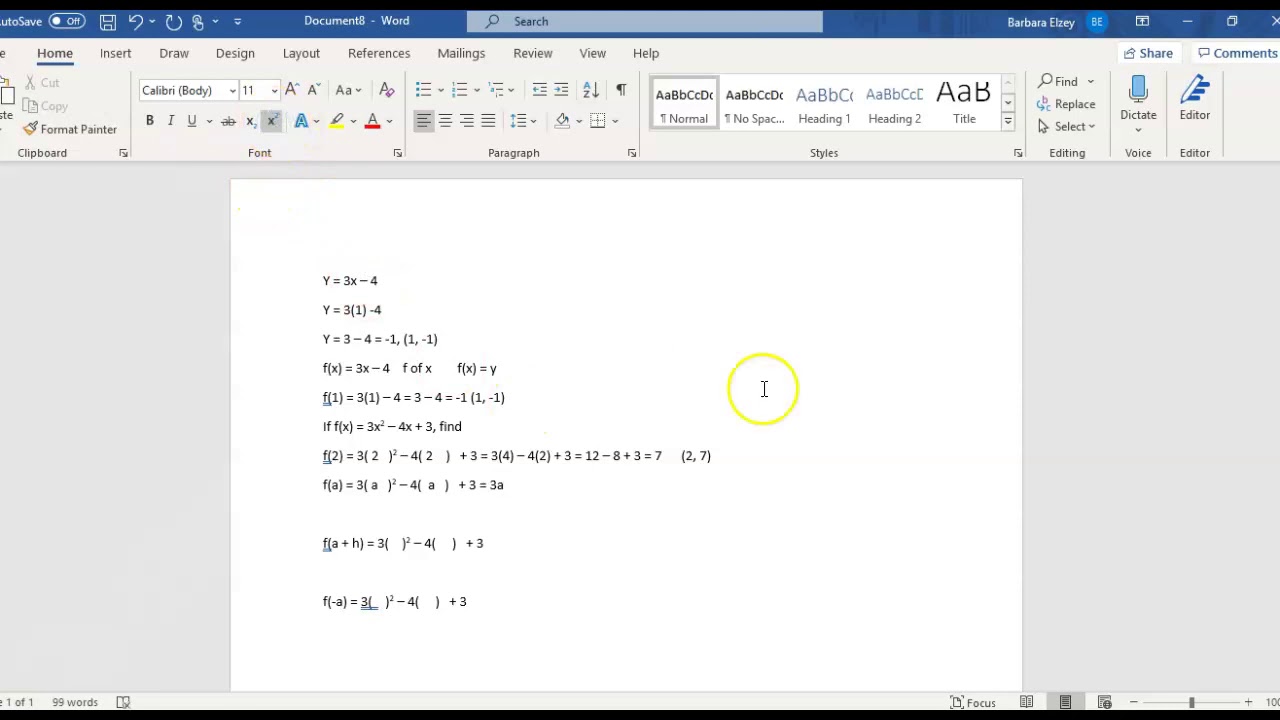
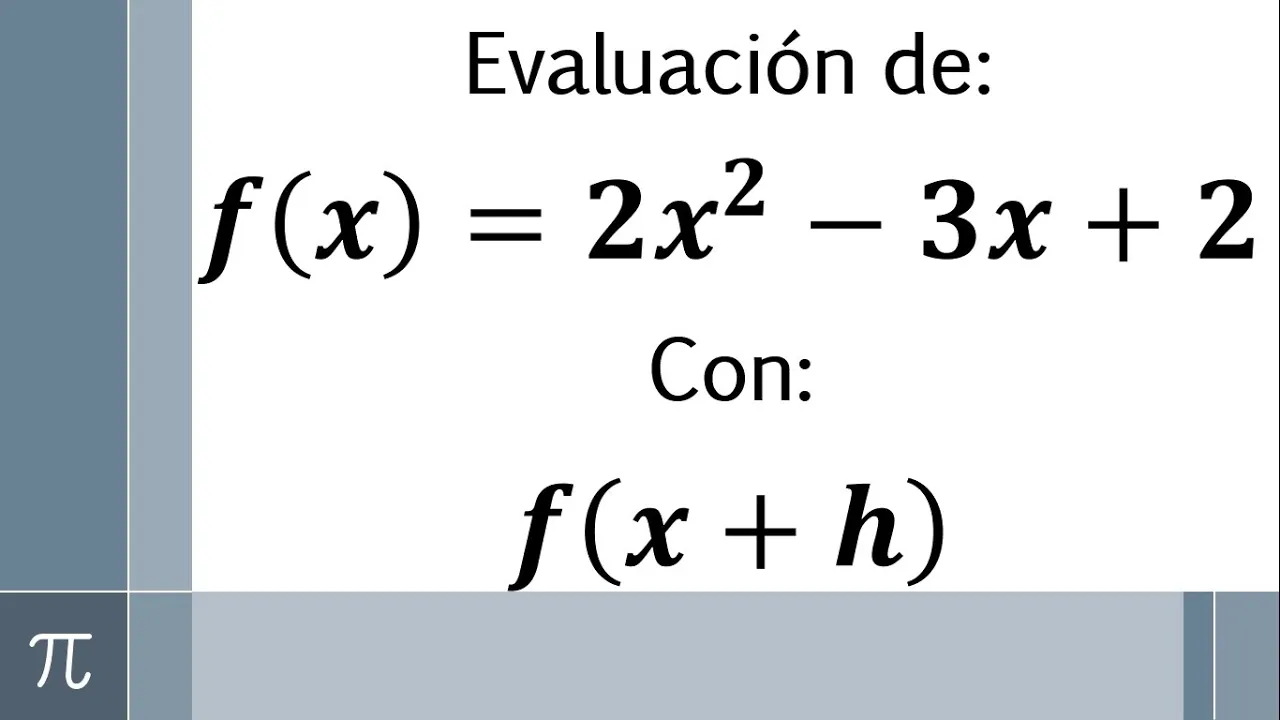
Added:Basic algebra and functional notation, specifically how to evaluate functions at $f(x)$ and $f(x+h)$.
The concept of slope as the constant rate of change between two points on a straight line.
An introductory understanding of limits, specifically what it means for a variable or interval to approach zero.
The geometric definition of a secant line as a straight line intersecting a curve at two distinct points.
The formal limit definition of the derivative, learning how to algebraically compute $f'(x)$ using the formula.
Standard differentiation shortcut rules, such as the Power Rule, Product Rule, and Chain Rule.
The concept of differentiability and identifying conditions (like sharp corners, cusps, or discontinuities) where a derivative fails to exist.
Basic physical and geometric applications of derivatives, including finding instantaneous velocity and determining equations of tangent lines.
6.4K views149likes8:00Original Release: 2015-06-11
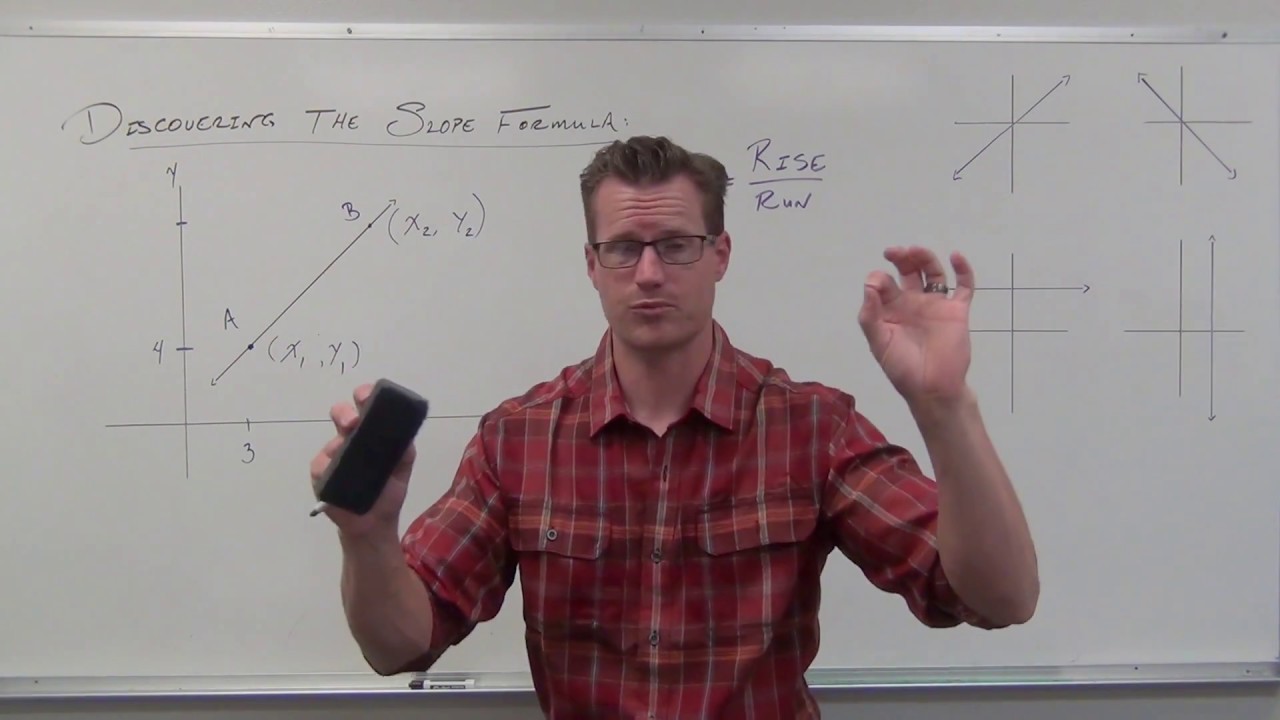
this is just a quick video to talk about what a derivative is so for notation we're going to let Y be equal to f of X and the goal is to find the slope of this function at X so find the slope of y at X so we want to find the slope of Y you might say well that doesn't make any sense it's just a function how can you find the slope of a function well for straight lines it's easy if you have y equals 2x plus 1 then that matches y equals MX plus B and so we see the slope is M equals 2 so in calculus the notion of a derivative tries to extend the concept of slope to things other than straight lines that's basically basically what it is so let's go ahead and draw a picture of our function let's assume that it looks like this and maybe here's X so we want to find the slope of this curve at this point right here at X now if this is X then the Y value here is going to be f of X and so the way we do this is we pick another point say over here and we call this point maybe X plus h so that this distance here is simply H and the corresponding y coordinate is up here and let's see if the x coordinate is X plus h and then the y coordinate is f of X plus h then what we do is we draw a line that connects these two points this line has a name okay this line is called a secant line secant line so what's a secant line it's just the line connecting those two points and what we'll do is we'll approximate or rather find the slope of the secant line so slope is rise over run so we have the run the run is clearly H we just have to figure out the rise well we know that this distance here is f of X and we know that this bigger distance here is f of X plus h that means that this distance here is going to be the big distance - the little distance so it'll be f of X plus h minus f of X so let's go ahead and write that down over here so we know that the slope of the secant line secant line can't spell it it's rise over run and so this guy here is the rise so it's f of X plus h minus f of X and the run in this case is simply H all right now here's where you have to use your imagination just just a little bit so what we're going to do is we're going to let H get closer and closer to zero so as H gets really really close to zero so we write that with a little arrow so as H approaches zero what's happening well as H approaches zero X plus h is going this way let's go into the left and as it goes to the left at this point here is going to travel closer and closer to this point so when that happens let's see let's pick up a stopping point say here when that happens you're going to get another secant line and when you're here you're gonna get another secant line so eventually you're gonna reach a line that just touches at X right the secant lines will approach this other line here this line here is called a tangent line tangent line so as H approaches zero the secant lines approach the tangent line so let me write that down the secant lines approach another line called the tangent line so approach the tangent line so that means that the slopes of the secant lines approach the slope of the tangent line so these slopes of the secant lines approach the slope of the tangent line let's go over that one more time we're almost done so we draw this picture we picked two dots we connect them we call that a secant line we find the slope of the secant line via the picture this is the slope of the secant line and then we say as H gets really really close to zero this point here travels to the left this x-coordinate here this x-value so it's going this way when that happens this point is going to move down the graph and you're going to get lots of secant lines so all of these secant lines eventually will reach here or it will get very close to it so the secant lines approach this other line which we call a tangent line so because the secant lines approach the tangent line the slopes of the secant lines approach the slope of the tangent line we can write that down using calculus we can say the limit as H approaches zero of the slope of the secant line so that's this guy here so if we take the limit of the slopes of the secant lines this is equal to the slope of the tangent line X and we call this the derivative when this limit exists we say it's the derivative of F and we write f prime of x equals this limit so this is the derivative of X it is the slope of the tangent line to the graph of the function at X let's do a concrete example really really quick so simple simple example easiest one let's look at f of x equals x squared so this is a parabola looks like this boom and let's find the derivative at X so you probably already know how to find derivatives if you're watching this video so you take the two you bring it down using the power rule formula and you subtract one from the two so you get X to the first power so just X so 2x so this is the slope of f of x equals x squared at X so to make it more concrete let's look at F prime of 1 well we plug it into our slope formula right it's a slope formula it's a slope function and you get 2 times 1 which is 2 so we're saying that the slope of f of X or more precisely the slope of the tangent line to the graph of F it's the slope of f of X at x equals 1 is 2 right because this is the slope so it's the slope function so the tangent line maybe here's one maybe the tangent line looks something like that so 2 is the slope of this line one more really really quick let's look at a simpler function f of X equals 3x plus 7 so taking the derivative using the derivative formulas the derivative of 3x is simply 3 and the derivative of 7 is 0 so we get 3 and that makes sense this is a straight line with slope equals 3 for every X right so the slope of a straight line doesn't change but for other functions the slope does change and it could change and it certainly does so that's why we use calculus that's what we use derivatives to find the slopes of functions at various points so hopefully that made some sense it kind of just rushed this video and up on the spot so that's it
Up Next
15:53
Calculus 1 Derivatives: Rules, Trig, and Inverse Functions
@bprpcalculusbasics
26.1K views•2024-02-19

4:43
Elliptic Curve Cryptography Explained: ECC, ECDSA, ECDH
@PracticalNetworking
28.5K views•2024-10-21
7:18
Linear vs Nonlinear Differential Equations Explained
@TheMathSorcerer
332.9K views•2018-05-15

6:00
The Mathematical Impossibility of Accurate World Maps
@Vox
23.3M views•2016-12-02
Related Study Plans & Knowledge Roadmaps
Structured learning paths in Mathematics
mathematics
Tensor Calculus: Vectors to Riemann Curvature
01Mathematical Foundations: Linear Algebra & Calculus
02Covectors, Dual Spaces, and Tensor Basics
03The Metric Tensor and Index Gymnastics
+ 2 more learning modules
40h5 modules
Explore Roadmap
mathematics
Gödel's Incompleteness: Logic, Proofs & Limits
01Introduction to Formal Systems & Hilbert's Dream
02Set Theory, Cardinality, and Cantor's Diagonal Argument
03Arithmetization and Gödel Numbering
+ 2 more learning modules
14h5 modules
Explore Roadmap
mathematics
Galois Theory: Fields, Groups & Solvability
01Foundations of Abstract Algebra: Groups & Fields
02Polynomials & Field Extensions
03Splitting Fields & Symmetries
+ 2 more learning modules
24h5 modules
Explore Roadmap
mathematics
Non-Euclidean Geometry: Models & Geodesics
01Euclid's Fifth Postulate and the Birth of New Geometries
02Hyperbolic Space and the Poincaré Disk Model
03Geodesics: Defining Straight Lines in Curved Spaces
+ 2 more learning modules
15h5 modules
Explore Roadmap