








![[Toán 11] Ôn tập giữa kỳ 2 (phần trắc nghiệm và đúng sai)](https://i.ytimg.com/vi/mML5cSkRrqQ/maxresdefault.jpg)












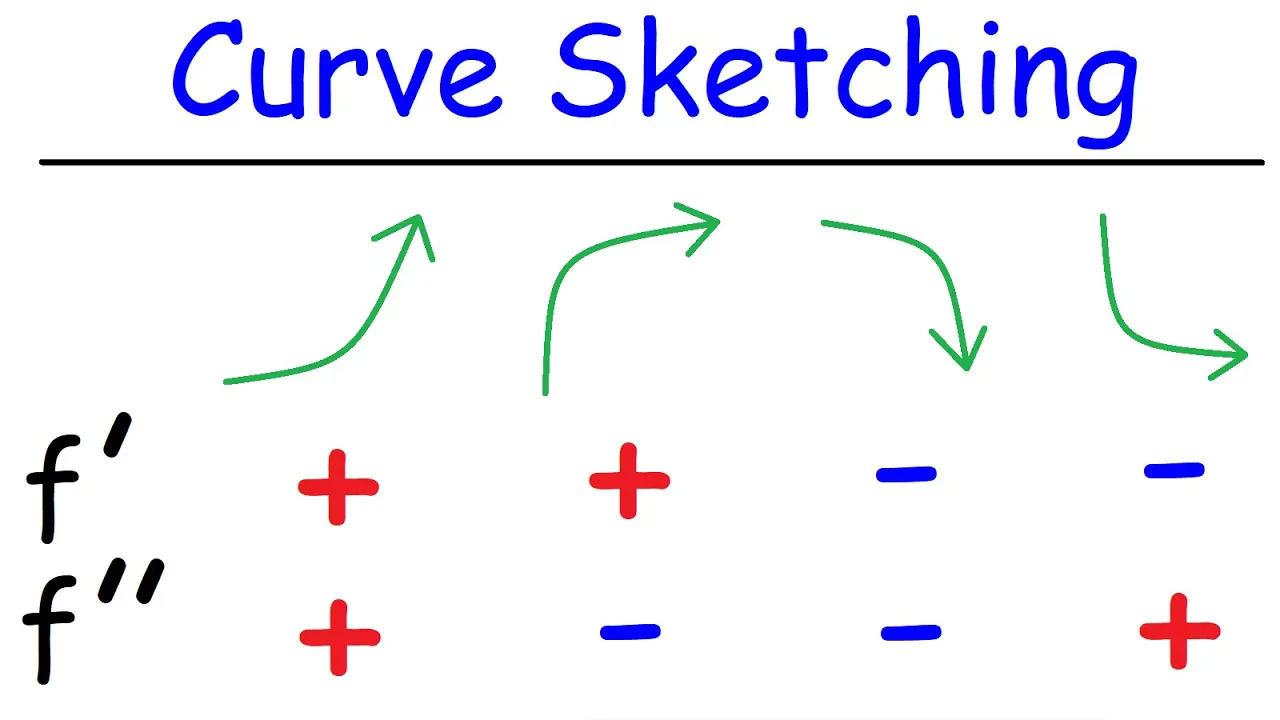




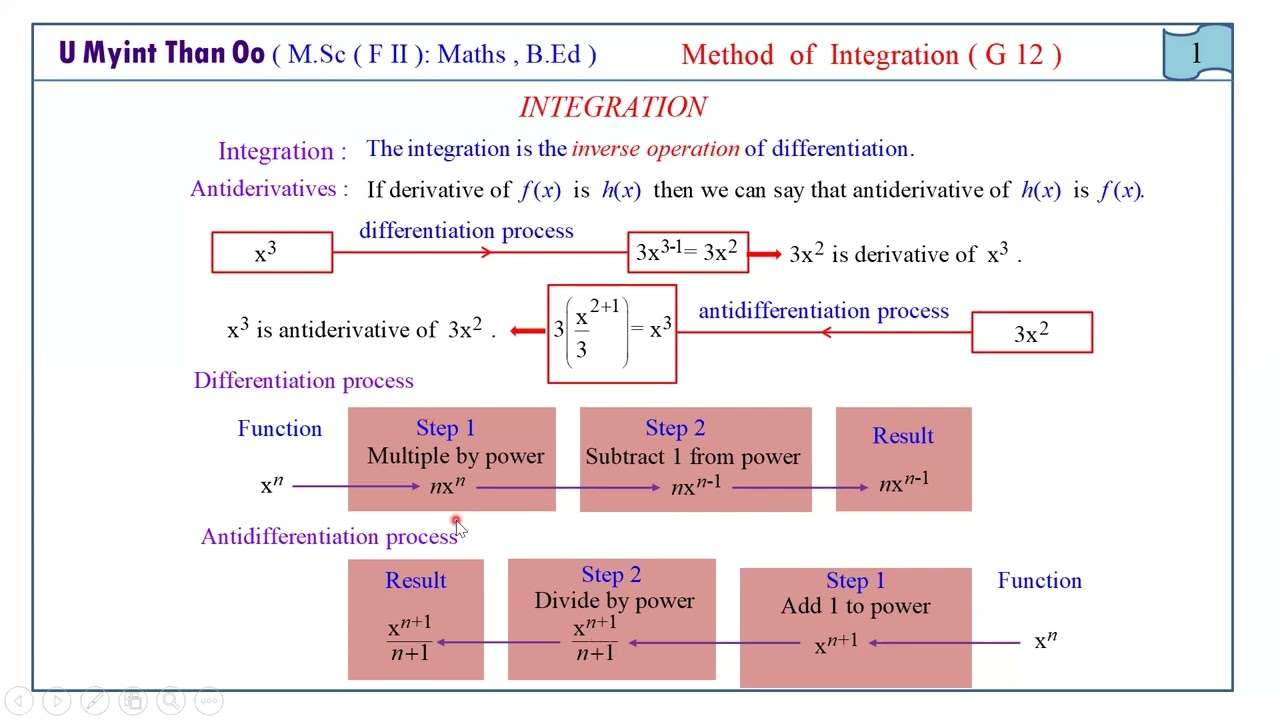
This video provides a comprehensive overview of all essential derivatives required for Calculus 1, covering the fundamental definition of the derivative as a limit, core differentiation rules including the constant rule, power rule, constant multiple rule, sum/difference rule, product rule, quotient rule, and chain rule; followed by derivatives of algebraic functions (reciprocal, square root, exponential, logarithmic), trigonometric functions (sine, cosine, tangent, secant, cotangent, cosecant), inverse trigonometric functions (arcsin, arccos, arctan, arccot, arcsec, arccsc), and special cases like x^x. The instructor emphasizes remembering that functions starting with 'c' (cosine, cotangent, cosecant, and their inverses) have negative derivatives, and provides tips for memorizing these formulas effectively.
Calculus 1 Derivatives: Rules, Trig, and Inverse Functions
Added:[Music] today I will show you all the derivatives that you have to know for your Calculus one class and I know they're all over there but I would like to fit in everything right here on this board for you for notes you can check on my patreon anyway let's go ahead and get started of course with the definition of derivative F Prime of a as a limit this is the limit as X approaching a and then right here you pretty much have the slope formula f of x minus F of a and then over x - A as you can see we have Y2 - y1 over X2 - X1 here is the just the first version the second version is the one with h frime of a equals the limit as H approaching zero and the H is the distance between this point and that point so what we will do is we will have F of a + H and then minus F of a and then divided by just H why do we need a second one though because of the following this is the official definition of the derivative as a function here we have frime of X imagine if we put X into this a that's okay but if you put X into this a that a and that a well we get X us x no you get zero on the bottom no good but if you put X into this a this a and that a it's all okay so that's why we need to use that and this is the limit as H approaching zero of just replace all the a with x's so x + H minus f of x and then all divided by H and these are the definitions in terms of the limit for the derivative after the definitions of course here are the differentiation rules the first one I'll put down the constant rule for you taking a derivative of a constant C is just equal to zero and then the next one everybody's favorite taking the derivative of a power function X to some power do say n keep in mind X is in the base the N right here can be any number it can be 17 it can be Pi it can be -2 etc for this situation just put the power to the front and then minus one and we get n * x to the nus1 power now let's say if we have a constant multiple with a function so C * f for this one you can put the C on outside and then just multiply by the derivative of f so F Prime like that so just a real quick example if you're taking a derivative of let's say 3x to the 5th power well you can put a three on outside and then focus on taking the derivative of x to the fifth power to do this use the power rule put the power to the front minus one so you have three * this is 5X to the 4th power and then just multiply get 15 x to the4 so that's what that is for and then the next one is if we're taking a derivative of a sum or difference of two functions so DDX let's say we have f plus or maybe minus G for this you can just go ahead and take the derivative the first one and add it with the derivative of the second one but if this a subtraction you just subtract instead so if you are taking a derivative of X2 + x^ 3 power just do the power rule here you get 2x to the first Power and then you do the power rule right here and add them up 3x s so that's that after the sum what difference of course we can also talk about the product rule and this right here it requests you to remember it right here I will have a way for you guys let's write down the F first right here and also the G right here and then we are going to just differentiate it separately the first function differentiate that and then the second function differentiate that and then you do this times this which we get f * G Prime and then we are going to add this with this times that which is G * F Prime especially if you're doing derivative for the first time this right here will be really really helpful you can check out my other videos for workout examples for that after the product of course we have the equation so we have F over G for this one remember quotient is the opposite of a product instead of putting down f and g let's write down G and F G goes first and then just differentiate this and differentiate that still do the same thing yeah g * F Prime that will go to the top and then remember it's the opposite for product rule we add for quo rule we subtract and then we just do this times that f * G Prime and if we started with a fraction we'll end up with a fraction as well we are going to divide this by the denominator G to the second power why is this true you can check on out video for it the next one of course everybody's least favorite the chain rule is a composition of two functions that's the F of G this is how you can do it you have F of a box s of something inide of the box is the G5 function take a look at this and take the derivative F Prime of a box and then take a look at this and take the derivative G Prime for this just go ahead put the G function back to the box and then multiply so right here in the math notation we get F Prime use parenthesis for the formula but the Box will help you to understand inside you still have the G function it states the same but on the outside you have G Prime that you have to multiply now it's the chain rule so these are all the different differentiation rules now here are the derivative of the usual functions that you have to know let's start with the derivative of some situation from here 1/x this is a very common one I think you should remember the answer for that is -1 overx s for this right here the reason is just look at this as X toga1 and then bring the power to the front minus one we get x^ the -2 that's how we do it but it will happen quite often it's easier if you remember it another similar situation is you differentiate square root if you remember this you get 1/ 2 square root of x you will be dealing with square root functions a lot it's worthwh to remember it why is this true because look at this as x to the 1/2 power put the power to the front minus one we get 12 x to the -2 so you see we have the 1 over two and x^ the - one2 goes to the bottom 1/2 power is the square root now let's talk about exponential functions the first one of course the derivative of e to the X this right here is very beautiful it's still just e to the X but if if you are talking about the general case when you take the derivative of let's say a base B to a power x this right here you first repeat it you have B to the X power but you multiply by natural log of the base B the reason why is because we can look at this B as e to the LM B power and then rais to the X power so the function is just e to this times that so we have lmb times x power taking a derivative of this this thing right here repeats first because it's that e to a box so the box right e to the same box is this and then you have L MB * X but look at the box and then differentiate that this right here is just a number so a number time x the derivative is just that number L and B so that's why we have the Ln B and this right here is just that which is just that which is just B to the X so that's the general case for the exponential function now the inverse of them of course here is the derivative of natural log here we get 1 /x but the general case for that is taking the derivative of log base B of X this right here is similar to this and same idea similar idea to this or you can just use the change of Base formula for this it's easier that way actually this is the same as saying Ln X over lmb I take the derivative of that and we can put the one over L andb to the front by this rule so we have 1/ lnb times L times the derivative of Ln [Music] X what's this that's precis the 1 /x and remember but this is just a constant so let's multiply by L and B on the bottom so that's how you get that now these are all the nric functions and you know what's coming the next one let's put down the derivative of sin x and that's also put down the derivative of cosine X right here as well because s and cosine they are best friends in calculus the derivative of sin x is positive cosine X the derivative of cosine X is sin x but one way to remember that this is negative because cosine start with a c all the trick functions that start with a c you have negative derivative so negative sinx for that next let's take a look at the derivative of tangent X and also the derivative of secant x they're also best friends the derivative of tangent X is secant s X the derivative of secant it first repeats you have secant x and then invite best friend which is tangent X they both positive because you don't have C now if you are looking at the co- functions of this and that if you take a look at the derivative of the co- function of tangent of course cotangent X well it's the co- function of this you get cant squ X but you see the C so you have negative derivative likewise when you have the derivative of the co- function of that which is co C can X you know right away the C you should get Negative derivative same thing you repeats right and then just a CO version of that it repeats so you have the coant X and then its best friend is exactly that so coent X these are all the trick functions let's talk about the inverse of that so taking a derivative of the inverse sin x in fact you just need to know three and the other three pretty much come for three this right here gives you 1/ < TK of 1 - x^2 one goes first and then minus X squ why because the domain of infers X is from 1 to one likewise for this but in fact the end points are not differentiable for the iners function so you also don't get the derivative if you plug in negative 1 and one once you know this if you differentiate cosecant sorry inverse cosine it's just the same thing but combining with what I told you guys earlier we see the C make sure you have negative derivative next one let's talk about the derivative of inverse tangent you will see this a lot the derivative of this is 1 / 1 + x^2 the domains for both of this are just all real numbers by the way the limit as X approaching Infinity of inverse tangent of X is Pi / 2 you should also remember that it happens quite a lot now once you know this you can expect to know the derivative of the co function of that which is the inverse cotangent X again you end up with negative derivative and same thing right here now let's move to the derivative of inverse SEC X hopefully you don't see this one often right 1/x * the square root is the opposite of this x squ goes first and then minus one so here's the deal if you use James D textbook then this is okay but if you use other textbooks then you will see an absolute value around the X right here and the reason is depending on the domain depending on how they Define the inverse secant I don't really like this often so I don't really ask my students this often but I'll tell you this right here depends on your textbook so I'll say C textbook right and then of course you can also have the derivative of the co- function of that cosecant and then the inverse of that you see the C so you know you have negative derivative and address same thing x * s otk of x 2us 1 and again you have that absolute value depending on your text book all right almost done ladies and gentlemen I still have one little space this right here totally deserve to be on here the derivative of x to the X power you can do exponential you can to increas it differentiation by taking log first and then set equal just y equal to this and I set log l on both sides or you can look at X as e to the L and x and then do what I told you with that I will leave that to you for you to try right here the answer for this is it repeats you have x to the X power but you have to multiply by some other stuff and that other stuff is 1 plus l n x I did it in one take well this is actually my second take if you see my previous day which I took a while you can check out the link in the description but no cut for this video if you want to see a notes again check out the links to my patreon and best of luck to you in your calcus one class and you know it that's [Music] it
Up Next
How to Find Eigenvalues and Eigenvectors | Linear Algebra
@ProfessorDaveExplains
1.2M views•2019-07-17

Elliptic Curve Cryptography Explained: ECC, ECDSA, ECDH
@PracticalNetworking
28.5K views•2024-10-21
Fourier Series Introduction: The Big Idea Explained
@DrTrefor
387K views•2021-05-03

The Mathematical Impossibility of Accurate World Maps
@Vox
23.3M views•2016-12-02
Related Study Plans & Knowledge Roadmaps
Structured learning paths in Mathematics