







![DIEGO FUSARO: Globalizzazione, immigrazione e liberismo [1/6]](https://i.ytimg.com/vi/XhyajH61E6w/maxresdefault.jpg)












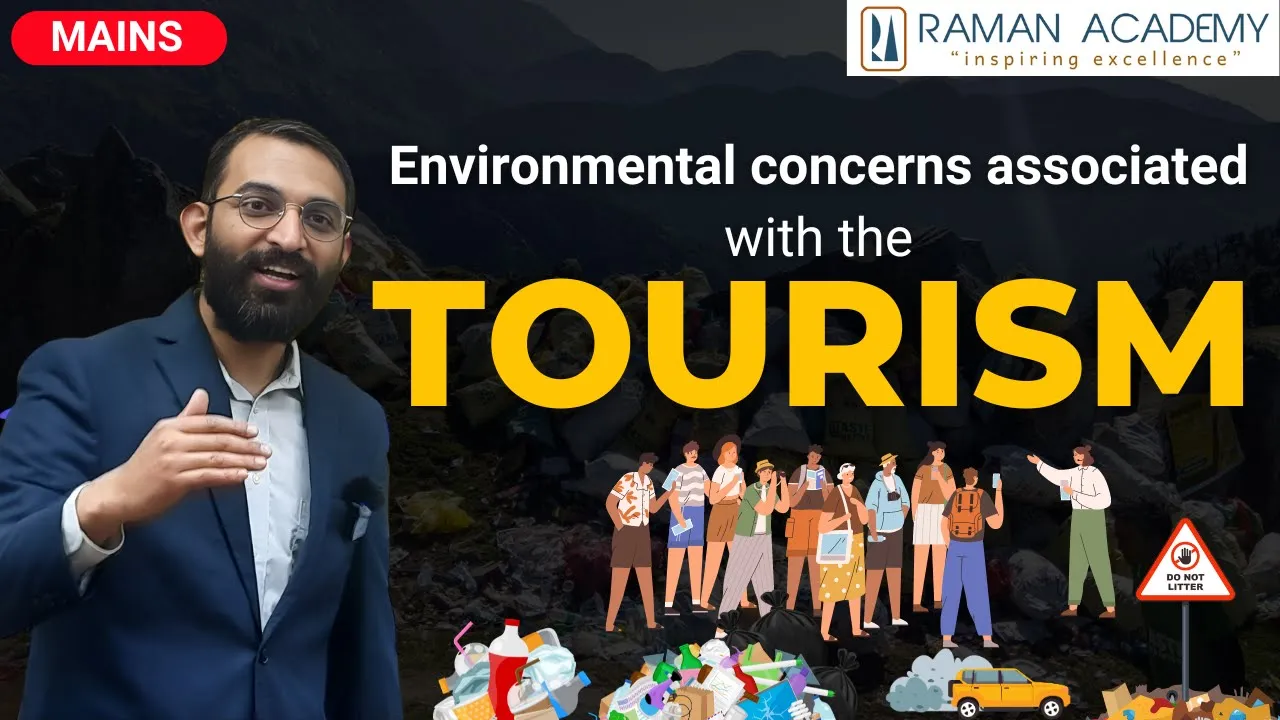
Over-tourism occurs when mass tourism degrades the very experiences it aims to provide, driven by factors including the global middle class expansion (particularly from China, where overseas trips grew from 10 million to 150 million in two decades), budget airlines, and social media platforms like Instagram; this phenomenon causes environmental degradation, damages cultural heritage, displaces local communities, and contributes significantly to climate change through aviation emissions, yet tourism also offers important benefits such as global cultural connections and economic investment in developing regions.
Understanding Over-Tourism: Causes and Solutions | The Idea File
Added:Basic Tourism Economics: Understanding how tourism drives local economies, generates employment, and influences infrastructure development.
The Concept of Carrying Capacity: The ecological, social, and physical limits of an environment or destination to sustain human activity without degradation.
Globalization and Mass Mobility: How increased global connectivity, rise of low-cost carriers, and social media have facilitated mass global travel.
Introduction to Sustainable Development: The basic principles of balancing economic growth, social equity, and environmental preservation.
Regenerative Tourism: Moving beyond sustainability to explore tourism models that actively restore, improve, and revitalize local ecosystems and communities.
Destination Management and Policy Tools: Studying specific mitigation strategies such as tourist taxes, visitor caps, demarketing, and smart city crowd management.
Community-Based Tourism (CBT): Exploring hospitality frameworks where local communities control, manage, and directly benefit from tourism activities.
Environmental Impact Assessment (EIA) in Tourism: Learning how to scientifically measure and audit the ecological footprint of travel infrastructure projects.
526.8K views13Klikes4:47Original Release: 2019-12-12
The crowds around the Mona Lisa are so bad that museum workers walked out recently claiming the working conditions were too dangerous.
Instagrammers created safety hazards during the poppy super-bloom in California.
Historic cities inundated by tourists. Sensitive habitat destroyed.
Monuments damaged. This phenomenon is known as over-tourism, and it's affecting the planet in unprecedented ways.
There's a way in which tourists can alter the experience of visiting something such that they ruin the very experience that they've been trying to have.
That's the essential condition of over-tourism.
I would put tourism in the large bucket of things that people do that have been made possible now with fossil fuels.
Historically tourism was only for a small wealthy elite in fact It was common to stay within 50 or 100 miles of where you grew up.
European nobles or very upper income people would go on grand tours in Europe.
There is also religious travel. However, you didn't have the kind of "let's go take a Disney vacation" type thing until the 20th century As Western societies gained a middle-class tens of millions of people could suddenly afford to travel and mass tourism began and that's what's happening again today with rapidly developing countries.
In the last thirty years or so you've had the emergence of this global middle class that has come out of middle-income countries. So Brazil, Mexico, China, India, where millions of people have achieved this wage level where they're also able to travel.
Overseas trips from China alone rose from 10 million to a hundred and fifty million in under two decades and globally, we've gone from 25 million to 1.4 billion trips today.
But that's not the only factor, budget airlines like Ryanair allowed tourists to fly cheap bleep and Airbnb has increased the supply of lodgings.
And the rise of Instagram across the world has spurred over-tourism in a big way.
Social media has provided a way for people to find out places to go, things to do, things to see, and in some cases, has also really eroded the tourist experience.
People show up to try to take the same selfie of what they had seen online, which is a very very new thing.
In a few tragic cases this phenomenon has even led to injury and death.
In response to over tourism, many cities are starting to tax tourists more heavily and put daily limits on cruise ship visitors, and regulating Airbnbs so that locals aren't priced out of their own cities But it's even more challenging to mitigate the effects of all this travel on climate change.
The biggest part of any trip is the flight. Just from one flight from New York to London and back you're doing about a third of the damage that a car does over the course of a whole year.
And cruise ships aren't much better.
Ships are one of the most efficient ways you could move across the surface of the earth, but they're using one of the dirtiest fuels.
Climate activist Greta Thunberg made a statement by choosing to take a six-day journey on a carbon-neutral schooner rather than fly across the Atlantic, and in Europe the "flight shame" movement has taken hold.
Should we all be expected to follow their lead?
The pros for flying are that it's absolutely amazing, and there's no parallel for it in all of human history.
It is not the inherent fault of individuals that the planet is warming.
It's the fault of how we run our energy system, and there are people in charge of it and they've made decisions that force us all to emit, and in fact, they are very happy when we talk about individual responsibility because it takes the focus off the massive systematic decisions that got us to this place.
Alongside the problems there are upsides to tourism like global connection and financial investments in the places that need it.
I don't think that we can put a value on the fact that so many people get to go see so much of the world's wonders, and I think that we do have some evidence that that might change people. It may make them more open to other cultures, other experiences.
Tourism as a general point is a really great and amazing thing, and this is just one of the dark sides of it.
Thanks for watching this video and please like and subscribe
Up Next
59:57
The Ethics of Travel: Personal Responsibility & Systemic Impacts
@MasseyCollege
105 views•2022-11-17

12:54
Triumph of Orthodoxy Icon: Byzantine Art & History Explained
@BenCallan
2.1K views•2024-08-06
3:21
Moral Reframing: A Psychological Strategy for Political Persuasion
@TheAtlantic
59.1K views•2017-03-29

1:42
Game of Thrones Opening Credits: A Cinematic Analysis
@gameofthrones
46.3M views•2011-04-18
Related Study Plans & Knowledge Roadmaps
Structured learning paths in General & Interdisciplinary Studies
general-studies
Elevator Engineering: History, Physics & Cities
01From Hoists to Safety Brakes: The Dawn of Vertical Lift
02Hydraulic vs. Traction: The Engineering Physics of Elevators
03Modern Speed, Safety, and Algorithms
+ 2 more learning modules
12h5 modules
Explore Roadmap
general-studies
Rubber: Material Science, History & Geopolitics
01Origins of Natural Rubber & Mesoamerican History
02The Chemistry of Natural Rubber & Vulcanization
03The Geopolitics of the Rubber Boom & Colonization
+ 2 more learning modules
12h5 modules
Explore Roadmap
general-studies
Containerization: Evolution, Logistics & Trade
01Ancient Trade & Bulk Cargo: Amphorae to Barrels
02The Industrial Revolution & Cardboard Packaging
03The Containerization Revolution: Malcom McLean
+ 2 more learning modules
12h5 modules
Explore Roadmap
general-studies
Textile Tech: Evolution, Labor & Global Impact
01Pre-Industrial Textiles: Handloom & Cottage Industry
02Mechanization: The Spinning Jenny to the Power Loom
03The Factory System & Global Labor Transformation
+ 2 more learning modules
10h5 modules
Explore Roadmap