

![DIŞ KUVVETLER / AKARSULAR ... Öğreten Soru Çözümleri [2026 - ÖSYM Müfredatına Uygun]](https://i.ytimg.com/vi/T57rqf-Qqk4/hqdefault.jpg)








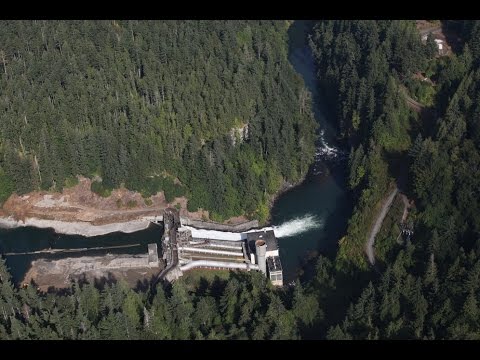








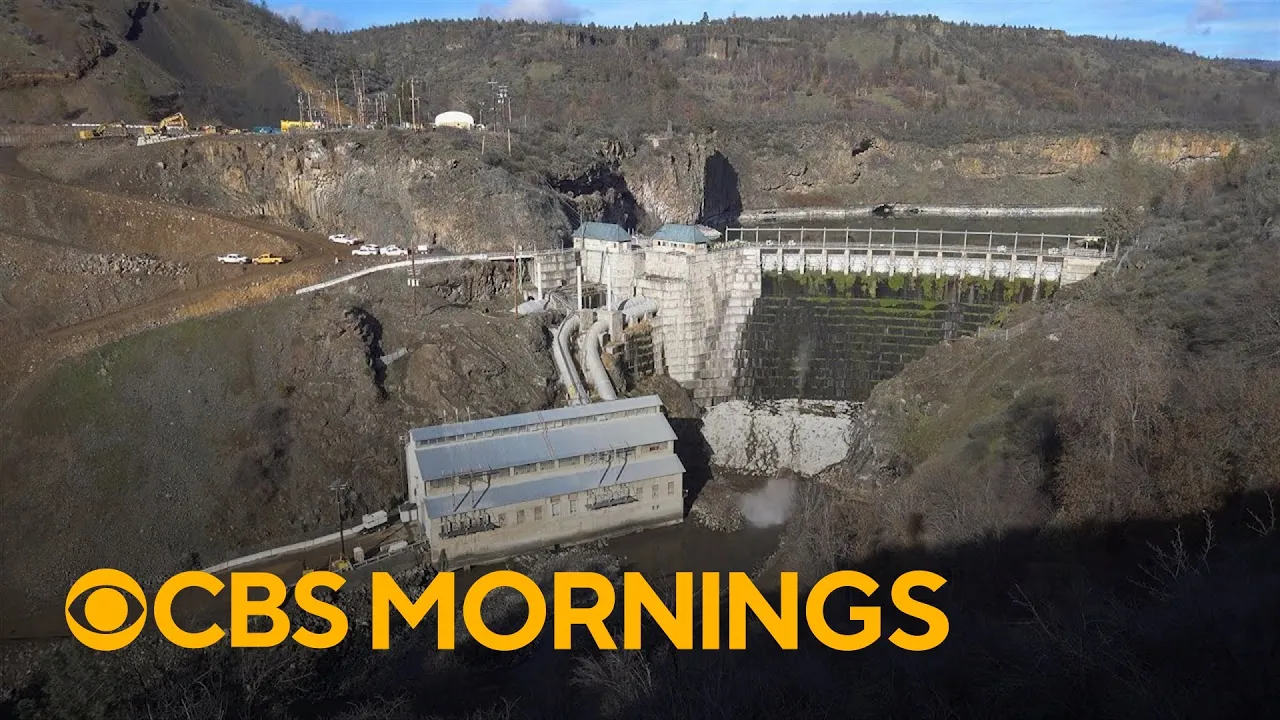


The removal of Condit Dam on Washington's White Salmon River demonstrates how dam decommissioning can restore river ecosystems by reconnecting fragmented habitats, allowing endangered salmon populations to return to historical spawning grounds and doubling available habitat, while also showing the complex engineering challenges involved in safely breaching and demolishing a large concrete structure that had blocked natural river processes for over a century.
Condit Dam Removal: White Salmon River Restoration, Decommissioning and Salmon Passage
Added:The life cycle of anadromous fish (like salmon) and their dependency on unobstructed freshwater river systems for spawning.
Basic river hydrology, specifically how natural flow regimes and sediment transport shape aquatic habitats.
The ecological consequences of river impoundment, including habitat fragmentation, altered water temperatures, and barrier creation.
The fundamental concept of ecological restoration and the goals of returning disrupted ecosystems to their natural states.
Methods for long-term ecological monitoring to track the recovery of fish populations and riparian vegetation after a dam is removed.
The engineering, safety, and logistical challenges of dam decommissioning, such as controlled blasting and reservoir drawdown management.
The policy, legal, and socio-economic frameworks involved in dam removal, including water rights, tribal treaty rights, and clean energy trade-offs.
Comparative case studies of other major river restoration initiatives, such as the Elwha River or the ongoing Klamath River dam removals.
2.8M views16.5Klikes17:53Original Release: 2013-08-21
[Music] today the rumble and swish of currents calls out to visitors of the White Salmon River but for those with an ear for history the canyon walls still echo with the sounds of spinning turbines the hum of Hydro power you don't do a lake tap every day these are very infrequent we're now watching the river eat itself back into the sediments one of the most spectacular things I've ever witnessed in my [Music] life then just give it a few wraps around that cleat yeah within our power we are going to try to capture every single fish we won't but we're going to do our best fish are extremely fragile they get a little too much handling uh they might die grab this one this is a fish that's four and 5 years old it it's not something we take lightly there's a reason these endangered salmon are getting a ride fire in the [Music] hole historically you go back over 100 years ago the White Salmon flowed right through here it was a neat little canyon and in 1913 we rebuilt condid Dam constructed to help Electrify a developing region Northwestern Lake and the dam that created it must come out Condit dam was completed in 1913 12 1 12 stories tall and 400 ft across one of the largest of its era as far as Dam decommissioning dam removals this is one of the big ones Glacier cold water plunging 45 miles from the river's Source on the shoulders of Mount Adams was captured here 3 Mi above the white Salmon's Confluence with the Columbia River conduit was built to divert water from the reservoir into a mile long wood pipeline that delivered it to a Pacific core Powerhouse at full capacity two turbines produced about 14 megaw enough for 7,000 homes there was just one problem for fish fish can make get all the way up to the big plunge pool down at the base of the dam and often times when I'm standing up on the dam looking down I can see them swimming around a ladder providing fish with passage over the dam was part of the original structure but a storm in the first year destroyed it later a second ladder also washed out in the 1990s to reduce the Dam's impact on fish agencies required a costly passage system in the Steep narrow Canyon as part of the new operating license it was not a good deal for our customers so for us it was really a business decision to move towards decommissioning over 12 months contractors must punch a hole into Condit and drain the lake then the dam can be demolished and its concrete used to recontour the site for planting with Native [Music] species as removal Begins the water level is lower just 10 ft to keep the work area dry below the dam but for Lakeside residents who witnessed the draw down change was dramatic Northwestern Lake became White Salmon River right before our eyes it started to make a sound and the sound was a sound of Rapids and it was sounding like a typical River to empty the lake completely workers drill and blast a tunnel through the base of the dam a 90 ft thick wall of concrete built to endure the a we will use probably about 3,000 lb of explosives this is something you can't you can't do incorrectly cuz you only get one shot at it first of all we have to design the number of holes that are needed to be drilled the type of explosives that go into the hole how much of each type of explosive that goes into the hole and then it's it's timing each of 15 blasts leading to the breach is a Cascade of explosions timed precisely to create an opening 18 ft wide 13 ft tall sized in position to evacuate water and sediment quickly it's going to be like pulling the plug on a bathtub all the water behind me will drain down just like a bathtub would in about 6 hours more than 2 million cubic yards of material has collected in the reservoir and just behind the dam a five-story wedge of silt much of this will also be on the Move there's no doubt that it's going to be a muddy river when gets released it's it's going to have a consequence to the environment in the lower 3 miles of the river but then it's going to be short lived got a wild [Music] female 91 biologists have spent 60 months on a plan to protect salmon from sediment most of these fish are 25 30 uh we moved a 45 lb fish at the end of the day I am absolutely exhausted tul Le fall shanuk are also known as White Salmon these are descendants of the ancient wild creatures for which the river is named they're big because they had to move big Cobble and big gravel we have moved fish this year that have tails that are the size of both of my hands Lewis and Clark when they came through they would have seen these fish being harvested in the mouth of the White Salmon River 1 2 rele at least above Condit they will spawn in time to produce new generations emerging from the gravels after a century of absence just as the dam disappears when the dam comes out the habitat for Tuli fuk salmon will double biologists expect their numbers in the river around a thousand in a typical year could also double coo and steel head will increase too while efforts to safeguard fish continue A Century of power production winds down I have worked at this Powerhouse for uh 31 and A2 years most of a lifetime the sound of the PowerHouse is something you get used to and it's loud yeah it's a sad day you know I've been here 33 years and uh it's been a great place to work Tom Becker and Dennis Brower know how to repair and maintain everything in this building before moving on to a new assignment they have one last job to do here I do think about the PowerHouse sometimes as a as a an entity and uh I talk to her sometimes but the time for talk comes to an end turbines slow to a stop you've done a good job for a long time and uh you're going to go to sleep now [Music] 3 minute warning after months of precision blasting and boring into the base of Condit Dam the last remaining 10-ft plug of concrete is laced with high explosives behind it 2 miles of reservoir up to 10 stories deep but only for a few moments more the demolition crew triggers a final charge burn [Music] we're now watching the river eat itself back into the sediments behind the D D something that's happened much faster than we expected if I had to come up with an analogy it' be like watching a fire geologic time seems to condense the air holds an earthy Aroma as water churns up organic material buried for nearly a century the cascading sediment is exactly what planners counted on the reservoir vanishes a River Canyon reemerges in its place even more quickly than expected our prediction was it was going to be about 6 hours in fact it only took 2 hours for that Lake to drain and it it really surprised me I had someone come run up to me after the the breach saying hey the Lake's gone and sure enough there was the river now the focus must turn to undoing the dam exactly 100 years after the start of construction when workers arrived in 1912 they found a steep Rocky Canyon they had the same sort of access struggles that we are experiencing in the deconstruction part of the project heavy machinery was very limited and basically this project was made with hands and horses as many as500 men lived and labored here one mess hall alone could seat 200 building cond of dam in in this Powerhouse was at for the time a very Herculean in effort a 13t diameter pipeline to carry water from the reservoir to the PowerHouse turbines was considered a technological wonder it was a wood stay flow line and it was over a mile long it was the largest that had been built by that [Music] time in the 21st century it takes just one man in an excavator to erase the flow line grab what you can and pull the rod off and then the wood just collapses our goal is to remove the wood remove the steel out of the uh footprint of The Flume and the concrete that's generated out of where the dam is will be laid back in to this footprint and then cover it over with top soil and replant [Music] it every single bit of this river is beautiful every single Square edge of it with a dam going out it's a river that will run essentially wild from its Beginnings up in the mountain down to the Colombia it's pretty unique in that sense but the dam will not give up its place easily Crews strain to shatter resistant concrete about 10,000 truckloads in 5 months of hammering will dislodge the dam to reach the river 125 ft below I'm always impressed at how much has happened when I stand on top of the dam and look at it when I get down here to take another perspective it's like wow we got a wayte to go these Waters hold not one but two dams the second structure hidden beneath the lake for nearly a century is exposed we've got a Timber crib structure that was built with 14x14 Timber stacked like Lincoln Logs the issue with the Coffer dam is we knew we had to remove it but we really didn't know the extent of access issues that we would have trying to get down in here we didn't know that until the reservoir was gone the rockfill mini Dam created a dry work area for building conduit it too must be taken out so returning fish have clear passage you try and design and build management plans to to deal with where you want to go what you're trying to achieve and then you get out on the ground and things change contractors must manage another complex part of the project restoring a 2-mile stretch of Canyon the former Reservoir mature plants that once grew along its Shoreline like this Willow are moved to to the banks of the White Salmon with a Gardener's attention to detail just give it a good head start a little pat on the ground and on to the next one and that's proven uh extremely effective planted with love a canyon carpeted with orange markers gives way to 14,000 young trees a forest in the reservoir's old footprint dozens of Acres go green as landscapers apply nearly 1 and 1/2 tons of seed to hold in place new slopes with grass and shrubs this is not your uh Mother's dump truck here it's a pretty serious heavyduty piece of construction equipment conduit does not actually leave the valley instead its new mission is to fill and recontour space once occupied by the flow [Music] line transformed into a grassy clearing in the woods Crews roll out extended shifts to make the final push the demo team provides an assist Bur [Music] [Applause] the dam is gone we have gotten in we've removed everything the river is free flowing through the former project site my great-grandfather fished this water someday his great-grandchildren and future Generations will have the same opportunity the White Salmon is roused already by steel head at Bez Falls they're such athletes they stillhead they're just so strong and to stand there and watch them make these jumps right here up on the left yeah there's another one right behind it yeah Marcus fish experts have also arrived to scout the newly unharnessed Waters and to document changes there's salmon up and through the system uh we just went by several Reds or salmon nests that were in the river fish are actively passing Upstream you would not know that there was a dam here unless you saw the the grass and the way the Moss is growing the dam site as you're coming towards it in a raft it it's hard to know where it was [Music] the reservoir is rapidly becoming a memory too beneath native shots and buds establishing on the river Corridor this has been a long process with many stakeholders lots of emotions and and lots of views ultimately removing cond dam was in the best interest of our customers and I'm pleased that we are able to do so in a safe and efficient manner [Music]
Up Next

76:57
Dam Removal & River Restoration: Klamath Success Story
@era-india
287 views•2025-02-08

15:54
Life in Biosphere 2: Sustainable Ecosystems & Human Survival
@TED
334.9K views•2009-06-16
14:30
Microplastics Everywhere: How Plastic Impacts Our Lives
@TEDx
100.9K views•2018-05-08
10:28
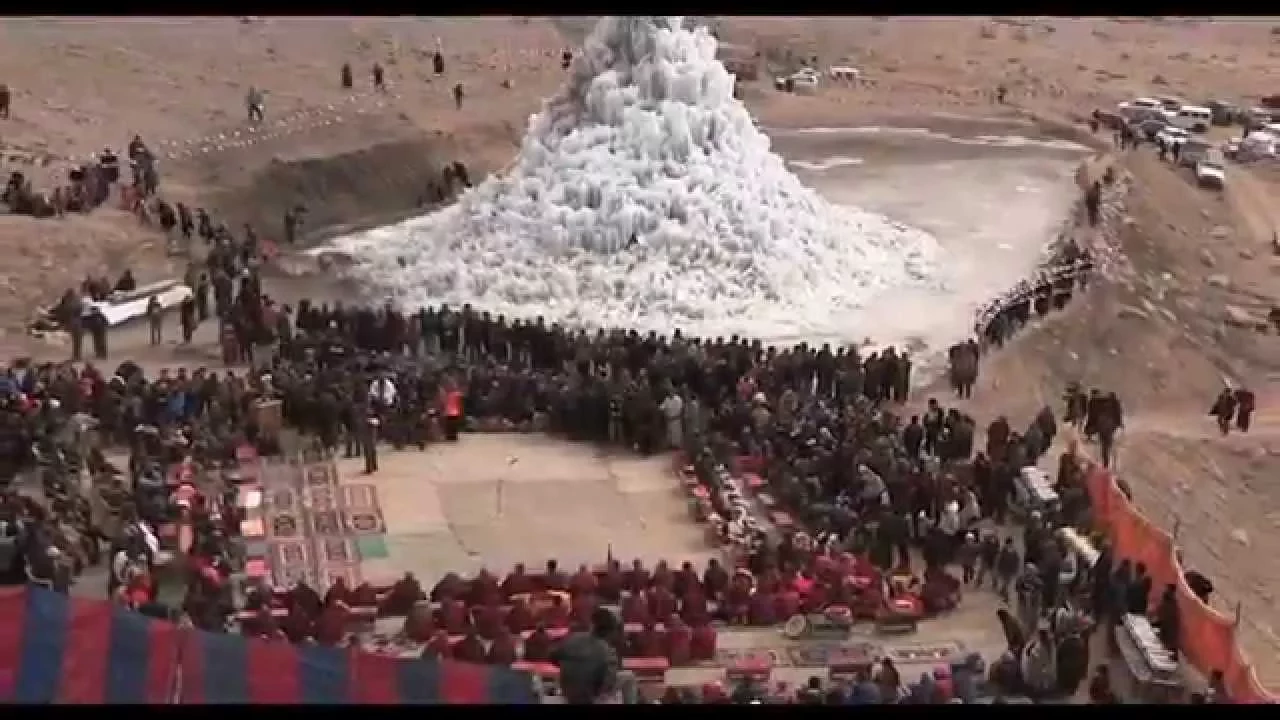
Ice Stupa Artificial Glaciers: Solving Ladakh's Water Crisis
@SonamWangchuk66
3.2M views•2015-05-03
Related Study Plans & Knowledge Roadmaps
Structured learning paths in Environmental Science
environmental-science
Ocean Noise: Cetacean Impacts & Mitigation
01Fundamentals of Underwater Acoustics
02Marine Mammal Bioacoustics
03Anthropogenic Noise: Shipping & Seismic Surveying
+ 2 more learning modules
16h5 modules
Explore Roadmap
environmental-science
Road Ecology: Corridors, Overpasses & Fencing
01Foundations of Habitat Fragmentation and Carnivore Ecology
02The Road Barrier: Ecological Impacts of Transport Infrastructure
03Principles of Ecological Corridors and Connectivity Mapping
+ 3 more learning modules
14h6 modules
Explore Roadmap
environmental-science
Ocean Acidification: Kelp Buffering & Shellfish
01Fundamentals of Ocean Chemistry & pH
02Chemical Pathways of Coastal Acidification
03Bivalve Physiology & Calcification Under Stress
+ 2 more learning modules
18h5 modules
Explore Roadmap
environmental-science
Ice Stupas: Glacial Retreat & Water Security
01Foundations of Glaciology & Mountain Hydrology
02Climate Change and Glacial Retreat Dynamics
03The Science of Ice Stupas & Artificial Glaciers
+ 2 more learning modules
14h5 modules
Explore Roadmap