Costume designers for historical theater productions conduct extensive research into historical periods, including examining personal archives, museum exhibits, and cultural artifacts to create authentic costumes that reflect the specific era and social class of the characters, while also considering audience expectations and visual storytelling elements like texture and layering.
Anastasia Costume Design with Linda Cho | Broadway Craft & History
Added:Deep Dive
Basic historical context of early 20th-century Russia, specifically the Romanov dynasty and the impact of the Russian Revolution.

Những Đế Chế Trung Cổ Hùng Mạnh Nhất Lịch Sử (Full)
278K
The Romanov dynasty ruled Russia for 304 years, from 1613 to 1917. Peter I (1682-1725) implemented sweeping reforms to modernize Russia along Western European lines and launched military campaigns against the Ottoman Empire. The Great Northern War (1700-1721) resulted in decisive victory at the Battle of Poltava, and the Treaty of Nystad (1721) recognized Russia as a major European power. Peter I was crowned Emperor, establishing the Russian Empire as the third-largest empire in the world. Catherine II (1762-1796) continued expansion by defeating Sweden and conquering Ottoman territories, participating in the partitions of Poland. The Crimean War (1853-1856) resulted in catastrophic defeats for Russia. In 1861, Tsar Alexander II emancipated the serfs. The Russian Revolution of 1917 ended the Romanov dynasty and dissolved the Russian Empire. The Bolsheviks, led by Vladimir Lenin, established the Soviet Union, fundamentally transforming Russian society and politics.
Click to watch →

Subversive Origins of Communism - ROBERT SEPEHR
262.3K
The Romanov dynasty ruled Russia from 1613 to 1917, with 18 Romanovs including Peter the Great, Catherine the Great, and Nicholas II. During the 1917 Russian Revolution, Bolshevik revolutionaries toppled the monarchy, executing Nicholas II and his family. The Bolsheviks, a radical Marxist faction, became the Communist Party of the Soviet Union. The revolution and Civil War killed 30-50 million Russians, one of history's cruelest genocides. Communism spread globally, including to China with 80 million deaths. Marxist revolutions divide populations by race, gender, or class, promising egalitarian wealth distribution but ultimately creating totalitarian regimes. Karl Marx and Engels authored 'The Communist Manifesto' in 1848, but Marx was paid by the League of the Just, a German secret society.
Click to watch →

القياصرة الجدد | روسيا 🇷🇺 و التوسع عبر التاريخ | علاقة الروس بالدولة الاسلامية | د. جاسم الجزاع
146.6K
After the liberation from the Golden Horde, the Moscow principality continued under various rulers until the Romanov dynasty took power in the 17th century. The Romanovs ruled Russia from the 17th century until the 1917 Revolution. Peter the Great, one of the most significant Romanov rulers, transformed Russia into a powerful empire by implementing extensive Westernization reforms, adopting European military systems, administrative practices, and cultural elements. The Russian Revolution of 1917 was caused by economic stagnation, the exploitation of peasants by the aristocracy, and widespread dissatisfaction with the Romanov dynasty. The harsh climate of Russia has significantly influenced Russian national character, contributing to traits such as patience, endurance, strength, and a tendency toward authoritarian leadership.
Click to watch →
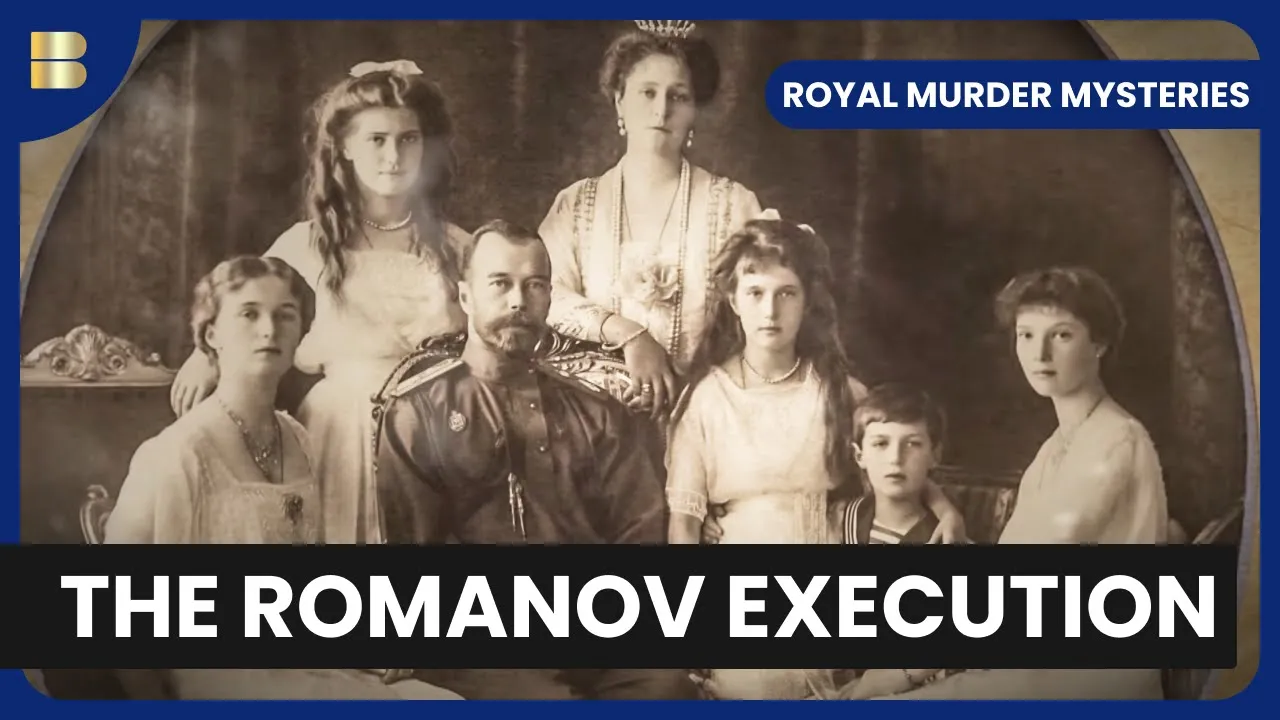
Tragic Romanov Murder - Royal Murder Mysteries - S01 EP01 - History Documentary
359.5K
The Romanov family ruled Russia from 1613 to 1917, establishing a 300-year dynasty where tsars were viewed as semi-divine beings with divine right of kings. Nicholas II, head of the Russian Orthodox Church, governed alongside his wife Alexandra and five children. The dynasty's archaic traditions clashed with Russia's need to modernize. Bloody Sunday (January 1905), where soldiers killed peaceful protesters seeking better working conditions, destroyed public support for the Tsar. World War I further devastated Russia, with over 3 million soldiers and nearly 1 million civilians dying. The peasantry blamed Nicholas II for their suffering, creating conditions ripe for revolution.
Click to watch →

समाजवाद और साम्यवाद | History Class 10 Chapter 2 | Class 10 History Chapter 2 | History Class 10
112.7K
The Russian Revolution began in 1905, influenced by Marxist ideas. Tsar Nicholas II was the last Tsar of Russia, known for his harsh treatment of workers. The Romanov dynasty had ruled Russia for centuries. The February Revolution of 1917 ended the Romanov dynasty, and the October Revolution, led by Vladimir Lenin, established the Soviet government. The 1905 Revolution was suppressed after Bloody Sunday, but the 1917 Revolution succeeded. The teacher explains that unlike the 1905 Revolution, the 1917 Revolution succeeded because workers learned from the 1905 experience and were better prepared.
Click to watch →
Deep Dive
Fundamentals of theatrical costume design, including the use of color palettes, silhouettes, and fabric choice to convey character development.

SYKALA (Hannah) - UNF Hicks Honors College
2.7K
Costume Design creates the physical appearance of characters in plays, movies, and musicals. Three key factors guide the design process: era selection, color palette, and functionality/personality. Era decisions involve asking whether the original time period should be changed to make the production more relatable to modern audiences. Color theory helps differentiate characters and convey personality—red for lust (Orsino), green for neutrality (Viola), and blue for sea connections (Sebastian). Motifs like hearts can represent character significance. Functionality requires including specific items mentioned in the play, such as Malvolio's yellow stockings or Viola's messenger bag. These principles extend beyond theater to real-life clothing choices, where attire communicates individual personality and identity.
Click to watch →

Michael Wilkinson Interview (ANDOR Costume Designer)
125
Costume designers employ three fundamental elements—color, texture, and silhouette—as tools to communicate character traits to audiences. Colors determine whether characters stand out or recede from backgrounds; textures reveal preferences for softness or hardness; silhouettes indicate whether characters hide themselves in bulky clothes or express confidence through tailored designs. This language becomes particularly powerful when characters have multiple aliases, allowing designers to explore dramatic transformations. For example, Cassian's fashion designer alias uses bold black-and-white, crisp, tailored, sleek urban styling as the extreme opposite of his regular character. Costume choices can dramatically emphasize emotional moments by deliberately contrasting a character's appearance with their actions, such as dressing Kleya in bright yellow scrubs and jelly shoes during her moral dilemma of killing her friend Luan, completely opposite to her usual severe, structured look.
Click to watch →
MASTER CLASS: "Caracterización del personaje: El vestuario como pieza fundamental"
249
Costume serves as a fundamental visual communication tool in theater that helps audiences understand a character's identity, social class, time period, and emotional state through deliberate choices in color psychology (where red/black/violet convey villainy while blue/white suggest nobility), fabric textures (dirty vs. clean, shiny vs. matte), garment silhouettes (exaggerated shapes for villains, soft rounded forms for innocent characters), and accessories that mark cultural and temporal contexts, all while maintaining practical functionality for stage performance.
Click to watch →

Costume Design 101 | Live
201
For realistic characters who don't put effort into outfits, color blocking adds visual interest—blocking colors on simple clothing creates distinction. Movement affects fabric behavior: stiffer clothing shows tension lines while silkier materials conform more to body shape. Musical theater solutions like shoulder pouches enable full movement. Circle skirts are cut from circular fabric pieces and may have petticoat layers with ruffles. For stealthy characters, dark clothing suffices with the face as contrast, but armor that blends in too much needs adjustment. Military detail inspiration comes from proper ballroom attire showing hand embroidery. Lapel color mismatch is normal—emphasizing this contrast draws attention upward. Shape language connects characters through shared visual elements even without identical colors. Limited color palettes (around five colors total) create better designs. Grayscale testing ensures sufficient shape contrast. Historical fashion research for age groups involves dating fashion slightly older than the main cast. Futuristic clothing depends on resource availability and societal values—looking at previous decades grounds designs in reality.
Click to watch →

True Blood's Audrey Fisher at 2012 Comic Con's Designing for the UnDead
434
Costume designers serve as key collaborators with directors and production designers, guided by scripts to develop characters and help actors transform into their roles. Color palette strategies vary by character type: dark colors like black create sexy, mysterious appearances for supernatural creatures, while lighter colors suit human characters. Red is often avoided in human scenes. Designers work with tight constraints, sometimes with producers restricting colors like blue or black. Materials like latex and sheen fabrics create dramatic visual effects. Costume evolution reflects character growth, transitioning from innocent pastel colors to darker, more intense palettes as characters mature and become more aware of their bodies.
Click to watch →
Deep Dive
The distinction between strict historical accuracy and theatrical stylization (artistic license) in stage productions.

"Anne Boleyn", e la differenza tra adattamento storico e adattamento artistico
737
Adaptations of theatrical works allow for greater artistic license than adaptations of historical events. When adapting Shakespeare's plays, directors can reinterpret characters, settings, and casting choices to serve artistic vision. Peter Brook's 'Hamlet' successfully cast actors of color in traditionally white roles, and productions of Greek tragedies have used male actors for female roles. This theatrical tradition of artistic interpretation provides a model for understanding when casting choices in other media might be acceptable, though audiences often expect greater fidelity to historical reality in historical dramas.
Click to watch →

The Will Rogers Follies rehearsal footage on A&E
2.3K
Biographies often make rotten theater because people's lives don't come very dramatically ordered. There is usually a pretty good first and third act, but 'God does not provide second act' - meaning you must write your own. When creating a second act, you face a dilemma: either corrupt reality by making it more interesting than it was or changing facts, which doesn't serve history well; or stick to facts, which doesn't provide drama. The solution is to alter facts as long as the audience knows what facts are being altered, allowing for an entertaining version of truth while maintaining audience awareness of creative liberties.
Click to watch →
Pre-Show Talk: A Marvellous Year for Plums: Marvellous Year Ahead
681
A common problem in history plays is that audiences may be checking against their own knowledge of historical events. The director must decide what to put in and what to keep out, balancing theatrical license with historical accuracy. Hugh Whitemore's research is astronomical and thorough, though occasionally too dense. The rehearsal process involves finding why characters impart information to each other, not just to tell the audience about the plot. If the emotional reason for a line is found, it stays; otherwise, it must be cut. This is a painful process because actors become wedded to what they say, as they learn by making emotional bridges between lines. The director must be careful when cutting, as it bruises actors who have made emotional connections to their lines.
Click to watch →

Broadway legend Patti LuPone on InnerVIEWS with Ernie Manouse
95.2K
When adapting historical figures to the stage, there is tension between accuracy and theatrical license. While productions try to be as accurate as possible, they cannot be 100% accurate when condensing a life story into 2-4 hours. Theatrical license is necessary, but some argue that this creates censorship when studios take creative control. Public figures who chose public lives cannot avoid scrutiny, but theatrical adaptations still require artistic interpretation.
Click to watch →
Rise Up: playwright Lisa Evans Q&A
765
Playwrights creating works about real historical events must navigate the balance between factual accuracy and creative interpretation. The speaker explains using actual words from historical figures but placing them in fictional characters' mouths to avoid misrepresentation. This theatrical license allows for stylized productions that provide audiences with a version of events rather than documentary truth. The split company structure—combining historical narratives with contemporary performers—serves to make historical stories relevant to modern audiences by connecting past struggles to present-day concerns about social change.
Click to watch →
Deep Dive
An understanding of the collaborative process in theater production, particularly how costume design interacts with lighting and scenic design.

Diálogos. Lorenzo Caprile
11.3K
Costume design is fundamentally a collaborative process between designer and director. The designer may work from a personal archive rather than traditional drawings, building costumes through fluid collaboration. The designer must understand the text deeply, including subtexts, metaphors, and character development. The director holds ultimate authority, and the designer must accept that their creative ideas must serve the director's vision. The designer must also maintain a supportive relationship with actors, recognizing that actors ultimately defend the director's vision on stage.
Click to watch →

Hablemos de diseño escénico | DESCORCHE
1.1K
Successful theater design requires effective collaboration with directors and among design team members. Estela Fagoaga explains that this balance depends on production type, timing of involvement, and the nature of the project. When invited early in the process, designers can collaborate more creatively with directors. When joining later, they must adapt to existing concepts. She emphasizes that designers should make all questions and comments during meetings, even if they seem minor. Gloria Carrasco describes lighting as the 'cherry on top' of theatrical design because it often arrives last and creates the final surprise. She explains that effective collaboration involves sharing materials and ideas between designers before production begins. Xóchitl González explains that when lighting, scenery, and costumes work together coherently, the audience doesn't consciously notice individual elements because they all contribute to a unified vision.
Click to watch →

plastiek Bertrand: Leentje en Valerie over de voorstelling
374
Costume design in theater is a collaborative process where costume designers work alongside directors and actors, making creative decisions that shape the visual identity of a production; the process begins with a text or story foundation, involves gathering and connecting various loose ideas and materials, and requires balancing creative vision with practical constraints while ensuring all elements cohesively contribute to the overall theatrical experience.
Click to watch →
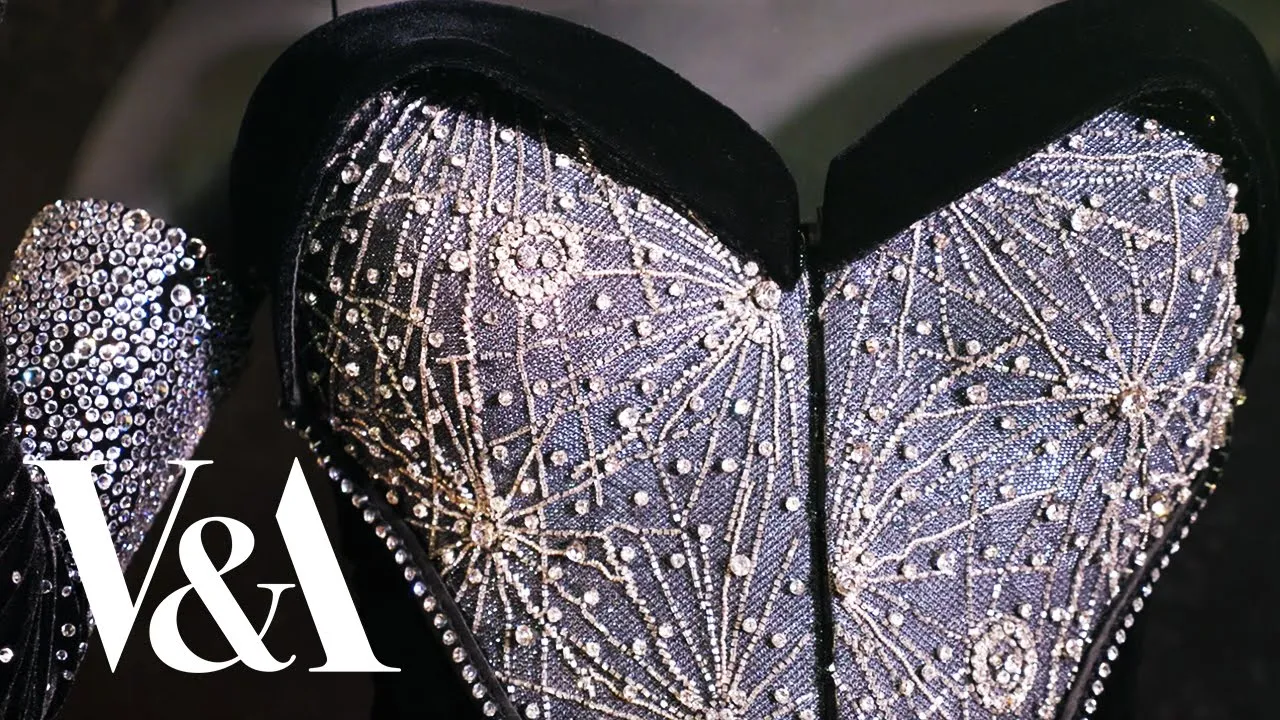
Costume design: Moulin Rouge! The Musical – Satine's Sparkling Diamond costume | V&A
115.2K
Theater is fundamentally collaborative, requiring close cooperation between costume designers, directors, and actors. When actors see their costumes and express delight, it validates the design work and helps them embody their characters more effectively. This collaborative process transforms individual creative work into a unified theatrical experience where all elements contribute to character development and storytelling.
Click to watch →

Coffee with the Playhouse ft. Costume Designers Paul Tazewell and Jennifer Ables
273
Costume design operates as a collaborative art form requiring coordination among multiple specialists. The process begins with designers collecting visual imagery to establish aesthetic direction, then collaborating with directors to refine concepts. Other designers (set, lighting, sound) contribute to the overall visual language. Actors bring essential input during fittings, as their physical presence reveals how designs function in performance. Costume shops function as specialized teams: assistants source materials, drapers translate designs into patterns, stitchers construct garments, and craft departments handle special effects. This iterative process involves refining initial concepts based on feedback from all collaborators, creating a dynamic exchange that shapes the final production.
Click to watch →
Prerequisite Knowledge
- Concept 01Basic historical context of early 20th-century Russia, specifically the Romanov dynasty and the impact of the Russian Revolution.
- Concept 02Fundamentals of theatrical costume design, including the use of color palettes, silhouettes, and fabric choice to convey character development.
- Concept 03The distinction between strict historical accuracy and theatrical stylization (artistic license) in stage productions.
- Concept 04An understanding of the collaborative process in theater production, particularly how costume design interacts with lighting and scenic design.
Subsequent Learning
- Step 01Advanced theatrical wardrobe techniques, such as quick-change engineering, costume rigging, and distressing fabrics for stage durability.
- Step 02Comparative analysis of character representation across different adaptations (e.g., historical archives vs. the 1997 animated film vs. the Broadway musical).
- Step 03The economic and managerial aspects of Broadway costuming, including budget allocation, global textile sourcing, and costume shop management.
- Step 04Techniques for creating professional costume rendering portfolios, translating conceptual research into practical design sketches.
Design Research
Iconic Dress
Design Research
0:00Playing Section
- 1
Explores historical sources for royal Russian and Parisian fashion.
- 2
Focuses on research from Tsar Nicholas's photos and museum exhibits.
- 3
Details the transformation of the Tsarina's gown from pink to jeweled.
The Critique of Romanticized Spectacle and Historical Revisionism in Stage Design
While Linda Cho's designs are celebrated for their beauty and research, critics of historical Broadway design argue that lavish, romanticized costumes can sanitize complex and painful histories. In the case of Anastasia, the opulent, glittering representation of the Romanov dynasty risks romanticizing an oppressive imperial regime, distracting audiences from the harsh socio-political realities of early 20th-century Russia. This perspective suggests that commercial theatre often prioritizes Western escapist spectacle and aestheticized nostalgia over genuine historical accuracy or critical engagement with the past. By focusing on luxury and fairytale tropes, such designs can turn systemic inequality and historical tragedy into consumer-friendly entertainment, raising ethical questions about the responsibility of designers when interpreting real-world histories.
Deep Dive
Advanced theatrical wardrobe techniques, such as quick-change engineering, costume rigging, and distressing fabrics for stage durability.
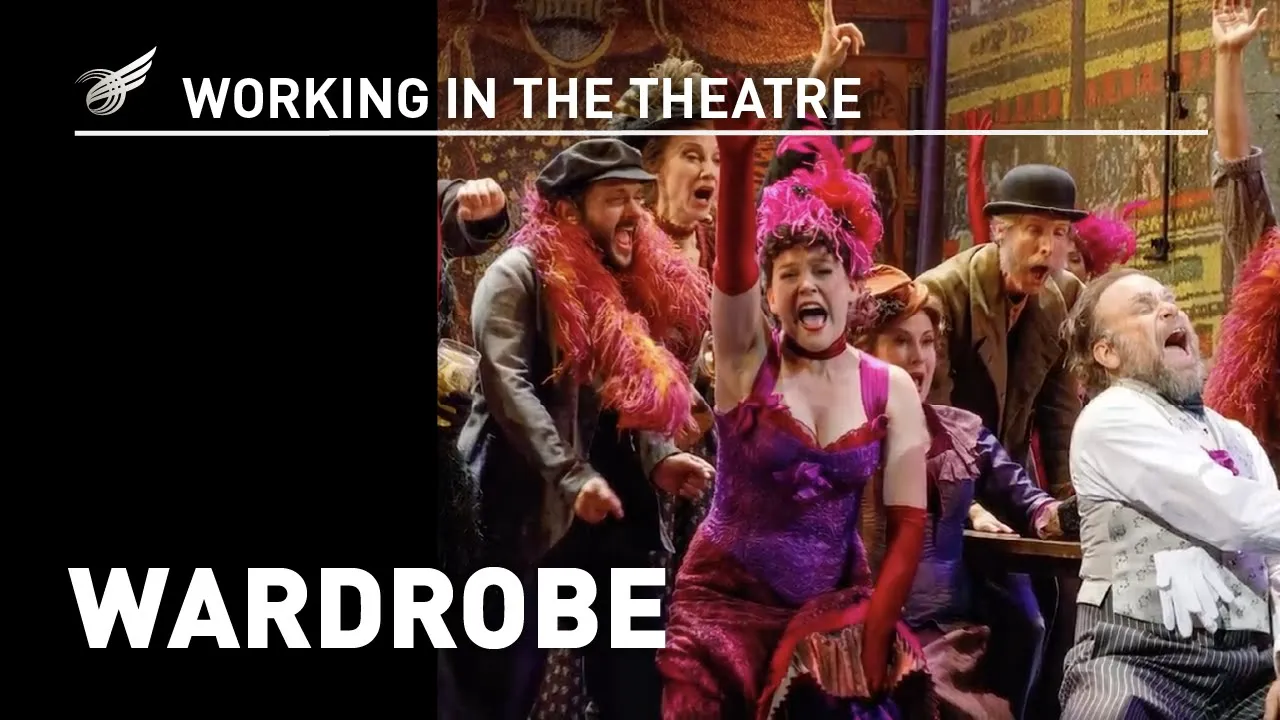
Working in the Theatre: Wardrobe
110.6K
Quick changes occur between 11-13 seconds and happen between scenes or within scenes in musicals. During tech rehearsals, directors designate quick change locations onstage (deck, set pieces, wings, or hallways), and dressers choreograph the changes with actors. Execution techniques include laying pants over chairs, using shoe horns for rapid footwear changes, and pooling dresses flat for easy stepping. Despite initial intimidation, quick changes become easier with practice. Costume maintenance involves daily repair of hems, seams, and jewelry damaged during performances. At night's end, all dressers bring laundry to the wardrobe room where costumes air-dry overnight. The next day, every single piece is checked, cleaned, and restored. Wardrobe departments face significant fears including ripped costumes before scenes and dry-cleaning mishaps where costumes don't return on time.
Click to watch →
Coffee with the Playhouse ft. Costume Designers Paul Tazewell and Jennifer Ables
273
Quick changes represent one of theater's most impressive magical effects, requiring sophisticated engineering solutions. Designers must understand how clothing pieces will detach from the body, considering geometry and construction methods. Techniques include using snaps, velcro, zippers, elastic, and strategic stitching points. Jump suiting involves sewing multiple garments together with a single zipper for rapid changes. The actor's input is essential, as no one understands their movements better than the performer themselves. Successful quick changes depend on collaboration between designer, actor, and wardrobe crew.
Click to watch →
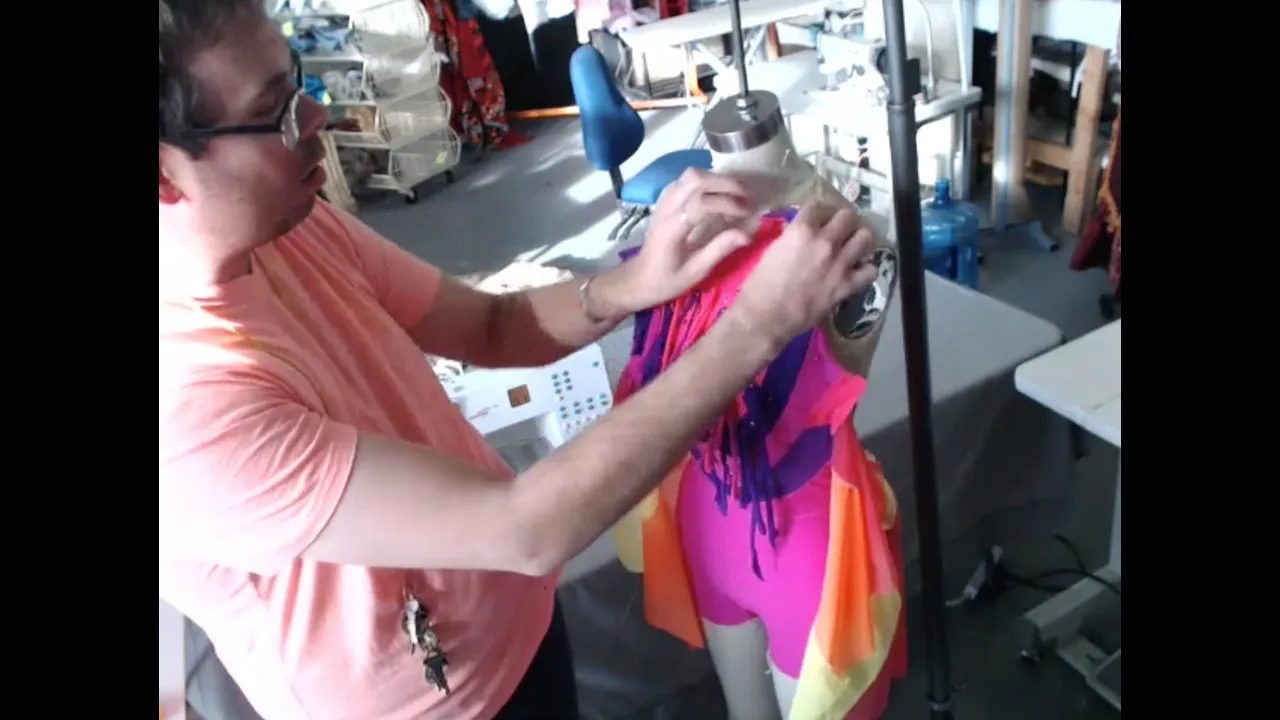
How to Create a Quick-change Costume with Travis Halsey (Part One)
24.3K
Quick-change costumes use strategic seam placement (lower waist on first costume, progressively higher waists on subsequent costumes) combined with hidden rigging systems (fishing line, buttonholes, loops, magnets, snaps) to create seamless transformations; the key principles include distributing seams across different body areas to avoid revealing bulk, using stretch fabrics that conceal layers, and ensuring the costume mechanics work with the performer's movements and choreography.
Click to watch →

Techniques for distressing and ageing costumes
16.2K
This comprehensive segment covers the complete process of distressing and aging costumes for theatrical or horror applications. The instructor demonstrates multiple techniques: tattering fabric edges by cutting irregularly to avoid uniform fringes, creating organic slices by folding and slicing fabric, and using heat tools like plastic welding tools and soldering irons to create texture, moth holes, and worm damage effects. The segment emphasizes testing heat on fabric first, maintaining structural integrity, and creating natural-looking decay that suggests burial or insect damage. Painting techniques include applying flat black spray paint with light bursts, creating distressing juice from silicone caulking and oil paint, and using Design Master spray paints for dusty effects. The instructor stresses maintaining color cohesion and applying different distressing levels to different costume layers based on wash frequency.
Click to watch →

costume distressing techniques
19.8K
Costume distressing involves strategically wearing down fabrics using tools like belt sanders and spray paint to create realistic, aged appearances for theatrical costumes, with key techniques including testing on less visible areas first, focusing on edges and cuffs, and applying translucent paint to create organic wear patterns while maintaining safety precautions.
Click to watch →
Deep Dive
Comparative analysis of character representation across different adaptations (e.g., historical archives vs. the 1997 animated film vs. the Broadway musical).

Movie Review: KISS OF THE SPIDER WOMAN - Bored and Confused
3.5K
This comprehensive review analyzes three versions of Kiss of the Spiderwoman: the 1975 novel, the 1985 film, and the 2025 movie musical. The Broadway musical is the superior adaptation because it maintains the novel's stream-of-consciousness narrative, features Chita Rivera playing six different characters as the Spiderwoman, and includes essential songs like 'Dressing Them Up' and 'I Draw a Line' that reveal character depth. The 2025 movie fails catastrophically due to Bill Condon's misguided directorial approach, which traps Jennifer Lopez in a single movie within the movie, cutting half the Broadway score. The 1985 film delays revealing Molina's espionage task, creating narrative confusion. The Broadway musical's ending is superior: Molina becomes a revolutionary willing to die for his friend, while both films have him dying in action sequences. The reviewer rates the 2025 movie highly on the 'bored and confused' meter and recommends watching the Broadway bootleg instead.
Click to watch →

The Lion King - The Broadway Musical (1997) Promo (VHS Capture)
242.9K
The Lion King is a Broadway musical adaptation of Disney's animated film, which premiered in 1997 at the New Amsterdam Theatre in New York City and won six 1998 Tony Awards, including Best New Musical.
Click to watch →

Troy (2004) x Troy: fall of a city (2018)
138
This segment presents a comprehensive comparison of character portrayals across the two adaptations. The presenter analyzes Paris's portrayal by Orlando Bloom in the film, noting criticism for inconsistency with the character's traditional depiction. The segment examines Andromache's characterization, with the series presenting her as more complex and active compared to the film's more passive portrayal. The presenter discusses Priam's portrayal, noting that the series explores his relationships with his sons and role as a father more extensively. The analysis highlights how series formats allow for more detailed character development while films must rely on more concise characterizations. The presenter also discusses the musical score, noting that the 2004 film's score by James Horner is considered superior to the series' accompaniment, demonstrating how musical composition significantly contributes to the emotional resonance of historical epic adaptations.
Click to watch →

Popular Outro from WICKED movie VS Broadway #shorts #wicked #arianagrande #kristinchenoweth
2.6M
This video presents a side-by-side comparison of Ariana Grande's movie version of 'Popular' from the Wicked film (2024) and Kristin Chenoweth's Broadway original performance, highlighting the differences in vocal style, interpretation, and theatrical presentation of the same song.
Click to watch →

Ностальгирующий Критик - Спаун
334.9K
The 1997 Spawn film, based on Todd McFarlane's comic series, is critically analyzed as a flawed adaptation that suffered from poor CGI effects, unclear narrative, and inconsistent character design, despite having some strong elements like John Leguizamo's performance as The Defiler and impressive practical makeup effects.
Click to watch →
Deep Dive
The economic and managerial aspects of Broadway costuming, including budget allocation, global textile sourcing, and costume shop management.

DisneySea Revealed
897
DisneySea Tokyo is populated by more than 200 performers recruited from all points of the globe, including America, Canada, Russia, the Middle East, and Japan. Physical humor works almost internationally and doesn't depend on language, so Disney uses slapstick comedy that transcends language barriers. The costuming area is one of the largest and busiest in the world, with 10,000 people receiving clothing daily and about 300,000 custom pieces in the room. The Broadway Music Theater seats 1,500 people and features a song and dance tribute to 20th century Broadway hits. Japanese audiences are attentive but not as loud as American audiences. Disney had to adapt the show, explaining special effects in advance so Japanese guests wouldn't be surprised.
Click to watch →

DRMA 101 American Theatre Wing Seminars - Design2.mp4
260
Costume designers must plan budgets based on script requirements. Carrie Robbins explains that budgets are often not determined by producers carefully reading scripts but rather by how much money they have. She reads the script, talks to the director, and does math to determine the baseline for helping the audience understand where the story is. When scripts require characters to travel through time periods with vastly different clothing requirements, or when characters undergo transformations like pregnancy or illness, the costume budget increases significantly. She creates comprehensive budgets to discuss with money people.
Click to watch →
MONIQUE PRUDHOMME | Costume Design Master Class | Higher Learning
2.6K
Costume designers use established formulas to estimate costs: contemporary women's outfits cost a minimum of $2,000, men's wear ranges from $600-$2,500 depending on quality, and fabric costs $10-$30 per yard. Budget negotiations involve trade-offs - if stunt requirements exceed budget, designers may reduce duplicate costumes or choose simpler alternatives. The internet has revolutionized sourcing by enabling quick access to specific items like zippers from manufacturers worldwide. Costume designers develop extensive networks of sources including fabric stores, costume houses, and specialty shops globally. Assistant researchers handle patience-intensive sourcing while designers focus on creative decisions. The relationship between costume designers and the fashion industry is complex - high-fashion pieces costing $4,000-$5,000 are typically unaffordable when multiple identical pieces are needed. Costume designers work around this by shopping at contemporary retailers and using current fashion lines for storytelling.
Click to watch →

Backstage Pass - ALADDIN on Broadway
535.6K
The costume design process for Broadway musicals is a long journey involving research, rough drawings, filling in colors, developing characters, and serving the dance. The process culminates in what appears on stage, which is the result of all that work. Detail in the costumes is overwhelming, with almost every garment featuring hand painting, beading, and applique. The textiles in the show represent global influences, with brocades from Venice, silk from China, and beads from India.
Click to watch →

New York State of Film & Theater: A Conversation with Paul Tazewell and FIT President Joyce Brown
240
This segment introduces Dr. Joyce Brown, president of FIT since 1998, who has led the institution to serve over 8,000 students with a $220 million budget. She oversaw the construction of FIT's first new academic building in nearly 50 years and raised $4 million for the Social Justice Center supporting BIPOC students in creative industries. The segment also introduces Paul Tazewell, the first Black man to win the Academy Award for Best Costume Design (2025), known for Wicked, Hamilton, and West Side Story. New York State's film and television industry adds over 65,000 jobs and $16 billion in economic output, with over 90% of businesses being small businesses supporting costume design. Costume design is the visualization of the story, with clothing setting the stage for time and place. The process begins with the director, who shares their point of view. The designer asks leading questions, creates imagery reflecting their vision, and produces quick pencil sketches. For theater, this process takes eight months to a year, involving collaboration with directors, set designers, lighting designers, and cinematographers. Fabric selection is a huge priority, requiring fabrics to move, drape, and flow appropriately. Paul Tazewell's background as a dancer made him aware of how fabrics move on bodies. For West Side Story, fabrics were chosen specifically for how they would move through space. For Glinda's bubble dress in Wicked, the goal was luminosity achieved through painting, ombreing, foiling, and beading. Costume archives and rental houses preserve costumes for reuse, with Universal's archive holding all Wicked costumes. Entry points into costume design include assistant costume designer (progressing from intern to associate), draper or tailor (costume maker specializing in pattern making), and concept artist (creating digital renderings). Costume designers must find their own connection to what charges them in designing, whether collaborative work, working with actors, painting, researching history, or working with fabric.
Click to watch →
Deep Dive
Techniques for creating professional costume rendering portfolios, translating conceptual research into practical design sketches.

Present your Sketches - Design Layout!! - Global Design Community.
430
Professional design portfolios must show progression from initial sketches through development to final renders. The end goal is demonstrating the complete design process, not just creating images. Professional designers work with teams, understand industry carryover parts, collaborate with engineers and manufacturers, and develop designs beyond visual concepts. Use minimalistic geometric language to communicate concepts elegantly. Create rough 3D models for study purposes. Organize portfolio sketches into distinct projects with clear themes. Differentiate sketches by development level: render the best work, add value to complementary pieces, and keep explorations small.
Click to watch →

126 CtrlPaint Costume Sketching
1.1K
Costume sketching for concept artists involves using reference photos from fashion websites like The Sartorialist, organizing them in Photoshop with layer masks for efficient study, and practicing three main techniques: loose gesture drawing to capture proportions quickly, linear block-in to break down clothing into geometric shapes, and contour drawing to practice direct observation, with the goal of building a visual library and understanding how real-world fashion translates to fantasy and sci-fi costume design.
Click to watch →

🔴 Art Instructors Review Portfolios #21
1.1K
Stylized rendering uses simplified forms and soft transitions, while realistic rendering requires more planes, textures, and definitive shapes. To move from stylized to realistic, add more planes, texture, and form detail. Effective stylized art uses dynamic shapes with concave, convex, and straight angles that play off each other. Professional rendering requires proper value separation between foreground and background elements—when bright elements compete with bright backgrounds, visual clarity suffers. Professional rendering also includes minor color variations that break up monotone skin tones. Professional portfolios should demonstrate ability to handle challenging pieces. Showing difficult work (like complex lighting or multifigure scenes) demonstrates capability and willingness to take on challenging projects.
Click to watch →

Interior Design Sketching Techniques - Drawing Like a PRO!
109.6K
Adding a layer of tracing paper over an existing pencil sketch creates dramatic and artistic results. This technique allows designers to be braver and more dynamic with their lines since the underlying pencil sketch provides structure. Thinner lines are created using 0.5 or 0.4mm pens, while thicker lines require a broader pen such as a sign pen. When coloring, the drawing should be turned over and colored on the reverse side of the tracing paper to prevent smudging the pen lines—a technique learned from architects. This method produces conceptual drawings that look professional and are particularly suitable for concept design work in large interior design companies. The dynamic lines create a more artistic appearance compared to purely pencil sketches.
Click to watch →

How to digitally render a costume design with VCA Lecturer Anna Cordingley
4.6K
Digital costume rendering involves creating costume designs using software tools like Photoshop, where designers select appropriate fabrics, apply them as layers with multiply blending modes, use dodge and burn tools to build form, adjust hue and saturation for dramatic effects, and add decorative elements like buttons with layer styles to create detailed and realistic costume illustrations.
Click to watch →
Design Research
Iconic Dress
Design Research
0:00- 1
Explores historical sources for royal Russian and Parisian fashion.
- 2
Focuses on research from Tsar Nicholas's photos and museum exhibits.
- 3
Details the transformation of the Tsarina's gown from pink to jeweled.
The Critique of Romanticized Spectacle and Historical Revisionism in Stage Design
While Linda Cho's designs are celebrated for their beauty and research, critics of historical Broadway design argue that lavish, romanticized costumes can sanitize complex and painful histories. In the case of Anastasia, the opulent, glittering representation of the Romanov dynasty risks romanticizing an oppressive imperial regime, distracting audiences from the harsh socio-political realities of early 20th-century Russia. This perspective suggests that commercial theatre often prioritizes Western escapist spectacle and aestheticized nostalgia over genuine historical accuracy or critical engagement with the past. By focusing on luxury and fairytale tropes, such designs can turn systemic inequality and historical tragedy into consumer-friendly entertainment, raising ethical questions about the responsibility of designers when interpreting real-world histories.
Basic historical context of early 20th-century Russia, specifically the Romanov dynasty and the impact of the Russian Revolution.
Fundamentals of theatrical costume design, including the use of color palettes, silhouettes, and fabric choice to convey character development.
The distinction between strict historical accuracy and theatrical stylization (artistic license) in stage productions.
An understanding of the collaborative process in theater production, particularly how costume design interacts with lighting and scenic design.
Advanced theatrical wardrobe techniques, such as quick-change engineering, costume rigging, and distressing fabrics for stage durability.
Comparative analysis of character representation across different adaptations (e.g., historical archives vs. the 1997 animated film vs. the Broadway musical).
The economic and managerial aspects of Broadway costuming, including budget allocation, global textile sourcing, and costume shop management.
Techniques for creating professional costume rendering portfolios, translating conceptual research into practical design sketches.
82.4K views1.9Klikes2:43@BroadwaycomOriginal Release: 2017-07-10
[Music] welcome back the sweeping story of Anastasia takes audiences on an epic journey to 18th century Russia and Paris in bringing the story of the animated hit to life on the Broadway stage in other words it's a dream of a job for Tony winning costume designer Linda Cho who was nominated for her second Tony Award for her work on the show Cho recently took us backstage to share some of her stunning Creations a relative Broadway newcomer show w a Tony for her first main stem show the 2013 hit a Gentleman's Guide to Love and Murder for Anastasia her work started by digging into the lives of Russian royalty there is sort of an endless Trove of of inspiration and research for this show um the Zar Nicholas was an early photography Enthusiast so he took thousands of photographs personal photographs um of his family and their their private life and so uh there's also Museum exhibits that have uh happened all over the world and then just doing historical research not only of the Russian uh period but also in in Paris in the 1920s Cafe Society so there are a lot of different different categories to to research for this show this is the Zara's dress and historically all these jewels that you see would have been real diamonds and real pearls that were sewn so this would have been like a $10 million gown um ours comes close but originally when we did the show in Hartford the stress was pink and then there was somewhat of an outrage when when they the the Fantasia came to see the show and and saw that the dress was not blue fans of the 1997 animated film hold their breath waiting for Christy altimar as Anastasia to take to the stage in chose version of the iconic blue dress that marks the character's first entrance into the Royal world in the film it was a very simple shape it was just a sweetheart neckline it was just a a mermaid skirt and then the cape and so I I needed to fill in some of the details every costume I put on stage I'm a firm believer in texture and in depth and so this for instance is two layers of of fabrics that's sparkly underneath and then a layer of chiffon over and then again um uh there's there's many layers and textures and patterns that are in here this is you know a costume designer's wet dream it is really what we all hope you get to do at some point beautiful rich Lush costumes a lot of variation different cultures different classes it is a costume designer's gift so um yeah I do I do appreciate that the audiences love it
Up Next
40:19
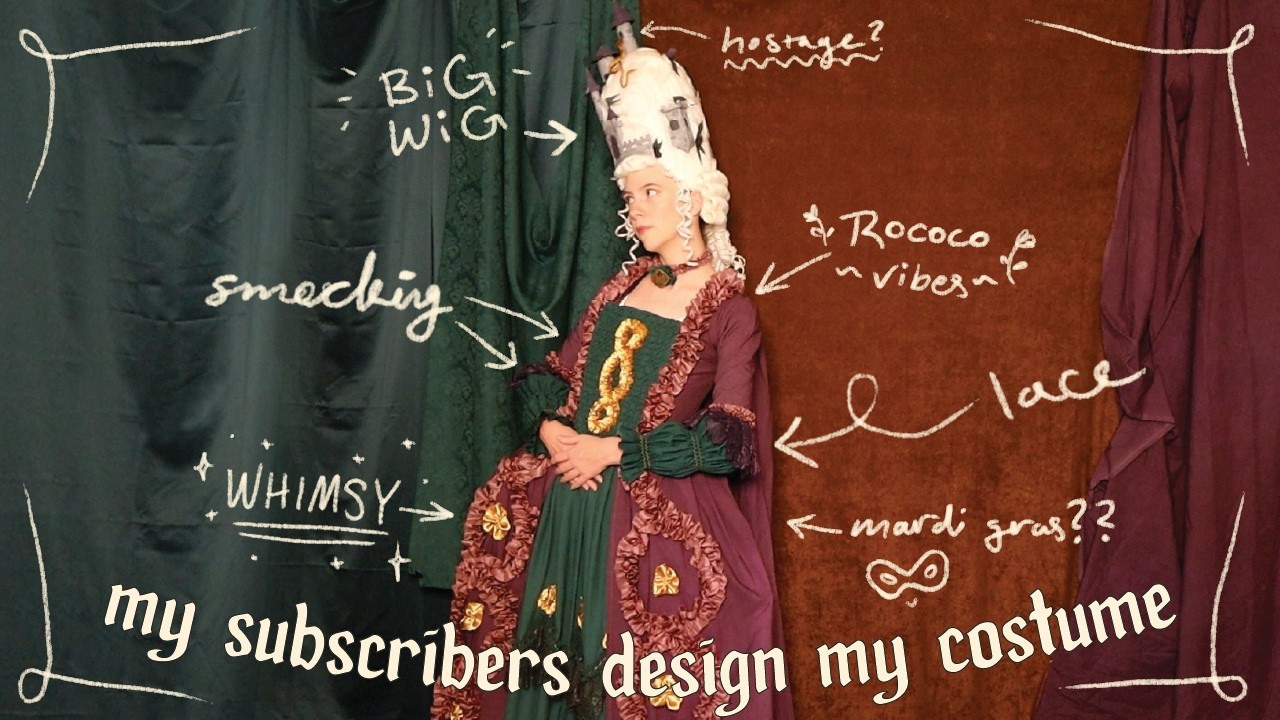
Designing an 18th Century Subscriber-Driven Gown | Costume History & Sewing Tutorial
@morningmercury-amhg
3.4K views•2026-07-24

12:54
Triumph of Orthodoxy Icon: Byzantine Art & History Explained
@BenCallan
2.1K views•2024-08-06

9:49
FastAPI vs Flask vs Django: Choosing the Right Python Web Framework
@TechWithTim
302.5K views•2024-05-26

1:42
Game of Thrones Opening Credits: A Cinematic Analysis
@gameofthrones
46.3M views•2011-04-18
Related Study Plans & Knowledge Roadmaps
Structured learning paths in General & Interdisciplinary Studies
general-studies
Elevator Engineering: History, Physics & Cities
01From Hoists to Safety Brakes: The Dawn of Vertical Lift
02Hydraulic vs. Traction: The Engineering Physics of Elevators
03Modern Speed, Safety, and Algorithms
+ 2 more learning modules
12h5 modules
Explore Roadmap
general-studies
Rubber: Material Science, History & Geopolitics
01Origins of Natural Rubber & Mesoamerican History
02The Chemistry of Natural Rubber & Vulcanization
03The Geopolitics of the Rubber Boom & Colonization
+ 2 more learning modules
12h5 modules
Explore Roadmap
general-studies
Containerization: Evolution, Logistics & Trade
01Ancient Trade & Bulk Cargo: Amphorae to Barrels
02The Industrial Revolution & Cardboard Packaging
03The Containerization Revolution: Malcom McLean
+ 2 more learning modules
12h5 modules
Explore Roadmap
general-studies
Textile Tech: Evolution, Labor & Global Impact
01Pre-Industrial Textiles: Handloom & Cottage Industry
02Mechanization: The Spinning Jenny to the Power Loom
03The Factory System & Global Labor Transformation
+ 2 more learning modules
10h5 modules
Explore Roadmap