
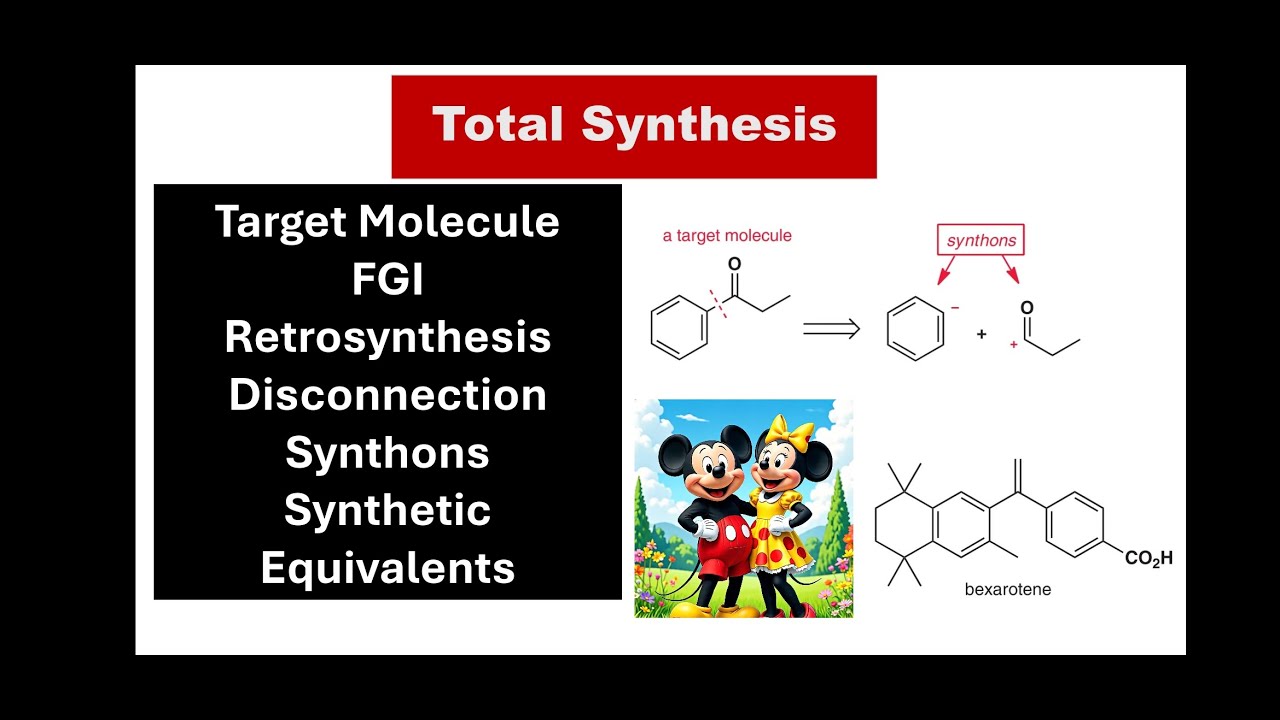















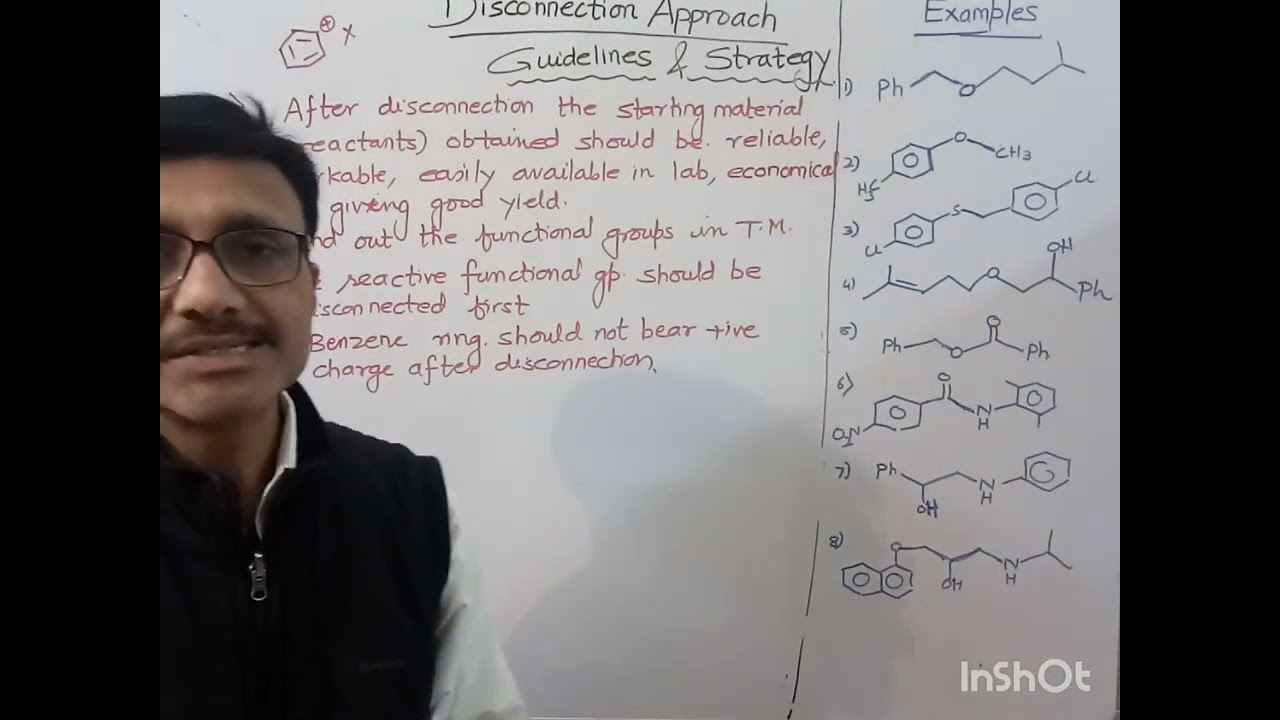

This video explains the disconnection approach for synthesizing 1,3-disubstituted and 1,5-disubstituted compounds using retrosynthetic analysis. Key strategies include: (1) Identifying the 1,3 relationship between functional groups and applying latent polarity (positive-negative-positive pattern) to guide disconnection; (2) Using aldehydes/ketones as synthetic equivalents for 1,3-difunctionalized molecules; (3) Employing acetal formation for protecting carbonyl groups; (4) Applying functional group interconversion (ester to alcohol reduction); (5) Utilizing aldol-type reactions and Michael additions for constructing complex frameworks; (6) Using nitriles as versatile building blocks that can be reduced to amines; (7) For 1,5-disubstituted compounds, applying consonance (matching polarity patterns) and disconnecting from the center for simplicity. Examples include gingerol, morphine derivatives, and amitriptyline synthesis.
Disconnection Approach Part 3: 1,3- & 1,5-Disubstituted Examples
Added:dear students I am dr. emil philosopher and you know that we are studying disconnection approach or retrosynthetic analysis and previously we studied two groups e-series connections in which we studied 1 3 die functionalized molecules and we studied various examples today we will consider some synthetically and medicinally important examples of 1 3 die functionalized molecules for example we study synthesis of ginger all [Music] first structure of gingerol this molecule has again same functionality like we discussed in our previous lecture and this is structure of ginger all ginger all is a natural product which occurs in ginger and it is known to possess antioxidant properties as well as anti-inflammatory activity and also anti-tumor activity now we can see same functionality is present here in our last example if we ignore this big R group on both sides what would we get we get this and it is very common for the students that that they get confused when our is changed so basically we don't have to be confused about big R groups on both sides of the functionality but we have to see is the actual functionality which we are more concerned about in this case that is one three relationship and now we start disconnection previously we studied about latent polarities so we add that here as well positive negative positive and what is the relation 1 this is 2 this is 3 again 1 3 relationship and then we can disconnect from here as a result we get this Anton and here we get this in tone and for this we know that this is a one type synth on acceptors in tone and it's synthetic equivalent or reagent is corresponding aldehyde whereas for this corresponding ketone would be used as reagent now since it's in this case we can use a base here is methyl if you don't put anything this corner is also representing a methyl group so we add base and we can add the aldehyde this one and as a result of this reaction we will get the target molecule so this was senses of gingy role now we see next example next example is senses of dogs become in which is and opioid analgesic and it is it's structure is this one [Music] so this is our target molecule in this case we can see that we have this functionality and this functionality is basically an acetal is it Al's or key tiles are protecting reagents but here we have it is an important structural feature of dogs which I mean and this can be synthesized in the presence of a carbonyl compound aldehyde or ketone this takes place in the presence of acid Pro example h plus and corresponding alcohol if we call it r1 r1 then it would be r2 and as a result we get our - here are two here are 1 so our - so this is if our one here in this case is hydrogen then it would be called as acetyl and if it is our group carbon-based some group then it would be Keitel so a Seeta aur Geeta can be formed in the presence of acid and corresponding alcohol and here we have cyclic acetal so for cyclic acetal we can use die ole for example if we use propane diode here then we get this so we can see this is same as we have here therefore we can use this asset all for our he or disconnection here and here because in the in the single step both the bonds are formed here you can see both the bonds are formed in a single step so simultaneous breakage of morphic or disconnection of words from both the sides would take place and we will get [Music] chorus warning die old and now we have to see how we can get this die old one way to get this like die old is through functional group inter conversion from this molecule disaster so if we can convert an ester into an alcohol this process is reduction so we can convert this astral digester into corresponding by ole now this can be further disconnected from this position because it's 1 2 3 so this will be disconnection here and we will get this one along with that dye we tie a mine because it's methyl group here is also methyl group so dimethyl a mine would be obtained and this can be further disconnected at this position this is one two three and this is because alpha beta carbonyls are involved so this disconnection is also called alpha beta and as a result [Music] we will get this along with that corresponding aldehyde so this was disconnection now since it's so we will take this ester this ester is die ethyl malonate and this comes from corresponding acid named as malonic acid so this is it's Esther and then we will add base and corresponding aldehyde we have to choose same aldehyde because this aldehyde is on third position of this pyridine ring so we have to keep that in mind throughout our series and as a result of this condensation [Music] we will get this alpha beta carbonyl and this will be then subjected to react with dimethyl amine which would attack here and this process is Michael edition and as a result of it [Music] we will get this and this can be reduced using lithium aluminum hydride here we can see corresponding day-old has been obtained now we can convert this dial into this acetyl using formaldehyde but we have to use some acid generally we can use mineral acid or acetic acid for this but in this case we have this basic group which is nitrogen therefore in order to avoid the protonation of this functionality we can use Lewis acid for example bf3 and as a result formaldehyde in the presence of bf3 as we know he says it we can get the target molecule so I hope you have understood this now we see another example my trials are another important class of organic compounds which can be used in aldol type reactions and this reactivity is particularly useful when nitrogen and oxygen they are in one three relationship so we see the example first the reactivity of nitriles in case of acetonitrile the pKa of this hydrogen for example this one is 25 and we know that in case of for example ethyl acetate PK of these hydrogen's is also 25 so they can be used to generate a nine carbon I'm here using suitable base so in the presence of ways they can be deprotonated and they can undergo carbonyl additions as well so it will attack here and as a result we get this cyanohydrin now we see in a nitrile this functionality is present and because it is unsaturation it can be reduced using suitable reagent for example lithium aluminum hydride which is a very strong reducing agent and can convert this or reduce it to corresponding a mind so in this case this is 1 2 3 3 minor alcohols they can be obtained using this methodology so in this case oxygen and nitrogen have 1 3 relationship and in this case we can use this a low type reaction to aldehyde or ketones to get this type of target molecules now we see an example and the example is senses of when love accent and in this case we have this molecule now this is the structure of my affection and in this case it is our target molecule this drug is used to treat depressive disorders [Music] or pain disorders as well so in the first step we will disconnect from here and this will be see an emanation because 2-methyl are adding to an amine group so carbon is getting attached to and our mind so CN are mine and as a result we will get this one and this functionality as we explained earlier can be obtained using corresponding that trial hear me talk see bro wait so the process in which nitrile can be converted into corresponding a mine is fgi functional group inter conversion and it is reduction and in the next step we can disconnect from here because we have just studied that nitriles can also undergo nucleophilic addition aldol type reaction to early hides and ketones when they have alpha hydrogen's we have this type of cell phone for that corresponding ketone would be used previously we discussed that for this type of sin tone we use aldehyde because in this we have positive charge so one hydrogen was present here if hydrogen is not present here and some other alkyl group is present or a royal group is present which is carbon-based then we will get corresponding ketone as reagent and other would be other Centon would be this for this we have this molecule as reagent this molecule can also further be obtained by disconnecting here this and so on would be obtained and cn- would be obtained for this we can have corresponding alkyl halide BR here for example sodium cyanide Novik we can see the senses as we know last step of disconnection is first step of senses so the first step sodium cyanide would be added to get our Sano compound and then in the presence of a suitable base and cyclohexanone this aldol type addition would take place so we will get this because negative charge would be produced when base would be added so this negative charge would attack here and this over negative would be formed here and as a result it would be converted into Oh H out upon quenching and this can be reduced further in the presence of lithium aluminum hydride and in the last step we can convert it into target Molly using excess of formaldehyde and we get target molecule so this was about 1/3 disconnections with various examples and in this lecture we have studied various pharmaceutically important applications of this reaction and now we see further now we study 1 5 die subdivided compounds this can be studied using the example this one this is one two three four five so this is one four one five die substituted compound and now we first add latent polarities positive negative positive negative positive so here we have electronegative atom oxygen so we need that we would have positive latent polarity or positive charge and then alternating positive negative positive negative positive and here we can see in both the cases where beneath oxygen we have positive charge so this pattern which is again matching or coincident is called consonant and we can also use this pattern for our disconnection another rule is a very important rule is simplicity is the key when we have a complex molecule it is a good option to try to disconnect from the center as a result simplicity can be achieved so we try to do that and here we have positive and negative so we disconnect from here as a result we get positive here and negative here as per our latent polarity here was negative so we have put negative here here was positive we have put positive here and we know that for this we have corresponding alpha beta unsaturated ketone as corresponding reagent and here we have corresponding ketone as reagent now senses in the first step we will add base and in the second step we will add this alpha beta unsaturated ketone and particularly this is methyl group here is vinyl group so this is me tile veenai ketone as you know during naming of ketones we can name one functional or one substituent and then the other one and this is methyl vinyl ketone reacts with acetone in the presence of ways and the process is Michael addition because the reaction would occur on beta carbon this is alpha beta so conjugate addition which is Michael addition and we will get target molecule so I hope you have all understood carefully if there is some problem you can leave your questions in comment box Thanks
Up Next
Aldol and Claisen Reactions: Organic Chemistry Explained
@crashcourse
75K views•2022-01-26
Biocatalysis and Catalysis in Islatravir Synthesis | Merck Webinar
@SCIwheresciencemeetsbusiness
675 views•2020-10-08
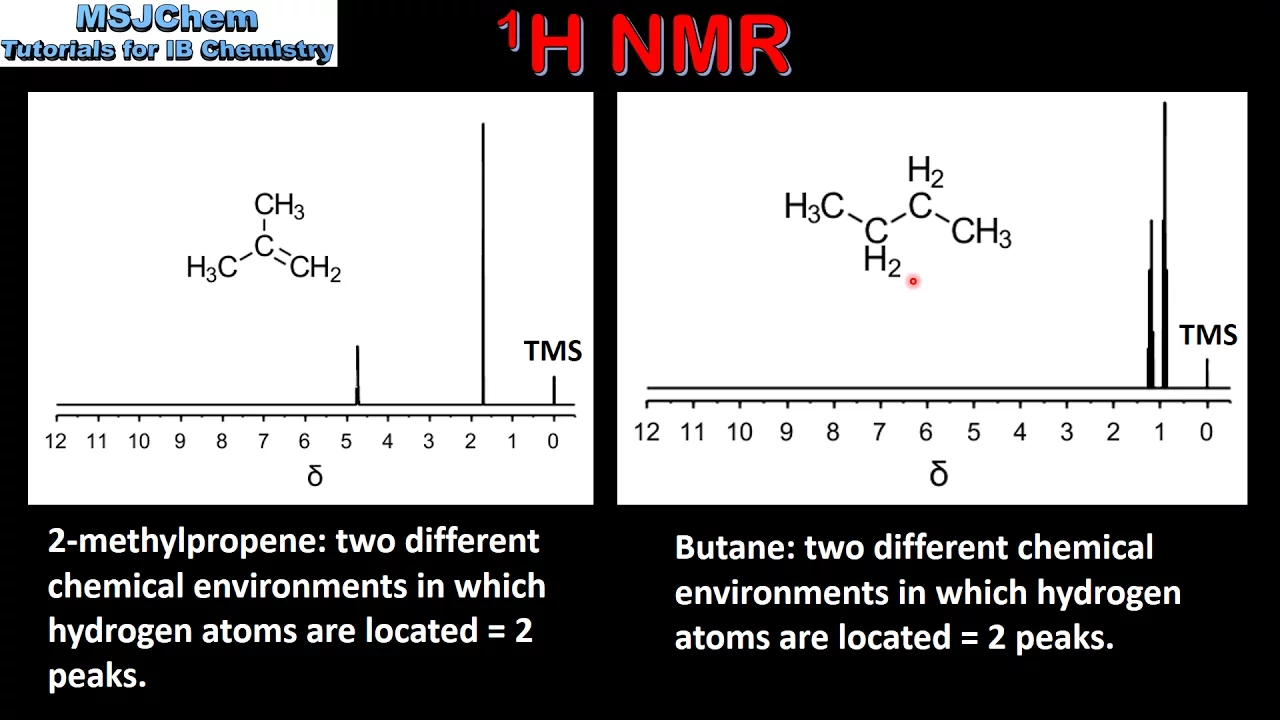
1H NMR: Determining Number of Peaks from Structure
@MSJChem
59.2K views•2017-04-06

Edible Water Bottles: A DIY Guide to Sodium Alginate Spherification
@ryan
10.5M views•2019-06-21
Related Study Plans & Knowledge Roadmaps
Structured learning paths in Chemistry