






![Cardinality and Countability of Sets [EP1]](https://i.ytimg.com/vi_webp/RzUGYyagKLQ/maxresdefault.webp)








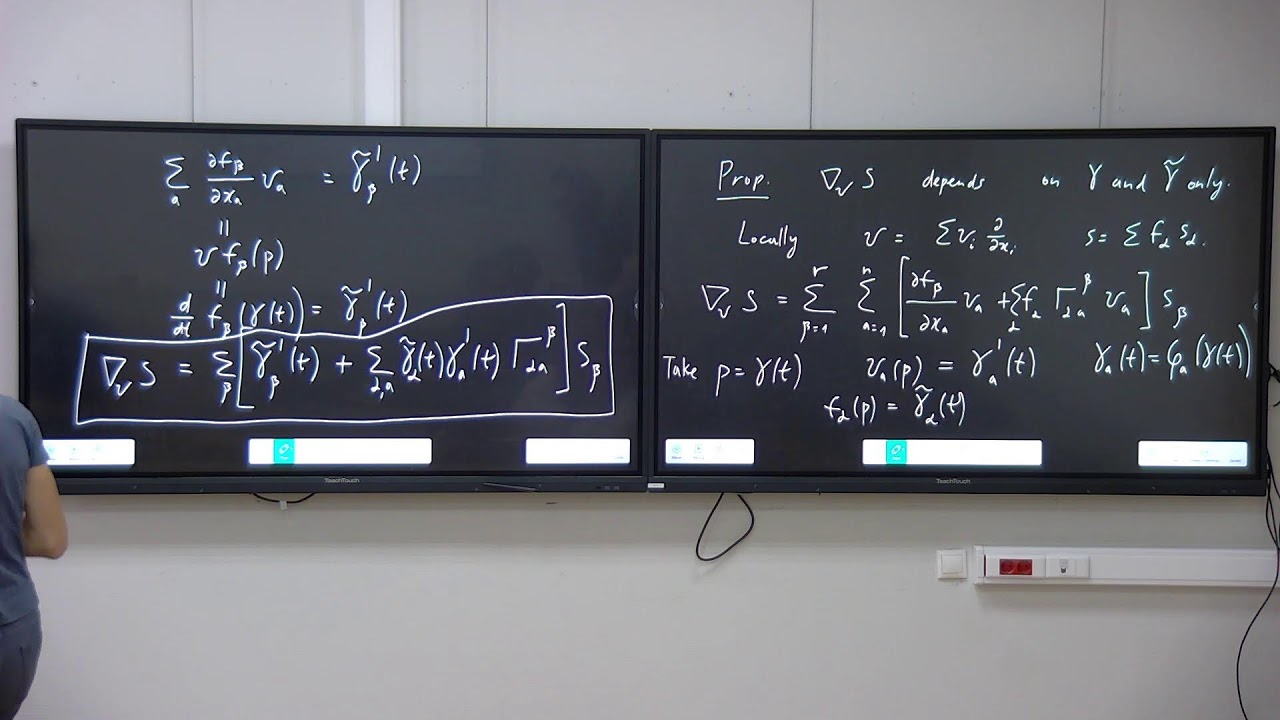

![48 - TEORÍA CUÁNTICA de CAMPOS [ Yang - Mills: Transporte Paralelo ]](https://i.ytimg.com/vi_webp/TarascUBCLc/maxresdefault.webp)
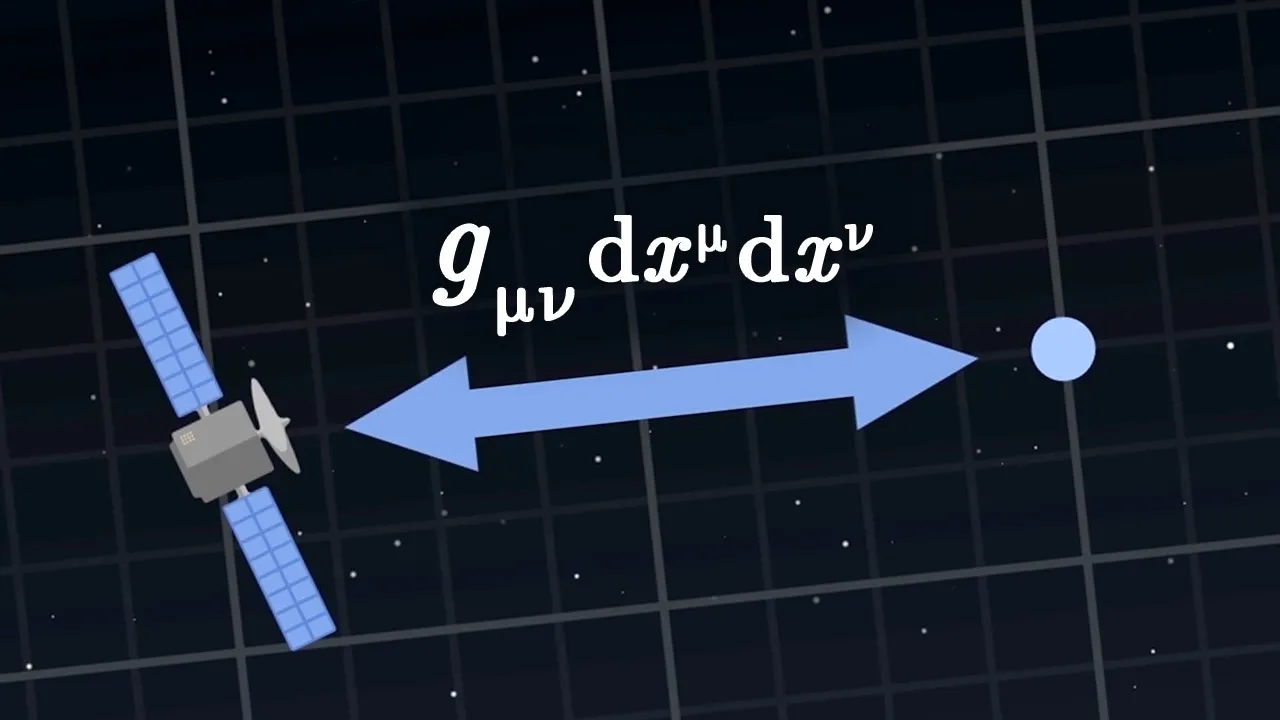


A differentiable manifold is a topological manifold equipped with an atlas of charts whose transition maps satisfy specific smoothness conditions (C^k, C^∞, or analytic), enabling the definition of differentiability for curves and functions on the manifold; while dimensions 1-3 and 5-7 admit only finitely many or unique smooth structures, dimension 4 (spacetime) admits uncountably many distinct smooth structures, making the choice of differentiable structure a fundamental physical question rather than a mathematical artifact.
Differentiable Manifolds | General Relativity Lecture 4
Added:Fundamental concepts of point-set topology, including topological spaces, open/closed sets, homeomorphisms, and Hausdorff and second-countability axioms.
Multivariable real calculus, specifically the concepts of differentiability, partial derivatives, Jacobian matrices, and the chain rule in Euclidean space.
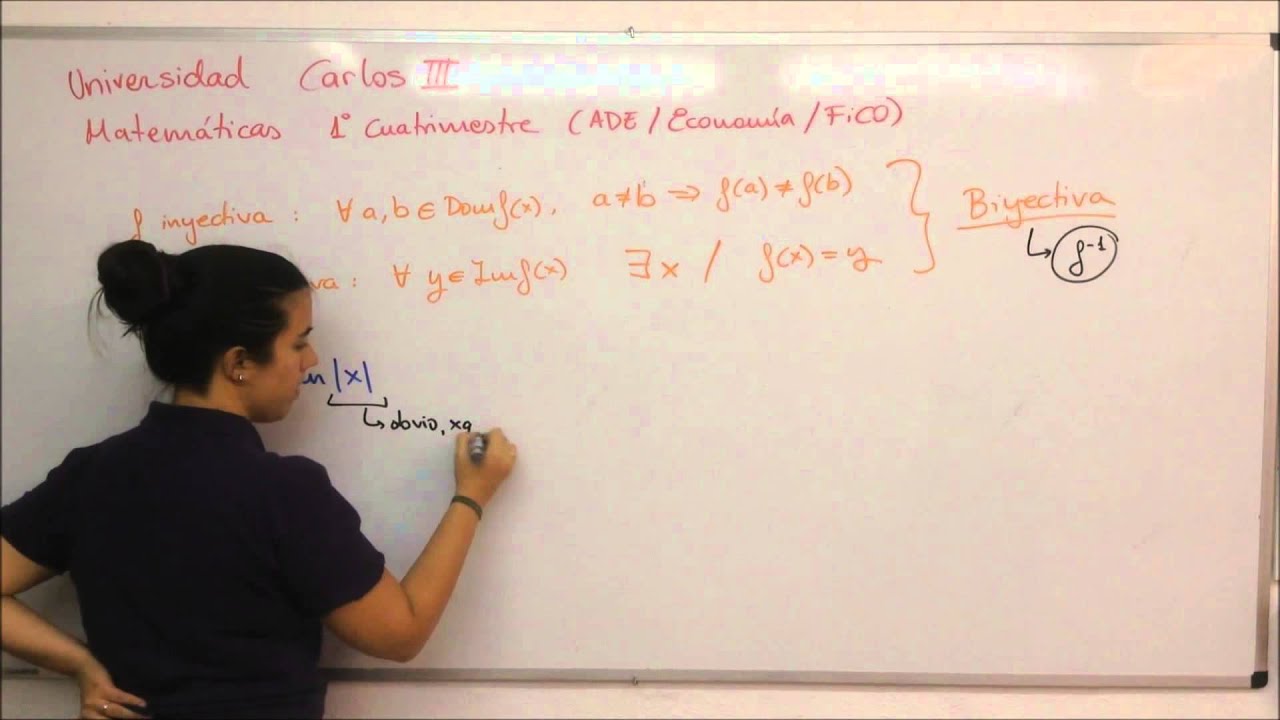
Basic set theory and mapping terminology, particularly regarding bijective functions, domains, restriction of maps, and composition of functions.
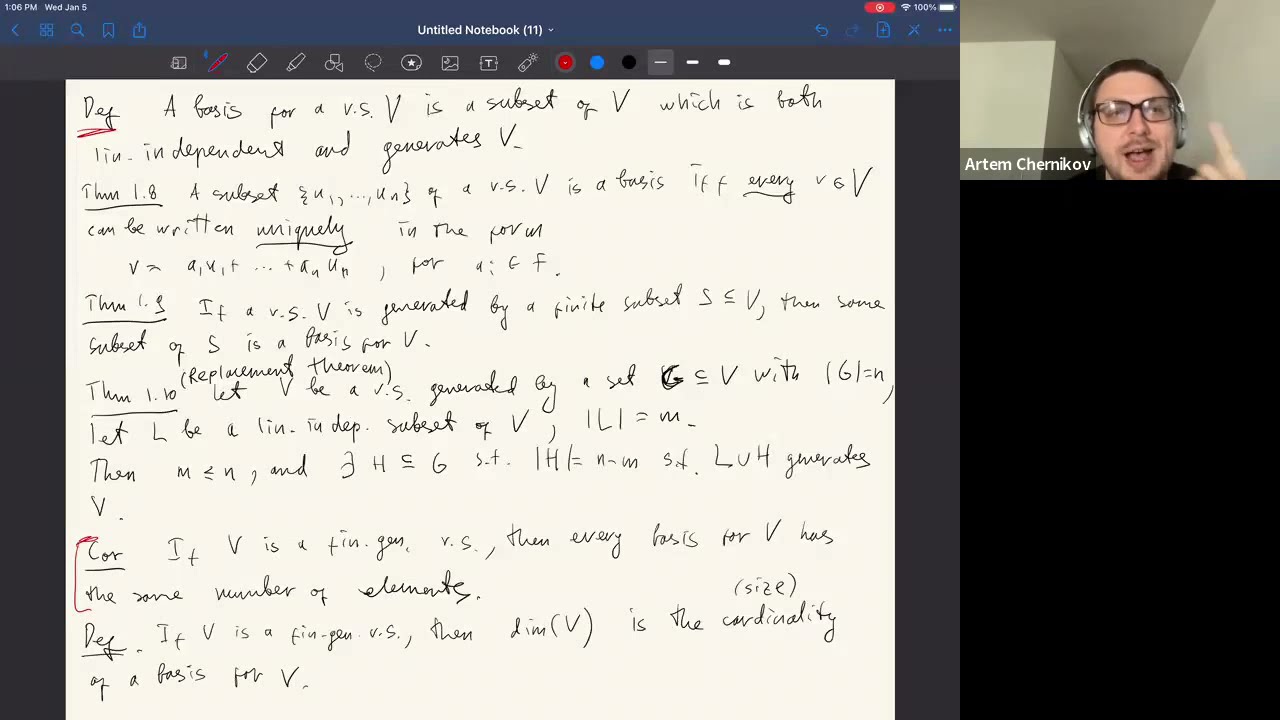
Introductory linear algebra, including the concepts of vector spaces, bases, dimension, and linear transformations.
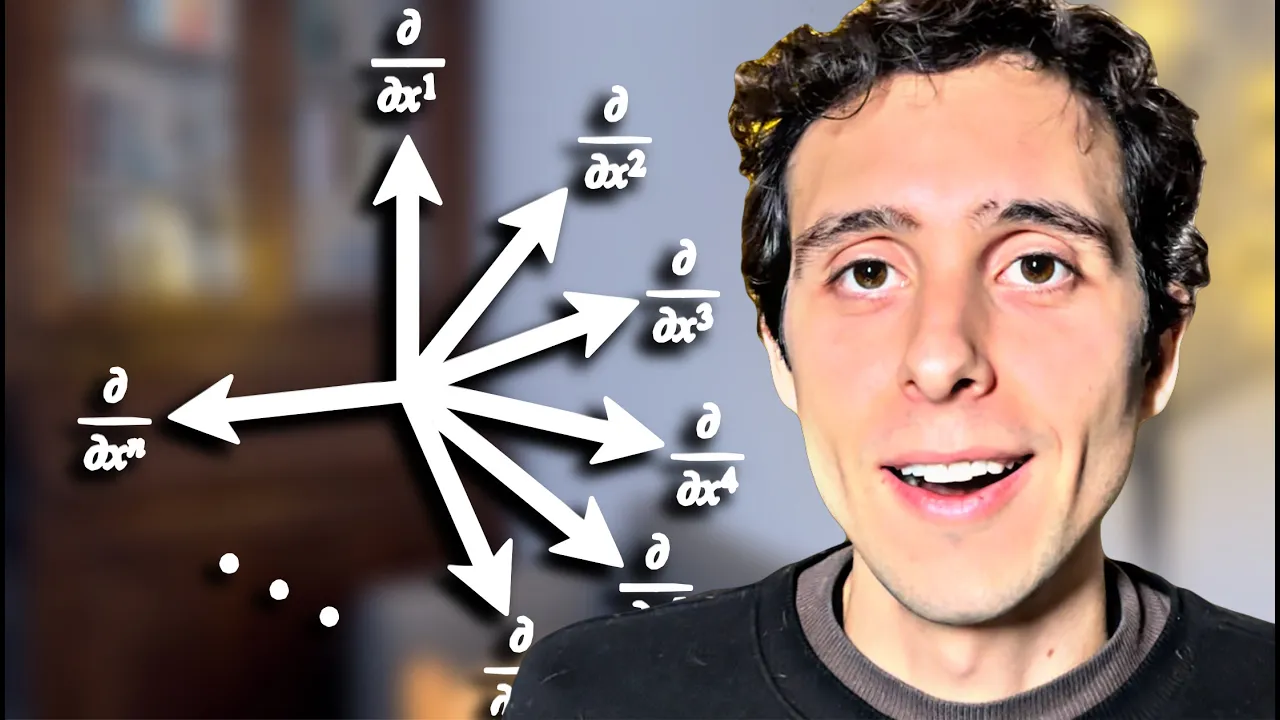
The formal construction of Tangent Spaces and Cotangent Spaces on a manifold, abstracting the concept of vectors beyond flat Euclidean space.
The study of Tensor Fields and Differential Forms, enabling integration and exterior calculus on smooth manifolds.
Affine Connections, covariant differentiation, and the geometric concept of parallel transport along curves.
Riemannian and Pseudo-Riemannian Geometry, specifically introducing the metric tensor to compute distances, angles, and curvature in General Relativity.
102.6K views989likes1:00:24Original Release: 2015-02-10
This program is being presented to you by the Heras International Winter School on Gravity and Light.
Welcome to the fourth lecture of the winter school. We're now considering differentiable manifolds. And uh so far we looked at topological manifolds and a topological manifold roughly speaking allowed due to the topology on it. Anyway the definition of continuity of a curve and if you think of space and you think of this curve as the trajectory of a particle uh in classical physics you certainly want to talk about continuity and you want to require that this curve doesn't make jumps. uh we already achieved that. Now roughly speaking you want more you want also to associate to this curve at every point a velocity.
That's the basic idea. Now it's pretty clear that if the curve looks somewhat like this then you have difficulty associating a velocity here because there's no unique tangent vector very roughly speaking. Okay. The question is can what's the difference between this curve and this one? Well, roughly speaking, intuitively you say this one is a differentiable curve and this is not differentiable.
But now we need to make this precise and the question is is the structure of a topological manifold MO. So we already assume it's a special topological space namely a topological manifold of dimension D. The question is is the structure M O enough enough to talk about differentiability of curves and the answer will be a resounding no it's not enough can you construct from it a notion of differentiability no of course not that's what I mean it's not not it's not good enough not enough information you need to make more choices before you can actually talk about differentiability of a curve and in this lecture will figure out what the amount of this choice is and how much choice you really have. I tell you already now in dimension one two and three you have choice but they're all equivalent. So you have only one choice in one two three it's pretty clear I mean one to threedimensional topological manifolds you have essentially one choice how to talk about differentiability of curves on them 1 2 3 dimension five 6 7 8 9 10 and so on so not four five six but five 6 7 you have in each dimension a finite amount of choice okay so you say well you have 48 choices Well, write it down, do physics with it, make experiments and you will find out which of the one it is. Unfortunately, there's a theorem which I will quote in the end that in four dimensions, the dimension of spacetime, you have an uncountable number of possible choices.
Do you still think it's obvious which one to choose? It is not. It's important to figure out what is going on. Okay, so this lecture is about figuring out what structure we need to add on a topological manifold in order to start talking about differentiability of curves on a manifold, about differentiability of functions on a manifold, even about differentiability of maps from one manifold to another manifold. We will need all this. Okay.
So we wish to define a notion of differentiable objects, more concretely curves.
What was a curve? Well, on a manifold, a curve is a map from R to M uh of differentiable functions. uh that's just the terminology for a map from the manifold into the real number say a temperature distribution on the manifold and most generally maps um from one manifold to another. So I will now not always specify that there is a topology on here because I say it's a topological manifold you know that is in the background has been chosen. We want to define such a notion. Now first what is our strategy for that and in the third no in the second lecture I already indicated what the strategy would be. I spell it out once more. The strategy is if this didn't happen if we didn't look at a curve in the manifold. Let's start with curves. So if we didn't look at this guy in the manifold, but we rather looked at a curve from R to RD, we would know what we mean by differentiability, right? And we could use the undergraduate definition and talk about that. Now the point here is the strategy is um choose a chart UX. Well, a chart will not cover the entire manifold, but let's start in a chart and consider the portion of the curve that lies in the chart domain.
You can say, well, that's not what we want. We don't want the portions that lie in a chart domain. We want the full curve. But let's do it in charts. And because charts domains cover everything, we then can then compose the global notion from the local notion. That's the strategy. We try this and we'll see how it works. Okay, but now how can we do this? Well, if we have a chart, we also have a chart map. We land in X of U in RD. And here of course we got already last time the object X after gamma which is now a curve from R into RD.
But as a curve from R to RD, we know whether it's differentiable or not. you take the derivative with respect to the curve parameter component-wise or something like this. Okay, your favorite your favorite definition here. And the strategy or the idea is try I think the chalk is wet here. try to lift the undergraduate notion of differentiability of a curve on RD to a notion of differentiability of a curve on the manifold. Right? We already had the question last time. Well, here you call it differentiability and then you used to call this also differentiable but this should be called undergraded differentiability and this is called the manifold differentiability. Okay. But you try to define this by coming from here. Now of course already the problem uh or the question we encountered last time is um can this be well defined?
Can this be well defined? Because after all the curve doesn't know anything about me looking at a particular chart.
It would be a very bad idea to assign the curve a property that depends on my taste.
So well defined is this well be defined under change of chart.
So in order to judge that we again draw this picture um gamma the portion of the curve that lies in U you use one chart you go to x of you in in RD but now another chart could have another chart domain and it could have another chart map both at the same time.
Now if the other chart domain is V and the intersection between the two is empty then one chart here one chart there they can't be incompatible because this portion of the curve has nothing to do with that portion of the curve. But if this is non-MP then in the overlap region there is a real problem because one chart map might tell you yes it is differentiable the down there the of the same curve of the same object in the real world the other chart map might tell you no it isn't.
Well if that happens that's catastrophe because then our definition is no good.
So that means we look only at the non-mpt overlap region. But then because this is part U is part of the overlap, you can of course still use the X to map here. This will still lie in RD. And on this part you have X after gamma. Now another chart on this entire overlap region using Y gives you Y of U intersected V in RD. And you have another chart map y after gamma.
And now the question is if I use here if I say this is undergraduate differentiable and of course that's just my term for as a map from R to RD. This is what I mean by undergraduate differentiable. If this is undergraded differentiable question, will this representative of the same curve in the real world be undergraded differentiable in the other chart? Well, uh we know we have a chart transition function here y after x inverse from here to there. That was exactly the chart transition function.
And um let's write it down. So that's this guy. Y after gamma is of course Y after um what do we do? Y after X inverse after X after gamma. You can read it this way. This is this one after this one. Um but of course the composition is associative. So you could write y after x inverse after x after gamma. You can think of it this way. Uh then you see oh it's really this guy here by inserting the identity. Whatever way you think about it this is all true. But the point here is this guy here you know is undergraduate differentiable undergrad diff.
And in fact it's really a map from R to RD.
This guy is a map from RD to RD. right from some portion of RD to some portion of RD and you know however because it's a chart in a topological manifold two charts in a topological manifold what you know with certainty is that it's continuous well you could also call it undergraduate continuous because it's continuous with respect to the standard topology in RD but now you see the problem the composition of a differentiable map and continuous map may be differentiable but it may not be. All you can conclude is that the composition here uh is sometimes maybe only continuous not undergrad differentiable.
roughly speaking because a continuous sharp transition map can um uh make make an edge like this right and it destroys the differentiability.
So the answer is it doesn't work. It's simply this does not work.
Now what is the remedy of the whole thing? By the way, if you now want to study this, the diagram looks very similar and a similar problem occurs. If you wanted to define the function on a certain domain, you try to study how it looks in as a chart represent chart representative of the function and so on. And here for these maps, the diagram uh looks on both sides. You have to choose charts here and there and the diagram becomes bigger. But it's always the same problem. If you change chart and you only know that the chart transition map is continuous as is guaranteed by the topological manifold definition, then you're in trouble. Your strategy does not work out.
So at first sight, strategy does not work out.
But of course there is a remedy for the whole thing and that's section two compatible charts.
So let's um make a bit more explicit what we said before.
Um, in section one we only we used any imaginable charts on the topological manifold.
M O and um in order to emphasize I mean of course a chart is a chart. In order to emphasize that we took any charts possible we say the following to emphasize this.
We may say we may say that we took U and V these arbitrary charts from the maximal atlas A of M Oh, again an atlas was just a collection of all charts.
No, sorry. An atlas was a collection of enough charts such that the chart regions overlap the entire manifold. That's an atlas. The maximal atlas is an atlas that has many more redundant pages.
Namely, any page you could put in is in there. So the maximum atlas is a theoretical object. I would never if I want to give you an atlas I would always write down a minimal or almost minimal atlas at least a small atlas as small as possible somehow because it saves work.
But then I can imagine you can ask does an an additional chart lie in the maximal atlas okay and the answer is if it's a chart it lies in a maximal atlas.
Okay. So this is the and so we we say we took U and V from the maximal atlas.
But some of these guys we might be lucky maybe this maximal atlas can be reduced such that I throw out all those charts which have between them a transition map. a chart transition map that is only continuous but not differentiable because the chart transition map is also from RD to RD. We can use our undergraduate understanding of the differentiability and require that we only keep a subset of charts that we originally had in a maxon atlas and we pick in a clever way such a subset that it's still an atlas it still covers but that all transition functions are differentiable.
If we manage to do that, we make this work by additionally requiring that in the future you cannot just choose any charts in order to define this in order to define the um the differentiability of this curve. You may only define the differentiability of the curve from the chosen charts from a restricted atlas.
But if you do this everything is fine.
Okay. So definition let's make this formal this idea definition two charts ux and vy of a topological manifold. So first of all of course it's any charts are called flower compatible If if either two possibilities if either their chart domains do not overlap at all somebody you don't meet you can't have you can't be incompatible with right you never got into trouble with you're compatible with everyone you didn't meet chart parts who have no common part of their domains, they are compatible. But now what if there is overlap? So either or if there's overlap, they're called compatible if either uh the chart transition map between them. Now chart transition maps, we got to be very careful. that two if you have two charts you can do y after x inverse was the one we wrote there y after x inverse now what's its domain its domain is the image of the intersection and its target is the image of the intersection under the other chart map that maps over there if the transition maps this one and its inverse that's this one x after x in y inverse the The domain is y of u intersected v goes to x u intersected v. Of course, one is the inverse of the other. One could maybe not write this and say, well, you could rename u and v and x and y and then it's contained. But it's clear like this. If in both directions these maps, these chart transition maps are and now comes the point because they're both maps from RD to RD, right? Both maps from RD to RD.
I can use any notion of undergraduate flower property in order to define flower compatibility on the manifold. For instance, if I have a notion of undergraduate on RD differentiability, I call two charts differentially compatible.
If the chart transition maps are undergraduate differentiably compatible, if they're differentiable, if they have the differentiability property. Okay. So, um why do I use the ridiculous flower? Um the point is this is the philosophy that you can have different types of manifolds and different types of compatibilities.
Um you define uh an atlas a flower is a flower compatible atlas.
If um any two charts in a flower are flower compatible and then you say a flower manifold is a triple M O A flower and of course the A flower must always be a subset of the maximal atlas because it's an atlas.
Okay, it still covers and that's a flower manifold is a triple where of course these two entries make a topological manifold but you have to choose a selection of charts that are mutually flower compatible whatever flower is for instance differentiability okay and that's a choice and it's not clear for a given topology ological manifold say the sphere and I have the maximal topological atlas can't I take out charts in one way or can't I keep one set of charts or another set of charts that both satisfy the flower compatibility but the choices are not the same if that happens and I wish to make a model of space time I should know which choice I make because one is not the same as the other. Under one choice, some curves will be differentiable for instance and other curves won't.
So I need to know and the question of how many choices I can make is very important in order to know whether I introduce arbitrary assumptions here or whether this is the only way I can do at this level. Right? So this is for physics. This is important. And this is not mathematical sophistication for its own sake. This is a really downto-earth question for physics. Am I doing am I choosing the right structure here? Now I said it's the philosophy. Um let make let me make a table of what flower can be.
Yes.
May I ask a question for that? Why do we require that the overlap between you and we can also include the the zero overlap in the definition of compatibility?
No, it's it's um you mean this one here?
Well, the zero overlap means it has no overlap. Um so it would be the real world. Um and there's one chart domain U here and one chart domain V here. They map this part of the world and this part of the world. They can never cause an incompatibility in the definition because there is no portion of a curve.
Say there's a curve in the world which maybe even hits both domains. But then one can only judge the differentiability here. The other one can only judge the differentiability here. But they can never be in conflict. Hence if maps if charts have nonover overlapping domain if the intersection is empty we don't have to worry they are compatible but if they intersect then you can judge the same piece of the curve in one chart or the other and then you may have a problem and there is where the condition needs to be imposed that's it okay so what can flower be this is flower and this is undergraduate flour And of course this is silly but um so um one thing we like to write sometimes is C 0 are these C 0 compatible atlases what it means are they are the transition maps are the transition maps C 0 as maps from RD to RD. C 0 means is the set of all continuous maps continuous maps with respect to the standard topology on RD and you say every atlas is a C0 atlas on a topological manifold because the transition functions transition maps are of course continuous.
So is every atlas is a C 0 atlas. Now you can ask is the atlas C1. What is C1?
C1 would be this. What is undergraded C1? Well, it would be that the transition maps as maps from here to here. I mean strictly speaking from where they are defined to where they're defined. Right? Roughly speaking, um sorry, with respect to O standard, um this is these are the maps from R to D to RD that are differentiable, namely ones, and the result is continuous.
You could have a function that's differentiable, but the result is not continuous. Okay, that's this. Of course, you can generalize this to CK is the function K times continuously differentiable.
Now you ask why do we insist on the result being continuous? Well, you don't have to. You could ask is it K times differentiable?
But the nice thing about functions that are not only k times differentiable but the result is continuous is that you can judge its k* continuous differentiability from the repeated continuous differentiability in the in various directions. So from the existence of the partial derivatives and their continuity, you can already conclude the entire map has this property because they're nice examples that maps are differentiable k times uh sorry there are examples for maps that are not k times differentiable as maps from RD to RD but all partial derivatives are right they're examples like this but because it's nicer to not have to worry about these cases you require the function itself to be continuously differentiable. Hence, this is a more favored class of manifolds than those.
They're easier to work with. Okay. But anyway, so you have this then there is a class it's called C infinity. C infinity compatibility means you can uh it's continuously differentiable arbitrarily many times. Okay, that's C infinity.
Then there is a case that's called C omega. Omega stands for analytic real analytic in this case. That means this transition map can be tailor expanded right uh a multi-dimensional tailor expansion. So there exists a multi-dimensional tailor expansion. Right? So in physics sometimes people say well everything can be tailor expanded. No, no, it's simply not true, right? It's much stronger than this one, right? This is so this is a much smaller class than this one. Okay.
And finally, uh maybe I I don't know how how to call this um uh complex differentiable or something like this.
Yeah. Um this you can do only for even dimensional manifolds and you can require that your chart map which is from R2D to R2D that they uh pair-wise satisfy the Koshi Reman equations.
If you do that on top then you get something called a complex manifold which has much more structure than a real manifold because you additionally have the equation but you always ask this of the transition functions. So by imposing more and more conditions on the transition functions you and why would you do that? Well because you might want to define a tailor expandable curve but then you need an analytic manifold in order to not destroy the tailor expandability in one chart once you transit to another one. So the more fancy stuff you want of your objects on the manifold, the more restrictive you have to be in your choice of atlas. And the question is yes, the C omega whether I have just a two-dimensional expansion or an hundredth dimensional that doesn't matter it's all C omega.
Uh no it would dep it would depend on the dimension. So the question was whether a um whether it matters whether you have a uh analytic function in one dimension or in two dimensions. Well, they're totally different functions. Okay. And in so you can't even compare. You can't even compare. But uh it's certainly not if it's smooth this is called smooth.
Um smooth there are smooth functions that are not analytic in any dimension.
Right? Okay. So this is the general philosophy. So in the future if you hear of a complex manifold you say ha it's just here the koshi reman equations apply to the transition maps you know what a complex manifold is okay so so this is the the general um overview here um so that's what we what we want and I think it's clear now from what I said in the beginning I don't need to say it again now our definition of differentiability of a curve say our curve can be called k times the curve on the manifold can be called K times continuously differentiable on a manifold where I manage to find an atlas that is a CK atlas because that will preserve this property in one chart for another chart. Okay. Now the question of course is okay to what degree do derivatives appear in physics? Okay, is C2 enough? Maybe C3 to be safe or whatn not. Um there is actually a nice theorem by Whitney that says we don't need to worry about this theorem without proof any CK manifold.
So remember that's a manifold that's a topological manifold on which there exists an atlas that is CK but K needs to be bigger or equal greater or equal than one so it's not for a C 0 manifold of course right any CK so if it's if you have a manifold for which there exists an atlas where you can reduce the atlas such that all the charts that remain and still constitute an atlas are at least once continuous ly differentiable the transition maps any such manifold um uh sorry I should I'm sorry I should formulate in terms of atlases and then it's shorter and clearer any ck greater than equal one atlas a ck greater equal one is his name of a topological manifold contains as a subatlas which is still an atlas contains uh a C infinity atlas.
Meaning if you have a topological manifold, there are some topological manifolds where you simply cannot remove a chart or charts in such a way that all that remains is still an atlas and has continuously differentiable transition functions.
So some topological manifolds cannot be given such a structure.
But those who can where I can achieve that the transition functions are at least once continuously differentiable and I have an atlas in that atlas you can remove more and more and more and more charts this theorem says until you have even a C infinity atlas. So the difficult step is from a C0 atlas to C1.
That step is really substantial.
Right? This might or might not work to choose such an atlas for a given topological manifold. But once you arrived here, you trickle down right up to here.
Meaning in the future I will do hell and specify which ck I will always use smooth manifolds.
Thus we may without loss of generality OBDR we may without loss of generality always consider C infinity manifolds and they have a name they're called smooth manifolds because that's nicer that's smoother than saying C infinity manifold smooth manifolds Um, unless we wish to define tailor expandability, um, complex, differentiability and so on because it doesn't trickle down to here. Okay, but we don't need this. Although as physicists sometimes we would might may want to like this but but then you really have to make sure that your manifold your top underlying topological manifold still allows you to further reduce the atlas. So you see as a physicist you cannot say a come on let's tail expand a little right just a little right okay good good so well it's already said but maybe once a smooth manifold is a triple M O A where this is a C infinity atlas and this is a topological manifold and you see the only thing that distinguishes a a smooth manifold from a topological manifold is the provision of extra structure but in this case it's not extra because I put it on top right but because I reduced it from a given atlas but ripping out pages page 7 page 28 page 510 also contains information because I could have ripped out the pages. I could have ripped out other pages and I send a message I love you or I don't quite love you. Right? Um so this is information choosing this atlas because for me for is something like physics this was this was always from RP to R. This means this is one this is a chart transition map.
It's a chart transition map.
Where does then the gamma has to come from the experiment if gamma is really infinite. Sorry. Gamma. What? What's gamma? The the curve.
The curve.
No, the the curve. So again, the um So the question Yeah. Okay. So the curve the setup is the following. Um so I throw this piece of chalk. Sorry.
Okay. Now it made a trajectory. Okay.
And I like as a physicist I think of the trajectory that this piece of chalk made in the real world. And I might with sufficient idealization say if this is the real world then what the chalk did and I may think of this as time which later on we won't but roughly speaking this is the curve that the real object in the real world made. And then of course in order to communicate to you because you just didn't look there but looked out of the window. What did the piece of chalk do? I set up a chart. I put up little uh flags everywhere and so on. And uh you will say it passed my nose right here and you say it passed my nose at that that time and so on. So I set up a chart and you and then I give you this here. I can write it down on paper maybe even as a nice function. I tell you this and of course once I set up a chart this way I can write it down this way. But as a physicist what the chalk the trajectory of the chalk is not this. The trajectory of the chalk is that. Now of course if we write down physics on paper I mean concrete curves uh we'll always talk or almost always talk about this guy and you may change chart and then you talk about this guy and so on. But what we really think about and the things really want should attach um uh properties to or require properties of in our model of the world is this guy. what the the real path of the real chalk and all this reminds you is you may have a fantasy of saying well but it was differentiable the curve I wrote down to you uh well only because we made very special provisions of not choosing charts here that don't allow to speak of that yes let's assume I have a M and I lock on to a b okay this is a delta f is the third or four the fifth derivative disc is continuous.
Okay.
How does this I I don't see how this works.
Okay.
Yes. Yes. Yes. Uh well well the point would be if I say I have you have a smooth curve. So the question was I'm sorry. So the question was what if you have a pulse with a hammer you you hammer on something and the fifth derivative is discontinuous. So the head of the nail makes it discontinuous. Um well it makes certain measurements.
Yeah. Yeah. Yeah. Yeah. Well the point is if you say world lines or trajectories are smooth you would not uh allow that. Now you can say I have a smooth manifold but on a smooth manifold I can define a C2 curve right. So if I say I want this to be C2 so that if you derive once more three times as you required it's discontinuous that means you don't require the curve is C infinity you only require it C2 nevertheless you can still do this on a smooth manifold with these transition functions because C infinity after C2 will generically only be C2 right so it doesn't harm that you choose a C infinity manifold if you still want to consider for whatever reason curves that are only C2 but not C3 and all the Whitney theorem says it doesn't say the objects you look at must then be C infinity it says it doesn't harm the C2 objects if you choose the manifold C infinity and you always can okay so therefore it's a good good question because I maybe overstated before. I said we can always choose our objects to be smooth. We can still insist on them not being smooth, but for the char transition maps, I still require smoothness and everything will be well defined. Okay.
Okay.
Um where are we? Ahomorphisms and the theorem I mentioned in the beginning.
So um last section diffomorphisms.
So I already mentioned that whenever you have maps from one set to another set and it's just some map let's call it capital phi.
Um if you have no further structure to the set you can say what you can study the sets by studying maps between them and um that's just maps they have no further structure and what you usually require is that the map is invertible.
So if you're on a on a naked set, so if m n are naked sets, meaning you have no further structure in mind, um the structure preserving maps.
So not only respecting but preserving maps are the bjections and that those are of course the invertible maps for which there exists an inverse because at a set theoretical level a set roughly speaking consists of these elements and if each element here you can map to one here everything is hit and none is hit twice you can pair girls with boys and you know you you compare this up and so two sets may be such that they do have that they exists such a structure preserving map or not. So example between the set one two three and the set A there exists no structure preserving map at the pure set level because I can map the one to the A and the two to the B.
But what do I do with the three? I would have to map it to A or B again. But then it wouldn't be by objective because no inverse exists. And in fact you compare the size of sets informally speaking by talking about there exists a bjection then you call the sets to be of the same size. Well for finite sets that's maybe a little bit overdone as a definition but for infinite sets it works. So for instance you can okay um so that's an example where it doesn't work. There exists no structure preserving map. Now definition a set M and a set N are called to be um isomorphic and I say set theoretically.
So I emphasize only if you look at the set aspects they're set theoretically isomorphic morph is form and iso is the same. They have the same form set theoretically speaking only looking at their set theoretic aspects. Therefore studying them by maps by pure maps. Um they're set theoretically isomorphic by definition if there exists uh a bjection fi between them. Well if there exists one there exists usually many different ones. The question is, is there at least one one to one map?
If that is the case, then the one one map is called an isomorphism, but the sets are then called isomorphic. In order to emphasize that this takes nothing into account but the set theoretic structure, we say they're set theoretically isomorphic. And um examples are for instance the integers are set theoretically isomorphic to um the integers to the natural numbers. They're as many integers as the natural numbers. You say but they're double as many roughly speaking apart from the zero. No but you can make pairs. Okay. uh bit more surprising is that the fractions are as many as n and there's this diagonal counting scheme and so on. Maybe you saw this before. Uh so they're set theoretically isomorphic but n is not set theoretically isomorphic for instance to the reals.
Okay, that's this example. Now that was on the set theoretic level. Now and that will always stay like this. Now we can add structure to a set.
Um and we did this. If we add structure to the set, we now consider still uh a set but equipped with a topology. For instance, we did this in the first lecture.
And the question is can we define a meaningful notion of topological isomorphism that will still because there are still sets in there a topological two sets will be topologically isomorphic. So topologically isomorphic but there is a household name for that and that's called their home morphic and that's just traditional language. It means they are at the set level isomorphic.
But additionally there exists not only a bjection phi from m to n but a bjection such that phi and its inverse are continuous.
Why? Well, because continuity is the structure respecting property of these curves. So you add the condition not only do I want these two there to be a bjection, I want there to be a bjection which in both directions is continuous. If that exists, there may be several those I call the two spaces topologically equivalent.
And it's clear if two spaces are topologically isomorphic, sorry, topologically isomeorphic or homeomorphic as one says, then of course they're also set theoretically isomorphic. This is a stronger notion. I look at the sets more closely.
Okay, so this is uh here if you have a vector space you can do similar stuff. You can call one vector space vector space isomorphic to another one.
If again you require the exists a bjection fi between one and the other.
If it's a bjection it means it's invertible and in both direction it's linear because linear linearity is the structure preserving map here. And finally I want to show you this is always the same principle. And finally what I actually want to do in this section is I want to call talk about difforphic maps. the definition um two um um two C infinity manifolds M O M A M and N O N A N are said to be difforphic.
If there exists a bjection that's a purely set theoretic thing byjection phi from m to n but because there's a bjection the fi inverse exists such that the map phi and the map fi inverse are both C infinity maps and I haven't defined C infinity map yet but it's clear how that goes. If you have an M and an N smooth manifold, you may choose here an open set U and in the target you may choose an open set V and you look only at these portions of this map. But here you can choose a chart X and here you can choose a chart Y and that goes to some RD. But this here goes to some RE because if this is a D-dimensional manifold where you start and this is a E dimensional manifold where you land the charge will have this property and we like we would like to call this portion of the map that lands in that portion of that space. We like to call it C infinity.
If the map y after phi after x inverse which now uses a combination of two charts here and there for its definition. If this is undergraduate if this is undergraduate c infinity from rd to re of course you know the drill.
You need to check whether with alternative charts X twiddle and Y twiddle into RD and RE. You need to check whether the other representation uh Y twiddle after phi after um X twiddle inverse whether this is also undergraduate differentiable. But we already know because we have a chart transition map here and a chart transition map here which because we started with C infinity manifolds you know the chart transition maps are undergraduate C infinity and this undergrad C infinity will be preserved if I lift it up to here the diagram gets bigger and the principle is always the same.
Okay.
So why do I bother about diffomorphisms?
Well, if you look at a manifold and you look so closely that you doesn't escape you that it's a C infinity manifold. I mean certainly it's still a topological manifold but it's a C infinity manifold.
The question is can you distinguish two C um C infinity manifolds using only that structure. For instance, if I take a ball, I embed it and nicely and I pull back the topology from R3. Right? So I take X squ + Y M^² + N² + P ^ 2 in R3. I uh induce the topology from R R3 the standard topology. I get a topological manifold. We already know right talked about this. Um and then can I reduce there the maximal atlas such that I get a C infinity manifold? Yes, I um I I promise you you can. Okay, so you have a C in C infinity manifold. Now question, you do the same but with 5 * M 2 + 7 * N 2 + uh 18 * P ^ 2 = 1 and then you get an ellipsoid.
You do the same thing. You pull back your topology. You reduce the atlas and so on. Question, is there a diffomorphism between this guy and that guy? Yes, there is. Is there a diffomorphism between the sphere and the sphere where I make a little edge in it?
Right. I I fold it a little. Uh, no.
There is no diffomorphism between the two. There is still a homeorphism between the two. As topological manifolds, they're the same, but as smooth manifolds, they're already not the same anymore. Okay? So, it always depends at the level you look at it. But still the surface of a potato that doesn't have any folds, right? The surface of a potato is difforphic to the surface of the earth. Right? At this level, unless you make a little edge into it, at the smooth manifold level, things don't have a shape yet. Apart from not having little folds, folding edges, but a shape they don't have yet.
That comes only later. Okay. So now uh comes this uh uh theorem that's the last thing theorem is on the number of manifolds of C infinity manifolds.
um one can make out of a given C0 manifold in brackets if any. So for some that might not work but say you have one for which it works uh up to diffism.
So I can equip a topological manifold with two different uh um okay fine fine I first state up to diffis. So if two manifolds only differ by difforphism I count them as one because through the differential manifold perspective viewed they are the same. Okay, up to the femorphism is the following uh dimension of the underlying topological manifold 1 2 3 and the number of different manifolds I can make of that is one one one no ambiguity four I leave open I said in the beginning five six seven here five finitely many six finitely many seven finitely So this uh is the Moyes Radon theorems.
So the point is this is not easy to prove. Okay. And five six seven that there are only finitely many. Uh this has been shown by a field of topology that's called surgery theory where you have to learn how to glue together many folds and stuff like this. Surgery theory result. Okay. So extra techniques had to be invented in topology in order to prove this meaning don't worry if you don't feel it. Okay. Uh it's it's a deep result. And uh now four dimensions which is of course as space-time physicists we're particularly interested in.
There's some partial results that some compact manifolds compact is a topological notion. Okay. um the surface of a sphere is compact but R2 as a manifold is not compact as a topological manifold right um anyway for compact manifolds there are some where if the Betty number is 18 it's also top topological notion then there only finitely many choices or something like this some very very special exceptions but generically generically and particularly for non-compact manifolds right which uh is a real option for for spacetime.
There exist uncountably many uncountably infinitely many.
So not only infinitely many 1 2 3 4 5 but so many like the real numbers that you can't even count them anymore.
Okay. And that's uh just an existence proof. exist uncountably infinitely many different C infinity manifolds you can make out of a given topological manifold.
So that's a real problem because which one do you choose for physics?
Okay.
Number is it the same number for all?
No, no, no, no, no. It isn't.
And how finite? Two, three or 10?
Well, that doesn't matter.
Um, I don't know. I don't know whether the the proofs actually only say I only know the statement that there are finitely many. I don't know whether there's any definite number. Um probably not because um these could look very funny, right? And um some five-dimensional ones might have 20 and other fivedimensional months might have 28 different structures, right? So um you can't really say what the finite number is. Okay. I think I think I would be very surprised if in dimension 28 the number was 58 for all 20. It could be. I don't know. I don't know. Um, but finite still sounds fine. Okay, for a physicist you could say let experiment decide, right? Let's be real physicists. Let experiment decide. But if you here want to be a real physicist, you're also a very busy experimental physicist, right?
So, so you see theory does something here for you. You cannot always say let experiment decide, right?
Okay. Thank you very much. See you tomorrow. And in the tutorials, please.
Up Next

109:17
Topological Manifolds & Fiber Bundles | Geometric Anatomy of Theoretical Physics
@FredericSchuller
115.2K views•2015-09-22

4:43
Elliptic Curve Cryptography Explained: ECC, ECDSA, ECDH
@PracticalNetworking
28.5K views•2024-10-21
10:44
Fourier Series Introduction: The Big Idea Explained
@DrTrefor
387K views•2021-05-03
6:00
The Mathematical Impossibility of Accurate World Maps
@Vox
23.3M views•2016-12-02
Related Study Plans & Knowledge Roadmaps
Structured learning paths in Mathematics
mathematics
Tensor Calculus: Vectors to Riemann Curvature
01Mathematical Foundations: Linear Algebra & Calculus
02Covectors, Dual Spaces, and Tensor Basics
03The Metric Tensor and Index Gymnastics
+ 2 more learning modules
40h5 modules
Explore Roadmap
mathematics
Gödel's Incompleteness: Logic, Proofs & Limits
01Introduction to Formal Systems & Hilbert's Dream
02Set Theory, Cardinality, and Cantor's Diagonal Argument
03Arithmetization and Gödel Numbering
+ 2 more learning modules
14h5 modules
Explore Roadmap
mathematics
Galois Theory: Fields, Groups & Solvability
01Foundations of Abstract Algebra: Groups & Fields
02Polynomials & Field Extensions
03Splitting Fields & Symmetries
+ 2 more learning modules
24h5 modules
Explore Roadmap
mathematics
Non-Euclidean Geometry: Models & Geodesics
01Euclid's Fifth Postulate and the Birth of New Geometries
02Hyperbolic Space and the Poincaré Disk Model
03Geodesics: Defining Straight Lines in Curved Spaces
+ 2 more learning modules
15h5 modules
Explore Roadmap