






![Silk Roads, Indian Ocean, & Trans-Saharan Routes [AP World History Review]—Unit 2 Topics 1, 3, 4](https://i.ytimg.com/vi_webp/Vi6aLWr6HZw/maxresdefault.webp)


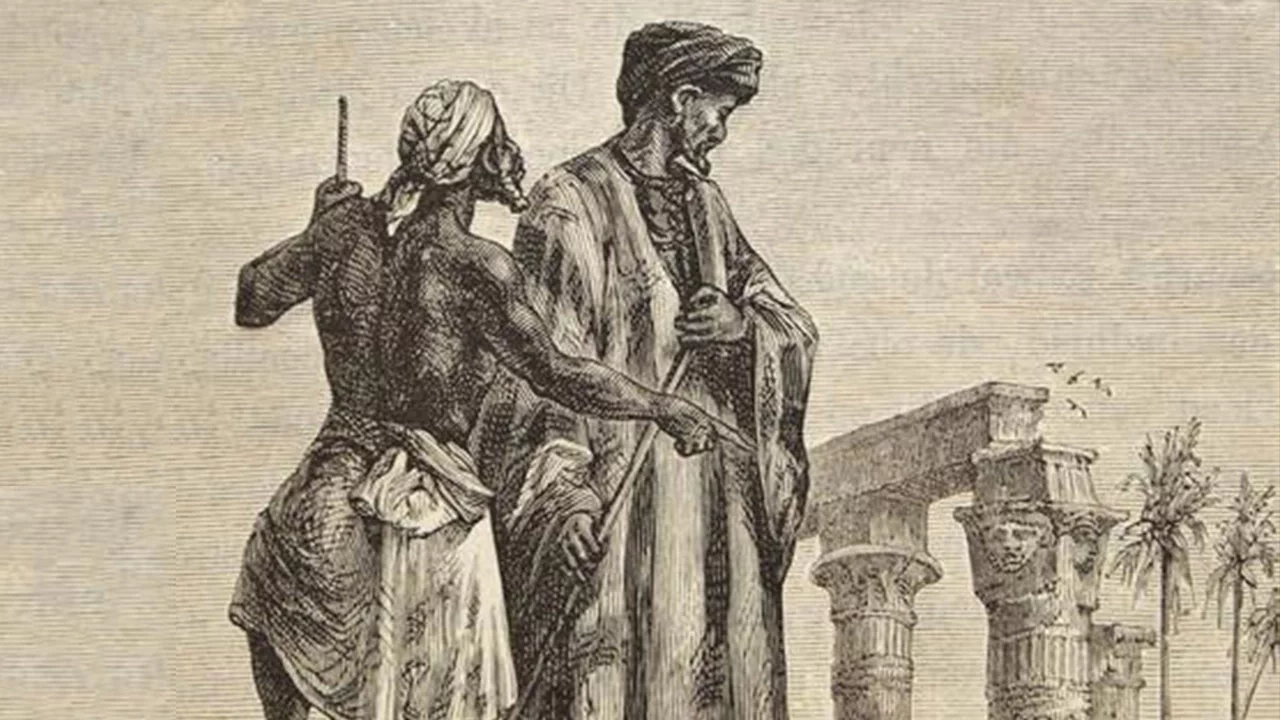


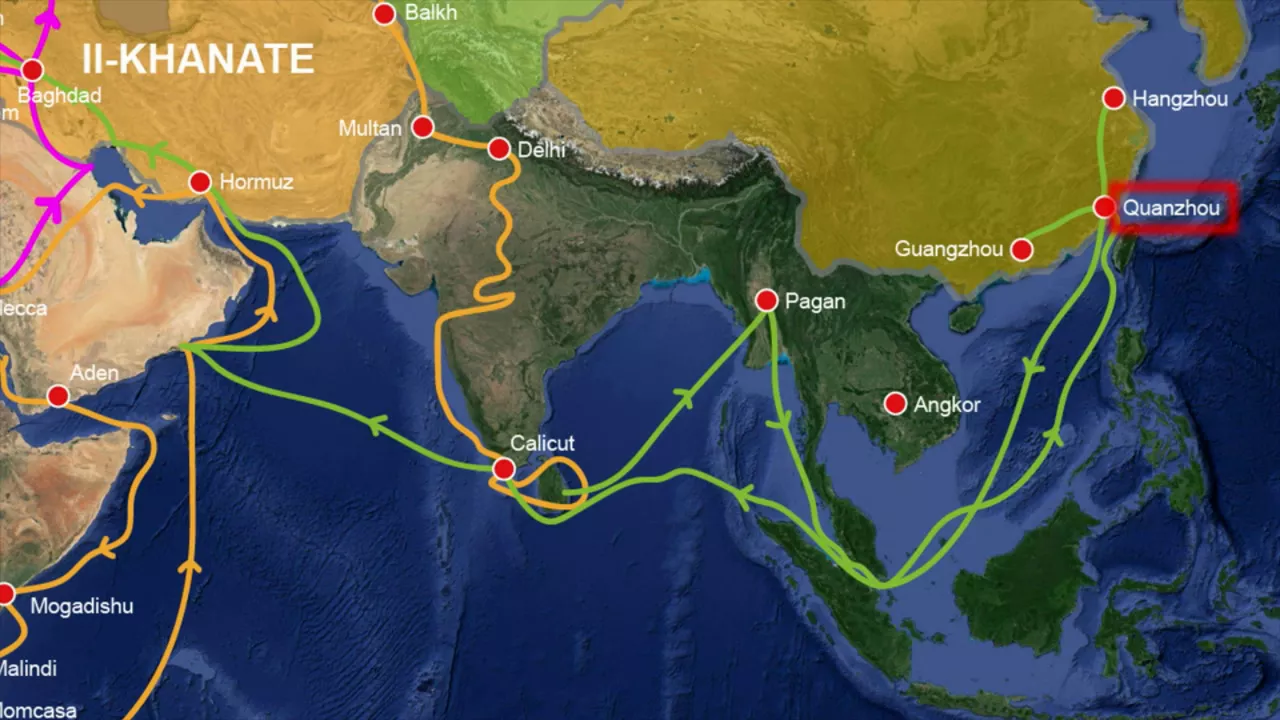






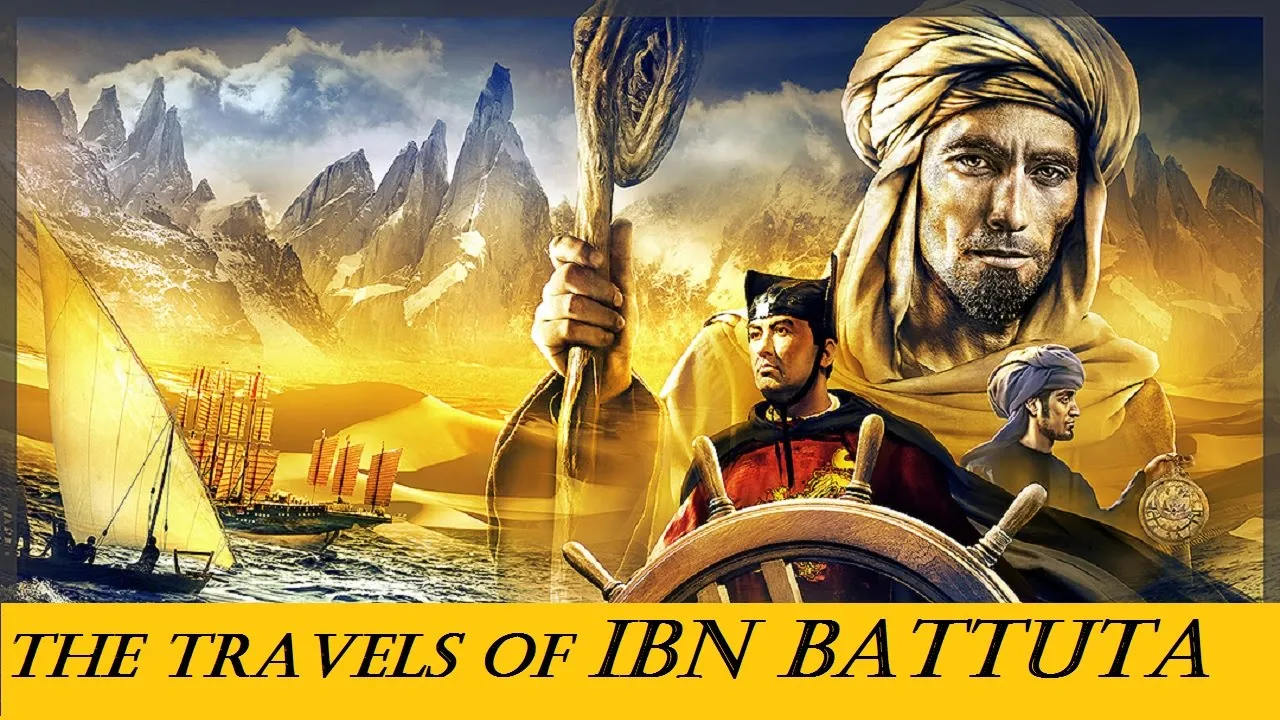
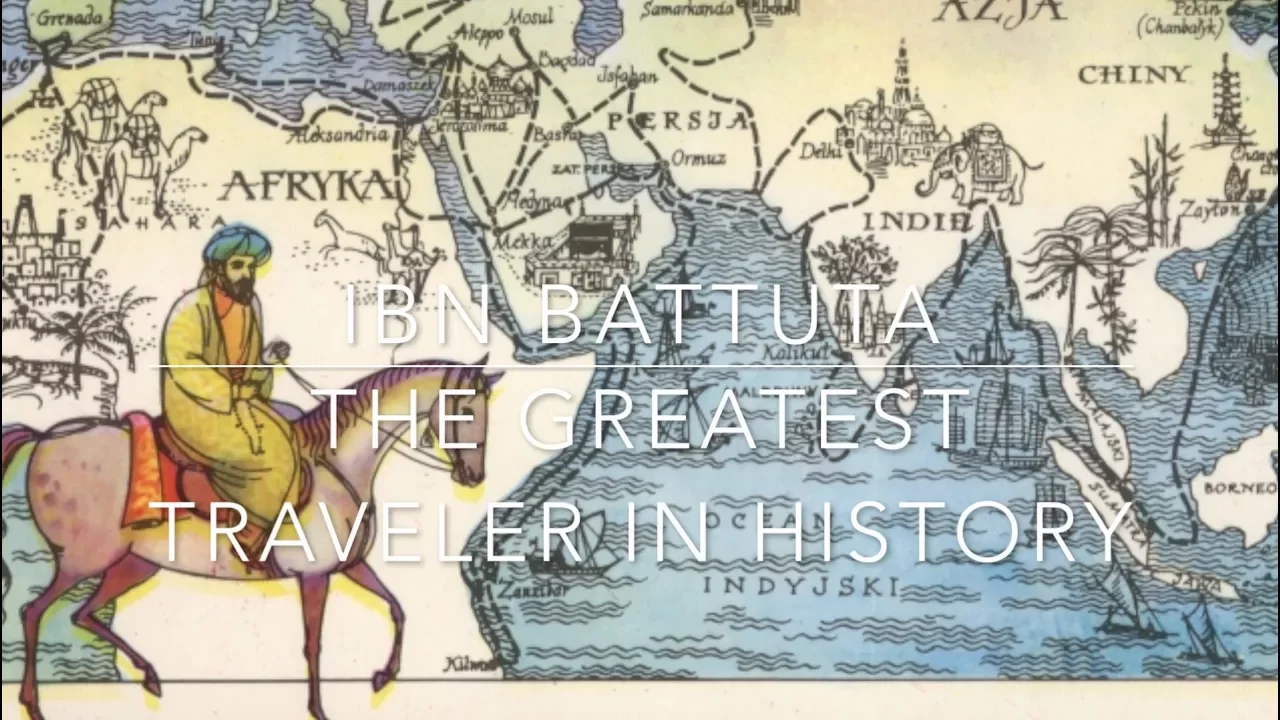
Ibn Battuta (1304-1377) was a Moroccan scholar who embarked on an unprecedented 24-year journey across the Islamic world, traveling approximately 75,000 miles from Tangier to Mecca, through Persia, India, China, and back, documenting his experiences in 'The Travels' (A Gift to Those Who Contemplate the Wonders of Cities and the Marvels of Traveling), which provides historians with invaluable insights into 14th-century Islamic civilization, trade networks, and cultural diversity.
Ibn Battuta: The Extraordinary Journey of a 14th-Century Traveler
Added:The geographical scope and cultural concept of 'Dar al-Islam' (the Islamic world) during the 14th century.
The religious significance and tradition of the 'Hajj' (pilgrimage to Mecca), which served as the initial catalyst for Ibn Battuta's journey.
The role of a 'Qadi' (Islamic judge) and the unifying nature of Islamic law (Sharia), which allowed educated scholars to find employment across diverse regions.
A basic understanding of major medieval trade networks, including the Silk Road, Trans-Saharan trade, and Indian Ocean maritime routes.
A comparative study of Ibn Battuta's accounts with those of other medieval travelers, such as Marco Polo or Zheng He, to analyze different cultural perspectives.
Critical historiographical analysis of 'The Rihla', exploring the collaboration with scribe Ibn Juzayy and the challenges of memory and accuracy in travel literature.
The historical significance of the 'Pax Mongolica' in providing the political stability and infrastructure that made such extensive trans-Eurasian travel possible.
The socioeconomic impacts of the Black Death pandemic in the mid-14th century, which Ibn Battuta witnessed and documented during his return journeys.
605.9K views15Klikes46:15Original Release: 2025-06-07
(exotic music) (logo thuds) (pencil scratching) - June 23rd, 1325, Tangier, a 21-year-old scholar, mounted on a donkey, leaves home for the first time.
His objective: the holy city of Mecca.
He expects to be gone for two years, possibly even three.
"I set out alone," he wrote later, "having neither fellow traveler in whose companionship I might find cheer nor caravan whose part I might join, but swayed by an overmastering impulse within me and a desire long cherished in my bosom to visit these illustrious sanctuaries.
So I braced my resolution to quit my dear ones, female and male, and forsook my home as birds forsake their nests."
And he will not return home for another 24 years.
Which is a lot of travel time that in the modern day could have been filled with watching Nebula.
I bet Ibn would've loved "Jet Lag."
When Ibn Battuta left Tangier, he had no idea that he was commencing on a journey so epic we'd still be talking about it 700 years later.
And in his quarter century of wandering, he would end up seeing nearly the entire Muslim world of the 14th century: from the deserts of the Empire of Mali to the Islamic outposts of Indonesia and Southern China.
In doing so, he would travel around 75,000 miles, enough to circle the globe three times, meet 60 heads of state, and visit 40 modern countries.
He would survive kidnapping and shipwreck, witness revolts and military campaigns, be imprisoned by a mad sultan, and encounter the horrors of the Black Plague.
And when he finally returned, the ruler of Morocco asked him to spend two years dictating all he saw to a literary scholar.
The resulting book, "A Gift to Those Who Contemplate the Wonders of Cities and the Marvels of Traveling," a title often shortened to "The Travels" is a thousand pages long, which is sort of a problem if, you know, for example, you're adapting it into a series of five short animated videos.
But in truth, even if we had 10 times the budget and development time for this series, we still wouldn't be able to do all of Ibn Battuta's travels justice.
But what we can do though is look at the travels the way historians do today, as a way of understanding the breadth of Islamic religion and culture during the 14th century, how faith was adapted to local conditions and the trade and travel links that could take a man from North Africa to China.
And, of course, we'll look at the curious, intrepid, ambitious, and often quite prickly man who experienced it all.
Apart from what we learn from "The Travels," we actually know surprisingly little about Ibn Battuta himself, but we can be sure his formulative years in Morocco were the perfect training for a great traveler.
Tangier was not one of North Africa's great cities, but it was a massive trade hub.
To the north lay Europe, to the south the golden kingdoms of Sub-Saharan Africa, to the east lay the Mediterranean trade networks, and to the west the burgeoning Atlantic trade.
And its docks thronged with both Muslims and Christians, along with merchants from Africa, Europe, and the Middle East.
Ibn Battuta's family were scholars of Islamic law and gave their son an education that would let him follow in the family tradition.
This education made him a qadi, a magistrate or judge of Islamic law, not only an honorable profession, but one It turned out that would let him find work wherever there was a Muslim community.
His education also likely instilled the curiosity that would drive him on his great journey.
For an Islam, curiosity and the seeking of knowledge is considered a religious duty.
In fact, a common saying at the time, "seek knowledge even unto China," would really end up becoming quite literal for this young man.
But Ibn Battuta's travel experience began by embarking on the Hajj or annual pilgrimage to Mecca, a religious duty for all Muslim men if they had the resources, were healthy enough to do it, and their leaving wouldn't place a burden on their family.
He set out alone at first traveling east across North Africa, but soon joined up with a pilgrim caravan for protection against bandits.
And they were happy to have him as having a qadi among a caravan meant that disputes and matters of religious law could be solved without stopping the train.
So they crossed the land of the slave sultans, the Mamluks, who had risen from being enslaved soldiers to taking over the state.
And though he was not far from home, Ibn Battuta began to reveal what he would be like as a traveler.
A fever hit him hard, the first of many on his journey.
Soon he was so ill, he could barely stay on his mount.
"If God decrees my death," he said, "then my death shall be on the road with my face set toward Mecca."
Determined not to stop, he tied himself to his saddle in order to keep going.
But stop, he did.
And during that brief sojourn, he did a very Ibn Battuta thing.
While recovering, he fell in love and formed a marriage contract, but then dissolved it before the ceremony after a dispute with the woman's father.
But then shortly afterward, he would meet and marry another woman.
The first of 10.
Oh yeah, that's right.
He would marry 10 women on his journey.
Now, we don't know much about these marriages.
He simply mentions them in passing, confirming the Islamic literary convention of keeping his private life private.
And often, like with his first wife, he would divorce his wives when he moved on, a common practice in Medieval Islam.
And perhaps these divorces may even have been mutually agreed since religious law made that the easiest route to ending a marriage.
But here is where we get the first hint of Ibn Battuta's lifelong fascination with women.
Wherever he went, along with descriptions of food, agriculture, religious life, and court processions, he often remarked on how attractive he found the local ladies.
He was also known to have innumerable lovers and concubines over his life, including several that were enslaved.
And it's also at this point we get an early indicator of his, well, let's just call it snippy nature.
On a stop in Egypt, he visited the town bathhouse and was shocked to find the men inside were not wearing the hip coverings required by law.
Basically, they were naked in the locker room.
But now here's the thing about Ibn Battuta, he could get a bit judgy, and if he saw you doing something he considered wrong, oh, he was definitely telling the teacher.
In fact, historians often refer to him as a busy-body, you know, for being all up in your business.
But to put it in a more modern vernacular, Ibn Battuta was a total narc.
So instead of just telling those guys to please cover up, he went straight to the local governor and started an official crackdown on proper dress in the bathhouses.
Yeah, the phrase "that escalated quickly" was kind of his brand.
But while he often comes off as judgmental, his job was to be a judge and this trip across North Africa offered him the opportunity to develop those skills because while he was fully qualified as a qadi, the universities of Tangier were provincial when compared to those in Cairo, Damascus, and Alexandria.
So as he made his way toward Mecca, he would stop to study for a few months under great teachers gaining further certifications.
He saw the Great Lighthouse of Alexandria, visited Cairo, which he called the "mother of cities," passed by the Giza pyramids, and traveled along the Nile, but then was halted by a violent revolt.
So he doubled back to Cairo and instead took the royal road to Damascus, diverting for a moment to visit the Tomb of Abraham, then the Muslim sites in Jerusalem.
He finally made it to the Mamluk's second capital.
But eager to move on, he only spent 24 days in Damascus, probably living in the dormitory of the Great Mosque, though he did pack that three weeks full managing to survive another illness, gaining further certifications, and celebrating Ramadan.
Oh, and of course, you know, he got married and divorced again.
(Zoey trills) That's right Zoey, because Ibn Battuta.
And there, he finally joined the official route of the Hajj across a perilous desert route, haunted by epidemic disease, burning days, and freezing nights.
And this time, Mamluk soldiers guarded them from bandits.
Yet the caravan made it to its destination without incident, the city of Medina, where the prophet Mohamed had retreated with his followers when driven out of Mecca, While there, he prayed at the Mosque of the Prophet built over Mohammed's tomb before continuing on.
Then finally, upon reaching the holy city of Mecca, he took part in the rituals of the Hajj, making several circles around the Kaaba, bowing to God near the Shrine of Abraham's footprints, standing on the plains before the Mount of Mercy where the prophet gave his farewell sermon, reciting prayers and listening to religious teachings for a full day, and of course, he studied, seeking always more knowledge.
For this pilgrimage had merely whetted his appetite for seeing the world.
Not to mention he had come across news that the Sultan of Delhi, immensely rich and generous, was in need of officials with proper certifications, which is why he was building his resume.
Fame, fortune, and adventure awaited in the east, and he decided to extend this 18-month trip a little bit longer.
So Ibn Battuta turned his mount towards the lands of Muslim Persia and the devastated city of Baghdad.
(adventurous music) November 1326, Iraq, Il-Khanate.
Ibn Battuta sits waiting for the ritual to begin.
At the appointed hour come the Sufi mystics.
"When the afternoon prayers had been said, drums were beaten and brethren began to dance," he wrote, "They had prepared loads of firewood, which they kindled into flame and went into the midst of it dancing.
Some of them rolled in the fire, others ate it in their mouths until they finally extinguished it entirely.
Some of them will take a large snake and bite its head with their teeth until they bit it clean through."
This is Islam as Ibn Battuta has never seen it, and it will make a lasting impression.
When Ibn Battuta was in Egypt, two separate holy men prophesized that he would travel far to the East and settle in India.
And that made a certain amount of sense.
The Sultan of Delhi was actively searching for scholars and judges to fill his bureaucracy and paying them handsomely.
So when Ibn Battuta got done with his pilgrimage to Mecca, he decided to just keep going because not only was he seeing the world, he was making a profit doing it.
You see, on his journey, he'd found that rulers often gave pilgrim's lavish gifts, and a young qadi got even more spectacular rewards.
He'd heard that the further he got from the Islamic core of the Arabian Peninsula, the more generously a young scholar would be rewarded.
Therefore, he made a vow to keep traveling, to see as much of the world as possible, and to never take the same route if he could avoid it.
His eventual goal was India, but he might as well have some fun and make some money on his way there.
After all, he might spend the rest of his life in India and never get another chance to see this part of the world.
So he began his gap year of travel, joining a Persian caravan and crossing out of Mamluk territory, trekking for 44 days into Mesopotamia, into the land of the Khans.
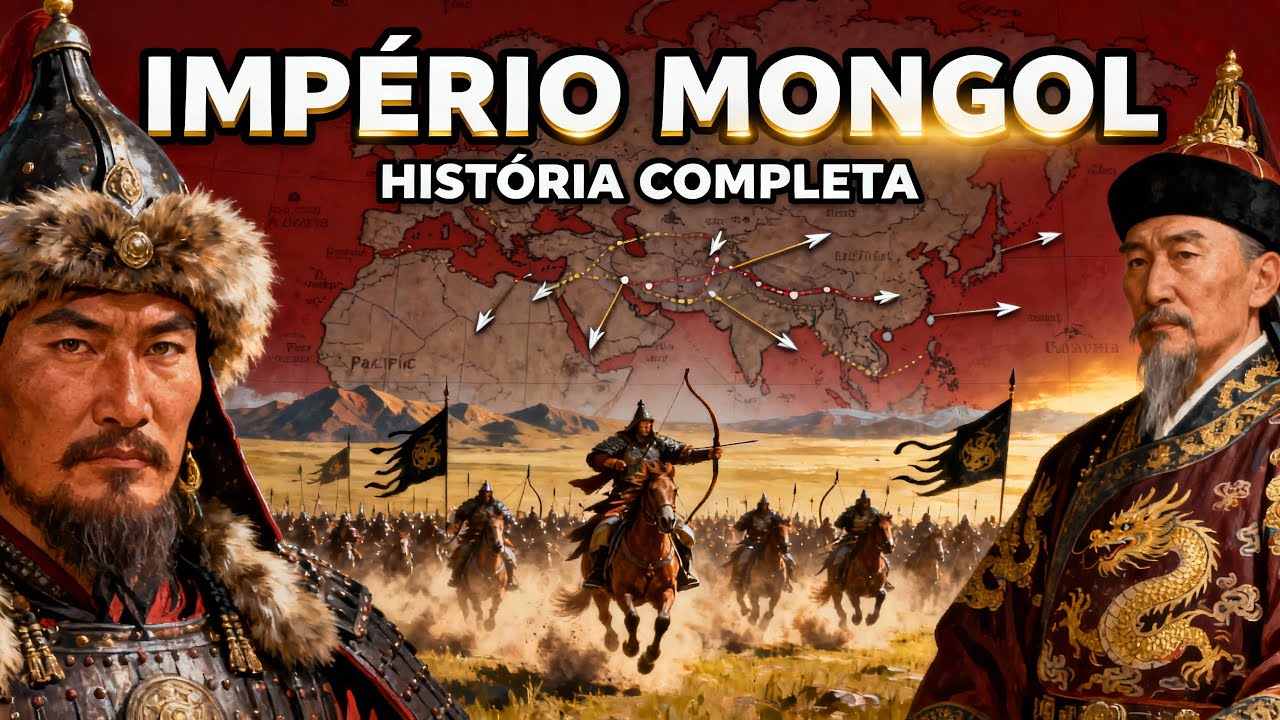
A century before, the Mongols had swept into Persia and Iraq, devastating what were, until then, some of the most impressive and advanced cities of the Islamic world.
And when Genghis Khan died, his empire split among his four descendants, leaving Persia under a Mongol ruler.
But in the centuries since then, the Mongols have converted to Islam and were now patrons of religion and learning.
Still, as Ibn Battuta passed through the once-mighty city of Baghdad and ruined sights formerly renowned for beauty and scholarship, he reflected on the passing of empires.
And he began to realize another thing.
He was now truly abroad.
His previous travels had taken him to new places, but this was different.
As he left the Arabian Peninsula, he ventured into lands that were still religiously Muslim, but had underlying cultures increasingly divergent from his own.
Many of the rulers and court figures out here, the people he associated with most, were relatively new converts, second and third-generation Muslims, some even first.
And their practices at times varied from what Ibn Battuta considered the norm.
He was about to see Islam in all of its many forms.
And that exploration began during his first encounter with Sufi mysticism, a sect that used trance, ritual movement, and chanting as a way to experience God's love on an emotional level rather than the intellectual manner in which Ibn Battuta was accustomed.
The same year he got to meet the Ilkhan himself, joining the royal caravan, traveling along the Silk Road to see the capital of Khanate.
On the way he visited with the great Khan, seeing firsthand how the Mongol invaders had become assimilated into Persian culture.
Far from a fierce steppe raider, this khan was a just ruler, a handsome, observant Muslim who played the lute and composed poems in both Persian and Arabic.
His kingdom was mighty and powerful.
Ibn Battuta did not know it then, but when he next passed through 11 years later, the mighty Il-Khanate would be no more, its ravaged landscape filled with warfare and death.
But that's in the future.
Now, he bade the Sultan farewell and reached the Kahn's capitol exploring its enclaves of Venetian, Genoese, Arab, and Chinese merchants before touring the Euphrates and then heading back to Baghdad.
But it was time to get onto India.
His gap year of religious tourism was coming to an end.
But first, a side trip back to Mecca to make the Hajj pilgrimage again, because who knew if he'd ever get another chance.
Yet that took longer than expected.
He'd overextended himself a bit.
In one year, Ibn Battuta had traveled 4,000 miles, and when he finally arrived back in Mecca, he was so exhausted and ill that after the Hajj he took a full year to study, pray, and recover.
But after that, it was off to Delhi.
He went south to the Red Sea, traveling by ship until he was blown off course and became too seasick so he had to continue his travels on land, often walking across the mountains of Yemen.
But eventually he made it to Southern Arabia where Muslim ports controlled the Indian Ocean trade where he could get on another ship to India and settle down at a real job.
But first, a side trip.
I mean, because Africa was right there.
And look, he might never get back this way again.
So he jumped on a ship and went on a port-hopping tour of East Africa, visiting the Christian Kingdom of Ethiopia, as well as the Muslim courts of Mogadishu, Mombasa, and Zanzibar.
There he saw how Muslim merchants had settled into the ports converting locals and intermarrying into African families, their languages blending to create what we now know as Swahili.
He saw the African section of the vast Indian Ocean trade with merchants loading vast quantities of gold, ivory, spices, and perfume ingredients into their triangle-rigged ships, along with enslaved Africans captured from kingdoms further inland.
And in these port towns, Ibn Battuta first saw societies where Muslims were the minority, where the elites and rulers didn't share a religious tie to the majority of their populations.
But these were no frontier ports.
They were cities whose rulers lived in palaces with indoor plumbing.
Elites dressed in silk and ate off porcelain, both imports from China.
He saw great mosques and mansions carved from coral.
Mixed cultures formed from Islam's economic dominance of the maritime networks.
But again, his time was running short, the monsoon winds changing and blowing back north.
So he hopped on a ship back to the Arabian Peninsula where he could finally travel on to India.
But when he arrived on the southern coast of Arabia, he realized it would be cool to see the Gulf of Oman, though, that was a bit of a disaster.
Their guide tried to rob and murder him and Ibn Battuta only escaped after fending the man off with a spear.
He reached the Gulf dehydrated, half dead from illness, and feet bleeding from the trip.
It was a close call and, you know, probably an indication that now it was really time to head to Delhi, you know, become established.
But first, a side trip.
Back to Mecca for the Hajj for a third time.
After another year of study and rest, Ibn Battuta was finally ready for India, for real this time.
He'd buffed his resume with qualifications, could tell stories of far-flung places, and had built up a tidy profit in gifts.
But the trip itself would be treacherous.
And to get there, he needed a guide and he couldn't find one.
Hmm, okay, no problem.
Because everyone knew that the Turkish Silk Road caravans linked Anatolia with India.
And if you joined them, you'd get there eventually.
Sure, there were more direct routes, but he'd seen that stuff already.
He went to Cairo and met up with a traveling buddy.
And reunited, the two stepped onto a Genoese galley and made for Anatolia.
And in this land whose urban centers contained neighborhoods of minority Christians, Jews, and Greeks, and where nomadic herders traveled the wild hillsides, they gave him a warm welcome.
"This country is one of the finest in the world."
he wrote, "In it, God has brought together the good things dispersed throughout other lands.
Its people are the most comely of men, the cleanest in their dress, the most delicious in their food, and the kindliest folk in creation.
Wherever we stopped in this land, whether it a hospice or a private house, our neighbors came to ask after our needs.
When we left, they bade us farewell as though they were our relatives."
He also saw one city execute people by firing them off a cliff with a catapult.
But overall, the people were really nice.
Interestingly, he found differences in their religious practice.
Though observant Muslims, they chewed intoxicating drugs and did not veil women.
In fact, Turkish society surprised him when he found out how high a status women had.
Now further weighed down with Turkish gifts, he pushed north toward the Silk Road, down the rapids of swollen rivers, nearly freezing to death in the wilderness, avoiding bandits and thieves.
But he made it to the Black Sea and boarded his ship for an even stranger place, one of nomads and horsemen, the land of the Golden Horde.
But first, a side trip.
(adventurous music) May, 1332, the Caucuses.
Ibn Battuta and his wagon train have pitched their tents on a hill waiting to see sight of the royal caravan they wished to join.
His train full of servants, enslaved people, and concubines has been waiting a long time.
Then, dust on the horizon.
"We saw a vast city on the move," he wrote, "with its inhabitants, with mosques and bazaars in it, the smokes of the kitchens rising in the air for they cook while they march.
And horse drawn wagons transporting the people."
He descends to meet Ozbeg Khan, ruler of the Golden Horde.
When Ibn Battuta crossed the Black Sea and landed in Crimea, he'd soon realized he'd crossed into another world.
Though the Khanate's state religion was Islam, the more European provinces of the empire were thoroughly Christian, filled with Russians and Ukrainians.
And that meant red-haired people with blue eyes who ate pork and made evil noises by ringing their church bells, a sound that terrified Ibn Battuta.
But he soon passed out of the infidel lands and entered the Steppe traveling for the first time by wagon rather than horse or camelback, joining a Mongol caravan in order to find the Khan and link up with the Silk Road to India.
And he found much to like about the hardy and competent Mongols, but also much that shocked him.
Even the observant Muslims drank alcohol, for instance, arguing that the Quran forbade wine and wheat beer, but not millet beer or fermented mare's milk.
(sips) Ah, sweet, delicious loopholes.
These differences came into stark relief when he met Ozbeg Khan, entering his huge gold-tiled tent and finding the ruler sitting on a silver throne flanked by four unveiled wives.
In fact, he was soon to learn that the Khan consulted his wives on matters of state in public, and that upon entering a tent, it was the Khan that stood until his wives were seated.
Mongol society often treated women as near equals, and powerful women held a position higher than less powerful men.
This was very different from his native Morocco where a leader's wives might privately wield influence, but were never seen in public.
Ibn Battuta spent Ramadan with the Khan, visiting and conversing with his wives and becoming particularly close with the youngest, Princess Bayalun whom he shared much in common for she too was far from home and adrift in a strange culture.
The daughter of the Byzantine emperor given away in a political marriage, Ibn Battuta sympathized, but for different reasons.
While he liked the Khan, who was a generous and able ruler, he disliked how the man drank, even showing up for afternoon prayer one day stumbling drunk and nearly incomprehensible.
But as a point of etiquette, after all of the gifts and hospitality the Khan had bestowed upon him, he really couldn't just drop the mic and bail on his latest patron.
So instead he asked the Khan if he could take, you guessed it, a side trip, because Princess Bayalun was pregnant and got permission to have their baby at home in Constantinople.
So Ibn Battuta requested to accompany her as it was the perfect opportunity to take said side trip, not just in safety, but in style.
The request granted, Ibn Battuta set out with the princess' caravan doubling back to the city of the Byzantines, seeing the Hagia Sophia, and meeting the emperor, marveling at the city's relative religious tolerance and touring the Golden Horn.
But there was a bit of a problem.
See, on the way back home, Princess Bayalun had started throwing off the facade of Islamic conversion, and now it was clear that she wasn't coming home.
This had been an escape plan.
So Ibn Battuta had to turn around with the royal caravan, retrace his steps, and inform the Khan.
Except now it was winter on the Steppe and Ibn Battuta, a Moroccan, was not used to snow.
It was so cold that they traveled along frozen rivers as if they were roads.
So cold that when he washed his face with hot water, it froze in his beard.
So cold that he wore three fur coats and so many layers of clothing underneath that, that he had to be helped into the saddle.
But they made it to the capital of the Khanate.
And after presumably telling the Khan about his wife, because he never actually mentions the reaction, Ibn Battuta joined the trade caravans toward India.
And this was some of the hardest traveling of his career through mountains and dry country and his recollections of it are confused and non-specific.
In eight months of relentless travel, he met the Khan of Chagatai, had a daughter, and finally crossed through the Khyber Pass into India.
They had to spread blankets in front of the camels so their feet would not sink in the deep snow.
The Indian border authorities met him as he crossed into India, questioning him about his intentions and qualifications, and telling him that should he wish to work for the Sultan, he must agree never to leave India except on official business.
He agreed and signed a contract, then he took out a loan to buy the sultan an appropriate gift of horses, gold, and enslaved people, knowing the custom was to be granted an even larger gift in return.
Yeah.
He hadn't gone gold digging across three continents without learning how this stuff worked.
When the party arrived, Ibn Battuta was over-awed.
The Sultans wooden palace, known as the Hall of a Thousand Pillars, was one of the largest structures he'd ever seen.
Could it be that the rumors of the Sultan's splendor and generosity were not an exaggeration?
Well, unfortunately, it would be a while before Ibn Battuta found out because Muhammad Tughluq, the Sultan of Delhi, was out crushing a rebellion.
But in his absence, the sultan's vizier accepted the gift and gave Ibn Battuta silk robes, a house, the tax revenue of two villages, which is 5,000 silver dinars a year for those of you keeping score at home, plus another 2,000 dinars as a starting bonus.
Ibn Battuta was floored.
He was already part of Delhi's landed aristocracy, and he hadn't even been given a job yet.
Then, things got even wilder because the sultan returned to Delhi in triumph riding to the palace on a war elephant, the first in a great procession of armored beasts.
And on the back of each elephant was a huge basket of treasure and a catapult.
Entranced, Ibn Battuta watched his men shovel gold and silver coins into the machines and fired the treasure out into the celebrating crowd.
And that's when it hit Ibn Battuta, this was a dream job.
Coming here was a great idea.
And this was only reinforced when he met the Sultan.
And Mohammed Tughluq liked the Moroccan so much that he made Ibn Battuta the qadi of Delhi.
And at this point, even Ibn Battuta was like, "Uh, Thank you.
But you know, maybe that's too much.
I mean, except for being a qadi on a caravan, I never had a real job or tried a case.
You know, in fact, your religious law here is a bit different than the type I studied.
Not to mention your court language is Persian, which I don't really speak well, so maybe we just lemme work my way up, huh?"
The Sultan told him not to worry, assigned two deputies to do the real work and doubled his salary.
Unusual? Undoubtedly.
But Ibn Battuta was about to find out that the Sultan of Delhi was a bit of an eccentric, you know, an unorthodox visionary.
Some referred to him as mad.
Early in his reign, he'd experimented with issuing copper coins backed by gold.
But that scheme fell apart when Chinese traders wouldn't accept them.
Then, he decided to found a new capital and move his court to Central India.
And when the elites resisted, he used troops to force them.
That, too, collapsed.
And now, fearing the entrenched power blocks of the elites that hated him, the Sultan was hiring any foreigners that showed up so that they would be personally loyal to him, which was good, at least for Ibn Battuta.
He became close with the Sultan observing as the monarch, a religious scholar in his own right, invited Hindu and Jain holy men into the palace for religious debates.
He even accompanied the Monarch on military campaigns.
At one point, the Sultan brought Ibn Battuta to see the Hindu yogis perform tricks like climbing a levitated rope, a performance that terrified the devout young scholar, but being a favorite was a financial problem.
Keeping up with the Sultan's lifestyle, the extravagant hunting trips, the constant gift giving, and hosting officials at his house actually put Ibn Battuta into debt.
So that was problem number one.
Problem number two was that the Sultan was a psychopath.
Even Ibn Battuta, who often flattered his patrons, wrote, "The Sultan was far too free in shedding blood.
He used to punish small faults and great without respect of persons, whether they men of learning or piety or noble descent.
Every day there are brought to the audience-hall hundreds of people chained, pinioned, and fettered, and they are executed, tortured, or beaten."
Muhammad Tughluq killed advisors for disagreeing with him.
He tortured holy men who refused to come to the palace.
Particularly he liked dropping red-hot squares of metal on victim's chests and ripping them off.
And if he really hated someone, he'd throw them to his trained execution elephants who would use the swords affixed to their tusks to play catch with the unfortunate victim.
And perhaps that's when it hit Ibn Battuta.
Coming here was a terrible idea.
He began plotting his escape.
(adventurous music) 1340, Delhi.
For six years, Ibn Battuta has served as a qadi for the Sultan of Delhi, but now he's under house arrest, awaiting execution.
His friendship with a Sufi mystic had put him on the wrong side of the court.
Ibn Battuta's friend had offended the Sultan by refusing a royal summons and calling the ruler a tyrant.
In response, the Sultan tortured the mystic to death and arrested all of his associates.
For nine days, Ibn Battuta prays and recites the Qur'an from memory.
Then, the Sultan beckons.
Ibn Battuta goes expecting to die, but then the Sultan behaves like they're old friends and everything's normal.
As if he hasn't spent days preparing for death.
(laughs) Oh, ah... It's at this point that Ibn Battuta realizes one thing: he's got to escape Delhi.
Right as Ibn Battuta had arrived in Delhi, India entered a seven-year drought, which in turn caused a famine, which in turn triggered uprisings, lots of uprisings.
In fact, Sultan Muhammad Tughluq would face 22 rebellions during his last 15 years in power.
Hindus revolted against taxes, Indian Muslims rose against the foreign advisors, governors declared independence or hatched assassination plots.
And Muhammad Tughluq's paranoia went into overdrive.
Ibn Battuta tried to tough it out, but after his brief imprisonment, he decided he had enough.
And while the contract he'd signed meant he couldn't leave India, there was a loophole: he could go into religious retreat.
So Ibn Battuta, court official and rich man, took the only escape hatch he could.
He gave up all of his possessions, declared himself an ascetic and lived in a cave.
It was something he'd actually felt called to for years.
Ever since he first began to encounter Islamic hermits, he'd wondered if that would be his path.
Now he learned to meditate, to live with nothing, fasting for 40 days at a time.
But five months later, a summons came from the Sultan.
He wanted Ibn Battuta back at court.
And Ibn Battuta accepted, partially because the Sultan killed anyone who refused and partially because the offer came with a gift of gold, robes, horses, and enslaved people that restored all Ibn Battuta had given up plus some.
However, Ibn Battuta, rich again, went to court with a plan.
He would get permission to make a pilgrimage to Mecca and then just never come back.
Huh?
But the Sultan had his own idea.
He needed an ambassador to visit the Yuan Emperor and deliver an enormous train of gifts.
Would Ibn Battuta, famous traveler, want to go to China in style?
He did not have to ask twice.
But travel was dangerous in the unstable empire and on the way to the coast, rebels ambushed the train.
In the conflict Ibn Battuta was separated from the diplomatic train carrying all he owned and was chased into the country.
About to be captured, he was forced to lose his pursuers by ditching his horse and hiding while they followed his previous steed.
A few days before, he'd been one of the richest men in Delhi.
Now he was alone in enemy country with only his sword, boots, jewelry, clothes, and will to live.
Then he promptly ran into rebels who captured him, took said sword and jewels, and handed him over for execution.
But Ibn Battuta still had his clothes, boots, and will to live.
So he negotiated his release by giving his would-be executioners his fine tunic.
Free again, he wandered the countryside, evading rebels, and living by his wits for a week.
With nothing now but his shirt, pants, boots, and still a will to live.
Then eventually, starving, he stumbled into a town to beg for food and promptly got robbed for his shirt.
But he wouldn't quit.
He still had his, uh, his pants and his boots.
And you know what? Wait, scratch that.
At this point, he'd actually lost one boot trying to draw water out of a well.
So, yeah.
It was at this one-booted point when he lost his will to live.
But then, a miracle.
Amidst this land of Hindu rebels, a Muslim man found him, fed him, and took him upon his back to bring him to safety.
And all the while Ibn Battuta recited the Quran until exhausted.
He passed out.
When he awoke, he was in a friendly town and found out that the rest of his diplomatic mission was just six miles away and very surprised to find him alive.
And they still had all of his baggage and servants.
He was rich again!
Rejoining the group, they traveled to Calicut, a major port city where they could meet up with Chinese junks.
These ships, enormous compared to the dhows Ibn Battuta traveled on, were Chinese built, but crewed by Muslims in the India-China trade.
He marveled at their five decks and most of all their large private cabins with their own lavatories.
However, for this voyage, Chinese merchants and the other court diplomats had reserved all of those rooms, leaving Ibn Battuta with a smaller toiletless cabin.
That was no big deal though.
Ibn Battuta had learned humility after all.
He'd lived in a cave.
And just days before, he only had one shoe.
He wouldn't quibble over a slightly smaller cabin. (laughs) Wait, what's that?
Oh, right, right, right. Yeah.
He threw a fit.
How dare they dishonor the Sultan's ambassador by giving him worse accommodations than common merchants and lesser diplomats?!
(laughs) Ridiculous.
After essentially wanting to speak to their manager, the ship's agent, a Syrian, managed to smooth things over by securing a comparable state room on the fleet's second, slightly smaller ship.
This mollified the prickly ambassador.
And Ibn Battuta loaded all of his possessions and entourage into the second ship.
The night before the voyage, he stayed on shore to pray, and suddenly a storm blew up, one bad enough that the two vessels had to put to sea, leaving him ashore, again with nothing but the clothes on his back.
As he watched from the shore, the vessel he was supposed to be on wrecked, killing everyone aboard.
And the second ship carrying all that he owned blew so far out to sea that they decided to continue to China without him.
He was stranded and poor again.
And now he'd lost all of the Sultan's splendid gifts for the emperor.
So he really didn't want to go back to Delhi and explain his failure to the Sultan's execution elephants.
At first, he tried to get a job with another Indian sultan, even fighting in an amphibious assault to prove himself worthy of employment.
But that didn't work out.
And Ibn Battuta instead snuck off with a nebulous plan to just go to China, you know, fulfill as much of his old mission as possible.
In doing so, he of course would take the most out-of-the-way route possible through the Maldive Islands.
But the local Muslim authorities there needed a chief judge, and they were plying him with gifts, so you know, old habits die hard.
He agreed to stay and take the job.
Under a few conditions.
First, he got a ton of treasure making him rich again.
Second, he married into the royal family.
And third, he didn't want to walk anywhere.
Yeah, he had to be carried on a litter like the king.
They agreed.
And he spent nine months meting out punishments under religious law, doling out floggings for failing to attend mosque, sentencing thieves to have their hands cut off, and unsuccessfully trying to convince the island's women to stop going around topless.
He married three more times, finding that the island's cowrie shell dowries were cheap and divorce simple.
Indeed it was common at this time for merchants to get temporarily married during these short stays.
But his high living gained him enemies and he fled the Maldives with his new fortune only to tarry on a neighboring island just long enough to get married and divorced twice more.
Then at last, he took his replenished treasury and towards Sri Lanka before hiring yet another ship to take him to China, a ship which was attacked by pirates, who once again took everything he owned.
You know, I don't think the universe liked Ibn Battuta being rich.
But finally his luck changed.
He then got passage to the court of the Muslim sultan who ruled the northern tip of Sumatra.
And that little side trip you can hear about over in our Majapahit series, 'cause this guy gets around.
When he departed, he at last left behind the Islamic world, the last kingdom he would visit ruled by a Muslim.
He stopped in the kingdom of Champa, current-day Vietnam, and visited a third great kingdom that of the warrior queen Urdujua that may have been in either the Philippines or Java.
Urdujua, tall, adorned with golden jewels, her hair flowing long, gave Ibn Battuta gifts and showed him the powerful fleet she used to battle Chinese forces.
Her greatest ambition, she told him, was to lead an expedition to India so she pumped him for information about his time there.
Waving goodbye, she put him on a ship to China, and at long last, he arrived at his objective, the land of the Mongol Yuan emperors, where even beggars wore silk, a place so alien, he could barely understand it.
And haunting his steps came a new horror, the Black Plague.
(subdued music) 1346, Quanzhou, China.
Ibn Battuta found China a land of wonders, an upside down place where people used paper instead of coin.
And even beggars wore silk.
"China was beautiful," he wrote, "but it did not please me."
Because while Ibn Battuta had traveled widely, most of the communities he visited were Muslim or Muslim ruled.
And he rarely ventured outside that bubble.
Where minority religions existed, they were at least other monotheists like Christians or Jews.
The Chinese, by contrast, were polytheistic and worshiped what Ibn Battuta considered idols.
Confucian scholars were dismissive of Islam and the population ate pork and cremated their dead.
"This disturbed me so much," he wrote, "that I stayed indoors most of the time and only went out when necessary.
During my stay in China, whenever I saw Muslims, I always felt as though I were meeting my own family and close kinsman."
Perhaps it was time to go home.
But when he did so death followed him.
Ibn Battuta didn't have to look far to find other Muslims in Yuan China.
Indeed, for over a century, the Mongol Yuan had kept an open-door policy that invited foreigners to settle and form trading villages.
While in these Islamic enclaves, he even ran into other scholars he'd met during his travels, because, as you've probably understood by now, Ibn Battuta was not an explorer.
During his travels, he'd made his way along well-known pilgrimage and trade routes.
The Mongol conquest and the peace and security that they'd created had fostered an unprecedented network of overland and maritime trade routes.
Few people traveled to the extent that Ibn Battuta did, but he was far from the only person to journey from Africa to East Asia.
In China, he met Syrians, Egyptians, and even a man who grew up 40 miles from him back in Morocco.
Because. you see the world of the mid-14th century was an interconnected world, one where goods and people could go from one side of Africa and Eurasia to the other, and that would ultimately destroy this period of peace and interchange.
Because in Central Asia, a terrible disease was emerging, a disease that caused painful bubos on the body, extreme headaches and delirium.
An even more aggressive form, the airborne pneumatic variety, caused victims to cough blood and killed within hours.
It was a disease borne by fleas, fleas that lived on rats, an animal that liked to infest ships or stow away on caravans and wagons.
In other words, an insect that infested all modes of transport Ibn Battuta had taken on his long road.
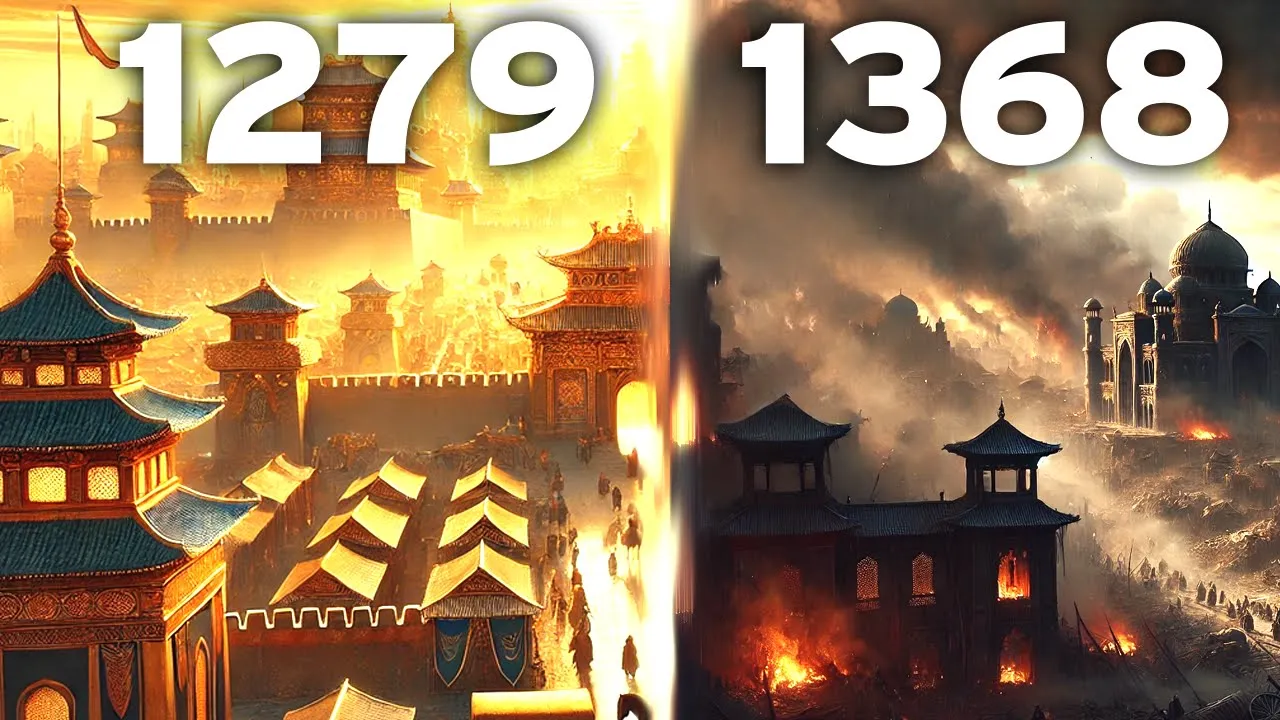
When he boarded his ship back to India, he had no idea that he was seeing the last days of Yuan China.
Bubonic plague would lead to the dynasty's collapse, and sow chaos on the peaceful trade roads of the four Mongol kingdoms.
Indeed, Ibn Battuta would begin to see that collapse himself.
He retraced his route to India and considered going back to Delhi.
But word reached him that the sultanate was tearing itself apart and Ibn Battuta was worried that the Sultan would execute him for his failed mission.
So he made another plan.
A little, you know, what is that thing called?
(Zoey trills) Oh yeah, a side trip to Mecca to make the Hajj one last time.
But by the time he made it to the Arabian Peninsula, the pilgrimage season had ended.
He would need to wait a year before it started again.
So rather than just hang out, he took another separate side trip, a side-side trip, revisiting Persia, Iraq, Syria, and Egypt to see how things had changed in the time he'd been away.
And he was shocked at what he found.
The great Ilkhan, the man he'd traveled with was dead, likely from plague.
He'd left an empty throne, several ongoing wars, and his Mongol and Turkish generals were ripping the land apart in a series of succession conflicts.
It was the first dark cloud in what would be a storm of sadness.
He arrived in Damascus to find that the son he'd left behind with one of his many ex-wives had died in childhood.
And a separate message told him that his father had passed away 15 years before.
Saddened, he took a trip to Aleppo, but as he traveled, a great curtain was being pulled across Syria.
The Black Plague descended on the Middle East, chasing him on the road.
He fled back to Damascus, but found the oasis city ground to a halt with 2,000 dying every day, and the populace in terror.
As in Europe, the Islamic world believed the disease came from a religious rather than medical source.
But while Christian Europe interpreted it as punishment for human sin and greeted the plague with apocalyptic sermons, self-flagellation, and massacres of their Jewish neighbors, Islamic cities looked on it as a manifestation of the divine will.
To them, it was an aspect of God's unknowable plan that must simply be endured with humility.
Ibn Battuta saw the residents of Damascus fast for three days, followed by a packed day of prayer and supplication in the mosque.
Afterward, the multi-ethnic populace paraded through the city streets together holding aloft copies of their holy texts.
Muslims carried the Qur'an, Christians, the Bible, and Jews, the Torah, all with tears imploring their God to stop the suffering.
Damascus would lose more than 30,000 citizens to the disease, its streets choked with funeral parades, corpses left uncovered due to the city running out of burial shrouds.
Ibn Battuta fled to Cairo, passing empty villages and bodies along the road.
And when he arrived, he found the great city with a population of half a million deserted by its leaders, and losing 24,000 residents each day.
Plague would eventually kill 200,000, including most of the army officers sending the Mamluk Sultanate into decline.
But in 1348, the worst year of the plague, Ibn Battuta made it to Mecca and fulfilled his goal of making the Hajj one last time.
It must have made him think of his first pilgrimage when he left Tangier at the age of 21, freshly graduated and never having left home.
Now he was a 45-year-old man.
"I was moved by memories of my homeland," he wrote, "affection for my family and dear friends who drew me toward my land, which in my opinion was better than any other country."
Yet when he arrived home in Tangier, he found his mother had died of plague as well.
And days later he was on the road again.
At a loss for what to do, he volunteered as a soldier to defend the Rock of Gibraltar from a Spanish siege, but arrived to find the battle already over.
Instead, he toured Muslim Spain before returning home.
But that was not the end of his journey.
The Sultan of Morocco, hearing of his voyages, appointed him ambassador to the Golden Empire of Mali.
Though that's a tale you'll have to hear about over in our Empire of Mali series.
Because this dude went everywhere.
And when he returned, the Sultan gave Ibn Battuta a new command: to dictate his story to the poet Ibn Juzayy so that there could be a record of all he saw in the Muslim world.
The result was not a perfect book.
Ibn Battuta worked from memory and as a result got details wrong, misremembered dates, and mixed up some events.
Someone, either Ibn Battuta himself or Ibn Juzayy, decided to fill in the blanks by copying sections of other travel books, even inventing some journeys so the book would be a full compendium of the whole Muslim world.
For instance, Ibn Battuta likely never made it out of Southern China, nor did he travel far north into Russia as the book claims.
And Rob talks about how we know that in our Lies episode, which is linked in the description below.
But despite all these issues, "The Travels" is an extraordinary document.
One that, despite its contradictions, exaggerations, and occasionally confused timelines, gives historians an unprecedented look at Muslim world of the 14th century and how its trade networks operated.
Given that, it's almost anticlimactic to say that when they were originally published, they received little attention.
In fact, Ibn Battuta's fellow judges often called him an uneducated liar.
We know almost nothing about the rest of his life, only that he likely settled down as a mid-level qadi, probably married again if precedent had anything to say about it, and died without fanfare.
It's ironic then that, today, Ibn Battuta's personal fame eclipses any of the rulers and even some of the kingdoms he visited.
While few people around the world have heard of the Il-Khanate or Muhammad Tughluq, Ibn Battuta's life has been the subject of television dramas, movies, and even video games.
You can visit Ibn Battuta Mall in Dubai where the different sections are themed to his journeys.
Fly into Tangier and you'll land in Ibn Battuta Airport.
Eat at Ibn Battuta restaurants, visit an Ibn Battuta festival, and even see an unmarked tomb that's said to be his final resting place.
He even as a crater on the moon.
"I have indeed, praise be to God, attained my desire in this world," he wrote, "which was to travel through the earth.
And I have attained in this respect what no other person has attained to my knowledge."
Though not for a lack of trying.
As his life has been an inspiration for countless travelers over the years, myself included.
Granted, you know, my journey was a little less of an arduous one in a VW Microbus across the American Midwest with a bunch of other creators in a game show built on lies called "The Getaway," but I did get a taste, so I think it counts.
And you know, while I'm waiting for my next travelogue "Jet Lag" invitation, here's hoping, I recently did the next best thing, become a comedian abolitionist on the hilarious new Nebula original series, "Abolish Everything!"
Buckle up, buttercups, because tonight we are going to abolish lecterns!
(audience applauding and cheering) Because a lectern lends whoever stands behind it unearned gravitas and expertise.
Why are any of you trusting anything I'm saying right now?
Do you think there's words on these pages, they're blank.
(audience laughing) Let it never be said that I do not commit to a bit.
This show is a no-holds-barred comedy debate game show where comedians argue in front of a live audience to abolish an annoying thing from existence.
Things like speakerphones in public, historical inaccuracies, billionaires, you get the idea.
But in our way is the political establishment, a panel of opposing improv comics hell bent on maintaining the status quo and they and I got into it a little heavy.
- Matthew, what a masterclass in projection you just put on.
(audience laughing) There's no arguing with you because you're just gonna twist the words to make it fit your narrative because you're a liar.
And so we can't trust you, we can't do our jobs if you don't do your job, Matthew.
- There's no arguing with me because I'm behind the lectern.
(audience laughs and cheers) In the end, the live audience gets to decide what is abolished from society forever and who gets to move on to their Tournament of Champions.
The competition was fierce, y'all, because there are sets from other Nebula creators that you love, like Maggie Mae Fish, Dan Toomey, Foreign Man in a Foreign Land, and Ben, Adam, and Amy from "Jet Lag," along with some of the best standup comics that I have ever seen.
Now, you might be asking at this point, "Matt, who won?"
I'm not going to tell you that.
You have to watch the "Abolish Everything!" finale that premieres on June 15th only on Nebula, where you can also watch tons of other Nebula originals, like the mind-bending new doc "17 Pages" from BobbyBroccoli, the aforementioned travel reality show that I was on, "The Getaway," and tens of thousands of creative, thought-provoking, and just plain fun videos from your favorite creators early and ad free.
That of course, does include every new episode of "Extra History" a full week earlier than you can see them anywhere else.
So if you wanna see if I in fact was able to abolish lecterns, which would kind of change the course of "Extra History" forever, along with tons of other amazing Nebula originals, then please use my link go.nebula.tv/extrahistory and that'll get you 40% off, which makes it just $36 a year or $3 a month when you break down the annual plan.
And when you do, your subscription also helps keep our show going here.
So thank you very much for that.
You can scan the QR code or click the link in description.
You've watched a YouTube video before. You know the drill.
Again, check out, "Abolish Everything!"
on Nebula right here, or stay on the YouTube machine and check out our next video here, though that one, as you know, will have ads.
If I were to tell you that Xileades Architectures, Lotus Wolf, Peter Yim, Kuyacoy, Joseph Blame, Hunter Z, Dominic Valencia and Angelo Valencia were the best legendary patrons, you better believe me!
(adventurous music)
Up Next
13:36
Marco Polo: The Explorer Who Connected East and West
@TheHistoryGuyChannel
168.2K views•2020-06-10

33:02
The Great Schism of 1054: Causes and Consequences
@SacredCathedrals
113.5K views•2026-02-19
8:49
Mali Empire Origins: Sundiata's Victory and the Gold Trade
@extrahistory
2.4M views•2018-04-14

17:05
Understanding the Cold War: Superpower Conflicts and the Road to Détente
@OverSimplified
46.1M views•2019-01-24
Related Study Plans & Knowledge Roadmaps
Structured learning paths in History
history
Byzantine Iconoclasm: Theology, Art & Politics
01Foundations of Byzantium and Early Christian Images
02The First Iconoclasm: Leo III and the Crisis of Images
03Empress Irene, Nicaea II, and the Second Iconoclasm
+ 2 more learning modules
9h5 modules
Explore Roadmap
history
Iranian Revolution (Causes, Events & Legacy)
01The Pahlavi Dynasty and the Roots of Discontent
02The Spark of Rebellion and the Rise of Khomeini
031979: The Fall of the Shah and the Climax of the Revolution
+ 2 more learning modules
8h5 modules
Explore Roadmap
history
Mali Empire: Mansa Musa, Trade & Timbuktu
01Foundations of the Mali Empire
02The Trans-Saharan Gold and Salt Trade
03The Reign and Pilgrimage of Mansa Musa
+ 1 more learning modules
6h4 modules
Explore Roadmap
history
1947 Partition: Politics, Borders & Legacies
01Foundations of British India and the Divide
02The Political Negotiations and the Mountbatten Plan
03Drawing the Boundary: The Radcliffe Line
+ 2 more learning modules
8h5 modules
Explore Roadmap