


















Effective sampled orchestral composition requires understanding articulation switching (using keyswitches or separate tracks for long vs short notes), proper instrument grouping for mixing efficiency, strategic use of controllers like the mod wheel for dynamics, and employing techniques such as step input for precise note entry and layered articulations to add realism to sample-based orchestral arrangements.
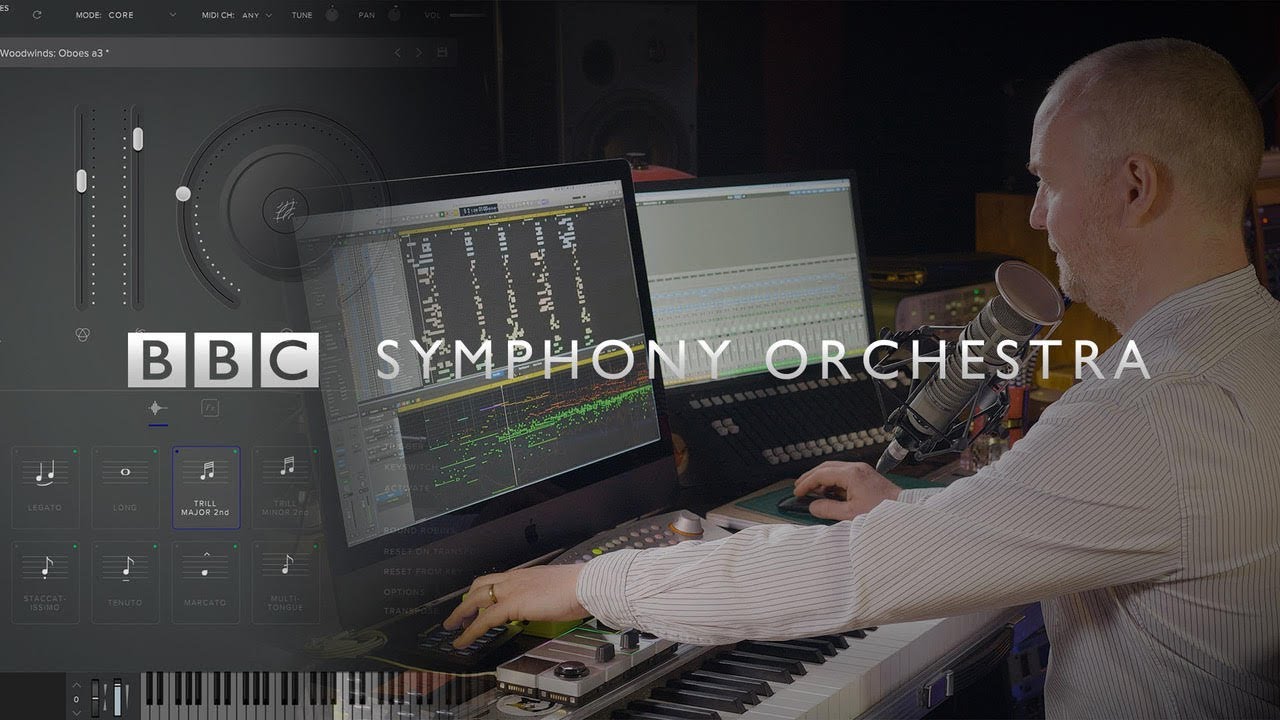
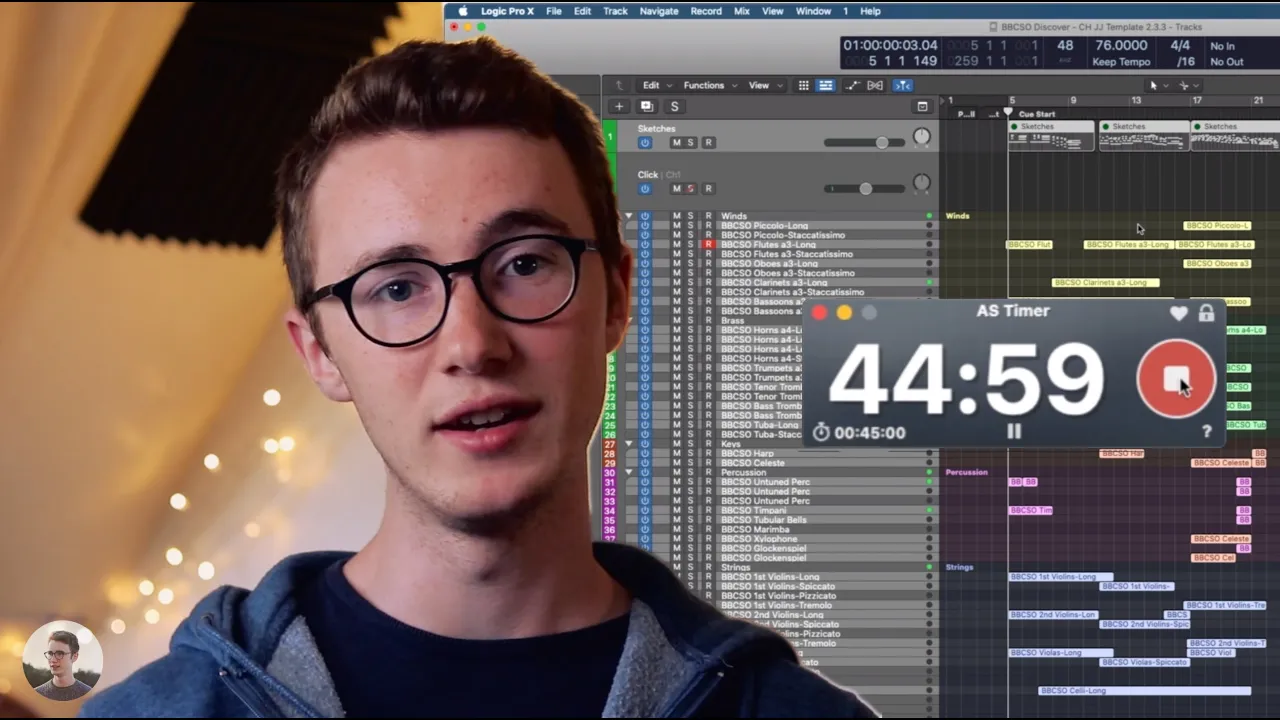
Scoring a Fantasy Film with Spitfire's BBC Symphony Orchestra Discover
Added:Basic DAW navigation and MIDI sequencing skills, including how to load virtual instruments and input notes.
Fundamental understanding of orchestral instrument families (strings, woodwinds, brass, percussion) and their basic registers.
Introductory music theory concepts, such as scales, basic harmony, and the structure of a musical theme or motif.
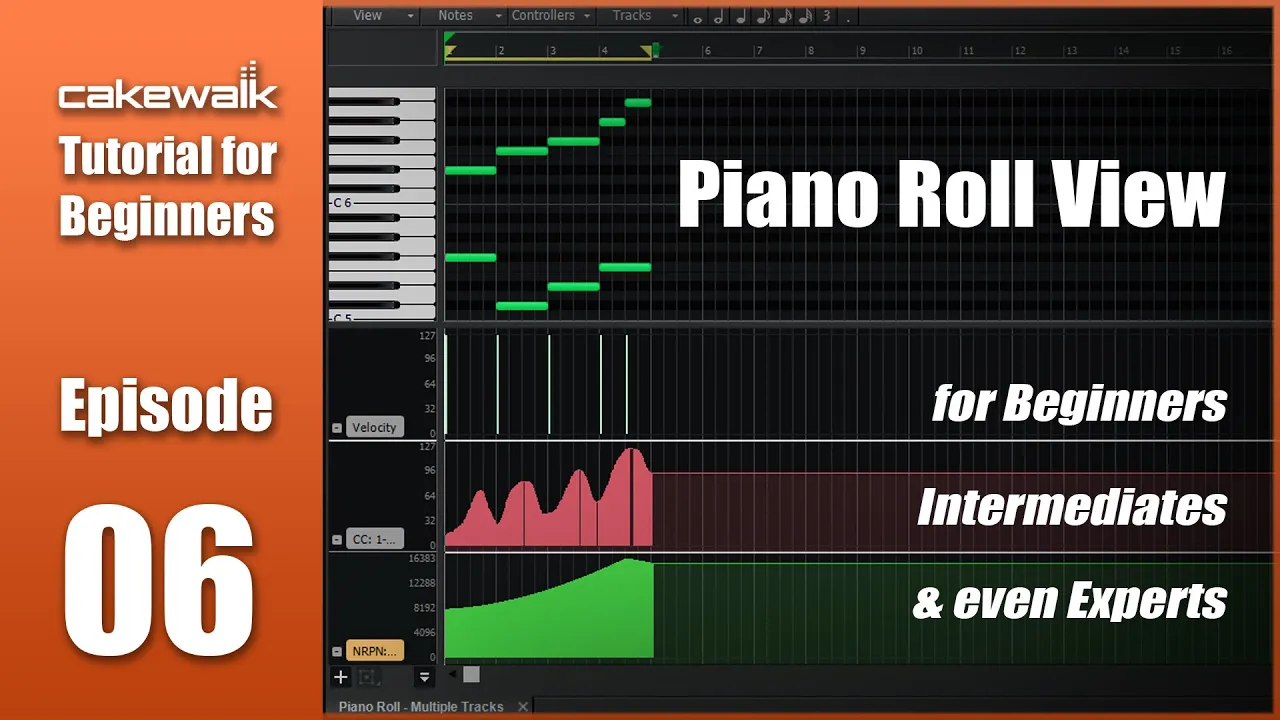
Familiarity with basic MIDI CC (Continuous Controller) automation, particularly expression (CC11) and modulation/dynamics (CC1).
Advanced MIDI orchestration techniques, such as layering multiple sample libraries to create a richer, more hybrid orchestral sound.
Cinematic composition and thematic development specific to the fantasy genre, including the use of modal scales and leitmotifs.
Mixing and spatialization techniques for virtual orchestras, focusing on panning, reverb application, and EQing to simulate a real concert hall.
Transitioning to more advanced orchestral libraries (e.g., BBC Symphony Orchestra Core or Professional) to master articulation switching and multiple microphone positions.
579.4K views19.6Klikes51:27Original Release: 2020-05-15
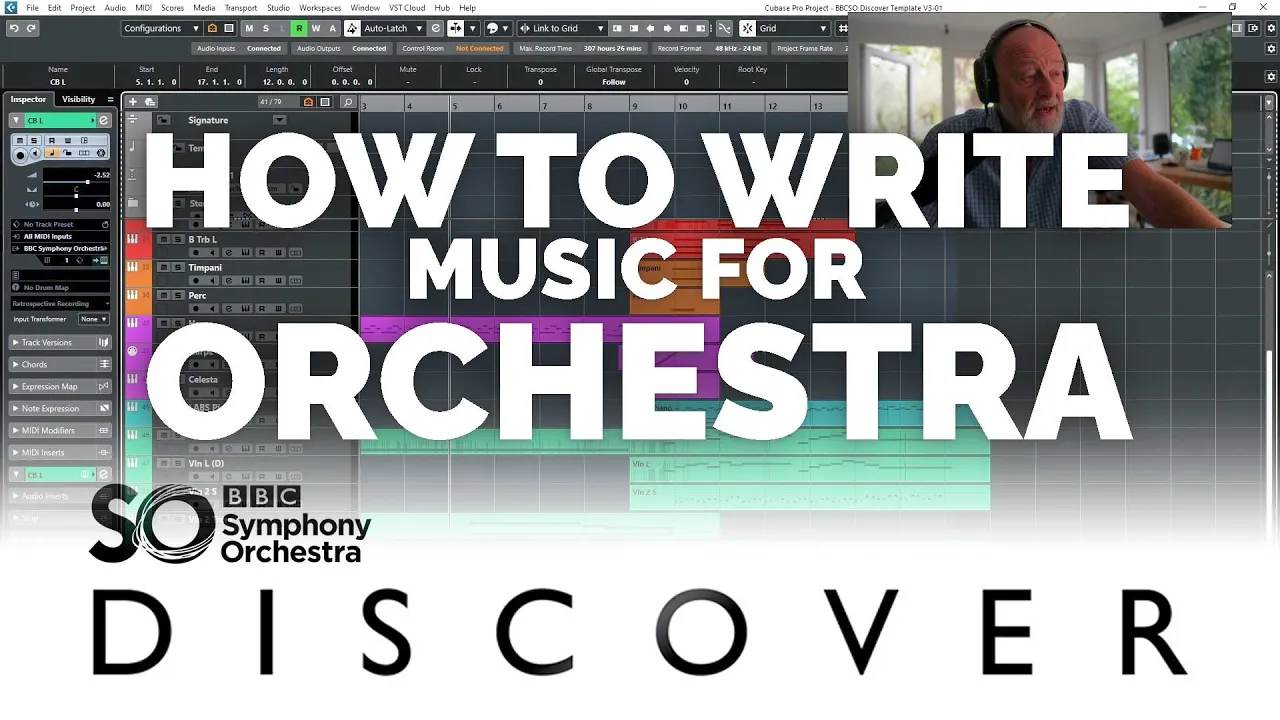
hello everybody welcome back to the shed and today as I promised a little while ago we're gonna dive in and do some scoring using Spitfire audios BBC symphonic orchestra discover this is the one which is either 49 pounds or completely free depending on how you go about acquiring it casting off the hat and so what I'm going to do is I'm going to write a little bit of fantasy music I've chosen fantasy music because it's best test of an orchestral library because it uses all the sections of the orchestra and it's quite demanding it's sort of it makes the library do stuff like fast doston arty and runs and all kinds of things like this so we'll find out how far you can push this tiny little orchestral library 200 and something megabytes which in digital terms is the back of a digital postage stamp I mean it's it's it's see if you could package it up it would come in a little tiny tin like that so how could we take something this small and create a sound this big that is today's challenge okay now have I written anything yet are you my client or are you my friend sorry I shouldn't say that in public absolutely it's almost finished what I've got is five chords of one of them's wrong okay here we go look there we go so chords go C minor F minor then it goes a minor a flat minor and then I thought D and I've changed my mind right so that's that's as far as it's called but alone it's a starting point this is the little template I've sort of enhanced it a bit okay so in essence what we've got is woodwind brass percussion miscellaneous and then strings now I'm putting each of these is a separate instance of the BBC Symphony Orchestra plug in and and it's absolutely fine it really doesn't take very much CPU and it takes even I mean as I say it takes hardly any memory at all and so I like to separate out some articulations from other I mean it's not as though in this tiny library I say tiny but it covers the whole Orchestra look so here's a piccolo you get a long piccolo and you get a short piccolo now as I'm going through this I am going to be sort of explaining some of these basic principles a little bit slower than usual because I appreciate that quite a lot of you coming to discover will be coming to orchestral sampling for the first time hey welcome it's fun you'll love it trust me and so one of the things we need to make this sound realistic is lots of so-called articulations particularly long wasn't sure ones in other words a long note sounds fundamentally different from a short note and just playing a long note short is not the same as quite different so it's the same way that if you've got a carrot and painted it green it wouldn't make it a cucumber no that was that was a terrible terrible analogy I'm sorry but the point is if you want a realistic sounding orchestra you're going to have to you know when you think of somebody play letting the piccolo playing the piccolo what they're going to sort of spit out those short notes and they're going to sort of play it much more than the Garter kind of thing with the long notes and we need both of those so how are we going to swap between them you can either use something called key switches which is keys outside the range of the instrument and I've got them actually mapped to this little controller here so I can go like that and but also I prefer having one track which has got long articulations on on one which it's got short for reasons which will become apparent later so we've got long short or piccolo flute oboe clarinet and bassoon and the flutes are not solo in flutes they are three fruits to play together so they're in a large orchestral section and the brass likewise I've got Long's and shorts of French horns trumpets tenor trombones bass trombone interesting in a small library like this you get bass trombone somebody in spitfyre is a huge fan of based on bass or maybe they're married to a bass trombonist or a bass trombones in their best friend tuber long and short timpani percussion tubular bells [Music] blocking a xylophone glockenspiel ha I'm a big fan of the heart he says blame the clock fishmeal Celeste marimba and then we got the the strings and we I've split these out and so that we've got Long's short bits of got oh and another reason for splitting them out is it's easier to balance them for by changing the velocity now as I'm writing you may notice me first of all laughing with them faffing with the mod wheel in throughout this library the mod wheel this thing here which is controller CC one is mapped to volume so you can make things louder than just butter like that this fader here is mapped to CC 7 which is controller 7 which is also voting so you may well see me as we're playing go and little fader things like that can make a huge difference when we go through now so that's how it goes this particular template I have got things divided up into groups that helps because if we look at a mixer up to the groups here and we have if you wanted to so if you've got all the strings playing you wouldn't want to have to mix you know all four of them up and down at the same time when you've got one fader you can push the strings up and down so you can do sort of you can act a bit like the conductor anyway this is more than enough chatting and that's how it's set up I will leave a link to a copy of this project in the notes underneath the video so if you want to download it and have a look it's also got some completely unnecessary stuff like stems but you don't need that you don't need that you just need to get stuck and write some music which is I think where I've got to isn't it okay what are we going to do I almost forgot to remind you to subscribe you know there's a little thing underneath where you can subscribe and click the little bell so you get notified when we do lives and things like that right where was I I'm gonna start with a harp let's get the bottom row we need when you faff about with volume control and things like that it is recorded so if you wanted to set the volume you just record it from the beginning give a little twiddle like that and that's done so now when it runs over that it will send that controller message to that instrument and it will come out too fast so I'm gonna slow it down it needs to be I'm running at hundred most doors like this will default to 100 bpm I'm in hundred and twenty bpm and that's not always what you want and it's real easy just to set off doing 100 BPM thinking oh well that's that'll do and then you end up writing to the tempo rather than to the right tempo for the music so if we just turn the click off if I'm going [Music] it's a bit slow now let's go with this [Music] right okay let's let's say it's not alright but it'll do to start with it is an there's two ways of approaching writing a bit of news about this I mean you can either just put in something like that as a placeholder then write other stuff and then jiggle it about or you can try and get this track a little bit more sorted so it's almost like the score basically so you're trying to work out what's going to happen so from okay just bear with me while I faff [Music] then we're going to go up to the e minor I'm going to change the record input mode to merge so I can just put it into a to record and start playing and it'll record it no that's not right [Music] that's nice okay let's try it out [Music] [Applause] if you want to correct the timing because you can't play the keyboard like I not able to play very well or at least it's not I can't it's just that sometimes I just it's not I can't be bothered either actually it's sometimes you're just kind of working stuff out so I'm going to quantize quantize is a good thing and you can quantize to a particular beat division so you use quantize eighth notes now I'd only like to quantize a bit where's my iterative quantize gone is that one that one so when I quantize it'll quantize to do do to the eighth note but it won't go the whole way if we just open it up you'll see it goes a little bit stomach completely anyway the theory it's the theory is ok come on guys get going now what I wanted to do with this so now I'm going to add a MIDI track which goes so we're going to put harp too so I'm paying a second part in here so I've got the MIDI track this is a MIDI track and I'm now going to connect it to the instrument oh maybe it's already yes it is ok same so this is now so with your first entrance gate so I want this to go I'm going to do it in sort of [Music] that's gonna work that particular take might not have done but we're getting there okay let [Music] I know I can hear it too why do I get I get thrown by that dodgy note in there okay it's nearly there they've gone one more try one more try give me one more try [Music] now what I'm trying to do here and so the top line is going and the bottom line is game so it's going down fifth sixth sixth fifth so it's a sort of little harmony run quite like it there's another dodgy note in there which I just heard okay dodgy notes are us you want a dodgy no you come to me or consult you out with the dodgy note governor then all Michael Caine on you sorry about that and I should remind you that if this is the kind of thing you like learning about we have a couple of cracking courses how to write music which is what about how to read music and another course for sampled orchestration to help you learn these very techniques if that's your kind of thing click the link and we will show you more about our amazing courses and how wonderful they are right where was I okay so we fast about with this [Music] what else can you hear in there I can hear some web wind and some flutes go what am i Achilles [Music] who do I want them just a cartoon like that actually what I was going to do is put some tremolo what happens if I play them at half speed something like this maybe [Music] one more it's not so bad we need to smooth this out a bit and part of what you'll end up doing is going into your editor when you don't do things quite right and editing staff so this is the sustain pedal so I wondered the sustain pedal run bit long so I've gone in their chosen controller 64 and just dragged it a lot of it that's more that's much more fluid isn't it okay now the Celeste is going to come in here I don't know what it's lesson we do come on Celeste [Music] I'm going and that's okay towards the end it sounded alright but I know that when the cord underneath were changing from C to C minor F minor I was just going over the see mine and so there are little dissonance is in there [Music] okay let's see what else I can do with that [Music] okay here's another one here's a okay I know what we're gonna do here we're going to introduce some step input step input is really really useful what it allows you to do okay let's go to bar five starting bar five song at it if I turn on step input which is that thing there I want to go did it it's going to go up in sixteenth notes and I'm gonna go you'll see every time I play it puts them in you'll see you'll see years I don't know if it did did what it's a little bit Nutcracker what happens if I copy that down to the violin twos that's not so bad so we can a ramp up okay so now the violas need to follow that up so didn't okay okay here's another technique okay yeah I'm gonna have yet another harp track because I want a harp Gliss so in the real world I tell the harp to stop playing for a couple of bars or a couple of beats and get them to do their now if we want a Gliss like that and you want to run your finger over the keyboard you can see this and we can only do it in in C or or a minor okay so what we're going to do is do it in an E minor and then transpose the whole thing so here we go so I want to do now if that's if that's going up in [Music] we wanted in aim so it's in a mare and we wanted to go up and see - oh it's got to go up a minor third so I transpose it up one two three semitones so put three in there but three in there look when I say three now we go go now we have a Gliss in C minor so to be realistic we're gonna take out because you wouldn't that no harp is could player Gliss and this piece at the same time and as we starting to get some uh quite busy strings going now we get some cellos going in something like that [Music] that's not quite right the harp and the heart part is not right this is not right it's not quick enough so I'm gonna have to fix it because I can't do it without I wanted okay something like that but it's not right so it's got to change sorry yeah something like that's going to be much better [Music] maybe actually I may do with this although it's more mechanical to do it with to do it this way it is more efficient in a way so we're gonna go for eighth notes so it's going to go [Music] that's better it doesn't fair but the top one is miles off I don't know what's going on up here a lot of tidying up you do if this was going to a live orchestra this wouldn't pass muster at all okay now how long will be going 30 minutes already oh my god I better get going with some woodwinds and brass okay right okay so [Music] there is an argument for not bringing in the mall ways got to think of think of the player think of them breathing [Music] and then they're going to go into I'm gonna put this I'm going because I'm playing these sort of harmony runs I'm using this step time more and I normally would probably [Music] rats in there doo-doo-doo let's go in and quarter-note to start with but not those quarter notes banished last one then it goes in eighth notes see how this sounds so it's going to go up [Music] those need to be long about what am i doing turn off this snapping and drag it out so that they're full quarter note long because I don't need and then these ones are going to be eighth notes long because I set the duration wrong term I'm sorry maybe a too strident what I'm looking for is a little added notes and so if I put the the a in there I'm adding a sixth to that minor chord see if that works just quietly you can have a great idea in theory and then it goes hello reality and you're gonna see this job is a lot of it is about making sure it's not having the idea it's taste it's knowing or at least you know thinking that feels right to me that feels rubbish [Music] something in there nearly [Music] okay that worked are we going to go the full hog see mine [Music] I'm not averse to that now we're going to on the downbeat we're gonna have that's when things like timpani going to come in [Music] okay these big deep drums sound much better pay quietly don't overdo okay now have I got a song in here you've got a lover gong we're merging [Applause] [Music] okay we're gonna have some string runs going on in there as well but we're first of all going to introduce well as they've been kind enough to give us best trombone we're gonna use it how's this you [Music] here the difference I don't really need the bass trombone I may use tenor [Music] this is what okay I'm now about to explain why I put things on different tracks sometimes you remember right back at the beginning however long ago that was so now we're going to go in Porter notes so we're going because I need to work out one of these what are we doing imani to a flat [Music] what we actually want is a little bit more definition on the start of those notes so what I'm going to do is lair some short notes over the front of some long notes and that will just give it that extra little bit of edge [Applause] [Music] do you hear me right okay now Oh save your work guy yes I will save my work that sounding all right what we have [Music] I needed some kind of [Music] what have I done what you know what I've done again but the merge things really useful so I can't just leave it on I can't just leave it on replace water so I'm [Music] just before while I have a little think about everything um let me have a word from our sponsor how to write music is my online course that takes you through every step of the process how to get going chord progressions tune writing developing and arranging your music six hours of exclusive video tutorials a course text packed with tips and a supportive online community get more out of your music and sign up today Oh dying for a cup of tea it's not what you have children for give this a go right let's see if I can message my daughter and get her to bring me a cup of tea once it's you know this is an epic piece of score it was not a thick piece of scotch just take a long time can I have cheeky but we're in the middle of epic and important stuff here [Music] it was a bit aimless frankly [Music] okay look I this is essentially that's the point of which I really should work out with the tunas but no it's the point I'm gonna go [Music] [Applause] [Music] a bit high for a French horn then we drop an accountant Emily [Music] now normally I start with on the on the on the fifth so you start [Music] not quite is it [Applause] [Music] still not feelin it now what we need to do is put this is where we're going to divide up this into shorts and Long's so we're going to we're going to dupe it over onto the second track and then I'm going to delete these two short notes here and then on the short track and delete the long notes and we'll hear how it sounds absolutely rubbish way to go I'm leaving this them doubling the long notes for a lot of that because it gives it a bit more emphasis let's take [Music] we don't have any strings going yet not to speak of so we need to get our cellos and basses going so we're going to go okay so goes okay let me just [Music] it's not quite there [Music] that'll do [Music] [Applause] then we're gonna have a run now that can be doubled and octave down by the bases and it'll sound great [Music] [Applause] [Music] - loud but in ballpark let's this is such a lot [Music] I should say I've just forgotten that I'm playing with a free orchestra which cost 49 pounds if you play for it and fits into 270 megabytes it sounds absolutely amazing okay where was I well we now need to get going with some now this is where this really comes into its own actually because we're going to have some the I should finish my sentence is somebody said the other day we're gonna write some string runs and we're gonna use obviously we're gonna use did you do sixteenth notes diddid to do length sixteenth notes now so it's going to go that way okay so bottom note of a violin is there and we're going so we've got one two three four one two three four wonderful for a flat oh no so in E minor so we go so we're going [Music] that'll work I think can't hear them yet but you will you will you won't you will you will because I'm going to turn them up Oh what revolution ok maybe I need to here we go this is what's gone on here ok and wasn't hearing it before and now I hear it I realize it's not it's at least an octave too high because it's just I just lifted that Celeste piece over and I'm not sure if ok if I wasn't hearing it before I don't need it so we can use it [Music] okay now we can now I'd do a down one so we're going to start in there and go so I've got three beats down then in honor third beat now um a flat minor run down now we're going to do ups again so maybe we will do it in in these harmony runs again I keep on forgetting I'm not in C minor that was horrid go back that's what I was trying to do I'll fix it those last two notes were completely wrong [Music] we just duplicate that and do it twice now [Music] now what you can do if you want your runs to sound more runny a an old trick is to double short notes with Tremmel and O's this will need some balancing up [Music] okay now because you get the blurriness with the tremolo Alaniz did a little it did okay now what we might do is something this is okay I'm going to type thing did it I did it so I'm going be fine then it goes you see if that works at all and we might if we're going to go for that and put it up on the First's as well so they double up because we want and me [Music] that sounds alright okay I tell you what that it is coming up - oh god knows how long I've been going almost an hour okay one hour let's just listen to it I'm nearly going to call it done sorry here we go [Music] okay that sounds alright for a free library it sounds absolutely incredible I mean and it's quick and it's intuitive to work in and blimey now okay now here's where this mixi thing comes into its own because look we've got here we go here the groups so it's going to come a point where we're going to let's just run this through right right automation click the w-4 right and then we can tweak things I think the wood rings a bit loud to start with I'll pull it down a bit [Music] push up the percussion a bit maybe [Music] [Applause] [Music] okay this is done this is done this is sound this sounds fine you know it's not much what are we done in an hour we talk we've done you know 10 bars but then you can go into the next bit so look I hope that this has helped you get started with BBC Symphony Orchestra discover and it'll help you you know discover the joy that he's writing orchestral music and it's just you know it's not the most original piece in the world it's but it does show you that this library is unbelievably powerful and with some relatively simple techniques you can get it to sound pretty good really I think so look um thank you very much indeed company I hope you've enjoyed this if you have remember to subscribe and there's a little button underneath and the Bell and all that kind of stuff and I'm gonna be back I'm going to do more with discover because it means that I can you know it's collaboration I can share this project with you so you can go in there and have a look and see how it's done and see if you can't take it on and write something else or what you know let's have some fun yeah so all the stuff you need to download is down below and come back and we'll do some more of this see very soon
Up Next

10:17
Harry Potter Suite: John Williams & Boston Pops Performance
@Martyprod2
257.5K views•2010-09-05

26:22
Walking in the City: Urban Rituals and the Flâneur in Contemporary India
@PSBTIndia
1.9K views•2016-08-02
32:35
Orchestral Composition for Beginners: A Free VST Guide
@ThinkSpaceEducation
364.8K views•2022-07-15

1:42
Game of Thrones Opening Credits: A Cinematic Analysis
@gameofthrones
46.3M views•2011-04-18
Related Study Plans & Knowledge Roadmaps
Structured learning paths in General & Interdisciplinary Studies
general-studies
Artificial Light: History, Tech & Human Impact
01The Pre-Electric Era: Fire, Oil, and Gas Lighting
02The Incandescent Revolution and Grid Electrification
03Gas Discharge and Fluorescent Illumination
+ 3 more learning modules
14h6 modules
Explore Roadmap
general-studies
Elevator Engineering: History, Physics & Cities
01From Hoists to Safety Brakes: The Dawn of Vertical Lift
02Hydraulic vs. Traction: The Engineering Physics of Elevators
03Modern Speed, Safety, and Algorithms
+ 2 more learning modules
12h5 modules
Explore Roadmap
general-studies
Rubber: Material Science, History & Geopolitics
01Origins of Natural Rubber & Mesoamerican History
02The Chemistry of Natural Rubber & Vulcanization
03The Geopolitics of the Rubber Boom & Colonization
+ 2 more learning modules
12h5 modules
Explore Roadmap
general-studies
Containerization: Evolution, Logistics & Trade
01Ancient Trade & Bulk Cargo: Amphorae to Barrels
02The Industrial Revolution & Cardboard Packaging
03The Containerization Revolution: Malcom McLean
+ 2 more learning modules
12h5 modules
Explore Roadmap