





















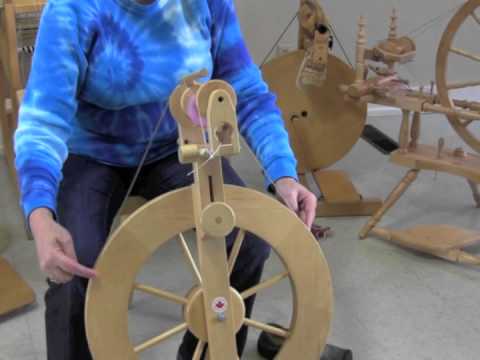








The spinning wheel, contrary to popular belief, is not an ancient invention but dates back only about 1,000 years, with its origins in India before spreading to Persia and China; the earliest confirmed evidence is a silk painting from 13th-century China showing a bamboo-spoke wheel operated by hand crank, and it wasn't until the 1700s that treadle-driven wheels enabled serious industrial-scale spinning by adding enough twist to yarn for warp threads.
Spinning Wheel History: 1000 Years of Evolution
Added:Understanding the basic mechanics of manual fiber processing, specifically how a drop spindle introduces twist to hold loose fibers together.
Familiarity with the primary types of natural fibers (wool, flax, cotton, and silk) and their varying physical properties for textile creation.
Basic knowledge of simple machines, particularly how rotary motion, axles, and mechanical advantage are used to increase efficiency.
A general historical awareness of global trade routes and cultural exchanges between East Asia, the Middle East, and Europe over the last millennium.
The evolution of textile manufacturing into the Industrial Revolution, including inventions like the Spinning Jenny, the Water Frame, and the Spinning Mule.
The engineering differences and physics behind distinct wheel tension systems, such as double drive, Scotch tension, and Irish tension.
The socioeconomic impact of home-based textile production (cottage industries) on gender roles and domestic economies in medieval and early modern Europe.
The modern revival of handspinning, its role in the sustainable fashion movement, and the preservation of heritage craft techniques.
6.6K views110likes7:23Original Release: 2015-12-02
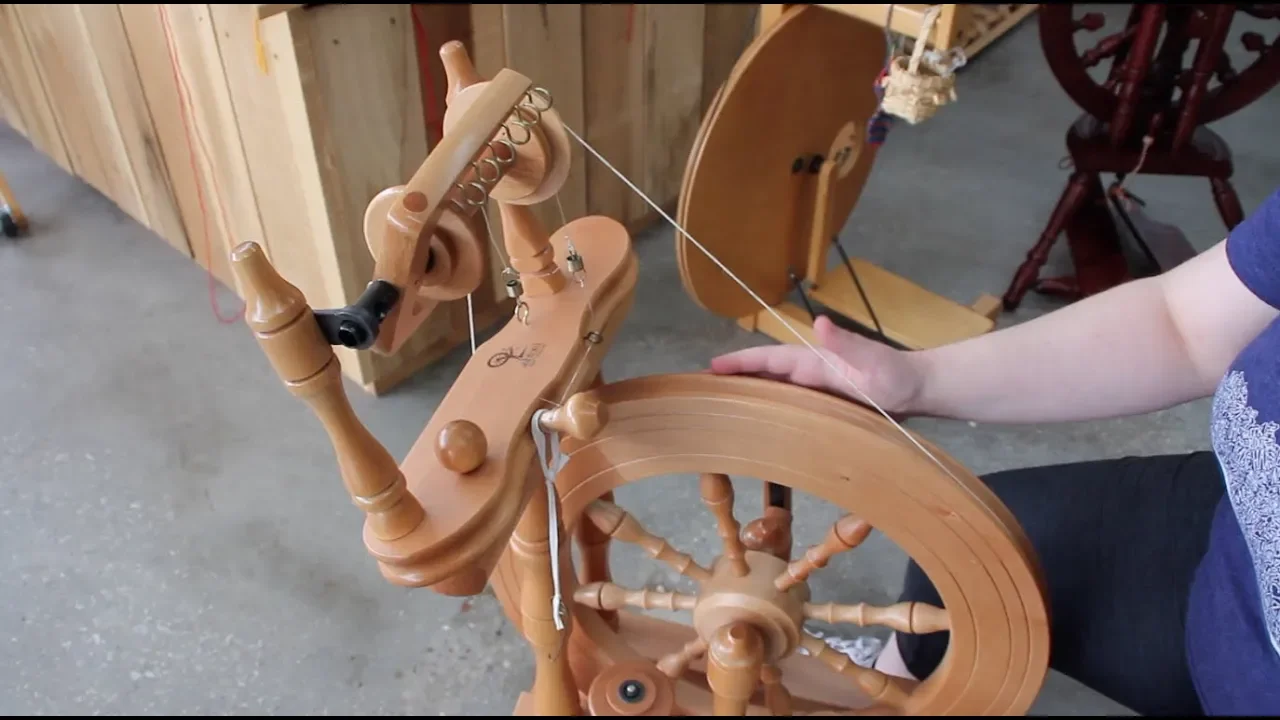
hi there welcome to another spitting in cowgirl boots I'm Jen and I do like to spin yarn and I always do it in my cowgirl boots I lived my entire life in cowgirl boots so it's not like this is special or anything but every now and then I turn on the camera when I'm spinning yarn and I start babbling usually about history and today we're going to talk about the history of the spinning wheel I don't know why I haven't done that one yet better get on that Jen okay so the spinning wheel is not an ancient device does not go back to antiquity in fact people were spinning for an estimated nine thousand years before the first spinning wheel was even invented so we've been spinning yarn for ten thousand years and the first wheel is about a thousand years old yeah there you go so 9,000 years of spinning with drop spindles I supported spindles and with no spinning wheel the spinning wheel seems to have been invented in India and then from there it moved technology moved into Persia and China now we don't have any evidence of an actual wheel in India but the language the the words that people were using to describe their spinning wheels in China and Persia seem to have an Indian origin the earliest actual evidence of an actual spinning wheel is in China it's in the 1200s and all we have is a painting it's a silk as painting on silk so it's generally believed that spinning wheels date back to medieval times and we don't have any of those wheels none of them none of them seem to have survived we only know about them from images and from the way people talk about them or mention them in in various pieces of writing the earliest wheel that from the silk with the graph painting in China doesn't look at all like this will not even a little bit it's made with bamboo spokes to form the wheel and instead of being a rimmed wheel with a drive band going around it these folks have little holes gentle done to the ends of them then thread string was used to connect all of the bamboo spokes and the wheel itself was turned with a hand crank so it looks like you had to turn the wheel with your right hand and hold the fiber off at an angle in your left hand those wheels show up in well first in southern Europe and then they they migrate up into northern Europe they show up in Europe in the 1200s and well we don't really have pictures of them we're absolutely sure that they are in Germany by 1298 because they passed a law against the use of yarn made with one of those old spoke hand turned wheels you could not use yarn made with those wheels as you warp in weaving you know they press less for everything and they always have those yarns made with that kind of wheel with that kind of technology they're very soft they don't have a lot of twist to them and they can't really hold up to being the work in weaving rimmed wheels seem to show up for the first time in France and in about I think it's the 14 14th century they're also hand cranked but they do have a drive band going along the outside here of the rim what we've done here and they're very similar in construction to a device that was in that they were using - they call them bobbin winder since they had a device where they would take finished yarn and then wind them on to a bobbin using a hand crank and it had a rim and it had a drive band and it's generally believed that the first of those rimmed wheels which were called great wheels are sort of based off that construction now from there we start to see wheels with flyers show up before then they were just wine straight on to the bobbin there was no flyer it seems like the first Flyers show up in the Low Countries in the 1500s and Leonardo da Vinci was sketching out plans for spinning wheels that included a flyer at the time but like all the things that Leonardo da Vinci sketched out you know he didn't build he didn't build any of them did he well he didn't build a spinning wheel you know mostly due Vince you got credit for being basically a daydreamer and a doodler a very very good doodler a very accurate and detailed dealer but mostly he just doodle things he didn't actually make them and you know what that's a rant for another time back to the spinning wheels the first treadle wheel that you drive with your feet that you could put on your cowgirl boots and make it turn yeah now those don't show up until the 1700s and that's when spinning with a spinning wheel got serious that's when you could actually add enough twists to the spun yarn on your wheel to make it to make it usable as a warp to make to make good strong thread so 1700s huh 400 years ago and it's what we think of as this spinning wheel is only of any design is really only 400 years old it's quite modern when you consider that humans were spinning for nine thousand six hundred years before the first treadle spinning wheel showed up I'm pretty good with my little trail spinning wheel and you know with some practice and some patience and maybe half an hour or so I can sit down with any treadle wheel and make it work I'm pretty sure that if I sat down with that bamboo spoke hand driven threaded weirdo thing back in China there's no way I could have made that work not a chance I don't know how they were spinning before they were using their feet so that's the history of what I'm going to call the modern spinning wheel I hope you enjoyed it and I hope you'll come back because I do these little spinning and cowgirl boots every now and then until next time
Up Next
7:43
Understanding the Putting-Out System: Pre-Industrial Revolution Europe
@PaulSargentMakesHistory
40.7K views•2015-11-16

93:30
Zola, Baudelaire, Maupassant & the Transformation of Paris, 1852-1900
@SylviaSagona
5.6K views•2015-05-31

91:57
The Geopolitics of the Ukraine War and the Rise of Global Autocracy
@JordanHarbingerShow
468K views•2025-04-19

17:05
Understanding the Cold War: Superpower Conflicts and the Road to Détente
@OverSimplified
46.1M views•2019-01-24
Related Study Plans & Knowledge Roadmaps
Structured learning paths in History
history
Byzantine Iconoclasm: Theology, Art & Politics
01Foundations of Byzantium and Early Christian Images
02The First Iconoclasm: Leo III and the Crisis of Images
03Empress Irene, Nicaea II, and the Second Iconoclasm
+ 2 more learning modules
9h5 modules
Explore Roadmap
history
Iranian Revolution (Causes, Events & Legacy)
01The Pahlavi Dynasty and the Roots of Discontent
02The Spark of Rebellion and the Rise of Khomeini
031979: The Fall of the Shah and the Climax of the Revolution
+ 2 more learning modules
8h5 modules
Explore Roadmap
history
Mali Empire: Mansa Musa, Trade & Timbuktu
01Foundations of the Mali Empire
02The Trans-Saharan Gold and Salt Trade
03The Reign and Pilgrimage of Mansa Musa
+ 1 more learning modules
6h4 modules
Explore Roadmap
history
1947 Partition: Politics, Borders & Legacies
01Foundations of British India and the Divide
02The Political Negotiations and the Mountbatten Plan
03Drawing the Boundary: The Radcliffe Line
+ 2 more learning modules
8h5 modules
Explore Roadmap