





















In parts of the world with a Mediterranean climate—California, the Mediterranean basin itself, central Chile, parts of South Africa, and Southern Australia—the vegetation has evolved over millions of years to be adapted to dry summers and occasional fire. The chaparral of California, the maquis of the Mediterranean, the fynbos of South Africa. These are plant communities built around fire. Many of their plants have deep root systems that survive fire and resprout quickly. Many have aromatic oils in their leaves that make them flammable and also perhaps deter herbivores. The ecology and the chemistry and the fire history of these landscapes are all woven together into one deeply integrated system.
Wildfire Ecology: Natural Fire Processes and Recovery Dynamics
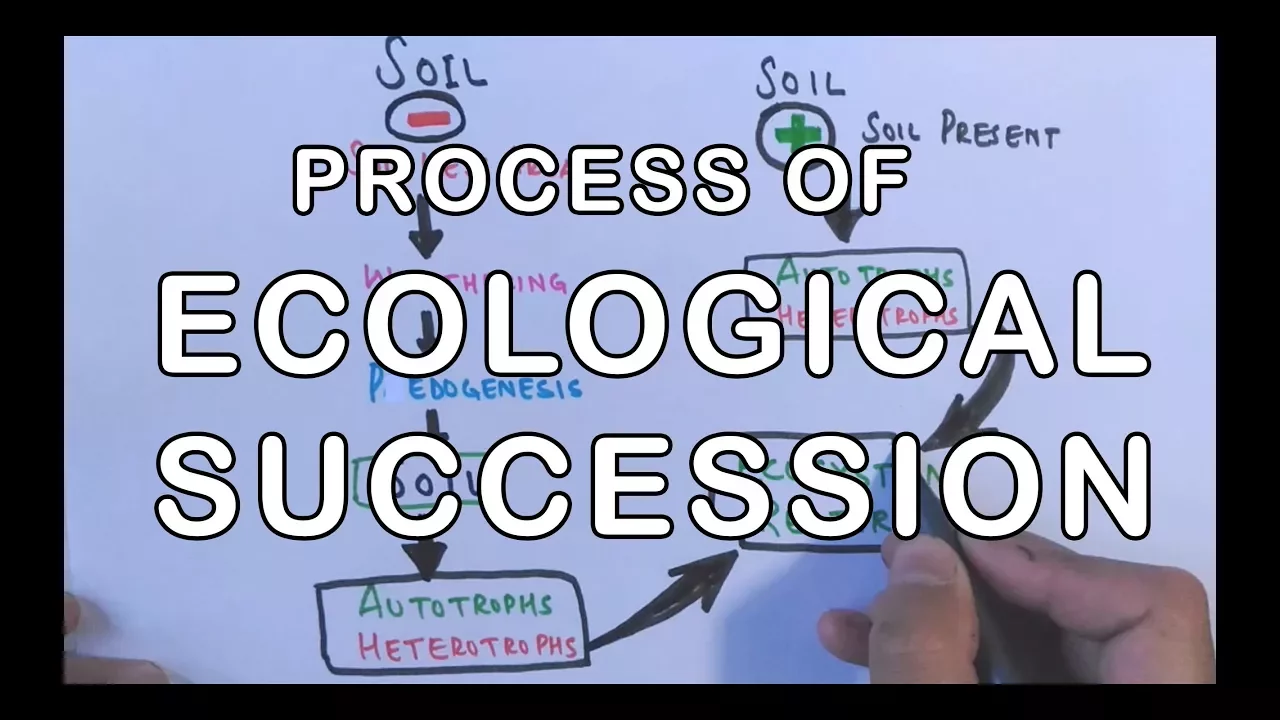
Added:Basic principles of ecological succession, particularly the distinction between primary and secondary succession.
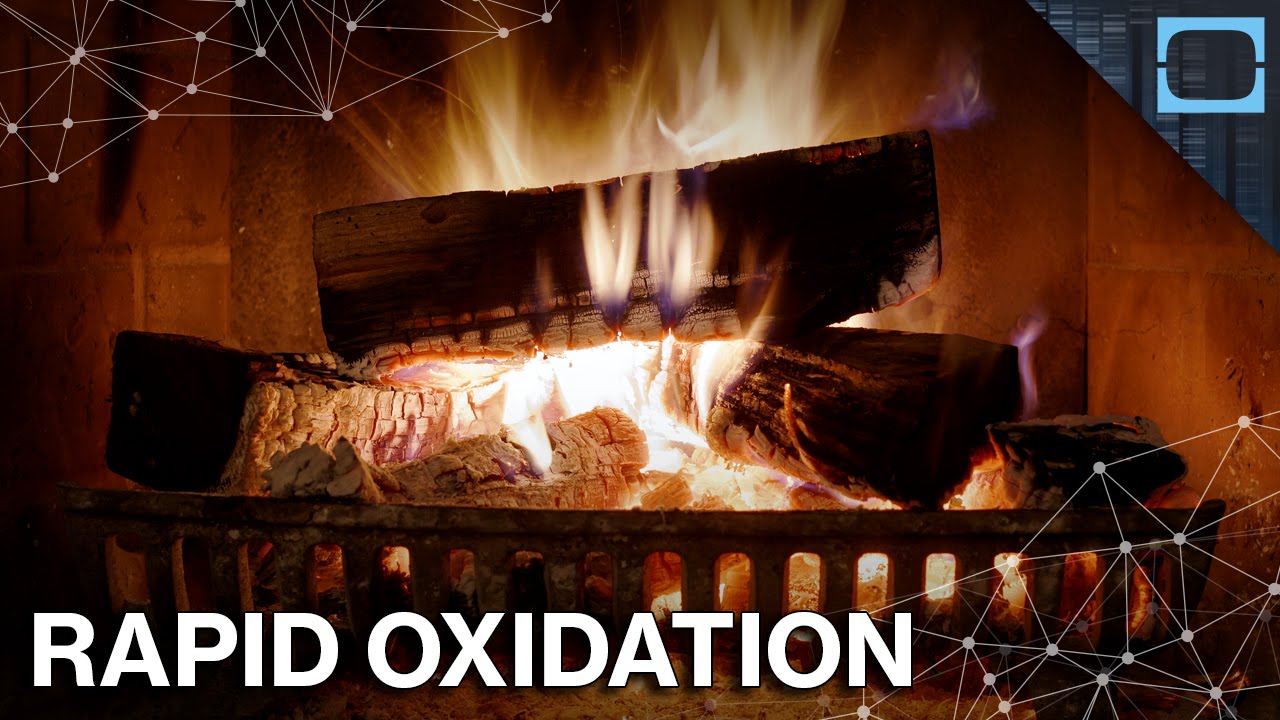
The fundamental chemistry of fire, specifically the 'fire triangle' (fuel, oxygen, and heat source).
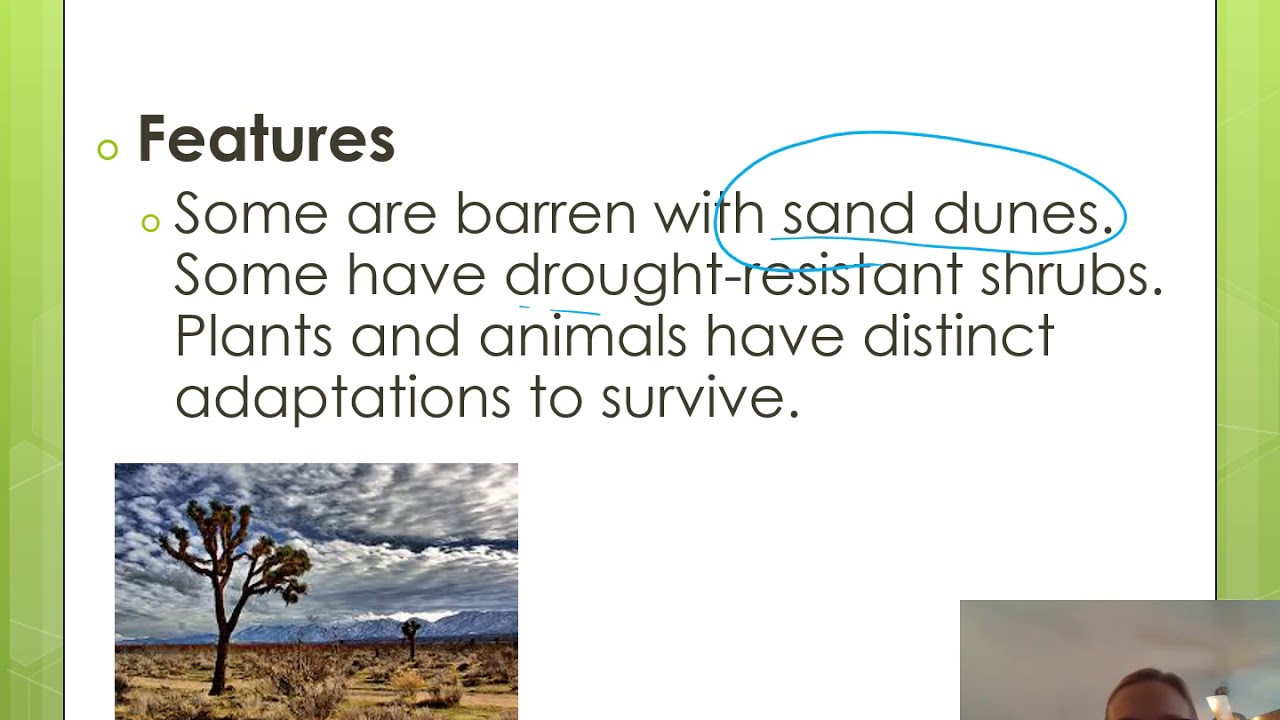
How different biomes (such as boreal forests, grasslands, and chaparral) differ in vegetation, climate, and fuel availability.
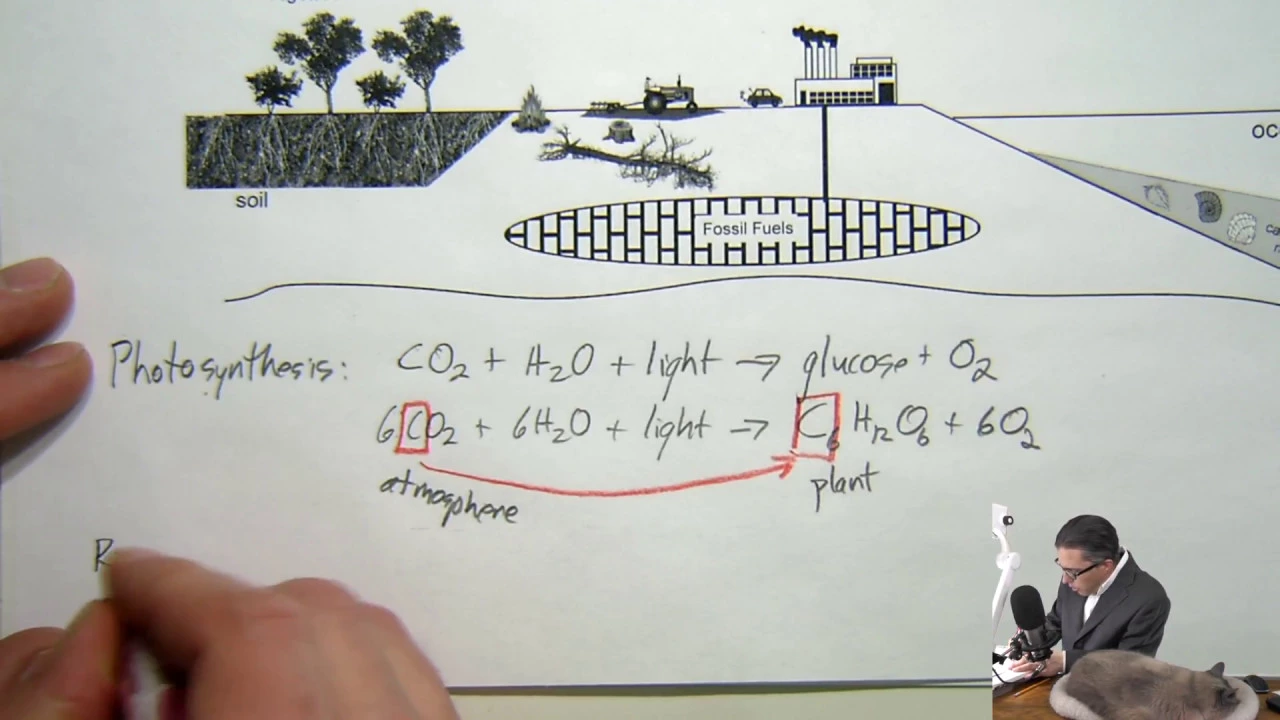
The carbon cycle and how vegetation acts as a carbon sink and source.
The application of prescribed burns and cultural fire management to maintain ecosystem health and prevent catastrophic wildfires.
Land-use planning and risk mitigation strategies at the Wildland-Urban Interface (WUI).
Post-fire restoration ecology, including erosion control, soil rehabilitation, and invasive species management.
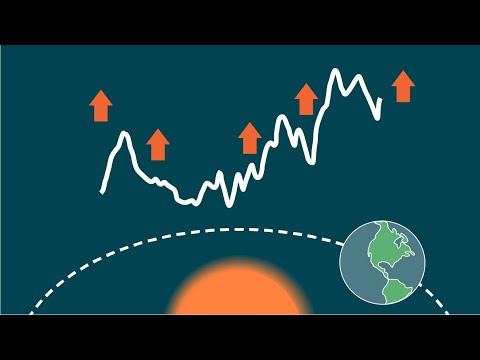
The impact of global climate change on shifting fire regimes and the increasing frequency of high-severity 'megafires'.
530 views34likes0:58Original Release: 2026-07-31
There is something old and honest about fire.
Something that has been part of this planet long before any of us arrived.
Welcome to Sleepy Science. And tonight we are going to drift slowly through 100 quiet facts about wildfires, the forces that burn, reshape, and ultimately renew the land beneath your feet.
If these videos bring you peace, please leave a like, subscribe, and drop a comment below telling us which topic you would love to drift off to next.
And if you ever want to help keep Sleepy Science going, our Patreon is always there, quietly waiting for you, like a candle in a window.
Now, let us begin very gently.
Fire is older than you might imagine.
The first wildfires on Earth burned roughly 420 million years ago, back when the land was just beginning to be covered by the earliest plants.
Think about that for a moment. Before there were trees, before there were flowers or song birds or anything you might recognize as a forest, fire was already here, burning through the low, soft mats of ancient vegetation that clung to the edges of warm, shallow seas.
We know this because scientists have found fossilized charcoal in rocks that old.
Dark little fragments of something that burned and was preserved in stone for hundreds of millions of years.
They call this material fusane or sometimes fossil charcoal.
And it is one of the quietest, most humbling things you can hold in your hand.
A piece of fire turned to rock waiting.
For fire to exist at all, three things need to come together.
Fuel, heat, and oxygen.
This is sometimes called the fire triangle. And it is one of those ideas that sounds almost too simple until you sit with it for a while.
Every wildfire that has ever burned on this planet, every ancient blaze and every modern one, every fire that swept through a pine forest or crept across a dry grassland at dusk was held together by those same three quiet ingredients.
Remove any one of them and the fire simply ceases to be.
It does not fight to continue.
It just stops.
The oxygen that feeds wildfires is the same oxygen you are breathing right now.
Around 21% of the Earth's atmosphere is oxygen.
and fire needs at least 16% of the surrounding air to be oxygen in order to keep burning.
Below that threshold, flames go out on their own.
Early in Earth's history, the atmosphere had much less oxygen than it does today, which meant wildfires were rarer and smaller.
But as ancient plants began filling the air with the oxygen they exhaled, the world became more and more flammable.
In a strange and quiet way, the forests helped create the conditions for the fires that would one day consume them.
Lightning is the oldest source of wildfire ignition.
Long before human beings ever existed, before anyone walked upright on this earth, lightning was already setting forests ablaze.
Today, lightning still starts roughly 10 to 15% of wildfires globally.
Though in some remote and wild places that percentage is much higher.
There is something deeply calming about imagining a forest fire that no human caused, no human saw begin and no human will ever try to put out.
A fire that belongs entirely to the old conversation between the sky and the land.
Most wildfires, though, are now caused by people.
Not always deliberately and rarely with any intent to harm.
A cigarette dropped along a roadside.
A campfire that seemed fully extinguished, but held one small coal alive through the night.
a power line humming in dry summer wind until a spark falls into the grass below.
The vast majority of human-caused wildfires begin in the quietest, most unintentional way imaginable, which is worth sitting with gently, not in blame or shame, but simply as a reminder of how connected ordinary moments are to very large consequences.
Wildfires move faster uphill than downhill.
This is one of those facts that seems backwards at first because we tend to think of fire as something that falls or settles.
But fire moves by preheating the fuel ahead of it. And when a slope rises above a flame, the heat rises into the dry vegetation above and prepares it to burn.
before the fire even arrives.
A fire climbing a steep hillside can move at speeds that are genuinely difficult to outrun on foot.
Firefighters learn the terrain before anything else. Because the land itself shapes the fire's path, the wind is perhaps the most powerful force in a wildfire's behavior.
Wind brings fresh oxygen to the flames.
Wind dries out the fuel ahead of the fire. Wind carries embers far beyond the fire's front edge, starting new fires called spotting fires, sometimes miles ahead of the main burn.
A fire burning calmly in still air can transform into something almost unrecognizable when the wind picks up.
This is one of the reasons wildfires are so difficult to predict and so humbling to work near.
They are not just fire. They are fire and wind and land and dryness all woven together into one living shifting thing.
There is a phenomenon called a fire whirl. Sometimes called a fire tornado, though the two are not exactly the same.
A fire whirl is a spinning vortex of flame that forms when hot air rises rapidly from the fire and begins to rotate.
They can range from small, gentle spirals of smoke and flame to enormous columns of spinning fire hundreds of feet tall.
The largest fire whirls can carry burning debris high into the air and scatter embers across wide areas.
They are rare enough to be startling and striking enough to stay in the memory of anyone who has seen one, even from a great distance.
Wildfires can create their own weather.
This is one of those facts that takes a moment to settle in.
A large intense wildfire generates so much heat that it creates powerful columns of rising hot air called pyro convection.
These columns can reach high into the atmosphere, sometimes punching into the upper levels of the troposphere or even beyond it.
When a fire's convection column becomes large enough, it can begin to generate its own clouds.
Dark towering clouds called pyroumulus clouds.
And in the most extreme cases, pyrouumulo nimbus clouds that produce their own lightning.
A fire that creates lightning.
lightning that starts new fires.
There is something quietly extraordinary about that loop, that ancient conversation between flame and sky becoming its own closed circle.
Not all wildfires are the same kind of fire.
There are surface fires which burn along the forest floor, moving through leaf litter and low shrubs while leaving the taller trees largely untouched.
There are crown fires which burn through the tops of trees traveling fast and hot through the canopy.
And there are ground fires, which are perhaps the quietest and strangest of all, burning slowly through the deep layers of organic material beneath the soil's surface.
Ground fires can smolder underground for weeks or even months, burning through pete and root systems, while the surface above looks calm and undisturbed.
They are sometimes called zombie fires.
And there is something faintly eerie about that name, though also something almost peaceful about it.
A fire that asks nothing of the sky. A fire that simply waits in the dark below.
Fire has an official temperature range depending on what is burning and how a campfire might burn at around 600 to 900° C.
A wildfire's flame can reach temperatures of around 800 to 1,000° C or higher in its most intense areas.
But what is easy to overlook is that not all parts of a fire burn at the same temperature.
The glowing coals at the base of a fire are often hotter than the visible flames above them.
The flames themselves are cooler at their outer edges and hotter toward their center.
A wildfire is not one temperature.
It is a thousand different temperatures.
shifting and rearranging every second like a living thing that cannot quite decide what it wants to be.
The smoke from a wildfire is not a single substance.
It is a complex mixture of gases, water vapor, carbon dioxide, carbon monoxide, and countless tiny particles called particulate matter.
When you see wildfire smoke on the horizon, that hazy orange and gray curtain hanging in the air, you are seeing millions upon millions of tiny particles drifting on the wind.
Each particle is a fragment of something that was alive.
A piece of leaf or wood or grass, so small it floats instead of falling.
Fine particles from wildfire smoke, those smaller than 2 1/2 micrometers across, can travel deep into the lungs.
This is why wildfire smoke affects people far from the fire itself in cities hundreds of miles away, breathing air that carries the ghost of a distant forest.
Wildfire smoke can travel extraordinary distances.
Smoke from large wildfires in North America has been detected in Europe.
Smoke from Siberian wildfires has drifted across the Pacific and reached the western shores of North America.
In the upper layers of the atmosphere, smoke particles can remain a loft for weeks at a time carried by high altitude winds across entire ocean basins.
There is something quietly vast about that. About the idea that a fire burning in one part of the world can change the color of the sky somewhere entirely different weeks later without anyone making the connection.
Not all trees respond to fire the same way.
Some trees have evolved over millions of years to be genuinely resistant to fire or even to depend on it.
The giant sequoia, one of the largest living things on Earth, has bark that can be 2 ft thick in older specimens.
That extraordinary layer of corklike wood insulates the living tissue inside from the heat of passing fires.
A seoia can survive a fire that kills nearly everything around it.
And remarkably, the seoia also needs fire to reproduce.
Its cones can remain closed on the tree for 20 years or more, waiting for the heat of a fire to dry and open them, releasing seeds onto the freshly cleared, ashenriched soil below.
The fire is not the Seoia's enemy.
The fire is the sequoia's midwife.
Ponderosa pines have adapted to fire in a similar way.
Their bark is thick and orange red, deeply furrowed, almost like the surface of a canyon wall, and it protects the living wood inside from moderate ground fires.
For thousands of years, lowintensity fires move through ponderosa pine forests regularly, burning away the accumulated debris on the forest floor and keeping the undergrowth in check.
These fires were not catastrophic.
They were ordinary, seasonal, expected.
The forest had built its entire identity around them.
The lodgepole pine takes this relationship even further.
Many lodgepole pines produce what are called serotoninous cones which are sealed shut with a resin that only melts at high temperatures.
They will sit on the tree for years, sometimes for decades, holding their seeds inside like a letter sealed and waiting.
When a fire comes, the resin melts, the cones open, and millions of seeds fall onto the warm, bare soil left behind by the flames.
The lodgepole pine does not just survive fire. It has shaped its entire reproductive strategy around the certainty of fire.
It trusts the burning Eucalyptus trees, which are native to Australia, have their own remarkable relationship with fire.
Their leaves are rich in volatile oils that make them highly flammable, and in a fire, eucalyptus forests burn intensely.
But eucalyptus trees have a remarkable ability to respout from their trunk and root system after a fire has passed.
Deep within the bark, hidden clusters of dormant buds called epicormic buds remain protected from the heat and burst into new growth within weeks of the fire's end.
A burned eucalyptus forest can look heartbreakingly blackened and bare.
And then quietly in the weeks and months that follow, soft tufts of green begin to appear along every scorched trunk, as though the trees are sighing with relief and beginning again. Australia has some of the most fire adapted ecosystems on Earth.
The continent has been shaped by fire for tens of millions of years and much of its native vegetation not only tolerates fire but requires it.
Many Australian plant species have seeds that will only germinate after exposure to smoke or to the heat of a fire.
There is even a compound in smoke itself, a chemical called kakinolide that has been found to trigger seed germination in hundreds of plant species around the world.
smoke. Not just a byproduct of burning, a signal, a chemical message that the land sends to sleeping seeds saying, "Now it is time to wake."
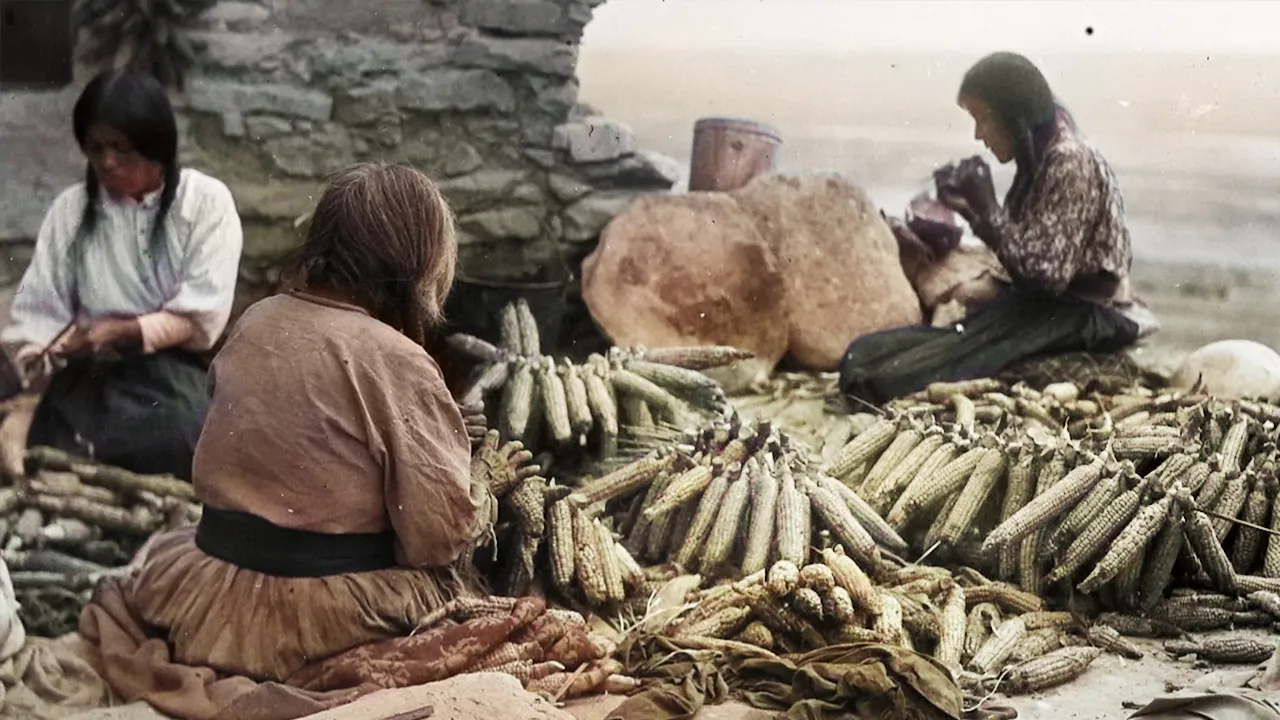
Indigenous peoples across many parts of the world have known about fire's role in the land for thousands of years.
In Australia, Aboriginal communities practiced what is now called cultural burning or fire stick farming. For at least 65,000 years, controlled intentional burns were used to manage the land, to encourage the growth of food plants, to maintain travel routes through thick vegetation, and to create habitat for animals.
This was not random burning.
It was careful, deeply considered and guided by generations of observation and relationship with the land.
The people who used fire this way understood the difference between fire that heals and fire that harms.
Indigenous communities in North America also used fire as a tool for thousands of years.
The great prairies of the great plains were partly maintained by regular burning which kept trees from encroaching and kept the grasslands open and rich.
Many indigenous nations of the Pacific Northwest used fire to manage berry patches and cameas fields.
The forests, the meadows, the grasslands that European settlers encountered and often described as wild and untouched had in many cases been actively and lovingly managed by fire for centuries.
The land was not empty. It was tended.
When European settlers arrived in North America and eventually suppressed traditional burning practices, the landscape began to change in ways that took a long time to fully understand.
Without regular fire to clear the understory, dead wood and dry brush accumulated.
Over decades, what had once been forests with open park-like spaces between trees became dense, tangled thicket where fire, when it came, burned much hotter and more destructively than it ever would have before.
The effort to prevent all fire had over many years made catastrophic fire more likely.
This realization led to a shift in the way fire managers and ecologists think about wildfires.
The idea that fire is purely destructive and must always be suppressed gave way to a quieter, more nuanced understanding that fire is a natural part of many ecosystems and that excluding it entirely creates its own kind of damage.
Prescribed fire, also called controlled burning, is now used in many parts of the world as a tool to intentionally burn excess fuel under carefully managed conditions, reducing the risk of larger, more destructive fires later.
It is a gentle acknowledgment that some things cannot be kept away forever.
That the land has its own rhythms and our task is not to stop them but to understand them.
After a wildfire passes, the soil beneath is changed.
The ash that settles into the ground is rich in minerals, calcium, potassium, phosphorus, nutrients that were locked inside living wood and leaf and are now released back into the earth.
In a young forest recovering from fire, the soil can be remarkably fertile, flooded with these released nutrients, and the plants that colonize it first grow quickly and lushly.
This period after a fire is sometimes called a greenup, and it is genuinely remarkable to witness.
where the fire seemed to have destroyed everything. The land begins very softly to fill back in.
Certain flowers bloom almost exclusively in areas that have recently burned.
The fire poppy which grows in California is one of the most striking examples.
Its seeds can lie dormant in the soil for many decades, waiting for fire to pass over them, waiting for the smoke and heat to signal that it is time.
And then in the first spring after a fire, they open bright orange against the black earth, vivid and brief and completely unexpected.
They do not last long. The next season, as the shrubs and grasses return and begin to shade the ground, the fire poppies disappear again.
Back to waiting, back to their long, patient sleep beneath the soil.
Certain insects also depend on fire.
The black fire beetle found in parts of North America can detect the heat of a wildfire from distances that seem almost impossible.
Some estimates suggest they may sense infrared radiation from a fire from as far as 50 mi away.
They are drawn toward the fire rather than away from it because the burned wood beneath a freshly burned forest is exactly where they lay their eggs.
Their lavi feed on the charred wood which at that moment is free of the predators and parasites that would otherwise threaten them.
The fire which destroys the forest for so many creatures is a sanctuary for this small dark beetle.
Woodpeckers, particularly the blackbacked woodpecker found in North America, are also closely associated with recently burned forests.
They move into burned areas within months of a fire and spend years feeding on the wood boring insects that colonize dead trees.
A burned forest that might look lifeless to a casual eye is for this woodpecker a table set with everything it needs.
Ecologists sometimes call species like this fire specialists or pyrofiles, organisms that have evolved to favor or even require the conditions that fire creates.
Fire has a sound that is very particular and very difficult to forget once you have heard it.
A small campfire crackles and pops as moisture inside the wood turns to steam and forces its way out.
A larger, more established fire develops a deep, continuous roar, a sound like rushing wind or distant water, steady and overwhelming.
Firefighters who have worked near crown fires often describe the sound as something like a freight train or a jet engine so loud and so constant that it fills the body as much as the ears.
There is a quietness that comes after though.
In the hours following a fire's passage, the burned landscape can be utterly completely silent.
No bird song, no insects, just the soft ticking of cooling wood and the occasional fall of ash.
The color of wildfire smoke can tell you something about what is burning.
White smoke often means water vapor and fine particles and can indicate a cooler fire or green moist fuel.
Dark gray or black smoke often indicates a hotter fire or one burning materials like rubber or petroleum.
The hazy blue gray smoke that sometimes hangs over distant hillsides on summer evenings is often fine particulate matter from smoldering ground cover low and slow and settled into the valleys.
People who live in fireprone landscapes learn to read these colors the way a sailor reads the sky.
The largest wildfire in recorded history in North America is thought to have been the Peshigo fire, which burned in Wisconsin and Michigan in October of 1871.
It burned on the same night as the Great Chicago Fire, which is why it is far less remembered, overshadowed by the drama of the burning city.
But the Peshiggo fire was vastly larger and more deadly.
It killed somewhere between 1,500 and 2500 people and burned through an area of land roughly four times the size of the city of New York.
The town of Peshigo itself was almost entirely destroyed in a matter of minutes. Survivors described the fire as arriving not as something you could see approaching, but as a wall of sound and wind and heat that was simply there suddenly all at once.
In more recent history, the wildfires in Australia during the summer of 2019 and 20120, often referred to as the Black Summer Fires, burned more than 18 million hectares.
That is an area larger than the entire country of Syria.
The smoke from those fires circled the globe, rising so high into the stratosphere that it affected sunsets as far away as South America.
Around 3 billion animals were estimated to have been killed or displaced.
A number so large it is genuinely difficult to hold in the mind.
And yet, and this is worth sitting with quietly, the forests have begun to come back.
Within months of the Black Summer Fires, new growth began appearing across burned areas.
Some species that scientists had worried might be devastated proved more resilient than feared.
Recovery is not instant.
It is not without cost, but it is happening.
It has always happened.
The land has been doing this for 400 million years.
Charcoal, the dark material left behind after wood burns, is one of the most stable substances in the natural world.
Unlike organic matter which decomposes relatively quickly, charcoal can persist in the soil for hundreds or even thousands of years without breaking down.
This ancient charcoal sometimes called biochar or pyrogenic carbon plays an important role in the soil ecosystem.
It holds water. It provides habitat for soil microorganisms.
It helps soil retain nutrients.
Every fire that has ever burned through a forest has left a signature in the soil below, a dark layer of carbon that will still be there long after the living trees above it have grown and fallen and grown again.
There is an ancient style of agriculture called slash and burn farming or Sweden agriculture that has been practiced by human communities across the tropics for thousands of years.
An area of forest is cleared and burned.
The ash enriches the soil. Crops are planted and harvested for a few seasons and then the land is left to recover while new areas are cleared.
When practiced at a scale the forest can absorb, this system has coexisted with tropical forests for a very long time.
When practiced at the scale demanded by modern food systems and global markets, it becomes something very different, something the forest cannot absorb quickly enough.
Wildfire seasons are getting longer in many parts of the world.
Warmer temperatures and earlier snow melts mean that vegetation dries out sooner in the year and stays dry for longer.
In the western United States, the average wildfire season has extended by roughly 2 1/2 months compared to the 1970s.
This does not mean fires are always more intense.
It means the window of time during which fire can easily spread has grown wider and wider.
There is a quietness to that change that is worth noting.
Not a sudden catastrophe, but a slow, almost imperceptible shifting of the seasons.
Certain types of wind events are particularly associated with extreme wildfire behavior.
The Santa Ana winds of Southern California.
Dry and powerful winds that blow from the interior toward the coast in autumn are closely linked to some of the most destructive fires in California's history.
The Diablo winds of Northern California are similar, flowing down from the mountains and valleys in land and lowering humidity dramatically as they descend.
The phone winds of the Alps and the Zonda winds of Argentina have similar effects in their own regions, warming and drying the air and turning a manageable fire into something that moves very fast indeed.
One of the tools wildfire scientists use to study fire behavior is something called a fire weather index or a fire danger rating system.
These systems combine measurements of temperature, humidity, wind speed, and the moisture content of fuel into a single number or rating that describes how dangerous the conditions for fire are on a given day.
On a day with a high fire danger rating, even a small ignition can grow very quickly.
On a low rating day, a fire may struggle to spread at all.
The rating is a kind of weather forecast for fire, a daily reading of how the land stands in relation to the possibility of burning.
The moisture content of fuel is one of the most important variables in fire behavior.
Dead grasses and leaves can dry to a moisture content of less than 5% on a hot windy day.
At that level of dryness, they ignite very easily and burn very fast.
Fresh green vegetation is much harder to ignite because the water inside it must first be driven out by heat before the plant material itself can burn.
This is why wildfires tend to be more severe in late summer and early autumn after months of dry weather have drawn the moisture out of the landscape.
The land becomes lighter, drier, more fragile, more ready to change.
There is a quality in a very dry landscape on a hot afternoon that is hard to describe precisely, but very easy to feel.
The air tastes different.
The light seems sharper.
Leaves curl slightly inward. as though resting.
The soil cracks along old lines of weakness.
Grasses bleach from gold to pale white.
People who have spent time in fire country learn to notice these things, not as alarm but as attention.
a quiet knowing of what the land is saying today.
Water bombing aircraft, the planes and helicopters used to drop water or retardant on wildfires, are a highly visible part of wildfire response.
But their effect on a large wildfire is often misunderstood.
A single drop of water or retardant from a large air tanker, impressive and dramatic as it looks, cannot extinguish a large established fire.
What it can do is slow a fire's advance along a specific edge, give ground crews time to build containment lines, or protect a structure or fuel break that would otherwise be overrun.
The aircraft work in coordination with people on the ground. And it is that combination, the air and the ground together that makes the difference.
Fire brakes and fuel brakes are planned gaps in the vegetation that are designed to slow or stop a fire's advance.
They can be natural like a river or a road or they can be deliberately created by clearing or treating vegetation in strategic locations.
The idea is simple. Remove the fuel and the fire has less to burn.
But creating effective fuel brakes across a landscape requires deep knowledge of wind patterns, topography, and fire behavior.
A fuel break in the wrong place or at the wrong angle to the prevailing wind may do very little.
A fuel break in exactly the right place can stop a fire that otherwise had nowhere to go but forward.
The people who fight wildfires on the ground, the hot shot, the smoke jumpers, the hand crews work in conditions that are genuinely extraordinary.
Hot shot crews are highly trained teams who work at the fire's edge, building handdug containment lines through rugged terrain.
Smoke jumpers parachute into remote areas where fires are burning in locations that no vehicle can reach.
These are not people who suppress fire from a distance. They live alongside it, sometimes for weeks at a time, working in smoke and heat and difficult terrain.
There is something quietly profound about people who walk toward fire when everything in the body says to walk away.
Every wildfire firefighter carries a personal shelter, sometimes called a fire shelter or a shake and bake in less careful conversations.
It is a foil lined aluminized tent designed to be deployed as a last resort if a firefighter is overrun by fire.
It is not a guarantee of survival.
It works by reflecting radiant heat and holding a small pocket of breathable air.
The hope is that the fire will pass quickly enough that the air inside remains survivable.
Every firefighter who carries one hopes never to need it, and most never do, but they carry it anyway. folded and waiting because that is what it means to work in that world.
Fire lookout towers were once a primary tool for detecting wildfires in remote areas.
At their peak in the midentth century, there were thousands of fire lookouts operating across the United States alone, staffed by lone watch people who lived in the towers for the fire season, scanning the horizon for smoke.
Many of these people living alone at altitude for months left behind journals and letters and poems that describe the particular kind of life that comes from watching one thing very carefully for a very long time.
The writer Jack Kerowak spent a summer as a fire lookout in the North Cascades of Washington State.
He described the experience as both the loneliest and the most peaceful of his life.
Satellites have now largely replaced fire lookout towers for early fire detection.
Modern fire monitoring satellites can detect heat signatures consistent with wildfire almost anywhere on Earth's surface in near real time.
NASA's firm system which stands for fire information for resource management system provides publicly accessible maps of active fire detections from around the world updated every few hours.
You can look at it right now if you wanted to.
A map of the planet's fires. Each one a small dot of heat among all the other quiet dots of living and burning and growing.
On any given day, there are roughly 10,000 fires burning somewhere on Earth.
Most of them are small. Most are agricultural burns or cooking fires or small brush fires that come and go within hours.
But there are always fires on every continent in every season.
In the Amazon rainforest during dry season, in the savylvanas of Africa, in the boreal forests of Siberia, in the grasslands of Australia, the earth is always burning somewhere.
Quietly in some distant corner, the land is always changing.
The Amazon rainforest burns far more than many people realize.
Contrary to its reputation as an impenetraably wet jungle, large areas of the Amazon experience a pronounced dry season and fires, both natural and human set occur every year.
The concern in recent decades has been the sharp increase in deliberately set fires used to clear land for cattle ranching and soy farming.
These fires are different in nature from the slow, low inensity, ecologically embedded fires that the forest has adapted to over millennia.
They are not part of the forest's conversation with fire. They are outside it.
The boreal forest, sometimes called the tiger, is the largest land biome on Earth. A vast band of spruce and pine and larch stretching across Russia, Canada, Alaska, and Scandinavia.
Wildfires are a deeply natural and important part of the boreal forest ecosystem.
Fire returns nutrients to the soil. Fire creates open areas where certain species thrive.
Fire maintains the mosaic of different aged forest stands that creates diversity across the landscape.
In Siberia alone, millions of hectares of boreal forest burn every year.
Most of it far from any human settlement. Most of it unreported and unobserved.
The world's largest wildland fires happen in places that almost no one is watching.
Pete fires are perhaps the most persistent and least understood type of wildfire.
Pete is the partially decomposed remains of ancient plant material accumulated over thousands of years in boggy waterlogged areas.
When Pete dries out, either through drought or through drainage by human activity, it can catch fire and burn underground for extraordinary lengths of time.
Pete fires in Indonesia have burned for months, releasing enormous quantities of carbon dioxide and smoke and causing air quality crises across the region.
In Arctic Russia, there are pete fires that scientists believe have been smoldering continuously since before living memory, surviving even the coldest winters underground, waiting under the snow, glowing quietly in the dark.
Fire releases carbon dioxide, which is a greenhouse gas that contributes to climate change.
But this relationship is complicated and worth sitting with carefully.
A forest fire releases the carbon that was stored in the trees and the soil.
But as the forest recovers, new trees and plants absorb carbon again.
gradually replacing what was lost over decades.
In a natural fire cycle, this release and recapture can roughly balance out over long periods.
The concern is when fires become more frequent or more intense than the forest's recovery cycle can accommodate or when they burn in areas with vast stored carbon like petlands that may take centuries to rebuild.
The conversation between fire and carbon and climate is long and layered and still being carefully listened to by scientists around the world.
Fire affects not just the plants and animals in a landscape but also the waterways.
After a severe fire removes the vegetation from a hillside, the soil loses much of its ability to absorb rainfall.
Water that would normally have been slowed and held by roots and litter now flows rapidly across the bare surface, carrying ash and sediment into streams and rivers below.
This can cause flooding in the months after a fire, even with rainfall that would normally cause no flooding at all.
It can also deliver ash and nutrients to streams in quantities that affect fish and aquatic life.
A wildfire upstream shapes the river downstream for years afterward.
There is a paradox in fire that is worth noting.
In many of the landscapes that burn most readily, the animals do not flee.
Not all of them. Many small mammals shelter underground, waiting for the fire to pass above them.
Burrows can protect their inhabitants, even when a fire burns intensely over the surface.
Larger animals often simply move ahead of a slowmoving fire, walking calmly to the edge of the burn area and then returning when it has passed.
Animals in fire adapted landscapes seem to have over countless generations learned something about fire that we humans are still working to understand.
that it will come and then it will go and the ground will remain.
Some birds actively hunt at the edge of wildfires.
Raptors like hawks and kestrels have been observed gathering at firefronts, hunting small animals that are flushed from cover by the advancing flames.
In Australia, a group of birds known as firehawks, including the brown falcon and several other species, have been observed doing something even more striking.
They pick up burning sticks or embers in their beaks or talons and drop them in unburned areas ahead of the fire, apparently to start new fires that flush out more prey.
If this is real and the evidence is building that it is, it would make these birds among the very few nonhuman animals to deliberately use fire as a tool.
The idea that human beings uniquely discovered and controlled fire is one of the most foundational stories we tell about ourselves.
But the relationship between living things and fire is far older, far more distributed, and far more tangled than that story suggests.
Fire was not invented.
It was encountered.
And over millions of years, countless species have found their own ways to live alongside it, to use it, to benefit from it, or to simply wait it out.
The color of a fire is related to its temperature.
Cooler fires burn orange and yellow.
Hotter fires burn white or nearly white at their core.
The deep blue color at the base of a gas flame indicates very complete combustion.
At high temperature, copper burns green.
Lithium burns a vivid crimson.
Sodium, which is present in wood and other organic material, produces a bright yellow orange.
The campfire's orange glow is partly the signature of sodium released from the burning wood.
Every fire carries the chemistry of what it burns painted in light.
There is a phrase used by fire ecologists.
The fire regime.
A fire regime describes the pattern of fires in a particular landscape over time. How often they occur, how large they tend to be, how intense, and in what season.
Different landscapes have very different natural fire regimes.
Some forests burn frequently but gently with low inensity surface fires every few years.
Others burn rarely but catastrophically withstand replacing crown fires every century or two.
Understanding a landscape's natural fire regime is one of the most important things fire managers try to do.
Because the land has a rhythm. And when that rhythm is disrupted, either by suppression or by acceleration, the consequences ripple outward in ways that can take a very long time to see.
The word wildfire itself is worth thinking about for a moment.
Wild fire.
A fire that is wild.
Not a campfire. Not a hearth fire, not a furnace or a forge.
A fire that belongs to no one, that answers to nothing, that moves as the wind and the fuel and the land allow it to move.
There is something both frightening and profoundly humbling about that wildness.
The recognition that some things are simply beyond our management.
Not because we are not clever enough, but because the system is so vast and so old that it operates at scales we cannot fully hold.
Most wildfires, even large ones, do not burn uniformly across a landscape.
They leave behind what ecologists call a fire mosaic.
A patchwork of areas that burned intensely, areas that burned gently, and areas that escaped the fire almost entirely.
This mosaic is not a failure of the fire. It is a feature.
Different species need different postfire conditions to thrive and the mosaic provides all of them within a single landscape.
The dense thicket that survived the fire shelters the birds that cannot tolerate open ground.
The open burned patch feeds the woodpecker and the black fire beetle.
The forest does not become one thing. It becomes many things all at once.
Smoke from wildfires has been found to carry bacteria and fungi aloft.
Researchers have discovered that wildfire smoke contains living microorganisms, including bacterial spores and fungal fragments, which can remain viable after being lofted high into the atmosphere.
Whether these organisms can survive transport across long distances and then establish themselves somewhere new is still being studied.
But the possibility that fire might carry life as well as destroy it, that it might scatter microscopic passengers along with its ash, is one of those quietly extraordinary ideas that deserves to settle slowly into the mind.
The smell of smoke is one of the oldest and most deeply embedded in human memory.
Archaeologists have found evidence suggesting that human ancestors were using fire at least 1 million years ago and possibly much longer.
Some researchers have suggested that cooking food over fire was a significant driver of human evolution itself.
That the extra calories from cooked food supported the development of larger brains.
If that is true, then fire did not just warm us. Fire made us, at least in part, what we are.
The smell of woodsm smoke in the air carries something deeper than memory. It carries a recognition of something very old inside us.
The way a wildfire sounds changes depending on how far you are from it.
Far away, wildfire may only be visible as a dim orange glow on the horizon.
It sound inaudible beneath the wind.
Closer, you might hear a low, distant roaring like surf on a beach that keeps getting closer.
Closer. Still, the sound fills in from every direction and becomes something more than sound. A presence that you feel as much as hear.
And in the center of a burn after the fire has passed, a silence so complete it almost has a texture.
Postfire landscapes are sometimes described as moonscapes.
But even a moonscape is full of life.
Soil bacteria survive fires at a surprisingly high rate. The roots of many plants survive even intense burns.
Insects that were dormant in the soil emerge.
The fungi that help trees exchange nutrients through their root systems.
The microisal networks that some people call the woodwide web begin to reestablish themselves within months of a fire.
Life is very good at coming back.
Not because it is stubborn or dramatic about it, but because it has been doing this for so long that it barely needs to think.
Microisal networks, those underground webs of fungal threads that connect the roots of trees and plants are disrupted by intense fire but rarely destroyed entirely.
In many postfire landscapes, scientists have found that microisal fungi recolonize burned areas very quickly, often from intact soil patches or from surviving root systems at the edge of the burn.
As the fungi return, they begin connecting the new plants that are emerging in the bare soil, sharing water and nutrients and signals through their underground threads.
The forest's quiet communication system, its invisible nervous system beneath the soil, rebuilding itself in the dark.
Deer, elk, and other large herbivores are often attracted to recently burned areas within weeks of a fire.
The new growth that emerges from burned ground is often exceptionally nutritious, rich in minerals from the ash, and tender enough to browse easily.
For animals that spend the summer working hard to find good forage in a dense mature forest, a freshly burned hillside can be something close to abundance.
The fire has removed the barriers, opened the light, enriched the soil, and the grazing animals arrive almost as though they knew it was coming.
In some parts of Africa, the grassland savas burn every year, and the animals that live there follow the fire.
The great migrations of wilderbeast and zebra across the Serengeti and Masai Mara are partly driven by fire.
Herds follow the new grass that springs up after burns, tracking the rain and the fire across the landscape in a pattern that has been ongoing for millions of years.
Fire, grass, rain, animal, all part of the same long, slow conversation.
Controlled burns used by land managers are carefully monitored for wind, humidity, temperature, and soil moisture.
The goal is to burn hot enough to achieve the ecological benefit while maintaining enough control that the fire can be stopped if conditions change.
Even experienced fire managers will tell you that a prescribed burn always has an element of uncertainty.
The fire does not always follow the plan. The wind shifts, the humidity drops, the fire finds a path that was not anticipated.
This is not a failure of the manager's knowledge. It is a reminder of the fire's own nature, its refusal to be entirely predictable, its wildness even when invited.
The fire triangle, which we mentioned early in our journey tonight, has a more modern version, sometimes called the fire tetrahedrin.
The tetrahedrin adds a fourth element, the chain reaction of chemical processes that sustains combustion.
Fire is not just a matter of fuel, heat, and oxygen coming together.
It also requires the ongoing chain of chemical reactions that release more heat which sustains more combustion which releases more heat.
This is why some fire suppressants work not by removing oxygen or cooling the fuel but by interrupting the chain reaction itself, stopping the chemical dance that keeps the fire alive.
A fire is a reaction that sustains itself, a loop of chemistry that continues as long as its conditions allow.
There is a type of cloud that forms only in association with very large fires.
The pyro cumulo nimbus cloud sometimes abbreviated to pyrob is one of the most dramatic atmospheric phenomena that a wildfire can produce.
It forms when the convection column of a large fire reaches high enough into the atmosphere to interact with moisture and form a genuine thunderstorm.
Pyro CB clouds can produce lightning, strong downdrafts, and outflow winds that spread fire in unpredictable directions.
They have been documented producing their own rainfall, though this is often insufficient to have much effect on the fire below.
They can also loft fine particles and soot into the stratosphere.
where they can persist for months and affect temperatures across wide areas.
Wildfires have shaped human history in ways that are rarely noted.
The catastrophic wildfire that swept through much of the American West in the summer of 1910, sometimes called the Big Blowup, burned more than 3 million acres in just 2 days, and killed at least 85 people, many of them firefighters.
It was this fire, more than any other single event, that shaped the United States Forest Services policy of aggressive fire suppression for most of the 20th century.
One fire, one terrible weekend in summer and the policy response changed the landscape of the American West for a 100red years. Smokey Bear, the iconic symbol of fire prevention in the United States, was inspired by a real bear cub rescued from a fire in New Mexico in 1950.
The cub was found clinging to a burned tree, its pores singed, its situation dire.
It was nursed back to health and became the living embodiment of the Smokeoky Bear campaign, which began in 1944.
Smokey Bear's message, only you can prevent forest fires, became one of the most recognized advertising campaigns in American history.
It was effective at reducing human-caused ignitions.
But it also embedded the idea that fire prevention was always good and fire itself was always bad. An idea that ecologists have been gently pushing back on ever since.
The morning after a fire has a quality of light that people describe very consistently.
The sky often takes on a deep orange or red hue as smoke high in the atmosphere scatters the shorter wavelengths of light and allows the longer redder wavelengths to pass through.
Sunrises and sunsets near wildfire smoke can be among the most vivid and visually striking of any natural phenomenon.
There is an uncomfortable beauty in it that people who have experienced it rarely know quite how to feel about.
Something devastating made the sky extraordinary.
and you watched it and it was beautiful and you did not know what to do with that.
Scientists who study the long-term ecological effects of fire often talk about the concept of legacy.
The legacy of a fire is everything it leaves behind that continues to shape the landscape for years, decades, or centuries.
The standing dead trees called snags that are left behind after a crown fire are one of the most important legacies.
Snags provide nesting habitat for cavity nesting birds like woodpeckers, owls, and numerous small songirds.
They shelter bats and insects and slowly over decades fall to the forest floor where they become nurse logs for new growth.
A standing dead tree is not a failure.
It is a home, a habitat in progress, a gift still being given.
The term fire ecology, the study of the relationships between fire and living systems, is a relatively young scientific discipline.
For much of the 20th century, ecologists tended to focus on the destruction fire caused rather than the role it played.
It was not until the latter half of the century that a broader shift began to happen as researchers started asking not only what fire destroys but what it enables, what it creates.
what it sets in motion.
That shift in perspective from fire as disaster to fire as process changed everything about the way we think about managing wild lands.
There is a concept in ecology called the intermediate disturbance hypothesis which suggests that ecosystems tend to have the highest biodiversity at intermediate levels of disturbance.
Not too much disturbance, not too little.
Fire is one of the classic examples of this hypothesis at work.
A landscape that burns occasionally and at moderate intensity tends to support more species than a landscape that never burns or one that burns so often and so severely that nothing has time to recover.
Disturbance in the right dose is not disruption.
It is opportunity.
When a wildfire burns through an area and you return a year later, the first things you notice are often the flowers.
Fireweed, with its tall spires of bright pink blooms, is one of the first plants to colonize burned ground across much of the boreal forest.
It spreads rapidly from seed, its fine seeds carried on the wind, and it can cover a burned hillside in a single season, turning the black earth pink.
The indigenous peoples of the Pacific Northwest ate fireweed shoots in spring and used fireweed pith for food and medicine.
It is one of the most generous plants in a burned landscape, arriving early, growing fast, and making a place where there was not one before.
The temperature of the soil immediately below the surface during a wildfire is often much lower than you might expect.
Even in a hot crown fire, the soil just an inch or two down may reach only 60 or 70° C, which is enough to kill some organisms, but not all.
Seeds and roots buried only a few cm down can often survive a fire that kills everything above them.
The soil is a refuge, a hidden layer of safety just beneath the surface of all that flame.
The forest's future sleeping safely underground while the present burns above.
Fire produces a range of chemical compounds as it burns, some of which have unexpected ecological roles.
One compound called cresol has been found to inhibit the germination of some plant species while promoting the germination of others.
Another compound in smoke, carakinolide, which we mentioned earlier in connection with Australian plants, has been found to promote seed germination and root growth in hundreds of species across many plant families.
Fire, in other words, is not just a physical force.
It is also a chemical one, a pulse of new chemistry sent out through the soil and the air and received by the seeds and roots and fungi below.
There is a quiet relationship between soil and fire that operates at a scale we rarely think about.
Healthy soil is not just dirt. It is a living system teameming with bacteria, fungi, nematodes, earthworms, and countless other organisms that work together to cycle nutrients, hold water, and support plant life.
A severe fire can sterilize the upper layers of this system, but the lower layers often survive and the microbial community in burned soil typically begins to recover within months.
The recovery is not just a return to what was before.
It is often the emergence of a somewhat different community, one shaped by the new conditions that the fire created.
Water repellency in soil is another postfire phenomenon worth knowing about.
When organic material burns, it can produce hydrophobic compounds, water repelling substances that coat soil particles.
The result is a layer of soil just below the surface that actually repels water, causing rain to run off instead of soaking in.
This can increase erosion dramatically.
In the months after a fire on steep slopes, heavy rainfall on a freshly burned hillside can trigger debris flows and mudslides that are sometimes more destructive to communities below than the fire itself was.
The fire changes the land and then the rain changes it again and then the new growth begins to hold the soil in place.
The question of what makes some communities more vulnerable to wildfire than others is one that planners and policymakers have been grappling with for decades.
The areas at the interface between wildland and human settlement, places where houses meet forests and chaparel are called the wildland urban interface or wooi.
As more and more people have moved into these areas for the beauty and the space and the quiet, the number of structures at risk from wildfire has grown enormously.
Making homes and communities more resistant to fire involves choices about materials, landscaping, spacing between structures, and proximity to flammable vegetation.
It is a long, careful conversation between people and the land they choose to live near.
Homes built in firerprone areas can be made significantly more resistant to fire through what are sometimes called home hardening measures.
Emberresistant vents, fireresistant roofing materials, doublepaned windows, non-combustible gutters, and clearing of vegetation within a few feet of the structure have all been shown to substantially improve survival rates in wildfire events.
Many homes that burn in wildfires do not burn from direct contact with the main firefront.
They ignite from embers which are lofted ahead of the fire and land in gutters on wooden decks or through vents and then smolder quietly until they find enough fuel to grow.
The fire enters through the smallest gaps, through the moments of inattention, which is why the details matter so much.
The concept of living with fire rather than fighting it is becoming more common in land management discussions.
This does not mean accepting destruction.
It means understanding that in many landscapes fire cannot be eliminated only managed.
It means making decisions about where and how people live that take fire into account as a regular feature of the environment, not an exceptional disaster.
Communities in parts of Spain, Portugal, and southern France have been developing communitywide approaches to fire preparedness that go beyond individual homes to consider the entire village or town as a unit of fire risk and fire resilience.
together is, as with so many things, better than alone.
Some of the oldest surviving trees on Earth bear the scars of hundreds of fires, recorded in their growth rings.
Dendrochronologists.
Scientists who study tree rings can identify the years when fires occurred by the distinctive scars they leave in the wood.
An old ponderosa pine that is 3 or 400 years old might carry the record of a fire every 5 to 15 years throughout its life.
Each one a thin dark mark in the rings.
Reading a tree ring record of fire is like reading a very long, very patient diary written in the language of wood.
Every mark is a summer when the forest burned.
Every clean ring between them is the silence of a year without fire.
In the world of fire ecology, there is a concept called fire return interval, which describes the average time between fires in a particular location.
In frequently burning savas and pine grasslands, the fire return interval might be 2 to 5 years.
In temperate rainforests where moisture limits fire, the interval might be hundreds of years.
When humans suppress fire in an ecosystem with a naturally short fire return interval, they are essentially creating a debt.
fuel accumulates, the debt grows, and eventually the debt is paid in fire.
Not because fire is punishment, but because the system has its own logic, its own patient arithmetic, and it tends toward balance over time.
The word incendiary comes from the Latin incendurary meaning to set on fire.
The word arson comes from a medieval Latin word meaning to burn.
The word bonfire comes from an old English phrase meaning fire of bones. Our language is full of fire, full of old words for burning that reach back through centuries to people warming themselves at flames.
We can no longer see.
Language carries fire the way charcoal carries carbon. Slowly, persistently, long after the original burning is over, there is a fire that burns under a hill in New South Wales, Australia, called the Burning Mountain.
It is a coal seam fire that has been burning underground for an estimated 5,500 years.
It moves slowly through the coal seam beneath the hill at a rate of about 1 m per year.
Early European settlers saw the smoke rising from the hilltop and thought it was a volcano.
It is not a volcano.
It is a fire that has been patiently burning since before the Egyptian pyramids were built.
A fire older than written history.
Still burning, still patient, still there.
Coal seam fires are actually a significant global phenomenon.
There are thought to be hundreds of active coal seam fires.
burning in underground coal deposits around the world in China, India, the United States, and elsewhere.
China is estimated to have some of the largest coal seam fires on Earth, burning through significant quantities of coal each year and releasing carbon dioxide and other gases into the atmosphere.
These fires are extremely difficult to extinguish because they burn underground, often in seams that cannot be accessed.
Some have been burning for decades, a few for centuries.
Centriia, a small town in Pennsylvania, has had a cold seam fire burning beneath it since 1962.
The town was largely abandoned in the 1980s and '90s as the fire made the ground unstable and filled homes with carbon monoxide.
The fire is still burning.
The town is still mostly empty. The ground above still shifts and cracks and steams.
There is a place in Turk Manistan called the Darvaza gas crater, sometimes called the door to hell.
In 1971, Soviet geologists drilling for natural gas, accidentally created a large sinkhole that tapped into an underground gas deposit.
To prevent the spread of natural gas, they lit the opening on fire, expecting it to burn out in a matter of days.
It has been burning ever since.
The crater is about 69 m across and 20 m deep, and it glows orange and gold at night across the flat, dark desert for miles around.
50 years of burning and it is still a light.
Sometimes fires outlast the intentions that started them.
The way wildfires spread along the ground is governed in part by a process called preheating.
As the fire advances, the heat it radiates and convects forward begins to dry out and warm the fuel ahead of it before the flame front arrives.
By the time the flame reaches a given piece of dry grass or dead leaf, that fuel has often already lost much of its moisture and is close to its ignition temperature.
The flame does not need to work hard.
The preparation has already been done.
In this way, the leading edge of a fire is always already reaching forward invisibly with heat rather than flame into the fuel that it will consume next.
Fire scientists use the term spotting to describe the way embers carried by the wind can start new fires well ahead of the main firefront.
In certain fire weather conditions, especially with strong gusty winds, spotting fires can appear miles ahead of the main burn.
This is one of the reasons that large wildfires in extreme conditions are so difficult to contain.
You can build a containment line ahead of the fire and then a spot fire appears half a mile behind you, having jumped your line entirely on an ember you never saw.
Fire jumps when it wants to.
It does not respect the lines we draw.
Ember showers during a wildfire can be extraordinarily dense.
In the most extreme conditions, witnesses described the sky filled with glowing embers, falling like snow, landing on every surface, starting small fires everywhere at once.
An ember shower can travel faster than a car under the right wind conditions and it can arrive with almost no warning.
This is why evacuation is always better done early when the fire seems still distant and manageable rather than late when the embers are already in the air.
The fire's reach is always longer than it appears.
In parts of the world with a Mediterranean climate, California, the Mediterranean basin itself, central Chile, parts of South Africa, and Southern Australia, the vegetation has evolved over millions of years to be adapted to dry summers and occasional fire.
The chaparel of California, the Mackey of the Mediterranean, the Finnbos of South Africa.
These are plant communities built around fire.
Many of their plants have deep root systems that survive fire and respout quickly.
Many have aromatic oils in their leaves that make them flammable and also perhaps deter herbivores.
The ecology and the chemistry and the fire history of these landscapes are all woven together into one deeply integrated system.
The finos of South Africa's Cape region is one of the most biodiverse plant communities on Earth.
It covers a relatively small area, but contains around 9,000 plant species, the majority of which are found nowhere else in the world.
And this extraordinary biodiversity depends on fire.
Without periodic burning, the finmbboss is invaded by taller plants and trees that shade out the smaller fire adapted species.
The unique community disappears.
The biodiversity collapses with fire. The finos resets.
The seeds germinate. The rare species return.
9,000 kinds of plant living in a community that requires burning to keep being what it is.
There is a plant in the American Southwest called the oatillo which grows in desert environments and has an interesting relationship with fire.
After a fire passes, Okatillo can respout rapidly from its roots and stem base.
And in the first season after a fire, its flowering is often exceptionally prolific, as though the fire reminds it of something it knew all along about urgency and abundance.
The desert has its own fire stories, quieter than the forests, but no less intricate.
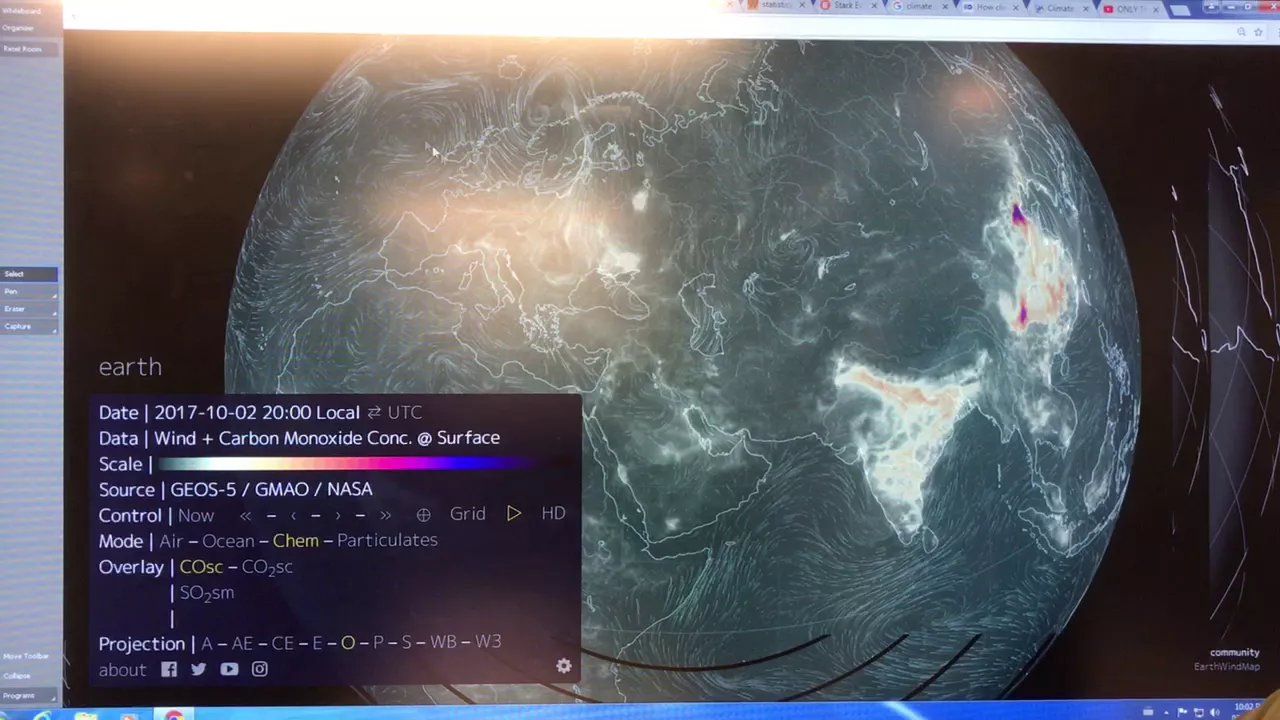
Wildfires produce a significant amount of carbon monoxide, which is an odless, colorless gas that can be dangerous in enclosed spaces.
But in the open atmosphere, carbon monoxide from wildfires is relatively quickly converted to carbon dioxide through atmospheric chemistry.
This conversion involves the same hydroxal radicals that play a key role in many atmospheric cleaning processes.
The atmosphere has its own capacity to process and neutralize what is put into it. That capacity is not unlimited and it can be overwhelmed but it exists.
The air like the soil has its own kind of resilience.
Fire affects the reflectivity of the earth's surface. in ways that ripple through the climate system.
When a forest burns and is replaced for a time by light colored ash and bare soil, the land reflects more sunlight back into space, which has a cooling effect.
But soot and black carbon deposited on snow fields and glacias by smoke from wildfires does the opposite. It absorbs sunlight and accelerates melting.
Fire's influence on the climate.
Operates through many different pathways simultaneously.
Some warming, some cooling, all of them interacting.
The system is complicated and beautiful and still being studied with enormous care by people who spend their lives looking at it.
Fire lookout towers that still stand and there are many of them preserved as historic sites across North America and elsewhere often have a particular kind of stillness about them.
You climb to the cab at the top and the world spreads out in every direction, forest and mountain and sky.
A 360° view of the landscape at once.
The people who spent their summers in these towers often described the experience as one of the most clarifying of their lives.
Not because there was much happening, but because they had nowhere to go and nothing to do except pay attention.
And in paying attention, they began to understand the land below them in a way that no map could teach.
The recovery of animal populations after a wildfire often follows a predictable sequence.
First come the insects within days or weeks.
Then the scavengers, ravens, coyotes, bears drawn by the animals that did not survive the fire.
Then the granaves, birds, and small mammals that eat seeds and begin dispersing them across the burned landscape.
Then the grazers following the new growth, then slowly the predators following the prey.
The sequence is not perfectly consistent and it varies greatly by ecosystem and fire severity, but there is a general tide of life returning that follows every fire.
Steady, inevitable, patient.
Certain types of bark beetles are drawn to fire damaged trees.
These insects detect volatile compounds released by heatstressed and fire injured trees and use these signals to locate suitable hosts.
In some ways, this can make postfire landscapes more susceptible to bark beetle outbreaks, which can kill additional trees that survived the fire itself.
But in another sense, this is simply the continuation of the process.
The trees that were weakened but not killed by fire, becoming food and habitat for a new community of insects, which will in turn become food for the birds that follow.
Each stage enabling the next.
The ash from a wildfire is not all the same.
Light white ash is typically produced by complete combustion of materials like grasses and fine fuels.
Dark gray or black ash often indicates incomplete combustion and contains more carbon.
The depth of ash after a fire can range from a thin layer in a gentle surface fire to several inches deep after a very hot slowmoving fire.
And in the rain that follows a fire, ash forms a dark paste that seals the soil surface temporarily, further affecting how water moves across the landscape.
The aftermath of fire is its own kind of landscape with its own conditions and its own logic.
There is beauty in ash that is not easy to explain.
The way it settles so lightly, the way it holds the shape of what it was for a brief time before collapsing.
A burned leaf becomes a ghost of a leaf in ash, perfectly shaped, weightless, there for a moment and then gone at the first breath of wind.
Ash is what remains when everything volatile has left the minerals, the skeleton of the chemistry.
Everything that could change changed.
And what is left is the simplest, most essential thing.
Scientists who study fire history from ice cores, those long cylinders of ancient ice drilled from glacias and polar ice sheets, can find evidence of major wildfire events going back hundreds of thousands of years.
Soot and charcoal particles from ancient fires are preserved in the ice exactly as they fell in the long ago snow.
Each layer of ice is a year. And in some of those years, there is more fire residue than others.
Periods of drought, periods of warming, periods when the planet burned.
recorded in frozen water, patiently waiting for the core drill and the careful scientist to find it and read it.
The concept of ecological memory is closely related to fire.
Ecological memory refers to the way a landscape retains in its soil and its seeds and its surviving organisms a record of what it was before which shapes what it can become next.
A forest that has burned before has seeds in its soil, roots below the surface. Soil communities adapted to postfire conditions.
a kind of readiness.
A forest that has never burned, may have lost over centuries without fire much of the ecological memory that would help it recover if fire came now.
The land remembers not the way we remember in words and images but in seeds in fungi in the chemistry of the soil.
The practice of cultural burning is being revived in many parts of the world as a collaboration between indigenous knowledge holders and contemporary land managers.
In Australia, Aboriginal fire practitioners are working alongside state fire services to reintroduce gentle, frequent burning in areas that have been managed without fire for generations.
The results are often striking.
Vegetation that had become dangerously dry and overgrown is replaced by more diverse, more open, more fireresistant plant communities.
Wildlife that had disappeared from managed areas begins to return.
And there is something deeply meaningful about watching knowledge that was suppressed or dismissed for generations being recognized again for what it always was.
Wisdom about how to live well with this land.
Wildfire photography has its own particular challenges.
The smoke reduces visibility.
The light shifts unpredictably.
The heat can damage equipment.
And the situation is, by definition, rapidly changing.
Some of the most haunting photographs ever taken in wildfire country. Show ordinary familiar things. In the context of fire, a mailbox standing alone in a field of ash.
A child's bicycle against a burned fence. A deer standing calmly at the edge of a burn looking at the camera.
These images carry something that dramatic fire photographs often do not.
The texture of ordinary life, meeting something very large and very old.
The reintroduction of wolves to Yellowstone National Park in 1995 is often cited as an example of a trophic cascade where one species changes an entire ecosystem.
What is less often discussed is how fire played a role in the same story.
After decades of fire suppression in Yellowstone, large areas of the park had become densely forested with aging lodgepole pines.
The massive fires of 1988, which burned a significant portion of the park, were partly a consequence of that accumulation.
And after those fires, the landscape was dramatically altered. More diverse, more open, more habitat for elk and beaver and the wolves that followed.
The fire and the wolves and the elk and the rivers are all part of the same long conversation about what Yellowstone wants to be.
Wildfires in grassland ecosystems can move at extraordinary speed.
Grass fires in flat, dry, windy conditions have been recorded moving at speeds faster than a person can run.
The great plains of North America, the pampus of South America, the steps of Central Asia, the savas of Africa.
All of these grasslands have a long history of fastm moving fire.
And the grasses have evolved accordingly.
Grassland plants store most of their living tissue underground in roots and ryomes.
out of the fire's reach.
A fire that burns through a grassland in an afternoon may kill almost nothing below the surface.
And within days of rain, the green shoots begin pushing upward again, fresh and vigorous, as though the fire had simply reset the clock.
The light of a wildfire at night is something that people who have seen it rarely forget.
From a great distance, a large wildfire at night glows on the horizon.
Like a sunset that will not end, orange and amber and deep red, sometimes with tall, bright columns, where the fire is most intense. Closer.
The individual flames are visible, leaping and falling and shifting.
The darkness around them absolute.
The oldest human beings sat around fire at night, watching it, letting it comfort them and warm them and keep the dark at bay.
Something in us still responds to fire the way they did with watchfulness with something almost like relief.
There is a term used by fire managers values at risk.
It refers to the things that a fire could potentially damage or destroy in a given area. homes, timber resources, water supplies, infrastructure, and habitat.
The term is a useful one because it shifts the question from simply how big is the fire to what does this fire threaten?
And that is a question that depends not just on the fire, but on what is in its path.
The same fire burning through empty wilderness is a very different event from the same fire burning toward a town.
The fire itself does not know the difference.
That is for us to understand and prepare for.
The concept of fire adapted communities refers to places where the residents, the local government and the land managers all understand fire risk and have taken steps together to reduce it.
A fire adapted community does not expect to be protected from fire entirely.
It expects to survive fire because it has made itself as ready as possible.
Emergency plans are in place.
Evacuation routes are known. Homes have been hardened. The vegetation near structures has been managed.
And crucially, the people know each other. They have talked about fire and thought about fire and made decisions together about how to live with it.
A wildfire can fundamentally change the hydrarology of a watershed, the way water moves through a landscape for many years after it has passed.
The most dramatic of these changes is the postfire flood risk. But there are subtler changes, too.
Streams that ran clear before a fire may carry elevated levels of sediment and nutrients for years afterward.
Springs that flowed reliably may change their timing or their volume.
The whole relationship between the land and water shifts in the aftermath of fire.
It is not a permanent shift. The land reestablishes its relationship with water as vegetation returns, but the transition period, those years of rebuilding, require patience and attention.
The word for fire in Japanese is hi.
In Mandarin, it is huo. In Hawaiian, ai.
In Sanskrit, Agny.
Agny was also a god in ancient Vadic tradition.
The divine fire, the messenger between the human world and the divine, carrying sacrifices upward in its smoke.
In Norse mythology, fire plays a role in the beginning and the end of all things.
In ancient Greek thought, fire was one of the four fundamental elements, the active and transforming force. Among the four, every culture that has ever lived beside fire has made stories about it, has named it, has tried to understand it, has tried to live alongside it without being consumed.
Prometheus in Greek mythology stole fire from the gods and gave it to humanity.
He was punished for this eternally in a way that was gruesome and unending.
The myth is usually read as a story about human ambition and divine punishment.
But it can also be read as something quieter.
A story about how transformative fire is. How much it changes those who have it.
So much so that it required a god's theft to give it to us.
As though fire were not something to be found, but something to be earned.
Or perhaps something that carries its own cost. wherever it goes.
The relationship between fire and human health is complex and worth sitting with.
On one hand, the use of fire for cooking made food more digestible and may have driven significant changes in human evolution.
On the other, the smoke from wildfire is a significant and growing health concern associated with respiratory and cardiovascular problems across wide populations.
Communities downwind of large wildfires see measurable increases in hospital visits, particularly for asthma, heart conditions, and other smoke related illnesses.
Children and elderly people are particularly vulnerable.
The same element that shaped human health over millions of years now threatens it in different ways in a different world.
Research has shown that the mental health effects of wildfire extend far beyond the immediate event.
People who have lost homes or communities to wildfire can experience post-traumatic stress, anxiety, and depression for years afterward.
Even people who did not lose property but lived through a major evacuation or watched fire burn near their community can carry lasting psychological effects.
Grief over the loss of a beloved landscape, the forest, the trees, the familiar places is real and significant even when no physical possessions were lost.
We are attached to the land around us in ways that run very deep. And when that land changes suddenly, we feel it somewhere that is hard to name.
And yet people return to the landscapes that burned to the places that were changed.
They come back and they walk through the ash and they look for what remains.
They plant seeds.
They rebuild.
They sit on a hillside and watch the green come back and feel something complicated and real that is not quite sadness and not quite relief but something between.
Gratitude maybe or just presence.
The quiet experience of being here now in a changed place still alive.
Trees that survive a fire can come to be known as witness trees.
They stand in a changed landscape and carry in their rings and their scars the record of what happened.
Some witness trees have been used by researchers to understand not just one fire but the entire fire history of a region.
And some of them have become simply beloved known by name, visited, appreciated as survivors.
There is something deeply moving about a tree that has outlasted many fires that stands in the present day wearing the marks of the past simply continuing.
Some researchers believe that fire played a role in the evolution of bipedalism, the upright walking that distinguishes our lineage from other great apes.
The argument is not simple and the evidence is not conclusive.
But the general idea is that the fire maintained grasslands of early Africa kept open by regular burning may have been a key environment for the evolution of walking upright.
Open grassland favors bipedalism.
Open grassland is maintained in part by fire.
If that chain is right, then fire did not just warm us and cook our food. It may have shaped the very body we use to stand and walk and breathe.
The global wildfire community, the researchers, the managers, the firefighters, the indigenous practitioners shares knowledge across borders in ways that are quietly remarkable.
A prescribed fire technique developed in Australia is studied by practitioners in California.
Fire behavior modeling developed in Canada is applied in South Africa.
A cultural burning practice from one indigenous community inspires conversations in a community on a different continent.
The fire connects people who have never met and may never meet. bound by the same ancient problem and the same patient search for ways to live alongside it.
There is a type of ecological restoration sometimes called py restoration which uses fire as the primary tool to restore degraded ecosystems.
Areas that have been invaded by non-native plants or that have lost their natural fire cycles can sometimes be restored to a more functional state through careful repeated burning combined with other interventions.
It is slow work. It requires patience and a tolerance for uncertainty.
And it requires a belief that the land given a chance knows how to recover, which is perhaps a kind of faith, a quiet scientific faith in the resilience of living systems.
When fire scientists talk about extreme fire behavior, they use terms that carry a kind of quiet weight.
Blow up, flashover, firestorm.
These are not just dramatic words. They describe real phenomena, specific escalations in fire behavior that can transform a manageable situation into something that outpaces every response.
A blowup is a sudden dramatic intensification and spread of fire typically driven by a change in wind or topography.
A firestorm is a fire of such intensity that it creates its own weather, its own winds, its own dynamics that are no longer governed by the surrounding atmosphere, but by the fire itself.
These events are rare, but they are not impossible.
And the people who work near fire are always aware of the line between what is manageable and what is not.
There is a study that compared the fire histories of two forests.
One that had been managed with frequent lowintensity fire and one that had been suppressed for the same length of time.
After a severe wildfire event burned through both, the managed forest recovered significantly faster.
The soil community was more intact.
The seedbank was richer. The plant community returned to something close to its pre-fire state within a few years.
The suppressed forest took much longer and in some areas it did not return to its original composition at all.
What we do before the fire shapes what comes after it. Patience applied now becomes resilience later.
Fire spreads differently through standing dead wood than through living trees.
A forest with a large proportion of dead standing trees, snags killed by drought or beetle infestation, can burn with extraordinary intensity.
When fire arrives, the dead wood is dry. It offers no resistance.
It burns completely and fast.
This is one of the ways that drought and beetle outbreaks and fire interact with each other. In a cascade, drought weakens trees. Beetles kill them. The dead trees dry further. And when fire comes, it burns hotter than it would have in a healthy forest.
Each element in the chain sets the stage for the next. The land is never just one thing happening. It is always many things in sequence together.
The role of humidity in fire behavior is subtle but profound.
On a day with high relative humidity, even dry fuels can absorb moisture from the air, raising their moisture content slightly and making them harder to ignite.
At night, as temperatures drop and humidity rises, wildfires often slow down and become easier to work around.
This is why so much of the physical work of wildfire containment happens at night when the fire is calmer and the air is cooler.
And then the morning comes, the sun rises, the temperature climbs, the humidity falls, and the fire wakes up again.
It has its own kind of rhythm. as predictable as a tide, calming at night and intensifying by afternoon.
There is a layer in the atmosphere called the mixing layer or the planetary boundary layer, which is the zone closest to the Earth's surface, where the air is well mixed by turbulence and convection.
During the day, when the sun heats the surface, this layer can extend thousands of meters upward.
At night, it collapses to just a few hundred m.
Wildfire smoke that disperses broadly through the daytime atmosphere can become concentrated in a thin layer near the surface after dark, trapping smoke and degrading air quality overnight in areas downwind.
People living near wildfire regions often notice that the smoke seems worst in the early morning before the mixing layer deepens again with the day's heat.
The atmosphere breathes and fire smoke follows. That breathing concentrated and dispersed by the rhythm of day and night.
Animals that burrow underground, ground squirrels, badgers, gophers, moles, and many others, have an advantage in wildfire survival that is easy to overlook.
Their burrows can extend well below the zone of lethal heat, even in a hot surface fire.
Burrows also trap air and provide a buffer of still, cool space.
Many small mammals simply hunker down in their burrows as a fire passes overhead, emerging afterward into a changed and quieter landscape, but very much alive.
The underground world is often the one that endures.
Below the surface, life tends to be slower and safer and more patient than anything above.
Smoke columns from large wildfires can be used to estimate fire intensity.
A fire producing a towering, rapidly rising column of white or gray smoke is often burning with great energy and releasing enormous heat.
A fire producing a low, dark, spreading plume, maybe burning more slowly, but producing denser smoke particles.
Experienced fire observers can read these columns the way a sailor reads clouds, drawing inferences about what is happening at the fire's heart from what the smoke is doing miles above.
It is a kind of reading that takes years to learn and cannot quite be reduced to rules.
The kind of knowing that lives in the body as much as the mind.
Nightflying insects are sometimes disoriented by the glow of a wildfire.
Moths and other creatures that use moonlight or starlight for navigation can be drawn toward the intense light of a fire, sometimes fatally.
But other insects are repelled by fire and move away quickly when smoke or heat arrives.
The insect community's response to a wildfire is complex and varied with different species moving in very different directions, creating a kind of ecological sorting as the fire reorganizes the landscape.
What is lethal to one species is opportunity for another. The fire does not destroy the insect community.
It shuffles it.
And the new arrangement is different from the old one, but not necessarily poorer.
A fire moving through old growth forest behaves very differently from a fire moving through a plantation of young trees.
Old growth forest has a complex structure, tall trees with high canopies, a well-developed understory, deep accumulations of organic matter on the ground.
It can be damp and shaded at the ground level, even during a dry summer.
A young plantation, by contrast, often consists of densely packed trees of similar size with little diversity and a dry, reinous litter layer.
When fire enters a young plantation under dry, windy conditions, it can crown quickly and burn with great intensity.
The age of a forest is not just a measure of time. It is a measure of complexity, of accumulated relationship, of resilience built layer by layer over decades.
The sounds of a recovering postfire landscape are among the most quietly hopeful sounds in the natural world.
Bird song returning to a burned forest several weeks after a fire is often sparse and tentative at first. A single species calling, then another answering.
By the second spring, the sound has filled in considerably.
Insects have returned, and the birds that feed on them have followed.
The burned forest is not silent.
It is just learning a new language, finding a new version of itself, saying something it has been saying in different forms for millions of years.
There are researchers who study the gut microbiomes of animals before and after wildfire events to understand how fire affects the health of wildlife populations.
The food available to an animal changes dramatically after a fire and with it the composition of the microorganisms living in the animals digestive system.
A deer feeding on nutritious postfire regrowth may have a very different gut community from one foraging in a dense mature forest.
These changes in gut microbiome affect how efficiently the animal extracts nutrients, how its immune system functions, and potentially its overall health and reproduction.
Fire ripples through every level of the biological system all the way down to the microscopic communities living inside the animals that eat the plants that grow in the ash.
When we talk about a fire being contained, what we really mean is that a line has been established around it.
That the fire is unlikely to cross, not that the fire has been put out.
Often a contained fire is still burning freely within the containment perimeter, still consuming fuel, still producing smoke.
It is just bounded enclosed within the space where it has already burned or the space where it has been allowed to continue.
Containment is not extinction.
It is more like a negotiation, an agreement, fragile and temporary between human effort and the fire's own direction.
The idea of a fire as something alive is not scientific, but it is not entirely without reason.
A fire takes in resources from its environment.
It grows, it moves, it responds to changes in its surroundings.
It produces outputs.
It competes for resources.
and it dies when those resources are gone.
Scientists are careful to distinguish fire from life and rightly so.
Fire is a chemical process, not an organism.
It has no cells, no DNA, no evolutionary history.
And yet, and yet something about fire resists being described as merely mechanical.
Perhaps because it moves.
Perhaps because it responds.
Perhaps because it, like us, is temporary, made possible by conditions that will not always be present.
The ashes of ancient forests are part of the soil beneath your feet.
Not metaphorically, literally.
The carbon in the soil of many forests includes charcoal from fires that burned before any living person was born, before their grandparents were born, before the country they live in existed.
The ground we walk on is layered with the past, with the compressed and quiet history of every fire, every growing season, every falling leaf, every dying root that has come before.
We walk on accumulation.
We walk on time.
Fire has a way of making the present very clear.
People who have been through a wildfire evacuation often describe the experience of leaving their home not knowing if it will be there when they return as one of the most clarifying of their lives.
You discover what you actually need, what you actually value, what you would carry, and what you would leave behind.
documents and medicines, the photos, sometimes the pets, and then you go and you find out afterward what the fire took and what it left.
And in many cases, what it left is everything that actually matters.
the people, the relationships, the capacity to begin again.
The relationship between climate, drought, and wildfire is one of the most actively researched areas in environmental science.
Scientists use models that combine atmospheric data, vegetation data, and historical fire records to project how fire risk may change across different regions as temperatures rise.
These projections are not alarmist inventions.
They are careful estimates based on what we already know about how temperature and fuel moisture and fire behavior interact.
And what they consistently suggest is that in many parts of the world, fire seasons will continue to grow longer and fire risk will continue to intensify.
That is not a reason for despair.
It is a reason for preparation, for attention, for the kind of long, patient, honest conversation about how we want to live in a world where fire is not going away.
And there is hope in that conversation.
There is hope in the return of cultural burning practices.
There is hope in the research being done by fire ecologists around the world.
There is hope in communities that have chosen to prepare rather than simply fear.
There is hope in every seed that waited in the soil and then germinated in the ash.
In every tree that regrrew from its roots. In every forest that returned to something beautiful decades after it burned.
The land has been coming back from fire for 400 million years.
It is very good at it. It does not panic. It does not grieve in the way we do.
It simply continues, "There is a quality in burned wood, in charcoal that has made it useful to human beings for a very long time.
Charcoal burns hotter and cleaner than raw wood. It was essential for smelting metal, which made the Bronze Age and the Iron Age possible.
The forests of Europe were significantly diminished over many centuries by the demand for charcoal to fuel the furnaces that produced metal tools and weapons.
Charcoal is also an ancient writing material.
The oldest cave paintings in the world were made with charcoal pressed against stone walls in the light of fire. tens of thousands of years ago.
Fire recorded in art made by firelight.
The oldest human creativity and the oldest human technology bound together in the same dark material.
When you breathe in tonight, you are breathing oxygen that plants produced.
When you breathe out, you are releasing carbon dioxide that those same plants will use tomorrow.
You are part of a cycle that fire is also part of.
Fire releases stored carbon. Plants capture it again. You breathe it in and out. The ocean absorbs it. The rocks hold it for millions of years.
Everything is in motion. Nothing is lost, just transformed, changed from one form to another over and over in an ongoing rearrangement, so vast and so slow that we cannot see the whole of it, only our small part.
There is something quietly humbling about that.
The realization that the carbon atoms in your body right now have been through fire, have been in trees, have been in the ocean, have been in a dinosaur or a fern from the Carboniferous period or a cloud of gas in the early solar system.
You are not separate from the world's chemistry.
You are made of it. You are a temporary arrangement of ancient matter. And the fire that burns in the forest far from here is rearranging matter. In the same way, just faster and more visible.
The same process, the same enduring patient cycle.
As you lie here now in the quiet of wherever you are, the world is burning somewhere.
A small fire in a Siberian forest, deep in a landscape no one is watching.
A controlled burn in an Australian valley set by people who know this land well.
A fire in a California hillside tended by crews in the dark.
Somewhere a seed buried in warm ash is beginning to stir.
Somewhere a burned eucalyptus is pushing the first green thread out of its blackened trunk.
Somewhere a forest that burned a 100 years ago is tall and old and quiet again, holding in its soil the charcoal of that long ago fire.
still dark, still patient, still there.
Fire is not our enemy.
It is not our friend.
It is something older and more elemental than either of those ideas.
It is a process, a transformation, a way that the world reorganizes itself.
And we, small and brief as we are, have been part of that reorganization from almost the very beginning.
We have warmed ourselves by fire. We have cooked by it. We have shaped landscapes with it. We have been shaped by it.
And we have burned and watched the burning and come back to what was left, which is what living things do, which is what the land does, which is perhaps what we are here to learn to do.
Let these thoughts settle now like ash on still air.
You do not need to hold them all.
You do not need to remember anything.
Just let them drift through the soft and quiet space of your mind and then be still.
The fire is very far away tonight and you are here safe, breathing, warm.
The oldest comfort, the oldest peace, a living body at rest in the dark.
Let your breath go slow now.
Let the words dissolve into something softer than meaning.
The world is turning very gently beneath you.
The sky above is deep and still.
And somewhere in a burned forest far from here, beneath the ash and the quiet, a seed is sleeping, waiting for exactly the right moment to begin.
And so are you.
Let your eyes stay closed.
Let the thoughts fade.
Let the warmth of the blanket, the weight of your body, the soft sound of your breath be everything you need to know right now.
You are here. You are safe. You are resting.
And the night is long and quiet and meant entirely for you.
Sleep.
Up Next

10:05
Fire Behavior Fuel Models Explained: The 13 & 40 Systems
@WorldofWildlandFire
35.5K views•2017-12-08

12:54
Triumph of Orthodoxy Icon: Byzantine Art & History Explained
@BenCallan
2.1K views•2024-08-06

9:49
FastAPI vs Flask vs Django: Choosing the Right Python Web Framework
@TechWithTim
302.5K views•2024-05-26

1:42
Game of Thrones Opening Credits: A Cinematic Analysis
@gameofthrones
46.3M views•2011-04-18
Related Study Plans & Knowledge Roadmaps
Structured learning paths in General & Interdisciplinary Studies
general-studies
Elevator Engineering: History, Physics & Cities
01From Hoists to Safety Brakes: The Dawn of Vertical Lift
02Hydraulic vs. Traction: The Engineering Physics of Elevators
03Modern Speed, Safety, and Algorithms
+ 2 more learning modules
12h5 modules
Explore Roadmap
general-studies
Rubber: Material Science, History & Geopolitics
01Origins of Natural Rubber & Mesoamerican History
02The Chemistry of Natural Rubber & Vulcanization
03The Geopolitics of the Rubber Boom & Colonization
+ 2 more learning modules
12h5 modules
Explore Roadmap
general-studies
Containerization: Evolution, Logistics & Trade
01Ancient Trade & Bulk Cargo: Amphorae to Barrels
02The Industrial Revolution & Cardboard Packaging
03The Containerization Revolution: Malcom McLean
+ 2 more learning modules
12h5 modules
Explore Roadmap
general-studies
Textile Tech: Evolution, Labor & Global Impact
01Pre-Industrial Textiles: Handloom & Cottage Industry
02Mechanization: The Spinning Jenny to the Power Loom
03The Factory System & Global Labor Transformation
+ 2 more learning modules
10h5 modules
Explore Roadmap