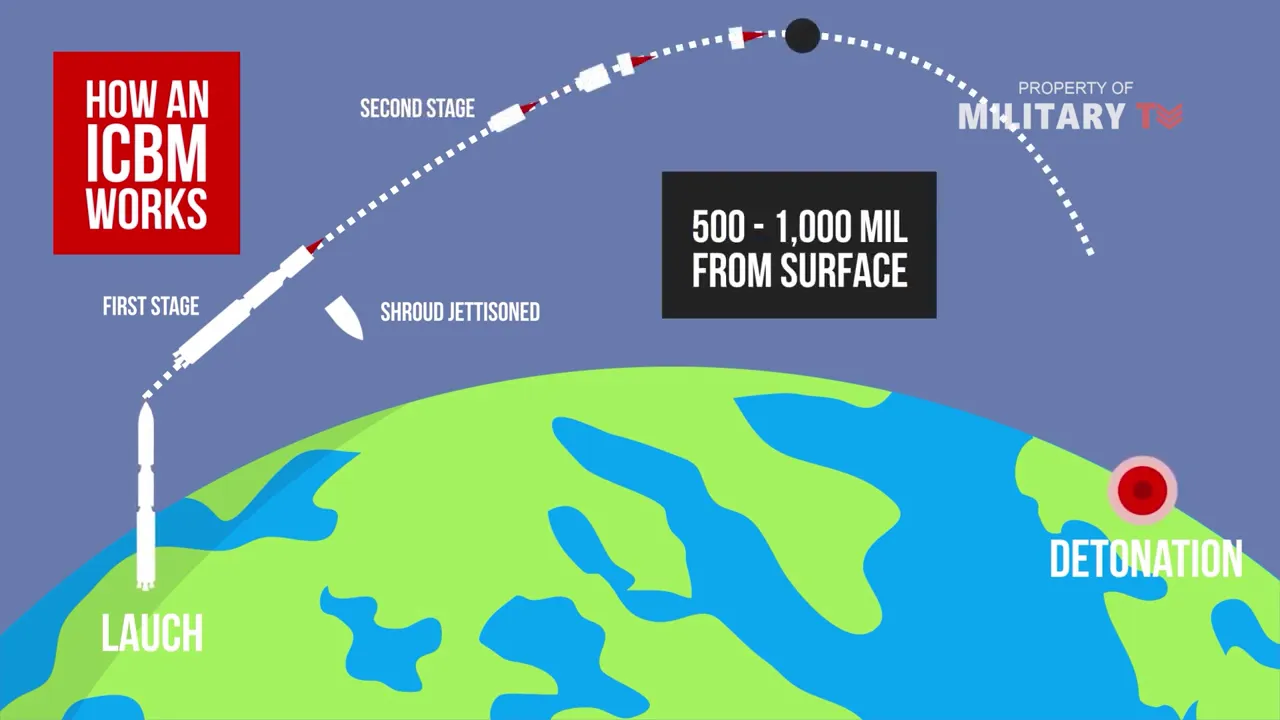


























The Nike Zeus was America's first anti-missile missile system developed during the Cold War to intercept and destroy incoming intercontinental ballistic missiles (ICBMs), representing a significant advancement in missile defense technology that evolved from earlier Nike Ajax and Nike Hercules systems; the project demonstrated how industry-academia-government partnerships drove technological innovation, with Bell Laboratories providing technical direction and Western Electric serving as prime contractor, ultimately developing sophisticated ground-based command guidance systems capable of detecting, tracking, and intercepting enemy missiles traveling at speeds of 15,000 miles per hour.
AT&T Archives: Nike Zeus Anti-Missile System (1961)
Added:The geopolitical context of the early Cold War, specifically the nuclear arms race and the threat of Intercontinental Ballistic Missiles (ICBMs).
Basic principles of radar technology, including target detection, tracking, and the concept of radio wave reflection.
The role of Bell Laboratories as a premier 20th-century industrial research and development institution working on government contracts.
Fundamental concepts of early missile guidance systems, including command guidance and real-time trajectory calculations using analog and early digital computers.
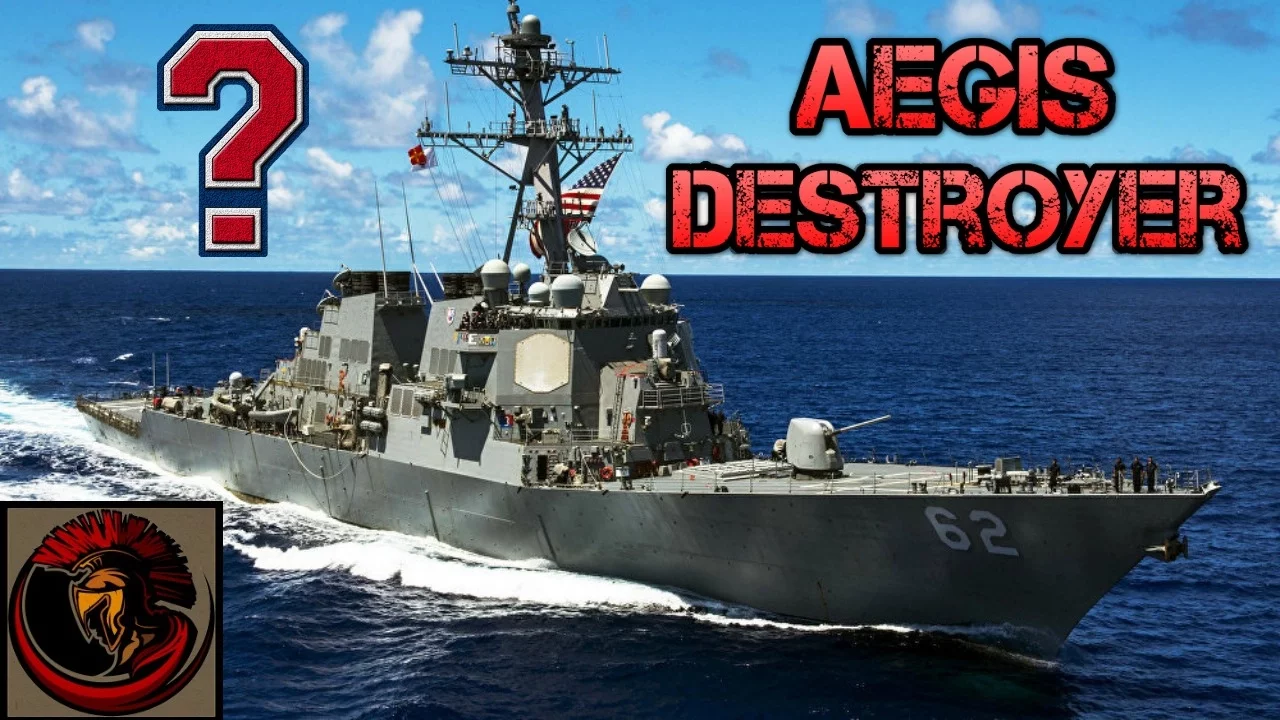
The evolution of U.S. missile defense programs from Nike Zeus to Nike-X, Safeguard, and modern systems like THAAD and Aegis.
The strategic implications of anti-ballistic missile (ABM) systems on international relations, leading to the ABM Treaty of 1972 and the doctrine of Mutually Assured Destruction (MAD).
The transition from mechanical radar systems to phased-array radars and space-based infrared detection systems.
The engineering challenges posed by modern counter-measures, such as Multiple Independently Targetable Reentry Vehicles (MIRVs) and decoy systems.
91.3K views987likes15:25Original Release: 2011-07-15
[Music] America's defense is on land on sea and in the air but its greatest threat is from space the intercontinental ballistic missile traveling above the atmosphere at speed of almost 5 Ms destined for a Target within our borders the danger is great but we need not be helpless against it its approach can be detected and tracked a killer missile is being developed to intercept and destroy it far from its intended target for this killer missile the US Army looks to its Nike Zeus [Applause] [Music] [Applause] recent history attests to the age-old military principal that for every new offensive weapon there can be a defense in June 1944 the V1 launched toward Targets in Holland and England was a frightening development in the war a flying bomb carrying 1,000 lb of explosive capable of vast destruction it was a trump card held by the Germans and it was played in Earnest then Allied Fighters and aircraft batteries began to play a trump card of their own guiding the 90mm guns was the Army's new electronic fire control system based on new principles it provided Target data for the guns electronically rapidly Computing wind velocity of the V1 and many other factors computers did the brain work with experience the score of hits began to rise what for a while appeared to be an overwhelming threat was in this case almost entirely nullified this very weapon system was based on principles that in our time have led to the development of America's first anti-aircraft guided missiles the Nike family Ajax for defense against conventional types of [Music] aircraft then to meet crater demands against supersonic jet aircraft Nike Hercules and now in the space age the Army's answer to the threat of the ICBM Nike Zeus upon which so much of our future security may depend whose potential capabilities challenge the imagination and which would not be possible without the high plateaus of knowledge and experience reached in developing its [Music] forerunners technical direction for this program was assigned by Army Ordinance Missile Command to the Army rocket and guided missile agency At Redstone Arsenal Alabama for the basic system Concept in the Nike program the Army turned to Bell Laboratories where achievement has come through continuity of effort and an attitude of vigorous inquiry here it is traditional to to discover possibilities where none seem to exist probing off the Beaten Track finding an answer in the darkness this is the routine that has created Nike time to think and to try lead time you cannot suddenly buy the long period of research that must precede final production Nike Zeus is evolving out of experience over the past 15 years its Story begins in 1945 when Army Ordinance asked the team of Western Electric Bell Laboratories and Douglas aircraft to explore the possibilities of an anti-aircraft defense weapon capable of attacking high-speed highly maneuverable bombers in designing the ajac system a principal was employed which was to greatly affect the design of Hercules and Zeus all three missile systems have their electronic brains on the ground rather than in the missile after a missile is fired the expensive Machinery of guidance remains intact ready to be utilized for subsequent firings early in 1952 Ajax armed for the first time with a warhead was fired an extremely complex problem in Applied Physics was put to the test and solved the same team was called upon to produce Hercules to have a range three times greater than Ajax and the ability to carry a nuclear warhead now radar had to be more powerful for the longer range of the missile in a sense our scientists were beginning to stretch muscles that were to be needed for Nike Zeus the Army rocket and guided missile agency had asked for a missile of Greater speed range and explosive punch Hercules was the answer this system has intercepted targets traveling faster than 2,000 mph and balloon targets at altitudes of more than 150,000 ft today Hercules and Ajax are proven weapons guarding our City's homes and factories America's steady growth of experience in the command guidance systems developed for these missiles has been essential and preparing us for a new challenge an anti-missile system for the space AIDS here is the concept of Nike Zeus much of it is now a reality the Army industry team developing Zeus is driving toward its complete realization far outside the atmosphere radar beams endlessly sweeping the the skies detect the oncoming missile information flashes to a defense center and then to a Precision radar assigned to track the target when the enemy Warhead is within range Zeus is automatically fired the booster drops away a missile track radar guides Nike Zeus toward its Target the sustainer motor is released the final stage with its deadly Warhead can be steered by a vectoring motor when Zeus reaches the target it will be death ated far enough away from the defended area to save it from damage as missile technology advances a warhead hidden in a cluster of decoys to confuse our Radars becomes possible for this eventuality High Precision ground equipment is being developed which will discriminate between decoys and real targets the system is being designed to fire missiles against multiple targets the Zeus development project is a Countrywide effort under the Army rocket and guided missile agency Bel telephone Laboratories with the Western Electric company and the Douglas Aircraft company is directing the efforts of 17 major subcontractors 81 other subcontractors and hundreds of small businesses early in the development program an engineering cons cep review brought together the many agencies concerned with training Logistics development and production bringing to Bear years of experience assuring that Niki Zeus would be combat ready at the earliest possible date Zeus is now far more than a theory today in its research and development stage the facilities and production methods of American industry are being actively employed Western Electric is the prime contractor in its North Carolina plants it is fabricating intricate computers and many other electronic system elements the target intercept computer is the responsibility of Remington Rand univac as an example of participation several major contractors are working on the target track radar the antenna mount here is being assembled at Coffeeville Kansas by Continental C the large weldments by Alice Chas in Milwaukee the Vickers Company in Detroit is producing the hydraulic drives and narmco in lame Mesa California is designing and fabricating the reflector assemblies the combined efforts of these many companies is directed toward completing a fullscale Zeus test installation at wh Sands Missile Range here terrain facilities and personnel have already made possible the thorough evaluation of the two other members of the Nike family site construction is under the core of [Music] engineers Burns and row of New York City are the architect Engineers for the missile track Radars to be installed here the steel products engineering company is fabricating antenna mounts Goodyear aircraft has developed and constructed the acquisition radar antennas for the transmitter as well as the receiver Continental Electronics of Dallas is designing the transmitter for tactical use this transmitter generates the high powerered pulses which are reflected by objects in space to the receiving antenna this early design stands some 8 stories high the lens under this Rome is composed of polystyrene foam blocks these blocks have been developed and produced by Dow Chemical and Armstrong cork as well as goodear the antenna utilizes the lunberg lens principle to acquire signals from smaller objects and cover wider areas than previously possible for the Target track radar the sper gyroscope company is developing the high power transmitter and under a signal core contract the KRON 2 while work for Pro seeds on the groundbased electronic system a missile test firing program is already underway a booster being developed by thol arrives from Huntsville Alabama for a schedule firing in another Bay the final stage which will include a stable platform by Lear Incorporated is checked the sustain a motor by Grand Central rocket company will carry this final thrust vectoring stage to the outer limits of the Earth's atmosphere the booster generates almost a half million pounds of thrust the greatest single solid propellant motor yet developed in the Free World sustainer and final stage checked out of the assembly area are on their way to the launch [Music] site the test day has arrived the tests about to be performed on this early configuration will answer numerous questions on aerodynamic characteristics of the missile on the ability of the missile to withstand the intense heat generated by the extreme speed of Zeus and on underground launching equipment for development tests of the missile to extreme ranges Nike Zeus will be be fired out over the Pacific Ocean from this launcher site extra atmospheric tests of the thrust vectoring final stage will also be conducted here studies and tests of the Zeus system will be carried out over increasingly longer distances on the Atlantic range ballistic missiles fired from Cape Canaveral will provide an opportunity to test the target track radar and discrimination equipment installed on Ascension Island at quadulan ATL in the Central Pacific construction for an entire Zeus test system is well underway this system will be tested against Atlas icbms fired from Vandenberg Air Force Base in California integrating Nik isus with other elements in the defense complex is part of our defense planning which ensures the one step ahead concept again Zeus is our country's only anti-missile missile system under development today being made a reality moving ever forward in development to meet the challenge oh [Music]
Up Next

4:44
Planetary Gears Explained: How They Work and Their Benefits
@logiclab7
61.5K views•2023-03-01

30:21
Damped Free Vibration of Structures: Viscous Damping Theory
@IITKanpurNPTEL
23.4K views•2019-08-26

54:16
Polymer Environmental Degradation: Mechanisms & Stabilization
@iit
1.8K views•2012-07-10
33:39
How a Student's Question Saved a NYC Skyscraper from Collapse
@veritasium
22.8M views•2025-04-26
Related Study Plans & Knowledge Roadmaps
Structured learning paths in Engineering
engineering
Structural Dynamics (DIY TMDs & Shake Tables)
01Foundations of Structural Dynamics & Resonance
02Designing and Building a Motorized Shake Table
03Constructing the Scale Building & Tuned Mass Damper
+ 2 more learning modules
35h5 modules
Explore Roadmap
engineering
Building Acoustic Levitators: Physics & Arduino
01The Physics of Sound and Standing Waves
02Piezoelectric Transducers and H-Bridge Drivers
03Arduino Programming: Generating 40 kHz Signals
+ 2 more learning modules
14h5 modules
Explore Roadmap
engineering
Building Peltier Cloud Chambers: Particle Tracks
01Cosmic Rays & Cloud Chamber Physics
02Thermoelectric Cooling (TEC) Fundamentals
03Custom Liquid-Cooling Loop Design
+ 2 more learning modules
18h5 modules
Explore Roadmap
engineering
Yagi-Uda Antennas: Modeling, Build & VNA Test
01Introduction to RF and Antenna Fundamentals
02Yagi-Uda Antenna Design Principles
03Antenna Modeling and Simulation in 4NEC2
+ 2 more learning modules
18h5 modules
Explore Roadmap