





![(화질 개선) [자막]전기기기 38강 158~161P](https://i.ytimg.com/vi_webp/QD88A4Clf34/maxresdefault.webp)

















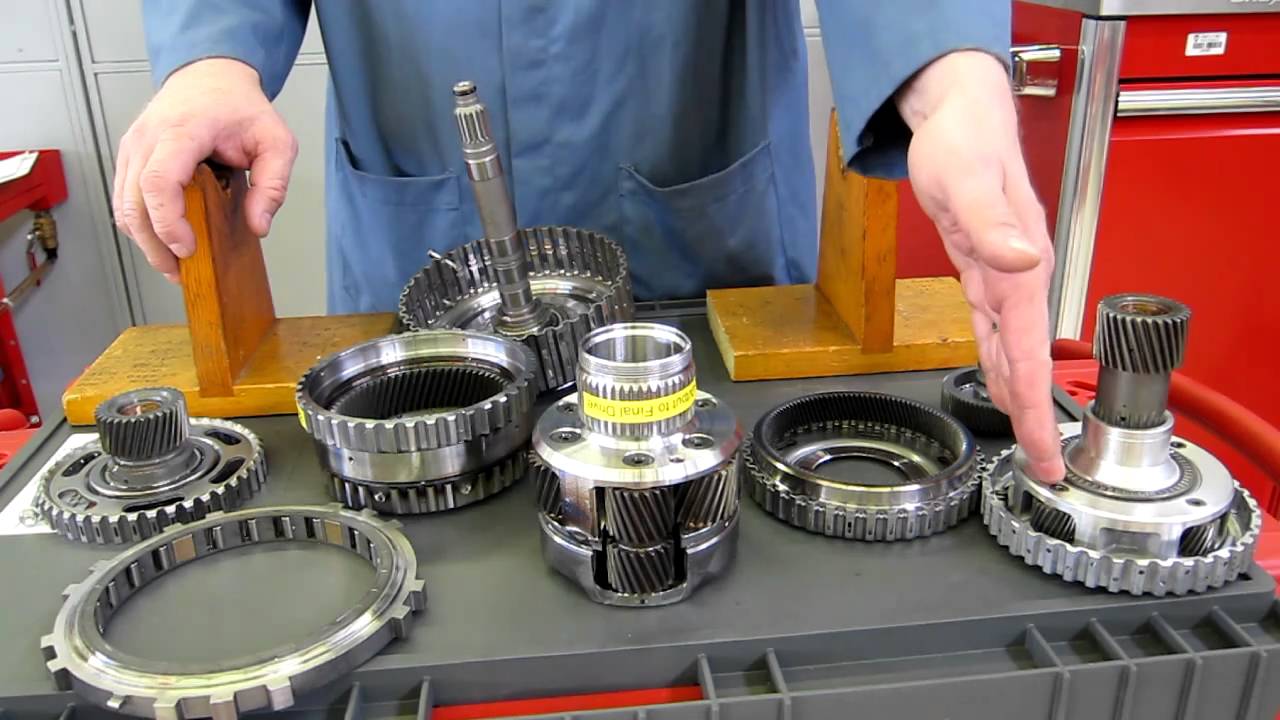

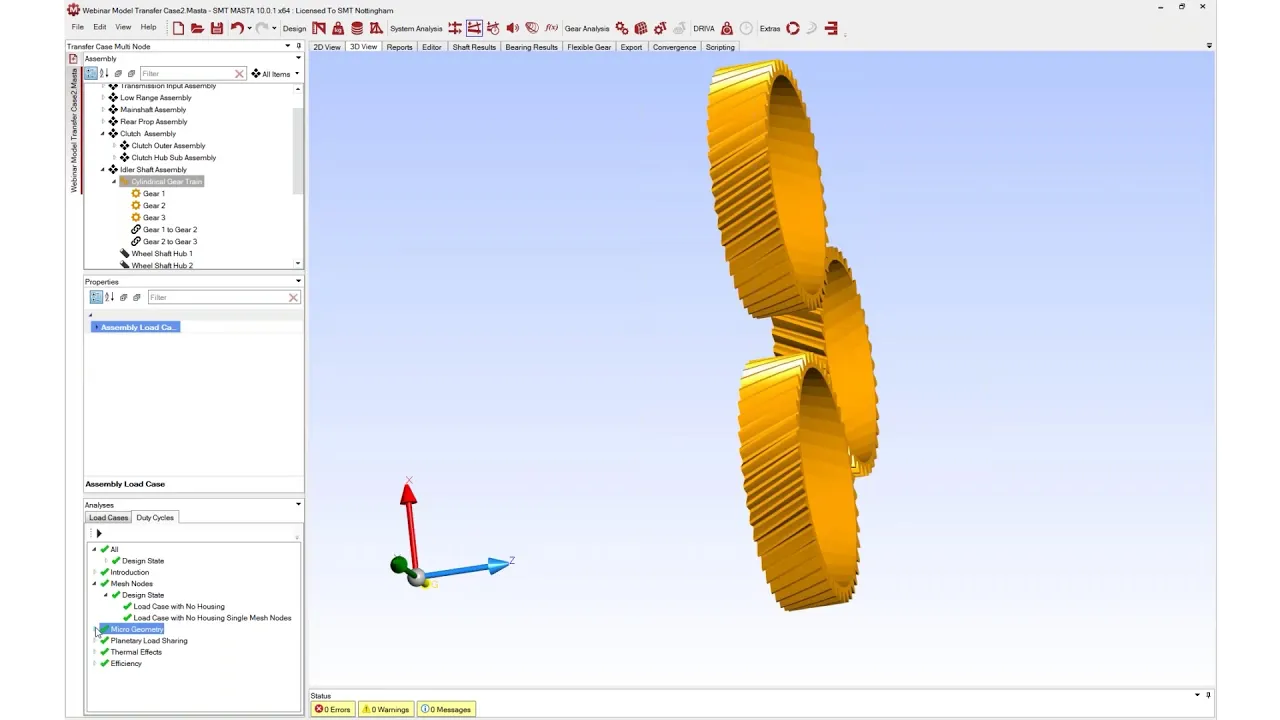
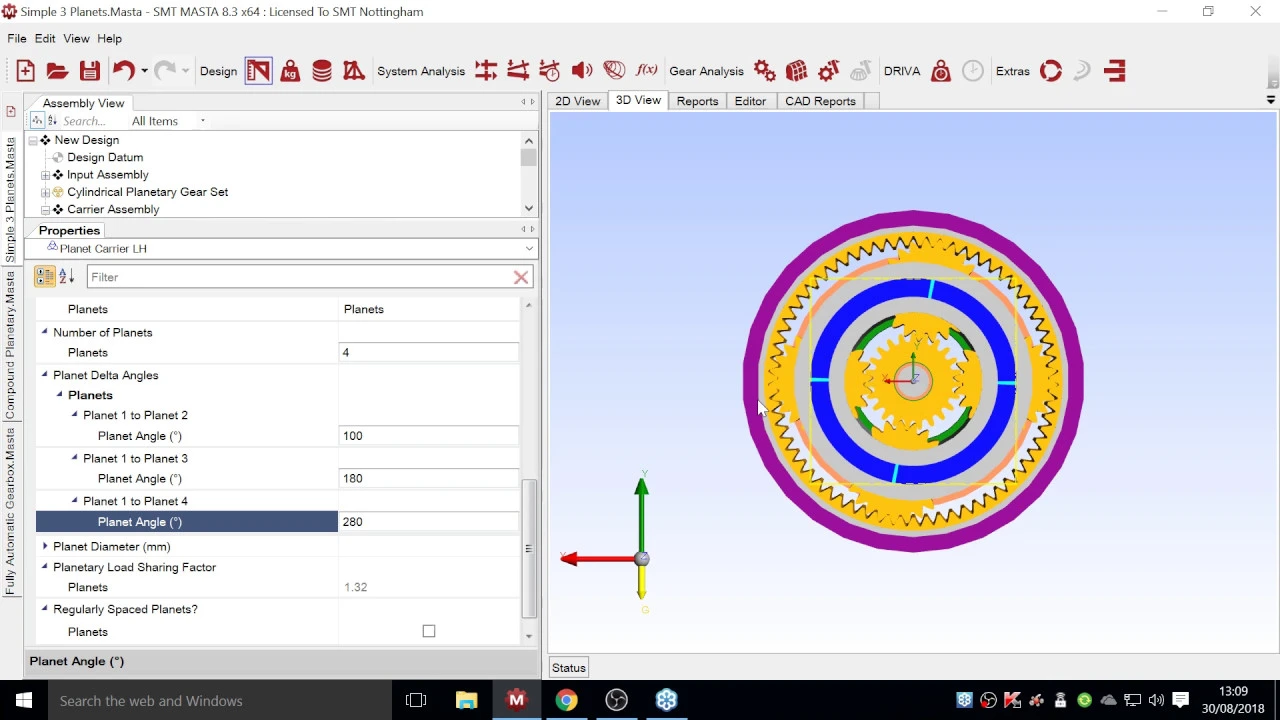


Planetary gear systems (epicyclic gears) are compact mechanical devices that achieve high gear ratios through a unique configuration of four components: a central Sun Gear, orbiting Planet Gears, an outer Ring Gear, and a Carrier that connects the planets to an axle. Unlike simple gear transmissions, planetary gears provide triple the contact area and can achieve ratios up to 10:1 in a single stage using the formula 1 + (ring teeth/sun teeth). With helix angles up to 15 degrees, they can increase torque capacity by 50% while maintaining 97% efficiency. These systems are widely used in applications requiring high torque in compact spaces, including wind drives, track drives, medical scanners, and turbine reduction systems.
Planetary Gears Explained: How They Work and Their Benefits
Added:Basic gear terminology and mechanics, including spur gears, pitch, and how meshing teeth transfer rotational motion.
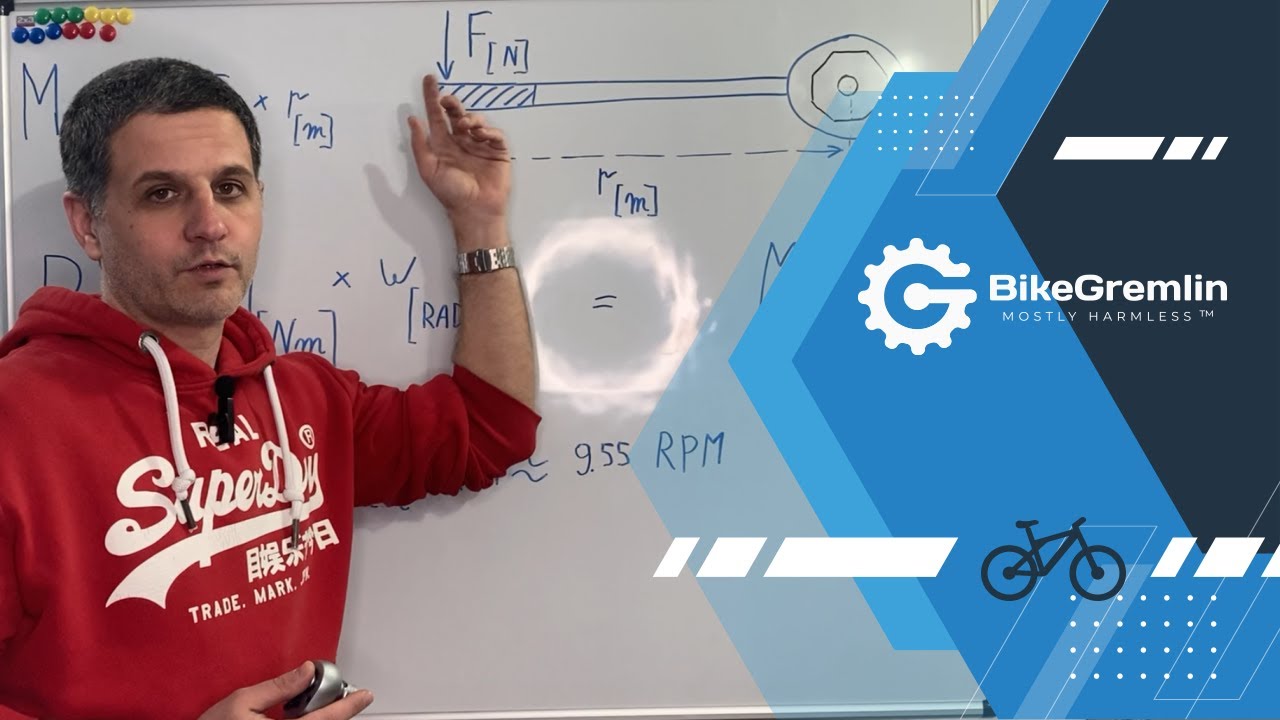
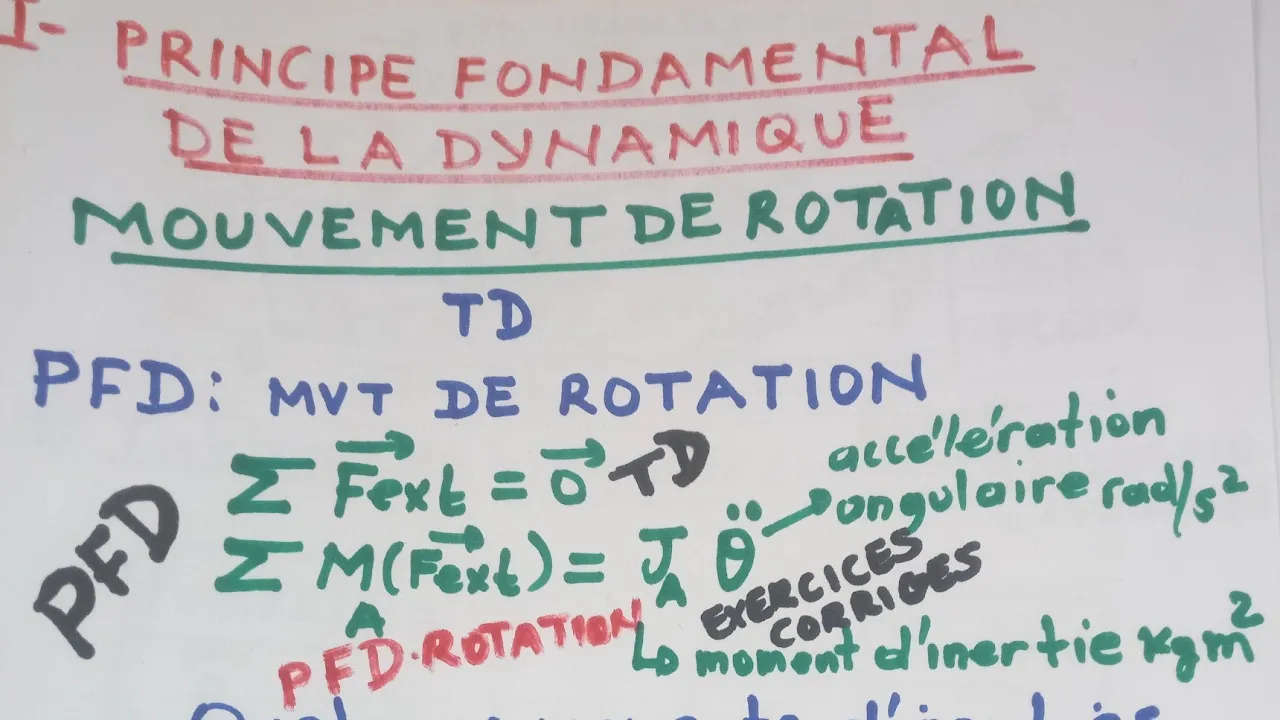
The physics of rotational motion, specifically the mathematical relationship between torque, angular velocity (RPM), and mechanical power.
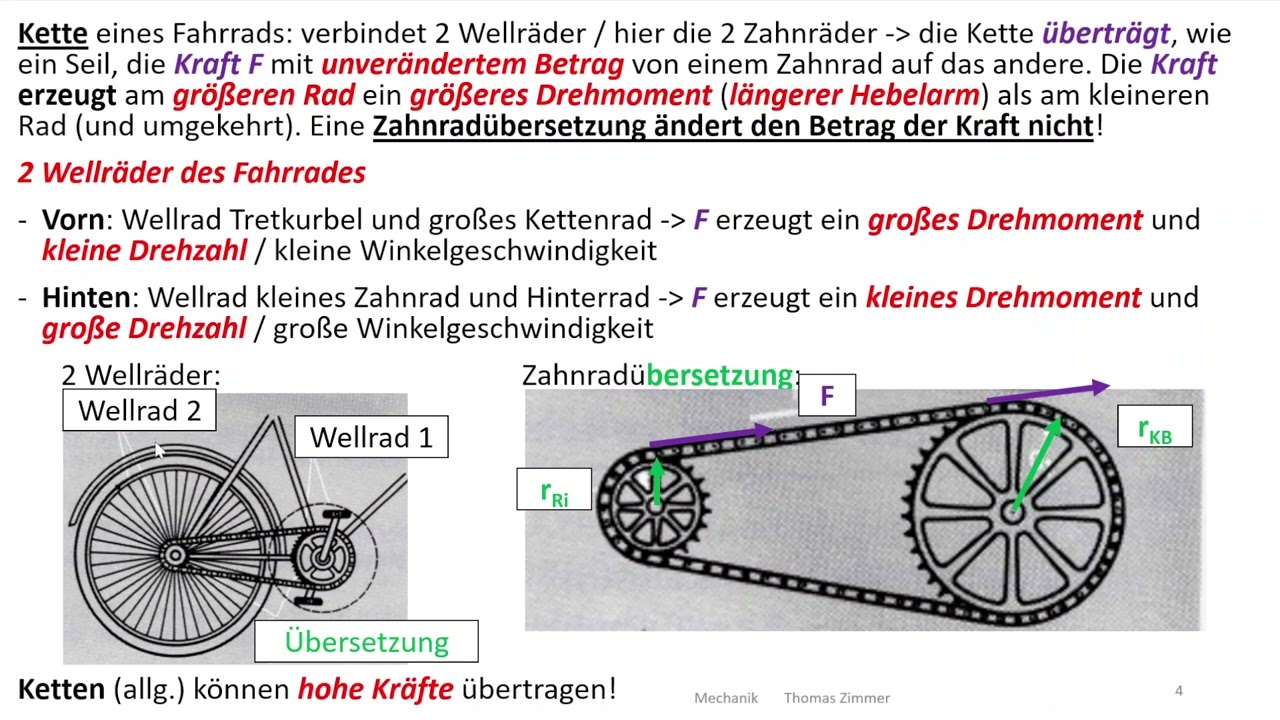
The concept of mechanical advantage and how simple gear ratios are calculated using tooth counts.
Fundamental understanding of vector forces, friction, and load distribution within mechanical components.
Analysis of compound and multi-stage planetary gear trains used to achieve extreme speed reduction or torque multiplication.
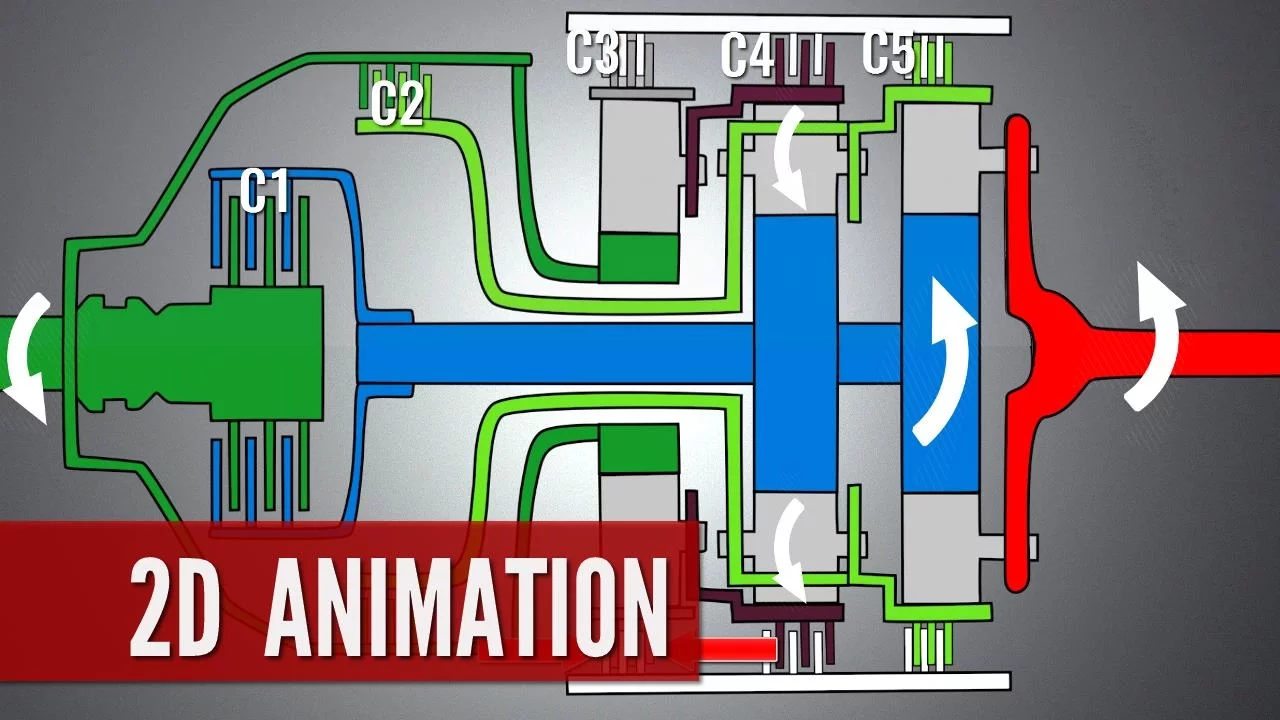
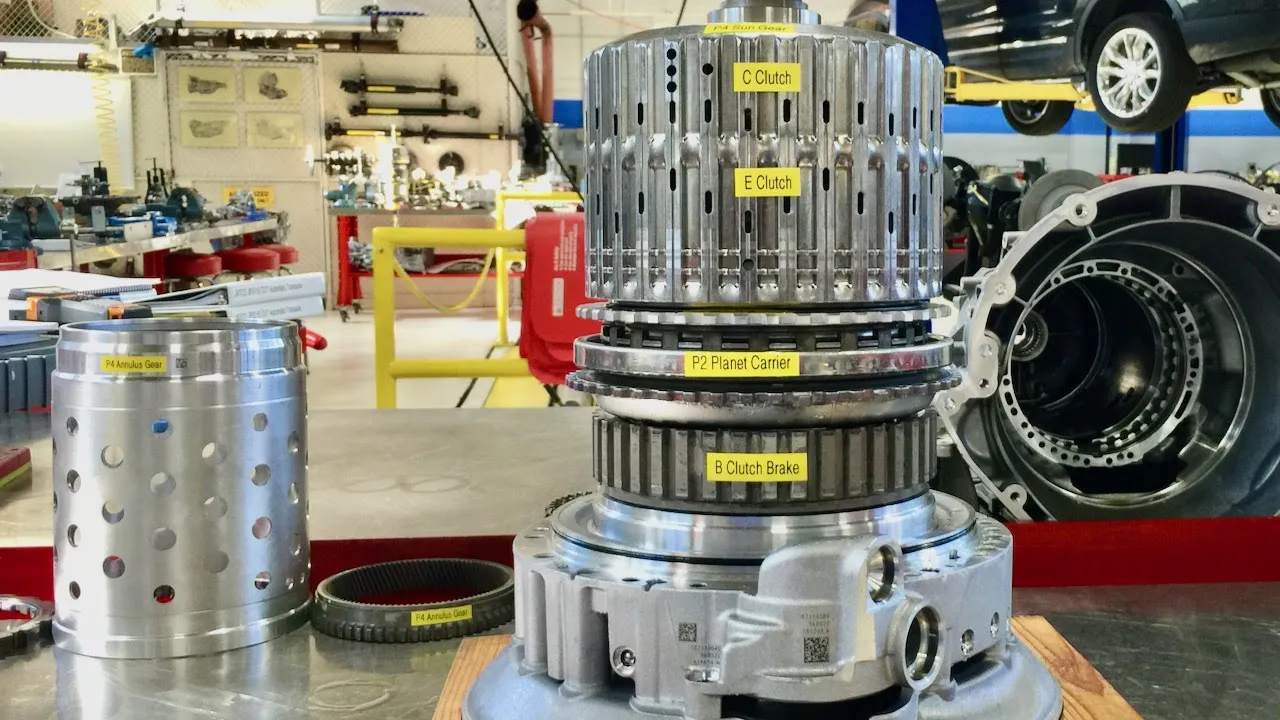
The application of planetary gearsets in automotive automatic transmissions, including how clutches and bands lock specific components to shift gears.
Advanced planetary configurations, such as the Simpson and Ravigneaux gear sets, and their kinematic analyses.
Engineering design challenges of planetary systems, including load-sharing among planet gears, lubrication requirements, and shear stress failure analysis.
61.5K views1.3Klikes4:44Original Release: 2023-03-01
gears the Pinnacle of human engineering well it certainly is important gears help translate mechanical force from one place to another from different angles and directions of motion to different energy mediums altogether what differentiates planetary gears planetary gear sets or epicyclic gears differentiates themselves by having three different gears that work in an odd way they both rotate as normal gears do but also translates and orbits so what is the purpose of this well the purpose of the planetary gear set is to have a large ratio in a compact area in slight weight small and can transform speed to torque in large amounts and effectively the gear set is composed of four components you can think of these as a solar system as they already share the names of One we have the Sun Gear located in the center the planet gears the moving is in the middle that orbit the Sun Gear and the ring gear let us look at it furthest out and there's a circular gear that connects around the planet gears or asteroid belts the fourth component is a carrier which is connected to the planet gears and extract the mechanical force from them to one axle in this case any one of these gears can be driving the mechanism or be driven however to get the largest ratio possible for maximum torque or higher RPM you would make the Sun Gear the driving gear and a carrier which is connected to the planet gears The Driven gear or vice versa let's talk ratios to get a ratio the normal formula of Gears is to divide the number of teeth of the driving gear by the number of teeth of the driven gear it's as easy as this if you have a driving Gear with 10 teeth and a driven Gear with five teeth the formula would be 10 divided by 5. if we divide it out we get two however we need a denominator and for a whole number it will always be equal to the number divided by one now we will get 2 divided by 1 or a two to one ratio these are the same thing just written differently however we need to take in consideration that the planets are also orbiting so we can't just use this formula unfortunately since we now have velocity in the mix the new formula is derived B like this one plus teeths of the ring gear divided by teeth of The Sun Gear this will in the end give us a maximum ratio of 10 to 1 for a single stage if you make the song gear as small as possible and the planet gear is as big as possible while still serving its purpose of compactness and being lightweight the planet gear has plenty of advantages that will now go over while a simple Gear transmission with teeth that are straight is in contact with each other meaning at any given moment when the Gear's teeth are touching we'll give a ratio of content of less than one since during the whole contact phase the contact between teeth won't cover the whole tooth except at the maximum point of contact a planetary gear will have triple the contact area because that is three or more driven gears in contact at all times however we can make it better by slanting the teeth of the gears that we call a helix angle we can now have more contact per tooth that is passing the Helix ankle can be up to 15 degrees and with this combination of this larger contact area at a single moment and More contact per tooth over time we can get a significantly larger capacity for torque up to 50 percent more only with a 15 degrees Helix angle this will also inherently give other advantages as well such as better load sharing better heat dispersion quieter and longer operating life the efficiency of a stage is about 97 so only three percent has lost the Heat and sound which is very good the optimal range of the planetary gear set will land between a ratio of four to one to eight to one this will give the most capacity for torque while not putting too much stress on the gears so it doesn't malfunction prematurely these are some applications where the planetary gear set might be used slew drives wind drives track drives mixing pumps cutter heads medical scanners operating tables and turbine to propeller reduction thank you all for watching and if you found this video informative then consider drinking a glass of water hydration is important
Up Next
5:55
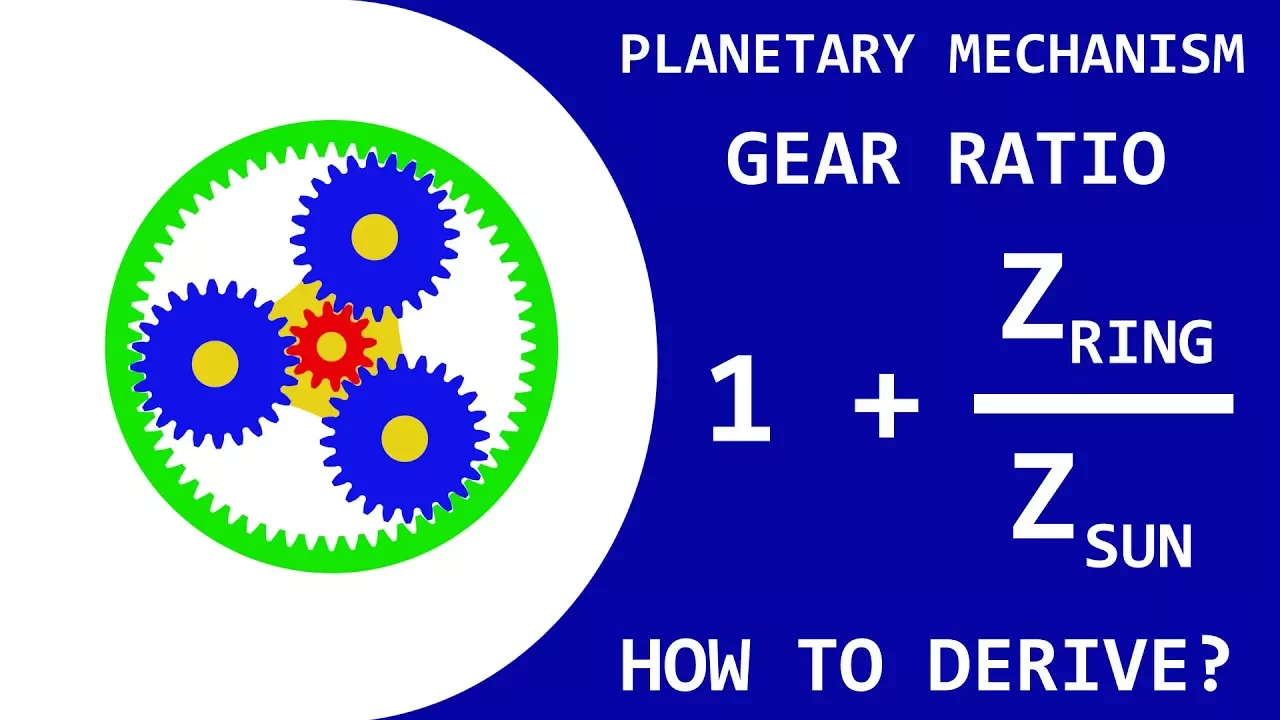
Planetary Gear Ratio Derivation: Formula Explained
@OTVinta3d
365.4K views•2018-01-09

30:32
Ultrasonic Transducers: Resonant Frequency Measurement and Horn Design
@imajeenyus42
229.9K views•2017-02-22
54:16
Polymer Environmental Degradation: Mechanisms & Stabilization
@iit
1.8K views•2012-07-10

33:39
How a Student's Question Saved a NYC Skyscraper from Collapse
@veritasium
22.8M views•2025-04-26
Related Study Plans & Knowledge Roadmaps
Structured learning paths in Engineering
engineering
Building Acoustic Levitators: Physics & Arduino
01The Physics of Sound and Standing Waves
02Piezoelectric Transducers and H-Bridge Drivers
03Arduino Programming: Generating 40 kHz Signals
+ 2 more learning modules
14h5 modules
Explore Roadmap
engineering
Building Peltier Cloud Chambers: Particle Tracks
01Cosmic Rays & Cloud Chamber Physics
02Thermoelectric Cooling (TEC) Fundamentals
03Custom Liquid-Cooling Loop Design
+ 2 more learning modules
18h5 modules
Explore Roadmap
engineering
Yagi-Uda Antennas: Modeling, Build & VNA Test
01Introduction to RF and Antenna Fundamentals
02Yagi-Uda Antenna Design Principles
03Antenna Modeling and Simulation in 4NEC2
+ 2 more learning modules
18h5 modules
Explore Roadmap
engineering
ECG Monitor Design: Op-Amps, Filters & Noise
01Electronics & Breadboard Basics
02Op-Amps and Instrumentation Amplifiers
03Bioelectricity and ECG Fundamentals
+ 2 more learning modules
18h5 modules
Explore Roadmap