



























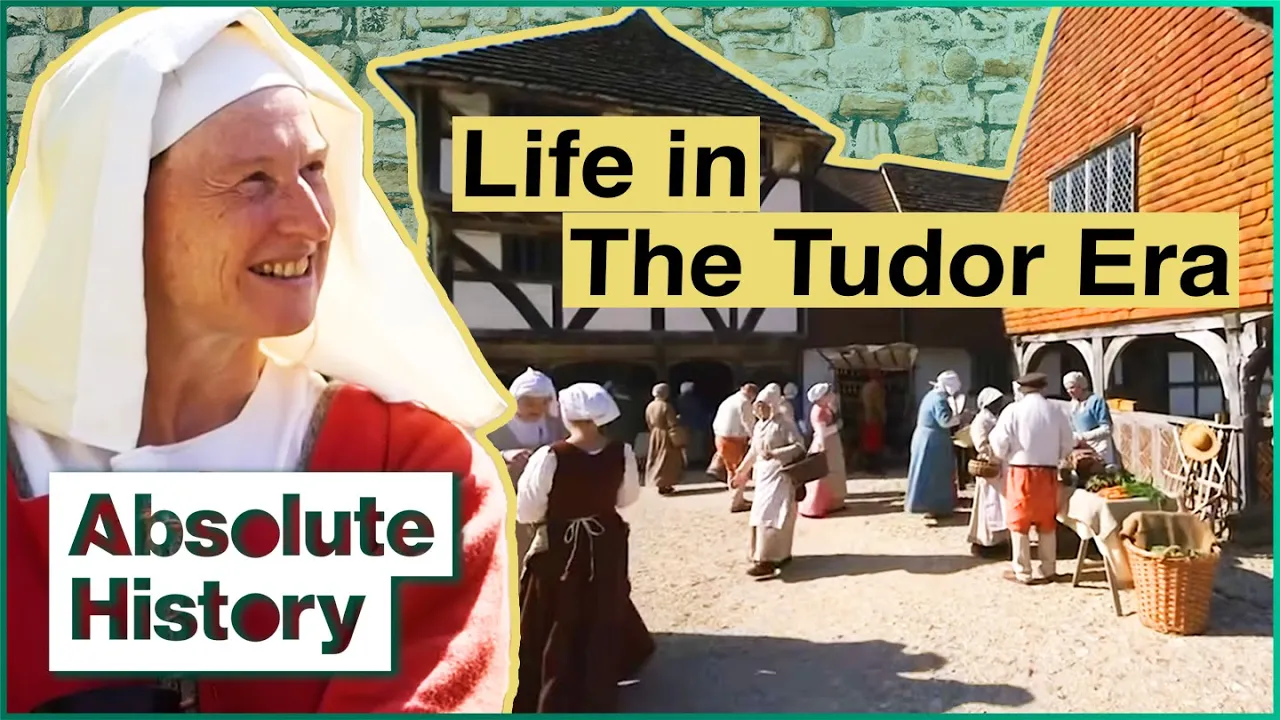
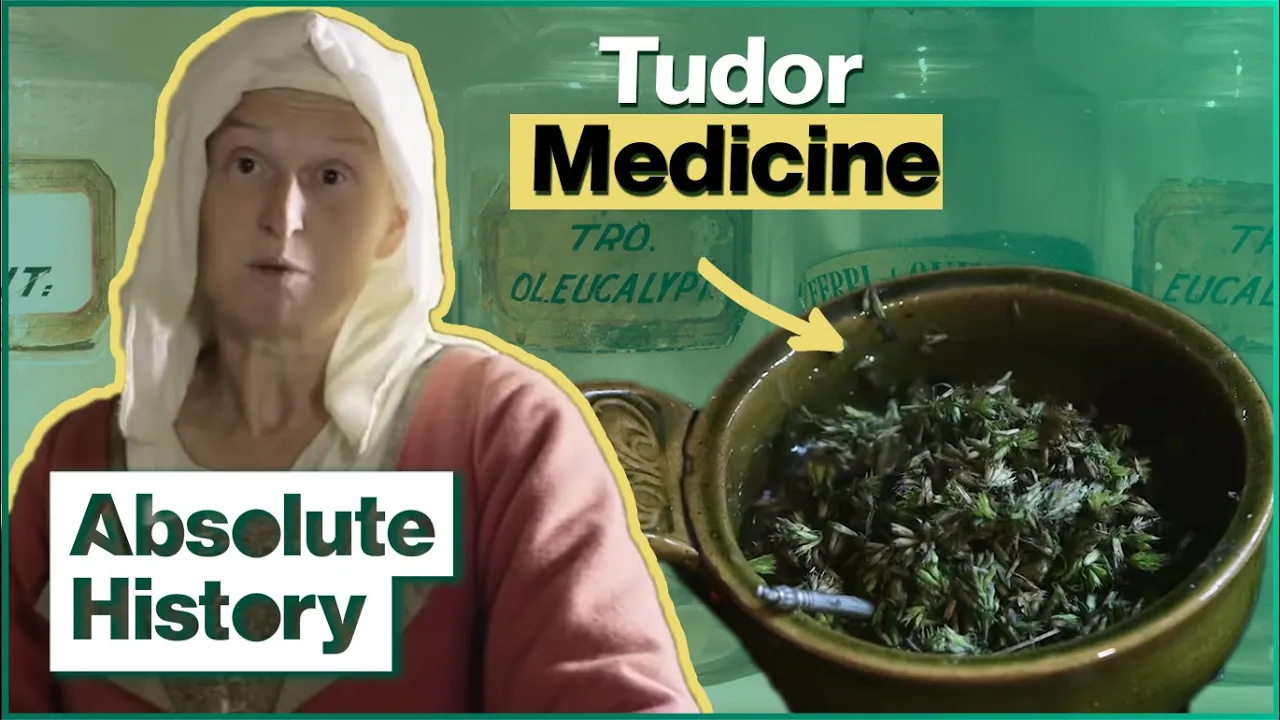

Tudor wool carding cleaned and organized fibers using hand cards, transforming coarse wool into soft fluffy material ready for spinning. This process prepared wool for the spinning wheel, which was called a 'great wheel' or 'walking wheel' because operators walked backward while controlling fibers with one hand. This demonstrates how textile production required sequential processing stages.
Medieval Peasant Farming Life in Tudor England | Historical Documentary
Added:Understanding the basic structure of the feudal system and manorialism, specifically the relationship between landowning lords and tenant peasants.
A general historical timeline of the Tudor dynasty (1485–1603) and the transition from the late medieval to the early modern period in England.
The socio-economic role of the Catholic Church and monasteries in medieval daily life prior to the English Reformation.
Basic concepts of pre-industrial agriculture, such as subsistence farming, crop rotation, and the open-field system.
Analyzing the Dissolution of the Monasteries under Henry VIII and its profound economic impact on rural tenant farmers and land ownership.
Investigating the Enclosure Movement and how the privatization of common land led to peasant resistance, such as Kett's Rebellion.
Exploring the development of the Elizabethan Poor Laws as a state response to the loss of monastic charity and rising rural displacement.
Tracing the evolution of these Tudor agricultural practices into the British Agricultural Revolution of the 17th and 18th centuries.
1.2M views12.7Klikes1:18Original Release: 2022-11-30
this channel is part of the history hit Network [Music] 500 years ago England was emerging into a new era after years of war plague and famine the kingdom was enjoying peace and prosperity under the reign of the first Tudor King Henry VII a new class of business savvy farmer was thriving boosting food production and then over she goes while wool from their sheep was generating half the nation's wealth many of the nation's Farms were under the control of the biggest landowner in England after the king the monasteries their influence could be felt in every aspect of daily life they were not just places of religion they were at the Forefront of Technology education and farming but with the daily lives of monks devoted to prayer they depended increasingly on tenant farmers who worked and tended their lands [Music] historian Ruth Goodman and archaeologists Tom pinfold and Peter Ginn are turning the clock back to Tudor England here at wield and downland in West Sussex to work as ordinary Farmers under the watchful eye of a monastic landlord feel it that's the way to succeed they'll have to master long-last farming methods what's those flanks are going again and get to grips with Tudor technology it's a really violent process while immersing themselves in the beliefs customs and rituals that shaped the age this is Mary England For Heaven's Sake so to speak let's enjoy it [Music] this is the untold story of the monastic Farms of Tudor England [Music] Ruth Tom and Peter are traveling to their new farm at wield and downland in Sussex on England's South Coast in 1500 England was 15 years into the rule of its first Tudor King Henry VII the previous two centuries had seen the country ravaged by War economic depression and plague the Black Death had cut England's population from 4 million to just two and a half million but under the new Tudor dynasty the nation was slowly emerging from the darkest of times it is our Marketplace what a day to start out on eh yeah welcome to tutoring the early Tudor world is a Catholic World suffused with religious thought even very practical stuff it was always there whatever you did whatever you talked about whatever you thought there was no other system of understanding the world it was Undisputed in 1500 monasteries were almost as powerful as the state itself they exerted their influence over the entire population not only in matters of religion but in every aspect of daily life this was a God-fearing Nation people believe they risked Eternal damnation even social isolation if they didn't attend church at least once a week in this period most people living in small wooden structures and focal points to these communities were these massive Cathedrals or inspiring stone-built dominating the landscape and this shows how Central the church and religion were to people's everyday lives [Music] time when religion rather than science was relied upon to explain everything from the weather and the growth of crops to health and well-being our lives this country the values we have the the laws we have the way we approach life it's all shaped by the past I mean this is one of those periods that really forges the identity of England [Music] Professor James Clark an expert in medieval monastic life is introducing them to their new Farm what was the relationship between monasteries and Farms such as this by the early Tudor period monasteries are preferring increasingly to put out a large proportion of their agricultural property to tenants so we're not employed directly by the moneties but rather a sort of little private Enterprise paying rent to the monasteries and we're taking all the business risks absolutely so and it's down to your Ingenuity and perhaps your ability to read the Dynamics of the market to make a success of it as well as having a good head for business monastic Farmers needed shelter not just for themselves but also to accommodate and feed their workers it's huge heating Bill's going to be a bugger isn't it wow this is our house wow how many people have lived in here there would be the tenants in their immediate family but they would also be live-in domestic servants so maybe eight to ten people in total this was the heart of the house where the farmers would eat carry out business and house extra laborers at Harvest Time [Music] wow so where do we sleep well it'll be for us upstairs the upper chamber called the solar was the farmer's private bid sitting room started already wow and a pull out chuckle yeah yeah it's on Wheels it shoves underneath during the day that's where you'll be Pizza yeah on the truck to pay their monastic landlords Tudor Farmers had to turn a decent profit their Farm has five acres of enclosed Fields as well as access to hundreds of Acres of common land and woods they have cows to pull plows and carts a barley crop poultry and a flock of Southtown sheep so what kind of farming are we going to be doing then well your main focus will be sheep and here's where the relationship between the tenant and the monastery is absolutely Central to your your productivity your wool crop May well be required by the monastery to satisfy the merchants that it's under contract with but we can't be completely well specialist we do also have to grow arable crops yes certainly you'll um you'll probably have a barley crop for example also at this time what we do see is tenant Farmers taking up pig farming in a small way as a an additional small Enterprise piece so I think we should definitely get some pigs right if we're getting some pigs we need a place to put them as a project right there it's spring Ruth Peter and Tom have to get their money spinning Enterprises up and running as soon as possible they have just a few weeks to sow crops and get in livestock before Easter wool was Central to the early Tudor economy it was known as The Jewel In The Realm as it generated half the nation's wealth sheep with the backbone of the British economy her clothing mostly and not just for us British war was clothing most of Europe it was the finest quality come on girls it was all about grazing the quality of the grass influenced the quality of the wool and the British system involved quite a lot of moving sheep about in the winter months you wanted them down on your arable land nibbling at the weeds dropping their dung on your Fields but come spring he moved them up into the Hills into areas where you can't run a plow there the grass has come fresh and Lush and will sustain your sheep through the summer and allow them to grow that perfect coat only when the Sheep are sheared in a couple of months time will they know the quality of the wool most Tudor households kept a pig since pigs ate almost anything they were a good way of turning kitchen scraps into meat but in the early 1500s monastic Farmers began rearing pigs to sell on a commercial scale I suppose Modern Age you've got a lot of pig breeds but the closest to the Tudor breed is the Tamworth isn't it yeah a little Tamer now though aren't they much older much more aggressive back then the monasteries laid down strict rules for their tenants it was forbidden for pigs to run free as they could destroy crops and attack people so Peter and Tom must build an enclosure I suppose pigs I mean they're forest dwellers so to keep them inside they want they want to get out it's got to be a proper construction project yeah no messing around the monastery's most valuable asset was their land in an age when almost every craft relied on wood management of the corpuses was essential John Roberts looks after this copies and is helping Tom cut some Hazel to build a pig enclosure this is all based around the broadleaf's ability to basically regenerate very quickly isn't it yeah basically it releases all sorts of hormones in it that kids it into thinking it's young again so you can make them virtually immortal after the wood is cut new branches quickly Sprout and within a few years it will have produced another crop of Hazel poles as a tenant farmer how much work can I actually take well that will sort of depend on your tenancy really and like today you get what you're pays for so the more rent you're paying generally the more rights you have and they might restrict you to how many cartilage you could take or they might restrict you to how long you could be in their cutting for you're just spending your time basically time and effort yes [Music] materials gathered Peter and Tom begin to build the pig enclosure Tudor Farmers had to master all types of building skills to survive these things are never as easy as they look [Music] they found an area that's already fenced on three sides so they just need to close it off you get progress with this Peter it's fine between these the coppist Hazel is woven to create what is known as a wattle fence so you need to start there yeah okay Bob Holman's an expert at building two defenses do you think this will hold pigs oh yes without a doubt yeah this will hold an elephant by the by the time we finished it so what we're going to do is put our first wand in there and then weave this through these pushing it down all the time push it down with your feet give it a good shove and that's the first one in the next one of course will go on the other side right so in that one goes all the butts will then go on the inside so we followed that process through right the way through to the other end commonly known as a Cockrell knobler cockle nobler a Cockrell knobbler to sort of Polish a Cockerel off we used to give it a tap on the head oh I see yes it's just an expression of speech speech but it's very good for for tapping the ends in that's right the other side of the pig pen is enclosed with a different type of Tudor fencing a dead hedge rotten wood isn't it it's just rotted away let's just come out Ruth and Tom are making some repairs instead of using valuable coppist Hazel otherwise unwanted tweaks could be used basically two rows of posts or Stakes driven into the ground then we take all the stuff that's on the face of it looks like it's not needed Hawthorns brambles you know a bit of a Black Thorn there you look at the thorns on here about an inch long I mean they're sharp as well they're going to hurt so if you're an animal trying to force your way in you've got something to contend with nothing happens exactly foreign will improve as time goes on Peter I think that is about there no Peaks getting through there is this [Music] after just a day's work the enclosure is complete this fence is as secure is it going to get so hopefully pigs contained I mean that's the great thing about Tudor building it's all about sourcing your materials from your landscape [Music] foreign to the monasteries farming was a sideline a way of earning money primary purpose was to perform religious worship on such a scale that its spiritual power would benefit every Christian soul s the oldest of all the monastic orders were the benedictines established by Benedict of Nasir in the 6th Century they were Bound by vows of celibacy poverty and obedience and followed a demanding daily routine of worship study and prayer [Music] Peter is visiting downside Abbey a Benedictine Monastery to meet its Abbot father Aiden Bellinger hello father Abbott hello Peter very good to see you you it always is Tradesmen formed religious guilds to ensure prosperity in this life and safe passage to heaven in the next Peter wants advice on setting up a guild for farmers which patients saying do you think a guild of farmers would adopt I think in general the most likely Patron for a farmer would actually be some Benedict himself right okay and one I'd particularly like to think goes in hand with some Benedictus Saint Benedict's sister Saint Scholastica who is often seen as the patron saint of good weather and I think that must be very important for any farmer every area of life was represented by a different Saint as illustrated by this medieval prayer book they begin with calendars yeah and the months are the same as the months we have now but many people would identify the day less by the day of the month than by the saint of the day and some parts of the year are absolutely full of saints which gave the people an excuse for jollification and having a good party but they were also a reminder of the way in which the church and God and the Saints intervened in everyday life [Music] the first stage in establishing the Gilda Saint Benedict is to create a register of its members inspired by the prayer book Peter's commissioning a richly illuminated document monasteries employed lay folk to do domestic work like cooking and laundry and skilled workers to do stone carving book binding and calligraphy Josie Brown has begun the calligraphy on Vellum made from calfskin so how are you going on with our manuscript it's coming along very nicely I remember making a quill but mine it had quite a lot of feathers on it absolutely you very often see the Romantic idea of using a pretty quill but we don't use them like that we cut the ends off because they get in the way and we strip the barbs and use the pen like that not quite so attractive but much more authentic you squeezing that to suck ink into this or you simply dipping it in I'm simply dipping it in but that's also why the board is at an angle because if you're writing flat gravity will take over so you want your pen almost horizontal to stop the ink flooding once the calligraphy is finished the document will move on to an artist within the Abbey to illuminate the text laughs the Tudor Farmers day began at sunrise [Music] off my feet I don't want a little Stone in the bottom of my hose now these have made out of sheeps wool hence the the pure whiteness of the doublet here is what's going to hold the hose up to double it it's just like a jacket essentially um I sew myself together but being laced into clothing created problems all of its own in the book of Madness which essentially tells a page boy how to dress the squire uh suggests that he first makes sure that the privy is available because the implication is that once you're sewn into this you'd much rather have used the facilities before you did up all the stitches than afterwards and it certainly is something that you begin to start considering we talk about rhythms of daily life well I've certainly established my own rhythms of my own daily life once in the morning twice in the evenings in case you're wondering um to preserve modesty a flap of fabric known as a Cod piece was worn on the front of the hose it's not something you used to coming across in Modern Life and it's tied at the top here so you can undo the ties and go to the lou it's essentially a fly um so it's just like the zip on your jeans and it's it's it's functional and surprisingly comfortable for the woman of the house the first job of the day was to light the fire I got my Flint in the steel struck together they Spark the trick though is to catch one of those Sparks and to keep it alight and they are there there you see it that little spark Ruth uses charred cloth for Tinder which will catch light from a tiny spark and now we surround it and we have fire farm houses had no glazed Windows because glass was expensive to keep warm a fire was essential so one of the things you may notice is that I am not doing this in the middle of a half you know with a chimney and there's several reasons for that most important is probably to do with fuel efficiency the heating of your home about 70 percent of the heat of a fire goes straight up a chimney that means that if I wanted to keep a house like this warm I would have to have nearly three times as much fuel day in day out day in day out with a chimney as I do with a little fire in the center of the room so this is really really fuel efficient for the man the first job was to feed the livestock Peter and Tom are sourcing water from the Farms well look at this wow look at that the water is over 20 feet down below me that is that is deep to reach it some ingenious Tudor technology is called for I think slow and steady wins the race here Peter oh [Music] the day for cranes to build Cathedrals monasteries and castles as well as to drive Machinery slow down pizza I'm applying the brake let's get this into the buckets okay cool that's close so this is going to be ideal water from for our Castle isn't it yeah but humans back then you know you've got to keep yourself healthy haven't you so you need to purify the water in the best way of doing that is making beer which suits us very well I think yeah let's get these two our cows since water from Wells was often contaminated people drank ale all day every day the alcohol killed any bacteria making it safe to drink how are these tight clothes working for you now Peter bubbles on the other hand have better resistance to the bacteria in dirty water so we're less likely to get ill from drinking it perfect I like that Treadwell it's really cool in a world without electric light work indoors like writing accounts or mending clothes had to be done during daylight hours the only illumination came from dim lights made from rushes and sheep fat what I want to do is sort of end up with pure fat so that means I've got to cook out all the little bits of blood vessels skin and the easiest way to do this to just boil it all up I want to boil it until all those great big solid lumps of Tallow have dissolved the fat needs to boil continuously all morning [Music] as well as breed s breeds and geese the Tudor farmer also cultivated crops the farm is already growing barley used for making bread and Ale another essential tuna crop would be peas I mean I don't see peas are very much a crop you associate with garden so it shows that they were using it as a field crop as well on a small smaller scale than the barley and the wheat but nonetheless something you have out in the field for your livestock and for yourselves I think it's ideal in modern Britain we ride quite heavily on potatoes don't we whereas in Tudor Britain or Tudor England there are no potatoes that is a good point that is a very good point yeah potatoes didn't arrive in Britain until the 1580s to sow their peas they are seeking guidance from a Tudor farming manual fitzherbert's book of husbandry you know if we're following the advice in this book then we're following the sort of ideas and the farming practice of this era yeah in Tudor English spelling was yet to be standardized as Peter is discovering how will you know seasonable yeah seasonal time to go upon the land that is plowed and if it's oh yeah and if it's sing or cry or make any noise under thy feet then it is too wet to sow and if it makes no noise and we'll bear the horses then so in the name of God you're listening to the land that's the the idea isn't it so if it's absolutely saturated with water or anywhere in between it's gonna make a noise it's going to be squelchy or it's going to be squishy or it's going to sing or cry sticky noises yeah but as soon as that noise ceases that's when you hit it that's when you sow this certainly isn't singing or crying under my feet it's pretty damn dry to me hmm before sewing the land must be plowed to turn over the soil and return it to Bare Earth in Tudor times the plow would have been pulled by cattle often oxen rather than horses Gwyn and graceful are one of the only pairs of cattle left in Britain trained to pull a plow but they haven't worked for a couple of years so the boys will have to break them in again I don't think little bitty hi Charles oh hi Peter pleased to meet you they've called on someone with a lifetime's experience in working with cattle Charles Martel this is Gwen she is on the near side always the short the short name on the on the near side of a pair of oxen and then she's graceful uh double syllable so that eventually they respond to their name they don't actually understand English too well but they can hear the difference in the length of the word Gwyn graceful first time in two years Gwynn and graceful are being fitted with a yoke yolk right there you are so just hold it just so it doesn't she doesn't walk away held in place with oxbows the yoke is what the plow will be attached to well they almost look happy this is the easy bit it's when we get out in the field they see some open grassland and who might not see them again because they haven't seen grassland for the best part of winter I suppose oh dear don't say that [Laughter] steady steady steady steady [Music] [Applause] it's all right that's just got the edge off them now yeah we have we need to convince them to do some work before they get their food get them into a routine but here they come again yeah I don't think we should let him out actually at the moment because I'm afraid that's what they're after is their grub yeah so because I'm afraid if they do go they'll think it's a great laugh and we might not catch well that's happened tonight that's what it is so it works out these are people move away from plowing like oxen cattle towards horses um two things I think first of all fashionable it's a big a big part in it really you you're going to see a farmer now he's a couple to say but you know the track has got to be the latest one it's got to be the modern one right could be a bigger one oxen with were regarded as lowly and sort of poor beasts and the other thing is speed horses were more expensive but they were fast so that's why we're in the situation today we're working oxen in Britain this is probably one of the only Pairs and I think it's a great shame thank you the Sheep fat has spent the morning boiling and has been left to cool leaving pure Tallow on the surface Ruth's reheating it to make the rush lights think about Modern Life we get sort of fat s and oils from a huge number of sources things like olives sunflower seeds linseed rapeseed as well as crude oil and all its various derivatives but if you're living in around 1500 then the animal fats are pretty much all there is and those animal fats have got to do every food job every lighting energy job every axle grease job anything that needs fat has to come from animal fats and this is the other ingredient rushes and the salt you want are those that have a sort of solid pith like Center and what I want to do is to soak the fat into the pith and then that little bit of green rind will act as the wick which helps that to burn right all I want to do is to soak that just briefly in the fat and that pith draws the fat into it that is a rush light it's really simple isn't it foreign and graceful they are about to work for the first time in years whoa once in the field Charles's fears are realized dear but look at them now look you see they're not least bit upset they had their little run they're quite fat so it wasn't very far I just need to work out what Stoppers then to stop yeah we've got to get a plow into that soil in the next week or so otherwise you know we're not going to get a crop before the plow is attached Charles has suggested letting them pull a much lighter implement it's vital that the plowed furrows are absolutely straight to ensure every inch of land is turned over so Tom and Peter must persuade Gwyn and graceful to walk in a straight line move on move on come on come on there we go just need to tap them ever so gently don't you and they just move it's amazing they look kind of happy they're owning their food now caramel caramel and keep them moving that's the trick apparently don't let them stop come on oh come on [Music] but I'll tell them about that in a minute I I'm impressed it's lovely and uh the next stage is plowing hold on girls well done as night fell with The Farmhouse plunged Into Darkness the Tudor farmer would go to bed about the same as a candle flame isn't it not much different smells a lot worse there ain't much work you can do by Rush light [Music] beautiful day it was believed that Devotion to a patron saint through a religious Guild was the key to success at the monastery the calligraphy on the gilderson Benedict register is complete next a painter illuminates the text as with all trades of the day it wasn't only creative skills that were required but also craft skills to make the tools for the job artist Mark Goodman Begins by making a brush from a feather simple way to get a point on it is just cut it through just over halfway I mean I got a point on our feather we can cut the feather off we can then make a tube and then we can push the feather through the tube you see there we have a brush then the only last bit that you've got to worry about is your stick which of course you'll get anywhere and there we have it paintbrush to paint these very fine details the Tudor artist had an ingenious solution just a glass globe full of water if it's not full of water nothing happens with it really as you can see there the trick is filling at the water as soon as you fill it with water then it becomes a large magnifying lens this one's around about 16 times magnification illumination was a complex and expensive process so reserved only for special books and documents like this register [Music] after many hours of delicate work the register is complete an indelible record of the Guild of Saint Benedict's paying members The Guild would have funded an altar in the local church dedicated to their cause [Music] information clearly different look at all the imagery on the walls this chaplets and fagans has been restored to how it would have been in 1500.
in the late 1520s Henry VII broke away from the Roman Church and formed the Church of England beginning a process that would see the monasteries destroyed and Parish churches like this one stripped of their splendor this is the the side altar of our as ordinary lay folk pay for a priest to come and do additional masses for The Souls of all of us within the guild for now and forevermore these are in need of some TLC aren't they look at that not only covered in wax but filthy so that's a job for me [Music] Tom and Peter have spent the last week getting the cattle used to working again we've got five willing participants at the moment I believe Bruce happy Peter's kind of happy there we go now they're ready to take the plow for the first time in years which is the Moment of Truth these cows are getting restless they want to get on with some work okay Tomo we're in your hands welcome [Music] straight line Thomas straight line which is good I think yeah we are we are experimenting here it's vital that Gwen and graceful plow in straight lines oh do it do it do it now that's nice that's good keep that straight line feel it we're going straight what are you doing at the back those cows straight they need a line to follow unfortunately for us we've got a bit of spaghetti plowing spaghetti plowing but the plowing goes from bad to worse welcome come on you're right welcome we've got cow Mutiny welcome Gwen and graceful are exhausted after just a couple of furrows oh dear this problem is they're really hating this aren't they I think they're just not used to having the equipment on them they're just not happy with it so once you've got that pressure of pulling the plow when we're trying to go deeper it's too much work for them they're just not happy getting the peas in the ground within the next week is crucial otherwise the crop will fail also pressing is the peak concern oh there we go Timber the enclosure is complete but now they must build a shelter within it pigs don't like drafts so if they're to breed successfully the shelter must have solid walls they're basing the design on medieval buildings they've excavated as archaeologists but constructing the walls without nails is proving tricky oh this one's High yeah I think I might need to get the ax or or or we could bash it if we bash it Tom and Peter have rather different ideas as to how it should be built you split that Timber oh I think basically it should be a shape slightly with the ax and uh Peter's just enjoying hitting stuff with a piece of wood that one's fat are you damaging my Timber wiggle wiggle wiggle wiggle wiggle right move that across like that there we go Bob on I'm so impressed by this Tom you really have outdone yourself yeah friendship's still intact just it's two weeks until Easter for Tudors it was preceded by lent 40 days of fasting and reflection ending on Easter Sunday the church dictated that no meat or fish be eaten and in this God-fearing Society it was a practice observed by almost everyone vegetables from the garden were essential for survival of course the whole point of gardening at this period of history is to have something to eat every day and if you look around you you can see just how hard that can be oddly enough you might think that the hungriest period of the year is in the dead of winter but that's not quite true it's really sort of now that we call traditionally the hungry Gap that part of the year it between your supplies your stores beginning to run low and the new harvests arriving there are just leaks parsley and a vegetable that's long since disappeared from the kitchen this is Alexander's I think the Romans brought them over to begin with they're very versatile these young leaves are edible just as they are and these are a real treat can you see the flower heads in here just beginning just forming underneath poached just those they're absolutely delicious this is a real favorite of mine this time of year primrose's delicious salad you just pull the petals so you just get that bit out and they are so lovely and if the sun's been on they're really sweet [Music] they're really tasty here we go weevy weavy weavy to construct the pig shell to walls Peter and Tom are using a building technique that's been around for over 6 000 years wackle and Dawn thin Hazel sticks are woven around the uprights to create a fence then a mixture of clay horse dung and straw is dorbed onto it creating a solid draft proof wall [Music] I mean look how easily that just works into the uh into the wattle that's amazing stickiness comes from the manure uh sorry this is really quite horrible probably can be as strong as bricks all the pressure is spread out over all the different bits of wattle all this is going to dry goes solid you know it's not hard to work with it's just unpleasant 500 years ago this was the way most houses were built and obviously our farm Cottage you can see the uh the timber structures and the panels in between they're a wattle and dorb beautifully smoothed off we're building pigstyles in exactly the same way that that Tudor Cottage was built [Music] Ruth's equipping The Farmhouse with utensils and tableware in Tudor times these were sourced from local Craftsmen and most Villages would have had a dish maker today there's just one professional wooden dish maker left in Britain aptly named Robin Wood all right here we go all right so this is what you're going to make an assassin yeah out of each each log like this I get three dishes so we're not trying to make them out of slices that way it's not like that exactly all the fibers running along this way so if you just cut a cut a ring off like this then they'd all be very short fibers and it'd just break apart the dish is a hewn from a hardwood such as Beach nice see what we've got there it goes the dish is roughly shaped using just one tool an ax and these are your chisels yep Forge all these myself and traditionally then forging forged in your tools would have been part of the apprenticeship of the job right then it's turned using a foot operated pole lathe it's a device so simple and ingenious that it saw use from the 10th Century right through until the 20th I love the way it's turning around really is as simple as that throughout history these wooden dishes have gone in and out of fashion in the Roman period they all like from ceramic and then we had about a thousand years when people ate from wood and then it was really the 18th century when The Stoke Pottery started mass producing very cheap ceramic that we went back to be in a ceramic culture oh there we go there we are all finished wow that is beautiful probably a thousand years of accumulated knowledge handed down through the generations gone into that bowl [Music] people at their main meal at 11 o'clock in the morning having risen at dawn by then the Farm Workers would have been ravenous taking pride of place on the Tudor table was the salt without salt people for centuries and centuries and centuries would have found living in the northern climbs nigh impossible salt allows you to preserve meat it allows you to preserve fish like most things in two to life even setting the table was Laden with Christian symbolism you might look at it and think it looks rather like an altar in a church and that's what many people in the period thought too they made the connection between dining and God's table there was something of the Sacred in in the daily ritual of eating a meal something of remembering Christ something of an echo of the last supper and people were quite conscious of that they wrote about it at the time they talked about it at the time and they quite deliberately made the most of it [Music] it's the week before Easter if the peas aren't planted now they won't have time to germinate and grow Peter and Tom have spent the week getting Gwen and graceful used to working again that's good [Music] Walker finally the field is plowed and harrowed to break up the soil I'm just giving a little help in hand here I'll take a bit of the pressure off whoa the peas can now be sown Peter's taking advice from the book of husbandry thy left foot before and take a handful of peas and when they'll take up thy right foot then can throw by about by peace surely just throw Peter just throw one two three hand broadcasting seeds was inevitably haphazard it wasn't until the invention of Jethro Tull's seed drill 200 years later that seeds could be sown in regular rows evenly spaced by putting your left foot forward and then throwing with the right left foot forward throwing the right does mean that you are trying to get them broadcast as evenly as possible come summer they should have a crop to harvest [Music] it's Palm Sunday marking the last week of Lent memories Jesus's triumphal entry into Jerusalem when Palm leaves were laid before him days before he was betrayed and crucified Peter has a key role in the celebrations Palm Sunday starting around about 1490 people used to dress up as Prophets basically a yeoman or a respected member of The Village but a layperson such as myself with Don the outfit of a prophet and a more dramatic the better such as John the Baptist emerging from the wilderness and records show that villagers would actually hire him bids so he could dress up their profits accordingly it wasn't meant to poke fun his eye John the Baptist right I wonder if they'll recognize me [Music] the most important ritual of Palm Sunday was holy masses delivered in Latin the text would not have been understood by the congregation but its rituals were I mean Central to the mass was the blessing of greenery symbolizing The Palms that were laid before Jesus oh man then the Blessed branches were turned into crosses symbolic of the crucifixion finally the congregation processed from the church with their crosses which would then be taken home to protect them for the year to come Professor Ronald Hutton an expert on English rituals explains the importance of Palm Sunday celebrations in early Tudor England you get three things in one you get people reminded of what this is the Christian message and the Christian story is all about you get the greenery which symbolizes spring and Hope and New Life and you get something which is actually going to protect your house and your family and your farm and all this in one symbolized in this procession with a Layman that's Peter up there dressed up as a prophet to dress this up as fun to make us think which people can engage in and which they can make their own it's just a totally brilliant way of giving religion to the people and enabling them to share in it by the 1500s there was a new raucous side to the celebrations but truly insanely wonderful thing about Palm Sunday ritual is it ended in the kind of spring version of a snowball fight and it's a wonderful example of the way in which religion around about 1500 introduced an element of just share merry making at the end of something solemn and profound to remind us that we're alive and being alive means having fun foreign [Music] this is the last ritual of Palm Sunday but it's a really important one it's where we take the crosses woven out of our consecrated Greenery and puts them over the doorway of your home to protect it for the next year against witchcraft curses demons and general Misfortune it's the ultimate security system Circa 1500 does it work apparently so England's still here I can't argue with that have a nice tutor Easter thank you Connie bye bye [Music] it's late spring the Pea crop is coming through it's a really healthy looking crop isn't it I mean the sun's really helping you just look out there I mean that's very impressive if I say so myself but the pig's eyes are still not finished without a shelter they can't introduce pigs and breed them for cash this is all we've been doing this project it would happen like that but the problem is we've got the field to sort out we've got the farm to sort out we've got the animals to sort out everything needs attention everything requires your time we sweated we've bled we've argued we've argued we've Road tested not any our skills but our friendship from here on in you and I can do anything absolutely anything for the roof they're making shingles wooden tiles [Music] that's pretty good actually but I think it will shed water well they are pigs so they can't be too fussy [Music] it's time to get the pigs in yeah I think so cool as soon as lent was over meat could be eaten once again and at this time of year it's one particular meat this is veal you have to kill a young calf if you want to have cheese for the rest of the year so Easter is all about veal run it from the calf stomach is essential in cheese making with the meat Ruth's cooking a Tudor favorite pottage this with its Easter veal and it's fresh young Alexander's last year's leaks and last year's beans is just typical of this couple of weeks of the year two or three weeks time I won't be able to make this Cottage half these ingredients won't be around so although in some ways a diet in the late medieval early Tudor period can sound a little boring you know bread and pottage bread and pottage next day bread and cottage next day bread and cottage nonetheless it actually hides those words hide quite a lot of variety as week by week by week that pottage changes all through the year local farmer Neil careswell is delivering two Tamworth sows and six piglets tamworths can be dangerous but Neil's got some advice on how to move them safely around if you try and push a pig from behind they're a lot bigger than you they're a lot stronger than you and if they don't want to do it they will just come through the other way so if you try and use psychology more than brute strength right you'll be a little bit more successful the best thing to do is convince them that you're brilliant and you've got some food but as you can tell you know definitely enjoying that they are not taking a blind bit of notice of us which is a good sign Peter it's amazing how much they complete this area yeah I mean it's been quite sterile up until now and all of a sudden it's like Ah that's that's why we're doing all the work Lord let us remember just how much effort goes into putting food on the table amen [Music] by 11 o'clock in the morning with the livestock fed and watered workers would head to The Farmhouse for their main meal of the day foreign yourself in a Leonardo da Vinci painting is it no have that sort of religious feel Echoes just how much the church influenced Society yeah absolutely it's sort of embedded in ingrained through absolutely everything you do Powers have changed things have come and gone but the church has always been there as it was the one way you understood where you come from where you were going to how you related to the natural world and really we should see our farming through that lens you know how the crops grow what we're doing on the land we if we want to get into the minds of people in 1500 we should be trying to see that through the lens of the church foreign [Music] thank you [Music] in 1500 those farmers who are in a position to rent large Parcels of land from people like the monasteries were becoming much more businessmen business women they were thinking much more in terms of profit and loss and accumulated wealth then perhaps had been the case before I mean this is a moment in which farming is beginning to change into something that's closer to the buying and selling and trading and Merchant thinking that we're so accustomed to these days [Music] foreign so we're gonna have a load of little goslings pretty soon it's very exciting just hope these ones come out then a bit of hissing starting up pretty good condition those ones don't they this is when it gets exciting though foreign ly good Mothers aren't they because they're hissing they're protecting their nests yeah I'm always a little wary of being in here if we don't feed them in here they might not go out for food so I'll start losing condition they won't be able to really young properly we'll have massive problems but a little bit of a pottage goes a long way looks better than it did last night actually in my opinion all right that's how we lose our case back in The Tudor times good source of Revenue exactly and we are here to make money we've got a Whitson Fair coming up so it might be nice to take a couple of our geese to Market especially since we've got little goslings coming on [Music] [Music] all right [Music] [Music] foreign [Music] yes almost like a slingshot are these going to be any good for controlling our sheep they will be in the confined spaces of the lames if you've got a gap you don't want them to go through or they're hesitating then you can throw some Stones ahead of them and that will frighten them out of that Gap that's the plan obviously they've got a practical purpose but they do look quite fun they are fun [Music] I just miss them entirely [Music] oh that was a bit better that's better cheap naturally flocked together right so that's an essential characteristic of sheep there are only really three commands go left go right and stop and that's the key one nice and simple if you don't stop your dog the end she'll just drive them off and they'll disappear if you've got those three commands your dog will work sheep walk on gone best gone best we're getting moving mess this way best here to me [Music] you see how she drops her head down to the ground because she's tracking them yeah Jackson [ __ ] they don't seem too spooked at the moment best this way best here to me gone best gone best white and gold right foreign they're off crook time isn't it oh and that did nothing [Laughter] come on sheep good [ __ ] they know where they want to go they'll get there [Music] watch those flanks they're going again stay on the lane these crooks are actually pretty good um I'm going for the scattergun approach with stones love it [Laughter] oh they've seen the grass now no bother now [Music] foreign [Music] [Music] we want to get all the dirt out of the fleece not just so you've got a nice clean fleece at the end but also if the shears come across anything it will blunt on them yeah runaway sheep [Music] it's going back the Peter's just driving around to the other side of the pond [Music] right another victim come on come on girl you'll enjoy it once you're in there everyone else has come on here we are hello I mean what we'll see the deal with the wall if I mean if it's really Mucky well if it's all glued together by dung then you can't use it becomes unsalable and unusable so doing this increases a farmer's profit margins [Applause] done I thought they were supposed to be white sheep these ones I know they look dirty on the outside but if we've managed to get the dung off from underneath and out of the Matic a bit of surface silt might not be that bad yes I don't know how we're fishing we're being but we're definitely quicker [Music] it's all work didn't it I'll be honest I thought it was great fun foreign [Music] [Music] foreign [Music] I've got a summer cold and it's starting to get into my throat so I'm going to try and find myself a remedy and in a Tudor Garden we've got a number of plants I can use we have ground ivy they called ale hoof partly because it looks like a hoof and the the leaves are also used to favor ale ale hoof season very interesting concept the idea of edible weeds and essentially this is one of them Mac and Tudor times was always honey because sugar is so exotic it's so expensive it's got so far to travel so I'm just going to add a bit of hot water here you know what they say what doesn't doesn't kill you it's really nice that's really good hopefully that'll work its magic so for me it's back to work getting stiff [Music] milking sheep for sheep's cheese it was really common through the high Middle Ages but was already beginning to go out of fashion if that's the right word in 1500 basically a cow gives so much more milk than a sheep more than 10 times much as much milk so many people were beginning to leave off milking their sheep and turning for milk instead to a cow but monastic herds were a bit different basically because they were so large when you've got these huge flocks up on the hill and somebody's got to be there looking after them day and night anyway milking them making use of that produce just makes a whole lot more sense and the milk itself well that was mostly used for cheese making and that's what I plan to do now [Music] they look a little something like this kind of bottle shaped if you've got these curves and then the slats in between and this whole bench is going to keep the Sheep off the ground it's going to keep the wall clean this bit's where the Sheep's going to go and this bit is where you're going to sit now the bit I'm trying to do at the moment and I think the really hard bit are these outside edges I'm going to try and steam Bend two pieces of Hazel and I've never steam bent a piece of wood in my life so it'll be interesting to see how it goes I know the theory disturbingly like a grave at the moment but I think it's just the right size [Music] domes are going to act as a radiator they're going to retain the heat of the fire I'm then going to cover them with wet straw and wet grass into which I will put the pieces of wood that I want to bend and the heat from those stones that will heat up the moisture in that grass and that will turn into steam and force itself into the wood [Music] foreign to make my fire I've essentially built a chimney and inside that I'm going to put a few Oak shavings and around it I'll put my my wood upright and the thing about the wood being upright is it will transport this heat up and just get that fire going to be more successful than I thought it would be [Music] foreign just heated the milk over the fire next door bringing it up to blood temperature and now I'm going to settle it in wooden bowls and I'm doing that because I don't want it to cool down too quickly I want the wood to insulate to keep my milk as warm as possible having stirred it I now want to leave it very still and if I've got the right temperature and the right strength of renid over the next sort of half an hour or so it will set into curds and way foreign you can see that they provide loads of light but more importantly they provide ventilation I've got a through draft the next thing to look at is the floor tiles these tiles are not glazed they're porous which means that they will hold water and that is really important that's where the clever bit comes in here we go [Music] the water sinks into the pores of the tiles and sits there and then gradually over the next few hours it quietly evaporates and as it evaporates it cools the run and with my strong cross draft between my North and my East windows it's drawing that damp hair out all the time allowing more to rise and fill its space this room will sit at between five and six degrees almost regardless of what the weather does outside oh my heat coming off this is intense we're pretty much ready steam our wood ah dear either that we're going to set fire to our straw and then we'll have to start again on it goes there we go [Music] I think I've got to be pretty fast for this you can already see the steam coming up some sort of vision of Hell there we go wood in and of course this isn't going to catch fire because fire needs three things it needs heat which has got in these fuel which I'm giving it but it needs oxygen which I'm about to take away [Music] the reason why I have to work so quickly is because already you can see the steam coming up and I've got to keep that steam in there because otherwise the straw dry out and there won't be the moisture to steam my wood foreign really pleased they've all set beautifully so now I have to start separating out the way from the curd you can see foot little bits of it are already here this very pale greeny yellow liquid that's the way the next stage now is to cut it and to try and drain some of that way out in later centuries you're using a fancy knives to make perfect cubes of curd in 1500 use these [Music] all right I just pop that up on the draining stool it should start to see the way is dripping through [Music] foreign [Music] still see a bit of steam there that's a good sign right let's just get it in here yep and there it goes that is pretty hot actually [Music] and there we go we've got our two sides of our shearing bench when I'm doing this I'm making a sound for our sheep just in case Nicks or Cuts we've stopped the parasites getting in there prevents things like maggots which will obviously harm the Sheep but also affect the quality of the wall quite simple just here we go to make broom Salve four ingredients broom which is what I've just been cutting up I need suet I need Brine and I need urine I'm just gonna finish off this bit of broom here all right and the reason the urine works well if you leave it three weeks it reacts with the air creating pneumonia pneumonia is what actually gives ourselves it's healing and cleansing properties foreign interesting thing the quite often they were using things they weren't 100 sure why they worked I mean acts of faith [Music] that was me in this I hope it works so this one now has had a full press on both sides should be ready to come out of its cloths let's have a little look and she comes what I'm doing now is maturing it and I I need to sort of develop a rind on the cheese so that's where the salt comes in today onward s I'll wipe it down each day with tomorrow the next one will join it on the shelf and at the end of the week there should be five or six I'm ready for Whitson Market foreign [Music] works really well this broom this seems to get everything out of all the little Crooks and crannies I might stick a bigger Longer handle in it [Music] look around and there's just no evidence whatsoever of any eggs hatching we've got a goose here that's sitting but it's over a month now and no sign of any uh goslings and that means we can't actually increase our goggle it's not the end of the world however we want to make money I mean this is why we have them this is why we're feeding them looking after them best we can hope for sell them for meat and feathers and that's about it foreign [Music] oh right let's get this cheering bench together your Tudor flat pack my Tudor flat pack it's very impressive actually [Music] what I made to measure almost [Music] you've got the front end got the front end ready one two three and she's down it's a lovely Rich Fleet and hopefully your shearing bench will be up to the mark and that is really this the flanks you don't want to go too high to the head and you don't want this belly wall the other team will uh get that off you're right-handed aren't you so you want your left hand and your left arm just to pull the skin tight and try and make the blades you want to kiss the skin remember this is your high value wool you want as much of it as possible and remember you're trying to do it all in one smooth motion some Hits come off really easily yes please go right through and if you get it right you will feel it almost fly through the wall that's it far enough you're probably going just a little high can you see you're a bit higher than me remember this is your high value wall you want as much of it as possible just get it down as close to the skin as you can you're doing really well no you are really well I'm slight cut here I'm gonna apply some Sal to cover that up obviously we don't want uh maggots and stuff get in no that's it right well I think we're about done on this side shall we turn huh that sounds interesting and if you bring her up here I will have a go at sharing a bit of her sat down if you get that other leg that's it onto her back to start with one two three and then over she goes still lively yes yes actually this is quite comfy it's well made so it's quite sturdy isn't it yeah it's coming off quite well [Music] let's grab another one why not [Music] foreign not going to be doing a perfect job as a Shearer there'll be bits of field there'll be bits of manure or done a bit like that that would be hard to pull apart nicely get rid of it right I'm getting rid of it why then it is it that the monasteries have this reputation for really good wool and tenant Farmers have a reputation for much poorer wool money money if you own the land you'll put your sheep on the best bits if you have lots and lots and lots of sheep you can choose from a huge number for good genetic stock good breeding stock if we're going to send this off to the monastery we have to select only the very best of our wool in order to meet that quality bar okay let's just leave it alone no that's a little heavy that side that level yeah it looks about level so that's just a smidgen over 20 pounds so for 10 fleeces very good that's not bad is it they're pretty good fleeces then thank you welcome okay guys welcome oh thank you thank you what do we actually think about this wool well you're a big chap so I think it's absolutely fantastic when you look at some wool like this you could judge some of it by just looking at it you're looking for wool which is fairly even colored and then if you feel the wool there's all sorts of things you can tell about the quality if you sort of spin a bit of yarn in your hand and you and you break it next to your ear and it goes ping then the fibers are strong and the yarn will be strong but if it pulls apart the chances are there's weakness in the fiber um what would happen to it now the monastery of course is going to look after its own interest and they are concerned to manage their their brand image they want to collaborate with their tenants but only if they hold to that quality threshold if so then we will include it in the the deal that we do with the merchant and if you produce something that is is substandard we certainly will Overlook you we could end up with absolutely nothing all that works yeah assuming I will pass the test are we likely to see any money at the end of the day uh well don't hold your breath um it's it's going to take a while we deal with the middleman the middleman broke as a deal with a merchant the merchant then sells the wool on the European market and really it's only when that sale is concluded that money begins to pass back down the chain to the producer you're putting your faith in the the whole deal um coming off well I guess the question is are you going to buy our wool I am going to recommend that we put this into our into our brand will as James says the one thing I didn't think was I was going to go home empty-handed well as we say in the monastery you have to have faith subscribe it [Music] it's just coming up to the Feast of Pentecost or Whitson one of the many religious festivals that punctuated the year and part of the celebrations live Dove is released in the church or in some parishes a mechanical Dove and I get this year's star prize of making the mechanical tub the religious calendar of course was the calendar that was the way that people kept track of time knowing when to plant a crop when to reap it also knowing things like you know when you've got a meeting coming up you'd say you know oh well I'll meet you the day after Saint Agnes Day all sorts of ordinary practical things were linked and tied and counted by the religious Rhythm of Life [Music] come on [Music] I reckon he's the gander look [Music] it's good exercise give me a sheep any day [Music] good job good job now these these feet they're gonna have to walk long distances and these feet are designed for swimming aren't they now that beak design for pecking yeah I appreciate you holding that yeah what do you think I'm not convinced I'm not overly convinced pull that tight and tie that on behind but I'll tell you what her heart isn't hammering or anything like that she's perfectly calm that one seems pretty secure looking pretty good give her a go yeah we'll stand to one side okay she's oh boots off the other one's all right no it's not back to the drawing board [Music] [Applause] [Music] foreign [Music] so the first process is to card it I mean really it's a sort of cleaning process cleaning and organizing the fibers [Music] but I think you can see that already it is starting to look more like soft fluffy wall [Music] [Applause] some people call this a great wheel because it's big and others call it a walking wheel because you spend such a lot of time walking backwards and forwards indeed somebody once estimated that it could be about 30 miles a day a really good spin award I'm not quite up to their standards so a really good spinster and that of course is the female form of somebody who spins they were mostly unmarried girls so you can see why it was that the word spinster came to mean an unmarried girl as well as somebody who spins the wheel one flick and walk backwards controlling the fibers with one hand 15 maybe even 20 feet before I'm moving her arm around and changing direction giving another flick the same motion wound the thread onto the spindle textiles that were actually produced during this period on this technology it just blows your mind there are threads produced by hand like this that rival anything any modern machine can achieve [Music] foreign [Music] [Music] foreign [Music] from the top of the Furnace as is the the iron ore and it slowly descends down through the furnace over the course of time and as it goes down of course it melts held in the bottom of the furnace in a liquid form and then you allow it to run out into a mold right have a have a feel that's pretty solid about every 12 hours you produce uh a length of iron probably 10 feet long um weighing about half half a ton wow that's huge very heavy it's very heavy the key to the Bellows of course is water power because what is powering those pillows is a water wheel so that they'll pump that blast of air into the furnace enters a blast furnace it's the blast furnace yes and am I right in thinking that these things ran for months at a time yes they go into blast they blow them in as they say blow them in after the Harvest so once your labor force is available yeah and then you'd uh you'd work the iron through the winter because then you you've got a more reliable water supply what you get eventually is this which is bar iron suitable for blacksmiths to make into objects and iron mangas to sell yes the pieces you can take back to the farm I'll take this one it's like me it's Broad and flat and with that one is this Square thank you very much okay good to see you pleasure thank you what are we gonna make thank you [Music] foreign [Music] we're putting all that yarn that we produced onto the loop and we start with each thread at that end and they all have to pass through these here these shafts strings are called heddles they have got two important knots here in the center and the knots create a lovely little eye through which every thread goes and the threads goes one thread through one hurdle yes so if we could take that thread there that comes through that can come through this number one to my little hook goes through and I'll put the yarn onto your hook and you have it just pull it pull it through the eye there that's it not meant to go but still Let's Get Right in the long term we have something like 600 threads here we need to keep them all under control and that's what the stages of processors are putting order into the threads otherwise we just have a giant knot you have a I just have a terrible mess on your hands [Music] and just check that the tension is even all the way across suppose this only comes with practice they're getting the feel it's the feel it's in your fingertips yes yes it is very technical isn't it the tiny subtle changes make the difference between success and failure indeed they do [Music] so you press down on one of the pedals and one of the shafts comes up and the other one comes down so now we've got half of our threads going up half of our threads going down and a gap between the two the gap's called the shed and that's where we pass the shuttle the first thread through and we pull the beater and beat the first weft into place and then you press the other petal and the other shaft comes up so now all the threads that were down were now up and all the threads that were up are now down and there we have weaving that is it isn't it in some ways this is a really simple piece of technology in other words it's it's really quite subtle and complex But whichever way you look at it I mean it hasn't actually changed that much yes the only difference is it works a little bit faster it's just to do with speed [Music] so this needs fulling what exactly is it the fulling does right then what will happen now if we to go outside and hold this to the light you see the light coming through the cloth after falling what happens a cloth will tighten down and there'll be no light coming through and it fats it up gives a nice soft effect to it so we're changing something that looks almost like sacking into something that looks like this probably all the time yeah it will change into that and we do it by bashing it with hammers these two hammers here will do the work for us just make sure we don't get our hands caught it's like this effect up and down it'll be quite noisy so it's quiet at the moment when the water we're running through and hammers go and it'd be quite noisy okay ready out [Music] quite noisy [Music] it's a really violent process isn't it this is a bit terrifying frankly it is a bit but the end result will be nice it's worth the effort [Music] as a tenant of the monasteries we were required to use their Mill they had something of a monopoly if we want our clothes full we have to bring it to the monastic Mill Mills therefore were a really important source of income for the monasteries it's another way I suppose a taxing your tenants [Music] look how it's changed look it's all gone fluffy it's all knitted up together needs a bit longer yet but we're definitely getting somewhere [Music] thank you stretch it out on the tender hooks get it under tension which obviously is where you know why we say that somebody's on tender hooks if they're feeling really highly strong because that's exactly what I'm going to do to the cloth if you don't stretch it you end up with a sort of rumpled effect on the cloth that um it never lies flat it always sort of Lies puckered you also find that you can't abide by the law legally if you're going to sell the cloth you've got to be able to produce a perfect product a consistent product so if your cloth shrank too much it would be unsalable unless you could stretch it back out to the prescribed legal length and legal width nice and taut when it's dry it'll have set Square [Music] foreign [Music] [Applause] a chest of cloth like this represents a serious amount of wealth as to be honest to the clothes I'm stood up in [Music] come on it's heard you to mark it [Music] the glass get rid of these guys I know I'm sick of them they're so vicious aren't they just aggressive isn't it geese for sale people anyone want the goose what I was gonna say if you if you don't want to hold Goose we've got parts of geese [Music] foreign [Music] [Music] thank you all this sort of stuff we take for granted it would have been new and exciting and Tudor England and our most wonderful luxury not many people have seen these lemons and don't know what to do with them I suppose England's wealth is built on the world trade and this is competition coming in right here well if it brings things like this in a bit of flavor something we're not used to I think it's very exciting yeah hi Ruth all right Ruth hello how's your cheese I've only got a little bit left that's fantastic it sounds like we've got a bit of time for a bit of fun a bit of Morris dancing a bit of veil the veil bit of music a bit more round let's go [Music] in Whitson around 1500 is party time for two reasons the first is it's a gap in agriculture you've done your plowing and your sewing and your weeding and there's a bit of the space in which you can relax and actually have some fun other reason is it's warming up yes around about 1500 ordinary people have a serious shortage of indoor spaces which are warm where they can gather in large numbers the church is usually off limits because it's the sacred building so you can't party in it but come with some usually England's warm enough to be able to get outside and the Open Spaces you can have as many people as you like [Music] [Music] the Morrisons is really really hot and new and exciting around about 1500 it's a courtly dance and it's leaking out into the villages around the Royal palaces in the original courtly form it was an elaborate game by which strapping young men competed to show how far they could leap in the air to dance with and woo a lady we're quite fashionable very very much so cutting out the church initially was rather worried about this development because alcohol plus crowds equals misbehavior but then it learned how to cash in so a church ale was invented the wits and Ale which has this wonderful Arrangement by people in the village would provide the raw materials for the food and drink I bet the villagers when all this was ready would pay an entrance fee and the church would take the profits to supply its Parish needs for the rest of the year and everybody was happy and it works like an absolute dream this is complete intertwining of social life and religious life and economic life is so typical of this period isn't it everything has a religious element to it it's sort of almost like the air you breathe yeah and pretty free of tension on the whole it's a got it right and it created a perfect medieval Society in many ways too perfect people began to worry there might be something wrong in the middle of all this I mean you sleep on that for that you get a Reformation so if you enjoy the calm now before the storm begins but this is Mary England For Heaven's Sake so to speak let's enjoy it yes it's late spring the team have been running their Tudor farm for two months they've set up a pig Enterprise breeding Tamworth to pay rent to the monastery sheared their South down sheep and sold the fleeces a big earner for the monastic farmer and they've mastered driving oxen the tractors of the age to sew a peacock they're fast they're faster I thought they'd be now they're turning their attention to making the staple foods of everyday Tudor life bread and Ale records show that it wasn't unusual for a person to consume a two pound Loaf and eight pints of Ale a day it's amazing how much of a diet bread and beer made up yeah 80 percent of Britain's total calorific intake was between bread and beer you know grain based which is quite that's just one really it's just one little tiny group of foods providing especially carbohydrates isn't it that's your energies get through the day doing everything you need to do and it's gonna be cheaper than proteins there's going to be so amount of calories in a pint of beer as half a loaf of bread so when you think of it like that that is a third of your calorie intake isn't it which when you consider that many people are on the edge and that's pretty much all they're eating that's an enormous part of the diet Tudors drank ale not just for the calories but because water from Wells was often contaminated the alcohol killed any bacteria making it safe to drink dietitians sort of analyzing this these days would say that the only thing that's missing from this diet is a bit of vitamin C but it doesn't take much you only have to have the occasional Leaf now and again from something edible you know the old Apple the occasional bit of cabbage and you've sorted that problem out foreign [Music] to produce a daily ration of bread and Ale six acres of Wheat and barley were required per person per year failure of these crops could quickly result in famine and in Tudor England one in four harvests failed [Music] people had little understanding of Agricultural Science so to ensure a good harvest they were Guided by age-old superstitions but most of all they turn to God Prosper the work of those who enable us to supply the resources of our small world Amen rights onwards and upwards it's 40 days after Easter rogation tied when Farm Workers processed around their Parish boundary praying for a successful Harvest it was known as beating the bounds but there was another purpose to this ritual in 1500 Parish Maps were virtually non-existent so beating the bounds reminded everyone of landmarks that divided their Parish from the next folklore historian Professor Ronald Hutton has come to partake in the ritual we have to pass the knowledge down to the younger members of our Parish how how do we get these guys okay to remember here's the bad news it's a mixture of pain and pleasure to make it memorable pain because young boys are regularly beaten or hung up and down by their legs and bounced on the grounds and then when you'd made them remembered bitterly what this place was and why it was special you'd give them treats like cakes afterwards to cheer them up now young Edmund come on right this has happened to every parisher male Parish in the past they need to remember this tree oh upside down that's the tree see the tree oh yeah see the landscape treat gonna remember yes that's the right answer oh we think he remembers what's going on what's the payoff the payoff is cake it's fruitcake that's yummy foreign [Music] supplemented their diet of bread and Ale with meat uder age saw tenant Farmers begin to breed pigs commercially for the first time the farmers under the control of the monasteries these pigs represented essentially a pig Factory little ones are ready to go get the bore in get them pregnant carry on no longer are we subsistence Farmers we're now business farmers Farm has two sows that will produce around 12 piglets a year between them a useful addition to the Farm's income the piglets are 10 weeks old and should now be ready to wean from their mothers once the sour stops producing milk she'll be ready to breed again oh my gosh yeah you ready for it pretty much farmer Neil Caswell is helping the boys lure the piglets away from the sows and into the sky the secret to any win is not to get them too stressed if we are calm they'll be calm come on look it's home what's in there foreign but their Joy is short-lived our little piglets have found out that they can Burrow under our makeshift hurdles no another one it was close we almost got there my mistake entirely it's always like this Peter um and don't worry it never ever goes to plan and do you know what there's always one look I'll reason with it you're currently marking your cards as the one we're going to eat you know that's not reasoning [Music] finally after much cajoling the piglets are separated and taken to the woods [Music] cupcakes in Tudor England piglets were often fattened on common land in forests here they could eat Fallen acorns beech nuts and chestnuts this ancient Rite was known as panitch keep calling I'm over here you're not lost Tudor farmer putting his pigs in the woods not only are you clearing that land out essentially all for free to put on the weight to these guys that is exactly what they need and they'll be up here about I don't know three months or so yeah um get them right up to weight and they'll absolutely love it there's loads of things for them to to explore come on then guys come on come on [Music] as tenant Farmers Tom Peter and Ruth would have employed workers to tend to the animals and crops it was the farmer's duty to accommodate and feed his staff and the farm would have produced its own bread and Ale essential to both was yeast it made the bread rise and inhale turn sugar to alcohol it was made by capturing bacteria from the air come to see how my plan to capture some wild yeasts is going and it looks like I might have some success the idea is that I'm trying to harvest the wild yeasts that are in the air all the time I mean they grow naturally on grain they also grow on the skins of fruits and these can start you off in your brewing and your baking so I've got a bowl of flour and water and there's tiny tiny little bubbles which suggests that fermentation has begun which means there must be yeast present [Music] making money Enterprises relies on a continuous supply of piglets being bred with the last litter fending for themselves it's time to reintroduce the boar to the sows he is huge he is a big boy he is a big boy however he is only 18 months old really yes yes he looks very different though is he is he a town worth no he's not a town worth he's still a very old English breed yeah a very good Oxford Sandy and black now he's in the pen you might find there's a bit of scrap in a bit of fighting going on it's just them figuring out who's boss they'll figure out very very quickly that he's the boss and then once these girls are pregnant it's going to be what three months three weeks three days it is yes it is now she's obviously only just weaned she'll probably take about three to five days to come back into heat and once the ball takes an interest in her which he certainly will once once she comes back into heat um yeah I think we're looking at not very long three months three weeks three days fantastic you'll be a proud father [Laughter] [Music] a farm this size would have employed around 10 workers together drinking up to 300 gallons of Ale a month the job of producing these vast quantities often fell to women [Music] the raw ingredient was barley the first stage was to turn starches in the grain into sugar a process known as molting seeds store their energy through the winter as starch but can the spring a new process begins inside the Grain and those starches get transformed into sugars and it's that Sugar we want to capture so we actually need to start this grain growing but only just so far and then we'll kill it and use that sugar to make our beer but I think we've still got a lump there look perfectionist don't you I am a perfectionist put me to work here water stimulates growth in the grain [Music] 12.
to do is sort of recreate the conditions of spring they've got all the water they need and then they need a little warmth over the next few days The Barley is heaped into a smaller deeper pile to contain the Heat foreign it almost like you start thinking now about what you're actually making when you get that really pungent there absolutely making ale was a time-consuming job that had to be fitted around tending to the crops and livestock despite this most Tudor Farmers had little real concept of time they simply worked From Dawn till Dusk life in a Benedictine Monastery however was based around a strict routine Tom and Peter have come to meet Albert Aiden Bellinger to find out how time was managed what would a typical day be like for the monks every day of the year the monks gather and have seven Services during the day and one at night so when we'll be talking about getting up in the morning as soon as it's light and then carrying on until dark and then getting up once during the night for a night prayer which is the eighth prayer of the day there will be time for silence time for reading time for eating even time for talking so I suppose a Time measuring device is actually almost essential that's right it has because one of the things that Saint Benedict says that the Abbott has to do is keep everything regular [Music] to remind monks when to pray a bell rang out across the monastery tating the Rhythm of Life monasteries often had their own foundries where Bells were cast Tom's come to The Foundry to help Andrew Lacy make a new bell for the monastery foreign he begins by making a mold first you've got to design the shape of the Bell so to do that we cut a shape like this okay so you can see the the design of the outside of the Bell just cut into a piece of wood put it onto a blade like this which is Trickle and you literally get some dope which is clay and hair and sand and then just keep swiping around until it makes the right shape this forms the inside of the Bell then Andrew builds up layers of wax which when smoothed off with a larger strickle forms the outside so the wax is on top of our initial mounted orb we're going to put more dorb on so the thickness of the wax is effectively thickness of our bowel the wax will be melted and replaced by our bronze that's exactly it everything that's waxed now is going to be bronze later this is the Lost wax method and it's typical of the Tudor period the wax is covered in dorb then fired in a kiln this not only hardens the door but it melts away the wax leaving a bell-shaped cavity this is the mold this is the Belmont and it's um quite heavy lump so all the wax that was in there that made up the Bell has been drained away so it's now a cavity where that wax was where our metal will go exactly Bell metal a type of bronze has been around for over three thousand years and is an alloy of tin and copper well this kind of composition are we looking for well ideally is going to be 20 tin so the rest of it's going to be copper and when you mix those two together you get this lovely bronze what kind of temperature are we going to get to about 1 100 serious heat oh yeah yeah I think we're ready to pour I think we're totally there there's this spot on Andrew has just one chance to get this right an air bubble in the bronze will ruin the Bell Bells were so Central to religious life that the Abbot would actually come onto monastic land where the bells being made and bless the Kilns it shows how important all these items were yeah I'm hoping that's perfect it felt good when it feels right it kind of intuitively intuitively it is right knowing when to ring the bell was vital early medieval monks relied on sundials or water clocks to tell the time the problem was someone then had to ring the bell by hand what was needed was a way of automating the process and it was in a 13th century Monastery that a mechanical clock was invented Peter's meeting Alan Middleton from the British horological Institute to see how it worked I suppose we take measurement of time very much for granted but this must have been amazing at the time it was an enormous breakthrough the mechanical cloth before the Industrial Revolution Clocks Were the most complex mechanisms ever ever made but of the time it would have been miraculous completely miraculous yes the key to the mechanical clock was a device called the foliate this ensured it ran at a constant rate so time could be measured reliably the foliage is is mounted on What's called the staff the staff has two flags or pallets on it and as the tooth of the Escape wheel drops off one pallet it lands on the next one and and so it goes back and forth and this controls the rate at which it unwinds if that wasn't there the wheels would spin around at high speed and the clock will stop in a couple of minutes but there was a complication to this system in monasteries religious Services were split between those observed in hours of light and those during hours of Darkness so day and night had to be divided into 12 hours each regardless of the season this meant summer daytime hours would be longer than 60 minutes and nighttime hours shorter in Winter the reverse was true this is the genius of the foliate up here because you've got these two weights on here as you can see this is for either a long summer's day or a long winter's night it goes It goes quite slowly by moving the weight in towards the center of the foliate the clock runs faster making each passing hour shorter for a Winter's day or Summer's night that is quite a strange concept to me in terms of you are actually altering your clock in order to delineate time based on the seasons you're still you're doing that yes quite tied into those Seasons this is the way in which they operated and their clocks had to had to work to that standard it's amazing to think that need to regulate prayer throughout the day the impact that that has had on future societies it's absolutely crucial it's one of the greatest machines ever devised foreign a mechanical Tudor clock at the monastery to call the monks to prayer oh wow he's setting it up to automatically ring Tom's Bell but hopefully it will sound amazing when it's struck I'm really pleased with this to be honest [Music] as this goes around it's going from the one to the two but it just kicks the arm down which Rings about close to the uh but Peter's installation has disengaged the all-important foliate I might be calling Fortnight and the monster for out a little more often than they want calm down very temperamental after some adjustments the clock is running properly that's good when this clock is set now to ring eight times a day calling the Monster prayer so seven times during the daylight hours and once at night I mean that is such an important development isn't it but it all started in the monasteries mechanical clocks spread from monasteries to church towers Across the Nation and time became fundamental to people's lives [Music] back on the farm Ruth's producing ale for the Farm Workers the Barley's been malting in warm damp conditions for a week well it's happened The Barley has sprouted I need to stop this straight away before it sprouts anymore but the smell has changed too that is ready for the kiln the malting process has turned starch in the grain into sugar to stop the process Ruth's heating it in the bread oven my oven is hot as I would for bread don't need that sort of temperature I just need to dry out the grain to kill all that shoot the sugar Rich barley is ready to be turned into ale I'm not making beer I'm making Ale Beer is technically ale plus Hops and there's going to be no hops involved in this beer was a continental particularly a Dutch thing that eventually comes over to Britain but in 1500 almost all of us are completely drinking ale next the malted barley is boiled in water to release the sugars water from Wells was often contaminated and dangerous to drink but this process made it safe now this has to come up to the boil and then simmer for about half an hour and this of course this boiling is what makes the beer so safe to drink it's sterilizing the water and then the alcohol that we're going to produce will keep it sterile Farmers provided food and drink for their small Workforce come back in half an hour Monastery is on the other hand had to cater on a much larger scale not just to monks but all the lay folk who work there so their Brew houses and bake houses produced vast quantities of Ale and bread Peter's helping out in the monastery's Bakehouse first he's sourcing the main ingredient wheat flour this was ground on demand at one of the monasteries Mills you wouldn't mind just holding that while I chin up rather you than me Peter's come to high Southington windmill in Sussex where Miller Peter casebow Begins by setting the sails tie on that although this Mill dates from the 1750s it's of similar design to a Tudor Mill that's it now we've got it nicely spread okay yeah and that should Now Catch the Wind nicely Trouble Is With the Wind it can be I've just taken the brake off now okay and we lost the wind well I suppose you're at the mercy of the wind we'll have to turn the mill around and see if we can find some wind from a slightly different direction so what we've got to do now is to lift the steps of the mill right so I do that by pulling up this lever which will do that wow and the steps are now clearer the ground boy so this this whole building what's going around it's just balancing on a post then well it's post Mill I suppose let's say about 26 tons you know 26 tons see if we can get a bit more power out of it actually going quite well now yes the wheat is carried up to the grindstones by a winch powered by the sails take that off and you can see the stones underneath there you have one at the bottom called the bedstone and that's wedged tight into the floor it's like that doesn't move so if it doesn't move because there's quite a bit of friction when you're grinding and then you have the runner Stone which is the one on the top and that runs over the slight Gap above the uh bedstone the surface of a millstone is carved with deep furrows now the bedstone has them cut in the same as the runner Stone and when they sort of the two come together you can imagine they act rather like a pair of scissors and they sheer the Grain and create the flower that way it's supposed to be better than you know crushed like the modern Mills a Miller was at the mercy of the wind and so far there hasn't been enough to grind but Peter's sensed a change in the weather let's get this thing going for you okay put the brake on that will enable us to then put this in gear that's right okay there we go is that in yeah that's him I'm just doing up the sprattle cool it's actually you're gonna grind we're gonna grind on this [Music] okay brakes coming off yes she's running we've got some stuff coming through now oh yeah yeah I can see that oh look and uh we'll actually test the quality of the flower by the rule of thumb okay yeah I can tell whether it's the right sort of consistency so that's that's where the saying comes from the rule of thumb you're yes and if it's fine enough then that's it I'm no expert but it feels fairly fine to me a little bit of it's not too bad the odd bit of granular it's like a whole meal isn't it it is whole milk yes as we say mice and all foreign [Music] required by the monasteries was wax essential to make church candles candles represented the light of God and those made from beeswax rather than animal fat were particularly special as they burned with a Pure Clean flame to produce a continuous Supply monasteries kept their own bees [Music] Tom's helping beekeeper Paul hand harvest the wax which came with a useful by-product honey the honey was the only form of intense sweetener that they'd got at those time but the Beeswax is the only form of wax today we've got paraffin wax and lots of different kinds of wax but then for for making ink for lost wax casting for jewelry for all sorts of little processes that was a major industrial product you've given me some gear here a little bit of protection a little bit of protection this is my uh my overalls is it so that will cover everything including your Cod piece and you've got a wicker mask on there which I'm not sure how much you'll see but your face is obviously the bit that you want to protect more than anything else we'll just turn them up gently Tudor bees were kept in skips upturned wicker baskets well I mean that visually that's amazing this was the way bees were kept for over 2 000 years until the invention of the modern beehive in the 19th century you can see that really quite dark these almost you'd say black but this is the British black bee this would have been the bee in Tudor times all right so this actually has a Heritage oh definitely and it was only in Victorian times that people went off to Italy and round on their grand tour and saw their golden bees out there and thought oh we'll have some of those and then we've got different kinds of bees now but people are Keen to get back to the original Tudor bee because they're very suited to our climate the bees build wax honeycomb to contain their larvae and stores of pollen and honey that's incredible goose just to sort of brush them off and the goose feather basically is like a very safe way well a brush they might get their legs stuck in it so if it's hairy this has got nothing to catch for the bees so we'll pop that on there and let's see if we can get a little bit more so why do bees make honey and wax well this colony and the queen in here she could live for as long as nine years so they've got to have enough stores for the winter so the honey is their food for the winter but bees they're geared to produce lots of honey and if you give them space you know this Colony go on and produce maybe 40 50 pounds of surplus honey in a year once the honeycomb has been extracted the two products honey and wax must be separated just break off the the comb and pop that into here and then you crush that with your hands it just runs out yeah I just want to taste some you can see the little caps on there that's sealed proper honey it's still warm from The Hive and to me that's the best way to awesome that's amazing my lips are almost stuck together but it because Sugar's lovely and sweet but honey has an amazing flavor with it as well something really quite magical it is fairly stunning stuff it's so good [Music] oh my name is Peter's brought the flower to David Carter in the monastic Bakers where three types of bread were produced unleavened communion bread for use in church fine white bread for the Abbot and masaline bread for the monks and lay people masaline is a derivation of the French masaline and that means a mixture and hence what we've got here is a mixture of flowers to Peter's wheat flour barley and Rye flowers are added then mix with salt sold not only flavors and preserves bread it works with gluten in the flour to give the dough strength and elasticity so pop it in into the middle to make it rise they're using Ruth's yeast produced in the barley field in Tudor times yeast was regarded as something really quite magic nobody really understood what it was or why it worked and in fact in a book from 1469 called the Brewers book yeast was referred to in a single word God is good and it wasn't until the 1800s that yeast was fully understood as an organism on its own on the board yeah yeast reacts with sugars in the flower to produce carbon dioxide gas this is trapped in the gluten of the dough making it expand and Rise if it Fights Back shirt who's boss Peter you're going to eat the bread the bread's not going to eat you the dough is left to rise or prove then knocked back to redistribute gas bubbles produced by the yeast [Music] just liberally dust the top with a bit of flour I like that flourish it's a sign of a good Baker a good flourish great lovely one two three out after it's proved a second time it's ready to bake unveil the Magnificent loaf hey wow look at that I'll scrape Out the Oven you scrape Out the Oven I'll bring the Magnificent loaf the oven is heated by lighting a wood fire inside once it's up to temperature the fire is scraped out let's get it in the oven and the bread bakes using the residual Heat and we're going to give it a push and a pull nicely done nicely done let me oh you're hot at the farm ruse following an ale-making recipe that goes back to Neolithic times the malted barley has been boiled to produce a liquid rich in sugars known as worked and I can draw this first batch off so this batch of beer will be the strongest and once I've drawn all this water off I'll put another load of water on the same grain and boil it up again and that will make a much weaker beer so this is more your sort of evening drinking getting drunk beer and the next batch will be your sort of daytime drinking beer when you're thirsty but you need to still have your wits about you now it's time for the flavorings so in goes my elderflower and then goes a small amount of honey just a little bit while the beer is still hot like this flavors of the herbs will be drawn out into the liquor now that it's cooled I'm just straining it's naturally I don't want any organic matter which would introduce bacteria into it finally ale balm a yeast is added to turn the sugar from the malted barley into alcohol so a little bit of my air bomb from the last Brew into that pot and the alcohol within the liquid will keep it sterile [Music] at the monastery the beeswax has been separated from the honey and melted ready to make church candles foreign Paul starts by making the wick if you go into church and you're seeing these impressive candles that you know don't smell bad they last yeah and a beautiful clean white light yeah I mean to us they may look slightly but compared to say LEDs or something but compared to yellowy spotty Tallow candles a clean light of a beeswax so it was very very clean and very bright yeah foreign the wick is repeatedly dipped into the beeswax slowly building up the layers of the candle dripping there yeah that will solidify fairly quickly and we want it as straight as possible because that's the the center the core of action it is and if it burns off then it'll drip down the side so if you get it nice and straight then you get a nice clean even burn so that's now almost solid so then we can dip again foreign [Music] pretty well enough for a light read so that'd be good enough for the monastery yeah I think so they'd get through a chapter perhaps [Music] finally the ale is stored in butts where the sugar will continue to ferment another batch in the butt in its butt in The Buttery and that's what this room is for it's for storing all my ale and everything to do with drinking so all the jugs and the cups and everything come in here and then next door is my pantry and that of course is where we store all the bread and things to do with eating you know bowls spoons napkins candlesticks that sort of thing together they form the sort of service end of the house ale brewed with malted barley was drunk by everyone but the type of bread duet was determined by social status [Music] at the monastic Bakehouse Peter's making some of the finest quality loaves exclusively for the Abbott manchit bread this is going to be made with white flour it is exactly the same as the whole meal wheat flour that went into the last loaf except it's been sieved or bolted and it was that sieving process that in fact made the flower so expensive and that is why it became associated with high status now that is so much finer against my fingers it's like mixing a cloud the whole thing about manship loaves was they were very much lighter they were greater in volume they were softer and not as hard to eat as the national loaf this time the raising agent is ale balm the same yeasty foam Ruth used to ferment the ale often The Brew House and the bakery were next door to each other because the baker would rely on the Brewer to provide him with the bomb to make the bread it is a such a tactile so such a tactile process moving the dough is cut into portions for baking do you think this is ready then I think so Pete I'm looking forward to this is going to be a proper treat meanwhile the brown Maslin bread for the ordinary monks has been baking for an hour and should be done that is fantastic that looks so appetizing it's a nice dull Hollow sound that's definitely bait and the baked manchit loaves are ready to be delivered to the Abbott fantastic bread I managed to stop Tomo eating it on the way it was brilliant it looks enough for two of us for one meal very generous it's really good [Music] Tudors drank ale because water was often contaminated they also feared washing with water instead grease and sweat were removed from the body with just a dry cloth this was an error after all in which ordinary people like you and me did not bath they were scared that if they water washed that they would open up their pores allowing infection in and if you lived in a world where the black death and the sweating sickness was carrying people off in droves you too would be pretty scared about undertaking something that exposed you to disease hair too was cleaned without water you might think that without shampoo everybody had filthy disgusting hair you would be wrong this is remarkably effective if used regularly and that's the point you do have to comb thoroughly twice a day with a very fine-toothed comb I mean that side's all very well for getting out the knot but it's that side that's going to do the cleaning for me if you were to do absolutely nothing to your hair if you were just to abandon it for three months or so yeah the amount of oils it was produced would slow down but it would smell disgusting because all those dead skin would be trapped the oils would be trapped next to your scalp it's it's not a good place to go however if you don't wash it but you do comb it you've pretty much solved the problem it's early June Peter and Tom have returned to the farm [Music] ER solstice the longest day [Music] hopefully the boar has done his job and the sows are pregnant [Music] for crops essential to make bread and Ale are also thriving but all is not well with the peas something's eating our pea crop pretty much everything's had a bike taken out of it I think we're talking deer here yeah you don't think rabbit well probably both before potatoes reach these Shores in the 1580s peas and beans were an important source of carbohydrate and vitamins well what can we do I mean in Tudor times you could redo much this situation really emphasizes the fact that I mean you are at the mercy of nature you are at the mercy of God and you really have to there's not much you can do apart from pray tutor trades set up religious guilds to pray for prosperity in business the team have established their own Guild with Saint Benedict the patron saint of farming presiding over them masses would have been said to pray for special causes like the success of a crop services in Latin most people couldn't follow word by word what was going on but if you attend church one day a week every week of your life you quickly get an idea of the sort of shape of the service you know words you can recognize as the cues for when to kneel when to look up and you can follow the service in a sort of vague form even if you don't manage to follow every single word in meaning foreign the most solemn part of mass is Holy Communion priest blesses unleavened bread The Host medieval Christians believe that this had now transformed it into the body of Christ a process called transubstantiation to receive it you had to be free from sin most people felt they were unworthy so they took blessed ordinary bread known as panis Benedictus [Music] but there was another more controversial use of the panis Benedictus reckles show that some Farmers took it from the church and sprinkled it on their crop to ensure a decent Harvest counts at the time thought that this the panus Benedictus had magical powers I mean it could perhaps heal the sick or it could fend off caterpillars from your garden or perhaps it could rejuvenate your dear Eaton rabbit nibbled weather-beaten pea crop who knows and as that sun sinks in the west and there's no more we can do to protect this for another night I'll take all the help I can get [Music] [Laughter] [Music] peas were an important food crop but sheep were the real money spinner for the Tudor farmer [Music] accounted for 75 of England's exports should I add a h the Farm's flock of South down sheep have been sheared and now the boys are giving them a once-over to ensure they're healthy starting with their feet pack it in right what I'm trying to do is just where the hoof is done to fold over just trying to get rid of that so it doesn't get infected sheep are designed pretty much for um living on on quite Rocky outcrops and nibbling away at the grass that grows there as soon as you move your sheep into a downland environment like this they're on quite soft land so there's nothing to wear away effectively what is their toenails so this is pretty much a sheep pedicure well if I had a pedicure like this I'd be I'd be demanding my money back right I think it's time to let her go okay going out that way there oh right candidate number two oh this this is going to work well for us [Music] the main purpose of breeding sheep in the 1500s was for wool but any sheep past their Prime would be slaughtered and eaten as mutton I'm gonna roast them on a bit of a treat now rather than boiling it naturally I've boning it out which is a much more efficient way of roasting you can roast with the Bones still in but there are problems with it if you think no there's the the shoulder the bones that I've taken out of the shoulder and you can see that you know that constitutes quite a barrier to heat moving through the meat which makes roasting it evenly a bit of a challenge if you take the bones out and roll it into a joint much easier and that's why traditionally roast me is a rolled joint so what I need to do is turn this into that perfect cylinder of solid meat you give me a hand pop this in the spit okie doke push up as much as you can my spit is almost bit dogs in front of my brand irons where the burning brands are and I've built a fire which is going to give me a sheet of flame in front of which I'm going to be roasting if you roast over the fire the fat from from the meat drips Into the Fire encourages huge great fat Flames to come up and Scorch the outside of the meat so you're going to end up or there's a strong danger of ending up with it black on the outside and raw in the middle roasting was always considered to be a really luxury method of cooking because it takes so much time it's so much labor to put to put meat in a pot and boil it well you know I could put it on and leave it couldn't I could get on with half a dozen other things but if I'm going to roast me I actually have to be here casting an eye every now and again giving a little turn but I also can use that attention the fact that I need to be here to add in flavor during the cooking and this this is the thing that really marks out the good roast meat of all Britain Ruth's basting the meat alternately with its own fat and dredge dredge was breadcrumbs and flour or oatmeal flavored with spices what I should be able to do is build up a really deeply flavored crispy coating around the meat it's a week since the guild mass for the Pea crop and the boys are curious to see whether there's been any Improvement I have to say that this pea crop is looking touch wood pretty fine it's very healthy I think the weather's really helped but also it seems like some of the animals that are attacking it when it was sort of weaker smaller they've laid off a bit and we've just got this massive growth a little secret I took a piece of the panace Benedictus from the mass and I sprinkled it in tiny pieces across the entirety of this crop and I have to say it's work to treat yes sun and Rain might have been in there as well but good work [Music] let us be thankful amen amen it's 11 in the morning and the Farm Workers have assembled for the main meal of the day having risen at dawn this would keep them going until evening when they would eat just bread and Ale it's not your fault this mutton is absolutely fantastic I love Rosemead and here we are at the top of the table head of our household goodness and you'll notice that that we haven't got any of them up and on the other tables not yet anyway not yet anyway so it's up to you really if you think somebody deserves a slice of meat then you send it to them and it's a really public message everybody in the room would notice they'd all know that not only were you giving a reward but it's a very public reward you could also shuns someone you can make a Mark's statement definitely that person that person but not the person in the middle yeah that's one of the reasons why this whole meal is so formal this is the sort of central ritual of household you're making a whole load of social statements in this daily ritual of dining reinforces all those positions I think we need to carry favor with all you guys to be brutally honest but in the modern vernacular I am going to say ladies first so Helen if you fancy coming up please yeah take the whole lot working very hard it's mid-summer's eve tomorrow will be the longest day and the sun will be at its highest point in the sky for thousands of years this has been regarded as a special and mystical Time Peter Ruth and Tom have come to a nearby Hill to celebrate they're joined by people from their parish and folklore expert Professor Ronald Hutton Rises and sets at different points in the Horizon through the year which is why days get shorter and longer but it slows down at mid-winter and mid-summer and for a few magical days it appears to rise and set at the same points in the Horizon so the laws of nature and the Divine are suspended human beings can become magical the fairy folk can wander Among Us potential is Limitless tonight the last night of the solstice midsummer's Eve you Tom can find a fairy mistress tonight you could find Your Divine opposite number I knew Peter and I could enjoy a drink [Music] celebrations and jumping through Flames was believed to bring good luck Ruth would you do me the honor of Leaping the midsummer the rest of you'll get back a bit one two three [Applause] [Music] it was believed that at mid-summer evil spirits roamed free and fire would Ward them off in truth it wasn't evil spirits in the air it was disease that's where we are now the Tudor period this is the time when fleas breed and fleas brought Bubonic plague this is the time when mosquitoes breed and they brought malaria life sprought typhus the corn is growing it can now be flattened by storms or catch disease and it's the time when the sea has come the rivers are low the roads are dry which means the armies and brigands can move easily we are in danger of being plundered we're looking at Stark lethal danger and fire Will Keep Us Safe there was one fire that was especially effective at warding off evil a bonfire a fire made entirely of Bones as a bone fire for which we get the word bonfire they smell Dreadful and the pungent smoke drives away evil spirits so Peter's convinced after a few ales he's actually seen the Dragon suddenly scare away evil traditionally and as for seeing a dragon on snail could you hear it it's a roaring night out there in the winds we hear the voice of the dragons foreign as well as warding off evil fire was also used to predict the farmer's Fortune with a burning wheel there's moisture in the air and the ground's damp do you think this will make it to the bottom of the hill still light I have no idea no one's done this for decades they've won a wonderful summer gets that darn wheel down that Hillside we need all the luck we can get a cartwheel wrapped in straw was set alight and rolled down a hill if it reached the bottom still burning a good harvest was assured if not the crops would fare [Music] [Music] bloody will full marks for trying that is what is known as a roaring success I think you'll need a smart lawyer to convince any deity that that was rolling a wheel but for sheer Ingenuity you are the pride of our species yes [Music]
Up Next

29:01
John Harrison's Precision Pendulum Clock and the Longitude Problem
@leedsmuseums
1.6M views•2012-08-22

33:02
The Great Schism of 1054: Causes and Consequences
@SacredCathedrals
113.5K views•2026-02-19
49:13
Hernán Cortés and the Fall of the Aztec Empire: A Historical Analysis
@ChronicleMedieval
179.2K views•2023-08-12

17:05
Understanding the Cold War: Superpower Conflicts and the Road to Détente
@OverSimplified
46.1M views•2019-01-24
Related Study Plans & Knowledge Roadmaps
Structured learning paths in History
history
Byzantine Iconoclasm: Theology, Art & Politics
01Foundations of Byzantium and Early Christian Images
02The First Iconoclasm: Leo III and the Crisis of Images
03Empress Irene, Nicaea II, and the Second Iconoclasm
+ 2 more learning modules
9h5 modules
Explore Roadmap
history
Iranian Revolution (Causes, Events & Legacy)
01The Pahlavi Dynasty and the Roots of Discontent
02The Spark of Rebellion and the Rise of Khomeini
031979: The Fall of the Shah and the Climax of the Revolution
+ 2 more learning modules
8h5 modules
Explore Roadmap
history
Mali Empire: Mansa Musa, Trade & Timbuktu
01Foundations of the Mali Empire
02The Trans-Saharan Gold and Salt Trade
03The Reign and Pilgrimage of Mansa Musa
+ 1 more learning modules
6h4 modules
Explore Roadmap
history
1947 Partition: Politics, Borders & Legacies
01Foundations of British India and the Divide
02The Political Negotiations and the Mountbatten Plan
03Drawing the Boundary: The Radcliffe Line
+ 2 more learning modules
8h5 modules
Explore Roadmap