














![Chinatown [Análisis]](https://i.ytimg.com/vi_webp/VaUaWHMOh_c/maxresdefault.webp)
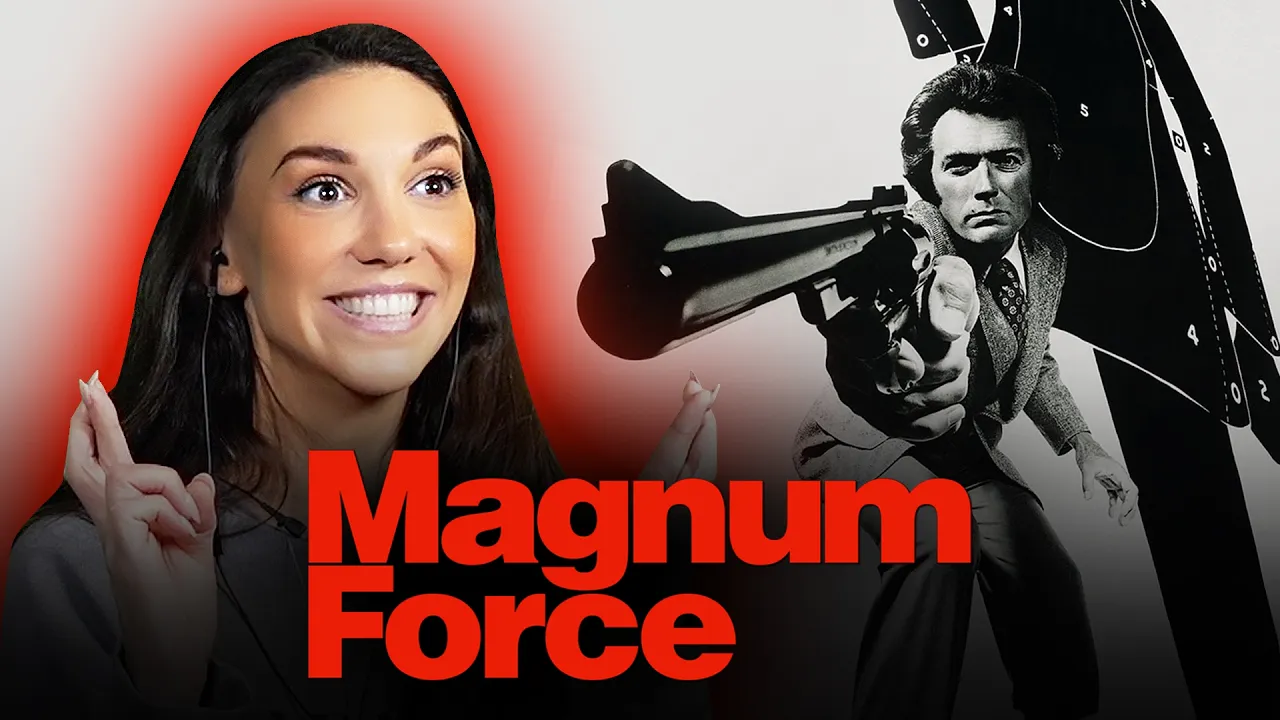


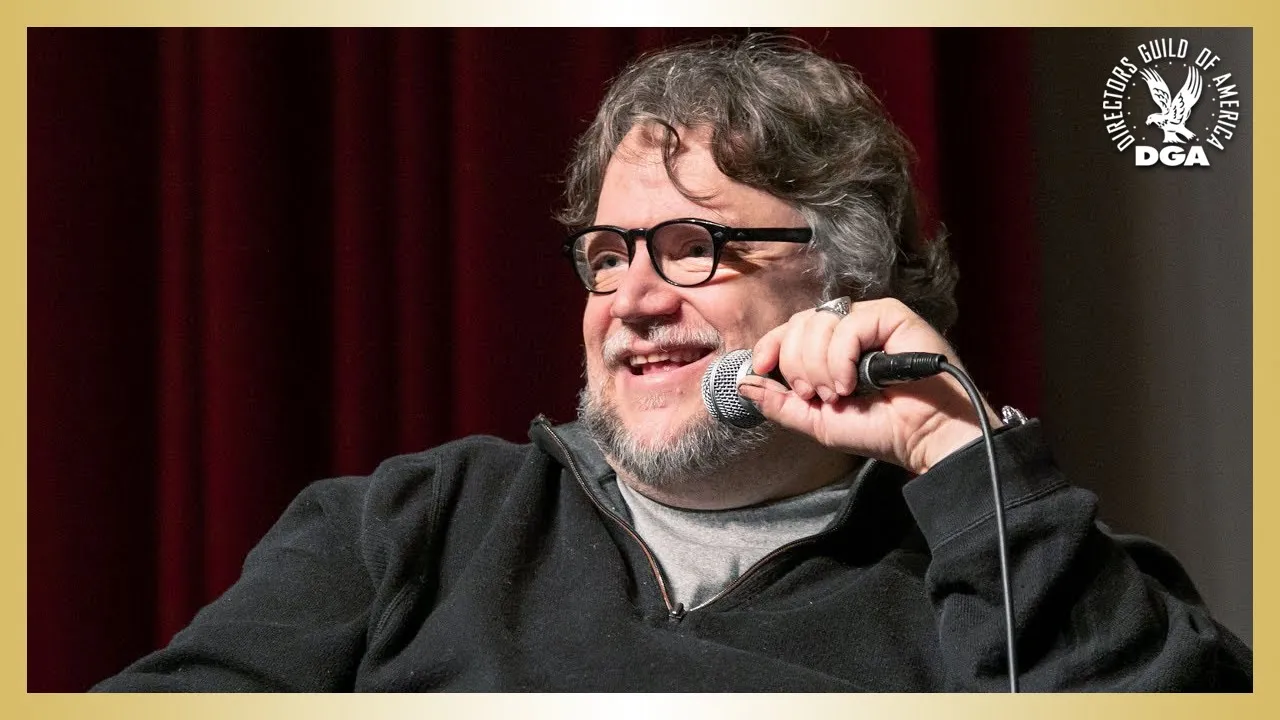


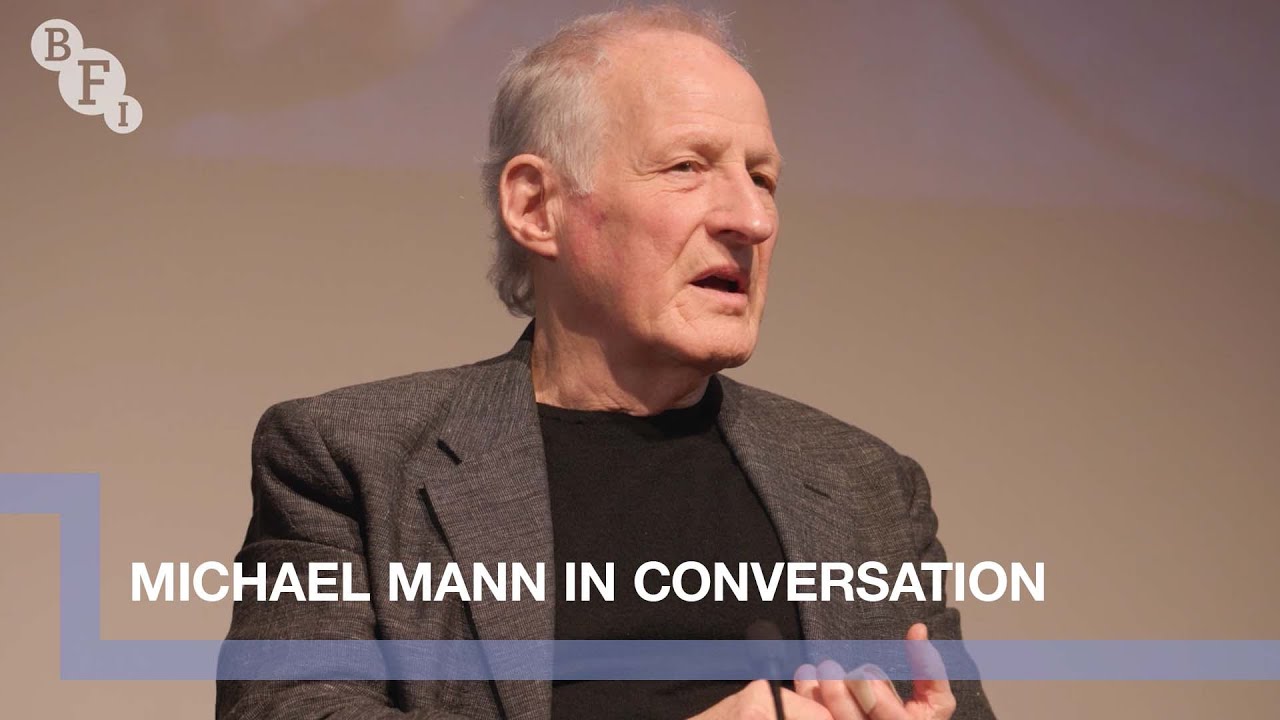
Master filmmaker Michael Mann reveals that creating compelling cinema requires directors to build characters with complete psychological depth, drawing from extensive historical research, personal interviews, and sensory details to craft authentic performances that resonate emotionally with audiences. His approach involves understanding not just surface-level traits but the complex motivations, backstories, and internal conflicts that shape human behavior, allowing actors to deliver performances that feel spontaneous and real.
Michael Mann on 25 Influential Films: A Masterclass in Cinema
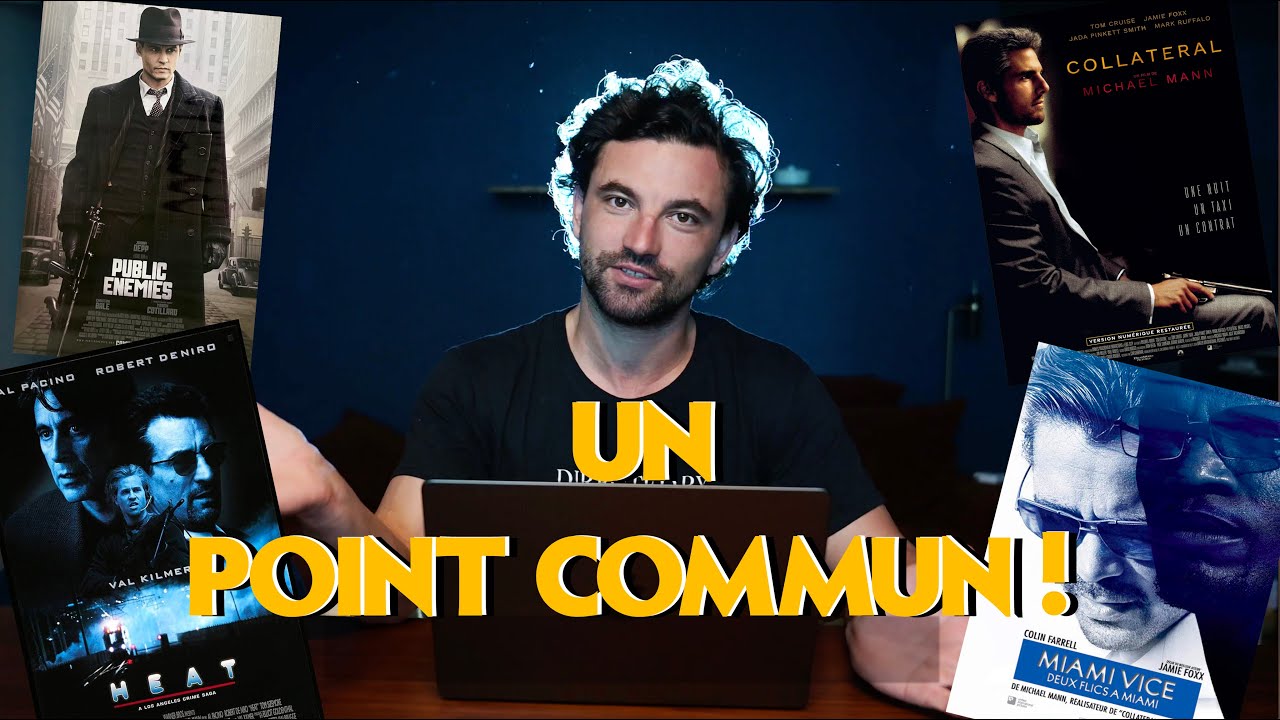
Added:Familiarity with Michael Mann's filmography, particularly his signature works like 'Heat', 'Thief', and 'Collateral', to understand his aesthetic references.
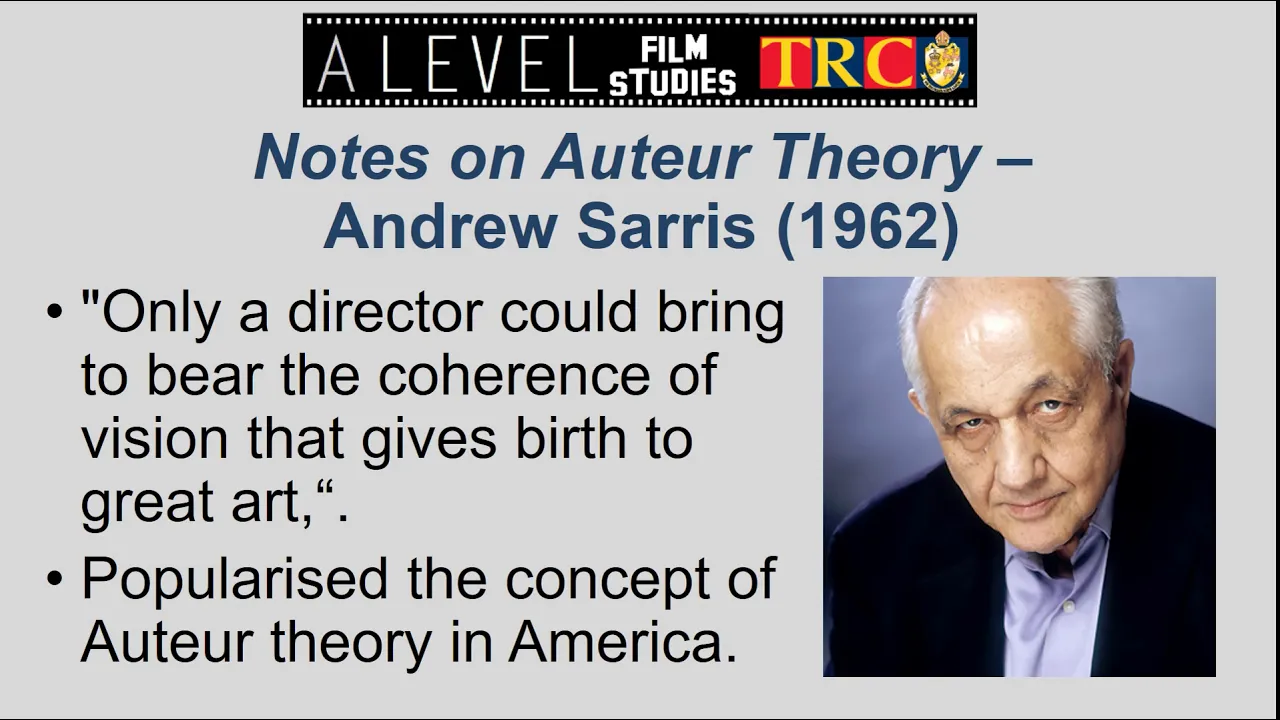
A foundational understanding of Auteur Theory, which posits the director as the primary creative force and 'author' of a film.
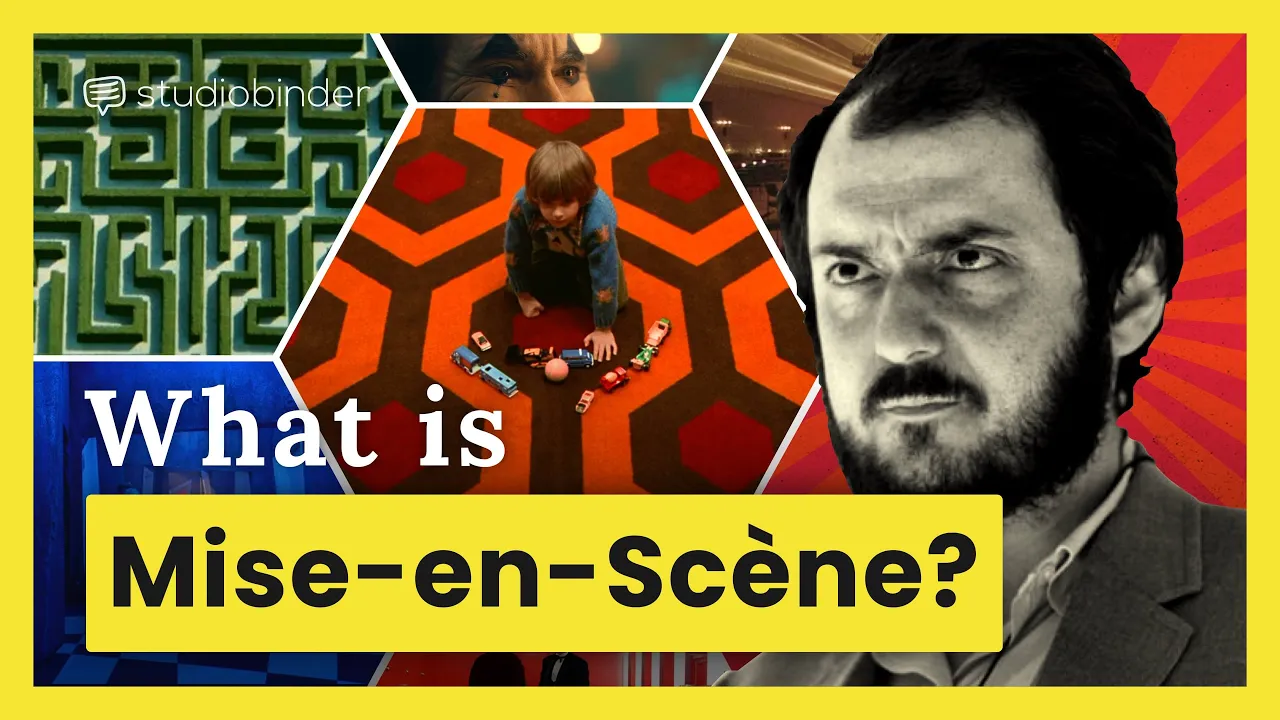
Basic knowledge of cinematic terminology, including mise-en-scène, cinematography, montage, and sound design.
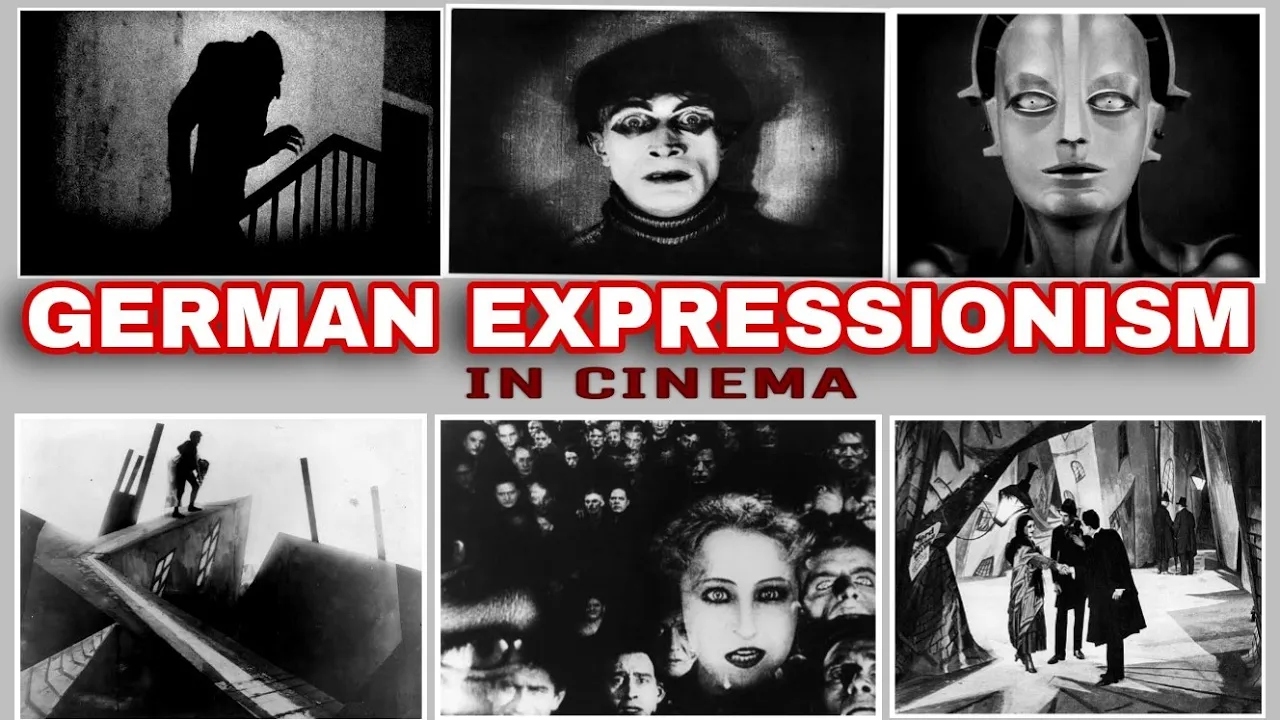
An introductory awareness of major movements in film history, such as German Expressionism, Italian Neorealism, and Classic Hollywood, which frequently serve as standard reference points for directors.
Conducting comparative scene analyses mapping specific techniques from Mann's cited films directly to sequences in his own filmography.
Deepening study into the evolution of digital cinematography, exploring how Mann pioneered the use of high-definition digital cameras in films like 'Collateral' and 'Miami Vice'.
Exploring the thematic representation of professionalism, isolation, and urban geography in neo-noir cinema.
Applying director-level pre-visualization and mood board curation techniques to one's own screenwriting or directing projects based on historic cinematic influences.
87.8K views4.1Klikes51:45Original Release: 2024-07-31
- Michael Mann, thank you so much for coming out to the beautiful Aero Theatre.
(film reel clicking) We're just gonna have a chat about cinema.
This is the perfect place to do it.
But before we get into that, let's talk a little bit about the Michael Mann Archives.
So could you tell us why you decided to bless us with this bounty of insight into your filmmaking process?
- The impetus to do this probably began with the first time I decided I wanted to become a film director, which really wasn't much of a decision.
It was one of the only times in my life where as if the sky had parted and a bolt of lightning came down and said, "You are gonna do that."
I was an undergraduate. It was at Madison, Wisconsin, in the middle of the winter, freezing cold, at 10:30 at night, and I was walking by myself down Bascom Hill and having just seen a movie in a film history course.
And, you know, this occurred to me, this is what you're gonna do.
And I've been tortured by that, figuring out what my life was gonna be.
And I think I'm fortunate in having arrived at something that I am absolutely as unremittingly enthusiastic about, and unwaveringly excited to do, you know, as I was when it first happened.
And so that work, which is an adventure, that occupies a year and a half of your life, it's almost as if there's two motion pictures getting made.
There's Ferrari, which is a little over two hours, and then there's the whole existence of the whole making of Ferrari, which is a year and a half.
And it has tremendous dimensional breadth of all that we struggled and wanted to do, the adventures that we went on to discover what's the foundation.
Who was Enzo?
Who's Enzo in 1921?
What does it mean to be an orphan in Turin with your father having died and your brother having died?
That insecurity, how does that manifest into a certain aggression that made him a race car driver in the 1920s?
Or why does Laura Ferrari walk the way she does?
What is their marital relationship?
What is marriage?
What are the attitudes?
What's the cultural anthropology of provincial motive in 1957?
In other words, I believe that lives in a cinema are as complex as your life, everything that's made you who you are.
And so we try to build those things, and it's a combination of history, historical research, interviews, very sensory things, sensory input, music, atmosphere, color, everything you can imagine, as well as all the technology and engineering that is artistic in its end result, but may be quite intellectual in terms of what you have to discover to do it.
So the breadth of all of that effort, to me, has always been a spectacular adventure.
And I've always been very excited about it.
- So I was digging around in those archives, and I was so fascinated by the annotated script of Ferrari, and as well as the character breakdown sheets with all of their dynamics and their backstories.
And, you know, some directors don't care about backstory as much. They just let the actors do their thing.
But I think it's so refreshing how you go all in.
So I'd love to hear a little bit about your process in that regard.
- I think an actor and me, as a director, has to know everything.
It has to be a complete life.
As complex as your life or anybody else's life is to them, that's how complex life truly is.
And so that has to do with, you know, why are you the way you are?
When I left film school, in London, I got a job at 20th Century Fox in London, and we were working for a while on a picture that never got made called Nine Tiger Man, starring Robert Shaw, directed by George Cukor.
An event occurred that was seminal for me.
20th didn't get him a work permit, and he was auditioning actresses, and so there was a British director directing the actresses, and we were standing on the sidelines watching this.
And there was an actress that George was interested in, and the director was struggling, and the performance was not very good, and it wasn't getting there.
And finally, in a very gracious manner, George went up and asked if he could have a word with the actress.
And he talked to her for about ten seconds, and I don't know what he said.
But after those ten seconds, on her next take, the transformation was total.
It was a completely different performance, and it was legitimate, and there was something authentic there.
What I took away from that was that if I'm gonna be a director, you are supposed to know how to do that.
Your obligation is to artistically understand the language of the individual actor and be able to communicate to them in a way that has that kind of effectiveness.
You ask yourself, how does his character breathe?
How does he walk? How does he talk?
How does he think? What's his value system?
What does he think about women?
What was he doing when he was going through puberty?
Neil McCauley in Heat.
What kind of clothes was he wearing when he was 11 years old and a foster child with hand-me-downs that made him stand out and be ridiculed, to which he had a very aggressive response and that made him, that put him in juvie, juvie put him on the road through gladiator academies.
What is that?
You wind up building these characters in this powerful way.
The significance of the archive as it relates to something in Ferrari has to do with, for example, the scene where Enzo and Laura confront each other.
She's discovered, after 12 years, what everybody else in Modena knows, that he has a whole second family, and he has another child named Piero, who's 12 years old.
And so it's a pivotal moment of the film.
What we see is a scene that moves in three different parts.
There's a very unsettlingly calm opening to the scene.
It then gets volatile, and it then reaches a climax.
The point of what was so interesting to me about that scene construction is what's really going on outside the boundaries of the text, is that is the motivation for Adam as Enzo, which is one thing, which is that he's really going to become liberated from duplicity through his confession.
Because he now knows she knows, and 12 years of duplicity is over.
And so he enters with a calmness to it.
She is very factual and matter of fact in her reception of it until a certain point, and then she's ignited.
And then Laura, to his surprise, accuses him of being responsible for their son Dino's death.
This is a shock to him.
For Adam, the second thing is that he's being accused of his death, and then he reveals his own perception of his own self and his responsibility, that hubris, the great engineer.
I thought I could save my son.
I couldn't. The great engineer, he failed.
And we never understood.
There was a whole other dimension to how he condemned himself for this.
Then he wants to maintain the history of this relationship with Laura.
And then she, after being ballistic and operatic, suddenly, a switch turns, and she has a sudden flattened affect that's almost sociopathic.
And what is she seeking?
She's seeking the means of destruction of the factory.
The ability to exert a completely nihilistic motivation and destroy everything.
The way the scene comes to us is because Penelope is action.
What she wants from him, her action, is one direction.
What Adam, as Enzo, wants is a completely different direction.
Neither of those directions are what the scene's about.
But it's the collision of the two that creates what the scene is and what the scene has to do for the storytelling.
To bring that into, or manifest that into an emotional immediate reality that's completely spontaneous as if it's happening in real life.
And it is for these actors.
It is happening in real life.
That's the work, and that's what the archive is about.
- Well, all of that work really shines through.
And Enzo and Laura are such interesting, strong characters.
And Ferrari has such immersive and dangerous racing scenes and, you know, I cannot help but link these elements to a movie I was thrilled to see on your list, which is Turbo, of course.
(both chuckle) Oh, it's time to talk about Turbo, Michael Mann.
- Okay. - Because I just rewatched it.
I had watched it previously with my dad about ten years ago.
I enjoyed it.
But then on rewatch, I was downright charmed by these animated snails.
So I would love to hear your thoughts on Turbo. - "Why Turbo?"
I've got a precocious eight-year-old granddaughter, that's why Turbo.
And we were having pizza, and she got to pick whatever she wanted to watch, and she picked Turbo.
And so we saw this. I was blown away by the animation.
It's got Ryan Reynolds in the voice of the snail.
The writing is fantastic.
It's very, very funny.
The animation is first class, and it ends with racing.
It's not because I'm a fiend about racing.
But I know a lot about it, and they happen to get all the racing really right.
Putting aside the racing, it's absolute-- I wouldn't say charming. I thought it was just, I thought it was hilarious.
And just really, really good quality animation.
- Oh, I was laughing out loud, especially with the Paul Giamatti snail.
I really enjoyed. (chuckles) See, I could spend the whole interview talking about Turbo, but we're gonna move on to a picture of equal heft and importance, Battleship Potemkin, of course. (chuckles) Oh, man, that film is just a master class of montage, dialectical montage.
I remember studying the Odessa Steps sequence, - Right. - in my own film studies courses, pretty much all of them.
So I know that dialectics and labor politics are very, very essential to your work.
So could you tell me a little bit about how Eisenstein's direction of this very influential film helped guide you?
- Well, it's a lot of things, but primarily I had read Film Form and [The] Film Sense, which is, to me, is a central body of film theory and influence.
So much of how films are put together and its orientation begins with montage, meaning everything you're doing in a shooting is to mine what you need to make the film in the editing room.
But you preconceive what that is, and then you go out and you do that thing.
But the notion of something moving through time for two hours and the collision of the different components that you are orchestrating, to me, is what cinema is and is very much a dialectic.
I look at a scene.
I start with the approach of a drama's conflict.
Where is the conflict?
It's probably informed what I do in a lot of different ways.
One of the things that Eisenstein talked about was the different kinds of montage, was intellectual montage, to start building the kind of dialectics that also show up in baroque music, whether you're talking about Bach, or maybe even earlier, Thomas Tallis.
I mean, if you think about the relationship of the dynamic forces that are in Heat, it's a very good example because you are invested, emotionally invested, in Neil McCauley, the Robert De Niro character.
You are equally a hundred percent invested in Vincent Hanna, the Al Pacino character.
And when you're with Neil McCauley, you want him to break free, to escape, to have a life with Amy Brenneman.
And when you're with Al, you want him to get Neil McCauley and to succeed.
And both of those are-- there's an inevitable vectoring into a conclusion, which is exactly a Hegelian kind of dialectic.
And they collide, and you're able to maintain multiple sets of reactions, and it endures.
And that, I think, is one of the reasons why interest in the film has sustained, because it doesn't wrap itself up neatly and become fast food.
Having those multiple layers of emotional understanding and intellectual understanding, all of that kind of stacked up, if you can make that to work, that's kind of what Eisenstein's talking about.
And that's there in Potemkin.
But there's many other kinds of things as well, including like the organization of shapes, of space, if you like.
If you think about the ending of Last of the Mohicans, it's exactly that.
When we're in close, when we suddenly-- the building up of that rhythm of being very close to when we suddenly expand and see the vast vista, that's all designed.
None of that's by accident or sitting around saying, "Oh, here's these shots in the editing room, how shall I put them together?"
That's designed and thought about ahead of time.
So all of that, to me, is something that was invented off a blank piece of paper by, in his writings in 1922, '23, and '24, and then in Potemkin.
- Yeah, and the next on your list is another major heavy hitter.
It is Apocalypse Now, which is just an incredible five-out-of-five-star masterpiece.
So I wanna know about why you love this film.
- Coppola captures something that's so difficult to do, which is, if you took your emotional reactions to three insanely dynamic years, which is, let's say, the 1960s, and put them all into some version of a mental Cuisinart or something on steroids, and how you felt about it, he manages to capture that in this film.
It's a combination of many factors, but it's the heart of darkness.
It's going up the river.
The journey in and of itself is a journey to someplace, an exploration of the ineffable pathology of that war, particularly when it's winding down in the 1970s, the inversion of everything.
The war was apparent to my generation, including to Ali, Muhammad Ali, as well as everybody else who actively denounced the war as a horrible, horrible mistake.
It took until the late '90s for everybody who was the authors of the war, regardless of where they were on the political spectrum, to come to the same conclusion.
It's a terrible mistake.
Umpteen million Vietnamese lives later, 65,000 American dead, this is the horror that was perceived, but the dark poetry that Francis captures is staggering.
And it wouldn't be the same if The Doors, [at] the end, was not the central piece of music in the whole film.
- You have quite a few war films on here.
- Oh. - Yeah.
Up next are The Conformist and From Here to Eternity.
So these ones are specifically post-World War II, and I'd love to hear more about them.
- [Mann] The Conformist is a film I'm in love with because I think it's cinematically perfect.
Storaro's lighting is absolute genius.
Bertolucci's perspective of what the story is.
Secret policeman in Mussolini's Fascist Italy.
The strange untethered connection he has to any sense of an identity and reality of his own, which reminds me of like a lot of people in our previous administration, maybe our next administration.
But the stunning evocation of it, which is antithetical to the soullessness of Trintignant is fabulous.
From Here to Eternity, I had never seen the film until about four or five weeks ago.
And it's special.
I mean, I was born in 1943.
My father was a combat veteran in the Second World War in Europe.
What I loved about From Here to Eternity is that there's a subconscious awareness of everybody making these films that we've just come from this horrendous, world-shattering event.
It's affected everybody's lives.
Whether it's a war film or not a war film, it means a couple of things.
One is that there's usually a drive into tough political questions, hence neorealism in Italian cinema, neorealism in American cinema.
Why live life?
With that fundamental question, it was the origin of existentialism, or Sartre and Camus, which influenced cinema.
And I think it also manifests itself in the '50s in an unsentimental dark understanding of human nature in relationships, okay?
So the sentimental relationships, the completely rounded Hollywood-esque studio characters of a lead like Burt Lancaster played, that wasn't happening in the 1950s in movies like From Here to Eternity.
He's complex.
I'm also a big fan of Fred Zinnemann.
- Oh, yeah.
And I know his son, Tim, who produced the first dramatic film that I did, which was The Jericho Mile and was shot in Folsom Prison.
- Wonderful connection there. Wow.
The next movie on your list is The Hurt Locker, - Right. Right. - by Kathryn Bigelow.
Yeah, tell me about that one.
- [Mann] I mean, Renner's performance is brilliant.
To have these obviously dynamic external events, war, and takes us on a personalized journey of somebody who does extraordinarily dangerous work, and it gets progressively more dangerous as his tour is about to end.
And then he's able to leave, and he pushes it and pushes it.
There is no lethal outcome.
Then he's back in civilian life, can't tolerate it, and then he signs up for another tour.
That addiction to the adrenaline, to the, I wanna say, almost the pathology of a cyclic event.
It's something I've observed, and it's common.
You find it among war photographers, too, where there's an addiction to the adrenaline of it and the escape of it, even though you're putting yourself in harm's way.
A friend of mine who's a war photographer, said, "How is that an escape?
I could see where it's a commitment, and I can understand the adrenaline rush, but how is it?"
Well, it's an escape from credit card bills.
Because you're escaping into life and death situations.
You can't worry about whether or not, you know, what showed up on the Master Charge this month.
But anyway, I thought her work is so incisive and quite brilliant, and she's really a formidable director.
- One last film about war, but this one is more about the ridiculousness than the horror.
It is Dr. Strangelove.
Yeah, another incredible pick.
- [Mann] Dr. Strangelove, there had to be a half dozen major studio productions at the time Dr. Strangelove came out about the danger of a nuclear holocaust, about the danger of nuclear warfare.
And none of 'em stand the test of time.
The only one that does, hands down, is, of course, Dr. Strangelove.
Why? Because it just drives right to absurd ridicule.
The movie is hilarious.
It also is very formative for me.
But aside from that, it doesn't sermonize, it doesn't do morality plays.
It's not about witch hunts.
It absolutely is a balls-out assault through ridicule, through George C. Scott as General Turgidson.
How Kubrick could have made it without people kinda just breaking down and cracking up, which has happened to me a couple times, working with Al Pacino particularly.
In one particular scene, I had to, while I was operating, I had to walk away from the camera.
- Wait, which scene? - Oh, the scene when he goes into the chop shop, and Ricky Harris is there.
They engage in some dialogue. He says, "My brother, my brother'll meet ya," and Al looks under the table to see.
Then he starts breaking into song.
I mean, which was improvised.
- "No, no, I swear. He said no.
'Cause he in Phoenix." - "Ah."
- "Listen, listen, man. ♪ By the time I get to ♪ - I swear, I swear, man. ♪ Phoenix ♪ - Tonight's the best I can do for you." ♪ He'll be risin' ♪ ♪ He'll probably leave a note right on the door ♪ - Let's roll right into The Loved One.
Tell me about The Loved One.
- [Mann] Jonathan Winters and Rod Steiger in The Loved One.
I mean, you could put both of those performances on a loop, and I could probably sit here for eight hours and watch it again and again and again.
There is something, there's a particular genius in surreal humor to me, to an absurd humor, that projection of the self into a character that is absurd, wild, but was fantastic, is when that projection is total and authentic.
It could be, you know, for me, there's no difference between that and Lawrence Olivier or Robert De Niro, who also sometimes is very, very funny.
- And then you have another comedy on here, and it's a contemporary one.
Poor Things by Yorgos Lanthimos.
I loved this film.
I saw it twice in theaters.
I have a big poster of it.
And I just really wanna know why you chose it, because it's so, it's so whimsical and so absurd, which your films aren't really.
- Well, it's really courageous.
I mean, it's absolutely cutting edge.
It's on the cutting edge of what's now, what's next.
And it's very expressionistic in a wonderful way.
There's a great challenge and a great degree of difficulty in bringing film form that expressionistically out there with authenticity.
Any explosion of style is possible, but there's nothing gratuitous about any of it in Poor Things.
But to me, it's a spectacular car crash of The Bride of Frankenstein, Dr. Strangelove, in a way.
And if you look at it, it bears a very close relationship with Dr. Strangelove, now that we're talking about it.
Because Strangelove deals with serious considerations, beginning with Eisenhower denouncing the industrial military complex in as dry and fast as you can imagine in the late '50s.
The threat of nuclear war, it deals with those issues.
Poor Things is dealing with gender politics.
But it does so in, I think, in such a brilliant way of taking it really to the heart of issues and extremes, and then making something totally new off the top of that.
- You have another on your list that also takes place on a boat, much like the Alexandria chapter of Poor Things.
It is L'Atalante.
- [Mann] It's a very political film.
It's a very social film.
It's a very tragic film, not in the tragedy of the film, but in the tragedy that its director, Jean Vigo, died.
First of all, it's brilliant in the cross section, a slice of life of working-class France in the period, in 1934.
And if you see the scenes that are shot in the boat, in the cabins, and just look at what's behind the people's heads and look at the details of the set decoration and the art direction, it's fantastic.
A whole life is being evoked by the object somebody, a character, decides like you or I would do in a confined space, what he is gonna put on his walls, and everything is a message.
Everything. There's nothing in there that doesn't mean something.
It's all put there by design.
I think that's fantastic.
The movie's brilliant.
It's highly recommended.
- The Sweet Smell of Success.
Let's just jump right into that one because that is one of the most incredible screenplays.
Every line, I was like, my jaw was dropped.
I couldn't believe how well written it was.
So tell me a little bit about how that screenplay maybe influenced your work as well, especially because it is a film about journalism and ethics in journalism and corruption, and The Insider dabbles in these themes as well.
- The Insider is very much about a man, a very flawed human being, Jeffrey Wigand, and Lowell Bergman, played by Al Pacino, who has a very cynical world-wise integrity.
And his authenticity is important to his own definition of himself.
He's completely aware as a human being, and events occur that make it so that he could no longer do this work, in effect.
That's all true and authentic and real.
There's nothing fictional in the film.
Sweet Smell of Success, first of all, it's about Walter Winchell.
That's who the Lancaster character is based on.
And in fact, the response to it, to the film, was so angry that Sandy Mackendrick was never able to work in this country again.
He was blacklisted, in effect, because Walter Winchell, at that moment in time, was that powerful.
But to me, you know, if you're sitting there, before you're making the film, when you're thinking about this screenplay, it's like, can we capture the zeitgeist of the most extremely intensely urban landscape on the planet?
New York City.
Can we capture New York City, the energy, the width, the language, the competitiveness, the aggressive, the rate of it?
You know, where there's a morning edition and maybe a lunchtime edition and an evening edition of a newspaper, and everybody is living in this instantaneous immediacy of an ultra now, you know?
And then to have Clifford Odets along with Ernie Lehman is brilliant.
But the dialogue is beyond, I mean, it's so-- My relationship to it is aspirational.
- Yeah. - That's it.
- And now we can move on to another incredible film, I Am Cuba.
Oh, wow.
I saw this on 35mm last year in a sold-out crowd.
I'd never seen it before.
I don't even understand how they could have shot some of these scenes, like the sugar cane harvest and the student rebellion near the end.
So all of that is to say, you've said that the evolution of political consciousness also in the film helped to guide you in your development of Ali.
And I would love to hear more about that.
- The political consciousness of I Am Cuba suffuses the movie to the point that it's almost subconscious.
It's not, "Shall we make a movie that is politically conscious or is about the policy?"
It is a given that that's what it is because the sense of we are organized as human beings in our lives and in our relationships with each other, economically, politically, is an issue that's larger than me, the individual.
Ali in this moment in time in his life has the same question.
The movie Ali is organized around Ali's quest to answer the question, "What should I represent?"
Meaning, what should I represent to all those rising up from below, starting with Black Americans.
And he turned the world upside down.
But there is that widening of the definition of the self.
Ali knew that.
He knew that he was a representational figure, and he felt an obligation about representing what, and he starts with, "I get to be who I wanna be."
That's the central belief that he had early on, about who that should be.
And then he was very literate about third-world National Liberation Front movements that were occurring, particularly in Africa, and had been since a very early age.
Because in Muhammad Speaks, in the central section, they were covering the struggles in Angola and Mozambique in the early '60s.
Those struggles weren't new to him.
It's a long way of going about saying that the end of that quest for him happens in who he represents himself to be in the Rumble of the Jungle, when the world is pretty much polarized.
The kinda establishment figure is George Foreman, and Ali seems to symbolize, to the world watching this fight, something progressive.
Something that's aligned with all the forces that are trying to rise up from below.
And that's the quest of the film.
That's what the movie's about.
It's very influenced by a book called Redemption Song by a sportswriter named Mike Marqusee, who draws primarily about Muhammad Ali.
It's also about Bob Dylan, both of whom were politically motivated, but they weren't gonna be owned by anybody or anything.
It became, "I get to be who I wanna be," and then from within that integrated unity of oneself, there is the awareness of, politically and socially, "I feel an obligation to represent something."
That's the driving impetus of the film So that's how the two films relate.
- [Mia] I'm very glad that Ali is readily available to watch, because I Am Cuba was lost for so many years until the '90s when Martin Scorsese campaigned to help restore it.
- Yeah, it's because Martin Scorsese and Francis Coppola became executive producers, and kudos to them for restoring that film.
- That's gonna bring us right into Marty's Raging Bull. - Right.
- What a picture.
I know that you've talked about the choreography and the staging and the blocking and all of that. - Right.
- And I'd love to hear more about what you admire about that.
- You know, I think that that film is brilliant because it's a character study.
It's a sublimation of frustration into aggression, hostility, and self-destruction.
And at the end, there's redemption for this man.
It's terribly difficult to take a character study and imbue in it a narrative momentum that makes it be story.
That's hard.
But that's what the film achieves.
It doesn't have a typical dramatic structure to it.
But we're so engaged because of Marty's genius and what Bobby's doing that we're totally involved in every aspect of it.
- Your films leave such a lasting legacy.
I mean, I just saw Miami Vice in a theater recently, and it was sold out.
People were cheering.
They were reciting along with the lines.
Like they love this movie.
My friend has a podcast called Miami Nice, where they just talk about how much they love it.
So how gratifying is it to see your work find all these new audiences over the years?
- It's very exciting.
You know, there was a screening at the Egyptian, a theatrical screening of Heat.
Mostly a younger audience, and a question was asked, "For how many of you is this the first time you're seeing it on a big screen?"
And it was probably about 85% of the audience had never seen it on the screen.
And we make these things for big screen.
I mean, that's the real intense experience.
And the intensity of the experience to me, every calibration, every minute calibration that we do, which is also what some of the archives is about, because all those, the whole point is that all those calibrations, everything that's going on behind the curtain, that's what the archive is designed to deliver.
But all of it is for that kind of a massive impact, 'cause that's what you wanna do.
It's not that I want audiences to be there and passively hear this story that's being told.
It's that I want them in the film.
I want them projected in the film.
That's what I want to be.
I want that.
I wanna have so much of that experience, I'm dreaming away with it.
I'm in that scenario.
I'm in those situations.
So that's the ambition.
And I think that that's probably true for a number of directors.
It's true of many directors today.
Denis Villeneuve is one.
You know, Alejandro is another one.
Guillermo is another.
But it's also true for people who discovered cinema at the same time I did a little bit before I did.
- Well, you just brought up Alejandro and Denis and Guillermo.
You put a couple of their films on your list.
You have Biutiful, Incendies, and Pan's Labyrinth.
- I was so blown away by Biutiful, when I saw the entry of one's consciousness into the magical realism of that picture, the circumstances of it, Alejandro's poetry.
And I know him well, and there's not a cynical bone in his body.
And the same with Guillermo.
Javier Bardem's character in Biutiful, as a low-level gangster, who's nevertheless a really devoted father, but he has some kind of a social consciousness about some of the victims and some of the peoples he's dealing with.
He has two or three months to live, and that's it.
And he has this connection with these spirits that he's in communication with.
I just think the world of what he's doing.
I remember seeing Incendies by Denis Villeneuve, and I thought I could at that point write exactly where his career was going to go.
I thought it was a brilliant, brilliant piece of work, and I made an effort to contact him.
I don't know what it is.
There's a certain feeling you get when you've been injured or something, and you're in a hospital and you're in a rehab ward, and you get five milligrams of morphine.
Well, that's pretty much it for me.
So, you know, it transports one.
And then Pan's Labyrinth is also a real favorite because the use of a fairy tale as opposed to fable.
Fairy tales are not behavioristic.
They're very Freudian.
They use symbols.
Bruno Bettelheim did a lot of work on the nature of fairy tales. And, like a dream, they have the power to invade our consciousness on many, many levels as we take it in.
That's a particular genius that that Guillermo has.
- The next film on your list, The Passion of Joan of Arc.
Oh, my God, those close-ups of the human face are just incredible, indelible images.
And you also are kind of known for your incredible close-ups, if I can say that.
I really admire the way you frame a close-up.
I would love to hear about how Passion of Joan of Arc maybe helped inform your work.
- Carl Dreyer's Passion of Joan has to do with the compositions and how expressive.
It's a study in, for me, it became a study and something to study in how expressive can be the human face, depending on lighting, and in variations.
So it became something I knew I had to find because the life-- the situations in The Insider were life and death situations caused by people talking in rooms.
There's no bank robbery in Insider, but in real life the Fortune 500 company decides that they're going to destroy your life and have an unlimited budget for litigation and go after you to that extent.
It could drive somebody to where it drove Jeffrey Wigand.
So I knew the stakes were so high, and the screenplay was there.
So then it became, when I'm shooting this film, "What kind of compositions?"
"Where's the camera?"
"How do I bring audience?"
"How do I create that connection to the circumstances and conditions for Lowell Bergman?"
Whose career never recovered, by the way.
And for Jeffrey Wigand putting so much on the line.
- Next one on the list, Asphalt Jungle.
- Asphalt Jungle. - Yes. Yes.
It is a heist film.
And it's Marilyn Monroe in her very first feature film role. - Right.
I think I've been really interested in the last, I don't know, four or five years in that period of the 1950s and that cinema, and trying to understand why is it the way it is?
Why does it make me feel the way it makes me feel?
And why it's so different from the cinema of, say, the 1930s and the early '40s and then what comes along in the 1960s.
And I think it is the effect of the war on my parents' generation and a psychological realism about relationships.
Hollywood in the '30s classical Hollywood in the '30s, painted a picture of the way it's a fantasy.
Here's America.
It's really their view of here's how America ought to be.
It's not how America was in the glamorous period of the 1930s.
That postwar sensibility, which is also there in the characterizations, which are extremely atypical, if you think of mainstream Hollywood.
Louis Calhern is brilliant in his role, his obsession with the young Marilyn Monroe, with the lost youth, and he's not betraying his wife as affection and his commitment to his wife, it still coexists.
So, the two coexist.
There's not really an emotional or intellectual betrayal, if you like.
So those are very interesting complex relationships that you wouldn't expect in America and Hollywood cinema in the 1950s if you were looking at American Hollywood cinema from the point of view of the 1930s.
So that's what was stunning to me.
And I think, again, it's after the events and the horrors of World War II affecting everybody, and so I think that explains it.
The same way that, you know, neorealistic cinema in Europe, Italian neorealistic cinema is explained by, you know, the events in Italy.
- And I love that you paired Asphalt Jungle with Out of the Past, because you called them both masterpieces of postwar fatalism.
And I think that's so fascinating because the ending of Out of the Past has really stuck with me.
I think it's one of the most incredible endings I've seen.
- [Mann] One of the things that's interesting about Out of the Past is that so much of the drama is based on backstory that happened that you didn't experience.
And you're gonna have to find out about it in the present.
You find out about this relationship that Robert Mitchum had.
You find out about the girl, Jane Greer, that she stole 40,000 from Kirk Douglas, and then she left him and hooked up with Mitchum, and then she left Mitchum and went back to him.
And so this freewheeling, viscerally motivated, you know, kind of strange navigation of this woman is very, very interesting.
But there's a quality to the totality of the film and its choice of locations.
You're in the Sierras someplace, and with fir trees and a gas station, and it's somewhere in central California, but you don't quite know where it is.
And it just has a crisp edge to the settings that reflect on the people, who all come from a reality that you can imagine.
But it's so, so what does that mean?
It means that in the present tense of the film, the way the people are, how they look, how they act, how they talk, it's a fractal.
It's only a fractal.
You don't know this whole other story that happened.
But they're so authentically and skillfully rendered as a fractal that even before you connect them to their past that you then find out about.
So it's so skillfully put together, and it's very hard to do.
Now, you don't know that it's very hard to do when you're an audience.
As a filmmaker, I know it's very hard to do.
- Let's move into Bong Joon-ho's acclaimed Memories of Murder. - Right.
- [Mia] But particularly in relation to Manhunter, which I know does precede that film, but - Right. - I'm curious about how you feel.
- Memories of Murder is a South Korean film about the first confirmed serial killer in South Korea and the inability of detectives to vet.
And I [Saw] the Devil, if you take the two of them together, the ability to process an investigation and make an investigation be productive.
The reason for that is that in all detective work, it starts with understanding what the motive is.
If a burglar burglarizes a jewelry store, it's still jewelry, but his motive is cash money.
So because you know his motive, you can predict his behavior, he's gonna fence the jewelry, which means you can start working your fences, who are your informants and find out.
So you have an approach.
There is a critical path you can follow when you understand the motive.
The problem with serial killers is that the motive exists in their fantasies.
It exists in their minds.
It exists in what they think they're doing.
And this a pathological dream of something.
It motivates them to, sometimes they may cut off a piece of the victim's body, they may take a picture, they may do anything so that they can relive the experience.
And that means you have to project yourself into their imagination, which requires sensitivity.
But if you're sensitive like Graham in Manhunter, you're damaging yourself, it's a very destructive course.
At the other hand, you're impelled to do it because only by doing this, by, i.e., including damaging yourself, can you intercede, intercept, and stop what's going on.
Thomas Harris's novel, Red Dragon, that Manhunter is based on is quite brilliant in constructing that paradox within the character of Will Graham.
Now the serial killer Dolarhyde, in Manhunter, is not based on Dolarhyde. It's instead based on somebody I knew, I met, named Dennis Wayne Wallace, who, when I met him, was a serial killer who was in Vacaville, who killed about three or four people.
There's a whole long story about how I wound up crossing paths with this guy.
This man was exactly where he belonged, which was in prison for the rest of his life.
There's no doubt about any of this.
But there's a theme in Manhunter is that duality that is not a contradiction.
It's there when Billy Peterson, as Graham, says to Dennis Farina, as Jack Crawford, "As a child, my heart goes out to the killer."
Because he knows that someone like Dolarhyde, and in the case of Dennis Wayne Wallace, had been a battered infant, not just a battered child.
And horrendous things had been done to him as an infant and as a child.
And that produced this killer.
- "My heart bleeds for him as a child.
Someone took a kid and manufactured a monster.
At the same time, as an adult, he's irredeemable.
He butchers whole families to pursue trivial fantasies.
As an adult, someone should blow the sick fuck out of his socks."
- [Mann] And then he turns to Farina, almost as if he's channeling Hannibal Lecter, and says, "Does that upset you, Jack?"
with this kind of flattened affect tone of his voice.
You know, which is very threatening.
- Yeah.
- And so that contradiction of both are true.
And that is the true complex nature of the reality.
And so Dolarhyde is very much based on Wallace.
Wallace wrote me what he called Jim Morrison psych-type poetry.
He walked around Los Angeles with a hard hat that had a decal on it for Mad Magazine that said, "Support mental illness, or I'll kill you."
He had very dark, very dark humor.
He had a girlfriend who was not really his girlfriend, but he thought it was his girlfriend.
They had a love song between the two of them.
And she had been a go-go dancer at the Mellow Yellow.
The love song, in his mind, was 'In-A-Gadda-Da-Vida,' by Iron Butterfly, which is why that's the end song of Manhunter.
So there's a lot that came in from the periphery, which isn't the periphery, it's the basis of forming these films, which kind of, which is also why the archive, in effect, because that, you know, all of that data, you know, it is yielded effectively in the construction, the artistic construction, of a certain vibe about Dolarhyde, something to do about Hannibal Lecter.
You know, those characteristics, they come from someplace.
They don't, they're not made up on the set.
- We're almost through this list.
We've just got two more. - Yeah. Okay.
- So the penultimate film is Pale Flower. - Yeah.
- [Mia] Which is just a gorgeous Japanese noir film.
And you've mentioned that you particularly admire the opening scenes.
So I'd love to hear a little bit about that.
- You have to see it. (Mia laughs) I can't even describe it.
It's beyond belief.
It is so good.
And it's simply black and white, brilliant photography and editing and shooting.
And again, it's a street film.
It's there, right there with Bicycle Thief.
- Oh. - And it's the same period of time, post-World War II.
Man gets out of prison.
He has an organized crime background with yakuza.
He's a bit out of time because he's been out of touch.
He picks up with kind of an heiress who is self-indulgently hedonistically moving through this kind of criminal subculture for thrills and hedonism.
And she will lead him astray.
And so it's, again, those, it's the same kind of theme as we encounter in Out of the Past and Asphalt Jungle.
And it's, you know, and it's all happening independently.
There's nothing imitative.
- Okay, last film on the list. We're almost there.
So we will end on Manhattan Melodrama because this one has the fewest logs on Letterboxd.
It looks like only about 4,000 people have watched this one.
So, as you showed in your film, Public Enemies, this is the film that John Dillinger was watching right before he was killed.
- [Mann] In pre-production, I knew I was gonna show Manhattan Melodrama, 'cause that's what was playing at the Biograph.
I went, my wife and I went to the Biograph before I even came out to California, 'cause it was our neighborhood theater.
John Dillinger really was killed at the Biograph.
We shot in the Biograph.
And I said in pre-production, I said, you know, I better look at Manhattan Melodrama, not just at the clips.
I looked at the whole movie, and I was stunned because I realized that Clark Gable's performance as Blackie is built on John Dillinger.
Because in 1934, John Dillinger occupied more headlines, more front page space, than Franklin Delano Roosevelt.
He was the most charismatic, newsworthy human being in the United States for the 13 months he was out of prison until he died.
And so there was contemporaneous folklore about him.
So Blackie is very much based on Dillinger.
Now, Dillinger, on his last night he's alive, is in the Biograph watching Manhattan Melodrama.
He's sitting there with Blackie, based on him, and at the end of the film, Blackie is being escorted past death row to the electric chair to be executed.
And he stops and says to another prisoner, he says, - "If I can't live the way I want, then at least let me die when I want."
- [Mann] And then he goes, and that's the end of the movie, okay?
And then he walks out of the cinema.
Meanwhile, Melvin Purvis, including an ex-Texas Ranger Winstead, are setting up this elaborate ambush, 'cause they know he's in the theater.
He walks out, turns the corner, suspects something's happening, reaches for his gun, and gets shot in the back of the head and is killed.
And he drops on that sidewalk.
And so, you know, I said, what is going, what was really going on in the real John Dillinger's mind as he's seeing himself, you know, as one of those popular figures in media, as he's seeing himself portrayed by Clark Gable, then he walks outside and gets killed.
And for Johnny Depp, we are in the same situation because we're sitting in the real Biograph when Johnny Depp falls down on those cobblestones, those are the same cobblestones that John Dillinger died on.
And he lived briefly for 30 or 45 seconds and said something that Winstead heard, and his eyes are looking at a wall.
It's the same brick wall that Dillinger was looking at.
And we're shooting this in 2009.
This was happening in 1934.
And it continued with this film.
In the Little Bohemian shoot-out, that was the real Little Bohemian.
- Wow. - The room that Johnny was in was the room that Dillinger was in.
The doorknob that he put his hand on to open the escape was the doorknob Dillinger, and I didn't even know if the Little Bohemian was there, but discovered, yes, it was there, and it's still intact and nothing had changed, and he even left the bullet holes in the wall.
And we're talking to the owner.
He said, "Oh, by the way, you know, Dillinger left his suitcase behind."
I said, "Do you still have it?"
He said, "Yeah."
I said, "Is it filled with his clothes?"
And he said, "Yeah."
I said, "Well, if we bond it, - Wow. - will you send it to us?"
And he sent it to us, which meant that I was able to have Depp open up that suitcase.
And here's Dillinger socks, his ties, his underwear.
And Johnny was able to put on the same underwear from 1934.
And when a man walks into a store and buys a tie, it's very personal.
It's an expression of your taste.
And when you see what he selected, what Dillinger selected, it tells you something about what was attractive to Dillinger.
It's an insight into character that's phenomenal, and it's phenomenally valuable, you know, and he picked very plain things with one little figure on it.
And he had the same taste which was expressed in his choice of socks.
And it tells us about his, you know, it tells you things.
It tells you how he would pick up a glass, where he would sit in a restaurant, what image, if he's looking at various pictures, what would he find attractive?
There's this vast perimeter of materials that we bring into the formation of character or the ambiance of a scene that makes an actor feel a certain way, that he really is being Dillinger, he really is in this room.
And Melvin Purvis really is in these Texas Rangers outside.
This really is a gunfight that's going on.
- Wow. What an end for Dillinger.
What an end for your list.
What a wonderful end for this conversation.
We got through all of those films. - Okay.
- Thank you so much for chatting with me about all these, Michael.
I hope Letterboxd members watching this add all of these films to their watchlists and sign up for the Michael Mann Archives.
I've learned so much about cinema history and filmmaking process from you.
So just thank you again.
I just, I really appreciate it. - Thank you, Mia.
Thank you for all the good questions.
- Thank you. Thank you so much.
Up Next
18:20
Triumph of the Will: Nazi Propaganda & Film History
@onehundredyearsofcinema
459.4K views•2018-01-21

12:54
Triumph of Orthodoxy Icon: Byzantine Art & History Explained
@BenCallan
2.1K views•2024-08-06

9:49
FastAPI vs Flask vs Django: Choosing the Right Python Web Framework
@TechWithTim
302.5K views•2024-05-26

1:42
Game of Thrones Opening Credits: A Cinematic Analysis
@gameofthrones
46.3M views•2011-04-18
Related Study Plans & Knowledge Roadmaps
Structured learning paths in General & Interdisciplinary Studies
general-studies
Elevator Engineering: History, Physics & Cities
01From Hoists to Safety Brakes: The Dawn of Vertical Lift
02Hydraulic vs. Traction: The Engineering Physics of Elevators
03Modern Speed, Safety, and Algorithms
+ 2 more learning modules
12h5 modules
Explore Roadmap
general-studies
Rubber: Material Science, History & Geopolitics
01Origins of Natural Rubber & Mesoamerican History
02The Chemistry of Natural Rubber & Vulcanization
03The Geopolitics of the Rubber Boom & Colonization
+ 2 more learning modules
12h5 modules
Explore Roadmap
general-studies
Containerization: Evolution, Logistics & Trade
01Ancient Trade & Bulk Cargo: Amphorae to Barrels
02The Industrial Revolution & Cardboard Packaging
03The Containerization Revolution: Malcom McLean
+ 2 more learning modules
12h5 modules
Explore Roadmap
general-studies
Textile Tech: Evolution, Labor & Global Impact
01Pre-Industrial Textiles: Handloom & Cottage Industry
02Mechanization: The Spinning Jenny to the Power Loom
03The Factory System & Global Labor Transformation
+ 2 more learning modules
10h5 modules
Explore Roadmap