










![Quick Revision of Coordination Compounds Class 12🔥 | JEE 2022 [IIT JEE Chemistry👻] | Vedantu JEE✌](https://i.ytimg.com/vi/6IC-MbkiR9U/maxresdefault.jpg)







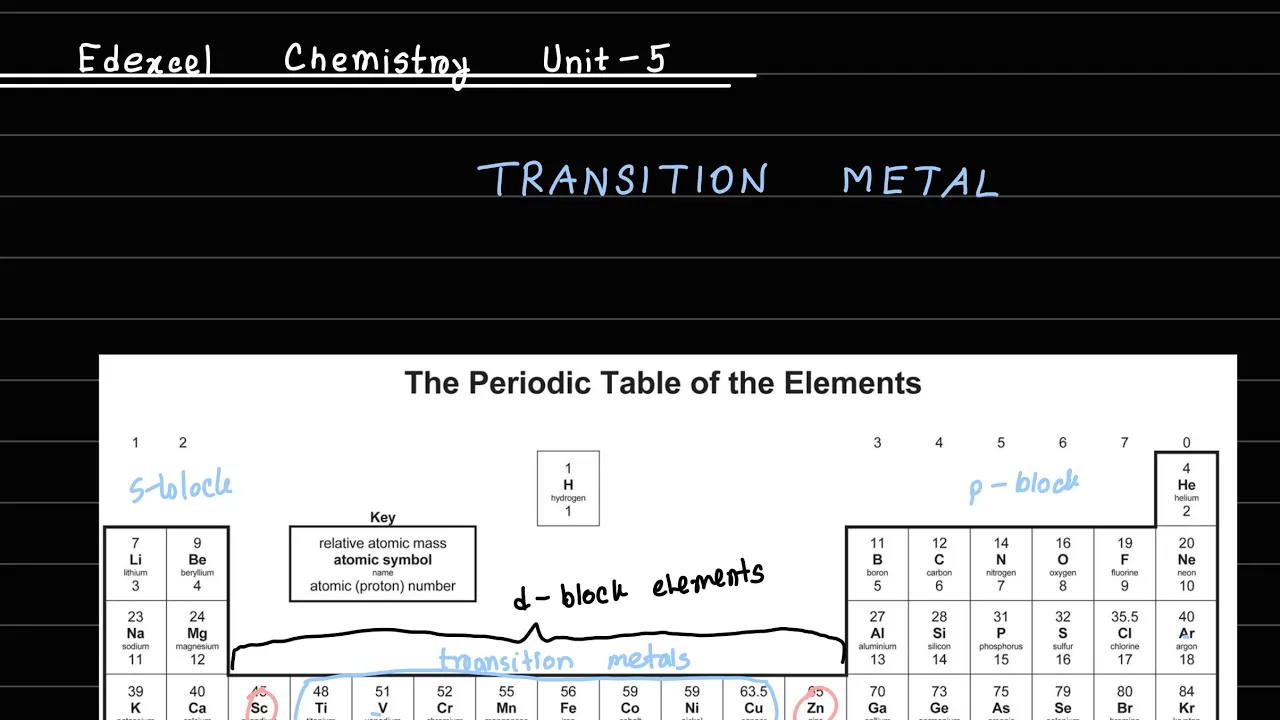
Transition metals (d-block elements) are characterized by their ability to form coordination complexes through their d-orbitals, which allows them to exhibit unique chemical properties essential for biological processes and industrial applications; these complexes consist of a central metal ion (Lewis acid) surrounded by ligands (Lewis bases) that donate lone pairs of electrons, with the coordination number indicating how many ligands bind directly to the metal, and different geometries (octahedral, tetrahedral, square planar, etc.) arise based on this number, while chelating ligands that bind through multiple points create particularly stable complexes due to the favorable entropy change when water molecules are released during binding.
Introduction to Transition Metals: Coordination Complexes & d-Orbitals
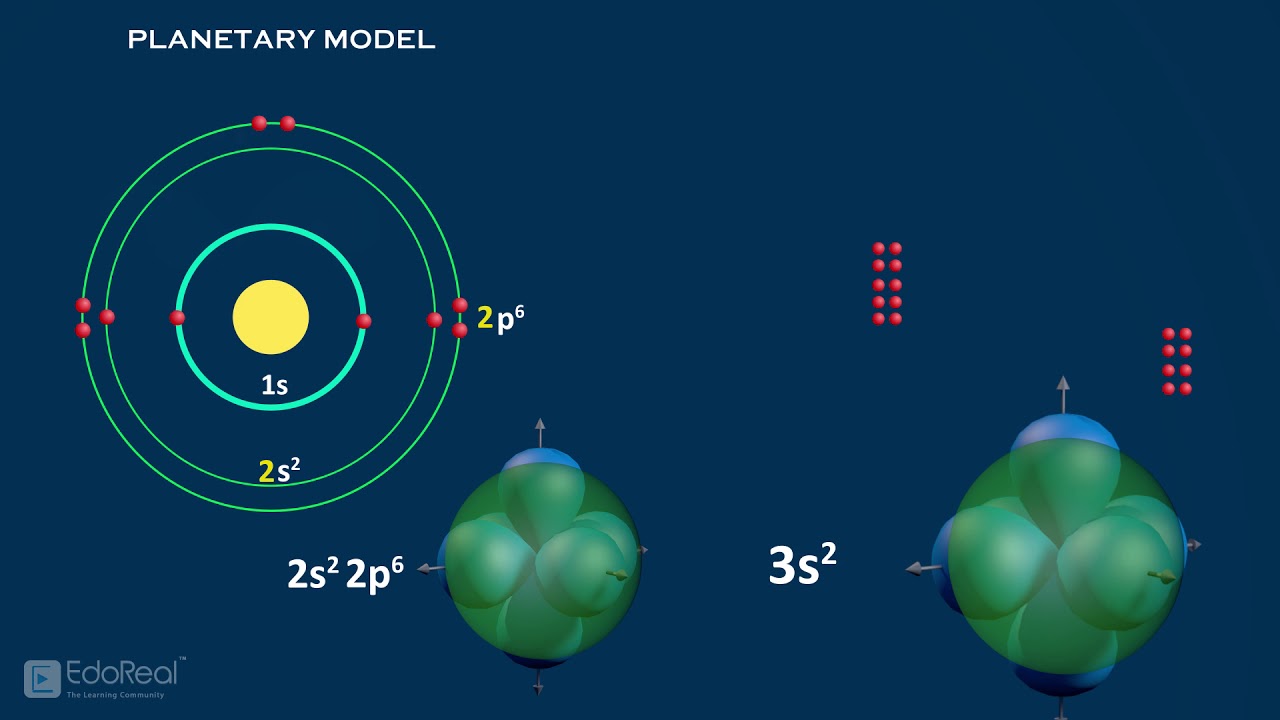
Added:Understanding atomic structure and electron configurations, particularly how electrons occupy s, p, and d orbitals.
Lewis acid-base theory, specifically how ligands act as electron pair donors (Lewis bases) and metal cations act as electron pair acceptors (Lewis acids).
Fundamental chemical bonding concepts, including covalent, ionic, and coordinate covalent (dative) bonds.
Familiarity with periodic trends and the general characteristics of transition metals, such as variable oxidation states.
Crystal Field Theory (CFT) and Ligand Field Theory (LFT) to understand the energetic splitting of d-orbitals in octahedral, tetrahedral, and square planar fields.
The physical basis of color in coordination complexes, including d-d transitions and the spectrochemical series.
Determining the magnetic properties (paramagnetism vs. diamagnetism) and spin states (high-spin vs. low-spin) of transition metal complexes.
Exploring isomerism in coordination chemistry, including geometric, optical, and linkage isomers.
Real-world applications of coordination complexes in catalysis (e.g., Wilkinson's catalyst) and bioinorganic chemistry (e.g., hemoglobin and cisplatin).
111.4K views2Klikes43:31Original Release: 2017-08-03
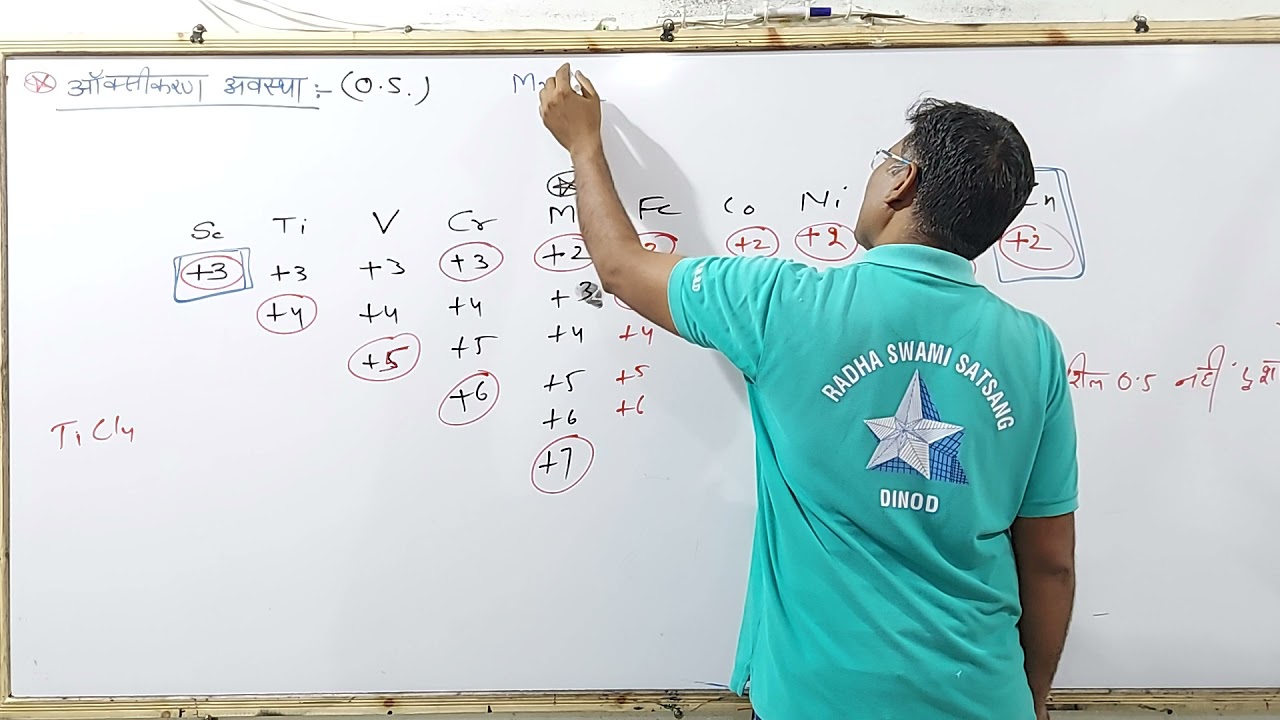
the following content is provided under a Creative Commons license your support will help MIT open courseware continue to offer highquality educational resources for free to make a donation or to view additional materials from hundreds of MIT courses visit MIT opencare at ocw.mit.edu all right so moving um to today's handout this is one of my favorite parts of the course honestly when I first started teaching 5111 um I said transition medals are rarely covered in introchamp is not good enough that you have to take the advanced standing exam because the people who teach in organic chemistry found that people who placed out a 5111 didn't do as well in their course as people who took 5111 here so this is one of the reasons and then I started teaching it and I realized this is one of the even though people haven't seen it before and sometimes people get a little scared it's actually one of the most fun unit so I absolutely love it and hopefully you will love it by the end people are like we never covered it why are you covering it we're in chapter 16 it's fun okay so transition medals dblock metals because they have those D orbitals yes we're going back to talking about orbitals again and they're called transition metals because you transition from this part of the periodic table with your what kind of orbitals s to this part of your periodic table with your what kind of orbitals P so they are the transition metals and they're often really reactive and very cool and many of them since we're on a biological theme many of them are super important in biology and I have some of these written down in your notes but here they are up here in the um transition metals you have a lot of metals that we could not live without um Iron carries oxygen to our blood very important hemoglobin um we talked about Cobalt just now that is the metal and vitamin B12 so we know why that's important we have zinc everywhere nickel's important for bacteria not so much for us but bacteria is important for us so therefore nickel's important to us so all of these are really important also this part of the periodic table is a part of the table that people love that want to make Pharmaceuticals or want to make new kinds of electrodes or batteries or all sorts of things um there's a bunch that are used as probes we talked about Imaging agents detecting cancer and all sorts of different things like that many of these um transition metals are used in those probes um and also in pharmac euticals um and so this is this is sort of a very rich part of the periodic table where those D orbitals allow for properties that are incredibly useful for our health and for doing all sorts of stuff so I love this part um again some of the biological Global cycling of nitrogen we talked about nitrogen fixation that triple bond it's really hard to break nitrogen apart but bacteria can do it it does it using transition metals um fixing carbon hydrogenase people want to make hydrogen fuel cells that are more biological again biology uses transition metals in this making vitamins making deoxy nucleotides respiration photosynthesis it's all due to transition metals all right so we'll start with just uh one example or one of our in our own words um segment and this focuses on nickel which is something very important in bacteria and uh this is actually an example from a collaborative project between my lab and core six and I know a lot of you are thinking about being core six major so I thought I would uh tell you about some research of Colin staltz the course six Professor so he was doing some computational analysis on these proteins that we're studying so um many of you at this point in the semester probably feel like you might be getting an ulcer but unless you have H pylori in your gut you probably are not actually getting an ulcer and you just take a little B12 you'll feel a lot better okay so here's the video my name is Sarah Bowman and I am a postural fellow at MIT I am working on studying a protein from helicobactor poori which is pathogenic bacteria it's kind of ecological niche is in mamillion stomachs it's actually very difficult to treat using antibiotics because a lot of times when you're given antibiotics um they're going to actually be broken apart by the acidity of the stomach before they actually ever um get to killing the helicobactor POI transition metals and biological systems are actually really important they increase the range of reactivity that proteins and enzymes are able to access nickel is a transition metal and it's a transition metal that's actually um fairly rare in biological systems so one of the big things that H poor uses nickel for is an enzyme called Urias U requires something like 24 nickel ions which is a lot Urias is one of the proteins that allows for a lot of buffering capacity um of the organism of the HPI organism the stomach pH is very low so PH2 something and this bacteria has to swim through the stomach and then colonize it and you know You' think that the stomach would just break it apart like it breaks apart your food but in fact the bacteria itself has mechanisms in place that allow it to create buffers that allow it to move through the stomach and live in the stomach and one of those enzymes that's really important for that is Urias in humans nickel as far as we can tell is not essential for any enzymes um whereas in helicobactor poori for instance um nickel is an ENT transition metal and so um a really intriguing thing to kind of think about is just whether we could somehow Target the the nickel um requirement in this organism and another bacteria um that would allow us to kill these pathogenic bacteria while not doing anything that would be harmful to humans so I like that video partly because it brings back acid base and buffers um as well as talking about transition metals and I I love the bacteria being attacked by by the acid and then making a buffer and saving itself it's awesome okay so one of the reasons why these transition metals are so powerful they can do so many things is that they like to form complexes and they have uh they like to form complexes with um small small molecules or ions and those ions often will have a lone pair of electrons and the metal wants that electron density it wants the benefit of that lone pair so when you have this lone pair um and that the metal will come in contact with that lone pair and it'll make it very happy very happy metal and uh we can think about this interaction here um as uh the donor atoms are called ligans and now let's review something we learned before about whether this is a Lewis acid or a Lewis base then okay 10 more seconds that's right so uh it's a Lewis base so if we put this up here donor at donor atoms are called lians which are Lewis bases and the ls bases donate the lone pair of electrons and again we can think about the definition that we've been more used to where a base is taking H+ it's accepting the proton from the acid but there when it's it's taking H+ it's taking H without its electrons so it's actually donating its lone pairs to form a bond and then we can think about Lewis acids so the acceptor atoms which are our transition metals are Lewis acids they accept the lone pair and when an acid that has a proton on it loses H+ it is taking the electrons with it because H+ is leaving without its electrons so these definitions work but these are sort of more broad uh definitions so here are metals any of our transition metals are going to be our acceptors our Lewis acids and here are a bunch of ligans we have water we have NH3 we have Co they have lone pairs they can be donor atoms and the ligans form complexes with the metals and the kind of complexes they're often called coordination complexes and that's a metal that's surrounded um by lians and here's a little example a metal in the middle and it has the lians around it so let's consider this coordination complex now and think about um what this picture is telling us so we have our coordination complex we have Cobalt in the middle and we have NH3 groups as our donor lians and here this bracket indicates the overall charge is+ three again the transition metal is going to be the Lewis acid it's going to be accepting the lone pairs from the leis bases which are the lians or the donor atoms now we can think about a new term called coration number and that's simply the number of lians that are bound to the metal so a CN number of six would indicate six lians um make up what's called the primary coordination sphere which is the things that are bound directly to the metal so CN numbers for transition metals range from 2 to 12 but six is probably the most common so before we think about the shapes of these molecules let's just look at the notation uh for this so coordination complex notation so I would write this uh structure up here within brackets Cobalt bracket NH3 um you have parentheses around NH3 there's six of those another bracket here with a plus three charge indicating the charge on everything this whole structure but often coordination complexes with a plus charge will have counter ions around so there might be say three chlorine minus ions around and so that could be written like this or it could be written like this if you see cl3 outside of those brackets it means that they're counter ions so if I looked at this I'd say NH3 is within the brackets that means it's bound to the Cobalt so that would tell you there's six things bound to the Cobalt the CL is outside that indicates it's a counter ion there're three of them so they're three counter ions which then tells you the charge must be plus three all right so there is our notation all right so now we're back to thinking about geometries so this is one of the things I love about this part I feel like some people in the course are just like new topic new topic oh man when is the new material going to end but you find you get enough into chemistry and you start revisiting topics you've already seen before so this is great all right so coordination number six we haven't maybe heard coordination number six but that's pretty easy to remember it's a number of atoms bound what type of geometry is this you can just yell it out all right so that's octahedral geometry again the solid triangles coming out um indicate they're coming out at you back dashes are going back and we have our axial all right so let's see how well you remember cn5 structures and you can keep this up here and you can tell me what the name of those two geometries are all right let's take 10 more seconds and here are our structures in real life down here people are just like I want to put seesaw no no that that is a a uh that is the parent geometry of seesaw but not seesaw itself okay so we have um the trigonal by parameter and the square parameter so I'm holding up the square parameter right now and then we have the trigonal because it's trigonal along here by paramal so it's sort of like one pyramid here one pyramid there so bip paramal and if I took off one and we had a lone pair then we would get our friend the Seesaw okay next we have this what's that one called Square planer yep and this one tetra draw and now see a number of three what is this one trigonal planer it's in a plane kind of if I hold the bonds so they don't fall off and it's kind of trigonal and then what about the last onear linear okay and let's just run through and think about the angles as well with uh octahedral what are our angles 90 trigonal by paramal 90 and 120 that's right so we have um one 120 around here and then the top parts were 90 okay um they have the square paramal 90 Square planer 90 tetrahedral 109.5 give credit for 72 that's that's quite close uh trigonal flaner 120 and linear 180 right so you're going to need to remember these for this unit but that's okay because you need to remember them for the final anyway so it gives you a nice review all right so we got everyone they got them down can look up your old notes just review all right so corination complexes also have another name that can be called kilates just another name for coordination complex so keates can be the thing but you can also say that the Lian will keate as another way of saying that it will bind to a metal and it can bind with more than on with one or more sites of attachment and the word keate comes from Claws and I like that picture I feel like yes these these lians coming in like Claws and binding that metal they're Keating that metal so they're different names depending on how many points of attachment they have and we have what's known as monodentate Dent for dentist or tooth so that's one point of attachment and I bet that without having seen this material ever before you can tell me what the rest of these are what do you think by dentate means two tridentate tetradentate hexa dentate six all right there's not one for five but this is good so don't lose a point on this I feel like sometimes people lose a point on this in the exam you knew it in class before I taught it you know want to like somehow work backwards so this is easy points right here just remember on the exam wait a minute maybe I already know this all right so let's look at some example of um keading ligans that bind with multiple points of attachment and the first one we're kind of on a theme today is vitamin B12 that we're going to look at so this is called the Corin ring Cobalt is in the middle and that ring binds with four points of attachment so it is a tetradentate Lian this Corin ring there is also an upper Lian which is five Prime deoxy adenosine and a lower ligan that's called dimethyl benzimidazol you don't need to know their names overall it has six lians in octahedral Geometry um but the Corin ring is a very nice biological example of a multi- dentate Lian heem would be the same I thought I would uh show you this rotating around so you get a better sense and tell you that this structure of this vitamin was determined by Dorothy hodkin um who won the Nobel Prize in 1964 for determining the structure by crystallography and also solving the structure of penicillin um this was the most complicated molecule to be solved by crystallography and a lot of people said that technique could never be used to do something that big she showed that they were wrong in terms of determining the structure of penicillin it was during the war um and people wanted to make more penicillin but they had no no idea what the structure was so they didn't know what to make and she figured out the structure and it's a weird looking molecule so no one would have guessed it without knowing the structure so for uh her pioneering work um in in crystallography she won the Nobel Prize all right so vitamin B12 is one example of a keate another that's probably more that you probably hear about the most it's almost synonymous with the word keate is Eda here here is the Eda molecule and you see that it has lots of Lone pairs that are just dying to grab onto a metal so we have six we have 1 two three four five six six things that are capable of Keating that metal and so here is what the complex looks like so the red oxygen can Cate the green oxygen here can Cate nitrogen here and in dark blue the other nitrogen and dark blue here light blue oxygen here and also the purple oxygen so now why don't you tell me what the geometry of this would be as a clicker question ready yeah 10 more seconds should be fast hopefully yeah great 86% it is octahedral and sometimes it's a little bit hard to see that but I helped you out by drawing those Bonds in Black that you needed to look at so we have four that are in the plane here one above and one below here so that is octahedral geometry also how many points of attachment what kind of dentate Li is this it's hexadentate as well so it has has six six points of attachment here all right so Eda is a really good metal keator and part of the reason that it is such an awesome metal keator is because of entropy so we're back to entropy again so The Binding of Eda to the metal is entropically favored and the reason for this is that metals that are say in your body like if you happen to eat some lead paint um and uh that lead is hanging out it's not just by itself it's coordinating um hopefully just to water and not to proteins in your body um but when you take some EDTA um to uh to prevent your lead poisoning one molecule of Eda will bind the metal and all of these these waters are going to be released so I have over here um some lead with a whole bunch of little Waters this isn't this is um quite an ordered system but if I take out all of those Waters here that's a lot more entropy going on than what we had and then you have one chelating liand here and that's a pretty simple system so this is ordered this is disordered so The Binding of Eda one Eda releases six water molecules and that makes um that makes it very favorable to do this and because of that keading molecules or the kelate effect molecules that are keates like metal bound to Eda are unusually stable because of this favorable entropic effect this release of water so the release of water the release of increasing entropy drives that metal cation and you uh sequester your metal which is really good if you're trying to avoid lead poisoning so I think this is a nice example of our friend entropy driving a reaction so a lot of you did really well on the exam talking about factors of Delta H and entropy and when you'd have favorable Delta G's here's another nice example where the chelate effect explains why metal keates are so unusually stable all right so uses of Ed EDTA I already just told you one um lead poisoning all ambulances have Eda in case someone is um eating some some lead paint um another thing uh that Eda is used for which I think is fun you should all go check if you buy little packaged goods and they have a long list of chemical ingredients look for Eda it's often there and it says it's added for freshness which means that bacteria need Metals you have Eda Eda sequesters the metals the bacteria can't live on the food that you're eating so instead of saying food additive added to kill the bacteria that were otherwise growing on your food they say added for freshness and I do think that is an improvement all right another thing we've already talked about the importance of cleaning bathtubs um to keate calcium out of bathtub scum you have Eda or other metal chelates and then I have my favorite another example of the use of Eda this favorite example is in Hollywood the movie Blade how do you kill a vampire vampires drink what blood blood has iron Eda keates iron so you get a little Dart and you have you can kind of see them maybe up here they're filled with with liquid that's EDTA you shoot the vampire with EDTA and the vampire just disappears just kind of turns to sort of dust because it's like mostly iron and the iron gets cated but it happens right away but anyway I think that's cool yes what a good way to kill a vampire Eda it's brilliant excellent use on Hol on Hollywood's part for Eda okay metal keates all sorts of potential values that they have okay so when we're talking about coordination complexes we're talking about geometries sometimes the atoms can be arranged in different ways and when you have these geometric isomers they can have very different properties so just look at uh an example here it's a platinum compound a platinum compound who is two nh2 groups and two chlorine groups and you could arrange those in two different ways you could put the NH3 groups on one side and the chlorine groups on the other side and that would be Cy these are cyst to each other or you could put a trans configuration where chlorine is here and then the nether chlorine is Trans on the other side and the same with this so Cy Platinum here is a potent anti-cancer drug and it has to be Cy Platinum because it binds to DNA and um the two bases of DNA displace these chlorines so if they're not on the same side it can't bind to the DNA and so this um prevents um the the cancer cells from being repaired from damaging agents transplatinum does absolutely nothing that anyone knows so it's exactly the same composition but because they are different isomers from each other and I have see oh over here um different isomers of each other and so chlorines on the same side CIS versus the trans have completely different properties so CIS Platinum got a lot of Fame because it cured Lance Armstrong of cancer Lance Armstrong now of course is a much more controversial figure than he was at the time um but still he created um an amazing charity that hopefully is uh still doing well uh despite uh some of his fall from f okay so another type of isomer um are called Optical isomers also called uh enantiomers or chyro molecules and these are one again you have the same composition but they are nons superimposable they are in fact mirror images of each other so if my head was a mirror these would be mirror images of each other and I could try very hard to superimpose them bringing the blue molecules over here but then the green and the red don't match you can come and try these are in fact nons superimposable mirror images from each other and sometimes they can have very similar properties it depends but if you put molecules like that that are known as chyro chyro molecules I.E ananur nons superimposable mirror images the human body is very much of a chyal environment you have enzymes designed to bind things in a particular way um so they can have very very different properties okay so um we have to do some de electron counting before we end today and I love this um because it's really pretty simple um to count de electrons and so we're going to just uh take a look at some examples and for this um doing this part we're going to start using our friend the periodic table uh again so um and we need to find oxidation numbers which which uh we just talked about in the last in the last unit so if we have a coordination complex with Cobalt and this Cobalt has those six NH3 groups and are plus three charge so this is the complex that we have been talking about let's now figure out what the oxidation number of this is and so this NH3 is neutral so that's given as a hint many of our lians um are going to be neutral lians so if that is zero what is the charge on the Cobalt plus three now we're going to Lo use the rules of dount so we have a dcount we need to look up the group number from the periodic table which in this case is nine then we we have minus the oxidation number so we have 9 - 3 or 6 and so this is a D6 system and that is all there is to doing um these counts so let's just try another one so we heard about nickel we'll do nickel nickel is coordinated by carbon monoxide and there are four of those so what is my charge of the nickel going to be my oxidation number of the nickel so what's my overall charge of this complex zero Co is also going to be zero there's no charge on Co so what is the oxidation number of nickel zero so then we can do our dcount the dec count what is the uh group number for nickel what is it 10 this is like this is the kind of math that always makes me very happy zero 10 minus 0 is 10 so that is a d10 system all right we'll do one more over here and the next one is a clicker question gives me time to write yeah all right let's just do 10 more seconds yep so here our overall charge is minus1 we have the chlorines are minus1 NH3 is zero water is zero so this has to be + two cuz + 2 - 3 is min -1 we have 9 - 2 is 7 so it's a D7 system all right so Wednesday D orbitals I cannot wait yes all right 10 seconds okay do someone want to tell me um why that's the right answer anybody we got we got a nice uh dangly thing for your keys or ID no all right so uh so here we're thinking about whether things are better reducing agents or better oxidizing agents and here we're given two different Redux potentials minus 600 and minus 300 so the one that is going to be the the lower number is going to be better at reducing other things it wants to be oxidized itself um and then we can think about whether it's a favorable process uh in terms of whether the thing that should likes to reduce is actually doing the reducing that's going to make it a spont anous process all right so um these are the kinds of uh questions for the oxidation reduction unit that we just finished and this will be on um exam 4 which amazingly we just finished exam and there's another one um so exam four is two weeks um from today all right uh from Friday sorry two weeks from Friday all right so today we're going to continue with this unit on transition metals the next exam is going to have oxidation reduction and transition metals and a little bit of kinetics kinetics is our last unit so we're getting very close to the end of the semester so we're finishing up the handout from last time again we're back to the periodic table we're thinking about transition medals we're thinking about that middle part of the periodic table and so we're thinking about D orbitals so there are five D orbitals how many s orbitals are there one one how many P orbitals are there three three and so D orbitals have five and we're not going to talk about really anything beyond D orbitals in this class and frankly not very many people do but D orbitals are amazing so we have to fit them in all right so they're 5D orbitals and they're up here and you need to be able to draw their shapes and the bar for drawing the shapes is actually pretty low um so these are my drawings that that made um and so if you can you can probably do just about as well all right so the uh the one that has the most unusual shape is the D DZ squared and so it has its maximum amplitude along the Z axis and for this unit our z-axis is always going to be up and down here um Y is in the plane of the screen and X is coming out towards you and also going into the screen and so DZ squ is a maximum amplitude along Z and it also has a dut in the XY plane and so I also brought a little model of this um so here's DZ squared we have um maximum amplitude along the Z axis up and down and we have our little dut in our XY plane so then we have dx^ 2 - y^2 which has maximum amplitude along X and along Y and that would look like this so we have our maximum amplitudes that are right on axis so if this is y axis and X is coming at towards you those orbitals are pointing right along that coordinate frame the other three orbitals look a little bit like dx^ 2us y^2 but they're not on axis they're off off axis they're in between the axes so we have dyz it has its maximum amplitude 45° off of the Y and the Z axis so if this is z-axis here there's no maximum amplitude along here it's 45 degrees off so it's right in the middle between the Z and the Y so dxz has its maximum amplitude along um or 45° between x and z so that would uh would be pointing the other way and so I tried to draw this keeping the reference frame the same it's a little hard to see the orbitals but it would be kind of this so we rotate that around um and so that's what that would look like and then D um XY we have maximum amplitude 45° in between the the X and the Y so X coming out y in the plane and so this is again a little bit hard to draw if I drew it absolutely perfectly and not tilted at all you kind of wouldn't see anything but that's what that would look like so again the names of this it tells you about the relationship between that that orbital that maximum amplitude and the axis that we have defined so um it's this is very important to know that these guys are in between the axes right in the middle 45° and you'll see why in a few minutes why that's important okay so just to practice um here are some slightly better pictures um of the orbitals and this um is the uh coordinate frame over here and now we have the orbitals inside that so again Z is going up Y is uh in the plane of the screen and X is going back and also coming out toward us so which is this D orbital you can just yell it out D yeah that's easy to remember that's the uh unique looking one what about this one think about this first think about the plane so it's the XY plane and then is it on or off axis so which one is this yeah so this one is on axis you can see the the maximum amplitude of the orbital pointing right along those axis so it's right in the corners of that square there um and then uh what about this one down here yeah so that would be dxy so it's in the XY plane but it's 45° off the axis so it's in between the axes here and what about that one right so we have it's a long uh both Z and um y here and then this last one which is drawn to kind of come out toward you so that is um along X as well so that's dxz and it's going up along Z so you can look at the coordinate frame which will try to keep consistent and figure out whether ask yourself is it on Axis or off axis and which plane is it in and that will allow you to name them and also to draw them so just to kind of get you give you more of a three-dimensional sense there's these little uh movies that I'll show you now um and so you can get a better sense of that awesome dut it's going to make you hungry they even colored it like a really nice original dut that you would get at Duncan Donuts so that is uh in the dut is in uh the the uh XY plane and these uh other loes are along Z so now uh we have D x^2 minus y^2 and you can see that the maximum amplitudes again are along the axis key they're along Ong the axes here I don't know why it comes out toward you and it wrote I I didn't yeah but it gives you a good three-dimensional uh uh a sense of this all right so dxy now again in the XY plane but instead of being on axis it's 45° off axis you can see I think in this really nicely it's right between the axis but it's not touching them the axes sort of separate these orbitals and then we have XZ so now we're going up along the Z axis and in the X plane and here it comes at you again 45 Dees in between Z and x and then our last one we have y z so the shapes of those later three actually even four of them are the same it's just a matter if they're on or off axis in which plane they're in so this is not too hard to draw all right so why is this important why should we care exactly how the uh the orbitals are oriented and the reason that you should care about that is because it can explain a lot of the special properties of transition metals
Up Next
29:02
CFSE Calculation for Octahedral Complexes | Crystal Field Theory
@ChemWis
51K views•2020-02-09
83:56
Biocatalysis and Catalysis in Islatravir Synthesis | Merck Webinar
@SCIwheresciencemeetsbusiness
675 views•2020-10-08
6:57
Ocean Acidification Chemistry | MIT Solid-State Chem
@mitocw
5.5K views•2020-12-07

17:31
Edible Water Bottles: A DIY Guide to Sodium Alginate Spherification
@ryan
10.5M views•2019-06-21
Related Study Plans & Knowledge Roadmaps
Structured learning paths in Chemistry
chemistry
Nuclear Chemistry: Decay, Meds & Fuel Cycle
01Introduction to Nuclear Structure and Radioactivity
02Decay Dynamics and Kinetics
03Radiation Interaction and Detection
+ 2 more learning modules
24h5 modules
Explore Roadmap
chemistry
Supramolecular Chemistry: Forces & Machines
01Foundations of Chemical Bonding and Intermolecular Forces
02Introduction to Host-Guest Chemistry
03Thermodynamics and Dynamics of Self-Assembly
+ 2 more learning modules
16h5 modules
Explore Roadmap
chemistry
Photochemistry: Excited States & Reactions
01Foundations of Light-Matter Interactions
02Molecular Orbitals and Electronic States
03Photophysical Processes and Jablonski Diagrams
+ 2 more learning modules
18h5 modules
Explore Roadmap
chemistry
Coordination Chemistry: Bonding & Properties
01Introduction to Transition Metals and Ligands
02Crystal Field Theory (CFT) and Geometry
03Magnetic Behavior and Spin States
+ 2 more learning modules
14h5 modules
Explore Roadmap