

















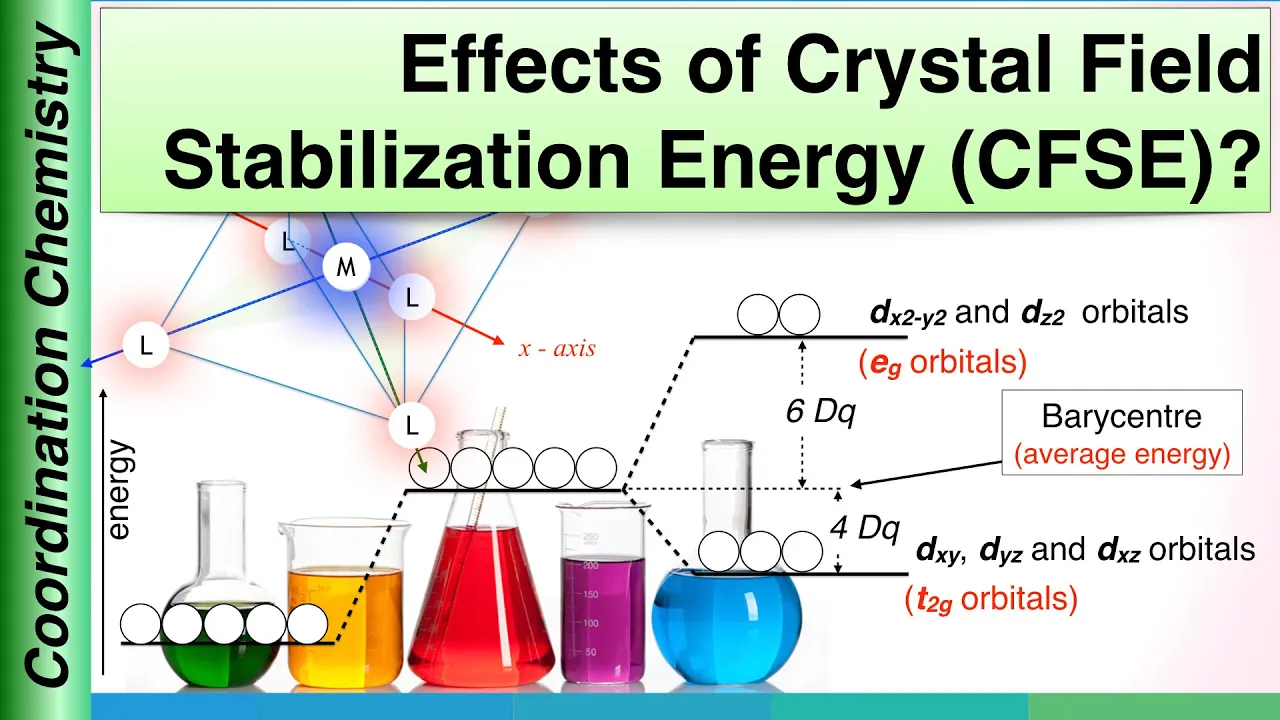





Crystal Field Stabilization Energy (CFSE) is calculated using the formula CFSE = x × (-0.4Δ₀) + y × (+0.6Δ₀) + z × P, where x is the number of electrons in t2g orbitals, y is the number of electrons in eg orbitals, z is the number of electron pairs formed against Hund's rule, and P is the pairing energy. The calculation depends on whether the complex is high spin (when Δ₀ < pairing energy) or low spin (when Δ₀ > pairing energy), with high-spin complexes having more unpaired electrons and lower CFSE values compared to low-spin complexes.
CFSE Calculation for Octahedral Complexes | Crystal Field Theory
Added:Understanding transition metal electron configurations and how to determine the d-electron count (d^n systems) for metal cations.
The fundamental principles of Crystal Field Theory (CFT), specifically how an octahedral ligand field splits d-orbitals into the t2g and eg subsets.
The concept of the Spectrochemical Series and the difference between strong-field ligands and weak-field ligands.
Basic rules of electronic configuration, including Hund's Rule of maximum multiplicity and the concept of electron pairing energy (P).
Calculating Crystal Field Stabilization Energy (CFSE) for other coordination geometries, such as tetrahedral and square planar complexes.
Understanding the Jahn-Teller effect and how asymmetric d-orbital occupancy leads to structural distortions in octahedral complexes.
Applying CFSE to explain thermodynamic properties, such as the hydration enthalpies and lattice energies of transition metal divalent ions.
Investigating the magnetic properties of coordination compounds, including calculating spin-only magnetic moments based on high and low spin states.
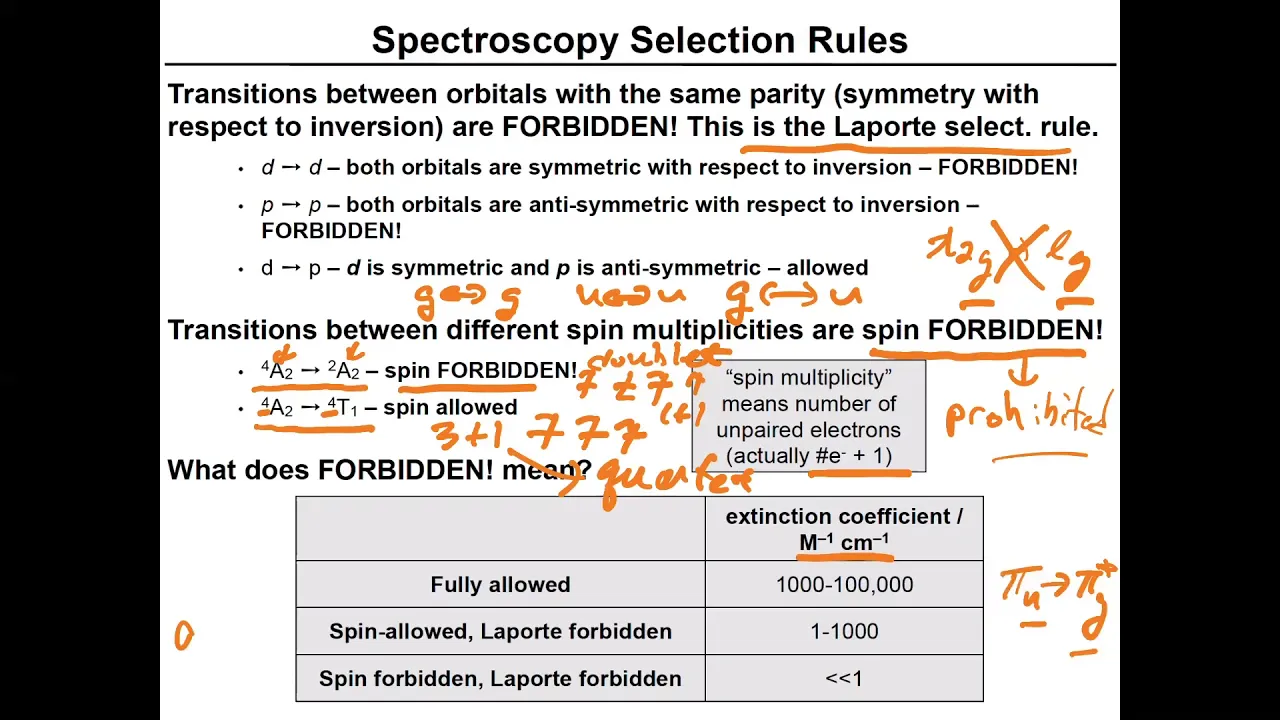
Interpreting the electronic absorption spectra (UV-Vis) of coordination complexes and understanding d-d transitions.
51K views819likes29:02Original Release: 2020-02-09
hello friends the topic of today's discussion is calculation of cfsc in octahedral complexes in this we will be discussing the following points what is cfsc calculation of cfsc high and low spin complexes some facts to be remembered while calculating cfse and finally we will do some exercise crystal field stabilization energy of a complex which is abbreviated as cfse is the sum of the energies of all the d electrons in the metal ion the metal ion in an octahedral complex with the electronic configuration t to gx egy cfsc will be x into minus 0.4 delta o plus y into plus 0.6 delta o plus z into p where x is the number of electrons in t2g orbitals y is the number of electrons in eg orbitals p is the pairing energy which is the energy penalty when pairing occurs against the hoon's rule pairing energy is constant for a particular metal ion irrespective of the ligand and z is the number of electron pairs formed against the honest rule you can easily find the value of z by subtracting the number of electron pairs before the diabetic is splitting from the number of electron pairs after the d orbital is splitting this is the d orbital splitting diagram in an octahedral complex if there is 1d electron in the metal ion in spherical field environment the electron will be here in octahedral field the electron will be in t2g orbital so x is equal to 1 [Music] there is no electron in eg orbital so y is equal to zero there is no pairing so z is equal to zero now we will put these values in the above equation cfse is equal to 1 into minus 0.4 delta o plus 0 into plus 0.6 delta o plus 0 into p thus cfsc will be equal to minus 0.4 delta o if there are two d electrons in the metal ion of an octahedral complex in spherical field environment the electrons will be here in octahedral field both electrons will be in t to g orbital so x is equal to 2 there is no electron in eg or vital so y is equal to 0.
there is no pairing so z is equal to 0 now we will put these values in the above equation cfse is equal to 2 into minus 0.4 delta o plus 0 into plus 0.6 delta o plus 0 into p thus cfsc will become minus 0.8 delta o if there are three d electrons in the metal ion of an octahedral complex in a spherical field environment the three electrons will be here in octahedral field all the three electrons will be in t2g orbitals so x is equal to 3 there is no electron in ed orbital so y is equal to zero there is no pairing so z is equal to zero so cfsc will be equal to 3 into minus 0.4 delta o plus 0 into plus 0.6 tilde o plus 0 into p thus cfsc will be equal to minus 1.2 delta o if there are four d electrons in the metal ion of an octahedral complex in a spherical field environment all the four electrons will be here in octahedral field three electrons will be in t2g orbital the fourth electron may enter the eg orbital according to the hun's rule or it can enter into the t2g that we will discuss later the fourth electron enter the eg orbital only when delta o is less than pairing energy these complexes have higher electronic spin value and therefore called as high spin complexes so in d4 high spin complexes x is equal to three there is one electron in easy orbital so y is equal to one there is no pairing so z is equal to 0 now we will put these values in the above equation cfse is equal to 3 into minus 0.4 delta o plus 1 into plus 0.6 delta o plus 0 point plus 0 into p or cfsc is equal to minus 1.2 delta o plus 0.6 delta o thus cfsc will become minus 0.6 delta o now we will discuss the second case where there are four d electrons in the metal ion of an octahedral complex in a spherical field environment all the four electrons will be here in octahedral field three electrons will be in t2g orbitals the fourth electron will enter the t2g against the hoon's rule this phenomenon occurs when delta o is greater than the pairing energy these complexes have lower spin value and therefore called as low spin complexes so in d4 lowest pin complex x is equal to 4 there is no electron in eg orbital so y is equal to zero there is no electron pair in the spherical field and one electron pair in the octahedral environment so z is equal to 1 minus 0 is equal to 1.
now we will put these values in the above equation cfse is equal to 4 into minus 0.4 delta o plus 0 into plus 0.6 delta o plus 1 into p or cfsc is equal to minus 1.6 delta o plus p if there are five d electrons in the metal ion of an octahedral complex in spherical field environment all the five electrons will be here in octahedral high spin complex three electrons will be in t2g orbitals while two electrons will enter the eg so in d5 high spin complex x is equal to three there are two electrons in eg orbitals so y is equal to two there is no pairing so z is equal to zero now we will put these values in the above equation cfse is equal to 3 into minus 0.4 delta o plus 2 into plus 0.6 delta o plus 0 into p r cfse is equal to minus 1.2 delta o plus 1.2 delta o thus cfac is equal to 0 delta o in the case of lowest pin octahedral complex with 5 d electrons all the 5 electrons will enter the t to g so in d5 lowest pin complex x is equal to 5 there is no electron in eg orbitals so y is equal to 0 there is no electron pair in spherical field while two electron pairs in the octahedral environment so z is equal to 2 minus 0 is equal to 2 so cfse is equal to 5 into minus 0.4 delta o plus 0 into plus 0.6 delta o plus 2 into p or cfse is equal to minus 2.0 delta o plus 2p if there are 60 electrons in the metal ion of an octahedral complex in a spherical field environment all the six electrons will be here in octahedral high spin complex three electrons will be in t2g orbitals and two electrons will enter the eg the remaining one electron will again enter the t to g so in d6 high spin complex x is equal to four there are two electrons in egr vitals so y is equal to two there is one electron pair in spherical field environment and one electron pair in octahedral environment so z is equal to 1 minus 1 is equal to 0.
so cfse is equal to 4 into minus 0.4 delta o plus 2 into plus 0.6 delta o plus 0 into p or cfse is equal to minus 1.6 delta o plus 1.2 delta o thus cfsc will be equal to minus 0.4 delta o in the case of low spin octahedral complexes with 60 electrons all the six electrons will enter the t2g so in d6 low spin octahedral complexes x is equal to 6 there is no electron in eg or vital so y is equal to 0 there is one electron pair in the spherical field and three electron pairs in octahedral environment so z is equal to three minus one is equal to two now we will put these values in the above equation cfse is equal to 6 into minus 0.4 delta o plus 0 into plus 0.6 delta o plus 2 into p or cfsc is equal to minus 2.4 delta o plus two p if there are seven d electrons in the metal ion of an octahedral complex in spherical field environment all these seven electrons will be here in octahedral high spin complex three electrons will be in t2g orbital and two electrons will enter the eg the remaining two electrons will again enter the t to g so in d7 high spill complex x is equal to five there are two electrons in egr vitals so y is equal to two there are two electron pairs in the spherical environment and two electron pairs in octahedral environment so z is equal to 2 minus 2 is equal to 0 so cfse is equal to 5 into minus 0.4 delta o plus 2 into plus 0.6 delta o plus 0 into p or cfsc is equal to minus 2 point zero delta o my plus one point two delta o thus c f s c will become minus zero point eight delta o in the case of lowest pin octahedral complexes with 70 electrons six electrons will enter t2g and seventh electron will enter eg so in d7 low spin octahedral complex x is equal to six there are there is one electron in easy orbital so y is equal to one there are two electron pairs in the spherical field and three electron pairs in octahedral field so z is equal to three minus two is equal to one so cfse is equal to 6 into minus 0.4 delta o plus 1 into 0.6 delta o plus 1 into p r cfse is equal to minus 2.4 delta o plus 0.6 delta o plus p or cfsc is equal to minus 1.8 delta o plus p similarly we can calculate cfsc for d8 d9 and d10 complexes there is only one possible electronic distribution so low and high spin concept is not applicable for these complexes like in the case of d1 d2 and t3 complexes now we will discuss some facts that we should keep in mind while calculating cfsc low valence 3d complexes are high spin with weak ligands and low spin with strong ligands for example fvh2o6 doubleplus and fecn64 minus in both the complexes iron is in lower oxidation state which is plus two water is a weak ligand so fe h2o6 double plus is a high spin complex cyano is a strong ligand so fecn6 4 plus 4 minus is low spin complex high valence 3d complexes are mostly low spin these are really high spin for example coh2o6 triple plus in this cobalt has higher oxidation state which is plus three even though h2o is a weak ligand this complex is lowest pin co f3 co f6 triple minus with co in plus three oxidation state is the only high spin complex of cobalt three four d and five d complexes are always lowest pin because of the larger delta o tetrahedral complexes are mostly high spin because delta t is mostly less than pairing energy due to less d orbital splitting a square planar complexes are mostly low spin because crystal field splitting is mostly greater than pairing energy now we will do some exercise for calculating cfsc suppose we have to estimate the cfsc for cr and s36 triple plus for this first we will have to know the oxidation state of metal which is chromium in this case the oxidation state of chromium in this complex is plus three so the number of electrons in chromium 3 plus will be 24 minus 3 is equal to 21 since the number of electrons in the chromium metal is 24 and chromium 3 plus will be formed by the removal of 3 electrons to find out the electronic configuration of chromium 3 plus write ar d3 ar has 18 electrons so the remaining electrons that will enter the dr vitals will be 21 minus 18 is equal to 3.
so this complex is d3 complex this is an octahedral complex so the splitting diagram as we have discussed earlier will be like this in a spherical field environment the three electrons will be here in octahedral field all the three electrons will be in t2g are vitals we know that cfsc is equal to x into minus 0.4 delta o plus y into plus 0.6 delta o plus z into p where x is the number of electrons in t2d orbitals y is the number of electrons in ev orbitals and p is the pairing energy which is the energy penalty when pairing occurs against the hounds rule here x is equal to 3 there is no electron in eg vital so y is equal to 0 there is no pairing in there is no pairing so z is equal to 0 so cfse is equal to 3 into minus 0.4 delta o plus 0 into 0.6 delta o plus 0 into p thus cfsc will be equal to minus 1.2 delta o let's take the example of estimation of cfsc for mn h2o6 3 plus the oxidation number of mn in this complex is plus 3 so the number of electrons in mn 3 plus will be 25 minus 3 is equal to 22 since the number of electrons in the manganese metal is 25 and mn 3 plus will be formed by the removal of three electrons to find out electronic configuration of mn 3 plus write ar 3d ar has 18 electrons so the remaining electrons that will enter the dr vitals will be 22 minus 18 is equal to 4.
so this complex is d4 complex since water is a weak liquid so this will be a high spin complex this is an octahedral complex so the splitting diagram will be like this in a spherical field environment the four electrons will be here in octahedral field three electrons will be in t2g and the remaining one will be in eg since it is a high spin complex we know that cfse is equal to x into minus 0.4 delta o plus y into plus 0.6 delta o plus z into p cfse is equal to 3 into minus 0.4 delta o plus 1 into plus 0.6 delta o plus 0 into p our cfsc is equal to minus 1.2 delta o plus 0.6 delta o thus cfsc will be equal to minus 0.6 delta o estimation of cfsc for mn cn6 3 minus the oxidation state of mn in this complex is plus 3 so the number of electrons in mn 3 plus will be 25 minus 3 is equal to 22.
since the number of electrons in manganese metal is 25 and mn3 plus will be formed by the removal of three electrons to find out the electronic configuration of mn3 plus write ar 3d ar has 18 electrons so the remaining electrons that will enter the dr vitals will be 22 minus 18 is equal to 4.
so this complex is b4 complex since cn is a strong ligand so this will be a lowest pin complex this is an octahedral complex so the splitting diagram will be like this in a spherical field environment the four electrons will be here in octahedral field all the four electrons will be in t2g orbitals we know that cfsc is equal to x into minus 0.4 delta o plus y into plus 0.6 delta o plus z into p so cfse will be equal to 4 n2 minus 0.4 delta o plus 0 into plus 0.6 delta o plus 1 into p or cfsc will be equal to minus 1.6 delta o plus b you
Up Next
56:07
Jahn-Teller Effect in Coordination Chemistry
@iit
77.4K views•2014-01-08

83:56
Biocatalysis and Catalysis in Islatravir Synthesis | Merck Webinar
@SCIwheresciencemeetsbusiness
675 views•2020-10-08
10:06
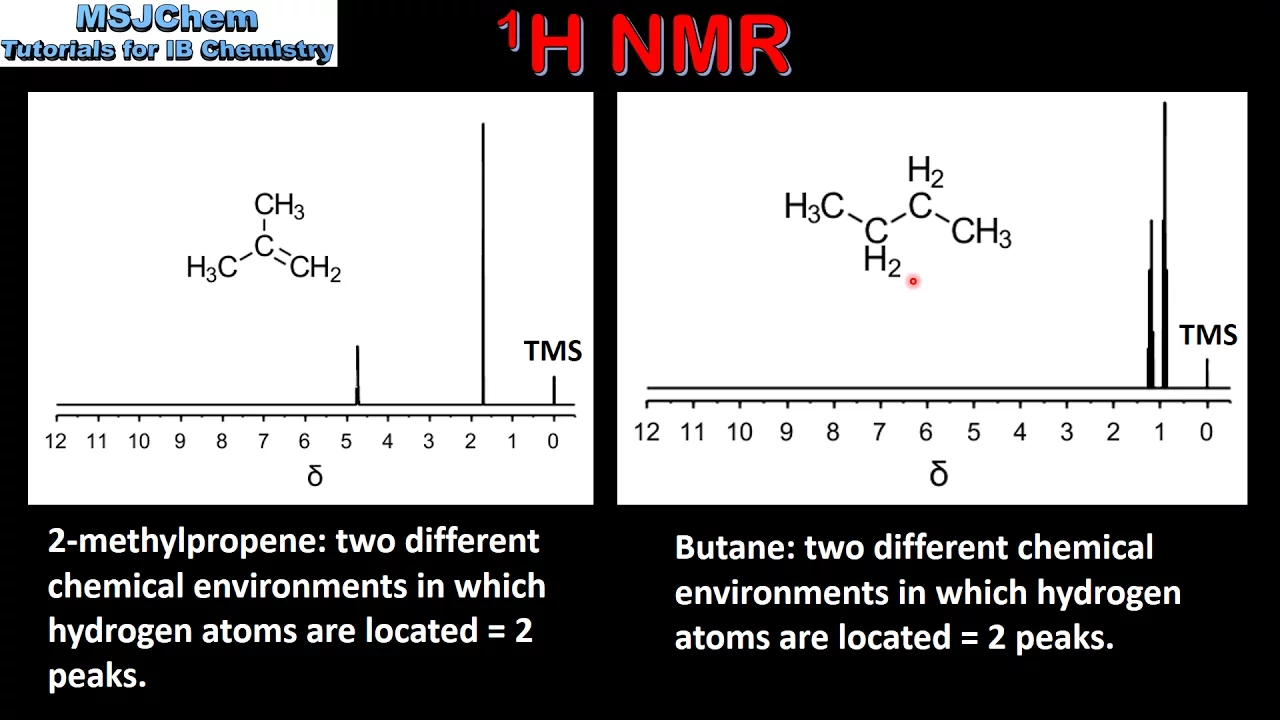
1H NMR: Determining Number of Peaks from Structure
@MSJChem
59.2K views•2017-04-06

17:31
Edible Water Bottles: A DIY Guide to Sodium Alginate Spherification
@ryan
10.5M views•2019-06-21
Related Study Plans & Knowledge Roadmaps
Structured learning paths in Chemistry
chemistry
Nuclear Chemistry: Decay, Meds & Fuel Cycle
01Introduction to Nuclear Structure and Radioactivity
02Decay Dynamics and Kinetics
03Radiation Interaction and Detection
+ 2 more learning modules
24h5 modules
Explore Roadmap
chemistry
Supramolecular Chemistry: Forces & Machines
01Foundations of Chemical Bonding and Intermolecular Forces
02Introduction to Host-Guest Chemistry
03Thermodynamics and Dynamics of Self-Assembly
+ 2 more learning modules
16h5 modules
Explore Roadmap
chemistry
Photochemistry: Excited States & Reactions
01Foundations of Light-Matter Interactions
02Molecular Orbitals and Electronic States
03Photophysical Processes and Jablonski Diagrams
+ 2 more learning modules
18h5 modules
Explore Roadmap
chemistry
Coordination Chemistry: Bonding & Properties
01Introduction to Transition Metals and Ligands
02Crystal Field Theory (CFT) and Geometry
03Magnetic Behavior and Spin States
+ 2 more learning modules
14h5 modules
Explore Roadmap