







![[HÓA 12] ĐẠI CƯƠNG VỀ KIM LOẠI CHUYỂN TIẾP DÃY THỨ NHẤT](https://i.ytimg.com/vi/ITvyekImifI/maxresdefault.jpg)





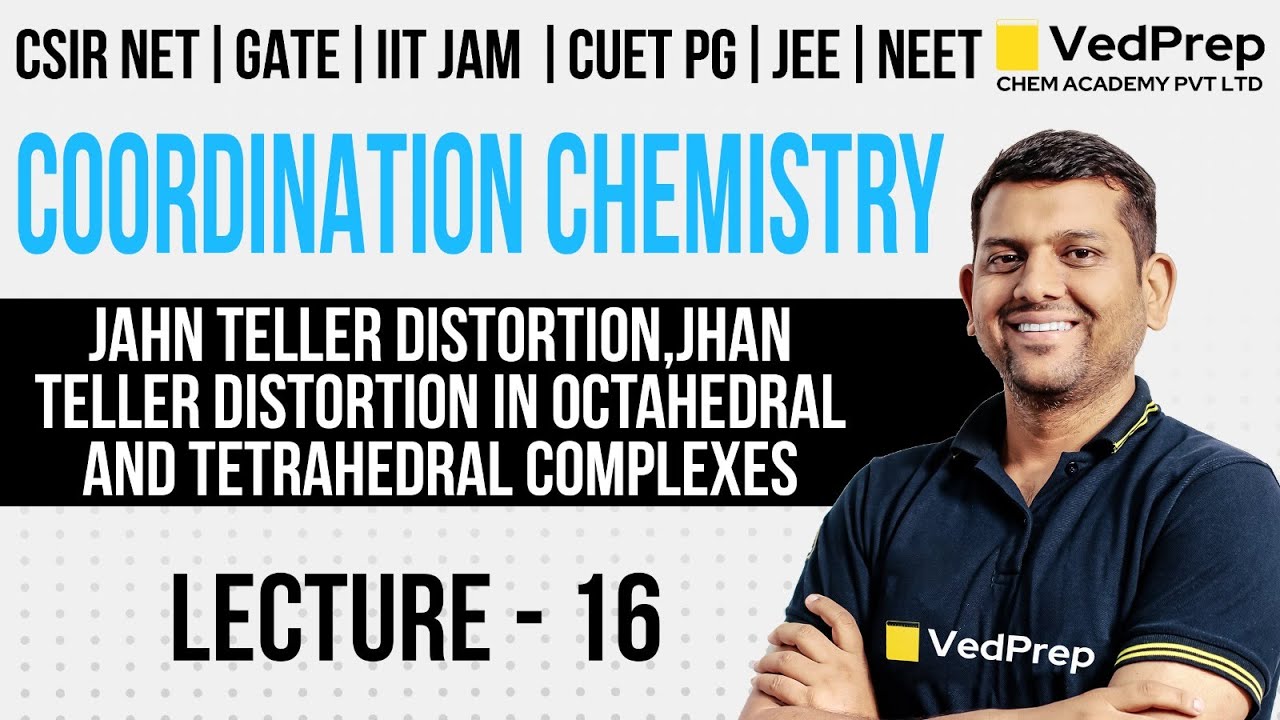


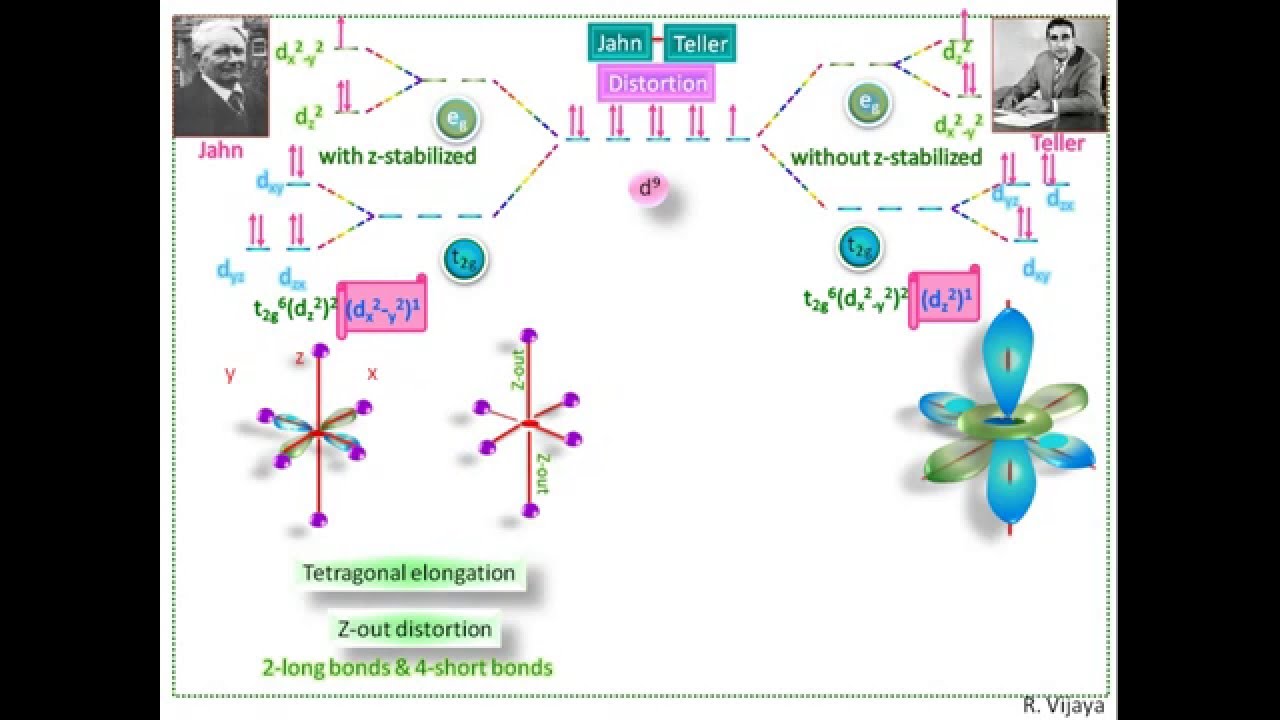

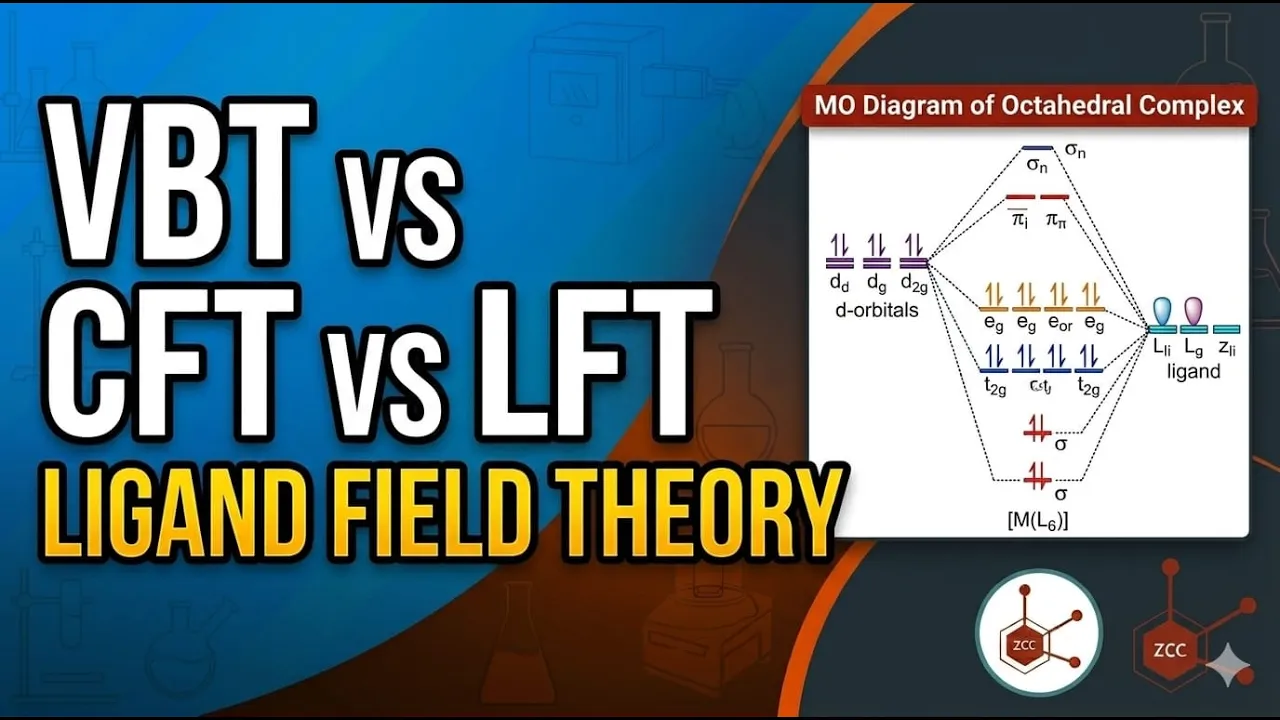










Crystal Field Theory explains how the approach of ligands to a central metal ion causes splitting of the five d-orbitals into different energy levels. In octahedral complexes, the d-orbitals split into two sets: the lower-energy t₂g orbitals (dxy, dyz, dxz) and the higher-energy eg orbitals (dx²-y², dz²). The magnitude of this crystal field splitting energy (Δ or Δ₀) determines whether a complex is high spin (weak field ligands, small Δ, electrons fill higher orbitals before pairing) or low spin (strong field ligands, large Δ, electrons pair up first). Tetrahedral complexes are always high spin because their splitting energy is inherently smaller than pairing energy. Square planar complexes, which only exist for d⁸ metal ions, use dsp² hybridization. The number of unpaired electrons differs significantly between high spin and low spin configurations for d⁴-d⁷ metal ions, affecting magnetic properties and color.
Crystal Field Theory: Octahedral, Tetrahedral, & Square Planar Complexes
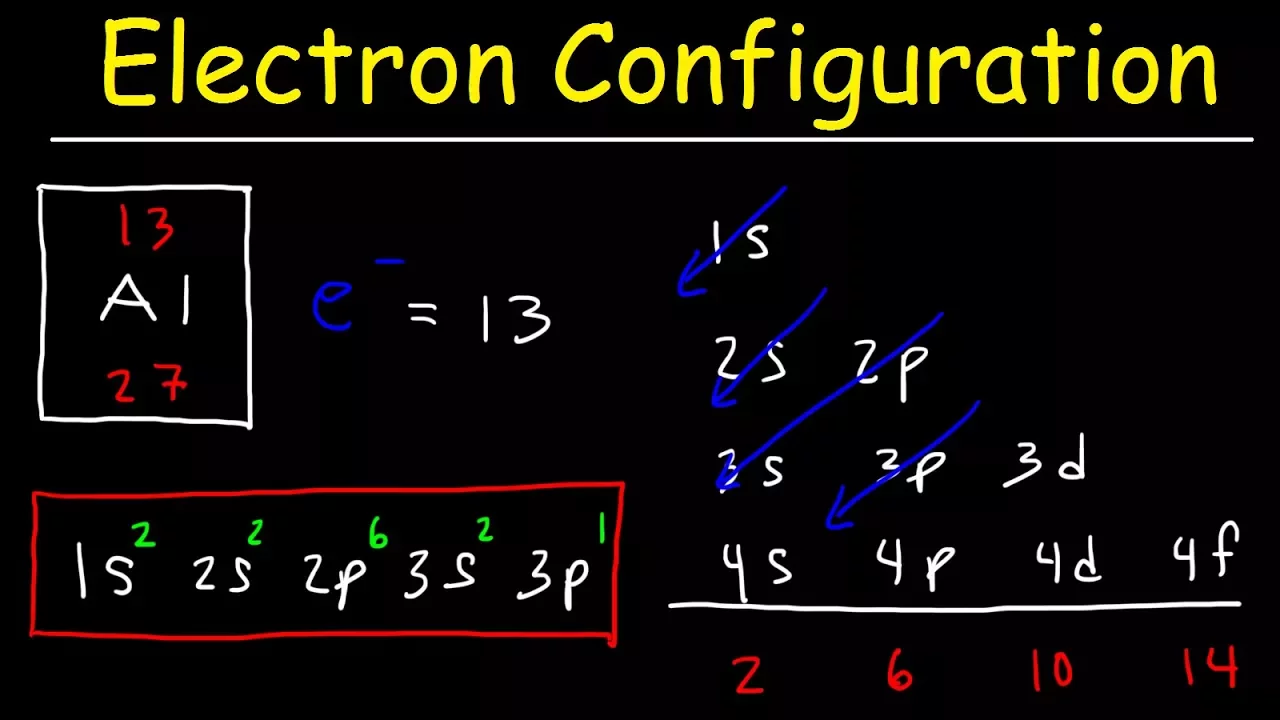
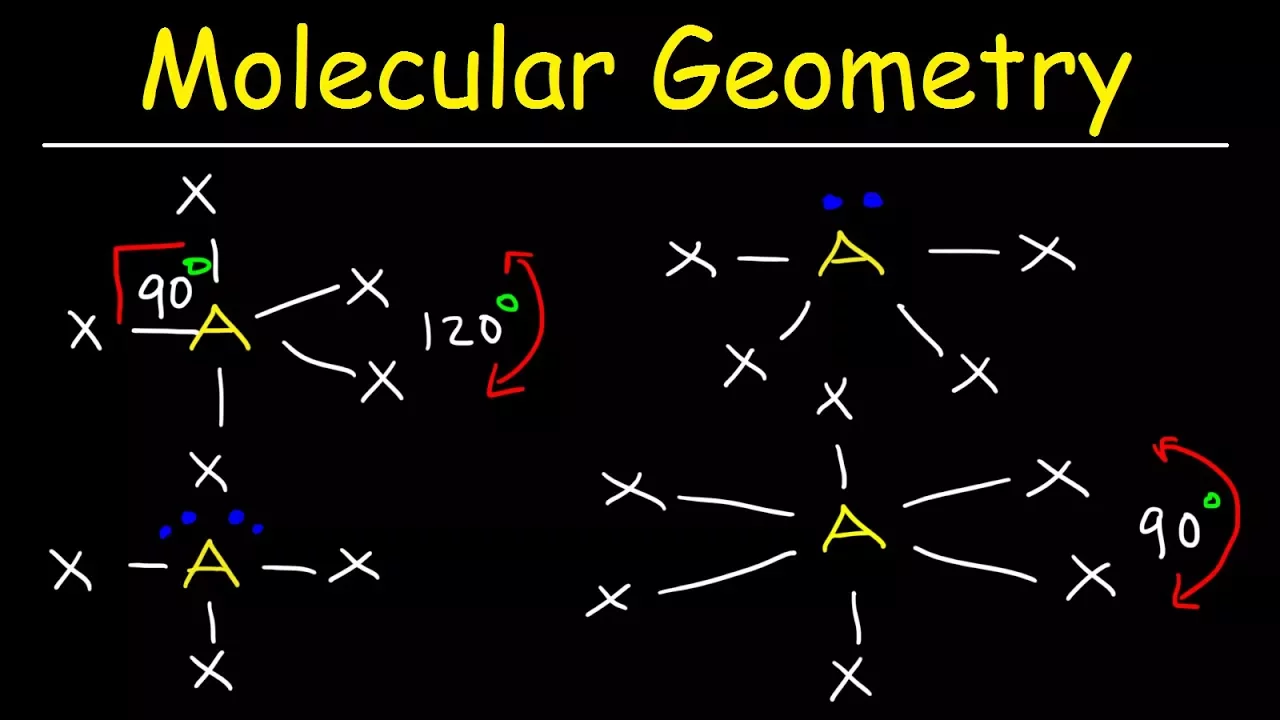
Added:crystal field theory going to be the topic of this lesson my name is chad and welcome to chad's prep where my goal is to take the stress out of learning science now in addition to high school and college science prep we also do mcat dat and oat prep i'll be sure to leave a link in the description below for where you can find those courses now this lesson is part of my new general chemistry playlist which is almost complete uh will be one more chapter after this one which i'll finish up next week but if you if you'd like to be notified every time i post a new lesson or when i get started on my next playlist then subscribe to the channel click the bell notification all right before we can get going headlong into crystal field theory here i've just got to do a quick refresher on the electron configurations of the transition metal cations and so a couple things you need to remember about some exceptions and then when you remove electrons to make the cations so super important for this chapter because how many d electrons these transition metals have is going to be kind of relevant uh both in this lesson as well as the next one so let's take a look here we'll start with scandium here and if you want to do one of these cations start with just a plain old neutral element first and we've got scandium right here atomic number 21. and scandium is going to be argon and then you might recall 4s2 3d1 so plain old scandium would be argon 4s2 3d1 so that's scandium but we've got scandium 3 plus here and so we've got to remove three electrons and so you just move the last three and so you gotta remember though that you remove the s's before the ds but in this case that wouldn't really make a difference so we'll move those s's before the d and in this case then that's all three of these gone and so scandium three plus is just isoelectronic with argon here but the big thing i want to point out here is that scandium three plus would be a d0 transition metal here has zero d electrons and that will be important for some properties we look at in the next lesson all right moving on to fe3 plus so go into iron here and iron again argon and then 4s2 and then 3d one two three four five six and so plain old iron would be argon 4s2 3d6 and we've got to remove three electrons and again the thing you need to remember is that you pull out the four s's before you pull out the three ds and so if you come up with argon 4s2 3d3 you've done it wrong so you've got to plot that those four s's first so that's two electrons gone and then you've got to pull out one of the d so 3d5 and we'll just re write this all over again as argon 3d5 and the big thing to take away here that we needed to figure out is that it's got five d electrons in fe3 plus and so the different complex ions and coordination compounds that fe3 plus is involved in there are 5d electrons and that's going to be relevant here moving on to manganese 2 plus and so manganese would take a look is argon 4s2 3d12345 just more of the same here so 4s2 3d5 we just need to lose two electrons and that's going to be the 4s's and so we're just going to be left with argon 3d5 and i'll take the time to write that over again and once again 5d electrons is the key so next we'll take a look at chromium and copper here and their ions and you remember that chromium and copper are exceptions on the periodic table and as well as some of the elements below them so it turns out chromium and molybdenum are going to be exceptions here but not tungsten and then copper silver and gold will be exceptions as well so if we take a look and just ignore the fact that they're exceptions real quick so we'd have argon in the case of chromium and then 4s2 3d1234 that's what we think it would be if it wasn't an exception so but it turns out that uh with chromium's column the idea is that half filled sub shells are more stable and so if he steals one from the s and puts it up into the d these will both be half filled and that's exactly what happens and so instead of 4s2 3d4 it's going to be 4s1 3d5 and chromium and then molybdenum right below him does the same thing a row down all right so that's where we got to start now we've got to remove three electrons and you gotta remember remove the 4s before the 3d so the first one we take out is that 4s gone got to remove two more and so we're going to end up with three d three and once again i'm gonna take the time to write this out nice and neat so argon 3d3 and we find out that chromium 3 plus and the complexes that it contains have 3d electrons all right moving on to copper plus here and again we'll start off with argon and again if we didn't know that copper was an exception we'd say argon and then 4s2 and then 3d one two three four five six seven eight nine so argon 4s2 3d9 and again copper knows something that maybe we didn't initially and that uh completely full or half filled sub shells are more stable and so while the 4s is full the 3d is not half full or completely full but if it steals one from that 4s puts it up into that 3d would be 4s1 3d10 and now the 4s it's not full but it is half full and the 3d is full as well and this is more stable lower energy and this is the electronic configuration for copper now we've got copper plus one though so we've got to remove one electron and you've got to remember definitely that you remove the 4s before the 3d so it's just going to be argon 3d 10 for copper plus one and again big thing to note is that it's got 10 d electrons and now that we've done this review we are ready to start diving into crystal field theory so for crystal field through we've got to remind ourselves what the d orbitals look like and we're going to take a look at the five different 3d orbitals and in shell number three here the five d orbitals are named d x y d y z d x e d dx squared minus y squared and dz squared now you might recall what these look like uh the first four here look like a four leaf clover and i'll put the image up on the other side of the board here so like a four leaf clover dxy so it's four lobes in that four leaf clover and they lie in the x y plane but important here is that they don't lie on the x and y axes but lie in between the x and y axes similarly d y z four leaf the four leafs of that four leaf clover if you will four lobes that are orbital lie in the yz plane but again in between the y and z axes not on the y and z axes dxz lies in the xc plane but again in between the x and z axes not on the axes and so these three the big important point here is that the lobes of electron density for these the orbitals lie in between the axes super important we understand that now dx squared minus y squared four lobes again in the xy plane but right on the x and y axes and then dz squared most of the electron density is on the z axis and so we get really a differentiation here between two types of orbitals these three that lie in between the axes and then these two where the electron density is mostly on the axes and that's important because when the ligands come into bind like in an octahedral con complex the ligands come in and bind right on the x-axis right on the y-axis and right on the z-axis from all six sides whereas in a tetrahedral complex they come in and bind right in between the axes so and there's going to be a profound difference and so it turns out when these areas of electron density get in the way of where the ligands are coming in they get shifted to higher energy and so in an octahedral complex these two are on the axes and the ligands are coming in on the axes and so these two are going to get shifted to higher energy whereas in a tetrahedral complex again in a tetrahedral complex the ligands the four ligands don't bind uh on the axis they bind in between the axes 109.5 degrees apart and so since these are the ones that are in between the axes it's these three that shift to higher energy instead and so we're going to get instead of having five degenerate d orbitals so once we bind ligands we're going to get some splitting into at least two different levels or energy levels here and so let's take a look at the octahedral first and so we're going to split into two levels here and again x y y z x c are going to be the lower set and then x squared minus y squared and z squared the higher set again because these two are on the axis and the logins are coming in on the axes so the ones that get in the way shift to higher energy all right so this difference in energy now is called the crystal field splitting energy sometimes abbreviated either delta or delta q so and again it's the crystal field splitting energy so with this splitting between the once degenerate d orbitals into two levels now and some people call it the crystal field stabilization energy as well just note you'll see both used pretty commonly here so that cfsc for short so or more commonly either delta or delta q which is what i'm going to use here for the symbol all right so we've got that difference in energy now so and that difference in energy might be relatively small or in an octahedral complex it might actually be relatively large instead and depending on if it's relatively small or relatively large it's going to be a profound difference here now so we call this the octahedral splitting when you see this pattern again we'll see the tetrahedral splitting and the square planar splitting will be a little bit different when we get there but the key is how we fill in electrons in the d orbitals might be a little bit different now so if you recall when we had fe3 plus a little bit ago electron configuration was argon 3d5 and so we've got to fill in five d electrons for say fe3 plus well in our original where we had just the degenerate recall means all equal energy orbitals we would have just filled in five electrons and then like one two three four five and life would have been good so but now we have a problem with two different energy levels and so we learned that when you've got different energy levels you fill up the lower energy ones first and then move on to the higher energy well it turns out it's not going to be so simple now if this difference in energy is large then that's exactly what we'll do and so we'd fill in one two three and these aren't full yet so four five and so we'd fill in all the low lower orbitals here in the d the d orbitals before we fill in the higher energy ones so but that's assuming that this gap is big if the gap is small we see it actually fills in a little bit differently we'd fill in one two three but then with a small gap we actually just go four and five and it's reminiscent of what we did when they were all degenerate well the idea is this when you've got two electrons in the same orbital they repel each other and to put them together in that orbital it's going to cost energy we call it pairing energy or electron pairing energy and so the idea is this if your crystal field splitting energy is smaller than that pairing energy well then it would be easier to just put an electron up here than it would be to pair them up and that's what we're doing in this top set when you've got this small crystal field splitting energy but if that pairing energy is smaller than the crystal field splitting energy well then it costs less energy to pair them up and that's what we're doing down here and so all of a sudden now with octahedral depending on if we have a small or a large delta q crystal field splitting energy so how we fill in the electrons is going to be a little bit different now we are most likely going to end up with way more unpaired electrons if we fill them in this way then this way and as a result this is often referred to as high spin whereas here we're not as likely to get as many unpaired electrons so since we start pairing them up sooner here and so as a result filling them in this way is called low spin now it turns out it's often the ligands and the metal itself has a little role in this like as well but how tightly the ligand's bind is going to determine how big this crystal filled splitting energy and again this difference is due to the fact that the ligands are coming in on the axes and the two orbitals that are on the axis get shifted to higher energy well the more tightly the ligands bind the bigger this splitting energy is going to be and so as a result for every metal it's a little bit different how we identify these ligands and stuff like this so but the way this works is that if you have a ligand that causes a large splitting energy so large enough to be bigger than the pairing energy so it fills in in this low spin fashion we will call that a strong field ligand whereas if the ligand doesn't bind so tightly so that the difference in energy here the splitting energy is smaller than the pairing energy then we'd call that a weak field ligand so it turns out there's what we call a spectrochemical series that kind of shows how a ligand is going to affect this difference in energy and it turns out you know like the one i've given you on your hand out here on page 92 for the next lesson shows cyanide binds really tightly and forms a very large splitting whereas like scn minus forms a very uh doesn't bind so tightly and gives a relatively small splitting now it what it doesn't show on this spectrochemical series though is you know whether they're weak field or strong field well because that also depends on the metal ion as well because with some metal ions you get tighter biting of all ligands and some you get looser binding of all ligands and stuff like this and so what is actually going to be weak field versus strong field really depends on the metal as well where's the cutoff between what's weak field and strong field will be different for every metal ion all right so can't really tell you you know if a ligand is going to be weak filled or strong field we just have tendencies cyanide's more tendent you know has a stronger tendency to be strong field something like scn minus would have a greater tendency to be more on the weak field side but again it will depend on which metal ion we're talking about cool however though when we're talking about octahedral complexes what you're supposed to take away is if i say high spin or weak field you know how to fill in the electrons so in a high spin you're going to go up high before you start pairing anybody up whereas low spin or strong field if i say you've got this kind of a complex then you're going to fill up everything down low before you put any electrons up high so you got to know how to fill in these electrons and so if you notice like in this case for fe3 plus in a low spin complex there's only one unpaired electron whereas in a high spin complex there are five unpaired electrons and it turns out the number of unpaired electrons is going to have uh some an effect on some of the actual physical properties of of this and stuff like that we'll find out that in the next lesson that like fe3 plus high spin complexes are more paramagnetic as the word will use then fe3 plus low spin so just due to the presence of a greater number of unpaired electrons so i'm alluding to that i just want to know that this will have some impact but we'll cover that in the next lesson cool now one thing to note uh in order to tell the difference between these the way we really tell the difference is by looking at that number of unpaired electrons so let's just start back from the beginning and start filling in electrons assuming we start off with a complex that only had one d electron and work our way up so in this case let's say we have zero d electrons can i tell the difference no because there's no electrons in the d orbitals in either case now if i fill in one d electron whether it be strong field low spin or weak field high spin i'm going to get one unpaired electron and i'm largely not going to be able to tell the difference so fill in two electrons and now i've got two unpaired electrons in either case and i still can't tell the difference fill in three electrons and i still can't tell the difference they both have three unpaired electrons it's not until you get to the fourth d electron that you can tell the difference so here with the weak field high spin i'll put it up high and with the low spin i'll pair it up down low and now the sudden i can tell the difference and so it notice with one two or three d electrons can't tell the difference but with four d electrons whether i get two unpaired or four unpaired that's a difference i can tell all right let's fill in a fifth electron here so up high here we'll put one more and then one here and here i've got one unpaired electron here i've got five i can definitely still tell the difference go to six electrons now i'm ready to pair them up and it's easier to pair them up down low the lower energy set here so we'll pair those up before we pair the upper ones up and then one here as well and again i've got no unpaired electrons i've got four unpaired electrons i can tell the difference go on to seven electrons there's number seven there's number seven i have one unpaired electron here three up top can still tell the difference and finally go to eight electrons and notice once again they look exactly the same they both have two unpaired electrons i can't tell the difference go to nine and i still can't tell the difference go to ten and i still can't tell the difference and so what i want to indicate here is that from four to seven d electrons that's when you're going to have distinct high spin and low spin complexes if you have 0 1 2 3 8 9 or 10 d electrons there's no distinct high spin and low spin complexes it only exists for uh central metal ions that have four to seven d electrons okay so that's octahedral complexes let's take a look at tetrahedral and square planar all right so tetrahedral we said we got kind of the exact opposite pattern for the splitting of the d orbitals here and in a tetrahedral shape the ligands come in and bind in between the axes and so now d x y d y z and d x c which are in between the axes those are the ones that now shift to higher energy and then x squared minus y squared and z squared which are on the axes so are going to be lower in energy and so so it turns out for a tetrahedral complex this delta q here this crystal field splitting energy is always going to be small smaller than the pairing energy so it turns out that all tetrahedral complexes every last one of them they are all high spin there's no high spin and low spin when it comes to tetrahedral complexes that's only true for octahedral so all high spin which means if you're filling in electrons there's where your first two go and then you're going to go up high before ever pairing anything in and so it turns out you know you'd be pairing them in or filling them in similar to how you would if they were just degenerate since that again crystal field splitting energy is relatively small so it turns out if you if you took an advanced inorganic class you'd find out that for a tetrahedral complex the the value of the crystal field splitting energy is a little less than half of what it would be in an octahedral complex and all this stuff so the numbers aren't super important here but you should know that tetrahedral complexes are always high spin okay so the the splitting pattern for square planar is just unique and it's it's not the most important thing so uh in the world these are actually not the most common things in the world it turns out that square planar complexes only exist for uh metal lines that have eight d electrons like nickel two plus or platinum two plus and and again even then sometimes those end up being tetrahedral instead of square planar it's not an easy way for you to tell so you've kind of got to be told for something with a coordination number four whether it's tetrahedral or square planar however so if you're d8 there's no guarantee that you're square planar but if you're square planar there is a guarantee that you're going to be d8 have eight d electrons and they fill in just like this and so the the key here is you've got one empty d orbital and so it turns out when the ligands come into bind they're going to be using empty orbitals to put their electrons in when we do the lewis acid lewis base thing and so for a square planar one of the ligands is going to put its electrons it can put it in one of the d orbitals well where is it going to put the other especially if we've got four ligands i need four more or three more pairs of electrons for a total of four pairs well we'd have to go up to the next shell and use the s and p orbitals and so we're gonna use a d and then we're gonna use the s and then we'd use a couple of the p's but if you recall same thing we learned back in chapter eight and nine in terms of hybridization with hybrid orbitals we get better bond angles when we start using these hybrid orbitals and the same thing is going to happen with these coordination complexes so we're not actually going to use just the d orbital and the s orbital and the 2p orbitals we're going to mix them all together and if you mix one d one s and two p orbitals you mix those four bubbles together it creates four hybrid orbitals and you just name them based on what you mixed and so in this case it would end up being d s p two and that is why the hybridization of a square planar complex ends up being dsp2 you just have one empty d orbital for every one of these square planar complexes and then you've got to use the s and the p orbitals from the next row higher to make those hybrids let's go back and take a look at what it would look like for an octahedral in terms of hybridization because if you recall there's two different hybridizations for octahedral okay so here we've got the splitting patterns for both high spin and low spin octahedral complexes and let's say we're dealing with complexes with fe2 plus involved so an fe2 plus is argon 3d6 so fe is argon 4s23d6 where we lose the the two 4s's to get fe2 plus so it's 3d6 and so in this case if we're high spin it's one two three four five six and if it's low spin it's one two three four five six right now we need some empty orbitals for the ligands well in the case of the low spin the first the lowest energy empty orbitals we have well the first two are going to be these two d orbitals and then we'd have the s orbital of the next shell and then the p orbitals of the next shell well in an octahedral complex where we're binding six ligands we have six ligands coming in to donate their pairs of electrons so we need six orbitals well we don't use the original atomic orbitals we're going to mix them all together and make hybrids again and you just take the first six available lowest energy orbitals uh that are empty and so in this case the first two are d's and then an s and then three p's and so overall the hybridization ends up being d2sp3 hybridized whereas in the case of the high spin we don't have any empty d orbitals and so the lowest energy empty orbital you have is the s of the next shell and then the three p's of the next shell and you still need more after that so then you have to use the d's from the next shell and so the lowest energy one you had was an s and then the three p's and then the two d's and that's why there's two different hybridizations for octahedrals d2 sp3 if you're using the d orbitals from the current shell if you will or it's sp3 d2 if it's the d orbitals from the next shell up in fact all the orbitals end up being from the next shell higher from where the electrons are cool so that's why there's two different hybridizations for octahedral cool now in the next lesson we're going to take a look and see how crystal field theory allows us to explain a couple of different phenomena we see with coordination compounds that of most of them end up being brightly colored and they have some interesting magnetic properties that come down to what we call paramagnetism for quite a few complexes now if you found this lesson helpful a like and a comment let me know pretty much the best things you can do to support the channel and odds are you're at the end of gen chem 2 here studying for your final exams and if that's the case then you might take a look at my gen chem master course in addition to the normal part of the course there are final exam rapid reviews where i review all of gen chem 1 in about 6 hours and all of gen chem 2 in about 5 hours and then include practice final exams to go with it i'll leave a link in the description for you can find that course a free trial is available happy studying
Up Next
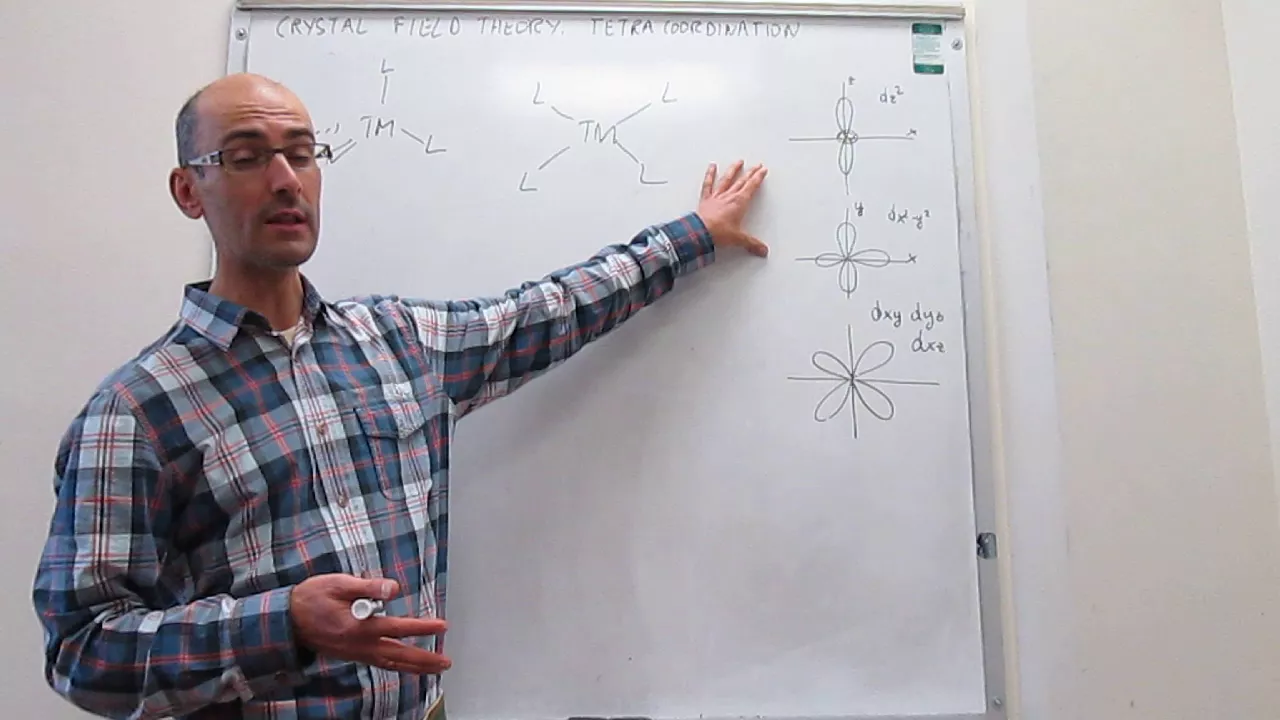
Crystal Field Theory: Tetrahedral & Square Planar Complexes
@diegotroya3497
23.9K views•2018-04-29

Biocatalysis and Catalysis in Islatravir Synthesis | Merck Webinar
@SCIwheresciencemeetsbusiness
675 views•2020-10-08
Kinetics of Nuclear Decay: Half-Life & Radiocarbon Dating
@ChadsPrep
16.5K views•2022-04-13

Edible Water Bottles: A DIY Guide to Sodium Alginate Spherification
@ryan
10.5M views•2019-06-21
Related Study Plans & Knowledge Roadmaps
Structured learning paths in Chemistry