















![d-d Transition,color of transition metal complex CFT [Ti(H2O)6] 3+absorbs Green and appears purple.?](https://i.ytimg.com/vi/McbIkgwJJYw/maxresdefault.jpg)





In crystal field theory, tetrahedral transition metal complexes exhibit a smaller orbital splitting (approximately 4/9 of octahedral values) with two orbitals lower in energy than three, resulting in all tetrahedral complexes being high-spin; conversely, square planar complexes show a dramatically different orbital ordering where the dx²-y² orbital is highly destabilized while dxz and dyz are lowest, arising from removing two opposing ligands from an octahedral arrangement.
Crystal Field Theory: Tetrahedral & Square Planar Complexes
Added:Understanding the spatial orientations, shapes, and symmetry of the five d-orbitals.
Familiarity with the fundamental tenets of Crystal Field Theory (CFT) as applied to octahedral complexes.
Ability to determine transition metal oxidation states and write their d-electron configurations.
Basic knowledge of coordination chemistry, including coordination numbers, ligands, and electrostatic metal-ligand interactions.
Calculating Crystal Field Stabilization Energy (CFSE) for tetrahedral and square planar geometries.
Investigating the Jahn-Teller distortion effect and how it transitionally relates octahedral complexes to square planar geometries.
Analyzing the magnetic properties of complexes by calculating the spin-only magnetic moment based on high-spin and low-spin configurations.
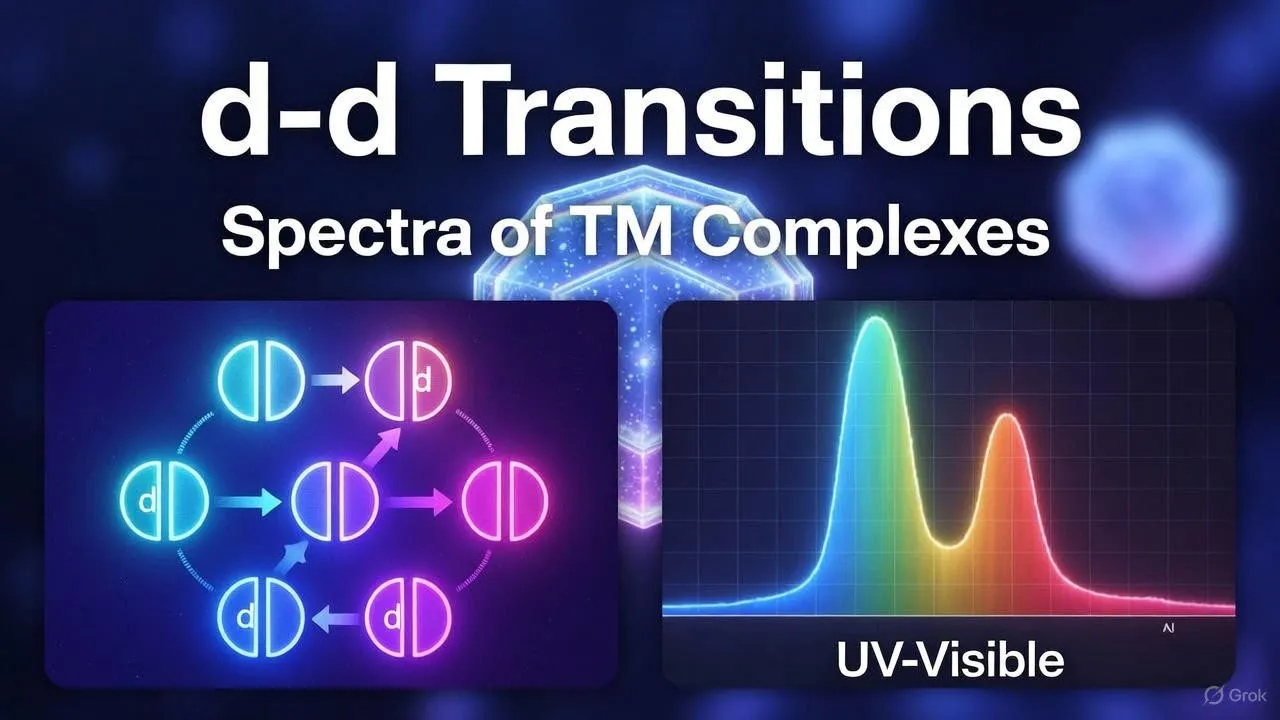
Interpreting electronic absorption spectra (UV-Vis) and explaining the colors of transition metal complexes via d-d orbital transitions.
Applying the Spectrochemical Series to predict weak-field versus strong-field behavior in various coordination environments.
23.9K views225likes6:54Original Release: 2018-04-29
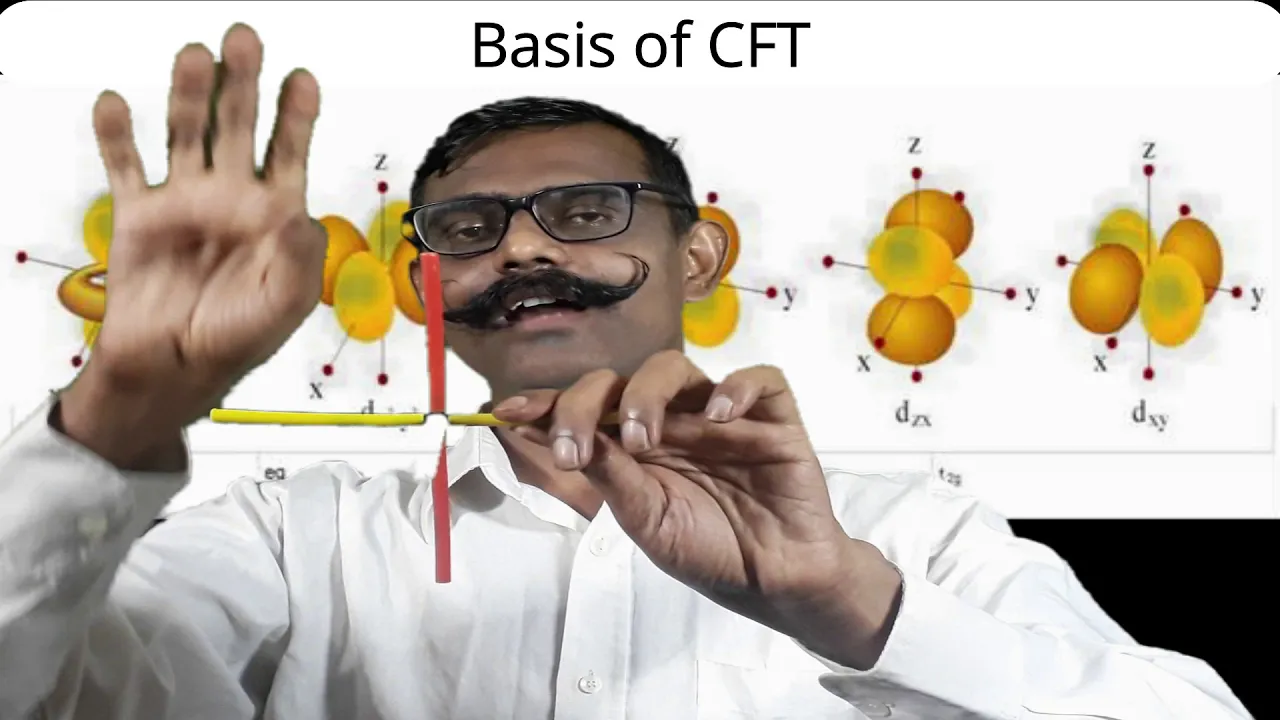
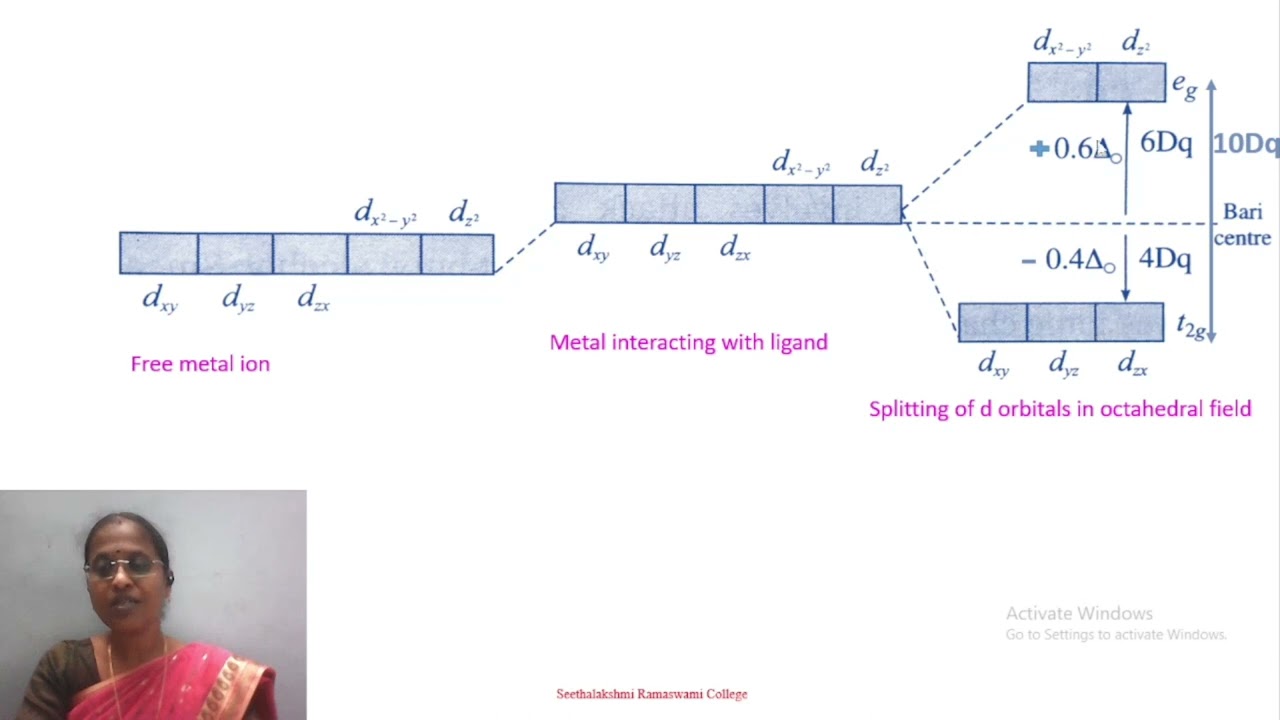
in this video we described orbital diagrams for tetra coordinated transition metals using crystal field theory all right so let's summarize to begin with what crystal field theory is maybe is that transition metals are going to have 5 D orbitals given transition metal is by itself in the gas phase those 5 D orbitals are degenerate but once you start to put ligands around that transition metal some of the others might be destabilized by aniconic repulsion to a further extend and some other orbitals in Prior videos we have examine of the hero complexes in which we have seen that this 5 the orbitals that you have here for transition metal when you put them in an octahedral environment it turns out that is DZ squared and the x squared minus y squared are pointing right at the ligands and that these double aces then well are you extent than these three orbitals so then for another hero complex what you have is that there's three orbitals that are low in these ones then their store goes our higher line those ones right so the question is how does this apply to other legal environments that are not of the hero but in this case it would involved use for Liam's well you have for Liam is this two different geometry is that you can experience tetrahedral or square square planar case the idea is that you will have the ligands again arranged in a tetrahedral fashion like this or in a square planar fashion like this but the order requirements are going to be a little different okay so it turns out that for tetrahedral environment when you see how these orbitals under ligands are related it turns out that none of the orbitals are actually pointing right on the direction of these four ligands in the tetrahedral environment right so what happens is that there's not a clear distinction between orbitals that are very systemized and orbitals that are less destabilize but we actually find is that these two tend to be destabilized a little less than those three however the energy splitting between those four goals is not very large not nearly as much as when you find in all the hill complexes all right so the orbital orderings for a tetrahedral transition metal complex in crystal field theory will be something like this right what this is this DZ squared there is your DX square Y minus y squared and then this one here the three but again the idea here is that the cap displayed in between eg and T to your tables for a tetrahedral complex is approximately about four nines the splitting in the octahedral case when you actually have that this orbital search swapped case of the T 2 years are lower in energy than the years right any addition this gap is always going to be quite smaller than for the other click here ok so something that is important about this tetrahedral complexes is that they will always be high spin or Wickfield right so the idea is that if you start to place electrons right there for the third electron there's not going to be a discussion of whether these goes here you know a pair spin down with existent electron the case is going to be that that third electron will always go into the higher energy right so all of the complexes would be highest in in a tetrahedral vegan environment okay so don't wait for a d3 but you have all the transition you know other electronic occupations now what happens for square planar okay so that is your tetrahedral environment but for tetra coordination you also have the possibility of a square planar geometry but for square planar the situation is a little different you can actually see that a square planar arrangement is the same as an octahedral but you're taking away two opposing corners of the other here are you taking out the Headroom remove two opposing corners and then what you're left with will be a screw planar geometry right so when we take a look at those orbitals wait we can imagine that we're back at the of the hill okay but we're removing the earth the ligands that are along the c-axis right so what that will mean is that this Decius word is not going to be nearly as destabilize as what happens in another hill complex but then what will happen is that this one would be extremely this device because the four ligands are all on the X and y axis right so that one is very slow wise this is not so much a stabilized and of these three it will turn into the XY which will be bisecting the x and y axis right that is going to be more disturb wise than the Y Z and the XE rights that the orbital diagram that we get on the experience in square planar complexes will be like this for sure the one that is of highest energy is your DX squared minus y squared then you have your D XY then you have your DZ squared and finally the lowest line orbitals would be the YC and then the EXCI so that will be the or bill diagram for squirtle are complex taking two into consideration the orientation of the transition metal D orbitals would respect that square planar legal environment alright so in this video we have seen what happens when you have four ligands around a transition metal using crystal field theory in the tetrahedral case we actually see that there's going to be a splitting between a set of two orbitals and three orbitals with the two orbitals lying on lower energy and we're gonna have high spin type of electronic occupation throughout in the case of a spread of square planar geometry we see that there's literally an orbital that is quite distally and the rest of the orbitals are ordering this fashion so with this electronic occupations and orbital diagrams and now we can go and understand the chemistry the scholars such as magnetic properties of tetra coordinated transition metal complexes you
Up Next
4:43
Why Are Transition Metal Complexes Coloured? | IB HL Chemistry
@ibchemvids
61.6K views•2014-11-15

83:56
Biocatalysis and Catalysis in Islatravir Synthesis | Merck Webinar
@SCIwheresciencemeetsbusiness
675 views•2020-10-08
10:06
1H NMR: Determining Number of Peaks from Structure
@MSJChem
59.2K views•2017-04-06

17:31
Edible Water Bottles: A DIY Guide to Sodium Alginate Spherification
@ryan
10.5M views•2019-06-21
Related Study Plans & Knowledge Roadmaps
Structured learning paths in Chemistry
chemistry
Nuclear Chemistry: Decay, Meds & Fuel Cycle
01Introduction to Nuclear Structure and Radioactivity
02Decay Dynamics and Kinetics
03Radiation Interaction and Detection
+ 2 more learning modules
24h5 modules
Explore Roadmap
chemistry
Supramolecular Chemistry: Forces & Machines
01Foundations of Chemical Bonding and Intermolecular Forces
02Introduction to Host-Guest Chemistry
03Thermodynamics and Dynamics of Self-Assembly
+ 2 more learning modules
16h5 modules
Explore Roadmap
chemistry
Photochemistry: Excited States & Reactions
01Foundations of Light-Matter Interactions
02Molecular Orbitals and Electronic States
03Photophysical Processes and Jablonski Diagrams
+ 2 more learning modules
18h5 modules
Explore Roadmap
chemistry
Coordination Chemistry: Bonding & Properties
01Introduction to Transition Metals and Ligands
02Crystal Field Theory (CFT) and Geometry
03Magnetic Behavior and Spin States
+ 2 more learning modules
14h5 modules
Explore Roadmap