











![[3] Metal Ligand Bonding In Transition Metal Complexes | Inorganic chemistry | BSc 3rd Year](https://i.ytimg.com/vi/KhGz16toEeg/sddefault.jpg?v=60eaa656)

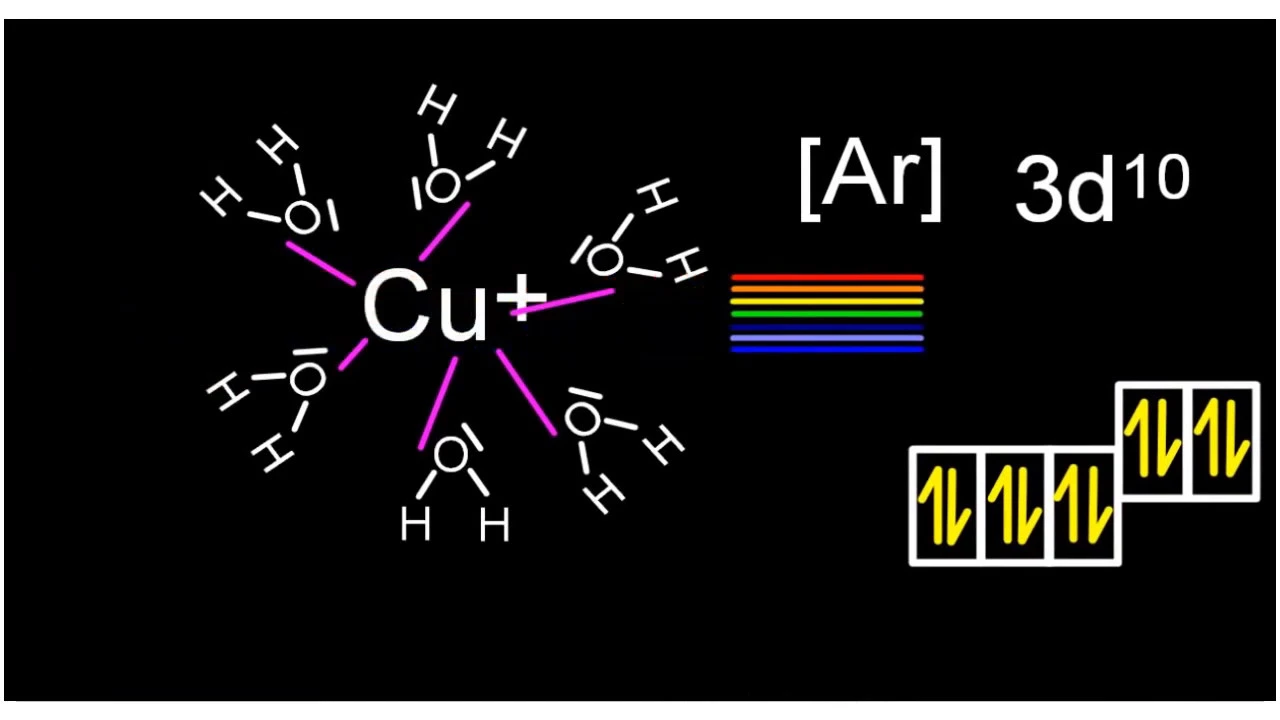


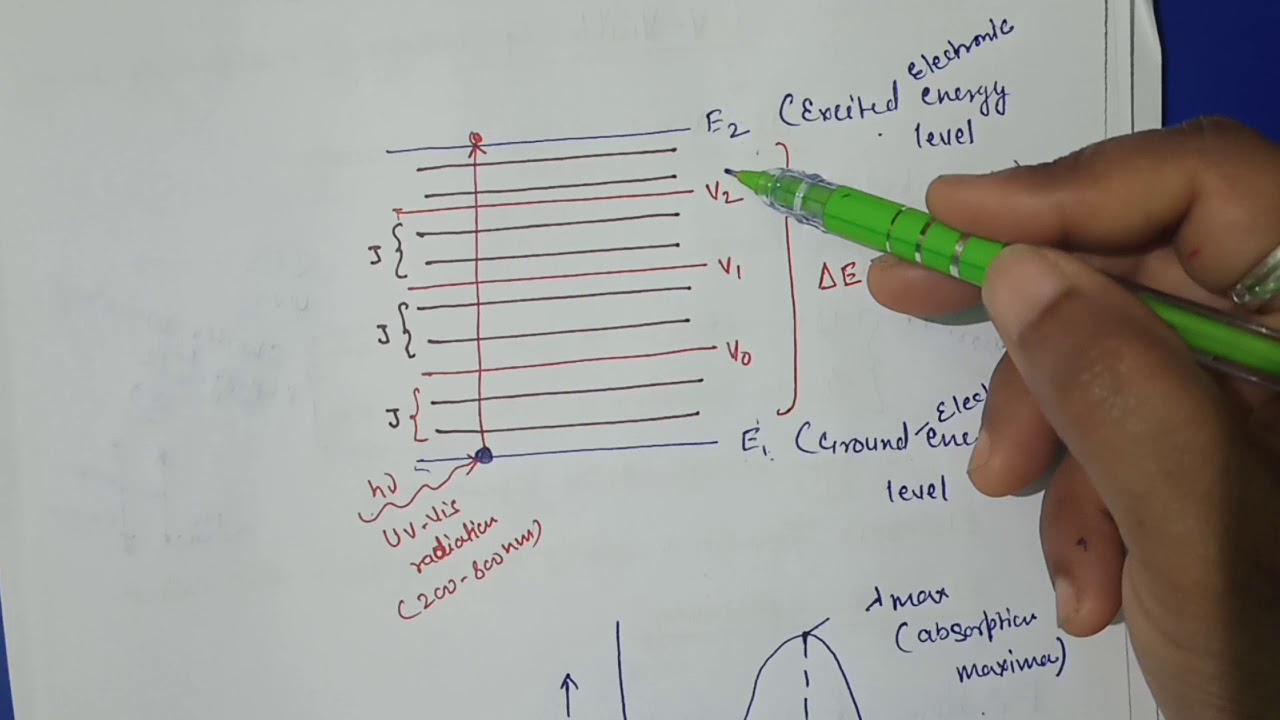

Coordination complexes exhibit color because ligands cause the d-orbitals of the central transition metal ion to split into different energy levels; when white light passes through the complex, electrons absorb specific wavelengths corresponding to the energy gap between these split orbitals, and the transmitted light appears as the complementary color to the absorbed wavelength.
Why Are Transition Metal Complexes Coloured? | IB HL Chemistry
Added:Understanding the electronic configuration of transition metals, specifically the filling and characteristics of d-orbitals.
Concepts of coordinate bonding, including how ligands act as Lewis bases to donate electron pairs to transition metal ions.
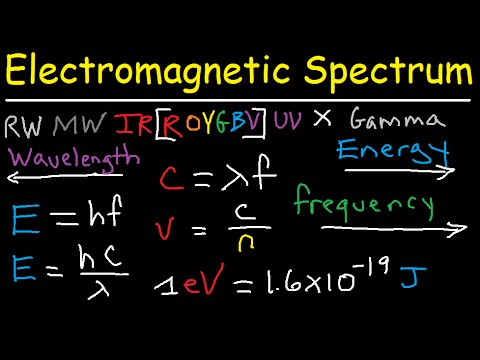
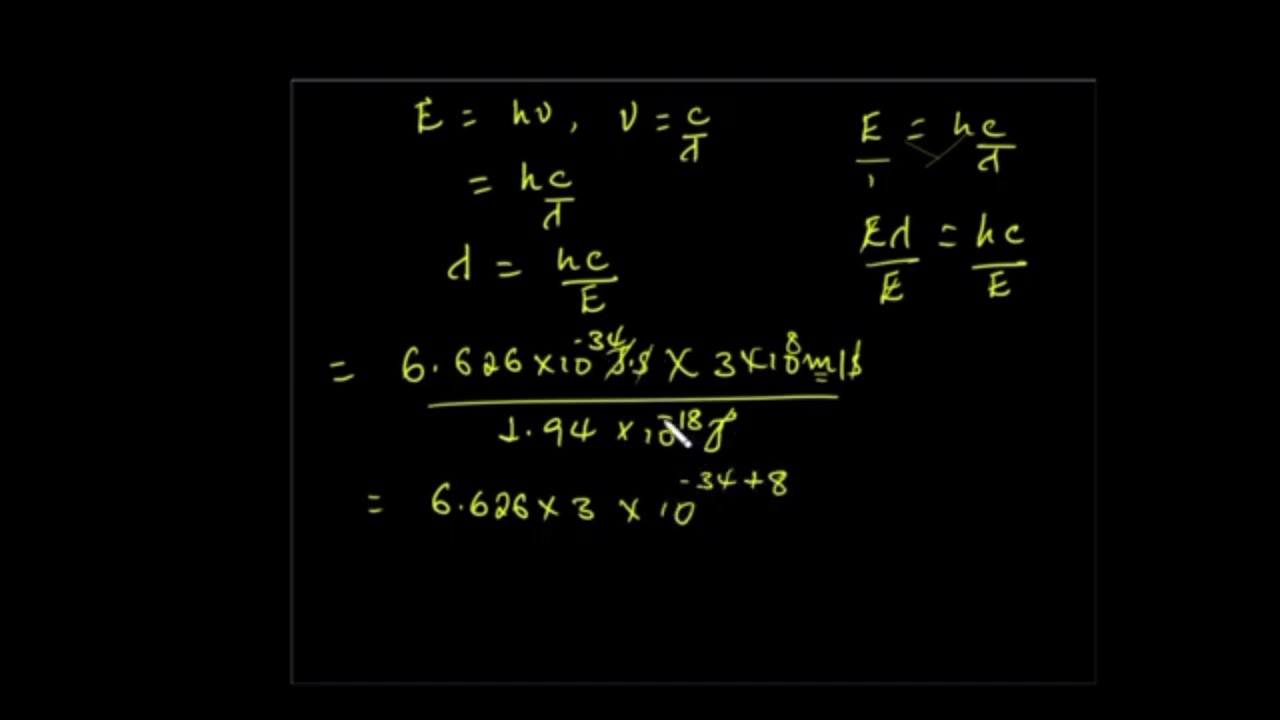
The relationship between light wavelength, frequency, and energy (E = hc/λ) within the electromagnetic spectrum.
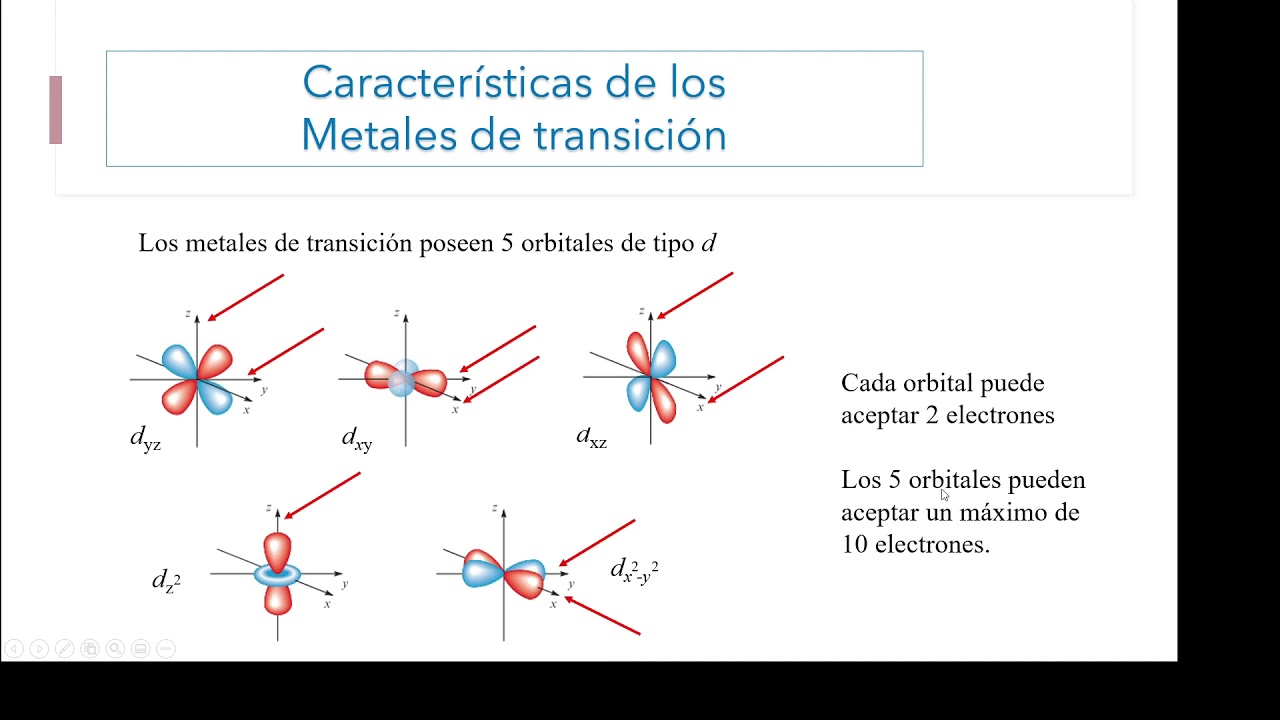
The spatial orientations and shapes of the five d-orbitals (d_xy, d_yz, d_xz, d_x2-y2, d_z2).
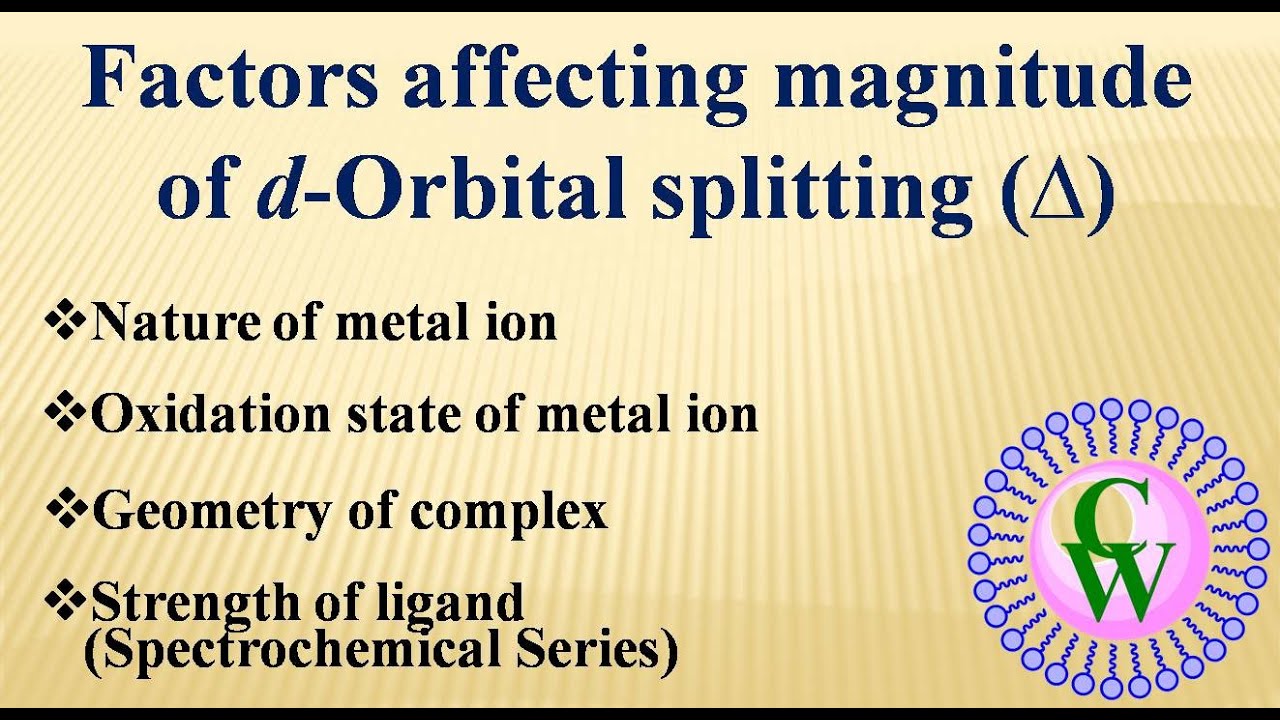
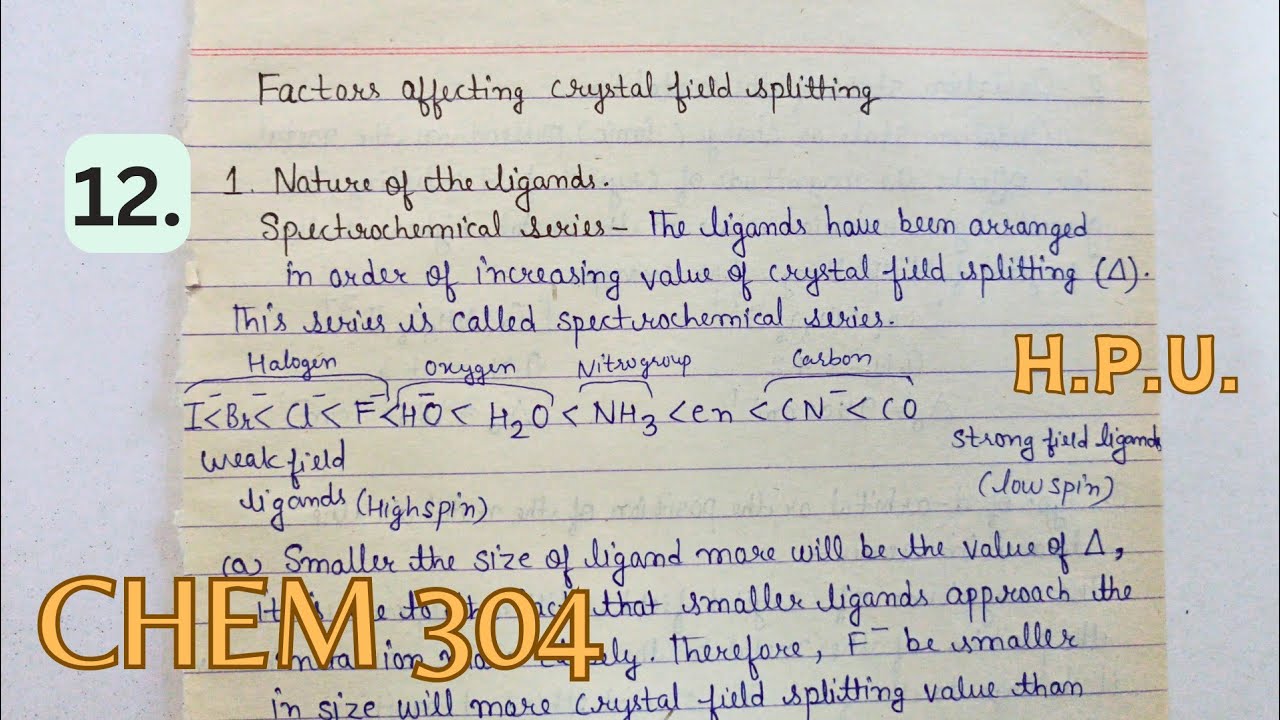
The Spectrochemical Series, analyzing how different ligands influence the magnitude of d-orbital splitting (Δ).
How factors such as metal oxidation state, coordination geometry (octahedral vs. tetrahedral), and the identity of the metal ion affect the color of the complex.
Determining the magnetic properties (paramagnetism vs. diamagnetism) of complexes based on high-spin and low-spin electronic configurations.
Practical applications in UV-Vis spectroscopy and the quantitative determination of complex concentration using the Beer-Lambert Law.
61.6K views751likes4:43Original Release: 2014-11-15
[Music] thanks Unice why are complexes colored that giant neutron star has been compared to an atomic nucleus let's get on with the chemistry all righty so if you have a central transition metal ion in this case let's choose the copper 2+ ion there and you surround it by six ligans we're going to choose water what's going to happen is the ligans are going to have dative calent bonds with the central transition metal ion and they're going to form a complex in this case it's an octahedral complex the six ligans take up space equally around the iron given 90° angles there once you've got your complex if you were to shine white light through it white light contains all the wavelengths of light then you may notice something strange the light comes out the other side a different color in this case blue the copper hexahydrate 2+ complex is blue appears blue why is that oh broke it so let's look at the copper atom first of all 4s1 3d10 now we need an iron for this to work properly knock off the outer electron from the 4S and one of the electrons from the 3D so I now I've made the copper 2+ iron just fix this up okay the copper 2 plus iron now what I need to do is I need to put the ligans in in this case water if you remember now I'm not going to put the water into an octahedral arrangement over here apart from the fact I had to blow a hole in the wall and uh we know something bad's going to happen to Dr Atkinson at some stage but not just yet so these lians interact with the central transition metal ion and the D orbital of that Central transition metal ion will split in a 32 pattern just like this two of the 3D orbitals now have a higher energy than the other three so what does that mean well this is a partially filled D orbital and that means it's going to have colored complexes turn on white light and the colors are going to go along but they won't interact with the 4S orbital there's nothing there it's an empty orbital but when it hits the partially filled 3D orbital orange light suddenly is missing from the Spectrum the rest of the light continues through and well I found this alien eyeball here and so that's what you see coming out the other side you see these colors and your eye interprets all the colors without orange as blue so it appears blue so what did that orange light actually do well it promoted an electron from a lower 3D to a higher 3D orbital so that's where the energy went it took it from a lower to a higher energy orbital further away from the pull of the nucleus so why is it orange this is the color wheel red orange yellow green blue and violet now if you remember orange light was absorbed and opposite orange is blue so the complex looks blue if yellow light was absorbed then the complex would look Violet and what if you have a complex that's actually green it looks green what color light was absorbed well red light was absorbed this so-called color wheel is in the data booklet oh Dr Atkinson's come to visit and when he comes to visit problems in Che I'm just going to run away is this just a metaphor for the fact that my students never remember to put the qualitative observations on their lab reports and F to get full marks because of it perhaps I don't know [Music]
Up Next
57:37
d-d Transitions in Coordination Chemistry | CFT & Selection Rules
@iit
28.1K views•2014-01-08
83:56
Biocatalysis and Catalysis in Islatravir Synthesis | Merck Webinar
@SCIwheresciencemeetsbusiness
675 views•2020-10-08

3:59
Polymer Biodegradability: Hydrolysis of Polyesters & Polyamides | IB Chemistry
@ibchemvids
1.3K views•2024-03-03

17:31
Edible Water Bottles: A DIY Guide to Sodium Alginate Spherification
@ryan
10.5M views•2019-06-21
Related Study Plans & Knowledge Roadmaps
Structured learning paths in Chemistry
chemistry
Nuclear Chemistry: Decay, Meds & Fuel Cycle
01Introduction to Nuclear Structure and Radioactivity
02Decay Dynamics and Kinetics
03Radiation Interaction and Detection
+ 2 more learning modules
24h5 modules
Explore Roadmap
chemistry
Supramolecular Chemistry: Forces & Machines
01Foundations of Chemical Bonding and Intermolecular Forces
02Introduction to Host-Guest Chemistry
03Thermodynamics and Dynamics of Self-Assembly
+ 2 more learning modules
16h5 modules
Explore Roadmap
chemistry
Photochemistry: Excited States & Reactions
01Foundations of Light-Matter Interactions
02Molecular Orbitals and Electronic States
03Photophysical Processes and Jablonski Diagrams
+ 2 more learning modules
18h5 modules
Explore Roadmap
chemistry
Coordination Chemistry: Bonding & Properties
01Introduction to Transition Metals and Ligands
02Crystal Field Theory (CFT) and Geometry
03Magnetic Behavior and Spin States
+ 2 more learning modules
14h5 modules
Explore Roadmap