




















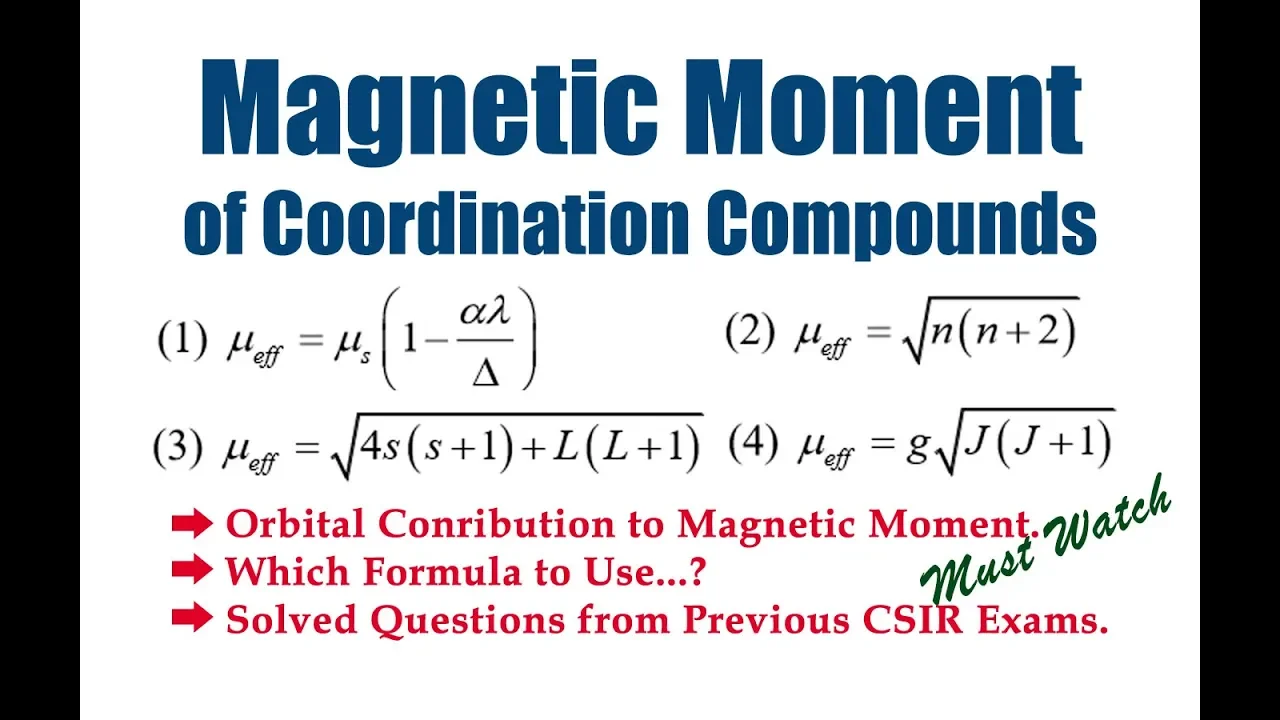




d-d transitions are electronic transitions between d-orbitals in transition metal complexes that are typically weak due to being Laporte-forbidden (transitions between orbitals of the same symmetry type are forbidden), but can be relaxed by vibronic coupling or spin-orbit coupling; these transitions are characterized by their λmax (maximum absorption wavelength) and εmax (molar absorptivity), and are used to distinguish between high-spin and low-spin complexes, with high-spin complexes absorbing lower energy light and appearing blue while low-spin complexes absorb higher energy light and appear yellow-orange.
d-d Transitions in Coordination Chemistry | CFT & Selection Rules
Added:Fundamental concepts of Crystal Field Theory (CFT), including the splitting of d-orbitals in octahedral and tetrahedral coordination geometries.
Basic coordination chemistry, including ligand classification (spectrochemical series), coordination numbers, and transition metal oxidation states.
Electronic configurations of transition metal ions (d1 to d10 systems) and basic rules of electron filling (Hund's rule and Pauli exclusion principle).
General principles of UV-Vis spectroscopy, including how light absorption relates to electronic excitation, Planck's equation, and the complementary color wheel.
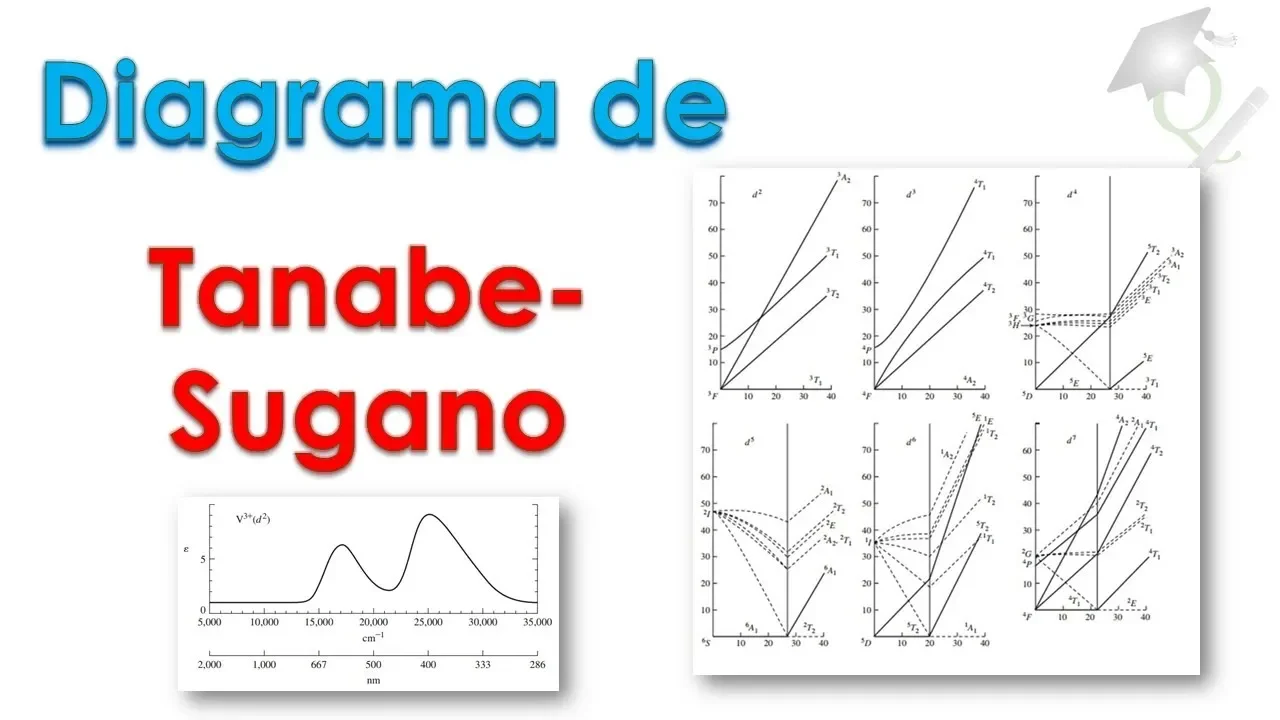
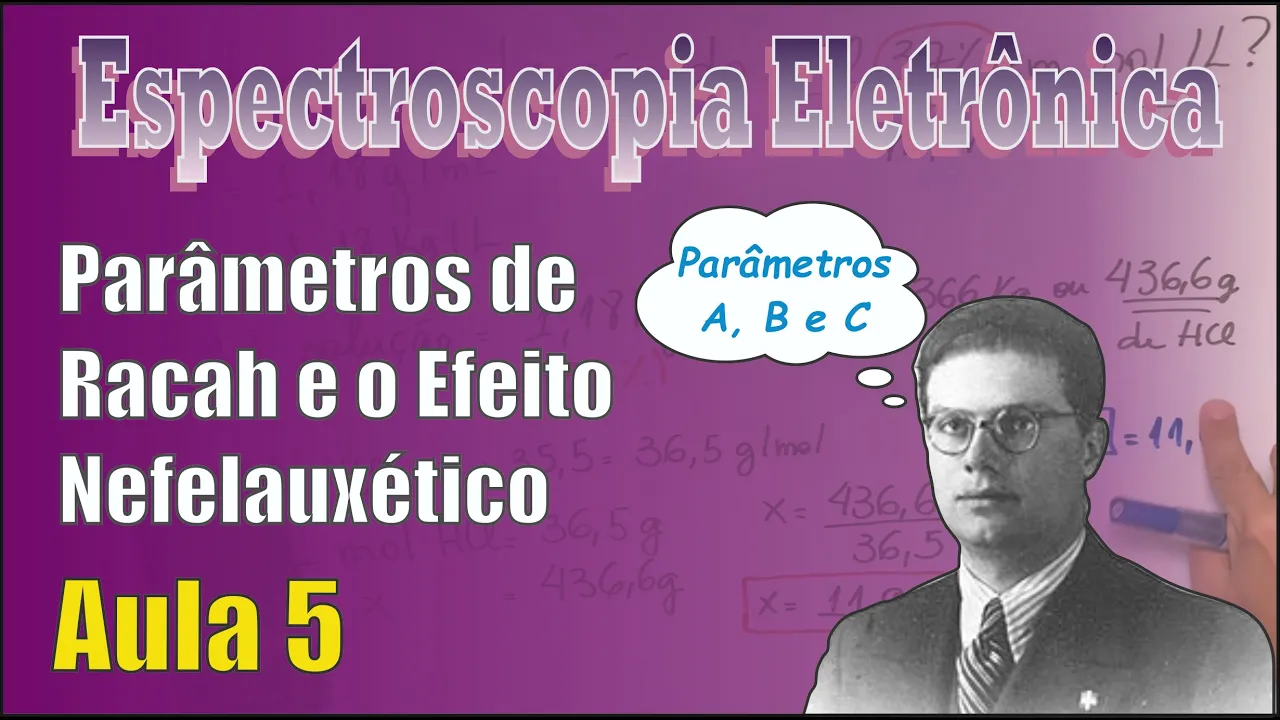
Interpretation of electronic spectra using Orgel and Tanabe-Sugano diagrams to determine the crystal field splitting parameter (10 Dq) and Racah parameters.
The physical consequences of Jahn-Teller distortion on the electronic transitions and fine structure of absorption spectra.
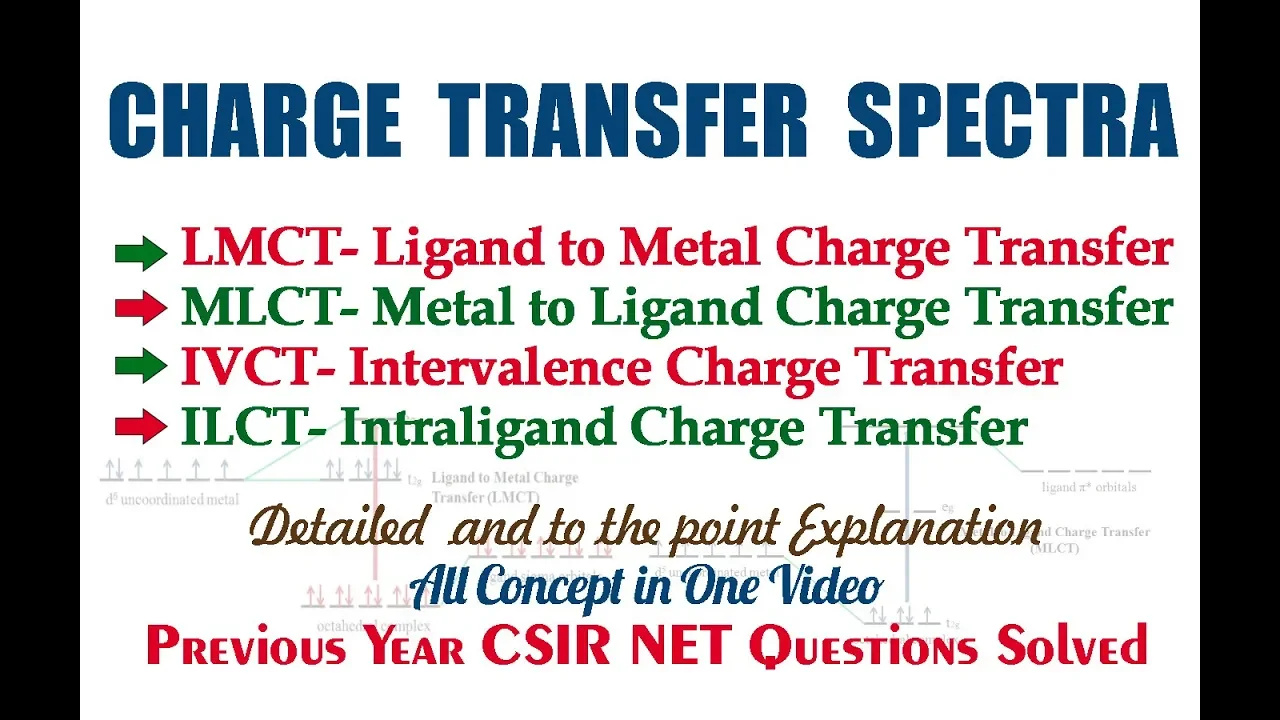
Advanced analysis of Charge Transfer (CT) spectra, distinguishing between Ligand-to-Metal (LMCT) and Metal-to-Ligand (MLCT) transitions in terms of intensity and energy.
Connecting spectroscopic states to the magnetic properties of complexes, including spin-orbit coupling and magnetic susceptibility.
Real-world applications in bioinorganic chemistry and materials science, such as the design of inorganic pigments, catalysts, and solar energy conversion systems.
28.1K views193likes57:37Original Release: 2014-01-08
Good morning everybody. Welcome to this class on the d-d transitions. So, we will be talking on the corresponding electronic transitions, what we can have, and we can measure nicely using a spectrophotometer, and we can basically characterize. So, this is one of the most important characterization data, what we can have for the transition metal complexes. So, if we will have several such transition metal complexes, and we should all be looking for that characteristic transition frequencies, that means the corresponding energy of these transitions. So, that will also tell us that what type of transitions we are considering. So, we can have several types of such transitions.
And, if we consider, say several such species including the metal salt which we can dissolve in water to get the corresponding species immediately such us hex aqua titanium 3 ion, which can be derived very nicely from the corresponding titanium chloride salt. And when we make the solution of this particular species, that means since we are dissolving in water, so it is a solution in water. And we can have the corresponding multi electron system for this one, if we have more than one d electron for this particular ion. So, we basically see that, when this particular complex is exposed with some blue green light, so web length corresponding to the blue green light, and the electronic transition will take place at that particular point at 493 nanometer. So, this particular blue green light corresponds to this particular web length; and in web number unit, this corresponds to 20, 300 centimeter inverse; and the corresponding color of the solution, which would be purple violet, what we see, the corresponding complementally color and this would definitely be the corresponding color of the ion or the complex ion. So, this is the color of the complex ion. So, at this particular web length, absorption is taking place and we will see the corresponding color.
So, for these, as well as for some other compounds, when you just simply change, because the crystal field explanation what we can have for color change in any complex is due to the change in the corresponding ligand environment. So, from 6 water ligands, if we go for 3 bpy pedant ligands, giving same octahedral coordination geometry, because of the cemetery for this de electronic configuration is also important; we will see in some moment that it is very much dependent on the corresponding cemetery of the species. So, now, we exposed this with violet light, compared to this blue green light. So, violet light will be, say it, on this particular ionic species which is of high energy compared to this one. And definitely once we state that this is a high energy, it will be soldering web length is compared to 493 nanometer, it will be in the range of 400 nanometer with a corresponding web number value of 25,000 centimeter inverse, and the corresponding complementary color, that means, the color of the solution what we will be observing is yellow green. So, for this particular species and other species, like that of that cobalt compound, say, because large number of metal complexes we can handle by measuring the corresponding lambda max values and the epsilon max values.
So, the data what we will be reporting for all these complexes will be the corresponding lambda max, that mean the maximum absorption web length and the corresponding molar absorbdivity at the maximum value.
So, this particular compound if we just compare with that of our well known hexamine cobalt 3 chloride compound. So, we got Co NH3 whole 6 Cl 3, and this compound is high spin, and this is low spin. So, electronic transitions will take place at different web length. So, in this particular case, since it is high spin in nature, so it will absorb low energy light, it will definitely absorb the low energy light, and therefore, transmit the corresponding high energy, corresponding high energy light. So, it, this particular compound, therefore, when it is high spin the color is blue.
But, this one, basically the low spin one and its color is yellow to orange; and here the absorption is talking place not at low energy, but at high energy. So, high energy light is absorbed and definitely the transmitted light would be of low energy, and it emits low energy light; that means, these 2 combination, that in one case the absorption at low energy, and in another case absorption at high energy, clearly distinguished these 2 forms of these complexes, one in high spin and another is low spin. So, in case of high spin, it absorbs low energy light; that means, delta octahedron for the high spin species is less than delta power pairing energy. We already discussed all these thing, again, when we experimentally determine the values for the corresponding absorption, we should immediately be tell about that definitely this is the corresponding compound which can form the high spin species, because incase of cobalt 3 only this compound and other the triflers analog of these with 3 water molecules surrounding the known high spin compound, the rest all are low spin compounds.
So, this is the situation for the high spin compound, and the reverse is therefore, that means, delta o for low spin is therefore, greater than the pairing energy. So, if we just, these 2 things we can compare, we will find that the delta o of low spin will definitely be greater than delta o of high spin; that means, there will be a change in spin states when we change the corresponding delta values.
And, in terms of the spectroscopic signatures, we will find that the different amount of energies, different amounts of energy are required for the electronic transitions in the 2 spin states. So, if we have 2 spin states, one is low spin and another is high spin. So, definitely their corresponding lambda values would be different. So, that basically gives us the corresponding idea for this transition. So, what about this corresponding transitions what is taking place based on this cobalt 3, it can be in the high spin or it can be in the low spin states. So, cobalt 3 ion, in high spin and in low spin state.
We have unpaired electrons in one particular d level, and the upper available d level in terms of the corresponding crystal field theory that the upper level is also of d corrector. So, the transition what is taking place from one d type orbital to another d type orbital, that is why we call it as the d-d transitions. But through some selection rules and all this parameters what can control the corresponding transitions, we will find that this d-d transitions are not very much allowed, that is why the corresponding intensity of these transitions are weak. So, whenever we find any weak d-d transitions in metal complexes, how we can utilize for these characterizations, we will see.
So, we will have weak d-d transitions. So, we will be using some mathematic concepts of even and odd functions. These functionalities are related to the corresponding type of the d orbitals, whether it is d x y orbital, or d x square minus y square orbital, they can be considered, or some s orbital or p orbital. So, we have the even or odd functions related to this transitions, which can be controlled by the corresponding rule which is known as Laporte rule, and the Laporte rule is derived from that mathematical concept of even and odd functions, related to the d-d transitions.
So, when the electronic transitions will be taking place from wave functions with g symmetry to wave functions with another g symmetry, that g means even symmetry, are forbidden. So, this particular thing, that means, the symmetry controlled thing, that means when the even symmetry orbital is allowed for transition to another symmetry, related orbital is forbidden, as, are the transitions from wave functions with uneven symmetry; that means, the u symmetry to the wave functions with again u symmetry. So, with respect to the center of inversions, we have seen that some of these orbitals will be leveled as having g symmetry, and another will having u symmetry, such us we have 2 types of orbitals in center symmetric, o h symmetry, that means, the octahedral symmetry, we can have the t 2 g set, which is g type, and another is a, e g type, which is, both are of same symmetry, that means, this transition will not be allowed from t 2 g to e g. Similarly, if we can have a t 1 u symmetry to t 2 u symmetry, or t 1 u symmetry, that will also be forbidden. But, the transitions from g to u and u to g, where the symmetry switches or the symmetry changes, may be, but not necessarily allowed. So, it can be relaxed only when we have g to u transition or u to g transition that can be allowed to some extent.
So, how and what are the different types d-d transitions we can have for certain metal complexes, wearing unpaired electrons in 3 d level, 4 d level or the 5 d level. So, we can have the pi donor ligands. So, this pi donor ligands lie lower in energy than the pi acceptor ligands. So, the energy leveling for these different types of orbitals, most of the time we are considering the corresponding sigma donor only orbitals; that means, the sigma donor ligands, that means, the water molecule and the ammonia molecule. But there are some other, where the pi donor ligands are available and the pi acceptable ligands are also available for donations as well as acceptance of the electronic charge density from the metal ion.
So, according to the spectral chemical series or the spectro chemical series, one can determine, whether the ligand will have, behave as a pi accepting or pi donating. So, depending upon the mechanism of electronic charge transition, we can have some ligand as pi accepted ligand and some as the corresponding pi donor ligand. So, this spectral chemical series or spectro chemical series, one can determine whether the ligand will have a pi accepting or pi donating one.
When the ligand is more pi donating, its own orbitals are lower in energy than the t 2 g metal orbitals.
So, the ligand will have one orbital which is pie donating. So, it is be lower lying compared to the t 2 g metal orbital, forcing the frontier orbital to involve an anti bonding pi star and an anti bonding sigma star level.
So, we will have the different types of orbitals which are available, depending on the donation from the metal as well as the ligand.
So, this d-d transitions denoted above by delta for the pi acceptor ligand complex is larger than the pi donor ligand. So, we just can modify this d-d transition. So, if we can have one particular level, which is e g and another is t 2 g, they are not symmetry allowed for the corresponding electronic transitions. But if we can have, these are this are of pi type, because they are intermediate between the metal ligand axes, but these are of sigma type. So, this is sigma type and this is pi type. And, if we have the corresponding ligand orbitals somewhere here, so this ligand which can be our pi donor as well as pi acceptor.
So, the positioning of the pi donor ligand and pi acceptor ligand will also, will be different. And due to that we can have not only this t 2 g type or pi type orbital, we can have the corresponding pi star level, as well as for sigma we will have the corresponding sigma star level. So, involving all these we can have the corresponding transitions from one level to the other. So, if we see that d-d transition of pi acceptor ligand to be of higher frequency than the pi donor ligand. So, we just compare the pi, how pi acceptor ligands can be compared with the pi donor ligands. So, how the energy levels that the energy of these two levels, that means, u 1 and u 2 are? And the delta e values are getting modified from the nature of the ligands basically. So, ligand can modify the corresponding energy for these electronic transitions. So, these transitions appear as weakly intense on the spectrum because they are all Laporte forbidden. So, will see, what is the Laporte rule? And how Laporte rule can be controlled? Even if we have so many of these types of levels, that means, the ligand pi donor or pi acceptor, and the metal ion, sigma pi as well as pi star and the sigma levels. But some relaxation is definitely be there, in true sense, mathematically we can say that Laporte rule will not allow these d-d transitions, but due to some coupling, which we call as a vibronic coupling.
And, the vibronic coupling is nothing but if we have a metal center like this, where we find that 6 ligands are attached to the metal center. So, 6 ligand goes out there. And if it is in octahedral symmetry, we have the corresponding center of impassion which is located at the metal ion, and through which we can interchange these all ligands L 1 to L 2, or L 3 to L 4 or, so on. So, if this is there, and now, since all the time this covalent bond or the coordinate covalent bond between the metal and ligand, they are under thermal hydration. So, this metal ligand bond are compressed and spaced, depending upon the corresponding hydration. And once you have the corresponding unsymmetrical hydration, that means, this bond is getting longer and this bond is getting compressed. So, i will be lost, and due to this vibration we have one mechanism which is known as vibronic coupling.
And this vibronic coupling is responsible for the destroying the corresponding i symmetry. And once the i symmetry is lost, we will get some amount of relaxation for the corresponding g 2 g or u t v transition, which is otherwise Laporte forbidden. So, due to this vibronic coupling we have little bit of relaxation of these rules, and they are therefore weakly allowed, and therefore the corresponding energy for the transition is very low. And they catch only any visible light upon relaxation which is why many transition metal complexes are brightly colored, because we see this in the visible light range. But the molar extinction coefficient for these transitions are very less which is around 100; that means, the epsilon max which is in the order of the 100 only, because the corresponding absorption values in the y axis for the electronic spectrum is less.
So, if the integrand of the transition moment integral, which we find, from one level to other we find the corresponding transition moment integral contains the totally symmetric representation which is related to the symmetry from one level to other, then the transition is Laporte allowed, then only this particular transition will be allowed and we get light intensity or maximum intensity for that particular transition. And if the transition does not content totally symmetric representation, then the transition is Laporte forbidden. So, symmetry as well as group 3 d plays an important role to identify these symmetric representations which are either center symmetric or not symmetric with respect to the transition.
The totally symmetric representations in the irreducible symmetry representation, that means, this A type of representation, that is even with respect to all symmetry operations; that means, some symmetric representation we can have from the character table of the corresponding symmetric group, which is, in this particular case, if the metal complex what we are considering is of o x symmetry, then we perform some of the symmetry operations, and with respect to these operations, the irreducible symmetry representation should be even, due to that symmetry operation; and on the character level these representation is usually listed first and has the designation either A, A1 or A1g. So, these are the totally symmetric representation what we can find typically form the corresponding character table of the symmetric point group.
Then, we see that what we call as the corresponding selection rule, because this selection rule will be controlling the corresponding transition from one level to the other.
So, first of these, is the corresponding spin state; that means, if we are considering transition from one particular metal ion, say, if we are considering one particular system where we have the t 2 g and the e g level, which are already is. So, we have the t 2 g and the e g level, and we can have, say, for chromium system, we have 3 unpaired electrons.
And these 3 unpaired electrons will giving rise to total spin value, s is equal to 3 into half is equal to 3 by 2.
So, considering these 3 unpaired electrons, that all the time when we measure the corresponding magnitude moment, we should get the corresponding magnitude moment for this mu effective values for 3 unpaired electrons.
And when we find that 3 unpaired electrons are still there, and we get a total s value equal to 3 by 2, and the spin multiplicity which is the number of arrangements what is possible with these many number of unpaired electrons will be equal to twice s plus 1, which is 2 into 3 by 2 plus 1; that means, is equal to 4. So, 4 different types of arrangements are possible when we have these 3 number of unpaired electrons. So, due to this transition, if we can move this electron to the upper level, we still have 300 electrons from these 3 levels, but the transition has been taken place from t 2 g to e g; that means, one unpaired electron has been moved from this t 2 g level to the e g level. But for that state, that means, when we have 1 electron in the exited state, that means, in the e g level, we still have 3 unpaired electrons. So, our spin multiplicity value is still 4. So, if we consider one particular transition, that means, where we can have the corresponding transition from a spin multiplicity value of equal to 4, because we will get some term symbol for multi electronic configuration, where we write on the left super script, and the left super script is the twice s plus 1, that means, the spin multiplicity value which is not changing; that means, we can have 1 transition from a 4 spin multiplicity, 4 state to another state having the same spin multiplicity, then that is allowed, which is the first rule from the Laporte selection. And, since, both are preserved as the corresponding spin multiplicity value equal to 4; that means, s values are not changing from the ground state to the exited state due to the electronic transition. So, our delta s value would equal to 0. So, we do not expect any change in the spin values; that means, this off spin when we move it to the upper level, should not be the down spin system; if it is down spin then it will reduce the total spin value as well as the corresponding spin multiplicity value. So, the first of these in the Laporte selection rule, it will be therefore delta s is equal to 0.
And the second one is that d-d transitions are forbidden transitions, if the delta l is equal to plus minus 1. But the Laporte allowed transitions is the change in the parity occurs, that is, if we have the corresponding transitions from s level to the p level, and p level to the d level. So, these are Laporte allowed transitions, but what we are talking here is the corresponding d-d transition, since the electronic spectra that would therefore be only Laporte forbidden transition.
So, the Laporte forbidden, other transitions would therefore, be the same way the parity remains unchanged, that means, the p-p transitions and the d-d transitions are Laporte forbidden transitions.
So, why we get this transitions, even it is very weak one? The d-d transitions result in weak absorption bands and most d block metal complexes display low intensity colors in solution; that means, our f silent max values are less, exceptions for d 0 and d 10 complexes where we do not have to consider the corresponding d-d transition. The low intensity colors indicate that there is a low probability of a d-d transitions; that means, the probability of transition is very less, and we get therefore, a very low value of the corresponding epsilon max, and the transition moment integral is also very small.
So these rules are mixed, can be relaxed by molecular vibration and spin orbit coupling.
So, one we have seen that if there is a molecular vibration along the m L bond axes, and if they are destroying the corresponding symmetry, the inverse symmetry level for the system, and in other case, if we have some amount of coupling between the spin moment and the orbital moment, then we have the corresponding spin orbit coupling; so that, spin orbit coupling also can relax these particular Laporte rule. So, the set of rules, what we can have now, that g g is forbidden. So, g by g transitions, g product g is also g, and u product u is also g, these are 2 forbidden transitions. But g 2 u the product is u, and u 2 g product is also u, so in these 2 cases when the products are u, that means, uneven or odd, they may be corresponding allowed transitions.
So, transition between two even states and odd states are forbidden. So, this is the rule which we get from there, that for 2 even states and 2 odd states are forbidden. So, if the d orbitals in an octahedral symmetry having i, whose are corresponding symmetry level is there; that means, the inverse symmetry is there, and the system is center symmetric, and the exited state is also of the same type; then we do not except any kind of transition from one even state of g type to another even state of g type. And also, the rule also tells that, does not state that transitions between an even and odd states are allowed. So, this is some kind of some only relaxation that means, but it is also telling at the same time that, the transitions between the even and odd states are allowed. So, it is not clearly mentioned.
So, now, we see that what type of transitions and the corresponding transition probability can be inferred from the different type of transitions we can have. So, we have taken 4 exact examples for this. And these examples will tell that there are 2 rules- one is related to the spin and another is the corresponding Laporte rule for the corresponding type, that means, whether we have the p p type or d-d type. So, if we take the example of simple hexa aqua manganese 2 ion, it is a system of 3 d 5. So, if we have the corresponding transition of this type, and if the one state to the other, so is a multi electronic system; we have the corresponding term symbol, and corresponding electronic state, which is required for the corresponding transition.
So, we have the ground electronic state to the exited electronic state and the corresponding transition. So, in case of this compound, the manganese hexa aqua 2 plus, it is very weak in intensity and very lightly colored, because the upper available level, the corresponding electronic level which will have the different spin multiplicity.
And since it is d-d transition, we can consider it as both spin forbidden as well as Laporte forbidden. So, in this particular case only, since it is a 3 d 5 system, which is high spin, where 5 unpaired electron and the symmetry level is A only, capital A, for the ground state, but the other exited states which are having different symmetry level as well as the different spin level also, because the spin is also changing when we move from A d 5 high spin system, to some other electronic configuration.
But, when we move to another octahedral molecule which is also hexa aquo, which is nickel hexa aquo 2 plus, and this is b 2 plus, in this particular state the exited level is been allowed; that means, obscene spin type, but again it is a d-d type of transition, so it is Laporte forbidden. So, compared to this hexa aqua manganese compound the corresponding intensity and the lambda max values, the corresponding transition intensity is higher because it is spin allowed. So, we get the corresponding molar extinction coefficient values, it is in the long term scale, which will be close to this particular value, that mean this value is very small, compared to that the value for hexa aquo nickel is higher.
Similarly, the other case, we get where both of them are allowed. Here both of them are forbidden, here one is allowed, but in case of tetrahedral nickel complex which is Ni Cl 4 2 minus. So, it is Ni Cl 4 2 minus, and it has a tetrahedral symmetry group, point group, and inverse in symmetry is not there. And if we consider the corresponding these 2 states, again the ground state and the exited state, they are of same spin multiplicity value. So, it will be spin allowed.
So, this particular case, it will be spin allowed, but since, the other case, that means, since again it is the d-d type of transition, it will be Laporte forbidden. But the corresponding intensity is higher compared to the corresponding hexa aqua nickel compound.
So, in case of nickel, these 2 species can nicely be compared, if we just simply go for this corresponding measurement for the corresponding electronic spectra, that means any nickel salts, any nickel chloride or nickel sulphate is dissolved in water we get this particular compound, and then if we add certain amount of, say, hydrochloride acid, or any other source of chloride ion, and in higher concentration or sometime we can add some bulky organic tat ion, that means, tetrabutyle ammonium chloride or tetra ethyl ammonium chloride. And, the corresponding, this particular salt can be isolated as, if it is N B u 4 tetra butyle ammonium salt, then Ni Cl 4, 2 minus can be isolated as this particular salt. So, this can be isolated also in this particular salt. And in presence of this acid or in presence of only NBu4, which is tetra butyle, tersary butyle, tetrabutyle, the butyle will be tersary; and tetra butyl ammonium chloride addition will give rise to this particular Ni Cl 4 species; and where the corresponding lambda max will have some certain value, but cartistically, the if silent max is higher compared to the corresponding octahedral compound which is hexa aquo. Then, as we move towards the right of this scale for the molar extension coefficient which is higher and higher above 1000, which is due to the corresponding charge transfer, which is both spin allowed and Leporte allowed.
So, when both of them are allowed, which is spin allowed as well as Leprorte allowed, we get the corresponding p t transition which is known as the Charles transfer transition, that we will discuss in detail. How a solution of potassium per magnate in water is highly colored, which is purple colored, and the intensity of this very high, and we can be able to dictate a very low concentration from these particular compound.
So, we have, this example we have seen; this is the corresponding hexa aqua manganese 2 plus, this 2 plus should be here. So, this is hexa aqua manganese 2 plus which is very given transitions. And in case of this 2 cobalt compounds, so cobalt compound, so this is very weak; it corresponding lambda manganese value experimentally when we measure this, like data for chemical compound we see that the corresponding intensity is much more; that means, the colored intensity is very high if we get the corresponding non center symmetry complex, which is the tetrahedral complex.
So, going from a symmetry complexe which is hexa aqua cobalt 2 plus, if we go for a non center symmetric tetrahedral complex which is tetra chloro cobalted ion, we get that the corresponding values for the lambda max is also increasing as well as the corresponding if silent max, because in this particular case, the corresponding absorbance value is above 1; if we see this absorbance is quite high, 1.25 or more than that, but in case of this, is pretty low is already it is magnified by 10; that means, if it is close to 0.4. So, 0.4 by 10 is 0.04 basically. So, this value is pretty less.
Sometime to measure or identify this particular band, we have to go for a highly concentrated, even 10 times concentrated solution. So, the response what we will be getting for this particular solution is good and fine, because we get the corresponding absorbance values, well, above 1. But to get the corresponding response for the hexa aqua cobalt compound, we should have a solution concentration which should be 10 times.
So, typically, when we measure this electronic spectra, we go for different solutions preparation; so solution preparation is a very important state to measure the corresponding electronic spectrum. So, usually, we make a solution of, say, 10 to the minus 3 molar, then we dilute it to 10 to the minus 4 molar, and again we dilute it to 10 to the minus 5 molar. So, most of the d-d transitions which we are absorbing here, which is having a low intensity can be available with this concentration. So, we have to have some concentration of this type, or it can be, even if not be concentrated 10 times, it can be concentrated 5 times, to measure a corresponding significant absorption, such as what just we have seen in case of hexa aqua cobalt compound.
And for this, basically, since the corresponding transitions, that means, the ifsellon values are very high, these concentration are useful for charge transfer measurement. Similarly, for low concentration detection is possible, if we go down to the 10 minus 6 or 10 to the minus 7. Molar will go for the any some spectra scope, that means, the flurocen and phosflurosen. So, this basically gives as some idea that how the corresponding lambda max and ifsilon max will be changing if we go from one compound to other. And, in this particular case, we have multiple absorption for these manganese hexa aqua compound, and is a highly concentrated one, and we have multiple absorption is a very low range region, that means, the every region also; and this particular transition there is a d 5 transition, we can have all of them are present in the 2 levels t 2 g and e g. And due to this excitation, that means, we are moving one electron from this level to that upper level. So, we are basically pushing 1 electron from here to other level.
So, 2 orbitals are available in the e g level, which are the dx square minus y square and dz square. So, definitely, following Homes rule, we have to push the second electron in the paired form; that means, the total s value and the spin multiplicity value is changing from left to right. As we have on the left is a high spin situation, where we have 5 unpaired electrons, but on the right hand side we have only 3 unpaired electrons. So, during this transition, the ground electronic state and the upper exited electronic state will have different spin multiplicity; that means, the transition, the Laporte selection rule tells us, for a regular transition in this region, the corresponding rule is delta s is equal to 0; that means, we do not have any spin state change. But here the spin state change is there; that means, we have the corresponding spin forbidden thing, and that is why the corresponding intensity is very weak. So, the transition, though is there, but it is both Laporte forbidden as well as spin forbidden.
Then, we just see the other type that is the next category of the molecules which can, where, so corresponding response for charge transfer transition.
So, how CT transitions, we handle, and it can detect a very low concentration of the analyte, why this is so? Because this epsilon max, which is very important, as the corresponding lambda max, which is in high energy region and is approaching close to UV range, because the energy gap for the transition is high. And since the epsilon max which is, say, around 1000 to 10,000 or some time very high up to 35,000 we can have, which is mole inverse centimeter inverse, this also mole inverse centimeter inverse. So, we see the corresponding contribution from the concentration, because the absorbance applying both the combined form of lambda and Epsilon’s law is epsilon b c, from here we derived this epsilon. So, if the epsilon value is pretty high we can deduct a very low concentration, because the concentration can be very less if the epsilon value is very high, and this is the corresponding path length for the cell which is typically 1 centimeter.
So, there will be some balance between this epsilon and c. If the epsilon value is very high, this c can be very less. As a result, we get an appreciable amount of this absorbance. It can range from 0 to 4. So, to get some appreciable amount of absorbance value, we can detect corresponding charge transfer band at a very low concentration. So, that is why most of the analytical technique, such as identifying some unknown concentration of KMnO4, identifying some unknown concentration of potassium dichromate, K2Cr2O7, or sometime potassium permanganate which is not colored, that can also be detected in the corresponding range; that means, the corresponding UV range, and that basically gives us some idea that how we handle a very low concentration utilizing the corresponding detection of charge transfer bands.
So, if we see that for d-d transition, the color is dependent on the transition, but why some, is it that some transition metal complexes are intensely colored in solution, but they do not have any d electrons, such as this KMnO4, where manganese is present in last 7 oxidation state, therefore the electronic configuration on manganese in manganese 0 system, which is 3 d 0.
Since, it is 3 d 0, we do not see any d-d transitions. So, d-d transitions should not be there for potassium permanganate. But still, this particular compound is colored to pink, for why we see the color.
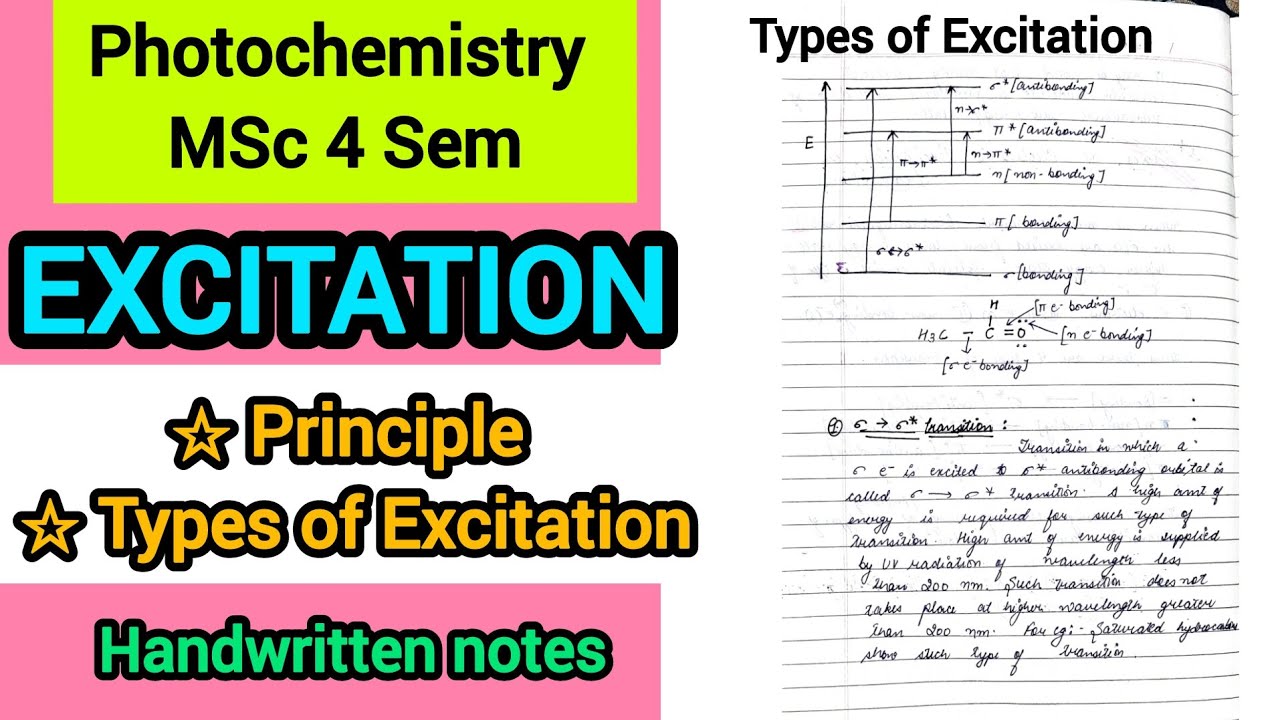
So, not only potassium permanganate, there are also some compounds where the metal is also not present. So, these are some solutions which are colored, which are not colorless. So, it definitely have some transitions like manganese 2 compound, where hexa aqua manganese 2 compound, which is a very light yellow to pink in color. But these are basically fullerene oxides. What means the fullerene? The C 60 molecule which we all know, which is the carbon cage type compound, but when it is C 60 or C 60 oxide or another C 60 oxide of different type, and is a dioxide, we get the corresponding colored species in solution, but they do not have any d electron. And the solutions of this, is C 60 is light pink in color, and the corresponding oxides are yellow to orange. And, in C 60 we have large number of carbon carbon double bonds are present where we have football like structure, which having some pentagonal and hexagonal cages only. So, in this molecule, so this is also colored. So, solution of C 60 is there. And when we have large number of these double bonds, and it is basically going for the corresponding, one such double bond is going for the epoxide formation. So, that is also colored. So, if we just go for certain amount of epoxide formation this is also colored there. But in this particular case, we do not have, like this potassium permanganate, we do not have d electron in the system, but still these are colored. So, why it is colored? So, we have this particular bonding for any carbon carbon double bond system, we know that one bond is formed from the sigma bond and another is due to the pi. So, once we have any electronic system in any structure system we have, the corresponding bonds made up of sigma and pi; that means, electrons are localized by forming 2 bonds- one is sigma and another is a pi type, so the type is only different. We can have the corresponding, and the 2 bonding levels which are pi star and as well as sigma star levels. So, involving these levels, these are now our new electronic levels which are involved in transition. So, if these sigma pi pi star and sigma star orbitals are utilized for these transitions, we will find that they do not have any d electron in the system; that means, the question for any kind of d-d transition is no more.
So, we have some other type of transitions, but what we will see that in the other case; that means, when there is no d electrons is present such as manganese 0 system, but we can have some charge transfer type involving, if the ligand system is there, if the organic part is there, we can have some transition involving these levels, but there are some transitions where the metal d level, the d electron is not there, the other electron go from the d level, but this 0 means it is a vacant level. So, we have 5 vacant levels. So, they can be very good acceptors, instead of donor. So, we can have very good acceptor levels on the d level which is vacant in electron. So, we can only accept the electronic charge density from the ligand system or any other oxide system to those orbitals, such that the corresponding transition or the charge transition can take place.
So, in such transition metal complexes the charge, a change in electronic distribution between the metal and the ligand can give rise to the corresponding charge transfer bands. How we get that? So, these levels involving the metal as well as the ligand. So, these charge transfer transitions, basically we see in the UV/V is the regions. UV/V regions means, we have a high energy region, where it is beyond 400 or 420 nanometer less than that; and they are highly intense, because the corresponding energy values, that means, e 1 and e 2 are very high compared to the d-d transition. And just now what I told you that the corresponding epsilon values are also very high, and these epsilon values are of 50,000 liter molar by centimeter inverse or mol inverse per centimeter inverse. And in this particular case, and the selection rule is definitely be allowed, because we are not talking in terms of the corresponding d-d transitions. So, why we see, the high intensity in the charge transfer than the intensity of the color, is due to the fact that there is a probability of these transitions taking place. So, we will have high, very high probability of these transitions to take place. And selection rule for the forbidden d-d transitions result in weak absorption. But this selection rule, no longer operating for this charge transfer transitions. So, as a result for, when we see that, a particular octahedral complex can give an epsilon value of 20 mol inverse centimeter inverse, or less, that is why incase of cobalt compound what we have seen, that, this epsilon max values are less. So, it is very difficult some time, when the epsilon value is around 20 or less mol inverse centimeter inverse for a typical transition, where delta e value is very small. So, sometimes we cannot deduct it also, and for that good deduction we need highly concentrated solution, and sometime higher path length of the cell. So, these are the 2 things where we can nicely deduct a very low concentration, very weak d-d transition which can be measured by using a spectrophotometer of good solution of high strength.
Thank you very much.
Up Next

11:20
Charge Transfer Spectra Explained: LMCT, MLCT & More
@catalystchemistrynet4594
3.5K views•2020-12-09

83:56
Biocatalysis and Catalysis in Islatravir Synthesis | Merck Webinar
@SCIwheresciencemeetsbusiness
675 views•2020-10-08
57:32
Understanding Fluorescence: Jablonski Diagrams, Lifetimes, and Quenching Effects
@iit
15.9K views•2019-05-13

17:31
Edible Water Bottles: A DIY Guide to Sodium Alginate Spherification
@ryan
10.5M views•2019-06-21
Related Study Plans & Knowledge Roadmaps
Structured learning paths in Chemistry
chemistry
Nuclear Chemistry: Decay, Meds & Fuel Cycle
01Introduction to Nuclear Structure and Radioactivity
02Decay Dynamics and Kinetics
03Radiation Interaction and Detection
+ 2 more learning modules
24h5 modules
Explore Roadmap
chemistry
Supramolecular Chemistry: Forces & Machines
01Foundations of Chemical Bonding and Intermolecular Forces
02Introduction to Host-Guest Chemistry
03Thermodynamics and Dynamics of Self-Assembly
+ 2 more learning modules
16h5 modules
Explore Roadmap
chemistry
Photochemistry: Excited States & Reactions
01Foundations of Light-Matter Interactions
02Molecular Orbitals and Electronic States
03Photophysical Processes and Jablonski Diagrams
+ 2 more learning modules
18h5 modules
Explore Roadmap
chemistry
Coordination Chemistry: Bonding & Properties
01Introduction to Transition Metals and Ligands
02Crystal Field Theory (CFT) and Geometry
03Magnetic Behavior and Spin States
+ 2 more learning modules
14h5 modules
Explore Roadmap