




![[2] Metal Ligand Bonding In Transition Metal Complexes | Inorganic chemistry | BSc 3rd Year](https://i.ytimg.com/vi/-oLZTLZRQOU/hqdefault.jpg?v=6076b841)




![[통합과학2] I. 변화와 다양성 - 2. 화학 변화 - 1. 산화와 환원 (3)](https://i.ytimg.com/vi/LtgVKY79c3w/maxresdefault.jpg)






![[Wikipedia] Inner sphere electron transfer](https://i.ytimg.com/vi/CPjfhilzOXA/maxresdefault.jpg)
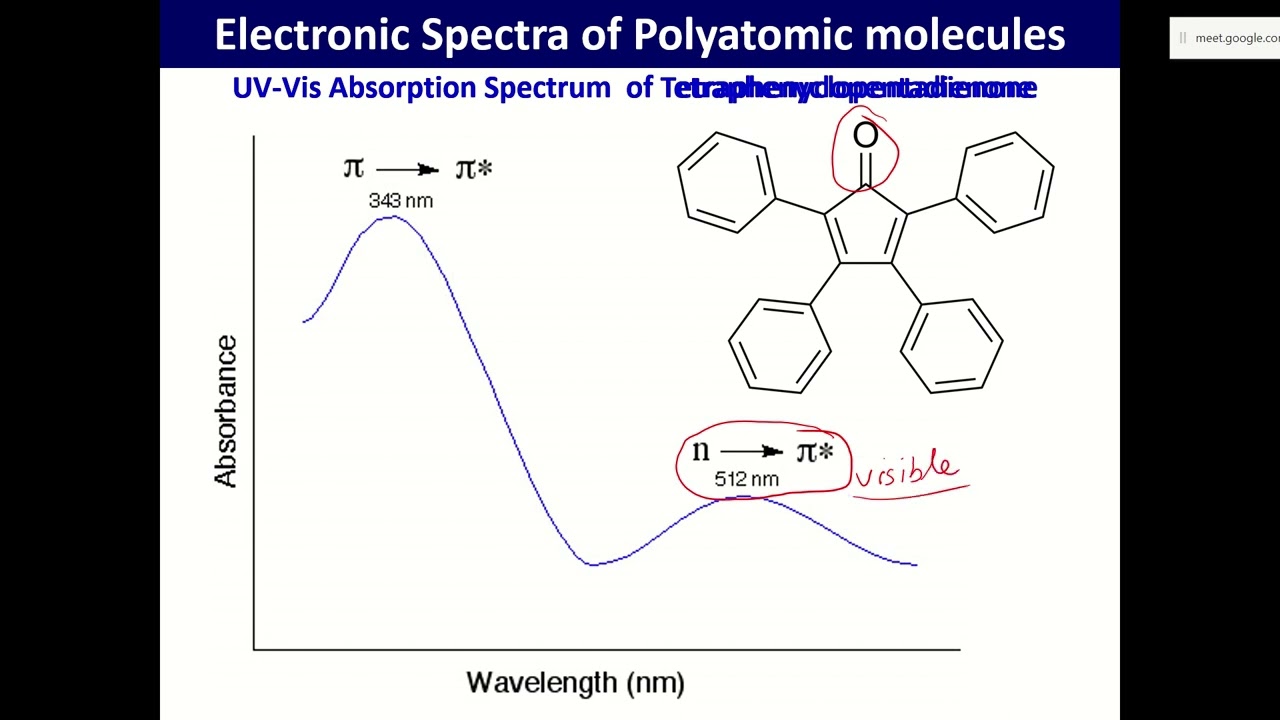

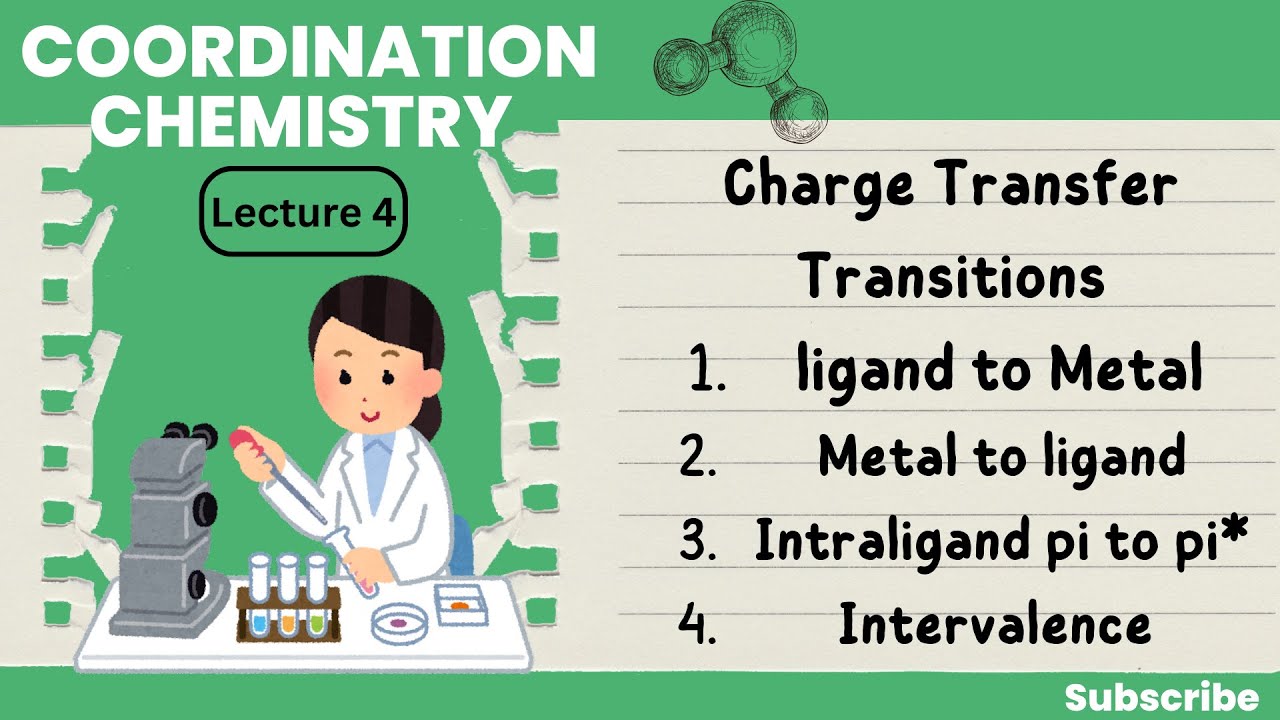




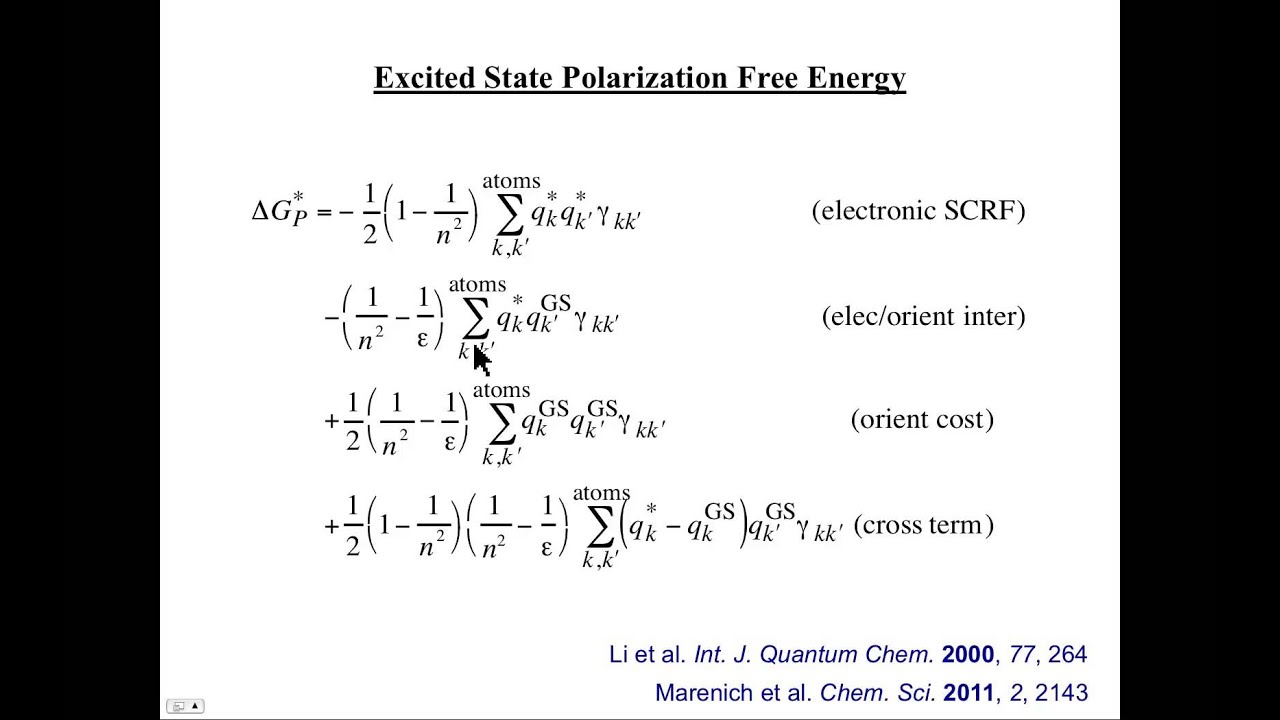

Ligand to Metal Charge Transfer (LMCT) is a type of charge transfer spectrum where electrons transfer from filled ligand orbitals to vacant metal orbitals, producing more intense absorption bands than typical d-d transitions; for LMCT to occur, the metal must be in a high oxidation state (+3 to +7) with high ionization energy, small size, and vacant low-energy orbitals, while the ligand must possess lone pairs of electrons in high-energy molecular orbitals with low electron affinity.
Charge Transfer Spectra Explained: LMCT, MLCT & More
Added:Basic coordination chemistry, including metal oxidation states, coordination numbers, and the distinction between donor (ligand) and acceptor (metal) atoms.
Crystal Field Theory (CFT) and Ligand Field Theory (LFT), specifically d-orbital splitting patterns (like t2g and eg) and molecular orbital diagrams of transition metal complexes.
Fundamental principles of electronic spectroscopy, including UV-Vis absorption, Beer-Lambert Law, and selection rules (Laporte and spin selection rules) governing d-d transitions.
The concepts of electronegativity, oxidation-reduction (redox) chemistry, and orbital symmetry which dictate how and when electrons can be promoted between species.
Application of MLCT in solar energy conversion, photocatalysis, and dye-sensitized solar cells (DSSCs), such as using Ruthenium polypyridyl complexes.
Intervalence Charge Transfer (IVCT) and the study of mixed-valence systems (e.g., the Creutz-Taube ion and Prussian Blue) using the Robin-Day classification.
Advanced analysis of electronic spectra using Tanabe-Sugano and Orgel diagrams to comprehensively assign both d-d and charge transfer bands in complex inorganic systems.
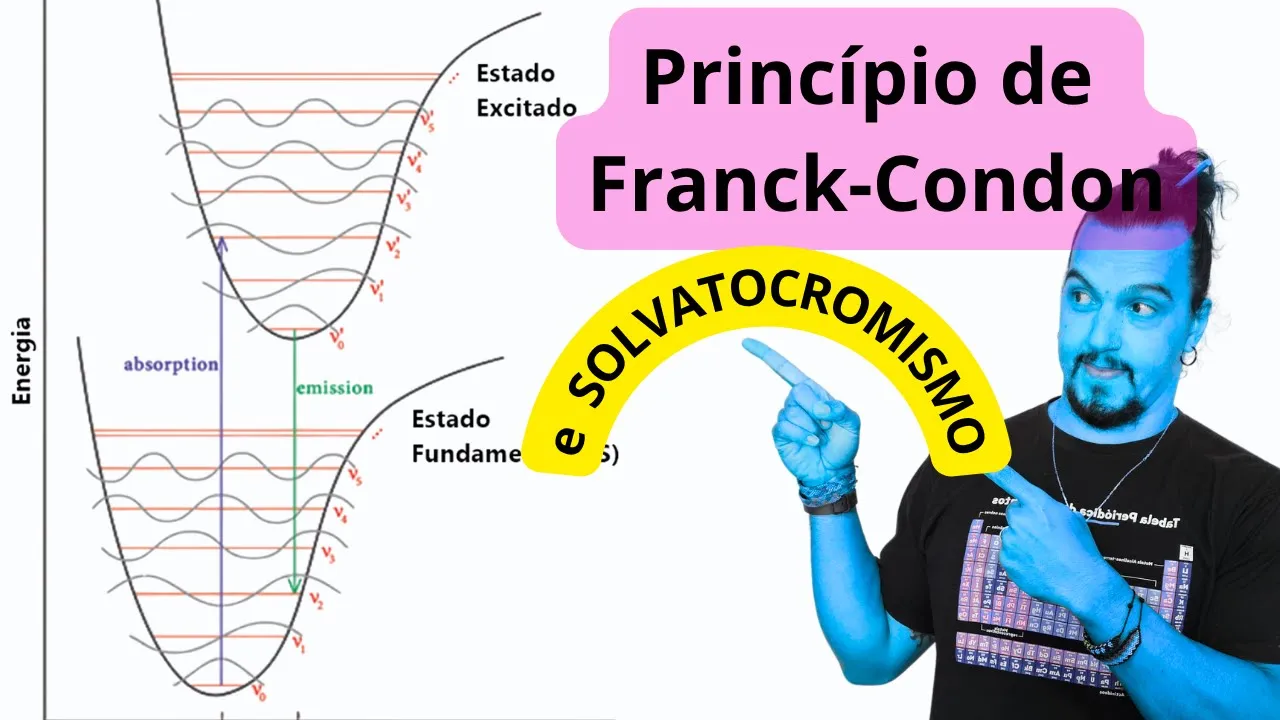
Solvatochromism and the study of how solvent polarity influences the energy and intensity of charge transfer absorption bands.
3.5K views71likes11:20Original Release: 2020-12-09
hello students once again welcome back so today we are going to discuss about and another topic called the charge transfer spectra so this is one of the very important and very easiest topic so two to three classes transfer spectrum so so there are four uh different type of charge run for spectra okay so on the types in the now the properties then uh what are the factors of fitting um for the charge run for spectra okay so either in the videos okay so this is the first video from charging for spectrum let's start our topic charge it on from spectra charge transfer transition our laptop under spin alloy so already number three what do you mean by uh the delta l value the charge transfer transition gives rise to more intense strong absorption band okay so in the charge transfer uh spectral accuracy bandwidth it's a more then a charge transfer transition may be uh regarded as the internal redux process okay so what do you mean by in an internal redux process charge transfer charge then it arrives due to the transition between metal metal located molecular orbitals and ligand located molecular arbiters transition may be classified into four ways okay so with other four charge transfer spectra four different types of number classifier now so first to type in an m ligand to metal charge transfer also known as lmct okay so metal to ligand charge transfer ml ct then uh inter balance charge transfer is no metal to metal charge transfer uh intra ligand charge transfer it is transferred okay okay mlc [Music] transfer of an electron takes place from the ligand to metal the charge transfer is called a ligand to metal charge transfer okay so the transfer of electrons when the electron transfer on them is conditions for ligand to metal charge transfer first one the metal should be in the high oxidation state so that it has a high ionization energy smaller size and a vacant orbitals at a low energy okay so on the metal liners metal on the high oxidation state what do you mean by high oxidation state metal in the high deficient electron on the deficiency okay so high oxidation state now maybe it is a ah 3 plus 3 plus 4 plus 5 plus 6 plus 7 okay so the length is on a high oxidation state sometimes metal when they have a high acceleration state like metal or electrons in our home maybe zero electron circuit chances could have for example in the case of km and o4 k2cr o7 so either metal um the color kind of reason a ligand to metal charge transfer happens okay so metal should be in the high oxidation so that it has a high ionization energy okay it has a high ionization energy and a smaller size okay so on the metal of the electrons should have lone pair of electron of relative high energy under low electron affinity state and it has a high ionization energy small size and vacant site is one pattern but in the case of ligand government ligand should have lone pair of electron lone partner it can be able to donate the electron to others okay within you know ligand with the lone pair of electrons really high energy orbital okay high energy ligand high energy orbital the transfer of um the transfer of electron takes place from filled uh ligand orbital to vacant metal orbital so on the the elegant metal charge transfer transferring um field ligand to metal depends on the lowest unoccupied molecular orbital other lumo of the metal and the highest occupied molecule orbital homo of the ligand okay so on the in the energy okay energy in the transfer electron transport in the energy engine it depends on the uh lumo lumo of the metal and homo of the ligand okay so is the basics of ligand to metal charge transfer okay so on the conditions metal should be in the higher oxidation state and it has a vacant side and it's a smaller size okay on the ligand ligand has a lone pair of electron and it has a high energy uh sorry high energy molecular orbital and it has a low electron affinity transferring ligand thank you
Up Next

59:50
Charge Transfer Transitions in Coordination Chemistry
@iit
39.3K views•2014-01-08
83:56
Biocatalysis and Catalysis in Islatravir Synthesis | Merck Webinar
@SCIwheresciencemeetsbusiness
675 views•2020-10-08
10:06
1H NMR: Determining Number of Peaks from Structure
@MSJChem
59.2K views•2017-04-06

17:31
Edible Water Bottles: A DIY Guide to Sodium Alginate Spherification
@ryan
10.5M views•2019-06-21
Related Study Plans & Knowledge Roadmaps
Structured learning paths in Chemistry
chemistry
Nuclear Chemistry: Decay, Meds & Fuel Cycle
01Introduction to Nuclear Structure and Radioactivity
02Decay Dynamics and Kinetics
03Radiation Interaction and Detection
+ 2 more learning modules
24h5 modules
Explore Roadmap
chemistry
Supramolecular Chemistry: Forces & Machines
01Foundations of Chemical Bonding and Intermolecular Forces
02Introduction to Host-Guest Chemistry
03Thermodynamics and Dynamics of Self-Assembly
+ 2 more learning modules
16h5 modules
Explore Roadmap
chemistry
Photochemistry: Excited States & Reactions
01Foundations of Light-Matter Interactions
02Molecular Orbitals and Electronic States
03Photophysical Processes and Jablonski Diagrams
+ 2 more learning modules
18h5 modules
Explore Roadmap
chemistry
Coordination Chemistry: Bonding & Properties
01Introduction to Transition Metals and Ligands
02Crystal Field Theory (CFT) and Geometry
03Magnetic Behavior and Spin States
+ 2 more learning modules
14h5 modules
Explore Roadmap