












![[Dodson, Andrew]2020_UNCG_TURCE](https://i.ytimg.com/vi_webp/ivk9Wf6UFVU/maxresdefault.webp)








![[Wikipedia] Inner sphere electron transfer](https://i.ytimg.com/vi/CPjfhilzOXA/maxresdefault.jpg)


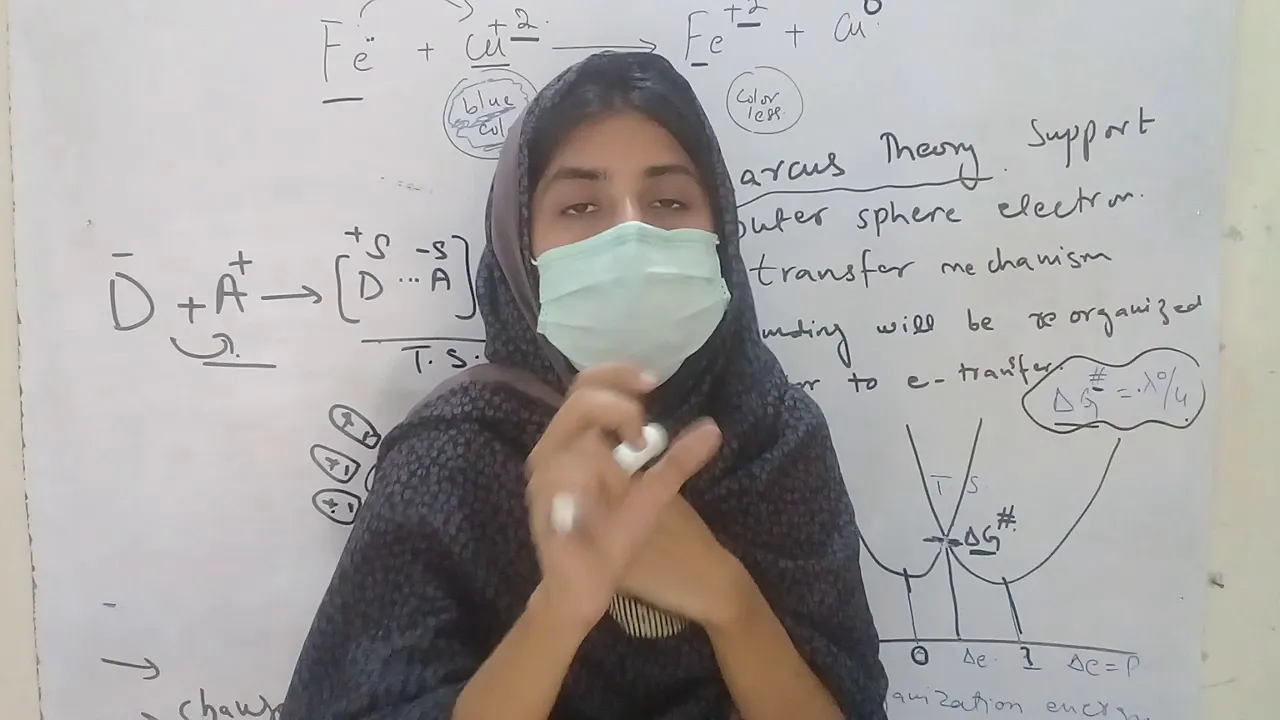





Charge transfer transitions in metal-ligand systems involve the movement of electrons between metal and ligand orbitals, resulting in highly intense electronic bands (molar absorptivity of several thousand liter mole⁻¹ cm⁻¹) that dominate the visible spectrum of many coordination compounds, unlike weak d-d transitions which follow selection rules; these transitions are categorized into ligand-to-metal charge transfer (LMCT) when oxidizing metal ions accept electron density from reducing ligands, and metal-to-ligand charge transfer (MLCT) when reducing metal ions donate electron density to oxidizing ligands, with examples including potassium permanganate (purple, LMCT) and iron(II)-thiocyanate complexes (blood red, MLCT).
Charge Transfer Transitions in Coordination Chemistry
Added:Fundamental coordination chemistry, including metal oxidation states, coordination numbers, and types of ligands (pi-donors vs. pi-acceptors).
Crystal Field Theory (CFT) and Ligand Field Theory (LFT) concepts, particularly d-orbital splitting diagrams in octahedral and tetrahedral geometries.
Basic Molecular Orbital (MO) Theory, specifically how atomic orbitals combine to form bonding, non-bonding, and anti-bonding molecular orbitals.
The fundamentals of UV-Vis spectroscopy, including electronic transitions, absorption spectra, and selection rules (Laporte and spin selection rules).
Advanced photochemistry and photophysics of coordination complexes, such as the excited-state properties of ruthenium polypyridyl complexes.
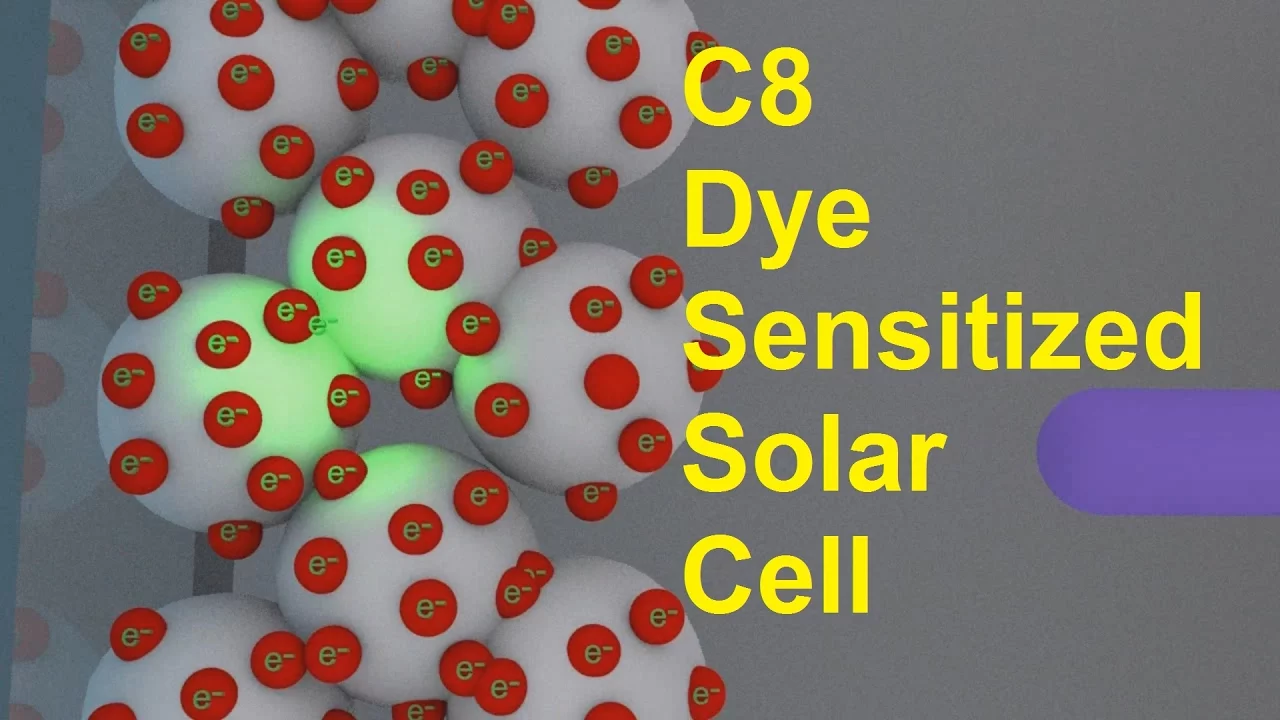
Real-world applications of charge transfer in technology, including Dye-Sensitized Solar Cells (DSSCs) and organic light-emitting diodes (OLEDs).
Intervalence Charge Transfer (IVCT) and the study of mixed-valence systems like the Creutz-Taube ion.
Marcus Theory of electron transfer, which explains the rates of outer-sphere electron transfer reactions.
Interpretation of complex electronic absorption spectra using Tanabe-Sugano and Orgel diagrams to distinguish between d-d and charge-transfer bands.
39.3K views261likes59:50Original Release: 2014-01-08
Good evening everybody. So, today we will talk about the charge transfer transitions, charge transfer transitions where we will see how the electronic spectrum is most of the cases are very much dominated by this charge transfer. So, what is that? So, whenever we have a metal ligand system, and in most of these complexes we have the metal ion at the center and different ligands are surrounding this metal ion. And depending upon the nature of this particular metal ion center and the ligands we can have different charge transfer transitions. Where we will see that the intensities basically those are very much characterized by those intensities. And intensities of these transitions are very high and we also have seen earlier that the corresponding epsilon max which is characteristic of this transfer transitions can go up to say 65000 or 50000 or sometime several lakhs of these of mole inverse and centimeter inverse or liter mole inverse per centimeter inverse. So, in that particular unit we can find out that a very high concentration is not required for these charge transfer transitions.
So, we can detect. So, if we can monitor a particular charge transfer band for any metal ligand system. We will find that that particular charge transfer band can be of very much analytical use and that particular band. That means at that particular lambda max value we can detect the unknown concentration of the analyte. That means, we can go down to a very low concentration for any unknown analyte if that particular analyte can show a charge transfer transition.
So, if we are also able to detect the metal ion concentration. So, we can detect very nicely the corresponding very low concentration of these metal ions at the level of ten to the power minus three to ten to the power minus four molar to ten to the power minus four molar. Concentration of these metal ions can be detected by monitoring the corresponding charge transfer band. So, if we see one particular case; that means, where we have this particular species. That means, metal is bond to the ligand system. And where the metal ion is highly oxidizing and the ligands which are attached to these metal ions are of different type.
That means, they are reducing in natures. That means, the electron density is basically post from the ligand to the metal ion. So, in this particular case this oxidizing this highly oxidizing. So, in this particular case the transfer of charge can take place from the ligand site to the metal site. So, with this particular direction ligand to metal charge transfer can take place and we will categorize then that a one particular type of charge transfer. So, here this transfer of charge can take place.
So, these particular things we can consider as the corresponding charge transfer bands.
And we have to find out where this particular charge transfer band is located and its corresponding lambda max and epsilon max values can be identified. So, the one important factor for this is the intensity of the color is due to that there is a high probability of these transitions taking place. So, the selection rules whether it is a laporte selection rule or spin selection rule cannot be operative over here. So, it is highly allowed transition and since the transition is very much allowing. So, we get a corresponding high probability of this transition.
That is why we get the corresponding intensity very high and the molar absorptivity is also very high of several thousand.
Because we have seen that for incase of d d transitions.
The selection rule is basically not allowing all the d d transitions particular the transition between involving d orbital to another d orbital and which results in a very weak absorption. That is why all the d d transitions we have classified as weak transitions. So, now, we can categorize this charge transfer transitions as very strong transitions. And incase of those d d transitions the epsilon values are pretty low sometimes in the rage of 10 to 20 only ten to 20 liter mole inverse centimeter inverse or sometimes very less. That is why if we want to measure a corresponding d d transitions. We have go for a very concentrated solution or sometimes the path length of the cell should be greater than one which usually we monitor with one centimeter path length. But we can use it for up to 5 centimeter or ten centimeter path length to get an epsilon value in the absorbance scale. So, in the first category what we see that the ligands are responsible for transferring the charge to the metal ion. So, what should be the example and metal is therefore, in the highly oxidizing condition. So, if we considered that manganese center is there and if we know the number d electrons present in the manganese and if this particular one is highly oxidizing; that means, the highest possible oxidation state for manganese where there is no d electron present which is a d 0 system. So, for a d 0 system how we can get that and if we have surrounding this manganese center if we have four oxygen ligands; that means, m m o four since it is in plus seven oxidation state. So, overall charge would be minus and this particular species is present in potassium manganate and this potassium per manganate is purple in color and in the solid state they are also colored and in solution if we take this particular sample; that means, the sample of potassium per manganate which is highly soluble in water and try to measure the corresponding electron spectrum we find the characteristic absorbance related to the lambda max values and the epsilon max is also pretty high which will be in the order of 7000. So, which can be characterize in terms of the corresponding transfer of charge from the oxygen atoms these oxygen atoms are all behaving as o two minus which is reducing in nature.
And this manganese center which is in the heptavalent state is seven plus oxidation state and which will be therefore, highly oxidizing. So, as a result we get the corresponding charge transfer transition in the purple region.
Similarly, mercuric iodide can also be another example of this type of compound which is showing the corresponding charge transfer transition which is brick red in color. So, we see that these colorations are in the visible region and they are highly intense. So, the intensity of these colors basically tells us that a charge transfer transition mechanism is operating between the metal center and the ligand, similarly chromium in its plus six oxidation state. That means, in chromate CRO 4 2 minus it is present in chromate chromium present in chromate. And like that of our potassium per manganate it is surrounded by oxygen atoms and this is also yellow in color due to d d transitions. So, what we see that in all these cases the metal ions may not poses any kind of d electron.
So, these metal ions metal ions are divide of d electrons. So, this metal ion in n plus oxidation state and if this is a system which is three d 0 or 4 d 0 or 5 d 0 which is in the corresponding oxidation state of plus 6 or plus 7 like that of chromium and manganese.
So, it can very easily accept the corresponding charge density. So, when it is accepting the corresponding charge density we get a transition from lig. And but if in another case metal is in 0 oxidation state. That means, metal has more number of electron compare to this manganese center or the chromium center or in the low oxidation state one plus or 2 plus what we will see, what we will consider. This metal centers as they would be highly reducing highly reducing.
That means, they are of different character compare to the previous case and the ligand which is attached to them if it can be of oxidizing nature. That means, it has some extra electron density which can be utilized for accepting more electron density from the metal center. That means, it has some ligand orbital which can accept the electron density from the metal center. And as a result the charge transfer can take place in the opposite direction. Here we see that the corresponding transfer of charge which is nothing, but the electronic charge. So, electronic charge transfer can take place in the opposite direction from the metal to the ligand. And in this particular case we will consider that the charge transfer will take place from metal to the ligand. So, this will be another variety of that charge transfer transition which can be considered completely opposite to that of our system what we have just now we have seen for potassium per manganate or potassium chromate. So, the corresponding lambda max values will be dependent on the color of the system and epsilon max values again will also be in the range of several thousands due to the high probability of that charge transfer.
So, in this case we can have the iron system in plus 2 oxidation state. And can be the ligand which is the corresponding oxidizing ligand and the corresponding tris chelate which will be showing the corresponding octahedral compound. And it can be dark red in color now due to simply charge transfer no d d transition can take place in this particular case iron in plus two oxidation state and the intensity of this color. That means, the dark red color is due to only the charge transfer transitions. And in some cases we can also have some underline weak d d transitions. But it would be very much difficult to detect that very weak d d transition which is basically overlapping with the corresponding charge transfer transition which is of very high intensity.
Similarly, the detection of iron by thiocyanate anion giving rise to a blood red coloration due to the formation of the corresponding species where this particular charge transfer can take place. Though this is not in the usual low oxidation state iron is present in iron three plus and M C S is there. So, in this particular case we can have the corresponding charge density from this particular direction or in this particular direction. So, we will find it out and which direction the corresponding charge transfer can take place. So, in which direction basically we will find the corresponding charge transfer we will see. But in these two cases the epsilon max is very high. So, that basically tells us that we are just dealing with some species where the corresponding complexes are showing the charge transfer species.
So, the molecular orbitals which are involved there for this transitions for this electronic transitions is possible to have mainly metal d character. So, if we have the corresponding orbitals which are involved for the corresponding transitions. We can have the corresponding transitions known as d d transition or ligand field transitions. So, we have the ligand field and the ligand is responsible for the splitting of the different d levels. We see that there are 5 d orbitals and in an octahedral crystal field the 5 d orbitals will be splitted into two between the t 2 g and the e g set. And if the transition is taking place from the t 2 g set to e g set; we will be considering those as the corresponding d d transitions. And these transitions can also be considered as their ligand field transitions and the absorption wave length will be dependent strongly on the ligand field splitting. That means, if the delta o or the octahedron is known we find that depending upon the amount of splitting. That means, the amount of separation between these two orbitals the separation between the d d orbitals will tell us that which particular part of the electron spectrum will have the corresponding absorption. And as a result we see the coordination complimentary color as the solution color or the solution state color of the corresponding complex. But here the corresponding transition probability integral is not very high and as a result the corresponding epsilon max values the molar absorptivity would be less compare to the charge transfer transitions. So, looking at the corresponding epsilon max values will simply considered that whether we will have the d d transition or charge transfer transitions. Next we see that whether the ligand character is involved for any type of electronic transitions. So, when one of the two orbitals has mainly metal character.
Then incase of this d d transitions, what we see that both the orbitals from where the electronic charge is getting transferred to the destination orbital both of them are of metal character. But now if we introduce that we can have the corresponding ligand character. The transition can be called as the corresponding charge transfer transition.
And this character is basically modifying the orbital character the molecule orbital character of this particular orbital which is responsible the donor level or the acceptor level is largely modified by the ligand character in association with the corresponding metal character. So, we have, so just looking at that we will have two different types of transitions. So, we can classify the charge transfer transitions into metal to ligand charge transfer transition which will be considered as M to L charge transfer and the ligand to metal charge transfer known as LMCT transitions. So, in one case the electronic charge will move from metal orbital to the ligand orbital or the orbitals having more metal character to the orbital having more ligand character. And in the other case we will have the corresponding transition from the orbitals which are dominated by its ligand character to some other orbital which is of metal character and will be known as ligand to metal charge transfer transitions.
So, apart from these transitions we can also have in some cases if we can have metal in two oxidation states. That means, one metal is in low oxidation state and another metal ion in the high oxidation state. And if there is some chance of getting the corresponding electronic transitions from one metal orbital which is dominated by the metal character to another metal orbital which is also of the metal character we will get MMCT. That means, metal to metal charge transfer transitions. Similarly, incase of the ligands if we can have two different types of ligand environments one is oxidizing.
And the other is reducing we can also have ligand to ligand charge transfer transitions. So, apart from these two main types of transitions; we can have two other types of transitions involving purely metal levels as well as purely ligand levels.
So, next we will see that this particular case how it is happening? In the first case where we have the Ligand to metal and the metal to ligand charge transfer bands. So, we have different types of ligands. And the ligands if they are not of single atomic it can be of multi atomic and we can have the different types of electrons present starting from sigma sigma star pi pi star and non bonding molecular orbitals. So, we will see that what are the different types of ligands we can have? So, we can see the corresponding molecular orbital of carbon monoxide as we all know that carbon monoxide can be a very good ligand to a particular metal system. So, we can have depending upon the corresponding carbon monoxide ligand or we can have CN minus or NCS minus or NCO minus cyanide. So, all these ligands if we can have and they have the different types of connectivity pattern between the atoms present over there. Also we can have the n three minus azide anion. So, what we see that incase of the azide ion? We can have the corresponding charge on it and the number of lone pair of electrons in it because we can have 5 plus 116 electron system, so it will be five nitrogen into 3 times plus 1 charge. So, is a 16 electron system. So, all together we can have 8 pairs of electrons whether they can be the bond pair or the lone pair. So, we will have all these, so its 3 4 5 6 7 8 6 7 8. So, something like this and we can have the charge also. So, what we see here from this lewis dot structure of this particular atomic species, multi atomic species. What we will find that if the one end of this nitrogen is the nitrogen nitrogen. So, they are bonded through say sigma bond and when the bonding molecule orbital is present as sigma. We can have also the anti bonding level. Similarly, if the second one in this particular site, we have the pi level as well as the pi star level. Once a bonding level is formed immediately, we can have the corresponding anti bonding level as we can see the corresponding molecule orbital picture. What we find that when these two atomic orbitals a o’s are forming molecule orbital? So, we can have the corresponding molecule orbitals like this. So, if this would be if this is sigma this other would be sigma star and for the two electrons presenting these two atomic orbitals will have the paired electron in the sigma star level and this is vacant. So, in most of these cases the corresponding anti bonding levels are vacant and we will be getting the transition. That means, the anti bonding level can be considered as the corresponding accepter level. So, we can have sigma sigma star pi star and this r the corresponding non bonding electrons. So, we have all together this five types of electrons present in some molecule orbitals. So, we have sigma sigma star pi star and the n. So, if the ligand molecule orbitals are all full. That means, we considered that the sigmapi and n such as that what we have seen just now in case of the azide anion. And azide is also a very useful and very good ligand which can bind in to a monodentate fashion to the metal ion it can reach two metal centers. It can reach three metal centers or sometime it can reach for metal ions. So, if the ligand molecule orbitals are full charge transfer may occur from the ligand molecule orbitals to the empty or partially field metal d orbitals. So, if these orbitals present if they can be utilized for the donation then in the metal orbitals which can be vacant over there. And which can accept the electron density to its d orbitals.
Then we will see the ligand to metal charge transfer transition.
So, in absorption that is forming from the process of this die. That means, ligand to metal charge transfer is talking place and we will be getting the corresponding bands at LMCT bands. And LMCT transitions result in intense bands since the probability is very high for these transitions compare to the forbiddend d transitions. And the forbidden d d transition may also take place giving rise to weak absorptions. So, at the same time under the envelop of this LMCT transition or LMCT band. Sometime we also find the d d transitions are also there and which are within the corresponding charge transfer band.
So, we have the corresponding ligand to metal charge transfer transition and which is very common for coordination compounds having pi acceptor ligands. So, one important thing what we are now defining that.
If we have a pi acceptor ligand. So, pi acceptor ligand; that means, the corresponding system we will have pi level as well as pi star level. And if the pi star level is empty and it is the corresponding vacant molecule orbital. Then we can have the corresponding system where this electron density is not going from there, but this is full, so in the typical molecular system of the ligand. So, if this is the ligand and within that particular ligand system when no metal is present. That means, no complex has been formed. So, when no metal is present. What we see that in the u v visible range u v visible spectrum in the u v visible range of the spectrum. We will see one transition which is can be pi 2 pi star transition. But when metal d orbital is coming into the picture we will see that this particular pi electron density. That means, what we can accept electron density from the ligand during the coordination. It can donate the electron density and we can see ligand to metal charge transfer transition can take place. So, this electronic charge from the ligand level which is pi can go to not to the pi star level.
But also can go to some intermediate level which is of d character from the metal ion.
So, if we have the pi acceptor ligands to us. Then what we will see that we have the disc system which is the free ion system where we have, so many d electrons available on the metal ion. Then we have the ligand sigma orbital. So as we are talking as it can be the corresponding pi extra ligand. But it can also be the corresponding sigma orbitals. So, you can have the corresponding levels. That means, the ligand sigma orbitals are there which are all full and we can have the during the formation of this complex, these orbitals the sigma orbitals the ligand sigma orbitals can be of low line.
And it can be a corresponding level where from the electronic charge can be donated to the empty easy level. So, we have this six electrons distributed throughout all five d orbitals which can be cobalt three son in case of cobalt three when we have the corresponding crystal field splitting in the system. So, the crystal field splitting can gives us 1 t 2 g level and another e g level and in this particular case the e g level is empty.
So, the cobalt in the trivalent state can show some amount of ligand to metal charge transfer because the cobalt is the oxidizing one.
And if the ligand is a reducing one and the ligand can have the sufficient charge density electronic charge density which can be donated to the vacant anti bonding level of the metal ion. So, e g is the corresponding anti bonding level compare to this the t 2 g level and which is empty and which is vacant. So, the charge density can be flown from this ligand orbitals to the metal orbitals which are vacant. So, ligand to metal charge transfer transition can take place here. So, we have the corresponding ligand to metal charge transfer involving an octahedral d 6 complex. So, in case of octahedral d 6 complex which is definitely of low spin we see the corresponding transfer like this. And obviously, this for this particular case we can have the corresponding separation which will tell us that which particular wave length. We can see the corresponding transition and experimentally we can measure the corresponding intensity. So, it is the transfer which basically results in a reduction of the metal center because some amount of charge is being posed to the metal ion orbital. That means, the partial movement of the charge is going to the metal orbitals. That means, is accepting that electronic charge; that means, metal is getting partially reduced.
So, at a even high energy or the LMCT which involve pi donor ligands. So, just now we have seen about the pi acceptor. But if we can have the pi donor ligands around the metal these transitions can also take place because of the low lying ligand orbitals.
So, if we have low lying ligand orbitals like the sigma we can have also the pi donor ligands which are of low energy compare to the metal d orbitals. So, a transition from the orbitals that are of ligand in character to orbitals that are more metal in character.
So, we will have the transition from one center. That means, one molecule orbital which is of ligand character to another molecule orbital which is of metal character then we will consider the transition would be LMCT. So, the electron basically travels from a bonding pi to non bonding pi orbitals into a sigma star orbital. So, electron can move from a bonding pi or non bonding pi. That means, pi to pi star orbital to a sigma star orbital which is of higher energy. And these transitions are very strong and appear very intensely colored absorbance spectrum. And the molar extinction coefficient for these transitions are around ten to the power 4 or sometimes 5 or 6.5 into 10 to the power 4. That means, they are of several thousand only, so this particular case. So, the metal will be the sigma star metal is giving the sigma star orbital and the ligand is giving the corresponding pi and the pi star level and whatever we have. That means, the corresponding level which we can designate as the e g. But, this can be considered as the corresponding sigma star level and we can have the corresponding metal in this particular level.
We can have the t 2 g which is not interacting with the ligand which is remaining as the corresponding non bonding level for this 3 d 6 system and we can have the corresponding pi star as well as pi level. So either from these two if both of them are full. That means, if the pi level as well as pi star level of the ligand is full. So, we can have the corresponding electronic charge transfer from this level to this level or this level to the e g level.
So, this basically gives us the corresponding transitions which would be of LMCT type. So, the examples of these basically examples of this pi donor ligands would be simply having the pi electron density. That fluoride chloride bromide iodide which are in the lower end of the spectrochemical series. And they basically sometime in a typical coordination environment such as that of tetrahedral coordination to the metal center including the NCS and NCO. They can give rise to the corresponding charge transfer transitions to giving rise the corresponding useful ligand to metal charge transfers.
So, what we see that apart from these transitions? That means, we can have in chromium in plus three oxidation state one chloride is there. So, it is chromium in plus three oxidation state which is a three d three system and we can have two distinct d d transitions one is close to say 550 nanometer another is close to 400 nanometer. And what we will see next that if we can systematically analyze that what are the different types of electronic spectra? We can have we will find that we can have three different types of d d transitions which are allowed into some extent depending upon the corresponding relaxation of the rules.
The corresponding selection rules will find that the third transition is under the envelop of LMCT transition since it is in the log scale. So, we will find that the corresponding epsilon is in the range of 10 to the power 4 for the corresponding charge transfer transitions which are highly intense compare to these d d transition. So, sometimes using the same solution we cannot observe the corresponding transitions both in this particular wave lengths as well as this particular one which is close to 250 nanometer. So, for this solution we have to dilute it to ten times and then we measure the corresponding absorbance at this particular value.
So, we are not getting the corresponding d d transitions of the third type. That means, which is here maybe here the third transition energetically if we calculate it out. So, theoretically we can predict these particular d d transitions from some of these diagrams. Basically we will talk about the corresponding coupling scheme and the corresponding diagrams which have special names for that and theoretically we can find out the corresponding transitions. So, that particular transitions will be governed by special type of diagrams which is proposed by these two persons the tanabe and sugano.
And that is why they are known as tanabesugano diagrams. So, these diagrams can be utilized to determine the corresponding transitions what we see in the spectrum. So, in the spectrum we get two d d transitions and if we typically analyze the tanabesugano diagrams for d three system. We will find out that another permissible transition is possible and will be there at this particular range which is in the closed envelop of the LMCT transitions. So, that not only theoretically justify the presence of the third spectrum.
But also it can identify the range of the corresponding wavelength for the corresponding ligand to metal charge transfer transition.
So, we will now just go for the different term symbols for these different electronic states. So, we can have several electronic states and these electronic states are responsible for these transitions. And for those states we can have some three we will call them as the different terms for multi electronic system when more than one electron is present in different orbitals. We considered them as multi electronic system and that particular multi electronic system will be utilized for finding out the different term symbols. So, one such term symbols how we get because quantum mechanics. The corresponding coupling scheme is known as the corresponding Russell Saunders coupling. And due to that coupling a term symbol is an corresponding abbreviated form of the description of the angular momentum quantum number in a multi electron system. So, if we have two electron or two d electron we can have the corresponding description for the total angular momentum. So, how we find out the total angular momentum of the system for a multi electronic system? And how we also define the corresponding spin values? That can be known from this particular type of coupling scheme which is known as RS coupling or LS coupling.
So, we will define the term symbol in the form of twice S plus 1. S is the total spin value and L value and the corresponding J value which is coming from the corresponding coupling scheme between LNS. So, this particular coupling scheme what is known as the Russell Saunders coupling. In this coupling what we will find is that corresponding ML values for a multi electronic system is summation over the individual ML values. The individual orbital angular momentum values gives us the total orbital angular momentum. A similar fashion when we talk about the corresponding spin value. The total spin which is also sum over the individual MS values giving rise to total spin angular momentum. So, that gives us the total spin angular momentum.
So, if we have the 2 p electron system if we have 2 p electron and in a particular electronic state we can have like d 2 we can have the p 2 electronic configuration such as that of we have the d 2 electronic configuration.
So, in the simplest possible case if we have a configuration since is a 2 p electron the n value equal to 2 since it is p the L value will be equal to 1. So, we can have three different m L values m L values can be plus 1 0 or minus 1 and m S values can be plus half or minus half. So, these are the different possibilities for the 2 p electron. So, whenever we have one electron the first electron having m L is equal to plus 1. And m S is equal to plus half will be considering this particular thing as 1 plus 1 is designating as the corresponding value of m L and m S is equal to plus half. Similarly, for the second electron if we take ML is equal to 0 or MS is equal to minus half we will have 0 minus. So, this is a corresponding state where two electrons. We can classify them by this abbreviated leveling 1 plus 0 minus where the first one is for the first electron. So, this is for the first electron and this is for the second electron. So, we have the corresponding values for these particular cases where we can have a one particular state which is characterized by the corresponding Russell Saunders coupled one. Now we know that ML value and m S values. So, we can have the total S value and we can have the corresponding twice S plus 1 L and the J value. So, we will how we can designate these values for the corresponding states. So, where S would be the total spin quantum number and 2 S plus 1 the spin multiplicity. That means, the different possibility the maximum number of different possible states of J for a given L and S combination. So, how many different types of J can be formed? That can also be known from the corresponding 2 S plus 1 type of spin multiplicity and J is the total angular momentum quantum number and L is the total orbital quantum number in spectroscopic notation.
So, if we have S value equal to one the corresponding multiplicity would be 2 into 1 plus 1. So, 2 plus 1 is equal to 3 is equal to 3. So, that means, it will be the 3 and if we have the corresponding value for L which is 0 for SPD and F all other values. So, we can have the corresponding value for the whether it is a three d term or 3 f term.
So, we will have the nomenclature for S P D and F is derived from the characteristic of the spectroscopic lines corresponding to the small S P D F which originally assigned for the corresponding atomic spectrum. For the different orbitals there is a sharp principal defuse and fundamental. But still we use these four nomenclature for L value equal to 0 L value equal to 1 L value equal to 2 and L value equal to 3. So, for a given electronic configuration the combination of an S value and an L value is called a term. So, how we can have a particular term value which have a one particular S value?
And an one particular L value and has a statistical where there is a number of possible microstates and the number of possible microstates are known from S plus 1 into 2 L plus 1. So, if we have this value and if we have the L value which is giving rise to twice L plus 1 multiplied by this 1. We will get the total number of possible microstates that gives us the different possible microstates to us.
So, a combination of S L and J is called a level. So, what type of combination we will be looking for when we have the value for S and value for L? We call it as a term, but when we level it with the corresponding J value because the J can have the different values depending upon one single value for L and S. We get the level a given level has his again a statistical weightage of two J plus 1 which is the number of possible microstates associated with this level in the corresponding term. So, if we have one particular J value such as J is equal to 1 we can have 2 into 1 plus 1. That means, 3 different levels for the J values.
So, all together all these combinations; that means, L value S value J value and the m J values determines a particular state.
So, how we find this particular state from this particular type of coupling? So, if we see that the splitting of the terms for the d 2 ion in several point groups. So, what are the terms we can have for a d 2 ion and the different of its terms in the different point groups? So, the free ion terms basically we can find out for the d 2 ion is three f one d three p one g and 1 S. So, these are the possible free ion terms and depending upon its L value and the S value we have the ground state value is of three f, so for d 2 ion its corresponding whole equivalent d eight. We can have same number of or same level of the corresponding free ion terms and if we put these free ion term sin different point groups. Basically there will be splitting of these terms and this splitting of terms will give the corresponding states and these states are responsible for the individual electronic transitions. So, when this three f level is placed inside an octahedral field. The three f level will be splitted into three A 2 G 3 T 1 g and 3 T 2 G levels and these levels basically are important for the corresponding transitions if we considered that this ground three f level is defining us that one particular state in weak field. That means, the weak crystal field and this particular strength you can have that three T 2 g as the ground state and that three T 2 g ground state will give rise to the corresponding transition from three T 2 G To 3 T 1 G OR 3 T 2 G TO 3 A 1 G. So, after splitting one will be the ground state and others will be the corresponding exited states. Similarly, for the simulate state where S is equal to 0; we have the 1 d level and like the splitting of the d level. We have the splitted forms as e g and T 2 G.
Similarly, 2 p will be converted to only 3 T 2 g g will be converted to these four. And this will be converted to the corresponding value for the one S term. And these values basically can give rise to the corresponding values for these different techniques where we can find it out that these are the corresponding spectroscopic terms. And among these spectroscopic terms we can have the corresponding transitions.
So, how we see the transition involving the three p level from here and the 3 F level as in the step. So, in this particular case we have the corresponding diagram which we can very basic one. We can consider it as the corresponding orgel diagram. And in the final form it can be considered as the corresponding tanabesugano diagram. And in that particular diagram in the tanabesugano diagram what we can have? Depending upon the corresponding this x axis how we move this x axis? The x axis is moved from the corresponding change in the corresponding crystal field strength as we increase the crystal field strength from left to right the corresponding energy. For this particular term si also changing and we have the energy of these different states in this particular axis. That means, the three p is the ground state compare to the 3 p state.
So, when we have this three f level splitted between three T 1 G 3 T 2 G and 3 A 1 G. We have these corresponding levels for the different transitions and we have the separation between these two as three p and three p as the corresponding value for the fifteen b. What we will see how we plot in the corresponding tanabesugano diagram for these different values. So, right now what we see that these two values are basically equal to 8 d q corresponding to 10 d q in the crystal field splitting and these two values between three t 2 G To 3 A 2 G is equal to 12 D Q. And from these basically compare to these level. That means, the un splitted 3 F level will find out this as a magnitude of 2 D Q which is different from the total 8 d q value.
So, these transitions from these levels basically corresponds to some transitions. If we see that for one such transition like that of the tanabesugano diagram that we will find that how we can plot these values and we can have for d three basically for d three metal ion we can get these particular levels. So, one is the corresponding splitting for these levels is 4 A 2 then 4 T 2 and 4 T 1.
So, from this ground level term we have three splitted levels and from the other exited levels we have the corresponding terms, which is originating from the free ion term. So, here on the left hand side we have the free ion term and basically this diagram is giving us a particular type of correlation diagram. And this particular correlation diagram is useful to find out the corresponding types of the electronic transitions what is involving what particular state from here to there. So, this is the corresponding state where we have the ground state is 4 A 2. So, for any d 3 metal ion it can be chromium three plus we have the corresponding ground state term as four a two. And there we will that 4 from 4 A 2 we have the all other corresponding transitions. So, this is because of the three unpaired electrons we have the twice S plus 1. What we will find? These values in the term the magnitude of this twice S plus 1. So, since this particular value is there. So, we have the corresponding value equal to 4. So, this particular diagram we will just again continue in our next class.
Thank you very much.
Up Next

7:45
Ligand Field Theory & The Jahn-Teller Effect Explained
@ProfessorDaveExplains
137.5K views•2022-12-07

83:56
Biocatalysis and Catalysis in Islatravir Synthesis | Merck Webinar
@SCIwheresciencemeetsbusiness
675 views•2020-10-08
57:32
Understanding Fluorescence: Jablonski Diagrams, Lifetimes, and Quenching Effects
@iit
15.9K views•2019-05-13

17:31
Edible Water Bottles: A DIY Guide to Sodium Alginate Spherification
@ryan
10.5M views•2019-06-21
Related Study Plans & Knowledge Roadmaps
Structured learning paths in Chemistry
chemistry
Nuclear Chemistry: Decay, Meds & Fuel Cycle
01Introduction to Nuclear Structure and Radioactivity
02Decay Dynamics and Kinetics
03Radiation Interaction and Detection
+ 2 more learning modules
24h5 modules
Explore Roadmap
chemistry
Supramolecular Chemistry: Forces & Machines
01Foundations of Chemical Bonding and Intermolecular Forces
02Introduction to Host-Guest Chemistry
03Thermodynamics and Dynamics of Self-Assembly
+ 2 more learning modules
16h5 modules
Explore Roadmap
chemistry
Photochemistry: Excited States & Reactions
01Foundations of Light-Matter Interactions
02Molecular Orbitals and Electronic States
03Photophysical Processes and Jablonski Diagrams
+ 2 more learning modules
18h5 modules
Explore Roadmap
chemistry
Coordination Chemistry: Bonding & Properties
01Introduction to Transition Metals and Ligands
02Crystal Field Theory (CFT) and Geometry
03Magnetic Behavior and Spin States
+ 2 more learning modules
14h5 modules
Explore Roadmap