Soft power in diplomacy refers to the ability to influence others through attraction and persuasion rather than coercion, and the Royal Family exemplifies this through cultural and personal connections that complement formal diplomatic efforts, as demonstrated during state visits where royal figures engage in activities like arts and crafts with local children to build positive relationships and promote mutual understanding.
Royal Diplomacy: Soft Power and State Visits Explained
Added:Deep Dive
The concept of 'Soft Power' (coined by Joseph Nye), which focuses on a nation's ability to influence others through cultural and ideological attraction rather than coercion or economic incentives.

«Мягкая сила» военного времени
688.4K
Soft power is the ability to influence others through attraction rather than coercion or payment, as defined by Joseph Nye in 1990. The fundamental instruments are universal: language promotion, youth education programs, tourism, media exports (films, music, literature), and business investments. The United States traditionally leads global soft power rankings, followed by China and the United Kingdom. Russia ranks sixteenth. Central Asia has become a primary battleground for soft power competition among Russia, China, and Turkey. The concept challenges traditional notions of power by emphasizing cultural and ideological influence over military might.
Click to watch →

TKW EP21 คำแห่งปี ทุกวันนี้ก็ยังไม่เข้าใจ ‘Soft Power’
42K
Joseph Nye coined 'soft power' in 1990 during post-Cold War analysis. He defined it as the ability to attract and persuade others to follow your desired course without coercion or economic incentives. Soft power derives from cultural appeal, political values, and foreign policy legitimacy. This theory challenged traditional views that equated national influence solely with military and economic strength, highlighting how democratic values and cultural exports can create voluntary alignment with national interests.
Click to watch →

The 1930s 2.0 & the collapse of American soft power | Centre Stage
216.3K
Soft power is a concept developed by political scientist Joseph Nye in the 1990s that describes a nation's ability to achieve its goals through attraction and persuasion rather than coercion or payment. Classic examples include the Marshall Plan, where the US helped rebuild Europe after WWII with the implicit expectation of gratitude and allegiance, and the Cold War strategy of portraying the Soviet Union as a threatening bogeyman to rally Western support. The video suggests that even before this concept was formalized, the US effectively practiced soft power through such diplomatic and economic strategies.
Click to watch →

The Power of Soft Power: India's Global Influence | Shashi Tharoor
1.2M
Soft power is a concept invented by Harvard academic Joseph Nye, defined as a country's ability to attract others through its culture, political values, and foreign policies. Unlike hard power (military and economic strength), soft power operates through attraction rather than coercion. Examples include the Alliance Francaise for French soft power, the British Council, the Beijing Olympics as Chinese soft power, American Voice of America and Fulbright scholarships, and Hollywood/MTV/McDonalds which have done more for American soft power than government activities.
Click to watch →

한국인은 선한 영향력을 준다. 美"한국인들이 성공하는 이유" 미국 소프트 파워 창시자가 직접 컨퍼런스에서 한국 극찬하는 이유. "앞으론 이게 국력이다"
80.6K
Soft power is the ability to influence others through attraction and persuasion rather than coercion. Unlike hard power (military and economic strength), soft power makes others want to act voluntarily. Coined by Harvard professor Joseph Nye in 2004, it derives from three sources: domestic values, legitimate foreign policies, and international policies. Since the 2010s, soft power has become a core national policy priority. Nye praised Korea's soft power, noting its cultural influence through K-pop and K-dramas, and compared it favorably to China's $10 billion annual investment, which has not achieved desired international image improvements.
Click to watch →
Deep Dive
The constitutional and ceremonial role of the British Royal Family in international relations, distinguishing their non-political diplomatic influence from the policy-making government.

Royals ARE NOT Political! How Princess Kate Demonstrated Monarchy's Soft Power Pres. Donald Trump
47.4K
Royals serve as tools of soft diplomacy rather than political actors, representing all citizens equally regardless of political views and maintaining neutrality to facilitate international relations; they engage in friendly conversations with foreign leaders to build relationships and subtly support government policies without advocating for specific political causes, as demonstrated by Princess Kate's conduct during state visits where she represents the entire nation rather than any particular political faction.
Click to watch →

Patrick Christys Tonight | Monday 27th April
14K
The royal family serves as a constant in British life and international relations, unlike elected politicians who come and go. King Charles III, as head of state and head of the armed forces, has a unique position to address international issues such as the Falkland Islands sovereignty dispute. The leaked Pentagon memo questioning British sovereignty over the Falkland Islands could not have occurred at a worse time, as the King will have this in mind during discussions with the US President. The royal family has historically been deployed to repair international relations when political leaders have caused damage, serving as a diplomatic secret weapon.
Click to watch →
‘She didn’t do her homework’: Livia Giuggioli slammed for blaming Royal Family for Trump visit
4.7K
The British Royal Family maintains a deliberately apolitical position as part of their constitutional role, which allows them to serve as neutral hosts for diplomatic functions such as state visits by foreign leaders like President Donald Trump; this neutrality is considered essential to their public appeal and effectiveness in representing the nation.
Click to watch →
'FUTURE OF THE MONARCHY IS ON THE LINE!' Royal experts react to Andrew scandal | Palace Confidential
298K
The British royal family serves as a diplomatic tool for the government, using their unique position to open doors that politicians cannot. When the British government wants to strengthen trade links, military cooperation, or investment opportunities with foreign nations, they may request royal visits. The royals' ability to engage with foreign leaders and publics in ways that politicians cannot makes them valuable assets in international relations. For example, when Prince William visited Saudi Arabia, he was able to meet with officials and engage with the public in ways that would have been more difficult for a politician, helping advance British interests in the region.
Click to watch →
🤝 EL REY CARLOS III BUSCA RECOMPONER LAZOS CON EE.UU. EN UNA VISITA CLAVE
2.3K
The United Kingdom maintains a historical tradition of using the monarch as a diplomatic intermediary to resolve international disputes that governments cannot settle. This practice, used for approximately fifty years during Queen Elizabeth II's reign, continues under King Charles III, who is currently attempting to repair strained relations with the United States. The constitutional role of British monarchs is non-political, meaning their diplomatic activities are conducted in coordination with the government. King Charles III will address the US Congress for the first time since 1991, marking a significant diplomatic milestone. The success of such royal diplomatic missions depends on underlying political tensions, as the monarch cannot fundamentally change the positions of elected governments.
Click to watch →
Deep Dive
The standard protocol, historical significance, and strategic purposes of official State Visits in bilateral diplomacy.

Takeaways From President Tinubu’s Sate Visit To UK - Femi Otubanjo
2.1K
A state visit is the highest level of diplomatic protocol, characterized by formal ceremonies and pageantry. It serves multiple purposes: consolidating existing relationships, establishing new ones, or reconnecting after periods of tension. Countries grant state visits to nations they consider sufficiently important to their strategic interests, effectively 'luring' them into their diplomatic orbit. The visit represents a celebration of friendship and mutual respect between nations.
Click to watch →

Как изменится сотрудничество Казахстана и Франции? | President
114.2K
Official state visits represent the highest form of diplomatic recognition between heads of state. According to former British Prime Minister Tony Blair, an official state visit is 'the best compliment presidents can give each other.' This protocol involves formal ceremonies, including the host president meeting the visiting president at the entrance of the residence, followed by private negotiations without media presence. The protocol demonstrates mutual respect and establishes the foundation for bilateral cooperation.
Click to watch →

LIVE | State Visit by the President of Germany, H.E. Frank-Walter Steinmeier | WoezorTV
7.4K
State visits follow formal ceremonial protocols including military guard of honor inspections, national salutes, official welcomes by host presidents, cultural performances showcasing national heritage, bilateral high-level meetings, signing of memoranda of understanding, joint press conferences, and state luncheons. These structured engagements demonstrate diplomatic protocol and mutual respect between nations while advancing bilateral interests.
Click to watch →

FYI | For Your Information February 2, 2026
6.4K
State visits between countries involve formal diplomatic protocols including bilateral meetings with senior government officials. The purpose of such visits is to strengthen diplomatic, trade, and economic ties between nations. The host country typically welcomes the visiting head of state, and the visit includes formal addresses to parliament and other official engagements. These visits represent important opportunities for international cooperation and relationship building.
Click to watch →
Trump’s pointed praise for Prince William TOTALLY scrubbed Harry out of history books
25.8K
State visits are critical diplomatic events that showcase national representation to international leaders. Unlike governments which change frequently, sovereigns remain in power for extended periods (Queen Elizabeth II reigned for 70 years), making state visits particularly important for long-term national representation. These visits follow a standard blueprint including a meet and greet, carriage procession to Buckingham Palace, lunch for the head of state, and a visit to Westminster Abbey to lay a wreath on the tomb of the unknown warrior. Hosts can add personalized elements like symbolic gifts (port from 1945, whiskey from 1912) to honor specific visitors. The key to successful state visits is ensuring ceremonial elements run smoothly while managing any unexpected domestic situations. The government decides who visits, not the sovereign, meaning leaders must navigate personal reservations while maintaining diplomatic protocol.
Click to watch →
Deep Dive
The fundamentals of cultural diplomacy and symbolic communication, specifically how non-verbal elements like fashion, patronage, and curated itineraries signal political alignment.

Psicología del vestuario Moda, estilo y emoción | Ciclo Webinar DC
280
Fashion serves as a powerful communication channel in politics and culture. AOC used white suits in Congress to honor suffragists and red lips with gold earrings to represent her Latin American heritage. Colombian Vice President Francia Márquez wore wax-print dresses to make visible Afro-Colombian heritage. Michelle Obama used vibrant fuchsia for presence and impact. Queen Elizabeth II used bright colors for identification without aggression. Greta Thunberg uses neon yellow as environmental warning. Brands use color strategically: Hermès uses orange for luxury, Louis Vuitton uses red soles for passion, Valentino uses pink for femininity and audacity. In Argentina, black prevalence relates to economic constraints and cultural symbolism of authority and elegance.
Click to watch →

CHOCANTE! Como é viver na COREIA DO NORTE? Kim Jong-un é LOUCO? Verdade que NÃO QUEREM que você veja
87.8K
Tourists in North Korea cannot choose their own destinations but must follow itineraries planned by their guides. The video explains that tourists are shown only what the government wants them to see, specifically highlighting positive aspects of the country. This curated experience prevents tourists from witnessing the true conditions of life in North Korea and creates a misleading impression of the country.
Click to watch →

Protocol the Power of Diplomacy
13.9K
Fashion serves as a powerful soft power tool in diplomatic relations. Protocol officers must understand cultural significance of colors and attire—red is revered in China while white can symbolize mourning in some cultures versus celebration in others (like American weddings). When visiting foreign countries, diplomats must research appropriate color symbolism and adjust their attire accordingly. First ladies have historically used fashion diplomacy by wearing gowns made by artisans from the host country, such as Mrs. Clinton wearing a Vera Wang gown for a state visit to China.
Click to watch →

Claudia Sheinbaum va a servir de ejemplo para educar a personitas del internet de las cosas.
4.7K
Fashion choices in diplomatic settings serve as powerful non-verbal communication tools that convey political messages and cultural identity; the Mandarin collar, originating from 15th-century Chinese imperial fashion and later adopted by Mao Zedong as a symbol of progressive thought, represents how traditional garments can be strategically selected to communicate values of order, sobriety, and intellectual authority in international political contexts.
Click to watch →
The Itinerary of an Heiress: Where the Gilded Age’s Elite Went to Be Seen
13.6K
During the Gilded Age, aristocratic travel was not merely transportation but a carefully choreographed performance that shaped social identities and facilitated marriages; destinations like London's social season, the French Riviera, Italian cultural finishing schools, and imperial territories served as stages where wealth, refinement, and status were displayed, with each journey serving as both a means of social advancement and a proof of belonging to a global elite world.
Click to watch →
Prerequisite Knowledge
- Concept 01The concept of 'Soft Power' (coined by Joseph Nye), which focuses on a nation's ability to influence others through cultural and ideological attraction rather than coercion or economic incentives.
- Concept 02The constitutional and ceremonial role of the British Royal Family in international relations, distinguishing their non-political diplomatic influence from the policy-making government.
- Concept 03The standard protocol, historical significance, and strategic purposes of official State Visits in bilateral diplomacy.
- Concept 04The fundamentals of cultural diplomacy and symbolic communication, specifically how non-verbal elements like fashion, patronage, and curated itineraries signal political alignment.
Subsequent Learning
- Step 01Methods for quantitatively and qualitatively measuring the diplomatic efficacy and return on investment (ROI) of soft power initiatives.
- Step 02Comparative soft power analysis, exploring how non-monarchical nations deploy alternative cultural assets (e.g., culinary diplomacy, sports diplomacy, or technological dominance).
- Step 03Gender dynamics in foreign policy, specifically analyzing the evolving expectations, influence, and political agency of First Ladies and female royal figures.
- Step 04Critical discourse analysis of media framing during diplomatic summits to evaluate how domestic and international media shape public perception of bilateral alliances.
Royal Diplomacy
Soft Power
Royal Diplomacy
0:00Playing Section
- 1
State visit highlights first lady and Princess of Wales's roles.
- 2
Fashion and public image drive soft power messaging.
- 3
Shared challenges of balancing style with substantive work.
The Democratic Deficit and Superficiality of Royal 'Fashion Diplomacy'
Critics of royal soft power and 'fashion diplomacy' argue that these highly staged events prioritize style over substance, distracting the public from pressing geopolitical, economic, and social realities. From a democratic perspective, relying on unelected, hereditary royals to represent a nation's diplomatic interests is fundamentally undemocratic and reinforces elitist class structures. Furthermore, post-colonial critics contend that royal state visits serve to whitewash the historical legacies of imperialism and empire, using glamour, fashion, and superficial goodwill to project a benign national image that masks ongoing global inequalities and lack of substantive policy achievements.
Deep Dive
Methods for quantitatively and qualitatively measuring the diplomatic efficacy and return on investment (ROI) of soft power initiatives.

Constitution, Europe, External Affairs and Culture Committee - 14 December 2023
111
Diplomatic and international work is difficult to measure quantitatively, with the Scottish government submitting annual monitoring and evaluation returns providing both quantitative and qualitative evidence. The main purpose of diplomatic work is to ensure the home government has the best information possible on which to take decisions. Soft power is used as a conversation opener in international diplomacy, with Scotland's brand having high recognition and favorable views (91% favorable view in Denmark). Cultural diplomacy can have very real measurable outputs beyond soft power, such as hosting a classical music festival in Glasgow as a joint production with the Nordic Council of Ministers. Social media is used to reach wider audiences, with the Cabinet Secretary's visit to China generating over 220,000 views on a vlog. Higher education is a key area, with 25% of international students in Scotland from China.
Click to watch →

Tools for measuring soft power: A review of recent quantitative analyses
213
Soft power fundamentally resides in civil society and individual agency, not state-controlled cultural exports. It operates through three interconnected stages: producers influencing audiences (Arrow A), audiences taking actions (Arrow B), and returning audience members transforming their home societies (Arrow C). Quantitative research demonstrates measurable mechanisms: favorable public opinion increases foreign policy support for high-profile issues; effective aid and credible diplomacy boost approval, but lose effectiveness when credibility is compromised; direct social interaction significantly increases positive attitudes. Brand consumption reflects local markets, not soft power. Educational exchange programs show profound effects: students studying in democratic countries return home and increase their countries' likelihood of democratization within five years, according to Spill and Bergo's analysis of 183 countries from 1960-2005.
Click to watch →

ICCPR 2018 - JP Singh keynote
348
Research on soft power found that democracies with prosperity and strong cultural institutions are strongly linked with social, cultural, economic, and political benefits. Countries with soft power attract more students, more foreign direct investment, more tourists, and have more international political influence. The research measured soft power outcomes through four dependent variables: number of foreign students, international tourist arrivals, foreign direct investment flows, and political influence measured through UN General Assembly data. Multiple regression analysis showed that if countries are democratic, prosperous, and have strong cultural institutions, they are magnets for students, tourists, FDI, and international political influence.
Click to watch →

China's International Outreach: Soft Power and the Soft Use of Power - Gary Rawnsley
926
A major problem in soft power analysis is the tendency to measure outputs rather than impacts. Governments and scholars often confuse how many people have seen a movie, how many viewers a television service has, or how many people listen to a radio broadcast as measures of success. However, the real measure should be what happened as a consequence of people receiving that information—whether attitudes, behaviors, or opinions actually changed. The speaker illustrates this with the example of measuring Chinese films by box office receipts, noting that someone buying a ticket doesn't indicate they were influenced by the content.
Click to watch →

Developing Monitoring and Evaluation Frameworks (Plans)
7.4K
A comprehensive M&E plan includes: (1) objectives at different result levels (inputs, outputs, outcomes, impacts), (2) indicators to measure progress at each level, (3) data sources (both program participants and external experts), (4) data collection methods (quantitative surveys, qualitative interviews, focus groups, document analysis), (5) baseline assessments establishing starting points, (6) targets defining desired achievements, (7) timing for data collection, (8) responsibilities for data collection, and (9) assumptions about conditions needed for success.
Click to watch →
Deep Dive
Comparative soft power analysis, exploring how non-monarchical nations deploy alternative cultural assets (e.g., culinary diplomacy, sports diplomacy, or technological dominance).

The First Annual Samuel J. Savitz Memorial Lecture on Cultural Diplomacy
657
China's development model attracts countries seeking economic growth without democracy (Saudi Arabia, Zimbabwe), but tight party control limiting civil society and territorial disputes with 14 neighbors constrain broader appeal. Russia's invasion of Ukraine destroyed what remained of its soft power despite rich cultural heritage. France maintains disproportionate soft power through historical cultural promotion efforts. Soft power is relative—America's advantage persists even if declining, as China's support for Russia damaged its own attractiveness. This comparative analysis shows that cultural resources alone cannot compensate for actions violating international norms.
Click to watch →

New geopolitics, soft power and international cultural relations
1K
Sports diplomacy represents an important but underutilized tool of soft power, particularly for countries without natural cultural exports like Hollywood. Historical examples demonstrate its effectiveness, such as the 2006 and 2014 World Cup victories that dramatically changed Germany's international image by showcasing diversity. Sports diplomacy is relatively inexpensive compared to other forms of cultural outreach and reaches all parts of society, including children who can simply pick up a ball and begin playing. Projects involving sports coaches and international competitions help build connections across cultures. However, there is a phenomenon called 'sport washing' where nations attempt to improve their international image through sports investments, which can sometimes backfire if perceived as insincere.
Click to watch →

المدرسة والثقافة
2K
Culture in its new concept approaches two academic concepts: soft power and cultural diplomacy. Soft power, as demonstrated by the fall of the Soviet Union, shows how cultural influence can be more effective than traditional diplomacy. Culture can perform roles that traditional diplomacy cannot, such as in sports, art, music, theater, and cinema. This allows culture to position itself at levels greater than parallel activities. The concept of cultural fortification (tahsine) is also important, which means maintaining cultural diversity rather than cultural homogeneity, as homogeneity contradicts democratic values.
Click to watch →

Soft Power กับ 4 เรื่องราวการทูต ที่คุณอาจไม่เคยรู้มาก่อน
22.2K
Soft power diplomacy represents a non-traditional approach to international relations that uses cultural exchange, food, animals, sports, and digital platforms to build relationships and create positive national images. This approach emerged in the early 2000s, with Thailand pioneering food diplomacy through the 'Thai Select' certification program and international chef training. Animal diplomacy has historical roots, from King Henry III's exotic animal gifts to modern panda exchanges between China and Thailand. Sports diplomacy, exemplified by the 1971 Ping-Pong Diplomacy between China and the United States, demonstrates how athletic competition can bridge political divides. Digital diplomacy has evolved with social media platforms like Facebook and Twitter becoming essential tools for world leaders, with 91% of governments and 109 heads of state using Facebook for diplomatic engagement.
Click to watch →
Dikatai Sesat Pikir. Faisal Tak Terima. Data Sama-Sama Kurang Akurat, ”Tapi….” | #IntrigueRK
525.4K
Cultural diplomacy and soft power represent alternative approaches to international influence that complement traditional hard power strategies. Soft power involves attracting and persuading others through the appeal of a nation's culture, policies, and values rather than coercion or payment. Cultural products, including music, entertainment, and artistic expression, can serve as vehicles for soft power, creating positive associations and influence across national boundaries.
Click to watch →
Deep Dive
Gender dynamics in foreign policy, specifically analyzing the evolving expectations, influence, and political agency of First Ladies and female royal figures.

REINALDO AZEVEDO ERRA FEIO EM COMENTÁRIO SOBRE JANJA; ENTENDA | PLANTÃO
25.1K
Traditional expectations for first ladies have evolved from purely decorative roles to more active political participation. The video contrasts historical figures like Rute Cardoso, who were expected to be 'bela recatada do lar' (beautiful housewife), with modern expectations allowing first ladies to have political opinions and public statements. This reflects broader societal shifts in gender roles and political participation. The analysis shows that women who hold political opinions face harsher scrutiny, with some viewing female political agency as threatening to traditional power structures.
Click to watch →

I'm Sick Of Michelle Obama Reaction | Bill Burr | Katherine Jaymes
88.4K
This segment explores how First Ladies have evolved from silent figures to active political participants. The video discusses the increasing vocal presence of First Ladies, the hypothetical scenario of a female president with a male first lady, and the gender role reversals that would occur. The comedian uses humor to examine traditional gender expectations in political leadership and the changing dynamics of political participation.
Click to watch →

Bill Burr Motel Rooms And First Ladies | FUNNY REACTION
225.5K
The speaker argues that first ladies have been 'out of line' for 25-30 years by chiming in on political matters. Using an analogy about a plumber's wife giving instructions, the speaker contends that first ladies should not participate in politics because they are not elected officials. The speaker questions how Hillary Clinton became a senator without prior political experience, comparing it to Tom Brady's wife becoming a quarterback. The speaker criticizes Nancy Reagan's anti-drug campaign and Hillary Clinton's healthcare plan, suggesting first ladies should remain silent on policy issues.
Click to watch →
Сичкарь. Тайные любовницы украинских президентов! Вся правда о жене Зеленского, Федорова и Залужного
66.6K
First Ladies can significantly influence their husbands' political decisions and national policy through direct access, organizing initiatives, and international connections. Among Ukrainian presidents, only Kateryna Yushchenko demonstrated substantial influence through her American connections and organizational activities. Other First Ladies remained more in the background. Public figures holding positions of power should take responsibility for initiating meaningful changes rather than merely supporting their partners' initiatives.
Click to watch →
BURR IS FED UP // BILL BURR - TALKS ABOUT MICHELLE OBAMA // REACTION
198.2K
This comprehensive segment explores the evolving role of first ladies in American politics and the boundaries of political influence. The speaker discusses how first ladies have progressively become more vocal and politically active throughout history, questioning why they speak when they were not elected. He presents a hypothetical scenario about a future male first lady who should 'shut his trap' and only hear from the president. The segment examines Hillary Clinton's transition from presidential spouse to senator, raising questions about gender dynamics in politics. The speaker also discusses presidential compensation, noting the president makes approximately four million dollars annually, and questions whether this is appropriate given the influence of money in politics. The content reflects broader debates about the appropriate boundaries of political influence for spouses of elected officials and the evolving nature of political roles in American society.
Click to watch →
Deep Dive
Critical discourse analysis of media framing during diplomatic summits to evaluate how domestic and international media shape public perception of bilateral alliances.

CNN Host ADMITS Trump DESERVES Peace Prize As Expert SCHOOLS Him On Trump DOMINATING Meeting Putin
108.6K
Media outlets significantly influence public perception of diplomatic events through framing choices. The same diplomatic interaction can be interpreted as either strength or weakness depending on the narrative emphasized. Media framing affects how audiences understand power dynamics between leaders. Understanding media framing is essential for critically analyzing diplomatic events and recognizing how narratives shape public opinion about international relations.
Click to watch →
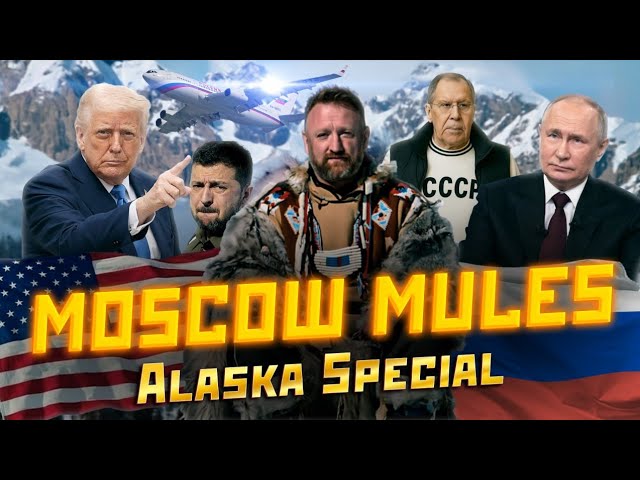
Mosocw Mules 18/08/2025
516
The video illustrates how Western media framed the Alaska summit between Putin and Trump as a 'bromance' between two white men, highlighting media's tendency to use superficial framing techniques. The hosts present specific headlines from the Sun, Guardian, Telegraph, and Sky News, showing how different outlets characterized the same event as appeasement, betrayal, or a 'made for TV summit.' The hosts argue that Western media treats peace like 'garlic to a vampire,' inherently opposing diplomatic solutions that might reduce their relevance. This demonstrates how media bias can shape public understanding of international relations and how editorial positions influence coverage of diplomatic events.
Click to watch →
Donald Trump och Vladimir Putin möttes – vad händer nu?
14.4K
The Alaska summit demonstrated how media framing shapes political interpretation of diplomatic events. Different political factions interpreted the same encounter through ideological lenses: the right viewed Putin's statements as confirming Trump's worldview, while the left interpreted the meeting as evidence of Trump being Putin's puppet. This illustrates how audiences tend to interpret information in ways that reinforce pre-existing beliefs. The analysis suggests that American media exhibits an introspective tendency, analyzing world politics primarily through domestic political frameworks rather than international perspectives. This creates challenges for understanding complex geopolitical dynamics, as domestic political considerations often dominate foreign policy analysis.
Click to watch →

Trump e Putin: il summit che ha indebolito gli Stati Uniti?
15.9K
This segment examines how diplomatic events are perceived through media lenses. Despite Putin's positive comments about Trump during the Alaska summit, American media portrayed the meeting as a failure where Putin dominated and Trump appeared weak. The analysis reveals how media framing shapes public opinion about international relations, with Fox News presenting a more favorable view while MSNBC offered harsh criticism. This illustrates the concept that diplomatic outcomes are often interpreted through political and media lenses rather than objective assessment.
Click to watch →

Rassegna Stampa Scorrettissima - OGGI GIO 14.08.2025 - Grazie al Mitico Daniele Capezzone!❤️ Libero
1.1K
Diplomatic summits between adversaries operate within significant constraints. The Alaska summit between Trump and Putin was described as 'uphill' because it emerged from Putin's offer of ceasefire and territorial changes, but was constrained by Ukrainian demands for no territorial concessions. Media framing significantly influences public perception of social problems, as demonstrated by Romani community coverage where the absence of ethnic terminology prevents readers from understanding social dimensions. This illustrates how diplomatic negotiations involve complex trade-offs between different parties' interests and how editorial choices in language can either illuminate or obscure root causes.
Click to watch →
Royal Diplomacy
Soft Power
Royal Diplomacy
0:00- 1
State visit highlights first lady and Princess of Wales's roles.
- 2
Fashion and public image drive soft power messaging.
- 3
Shared challenges of balancing style with substantive work.
The Democratic Deficit and Superficiality of Royal 'Fashion Diplomacy'
Critics of royal soft power and 'fashion diplomacy' argue that these highly staged events prioritize style over substance, distracting the public from pressing geopolitical, economic, and social realities. From a democratic perspective, relying on unelected, hereditary royals to represent a nation's diplomatic interests is fundamentally undemocratic and reinforces elitist class structures. Furthermore, post-colonial critics contend that royal state visits serve to whitewash the historical legacies of imperialism and empire, using glamour, fashion, and superficial goodwill to project a benign national image that masks ongoing global inequalities and lack of substantive policy achievements.
The concept of 'Soft Power' (coined by Joseph Nye), which focuses on a nation's ability to influence others through cultural and ideological attraction rather than coercion or economic incentives.
The constitutional and ceremonial role of the British Royal Family in international relations, distinguishing their non-political diplomatic influence from the policy-making government.
The standard protocol, historical significance, and strategic purposes of official State Visits in bilateral diplomacy.
The fundamentals of cultural diplomacy and symbolic communication, specifically how non-verbal elements like fashion, patronage, and curated itineraries signal political alignment.
Methods for quantitatively and qualitatively measuring the diplomatic efficacy and return on investment (ROI) of soft power initiatives.
Comparative soft power analysis, exploring how non-monarchical nations deploy alternative cultural assets (e.g., culinary diplomacy, sports diplomacy, or technological dominance).
Gender dynamics in foreign policy, specifically analyzing the evolving expectations, influence, and political agency of First Ladies and female royal figures.
Critical discourse analysis of media framing during diplomatic summits to evaluate how domestic and international media shape public perception of bilateral alliances.
145.3K views1.3Klikes2:44@SkyNewsOriginal Release: 2025-09-18
It is these two women on this state visit that the world can't get enough of. An unnecessary distraction? Not at all. Many would say a vital part of the softer side of our diplomacy.
>> Wow. Look at that.
>> As soon as the first lady stepped off the helicopter, that hat was being talked about on all the social channels along with the Princess of Wales, a really important part of the welcome party.
At the state banquet, the president practically giddy about Kate sitting next to him, even though that always happens with a male head of state.
>> Melania and I are delighted to visit again with Prince William and to see her royal highness, Princess Katherine, so radiant and so healthy, so beautiful.
It's really great honor. Thank you.
>> We have to talk about the outfits.
Whether you like them or not, it is the ultimate power dressing. both giving American and British designers significant exposure.
There probably aren't that many people that the first lady can relate to in the same way. And I suspect that one frustration she shares with the royal women is that often the way she looks overshadows her work. Which is why with the president dispatched off to checkers, it was really important for her to have her own program of engagements.
Camila showing off Queen Mary's dolls house and the library at Windsor to try and instead get us talking about their support for young people and education.
>> You want to tell me what you're doing?
>> But Camila isn't maybe as popular back in America.
>> You want to play the parachute?
>> Okay. Ready?
>> So this is what the White House was waiting for. Melania, Kate, and some scouts, and a message from both about children, nature, and mental health.
>> The great thing to watch today was to see the princess, our joint, our joint president, getting stuck in, making the artwork. She, at one point, she was on the floor with the young people creating these, you know, amazing bits of art using paints and using glue and using leaves and twigs and whatever else we found out here. And a similar similar thing for the for the first lady as well.
If you don't have your head stuck in the politics, these are probably the pictures of the day.
>> Congratulations.
>> Excellent job.
>> We're told the children were given honey from the White House to go with biscuits made with honey from Kate's back garden in Norolk. A final sweetener, you could say, in what has been the ultimate display of soft power. Rihanna Mills, Sky News at Windsor Castle.
Up Next

99:30
Africa's Future Under Trump: Security, Trade & Diplomacy
@StrathmoreUniversity
448 views•2025-02-21

24:30
BRICS Pay and de-dollarization: A New Financial Order Emerges? | 55 chars
@DannyHaiphongYT
164.6K views•2024-10-22
7:33
Government Surveillance Methods: 10 Ways You May Be Watched
@BeAmazed
1.6M views•2017-04-09
10:19
Explaining the Saudi-Iranian Proxy Conflict in the Middle East
@Vox
18.2M views•2017-07-17
Related Study Plans & Knowledge Roadmaps
Structured learning paths in Political Science
political-science
Economic Statecraft: Sanctions & Chokepoints
01Foundations of Geoeconomics and Economic Statecraft
02The Mechanics of Weaponized Interdependence
03International Sanctions: Types, Implementation, and Efficacy
+ 2 more learning modules
12h5 modules
Explore Roadmap
political-science
Central Bank Independence: Politics & Policy
01Foundations of Central Banking and Monetary Policy
02The Time Inconsistency Problem & Inflation Bias
03The Delegation Model and Designing Independence
+ 2 more learning modules
12h5 modules
Explore Roadmap
political-science
Consociationalism: Power-Sharing & Stability
01Democratic Dilemmas in Divided Societies
02Introduction to Consociational Democracy
03The Four Pillars of Consociational Design
+ 2 more learning modules
12h5 modules
Explore Roadmap
political-science
Rebel Governance: Legitimacy, Economy & State
01Foundations of Rebel Governance and Statehood
02Establishing Political Legitimacy and the Rebel Social Contract
03Wartime Economies and Rebel Resource Management
+ 2 more learning modules
14h5 modules
Explore Roadmap