







![Procedures of Removal [Deportation] Proceedings](https://i.ytimg.com/vi/TUEzl9NUO34/sddefault.jpg)









![[풀영상] 윤석열 대통령 파면 무삭제 전체보기[4월 4일]](https://i.ytimg.com/vi/EcQue48hFVk/maxresdefault.jpg)
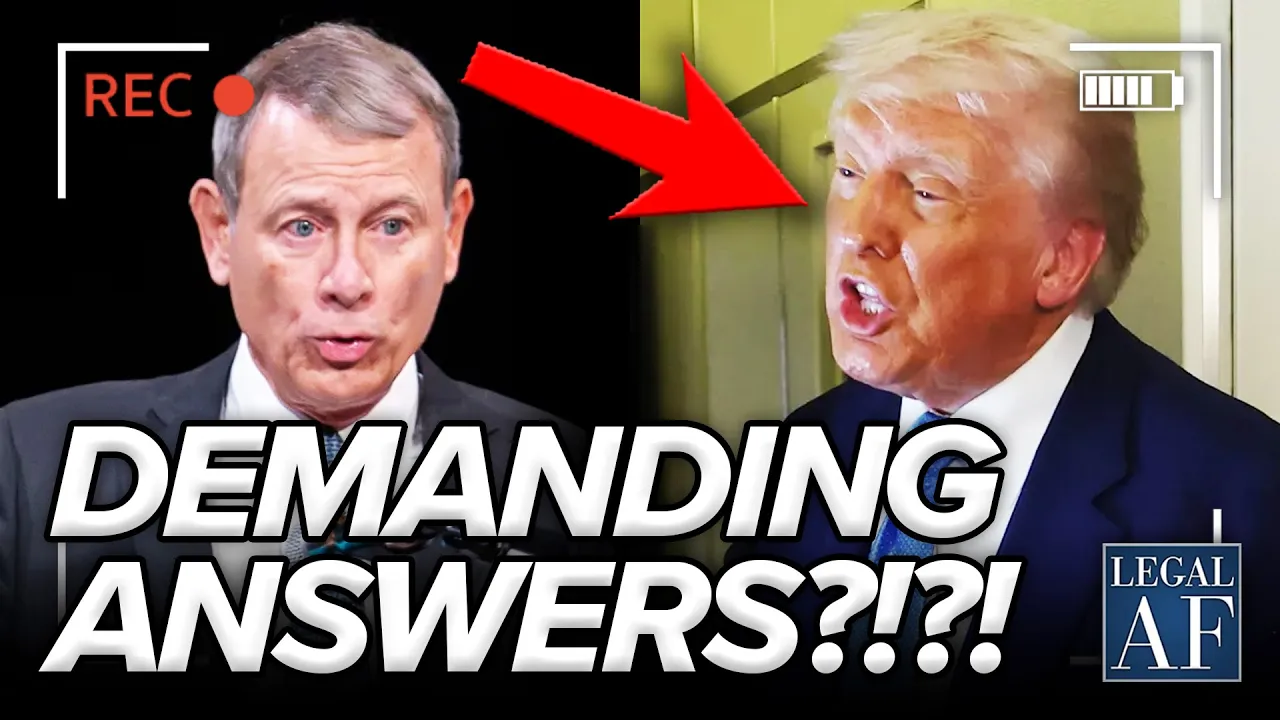


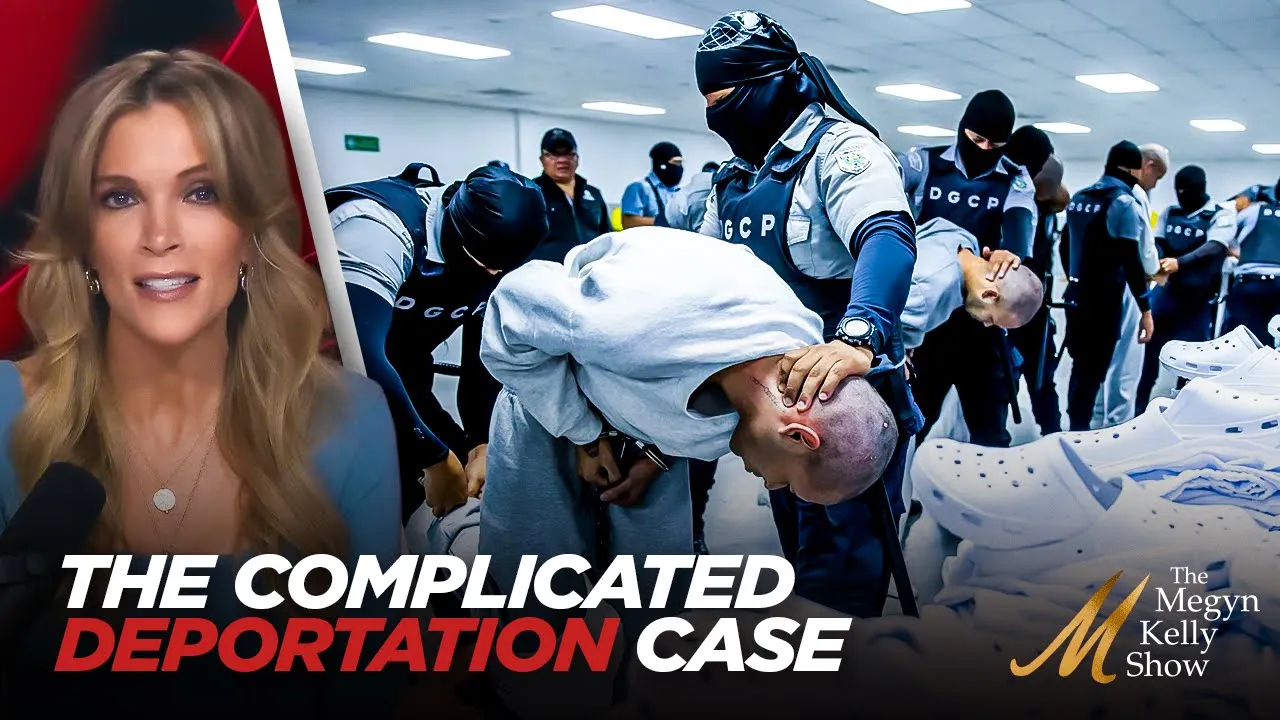








The US Supreme Court issued an order on April 19, 2025, at 1:00 a.m. that froze deportation efforts against Tren de Aragua members under the Alien Enemies Act, despite the court never certifying a 'puditive class' (a class that does not exist) and despite the trial court having already denied the detainees' motion for a temporary restraining order. The Supreme Court's order was based on hearsay evidence rather than sworn testimony, and the court conflated a 42-minute waiting period with a 14-hour period to create a false narrative about the trial court's inaction. This demonstrates how courts can issue orders based on procedural technicalities rather than substantive legal analysis, raising concerns about judicial accountability and the proper application of due process in immigration cases.
Supreme Court Deportation Ruling: Legal Analysis of the Tren de Aragua Case
Added:By the way, AARP is not the American Association of Retired People. It's one of these trend araguists that the courts are allowing to engage in our judicial process anonymously so that we don't discover that they too they too are Maryland men.
Procurium. Procurum means that this opinion was written by the court as a whole is what procurum normally means.
Um not a lot of arguments. So the president invoked the alien enemies act.
That was back in um when was that? April 14th I believe and it was published made public on April 15th. So April no sorry March 14th. March 14th.
So two months ago now more than two months ago.
The applicants are two detainees identified as members of TDA. I believe these are the same people who were initially in Judge Jeb Booseberg court in the District of Columbia when he was finally stripped of jurisdiction by the Supreme Court. They were always being detained. These trend aragua people were being detained in Texas and ultimately they were returned to have their cases adjudicated in the district of Texas which is where they are now. All of the alleged TDA members in the puditive class. And here's the first line. We're only a paragraph in folks. You know what? I'm going to make this a little bit smaller. Does that still look okay? All right, we're only a paragraph in and this is we already hit the first Supreme Court lie. Putitive class. There's no such thing as a puditive class.
Pudutitive means literally means the class that does not exist. These TDA defendants attempted to have this judicial proceeding be not just about the two of them, but about every TDA member in America. and they asked the Texas District Court to proclaim a class of every TDA member in the US subject to the Alien Enemies Act. And they asked for a temporary restraining order that would protect that entire class of people. And the trial court said, "No, I am not certifying a class. There are certain conditions that have to be met for a class to be coherent and appropriate.
And I'm not seeing those conditions being met here. So this court case is only going to be about the parties appearing before me, the two of you, not every trend aragua person in America. So no class has ever been certified. Now, the lawyers for these two guys ran to the uh appellet courts in Texas and asked them to certify a class and they said they'll look at they'll look at it, which is how courts normally work. You file a motion with them, the judge says, "Okay, we'll we'll think about it."
But when it hadn't happened in minutes or by some measures a few hours, 14 hours, these same lawyers for these two TDA guys ran to the Supreme Court directly all in a matter of a couple of days. And that's when the Supreme Court issued their 1:00 a.m. order, effectively creating a class without doing the legal analysis or actually creating a class because they enjoined Trump from applying the Alien Enemies Act proclamation to any AEA member in the country. Any of them. That was this order here.
Well, it's not easy for me to pull up right now, but it reads, "The government is directed to not remove any member of the puditive class of detainees from the US until further order of the Supreme Court." Again, this phrase put class. No class was ever certified. There is no class. They're just pretending that there's a class. And they do this by the slimmest slate of hand and smoke and mirrors, as we'll see in a bit. Did you know that in all 50 states, self-defense law, not gun law, but self-defense law uses a simple fiveelement test to see if your use of defensive force was legally justified. And that same test applies no matter what state you're in or what tool you use to defend yourself. If you're missing even one of those required elements, however, you've made yourself an easy conviction for an aggressive prosecutor. My name is attorney Andrew Branka and I've worked more than 30 years as a self-defense attorney. Every state has seemingly endless complex pages of laws regarding self-defense. So complex that many top criminal defense attorneys rely on my expert analysis to help win self-defense cases for their clients. If the legal code is that complex for lawyers, how can a citizen gun owner expect to know or even follow the law, especially when a life ordeath situation has triggered a massive adrenalinefueled mandate to make that fightor-flight decision right now. It seems daunting. Yet, I created a simple but powerful framework that has allowed me to serve the legal community and countless American gun owners to simplify this legal complexity into just five elements of self-defense law. And you can learn my five element legal algorithm I use to consult on and win with the top criminal defense attorneys all over the country to protect law-abiding gun-owning citizens from making innocent legal missteps that land them in prison. Now, with a simple read or listen, you can install my five-point legal framework. So, it acts as a sort of muscle memory defense to protect you from losing your rights when you choose to defend innocent human life. Click below to get the latest edition of my book, The Law of Self-Defense Principles, for free. I ask only that you help cover the shipping and handling cost to get the book to you. In the application before this court, the detainees seek injunctive relief against summary removal under the Alien Enemies Act. So on April 17th, the district court, that's the trial court, denied the detaininees motion for a TTRO against summary removal under the Alien Enemies Act.
The detaininees alleged that hours later, by the way, there's no evidence of this. The detaininees alleged, this is all multiple levels of hearsay, no testimony before the court under oath about this.
The detainees trend Aragua alleged that hours later putitive class members again there is no class were served notices of AEA removal that would be in effect tonight or tomorrow. So something like 24 hours of notice perhaps less on April 18th at 12:34 a.m. Central time. That's 12:34 in the morning, 34 minutes after midnight. The detainees moved for an emergency TTRO. At 12:48 PM, the TA DTinees move for a ruling on that motion or a status conference by 1 PM when they didn't get a a response to this 12 34 a.m. Central time motion 34 minutes after midnight. When they didn't get a response to that within 12 hours, they said, "Well, I guess it's 15 hours here. Let's call it 14 hours and change. They appealed the constructive denial of the emergence in TR. So there was no denial. This is like putitive class. Constructive denial means there was no actual denial. The court had not yet made a decision. By the way, do you think a court that gets a motion at 12:34 a.m. typically has made a decision by 3 p.m. that afternoon? No, of course not.
But they decided, well, if we don't have an answer within 14 hours, we're going to call that a constructive denial of the emergency TTRO. And they uh escalated things to the court of appeals for the fifth circuit. They also applied to this court for a temporary injunction.
We meaning Scotas understood the government to assert the right to remove the detainees as soon as midnight central time on April 19th. The government addressed the detainees allegations on April 18th only at an evening hearing before the trial court for the District of Columbia where the detainees had separately sought relief. They went back, excuse me, they went back to Boseberg and the government, meaning Trump guaranteed that no putitive class members, again there is no class, would be removed that day. But it further represented that in its view, the view of Trump, removal of putitive class members as soon as the next day would be consistent with its due process obligations. We've given notice. The proclamation under the Alien Enemies Act has been done. These people are represented by council. We've demonstrated to the court that they're subject to the Alien Enemies Act proclamation deportation.
And so it is within our authority to now deport these people. Evidence now in the record, although not all before us on April 18th suggests So this evidence suggests what evidence is this? Is this evidence under oath? No. This is again multiple levels of hearsay. And at best, it suggests that the government had in fact taken steps on the afternoon of April 18th towards removing detainees under the alien enemies act. Had the detainees been removed from the United States to the custody of a foreign sovereign on April 19th, the government may have argued, as it has previously argued, that no US court has jurisdiction to order relief. And they're talking here about our good friend Kilmar Armando Abrego Garcia.
Yes. If someone is deported, consistent with due process, they got notice, they got counsel, they got a court hearing, they're deported.
They're not subject to the jurisdiction of the US anymore. At 12:52 a.m. Eastern time, we ordered, the Supreme Court ordered, this is that 1 a.m. Supreme Court order. In light of all these circumstances, none of which are sworn testimony, not actual evidence, multiple levels of hearsay. In light of all these circumstances, Scotas ordered not to remove any member of the puditive class of detainees in order to preserve our jurisdiction to consider the application by trend aragua. We invited the government to respond to that application after the fifth circuit ruled, but the fifth circuit dismissed the detainees appeal for lack of jurisdiction. So when you appeal from a trial court to the court of appeals and then to the Supreme Court, once you move to those other courts, the original court no longer has jurisdiction. You've removed the matter from the jurisdiction of the trial court when you go to the court of appeals. And of course, when you go to the Supreme Court, now the court of appeals or the Supreme Court has jurisdiction. You can't have multiple courts have jurisdiction simultaneously. That would be insane.
So because they had appealed trend aragua to the court of appeals and to the Supreme Court, the trial court said, "I don't have jurisdiction. So I dismiss your motions before me for lack of jurisdiction. Deny your motion for an injunction because we have to see what the higher courts are going to do and noted that Trend Ara had given the district court only 42 minutes to make a decision.
That's 42 minutes from the time they first asked a renewed motion for a TRO from the trial court. When they didn't get a response from the trial court in 42 minutes, they went right to the Court of Appeals. The Supreme Court's going to lie about this again because they're going to say, "Well, it wasn't 42 minutes. It was 14 hours of waiting.
That 14 hours is the time from the trial court to the Supreme Court, not from the trial court to the court of appeals, which is what the 42 minutes is here. So the Supreme Court lies by conflation to confuse the issue. Scot says we now construe the application as a petition for a writ of cersari from the decision of the fifth circuit. By the way, uh we grant the petition as well as the application for injunction pending further proceedings.
So they're issuing the injunction you cannot remove these vacate the judgment of the fifth circuit and remand for further proceedings. The fifth circuit er in dismissing the detainees appeal for lack of jurisdiction. Appellet courts have jurisdiction to review interlocatory orders that have the practical effect of refusing an injunction.
So they're saying the appellet court can hear an interlocatory appeal is an appeal from a trial court to an appellet court before the before the trial is over in the middle of the trial to address a particular issue as opposed to a final verdict.
So the Supreme Court here is trying to say that the trial court in fact did still have jurisdiction because this was only an interlocatory appeal which would go back to the trial court. A district court's inaction in the face of extreme urgency and a high risk of serious perhaps irreparable consequences may have the effect of refusing an injunction. So now they're saying that because the district court didn't act quickly enough, that was effectively a constructive denial of the request for a temporary injunction. What legal authority does this Supreme Court site here? Well, well, they don't really. They site what's called a treatise, a textbook to support this. Here, the district court's inaction, not for 42 minutes, but for 14 hours and 28 minutes, had the practical effect of refusing an injunction to detaineees facing an imminent threat of severe irreparable harm. Accordingly, we vacate the judgment of the court of appeals.
Now, is it severe irreparable harm to be legally deported from the country if you don't have a right to be here? It it's bizarre the perspective the Supreme Court takes here. It would be like you had an intruder in your home and you grab him by the collar and toss him out the front door of your house. Did he face severe irreparable harm by being tossed from a place he has no right to be? I would suggest not. The fifth amendment entitles aliens to due process of law in the context of removal proceedings. But do they say what the due process is? Because remember due process simply means follow the law. What the law requires. What does the law require for deportation of somebody unlawfully present in the US?
Not much. We have long held that no person shall be removed from the United States without opportunity at some time to be heard. And that's consistent with the Alien Enemies Act itself. As we talked about earlier, you have a right to be heard in front of a judge. And for the government to say, "We have good reason to believe this person is subject to deportation." Due process requires notice that is reasonably calculated under all the circumstances to apprise interested parties and that affords a reasonable time to make an appearance. So certainly the parties in this case have had this. They've known for weeks, a month at the time the um Supreme Court froze things and now another month has passed since the Supreme Court's April 19th 1:00 a.m. order suspending their deportation. So certainly these people have had notice, the parties to the case, and there is no class. There's only this makebelieve putitive class.
Thanks for watching this highlight segment of our fulllength law of self-defense live stream. If you enjoyed this content, make sure to give us a like and subscribe for more expert analysis on politics, law, and how to be hard to convict. And to watch the fulllength episode of this show, just click right here. Stay safe.
Up Next

Astrochemistry: From Atoms to Molecules | Lecture Series Part 1
@SociétéFrançaisedExobiologie
257 views•2025-08-11

Triumph of Orthodoxy Icon: Byzantine Art & History Explained
@BenCallan
2.1K views•2024-08-06

FastAPI vs Flask vs Django: Choosing the Right Python Web Framework
@TechWithTim
302.5K views•2024-05-26

Game of Thrones Opening Credits: A Cinematic Analysis
@gameofthrones
46.3M views•2011-04-18
Related Study Plans & Knowledge Roadmaps
Structured learning paths in General & Interdisciplinary Studies