


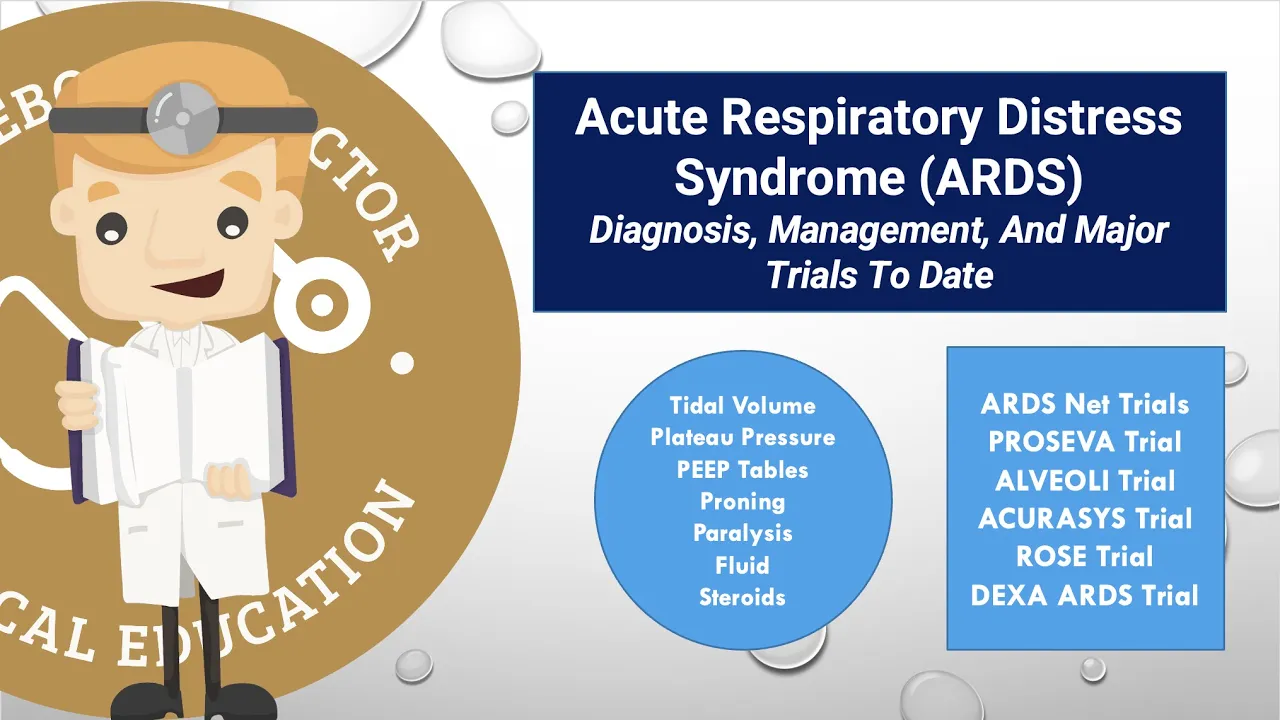

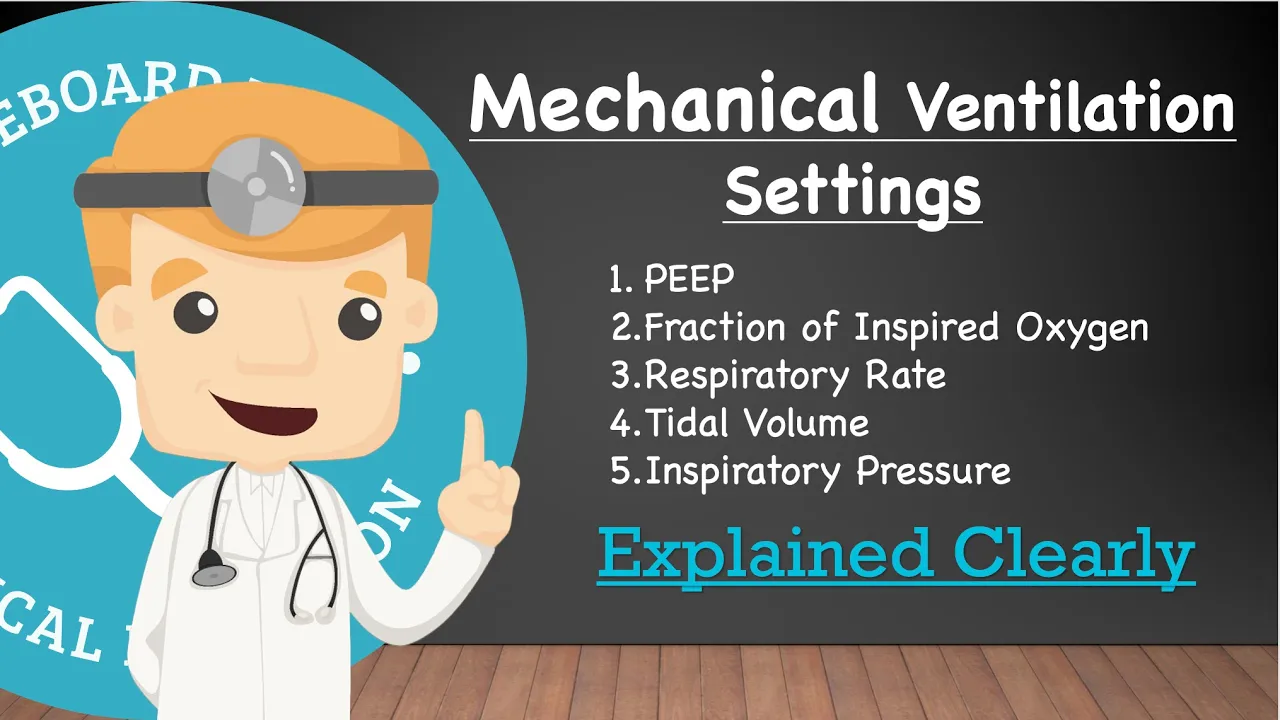


















The ARDSnet (ARDS Network) ventilator protocol, developed through the ARMA trial, is a landmark evidence-based protocol for managing Acute Respiratory Distress Syndrome (ARDS) patients using lung-protective ventilation with tidal volumes of 6 mL per kilogram of predicted body weight, plateau pressures maintained below 30 cm H2O, and pH goals of 7.30-7.45. The protocol provides standardized care guidelines including PEEP/FiO2 titration scales, weaning criteria, and spontaneous breathing trials, while offering clinical flexibility through multiple evidence-based options rather than rigid sequential steps. This approach standardizes care, improves safety through common language, and enables faster patient response without requiring physician consultation for every decision.
ARDS Ventilator Protocol: Benefits & Implementation Guide
Added:hello and welcome to the recording on ventilator protocol so these are just basics of what a ventilator protocol could look like so we'll talk about the ards network protocol just to begin with there are many different kinds of protocols spinal cord injury ventilator protocols post-op cardiac protocols that you name it there's a lot of different types of ventilator protocols the big one that we'll talk about though is the ardsnet one but the other thing is what is a protocol and why do we use them like what's their primary function what are some advantages and possible disadvantages of them so let's look in depth so what is a protocol so when we're looking at a protocol it usually gives us a set rules or guidelines for care and management of a particular procedure or particular patients right it gives us that sort of guideline of that General game plan if you will to help us understand how to take better care of that patient and standardize it so they're usually based upon current evidence-based practice in other words they go through a period of updating every couple of years traditionally depends on the facility but they go through updating to make sure if there's any newer evidence that have come out on that procedure or on the way of doing that then that protocol is updated to make sure that we're taking the best care of our patients possible the protocol should provide clear indications for inclusion so there should be a clear set parameters for saying what type of patients are appropriate for this protocol like in the ards network what type of patients are appropriate what type of patients are are are should be considered for this so when we're looking at this it helps us understand okay who is this for so that way we're not employing it on the wrong type of patient population if you try to use a neonate protocol and put it on an adult it's not appropriate for that patient population so when we're looking at this is it appropriate what's the patient population right who should be included under this protocol management the next one is possible Contra indications or considerations so these are patients like when we're looking at permissive hypercarbia patients that might have uh issues with their intracranial pressures that might be people we don't want uh to uh put under if they're an ICP patient intracranial pressure patient we may not want to do permissive hypercarbia on them so these are contraindications or considerations for different procedures if a patient has really low or poor hemodynamics should we do a lung recruitment maneuver protocol on that patient well that's where you would put that into the considerations or contraindications in there so that helps tell us okay is this patient not only is it the right patient population but within the right patient population what are some reasons why we shouldn't do this or if we do it what are some things we have to be considerate of before we execute it the goals of the policy so what are the goals hey what's the main outcome what's the point of this policy and procedure is it to improve oxygenation if it's a recruitment maneuver is it to decrease atelectasis on a chest x-ray is it to decrease days on the ventilator right what's the goal of the policy so these should be stated clearly on the policy procedure so then now everybody has a clear and defined goal of what defines success of this this procedure right or of this policy um it should also point out the Personnel that are used to execute the protocol who can perform this procedure right who are the people making changes uh on who make who follow who are following this protocol so is it the physician only is it the respiratory therapy staff and the physician is it the physician extenders is it going to be high level nurses right who all is included on this policy so that should be uh in there as well are you going to let the housekeeper right I love them but are they the type of personnel that you want to be included to do something like changes on a ventilator right so it should clearly Define which which uh professions are appropriate to execute that protocol the next one is going to be details on the procedure itself so it should provide almost a step-by-step or a very detailed guideline of how that procedure is executed and that's going to be one of your big things to look at here and then finally references and protocol resources uh and resource Personnel to help clarify if you have questions about the protocol so the references help us when we have to update those protocols and then finally the resource Personnel really help us if we need to talk to someone be like hey this isn't covered in the protocol you know and it gives you a resource to go to when things are not as clear so why use a protocol what's the whole purpose of using a protocol well one of the first points here is it provides a standardization of care right that's kind of the big thing uh no matter what staff is on the patient will get the same care and decisions because that protocol is outlining how that procedure is done or how that care is performed we know that no matter who's on what their skill levels and so on and so forth is uh that that patient's getting high quality evidence-based care so that's one big Advantage is it standardized is to make sure everybody has high quality evidence-based up-to-date care so that's a big Advantage there you're not gonna have one doctor saying I want to do it this way and another one say I want to do it that way right it provides standardization overall so that's going to be very helpful now can a doctor write an order to take people off of a protocol or to discontinue certain aspects of a protocol traditionally yes so that's something they can do if a person has poor hemodynamics and they don't want to go up on the Baseline pressure the peep or the CPAP if they don't want to go up on that they can write discontinue that peep fio2 scale they can do such things traditionally so that's something they can always modify and still keep that patient under that General protocol it does provide a game plan for the outcome especially when we have clear defined goals right when we have clear defined goals of the the the procedure right then we know okay our goal is to get a pH in this range our goal is to get a po2 in this range our goal is to have this outcome right so it gives everybody a game plan right and a goal for outcome so that way we're all in clear understanding of what is successful what isn't successful and then the other thing it provides a clinical step right it provides clinical steps and that's one of the things that you're going to see here is it helps us understand if the patient is still acidonic and these are the event setting changes we've done these are your options so it provides a clinical step of what to do next right step by step of what to do next where are we going with this what's the next thing that's evidence-based to do and that's one advantage there it clarifies it it provides it in black and white there's a lot less dispute traditionally of about what that next step is so there's a good Advantage there the other thing here is this next big point is it uses common language so it helps especially if you have providers Travelers you have people from different areas of the nation or different areas in the world that come into practice uh when we're seeing this it it makes for a common language for that policy and that procedure so it better communicates the steps of care when we all know we're talking about a cult peep Auto intrinsic people so on and so forth right we have different terms for it so it just provides that single-use terms it provides a single-use method of communication and it really could help streamline and expedite care overall the other thing too is with that safety right it provides a safety for escalation of care because we are using common language we all know what the next step is or we all can look up what the next step is when we have that protocol in front of us so it's safety right it provides safety because we're using that common language we're not going to have miscommunication and say Oh I thought you meant to go up on this versus that right so it helps make sure that that patient is as safe as possible by using common language or standardizing the language for that policy then last part here is it may allow for you to have a better scope of practice there was an aarc white paper that was done uh years ago and it looked at uh people that have protocols and it showed that the people that followed protocols were actually happier with their job uh or their career I should say because they were able to perform these higher level procedures because they were following an evidence-based practice it was standardized it was known what the goals were everybody was clear who could do it who couldn't do it right so it allowed for them to have a higher scope of practice ultimately when they're doing that so that's something that you could see as a benefit for doing these protocols as long as they're done correctly the big Hazard would be potentially writing a protocol that ties your hands and says you have to do it this way you have to do it that way instead of giving you options for different types of patient alterations can someone be managed without the protocol well let's talk about it most procedures can be done with a protocol so that's what a good news thing like even at something like arterial blood gas man a to your blood gas sampling uh EKG uh diagnostics test right those things uh therapeutic interventions like bronchoscopy right so on and so forth can be done with a protocol now realization protocol right you name it they can be done with a protocol so we have good news there that can help things especially clarify make sure we have good standard of care among all our providers but some patients may have special circumstances that the protocol doesn't account for hey what if they have this hiatal hernia and we're trying to do a lung recruitment maneuver but it didn't mention that in the considerations or contraindications well that's something that we need to talk about maybe that's not a procedure that we should be looking at for that type of patient right so the protocol can't when I make that statement the protocol can't anticipate every single patient condition or circumstance it cannot right uh that's too hard to anticipate every single thing that could possibly ever go on for not like indications and contraindications but that's something that we need to take into consideration as a care team right if there is a special circumstance could we modify the protocol are they still under protocol even if it's not mentioned explicitly in that policy right that's a discussion with the care team and the providers The Physician and or care team needs them then if they don't have a protocol that they discontinue protocol or they order no protocol then the physician or care team really needs to communicate clearly about the plan of care what is successful what are your saturation ranges what's our pH right Rangers what's our CO2 ranges what's our x-ray right goals what are you know what are are ways of adjusting if the patient has this response to it what's the next step I don't I don't know because we don't have that written down so we need to communicate about that ahead of time so that way we understand if something goes wrong something goes goes off and they're not under protocol what do we do next not traditionally in that case you would have to contact that physician if they're not under protocol you'd have to contact them there if they're under certain protocols we'll allow you to adjust without um getting from a physician permission first right so just be aware of those protocols and how they're written as well but that is a disadvantage to not having a protocol is now you're dependent upon the attending physician really being able to troubleshoot every single moment of that patient's care and that can be very laborsome and it can take time so you're not responding as quickly to that patient's needs so that's another disadvantage right so most of the time the physician may need to write an order to discontinue a protocol if they have a special need as well so that's where we have to have a clear plan once they discontinue it it's not necessarily a bad thing but we just need to make sure we have a plan okay what happens if their pH goes below this or what happens when their saturation and po2s go below that right so we need to have that clear plan when they discontinue a protocol what happens when they're when their icps their intracranial pressures change right we need to have that plan in place if they don't have a protocol so the big thing here is protocols two can tie the hands or the escalation of care of patients if it says you have to do this before doing this before doing that before doing that to get to where you want to go with this patient then it ties your hands it forces you down that flow chart so sometimes protocols can be written in a way where it gives you options hey the patient has a pH that's less than 725 one of these following options are considered evidence-based all of the following are evidence-based pick one that's most appropriate for your patient right that's another way to write that where now we can focus on what is going to work best for this patient that's in front of us right still evidence-based but that way we're not tying the hands of the providers that way they don't have to write to discontinue a protocol just so that they can do what's appropriate for that patient all right so we talked a little bit about what is a protocol advantages and disadvantages now let's talk about one of the big ones the ards net National Institute of Health National heart lung Blood Institute ards ventilation protocol I know it's a lot of words but you know it's kind of fun to do it that way too uh this is one of the most notorious ventilator protocols that are out there that's why I'm mentioning it here it was also known as the Arma trial back in the day uh so that's one of those things that you might hear see in literature uh or here at a conference where they say hey according to the Arma trial right that's what they're talking about is the ards net study that came out so this one the big history of this one it was conducted to compare lung protective strategy using lower tidal volumes of 6 MLS per kilo of predicted body weight with the what at the time was conventional of 12 MLS per kilo predicted body weight so they used to ventilate people at 12 and miles per kilo of predicted body weight versus six so they said let's cut that in half let's try it at six MLS per kilo and go from there so they designed it for a specific population they designed it for patients that were in acute respiratory distress syndrome so that was the goal of it is to look at that specific patient population right that specific patient population the study had to end early this is an important point that if you haven't heard this before listen up they had to end this study early because it was no longer ethical to continue to ventilate at 12 MLS per kilo that's a big deal because at 12 ml per kilo it was causing so much trauma so much pressure so much damage that they were continuing to see detrimental results compared with their 6ml group so they actually had to end that study early because of it so the national heart lung Blood Institute and ards network is a network to test and manage strategies to improve patients with ards and ards big thing in adult Critical Care Medicine so that's why I am making a big point about the ardsnet protocol so you can see the history of it it really did help change things and they continually update this to make sure it's up to date with the evidence-based medicine so the ards network the idea here was to avoid alveolar hyper inflation and Implement lung recruitments Maneuvers by either elevating Peak levels or to do a traditional lung recruitment maneuver because we're using such lower tidal volumes smaller tidal volumes then we needed to do something to help with alveolar distension but not over distension so that's where the high peeps came into play and that's where you see this whole thing over here this is the the high arm and the low arm of the peep fio2 scale so you might see this at ards Network hospitals where hey uh we're on a peep of eight so let me just do an example here we are on a peep of eight and fifty percent oxygen and then their saturation is lower than where we want it to be right they're below the goal saturation level so what's our next step according to this policy well it says okay our next step is to actually increase the peep to 10 right so it gives you that step up and also a step down of what to do right so that person you turn up up to a peep of ten so they'd be on fifty percent oxygen in a peep ten and then you would see what happens from there well what if that doesn't work well what's the next step then we would go to a fio2 of 60 percent and a p but 10 we'd keep that peep there so you can see how it helps you walk your way up it also helps you titrate your way down as well so the whole idea here is to gently increase these until we get the proper oxygenation level or titrate them down until we get the the proper oxidation level so the whole point here the big goal of ardsnet is to mitigate ventilator induced lung injury so we can tolerate atelectasis that can be managed by two different ppfio2 scales here's the low arm at the top here where I was doing the example earlier then here's the high arm at the bottom here and the evidence shows as of recording this no difference in the outcomes or anything like that between these two trials between these two arms if you will of the peep fi2 scale to higher arm or the lower arm the big thing that I would put my little two cents in here uh so don't quote me on it would be looking at hemodynamics the mean airway pressure sometimes if that person has very poor hemodynamics then the lower arm could be an advantage there because there could be less compression on the vena cava right but traditionally with ards patients they're going to have lower lower chances of hemodynamic issues because the lungs are so restrictive and elastic uh that you're not going to have a lot of expanding that squishes the vena cava because lung tissue is so firm and hard right it's good it's going to make it hard to expand so that because their compliance is so low we may not have an issue with higher Peak levels so that's something to think about there as well so we do understand that with low tidal volumes we're going to have more atelectasis right makes sense we're using smaller volumes so less of a lung is going to be opened up when we deliver a breath however we can mitigate that with higher mean airway pressure or peep levels uh most of the time uh the ards net included a PF ratio PF ratio is very important when you're talking about Critical Care Medicine uh less than or equal to 300 uh were considered if they had bilateral diffuse homogeneous infiltrates on their x-ray that are consistent with pulmonary edema uh there should be no clinical evidence of left atrial hypertension in other words you're trying to rule out left-sided heart failure right you're trying to rule out that type of thing which can be done on Echo uh or even sometimes ultrasound it just depends what's going on but those are the in people that were included in the initial settings this is the calculations that they used and it comes out in kilos right so it helps us and that's the predicted body weight calculation and that's the calculation I used as a provider for uh 10 years so that's one of those things that you'll see there too is that's how we use their predicted calculator predicted body weight and did their title volumes based upon that once we calculated their predicted body weight then we would select a ventilator mode so traditionally for your pediatric through adults we'd set the ventilator to get around 8 ml per kilo tidal volume of their predicted body weight unless they had known ards so we're going to start people in 80 ml per kilo around that area and then we can reduce the tidal volume by 1 ml per kilo obviously all this is predicted body weight at intervals around two hours until the tidal volume is at 6 ml per kilo right so we're gently lowering it down over time the initial rate that we're setting the ventilator is going to be uh around their Baseline minute ventilation so that's going to be that BSA calculation that we did earlier on and that you've seen in your chapter as well but we should not set it over the rate of 35 right we get really fast if we could do that we're going to adjust the tidal volume and the rate to achieve a p adequate pH and an adequate Plateau pressure in other words we try to keep that Plateau pressure under 30 centimeters of water pressure that's the Big Goal because the plateau pressure represents alveolar pressure and we're trying to avoid ventilator over dissension and ventilator trauma so if we keep the plateau pressures under 30 centimeters of water pressure that really helps keep those uh alveoli from being damaged and so we try to keep that Plateau pressure under 30 centimeters of water so the goals hey what are the goals right the pH goals and the plateau pressure goals well if the pH goals were anywhere between 730 and 745 um so that's what we're looking at there if the pH was 715 to 730 so low then it told you what steps to take do you see this this is the application of talking about protocols it says hey this is their goals and if they don't meet this this is the next step that's appropriate to do so this would tell you hey if their pH is in that range you can increase respiratory rate until you hit that range or their paco2 right so you can do that but the maximum rate you can go up to is 35 right if the pH is still less than 715 and you increase the rate to 35 the then you might have to go up on title volume right you might have to go up on title volume and in this case you might have to exceed your Plateau pressure 30 because that pH of 715 may not be survivable right that's the 720 to 725 range is what's considered survivable uh so that's where you're looking at that there or they might consider at this point giving sodium bicarb be careful with sodium bicarb because of the transient increase in CO2 that's the carbonic acid equation so take a second to pause go Google image carbonic acid equation and then look what happens if I increase bicarb and you bring it across what happens to CO2 production well if I increase a bicarb on one side I'm going to increase CO2 production on the other side so that's also potential danger there is you're actually increasing the chance of a metabolic acidosis there right so the big thing here is to is to look at these goals and sort of see this is the application this gives you clear steps of what to do when different things happen so everybody's on the same page we're taking all taking excellent care of this patient because we know their goals we know their management the gold Plateau pressure is try to keep it under 30 centimeters of water right try to keep it under 30 centimeters water so we're going to check the plateau usually it's about a half second pause at least every four hours when we're going in to see those patients if we is over 30 then we or if we change a peep setting or title volume setting if we go up on either of those if we go up on P go up on title volume check a plateau because you might have just caused a change that made the plateau go over 30 and you don't want to be causing harm the patient's already sick enough they don't need you making them even worse right so check a plateau pressure after you make those changes that could cause that to go up so that would be things like your your peep or your title volume if it is over 30 then the idea here is now to decrease tidal volume in 1 ml per kilo steps to about four once you get to 4 MLS per kilo that's sort of the minimum that's very very small title volumes uh not evidence really below that um unless we talk about high frequency ventilation even then that's more for the neonate population but if the plateau pressure is under 25 and the total volume at under six then we can increase by one ml per kilo we can start to go up on their tidal volumes if their Plateau pressures start to come down let's say the patient's steroids kick in they're they're coming past this ards network there are infections clearing up whatever is going on that cause their erds then we could automatically start to go up back up on our title volumes to be more appropriate for that patient's physiological needs so that's a good news so it tells us not only just how to titrate down but also how to titrate up so this is good news and for part two uh if they're if they're breast sync stacking or desynchronous uh if they're having high work of breathing and they need a bigger title volume then you can increase it right as long as the plateau remains under 30 right so that's if they're air hungry if they're working hard then that gives us an option uh to help that patient out as long as we keep the plateau under 30.
right and then find the oxygenation on this on this goal so this is just your general management stuff then we'll talk about the wean thing but oxygenation for the aortius net was to get a PO tube between 55 and 80. so and even a SAT 88 to 95 right so the whole goal here is to keep that po2 above 55 as much as possible uh we are going to use a minimum peep uh for this when we're using the traditional ppapio2 scale of five all right that's the minimum level there and these are the two arms that I've already previewed for you as well the big thing is just to make sure that you're titrating when it's appropriate so that way you're not using too much peep you're not using too much oxygen because too much Peep and too much oxygen especially if their lungs are getting better can cause harm by over descending and impeding mucous escalator and mucosal activity as well as impeding the ability to produce surfactant right so there are harms and damages especially oxidative lung injury especially neonates those preterm neonates uh have a higher chance of oxidative lung injury as well so you gotta look at all these factors so not only titrating up when we need to but also keep an eye out for when to start titrating down as well so that way we're not harming the patient either all right weaning how do you know when to wean on this protocol it's a vent protocol we got to cover not only settings but when do you get them off right and that's the other part there so conducting spontaneous mean trials is the big thing that they wanted you to do so if they're on 40 or less and a peep of eight or less or fifty percent and five or less right and make sure that they're they're not getting worse make sure that their blood pressure is stable make sure they can breathe spontaneously make sure they're not on a paralytic because they're not going to breathe on their own very well if they can't breathe at all because they're paralyzed right so those it's just telling you okay what's included make sure that these are your considerations does that sound familiar from the earlier part of this considerations are a big thing here so what are our considerations before we put someone on this protocol that's what we're looking at spontaneous breathing trial itself okay how do I perform this procedure right okay if you've checked for all the things above right uh and they've been pretty uh pretty good right they've been you can tolerate a wean up to 120 Minutes uh for these patients now they give you options right they don't tie your hands here notice that's the point here right they didn't tie your hands and say they have to do it this way only no they give you options you can place them on TP so you can do a trait collar if they're a trick or you could do a CPAP and pressure support so you could do pressure support ventilation with them see how they didn't tie your hands with it right so that's one of the key things there with an advantage of this type of policies it doesn't tie your hands and say you only have to do it tp's you only have to do a pressure support no you have other options that are still evidence-based and you got to pick the one that's best for your patient I used to love t-piece weaning my uh heart patients where they were on event because they had heart failure and that peep in the mean airway pressure really helps restrict the blood flow in there so it helps reduce cardiac workload well when you put someone into a t-piece where they're just heated aerosol going past then that takes away all that positive pressure that's helping restrict the cardiovascular structures and therefore it looks at what the heart can do really without any pressure in there so if I were to extubate this patient how healthy is a heart can it be so like even TP Sweeney had its place in my practice right sounds really old school and it was but for that patient population physiologically I thought it was more appropriate and so therefore in this situation that's an option they give you now is it going to be the number one option everybody picks depends on the culture of that facility and the practice traditionally most people do that precious support the cpaper five pressure sportify but um they they don't tie your hands so be thankful right that's a good that's a sign of a good policy is it doesn't tie the hands it allows the clinicians to adjust per that patient scenario right you can't anticipate every scenario uh you gotta look for tolerance right so they're saying hey these are signs that the patient is doing okay that's another sign of a good policy is it clear is it defined do we have known outcomes of it right uh is there pa uh their respiratory rate less than 35 when they're waiting is there's pH greater than 7 3 when they're on the wean right so that way we understand uh what's going on here did the heart rate change to their saturation change right do they get worse or do they stay about the same do they stay stable right if they're uh doing good looking good then consider uh weaning an extubate if everything else is reversed or at the primary causes we have a whole extubation lecture obviously but that's where I want you to sort of see the reason why I brought up the irdsnet protocol a it's one of the most prolific prolific one out there and then B I wanted to highlight some of the advantages it has your goals who's included right the patient population it has your goals it has uh places where gives you options right it doesn't tie your hands and it gives you those clear considerations for patients that are appropriate and force different situations as well so hopefully you see an advantage to protocols especially protocols that are well written really can help you especially one of those things where it can help you expand your scope and be more happy with your job because now you're not having to call a high level provider for every single thing right so now you as a care team can take faster care of those patients without having to worry about is this the exact step is this the exact step and if you're ever in doubt what step to take then that's what the care team is for that's what the protocol is for that's what the physician is for right to help with that and to help guide that but this will give you that opportunity to make sure everybody has the same language everybody's on the same page we all have the same goals right we all understand the what the procedure entails what the different considerations for the procedure are so it helps with safety it helps with efficient care right and it helps make sure that you can respond in a Time family manner to a patient situation compared to having to wait until a physician figures out what's going on who this patient is and then tries to make a decision off of that right it could be a lot faster a lot more efficient that way
Up Next

Peripheral Blood Smears: MLT Lab Technique Guide
@PCCvideos
312K views•2010-12-17

Graphic Medicine: Comics for Collaborative Healthcare Communication
@nationalpatientadvocate
189 views•2023-12-04

Neuroanatomy: Central and Peripheral Nervous System Divisions Explained
@AKLECTURES
136.2K views•2014-09-20
Stages of Labor and Vaginal Birth | Childbirth Animation
@nucleusmedicalmedia
52.1M views•2017-08-18
Related Study Plans & Knowledge Roadmaps
Structured learning paths in Medicine