










![[Talk Gnosis] Folk Horror w/Howard David Ingham](https://i.ytimg.com/vi/dnUVlBGcPiE/sddefault.jpg)




![우리들 곁에 항상 존재하는 "그들"에 관한 이야기 TOP 3 [무서운 이야기][사이비 종교]- 숫노루TV](https://i.ytimg.com/vi_webp/McYMplYBbw8/maxresdefault.webp)

![실화라고 믿기 힘든 사이비 종교 모음 [문쌤 라디오]](https://i.ytimg.com/vi_webp/vzS9loCPrBA/maxresdefault.webp)


The true horror of Midsommar lies not in its supernatural elements but in its depiction of how cults exploit vulnerable individuals through material conditions of isolation and alienation. The film uses horror genre tropes to make viewers feel the cult is appealing, showing that people join cults not due to moral failing but because their circumstances leave them so isolated that they will accept any offer of community and support. This demonstrates that fascism operates like a cult and that the only way to prevent such manipulation is by building communities that meet people's social needs.
Midsommar: Fascism, Grief, and Cult Indoctrination
Added:Familiarity with the plot, characters, and aesthetic of Ari Aster's 2019 folk horror film 'Midsommar'.
An understanding of the psychological stages of grief and how severe emotional trauma and isolation impact human vulnerability.
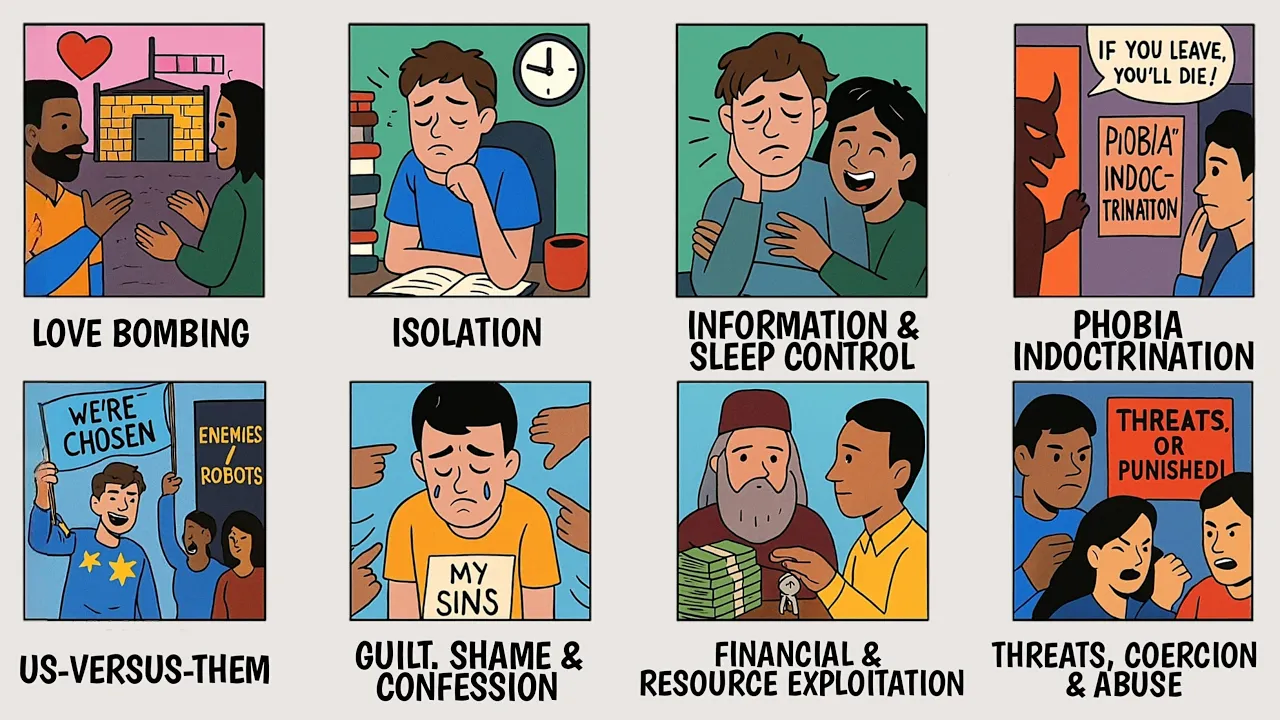
Basic concepts of cult dynamics and coercive control, including techniques like 'love bombing', systematic isolation, and the promise of community.
A foundational definition of fascism and far-right ideology, particularly concepts of racial/cultural purity, traditionalism, and the myth of a utopian past.
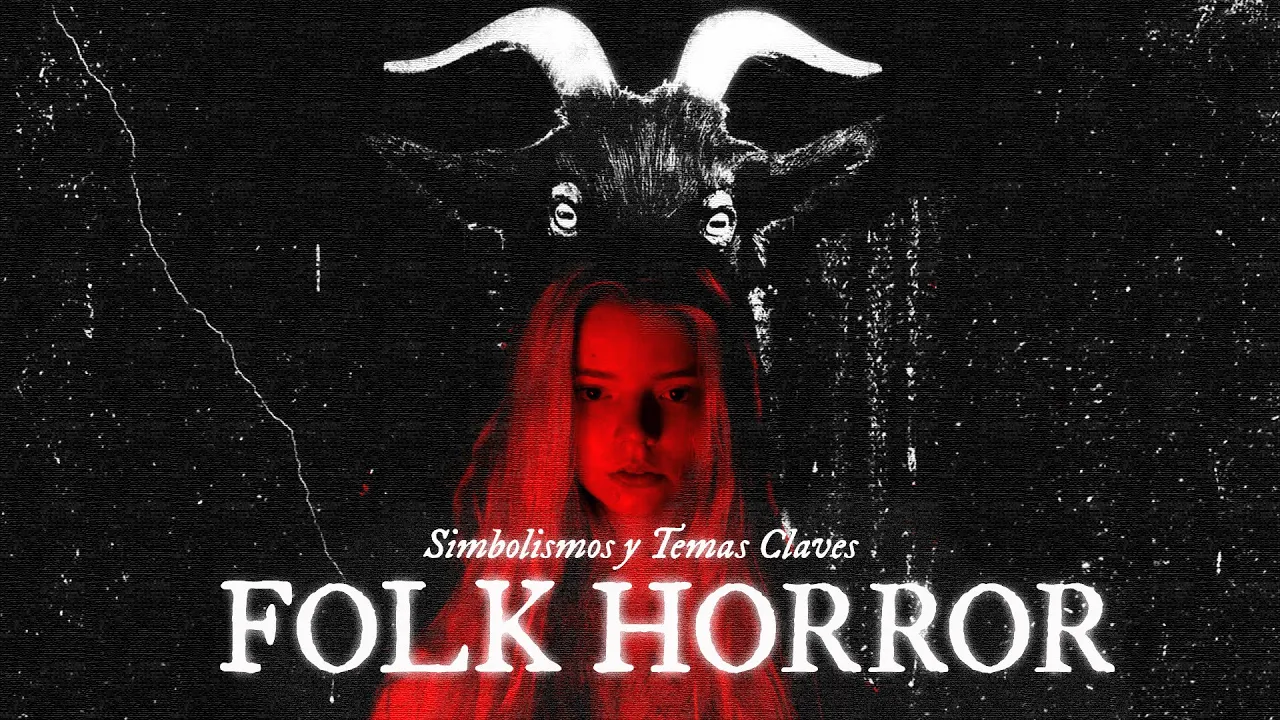
Advanced study of 'Folk Horror' as a cinematic genre that reflects societal anxieties about isolationism, paganism, and the clash between modernity and tradition.
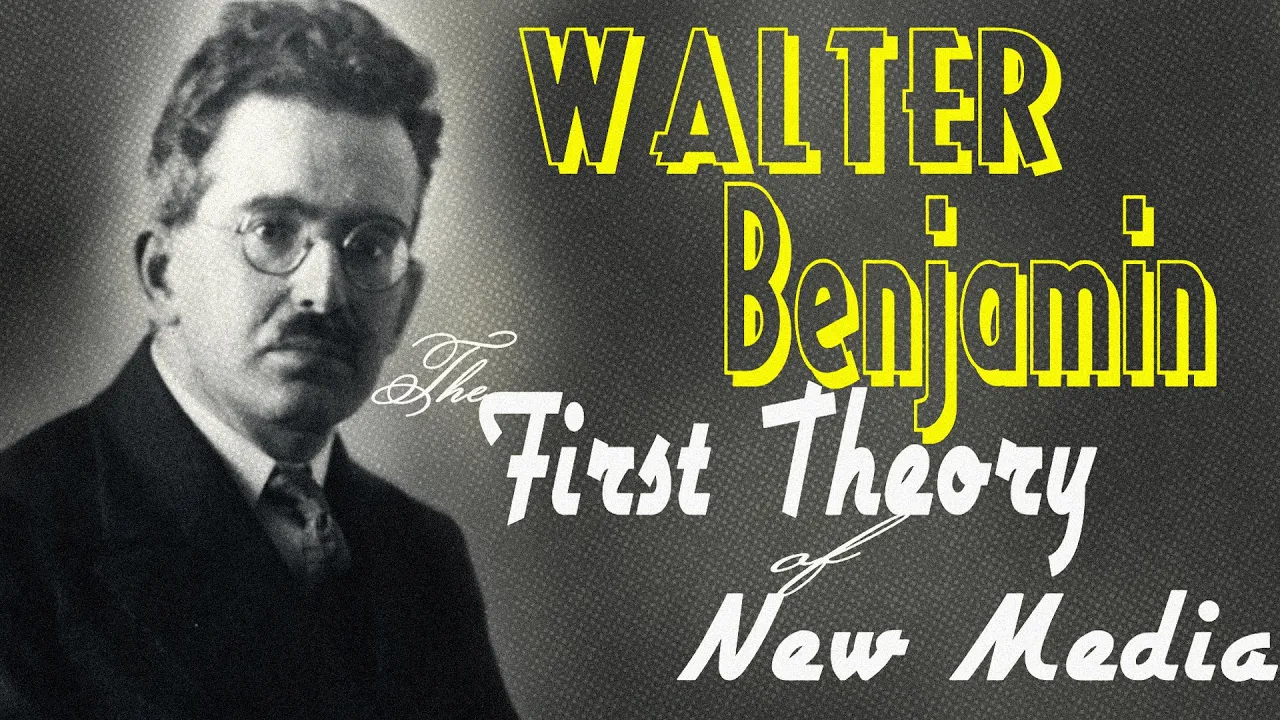
Critical analysis of Walter Benjamin's theory on the 'aestheticization of politics' to understand how fascism utilizes beauty, art, and nature to sanitize violence.
Comparative research into real-world historical cults (such as Jonestown or Heaven's Gate) to analyze how they leveraged societal crises to recruit vulnerable individuals.
Exploration of modern radicalization pipelines, looking at how contemporary online extremist groups use similar tactics of communal belonging and shared grief to recruit members.
522.7K views33.1Klikes19:04Original Release: 2020-07-29
And this is Skittles. Head of Recruitment.
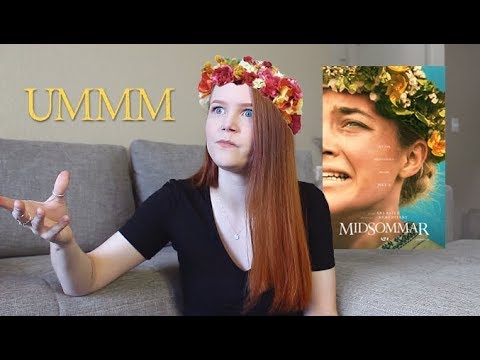
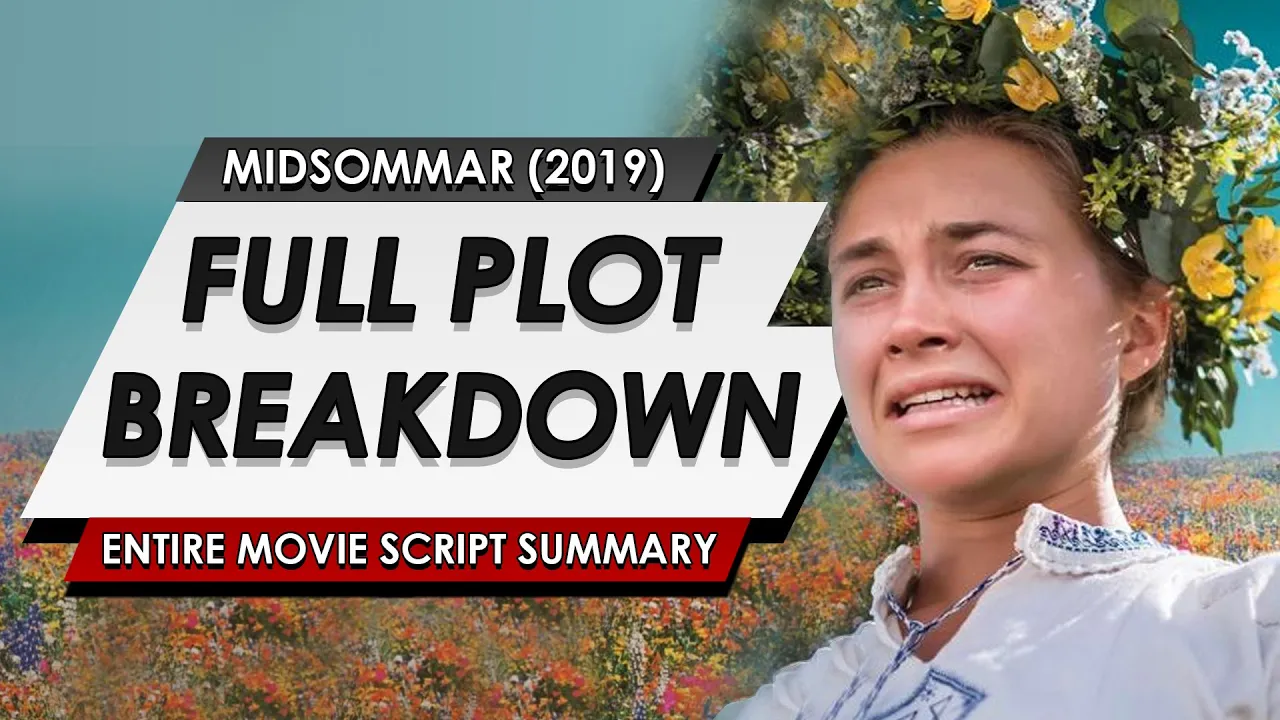
In the first few minutes of Ari Aster's 2019 film, Midsommar, we're introduced to Dani, our protagonist.
The first two things we learn about Dani are that her boyfriend is kind of a shit, and that as far as we know, her entire family is now dead.
Following her sister's murder-suicide which took her parents' lives as well.
With a crumbling relationship and no indication of any other friends or relatives, Dani begins this story... profoundly alone.
Dani, her boyfriend Christian, and several of Christian's friends - specifically not Dani's friends - go on a trip to Sweden, to visit the place their friend, Pelle, grew up.
Long story short, it turns out to be a weird cult and going there sets off a series of events that leads to Dani, metaphorically and also literally, breaking up with Christian and finally finding a community that supports her.
A home.
Nearly everyone Dani came to Sweden with dies by the end of the film.
But, the fire in which they're burned is not a tragedy or a loss, not like the death of Dani's family at the start of the film, these cleansing flames represent the end to Dani's old life of grief and isolation.
Her escape from an unhappy and abusive relationship, and this is her first real step towards healing.
At that beautiful beginning of her new life with this family she has found, it's a strangely happy ending. Given the circumstances.
And that appraisal of the film can be seen in countless reviews and videos.
Nearly everyone I've seen discuss this movie has come to the same conclusion.
That this film is a metaphor for Dani's break up with Christian, and the ending is, ultimately, a happy one.
Ryan Hollinger: -and despite how morbid it can be, it's one of those unorthodox examples of "positive horror", you could say.
Wisecrack: She's watching the vestiges of her former life crumble and can't help but smile.
As she is free to start anew in a community where she can belong and be seen.
- The cult become more than just some spectacular support group for Dani, they become the family she's always wanted and needed, they invite and encourage her with nothing but sincere intent.
YourMovieSucksDOTorg: If you're expecting an actual horror movie out of this, than this might not be the movie for you.
- Where we know, for a fact, that Dani is safe from the evils that brought her down to begin with. Death be damned, because at the end of the day... What truly matters to her is finding the happiness she's been sorely missing.
Nyx Fears: Fuck that, like, join a cult!
Kay: Not much of a horror movie at all. In truth.
And that was my take away when I first watched Midsommar, but something kept eating at me after I watched it.
Yes, this was film was, definitely - largely - about a break up... But, no matter how many reviewers reassured me that this film actually had a happy ending, and this this was - on the whole - a good thing for Dani... There were just too many things that felt off to me.
So, I went back and I watched it again.
This time I went for the director's cut, that adds about 20 minutes to the runtime.
I hoped that those 20 minutes could add a little extra context that would help me make sense of why I just couldn't swallow this narrative that the cult was actually kind of cool. Despite the murders.
After all, the murders were all sort of justified, right?
I mean, Mark defiles a sacred site, Josh breaks the rules and does a major sacrilege on their scriptures, the British couple disrespect and disrupt what you have to image is one of the Hårga's most important rituals.
And Christian is a shitty, abusive partner. Whose death represents Dani finally becoming free.
Right? But, as I watched Midsommar again, things kept piling up that raised questions.
Like, why is the Runic language the cult uses specifically associated with Nazis?
What a... weird decision for the director to make.
Why when they approach the village is there a banner with a Swedish anti-immigrant slogan on it?
Why does it seem like there's something so loaded about the old Swedish tale that casts "the black one" as the villain?
Why are Mark and Christian seduced before being murdered by the cult while Josh and the Brits are not?
Why does director, Ari Aster, even say of Josh: Oh shit. It's fascism.
[all wailing] It's there, simmering beneath the surface for the entire movie while never being directly addressed, but the Hårga are a white supremacist's wet dream.
A reclusive, ethnically homogenous group in which roles are heavily gender segregated and breeding is closely regulated by the elders.
You can't even have a child without permission. Ensuring no one desirable genetics find their way into the mix.
They even go so far as to allow cousins to reproduce, whatever it takes to keep it white.
The Hårga idolize genetic purity so much that they produce oracles by intentionally inbreeding.
Believing that genetic purity is next to divinity.
And that these oracles for their purity will see with vision unclouded.
They bring in outsiders to stop their population becoming TOO inbred, but only the white ones.
Non-white outsiders... well... But their society doesn't come off as some terrifying fascist regime, does it?
The Hårga seem to be pretty happy. Life for the Hårga is strictly regimented.
From birth til' 18, is childhood; then from 18 to 36, they go on what they call a pilgrimage.
From 36 to 54, they are laborers and from 54 to 72, they are mentors.
At 72, they take their own lives in a ritual called ättestupa.
That does sound scary, but it's not for them, it's a natural part of life. They even describe the ritual as "beautiful".
Even death doesn't pollute their idyllic life with fear.
And imagine only having to be a laborer for 18 years.
Midsommar is relentless with examples of how much better life is for the Hårga compared to Dani's life - and ours - in the modern capitalist world.
They spent their youth traveling the world before engaging in a working life shorter than most of us who work from 18 through to 65, if we're lucky, can even imagine.
Then they enter a mentor role, specifically made for them as they age, while those of us, who get to retire, struggle to figure out what to do with ourselves after 40 to 50 years of working.
And the examples go far beyond this.
The introduction to the film is full of beautiful shots of the snowy, Scandinavian forest accompanied by peaceful, traditional song.
[peaceful song] [phone ringing] Interrupted by the jarring alarm sound of the modern world as we meet Dani on the eve of the worst moment of her life, as her entire family dies.
The music in the village indicates peace and harmony with nature in contrast to the dark, suffocating shots and somber scoring of Dani's life in America.
To drive home the point that the outside world is full of miserable degeneracy, the only outside communication our characters get once they arrive in the village is a brief radio signal broadcasting a news story about a Brussels businessman receiving oral sex while driving, crashing his car and getting his dick bitten off in the accident.
The film goes out of its way to show us how the Hårga avoid the problems that have caused Dani so much pain.
They have a communal way of raising children, which is in stark contrast to the modern family unit that Dani grew up with that clearly went horribly wrong.
Speaking of which, for the Hårga, suicide is part of the life cycle and while sad... is seen as a beautiful thing.
It's just part of how their society functions.
Compare that to suicide in Dani's world, which is a terrible, traumatic loss that tore her life apart and took her family away.
All of these little tidbits culminate in a scene where Pelle tells Dani that he know how she feels.
That his parents died when he was younger but that he never felt alone, he always felt held because he had the cult.
Planting the seeds that this is the better way of life, that Dani doesn't have to be alone in her grief.
And based on the information we're given as viewers, it's a pretty compelling argument. And that is frightening.
[Jack Saint reading] Not to invoke the Nazis and get demonetized - (There's a patreon, by the way, if you want to support the channel) - but they were fascinated by the occult, the mystic, the pseudoscientific and this fascination had led to a deep association between cults and fascism that has continued to the present day.
Some of the most prolific cults in American history have had deep ties to white supremacy. Most notably, the Manson cult, who believed in a coming race war.
Neo-Nazi groups throughout the West who organize themselves very much like cults tend to use a lot of the same rhetoric.
But there's plenty of movies about why fascism is bad and why cults are bad. So why is Midsommar's significant?
The answer is because it kind of... gets to you.
To better understand why Midsommar is so effective at putting you in Dani's shoes as the victim of this cult's indoctrination it can help to contrast it with a film that, surprisingly, mirrors it quite a bit: Mandy.
Mandy hits many of the same beats as Midsommar but always playing out in a sort of comical inversion.
A cult murdering the partner of the protagonist, Nic Cage, sets off his journey in Mandy, while in Midsommar, Dani consents to the cult, murdering her partner and this resolves her journey.
Nic Cage has his power taken away by the cult and has to take it back, violently.
Dani starts from a position of powerlessness and becomes empowered by joining the cult.
Drugs are used in both films to show that the perception of the protagonist is being influenced, but it also influences the perception of the audience.
As reality becomes more and more flexible within the film.
In Mandy, this is used to demonize the cult and depict them as monstrous, while in Midsommar, it's used to drop our defences and let the cult in.
Mandy is a film written from a much more traditionally masculine perspective.
Allowing us to indulge in that cartoonishly, over-the-top violence of Nic Cage cutting through cult members and demon bikers with a ridiculous silver axe, while Midsommar approaches its cult from a much more feminine point of view. Our protagonist is grieving and is desperately looking for community and support, which is exploited by the abusive tactics of the cult. In Midsommar, the cult wins.
Why am I talking about the gendered characteristics of these two films?
Well it's hard to get exact numbers, obviously, but many experts estimate that around 70% of cult members are women.
There's are number of theories as to why that is.
Janja Lalich, a sociologist who has spent 25 years researching cults has said that the recruitment tactics of many cults may appeal to women more than men.
[Jack Saint reading] She also notes that sexual abuse is rampant within cults.
Given how many high profile legal cases against cults include charges of sex trafficking and other sexual crimes, the higher percentage of women in cults may also be the result of the sort of sexual predators who become cult leaders mainly targeting women in the first place.
By telling stories about cults from a more feminine perspective, therefore, you are more likely to be engaging with a cult from the point of view of one of its victims.
So while Mandy takes us on a psychedelic rock, Evil Dead, odyssey of vengeance, Midsommar grooms us. Like the cult grooms Dani.
It shows us not only that fascism operates like a cult, bjut just how effective it can be.
Dani is at her lowest point in life and the cult is there for her.
The cult gives her support; the cult gives her community and acceptance.
And it takes the viewer on this journey so effectively that most people who saw it seem to have seen this as a happy ending.
So effective is Midsommar at putting us into the mindset of the victim of cult indoctrination, that by the end, we're not even aware of the incredible danger that Dani is in.
Mandy and Midsommar both end on an unsettling shot of our protagonist smiling. And both of them are in danger.
Nic Cage has clearly lost his mind to the trauma, the violence and the super-acid, it's unlikely he gets much further before dying in a shootout with the cops, it's not like he can go, just be in normal society again. His life is over.
But Dani is no safer. The cult has killed everyone else she knows. She is completely cut off from the outside world.
And as we've established, the white Americans are all being used to bring in new genetics. With or without their consent.
Nothing good awaits Dani after the credits roll.
Midsommar brilliantly uses tropes of the horror genre to sort of blind the viewer to how dangerous the cult really is.
I mentioned earlier that everyone who the cult kills had done something to "deserve it", because that's how the horror genre works.
People do something wrong, and it's not necessarily something we would actually think should be punishable by gruesome death, But they give into a flaw, or fail their character arc, and the slasher, or the monster, or whatever, is their comeuppance.
We expect it, so it allows us to look past all the murders to genuinely see the cult as kind of... nice.
The horror of Midsommar is not the gory murders, or the freaky guy in the skin suit, it's the fact that by the end of it, even people who disagree completely with fascism find themselves hooked by the cult.
Can you honestly say you'll never be in such deep grief that you'll take any helping hand, no matter who's hand it is?
Can you honestly say you'll never be vulnerable enough to find refuge even in something despicable?
The true horror of Midsommar is that it shows us, that given the right circumstances, nobody is immune to the manipulation of some of the ugliest ideas in human society.
Not even you.
People do not fall into the hands of cults due to some moral failing or intellectual feebleness, they do it because their material conditions leave them so isolated; so alone in their struggles and alienated from the people around them that they will take ANY offer of community and support that's given to them.
The only way we stop shit like this is by building communities based on meeting eachother's needs.
And that includes social needs.
You can't educate or berate people into not joining cults, you can only change the material conditions that push people into them.
And if we can't be there for eachother when we're alone, angry and in need of guidance, the cult will be.
But if you always felt held, what could a cult ever offer you?
Up Next

52:59
Archaeology and Myth: Reflecting on the Trojan War's Historicity
@ISAC_UChicago
13.9K views•2022-11-03

12:54
Triumph of Orthodoxy Icon: Byzantine Art & History Explained
@BenCallan
2.1K views•2024-08-06

9:49
FastAPI vs Flask vs Django: Choosing the Right Python Web Framework
@TechWithTim
302.5K views•2024-05-26

1:42
Game of Thrones Opening Credits: A Cinematic Analysis
@gameofthrones
46.3M views•2011-04-18
Related Study Plans & Knowledge Roadmaps
Structured learning paths in General & Interdisciplinary Studies
general-studies
Elevator Engineering: History, Physics & Cities
01From Hoists to Safety Brakes: The Dawn of Vertical Lift
02Hydraulic vs. Traction: The Engineering Physics of Elevators
03Modern Speed, Safety, and Algorithms
+ 2 more learning modules
12h5 modules
Explore Roadmap
general-studies
Rubber: Material Science, History & Geopolitics
01Origins of Natural Rubber & Mesoamerican History
02The Chemistry of Natural Rubber & Vulcanization
03The Geopolitics of the Rubber Boom & Colonization
+ 2 more learning modules
12h5 modules
Explore Roadmap
general-studies
Containerization: Evolution, Logistics & Trade
01Ancient Trade & Bulk Cargo: Amphorae to Barrels
02The Industrial Revolution & Cardboard Packaging
03The Containerization Revolution: Malcom McLean
+ 2 more learning modules
12h5 modules
Explore Roadmap
general-studies
Textile Tech: Evolution, Labor & Global Impact
01Pre-Industrial Textiles: Handloom & Cottage Industry
02Mechanization: The Spinning Jenny to the Power Loom
03The Factory System & Global Labor Transformation
+ 2 more learning modules
10h5 modules
Explore Roadmap