


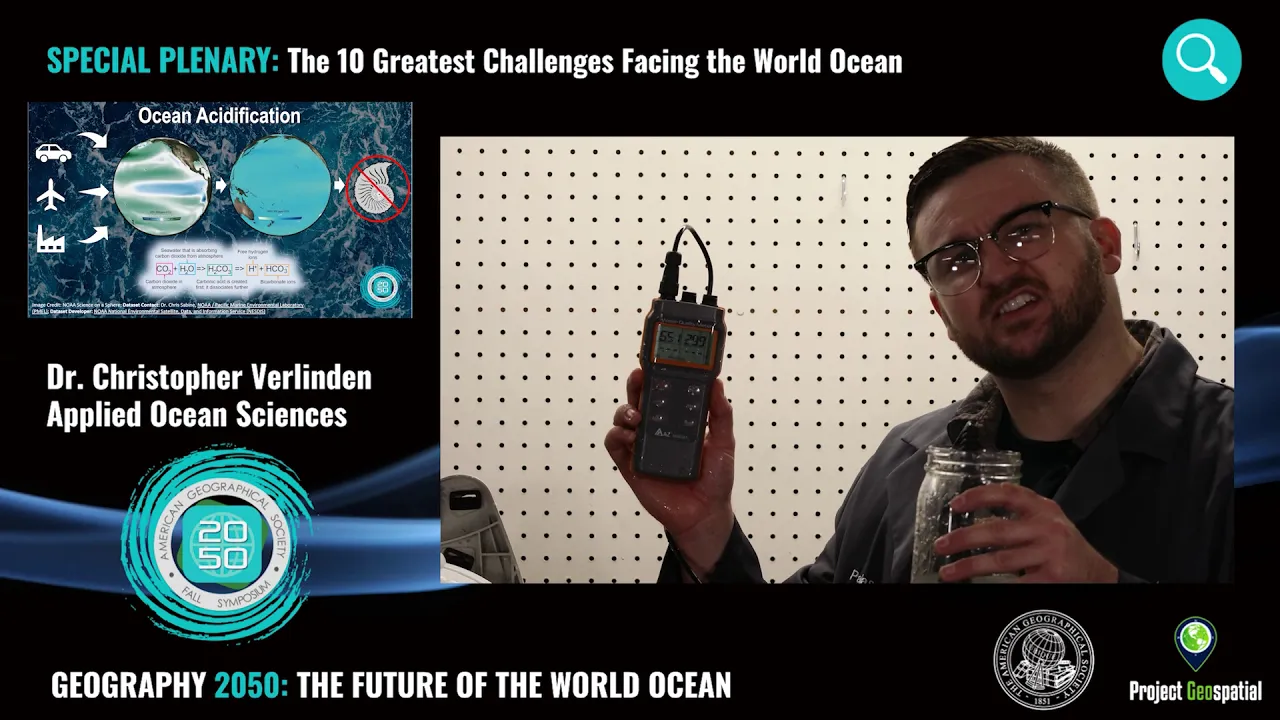







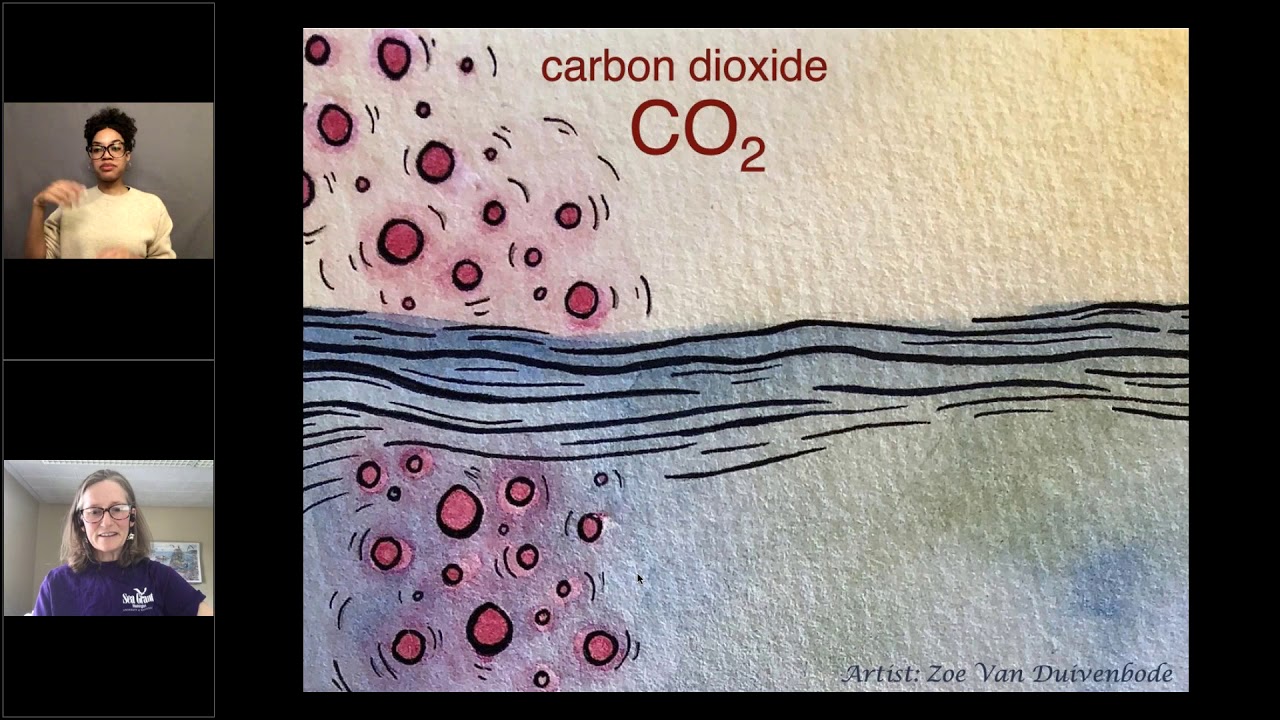

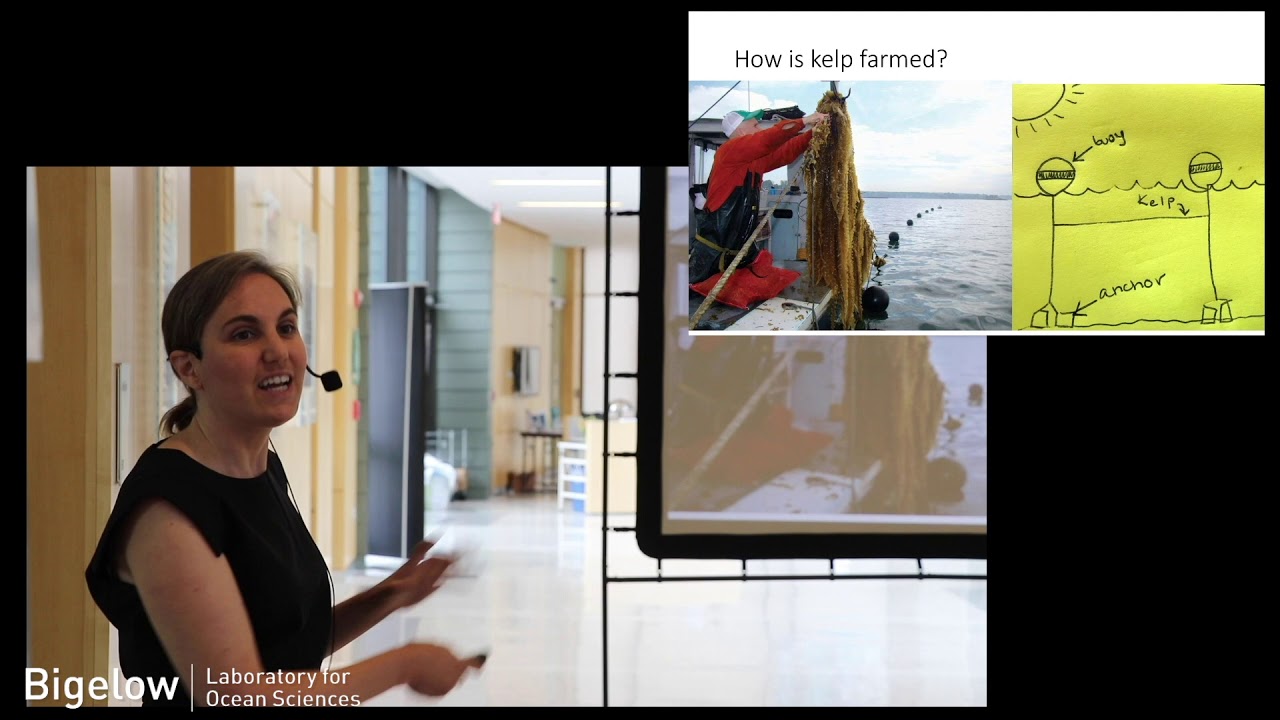







Ocean acidification, caused by atmospheric CO2 absorption (25-30% annually), reduces ocean pH and carbonate ion levels, threatening calcifying organisms like shellfish. In the Gulf of Maine, local processes such as Gulf Stream influence and freshwater input have temporarily masked global acidification trends, but projections indicate saturation states will fall below critical thresholds (around 1.5) by 2050, affecting fisheries including sea scallops and softshell clams. Research demonstrates that sugar kelp farms can locally buffer seawater chemistry through photosynthesis, creating protective zones for co-cultured shellfish that develop stronger, more resilient shells. Mitigation strategies include shell hash application for sediment acidification and integrated kelp-shellfish co-culturing systems that enhance both growth rates and resilience while providing additional revenue streams for aquaculture operations.
Ocean Acidification Impacts on Gulf of Maine Shellfish
Added:good afternoon folks i'm sure some others are going to arrive as we get this webinar going but let me get this started i welcome you my name is paul anderson i'm the executive director for the maine center for coastal fisheries we're based in stonington maine a small non-profit organization doing great big things we collaborate on research outreach engagement collaborative management and education programs in the interest of helping to sustain fisheries seafood economy and the communities in eastern maine that depend on them so today we have a wonderful opportunity to learn more about one of the important changes going on on the planet and in our region with ocean chemistry specifically ocean acidification and i'm going to hand it over to dr libby jewett who's the director of noah's office of ocean acidification and she'll introduce herself and the panelists libby is also on the board of directors for the maine center for coastal fisheries so it's a pleasure to have you here with us libby and i will stop sharing this thing and hand it over to you all right thank you paul um i i'm excited about this panel today um just to introduce myself so i am director of noaa's ocean acidification program um i've been doing that since its beginning um and i'm also as as paul said on the board of directors of the maine center for coastal fisheries uh we're excited that the the noaa ocean acidification program is celebrating our 10th year this year so um you know we've been rolling out all sorts of communications around that and um and we um we feel like we've come a long way in our understanding of oa but i think we we still have quite a ways to go as you'll be hearing soon i'm not going to give you i'm not going to show you slides myself and but i do think it's important to reiterate what ocean acidification is um hopefully you're here to learn more about it and hopefully you actually have already heard about it but it's a process whereby a portion of the carbon dioxide that is increasing in the atmosphere due to the burning of fossil fuels is taken up by the ocean by the very nature of the ocean being in direct contact with the atmosphere um gases any of the gases that are in the atmosphere are taken up by the ocean and um we've learned that about 25 to 30 percent of those emissions end up in the ocean in any one year and then chemical reactions happen that you'll i'm sure you'll hear about from our scientists that are coming up um are causing the oceans to become more acidic and so my program was established by congress and and noah to study um the impacts of this process that i was just talking about ocean acidification both on the chemistry of the ocean and on the biology because frankly like who cares so much about the chemistry except the chemists um but what we really care about is are the marine resources and what that implication might be for our waters and fisheries and and so our pro my program is very focused on on the chemistry but also on the biology and also on the modeling that we need to do to be able to predict out what the ramifications might might be so i'm excited by um the lineup of speakers we have today uh we'll be focusing on the gulf of maine today we have three speakers um first we will hear about how the chemistry of the gulf of maine is changing due to ocean acidification and ramifications for important fisheries in the region then we'll hear about research to determine both how we might reduce those impacts and specifically how oa may affect shellfish aquaculture in the region um and my program has been honored as if i to intersect with all three of these um speakers that we'll be uh having today both to fund their work but also just to intersect with them at various stages of their career after our speakers speak uh we'll open up to questions from the audience but feel free to put your questions in the chat box or in the q a section i will introduce each speaker right before they speak and speakers know that i will be giving them a two minute warning as we get close to the end of their their section and i hope that we can continue the conversations um in general uh on something that we've created called the ocean acidification information exchange um and i can i'll give you more information about that later so if you're interested in participating in the broader community conversation um you can also continue that after this um through that through that new web platform that's actually not a new one that web platform so can everyone hear me okay i feel like everyone just froze on my screen are you all hearing me paul are we still good yes okay for some reason my the speakers have um so um if sam can stay on and the rest of you can go off and then after each speaker i'll introduce the next speaker so first we're going to have dr sam sidlecki from the university of connecticut so as an oceanographer dr sidlecki focuses on coastal regions where she implements computer simula stimulations to investigate and identify processes in marine waters responsible for the bioge chemical dynamics such as ocean acidification in both the current and future oceans she received her phd from the university of chicago where she focused on theoretical systems of the ocean as a postdoctoral fellow at the university of washington she began simulating washington and oregon waters focusing on oa and oxygen conditions she then extended that work to include seasonal and short-term forecasts now as an assistant professor at the university of connecticut she has begun exploring regional climate projections of ocean conditions on both the ways west and the east coast of the us and i think we should feel very fortunate that she's an expert in the region who can provide advice and and scientific knowledge around the gulf of maine through work with colleagues she is now also partnering with social scientists to aid coastal communities and the challenges they face with respect to marine resource planning so now i'm going to turn it over to sam great thank you so much libby i appreciate that and thanks for the invitation to be here um i'll start sharing my screen um hopefully you all can see that all right uh maybe paul you can just give me a thumbs up and you hear me okay yeah that's great it's good wonderful okay so um i am going to talk to you today about some what do we what ocean acidification is and kind of what do i need to know about it and worry about it and do i need to worry about in the gulf of maine um and so this is the results of some recent work that we've been doing um in the in the region associated with the gulf of maine 2050 meeting um and stemming from that and so there's a lot of contributors here to some of the science that i'm going to show you today so starting with what is ocean acidification as libby just said um you it's when carbon dioxide from the air that's fossil fuel derived is added to sea water and it changes the water chemistry reducing the ph and carbonate levels in the ocean and this is happening in a predictable manner in the ocean and so what do i mean by that well um so uh see you guys are all i need to minimize this um so co2 is being added to the ocean and then ph is being reduced in a predictable way so here's a map showing you uh where station monoloa is which is in hawaii and that um is a location where we have a long-term historical record of the carbon dioxide in the atmosphere which is plotted for you here against time on the x-axis from 1958 through 2018 and then the red line is showing you carbon dioxide in the atmosphere from that station in hawaii at mauna loa as you can see it's increasing and then also nearby we have station aloha where in the ocean we're monitoring many things but here we've plotted some carbon variables for you specifically carbon dioxide in the water so that's the green the green line here is the carbon dioxide from the water we haven't been monitoring it as long as we have the air but you can see it's been since the 80s or so and then the ph as well as being monitored there in situ um at station aloha and so as you can see as carbon dioxide goes up in the atmosphere in the red curve that the ocean is most of the time especially if you look over broadly over the decades you know keeping up with that atmospheric trend with some variability um in time on that um and then as well the ph at the same at the same time the carbon dioxide is going up in the water that ph is declining and so this is what ocean acidification um this is that by definition what ocean acidification looks like now i'm just showing you one location um in the ocean but i um i could show you many more um where this where this is happening because we have large-scale observational efforts that are that are monitoring the ocean um all all over the world so the thing to note though is that as ph is as carbon dioxide is going up uh that ph and saturation state are both going down oh sorry the co2 so as carbon dioxide is going up ph and the car and the saturation state are going down so why does that declining saturation state or ph matter um and this is libby again alluded to uh the impacts to ecosystems and marine biota um and so here i'm showing you one particular organism that is of interest in the gulf of maine and that's a sea scallop so this is pictures um that were on the web uh from the image from belongs to folks from woods hole there and that's showing you the sea scallops just at 10 days so larval ones um and you can see that at under our normal sufficient carbonate ion conditions um you see like that there is enough calcium carbonate around the saturation state is well above one um that you see this like smooth very nice looking shell and then as that saturation state which is one measure of of ocean acidification um as that saturation state is reduced you can start to see the shells becoming pitted or deformed in some way so a lower saturation state it can actually result in less energy available for growth and in many cases this while the physical chemistry definition would put this threshold for saturation state around one many cases it's it's higher than that in lab studies um and so uh 1.5 corresponds for example for many young calcifiers so that's something to keep in mind so we ocean acidification impacts ecosystems and as a society we face a choice and that the future trends are vastly different um so here's uh because these global trends are are predictable we have global models that have been shown to do a good job so i can i'm showing you that here so um this is from the ipcc which is the inter intergovernor panel on climate change oops and on 1950 through 2100 here on the x-axis so going from the past you know through the present into the future um you see these historical simulations of surface ocean ph in the global ocean um shown here in this golden color and then on the uh in the purple shows you historical observations and um and so you can see that how well they they compare against the historical model model trends um and then into the into the future we face the choice and that is the blue versus the red lines here um both of those are different um representative concentration pathways or um rcp scenarios basically that is how much of carbon dioxide and other greenhouse gases are we going to emit into the atmosphere and so one shows you um the one shows you less carbon dioxide and other greenhouse gases and land use change and all those things that affect the carbon dioxide of the atmosphere um and so that's the choice you know what do we do as a society and this one is the most severe and so if we actually end up emitting more than we are now um this this red curve so it kind of brackets the future what the future could look like and this is very useful um for planning and understanding that choice but people often want to know what's going on in the waters locally because this is again a global trend that we're looking at here in this projection and so while those large changes that are happening globally um uh we know are are happening and we know why uh it turns out that they may not accurately represent what's happening in the coastal regions um because of a lot of um because of coastal processes which could be modifying those global trends on a local local level this is just example of some papers on the topic um but we're gonna focus in on this bright red here which is you know the gulf of maine region what's going on here in the waters and how um how does it compare with the global trend so we are monitoring the gulf of maine and um and so here's an example showing you surface monitoring and subsurface monitoring from this regional synthesis paper that um resulted from that gulf of maine 2050 symposium recently um and that many people contributed to and so the colors indicate kind of the frequency of observations and the surface and then the subsurface observations in the region you can also see shell day which was one particular like citizen science event kind of depicted there as these dots along the land you can learn more about that at the nikan website which i'll talk about again in a second so uh there's two observations that i want to pay for to point you out here um one is like close to the coast here there's bowie d and cml moorings but i'll show in a second this one is that's depicted is um we'll refer to as we d in some of the next slides and so there's this mooring that's out there which is measuring the carbon dioxide at the surface just like they are station aloha and the anomaly over many years was found in a paper by salisbury and johnson in 2018 to be to be actually you know pretty flat but in terms of saturation state it was increasing in the area and so they reconstructed the saturation state from that buoy and what they found in that paper was that in opposition to the global ocean that the gulf of maine water was actually increasing um over this time period between 2005 and 2015.
um and so this obviously indicates that local processes are really important in determining what the what's happening inside the gulf of maine um and the question then is does gulf of maine have to worry about the trends going forward into the future right and why is this happening um so the as to into to explain the why we have to take zoom out and kind of think about the circulation in the area and so now you're looking at the gulf of maine from a different perspective it's a satellite image from nasa um and of course you can you can see cape cod there clearly kind of orient yourself um and this is a cartoon of the circulation of the region kind of put there for perspective what you can see here um nicely are these uh the um the ocean color which is a kind of an indication of how much of floating algae there is at the surface um so you can see that kind of interacting with the ocean currents and forming these rings and filaments um and those are interactions that are happening with the gulf stream so the gulf stream is of course a very important current that's bringing warm well buffered uh salty water up um from the south uh to the north meanwhile um meanwhile you get a lot of happy calcifiers in this water and meanwhile the water coming down from the north is this laboratory sea current which is um which is cold and fresh and um tends to be a lower saturation state um and so there's a there's like a balance between these different water masses coming into the gulf of maine is definitely part of the story in addition the fresh water in the area so this is now showing you some a difference here between the saturation state for a dry and a wet year from the casco bay region and what you've noticed is that it's burst that the fresh water is bringing in from the land also with it a low saturation state signal two more minutes okay sounds good so the the subsurface so we all that is going on and and we we think that that warming that that the warming that's happening between 2005 and 2015 and the increased present of the gulf stream water is what's really driving that trend that um that joe salisbury and burr johnson observed in 2018 at that at that buoy d okay um we also know that there's subsurface waters that in the wilkinson basin which is depicted here right are already experiencing so that was that surface signal now we go subsurface which is also important habitat that that that we're already seeing this kind of threat below 1.5 threshold of saturation state is already being observed there and so this is a paper by a wang from louie um showing that 2015 so you can see this purple water so we did an analysis of that surface subsurface water over time and found that it also is increasing despite experiencing waters that below this threshold already kind of matching that surface trend if we move near shore we notice that that at this right along that land where that freshwater interface is happening that you start to see those really low saturation state events coinciding with those fresh water events right so if we use some models to go forward into the future and more details you can find in the paperwork me afterwards now but these are fully dynamical and include those coastal processes and they're forced with those large scale models that we use for the ipcc and we try and project forward what will happen in the gulf of maine and so here i'm plotting at that buoy d that we've been focused on before showing this over time so this is now months of the year um you can see that the black here is the observations of saturation state you can see this the seasonal cycle there for saturation state and then two models in the different colors showing you how well they do historically and then if we project that going forward what you'll see now is this is the projection then going out to 2050 this is the hatched region the historical the saturation state goes down throughout the year and in some and sometimes of the year more severely than others and this spread is provided by the ensemble of those future projections and some of them were some of them warm more than others and that really kind of determines uh the uh that spread so in conclusion these oa trends that have been masked by the gulf of maine by recent warming and changes to circulation by increased presence of gulf stream water um are going to uh despite the fact that those processes would continue those projections indicate that we're going to experience in the gulf of maine increased duration and intensity of these kind of the stressful conditions so the saturation state being below 1.5 going forward and um and so we should expect to see more of that and that so despite the fact that you know in historically we haven't seen as much at the surface that we we do see that kind of by 2050 um that the entire gulf of maine ends up experiencing it and so just as a final plug we are funded by the ocean acidification program to think about the vulnerability of atlanta sea scalps in the northeast and as part of that if you're a fisher or work in the fishery and are interested to know more about sea scalps and oa in the region please consider joining our workshops that are starting this fall and you can find out more at the coastal commercial fisheries research foundation website there um or ping me for details thanks all right thank you thank you so much sam um and now we're going to move to our next uh panelist so nicole price is a senior research scientist and director of a new center focused on securing sustainable nutritious and safe seafood at the bigelow lab for ocean sciences in east booth bay maine the center for seafood solutions seeks to translate cutting-edge marine science to bridge the gap between knowledge and action nicole's research in partnerships with noaa the nature conservancy the usgs and the u.s fish and wildlife have taken her scuba diving around the globe on coral reefs in africa asia and across remote islands in the central and south pacific quite a distance from maine not lately unfortunately but yes recently she focused her work in southern california and the gulf of maine where she partners closely with members of the seaweed and shellfish industries to develop remediation strategies for ocean acidification nutrient loading and low oxygen she earned her phd in marine ecology at the university of california santa barbara then was at scripps and finally in maine so take it away thank you libby um before i get started there was a question that i accidentally erased the q a q a and the question was to please define saturation state so saturation state is the concentration of the carbonate ion in seawater and carbonate ions are the important building blocks for the shells of calcified species so depending on who you talk to you they might prefer to refer to acidity and seawater via the ph metric or they might want to think about the carbonate ion concentration and saturation state okay so i'll launch in now and i'm very happy to be here thank you to paul for inviting me to speak let me just make sure this is advancing and before i get started i'd like to acknowledge all the other scientists and also aquaculturists that have been working on this project with us for the past couple of years without them this work wouldn't be possible so when the main ocean acidification commission got developed several years ago now one of the outputs of the report from that commission was that we needed to explore remediation strategies and one of those remediation strategies was quote-unquote fighter remediation or looking at the ability for photosynthesizers like marshes seagrasses and kelp or macroalgae to absorb carbon dioxide sufficiently to create an area of remated seawater it's not that much different than thinking about forests capturing carbon also um but this is in the ocean it hadn't been studied very well at all at that point um so we set out to do a couple of lab experiments and then some ocean studies to see if this was feasible and the first lab experiment was designed to ask of some of the available species of seagrasses and macroalgae in the gulf of maine are any of them sort of better winners at taking up carbon dioxide and do they take it up at a fast enough rate to remediate the seawater and will they continue to take it up at a fast enough rate in a changing ocean and i should say this paper now that's referred to below is in review no it's moved past the preparation stage so we ran an experiment um on these four species there my advanced slide wasn't working and we found that what we did was we subjected them to pco2 levels that you find in the atmosphere in the pre-industrial days up through the year 2100 what we expect by those global models that sam so nicely presented and we found that their oxygen evolution or their photosynthetic rate was enhanced by higher co2 levels for most of the species this means that the co2 is actually fertilizing their primary productivity and that meant that they were capturing a lot of that inorganic carbon that's present because of the elevated co2 levels in fact they're able to shift up that saturation state value higher even when there is an infusion of extra co2 not all the species can do this the seagrasses and the the shoreline intertidal seaweeds weren't very good at it as compared to sugar kelp which was just the champion at its ability to absorb that extra co2 and thus buffer the sea water for calcifiers so that was good news but those were in small jars that were just sitting stagnantly in the lab that maybe they had a stir bar to move the water around but it wasn't it wasn't close to simulating open ocean so we took another step and we said okay let's use flow-through tanks and change the light levels and change the water flow and look at present conditions and future conditions and see what the sugar kelp can do in terms of buffering the sea water so we had a fast and slow flow rate high and low co2 and we generated a sim something called the photosynthesis irradiance curve so you looked at different light levels how effective that photosynthesis was um and looked at the inflow and outflow of the chemistry and found this interesting interaction between light and flow and basically if you have a high light environment and a low flow environment then your seaweed is able to have a bigger overall impact on the chemistry of the water it's not super unexpected but it's one of the first times that anybody has tried to show this is the case um and we also were showing that even in a future ocean that has higher co2 levels and at um you know at various flow rates that this impact is still present so that's exciting to think about the potential for sugar kelp to be a remediator of ocean acidification however you know where where would this be relevant to study why would we want to consider this and this is the same graphic that you saw that joe had presented published that sam had just presented and that's looking at the rainfall influence on the saturation state in the casco bay region but what's also important to consider is there are over 200 shellfish leases approved in this area they might not all be active but they are approved um so the shel the aquaculture potential in this area is huge and how do we protect some of these sites against those future acidification scenarios or these episodic coastal acidification scenarios affiliated with precipitation we chose to do our work at an existing kelp farm that was already operational commercial kelp farm because as a scientist i wasn't about to be prepared to establish such a large study site um and it was much more um relevant to work with the seaweed farmer to understand their operations and to understand how this could be harnessed so we we worked at this study site in between chibig and little shabig um and we chose to put a set of instruments right inside the seaweed farm and then we chose a control site and that was a carefully selected control site it is more or less upstream of the general tidally driven water flow in that area so it is outside the influence of the seaweed farm and we put out instruments that measure partial pressure of carbon dioxide oxygen ph salinity temperature and took discrete samples to calibrate those instruments and we also monitored kelp biomass in those areas so one thing that people are concerned about is whether or not kelp can change water chemistries that's a big ocean there's a lot happening there how can you see this signal of the seaweed farm in the midst of all of this physical oceanography and in fact for three years in a row we were able to detect the effect of the kelp farm so the green line or green dots here are inside the kelp farm black is outside outside and for 2016 2017 and 2018 we saw elevated ph ph in the kelp farm elevated oxygen levels and lowered pco2 levels those all corresponded to an elevated saturation state within the kelp farm and here's that threshold that sam was just talking about of 1.5 and time and again we saw that the kelp allowed that particular farm site to get outside of an above this threshold of impacts to calcification through its activity of photosynthesis and change on the chemistry that was differences inside and outside the farm over time now let's look at what is the size of that purported sort of halo effect around the seaweed farm well here's where our instruments were in the inside of the farm in the white and outside in green and the heat map that you're looking here is we put a set of instruments on our small bigelow reef research vessel and then drove concentric circles around the farm and measured the co2 at various distances from the farm while we were driving those circles and we did that five times and in almost every case you could see the shadow of lowered pco2 below the seaweed farm and in the direction of the tidally driven current so the current is flowing across the farm and the lowered pco2 values are coming down this way it kind of moves around with the tide it's sort of like a small amoeba that just hovers around the farm move forward sorry there we go then the last question we wanted to ask was now we know that there's a temporal evidence of a halo and a spatial evidence let's see what it means for mussels which are also grown in the area and require the same habitat placement as as kelp farms so we worked with matt moretti bangs island and he gave us some muscles to use for the experiment and we did about 100 muscles per cage and transplanted these cages at three different sites one right next to the instrument package inside the seaweed farm just outside the seaweed farm at the further control instrument package and then one further step upstream of that and we made a bunch of measurements on those muscles that had been out on the on the farm for about two months in present day conditions not future predicted ocean acidification ocean acidification conditions but in today's conditions and we were actually kind of surprised to find that not only were the mussels that were growing inside the farm able to produce thicker denser shells but their shells were also more resistant to cracking so i had an undergraduate student come up with a pretty neat little physics test where she dropped a weight on top of muscle shells that were sitting on top of a pressure paper and the beads of color within the pressure paper would burst open if it took a lot of pressure to break the shell and so we were able to determine the force and pressure it took to crack shells and shells inside the seaweed farm were a lot harder to break why does this matter for farming operations well mussels go through a size sorting process when they get harvested and the ones that are ready for market go to market and the rest go back on the line there's a lot of loss due to cracking during this stage because mussels among the five valve species have among some of the thinnest shells so nicole two more minutes okay i'm right close to the end here so we have gotten um some more funding to continue this work noaa funded this this first round of research for these three years um and now we are looking to help to provide informational information on the operational design of co-culturing kelp and mussels to maximize this sort of positive feedback from the shellfish from the kelp to the shellfish to decrease the muscles time to market size and increase their resilience or resistance to acidification and then to help the farmers find ways to add revenue from the kelp itself this is exciting work we think but it's only been shown at this one farm in casco bay and casco bay is interesting because it is such a it has such a long residence time seawater hangs around within that bay for a long time before going off to other places and that might be why the kelp is able to have such a impact on um on the seawater chemistry but we've since gotten funding from the world wildlife fund and the jeff bezos earth fund to continue this research replicate some of it and expand it within the casco bay area but also work in norway and alaska to ask the same questions and see under very different physical oceanographic conditions how consistent these results might be um and let me just see i think that might be the last slide yes that is the last slide thanks and i am willing to answer any questions um and i've got lots more slides with more data to show but i think that's probably good for now okay thanks nicole and and questions are coming in um i encourage our panelists to be perusing those and we'll get into questions after our last speaker so our last speaker is robert holmberg who is a research scientist in marine carbonate chemistry at the downeast institute in biels maine following his undergraduate work monitoring the magnitude and diversity of wildlife imported for the marine ornamental fish trade he earned his phd in marine science and technology from the university of massachusetts boston in 2020 for his dissertation studying the effect of ocean acidification on otolith also known as the ear bone development in coral reef fish subsequently as a post-doc associate at dei he designed the new state-of-the-art oca ocean and coastal acidification lab featuring an experimental system purpose built for studying impacts of global environmental change on larvae and early juvenile shellfish and in his new role as research scientists at dei robert is conducting a series of experiments involving various gulf of maine bivalves and crustaceans with a focus on present day and forecasted conditions peculiar to eastern maine so mentoring thank you libby can everyone hear me okay yes great so thanks everyone for tuning in i'd like to begin by briefly introducing dei for those of you who may not be aware of us or haven't stopped by in a few years we're located on great wasps island in the town of beals about an hour and a half northeast of ellsworth bei is the easternmost marine research facility and shellfish hatchery in the u.s and we were founded by community members to solve local problems we're committed to improving the lives of local people with sustainability education and technology transfer in 2018 dei opened a new wing of the building with research labs and offices and they hired me out of grad school and it's here that i built a new lab for studying ocean acidification and warming impacts on gulf of maine shellfish and as libby said i'm currently running a series of experiments to better understand the impacts of oa on local marine life and focusing on eastern maine conditions so sam gave us a really great overview of the science of oa and i'd like to reiterate a few points that are that are relevant here when you add co2 to water the carbonate chemistry equilibria shift in such a way that one seawater ph decreases and two more of the carbon in seawater takes the form of bicarbonate ions rather than carbonate ions and both of these effects have implications for the physiology of marine organisms the lack of carbonate makes it more difficult for calcifiers to build their shells and although most of them can use bicarbonate instead it takes more energy for them to do so and it takes even more energy when the ph of the seawater is lower and so when we talk about oa posing a challenge to marine calcifiers shellfish and bivalves in particular are the first group that comes to mind eye valves build their shells out of calcium carbonate and they collect the components they need from the surrounding seawater shells are their primary line of defense against predation and external environmental conditions oa makes it harder for bivalves to build their shells and if conditions are bad enough the sea water becomes corrosive and begins dissolving the shell they've already built so as a result we observe decreases in shell size and thickness in a range of species exposed to simulated oa conditions in the lab other oa impacts on bivalves are less obvious because they're not directly related to shell growth one of these is hypercapnia and excess of co2 in internal body fluids which causes acidosis of those fluids organisms need to maintain a specific range of ph inside their bodies and they have mechanisms for maintaining that range but it costs some energy to do so and if they're spending too much energy on maintaining homeostasis they can't spend as much on other things like metabolism which reduces their energy budget further and this has downstream consequences for a number of other things including tissue growth and immune response most of these effects are sub-lethal but in combination they greatly increase the risk of mortality in bivalves and sometimes especially in small early life stage individuals they result in direct mortality so keep in mind that oa impacts on bivalves are very specific to species life stage and severity of exposure not all of them will suffer all of these effects and some of them have shown resilience so here are a handful of species that are not only ecologically important but also economically important in maine which are either fished commercially and or produced with aquaculture and lobster is king of course but collectively these fisheries are valued at many millions of dollars and it's for this reason along with a proportion of harvest and number of fisheries jobs that eastern maine was ranked among the top 20 of coastal regions in the u.s for economic sensitivity to oa and depending on how these species respond to future environmental change maine may have a lot to lose from oa and warming one of our poster species here at dei is the soft shell clam which is harvested commercially by clam diggers from tidal mud flats up and down the main coast currently soft shells are under intense pressure from predation by the invasive european green crab which is both increasing in numbers and also eating more due to ocean warming so moving forward clams will face the double whammy of both predation and oa pressure i ran an experiment for which i reared larval clams under three ph levels and two temp levels for two weeks from hatch to settlement the clans that did survive to the end grew nearly 10 percent smaller in the low ph treatment versus control regardless of temperature suggesting that ph has a stronger influence than temp on larval soft shell clam success um however there's strong evidence that oa stress induces direct dissolution mortality in the larvae and perhaps even before they get large enough to be accessible to crabs so following a plinktonic larval phase softshell clams settle in the mud where they remain for the rest of their life cycle the water in the sediment is already acidified relative to the water column due to microbial breakdown of organic matter scientists are concerned that oa will push it below its natural minima however i couldn't find any long-term data sets on carbonate chemistry and tidal mud flats which means we don't have a good understanding of how the chemistry changes through the year which means we're not in a good position to predict how oa will impact it moving forward so we're fixing that by collecting samples from two of dei's clan recruitment monitoring network sites in beals throughout the clam growing season for a complete picture of the seasonal carbonate chemistry cycle and having said that scientists are already exploring mitigation strategies for counteracting sediment poor water acidification to benefit clams and other mud inhabitants one strategy involves spreading crushed up oyster shell or shell hash on mud flats to buffer acidification however of the nine existing studies that tested this strategy only about half of them observed any effect of the shell hash that could be in part because every study used different sizes and densities of shell resulting in different outcomes so dei is working on a shell hash project in collaboration with the main coastal program dmr and casco bay estuary partnership to try and crack the code and determine which combinations of shell size and density are most effective for buffering sediment poor water acidification we chose three shell sizes and three shell densities and set up an experiment on a tidal mud flat in south portland we also incorporated two predated predator deterrent netting treatments to keep out the green crabs and we set up the experiment just prior to clam settlement and we're planning to sample the carbonate chemistry throughout the season and by fall we'll know whether the effect of shell hash lasts for a full season and whether it's worth the trouble of implementation by communities for increasing clan abundance and two weeks ago we completed another oa experiment this time focusing on the larvae of the atlantic surf clam the surf clam exists along much of the eastern seaboard it's fished commercially and also occasionally aquacultured we reared the larvae for about 30 days from hatch to about a week after settlement in three temp levels and two ph levels and this is our array of experimental aquaria at the bottom there and this project was a collaboration with ray chaya from stony brook university and although the analysis is pending i'd like to share some of the early data and figures that ray worked up one of the things we tested was time to settlement as you can see the proportion of clams exhibiting settlement behavior increased as time went on and showed a strong dependence on temperature in other words clams developed faster at higher temps perhaps due to higher metabolism and at least in the warmest temp lower ph reduced settlement behavior but not as much as lower temps rob two more minutes thank you another thing we tested was immune response by exposing clams to the vibrio pathogen and counting how many of them died vibrio caused higher mortality in all conditions but especially at ph 7.3 and 17 degrees celsius perhaps because those clams were more stressed and developed slower so they would have been smaller and more vulnerable to the pathogen yet another thing that we tested was swimming speed by videotaping the larvae in the coldest and warmest temps only larvae swim a little faster at higher ph and all of these things may seem like minor impacts but keep in mind that forces impacting larval success can scale up to influence recruitment success and population dispersal and really impact the population of adult clams in the ocean so where should we go from here the future of oa research on shellfish is about pushing the boundaries here are just a few examples one moving from single species experiments to larger experiments involving several species interacting in a mesocosm two moving from single stressor experiments to multiple stressor experiments um at a minimum you want to be able to manipulate both seawater ph and temperature but we could take it further by also simulating ocean deoxygenation as well as um adding pathogens like vibrio or different kinds of pollutants and observe how these interact the third example is moving from short-term experiments to long-term and even multi-generational experiments we could veer the species to maturity and allow them to reproduce under experimental conditions and then test the responses of offspring um and finally we really have to explore novel methods for mitigating the impacts of oa in both the ocean and in the hatchery to protect these species and their fisheries so that's it for me and i'll look forward to taking your questions all right well thank you um maybe if you can take your slides down and we can have panelists come back up we've we do have a number of questions um i'm gonna like wrap up a few of them which seem to be focused on nicole's kelp work i think you probably saw some of them coming across so one is why do you think there's variation across the species that you were looking at in terms of i guess oa remediation co2 uptake um how much of that is temperature dependent um and uh i feel like there was a there's even another one that was that parker brought in parker okay um i think there's species to species variation um because especially among the macro algae some macroalgae have something called a carbon concentrating mechanism so they can use carbon in any form for photosynthesis but others do not and they're entirely dependent on the concentration of co2 so if they and even if they have a carbon concentrating mechanism if they can down regulate it it's energetically less costly sort of as as rob was just describing um in particular you know the ova is a species of seaweed that is just two cells thick and it only gets so big fucus is a longer lived slow growing species up do we lose her oh no we might have to move to another question [Music] we'll give her one more second oh no shoot nicole we can't hear you um i guess we'll move um i i actually there was a question rob or maybe a suggestion that came in about sea urchins is that a potential species that dei might be investigating uh sure so the the sea urchin fishery isn't quite what it used to be at least in eastern maine but for the gulf of maine as a whole they are economically important and i think they're worth a few million dollars annually so i'm really focused on buy valves right now but i'd absolutely like to do a green sea urchin experiment in the future and sam i was wondering whether you might discuss a little bit about the variation between acidification happening in the near shore where more people might be familiar versus the offshore i know that's probably a question in people's minds and like the coastal like what is coastal acidification what's ocean acidification given that rob has a a lab that's studying both things yeah so um coastal acidification is um been alluded to a few times here in the sense that that fresh water that comes in um near the coastline driven by precipitation events or from rivers um it is often as a lower saturation state there's one measure that we've been focused on here today um lower ph than the ocean water does and that depends on a lot of things that are regional and so in our region that just happens to be the case so that fresh water signal contributes to more corrosive in addition the nutrient loading from uh from the land um which also referred to as eutrophication right um excessive nutrient loading from the land that can contribute by by like basically causing a lot of blooms and then those blooms then depending on where they sink and die out um and rot um that contributes to increases in carbon dioxide because um the the rotting organic material provides returns carbon dioxide to the water and even though some of those regions so some of those regions may also experience lower oxygen conditions as a result of that and oxygen is like very forgiving in the sense that when you mix that water up to the surface then if you had like a mixing event then that oxygen would get re-oxygenated fairly quickly carbon dioxide has a longer memory than that and so even though you would have those kinds of mixing events you could actually be you know the the oaf effects would have a longer impact so eutrophication is another important thing to think about in those near shore environments as you move offshore these kind of long the large-scale circulation that i talked about is really important um and uh and then there's also some interactions with the sea floor which are important in both environments um the sediments uh interactions with the sediments that we can talk more about offline if someone's interested nicole you're back sorry the internet went out at my house um so i i'm not sure if any of my answer came very beginning we we got like maybe a minute of it and then okay we're not even for exactly where we got to but um shorthand species specific differences are because of their physiology and because sugar can help can grow so fast in such a short amount of time it was it was always suspected to be sort of the winner in terms of carbon dioxide uptake temperature effects yeah it probably will slow some of that fighter remediation to some degree however the experiment we did where we were changing flow and co2 we also changed temperature and you could still see those effects and then finally parker's question about whether or not wild kelp beds could do the same as farmed kelp beds and truth i don't think so um first of all the wild kelp populations are suffering from mid-summer heat waves and so we're seeing an attrition of sugar kelp populations in southern maine and the other issue is that those kelp stay there for one two years on ends they get populated by other invertebrate species that attach to their surfaces and are home to lots of other fish and invertebrate species that are respiring and they are taking up the oxygen that the kelp is putting off and so it ends up being almost a net zero when you have a full kelp forest just sitting there the the way that it works with the seaweed farms is that they are harvested long before they get any of that fouling material growing on them yeah and i assume there's like a you have to you have to time the harvest correctly otherwise they'll start degrading right and then that's right yeah and they're usually getting back yeah yeah um it looks like we have a volunteer from one of our other board members um who actually raises farm raised scallops so um i know sam you're going to be working on scallops and i don't know if rob you're thinking about working on scallops but um there's an offer there from dear isle i saw that thank you so much that's exciting yeah we uh have just two more minutes um i guess an interesting question i don't see oh look we have some more q a's here um i think the chris hunt one just came in right so says sam can you talk a little more about the gulf of maine warming masking the oa signal and what the consequences might be if this warming trend declines yeah sure so kind of that spread on the future projections is um kind of shows the what we understand the future trends of warming to be um but obviously if that so warm water holds less gas so what happens and you all know this if you use it leave a can of pop on on the team town from the midwest originally if you lean the catapult kind of pop on the counter uh it loses its its bubbles right and so um if you leave it in the fridge then it'll retain those longer so warm water holds less gas and as a result um uh you know that warming trend has been contributing to us seeing the modification and opposite trends uh recently um to the global ocean and so if we don't experience as much warming then we would expect we would expect to see more severe conditions and that certainly bears out the projections and the range of the warming was very important to consider and so really what that means is the fate of the gulf stream is important uh for this um for the projections kind of going forward so we're working with some of the climate scientists working on that question to better constrain those projections paul back to you looks like we're at the end of our hour wait for me to show back up well that was very uh informative and um really exciting to hear all of this work going on right now focused here in the gulf of maine too so thanks to our panelists for being with us today and um thank you libby for moderating i hope i see you next week while you're still in the in the region for um for folks out there we do this once a month the last friday of each month we do a webinar we call it our lunch and learn and uh on august 27th we'll be doing another one and we'll be highlighting in fact rob mentioned his home institution called the downeast institute downey's institute in the maine center for coastal fisheries and uh seven or eight other organizations make up what's called the downeast fisheries partnership and so we will have the executive director of the downeast fisheries partnership and some of our members talking about how our collaborative work throughout washington and hancock county is helping to sustain fisheries aquaculture seafood economy and in our communities so i'm looking forward to that please uh you'll you'll hear more about that on the internet i'm sure again that'll be uh august 27th so thanks everybody for attending this will be um uh posted once it's cleaned up and processed it will be on our website for you to view again or for you to send to your friends and family and colleagues in case they missed it okay have a good afternoon thanks you
Up Next
Roads Impact 20% of Earth's Landmass: Wildlife Effects
@scrippsnews
231 views•2016-12-15

Life in Biosphere 2: Sustainable Ecosystems & Human Survival
@TED
334.9K views•2009-06-16
Microplastics Everywhere: How Plastic Impacts Our Lives
@TEDx
100.9K views•2018-05-08
Ice Stupa Artificial Glaciers: Solving Ladakh's Water Crisis
@SonamWangchuk66
3.2M views•2015-05-03
Related Study Plans & Knowledge Roadmaps
Structured learning paths in Environmental Science