































Egyptian blue, invented around 2600 BCE as humanity's first artificial pigment, was created by heating a mixture of sand, copper-containing minerals, and natron to approximately 900-1000°C, producing calcium copper tetrasilicate; this ancient pigment has found modern applications including medical imaging, anti-counterfeiting security inks, and fingerprint detection due to its unique property of emitting infrared radiation when exposed to visible light.
Egyptian Blue: Ancient Pigment's Modern Applications in Forensics and Medicine
Added:Fundamentals of photoluminescence, specifically how substances absorb light and re-emit it at longer wavelengths.
The electromagnetic spectrum, with a particular focus on the properties and penetration depth of Near-Infrared (NIR) light.
Basic inorganic chemistry, including the structure of silicate minerals and the concept of synthetic pigment formulation.
Introductory concepts in medical imaging (such as contrast agents) and forensic identification techniques.
The synthesis and application of exfoliated nanosheets (nanoscaling) of Egyptian Blue for targeted bioimaging.
Advanced anti-counterfeiting technologies, including the integration of luminescent taggants into polymer matrices and security inks.
Modern methods in archaeometry, specifically how non-destructive NIR imaging is used to analyze and conserve ancient artifacts.
Biocompatibility and biodistribution studies of silicate-based nanomaterials within living organisms.
284.8K views11.3Klikes3:46Original Release: 2018-01-04
[♩INTRO ] The tale of the world’s first artificial pigment has all the elements of a good thriller: an ancient mystery, a dramatic rediscovery, and some cutting-edge future technology.
Today, this age-old chemical compound may help scientists prevent forgery and even save lives.
But before it was doing any of that, it was adding color to the tombs of Egyptian pharaohs.
The color blue was a big deal to the ancient Egyptians.
It was the color of the sky and the Nile, and people came to associate it with creation and fertility.
But the earliest pigments were made from things like different minerals or charcoal, which means lots of browns, reds, and yellows.
One of the only natural sources of blue pigment was a rare, valuable mineral called lapis lazuli.
It was ground up and turned into a deep blue pigment known as ultramarine.
And instead of paying big bucks for that blue, the ancient Egyptians got creative with some chemistry and invented the world’s first artificial pigment.
Egyptian blue first appeared around 2600 BCE and eventually spread throughout Mesopotamia and the Roman empire.
The only information we have about how it was made in ancient times comes from a Roman writer named Vitruvius.
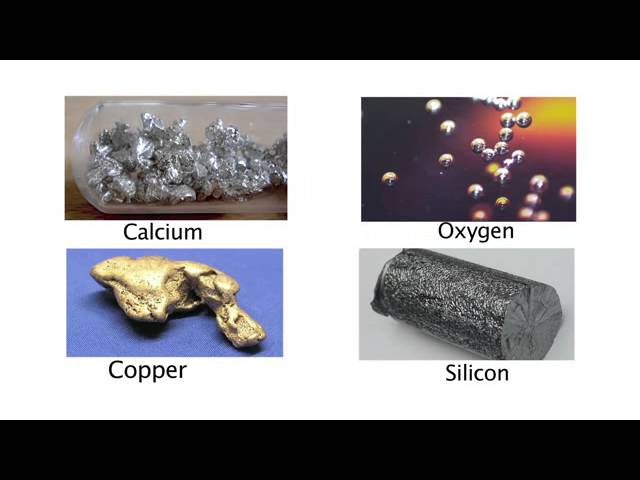
The ingredients were sand, which we now know was probably made of quartz, copper-containing minerals, and natron, which is a salty mix of different sodium compounds that Egyptians used for embalming, too.
You had to mix this stuff together, shape it into balls, stick those in a clay jar, and heat them in an oven.
Then, you could grind them up to get some blue pigment!
This pigment was used in paint for wall art or mummy coffins, or in glazes for pottery.
But as other colors like red and yellow became all the rage in Roman art, Egyptian blue lost popularity.
By around the fourth century, it began to fall out of use.
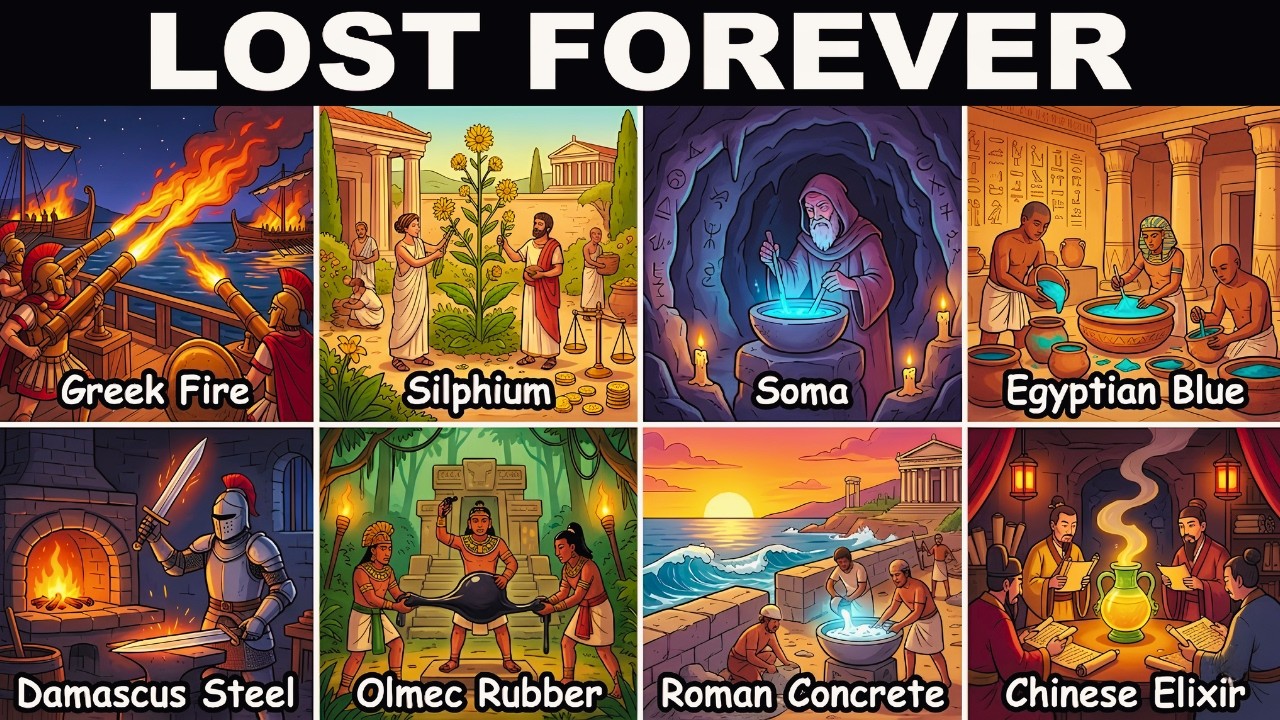
And, eventually, the formula for making it was lost.
The story picks up in 1814, when archaeologists found Egyptian blue while excavating the ruins of Pompeii.
They sent samples to London for analysis, where chemists tried to figure out what it was made of by mixing it with and dissolving it in other substances and seeing what happened.
After a lot of experimentation, we now know that the chemical name of Egyptian blue is calcium copper tetrasilicate.
This could have been made by heating the ingredients Vitruvius mentioned — quartz sand, a copper compound, and natron — along with calcium-containing lime, which may have been hanging out in the sand the ancient Egyptians used.
This mixture needs to be kept at around 900 or 1000 degrees Celsius for a couple hours to make the magic happen.
We still don’t know how the ancient Egyptians originally figured this recipe out, but the chemical reaction would have required careful control of this super hot temperature and the flow of oxygen into a furnace.
Not only that, but the consistency of their results was also incredible — Egyptian blue pigment is almost exactly the same chemical in tombs built across nearly 3000 years.
And, today, the pigment is still surprising us.
Scientists discovered in 2009 that, when visible light is shined on them, Egyptian blue molecules emit infrared radiation — the long-wavelength light that our eyes can’t detect, but can be felt as heat or be picked up by certain cameras.
This makes the pigment easy to identify in ancient artwork.
Scientists can even determine if a worn-away sculpture or other piece of art was once painted blue from traces of the chemical.
But this property of Egyptian blue means it has a bunch of other potential uses as well.
Infrared can pass through human tissue more easily than some other wavelengths of light, like the visible spectrum or UV.
So it could be incorporated into a dye for new medical imaging techniques.
It could also be used in new types of security ink to prevent counterfeiting and forgery.
Or it could be made into a dusting powder for fingerprint detection on shiny or patterned surfaces, where normal fingerprint powder is hard to see.
Ancient chemists trying to paint a blue sky on the walls of tombs could never have imagined the ways their work would be used today.
But the story of Egyptian blue, it seems, is just beginning — again.
Thanks for watching this episode of SciShow!
For more on the science of color, check out our video where Stefan talks about 3 colors that scientists discovered!
And if you want to keep getting smarter with us, you can always go to youtube.com/scishow and subscribe.
[♩OUTRO ]
Up Next
13:41
Synthesis and Application of Prussian Blue Pigment: A Step-by-Step Guide
@NileRed
2.4M views•2018-05-28
83:56
Biocatalysis and Catalysis in Islatravir Synthesis | Merck Webinar
@SCIwheresciencemeetsbusiness
675 views•2020-10-08
10:06
1H NMR: Determining Number of Peaks from Structure
@MSJChem
59.2K views•2017-04-06

17:31
Edible Water Bottles: A DIY Guide to Sodium Alginate Spherification
@ryan
10.5M views•2019-06-21
Related Study Plans & Knowledge Roadmaps
Structured learning paths in Chemistry
chemistry
Nuclear Chemistry: Decay, Meds & Fuel Cycle
01Introduction to Nuclear Structure and Radioactivity
02Decay Dynamics and Kinetics
03Radiation Interaction and Detection
+ 2 more learning modules
24h5 modules
Explore Roadmap
chemistry
Supramolecular Chemistry: Forces & Machines
01Foundations of Chemical Bonding and Intermolecular Forces
02Introduction to Host-Guest Chemistry
03Thermodynamics and Dynamics of Self-Assembly
+ 2 more learning modules
16h5 modules
Explore Roadmap
chemistry
Photochemistry: Excited States & Reactions
01Foundations of Light-Matter Interactions
02Molecular Orbitals and Electronic States
03Photophysical Processes and Jablonski Diagrams
+ 2 more learning modules
18h5 modules
Explore Roadmap
chemistry
Coordination Chemistry: Bonding & Properties
01Introduction to Transition Metals and Ligands
02Crystal Field Theory (CFT) and Geometry
03Magnetic Behavior and Spin States
+ 2 more learning modules
14h5 modules
Explore Roadmap