















Exoplanet discovery has transformed our understanding of planetary systems, revealing that nearly every star hosts planets with diverse architectures unlike our solar system, utilizing innovative detection methods like transit photometry and radial velocity to find thousands of exoplanets, including hot Jupiters, super-Earths, and circumbinary planets, with future missions like WFIRST and starshade technology promising to directly image Earth-like worlds in the habitable zones of other stars.
Exoplanets Journey: Discovering Strange New Worlds | NASA JPL Talk
Added:Basic understanding of the Solar System structure and the distinction between stars, planets, and moons.
The concept of the 'Habitable Zone' (or Goldilocks Zone) where liquid water can exist on a planet's surface.
Fundamental physics of light, specifically how spectroscopy is used to analyze the composition of distant celestial bodies.
Basic principles of gravity and orbital mechanics, particularly Kepler's Laws of Planetary Motion.
In-depth analysis of exoplanet atmospheric characterization and the search for biosignatures (e.g., methane, oxygen).
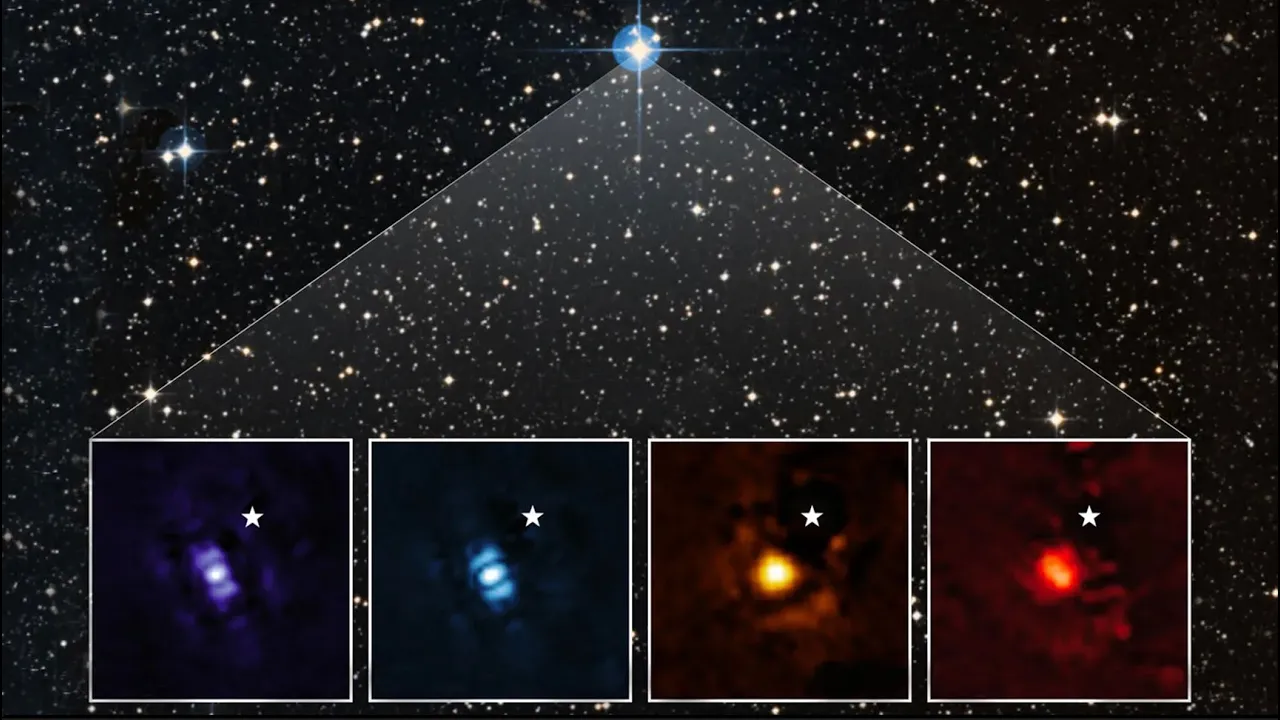
The technology and challenges behind Direct Imaging of exoplanets, including the use of coronagraphs and starshades.
Astrobiology and the geochemical conditions required for life to originate and survive on other worlds.
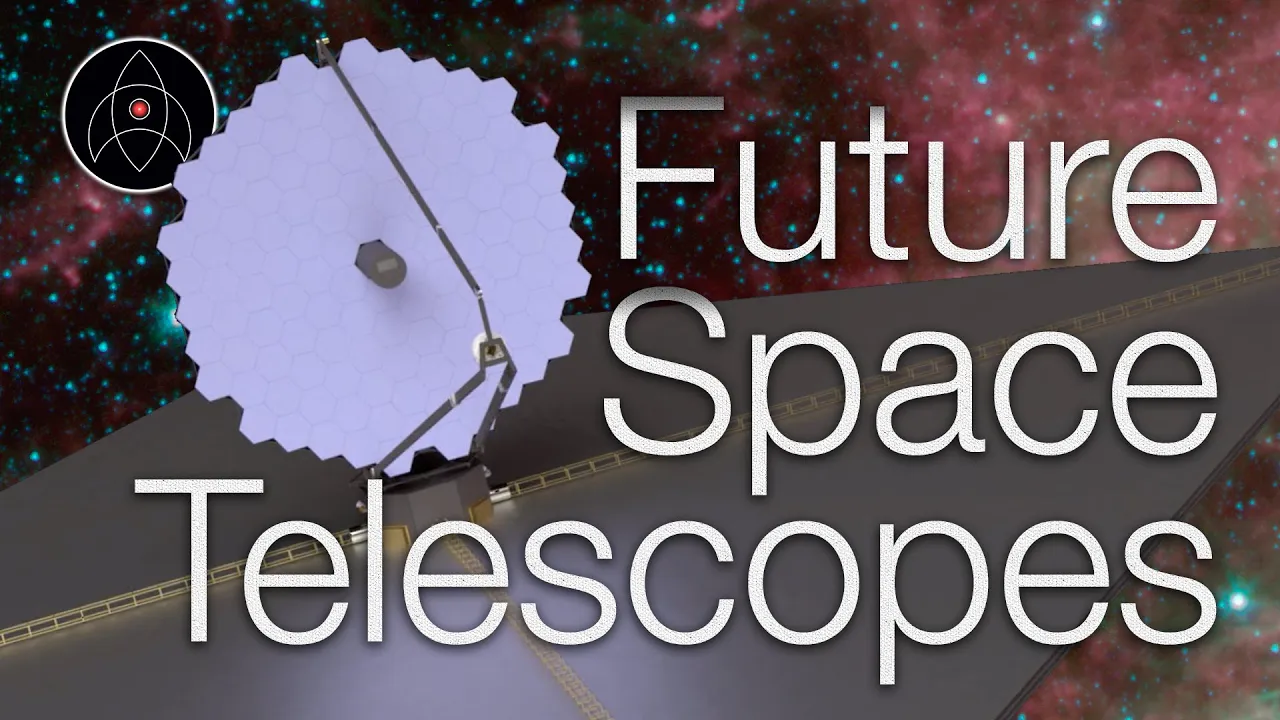
An exploration of upcoming next-generation observatories, such as the Nancy Grace Roman Space Telescope and the Habitable Worlds Observatory.
222K views1.5Klikes1:25:24Original Release: 2017-01-17
(rhythmic chiming music) - [Announcer] NASA's Jet Propulsion Laboratory presents the von Kármán Lecture, a series of talks by scientists and engineers who are exploring our planet, our solar system and all that lies beyond.
- Hey, good evening ladies and gentlemen.
How is everyone tonight?
- Good - Alright.
(sparse applause) - Oh, good.
Thank you so much for coming out to join us on this relatively soggy California evening. (chuckling) So, shall we?
Planets orbiting other stars, or exoplanets, have become an important field of astronomical study over the past 25 years.
Recent findings from NASA's Kepler Mission suggest that nearly every star you see in the night sky probably has exoplanets orbiting it.
The number of confirmed exoplanets is now a few thousand and their discoveries have yielded terms that would have sounded alien to astronomers before the 1990s: hot Jupiters, pulsar planets, super-Earths, mini-Neptunes and circumbinary planets.
Now, Trends are emerging among exoplanet populations which put our own solar system in context, noting most exoplanetary systems appear to be very unlike our own.
Tonight's guest will present a brief history of exoplanet discoveries, the story of the transiting super-Saturn extrasolar ring system and summarize NASA's ongoing and future plans to discover and characterize strange new worlds.
Tonight's guest has been the Deputy Program Chief Scientist of the NASA Exoplanet Exploration Program since August of 2016.
His research interests focus on astronomical observations related to the formation and evolution of planetary systems and stars, and in particular, their ages.
He graduated with a BS in Astronomy and Astrophysics and Physics from Penn State in 1998, a Master's degree in Physics from the University of New South Wales Australian Defense Force Academy while a Fulbright Fellow in 1999, and he received his PhD in Astronomy from the University of Arizona in 2004.
After his PhD, he was a Clay Postdoctoral Fellow at the Harvard Smithsonian Center for Astrophysics.
More recently, he was a Professor of Physics and Astronomy at the University of Rochester and a staff astronomer at the Cerro Tololo Observatory in Chile.
He has also been part of several astronomical discoveries over the years including the discovery of the first transiting extrasolar ring system, the nearest historical fly-by of a star to the solar system and the discoveries of low-mass stellar companions to the bright stars Alcor, Fomalhaut and Canopus.
He has discovered several nearby star clusters within hundreds of light-years' distance to the Sun, and recently he was co-discoverer of a comet.
He is an active member of the International Astronomical Union and he is currently the Chair of the newly-formed IAU Working Group on Star Names.
Ladies and gentlemen, please help me welcome tonight's guest: Dr. Eric Mamajek.
(audience applauding) - Thank you, it is absolutely wonderful to be here.
As he mentioned, I just got to JPL in August, so I'm relatively new to California.
So, apparently, things are wetter than where I came from.
We now inhabit a water world in Southern California.
So I'm gonna tell you about Exoplanets: A Quest for Strange New Worlds.
This is a topic that's obviously near and dear to my heart so the first part of the talk will be a little bit personal to me because as the discovers have sort of unfolded over the last few decades, they sort of fed into my interest in astronomy.
So I've been sort of watching this field since elementary school.
So, this is one of my favorite places on Earth.
This is actually Cerro Tololo Observatory in Chile.
And this is a few of the domes there.
If you go out at night when the Moon is not up, if there's some low cloud that's blocking out some of the lights from a few of the small towns nearby and the mines, you get a really, really, really dark sky.
It's so dark as you're walking around, you can see your shadow on the domes.
And that shadow is not from the Sun, it's not from the Moon, it's from the stars.
There's nothing else illuminating the sky.
You only have to go outside dark-adapted for a few minutes and you start seeing this effect.
It is literally the light, the integrated light from billions of stars in the galaxy that's projecting the light that's producing your shadow.
This was a really neat place to work.
And so every once in a while when you're observing, you could take a little break and walk outside and see the stars.
And on a typical, outside of light-pollution, you should be able to see hundreds or thousands of stars in the night sky.
We've got something like a few hundred billion stars in our galaxy.
There's probably hundreds of billions of galaxies in our universe.
And so you wonder, are there other planets out there, okay?
So, this is, you're seeing on the left what our galaxy looks like from Earth.
You see lots of stars, you see these inky dark regions among the stars.
Those are dark molecular clouds and as I'll tell you later, that's actually where stars are forming, in those clouds.
We now, astronomers over the last several decades have been able to measure the distances to stars more precisely.
We can measure the distances to these clouds more precisely.
And we can sort of deproject the edge on Milky Way into the Milky Way's actual appearance.
Now, this is an artist's conception but a really good artist's conception.
Most of the stuff we have mapped out is just in this little quadrant down here within a couple thousand light-years of the Sun.
Our Sun would be a completely imperceptible dot right here between to spiral arms, okay?
So the galactic bulge is here, it's about 30,000 light-years away.
And our Sun is moving around the galaxy at about 200 kilometers per second.
You don't feel it.
So, we'd like to know, are there other planets out there?
This is the preface to a great book that came out a few years ago by Sara Seager, who's a regular visitor to JPL and a professor at MIT.
She edited this book called Exoplanets.
And she wrote, "This is a unique time in human history.
"For the first time, we're on the technological brink "of being able to answer questions that have been around "for thousands of years: "Are there other planets like Earth?
"Are they common?
"Do they have signs of life?"
These are really big questions and we're sort of slowly unveiling the curtain and then finding these answers.
And we're sort of at a lucky generation to be able to see this unfurl.
So, this is me, about 1980.
I grew up on a horse farm in Southwestern Pennsylvania.
Skies were moderately dark.
Very quickly I was interested in things like geology and meteorology.
I saw Mount St. Helens the year after it blew up.
I thought, this is crazy.
How could the earth, you know, how could a mountain explode?
We didn't have those in Pennsylvania, we had coal, limestone.
It didn't explode.
But it got you thinking about the universe and physics and chemistry and how the universe works.
And it didn't take long until I was interested in astronomy.
But this also coincided with pictures like this.
I remember being five or six years old and seeing the pictures of this ringed planet and wondering what that was.
And for a sort time, I thought that must've been Earth.
I thought I lived on the ringed planet.
And I was like, well, I can't see the ring at night.
But I saw these pictures of Saturn so often that it made you wonder.
And so I was sort of a child of the Voyager era in the 1980s.
You know, every few years, it was all these great pictures coming from NASA from these robotic space probes that were sent to the outer solar system.
The people in the auditorium are sitting next to a model of one right here.
And the two probes I'm talking about, of course, are Voyager 1 and Voyager 2.
And they completed the first reconnaissance of the outer solar system.
Voyager 2 made it past all four of the outer planets, Jupiter, Saturn, Uranus and Neptune.
And these are really interesting worlds in themselves.
Here's a picture of Voyager 1 and Voyager 2.
The Voyagers are now over 100 astronomical units away from the Sun, 100 times the Earth-Sun distance.
They're reaching the area where the Sun's wispy atmosphere of ionized gas is sort of melting into the gas from the rest of the galaxy.
They've effectively left the solar system.
They haven't left the Sun's gravity, but they've effectively left the solar system.
So Voyager was launched in 1977.
And I knew, even in elementary school, there was this interesting place called JPL and there was these interesting people at a place called, you know, that worked for an entity called NASA and they were explorers.
And they wanted to study the universe and study planets.
And this sounded like a really, really neat job.
And it was an exciting time.
The last few decades have been very exciting, there's been a lot of very interesting discoveries.
And it's fun to be here at JPL and actually give a talk on this.
This is sort of our classic, cartoon picture of the solar system with the now-eight classic planets.
And we were sort of taught in the 1980s that we have these small rocky planets on the interior.
There's Earth, Mercury, Venus, Earth, Mars, Jupiter, Saturn, Uranus and Neptune.
And the small, rocky planets form on the inner part of the solar system.
And then all of a sudden, out past about two, three times the Earth-Sun distance, you start getting these worlds that are dominated by the ices, things like water and ammonia and methane.
They're the so-called astronomical ices, carbon, nitrogen and hydrogen with hydrogens attached.
And also, a lot of hydrogen and helium.
Jupiter and Saturn were very much dominated by hydrogen and helium.
And each of them have their own little system of moons.
All the moons were interesting, these small cratered worlds.
Some of them had active geology.
Couple of them have atmospheres.
And so this was sort our classic picture of the solar system through about the 1980s.
Shortly after, they were finding the, there was discovery of the Kuiper Belt out past Pluto.
We now know there's icy worlds out there.
And there may even be another planet, so-called Planet 9.
It would not surprise me if that was discovered in the next year or two.
The dynamical evidence looks pretty interesting.
So one of the great, I would say victories of physics and astronomical of astronomy in the 20th century is this sort of comprehensive picture of the formation, the evolution and death of stars.
We understand stellar structure very well, the stellar atmospheres.
If you could sort of stand back and look at our galaxy over a time scale of millions of years, billions of years, you would see stars being formed, living their lives and being snuffed out through various means.
And this is just showing the evolutionary pathways for small stars like the Sun.
They're born in these dark molecular clouds.
I'll talk about this a little bit more later.
They collapse, basically this is, why do stars form?
Stars are forming in the gas and dust floating around in the galaxy.
It's where gravity wins out over gas-pressure and magnetic-field pressure.
It's a very inefficient process, okay?
Only a few percent of mass in these clouds actually form stars.
And then only a tiny fraction of the mass that goes into forming the, of the star, will end up forming the planets.
So our Sun'll live a nice happy life for about 10 billion years.
We're about halfway through.
At the end of its life, it'll become a red giant.
It'll exhaust its hydrogen fuel and it'll furiously change its inner structure to try to heat to higher temperatures to burn other sources of fuel.
It'll run out and eventually, it'll turn into a planetary nebula.
It'll blow off its outer layers.
So this is is going on.
This whole time scale here is about 12 billion years.
And for low-mass stars in the galaxy, stars even down to the mass of the Sun, some of them have had time to go through this cycle.
The massive stars, the big, bright white-blue, blue-white stars you see in the night sky, those live very short lives.
These are stars that are typically 10 or tens of times the mass of the Sun.
They correspondingly live very short lives.
Maybe tens of millions of years.
And they go through a much more destructive phase at the end, they actually explode.
And depending on their mass, they'll turn into either a neutron star or a black hole.
But what doesn't go into the neutron star and black hole contains a lot of metals and a lot of stuff that turns into planets and turns into life.
And this process is constantly enriching the gas in our galaxy.
Our galaxy is slowly getting full of so-called metals.
So there's the periodic table of elements you're used to seeing, that you learned in your chemistry class.
Most of the normal gas in the galaxy is hydrogen and helium, up here, elements number one and number two.
They're about 98% of the amount of normal matter in the galaxy.
We're excluding so-called dark matter and dark energy.
That's for another talk.
All the rest of the other elements are less than 2%.
Okay, if you averaged out over the galaxy.
But those are pretty important because they end up turning into planets and turning into life.
Now the astronomers, this is the astronomer's H-R diagram.
Hydrogen, helium, metals.
Okay, all the other 90 plus, I think we're up to 118, but most of those are short-lived.
But the other 90 or so stable elements, the astronomers just call them metals.
And they tend to track each other in terms of their relative abundance with respect to each other.
So we talk about the metallicity of stars and the metallicity of the galaxy.
And the amount of metals in the galaxy is slowly getting higher over time because stars are living it and dying and they're returning this, the products of the nucleosynthesis in the stellar cores, returning it to the galaxy.
Now what happens to that stuff, there's all of our metals.
Well, here's a typical nearby nebula, this is the Orion nebula.
This is a very beautiful nebula about 1,000 light-years away.
There's a few thousand stars that are forming in this gas.
And so what we're seeing is baby stars, less than about a million years old that are condensing out of this gas.
And the very most massive ones have already turned on.
They're already burning their hydrogen.
They're giving off a ton of ultraviolet radiation and they're blowing away the gas.
Those high-mass stars are actually destroying the nest that the stars are forming out of.
Well, if you zoom in on that nebula, here's some Hubble Space Telescope images.
And this is amazing.
What you're seeing is baby pictures of suns.
These are all little stars forming.
And you'll notice, if you zoom in, they look like little blobs.
And we know the distance to Orion.
And we can measure the angle that covers these little blobs.
And the size of these blobs is only on the order of a few hundred times the Earth-Sun distance, okay?
So we're talking about solar system scales, here okay?
So these are so-called proplyds, or protoplanetary disks.
And they're fascinating.
You can see some of these look very dark.
What you're seeing is this illuminated nebula behind it.
And the gas and dust that's forming in planets around these little stars is actually blocking out the light behind it.
There's hundreds of these.
This is one star-formation region in our galaxy.
This is the Orion nebula.
There's thousands of 'em, okay?
This is going on right now.
So, star-formation is going on, there's super-novi, we see planetary nebula, we see evidence of stellar death.
So there's this sort of birth and death of stars going on.
And we see during stellar birth, we see the ingredients for forming planets.
Okay, so that's great.
We've seen some disks around baby stars, we know that there's metals there, there's material for forming planets including things you'll find in your vitamins and in your food that life likes.
So, how do we discover and characterize planets?
Why are they so hard to find?
Why did it take until only a couple decades ago to find planets?
Well, a few of the first hints were actually teased out here in the 1980s.
This is a satellite called IRAS that was launched in 1983 from Vandenberg.
This satellite did an infrared all-sky survey and it found a few surprises.
So one of the things it found was that a handful of the nearby stars actually had big infrared excesses.
These stars were giving off way more infrared light than they should be, okay?
So we know what the distribution of energies are for stars and how much light they should give out in the infrared.
There was a certain class of stars that was giving off way more infrared light.
And it was actually a group, here at JPL, in 1984 and at University of Arizona, there was this great paper by Smith and Richard Terrell, Brad Smith and Richard Terrell.
And they actually went to a telescope in Chile.
And they decided to look at one of these stars with a coronagraph.
They blotted out the light from the star.
And they took a deep image of it.
And lo and behold, they saw this stuff on both sides of the stars, okay?
This is actually, this is what was responsible for the infrared light, but this is ground-up dust grains orbiting this star, Beta Pictoris, which we now know is pretty young as a star.
It's about 20 or 25 million years old.
And this was sort of, this was one of our first hints that there was planets there.
Because if you see this dust, it should get blown out by the star's light in a very short time, maybe hundreds of thousands to millions of years.
So there had to be some population of things grinding up asteroids, comets, et cetera that were creating, that were kicking up this dust.
So this ended up being actually nearby a baby solar system, so things were starting to get interesting.
I remember seeing this story when I was in elementary school and that really sort of made it clear that we were kinda getting to the point where we're gonna start finding these planets soon.
So how do we find planets, okay?
Well, you think you could just take an image, right?
You take your telescope, you look at the star.
If you squint hard enough you may see a little dim dot next to the star.
This is really tricky, okay?
There's a few complications.
One is the planets themselves are only, a planet like Jupiter, is only about one-billionth as bright as its star, okay?
This is in the reflected light.
So that planet is, the star is giving off light, the light's hitting that planet and then that light's being redirected to us.
And the ratios about one in a billion.
It's even fainter for a planet like Earth.
Well, this is very challenging.
The other problem is that plants tend to be, if they're on the same scale as our solar system, if they're several astronomical units, the stars are so far away that the angular separation is very, very tiny.
So the star is right up against the, sorry, the planet is right up against the star and so you actually need to, you need to do something to the star's light.
Because the other problem is, we're on Earth, we're at the bottom of an atmosphere and that atmosphere plays with the light, right?
The stars twinkle.
The stars are twinkling 'cause there's these little variations in the temperature and the humidity of the air and the light waves that are going through the atmosphere wiggle around a little bit.
And so the blur out the star's light and they will completely swamp the poor planet.
So you can't just go to the telescope, look through it and say, oh, I see a planet next to the star.
You actually have to blot out the star's light, or there's a few other tricks I'll show you later, okay?
So this is so-called direct imaging.
One of the ways to find planets that's been very popular for decades and still has, unfortunately, it still shows promise but has not borne much fruit, I'll put it that way, is so-called astrometry.
And that is looking for the wobbles of a star due to a planet tugging on it, okay?
So the planet itself is pulling gravitationally on the star.
We think of the planets orbiting the Sun and the Sun is at the center of the solar system.
That's not quite true.
There's something called the Barycenter.
Jupiter is the big source of gravity that's tugging on the Sun and the Sun actually moves around the inner solar system a little bit on the time scale similar to Jupiter's orbit.
It's pretty gradual.
It's on the order of hundreds of thousands of kilometers but it's something and if you're far enough away, you can measure the position of the star accurately enough, you should be able to tease out that signal.
But it's very tough, so this is just showing how you could use multiple stars.
If you could accurately measure the angle between the star with the planet and these other stars, over time, you might be able to see the little bumps and wiggles of the star's position and tease out the planet.
This is the, one of the first techniques that ended up being very fruitful.
This is so-called Doppler Spectroscopy or the Radial velocity method.
So what are we doing?
So, you've got your planet orbiting the star, it's tugging on the star, the star is moving around.
And as it's moving around, its velocity is changing.
It's moving towards you, it's moving away from you, okay?
So the light is being Doppler-shifted.
It'll be blue-shifted if its moving away from you.
It's red-shifted if its moving away from us.
Now the planet is not that massive compared to the star.
It's a very, very subtle signal, okay?
If we're talking about Jupiter pulling on the Sun, we're talking about a a 12-meter-per-second signal over 12 years, okay.
12 meters per second's about as fast as Usain Bolt goes in ten seconds, okay?
Very slow.
If we're talking an Earth-like planet, we're talking about ten centimeters per second, which is how I would run next to Usain Bolt, okay?
Very, very slow signal, okay?
So this is just sort of generalizing.
We don't see the colors changing red and blue.
When the things are moving near the speed of light, you actually see a color shift.
We see that with quasars.
But this is a very subtle signal.
You're looking at the spectrum of the star and the lines are moving back and forth, very, very tiny amounts.
So this is the so-called Doppler spectrocity technique and there's been many hundreds of planets found through this technique.
The technique that's been very fruitful for the last decade and a half is the so-called transit method, okay?
This is what happens when a planet passes in front of its star.
Now the trick is, you need to measure how bright the star is very accurately, okay?
So here's time, here's how bright the star is.
If we got a star like the Sun, over time it only varies at about the one part in a thousand level over a long time, you might see some star-spots appear here and there that make some little dips.
But if you have a Jupiter-sized planet pass in front of the Sun, you'd get a dip of about 1%.
Okay, now we're talkin'.
We can measure 1% dip for a lot of the brightest stars.
If you get a planet like Earth, which is another factor of 10 smaller than Jupiter and its area is another factor of 100 smaller, we're looking for a signal that's one part in 10,000.
Hm, okay, that's getting tough.
It's very difficult to do from the ground.
It's difficult to measure the brightnesses of the stars that accurately from the ground but if you go to space, voila.
Now we're talking about discovering Earth-like planets.
So I'll talk about the Kepler Mission here in a bit.
The Kepler Mission has been responsible for finding most of the planets that have been discovered now.
We're talking thousands of planets.
So this is a great technique.
This is just another movie showing differences in the sizes.
So if you had large planet, let's say a Jupiter-sized planet, and an Earth-sized planet, you'll get different depths in the light curve, okay?
So get roughly 1% signals for a Jupiter-like planet and about a one part in 10,000 signal for an Earth-like planet.
Now, the other thing, Kepler has been finding is multiple planet-systems, okay?
There's actually been systems seen now, we have a great vantage point, we happened to see multiple planets passing in front of the star.
And if you're really lucky, you start to see gravitational perturbations.
The planets are pulling on each other.
And we can actually measure those masses.
I'll show a plot later in this talk exploiting that technique to measure some masses.
So Kepler has found some very interesting multi-planet systems.
And there's, these have been very interesting because it's easier to get the masses of those planets.
This is another technique called microlensing.
This has been put to good use over about the last decade and it's now gonna be a primary means of finding planets for, one of the means of finding planets for the upcoming WFIRST mission.
So, you have your telescope down here and let's say you have a background star, but something passes in front of it, let's say some mass, let's say a star or a planet.
As it passes in front, the space-time is curved, okay?
Light is not following straight lines.
You think a light beam is gonna follow a straight line.
The light is following a straight line in four dimensions, oh, God, here we go, we're going into Einstein.
What, from our perspective are three-dimensional beams passing through time, from our perspective, that straight line looks curved.
And the mass actually acts like a lens.
You'll actually get the light from the star bend around around that mass and focus.
And what you get is an enhancement in the amount of light.
So this is time and then this is the brightness of the star.
So you'll get these characteristic curves and if this thing that's passing in front has a planet, you get an extra little curve on top of it, okay?
So may get this curve and then you get another little one.
And this technique so far has been sensitive to very small planets.
We're talking things down well below the size of Earth.
Now, the trick is, this doesn't happen all the time.
You need these two stars to line up.
So you need to look at many, many, many thousands of stars or millions of stars.
And so WFIRST is gonna be surveying the center of our galaxy.
I showed you that picture at the beginning, of our, the center of our galaxy.
Some of the richest star fields in the galaxy, and then if you start looking at a lot of these, statistically, you'll start picking these events up.
So, I showed you that there was the detection of that dust around Beta Pictorus in 1983.
With the IRAS satellite, things started to get interesting around 1989.
This is the star HD 114762.
These are our lovely stellar designations, okay?
Stellar designations are the phone-number names.
This was a giant planet, orbiting in about 80 days, roughly at about the same distance Mercury is from its star, but this planet's about 11 times bigger than Jupiter.
We don't know the inclination of this system, we don't know how tilted it is because it didn't pass in front of its star.
But around 1989, this star was being used as a standard.
When they were measuring the velocities of other stars they kept coming back to this one as a useful ruler of how fast a star was moving.
And they noticed that this, this standard star itself was moving at the hundreds-of-meters-a-second level.
So there was this nice paper Dave Latham from Harvard Smithsonian Center for Astrophysics.
And they said, "Well, this could be a failed star, "it could be a planet."
And back in these days, it was a little voodoo to start saying you detected a planet.
But as we look back now, this could be the first planet that was actually detected, this one is real.
Things got really interesting around 1992.
This was 25 years ago, this week.
Hard to believe.
January, 1992, there was the discovery of three planets around a pulsar.
So what's a pulsar?
This is the remnant of a massive star that's undergone a supernova and all that's left is this huge mass about the mass of our Sun, but packed into about 10 kilometers, okay?
So, roughly the size of Pasadena, but with as much mass as our Sun, okay?
It would not be a very nice place to live, okay?
The whole thing is made of neutrons, okay?
There's so much pressure there the protons and electrons themselves have actually fused into neutrons.
So it's essentially a gigantic nucleus.
Well, it has a huge magnetic field and it spins rapidly and it gives off these radio waves.
And those radio waves can be picked up by astronomers on Earth.
And lo and behold, this new pulsar called B1257+12, also known as Lich, now, it has a new IU name.
This object was moving back and forth.
The timing of the radio signals was changing and it was fairly complex because lo and behold, was three bodies pulling on it.
So, these two outer ones, and I can't remember the original letter.
There's letter designations B, C, D for these.
I like the, there's the new IU names, these are easier to remember now.
Poltergeist and Draugr, these two are about three times the mass of the Earth.
Phobetor is very small.
It's on the order of the size of Mercury or such.
And these were very tiny planets.
There was no other effect they could think of that could replicate this variation in the pulsar's signals.
So this was really the first rock-solid evidence I would say of extrasolar planets.
And again, that was 25 years ago this week.
Around 1995, things got interesting again.
This was the discovery of 51 Peg b.
This was a Hot Jupiter.
This was a very unexpected signal.
51 Peg is very sun-like star.
It's a yellow, main-sequence star like the Sun.
Sort of middle-aged and lo and behold, the star was moving back and forth at about the 100-meter-per-second level in its orbit.
And what you need to do, what you need to explain that is a half-Jupiter-mass planet on a four-day period, okay?
Nobody was expecting this before 1995 because as you saw from our solar system, we had an example of one solar system.
We don't have any giant planets within a few astronomical units of the Sun.
They're, you need ices to form those.
So, why would you have a giant plant so close?
But it was there and it was quickly confirmed by another group in California.
So, right away we were starting to see some very strange objects, okay?
The first one I showed you was 10 Jupiter masses.
This was really pushing the boundaries of what you might consider a planet.
The second example was planets around a dead star, pulsar planets.
And then the next example was a Jupiter orbiting its star in a few days.
Okay, we're nowhere near finding anything like our solar system yet, by 1995.
I'm gonna skip a lot of history, which is gonna make a lot of exoplanet astronomers mad.
I'll apologize if I've left out your planets.
There's a few thousand of them now and all your missions and all your telescopes.
So, we're gonna skip through to what I think is a few interesting cases, here.
And just to show you some interesting examples.
So, the Kepler Mission launched in 2009.
I'll show you a few plots from that mission.
And one of the surprises was a circumbinary planet, okay?
Could a planet actually form out here, outside the orbits of its stars?
And the answer seems to be yes.
And they're finding many examples of these.
And they're roughly, they tend to be on the order of a factor of five further away that the separations between the two stars.
As we look at young stars, we do see examples of pairs of young stars that actually have a disk of material orbiting both.
We see circumbinary disks of gas and dust that probably formed these planets.
So, I'll be the first astronomer whose given one of these talks that does not mention a certain movie about a certain person that was bulls-eyeing womp rats on their desert planet that had two stars.
I'm not gonna mention it.
Kepler also found, has found so far, small, rocky planets in the habitable zones of their stars.
So what do we mean by habitable zone?
You can start many an argument defining exactly what the habitable zone means.
It's the range of orbital separations orbiting a star where you could plausibly have liquid water on the surface of the planet.
Liquid water seems to be the main environmental constraint for life, at least on our planet.
You need water.
And so, if you move a planet too close, if you took Earth and you moved it a bit closer to the Sun, you initiate a runaway greenhouse effect.
You'd actually boil off the oceans.
If you moved the Earth too far away, the Earth starts to get very cold, you actually start freezing out carbon dioxide up in the atmosphere and you start forming clouds that act like a big mirror and you get a runaway which actually makes the planet colder.
So there's sort of a narrow range of orbital separations where a planet can have liquid water.
And so this is just a little gallery of the planets so far, out of the 2,000 plus that Kepler has found that happen to be in the habitable zones of their stars.
These are the different types of stars.
M stars, these are the so-called red dwarfs.
These are the most common types of stars in the galaxy.
About 3/4 of the stars in the galaxy are M dwarfs, including the next star after the Sun, Proxima Centauri.
K stars are a little bit smaller, typically about half the mass of the Sun.
And then these are the G stars like our Sun, okay?
So we have been finding a lot of these habitable planets around the M stars and K stars.
It's been a little bit tougher for the G stars because you have to trace the planets further out, to periods closer to a year and Kepler had a limited lifetime for detecting planets passing in front of a star.
So this is not indicating that there's fewer planets around the G stars, simply that our current techniques are more sensitive to the very close-in planets around these lower-mass stars.
This was one of my favorites.
This was in one of the first directly-imaged planets called Fomalhaut b.
This is a bright nearby southern star.
It's Alpha Piscis Austrini in the southern fish.
This is the brightest star in that constellation.
It has a big disk of material around it.
I was telling you about the IRAS Mission in the early '80s.
This is one of the first big infrared excesses detected with that satellite.
There's a lot of dust in that system.
And back in 2009, Paul Kalas and colleagues were looking at images of Fomalhaut with a coronagraph in place.
So they're blotting out the bright star, here.
Fomalhaut's, you know, probably in the top 10 or 20 brightest stars in the sky.
They had to blot out the light with Hubble and see all the faint structure.
And lo and behold, there was a little dot moving.
And this appears to be a planet orbiting the star.
What's weird about this thing is that the colors of it look like reflected light from the star.
So what we may be seeing here is not a Jupiter, or maybe even not even a Neptune, we may be seeing reflected light from icy particles, something like Saturn's rings or a cloud of material orbiting the star.
So the nature of this object's a little bit nebulous, but it's been very interesting.
But we could be seeing a tiny planet with a ring system around it.
So speaking of rings, I wanted to tell you about one of projects I've worked on recently.
This is a object, I won't give you the full phone number, 'cause it's horrible.
This one has one of those horrible astronomical names with about 15 digits in it.
We shortened it to J-1407.
This was a nearby young star, a few hundred light-years away.
It's similar to the Sun, but it's only about 15 million years old, very young star.
And we were looking through data from a robotic telescope that was monitoring the brightnesses of thousands of stars looking for planets.
And when we were looking through the data, one of the young stars that we were studying, back on 2007, so this is time, this is April and May of 2007, and this is the brightness of the star, okay?
One is its average brightness over a few-year period.
And the star rotates really rapidly every three days and it has star-spots and so in the course of a day it'll go do-do-do-do-do-do, you know, it'll vary by about two or three percent.
And then all of a sudden in April and May, over about 2007, the star started behaving very badly, okay?
We started seeing dimming at the tens of percent level, okay?
That should scream that there's something very interesting going on.
You just don't see stars turn off, okay?
At its dimmest point, the star had dimmed 95%, okay?
This really got our attention.
The shape of the variations was even more interesting because it looked like you had to be passing some structure in front of the star that it might be symmetric.
So we first saw this in December 2010 at University of Rochester.
My graduate student, Mark Picho and I, I remember in December 2010, looking at this plot, trying to figure out what the heck to make of it.
And the first thing that came to mind was how the rings of Uranus were discovered.
So Uranus has these very faint rings around it.
The Kuiper Airborne Observatory was used in 1977 to observe Uranus and Uranus passed in front of a star and the star blinked off.
And they detected the rings of Uranus.
And I thought, could this be like that?
But these rings would have to be absolutely huge, very massive.
The bottom is just a zoom-in of some of the structure.
Each little clump of points here is one night of data, okay?
This is a real telescope, a real robotic telescope from the ground, so you have to worry about things like clouds and power-outages and things that.
And so there's lots of gaps in the data, okay?
We only have data covering about 20% of the time here.
But even during after the gaps, you'll see the star has still dimmed tens of percent, okay?
So we tried to piece together the story of this star.
And you'll notice by the way, if you look at it, there's sort of this big inner dip over a couple weeks and then you see these little dips on the side.
And even in the course of a night, the variation, it can vary by tens of percent.
This is a really bizarre object.
It took us about a year to analyze this and come out with a paper that even had a plausible first attempt at what we thought this thing was.
This is not that first attempt, this is about our third attempt, okay?
This is a movie from about 2015.
This is the time, this is the brightness of the star.
The orange line is a model trying to fit those yellow data points.
The yellow data are the actual measurements of the star's brightness.
It's not perfect, okay?
It does a reasonable job.
It probably fits about 90% of the data.
And at top, this is our model of a huge ring system around a companion we call J-1407 little b, okay?
We're not sure exactly what this is.
It's probably a giant planet.
It could be a failed star called a brown dwarf.
I'll talk a little bit about those later.
Right now, we think it's probably less than tens of times the mass of Jupiter.
The whole system, this whole system of rings you could fit well inside the orbit of Mercury, okay?
But it's much bigger than Saturn's rings, okay?
The whole system is about 200 times bigger than Saturn's rings.
This is a totally different beast.
This is not like Saturn's systems.
Saturn has a ring system, covers a few hundred thousand kilometers, very icy particles and they exist in a region where the tidal forces of Saturn would shred the material apart in case it tried to form a moon.
It'll say, no big moons here, okay?
Gravity will tear these objects apart.
This system's about 200 times larger.
And so what we think we might be seeing is the material that would go into forming a system of moons around a giant planet or little planets around a brown dwarf.
I don't even know what, there's no word yet for, I guess satellite.
You would say a satellite around a brown dwarf.
The other interesting thing is we see these gaps.
We've seen disks before.
We see disks around young stars.
They can be huge, tens of times the Earth-Sun distance.
We don't see too much structure in them.
There's a lot of structure in this.
To explain these dips, these big variations at the tens-of-percent level, there has to be gaps in the disk.
Well, if there's gaps, why is there dust preferentially in some lanes and not in other lanes, okay?
So, especially this one, this one really stood out.
We put ring-gap.
We could be seeing moon formation.
This could be the first indirect evidence of exo-moons orbiting exoplanets, orbiting other stars.
We haven't seen any moons, yet.
All we've got is this disk.
But something has gotta be clearing out these lanes in this disk.
We've gone looking for more objects like this.
We keep finding, we've found a few disks.
We have a system that'll be coming out next year that is somewhat analogous, but we haven't found one whose structure is as rich as this system.
By the way, so my co-author, Matt Kenworthy at University of Leiden had this cheeky graphic he came up with.
If you replaced Saturn in our system with this set of rings, this is what it would look like during the day.
It would be picking off about 1% of the stars' light.
It would be like a huge mirror.
There is the moon.
So how'd you like to come out during the day and see that thing?
It was a slow news day in January 2015.
2015 was such a nice year, compared to 2016.
And so for a few hours on CNN, this was not fake news, this was real news.
This beautiful graphic was done by Ron Miller at Black Cat Studios.
He's done a lot of space art.
And I wanted to mention that.
But he had this beautiful artwork that went with it.
I'm doing an experiment with a student at University of Rochester to build a robotic observatory.
He's building it, I'm here.
Hi, Sam.
(audience chuckling) We're hoping to build this experiment to put in Australia in 2017, and we wanna watch a nearby exoplanet called Beta Pictoris b.
I showed you that disk system.
There's a little planet they discovered in 2009.
And this is a movie of the images of that planet over the last, over about 2013 to 2015.
And as you see, it's gonna come very close to its star in 2017.
It's not gonna pass exactly in front of it, but it's gonna come pretty close.
So we wanna probe the region near the planet to see if there's any evidence of a moon-forming disk like J-1407.
This system's only a little bit older than J-1407.
We're talkin' about 20 million years.
So we could be, if we're lucky, we may catch a snapshot of a disk passing in front of a star and maybe see if we can catch moon-formation in action.
So I now work at JPL, I'm now working with the NASA Exoplanet Exploration Program.
Its purpose is described in the 2014 NASA Science Plan.
We are here to discover planets around other stars, characterize their properties, identify candidates that could harbor life.
So we're supporting various space missions and some ground-based efforts too, at achieving discovering planets and characterizing them.
This is just a little snapshot of some of the activities that the Exoplanet Exploration Program does.
A few of the missions here that're managed are the Kepler and now K2 Mission.
Kepler is the the mission that's finding all these transiting planets.
It has transitioned now, a couple of the gyros are dead.
They're in a phase now where they can only observe certain parts of the sky and they now call this the K2 Mission, but it's still finding many dozens of planets.
This is the WFIRST Mission I'll talk a little bit about here in a few minutes.
There's development of a starshade.
I'll show you the animation of the starshade.
And then there's lots of other activities, including some efforts to characterize disks around nearby stars and measure their radial velocities in support of these missions.
Let me click on this.
And fortunately, the sound is off.
I wanna thank Dan Fabrycky at University of Chicago.
This is the classic Kepler Orrery.
These are the multi-planet systems that Kepler found.
Every one of these is a solar system.
And this is only showing the planets that we can see, that happen to be along the line-of-sight, okay?
They're sorted by size, so you get some things that are probably Jupiter-sized, here, all the way down to very tiny things, approaching maybe half the size of the Earth.
Some of these are three-, four-, five-planet systems and there's a lot of these.
And we can now start to measure masses because these planets are tugging on each other.
I think it was supposed to zoom in.
There we go.
And they're sorted by the size of the orbits, okay?
But it's amazing.
And these are very close-in systems, so pretty much none of these are like our solar system.
These are the systems that have planets very, very close to their star.
Most of these planets are closer to the star than Mercury and Venus.
Okay, so that's dizzying, turn away if it's hurting your eyes.
(audience chuckling) So the Kepler Mission was launched in 2009.
This has been a phenomenally-successful mission.
And again, it's in this so-called K2 phase now, where it's using a limited amount of fuel to look at different fields along the ecliptic, along the path where the Earth, in the Earth's orbital plane.
And also, very soon, the TESS Mission being developed at Goddard Space Flight Center.
It's gonna be similar to Kepler, but it's gonna look, it's going to image the whole sky.
Kepler basically looked at one region of the sky and stared at 100,000 stars and discovered about 5,000 candidates and we have about 2,000 of those that are confirmed planets.
So from the Kepler and K2 Mission, this is showing the sizes of the planets that have been discovered along with the temperature of the host star.
Our Sun is around 5800 Kelvin, here.
So these are the yellow stars, these are the orange stars, these are the red stars.
We're starting to find a lot of planets now that are similar in size to the Earth, okay?
So the Earth's size is a one on here, Uranus and Neptune are around a four on here.
And you'll notice a lot of these things are intermediate in size between the Earth and Uranus and Neptune.
This is one of the interesting results from Kepler, is most of the planets we're finding, there's no counterpart in our solar system.
There's planets intermediate in size between Earth and Venus and Uranus and Neptune and they seem to be very, very common.
This was a plot form 2015 showing the distribution of planets.
These are the big Jupiter-like planets.
Here's the Neptune-sized planets, two to six Earth radii.
These are so-called super-Earths, 1.25 to two Earth radii.
These definitions you'll see vary a little bit over time.
And these are Earth-size and smaller, okay?
Now this could be a little bit biased because these smaller planets are harder to pick out.
They cover a smaller area.
If you de-bias this plot, if you take into account that it's harder to find the smaller planets, you start to get a distribution like this.
And we still have this excess.
There's lots of little so-called mini-Neptunes and super-Earths, for lack of better terms here.
And we're seeing a lot of Earths, also, compared to the number of these gas giants and things intermediate between the size of Neptune and Jupiter.
Coincidentally, the hypothesized Planet 9 you may have heard about that they're looking for, the dynamical estimates, if it's real are something on the order of five to 10 Earth-masses.
And so that would actually be intermediate in size between Earth and Neptune.
So if there is a Planet 9, it could be part of this class of planets that so far we have not seen up close in our solar system.
But they're very, very common around nearby stars.
This was a recent plot that was put together on showing the masses and the radii of these exoplanets and I've plotted Earth on here.
One Earth-mass, one Earth-radius.
Here's Neptune, 17 Earth-masses, four Earth-radii.
And here's a lot of these things that are intermediate between the Earth and Neptune.
We're seeing a lot of the so-called super-Earths and mini-Neptunes.
These are gas giants up here, okay?
So Jupiter, if you could plot on here, Jupiter is about 300 Earth-masses and about 10 or 11 Earth-radii.
So Jupiter's up here, Neptune, Earth.
So we're finding a lot of these things that're intermediate.
These lines are showing, what if you made a planet out of pure iron?
Okay, astrophysically, we don't think that's gonna exist, at least far out.
Maybe close in we might get things similar to that.
Things that are dominated by rock.
Things that are dominated by ice.
And when we mean ice, we mean the astrophysical ices, things like water, ammonia and methane.
And if you get bigger than this line, you have to start adding hydrogen and helium, okay?
So Uranus and Neptune are good examples of that.
Uranus and Neptune have sort of a sprinkling of hydrogen and helium, but they're probably mostly dominated by ice and rock.
Earth has a big iron-nickel core and a big silicate mantle and crust and just a little thin veneer of water that covers most of the planet.
But we're finding a lot of these things intermediate in size.
And you'll notice, you start running out of the rocky planets once you get up to about 10 Earth-radii.
They all start getting big, okay?
And for the big fluffy planets, you start losing these big, large-radii planets right around two Earth-radii.
These things could be considered gas dwarfs.
There're things not that much bigger than Earth that are dominated by gas.
But you may also get things about 10 times the mass of the Earth that are mostly rock, okay?
So this intermediate region's very interesting.
We're seeing a huge variety of the densities of these planets and that's gonna translate into a huge variety in their compositions.
This is the WFIRST Mission.
This is a project being formulated now.
There's work on developing a coronagraph for this instrument, here.
The coronagraph is the instrument for blotting out the lights of stars.
This was a very interesting mission concept that the so-called 2010 Astronomical Decadal Survey came up with.
The astronomical community comes together about every decade and comes up with recommendations on missions.
And this was a very interesting case because it can study extrasolar planets, dark energy and dark matter.
So it satisfies the people that study galaxies and cosmology and it studies the people that study planets.
And it's actually formulated to work on planets in two different regimes.
It's gonna have a coronagraph for blotting out the light of nearby stars and it's also gonna image near the galactic center and look at many thousands and thousands of stars to look for microlensing candidates.
In case a star with a planet passes in front, it'll see an enhancement in brightness.
So what that project is gonna do, this is showing the orbital separation, semimajor axis in astronomical units, so the Earth is one, here's the Earth.
And this is the planet mass and Earth-masses.
Now Kepler, Kepler in this shaded region, these are the planets that pass in front of the stars.
So you're very sensitive to the planets that are very close to the star but you tend not to find the ones that are further away, just 'cause geometrically, it's much more rare to see the distant planets line up.
So WFIRST is gonna help us sample the outer region.
This is the realm of the Jupiter-, Saturn-, Uranus- and Neptune-type planets.
And even things down to Earth-size and smaller.
So we're gonna get a statistical survey of this region, this sort of one-to-10 astronomical-unit region using WFIRST.
This is an interesting plot and I apologize, 'cause I, this one's gonna get a little messy but this is showing the distribution of masses of objects.
We've got stars over here.
And this is their density, how many per cubic parsec.
Parsecs are astronomer's ruler, it's about three and a quarter light-years.
So it's basically the number of stars per density, okay?
So, this is one solar mass.
There's the Sun.
And this is not fitting all the data we have but the distribution of stars, it increases as you get to lower masses and then it decreases.
And recently, we've been finding things floating around in space that are very low-mass.
This is 10 to the minus three Sun-masses.
That is roughly a Jupiter, okay?
So things the size of our Sun are here.
Things the size of Jupiter are here.
Okay, so here's the stars.
Okay, we've been studying stars for a long time.
This is the mass function of the stars.
It peaks around a couple tenths of a solar-mass.
We tons of these little dim red dwarfs in the solar neighborhood.
The mechanism for forming stars, for collapsing gas in the inner-stellar medium seems to prefer forming red dwarfs.
Our Sun is actually kind of a massive star, it's at one solar-mass.
And you tend not to see things bigger than about 150 times the mass of the Sun.
Those are very, very massive short-lived stars.
As you go below about a tenth of the solar-mass, you get so-called brown dwarfs, okay?
There's a limit below which the hydrogen in the core can't fuse, the temperatures are too low.
And these things aren't really stars.
They're kinda the failed stars, okay?
So the last 20 years, we've been finding more and more of these failed stars but there's been a surprise, okay?
So this is from about a tenth of the solar-mass down to about a hundredth of a solar-mass.
This is about 10 Jupiters.
Recently, we've been starting to see very, very low-mass things in the field.
And now we're starting to put some estimates on their density.
By the way, I'm sorry, there's the hydrogen burn limit.
Now, when I squint, this is a paper that just came out by Jonathan Gagné I'm co-author on.
If I squint and I look at this, you could just about fit a line through here.
I wouldn't place any bets on it.
The line I've picked is actually the mass function for planets orbiting stars, okay?
It goes roughly as the mass to the minus one power.
You have many fewer massive planets than you do low-mass planets.
If you fit that function through here, these could be planets that are floating in space that are not orbiting a star.
These could be the so-called rogue planets.
And I think I'm starting to see data from a few different surveys now that I think there's a convincing case to made, that there's a separate population.
These things fundamentally formed different from stars.
The physics of gas and dust on the scales of light-years, and gravity winning out over gas-pressure and magnetic-field pressure, that forms stars and the brown dwarf population, okay?
But below that, there seems to be this whole different population.
And these could be planets that have been stripped from their stars and just roaming in space.
So we keep talkin' about, you know, Alpha Centauri as the nearest destination in space.
We could very well find things that are on the order of the sizes of Jupiters or Saturns or Neptunes floating.
There could be many more targets, just not stars, between us and Alpha Centauri and these would be dimly glowing in the infrared.
So there's our rogue planet.
The James Webb Space Telescope is gonna be launching in 2019.
This is gonna be the successor to the Hubble Space Telescope.
It's gonna be studying planets that pass in front of their stars.
Some of the missions like Kepler and TESS and K2 are feeding targets into the plans for JWST.
What we want is nearby bright stars that have planets passing in front of them and we can measure the spectra of those planets.
And so there'll be some interesting extrasolar planetary science coming out of JWST.
But beyond JWST, what we really wanna see is the small pale dots, the pale blue dots next to stars.
And so this is one of the concepts that's being worked on.
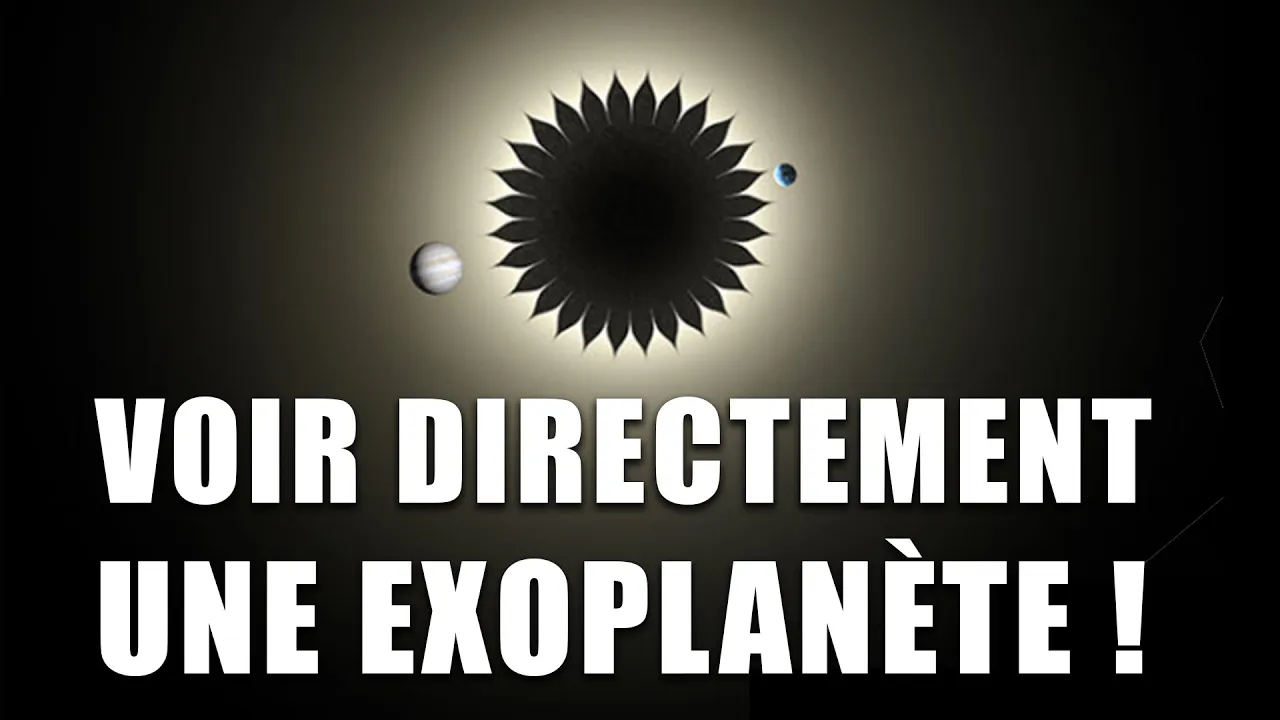
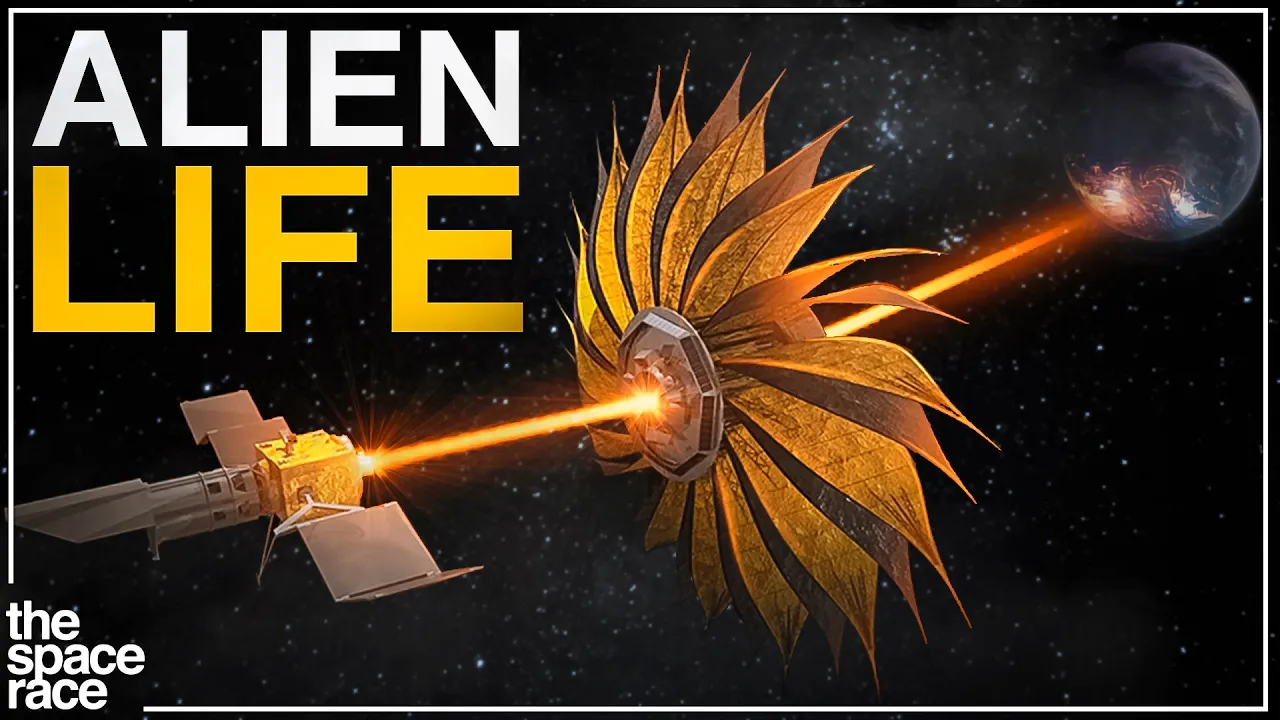
And in fact, here at JPL, there's a so-called starshade, okay?
The idea of a starshade is you launch a telescope and then you launce a separate spacecraft, okay?
And the model they have is about 34 meters in size, pretty big.
But you can wrap it up inside of a rocket and let it unfurl in space.
And this starshade, you would put between what star you wanted to look at and your telescope.
And so the starshade would essentially form a little shadow and you have to keep your spacecraft in that shadow and then look for the dim little planets whose light is not passing through the starshade, okay?
Lots of technical challenges, but there's a path ahead and there's currently proposals now to construct the starshade.
And there's actually a demo in one of the buildings here at JPL.
So this is what it would look like.
This is an earlier concept where the starshade would actually launch with a telescope.
One of the proposals on the table now that's being considered is you launch the WFIRST spacecraft in the mid-2020s and then a few years later, you would launch a separate starshade mission and the starshade would move about 80,000 kilometers away from the spacecraft.
Right here, they show like they're close together.
They won't be close together.
And the starshade has its own fuel.
And so it would sort of park in front of a star, WFIRST would look at it or whatever future mission comes up and you would study the planets, the faint planets.
And basically if you wanna get down to things that are about the size of Earth, this is really the next step you have to take.
Right now, we're not, this is gonna be a ways ahead of the 2020s.
I'll show a few slides on Proxima Centauri b, 'cause you've probably heard about this in the media.
So Proxima Centauri's the nearest star to the Sun.
It's about four light-years away.
And it was a great discovery, middle of last year.
And this was a ground-based discovery.
There were some astronomers in Europe that used a ground-based telescope with a spectrograph.
And they were measuring the motions of Proxima Centauri very closely.
And what they decided to do was observe it night after night, after night, after night, after night for months, okay?
They took a lot of telescope time to do this.
It was worth it, okay?
So what they found on the velocity signal of the star was this little 11-day ripple at the one-meter-per-second level.
Okay, this is one meter per second.
Actually, I'm not allowed to walk over the rug here.
One meter per second.
This is an Earth-sized planet tugging on a little star about a tenth of the size of our Sun.
So, this is the art for Proxima Centauri b.
This is Proxima Centauri, the little faint star.
It's actually a triple system.
Our nearest stellar neighbor is a triple, okay?
Our Sun is a little bit of an oddball as a single star.
Lots of stars come in doubles, triples, quadruples and up.
So the art here actually shows this.
There's two sun-like stars very far away, about 10,000 astronomical units away from the star.
And then here's the little red-dwarf star of Proxima Centauri.
So these are the designations, Alpha Centauri A, B and C and then the so-called proper names, Rigel Kentaurus.
This was the foot of the centaur, Proxima Centauri was the nickname for the dim red dwarf discovered about 100 years ago.
This is just showing a comparison of the size of those stars compared to the Sun.
Alpha Centauri A is a little bit bigger than the Sun.
Alpha Centauri B is a little bit smaller than the Sun.
Proxima Centauri's about a tenth the size of the Sun.
And there could be planets around Alpha Centauri A and B, too.
There was a purported planet a few years ago around Alpha Centauri B, so far that seems to have not been confirmed.
But so far Proxima Centauri b looks good.
This was showing a comparison of the Sun and Mercury's orbit.
Okay, our innermost planet along with, on this side, Proxima Centauri, dim little red dwarf.
If you can see, its luminosity's very tiny.
It's about.0015 times the energy that the Sun is putting out.
This is the habitable zone for Proxima Centauri and lo and behold, Proxima Centauri b, it orbits its star in 11 days, but this star is so dim that if you wanna look for a place that has liquid water, you have to move this close to the star, okay?
You're campin' real close to the fire to keep that water liquid.
Now we don't know, this planet is probably a rocky planet based on its mass.
We don't have an estimate of the radii, we don't have an estimate of the, we haven't seen the atmosphere or anything yet.
So right now, there's a bit of speculation on that.
By the way, eventually, these planets'll need names.
Eventually your kids and your grandkids and beyond, some of these objects are gonna be so interesting that they may have their own proper names.
You think of the planets in our own solar system.
So this is the first attempt the International Astronomical Union did.
Last year, there was a contest opened up to the public called the Name Exoworlds Contest.
And so there was a few dozen of these exoplanets were actually named and you saw a few of those in the talk.
And so some of these are like, there's a very nice example here.
The mu Aire system is known as Cervantes, Quijote, Dulcinea, Rocinante, Sancho.
So some of them have interesting themes based on characters from books.
The contest was, there was entries from all over the world.
You had to be in an astronomical organization to apply, so, but there was classrooms and amateur astronomy clubs that contributed.
And so there was a lot of great entries and so these are the ones that won out.
There was 600,000 votes from all over the world for these.
So this was the first attempt of the IAU at this but I suspect we'll be doing more of this in the future.
I just wanted to look back at Earth.
There's this great picture the Voyagers took, Voyager 1 took in 1991.
This was the Earth as seen from tens of astronomical units away from the Sun.
Oops.
Oh, it didn't show the other one.
Okay, I have another one, there was a picture that was just taken this week from Mars.
From one of the Mars orbiters.
It shows the Earth and the Moon as seen from Mars.
But at the end of the day, we'd like to also understand the Earth in the context of the other planets.
We only have one Earth, we can't run the experiment of forming the Earth and we probably shouldn't be tweaking too much with the chemistry of the atmosphere and the oceans.
Just a suggestion.
I like the Earth the way it is.
But we get to see all the different examples of how physics and chemistry comes together to form other planets.
So this is sort of a, it's January, this is the state of the galaxy report.
This is, I'm gonna give you a few results.
These are basically extrapolating from what we know now, okay?
We don't have a complete census of all these objects.
This is just from what we've been able to gather from some of these systems.
First off, exoplanets are ubiquitous, okay?
Nearly every star you see in the night sky has planets.
This is amazing, okay?
This is one of the terms that was in the so-called Drake equation.
How common are planets?
We now know planets are very, very common.
Sun-like planets, sorry, Sun-like stars typically have five or more planets.
There could be even more.
This is only down to the size of about half an Earth, okay?
So most of those stars not only have planets, they probably have several planets.
The super-Earths and mini-Neptunes, these things sort of intermediate between the size of the Earth and Neptune, they seem to be more common than the rocky planets.
They especially seem to be common around the very lowest-mass stars.
That may be a hint why the aliens haven't got here, yet, alright?
The planets, if there's a lot of these planets that have these big gaseous envelopes, they may not be conducive for forming life.
But anyway, so those intermediate-sized planets seem to be very common.
Planets form over a wide range of stellar properties.
It seems like everywhere we go in parameter space is a function of stellar mass, luminosity, age.
We see planets around very youngest stars.
The oldest planetary system we've seen so far is 11 billion years old, okay?
The universe is 13 billion years old.
This is one of the, we've seen a system with a full set of planets that formed less than 2 billion years after the Big Bang.
We see the planets as a variety, varying by chemical composition around the very metal-rich stars and around the very metal-poor stars.
We're starting to see some trends like the planets that, the stars that have more metals seem to form more Jupiters.
So that might be telling us something about the conditions for forming planets.
And also the multiplicity of the star.
We see planets around one-star systems, two-star systems, triples quadruples, so the planets are very resilient.
The incidents of the exo-Earths.
This is still being worked on.
If we called the so-called exo-Earths rocky planets, rock-dominated planets between about half the size of the Earth and 1.5 times the size of the Earth.
I picked that upper limit because if you go bigger than that it looks like the planets start to get very thick gaseous envelopes and they become less Earth-like.
If you go much below about Earth-mass in size, you start to have, the lower gravity starts to, you start to lose atmosphere.
It would turn into something more like Mars.
So, we're sort of looking at things within about half the size of the Earth in size and orbiting in their habitable zones.
So how many are there?
This is still being debated.
There's still, people are still taking the data and trying to statistically combine it.
And the answers are coming up over, there's a bit of a range, here, by about a factor of 10 or so.
But the answer's probably something like a half, okay?
There's probably about half a planet per Sun-like star where you've got a rocky planet.
That's not to say that's the incidence of planets with life.
There's a lot of things that can go wrong with those planets.
They may have the right size, they may be in the right place but there may be other conditions that preclude life on them.
I wanted to show this plot I had made several years ago and I just updated it last Fall.
This is kinda the Moore's Law for planets.
This is showing the year going back to 1989 and this is the number of planets but its logarithmic.
It goes one, 10, 100, 1,000.
And the remarkable thing is over the last three decades, this doubling time hasn't varied that much.
About every 27 months the number of exoplanets doubles.
And actually if you look at the missions that are coming ahead, we'll probably be discovering tens of thousands of planets with those missions and this trend looks like it'll continue at least well through the 2020s.
So there is a characteristic doubling time scale.
The interesting thing is once you start finding these, now you're gonna start finding planets that are more and more similar to Earth.
You're starting to find things that are within a small parameter-range of the characteristics of Earth.
And hopefully, we'll be able to get the spectra of those.
So, I'm gonna put this slide up, these are a few links to the Exoplanets Program: exoplanets.nasa.gov.
We have the NASA Exoplanet Archive down at the Caltech campus at the so-called MechSci Institute.
This is a shout-out to the Kepler and K2 Exoplanet Mission.
They have a lot of great graphics from that mission.
And I'm gonna show a little example for a minute or two here of the so-called NASA Eyes app.
This is an app you can download that lets you fly around the galaxy and visit the exoplanets.
So, I'm going to switch the screen to Eyes on, whoops, Eyes on Exoplanets.
And I have to move my computer without destroying it.
And now, we're gonna fly around the galaxy.
So this is, this is the NASA's Eyes app.
And you can rotate around the galaxy.
So these highlighted stars all have exoplanets.
The Sun is at the center of this distribution.
And you see this big plume of objects our there.
That's the Kepler field.
The Kepler Mission stared at 100 square degrees of sky for a few years and discovered thousands of planets in one direction.
So all those results I showed you from that mission, it was just from that tiny patch of sky in the constellations Cygnus and Lyra, okay?
The TESS Mission is gonna map the whole sky and there'll be thousands more exoplanets to be found.
And I wanted to show this has a little animation.
This'll fly us to Proxima Centauri in the nearest exoplanetary system.
So if you look hard enough, you'll see the Sun flying by.
We're zooming in to Proxima Centauri, the star, and then this is the little planet that was discovered in 2016.
And we can, you can sort of change the orientation.
It tells you about the planet, tells you the mass of the star, how many planets are in this system.
And you can get information about these.
And so there's a nice app here, you can go visit the planetary systems.
And with that, I'll thank you very much for your time and I'll open up to questions.
(audience applauding) So there's a microphone in the center of the room.
So I ask if you, if you ask a question please use the microphone.
- Can I go? - Yep.
- Hi, great presentation, thank you.
I had a question about Hot Jupiters.
I was wondering how it's possible that they form around Sun-like planets.
- That's a very good question.
So, as soon as they were discovered about 20 years ago, the theorists went to work trying to explain how they form.
There's a couple different ideas.
One of them, I would say the idea that probably has the most merit is that there are Jupiters that form far out, just like our Jupiter did but they were able to, they had gravitational interaction with their inner disk, there was a torque between the disk and the planet.
And the planet can actually slowly change its trajectory.
But, you can tweak the initial conditions on these experiments and you may get a Jupiter that travels all the way in and runs into the star.
You may get ones that move in and then stop.
You may get ones that don't move at all.
And so there seems to a range of stopping points.
It's possible that our Jupiter moved in, cleared out, there really isn't that much matter in the inner part of our solar system compared to Jupiter.
In fact, Jupiter's existence itself may be why there's so little mass in the inner planets.
There's a model called the Grand Tack where Jupiter and Saturn and the other planets, the outer planets were migrating a little bit and Jupiter may have swept out some of the region near us.
It's conceivable the planets could have formed in situ.
It's a little hard to believe because we think that if you have ice, ice sticks together a lot better than rock, especially hot rock.
And so the conditions for these planets accreting out of that disk, it can go much, much faster if you have a lot of ice.
And so you need to be a couple times further the nearest Sun-distance where water becomes an ice and carbon monoxide, carbon dioxide, these things are very good at forming ices that stick together.
So, but there's been some planets where they think they may have a large rocky core.
You may need tens of Earth-masses to form these along with a hydrogen-, helium-rich envelope.
So, we may be seeing, there may be a variety of mechanisms.
The other hint is some of the hot-Jupiter systems have stellar companions.
Those stellar companions could have altered the orbits of those Jupiters.
And if they were sent in on sort of comet-like orbits, the torques from the star itself would actually circularize them and bring them closer to the star.
So, there may be a few different physical mechanisms.
- Thank you. - Yep.
- It was probably a really good reason for this, but why does the starshade have to be so big and far away rather than smaller and just closer to the lens?
- I think the answer is the, so you need the, the position of the starshade with respect to the spacecraft, you need to get within a couple meters, right?
It has to be very, very, basically about as much wiggle-room as I have on this rug up here, okay?
And this is one of the technical challenges, is keeping the orientation of the starshade and the spacecraft so close.
- [Audience Member] I guess it has to be big enough to create a shadow, also?
- Yeah, you have to, you want the spacecraft to be in the shadow that the starshade is creating.
So it's not purely the geometric size.
There's some other optical complications that you have to take into account.
But the model they're working with now, we're talking tens of meters in size.
- [Audience Member] Cool, thank you.
- Mm-hm.
- Then, as a follow-up question to that, is the starshade, is it the same idea as a coronagraph?
Is it the same thing and as kind of a follow-up to that, is that how much, how well does it blot out the light?
How, like, what planets, how far would those planets be away from the star such that we could see them?
- That's a great question.
So, if I had some more time, I would've talked a little bit more about the coronagraph.
So the coronagraphs are essentially little, miniature starshades you have inside of your telescope.
You can blot out the star within your telescope.
And you have to create, you have to make them in certain shapes that have to be very precisely machined.
How dark can they get?
I think the answer for the internal coronagraph in WFIRST, I think now's 10 to the minus-- - Nine. - Nine?
Yeah, so, something on the order of a part in a billion.
So, you're getting down to seeing things like Jupiter around the nearby stars.
The other thing to consider is the so-called inner-working angle.
And so for the set-ups that we're taking about, for the telescopes that we're talking about, the inner-working angle's on the order of a tenth of an arcsecond.
So something like one over few ten-thousandths of a degree.
And so if you wanna see, you know, planets like Jupiter, Neptune, et cetera, you'd have to look around just the nearby stars.
If you move the star too far away, that angular separation gets too small.
- And then, a follow-up to that, is does the starshade, would that move so that you could look at multiple stars?
- Yes.
Yeah, I think people would scream if it only looked at one star.
- [Audience Member] I would think so.
- The idea is the starshade, so you would launch your telescope, your telescope would observe the star for days or weeks on end, but you need to integrate all that signal to get the faint light from the planets.
And then the starshade would, has some fuel, and it would move to its next orientation.
And it may take days or weeks to get to that next orientation.
In the meantime, you have a space telescope which can do other things.
It can look for microlensing events or study dark energy and galactic structure.
There's lots of other astrophysics you can do in the down time.
Not really down time, but, in between observing the exo-Earths, okay?
- One more question.
So with respect to circumbinary stars, have we found any planets that orbit within the boundary of two, of a binary system or are they-- - Yes. - all on the outside?
- Alpha Centauri's a perfect example.
That's an Earth-sized planet orbiting a little red dwarf.
If you go 10,000 astronomical units away, you've got two Sun-like stars orbiting each other, Alpha Centauri A and B go around each other about every 80 years.
And they, themselves, there's dynamically-stable zones around each of those about the size of Mars' orbit where there could be planets.
So all three bodies could have planets.
- Thank you.
- It looks like we have some, whoops, sorry.
We have some questions from the internet.
It is known what the effect of dark matter is on gravitational lensing if any.
Okay, so when we're talking about dark matter, the dark matter seems to be distributed on very large scales.
We're talking thousands-of-light-years scales.
The dark matter is probably everywhere but it's very, very low-density and particle physicists have not been able to detect it, yet.
But we don't think its having an influence on the scale of planetary systems, on those scales.
Where we really need to worry about dark matter if you will, is on the scales of galaxies and galaxy-clusters.
And that's where it seems like we're missing, we're missing much of the matter in the universe.
The next question is: how can information be discerned about any one planet using the wobble method where there are likely multiple planets causing their star to wobble?
That's a great question.
You need to watch them for a long time.
If you were watching, if you're our Sun, if you were an astronomer who was tens of light-years away and you're watching our Sun, Jupiter is tugging on our Sun, Jupiter has a 12-year period.
Saturn's a pretty big planet.
It has a 30-year period, so it's tugging on the Sun.
And then the Earth and the Venus, Earth and Venus are both tugging on the Sun.
And so you actually get a fairly-complicated pattern and you need to monitor them over many years, okay?
And this is, you know, teasing out the signals over very long time-scales, this is technically challenging.
We're used to thinking of these missions in terms of years, but we may need to, you know, to properly characterize the masses of the planets further out, we may need missions that last decades, so.
You need to do, you need to do computer modeling and try different solutions until you get one that statistically looks right.
Yes?
- Yeah, I just wanted to say that if you go to that top link, the website, exoplanets.nasa.gov there is a lot of good things to read there and some good videos that will help you understand the coronagraph and the starshade and what the strengths and difficulties are for each.
- Yes.
Barely scratch the surface with graphics for the coronagraph and the starshade, so I definitely encourage you to go to exoplanets.nasa.gov.
Any other questions?
- My question is how will we know when we've found a planet that may have life on it?
What are you looking for?
- That is a great question (laughing) and is a whole talk in itself.
There's the so-called biosignatures.
I mean, we're obviously looking for planets similar to Earth that would have, you know, features like oxygen, you know, some CO2, maybe see methane.
There's a lot of discussion now.
What are the unique chemical signatures that you would see in a spectrum?
Because what we're finding is there may be abiotic reasons for having oxygen-rich atmospheres that may not require, you know, photosynthesis.
So, right now, people are studying how do you, what chemical signatures do you look for that are unique?
You'd look for chemicals that are out of equilibriums.
If you start seeing oxygen, CO2, methane in certain abundances, you might ask, well why is there so much methane there.
Oh, there's cows there, right?
(audience chuckling) So, you know, if we look at a planet like Mars, you see CO2, and Venus, you see CO2.
You would would know that there's a very strong greenhouse effect in Venus' atmosphere from the depths of the carbon dioxide feature.
We have some CO2, little bit, just enough to warm up the planet on the order of 14 Celsius.
You know, there's different things you'll be able to tell from the chemical signatures.
So that's a whole talk in itself.
And we've, some of the larger planets, some of the larger transiting planets, people may be able to tease out the chemistry and see evidence of certain molecules.
A few of the directly-imaged planets, the giant planets, they're also seeing things like methane and hydrogen in the atmospheres.
- [Audience Member] Thank you.
- In addition to the, sort of the unusual-mass planets that we don't really see based on the solar system model that we have, have we seen any super-dynamic systems where there's multiple orbital planes, so you have one planet over here, you know, several on one angle, you know, and very eccentric comet light orbits or is it all very sort of conventional, what we see here?
- Ah, so that's been one of the other surprises.
We look at our own solar system, the planet orbits tend to be fairly circular.
There's a few exceptions.
You know, Mercury's is a little eccentric.
But most of the planets like Earth's, Earth's orbit is circular to about 2%.
Most of the planets in the solar system, their orbits are circular to about 5%.
A lot of the systems we're seeing, a lot of the ones that Kepler's seeing that are very close in tend to be very circular.
But there are ones on very eccentric orbits.
A lot of the Doppler-spectroscopy-detected systems, some of them are on very eccentric orbits.
They've seen Jupiter-like planets on comet-like orbits.
They've also detected planets orbiting very close to their star going the opposite way of the star's rotation.
Bah, how do you do that?
(laughing) You know, they've had to, you know, that's a whole can of worms in terms of dynamical simulations.
You must've had a very complex, it must've been multiple planets, some collisions.
You know, how do you get a system where one of the planets is going the wrong way?
And at a very steep angle with respect to its star?
So, they're not all nice and circular like our solar system.
And that's actually an open question, is just how unique is our solar system in terms of the dynamics?
- Thanks.
- Another question with respect to the orbits.
I guess for us to be able to detect the planets, they have to cross the line between us and their sun? - Yep.
- And so how much of a coincidence is that that there are orbits that have that property and how often are they completely misaligned such that they never cross that line?
- Well, most of them are not passing in front of the star so we have to be, you know, with missions like Kepler, literally, you're looking at over 100,000 stars and we're only seeing a few thousand where the planets are passing in front of the star.
So, statistically, you have to take into account that it's less likely that you would see the planets pass in front of the star as you get further away.
There's just a lot more, if you started varying the orientations of the orbits, you know, 99.99% of the time, you're not gonna see it passing in front of the star.
So this is one of the reasons the Kepler Mission's been so sensitive to the planets that are very close in.
So, its, you know, those are the ones we can see.
What we're doing is we're, based off of those statistic, we're trying to figure out what the distribution looks like for all the planets, taking into account the ones that we can't see.
One of the frustrating aspects of the planet-detection techniques is they all probe slightly different parameter space.
Like the transit method, you're very sensitive to planets very close in and you get the radii.
And occasionally, you can get the mass if the planets are tugging on each other.
With radial velocity, it's tougher to get the low-mass planets, but you can detect the planets further out.
Microlensing, you're very sensitive to bigger, or to planets at a wide range of masses but mostly very far away from their star.
They all cover different parameter spaces and so we're trying to piece together what the distribution of planetary properties is building off the strengths of these different techniques.
But no single technique's gonna give you the whole answer.
Any other questions?
Okay, I'll take one more.
- Hello, I'd like to keep it short.
I just had a question.
You vaguely touched on Planet 9?
And I guess digesting data to see if it really was a planet or just debris.
Do you think you'd be able to give us a heads-up on a timeline, possibly or when we would know more about it?
- (laughing) There's other people down the road to talk to about that.
I would say what looks interesting is that we're finding there's a whole belt of objects out past Neptune's orbit, the so-called Kuiper Belt.
Over the past two and a half decades, been finding more and more objects out past Neptune's orbit.
Pluto and a few of the dwarf planets just tend to be the biggest ones, Eris, Makemake, Haumea.
There's thousands of these big objects out there.
And as you go further out, out, sort of 40, 50 astronomical units, you're starting to see a little bit of clumping in the orbital properties of some of the very, very distant objects.
And it looks a little, it's interesting.
There's not many of them, but their properties are starting to clump up.
Why would they be clumped up?
It's almost like there's preferred orbits.
Now, this is for a very low number of objects, but over time, they've been finding more of these objects, very far out.
Things on orbital-time scales of thousands of years.
These spend most of their time hundreds to thousands of astronomical units away from the Sun.
We can only catch them when they're very close.
Very close, out past Pluto, you know?
40, 50 astronomical units out.
That's when they're bright enough that we can see them with our telescopes.
They're very dim, they're very slow-moving.
And so, it's only been the last few years they've been able to piece together a few of these and they're starting to say, hm, there's some interesting properties.
You know, that the orbits are starting to clump up.
Well, what would produce a clumping up of those properties?
And so, you know, I'm starting, I was skeptical initially, I'm starting to take it a little bit more seriously when there's results from multiple teams that are working on the dynamics.
They're doing simulations and are starting to come to some similar constraints.
And so, I think what the hypothesis at this point is you're talking about an object that's probably about 600 astronomical units away from the Sun, probably something like five or 10 Earth-masses, maybe something intermediate between the Earth and Neptune in size.
Am I 100% sure they're gonna find it?
No. (chuckling) We've been burned too many times.
But it's, when I see multiple teams doing these simulations and coming to similar conclusions and starting to say, it's probably in that region of the sky.
You know, then they'll actually show a plot and they'll say, it's probably in this banana-shaped region of the sky and we think we know the mass and we think we know the radius and the orbital period.
Then, I start to take that seriously.
The reason it hasn't been discovered yet, if it is real, is because the region of sky where it is is probably, is very big.
And it's probably so faint, even if it's something the size of Neptune and it's 600 times further away than the Earth-Sun distance, we're talking about something that's about, in magnitude parlance, 24th, 25th magnitude.
This is just many, many factors of 10 dimmer than most the things you're used to looking at with a telescope.
So it takes up a lot of telescope time, you need wide-field images and they need to be deep.
And that means a lot of time on telescopes and you have to convince astronomers to give you that time to carry out that study.
But now that there's been multiple teams, there's multiple teams searching and there's multiple teams coming to similar conclusions about where on the sky it might be.
I would not be, I would not be shocked if next week there was an announcement but it could be in a few years, it may disappear.
Maybe there's some observational bias we hadn't thought of in the orbital properties of these very distant objects that may be effecting the, that may be allowing astronomers just to find ones that have certain properties.
But my money now is they're probably gonna find one.
And it's probably gonna be something smaller than Neptune.
- [Audience Member] Thank you.
- And when they do, we need to build a probe and send it there as fast as we can.
And along the way, we can take pictures of exoplanets.
So, okay, that may not go over well with some people but we should definitely build a probe to Planet 9.
Send a probe to Planet 9 if it's discovered.
- [Audience Member] Thank you.
- Okay, I think we'll close up the questions there.
And thank you very much for your time, I hope you enjoyed the talk.
(audience applauding) (quiet audience chatter) (cheerful chiming music)
Up Next
11:41
Detecting Life on Exoplanets: The Galileo Experiment's Legacy
@pbsspacetime
1.2M views•2017-08-24
61:17
First Billion Years of the Universe with the Square Kilometre Array
@iaaudc
121 views•2022-05-26

6:25
Kepler's Laws of Planetary Motion Explained (Educational Astronomy Video)
@Peekaboo_Kidz
404.9K views•2023-02-17
6:10
Gamma-Ray Bursts: Cosmic Snipers Explained | Astronomy
@kurzgesagt
15M views•2016-07-31
Related Study Plans & Knowledge Roadmaps
Structured learning paths in Astronomy
astronomy
Reionization: Pop III Stars, IGM & 21cm Line
01Foundations of Cosmology & the Early Universe
02Population III Stars & Cosmic Dawn
03Physical Mechanisms of Reionization
+ 2 more learning modules
17h5 modules
Explore Roadmap
astronomy
Planetary Rings: Dynamics, Roche & Resonances
01Foundations of Gravity and Orbital Mechanics
02Tidal Forces and the Roche Limit
03Structure, Composition, and Collisions
+ 2 more learning modules
10h5 modules
Explore Roadmap
astronomy
Asteroseismology: Stellar Waves, Ages & Cores
01Foundations of Stellar Astrophysics & Wave Mechanics
02Stellar Oscillation Modes: P-modes and G-modes
03Mathematical Framework of Asteroseismology
+ 2 more learning modules
35h5 modules
Explore Roadmap
astronomy
Adaptive Optics: Physics, Engineering & Control
01Foundations of Wave Optics and Wavefronts
02Atmospheric Turbulence & Optical Distortion
03Wavefront Sensing Technologies
+ 3 more learning modules
35h6 modules
Explore Roadmap