























Neoliberal economic policies, which replaced post-WWII Keynesian systems in the 1980s, created systemic vulnerabilities through wage stagnation, rising inequality, and unsustainable debt accumulation. The 'software bug' in this economic model—where productivity gains went to capital rather than labor—led to the 2008 financial crisis and ongoing economic fragility. This economic crisis has fueled global populism, as ordinary citizens face stagnant wages, high debt, and no inflation to help pay off obligations, while elites continue to thrive. The result is a political landscape where both left-wing and right-wing populists emerge, blaming globalization and elites, creating a cycle of political instability that threatens democratic institutions worldwide.
Global Trumpism: Neoliberalism's End and Economic Future | Mark Blyth
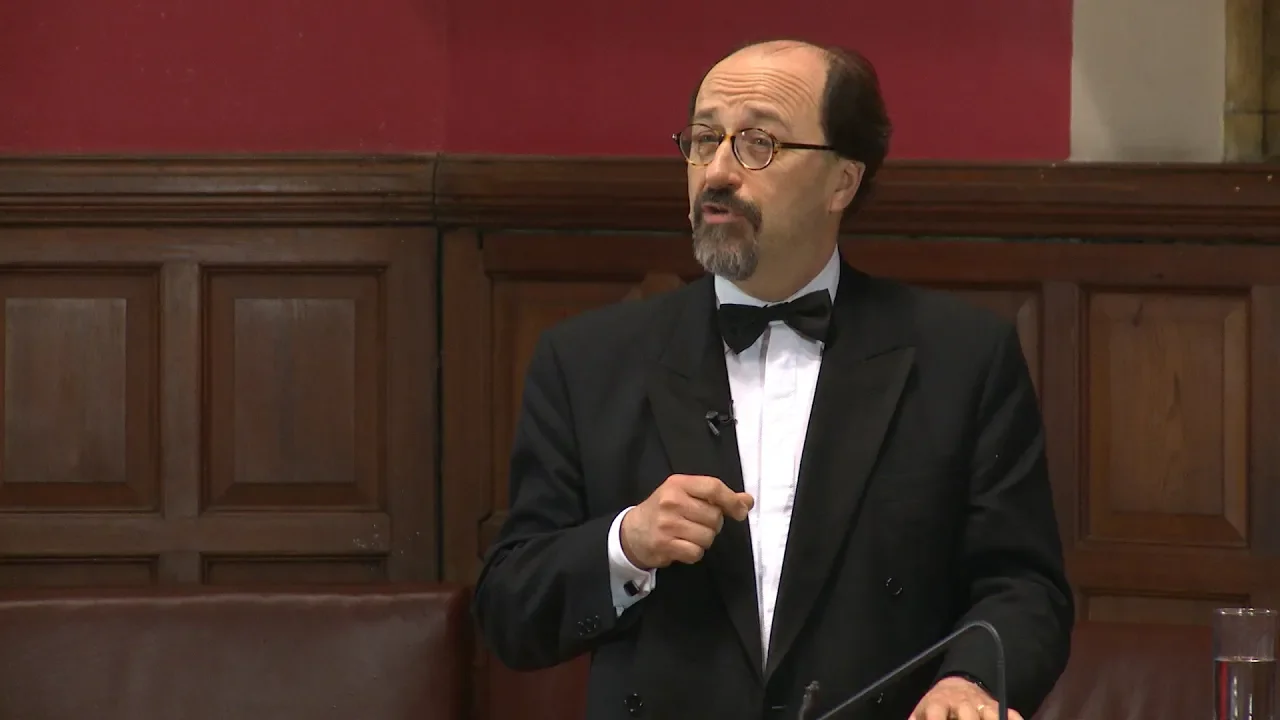
Added:W elcome to McMaster University's convocation Hall which is located on the traditional territories of the Mississauga and Hodanashoni Nations and within the bow within the lands protected by the dish with one spoon wampum agreement I'm Stefan Scorafa I am a philosophy professor here at McMaster University I'm also the chair of the department before I introduce dr. Boyce just let me mention a few words the first thing I'd like to say is that this event wouldn't have been possible without the generous support of the Socrates project the Socrates project is an ambitious two-year pilot that addresses the urgent need for universities to reclaim and reinforce the fundamental values of thoughtful academic inquiry critical thought informed debate and human expression the Socrates project combines a range of complementary initiatives that engage the internal and external communities supports and promotes interdisciplinary collaboration and partnership raises the profile of the liberal arts promotes vibrant and robust high quality academic discourse and nurtures critical thought discernment and carefully reasoned judgment one thing I should mention is the last event of the season for the Socrates project will be next Thursday July 4th the statute Wars if you if this sounds interesting you might check out the website socrates dot McMaster dot CA before just two more things before I introduce dr. Blythe I will be quick let me just mention that this event is actually part of a larger event if you're interested in the talk this evening you might be interested in the larger event that went hand-in-hand with this event it was a summer school in capitalism Democratic solidarity and institutional design you can check this out at WWC later ad design 2019 dot-com there will be a number of talks that will be on the website and the Q&A is to the talks and though and this website will be curated with us with your supplementary readings that kind of thing if if you want to learn more about the kinds of things we're going to talk about today just a bit of housekeeping the format for the day will be about a 40 45 minute talk and then we will open things up for a Q&A with the audience at large at one point we had envisioned having a small panel of interlocutors one of the panel members was not at the last moment was not able to come into town today and then we thought they don't want to listen to us they want to hear both anyway so let's just give him a little bit more time to talk and then you can have a little bit more time to ask questions of him okay now let me just introduce dr. Blythe he he is a political science professor at Brown University he works with the Watson Institute there he specializes in international political economy he's written many articles and books these books include great transformations austerity the history of a dangerous idea and the future of the euro he has I think as many folks will know he has an active social media presence is also well known for accurately predicting Trump's election and the president referendum outcome but I think more important than that he's well known for having a plausible and very interesting account of the mechanisms that are driving these kinds of events across the world and he's going to come talk to us today to share what he has to say about that with you okay that's it for me the the only thing I'll do after that is moderate the Q&A let's bring out dr. Blythe Thank You Stefan so I have my Madonna mic can you hear me oh there we go it's good hello and thank you for coming out this is a beautiful warm summer's evening in Canada you don't get many of those so I'm deeply grateful that you're giving it up to come and listen to me particularly when you can get most of this on YouTube I'm Scottish as you know in Canada you're like duh so what we're drowning in Scottish people half of you have probably Scots descent I live in the United States where they go what's he saying I was about Trump actually what's he saying what's he saying and usually what they say is I sound like Shrek and so being in Canada of course is hilarious because that's Mike Myers right who's out of the OL as at the Ottawa Valley I think he comes from and his parents are from Glasgow which is why he can do that totally authentic Scottish accent so so in tribute to Mike miles I'd like to begin by saying this donkey so there we go that's the out of the way so I just realized the vice time here you won't see any of the slides so that's kind of stupid I'll come over here there we go I hate starting a poor deal like that because how always want its time there and go dearly beloved in this shining example of the paintings up here instead of it proves it proves that until very recently we didn't give a damn about diversity it's it's like a monument to whiteness it's like yeah we didn't tell you this I used to be a comedian you'd never know alright so let's get started Global trumpism where did that come from oh I have to do that stuff to get there is it gonna work yes ah damn it's going too far come back come back well this is going to be fun don't all right there so I wrote a piece and foreign affairs that coined the term and this was sort of the tagline over the year of neoliberalism is over the year of neo nationalism and just begun and then of course everyone and Twitter goes yeah it's not right here's what I my statistics tell me someone else that was like see here's my in slides so though yeah if I do this can you just pluck it that's so much better thank you all right so here's the rogues gallery as you can probably see you know who this lad is, looks familiar?.
he's the mr. bean of Ukraine right so he's the comedian who won the election and Ukraine now people are like oh my god a comedian right but they forgot that Italy is run by the Cinque Estella the five star and that was founded by Pepe Grillo who was a comedian and then there's a guy called Martin something-or-other who runs Slovenia who's also a comedian so basically three parts of Europe broadly construed are now run by comedians anyone know who this is the crappiest James Bond villain picture in all time with a cut that's the guy that's up there in the Netherlands from Porton Islamophobe of course up here exactly the Payne family business and then down here Molinaro exactly a guy who my favorite boss an auto course there's a hundred thousand people I'd like to kill I'm like only a hundred thousand that's nice of you and then of course this is the exit poll at 6:00 p.m. on the night of the election so we went to but went to bed with my body to a German I would need to be and my wife said to me you're really are sure he's gonna win on you oh yeah so she could barely sleep and then she woke up but like second in the morning and checked the phone and she punched me she lets her woke up that day she went this is great we've got team going on all right so where did this eruption come from here we go you have to pay attention no because sometimes these things move quick so there's lots of ways of explaining this and I find the most effective way to do is to talk about computers so here's how this works there's lots of different laptops in the world and if I dropped them all on the floor they all look kind of the same so they all have memory they all have a motherboard they all have a central processor they all these in bits but they're all slightly different so the hardware is configured from the same stuff but it's put together in different ways guess what sewer capitalist economies right so the Canadian economy is like the American economy only it's not right or if you do a bigger contrast Germany has a capital market but 50% of all the firms never go near a stock market they don't issue shares they don't Lester totally different beasts the American stock market is absolutely enormous its main function is so that people can do what are called IPOs whereby they lie to investors and steal money nobody actually uses it for investment that's a huge lie right but anyway the point is the different the labor market of Germany is very different from the labor market the United Kingdom whatever but they're all of a kind right you recognize them but all different so it's a bit like Apple versus Acer versus the star in the next thing so the other part of it are the ideas so when we think about economic ideas whether those are Keynesian economics or classical economics or whatever these things are they're a bit like the software that runs the hardware and that means there are compatibility issues you can't run American libertarian ideas on Swedish Social Democratic hardware it's just not going to work hence why the context of our economic ideas is ultimately a political contest right so you're trying to run different types of ideas on different types of computers and at certain points in history you get a kind of homology that is to say a certain set of software everybody runs a kind of the same and the hardware looks broadly similar now the story I'm going to tell you is the following what happens is each time you do that it works for about 30 years and then there's a bug in the software and that bug in the software gets bigger and bigger and bigger until the system crashes then when the system crashes if you're smart about it you do a hardware modification and you rewrite the software and then it runs again for about 30 years and then there's more bugs but the different bugs in the software and then you go and it does it again right that's what capitalist economies do regardless of the type look so we're good with us right that back one no I'm actually in control I I will not move you will doing it together they're a burden all right so you oh my god so if you come out of the cold we've come out the cold not the corner and go into the cold water basically if you come out with the Great Depression in World War two what was the one thing that every government that wasn't in the communist bloc had to do that was full employment because you'd went through a whole generation of joblessness there were no welfare states at that time to soak up the damage and what that led to is a great deal of desperation and what that meant was fascism and communism and it nearly destroyed capitalism so even though the elites that were intact in the investor classes in these countries would have loved have gone back to the old lazy fair ways they knew they couldn't so you have to manufacture one thing full employment now how do you do that there's lots of different ways and if you've got different hardware you have to do it in different ways but pretty much every country decided we're going to have a national economy we might even nationalize some of the commanding heights so that we've got real control levels we can pull the one thing we're going to do is we're going to make sure that finance stays at home right you can't just move your money abroad very hard to do that because we want our investor class to invest at home and when you can force that higher rate of investment what happens well you're going to get high wage growth and that's great because that gives people money to spend now the only way you can do that and can maintain that is if you increase productivity to pay for the wages but how do you get both sides to agree that well you have things like cost-of-living contracts or what the gentleman is called corporatism where big labor is recognized by big business and they negotiate over productivity and pay and not was the standard set up right across the world from the 50s through the 70s the result of that as a system of very high taxes and transfers in the United States in 1957 the top marginal rate of income tax was 91% yeah a we see suddenly looks like a conservative but here's the difference nobody paid that rate hardly anyone maybe the headed GM because what happened as a result of this over what's called the great compression the top end of the income distribution went down the bottom end went up and the whole thing moved up at once that was the birth of the middle classes so the metal paid 90% of the taxes hence nobody paid 91% and nobody paid nothing and everybody paid 35 right what that meant was overtime labor share of national income you think national income is a big pie of a hundred percent they got more of it and business got less and the interesting thing was nobody knew the name of the person who run the central bank they were completely unimportant no run forward right to just ten years after that comes to an end in 1980 what happens the neoliberal order price stability that's the one thing media have certainly the commitment to full employment is gone in the famous words of the British Minister Norman Tebbit unemployment's your problem not the government's problem get on your bike globalization all of a sudden no more national economies it's good to be global we're going to be integrated we're going to have supply chains and we're going to trade with each other open financial markets capital free to go anywhere to find its highest return no obligation to invest at home you have a global responsibility to your shareholders not to your citizens flexible labor markets no more unions no more negotiations you find your price in the market and be happy about it as a result much lower taxes in transverse capital share of national income becomes very high this is the inequality of the moment and Labor's hits an all-time law both capitalism's configured in different ways with different ideas yes there we go so what was the bucket in the first one well many of us might be old enough to remember when back god damn it could be go back one thank you yeah technology you might remember this it was inflation and the reason happened was very simple and it actually wasn't the story they told us like the state spent too much the same as they did after the financial crisis that's always been all sure what actually happened was this imagine that you have a commitment to run in full employment for 30 years what that means is by definition the median wage has to go up now you can pay for a lot of your business if you can keep productivity ahead of pay but eventually you kind of have a technological wall and you keep asking for more pay and what that also means at the bottom end of the income distribution goes with it so what that means is your median workers getting paid more if you want to get skilled workers you need to pay through the roof and the dumbest people you've ever met can leave their jobs at noon and get a new one at four a higher wage that's kind of unsustainable because the only way businesses can cope with us is by passing on in prices so then label which is back and organize says you promised me four percent but now there's five percent inflation so I've just had a pickup so I'm going to go on strike remember all those strikes in the 70s and then business said no you won't and they were yes we will so they did they had a strike and then business eventually said ought to have 7% and then inflation went to 8% so both people came back and said I just had a pickup and thus spiraled out of control and that was the bug in the software now that bug was diagnosed by a software engineer was we call economists called makyo kolecki back in 1943 and he predicted in an article which I'll be happy to send any of you of you sent me an email or you get off my website from political quarterly all words no math in 1943 and he says this whole thing is gonna blow up because it destroys management's right to manage it's going to create inflation through the wage Channel and ultimately what it does is it makes capitalists really upset because if you've planned to invest over a 10-year period and get a five percent real rate at a ton if inflation goes to ten percent you might as well take your money right in the back of the Houston Barnett so by the time you got to the high double-digit inflation in the seventies capital basically went on strike they said why bother to invest whatever I think I'm going to get is an investment five years of now the inflation is probably going to be higher so what happens to an economy that's running at full pelt with super tight labor markets if the investor class stop investing well your rate of growth is gonna fall and eventually you're going to start to see some unemployment while inflation still going up which is what we had in the seventh is so clearly this can't go on right so what do you need to do see if I can get this one go on yeah there we are here's your hardware modification bald white men with gold medals otherwise known as central bankers suddenly they become important because control over interest rates was given away to them politicians didn't get decide that anymore that was a global phenomena and the software upgrade who is what we call neoliberal politics because if the problem is inflation the solution is to get the money at the hands of the politicians give it to independent central bankers and then globalize integrate liquidate privatize and do all the rest this stuff would be nevertheless that here's why because if Canadian labor has to compete with American labor and they have to compete with Mexican labor and the whole lot of you have to compete with Chinese labor what do you thinks gonna happen to wages after I make litt unions borderline illegal they're gonna go down and then what's gonna happen to the carpel share it's going to go up but this time with no inflation so that 5% real rate of return is going to become 7% going to become 10% what so what happens to the capital labor share of national income welcome to the inequality of the period bugs in the software so there seemed to work for a while but underneath it all there was a problem ah no no no but one there is and here's the problem so basically that first computer kinda starts to get into trouble in 1973 look what happens in 1973 Paula contracts means that the wages adjust the productivity so that they're relatively equal is shared and then they don't and then hourly compensation essentially stagnates while productivity goes up that gap is essentially the inequality spread the United States economy sees between business and labor and I'm going to show you that in three different forms so all that productivity has a monetary value so how much is that monetary value let's find out not that one thank you so if you're in the bottom twenty percent from 1979 to 2016 you haven't seen any of it in fact you've lost one percent if you're in the twenty to forty percent you have seen a point seven seven percent real wage gain since 1979 in other words the square root of deadly squat if you're in the metal you have done well you got nearly three and a half percent over forty years if you're in the upper medal you got ten percent which is just about enough to say that you're trading war and the whole thing goes to the top twenty seven point four one percent for the top twenty percent now if I break the O which I will in a minute you see where all those returns really went to next one so here's that thing I keep talking about called labor share of national income here's 1973 it peaks at about sixty five percent national income so what that means is everybody who gets a w-2 which is 90 to 95 percent of Americans there are the people who are there and that means they get sixty five percent of the whole pie right where are we today what diner about fifty seven percent so you go from there down to there by the way that's the stock market bubble and 2000s and that's the only one that ordinary people got to play in which is why they want it and lost it but that goes all the way down here so that shift from basically 57 up to 65 that's that prior gap in a different form if all that productivity is good essentially five percent to population that's the result is the swing and who gets the share of the pie you with me yes okay good next one there we are right now this is globally this is fun so of course the defenders of that regime will see yes but you're missing the point I take a global view of things because I'm a globalist and I'm really concerned with the welfare of the whole planet and on a planetary level this new regimes brilliant because like think about it China has taken five six hundred million people out of abject poverty and made them up to live between six thousand and fourteen thousand dollars a year depending will of size the greatest poverty reduction program in human history that is nothing if it's NAFTA absolutely right sharp or as they would say in Quebec but this is total income growth across all world regions 1980 2016 so here is literally the purest person in the world here is literally the richest person in the world you can't see this it says 99.999 so this is the thousandth of the 1% right so look what happens that's China all of that is basically China they got a bet they got the bottom 50% capture 12% of total growth now there has to be a squeeze somewhere because if you're integrating with Chinese labor core wages are going to go down and that's what happened so this is the squeezed bottom the 90% of the US and Western Europe that hardly got appeared that's that bit now look what happens in 90th percentile not much action going on 99th you're just to there so the 99th percentile of the whole world hasn't done as well as China in terms of absolute growth but you're the 99th percentile in terms of how rich you are there you're only going from the poorest person in the world to the 40th percentile so yeah you can grow Astor but you'll never be as rich as that person so look what happens next ninety nine point nine ninety-nine point nine nine ninety nine point nine nine nine that's where all the money is the top one percent as a whole this bit captures 27% of total growth so what that means is the top one percent globally took more than the entire emerging economies including China now let's just do this for the US and Canada and Western Europe poorest person's income growth how much they're growing over time a wee bit flat flat flat flat flat flat 90th 1999 ninety nine point nine nine ninety nine point nine Oh look same shit different smell it's all gone dear now this isn't a jealousy story don't get me wrong right I'm loaded I'm part of this problem and it's a problem because it's totally unsustainable that's the problem it's not about we should take linear people but they don't deserve it I don't give a sh about that I care about the fact that this is fragile and won't explain why and it's very very dangerous not least of which because I have to keep giving talks about it coming to the next one right so just put yourself in that position you're not really getting a weeds race for 30 years how do you keep it going let's see what happens next one please so remember that thing between productivity and then productivity went up which wondered the Green Line is the growth of broad money in the economy which reflects how much people's partisan power is there for real and also how much banks have in deposits this is bank assets to GDP no here's the greatest trick in human history what a bank calls an asset anybody in the normal world cause a liability so when you have a mortgage right the bank says that's a liability because it is because they've given you this money they might not get it back as far as they're concerned that's a liability they like their asset is the income stream that you pay them every month now to you the mortgage is the liability the house is the asset and all sums to zero now if you live in a world where basically income isn't growing and yet bank's assets which are everybody else's liabilities are growing almost exponentially over a 30-year period that tells you what the the banks are lending an awful lot of money now why would they be doing that well remember I'm not first computer money was tight if you don't have to remember it you remember things like higher purchase restrictions right remember like interest rates like eighteen percent if you want to buy a washing machine right it was all for macroeconomic control that was that these were control variables for the government it's West and on one reading of the world that's crap because there's a huge amount of capital out there that could be lent and the whole point of the banking system is to intermediate between people who want the money and people who have the money rule number one of banking never give money to anyone who needs money that's an entirely different proposition but if you want to buy a washing machine different lenders can compete in a free market and you should be eighteen percent you should be five percent in actuality you buy on a credit card you order default and you pay thirty seven percent but that's a different story that's the theory at least so anyway there's been a colossal ramp up and Bank assets which are other people's borrowings next slide please now this is when it all started to go mental I lived in Baltimore and tooth from women from 1997 until 2009 yeah more or less and in 2004 it was the same in Canada but in the United States you couldn't get in your door at night you'd open your door and you push it in and you couldn't and because there were 300 credit card offers behind the door do you remember this period there were forests in Java falling just to make these credit card offers and this is my best I love this one this is a real billboard this is not altered this is not fake news Citibank in America had a global had an advertising campaign they spent a hundred million dollars that's how much money they had globally advertising the slogan is just a slogan between 2003 and 2005 live richly open a cravings account so so sociologists in Philips philosophy does this wonderful term normalization right it's when something totally insane becomes normal and and that's that that's that one right because I mean I'm Steve I'm Scottish Catholic but we're all kind of genetically Presbyterian at some level you know exactly what I'm talking about right it's not all bad but love thy neighbor but anyway the whole thing it's just bonk I mean this course one of these Adam Smith it's and save up something and he the Germans have a great one for this F sparkin done coffin first save then spend no no chance let's just spend money will never have right now this isn't a prudent story this is a how do you get by when costs are increasing everybody tells you there's no inflation yet the cost of everything that matters is actually going up education health care all that sort of stuff right and the only way you can fill in the gap is to borrow more money that makes perfect sense because a little point of borrowing from a bankers point of view is what they call the maturity Tron's a transformation very simply what that means is not only do you want and I've got it right I'm taking money at a time that it's not needed and putting it forward to you in the present so that your forward income can be drawn to cancel out right you borrow from the future but that only works on the assumption that your wages are growing so that when you take the day on now it's a smaller proportion your income in the future what didn't happen the way just didn't go up that's why this built for a gel into the system because you cannot sustain that huge amount of bank assets unless the income streams that validate them continue to comment and by the time that you start doing this you know you're peddling [ __ ] right because what you're doing is trying to find income streams to capitalize the lawns you go out there which you knew are already bad why do you think they got into subprime mortgages so here's this in lines this is euro area consumer credit 1996 to 2019 the day it doesn't go back before the but the European economy since about that period grows on average in real terms about one-and-a-half percent year that's basically a four percent compound increase when you smooth at home so Europeans even the Germans are borrowing twice as fast as their income growth now let's get to the Americans does this need any explanation we're in the prudent period well you can't borrow much money and then we get to their Oh screw it let's just borrow everything and then we have a financial crisis and them ago all will keep going who cares right and this is what this looked like this is why this all ends up the bugs in the system this time world debt leverage which is basically banks of Lent we more than they'll ever get back relative to the assets that they have which are real assets so what does that look like you remember Iceland yeah so you guys to shame you can't see this oh I'll just read it Iceland's GDP is eight and a half billion right so basically it's about the size of I don't know on tour - half of the suburbs right it's just not big and the amount is to have banks that had when you add all this up for banks it's a thousand percent of Icelandic GDP so how do you build oh you can't you default on everyone and you pick up capital controls now let's look at the Bret's they at least had their own currency right so they could be all their own banks and they needed to because when you add up RS RBS the went bankrupt and became a ward of state HSBC ex-boss which went bankrupt in Barclays which doesn't that's the only four hundred percent GDP the Germans see as the conservative ones and they do not do the mad borrowings oh yeah deutsche bank eighty-six percent of GDP and they're in the euro which means they don't have a printing press now in an average Tuesday deutsche bank was running sixty six to one operational average which meant for every actual hard dollar and reserves that are hard in the back in whatever form they had 66 out there in loans derivatives and all these different products so that means a two percent cotton against their book wipes them out and the government can't bail them out this was a catastrophe waiting to happen and where were all the regulator's well with the politicians where were the borrowers nobody's paying any attention to because we were told it was the best of all possible times Ben Bernanke did a paper called the Great Moderation just two years before all kicked off about how a combination of smart central bank action the right economic ideas and good policies had tamed the business cycle and we were living in perpetual prosperity the minute anyone ever writes in a hand like that buy gold simple as a it's like in technology when anybody says the words new paradigm shoot them short them and run that's what you should do immediately next one so the problem was have you go to this to the last that the first computer when it crashed basically the people who run the world the investor class and they're all I said we can't do this anymore if you want to have capitalism there has to be profits we can't just run it all off in inflation there needs to be a system reset so there's a big showdown with labor and it was a big showdown with Left parties and there was a hardware modification the rise of the central bank's there's new economic ideas about globalization and free markets and all sort of stuff so you could imagine it was almost like the computer broke you took it to the repair shop they weren't all this one's in a bad way well of course your fortune affects this made you want to do it yeah go for it so it really fixed it in put a whole new ass on a whole new operating system 2008 we didn't do that because those central bankers that we had made all powerful that were there to guard the money and make sure we never had any inflation they were the only people that knew what to do and had a printing press now central bank's can do two things they can reason the Lord the price of money the interest rate or they can buy and sell assets which is another way of rationing money that's all they do so what the Federal Reserve did was take his balance sheet from effectively about 800 million to before and a half trillion and what that means is all of the crap assets and all of the banks are not giant red line I show you the went bad they bought it and gave them cash or other secured securities and that stabilized the banking system and then the Federal Reserve stabilized everybody else's banking system because they were in Euro land and they couldn't bail themselves and also their banks had borrowed in dollars so even if their governments could print it wouldn't make any difference because they needed dollars so the Fed does for now half billion in spending now let's think about this for a minute Trump decides to go for a run next week do you think there's gonna be any discussion of all I don't think we can afford that no no but when it comes to anything to Mars to ordinary people there's never any money four and a half trillion three trillion altogether seventeen trillion dollars euro and yen was invented twenty percent of the global money supply was added to the global money supply they found all that money why because they were billing at the assets and incomes of the top one percent and that was not going to be allowed to fill this time around no crash no hardware modification no reset just a giant liquidity pump to resuscitate the heart of a broken system what was heavy wasn't it so what happens when you bail out that massively levered system anybody use one of these in the kitchen that's the past decade a volatility suppression you didn't allow the system to reset itself all of those pressures starting and incomes high debts and ability to pay it back no inflation teehee away the debt massive skewing of the income and wealth distribution people who have everything saying there's no money for anything for you law as public services get caught meanwhile places like London and Toronto go boom boom boom volatility compressed totally ya know the funny thing is well it's not funny it's gonna real econ 101 will tell you the following an economy is a bunch of stuff this denoted by a bunch of prices and the way that you access the economy's to a device called money so let's say it's hard to change the amount of stuff in the world it's relatively easy to move prices so if I was to add 20 percent to all the money in the world what has to happen to prices what hasn't happened exactly that in fact inflation has been going down and down and down and barely has tech stopped it's now down here again an actual fact and there's the same thing and no annual line there basically that's util he'll what about 1.7 euro hland you're basically almost close to negative so what happened to the money inflation link well you could say that people aren't spending as much the multiplier for money's gone down that the public sector filled in for the private sector when you look at the numbers they're simply not true I mean what the central banks were doing with this stuff called quantitative easing they were basically pushing up the prices of stocks bonds and houses in hopes that somehow that would trickle down to everybody else and in fact what did that do it just basically made people who have stocks bonds and houses even retro now you can make an argument about rich people don't spend as much as poor people so there's actually less cash in the economy but nonetheless you dumped what 17 trillion and there's no inflation anyway now why does that matter at Mars because Bob and the seven is how many of you were lucky enough to buy a house and the period between 1968 and 1974 anybody you played the biggest scam the world's ever seen because you had a 30-year fix at five percent and inflation went to ten and the bank eat the difference which is why your kids will never have a house the same size as yours that's the truth right a little inflation is a damn good thing if you have debt and most of us are debtors the problem in the 1970s was the creditor class the investor class were being beaten to death by inflation it turning into a debtors paradise problem what's this one done a creditors paradise there's no way out with a debt and why not next one because your wages aren't rising and also because of those bailouts you see with those bailouts let's have a look at the US you're constantly told that there's no money for anything it's austerity everywhere there's no money to spend with spent all we don't have anything W spending like drunken sailors is the simplest thing in the world just to have a look at this in check so here's a US debt to GDP 1995 to 2000 does that look like an upward trajectory to anyone no it was actually going down now it did go up to where it to less than where it was in 1996 by 2007 and there we heard what the dot-com nonsense followed by 9/11 followed by the Iraq war and that's what that is right there's no orgy of spending or normal people now can anyone tell me what might have happened in 2007 that would lead to a lot of government debt being produced oh I don't know bailing out the global banking system that might have something to do with it boom that's what's done it there's been no orgy of spending on stuff for people eeyew exactly the same thing going down into the crisis it's all the crisis it's the concept it's the consequences of the bailouts and then the massive recession the follows because then tax receipts go down so revenues go down claims for assistance go up everything goes into reverse you end up with the yawning death so this shows up and debt there's a bit plumbing it's not politics it's plumbing now what that means is the first one is there's no inflation TIA where you're dead the second one has you've been told by the political classes there's no money for anything because there's too much public debt which is a bit of a laugh because it all went on saving a box and this is the best one interest rates no you again you can't really see this I'm pretty sure but look what this says this is the coolest graph I know Germans who work for the Bank of England are insane data monsters and this is a guy who walks in the Bank of England who produced this dataset this is real interest rates since 1314 I know if you're a geek like me I just looked at just what yohoo role you rule you are the master geek now what is the master get the Porsche melts thing brilliant German name anyway what is this show so who watches Game of Thrones come on that method there's more of you there's a point to this right all right so who's who really knows the whole thing who's really watch the whole thing come on give me it right okay right so go question for you right so let's say that you're the iron bank of Braavos and a sovereign comes to you and the sovereigns name is Cersei Lannister right now if you lend to Cersei Lannister there's a high chance I'd that you wouldn't be paid back or you will be martyred than your sleep right so will you charge for a lorry event is that a higher rate of interest very high right now let's say that Cersei right and Jon Snow gets elected King and forget the whole thing about his brother that was just weird right so Jon Snow becomes king now you know you won't be martyred in his bed and he's United the Seven Kingdoms so the pool of assets against which he's landing is now a lot bigger and Jon's not a complete [ __ ] more or less interest see that red line that is basically what's happening like you got all this volatility which is Wars and all that sort of [ __ ] but the long-run trend is down and what that means is the global pool of capital gets bigger and deeper all the times of the price of money Falls and where's all the inflation it turns out that the six big inflation spikes over that whole period 10 there's actually 10 big installations like if you take out the Napoleonic Wars and the Elizabethan period the seven left sex of them happened in the 1970s yeah that's not bunk I love long range data because you find out stuff like that you're like that's amazing right so the red line all the way down so what that means is the structural rate of interest that in the world keeps going down so here's the 1300s right Norman 'el a real sex there's the 1400s that's when it was hot in the fan right a 13% 10% but look where we are in the 2000s right Norman aliy 3% that's actually gone down and the real rate of interest is about one and a half percent if you're in Germany it's actually negative because you've got lots of all people who save too much endorsement anything trust me I married to a family of them I know the mix they make Scottish people look like I don't know what's the office I spend thrift gone mad right basically the hardest thing that the really other any Germans here yeah yeah okay good right you know the concept of urban boat abend boat now alright so basically in the morning you get up near back breakfast then at lunchtime II a big lunch we're not quite as bags of breakfast and then you come home at night you don't go to a restaurant and you basically take a brown bread put butter on it stick a bit of cold meat and cheese on it and call it den oh this is not a country that's generally in a lot of excess demand so any the consequences of this right goodbye to the other one right your wages aren't rising there's no inflation to eat your debt and now interest rates are structurally lost so what does that mean you can keep revolving your debts so you're stuck in a kind of debt or strayed mill you never got I think student loans in the United States you never got off it now if you add all that together I don't know all right well anyway that's a shame because there should be another slidin can we go back one weird there's meant to be a next slide and the next slide is a picture of all those populist again because basically that's what's going on right globally you've got a situation where debts are too high for everybody up to the 90th percentile the wages aren't growing there's no inflation to help them a debt and the interest rates are low enough that they can keep revolving of that but at the same time there's a whole elite who have done really really well who got their assets saved in the crisis who spend their time mansplaining to you why there's no money for anything else they're all doing fine all their kids are going to elite universities like mine right not the ones that you're going to if they're going to anywhere at all and you're told that every hence the best of all possible worlds so how many of you believe that story you can put your hand up it's a democracy it's fine you can do that so any of it moving this forward because it did see the future of the global economy or something like this can we do yeah where's this play out for the next few years all right get back yes stop there right so this is the where the United States is at the moment then people just puzzled by this it's actually pretty straightforward given what I said labor you can have full employment and it doesn't mean your wages are going anywhere they're just not so you know United States been a full employment for three years and you can see the participation rates down in the quality of the jobs isn't as much right but there should be some effect on the labor market and there's a tiny little effect but most of it is because cities have raised minimum wages and Walmart raise their wages that's really what's done most to work why is this because jobs can be moved the broader army unions are absent or powerless an emigrant laborer is the one thing that gets politicized over this whole thing because if you're at the bottom end of the income distribution and it's your neighborhoods that people are moving into and labor markets are incredibly tight yet live but yet wages aren't growing people are seen as a threat people in my class when somebody who's this different from me as different as can be one doesn't in my neighborhood they've got PhD right there kid's gonna go the same snotty school that my kids go to right we'll probably have dinner together even though we worship different gods no problem guys not taking my job there's no danger so that's baked into the cake weird thing this is also true for business this is the bet we don't pay attention to so many of you you own your own business or have done in the past right so would you describe your profit margins as huge right no right so the weird thing is unless you are Amazon or one of these digital monopolist with the marginal cost is zero and you live off of information or you're a healthcare agglomeration that basically never reveals its prices or your farm on these things you face global competition and a lot of sectors and that means your large is a wafer-thin and as a consequence of that the only way you make money is on volume right hence why there's no mr. McDonald so just franchisees in each of them are making nothing but if you add up the total value of the corporation is in the billions and what does that mean margins are super thin so the incentive is to do anything except push up prices or wages product markets have been in deflation for 25 years and the only thing that big corporations care about is keeping the whole thing going with quarterly reports and everything to the shareholders simple example of this the iPhone 10 years ago and it's an iPhone 7 I probably couldn't sell this for $200 now ten years ago this was a supercomputer that was worth probably $10,000 that's how quickly the cost of these goods fall think about the stuff that used to cost a fortune to get in your house no cost peanuts in comparison projectors I don't have a TV of a projector when you started again project like five grand the pot remember big screen TVs now you can fling them across the lawn nor cheap enough and use them as frisbees right so for most companies it's just like the same situation for labor now imagine creating a world in which the majority of businesses are feeling as bad as the workers that are employing that's not feeling very good as it can do this one there we are that's that two pictures who's this Charles Darwin who's this daniel dennett absolutely right there's something very very creepy about people who look like the people they write about something very strange so there's a guy called David Harvey who writes about Marx Google David Harvey Google Marx put them together it's a bit strange anyway why am i mentioning us he had this idea that when Darwin wrote invented the term evolution and became the universal asset and he meant that metaphorically that the minute you start thinking evolution early you can find an evolutional explanation of anything right why does your daughter keep coming home with the wrong types of boys well evolutionary speaking the not the wrong types of boys because big present are to his signal strength right you can come up with anything you want right and that really would be an evolutionary explanation right so if you think about what neoliberalism does let's think about it is the universal asset right first of all the problem is inflation so it eats through all of the structures to protect labor so that labor gets the short end of the stick and we end up generating a banking crisis to keep the whole thing afloat but turns out the next thing it does is it does exactly the same thing through product markets such that most businesses couldn't raise wages even if they wanted to now let's go to politics you've done product markets you don't label markets what's the last thing left political markets because all the parties that we've grown up with of the parties that grew up know under neoliberalism they were invented at the end of World War Two the British Labour Party bows even before the so these parties were there to stabilize and make work a closed system of economies from version 1.0 that died in the 1980s and then they all had to reinvent themselves in various ways to catch when we heard new labor and new Democrats and all that sort of [ __ ] and basically they were just crap copies of the first version and they said everything was fine and banks were fabulous and all that sort of stuff and then BOOM the whole thing went up in smoke and guess what they're still there the only thing is no one believes them anymore now that's the fourth element of populism your debts are too high you can't pay them off you can roll them over they're not gonna be in a way by inflation and the people who brought you here have zero credibility now let's think about what populace on the rug code writers the other people who are trying to edit the software they're trying to withdraw their computer from the global computer and try an isolator and write new code and change bets here and there now the problem is like most people in their basements they don't know what they're doing and they have inflated opinions of their abilities but that's what's going on next one so what happens next growth becomes critically dependent or returns to finance that's nothing you finances constrained by structurally low rates that's that red line debt reduction is constrained by a low flash and low inflation but debts can be at all over next one we'd sustained wage growth feels to materialize ever higher levels of inequality and sharpen art but rural divides appear the skill bias and labor markets in other words what you get paid instead is working for Microsoft what is working in a shop and a normal tone get the accentuates and finally the build regime becomes politically unsustainable all the center parties fail and the neo nationalists become the winners zere's the picture now what have they all got in common because I started off with just the funny ones in the right-wing ones who else is there Jeremy Joss is the niccola right I could also add know the German greens who are the biggest party in Germany so there's a left-wing version of this as well as a right-wing version of it and what's happening is they're eating the center and just Shawn ping away now I could go on but I've probably going on long enough so basically left response blame capital and globalization right response blame immigrants and globalization same [ __ ] different smell that's up I could do a bet on Europe I could do a button brags it you want see the button brag that that's fun you know do the brakes all right so basically it's a bunch of consequences keep going yeah you know buddy do I forget you're more Europe Isis quite funny hold on attainment this I more Europe the macaron agenda I'm going to save Europe so this is like government economic we need more European institutions right press the button comment deposit insurance that's a good thing so you can have common banking deposit insurance your if I don't there's a good with the shock absorber for under financial crisis Commons safe Asset risk pooling basically also stuff next one EU I don't employment insurance is a very good idea president macron that's very good and the next one more Europe though there is the answer to anything in Europe is more Europe right so next one let's see what the problems are Merkel says nine next one Merkel says nine Merkel says nine Merkel says village which means perhaps that's pretty much what the European agenda was next up yeah the rest of Europe says no problem next all right keep going forget la you're not gonna do go through all Lots too much they're dead the dead the dead they're dead they're dead right that's it so I forgot good here we are that's it no next one next one yes thank you a magnet but distracting affair as I like to refer to brexit go ahead so this is the David Davis negotiating team arriving in Brussels it's in pounds shillings and pence and I have a red passport right well you know that's the common portrayal but there are actually real issues involved but strangely I never thought it was for the Brits if I was Greek I'd have every reason to be pissed off when you're oddly considerable Artin in 2015 but for the Brits it's a bit more interesting see the Brits has this giant financial sector called the City of London that clears all the Euro transactions that are made in Euros so they make a fortune off of this so you wouldn't think they'd want to go the next one they're never joining the euro because if you do you have to fill up with all this crap the Germans make up about fiscal compacts and austerity and all this and that the Brits are very good at doing us no David it's self-inflicted austerity if you look at gilt yields like the yield on a ten-year bond all the way through Osborne's austerity benched gilt yields never moved so this was like no I'm sticking it to the poor cuz I'm evil and I'm George Osborne that's basically over that was man even they were never gonna join the euro the government got to veto but it doesn't like because it was one of the big three and it could basically shape the rules to his advantage which is why it forgot to clear all the euros right so it had a really good deal I got free market access to 60% of his trading partners it was never really any you so this whole thing is about leaving something you were never really a member of which is a very existential on some level so that was the best deal ever and then Cameron a man who looks like he was made out of clay cheese and baked in the oven decided to go to Brussels and say I'd like a better deal than the best deal ever and the Europeans went one moment what the hell is he talking about her I have no idea is the best deal ever but he wants a better deal than the best deal ever how can you have that I have no [ __ ] idea is he drunk well he is British that seems to be the sum and substance of negotiations next now why'd it take them so long to get nowhere who's this anyone no it's a mathematician an economist called Kenneth Errol which goes to prove that pretty much all economists have some kind of social personality disorder but anyway his things about economists get Nobel Prizes because the fake Nobel Prizes they're not real Nobel Prizes they're actually not that noble family hated economics but apart from that so the most recently is a guy called the Richard Fowler who does behavioral economics he got a Nobel Prize for pointing I why when you talk to your stockbroker you might get things wrong we get they get bought there's another guy called Danny Kahneman he got he got a Nobel Prize for pointing at the mistakes you make when you buy milk basically that's the way you get the reward that for and he got it for pointing out the following have you ever had this problem two kids in an ice-cream parlor and he's sitting them what do you want and it goes I love strawberry when you are on chocolate and then because the other one hears that the other one wants chocolate goes no I want strawberry - sorry alright - strawberry is fine and you just about it pick the second Scapa and something with vanilla and you got alright fine so you've got strawberry chocolate vanilla right so we're going to do one chocolate and basically this case keeps going on and on and you end up what's called the cycling paradox which is you started with chocolate you went a vanilla and then you end up with roman reason you cannot prefer roman reason to chocolate you can't but the British Parliament Khan because it can basically keep saying no I don't want that bullets falling again and I still don't like it if I tweak this but I don't like if I tweak this but I don't like it yeah but that was the same as that but okay when the novel throw again so they just kept going round in a Nardo's paradox cycling cycle for a bit two years any deal is worse than what you have by definition its going to heart heart brags are no and there's no incentive for a second referendum from either the Tories the label this is particularly true know that Boris is going to be Prime Minister which in and of itself is a sign of an existential crisis I mean you know he's a buffoon he's a buffoons buffoon there are buffoons going I'm sorry that's too much buffoonery he's a buffoon squared so we got the food and squirt I never think about he knows one thing if he doesn't deliver brexit mwah if he doesn't deliver brags he's dead but if he does deliver brexit he's probably dead too so as incentives are aligned but weird the interest in one knows this guy Jeremy see nobody quite understands was really driving Jeremy because Jeremy was never meant to be leader so he really is bron right he's brand a broken but he's also Cersei Lannister and here's why he survived too serious coup attempts to get rid of him the last resort is to try and say the everything a guy who never wanted to be Prime Minister who's a courier backbencher an internationalist a committed socialist right he himself as a committed lifelong anti-racist is actually someone who hates Jews that's how they would they will bow to try and get rid of this guy right and it's not working it's not working at all he is a survivor no ask yourself the question does you really want to be Prime Minister it's a [ __ ] job and it's going to be an even more crappy job after brags that pecking out their pieces I mean don't get me wrong look if the Brits want to do it fine I don't care the Brits leave the Scots are gone I'm alright I don't care right now and in five years time what will happen is they'll survive right the notion of like if you don't live in the EU like you know the spaceships are calm down and the devil will come and just know it's not true right you'll be fine but there will be two or three or five years when it's got a heart right simple as that No why would you want to be Prime Minister's you're not period well he doesn't what would a career bar been children a nationalist anti-racist socialist who's lived for in Parliament from the time of thought you'd really want to do destroy the conservatory and they have strapped a bomb to their chest called Breck sir and Jeremy's thing is all let me see if I can help you take that down shall we have negotiations that would totally pointless shall we talk for six months about possible deals well I guess off two-thirds of my own party that really want a second referendum and this might cause me to lose my job as a lead of the party yeah because I want to see that thing blow up because I might destroy the party of Margaret Thatcher that's what this is really all about so what happens is Boris will deliver a hard practice' because I drove Boris would do and it was recently a survey I posted on my Twitter feed you can find out of conservative party members who are willing to actually lose Scotland suffer very serious economic harm and I think invite the second coming of the performance in order to have brexit alright so this is a serious thing no harm and Jeremy's like yeah go on so it's gonna happen in Halloween does anyone think that's appropriate and funny I do Inc it's brilliant it's like all the demons come out at once saris Brides brags it's a mind on the start in the field because five years from now nobody will care the language of finances English the language of Finance is tech they set in the best time zone in the world for communicating both with Asia and also with the United States nobody moves because of this stuff it's all [ __ ] it's a great little book if you want or either people will tell you if you raise taxes the people with money will go which begs two questions the first one is why do they have all the money that I would need to care that much and secondly do they really go and the answer is no they don't they really don't go you can stick punitive taxes and people that want going here's why hi honey look sorry bad news I know you're really comfortable here in Chelsea the kids go to a great school we've got this lovely house you're super connected you're doing your chart you are every hence fine we're moving to Mozambique because there are no taxes yeah it's gonna work right they're really gonna go for that one right so it doesn't it doesn't happen right so Breton will take up self-inflicted punch to the face and that's not the first thing that happened and and then it'll be fine that's pretty much what huh so anyway I could go on and on forever about everything but I'll just stop there cause I see a clock bye hello whatever someone once wrote in a review that when I give talks I struggle for incoherence I think that's that that's a remarkably accurate statement so I will now take questions from the audience yes this is my revenge on Stefan tree and hammers mic boy so my question has two parts the first part is what is an ordinary working bloke to do and what is what what is an ordinary working blog to do right and what is the ordinary retired blog to do right okay well if you're a retiree in this generation and you haven't Spain to all on drink and loose pastimes then you probably have a set and the one thing that we know is that these governments will protect those assets no matter what so if you have enough to finance your retirement our current prices you're probably fine if you don't there's a problem but that problems thirty years in the making right what's an ordinary working bloke to do that's a really really good question it depends where you are it depends where you are in a life cycle depends what you if you can move there's lots of things like that but there's also helpful it's not an individual problem and what we spent the past three days doing it the summer school was thinking about all the things that could be done now you know the most obvious one is tax the wretch right but that's kind of difficult to do and old and doesn't really work and you've got tax havens and an entire Legion of accountants to stop these things working right but there's lots of things that you can do to make things much much better but they tend to be solutions that aren't for right now they're multi-year F not generational right so one of the ideas because I'm deeply concerned about basically Millennials right and here's why they don't have any money and they're already in debt and we didn't have enough of them to pay your pensions so we need to basically transfer assets either transfer assets from your generation to their generation or alternatively make new ones for them so you got all the stuff up but Millennials all they care about is eating avocados they don't like cars well right no they basically can only eat avocados and they can't afford the car this is a very different proposition right so one of the ideas that I like they were kicking around is the notion of a citizen's wealth fund so you know sovereign wealth funds basically there are export earners have all this cash and then they buy equities and airfields and all that so to make money over Saudi Arabia's Abu Dhabi got one Norway husband it's a classic example right but everybody could have one so imagine this imagine I'm Breton and there's a financial crisis when is the financial crisis everybody who's got equities shares sells them because they don't want to be caught but someone that's worth less the next day right so there is an exaggerated depreciation now what is it they want to buy they want to buy gold but there isn't enough of it and the problem with gold is is a fear index at the end of the day you still have to turn it into money right so you want to have something that's cashed like only a safe it's called government debt that's why you were able to sell so much in the crisis and still have negative interest rates on government there so basically bond prices and interest rates move inversely the more demand there is for it the less the government has to offer an interest and the more the price of the bond goes up so if I'm the British government is a big financial crisis everybody with equities goes ah and the data the stock market starts to fall I say would you like some gilts some government bonds and they go yes please well of is you 20% of GDP extra and bonds I'll be able to sell all laws without paying any extra interest at all let's say I take the cash that I get from that and I buy all of the equities that these people have dumped because I have long time horizons and you don't only this time I don't give them back I put them into a special box that's completely away from the government I had a long term Fund objective of investment after about six years it's six percent a year because I saw these funds easily make so four percent without inflation hell there's no inflation it's six percent real I write that called equity premium I can pay about the whole 20 percent run now for 10 to 15 years I can make 20 percent of GDP and I can just drop that to Millennials by the time that the thirty five years old and all those student debts gone can't afford the house in London there's your deposit want to start a business there you go that's just one of the smart things you can do and did I need to talk to you to get that no so there's so many creative things we could do we just like a political class that has the imagination to do it that's the number one problem that either posers like the guy that you've got in charge just now who's just a vacuous pause over the tattoo if I may be frank all the people like him who are living in the past but has the right ideas in some ways all the people who are on the right who really understand what concern people but in my opinion oftentimes have the wrong solutions for what concern people so we just have a talent problem we have a talent problem at the top and that's not an accident you think about who's been paying these clones for the past 20 years as the people who've got all the assets such question number one then there and then at the back how do you think that the threat of climate change is going to affect or alter even the world economy over the next 20 25 years I'm very hopeful on climate change for the same reason that when oil goes to 150 dollars a bottle you get a hell of a lot of innovation in solar so within 10 to 15 years climate change effects will become very real France has had all of its hottest summers in succession in the past 7 years it's not about maybe it's not quite sane and maybe it's not man-made is about like somebody's smoking gun maybe it's not tobacco that gives you a lung cancer what do you think right you know you you have to have that degree of detachment at this point right but this is a good thing and it's a good thing because basically we're like smokers we don't do anything until we get the cancer diagnosis and then we will do anything to save ourselves but until we have that moment it's always somebody else's problem we can always do it tomorrow so imagine the following you know a Superfund site as Superfund was basically all the toxic sites left over from industrialization from the forests to the six days in the United States and going back even further and the EPA when it was set up basically went around the United States and went oh there's a giant piece of toxic sludge filled of the most deadly stuff in the world and they give the federal government gave local governments money to clean up and some of this stuff you just can't clean up it's so nasty one of them is a really big one and it's 750 feet from Miami's main water supply well ya know what's the following with me is anybody here a physicist at your chemist or a chemist and him like that right okay so let's do a giant osmosis experiment right so Miami gets its water from a language democra file that runs up the back end in Miami and goes to 200 miles the Superfund site is on that side of it seven hundred and five Dinah's buried at about 40 feet as the water moves up it's not just moving up the beach it's moving underneath that water assault war what happens through a porous membrane to freshwater and saltwater so what happens when you suck a Superfund site into Miami's aqua fire you lose my army now when that happens everybody in America forms the one stern shot shoreline on America you know Winston Churchill's line on America the Americans will always do exactly the right thing once they've exhausted every other opportunity and that's what will happen now you know we think that global cooperation is a big part of this right but I hate global cooperation because I know the people who do this stuff and they're Chancellor's and acrobats they go off to Copenhagen and the HUF canopies in this campaign and the signing agreements and they go home and nothing happens all right so America will move when it loses Miami right and then nothing will stop it I mean that's the other thing about America right once it decides it's going to do something that's it it all goes that way no there's other places that have capital and half command and control ability that accept science and have huge problems with their food the war in their ear they're called China and in 2015 China installed more fourth generation solar in one year than the United States has so they're already doing it and the EU if you take a couple of shitty states they'll run by idiots like Hungary and Latvia are pretty much on board too they just need to be pushed along and guess with the rising parties are green parties now if I take an order the United States China and the EU and add it together I've got 35% for 8% at about 15 20 percent man encounter of the global economy I don't need global cooperation I just need the three of them to move and the thing that's going to make the move is climate change so it's absolutely a threat but as the Chinese say it's also an opportunity now from an investment point of view this is the bet that I don't get but I also gives me faith right if I'm an investor here's the story on climate change are we gonna go to carbon zero never gonna happen right even if you do everything you can with the electricity it's 30 percent in the energy mix let's say that you do a whole new grade you roll around have Ford f-150s of the electric bodies which are coming in two years by the way you can do a lot let's say you get to 60 you still need reserve your carbon use how can you do a jet engine with no jet fuel right just think about that right so they just know where it goes away right you can get more fillers all right but you cut it down but what you do is you get way more efficient on the other side right and the tech is finally there to do that and it's emerging now if I'm an investor I've got what's called cover the option deserters you want a covered option that means that somebody's covering they're insuring my downside and I can only have an upside this is the best type of financial contract and anyone who writes the other side of that contract is a fool because they're guaranteeing all states in the world except the one where you make money so if you find the covered option you just go yes I'll take it right climate change gives you a covered option here's how it works you don't invest you die you do invest it doesn't work you still die you invest and it works half you get to print money for a thousand years why would you not invest everything in this so once these three states move that's what happens the investor community boom it goes we all get through this it's what we need bet you doesn't help that before the hopeful climate change guy the immediate in denial no no he wants it to happen faster yeah there's lights there's a covered option right if it fails you die if you try you die if you don't try you die go for it there's two entities out there I think they're different ones one's orange and the other one's an Eng I think they're banks that do not have physical presence on the street right and the other thing is Bitcoin can you comment on both of those yes thank you banks not having physical presences that's what you get used to that I mean but there's a weird thing in this right those of us who are old enough to remember when they brought Oh ATMs they said that would be the end of the bank teller that are actually more bank tellers now than there were before the broken ATMs because people going to the ATMs didn't clog up banks which meant you could open up more branches in more places so you actually got more banks now you don't get rural banks around like that that's where the problem is in the provisioning of banks outside of metropolitan centers but in terms of brute numbers that technology didn't actually work for so and I think there's always something to think about in a way that what tech does as opposed to what we think it will do so ing can have walk-in cafes half a dozen employees the whole thing's online etc it still takes deposits and it holds those deposits in central bank accounts across the world so in that case that exactly the same as anybody else they've just got a different front end of the model there's actually not much different to them now when you get to some of the more exotic banks if they're not taking deposits they're not really a bank now there could be some kind of as they called them shadow bank in non pot deposit taking financial intermediary Lehman Brothers was one of those but again that's nothing new there's always been those types of things if you lived in the six days and seven is I bought my first ever bass guitar with a higher purchase firm and paid $18 $18 and I had to walk down every he Saturday and sign the book and hand and physical cash right so that's an on deposit taking financial intermediate so these things are the digital versions of that Bitcoin is a joke and it's a joke if you think it's money because it's way too volatile so money to be useful is economists call it three things a unit of account a unit and you never change the store of value right it's also a hedge against uncertainty which is why you care about its future value right people put under the martyrs now here's your problem is it a unit of account nothing is accounted for in bitcoins right is it a unit of exchange do you swap dollars for Bitcoin so you can get yours or Canadian dollars no right is it a store of value absolutely not it can go from seven hundred twenty thousand right so you can't use a lot well on those definitions and even the one over the heads against uncertainty it's not a money so what is it it's what the Chinese central bank characterized it's three years ago it's a digital gambling asset now if you accept us for what it is and you're well interested our capital CREP tools are great they're fun and you get caught on irrational fevers and if you can time them right you can make ungodly amounts of money but the one thing that states do that makes them States is issue debt across generations the ability to do that comes from the intergenerational capacity to talks and bring in foreigners and talks them and bring in other people in tax them and sell debt to people on the other side of the world all of that is made possible by having a monopoly on one thing money do you think that the American state who runs the almighty dollar that denominates sixty percent of everything in the world is going to let Libre happen or Bitcoin no chance that's the essence of state power you don't mess with that no unless you want to Cersei Lannister solution there was a woman at the back in the back yes could you please comment on elizabeth warren's economic policies I like them but they're too technically detailed she's right about a heck of a law but having a policy for everything is not a good way to do politics Marga make America great again right felon what you want why did Obama walk Obama or because he was a york or a Rorschach test this said hope and change now was it and everybody filled in the blanks they just weren't I'm not racist I can vote for a black guy hoping change right fill in what you want Trump did exactly the same thing I want to make America great again and there's an awful lot of people that feel America is not been great for a long time and not tapped right into it know what is Warren do I want to regulate the banks why do you want regulate the box well you have to go through that story so if you're willing to send less than a large story then Warren makes a lot of sense if you're every DMR's really distract you from caring about that stuff make America great again is a shortcut to get to where you want to go so I worry about basically when things get too technical in some which is quite radical but what cuts against is the fact basically I think there's a huge gender bias against women politicians before they do anything so the question for Warren is always can she get the nomination kunshi when and it's not because it's Warren it's because she's a sheep so there's that hope that's just like ingrained into it so that's why it's more difficult for her I mean if you think about basically what you've done in the Senate have you been true to your principles do you know what you're talking about she checks all the boxes why does badly have an advantage over her big simple policies consistency in slogans nobody cares about your past record which for Barry to be honest as a bet then despite the length of time that he's been there so I think all of that sort of stuffs in the mix intellectually if I had to say which one of all the candidates has the more smarts probably hard that's not the quality occasionally president never has done my faith nor mine quite serious my favorite not my favorite president is Hari Chairman Harry Truman was a corrupting machine politicians guy he was a four times failed Harbor - are right here and I can't believe I used to what Harbor - there you go that's what he was right and he was an amazing president who saved the New Deal by basically playing poker with the Republicans because the one skill Lahari hard he was a world-class poker player Haman George Marshall used to play poker against anybody who came to visit them and they cleaned them i Churchill lost five grand playing at the Little White House down in Key West they just took him right and he did this within the fair deal so basically of the sweep clean Congress we're gonna go back to normal back to laissez-faire get rid of all this crap whatever the riding high in the polls he's not meant to win the election he just campaigns his ass off on the train he wins the election so it doesn't matter you're not gonna get to do anything and what he did was a bluff he said you don't like the New Deal well how about all the stuff that I'm doing in Germany and places like that and single-payer health care and all that and I'm gonna run that down your throat and if you don't I'm gonna take it to the American people and I'm gonna write all over you and they lost their minds so much so that they couldn't focus a campaign they disappeared down the Red Scare and they blew up and everything was saved that's a smart politician that's what you need in somebody who's a leader you don't need to know everything about the finer points of banking reform that's ultimately what wins lots of hands there at the back run back yes you hunt there you go okay typically the technique is you take the first one from where you're going back if they all go up at once yeah I know you're just just I guess it's kind of a follow-up question will Trump win again yes you didn't ask me do I think it's a good idea of Trump wins again I just said Trump Oh when again follow-up question why will Trump win again right basically because unless he starts a war 34 to 36 percent of people for 34 to 36 percent of people who are highly motivated to vote will turn out for this guy absolutely Walter no now you've got 20 Democrats let's get rid of some of the chance of beetle it's cool we just stop right then you've got the last name sort of Kamala Haris etc that really can't force him to form a coalition on a message so you've got Warren you've got Bernie and you got Biden last you three now Biden has fallen problem he pulls incredibly well amongst Republicans in suburban areas who hate Trump we just don't know how many of them there are and they're not that motivated to vote for Biden as much as Trump supporters are to vote for Trump now here's the thing how many Democrats get turned off by Biden if Biden muscles his way at the top at the expense of Bernie or Warren so you got a ton no problem that's asymmetric so that's a problem right next one you've got to get exactly all the places that Trump won last time when you talk to Democratic strategist let's say yeah there's only 50,000 votes it's all torn oh right but who's motivated and who's not entirely possible that you could definitely get Pennsylvania this time that's a huge thing absolutely but are you gonna get Florida are you gonna flip anything in the South because of those numbers hold up given how much he's got a lock on his base and your base doesn't show up does anybody really see african-americans showing up for Biden right now here's the real problem Abidin biden's is what I call the John Kerry Candida and here was the problem with John Kerry John Kerry was where everybody in the Democratic Party thought everyone who is not a Democrat would like for president nobody actually vote for him because they were like John Kerry what a guy they were like no we need to beat bush so who's someone that we think other people would think would be bush that's your Biden problem nobody's doing that causes Biden they're doing it because you think that somebody else would vote for someone like that so you can beat bush so you can beat Trump that never wins so unless he catastrophic Lee screws up and given what he's done so far and he hasn't blown up yet unless he really really tries it's going to be hard from not to loose I mean when with that happy note I think we should if you want to leave just leave on your own accord I've got five thirty fly I'm gonna no gentleman in the gray Jimmy are here got yep and then over here all right love he's been ordered me about for three days you coulda done it from the other side that's fine just to change the subject a little bit can you comment on where the trade war between the US and China is going and where it's likely to go Trump is concerned about deficits an economist there that's a okay where's the tariffs going next there China's the warm-up act see ya China is the warm-up act here's how this works you know the song a man who brought the bank at Monte Carlo know he is the man who booked the bank at Monte Carlo so how do you break a bank when you're gambling because the bank has more money than you you double your bet every time it's called a nightingale strategy so so long as you keep doubling statistically on a fair bet 5050 eventually it's going to come to you so so long as you have unlimited liquid a you can just keep doubling until you won that's how you crash your bank that's why casinos have table limits so that you can't do that which is why the house always wins now let's go with the tariffs your China you're growing really fast you're stealing or everything you can get your hands on as all developing economies do the problem is China's really good at it now our films are willing to put up with this because basically we get market access in this enormous growing market and you know that they're going to be technologically advanced soon and you want to be part of that party as well even if they steal all your stuff so it's a kind of win lose situation on a corporate level you don't mind but you've got a problem if you're the US why does the US grow faster than everybody else because it's firms have all the tack and all the IP the intellectual property of protects them and they control 80% of all the global supply chains and extract 80% of the value from them which is why they have such high profits on the really big firms now what happens if China catches up by stealing all your IP bye-bye in five years ten years that differential is gone so there's real reasons to actually be concerned about this because if it's Vietnam stealing your tack you don't have a [ __ ] that size Chinese Beck makes a difference right so Trump is if you're if you want understand Trump watch two seasons of The Apprentice like sit sit down and watch it and you're like God I know but this guy is he likes deals that's true he really understands gone boy and the one thing he hates his uncontrolled risk he likes to take calculated rest now what he's discovered is he has a printing press and you will say oh no it's the tragedy that has the pregnant president oh yeah manish Caen and you go but the Federal Reserve and what's he been doing so he gets the interest rates he wants and he has the liquidity pump for the whole global economy so he can play Nitin gills so he'll do a deal with China and then you'll double the bet and you'll do a deal and you'll get close to double the back and what's he doing he's waiting to see - when they finally squeal and when they finally squeal assign the dealer he wants and then he'll turn to these guys because basically the real people he cares about rightly or wrongly are BMW and Mercedes and Zeman's and all the other sort of big firms in Europe now wow this really doesn't make sense economically but if you're BMW and 40 percent of all the stuff you sell is sold in the United States and you know what he's just done to China you're facing a schoolyard bully with a printing press one about that every single BMW is going to be made in Alabama or North Carolina so he made a promise to his base that he would bring those jobs back and people laughed I'm because he's not gonna bring those jobs but he's gonna bring somebody else's jobs back so that's a big McConnell display and he's next targets Europe so that's how this plays out it's not gonna stop anytime soon he's refashioning the global economy he's taking away from a multilateralism this firm base that benefits American firms as it becomes asymmetric against American firms and what he did was and what he didn't do this what America did was and as usual they did it without thinking and it proves to be genius after the fact when you send all your firms abroad to make their stuff in China what happens is China builds all the stuff for you you didn't build up you just send your IP and your people and you use local Chinese labor so you have optionality over that plant and supplying its equipment you can just walk away you can take it somewhere else and dump it no not just a good example this Korea Samsung right used to make all the TVs in China then they became too expensive Chinese wages are going up they took them to India and guess what happened the Indians built the factory for them so all of the fixed costs are on that side of the supply chain I don't have to care what I are here come on let's go so over Trump's tax cuts they all went to corporations there was a forward payment on that strategy here's your payment it's gonna get tough for a while deal with it that's what's coming thank you all right so in writing slice yeah you included among politicians from the EU Canada and the US of A you included a picture of gyre bolson arrow and so what I want to ask you is how exactly does your analysis that you've laid out here apply to Brazil a country that was ruled by military dictatorship until 1989 and whose political economy on the whole doesn't really at least to me fit into the slick analogy of hardware software forensic study and Salon America invented populism so you know an essential johnny-come-lately to the whole thing and as far as brazil's concerned brazil's an interesting country because regardless of the political polarization the military intervention the one thing brazilian elites have always agreed on across the political spectrum is that brazil is a great country and we get no respect there's a real feeling that they're like big guys in the room and there's certainly begging a lot in america but that's not that's not good enough and if you look at the past decade the globalization of brazilian firms look Valley and other big players they've really made those moves but at the end of the day like most of Latin America it's a bit of a lie because ultimately the ramada is producer and the problem being a commodities producer is when prices go up you invest more and when you invest more you get more capacity so prices go down so demand goes up and that cycle continues until you get to the peak of the cycle when you're at your most vulnerable and then you've got massive overcapacity and for some reason they stop buying and that was the soybean market and not just went crush and it's also a dead end in Venezuela because what the export is oil right now Argentina is slightly different and that's really that's Peron ISM that's real populism from day one right what did you have you had six provinces that were run by families that can rolled all the natural resources in the country and then when technology came along in the 1890s in your hood refrigerated cargo suddenly you could do beef farming and you could have bully beef in the Pampas and open up and it became the richest country in the Western world and then the nineteen thirties happened and it became very poor very quickly and then invented populist policies in reaction to it because Argentina's burgers problem as its investor class won't invest in Argentina they'd rather buy apartments in New York so they're permanently dependent on foreign direct investment to make up for the shortfall and domestic investment which means anytime anyone farts in the bathtub the investor class loses it and it [ __ ] you it's as fast as they can hence why they go through periodic crises so Latin America has got a completely different set of dynamics but what it basically boils down to is you have a very small number of people with all the investable capital and practically all the income and every now and again they do a deal with the left of the center and it's a better redistribution and things seem to be going on the up and up and you get a little bit carried away and you think the oil price is gonna go on forever or everybody's going to keep buying the soybeans and then BOOM and it goes down and it polarizes and they got a nasty reset and this version and an ass that he says job boss I don't know it's what does work kinda anyone else are you all exhausted and want to go drinking because that's what I want to do yes last question over here could you find a more awkward way to get that was just one thing a prayer Trump hmm I pray Trump Opera Trump okay so here's how this plays out really long-term and I just spent a day in London doing this kind of Sonali was analysis is that was just me and a whole bunch of people to study populism and big macro stuff and I was really interested because we all gave our stick and there was somebody there who hides I can't mention the firm but they basically had what looked like my bathroom tiles which are sort of chartreuse hexagons because I like that kind of thing and you had a whole bunch of hexagons of different colors and when people were talking this guy was writing with a marker pen honor and we're all sitting there going on so after two and a half hours of this basically we go for coffee and comes back knee goes right your get you want to know I was doing this yeah well any time somebody made a point about likes a global macro I wrote something down on a chartreuse tile and when they made a point about culture I wrote it down on a green chartreuse green tile or whatever right there's all different colors so on Finance is blue whatever blah blah and then he has a whole wall and he spends lunchtime putting it together and then we come back after lunch and it goes I think this is your story and it's brilliant because you can start on any theme finance and end up there you can start on culture and end up there I've never seen this done it was fascinating and with a few minor tweaks everyone in the room went yeah that's pretty much the story as a whole I've never seen it before it's kind of awesome so they said all right so what happens next so they split us into teams and said with that how do you know what happens next so this is what climate change comes in nobody knows the future except for the things that we know will definitely happen death and taxes on more precisely climate change will happen interest rates will steal all there will be new inflation people will still have very high debt loads automation is probably not going to be nearly as important as people say because it really just invests or selling your crop and making your scale right so we go through this sort of stuff and plug in the stuff that we've got and all of the teams come back with exactly the same conclusions so here's how it works right-wing populism of the nationalist variety which is exclusionary and basically polarize emigrant labor will win lots of elections but will solve no problems as climate change and other things become more and more pressing you will move to a kind of a OSE green New Deal and lots of different merchants F that moves extremely rapidly and satisfies the wage demands and life expectancies of the people who vote for it it will be valorized and you will get a structural left populism if it fails to do so if it doesn't work as advertised if this corruption if people lose faith and will swing back to the right but you will do so under ever-worsening climate conditions so their life cycle gets shorter every time it gets it so you get this reversion you start off with the Trump version you will get any OC version then it will kinda trump then it will go more or you see and I'll go kind of Trump and then it will lock or we die and that's what we came up with but don't worry we'll all be dead by that point through natural causes so it's fine I mean bait I have a seven-year-old I look at her and just go either the next generation gets a right or I'll be dead before you so it's fine thank you very much
Up Next
Universal Basic Income: Economic Concept and Global Experiments
@CNBCi
109K views•2017-12-28
Impact of Yuan in Indo-Russian Trade Amid Sanctions
@WION
261.9K views•2022-07-01
Behavioral Economics Explained: Rationality, Nudges, and Risk
@crashcourse
1.1M views•2016-03-12

The Age of Easy Money: Fed & Inflation | Full Documentary
@frontline
21.2M views•2023-03-15
Related Study Plans & Knowledge Roadmaps
Structured learning paths in Economics