The SOFAR (Sound Fixing and Ranging) Channel is a horizontal layer of water approximately one kilometer below the ocean surface where sound travels at its minimum speed due to the convergence of temperature and pressure effects on water density. This channel acts as a natural waveguide, allowing low-frequency sound waves to travel thousands of kilometers with minimal energy loss by refracting sound waves back toward the channel axis when they attempt to escape, enabling phenomena like whale communication across vast oceanic distances and scientific detection of underwater earthquakes.
The SOFAR Channel: How Sound Travels Thousands of Miles in the Ocean
Added:Deep Dive
Basic Wave Mechanics: Understanding how sound waves propagate as pressure waves and how velocity changes in different media.

NDA DEMO CLASS | SCINCE | WAVE | BY RUPINDER MAM
116
A wave is a disturbance and vibration that is a form of energy produced when a particle travels from one point to another, storing elastic energy. Waves are classified into mechanical waves (requiring a medium like sound waves) and non-mechanical waves (traveling through vacuum like light waves). Based on propagation direction, waves are longitudinal (particles and wave move in same direction, creating compression and rarefaction) or transverse (particle motion perpendicular to wave direction, creating crests and troughs). Electromagnetic waves have both electric and magnetic properties, are mutually perpendicular, and travel at the speed of light (3 × 10^8 m/s). Key parameters include wavelength (distance between crests), amplitude (maximum displacement), time period (time for one oscillation), and frequency (waves per second). The fundamental relationships are: frequency = 1/time period and speed = frequency × wavelength. According to Planck's theory, electromagnetic wave energy is directly proportional to frequency (E = hν).
Click to watch →

😱Я Могу Покупать АДМИН ВОЛНЫ в Kick a Lucky Block
178.3K
The developer introduced an admin machine that allows players to spawn waves with special features. The simple wave spawns new brainrot characters not yet available in the game. The nub wave costs 1,000 dollars and makes everything weak, transforming items into low-quality versions. The player demonstrated purchasing and spawning waves, showing how they create new characters that can be collected and farmed for money.
Click to watch →

Ondulatória - Conceitos Básicos - Teoria (C42TCT00)
340
A wave is a perturbation of a physical quantity that propagates through a medium, transporting energy without transporting mass; waves are classified by nature (mechanical requiring a medium, electromagnetic propagating in vacuum), by form (longitudinal, transverse, mixed), and by wavefront (point, straight, circular, plane, spherical), with key characteristics including amplitude, wavelength, period, and frequency related by the fundamental equation v = λf.
Click to watch →

CBSE Class 11 || Physics || Waves || Animation || in English by wadia sir #waves #ncertphysics
1.2K
Wave motion involves periodic particle vibrations transferring energy without net matter transport. Mechanical waves require elastic media. Waves are classified as transverse (perpendicular particle motion, crests/troughs, polarizable) or longitudinal (parallel motion, compressions/rarefactions, non-polarizable). Wave parameters include amplitude, wavelength, and period, with speed V = λ/T. For strings, velocity depends on tension and mass per unit length; for longitudinal waves, on elasticity and density. The superposition principle states simultaneous displacements equal vector sums of individual displacements. Stationary waves form from opposing progressive waves with nodes and antinodes separated by λ/2. Beats occur from frequency differences, with beat frequency equal to the difference.
Click to watch →

Solo MvM?? Demoknight?????
8.8K
Wave 1 is simple: use the house to gain health while killing things, and use natural cover to limit enemies shooting at once. Wave 2 is similar but with explosions, and protecting the bomb hatch at spawn is acceptable. This wave also provides opportunities to earn achievements like Spam Blocker. The player demonstrates that basic mechanics combined with strategic positioning can successfully complete early waves while hunting achievements.
Click to watch →
Deep Dive
Refraction and Snell's Law: The physical principles of how waves bend when they travel through mediums with gradient velocities.

Plus Two Public Exam - Physics - Express Revision | Xylem Plus Two
130.5K
Snell's Law describes refraction: n₁ × sin(θ₁) = n₂ × sin(θ₂), where n is refractive index and θ is the angle with the normal. The refractive index relates to light speed by n = c/v. The law can be derived using Huygens' Principle and geometry, showing that light bends toward the normal when entering a denser medium.
Click to watch →

حل كتاب المعهد في الفيزياء | ليالي امتحان ٢ ثانوي أزهر ترم تاني | مستر حسن الحبيبي
60.7K
Refraction is the bending of light when passing between media of different densities. Snell's Law states that n₁sin(θ₁) = n₂sin(θ₂), where n is the refractive index and θ is the angle with the normal. The refractive index equals the ratio of the sine of the angle of incidence to the sine of the angle of refraction.
Click to watch →

🎯 MP TET VARG 3 SCIENCE MARATHON 🔥 | Unit-16 Full Theory in 1 Science Class by Harish Sir
49.2K
Refraction is the bending of light when it passes from one transparent medium to another. When light moves from rarer to denser medium, it bends toward the normal. When light moves from denser to rarer medium, it bends away from the normal. The speed of light decreases in denser media. Snell's Law states: sin(i)/sin(r) = μ (refractive index). The refractive index of water is 4/3, and that of diamond is 2.42. The apparent depth of an object in a medium is less than its real depth due to refraction.
Click to watch →

Science 1 Class 10 Quick Revision Session | Class 10 Revision Science 1 MH Board 2026 | Pravin Sir
547.8K
This section covers the physics of light refraction: 1) Definition - refraction is the bending of light when passing between transparent media due to speed change. 2) Key angles: Angle of Incidence (I), Angle of Refraction (R), Angle of Emergence (E). 3) Snell's Law (Second Law of Refraction) - sin(i)/sin(r) = n (refractive index), constant for given media pair. 4) Refractive index formula: n₁₂ = v₂/v₁ (speed of light ratio). 5) Absolute refractive index: n = c/v (with respect to vacuum). 6) Common refractive indices: Air (1.0003), Water (1.33), Ice (1.31), Alcohol (1.36), Kerosene (1.39). 7) Atmospheric refraction causes twinkling of stars and advanced sunrise/delayed sunset.
Click to watch →

You are wrong about rainbows - Nuclear Engineer Reacts to Veritasium
72K
When light enters a new medium at an angle, the part of the wave crests that enters first slows down first, changing the angle of all wave crests. Since the direction of a light beam is perpendicular to the wave crests, the light changes direction. Snell's Law relates the angles of incidence and refraction to the refractive indices of the two media: n1 * sin(θ1) = n2 * sin(θ2). Higher angles of incidence result in greater bending due to refraction.
Click to watch →
Deep Dive
Oceanic Properties (Temperature, Pressure, Salinity): How these physical parameters vary with ocean depth and their direct impact on the speed of sound.

MPPSC 2026 | MP Assistant Professor Important PYQ’s Marathon | UGC NET Geography 2026 | Sneha Mam
256
Ocean water properties: (1) Temperature and density are generally inversely related (higher temperature means lower density), (2) Salinity and density are directly related (higher salinity means higher density), (3) Pressure and density are directly related, and (4) Water below freezing point decreases in density (anomalous expansion), which is why ice floats. The last statement is incorrect.
Click to watch →
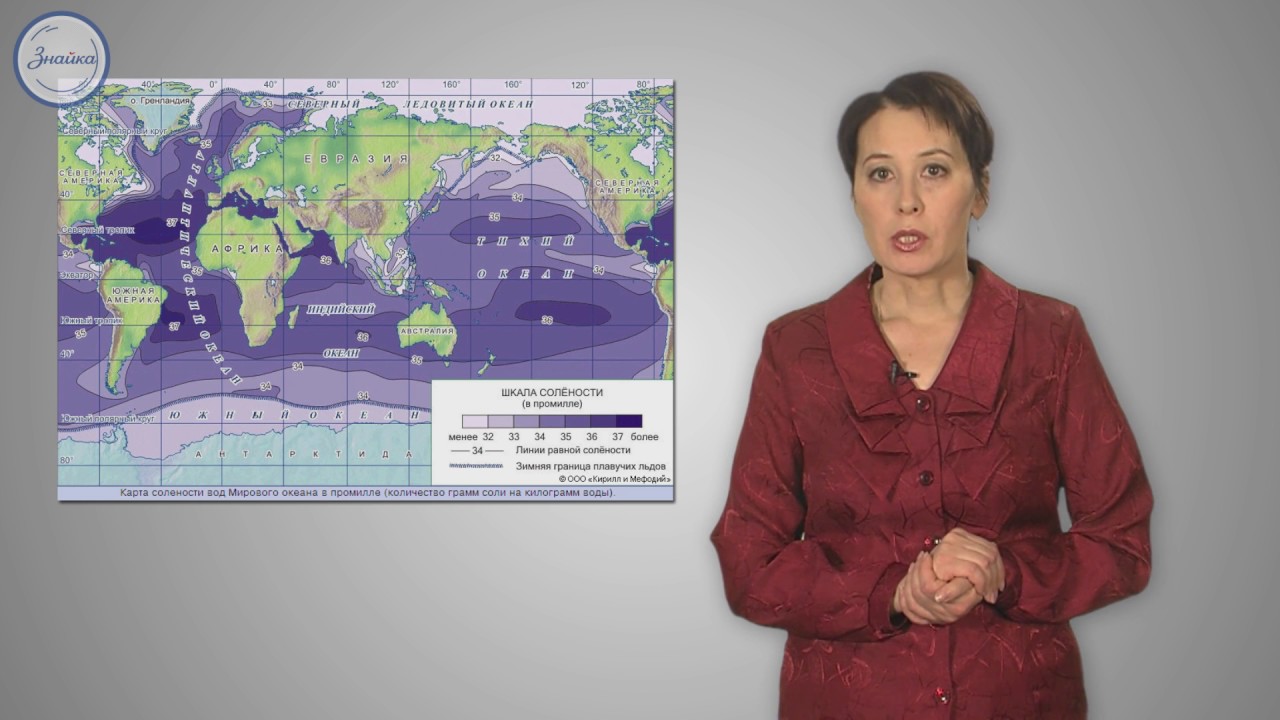
География 7 класс. Воды Мирового океана и его свойства
32.9K
Ocean water has two main characteristic properties: salinity (measured in parts per thousand, with average ocean salinity at 35‰) and temperature (which varies by latitude, depth, and ocean currents). Salinity depends on the balance between precipitation and evaporation, with equatorial regions having lower salinity (34‰) due to more precipitation, tropical regions having higher salinity (36‰) due to higher temperatures and less precipitation, and polar regions having lower salinity (33‰) due to ice formation and river inflow. Temperature decreases with depth and varies by geographic latitude, with equatorial waters being warmer than polar waters. The ocean acts as a planetary temperature regulator due to water's high heat capacity.
Click to watch →

شرح علوم متكاملة للصف الاول الثانوي 2025 (الخواص الفيزيائية للماء) مستر عبدالرحمن الباز
313.7K
Relative density is the ratio of a substance's density to water's density at the same temperature. Ocean currents move water horizontally and vertically, transporting heat and salt from equator to poles. Three factors affect water density: temperature (water expands when heated and contracts when cooled, except below 4°C), pressure (increased pressure decreases volume and increases density), and salinity (dissolved salts increase density). Water is the only common substance that expands when cooled below 4°C, causing ice to float and protect aquatic organisms from freezing.
Click to watch →

Oceanography | Geography | One Shot | Zero to Hero | For SSC CHSL
17.8K
This section covers the fundamental properties of ocean water: (1) Two critical properties - temperature (affects density, marine life distribution, coastal climate) and salinity (determines density, freezing point, boiling point), (2) Salinity definition - total dissolved salts measured as grams per 1,000 grams of water, (3) Major salts in ocean water - Sodium chloride (27%), Magnesium chloride (10.9%), Magnesium sulfate (4.7%), (4) Sources of salinity - wind carrying dust/salt particles, rivers carrying dissolved salts and sediments, volcanic activity releasing minerals, (5) High salinity bodies - Red Sea (330 ppt), Dead Sea (238 ppt) making swimming impossible due to extreme density, (6) Halocline - zone where salinity changes most rapidly with depth, (7) Isohalines - lines connecting points of equal salinity for mapping distribution.
Click to watch →

महासागरीय जल तापमान एवं लवणता | UPSC CSE 2022 Naveen Kumar Tanwar | Let's Crack UPSC CSE Hindi
42.1K
Ocean water salinity is measured in parts per thousand (ppt) and varies from 0-65 ppt in polar regions to 37.5 ppt in open oceans, with the Atlantic Ocean having the highest salinity among the five major oceans. Salinity is directly related to water density—higher salinity increases density, causing denser water to sink and less dense water to rise, which drives thermohaline circulation (the global ocean conveyor belt). This circulation system, driven by temperature and salinity differences, plays a crucial role in redistributing heat around the planet and regulating global climate. Ocean currents are classified as warm (moving from equator to poles) or cold (moving from poles to equator), and their direction is influenced by wind patterns, Earth's rotation, and continental barriers.
Click to watch →
Deep Dive
The Concept of Waveguides: How electromagnetic or acoustic waves can be confined and guided along a specific path with minimal energy loss.

Waveguide Demystified (4k Video)
23.3K
Waveguides are the most efficient method for transferring electromagnetic energy, functioning as coaxial lines without center conductors. They come in rectangular, round, and elliptical shapes, with rectangular waveguide being most widely used industrially. The concept was proposed by JJ Thompson in 1893 and verified by OJ Lodge in 1894, with Lord Rayleigh performing the first mathematical analysis in 1897. Key advantages include complete shielding, lowest RF transmission loss, large surface area for high conductance, low dielectric loss (typically air), and excellent phase stability. Disadvantages include significant weight, large size, and higher cost compared to coaxial cables. Waveguide modes are designated as TM or TE with subscripts indicating half-wavelength patterns across walls, with the dominant TE10 mode being most commonly used in practice.
Click to watch →

Lecture -- Waveguide Introduction
11.4K
A waveguide is a structure that confines electromagnetic energy to propagate along a specific path rather than spreading out in all directions, enabling efficient energy transfer from point A to point B; waveguides are broadly classified into transmission lines (which have at least two conductors and support TEM, TE, and TM modes with no cutoff frequency down to DC) and non-transmission line waveguides (which include metal pipe waveguides supporting only TE and TM modes with a cutoff frequency, and dielectric waveguides like optical fibers supporting TE, TM, and hybrid modes with the exception that symmetric dielectric waveguides have no cutoff frequency for their fundamental mode).
Click to watch →

Propagation of EM Waves in Waveguides | TE & TM Modes | Parallel Conducting Planes
575
A waveguide is a hollow metallic tube (rectangular or circular) that guides electromagnetic waves from one point to another. The term 'waveguide' literally means 'one who guides.' Inside a waveguide, electromagnetic signals propagate through successive reflections from the conducting walls, similar to how light travels through optical fiber via total internal reflection. The waveguide serves as a conduit that confines and directs electromagnetic energy along its length.
Click to watch →

Waveguides - 1 | L : 53 | EMFT | GATE/ECE 2022 | Saket Sir
25.8K
A waveguide is a hollow metallic tube or structure that guides electromagnetic waves (typically in the microwave frequency range) from one point to another with minimal energy loss. Unlike transmission lines that can carry signals in both directions, waveguides are designed for one-directional energy transfer. The electromagnetic waves propagate through the waveguide by reflecting off the inner walls, with the waveguide's physical dimensions (such as width and height) determining which frequencies can propagate efficiently. The propagation occurs through multiple reflections along the waveguide's length, allowing high-frequency signals to be transmitted over distances with reduced attenuation compared to conventional transmission lines.
Click to watch →

Introduction to Waveguides using the LiteVNA, Part1, Homemade Waveguides
22.1K
Waveguides are hollow metallic tubes that transmit electromagnetic waves at microwave frequencies, differing fundamentally from coaxial cables by requiring only an outer conductor; they can be constructed from materials like brass and come in circular or rectangular cross-sections, with dimensions determined by the operating wavelength (typically width = 3/4λ and height = 1/2λ for rectangular waveguides), and they offer advantages such as natural DC blocking and high-pass filtering characteristics that make them suitable for high-frequency applications.
Click to watch →
Prerequisite Knowledge
- Concept 01Basic Wave Mechanics: Understanding how sound waves propagate as pressure waves and how velocity changes in different media.
- Concept 02Refraction and Snell's Law: The physical principles of how waves bend when they travel through mediums with gradient velocities.
- Concept 03Oceanic Properties (Temperature, Pressure, Salinity): How these physical parameters vary with ocean depth and their direct impact on the speed of sound.
- Concept 04The Concept of Waveguides: How electromagnetic or acoustic waves can be confined and guided along a specific path with minimal energy loss.
Subsequent Learning
- Step 01Ocean Acoustic Tomography: Using deep sound travel times to measure large-scale ocean temperatures and track global climate change.
- Step 02Marine Bioacoustics: Exploring how cetaceans (like blue and fin whales) evolutionarily adapted to use the SOFAR channel for ocean-wide communication.
- Step 03Military Sonar and ASW (Anti-Submarine Warfare): Understanding how naval forces utilize acoustic shadow zones and the Sound Surveillance System (SOSUS) for submarine detection.
- Step 04Hydroacoustic Monitoring: Analyzing how underwater earthquakes, volcanic eruptions, and nuclear tests are detected globally using hydrophone arrays in the SOFAR channel.
- Step 05Anthropogenic Ocean Noise Pollution: Assessing the ecological impact of human-made noise (shipping, seismic airguns) traveling vast distances through the acoustic waveguide.
Sound Channel
Waveguide Uses
Sound Channel
0:00Playing Section
- 1
Explains the deep sound channel, where sound speed is lowest.
- 2
Describes how temperature and pressure create this underwater waveguide.
- 3
Uses a roller skate analogy to explain sound wave refraction.
Climate-Driven Disruption of the SOFAR Waveguide
While the SOFAR channel is traditionally studied as a stable, natural waveguide, modern research highlights how climate change is actively disrupting this acoustic pathway. Rising ocean temperatures, acidification, and shifting salinity profiles are altering the ocean's sound-speed architecture. In many regions, particularly near the poles, these changes are causing the SOFAR channel to shoal (rise closer to the surface) or lose its distinct boundary layers. Consequently, the efficiency of long-range acoustic propagation is declining, which impacts marine mammals that rely on the channel for mating and migration calls, while also complicating naval operations and seismic monitoring that depend on predictable acoustic models. This perspective challenges the assumption of the SOFAR channel as a permanent, unchanging conduit for global ocean sound.
Deep Dive
Ocean Acoustic Tomography: Using deep sound travel times to measure large-scale ocean temperatures and track global climate change.

Ocean acoustic tomography | Wikipedia audio article
128
Ocean acoustic tomography is a remote sensing technique for measuring ocean temperatures and currents over large regions (100-5,000 km). It exploits the oceans' transparency to low-frequency acoustics while being opaque to electromagnetic waves. The method measures sound travel times between sources and receivers, where temperature variations affect sound speed (1°C ≈ 4 m/s). Multi-path arrivals occur because signals travel along multiple stable ray paths, with ray tracing identifying each path's contribution. The technique inherently averages small-scale turbulence and internal wave noise that dominate point measurements. Reciprocal tomography separates temperature from current effects using bidirectional transmissions. Applications include studying deep water formation, measuring ocean tides, and monitoring mesoscale dynamics. The Acoustic Thermometry of Ocean Climate (ATOC) program demonstrated decade-long sustainable monitoring across the Pacific Ocean, achieving 20 millidegree temperature accuracy.
Click to watch →

Doug Webb talks to the WHOI Ocean Acoustics and SIgnals Lab
147
This comprehensive segment covers the development of ocean acoustic tomography, beginning with Walter Munk and Carl Wunsch's 1978 ideas. Initial 1980 experiments with 16 Hz bandwidth proved insufficient for resolving individual arrivals due to internal wave scattering. The 1986 experiment with five sources at 100 Hz bandwidth faced skepticism but produced useful results, demonstrating that practical oceanographic outcomes can exceed theoretical predictions. The segment details the development of FM sweep technology to achieve 10-millisecond resolution, with the key insight that 100 Hz bandwidth was not the requirement—rather, the signal needed energy across 100 Hz, but not instantaneously. The solution involved using a highly efficient narrow-band projector and mechanically retuning it across a band. Six sweeper systems were deployed in the Philippines Sea, all recovered and working. This breakthrough validated the theoretical approach and enabled more precise ocean property measurements through sound travel time analysis. The segment also covers the evolution of piezoelectric materials from nickel magnetostriction (1955) to barium titanate (Navy development) to lead zirconate titanate (PZT), enabling more efficient acoustic transducers. The future involves linking profilers, gliders, and tomographic systems into integrated networks. Mobile source tomography combining gliders with acoustic sources and receivers represents an interesting possibility, with power requirements modest enough for practical implementation. The segment also covers internal wave scattering challenges in tomography, where multipath arrivals cause timing uncertainties. John Colosi developed a statistical equation approach predicting internal wave effects with less than 1% error compared to Monte Carlo simulations. This advancement enables accurate ocean property estimates by accounting for internal wave effects. The research demonstrates how theoretical advances and practical experimentation together enable more sophisticated ocean observation, with applications ranging from basic research to operational monitoring.
Click to watch →
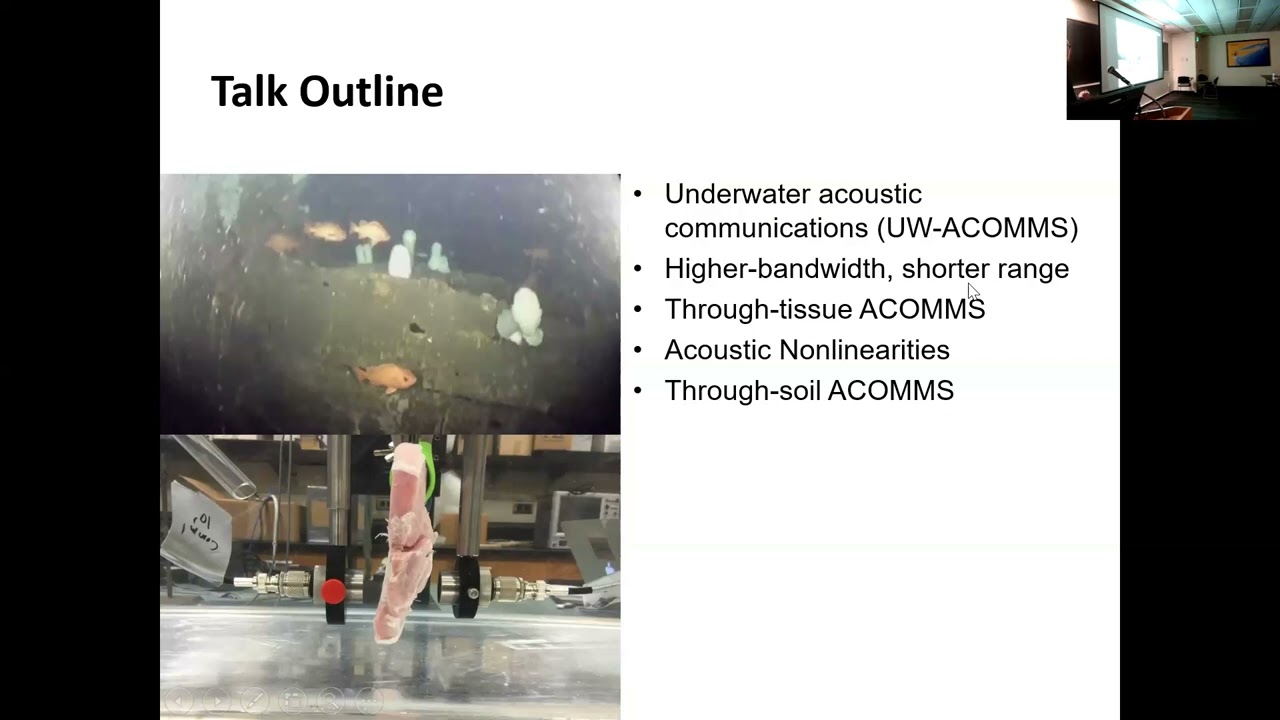
SoMAS - Acoustic Signal Processing and Communication Systems Through the Ocean, Soil, and Tissue
169
Acoustic tomography of the ocean (AT) was developed to measure global warming by integrating temperature changes across the entire ocean volume. The technique exploits the SOFAR channel—a natural waveguide formed by the variation of sound speed with depth (affected by temperature, salinity, and pressure). Sound travels faster near the surface (warmer, lower pressure), slows in the thermocline, then speeds up again at greater depths due to pressure. Sound induced into this waveguide can travel millions of meters while remaining coherent. By measuring time-of-flight between distant transceivers, researchers can infer average sound speed profiles, providing integrated temperature measurements across vast ocean regions.
Click to watch →

MIT Technology Day 1993—"Riding the Wave of Innovation: The Ocean and MIT"
799
Sound is the only form of energy that propagates effectively underwater over long distances. Acoustic tomography uses sound transmitted between underwater sources and receivers to create images of ocean interior conditions, similar to how X-rays image human bodies. This technology can reveal ocean structure at depths impossible to reach directly.
Click to watch →
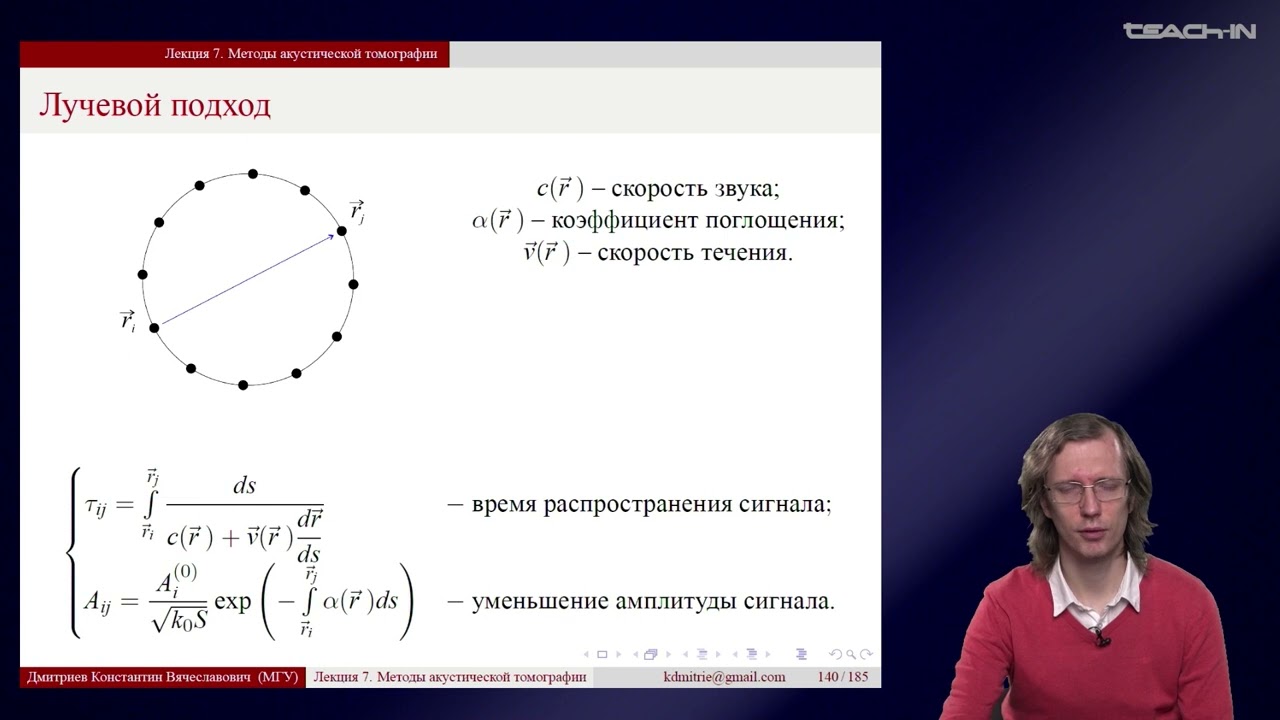
Дмитриев К.В. - Гидроакустические измерения - 7. Методы акустической томографии. Часть 1
161
Acoustic tomography determines the internal properties of a medium (such as sound speed, absorption coefficient, and current velocity) by analyzing acoustic field measurements. The ray-based approach assumes sound propagates in straight lines and uses the Radon transform to reconstruct medium properties from propagation time and amplitude measurements taken from multiple angles. The wave-based approach solves the Helmholtz equation using the Lippmann-Schwinger equation and Born approximation, where the scattering amplitude equals the spatial spectrum of the medium's inhomogeneities. These mathematical methods, originally developed for medical CT scans, are applied to hydroacoustic measurements of ocean properties.
Click to watch →
Deep Dive
Marine Bioacoustics: Exploring how cetaceans (like blue and fin whales) evolutionarily adapted to use the SOFAR channel for ocean-wide communication.
Changing the soundtrack of the ocean | Steve Simpson | TEDxExeter
51K
Marine organisms, including fish, use sound as a critical sensory cue for navigation, habitat selection, and communication; however, human activities such as overfishing, climate change, and motor boat noise pollution are degrading ocean soundscapes, threatening marine ecosystems and the life cycles of species like coral reef fish that rely on acoustic cues to find their way home.
Click to watch →
![Convegno “La Liguria e il Mare” - Le nuove sfide del rumore antropico sottomarino [etc]](https://i.ytimg.com/vi/25cAf4T2L-U/maxresdefault.jpg)
Convegno “La Liguria e il Mare” - Le nuove sfide del rumore antropico sottomarino [etc]
108
This section explores how marine organisms communicate through sound. Bioacoustics, ecoacoustics, and ecotremology are the main scientific branches studying marine sounds. Herring communicate using gas emissions creating microbubbles forming an 'alphabet.' Cetaceans are the most studied marine mammals, with mysticeti producing sounds at 186 dB capable of communicating thousands of kilometers. Toothed whales use biosonar for environmental exploration and can use sounds as weapons. Sperm whales produce sounds up to 190 dB, far exceeding jet engine noise, using combined sounds and vibrations to stun giant squid.
Click to watch →

62 SCARIEST TikToks on the Internet..
2.1M
The ocean contains extremely loud biological sounds that can travel vast distances. The sound known as 'Julia' was recorded in 1999 and was so powerful it was heard across the entire equatorial Pacific Ocean. Such extreme marine sounds are believed to originate from large marine animals, potentially being among the loudest sounds ever recorded in nature.
Click to watch →
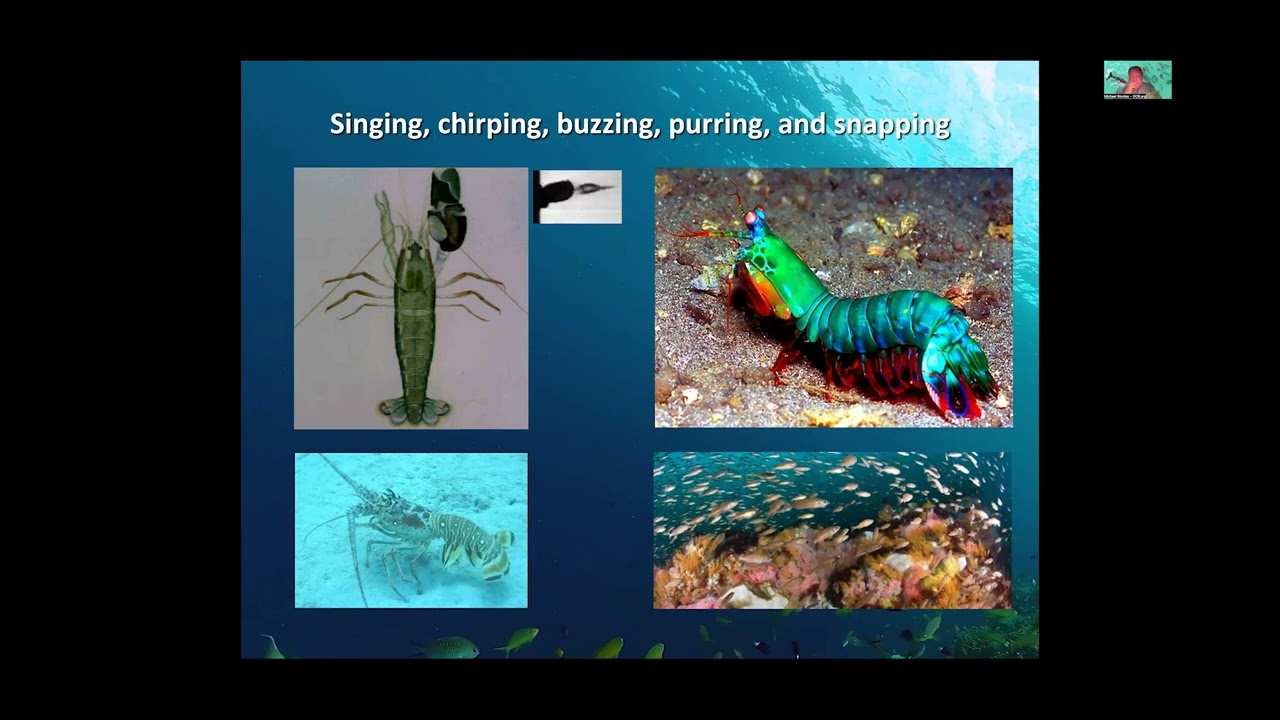
Michael Stocker: "Sounds of the Sea: Marine Bioacoustics"
211
The ocean is an acoustically efficient environment where sound travels 2,000+ miles with minimal energy, enabling marine animals like whales to communicate across vast distances using low-frequency infrasonic calls that travel through the SOFAR channel; however, human-generated noise pollution from shipping, seismic surveys, and wind farms has increased ocean noise tenfold in just 50 years, disrupting marine life communication, navigation, and survival, as evidenced by incidents like the 2000 Bahamas stranding of 16 beaked whales caused by Navy sonar, and research showing stress hormone levels in North Atlantic right whales dropping 10-fold when shipping noise decreased post-9/11.
Click to watch →

Vinny - Listening to Anomalies from Around the World (Mysterious Audio)
73K
This final segment explores the diverse sounds animals produce for survival and communication. Willow tits, walruses, midshipman fish, and various marine species demonstrate how different organisms use sound for mating, territory defense, and social interaction. The bioduck sound, mysterious for decades, was identified in 2014 as coming from Antarctic minke whales. The Gabardi damsel fish uses aggressive vocalizations during breeding season. Beluga whales trained by the US Navy demonstrated remarkable vocal learning abilities, even imitating human speech. These examples illustrate the evolutionary importance of sound in animal behavior and the ongoing scientific effort to understand and catalog the rich acoustic world of non-human species.
Click to watch →
Deep Dive
Military Sonar and ASW (Anti-Submarine Warfare): Understanding how naval forces utilize acoustic shadow zones and the Sound Surveillance System (SOSUS) for submarine detection.

FINALLY: Submarine & Anti-Submarine Warfare In DCS (Naval Battle 95) | DCS
122K
Anti-submarine warfare (ASW) relies on two primary sonar detection methods—passive sonar, which listens for target-generated noise and provides stealthier detection but requires the helicopter to hover below 50 feet for several seconds, and active sonar, which emits pings to detect objects within 5 nautical miles with 100% certainty; the effectiveness of both depends critically on target speed, as faster-moving targets generate more detectable noise, and the Mark 46 torpedo system offers dual seeker head modes (passive and active) with configurable pitbull ranges to engage submarines within its 12-nautical-mile firing envelope.
Click to watch →
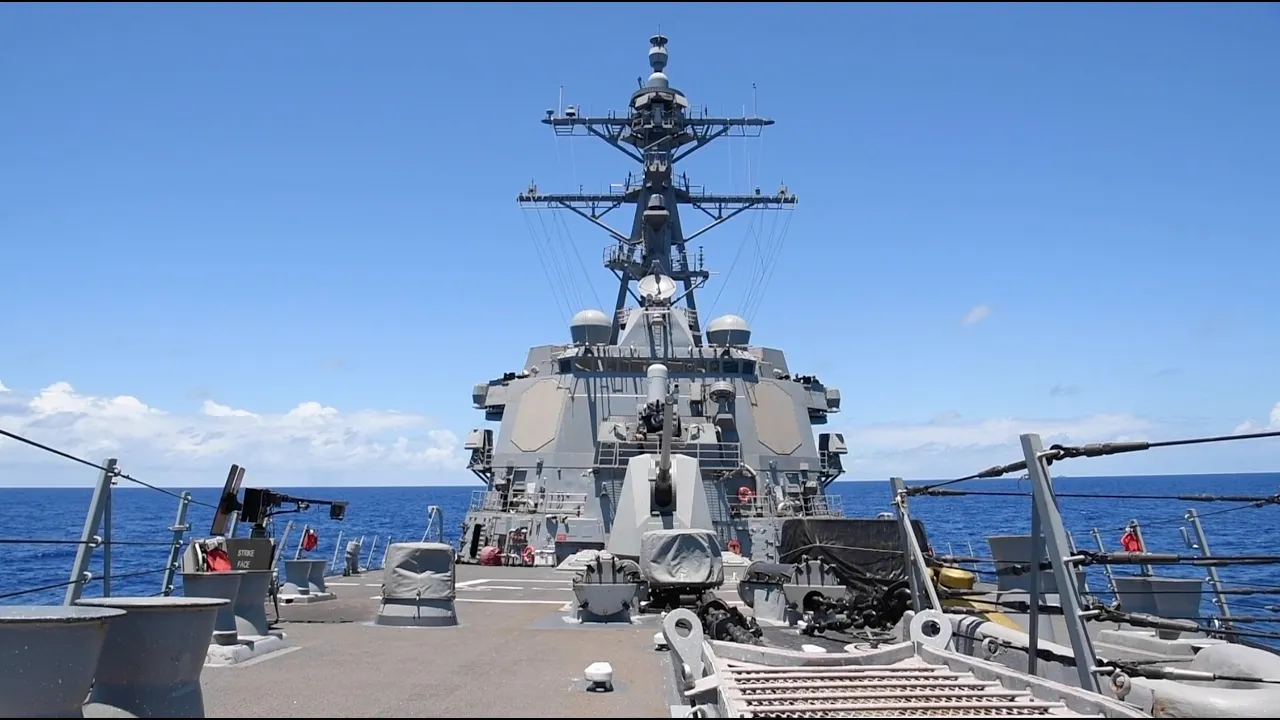
USS Howard Explains Anti-Submarine Warfare
38K
Anti-submarine warfare (ASW) is the naval capability to detect, track, classify, and localize submarines using sonar technology, which includes both active sonar (actively transmitting sound into the water) and passive sonar (listening for underwater noises); modern ASW operations employ sophisticated equipment such as hull-mounted sonar arrays, towed sonar arrays, expendable bathythermographs for measuring temperature-depth profiles, and surface torpedo tubes to engage subsurface threats, with sonar technicians using specialized consoles to interpret sensor data and create underwater situational awareness.
Click to watch →
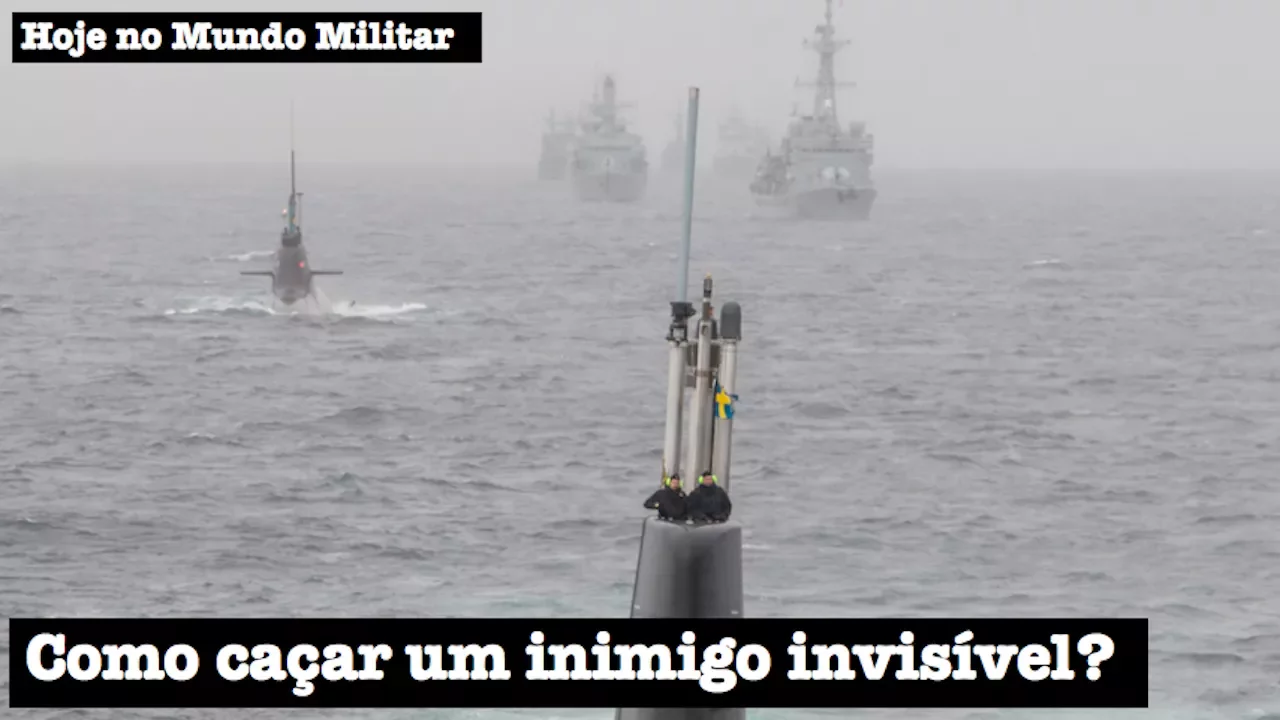
Como caçar um inimigo invisível?
353.9K
Anti-Submarine Warfare (ASW) is a critical military discipline involving aircraft, naval vessels, helicopters, drones, satellites, and submarines to detect and destroy enemy submarines. Modern submarines serve dual roles as offensive weapons and deterrents, making their detection extremely challenging due to minimal acoustic emissions and the ocean's natural acoustic environment filled with geological, biological, and human-generated sounds. Sonar systems are the primary detection tools, divided into passive types that only listen without revealing position, and active types that emit sound pulses and analyze echoes for detailed imaging. Active sonar provides superior precision but faces limitations from underwater obstacles and the asymmetry where transmitted signals can be detected at twice the echo return range, giving submarines tactical advantage.
Click to watch →

The Most Insane Naval Weapons Ever Deployed
550.4K
During World War II, sonar technology created a critical blind spot in anti-submarine warfare known as the 'instantaneous echo' phenomenon. When sonar pulses traveled through water, the speed of sound meant that echo returns from targets at certain ranges merged with the original transmitted pulse, making it impossible for human operators to distinguish between the turning signal and the original pulse. This occurred because the time delay between transmission and reception became too short for human perception to differentiate. The situation created a dangerous scenario where enemy submarines could hide within this range while evading depth charge attacks. This blind spot was particularly problematic for Allied forces hunting German U-boats in the Atlantic, as it allowed submarines to execute evasive maneuvers and leave the scene undetected when getting closer than the sonar's minimum effective range.
Click to watch →
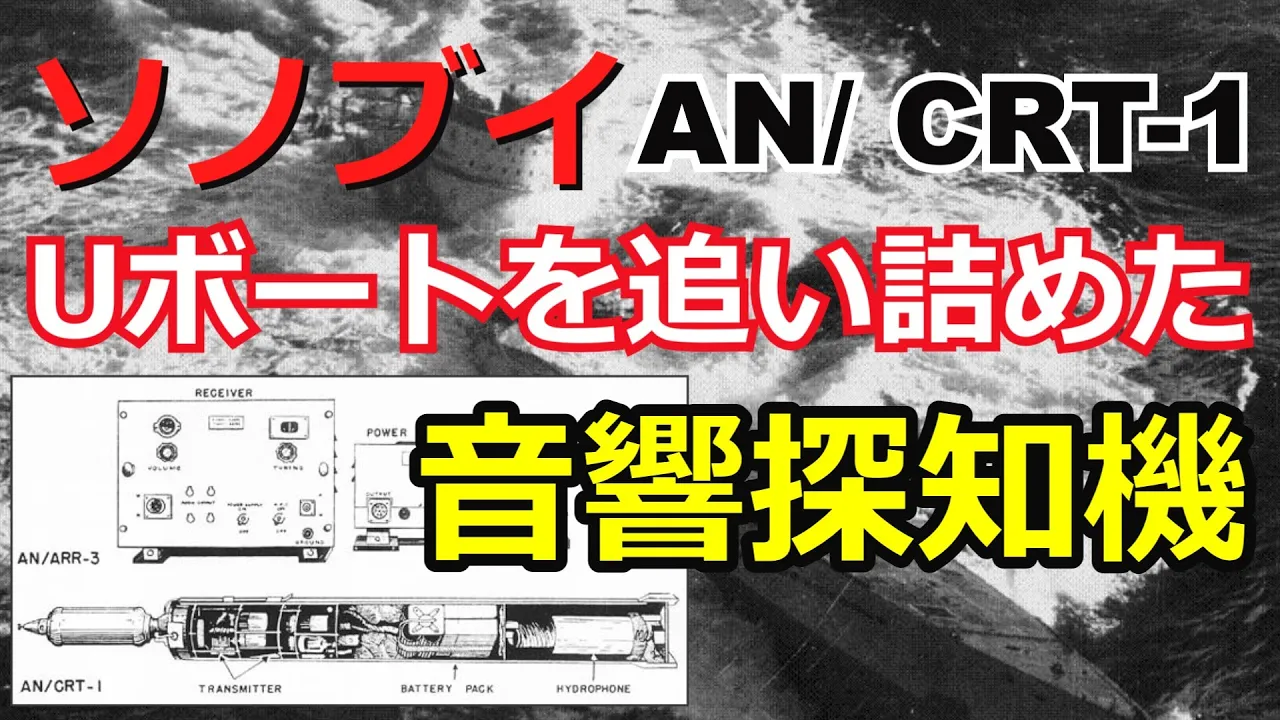
【ゆっくり解説】Uボートキラー■ソノブイ■Uボートを追い詰めた音響探知機■
29.9K
The AN/ CRT-1 sonar system, developed by RCA for the US military during WWII, revolutionized anti-submarine warfare by enabling aircraft to detect U-boats through underwater acoustic signals; this technology transformed U-boats from hunters to hunted, with the system's ability to triangulate submarine positions through multiple frequency analysis and its deployment in convoy protection missions ultimately contributing to the decisive Allied victory in the Battle of the Atlantic.
Click to watch →
Deep Dive
Hydroacoustic Monitoring: Analyzing how underwater earthquakes, volcanic eruptions, and nuclear tests are detected globally using hydrophone arrays in the SOFAR channel.

The Two Flashes of Light Terrified the Pentagon
37.2K
SOSUS (Sound Surveillance System) is a classified network of underwater hydrophones strung across the ocean floor designed to track Soviet submarines. During the Vela Incident investigation, SOSUS detected an acoustic signal in the South Atlantic consistent with an underwater or near-surface detonation, placing the event in the ocean rather than on land or underground.
Click to watch →

УЖАС КАМЧАТКИ 1968-го: ТАЙНА "ЧЕРНОГО ПРИЛИВА", Который ВЫБРАСЫВАЛ на Берег КОПИИ Утонувших Моряков.
66.6K
Hydroacoustic monitoring involves listening to ocean sounds to detect and identify vessels. Naval personnel learn to distinguish between mechanical sounds (such as submarine propellers) and natural sounds (such as whale songs). This skill requires patience, absolute concentration, and the ability to interpret subtle acoustic patterns in the ocean environment.
Click to watch →
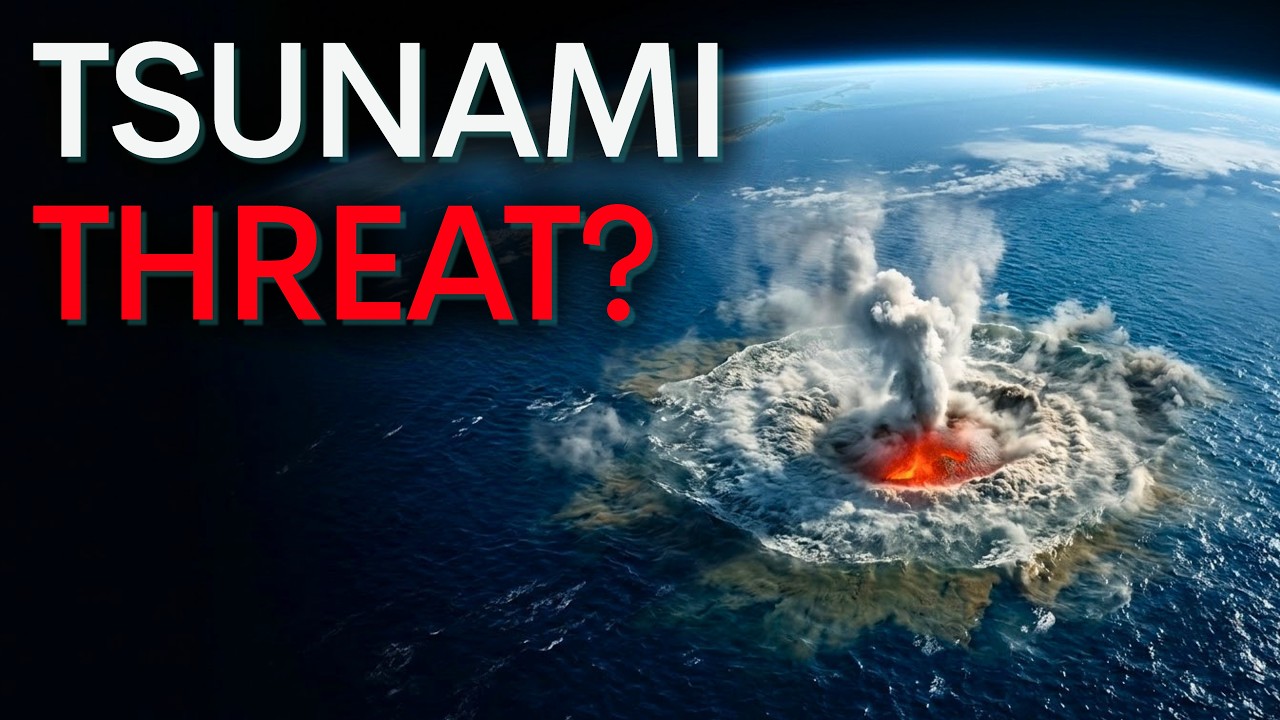
There Is A Volcano Erupting Under The Pacific Right Now — And It Is Rising
197
The Izu-Bonin-Mariana Arc is a continuous 2,800 km subduction system from Tokyo to Guam. Despite being one geological system, administrative boundaries create different governance structures. Ahyi sits 541 km from Japan and 591 km from Saipan. There is not a single monitoring instrument on Ahyi. Instead, a network of distant ears uses the SOFAR channel (300m-4km deep) to carry low-frequency sound for thousands of kilometers. Hydrophones at Wake Island (2,270 km away), Guam, and Chichijima detect T-waves from volcanic activity. This is not a Mariana arrangement but a regional story.
Click to watch →

'HAARP' - Hydroacoustic PACIFIC BEHEMOTH ~ & ~ ATLANTIC LEVIATHAN ~ UNVEILED !!!
9.7K
The United States operates two massive hydroacoustic monitoring systems: the Pacific Ocean Hydroacoustic Behemoth and the Atlantic Ocean Hydroacoustic Leviathan, which span from the Arctic to the Antarctic and are positioned along oceanic rifts for nuclear test ban treaty monitoring and seismic detection purposes.
Click to watch →
Friday Seminar: The International Monitoring System of CTBTO
150
Hydroacoustic monitoring detects underwater nuclear explosions and other oceanic phenomena using two station types: hydrophone-based stations (like HA11 in the Pacific and HA04 in Crozet Islands) that deploy hydrophones at depth via cables, and T-phase stations (such as those on Socorro Island in Mexico) using three-component seismometers on islands. The IMS has installed and certified 11 hydroacoustic stations providing comprehensive global ocean coverage. These stations detect not only nuclear tests but also tsunamis, whale vocalizations, and atmospheric changes. During the 2015 Chile earthquake, hydroacoustic stations recorded both the seismic event and subsequent tsunami. Recent research using hydrophone data revealed reduced ocean noise levels during pandemic lockdowns, attributed to decreased ship traffic, demonstrating broader scientific applications beyond treaty verification.
Click to watch →
Deep Dive
Anthropogenic Ocean Noise Pollution: Assessing the ecological impact of human-made noise (shipping, seismic airguns) traveling vast distances through the acoustic waveguide.
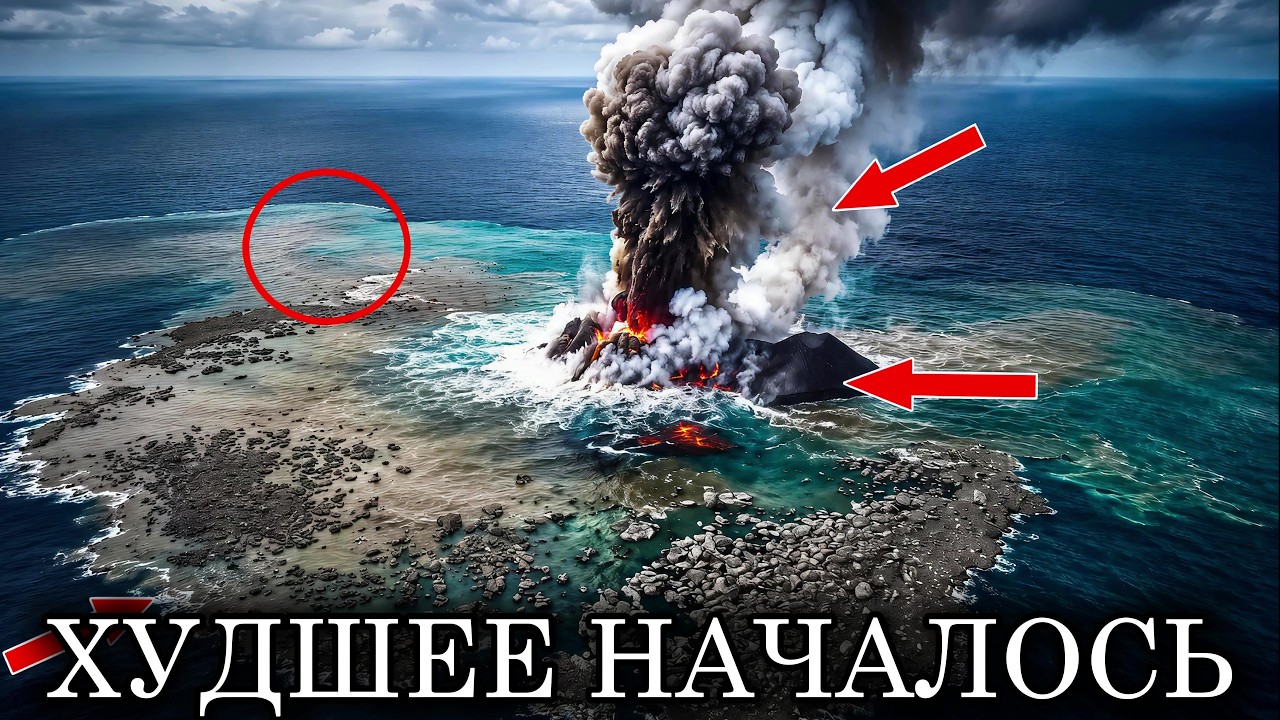
Нечто НЕВЕРОЯТНОЕ ПРОИСХОДИТ В ТИХОМ ОКЕАНЕ.. И УЧЕНЫЕ МОЛЧАТ ОБ ЭТОМ
9.7K
The distribution of naval forces of major powers in the Pacific region and how this distribution itself affects the marine environment is rarely discussed but has documented consequences. Naval exercises, torpedo tests, and hydroacoustic submarine detection systems all generate intense noise in the water environment. Medium-frequency active sonars used by naval fleets of several countries operate at frequencies close to those whales use for navigation and communication. The connection between military sonars and mass strandings of whales has been established by several studies, though naval authorities long and stubbornly disputed this. Now this connection is recognized sufficiently to have several countries limit use of certain sonar types in areas of active whale activity. However, noise from naval activity is only part of the acoustic pollution of the Pacific. Commercial shipping - container ships, tankers - also creates constant low-frequency noise background that has doubled in intensity over the past 50 years in most Pacific regions. This means marine animals using sound for finding mates, communicating with offspring, and navigation now do so in an environment significantly noisier than the one they evolved in. Humpback whales have already changed the frequency of their songs over recent decades, presumably to better distinguish their signals against increased anthropogenic noise.
Click to watch →

The dangers of a noisy ocean -- and how we can quiet it down | Nicola Jones
70.1K
Human activities inject various sounds into the ocean including seismic surveys for oil and gas (using air guns that blast every 10-15 seconds), actual drilling operations, construction of offshore wind farms, sonar systems, and the constant drone from over 50,000 ships in the global merchant fleet. These sources contribute significantly to ocean noise pollution.
Click to watch →

Микрофон На Дне Океана Записал ЭТОТ ЖУТКИЙ ЗВУК, который никто не может объяснить
374
Anthropogenic noise pollution refers to the alteration of the ocean's acoustic environment due to human activity. Ships produce noise across a wide range of frequencies. Military sonars create powerful acoustic impulses. Seismic surveys for oil and gas exploration use air guns that produce explosion-like signals every few seconds for weeks. This fills the ocean with sound that did not exist 100 years ago. This affects marine mammals whose navigation and communication depend on acoustics, and it also creates additional noise in hydrophone data that complicates identification of natural sources.
Click to watch →
Why the ocean is getting louder
2.2M
Human-generated noise has dramatically increased in ocean environments. Ship traffic noise has doubled every decade since the 1960s, and ambient ocean noise is now dominated by anthropogenic (human-made) sound sources. Measurements show that sound levels in the same ocean locations have increased by 10 dB or more over just 30 years. This represents a significant environmental change that affects marine ecosystems and the animals that depend on sound for survival.
Click to watch →

ОКЕАН: ВОЛШЕБНЫЙ МИР ПОД ВОДОЙ🌙 ЛЕКЦИЯ ДЛЯ СНА
1.2K
Water conducts sound much more effectively than air, especially at low frequencies. The SOFAR (Sound Fixing and Ranging) Channel at 600-1,200 meters depth has minimal sound speed due to combined temperature and pressure effects, allowing sound to propagate over 1,000 km with minimal loss. This channel is used by baleen whales for communication and by military forces for submarine detection. Bioacoustics includes complex humpback whale songs (lasting hours with regional dialects), blue and fin whale calls, dolphin echolocation clicks, and fish choruses during spawning. Anthropogenic noise pollution from ship engines (especially large tankers and container ships) has increased by tens of times over 50 years, creating constant low-frequency hum that masks animal sounds, interferes with communication and food search, and causes chronic stress. Powerful impulsive sounds from sonar and seismic surveys can cause hearing loss and mass strandings.
Click to watch →
Sound Channel
Waveguide Uses
Sound Channel
0:00- 1
Explains the deep sound channel, where sound speed is lowest.
- 2
Describes how temperature and pressure create this underwater waveguide.
- 3
Uses a roller skate analogy to explain sound wave refraction.
Climate-Driven Disruption of the SOFAR Waveguide
While the SOFAR channel is traditionally studied as a stable, natural waveguide, modern research highlights how climate change is actively disrupting this acoustic pathway. Rising ocean temperatures, acidification, and shifting salinity profiles are altering the ocean's sound-speed architecture. In many regions, particularly near the poles, these changes are causing the SOFAR channel to shoal (rise closer to the surface) or lose its distinct boundary layers. Consequently, the efficiency of long-range acoustic propagation is declining, which impacts marine mammals that rely on the channel for mating and migration calls, while also complicating naval operations and seismic monitoring that depend on predictable acoustic models. This perspective challenges the assumption of the SOFAR channel as a permanent, unchanging conduit for global ocean sound.
Basic Wave Mechanics: Understanding how sound waves propagate as pressure waves and how velocity changes in different media.
Refraction and Snell's Law: The physical principles of how waves bend when they travel through mediums with gradient velocities.
Oceanic Properties (Temperature, Pressure, Salinity): How these physical parameters vary with ocean depth and their direct impact on the speed of sound.
The Concept of Waveguides: How electromagnetic or acoustic waves can be confined and guided along a specific path with minimal energy loss.
Ocean Acoustic Tomography: Using deep sound travel times to measure large-scale ocean temperatures and track global climate change.
Marine Bioacoustics: Exploring how cetaceans (like blue and fin whales) evolutionarily adapted to use the SOFAR channel for ocean-wide communication.
Military Sonar and ASW (Anti-Submarine Warfare): Understanding how naval forces utilize acoustic shadow zones and the Sound Surveillance System (SOSUS) for submarine detection.
Hydroacoustic Monitoring: Analyzing how underwater earthquakes, volcanic eruptions, and nuclear tests are detected globally using hydrophone arrays in the SOFAR channel.
Anthropogenic Ocean Noise Pollution: Assessing the ecological impact of human-made noise (shipping, seismic airguns) traveling vast distances through the acoustic waveguide.
3.1K views68likes3:03@lauraschwartz9047Original Release: 2018-12-11
have you ever wondered how migrating whales can communicate with each other over hundreds or thousands of kilometers through the ocean how scientists detect and measure the magnitude of an underwater earthquake near Hawaii from thousands of miles away in California there's more that lurks beneath the surface of the ocean than you'd think and the phenomenon that allows for these things to happen is called the deep sound channel also known as the so far channel the speed of any wave including sound is affected by the density of the material through which it propagates the density of water is affected by three main factors temperature pressure and salinity the dominant factors establishing this phenomenon are pressure and temperature the so far channel is a horizontal layer of water about a kilometre below the surface of the ocean marked by the depth where the speed of sound is at its minimum formed by the convergence between specific ocean temperatures and pressures this changing density also creates refraction a change in direction of the propagation of a wave resulting from its traveling at different speeds at different points along the wavefront it works like this imagine you are a sound wave speeding down and even rode on a pair of rollerskates your right skate hits a rough patch and slows down calling you to swing around to the right if you were going down a rough road in your rate skate hit a smooth patch it would move faster and you'd swing around to the left in the so far Channel the density difference creates an interface that will speed up the outer skate of the wavefront and refract the sound wave back into the channel like the changing roller skate speeds the key to understanding this phenomenon is that the wave speed and direction of travel are related to density similarly to the rough and smooth patches described in the roller skate example if the sound wave propagates away from this horizontal channel the part of the wave furthest from the channel axis travels faster so the wave turns back towards the channel axis as a result the sound waves trace a path that oscillates across the channel axis over very long distances the so far channel acts as a waveguide for and low-frequency sound waves within the channel may travel thousands of miles before dissipating when sound interacts with the rough ocean surface or seafloor some sound energy is scattered and lost the so far Channel prevents the sound waves from hitting the ocean surface or seafloor meaning that sound waves will only lose energy to absorption the conversion of acoustic energy to heat energy the so far Channel has always had a use for marine life but it also has had many purposes throughout history from a tool to locate downed pilots in world war ii to a way to detect submarines in the Cold War to now being used to measure the changes in temperature of the ocean due to global warming the sofa channel is a simple natural phenomenon to understand once you see how the physics works
Up Next
31:56
Physics of Underwater Sound: Sound Propagation & Acoustic Telemetry
@OceanTrackingNetwork
13.6K views•2020-06-26

12:53
21cm Hyperfine Transition in Neutral Hydrogen: Radio Astronomy Basics
@AaronRobertParsons
12.4K views•2011-10-13

32:32
NMR Spin Physics I: Zeeman Effect, Resonance Condition & Larmor Frequency
@nptel-indianinstituteofsci8064
2.3K views•2024-01-17

27:14
Entropy and the Second Law of Thermodynamics Explained
@veritasium
27.5M views•2023-07-01
Related Study Plans & Knowledge Roadmaps
Structured learning paths in Physics
physics
Nuclear Physics (Decay, Fission & Reactors)
01Atomic Structure and the Binding Force
02Radioactive Decay and Half-Life
03Nuclear Fission Mechanics and Chain Reactions
+ 2 more learning modules
12h5 modules
Explore Roadmap
physics
Soft Matter (Polymers, Colloids & Rheology)
01Foundations of Soft Matter & Thermal Forces
02Polymer Physics and Macromolecules
03Colloids, Surfactants, and Self-Assembly
+ 2 more learning modules
38h5 modules
Explore Roadmap
physics
Analytical Mechanics: Lagrangian & Hamiltonian
01Mathematical Foundations: Calculus of Variations
02From Newtonian Mechanics to Constraint Dynamics
03The Principle of Least Action & Lagrangian Mechanics
+ 3 more learning modules
28h6 modules
Explore Roadmap
physics
General Relativity (Spacetime & Cosmology)
01Foundations of Relativity: Special Relativity
02The Geometry of Spacetime: Equivalence Principle & Curvature
03Einstein's Field Equations: The Mathematics of Gravity
+ 2 more learning modules
55h5 modules
Explore Roadmap