













![[CS161 FA25] Lectures 1-2: Security Principles, x86 Assembly](https://i.ytimg.com/vi/2IluqgnUdI4/maxresdefault.jpg)


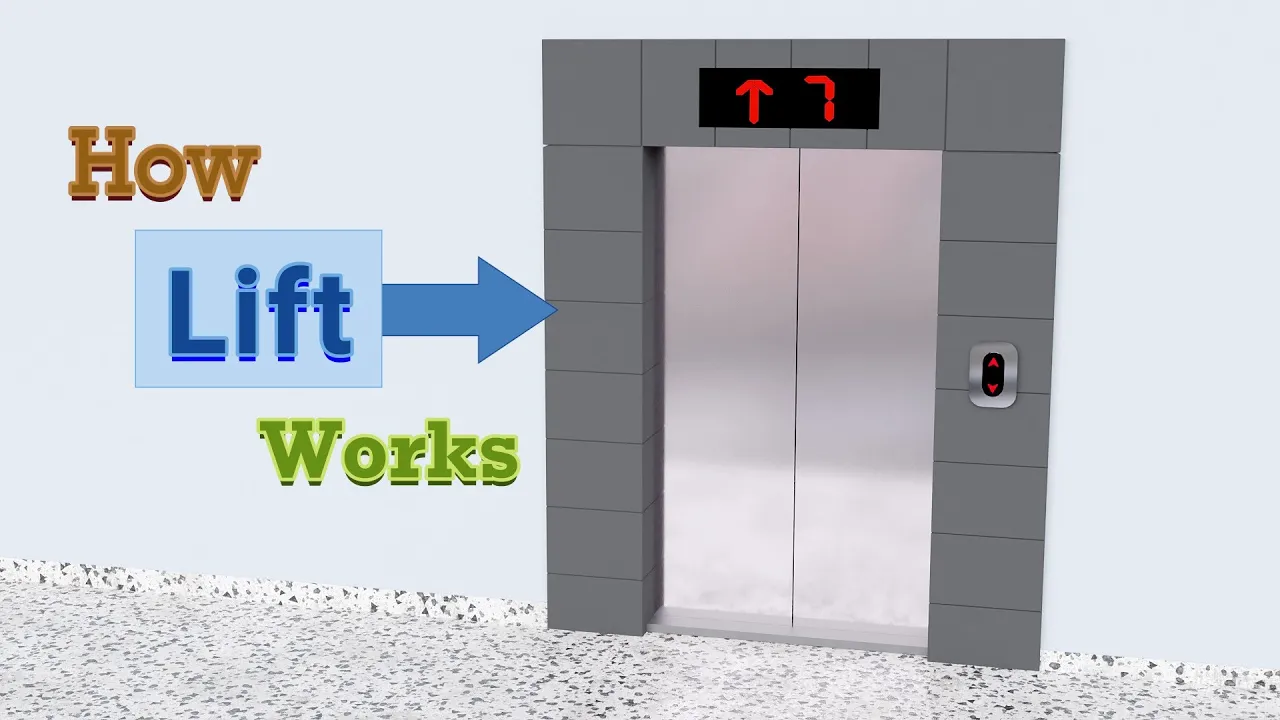











Modern elevators are extremely safe due to multiple redundant safety systems, including a factor of safety of 11 (meaning cables can hold 11 times the fully loaded car's weight), electrically released brakes that clamp down during power outages, counterweights, and shock absorbers, which together prevent the free-fall scenarios commonly depicted in movies.
Why Elevators Essentially Never Free-Fall: Engineering Safety
Added:Basic principles of Newtonian mechanics, specifically gravitational acceleration, free fall, and the relationship between force, mass, and acceleration.
The physics of friction and mechanical braking, including how kinetic energy is converted into thermal energy to arrest motion.
The fundamentals of simple machines, particularly how pulleys, cables, and counterweight systems distribute loads in mechanical lifts.
Basic concepts of electrical circuits and fail-safe engineering design, where a loss of power defaults the system to a safe, locked state.
The specific mechanics of centrifugal governors and safety gears (safeties) that mechanically clamp onto guide rails during overspeed events.
Fail-safe and redundant systems design philosophy as applied to other high-risk transport engineering domains, such as aviation and high-speed rail.
National and international safety standards and regulatory codes governing vertical transit, such as ASME A17.1 and EN 81.
The role of modern IoT sensors, real-time diagnostic software, and programmable electronic safety systems (PESSRAL) in predictive elevator maintenance.
720.6K views18.6Klikes9:37Original Release: 2020-04-23
Hollywood is lying to you this is beyond unlikely elevators rarely ever fall like you see in the movies in fact nobody has died from a snapped cable in a modern passenger elevator so what makes them so safe well it turns out elevators have a life-saving feature that most of us have forgotten about there's around one elevator for every 344 people in the US and American elevators make 18 billion passenger trips per year for a mode of transportation that we take so often you'd think that there'd be fewer myths about how they work especially since they're so safe elevators are way safer than escalators and there's a lot more of them they're also significantly safer than cars otis and OG elevator elevators have been around since the greeks but we're honestly really unsafe the ancient elevator was invented by greek scientist Archimedes around 236 bc they were primitive using police and winches controlled by a worker pulling a wheel and weren't regularly used for human transport until Elisha Otis came along more than 2,000 years later as a young factory worker in the 1820s he watched workmen use elevators to haul heavy goods and he also saw the ropes snap a lot at the time the idea of a person using an elevator was ridiculous but Otis had an idea when he was 40 years old and working in a bedstead Factory with his sons they decided to try and make what they called a safety elevator it had a break under the car protecting cargo and passengers from finicky ropes its solution was to have the shaft and car act as a ratchet system the shaft was lined with mechanical teeth that would snag a car if it fell he and his sons quit the bedstead Factory and started otis brothers & co but they didn't get orders for months they needed publicity things were looking dire until the 1853 New York World's Fair Otis erected an open elevator chute and car with one rope and gathered a huge crowd then he ordered an Axman to cut the rope while Otis was on the elevator three stories up the elevator fell but only a few inches until it was taught by the ratchet system after that the orders came flooding in his invention made elevators commonplace because people now knew that elevators were safe to ride in it helped make modern-day skyscrapers possible Otis's safety break is now only one part of what makes elevators so safe modern innovations have added even more levels of protection take its electronics for example if electronics detect that the car is falling it jams a metal brake from underneath the car into a guide rail in the wall and friction causes the car to stop besides that things are largely the same the biggest changes have been to materials as cars have been able to travel faster the old materials couldn't stand up to the heat of friction and so they were upgraded how elevators work today elevators today have two to eight woven steel cables that lift and lower them to each floor these cables are still referred to as ropes by technicians as homage to their 19th century hemp predecessors but don't be fooled each cable is required to be able to hold the weight of the whole elevator and passengers the number of ropes on an elevator depends on something called the factor of safety the factor of safety is the ratio of the maximum stress that something can withstand to the stress that it is designed to withstand under normal operation the most common factor of safety for elevator supports is 11 so that means the combined rope strength must be able to hold 11 times the mass of one fully loaded car the steel cables bolted to the top of the car loop over achieve a sheave is a pulley with a grooved rim surface that is secured to the top of the elevator shaft the sheaves grooves grip the steel cables so when an electric motor rotates the sheave the cables move to the most misunderstood part of elevators the brakes elevators can't just go shooting down the shaft at the speed of sound like they do in the movies elevators actually have two to three types of brakes on each car one very common type is next to the sheath it's called an electrically released brake because well its resting position is fully clamped down on the cables and requires electricity to be released so that means when the power goes out the brake clamps down which is why you're not supposed to use elevators in an emergency there are also counter weights on the opposite ends of the cables attached to the car they weigh slightly more than an empty car and slightly less than a fully loaded car if all other safety measures failed the weights would cause you to ascend in the car if you were the only one in there or caused a slowly accelerating descent in a fully loaded car when the car meets the top or bottom of the shaft most cable elevators also have a built-in shock absorber are typically a piston in an oil filled cylinder it's not going to be comfortable but the goal is for optimal survival the third common type of brake has been in use since it was invented in the 1840s by Elisha Otis the bottom break myths and why we have them as we have advanced mechanically and then electrically elevators have become a part of our daily lives and people have started to understand less about how they work that's led to a lot of speculation which has led to urban legend in lots of movies like we saw earlier there's a lot of free-falling but this can't actually happen in real life because of Otis's invention an elevator without a cable would come to a halt against the friction of the chute but why is this so common in media if it's so impractical it's because they're playing into our fears about elevators after all elevators go against a lot of our human impulses we are voluntarily facing small spaces Heights and lack of control an elevator falling is all of those crime Oh fears come true but there have been unsettling accidents in the past few years but they're a result of human error for example in November 2018 six people boarded an elevator at the John Hancock Center in Chicago on the 95th floor but one of the cables snapped and the elevator plunged 84 floors all the way down to the 11th floor all of them lived with minor injuries experts believe that the safety chain had been tampered with a safety chain is a series of safety devices attached to the elevator where the first one has to be complete for the next to work and so on and so forth so the electric release clamp has to be locked for the outside elevator doors to open for the inside elevator doors to open for example maintenance workers were believed to have turned off the safety chain to do maintenance and then forgotten to turn them back on resulting in catastrophe but this is only a handful of cases out of the millions of elevator rides every day elevators are safer than almost every other form of transportation despite what Hollywood may want you to believe you don't have anything to worry about it's probably not going to happen do you have a fear of elevators let us know in the comments make sure you like this video click Subscribe and ring the bell for post notifications we'll see you next time you [Music]
Up Next
44:54
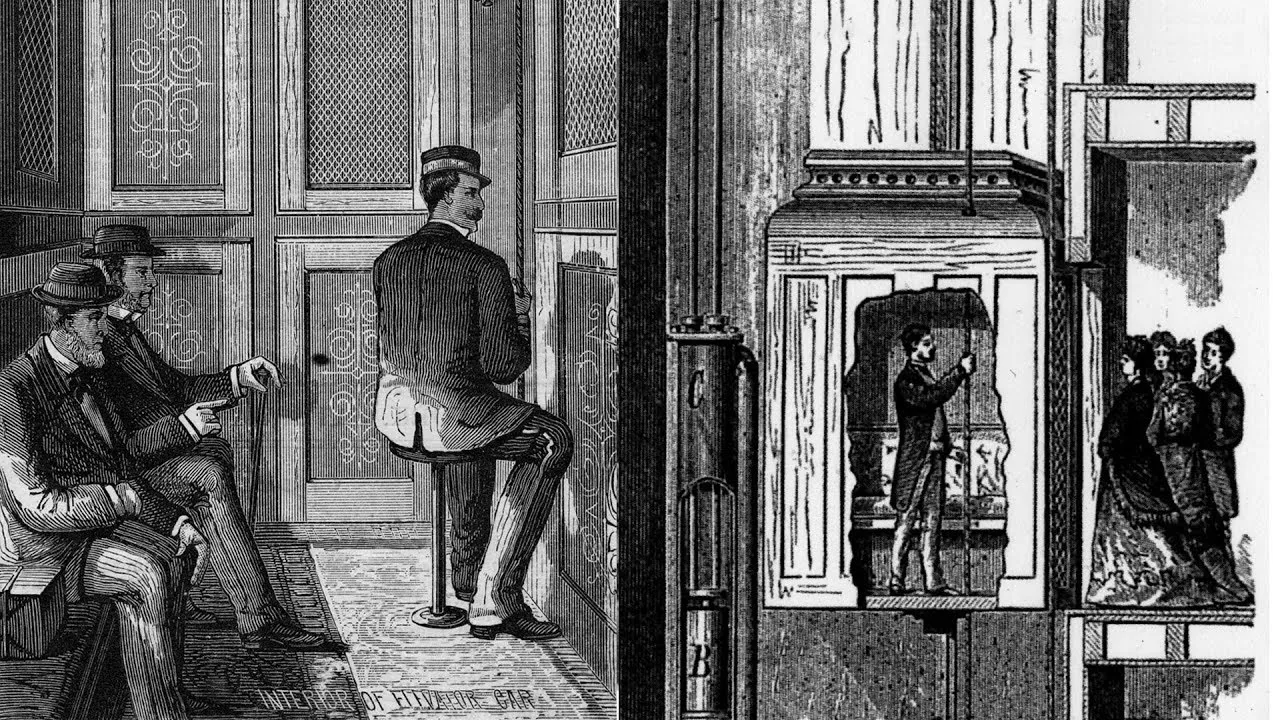
The History of Passenger Elevators in Skyscrapers: 1870s-1890s | Lecture
@SkyscraperMuseum
1.7K views•2020-10-05

12:54
Triumph of Orthodoxy Icon: Byzantine Art & History Explained
@BenCallan
2.1K views•2024-08-06

9:49
FastAPI vs Flask vs Django: Choosing the Right Python Web Framework
@TechWithTim
302.5K views•2024-05-26

1:42
Game of Thrones Opening Credits: A Cinematic Analysis
@gameofthrones
46.3M views•2011-04-18
Related Study Plans & Knowledge Roadmaps
Structured learning paths in General & Interdisciplinary Studies
general-studies
Elevator Engineering: History, Physics & Cities
01From Hoists to Safety Brakes: The Dawn of Vertical Lift
02Hydraulic vs. Traction: The Engineering Physics of Elevators
03Modern Speed, Safety, and Algorithms
+ 2 more learning modules
12h5 modules
Explore Roadmap
general-studies
Rubber: Material Science, History & Geopolitics
01Origins of Natural Rubber & Mesoamerican History
02The Chemistry of Natural Rubber & Vulcanization
03The Geopolitics of the Rubber Boom & Colonization
+ 2 more learning modules
12h5 modules
Explore Roadmap
general-studies
Containerization: Evolution, Logistics & Trade
01Ancient Trade & Bulk Cargo: Amphorae to Barrels
02The Industrial Revolution & Cardboard Packaging
03The Containerization Revolution: Malcom McLean
+ 2 more learning modules
12h5 modules
Explore Roadmap
general-studies
Textile Tech: Evolution, Labor & Global Impact
01Pre-Industrial Textiles: Handloom & Cottage Industry
02Mechanization: The Spinning Jenny to the Power Loom
03The Factory System & Global Labor Transformation
+ 2 more learning modules
10h5 modules
Explore Roadmap