



![Российская Империя: Николай II, часть 1. [14/16] [Eng Sub]](https://i.ytimg.com/vi/lIpyaEmKIm8/hqdefault.jpg?sqp=-oaymwEmCOADEOgC8quKqQMa8AEB-AHuBIAC4AOKAgwIABABGHIgWSg4MA8=&rs=AOn4CLBD0weOe0-Plt1kij3fCQwTwkjPWQ)






![What if Russian White Forces had won the Civil War? Kaiserreich Universe Documentary [E04] - Russia](https://i.ytimg.com/vi/7cO8nS6-M9Q/maxresdefault.jpg)


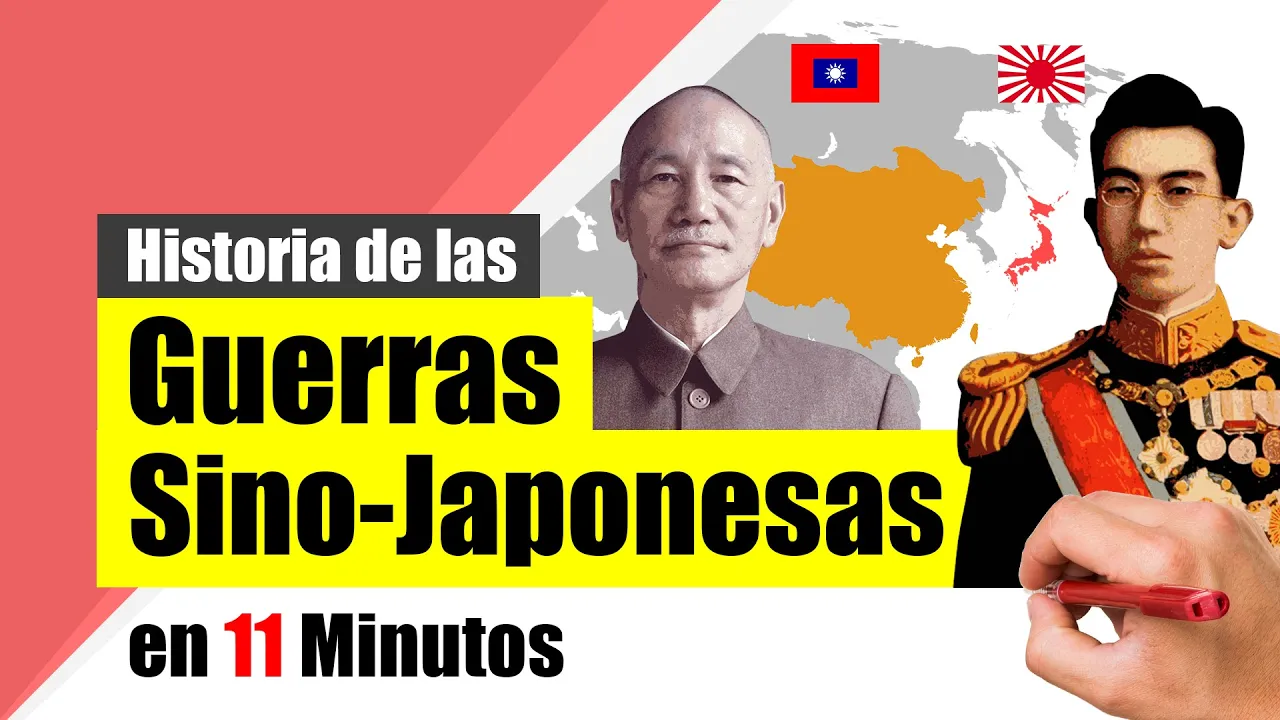



Japan's reversal of the Asian balance of power in the late 19th and early 20th centuries demonstrates that clever strategic decisions and institutional Westernization can overcome disadvantages of smaller population and territory; Japan achieved this through three key factors: comprehensive Westernization of institutions during the Meiji reforms (1869-1890), mastery of grand strategy by integrating multiple instruments of national power (diplomacy, information, military, and economics) during the Russo-Japanese War (1904-1905), and precise timing of victory termination at the culminating point to maximize gains while avoiding third-party intervention.
How Imperial Japan Defeated Tsarist Russia and Qing China
Added:The origins and significance of the Meiji Restoration (1868), which transitioned Japan from an isolated feudal shogunate to a modernized, industrializing state.
The geopolitical decline of the Qing Dynasty in 19th-century China, including the destabilizing effects of the Opium Wars and unequal treaties with Western powers.
The expansionist ambitions of the Tsarist Russian Empire in East Asia, particularly its pursuit of warm-water ports in Manchuria and the Korean Peninsula.
The basic concept of 'Gunboat Diplomacy' and how Western imperialist pressure motivated Japan's rapid military and industrial reforms.
The formal annexation of Korea by Imperial Japan in 1910 and the long-term socio-political consequences of Japanese colonial rule in the region.
How Russia's humiliating defeat in the Russo-Japanese War (1904-1905) triggered the Russian Revolution of 1905, weakening the Romanov dynasty.
The escalation of Japanese militarism and the eventual invasion of Manchuria (1931), which set the stage for the Second Sino-Japanese War and World War II in the Pacific.
The global psychological shift caused by these conflicts, specifically how an Asian nation defeating a European superpower challenged notions of Western racial superiority and inspired anti-colonial movements.
1.3M views35.2Klikes1:56:21Original Release: 2025-07-25
I'm going to talk to you today about one of the two great generations in modern Japanese history.
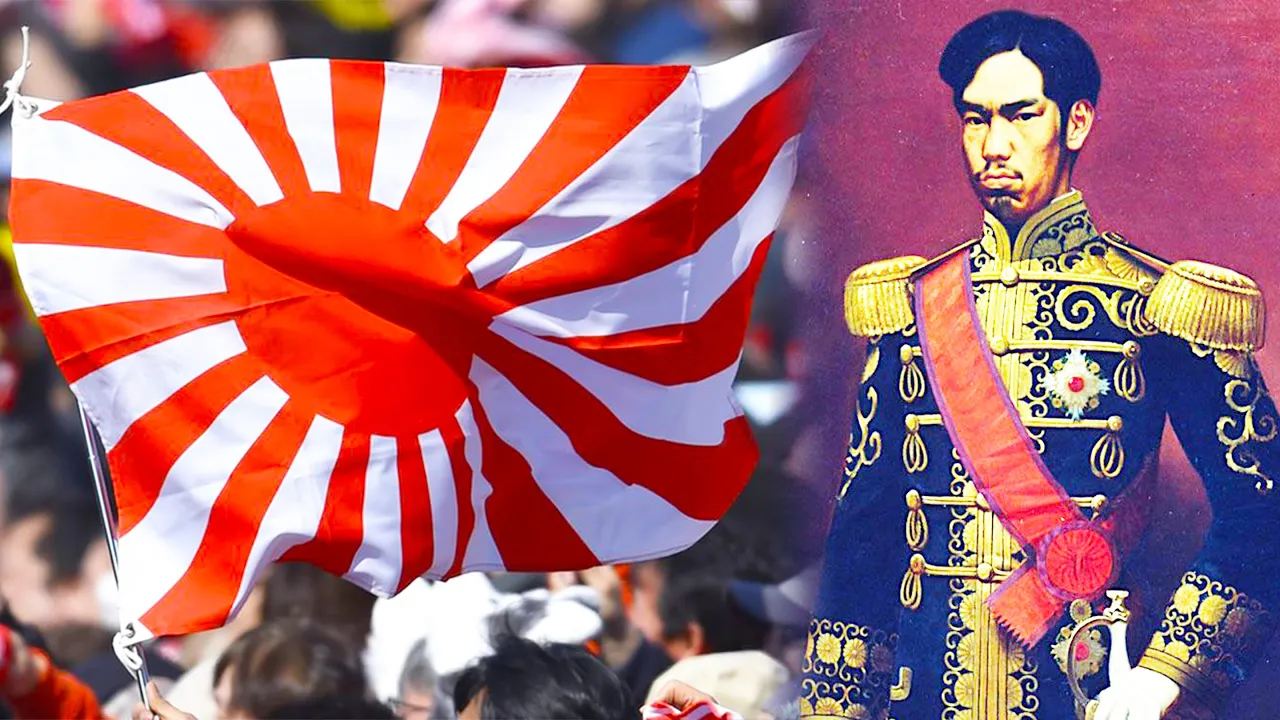
They are the Meiji generation, named after the Meiji Emperor here.
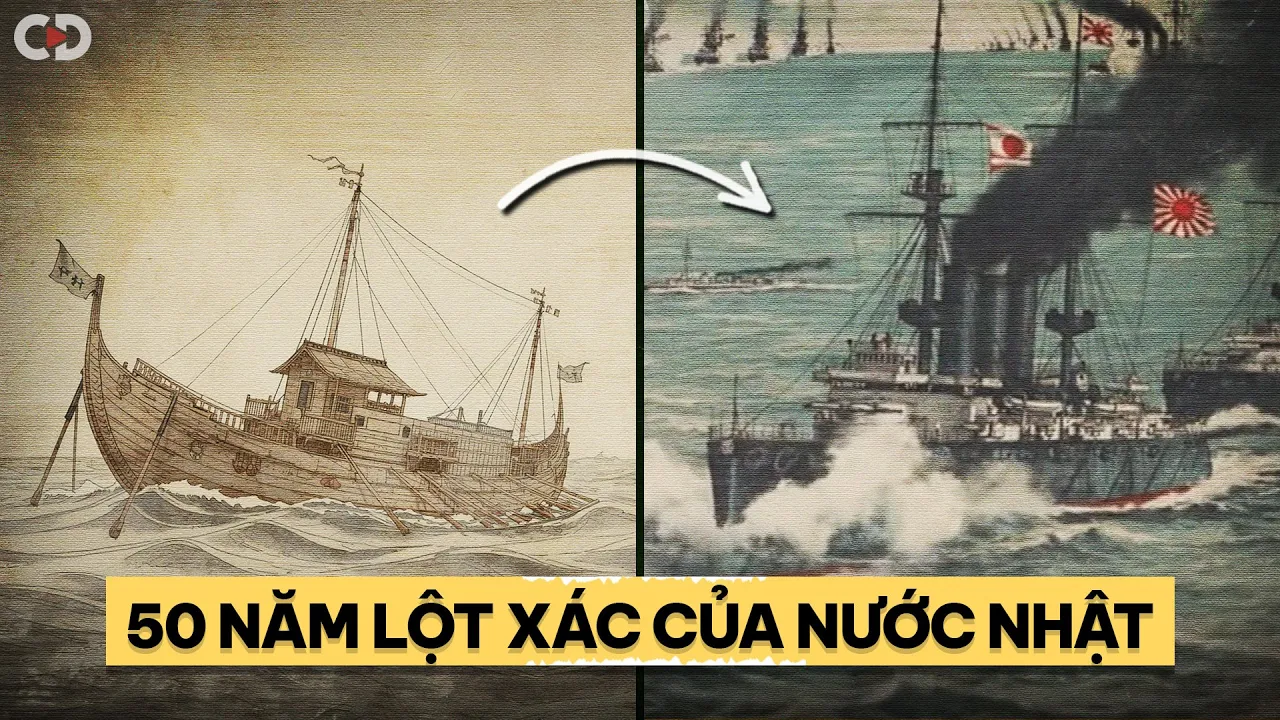
That generation transformed Japan into the first and only non-Western modern power in that period.
The second great generation of the modern Japanese is of course the post-war generation that transformed their country into a global powerhouse.
I'm going to ask a question, or try to both ask and answer.
What caused the reversal of the balance of power in Asia in the period that I'm going to talk to you about? It's a really consequential question about why these tectonic changes take place in the international system.
Historically China had always been the dominant civilization in Asia from time immemorial.
Then upstart Japan winds up doing things, or China winds up doing things, and it reverses and has profound effects. It's a very relevant question in our own day when there's an ongoing reversal of the reversal, when China's on the comeback and threatening to put Japan back in its box. So it's really interesting to ask why? How do these things happen? So that's the background of what I'm talking about.
But if you think about China back in the day before Japan trounced China in the First Sino-Japanese War, the Chinese believed that there was only one civilization, theirs naturally.
They believed that of course it's the best. Because there's only one that makes it easier to be the best. But in addition, if you think about all levels of human endeavor, Chinese institutions were imitated throughout the East.
It was the richest country on the planet for many, many years.
Incredible achievements in science, philosophy, you name it.
Also there was another assumption that people didn't make a U-turn on the path to civilization.
It's always forward towards Chinese civilization. Well, Japan by Westernizing is taking a U-turn on the road to civilization. It's dumping Chinese civilization. Already we have at least two civilizations out there. Then when it trounces China in a war, it suggests to the Chinese that they can't be better than the Japanese, at the military things at least.
This effect on China was far more devastating than the Opium Wars.
The Chinese could write those off, the losses there to "a bunch of crazy Europeans, they're irrelevant to us." But when Japan did this, it basically detonated the Confucian underpinnings of Chinese civilization.
The Chinese have been trying to find a suitable replacement ever since.
For a while they thought it was communism. Maybe they still do. So I'm going to ask a question, why did the Asian balance of power change? Now, spoiler alert, I'll give the answer.
I'm going to say, clever decisions in Tokyo. But I'm going to use a particular framework to answer this that I have found really useful. I learned it from teaching at the Naval War College where students are required to have a counterargument in papers.
This is what I learned from doing this. So I'm going to have an argument, which is a thesis, and then I'll have some data supporting it.
But I'm not going to quit there. I'm going to find the second best argument, the counterargument. The absolutely best alternate explanation, but not one that I think is the best one. I'm going to give you the best one.
That's my thesis and I'm going to go into that. It's incredibly valuable, particularly in our own fraught political times where we need to hear each other out.
You need to hear out the counterargument of what the other side is saying.
What you'll often find out in a counterargument is that there are actually some very valid points in it. It leads you to think, "Oh well, maybe I need to adjust my own argument." So changing your mind's a good idea if the data comes in. Also, it gets you away from monocausal explanations where you come up with one cause you think "that's it, time to quit."
If you're thinking about the counterargument, you might get other causes as well.
Also, if you're going to do something like on a job and you have to recommend a course of action, your thesis, you had better anticipate what the counterargument's going to be.
Then the third part of this is the rebuttal. Because you had better come into that meeting with your boss with the rebuttal in your back pocket so that you can deal with people who are saying you're wrong. The rebuttal cannot be a repetition of the original argument because you know what? That's annoying. Don't do that. It’s really annoying. The most effective ones are coming at the problem from a completely different direction from either argument or counterargument that then shores up your argument.
My other direction is, I've got a Sino-Japanese problem and I'm going to come around with a Russia angle. So this is my game plan of what I'm planning to do and the analytical reasons for doing it. Okay, so I have a thesis which I'm going to give to you in emails and written work and lectures like this one.
You really help people if you explain exactly what you're up to and you do it succinctly at the very beginning. So here it is. The Japanese leaders Westernized their institutions.
They integrated multiple instruments of national power into a coherent strategy.
Then in the Russo-Japanese War, they quit that one exactly at the culminating point of victory for maximum gains. Together, these three things overturned the balance of power in their favor. That's my thesis. Short, sweet, you've got it. Whether you agree with it or not, we will get there. Okay, so now I'm going to go to the first point.
You should start with a topic sentence. I'm going to start one. Why am I doing this?
These are all sign posts to orient you to my argument so that you can absorb it.
Also, if you don't like it, you can see very clearly the parts that you don't like and we can get into a fun conversation. My topic sentence for the Westernization part is that Japanese leaders concluded that in order to parry the threat of the Industrial Revolution, and of all these imperial powers coming at them, they needed to Westernize their institutions in order to protect their national interests. That was step one. So that's my topic sentence. Okay, so what's going on? The Industrial Revolution started in England, or Britain more generally in the late 18th century. It spread to the continent after the Napoleonic Wars died down at the beginning of the 19th century.
By the mid-19th century, it had reached Asia. It's profoundly disruptive to traditional societies whose traditional security paradigms no longer work when they're facing the weaponry of the industrialized age coming at them. What the Industrial Revolution does and why it's so revolutionary is it produces compounded economic growth.
Traditional societies are pretty much pretty stable.
But when you compound economic growth, the difference in power and wealth becomes stark between those who do and those who don't. It's also based, not only on technological changes—where you've got all these fancy armaments and railways and telegraphs—but it's also based on institutions. What are institutions? They're how we organize each other.
When you think of institutions, you think of the buildings where people are. But that's not it. It's the people in there who are working on a shared project together, a shared area of activity. This is one of the hallmarks of Western civilization. This is what the Romans figured out about institutions and laws, that this is a way of really harnessing people, and it's profoundly powerful. I'll go into all of that.
Japan's looking at the world with this incoming industrial revolution, or the powers that have benefited from it. It's watching its neighbor China being defeated twice in war. They're horrified, not just appalled. They’re looking at it and going, "maybe we’ll be next?" And they're right. The United States does unto Japan what Britain and France did unto China. What's that? The treaty port system. What it meant is that trade in Japan and China would take place in designated treaty ports, that the West would set tariffs on this trade, and that Western citizens in China or Japan in these treaty ports would not be subjected to Chinese or Japanese law, but home country law. When Chinese and Japanese citizens were in Europe and the United States, they most certainly were not dealing with home country law, they were dealing with US or Western law. So it was not reciprocal in any way.
In addition, each one of these treaties had a most favored nation clause in it which said, the one who's negotiating this treaty, the most favored one, whatever they negotiate will be given to everybody else. So it meant whatever one could negotiate accrued to them all. It meant that China lost sovereignty and Japan lost their sovereignty when these treaties went in.
So the Japanese, unlike China which fights war after war with these Westerners trying to defeat them militarily, and it's unsuccessful. The Japanese say, "Whoa, whoa, whoa, whoa, we're going to assess what the nature of the problem is."
They sent fact-finding mission after fact-finding mission to Europe primarily, but also the United States. This is just the most famous one, the Iwakura Mission, which was off to the West in the United States as well in 1871.
They're studying not only Western military institutions, but a whole array of political, economic, legal, social, educational - the works - to understand the basis for Western power and the problem that is hitting them. They arrive in Europe at a really interesting time. It's when Otto von Bismarck is just finishing up the third war of the unification of the Germanic states.
The Japanese think, "Ooh, this might be quite a model for us." Why? Because Prussia transformed itself over a succession of three wars from the weakest of the five great European powers to second only to Great Britain. It did so in part by unifying the Germanic states into modern Germany. The Japanese are thinking, "Wow, this might be relevant to us because we're divided up into all these feudal domains that we have just tried to glue together. What are the lessons to be learned here?"
As they're thinking about this and watching what Bismarck is up to, they come upon thinking about institutions and technology. I'm going to use the words in the following sense.
Modernization means adopting the most state-of-the-art technology, whatever it is, not just military technology but all manner of technology.
Westernization the way I'm going to use it means adopting Westernized institutions.
I don't mean just military institutions. I mean everything from whether you westernize your educational institutions or political whatever it is.
The question is, can you have one without the other?
Can you modernize and have all the fancy gadgets and things without having the Westernized institutions that the societies that created these things had?
If you think about it, this dichotomy is still with us.
There are a lot of fighters in the Middle East and North Africa who are more than happy to use state-of-the-art technology, but the last thing they want is Westernized institutions.
The Japanese—when they posed this question back in the day asking whether you can have one without the other—they decided the answer was no. They didn't particularly like Western culture, but they believed that in order to not only use and import state-of-the-art technology, but become an independent producer of it, you've got to do some degree of Westernization. So they get home. They set themselves a policy objective which is to protect Japanese national security and sovereignty in an age of accelerating imperialism. They come up with a two-phase grand strategy to do this. It's going to start with a domestic phase of Westernization, Westernizing your institutions. When they're done with that, they're going to have a foreign policy phase which is going to be about starting an empire. Why do that? Because they look at all the powers of their day and think "What's a great power look like in those days? Well, it has an empire." So they go, "Well, we're going to have an empire, all right." This is the domestic phase. These are known as the Meiji reforms in honor of the emperor who reigned in this period. It's between 1869-1890. It's a whole generation. If you look at them, only two of them pertain to the military. There's the draft and then creating the general staff. Then if you look at the two that start it all, they start it at the top of the social pyramid with the feudal domains.
Those are the power brokers of Japan. They're getting rid of all those and then they go right to the bottom of the social pyramid, which is children.
They decide that they need to have compulsory elementary education because they don't believe you can have a modern country, a strong country, without a literate population.
But if you look at the rest of these things, you're getting a Bank of Japan, you're going to be having something running your currency and other things.
You've got a cabinet, a higher education, you're going to have a professional civil service constitution, a parliament, you're going to have a court system that looks like a Western court system with laws that look an awful lot like Western laws.
As a result of doing all of this, the Westerners had no excuse left for having a treaty port system because this mirrors what's going on in the West. So Britain, which is the precedent setter in these things, the superpower of its day, it renegotiates its treaties with Japan on the basis of juridical equality. The other powers follow suit and do it.
This happened in Japan a half century before China got rid of its unequal treaties.
The domestic phase is over the moment Japan signs that treaty with Britain.
The foreign policy phase has to do with China. Japan believes it needs an empire and its neighborhood is a mess. China is imploding for various reasons, which I will get to, and Korea's even worse. China, because it's having massive civil wars throughout China, can no longer fulfill its suzerain role to stabilize Korea.
And the Korean royal house is busy mailing package bombs to each other.
I kid you not, they're blowing each other up. What Japan is terribly concerned about is that Russia might try to fill this power vacuum. Why would Japan think that? Well, it’s the Trans-Siberian Railway. Russia decides in 1891 that it's going to build a Trans-Siberian Railway to exactly what? There is no Russian population out there.
Japan understands exactly what it is. It's a bid for an empire in Asia.
Because once Russia completes this thing, it's going to overturn the Asian balance of power because Russia is going to be able to deploy troops where nobody else can.
Therefore, treaty revision happens on the 16th of July, 1894.
That's when it's signed on the dotted line with Britain.
Nine days later, Japan fires the opening shots of the First Sino-Japanese War.
The Japanese fight three wars of Russian containment.
I'm going to talk about the two that went well for them today.
The third one's a whole other topic. The first one's the First Sino-Japanese War, when little Japan defeats the greatest land power of Asia, China. Incredible. The second one, which I'll get to a decade later, is the Russo-Japanese War when the Japanese defeat, sorry spoiler alert, Russia, the greatest land empire of Europe. Amazing that they can do this.
The third one does not go nearly as well. That would be the Second Sino-Japanese War from 1931 to 1945. That morphs into World War II.
That ruins the Japanese, but it's a different topic.
The First Sino Japanese War, to let you know what happened in it.
It's comprised of two pairs of key battles. There are other battles as well, but this is a good way to understand it. The first battle is at Pyongyang.
The Japanese defeat the Chinese army, which takes off and retreats all the way over the border river, which is the Yalu, back into Chinese territory.
So Japan has actually achieved its war objective, which was to remove Korea from the Chinese sphere of influence. Battle number one, they've already done it.
The second battle occurs within the week, the same week in mid September 1894.
It's the Battle of the Yalu, where the Japanese navy trounces the Chinese navy, which, believe it or not, in this day both countries had state-of-the-art navies.
Japan trounces it and gets command of the sea after that. That's terribly important for Japan. For Japan to reach the theater here, it's got to cross the sea.
If there's a hostile navy out and about, it can sink troop transport, supplies and other things.
It's very important to get rid of the hostile navy.
The reason it gets command of the sea is because the Chinese decide they're never going to engage with the Japanese navy ever again and they duck into port.
The Japanese are going to solve that problem for them.
There is a second pair of battles which are fought over the winter of 1894-95.
China only has one naval refitting station where you can actually fix large ships.
That's at Port Arthur. They will take it by land the same way they're going to take it in the Russo-Japanese War. The Chinese fleet, what's left of it, flees to Weihaiwei to hang out in port. Japan lands an army on the Shandong peninsula there and also it blockades with its navy. Then the army turns the landward guns on the ships in port and they sink them all. And that is the end of that war.
Here's what Japan got out of this war. What I've got is a very simple framework: domestic, regional, international. This is a way to help you remember what I'm going to tell you. Three-part frameworks are helpful for getting information to other people. Domestically, victory in this war validated a very controversial Westernization program. All those Meiji reforms which sound so great in retrospect, actually the Japanese population didn't like them.
Who wants their kids being sent to elementary school if they were working on the farm before?
Who wants this Westernized curriculum? Who likes westerners anyway? People are wearing all this Western clothing and stuff. It's crazy land. Why would anyone like that?
Once Japan wins this war and trounces China, a lot of Japanese have second thoughts about this.
They're quite proud of their achievements and it vastly increases the prestige of the military, particularly the army. This is going to have bad follow-on effects for civil military relations because it's going to increase military power over civil power but it takes a while to play out. Regionally, Japan's replacing China as the dominant power and Japan's getting the beginnings of its empires, Taiwan and the Pescadores.
Internationally, Japan becomes a recognized great power. What's my proof? It would be the 1902 Anglo-Japanese Alliance, which is Britain's only long-term alliance between the Napoleonic Wars and World War I, alliance with Japan. However, this war gets the eye of Mordor turned onto them because Russia is going, "Whoa, rising power in Asia.
Potential two-front war problem for us with Europe in the west and whatever the Japanese think they're doing. That triggers a Russo-Japanese arms race and Russia, the eye of Mordor, turns from Europe to Asia. That's going to be problematic.
So now my transition sentence, I've done part number one.
Not only did Japan Westernize its institutions in order to overturn the balance of power, but it also mastered grand strategy and integrated multiple instruments of national power.
Here we go on that one. Marshall Yamagata, who was the writer of war plans for the very successful Sino-Japanese war, predicted another war within the decade.
The Russo-Japanese war came right on time. In the meantime, Japan prepared for war.
It integrated such instruments of national power as diplomacy, intelligence, military, economics.
I'm going to go through each in turn, starting with diplomacy.
Here you have Sun Tzu, who's China's big guru, Art of War, who's talking about how it's really important to disrupt alliances. In modern terminology, that would be isolating the adversary. That might be a good thing to do.
That's the purpose of the Anglo-Japanese alliance. How does that work? Its terms say that if more than one European power comes to Asia to fight Japan, that means Russia plus one European buddy, then Britain is going to weigh in on Japan's side.
Britain is the number one power in Europe, so why would you ever want to help Russia out?
It won't go well with you if Britain is on Japan's side.
This alliance goes into effect from 1902 to 1907. It's a five year event.
It opens a window of opportunity for Japan to sort out its empire in Asia.
But the Trans-Siberian Railway, when it gets completed, is going to threaten to close that window. Here's why. The Trans-Siberian Railway in those days, it's not north of the Amur, it's actually straight through Manchuria. This Chinese Eastern Railway, it's Russia's bid for empire, trying to control Manchuria. It was unfinished. It hadn't been double tracked. That means you're always having to push trains off so other trains can pass them in the other direction.
It's missing its Lake Baikal link. Don't think lake, think Switzerland.
Lake Baikal is about the size of Switzerland. The Boxer Rebellion—the Al Qaeda of their day and I'll get to them—had destroyed much of the track, really upsetting the Russians.
As a result of all of this, at the beginning of the Russo-Japanese War which began in 1904, the carrying capacity of that railway was only 20,000-40,000 men per month to the front.
By the end of the war, the last battle, it's 100,000 men per month.
If those numbers had been available at the beginning of the war, Japan would have faced numerically superior Russians from start to finish and would have been in a world of hurt.
So Japan has got a window of opportunity that it's worrying about sorting things out in.
In addition, Japan engages in a really big military buildup.
It gets a really big indemnity from the First Sino-Japanese War and it spends it.
That spending was finished in around 1901, meaning it's about ready to go to war.
At the time the war breaks out, Russian naval assets in Asia were about ¾ those of Japan, but Russia was scheduled to surpass Japan's naval assets by about 1905.
Again, you could see this window of opportunity threatening to shut.
So if you look at it, Japan's window of opportunity of getting its empire, if that's what it thinks it wants… You've got to have treaty vision in place.
You've got to isolate Russians, make sure that there's going to be no other power interfering in these things. You’ve got to have your rearmament program.
But look, this window is very short. It's going to close in 1905-ish.
When you think of windows of opportunities, what they mean is whatever it is you plan to do has to be completed before it slams shut. If you're on the wrong side of the window, which is what happens to Japan in the Second Sino-Japanese War, you are in a world of hurt.
In addition, what it means is that actually time is on the side of your adversary.
It is a sign of weakness, not strength. But the Japanese are looking at the Russians who are procrastinating. The Japanese are telling them, "Hey, we will trade recognition of your dominance of Manchuria if you'll recognize our dominance in Korea." The Russians didn't want to do anything.
They're procrastinating and trying to go beyond this window.
The Japanese are thinking, "We’ve got to sort it out before that happens."
Another element of national power are psyops, as the US military likes to call them, psychological operations. The Japanese were engaged in a really wide array of them both at the front in Russia and across the Russian Empire.
At the front, the Japanese were secreting in all kinds of postcards for their Russian recruits there, showing the great life of the POW and rather posh Japanese accommodations, as opposed to the really bad life of getting disabled or killed in the front.
Meanwhile, I think there were only three European countries, including Russia, that lacked a legislature in this period. I think Montenegro is one of them and maybe the Ottoman Empire might be the other one. Japan had a legislature. The Russian population's sick of it. The war wasn't going well. They start hitting the streets in the Russian Revolution.
Japan wants to advertise that to the troops. You want things to be stirred up in Russia so that Russia has to pull troops back into European Russia.
So they're doing all of that. Then there’s this gentleman. He was a colonel back in the day, Colonel Akashi, but he's a general by the time this picture is taken of him.
He's working in the Japanese legation in Stockholm.
He's busy cutting checks to Finnish and Polish revolutionaries who are part of the Russian Empire and want out, trying to stir things up there to have Russia forced to pull the troops out of Asia.
Then the Japanese have this gentleman in there, and employing a lot of other people.
Yuan Shikai goes on to be key in overthrowing the Qing dynasty and becomes China's first president.
But back in the day, he's running reconnaissance missions for the Japanese and telling them what the Russians are up to. When little detachments of Russian troops try to go out and about, these people are harassing them, which doesn't help Russian morale.
Also, the Japanese are being really good about purchases from Manchurians.
They aren't just taking things from people, they're actually paying.
So they're triggering an economic boom in Manchuria, which means locals like them.
Then the Japanese also figure out how to tap into Russian fleet communications so they know where the Russian fleet is, which is most convenient. So this is the information element of national power. Then there's economics. Two-fifths of this war for the Japanese side is paid for with loans.
If they don't get the loans, they can't wage the war.
In fact, one of the reasons Russia has to call it quits at the end of the war is when it tries to raise a final loan. It failed. No one will pay for it.
But the Japanese loans depend on battlefield success, as do interest rates.
So if you are successful in the field, the interest rates go down.
Japan is doing quite well with all of this. So if you sum it all up, the Japanese use diplomacy to isolate their adversary with this UK alliance.
They use all these psychological operations to promote revolution and desertions.
They're using the military instrument to fund their rearmament.
Then they've got the economics going with all of these loans.
The US military is really partial to a Reagan-era acronym of DIME.
D is for diplomacy, I is for information, M is for military, E is economics. It sounds like a bad cheerleading routine.
It's inadequate. It may be a place to start. It's cute and all that stuff, but cute does not mean complete. Think about it. One of the most important factors in this war bar none, certainly for Russia, is railways. I don't see an R in there or anything.
By all means, this is better than only looking at military factors, but it's incomplete.
So, I've talked about Japan's Westernization. I've talked about its mastery of grand strategy.
Now here's my third reason for how they overturn the balance of power.
It has to do with pegging the culminating point of victory in the Russo-Japanese war.
Now for a commercial break, I'm going to give you some terminology: "culminating point of attack" and "culminating point of victory." They're different. Culminating point of attack is an operational term. If you do not reach your culminating point of attack, it means you could have gone further. The culminating point of attack applies to a single battle or a set of battles, which would be called a campaign.
If you don't go far enough in your battle, you could have taken more territory, whatever it was you were after. If you go too far… Imagine you're going deep into whatever territory it is. Your lines are ever more extended.
Your enemy's lines are probably being shortened. Your supply problems are getting worse, theirs might be getting better. If you go way too far, your enemy will launch a counterattack that will send you much further backwards than if you'd been a little more cautious about how far you went. So that's an operational term. The strategic term is the "culminating point of victory" and it concerns the objective for which the war was fought.
Japan is fighting this war in order to protect its sovereignty, and become a great power to do that.
If you don't reach your culminating point, you could have gotten greater winnings.
If you go too far, typically what will happen is you will trigger a third-party intervention.
What may have been feasible before that third party joined the party may no longer be.
So this is the point of the terminology. Commercial break is over and let's get going on the Russo-Japanese war. Here's a nice map of it.
It starts out with a Japanese surprise attack on Port Arthur.
Lüshun is the modern name, I'm using a traditional name. It's on the Liaodong Peninsula. This is the main Russian base. The Japanese have to get those ships in base and sink them, even better. Their supply lines are in danger if that navy's out and about. Simultaneously they land an army in Korea that's going to go northwest into Manchuria. If you look at the railway line, it goes Port Arthur all the way to Harbin up there. That's the east-west junction of the Trans-Siberian Railway. In those days that's the Chinese Eastern Railway.
I've only listed a couple of the major battles, but basically it's going up the railway system from Port Arthur upward and you got the Battles of Liaoyang and Mukden.
Japan has got only four armies until the very end of the war when it gets a fifth.
As long as Port Arthur has ships in it, one army has to be stuck there besieging it.
Japan's theory of victory in this thing is to have an annihilating battle.
That's what Bismarck had done to the French in the Battle of Sedan.
So the Japanese really need to get that army out of Port Arthur so that it can concentrate on these other battles. What happens is Russia keeps losing the battles, but it has an orderly retreat moving ever further northward, extending Japanese lines.
That's an overview of how the war goes so you can orient the rest of the conversation here.
If you look at the invasion routes that Japan uses and in the First Sino-Japanese War and the Russo-Japanese War, they're remarkably similar because guess what, the geography hasn't changed.
If you want to send an army into desired locations, it may well have to take similar routes. The British, the French, the Americans, and the Japanese had studied very carefully the First-Sino Japanese War.
But apparently the Russians didn't waste their time on it because here's what's up.
If the Russians had studied it carefully, they would have known the Yalu River is lethal, to send an army across that if there's an army waiting for it on the other side.
The Russians also would have realized that this Fenghuangshan Pass and Motien Pass—Motien means literally "scratch the skies"—that if you're prepared there, you're going to ruin an army coming through. Of course the Russians aren't prepared there.
They also would have known that the Liaodong Peninsula—it has a very narrow neck.
If you cut the narrow neck right where Dalny is, a big commercial port, you're going to get that port which is connected to the railway. You're going to be able to supply your armies going right up north. In addition, it means you're probably going to get Port Arthur, the big naval base as well, because it's basically been turned into an island and you'll probably get that. So the Russians should have figured out that but they didn't. The Japanese literally blast through these locations. Here is the key to reducing the fleet in Port Arthur. Since the Russians wouldn't sortie, they're just sticking in harbor, the Japanese have to figure out a way to do it. Here's how it works. They have to get a bunch of these 11-inch howitzers in place.
Japan didn't own many of these. They're really heavy. It's really hard to transport them with horses and things. They've got to put them behind the hills in Port Arthur. Then they've got to take the high point.
It takes them a while to figure out that they needed to do this. It’s a 203-meter hill. You put a spotter on 203 Meter Hill. This thing starts firing shots and the spotter starts radioing in how you have to adjust the line of fire in order to hit the ships in harbor.
So that's what's going on here. Here you can see the narrow neck there above Dalny. You can see it's a big port.
We've put a lot of ships, but it’s not a very protected port.
The star is where Port Arthur is and that is a protected port where you want to put naval vessels. You can see it takes the Japanese two months to work their way down the Liaodong Peninsula to get themselves in position to blow away the ships in port. Meanwhile, the Japanese armies are having a hard time while this is going on. It could be argued that maybe they even reached their culminating point of attack in the Battle of Liaoyang. Who knows? Liaoyang takes place less than halfway through the war. It's in early September 1904. And Japanese munitions, numbers of officers, numbers of horses… It all goes critical. They don't have enough. They get away with it. They win the battle but the Russians have an organized retreat northward.
At the Battle of Shaho, which happens next in October, the Japanese supply system almost collapses but they get away with it. So bad things are going on at land.
Japan doesn't have an infinite supply of soldiers. They also don't have an infinite supply of artillery, howitzers and things. Here are their gun emplacements. Notice the green ones are army gun emplacements around Port Arthur. That makes sense. What's all the purple? They have so few guns, they're pulling them off ships in order to reduce Port Arthur.
All these things they really need up in Manchuria, General Nogi who's running all of this, his army up in Manchuria. There you can see, the circle is where 203 Meter Hill is that they need to take as well. General Nogi, who is commanding the 3rd Army which is in charge of the siege, is really desperate to reduce the fortress as soon as possible.
He runs four different really costly infantry assaults on a fortress where you're killing lots of young Japanese men. The first two occur right prior to major battles, Liaoyang and Shaho respectively. Because he wants to win Port Arthur, so then he can take his guns and troops to fight at Liaoyang and Shaho.
Well, it's not to be because he loses both of them. The assaults are insufficient.
It's only after the second one that he realizes the importance of 203 Meter Hill.
The problem is Nogi gets 45,000 Japanese soldiers killed doing this. 45,000 soldiers in that day is an entire army. I've already pointed out that Japan only had four armies until the very end of the war when it tried to cobble together a fifth one.
Here's what 203 Meter Hill looks like from down below.
Here's what it looks like from up top, the kind of view you get.
When there was a truce in early December 1904, and there was some talking between Japanese and Russian officers, Russian officers said, "You will never capture 203 Meter Hill."
To which the Japanese officer replied, "We'll purchase it in blood." And they did. Their gamble paid off because all these ships, you'll notice they're listing.
It's because they ain't sailing anywhere. You can see the 203 Meter Hill.
They take it at the end of November and within the week, they are now sinking all of these battleships. They're gone within a few days.
The Russians give up at Port Arthur and the 3rd Army is up and heading into Manchuria where it'll be there for the Battle of Mukden, which is a huge battle. It's got what, 500,000 troops? Even so, Russia can muster 125,000 more troops than Japan can.
Japan in this battle is just taking anybody, young boys, old people.
Whoever they can put into that army, they're putting into it.
You could argue that they're well beyond their culminating point of attack, but for incompetent Russian strategy. If the Russians had run one more battle against the Japanese, the Japanese supply lines would have collapsed.
It's unclear how far down the Liaodong Peninsula they would have had to retreat.
So this is when Japan's war termination plan goes into effect.
The Japanese realized from the very beginning that they had a high-risk, high-reward strategy.
In contrast to World War II, they had a really carefully prepared exit strategy.
When Prime Minister Itō Hirobumi is convening the cabinet and they're going to make the decision to fire the first shots in this war, he is already lining up a Harvard grad, Viscount Kaneko, who was an acquaintance of the President Theodore Roosevelt of the United States.
What they want is to have Viscount Kaneko work on getting Roosevelt ready to do mediation at the end of this war. The negotiations are going to be held in Portsmouth, New Hampshire, negotiated by another Harvard alumnus, Baron Komura, who's going to do all of that. Meanwhile, Ito sends his son-in-law, who's a Diet member but also a graduate of Cambridge University, off to Britain to keep the Anglo-Japanese Alliance solid. So the Japanese are very aware that you have to have a way out of this thing. So it's in the Battle of Mukden that Field Marshal Yamagata decides it's time to call the American card at this moment.
He said, "Look, the enemy is never going to request peace unless we have invaded Moscow or St. Petersburg" something he knows to be impossible. He said, "Look, the enemy still has powerful forces in its home country. We have already exhausted ours. Second, while the enemy still does not run out of officers, we have lost a great number since the opening of the war and cannot easily replace them." At this moment, the Russian army was three times the size of the Japanese army. That army in theater was increasingly comprised of crack soldiers, not the colonial kind of soldiers they'd started out with. So here's Field Marshal Yamagata. In the first Sino-Japanese War, the government in Tokyo was afraid he was going to march on Beijing and do regime change. They pulled him out of the theater and gave him a sinecure to make sure he didn't do that this time. This time, he's a wiser man.
He goes, "We must now be prudent." Here are other members of this brilliant Meiji generation. The Chief of Staff of the Manchurian army said, "Look, if you start a fire, you’ve got to put it out."
And here is Field Marshal Ōyama, who is the commander of Manchurian forces.
Before he sets out to take command, he tells the navy minister, "I will care for fighting in Manchuria, but I'm counting you as the man to tell me when to quit."
So the navy's going to be the fire department, apparently.
To tell you what the navy was up to, they took Elliott Island to turn it into a cruiser base.
That's how they're running the blockade operations on Port Arthur, keeping the Russian fleet in until they can eventually sink it there. In addition, the Imperial Japanese Navy is busy laying mines. A lot of ships go down to mines. This is an interesting story. Nicholas II, tsar of Russia, doesn't like it that his fleet is just sitting in port, not doing anything. So he sends Admiral Makarov out there to assume command. I've had the misfortune to read Makarov's major literary contribution, which is all about naval strategy.
He's a real hero in Russia. But then I read his book. It's unbelievable. He said, "If you face a big ship, what do you do? A more powerful ship, you attack.
If it's a smaller ship, what do you do? You attack." It's one size fits all. I mean, how unanalytical. Here's what happens to him. He comes into the theater and within the month, another spoiler alert, he's dead. How did that happen? He followed his strategy. That's how it happened. What he does, he arrives, everyone's really excited because he's getting the guys out and thinking they're going to be doing things. But on April 12, the evening before he dies, there are a bunch of Japanese ships laying mines out at the harbor's entrance.
He mistakes them for Russian ships and tells his people not to fire on them.
Oops. The next morning, when he sorties with the whole fleet to take the offensive… Well, they didn't sweep the harbor entrance for mines. His ship hits a mine and he goes down with a ship.
Alright, that is a tactical error and he's a dead man because of it.
However, there's a much more important strategic error that follows.
Two weeks later, Nicholas II decides to send his Baltic Fleet, named for the Baltic where it is, all the way around to come and relieve the siege at Port Arthur in order to avenge all of this thing. Okay, what's the problem with that plan?
Well, that's the problem with that plan, right? It's a long way to go.
There is no air conditioning for the sailors. They come from northern climes.
By the time they arrive, they're mutinous. Their ships are covered with barnacles, which means they don't move very fast. Meanwhile, once Port Arthur has fallen, the Japanese immediately refit their navy so they were good to go.
So the way this blunder plays out… Well, if you think about Britain, Britain will do these worldwide adventures, but they had a complete basing system across the globe so that their ships had coaling stations, they could refit, put more water on, give people some R&R time, relaxation and things. Also the British were very careful to fight on their own terms as ever possible. You don't want to fight on the enemy's terms.
Well guess what, you're going to be fighting right next to Japan with barnacle ships and mutinous crews. That's not going to go well for you.
The Japanese know because…Port Arthur falls while this expedition is taking place.
So then the purpose of the expedition is no longer there.
They should have taken a U-turn and gone home. But no, no, no, they're going to keep on going.
There is only one other possible location for them which is a far inferior base up in Vladivostok.
The Japanese know there are three ways to get to Vladivostok.
If you're coming up from the south, you're either going to go the long, long way around through La Pérouse Strait and it's awfully narrow and it's a long way around.
You can go through the Tsugaru Strait which is a little wider, but it goes by a bunch of big Japanese army bases and also a very large port of Hakodate.
You want to do that? That's kind of risky. So the short way is to go through the Korea Strait which is broken in the middle by the Tsushima Islands and the Tsushima Strait is to the east.
It's 20-25 miles wide at its narrowest point. That's the short way which is what the Russians take. Guess what? They have a welcoming party there of all these newly refitted Japanese ships that know exactly what they're up to. The Battle of Tsushima is one of the most lopsided naval battles in human history. The Japanese just either sink or commandeer basically the entire fleet, proving the Russians had no idea of how to do naval strategy.
The navy had been a product of a bunch of aristocrats.
The one who ran it was a guy who was known for, what was it, fast women and slow ships?
It did not work out well for them. While the negotiations are being held on whether to hold negotiations, President Roosevelt suggested to the Japanese that they try to take Sakhalin Island. You can see the tip end of the Japanese home island, Hokkaido and then there's Sakhalin. Why? Because it's much more valuable to the Russians than the Japanese and it'd be a good tradeback item in the peace negotiations.
Because for Japan it's a nice fishing ground. But for Russia it's sovereign Russian territory.
Horror ceding that sovereign Russian territory to anyone, let alone an Asian power given the prejudices of the day. To sum up what Japan got out of this war, it got its immediate war objective, Russian troop withdrawal from Manchuria. That's what they wanted. They get this Japanese sphere of influence in Korea. That's what they wanted.
But remember at the very beginning they wanted to trade Japanese predominance in Korea for Russian predominance in Manchuria? Let's look at what they really got.
They got the southern half of Sakhalin Island, Russian territory.
They got southern Manchuria. It's actually arguably the valuable half, the southern half, because it has Port Arthur and Dalny and all the railways that Russians had invested there.
Then it confirms the outcome of the First Sino-Japanese war that Japan is indeed the dominant power of Asia. So I rest my case. Japan did it. Smart decisions in Japan are what overturn the balance of power in Asia. Okay, but I promised you a counterargument.
What would a smart person say who disagrees with me?
Here's a perfectly good counter argument. It's great you think the Japanese are so clever, but actually China faced a perfect storm of catastrophes.
Because China imploded, that's why it leaves Japan on top in Asia.
The primary factor is that China's falling apart and this perfect storm of problems.
I'll go through three. It's always a good number. People can remember three things.
You have the civil wars afflicting China, in an age of accelerating European imperialism.
Also the Manchus who ran China, they're only 2% of the population, were suffering from all kinds of dynastic decline, which I will get into. China had reached its preindustrial limits to growth. Its population kept on going up and up, but its agricultural productivity just could not feed people.
So people are trying to farm really marginal lands.
Either they're too vertical or they don't have reliable rainfall.
You're getting massive soil erosion doing these things.
You're also getting a lot of famines. Famines are both the cause and the effect of civil wars. On this map you can just see, I've named some of the big rebellions on this one. It's to give you a sense that these rebellions affect all of China. It’s not just a little here and there, but a lot everywhere. Now I'm going to give you a table.
This is a simplified table which only goes 1845-1895.
It's part of a much bigger table that would cover the entire 19th century.
And that table is an oversimplification. So the point is this is not business as usual.
In the red box, that is the height of these rebellions, 1851-1878.
The biggest rebellion there is the Taiping. It's estimated that 20 million people died in the Taiping Rebellion. To put that figure in perspective… People don't know how many people died in all these things. China didn't know how many people they had, much less how many people they lost. But to give you a sense of it, in World War II it's estimated that 55 million people died. So you're talking 20 million just in the Taiping.
I have no idea how all this adds up, but it's huge.
The Chinese like to talk about these as being rebellions or uprisings. Give me a break.
They're civil wars. A whole bunch of them want to overthrow the dynasty in Beijing.
A whole other set of them want to secede from the empire.
Often these minority people who just want the Han, the predominant people, to go away, or the Manchus in this era. Some of these provinces are devastated for generations. So that's point one, these civil wars.
Point two is that this coincided with an era of accelerating European imperialism, where Europeans and also the Japanese are carving out massive spheres of influence for themselves.
The Chinese are not going to have full sovereignty over their country for a very, very long time.
The story gets even worse. This happens to China because China loses a succession of regional wars.
It loses the First Opium War, the Second Opium War, the Japanese snag the Ryukyu Islands.
Then in the Sino-French War, China loses control over Indochina.
Then in the Sino-Japanese War, they're losing their tributary of Korea.
The Ili crisis is up in Xinjiang, which goes a little better for them. This is a mess.
This is not business as usual. Think about one country being afflicted by this much trouble. Then it comes at a time when the Manchus are in real trouble themselves. They had ridden to power on these fabulous cavalries and tremendous operational success for a people who are only 2% of the population that they dominate. They transform China into the richest polity around the globe by the 18th century. But here's the problem. With their tremendous success in their military campaign. They're overextending China financially. Inside the round circle there, that's China proper. These are the core provinces of China that produce all the income. The Manchus came in from Manchuria up there, but they also take Mongolia, Xinjiang, and Tibet. Not Manchuria so much, but the other ones, they cost a lot of garrisoning. It costs a lot of money to garrison these places.
It looks like a great success, but it's going to have problems later on.
Then here's what happens to the Manchu emperors. They no longer ride at the head of their armies.
The Qianlong Emperor, who's considered to have ruled at the height of the dynasty, what's he spending his money on? All sorts of interesting architectural programs.
That's why people think he's great, he builds beautiful things. But these emperors are isolated.
They don't have command experience, expensive spending habits. Then it gets better. So they got all these tributaries. Some of their tributaries produce really high quality opium. The emperors decide they want to sample the goods, and the people who are preparing it for them also want to sample the goods.
Then the Manchu banner forces that are the Praetorian Guard of the Manchus are also sampling the goods. Then you go, why are the last Qing emperors incapable of producing offspring or have hardly any?
They have huge harems, so what's their problem? Well, if you're really totally high on drugs, you can ruin yourself. So that is what goes on.
No wonder they're losing these wars, if some of your key thinkers are not thinking very clearly.
So the counter argument to my argument says, "Look, it's nonsense.
The Japanese may have been really clever, but the real big event is this massive series of civil wars, European imperialism, and the collapse of Manchu minority rule.
That would be the real thing." Now, if I leave my argument here, I've just shot myself in the foot because I've just decimated my original argument with a pretty good counterargument. That would be bad. That would hurt. So you need to do a rebuttal.
It's really good to come from an unexpected direction.
So I'm going to try my direction, which is going to be Russia.
I’d say, "Look, Russia is the catalyst. It's taking advantage of the collapse of China, and it's going to catalyze things in a way that Japan is going to leverage.
It's going to be Japan leveraging these things. That proves that smart decisions in Tokyo answers the question." So what's going on with Russia?
Russia has always tried to expand its territory. It is today the largest country on the planet.
Why they need more territory, nobody knows. But that's what they're after. And these days what they're taking are those two large areas. By the time the Bolsheviks finish working their magic, Russians have taken from the Chinese sphere of influence —the Bolsheviks are beyond today, but it gives you a sense— more territory than the United States east of the Mississippi.
That's a lot of territory. But in this day, while the Opium Wars are going on and while the Taiping and Nian Rebellions, the two big ones, are happening simultaneously, the Russians go to the Qing and say, "Hey, we'll deal with those foreigners for you.
We'll be an intermediary, but just sign on the dotted line for these treaties giving us all this land." The Chinese were vague on geography and they didn't believe in treaties. They thought they'd get it back later.
So Russia gets all this stuff, does exactly nothing because we know about the treaty port system. The British and French got all of it.
Russia got this stuff too. Once Russia gets this stuff, that's why they want the railway, because they want to integrate it there. So the Trans-Siberian Railway is the blue thing, but understand that the blue part that's above the green part, that wasn't built until World War I.
Russia built the green part, which is the Chinese Eastern Railway, the name of it, in order to stake out its plans for empire. Also notice it wants the warm water port, that's the orange part going down to Port Arthur, because Vladivostok, prior to the age of icebreakers, is frozen solid several months of the year. So Russia's building this railway. To save on construction costs, it's more direct going straight across Manchuria.
Contain Japan, stake out its claim to Manchuria. The Japanese get it. Well, that was earlier in this lecture. They see this coming and they don't like it.
Then in addition to what's going on, the Chinese don't particularly like all the imperialists messing with their country. And so the Boxers are another rebellion.
These folks want all Westerners out of China and they want to kill any stragglers.
They're all over China, they go into Manchuria. The Russians send 100,000 troops, far more than any of the European powers or even Japan which sends a lot, to the rest of China to defeat the Boxers, which they do. Then the other Westerners in Japan remove their troops, Russia doesn't. This is the thing that gets Japan's attention, because Russia's got 100,000 troops in Manchuria that won't leave.
That's when Japan is sick of Russia procrastinating and we're going to wind up getting into the Russo-Japanese War. So guess what? We're back to my original explanation, right?
The Japanese finessed all of this and they wound up on top.
It's by being very thoughtful in their grand strategy that they reverse the balance of power.
I'm going to end this thing with General Nogi and a poem.
General Nogi is the one who oversaw the four assaults on Port Arthur.
He lost both of his sons in this war. One in the Battle of Nanshan, which is down the Liaodong Peninsula, and then his other, his favorite, under his command in Port Arthur.
When the war was over, he asked the Meiji Emperor if he could commit ritual suicide, and the Emperor said no. So when the Meiji Emperor died, he and his wife did. This poem helps explain why: "Imperial troops, a million strong, conquered an arrogant enemy; But siege and field warfare left a mountain of corpses.
Ashamed,what face can I show to old parents?
How many men have returned this day of triumphal song?"
Wars bring much sorrow. I leave you with that. Thank you very much for your attention.
I loved this lecture and this topic especially, because it's about a conflict that many of us weren't educated on. But it adds context to the other ones which are obviously super famous, like World War II. It adds context to the development of these powers, which are the most powerful in Asia. I'm not going to keep wasting time.
I just want to jump into asking you a bunch of questions about this.
One way you can explain Russia's loss here is that Japan had better tactics.
Given the fact that they had deployed similar amounts of men to the front, Japan with their better tactics, was able to win in these different battles.
But maybe the more important thing to explain is why Russia didn't deploy more men or didn't deploy its greater resources. Russia's population is over 130 million people at this point. Japan's is 47 million or so.
You might say that the Trans-Siberian Railway isn't completed by this point.
But in 1905, it actually is complete. So Russia could have continued the war.
It has all these fresh troops it could send. Why didn't they have the same will, or the same ability, to muster their massive resources, that Japan brought to bear?
One is that the railway is a bottleneck. Japan's starting the war deliberately while that bottleneck is bottled. That's one factor. Russia has massive troops. Also, the Russians are arrogant. They think Japanese… Initially, the Russians think they're going to do regime change in Tokyo. That's their plan. How they plan to get to Tokyo is a mystery, but never mind.
So they don't realize what they need. It's a fairly common problem in wars, a gross underestimation of the other side. That's what's going on in Ukraine right now. Putin missed that one. He's not the only one. Hitler underestimated the Russians in World War II.
Then you go, "What's going on with Japan?" With those Meiji reforms, they have an educated population. Russian soldiers are a bunch of illiterates.
And the Russian soldiers are going, "What? Why are we fighting in Manchuria?
Tell me precisely why I'm here getting killed." The Russian soldiers had no buy-in.
You can ask what exactly did the Russians want there.
Apparently, there were some royal favorites who thought that they were going to get some lucrative timber concessions on the Korean border. Okay, let's go into the logistics.
I've never heard there was a shortage of wood in European Russia, ever.
And they're going to ship it all the way back? This is a non-performing economic model.
In addition, Nicholas II is an incompetent tsar. He's hiring the guy who's running the navy who is also incompetent. Their navy gets no training whatsoever.
Great, you have expensive ships, but no one's trained in how to use them, whereas the Japanese have. For the Japanese, it's the value of the object, one of these concepts. How valuable is it to win for Japan versus Russia?
For Russia, it's already the biggest country on the planet and there's nothing really that exciting out in Asia from their point of view. Maybe for Nicholas II, because he wants to be a great tsar and add to the empire, that would be a nice thing.
But when the Germans come after him in World War I, I think he's going to care about the other things more. For the Japanese, rightly or wrongly, their government and educated people consider it existential.
They're looking at China going, that's our future if we don't fix things.
They're thinking the solution for Japan is empire, because in those days that seemed to be the way powerful countries ran things. It's a combination of legitimate logistical bottlenecks. Japan, since they're going to be starting this thing, has massive preparations. The Russians aren't planning to fight this thing.
They're thinking, "I determine whether wars begin or end." Excuse me, they don't.
So I guess you're saying Russia doesn't care about this conflict as much as… Russians. Tsar Nicholas II might, but his population is fighting it.
So then he doesn't have the state capacity to mobilize his… That's the whole problem with Russia. This is the power of institutions. Japan clearly can mobilize. Boy, is it doing well with the loans and all sorts of things. It's using these institutions. Whereas with Russia, remember, it doesn't have a legislature.
The Tsar doesn't have a cabinet in the same sense. He has ministers, but they don't ever show up at his house at the same time to sit around a table. He's just doing them one at a time.
Then the Romanov family has lots of first cousins. Everybody's having lots of kids, and so you've got a million first cousins. They are all deployed throughout the ministries, basically being the spy system for the Romanov family for what's going on.
Are any of these nice rich boys particularly competent? No.
I want to understand, in World War I, they were able to mobilize many more men.
Obviously there was incompetence in World War I as well, but the sheer amount of resources the Tsar was able to bring to the Far East during this conflict… Look at a map and you'll see the railway grid is much more extensive in European Russia.
This is where Count Sergei Witte, their finest minister of late tsarist period, he's the one who's trying to do his version of a Meiji Restoration in his purview, which is the Finance Ministry, financing all these railways. So there are many more railways.
This is where Russia's population is. This is where their historical security threats come from. Russians can get on board with protecting European borders. Once the Trans-Siberian Railway is finished in 1905… Just the part in Manchuria. The one that goes on their side of the boundaries not completed until World War I.
I want to double click on what part of the Meiji reformations exactly helped Japan mobilize for this war. Okay, the population is literate. You have institutions for having political say.
How exactly does that help you have more people go to the front?
I don't know the answer, but the Japanese… Talk about a culture that's about detail, about hard work, about service to the emperor. I've done in your earlier podcast series a whole series about bushido. They're imbued with service to the emperor and if you go fight wars, you win them. That's part of their culture. Russians also don't like being messed with when people invade them, but this time they're invading other people in an irrelevant part of the empire. It's at a time when Russia is trying to industrialize itself, but they haven't put enough money into their education system.
So they have a bunch of illiterate troops running around.
Let's face it, how can you read any of the manuals or do anything?
Some of their generals, one of them didn't know what a howitzer was.
One of the guys who's planning stuff, he can't read maps.
The level of incompetence of having royal favorites in your officer corps, they make these decisions. Also, there's split command in the Russo-Japanese War. There's General Kuropatkin, who is the professional who actually had fought against the Ottomans.
But those are colonial wars, and he'd won some of those. He's a professional. But then Admiral Alekseyev—who's the illegitimate son of, I can't remember which Tsar, and a favorite uncle, I believe, of Nicholas II—he's out there and no one knows who's actually in command, except the royal favorite is probably the better bet. So Kuropatkin wants to not engage the Japanese until they're way inland, because he wants to extend their lines and then clobber them.
All these aristocrats who don't know what they're talking about say, "No, no, no, no, no, we're not going to let these racial inferiors do whatever. We're going to take them on immediately." Okay, try that. Kuropatkin's strategy probably would have worked.
Just bring them inland and let them enjoy it, like with Napoleon Bonaparte.
You want to get to Moscow, have at it. Then try winter in Moscow.
One really interesting takeaway from this lecture—and I'm curious if you agree with this—is that when we think about this period in history, we often think of Japan as the rising power in Asia. But it seems like the takeaway here is Russia was actually on the path to be the dominant power here.
Their population is so much bigger. If the efforts to modernize had worked, they would have had a 4x bigger population. Then they could have had the modern industry Japan has. Were it not, later on obviously, for the Bolshevik Revolution and the Civil War and collectivization, Russia would be dominant. Japan, seeing this, acts early. I guess I didn't put it in those terms before I heard this lecture. Would you agree with that? I'm going to give you a tangential answer, then you tell me what I'm missing. The sorrow of Russia is that they have this incredible land, natural resources, and the works. They're really hung up on empire, having lots of territory. They live in a difficult neighborhood.
Witte is telling Nicholas, forget about the Asian adventures.
We need to build more railways in European Russia. He was right. Because if they could have mobilized better in World War I, you might get some different outcomes.
Also, you might have avoided the food riots in St. Petersburg, which toppled the Romanov dynasty.
If you'd actually provided enough food to St. Petersburg, maybe you don't have those riots because you have the railways running and things. So Russia is a story of misinvestment. Look at it today. If Putin had taken all of his oil money and invested it in the transportation grid… Believe it or not, Russia still just does things by train. Its road systems are appallingly bad.
If Russia actually cleaned up its legal system, which under the tsars it hadn't done either, everything was always royal monopolies… If they had cleaned up these things to allow individuals to make their own investments and make money, it'd be a completely different story. But tsars couldn't stand merchants. Communists hated them even more. There are cultural differences. The Russians aren't known for being meticulous and hard working the way Japanese are.
Russians are known to be hard drinkers. They're also known for being brutal.
Let me take another different stab at your thesis. Go for it.
It's not Japan's strategic brilliance, which mainly explains why they won the war, but rather the fact that Russia could have kept going even after the Baltic Fleet was sunk, even after they've lost in Mukden. But what changes is in 1905 you have this massive peasant revolution. You have mass strikes in the cities.
You have Bloody Sunday in January. So the Tsar’s government almost collapses to the point that he has to at least give the perception of instituting major reforms.
Unclear whether it was going to collapse. This is maybe a tangent but when I had Stephen Kotkin, the Stalin biographer, on… He might know more about it.. So Japan cannot claim credit for the fact that there were these long-standing issues in Russia which almost brought down the government in 1905. This was a lucky break that they got which forced Russia and the Tsar to reallocate their efforts from the fight.
That's a good argument. He might be right. We'll never get definitive answers because you'd have to be in Nicholas II's brain. It's an autocracy. What he decides matters. I dare say if he had been Peter the Great, the guy who tortured his only son to death and suffered numerous setbacks, I doubt that he would have had any problems dealing with rioting Russians.
He would have figured out who are loyal units and then just blown away whatever's getting in his way. He would have done his next battle and then when he won that battle the Russian Revolution would have gone away because they would have gone, "See we did it. We got these people." So Kotkin's argument is a very good one.
But to me, Nicholas II’s incompetent leadership is the bigger thing.
Then you're arguing about how important the rebellion is and how deep rooted it is and you'll never know. Kotkin could be absolutely right. One of the reasons I gave the counterargument is to get used to understanding ambiguity and appreciating that other people could be right. You may not know. To be clear, I don't want to put words in Kotkin’s mouth so I'll just put them in my mouth. I won't blame him for any errors I make.
Another thing that is super interesting in this period is that it potentially helps explain why Japan thought that Pearl Harbor might work. Superficially these two situations seem similar.
In both cases you begin with this imminent threat that an adversary of yours is going to gain massive military leverage over you. In the 1904 war with Russia, it’s the fact that the Trans-Siberian Railway would be finished. In World War II, it's the worry that after Japan invades French Indochina, America would do an oil embargo on Japan, giving them one to two years of oil runway before their entire empires collapses and grinds to halt without oil.
There's this worry that they have to act now, otherwise they're about to lose their leverage.
Then there's this initial surprise attack, of Port Arthur in 1904, and then obviously Pearl Harbor.
Even if you look at other battles like Midway and Mukden, we'll have this sort of annihilating battle where we will expend our blood and just push them back.
I’m curious to get your take on this interpretation.
In both cases, Japan is seeing a window of opportunity.
It has to operate in this window and get it over with.
If you're doing that, that's a high risk strategy to get away with it.
This goes back to the "they were just lucky" argument.
Another thing is that, you can look at why certain wars turn out.
Another concept is a cooperative adversary. What's a cooperative adversary? It's not one that wants to cooperate with you, but it's one that doesn't play its cards remotely well.
If you think about literally playing cards, if you're playing a game with a little child, they're trying to win. But they're a cooperative adversary because they just don't know how to play whatever the game is. You could argue that Nicholas II is a cooperative adversary, and that's required. The United States is not remotely a cooperative adversary, and it goes really badly for Japan. Also, there’s another piece.
When you run one successful war, quite often you think it was easier than it actually was and less risky than it actually was. This country does Gulf I where the allies pay for the whole thing. No Americans die, hardly at all, loads of Iraqis die. They're out of Kuwait within days. Wow. Then people are complaining we should have marched on to Baghdad. We did that. That didn't work out so well. But after you do one of these things, you think you're good to go. In Japan's case, between the Sino-Japanese War and the Russo-Japanese War, it shifted the balance of civil and military power in Japan.
People thought that it was the military officers that did the right thing and that the diplomats lost the peace. In the Russo-Japanese War, they're saying that they didn't get a big indemnity as they did in the last war.
You're getting the whole Russian railway system. That's an indemnity in kind, but that's not what they're seeing. It shifts the balance of power.
In addition, this Meiji generation, the prime civil leader, Itō Hirobumi, is assassinated by a Korean revolutionary, because the Koreans don't much like the Japanese in their empire. He dies.
It's a decade-plus before Yamagata does. That gives Yamagata and military friends another decade to insinuate the roots of military institutions, and civil institutions are not being built. Then you can go, "Look at the Japanese, they're incompetent because their institution building was inadequate."
Well in one generation, you can't do it all. Institutions take generations to really sink roots. They did as much as they could in a generation, but their leadership was bereft compared to… This is why the Meiji generation is truly a brilliant set of leaders, and what comes after, their children and grandchildren, are not.
This is also another very important point. The fact that the civilian leader of the Meiji generation dies before the military leader reinforces the contingency of history.
It didn't have to be that he died first, but then that sort of changes potentially the whole trajectory of history. Individuals, trends, the whole thing matters. There's no saying. Maybe if he'd stuck around, everything would have been the same.
Since you can't rerun the experiment, this is where, again, counterarguments are useful.
On so many human endeavors, you just don't have complete data.
When you're doing things in the here and now, maybe the data will come in a little later, or it just doesn't exist. Yet you have to make decisions.
If you're not willing to change your mind, you're just going to double down on bad decisions.
It's incredible the number of people who don't want to change their minds.
That's why I made a big to-do about giving the argument-counterargument-rebuttal framework, because it helps get you out of the rut so that you can change your mind.
You're going to tell me that Kotkin's got this thing and I'm wrong. I'm game. Maybe he's right.
I don't care who's right. I care what's right. Going back to the question of what was different between the Russo-Japanese War and World War II, and what Japan's miscalculation was.
One of them has to be that, in the case of Russia, they attacked an adversary where it took one year of conflict to push them to the point of significant destabilization of the government.
Whereas, if you thought the same thing would happen with America… "We're going to attack Pearl Harbor and there's going to be all kinds of internal conflict."
They just misjudged the internal level of cohesion and functionality of American institutions.
They thought the same thing that happened in Russia would happen.
They're missing the whole war. Their war is with China. Instead of isolating the adversary, they bring in a whole new slew of adversaries. They're having trouble with China. That's the Second Sino-Japanese War. We get all excited when we're involved, but it starts in 1931 and their objective soon becomes an unlimited objective. They eventually want to do regime change in China.
Whereas in the First Sino-Japanese War, Yamagata is thinking about doing regime change and the government pulls him out because it's, "Buddy, don't do that.
We're going to have all kinds of foreign powers intervening if you try."
In the Russo-Japanese War, they're not trying to do regime change in Russia.
But in the Second Sino-Japanese War, they absolutely are trying to do regime change.
They get more and more frustrated. Their solution to that one is to attack all the colonial interests in Asia. That's when Pearl Harbor happens. Then they're bringing in us, the British, and that brings in the British Commonwealth.
Australia and New Zealand do significant fighting, and then the Netherlands. It's a different event.
I want to go back to the Meiji reforms and the Iwakura Mission, which was sent to Prussia to understand what Bismarck did right. I think it's funny because Sergei Witte, who's the finance minister from 1892 to 1902, models himself as Russia's Bismarck.
He wants to do the kind of industrialization that Germany went through, in Russia.
Yet the Meiji generation succeeds in Japan in doing this kind of thing.
In both cases, there's an authoritarian government that wants to have this kind of top-down reform.
Why does it work in Japan but not in Russia? Russia just has a phenomenal illiteracy rate.
It's an empire, which gets in the way. If you look at how many non-Russian people they're trying to dominate, they're perennially overextended.
They're perennially occupying places that don't actually make them much money.
In fact, they probably cost them more money to hang on to. They’re perennially doing that. I believe the Japanese are known to be incredibly hardworking.
I believe the Chinese are known to be very hardworking.
I have never heard anyone say the Russians are known to be hardworking. Maybe I missed something. I've heard they're like artists and they have the russkaya dusha, their soul. Okay, great. That's like a big excuse for saying, "We may fail at everything, but our soul is superior."
There are these other things that are at work. With Germany, it's the center of Europe.
It's a highly developed place, and it already has high levels of literacy.
There's a lot more to work with in Germany. It already has better infrastructure. For Russia, it's huge when you're trying to build railway systems, just enormous. Think about the Trans-Siberian. If you just took all that track, just length, and put it all over European Russia, you'd really have something there. This is a quote from Sun Yat-sen, who was the first and short-lived leader of the Chinese Republic in 1912.
He says, "We regarded the Russian defeat by Japan as a defeat of the West by the East.
We regarded the Japanese victory as our own victory."
Now, we know that just 10 years prior, China and Japan had fought a war together.
We know that in 20 years, there's going to be a brutal invasion of China by Japan where millions of Chinese will die. Help me understand why during this period, at least to the Chinese revolutionaries and reformers, it seems like Japan is the power to emulate. First of all, he's the founding father of modern China. It's one of the few things that the Taiwanese and the PRC agree on, that he's the founding father of modern China and it's positive what they think about him. Remember when I told you in the Russo-Japanese War how they're paying for everything in Manchuria, that the Chinese actually thought that it would be a good thing. Also understand that when the Manchus lose… In Chinese, the war is called the Qing-Japanese War, the Manchu-Japanese War.
The Japanese are defeating the Manchus, who you may not particularly like if you're a Han nationalist. You can relate to that. The Japanese got in and out of that thing. That's the key. The really, really, ugly, brutal stuff is going to happen in the Second Sino-Japanese War where the Japanese do things that are unforgivable. The problem for the First Sino-Japanese War is that it's detonating Confucianism. What's it going to replace that with?
Sun Yat-sen is going to do nationalism and work it that way.
I think that's the big answer, but you're quite right that as things went on, as it sinks in that Japan is the dominant player in Asia… Because first you have a war and that's happened, but you're focusing on all your civil wars and other stuff.
It hasn't sunk in that this is not an exception. It's going to go on for a century.
I suspect that it's gradual for the Chinese to get really upset about Japanese in particular.
It's what they did in the Second Sino-Japanese War.
It's unbelievable, because when they start losing, they get brutal.
Something that wasn't emphasized in the lecture, but it seems quite important in explaining why Japan was able to be so dominant in this period, is that despite the fact that it has a much smaller population. China at this time is 400-450 million people. Russia is 130 million. What's going on in Japan? The Meiji reforms, what specifically are they enabling? If you look at the fraction of GDP that China is spending on defense… The country sort of imploded, so it's less than 1%.
Russia is also not spending nearly as much of its output on defense.
Japan in the preceding 10 years is spending 5% of output on defense.
In 1904 it’s spending 10% of output on defense. That ability to marshal… It's a smaller place, but you can marshal the whole of resources towards this defense effort.
It seems very important to understand. It is, but there's another piece.
China is not really a unified state in this period.
If you think about what people's loyalties are, it's to province and place.
It's not to the whole of China. They're all part of it, but it's the place. I'll give you an example. China has three fleets. The one that I've been talking about is the northern fleet. In the Sino-French War, the southern Fujian Fleet that’s fighting in Indochina in those days, wanted the northern fleet to come down and help them.
The northern fleet says, "Hell no." In the Sino-Japanese War, when the northern fleet wanted the southern fleet to come help it, the answer was, "Hell no."
It also has to do with how these forces are being financed. Provincial governors are financing it.
They want to use these forces for the province. They don't want to send it out of province.
In the traditional world where China is just worrying about some barbarians on horses way off and wherever, that works well enough. Because if they come riding in, you can probably eventually deal with it in Province 1 and it'll eventually work.
But all of a sudden, these Western powers come and then the Chinese very foolishly fight in the treaty ports. What they should have done is said, "Hey, come on in 25 miles and see how you like it. Alright, let's try 50." The British would have had real trouble with that. It's a real failure of strategy that they can just own. They love to complain, the Chinese today, about foreign imperialists. They don't look at their own gross incompetence.
This country we're dealing with, Britain's a lot closer to us than it was to China.
Their population was larger than the American colonists.
George Washington and friends gave them a run for their money. The Chinese, what's their problem?
They should have been able to deal with it. It's a case of lacking leadership, lacking institutions. These things matter. Even if you have all the resources in the world… So this country needs to watch it. We may have all the resources in the world, but if we don't organize ourselves appropriately, or if we do a whole bunch of own goals with our own leadership, it will cause problems. Talk about the long-run institutional effects of history. You just mentioned how the provincial governments controlled a large share of Chinese resources. You go from that period under the Qing Dynasty to the Republic, then you have the Warlord Era, then you have the Japanese in control of parts of the country, and then you have the Communists or Nationalists, and then Communists.
But after five different regime changes, you have this dynamic in China.
Today, in the US 50% of government spending is done at the federal level, 50% is done at the state level. In China, it's 85% at the local level, 15% at the national level. A big problem recently has been the fact that the local government has financed a lot of construction that wasn't economically valuable.
But you can go back more than 100 years to this period and the same problem of provincial governance still comes up again. Under the Qing, local areas had to finance all of the government. The central government financed hardly anything.
That was always a problem and led to massive corruption.
Because if you don't have a budget, then you have to have some way of getting graft or something from people to pay for things. This is enduring and it's a different institutional setup of how you're going to run things. Institutions matter. They channel decision making. They channel how money can or can't be made. It's consequential.
Part of the reason that Russia loses is that this is not the main priority for them.
But, if that's the case, before the war, Japan produced an agreement which would allow Russia to maintain their sphere of control over Manchuria and Japan to maintain their sphere of control over Korea. Russia refuses this and that's why Japan decides to do the surprise attack. Obviously, after the war, Russia is in a much more disadvantageous position. Do we understand why they were not game to consider this before the war? It's a gross underestimation of the enemy.
They're thinking these people are a bunch of nobodies.
Nicholas II had an unfortunate incident in Japan. Who knows whether this influenced him or not.
He does the royal tour while his dad's still alive.
He goes all the way around, winds up in Japan, and a samurai there or somebody tries to assassinate him with a sword. Nicholas always has a scar up here.
I imagine that didn't leave happy memories for the Tsarevich.
It is a pretty cool story, though. "I almost got assassinated by a samurai and here's my scar."
Yes, whatever. Anyway, that's what happened to him.
It's the feeling that there's no need.
It goes back to grossly underestimating other people and the problem with racism.
You think you're so special and other people are so unspecial. Wrong. And the Japanese are amazing. Think about it. They're in the Group of Seven of major economies.
Its major economies and major democracies. They're the only non-Western power there.
They don't get there out of charity. It's out of their own achievements.
It's an enormous achievement. What's tragic about World War II is if they hadn't done that, people would be looking at the Meiji reforms in order to model what they're going to do to get over the hump and develop. In fact, a lot of the things that Deng Xiaoping does in terms of investments and things rhymes with the Meiji reforms.
If you look at the four little tigers, originally Singapore, Hong Kong, Korea, and Taiwan, a lot of their development parallels a lot of what the Meiji reformers did.
These are Japanese ideas, but they're not getting credit for them because of the brutality of World War II. You're thinking of that and thinking, "If I say nice things about Japan, I'm endorsing this other stuff."
No, they're two separate topics, different generations.
I want to better understand the degree to which the level of technology in a country matters for its military capabilities. At this time, countries are just buying armaments from more advanced countries. In the 1894 war, China bought two German battleships and many other vessels. Japan has no battleships. In the 1904-1905 war with Russia, both Japan and Russia had British ships because of the alliance that Japan had with Britain. Russia also had French ships. So if they're able to procure the most advanced weaponry from the West, does it matter what their level of technological development is?
You have to learn how to use it, and you have to maintain it.
The Russians had this fancy fleet that their aristocrats wanted to buy.
So they're good at cutting checks, but they aren't doing any training on it.
If you look at the number of days at sea for the Russians, it's laughable.
It's cold, so all winter, no one's going anywhere. Whereas the Japanese are constantly deploying their forces and they're learning, doing all kinds of practice and things.
You can imagine if you don't do any practice, it's not going to go very well for you.
The counterargument to this technology is that if the value of the object is high, and if you're an intervening power messing in somebody else's country, it may not matter on the technology.
Or it matters, but these people will never give up.
In the American Revolution, the British had us on technology. It's incredible. They actually could supply, in an age of sail and horses, things by sailboats and keep it going.
But we were just totally obnoxious and we would never give up.
This is the problem with the United States in Afghanistan. Talk about a backwards place. It doesn't get any more backwards. Or in Iraq, the locals just never gave up.
They may not have the technology, but "It's our house and we want you out of here.
We're never quitting." This would be Russia's problem in Ukraine.
It’s going to go on. Technology is important, but so is the value of the object.
What is the relative value of whatever you think you win is?
If you're an Iraqi, it's a lot higher for you than it is for some American intervening there.
If you're looking for Japan and the empire, it's a lot higher for Japanese who are looking at China and thinking that's going to be their fate. Maybe they're misidentifying the cure, that's a whole different matter. But that's how they look at it.
For Russia, it’s, "Who even cares?" There's nothing this part of the world actually offers Russia other than more lines on a map that looks bigger.
Speaking of winning, after the war, as you mentioned, Theodore Roosevelt mediates the peace treaty between Russia and Japan, and he wins the Nobel Peace Prize for this.
At least one president gets one. The Treaty of Portsmouth is heavily criticized in Japan in the following years for not giving them the concessions they feel are warranted as a result of their victory. I don't think there are any reparations.
There are many territorial disputes that don't end up landing in Japan's corner.
Potentially, a lesson to learn here is that if you give too relaxed peace terms, then the person who wins will feel aggrieved and they'll go at it again.
Although for the other lesson, you have the Treaty of Versailles, where it seems like you should learn the opposite lesson. If you have too aggressive peace terms, then the person who lost will come back and have this sense of being aggrieved.
This is a general problem in history. It feels like there's an equal and opposite lesson. They’re different types of wars. One's a war for unlimited objectives, which is what World War I eventually becomes.
We were trying to do regime change all over the place.
Whereas you're doing a limited war for Japan. You also have to have a feasible objective.
If Japan had demanded more at those peace talks, Nicholas II would have gone back to war and he would have slaughtered them because he had all these crack troops that were just sitting there in the theater. The Japanese literally don't have the men.
Russia's got three times the army now. It's there, and they can bring them in at 100,000 a month. We just saw Mukden where the Russians had 125,000 more men than the Japanese. If they can ship at 100,000 a month, wait a few months and it's going to get really ugly. It wasn't feasible. There's another piece. You're going to go fight a war and then you lose a lot of people.
That's why the Japanese are feeling they should have gotten more.
You've got General Nogi who's committing suicide over this.
The poem at the very beginning I showed you, the Meiji Emperor also has this feeling of sorrow. With wars you start losing. This is Putin's problem. He's lost so many people.
He didn't feel sorrow, but he needs to get revenge that's equivalent to make up for that.
The longer these wars go on, the harder it is to stop them.
On Versailles, it's a different story because there is an unwillingness to enforce the peace.
There is also a feeling, particularly in France and also Britain, to get really even with the Germans. The United States was an irresponsible power in those days. One of the reasons you get World War II has to do with the Great Depression, which is not strictly related to the Versailles peace terms terminating the war. If you hadn't had the Great Depression, maybe the Versailles settlement would have been good enough. We'll never know. One of the reasons the Great Depression gets so bad is because this country doesn't want to act as the lender of last resort, which is what Britain had done in the past but couldn't after World War I. It had been bankrupted. Our country's irresponsible. These problems are on the other side of the sea.
We think, "Okay, America first and whatever," and we're going to raise tariffs and things, and all we do is tank the global system. Whereas if you're the lender of last resort, you're going to put money into the system as it's collapsing to prevent it from collapsing so that it can rebound. That's why it's important to do that.
It's expensive, but boy, a Great Depression is a lot more expensive. There are different problems.
Is there a lender of last resort today? Isn't that the problem? That's what the IMF and things are about. But it used to be that this country was willing to take on these burdens of last resort in the area of nuclear weapons, a nuclear shield.
We're trying to shed these things right now. We shall see. At bare minimum, it'll make us an irrelevant power instead of an essential power because Europe is going to reorganize itself.
They have the institutions to do it. The United States used to be the leader of the West. It's going back home to Europe.
Europe's going to lead the West. They invented it. They have an extensive set of institutions to do this. They're already starting to marginalize us by putting out feelers to set up trade agreements with Asian countries, with South American countries. It'll take them a while to do this.
Once they do it, we will be on the outside of it if we don't change our minds.
They're going to get stronger institutionally. What is it Churchill said something about allies?
"The only thing worse than working with allies is trying to survive without them."
You're better off with lots of friends going after bullies in the world than you are by yourselves.
We'll find ourselves by ourselves. Other countries have tried to tangle with China all by themselves.
Japan did it when China was an undeveloped country. It did not work well. You want to have friends when you do this, but we're making pivotal errors and we will pay for them.
Maybe this is a subtle but recurring disagreement between us that has come up in different Q&As, but I do want to find the crux. That’s fine. I could be wrong It seems like the quality of institutions is central in your thinking of how well a country will do or how central it will be in the future. For me, it's much more, "How big is your economy?
How big is your population?" If you think that the center of the Western alliance shifts to Europe, maybe you think their institutions are good and that's why it'll happen.
But it seems to me America is just such a big and powerful country economically that it would be difficult for Europe to displace us, even if we make these mistakes in terms of our alliances and diplomacy. Let me ask you a question.
Why isn't Argentina, which is a really big country with tremendous resources, a great power?
Its economy sucks. I think, if its economy was better, I think it would be better. But why does its economy suck?
Excuse me, not my choice of words. But that’s a result of mistakes in domestic policy with Peronism, not with its mistakes in foreign engagement.
I agree that domestic policies matter a lot. Okay, but Peron is a populist leader.
Populists, by definition, aren't people who are institutionalists.
They're like a "Me, I'm so special" kind of person.
Aren't you actually telling me that Argentina has inadequate domestic institutions and they failed?
Agreed. This is great, because then we're identifying the real crux.
Maybe the crux is we both agree that institutions matter.
I think they really matter because they shape the trajectory of economic growth.
Look at Russia. Lousy institutions. That place should be rich.
So I think Europe's institutions are still bad because the rate of economic growth in Europe is quite bad. Whereas you think they might be better than I think they are, because they're good at diplomacy. I suspect that this crisis now, because it's existential with Putin, will force them to clean up these institutions. It will take them time. Maybe I'll be dead wrong… or maybe I'll be wrong, dead.
Who knows how that all works? But I suspect, because usually an existential threat is clarifying. You can see Ukraine trying desperately to clean up its institutions. It has a lot further to go than Europe does.
I suspect that Europeans are going to clean up some of this.
It'll take them time, but they have to, because the piggy bank here is no longer willing to fund their defense. So there’s merit. The Europeans need to pick up the tab on their defense, and they should have done it earlier. Without a doubt, there's merit to that.
But the way we're doing it, we're going to cut ourselves out of the action.
You want to put the screws on, but you also want to keep yourself part of it.
We're overdoing it on some fronts. Also, you're doing it in such an insulting way.
I'll give you some Machiavelli on this one. He's the founding father of political science.
He talked about motivating people with fear, love, and hate.
He's talking about it in The Prince.
He says, "Forget about love because you can't make people like you.
You can do everything and people still don't like you."
He's a big man in saying, "Make them fear you because you can really motivate people," but he says, "Don't make them hate you. If they hate you, they will fight you."
If you're running around serially spitting in your allies' face, they are going to hate you and it won't work out well. It's a bad strategy. Don't do it. The clickbait of insulting someone who comes to your house, that's very temporary, but the hatred of it, and also other people viewing it and going, "This is what qualifies as American diplomacy?"
Those memories are long-term. It's unwise. Are you game for some audience questions?
Sure. Anonymous asks— Anonymous, brave person. "What is a good grand strategy for a minor power that wants the status quo to continue? For example, present-day South Korea probably does not want China and the US fighting over Taiwan." Its allies and alliance systems. Smaller powers have been tremendously influential in the rules-based order, on how it's developed.
They've provided some of the really good ideas over the years.
It's "cooperate" because if you have allies… This is what the United States doesn't get.
We're big, but if we're going after everybody else, they're bigger.
If you're small… This is how Europe is important. There are a lot of small countries or medium countries, but when they get together, they get powerful.
When they add in Japan, they get the equivalent GNP of us.
Then you start adding other people in and they're bigger.
Yes, it takes a long time to negotiate whatever the agreement is going to be, but once you agree, it's powerful. That's the answer. This is how we have as much of a rules-based order as we do, which allows everyone in the audience to take a little piece of plastic called a credit card, go to any country in the world, pretty much—I wouldn't go to North Korea, but most countries—and you use that credit card. If it says you have enough money to buy a Mercedes and there's a Mercedes in the shop, the chances are the credit card will go through and you can buy your Mercedes. It's just a piece of plastic.
This is the rules-based order that most of us are into.
It's because we agree with each other on these things.
Denny Trimcev asks, "What made Japan a more fertile ground for Western ideas than China?
Was China just too big for meaningful institutional change in the same time scale?"
This is my guess because who knows? China is suffering from the incredible success of its civilization. It had been the dominant civilization of Asia forever and ever for excellent reasons. If you look at the achievements of China, they're amazing. For Japan, it had always been in China's shadow.
The Japanese had always tried to learn from others.
The Chinese also learned from others. A lot of their institutions come from the Manchus, but they pretend that, "We sinify these people," and so they're actually Han Chinese achievements. Not so much, actually. The myth lives on that anything that's worth knowing emanates from China. Hubris. This is a human condition, and the Chinese get a fatal case.
What I'm wondering about is whether this country has got a fatal case right now.
"We know everything. We can do everything." This leads in very nicely to the next question.
Lydia Dean asks, "In the spirit of the Meiji delegates sending out to explicitly study the West, where would the United States do well to send delegates today?"
Delegates today? Our allies. Start by apologizing to them. That would be step one. I can't see that ever happening. We have all these international organizations.
Use them. We're in the process of firing the State Department.
I believe when WikiLeaks leaked a lot of their memos and things and the New York Times was reporting on it, what it revealed was incredibly accurate reporting of whatever place they were assigned to, and describing things in really accurate detail that would enable US policymakers then to make an accurate assessment and determine to do what's next.
But that's not what we're doing. This is actually a very interesting take you gave to me offline once about the WikiLeaks leaks of the State Department documents.
You were like, "Oh, wow, they're kind of on it. These seem like good memos."
I technically wasn't allowed to read them because they were classified and I was working for the Navy. So I didn't go out of my way to read them.
But I'm reading the New York Times and other things that are reporting on them.
From what's there, you just see that it's accurate and it's in-depth reporting.
Of course, we're angry that they're all out there because it's revealing who's talking to whom and whatever. But what it showed is a very professional staff.
I don't know why we got some axe to grind with the State Department. It's also really tiny.
Working at the War College on student solutions to the world's problems, they would always say quadruple the State Department's budget because it's really tiny compared to the military budget.
There's an understanding that what much of the US government does, if it's doing what it's supposed to, is it's preventing catastrophes. If you're sending your State Department out there, you're trying to prevent an Indo-Pakistani nuclear war.
We've sent diplomats at different times to prevent that from happening.
Who knows why it didn't happen? Maybe it wasn't the State Department.
But all over the world trying to prevent these things… If you think about the government, it's about setting all these standards to prevent disasters.
I’ve talked to you offline so this must be repetitive for you but, you immunize people to prevent disease. Can I prove who didn't get what? No, I can't. I can talk about people who got bad reactions to it.
But then there's a failure to understand. There are some bad reactions, but let's look at the much greater number of people who are alive in our own day.
Earlier, when Roosevelt was president, Roosevelt had polio, and people were scared to death of getting polio. They understood the importance of these things.
Everyone was lining up to get the polio vaccine when Dr. Salk invented it. There are other things, like having enough meteorologists to predict storms so you can get people out of summer camps when you need to get the people out of summer camps, having appropriate spending of government funds to have the appropriate sirens and things. People are looking at the expense of doing these things but they're preventing disasters. It's the negative objectives. You can't measure the things that fail to happen. But I assure you, by averting a catastrophe you're saving a lot, probably a lot more than whatever you're spending on the budget.
The US government needs to be much more efficient. I get it. But tearing the whole place down is going to be a mistake, and we will get more catastrophes.
Alright, next month we're doing a podcast with you and Elon together.
Oh, Elon. Oh, lucky me. That's a whole other thing.
Maybe we should save that for the next lecture. The different varieties of American hubris.
Welcome to San Francisco, Sarah. One variant of hubris A is, I'm an American.
I don't need to consult any other country. It's just whatever Washington does or doesn't do.
That determines how the world works. It's half-court tennis. It ignores what the other team's doing, and it doesn't work out well. Then there's Silicon Valley, or whatever it is, a different variant. It's what I call Type 2 hubris. "I'm incredibly talented in one area" which he is, he’s incredibly talented or whatever.
He's made himself a household word. Not everyone can do that. But you're thinking, "Because I'm good at one thing, this is transferable to everything else." I got news.
There's all kinds of expertise and it's important. But if I take a really good hairdresser and make them an auto mechanic, or the auto mechanic a hairdresser, it is not going to work out well.
You have to line these things up correctly. This type 2 hubris is thinking, "I'm smart at one thing, and therefore I can do everything." These people are making decisions in areas where they have no expertise, and it will not work out well.
Great place to close. Yes.
Up Next

37:37
How Nicolas Appert Revolutionized Food Preservation: The Birth of Canning
@StuffYouMissedinHistoryClass
954 views•2023-06-17

33:02
The Great Schism of 1054: Causes and Consequences
@SacredCathedrals
113.5K views•2026-02-19
91:57
The Geopolitics of the Ukraine War and the Rise of Global Autocracy
@JordanHarbingerShow
468K views•2025-04-19

17:05
Understanding the Cold War: Superpower Conflicts and the Road to Détente
@OverSimplified
46.1M views•2019-01-24
Related Study Plans & Knowledge Roadmaps
Structured learning paths in History
history
Byzantine Iconoclasm: Theology, Art & Politics
01Foundations of Byzantium and Early Christian Images
02The First Iconoclasm: Leo III and the Crisis of Images
03Empress Irene, Nicaea II, and the Second Iconoclasm
+ 2 more learning modules
9h5 modules
Explore Roadmap
history
Iranian Revolution (Causes, Events & Legacy)
01The Pahlavi Dynasty and the Roots of Discontent
02The Spark of Rebellion and the Rise of Khomeini
031979: The Fall of the Shah and the Climax of the Revolution
+ 2 more learning modules
8h5 modules
Explore Roadmap
history
Mali Empire: Mansa Musa, Trade & Timbuktu
01Foundations of the Mali Empire
02The Trans-Saharan Gold and Salt Trade
03The Reign and Pilgrimage of Mansa Musa
+ 1 more learning modules
6h4 modules
Explore Roadmap
history
1947 Partition: Politics, Borders & Legacies
01Foundations of British India and the Divide
02The Political Negotiations and the Mountbatten Plan
03Drawing the Boundary: The Radcliffe Line
+ 2 more learning modules
8h5 modules
Explore Roadmap