State-sponsored troll farms are organized groups of paid individuals who post inflammatory comments under fake identities to polarize public opinion, spread misinformation, and undermine legitimate discourse; they can be identified by examining account anonymity (new accounts with no history or profile pictures), communication competence (inability to discuss topics they claim to care about), conversational patterns (shifting from topic-based attacks to personal attacks), and coordinated behavior (multiple accounts ganging up on targets).
Identifying State-Run Troll Farms: Key Signs and Digital Forensics
Added:Deep Dive
Basic understanding of social media algorithms, network structures, and how digital content propagates and gets amplified online.

Viral Bukan Cuma Banyak View, Ini Bedanya! Komen di bawah jika ini MENARIK!
406
Social media algorithms prioritize content that triggers strong emotions, creating ecosystems where the most stimulating content often wins. Network structure also matters: content spreads through clusters of connected people, and 'super spreaders' (key connectors) help content jump between isolated communities. However, content can achieve critical mass to spread organically without external help, marking the beginning of true digital epidemics.
Click to watch →

Not Giving Up My Math: a song from the perspective of a social media algorithm
126
Algorithms function as the weight in the network and the edge in the node, performing unseen curation of digital content. The system represents the invisible curation of digital loads, determining what content reaches users through complex network calculations.
Click to watch →
MEMETICS IN THE AGE OF ARTIFICIAL INTELLIGENCE - Susan Blackmore PhD #77
561
Social media algorithms function as super-tremes—extremely powerful third replicators that assess replication probability in constant feedback loops between human minds and digital content. Unlike earlier viral phenomena like chain letters, modern algorithms can spread content globally within moments, creating replication frenzies. These algorithms maximize engagement without moral consideration, amplifying whatever content generates the most interaction regardless of truth or benefit.
Click to watch →
If You Think You’re Shadowbanned… Try This
1.1K
Social media algorithms do not work by pushing content to a small group and asking if it deserves more views. Instead, they give content a first batch test audience (hundreds to thousands of views depending on the platform). The algorithm measures key metrics: watch time, rewatches, engagement, and whether viewers skip the content. Based on these signals, the algorithm decides if the content is good enough for the next layer of distribution. If the first audience responds well, the platform uses other user data to push the content to a broader audience, where virality can occur.
Click to watch →

الخوارزميات وطريقة العمل بها عبر مواقع التواصل الإجتماعي
214
Social media algorithms are automated systems that analyze content and user behavior to determine what content gets shown to whom. These algorithms learn user preferences by tracking interactions like likes and comments, then show users more similar content. Content spreads more widely when it receives engagement, creating a feedback loop where popular content reaches more people. Algorithms can limit content visibility through shadow banning when content contains certain keywords or themes. Understanding these mechanisms helps users navigate social media more effectively.
Click to watch →
Deep Dive
The conceptual differences between misinformation, disinformation, malinformation, and state-sponsored propaganda.

Destiny LOSES His Mind Debating TRUMP Supporters
108.8K
Misinformation is false information without intent to deceive. Disinformation is false information shared with intent to deceive. Malinformation is true information shared with intent to cause harm. The debate examines whether government regulation of misinformation is appropriate, particularly when it involves government bodies determining what constitutes misinformation. The key question is whether such regulation creates dangerous precedents where the state decides what information citizens can access. The food pyramid example illustrates how government error differs from intentional deception.
Click to watch →
Gedanken zur Manipulation
66K
Information manipulation operates through three distinct categories: misinformation (false information spread without malicious intent), disinformation (false information deliberately spread to deceive), and malinformation (factually correct information manipulated through context to cause harm). The video illustrates how institutions proven to spread misinformation now position themselves as 'guardians of truth' and work to silence critics. The vaccine statement example demonstrates how seemingly simple claims can contain multiple layers of deception.
Click to watch →
Trump LOSES IT After SOTU GOES OFF THE RAILS!!!
16.6K
The video distinguishes between three types of false information: misinformation (false information spread without malicious intent), disinformation (deliberately fabricated false information), and malinformation (true information used to cause harm). The speaker describes Trump's State of the Union as containing unprecedented levels of all three types of problematic information, representing a new era of false content dissemination in political discourse.
Click to watch →

Candace Owens HUMILIATED This Agent — He MELTED DOWN Live
32.9K
This segment explains the three categories of information used in intelligence and media analysis. Misinformation is mistaken information where someone intends to share solid, meaningful information but is incorrect or incomplete, not intentionally trying to harm anyone. Disinformation is intentional, deceitful information meant to harm, which can be false information intended to cause damage or true information presented out of context to create harm. Malinformation is true information that is intentionally put out of context or intentionally missing key elements to create harm. The speaker emphasizes that understanding these distinctions is crucial for evaluating the credibility of information sources and the potential impact of their statements. The speaker notes that in a world where good information is hard to find, creating intentionally fake, false, slanted, or slanderous content is particularly concerning.
Click to watch →

27-й день войны / МИХАИЛ БОРОДКИН, КИРИЛЛ НАБУТОВ, ЮРИЙ ФЕДОРОВ, СТАС ВОЛЬСКИЙ
29.6K
State-sponsored disinformation campaigns use artificial intelligence to generate fake news, including fabricated reports about Israeli attacks on Iranian targets. These efforts are picked up by major news agencies including Russian state media. Edward Bernays' 'Propaganda' established theoretical foundations for understanding how small groups manipulate large populations. Modern propaganda techniques have evolved with technological advances, particularly in creating convincing disinformation content.
Click to watch →
Deep Dive
Fundamental concepts of digital footprints, including IP addresses, metadata, and how user activity is logged on web platforms.

100+ Important Questions, Society Law & Cyber Ethics/Societal Impacts, L-12 KVS PGT Computer Science
10.9K
Digital footprint refers to the permanent records and traces of data individuals leave behind when using the internet. Like a shadow, it represents the digital trail created through online activities. Digital footprints are also called 'digital tattoos' because they are permanently stored and do not disappear over time. There are two types: Active digital footprint occurs when users intentionally create records through deliberate actions like browsing websites and sending emails. Passive digital footprint happens when data is generated unintentionally or automatically through online activities. Digital footprints are stored in local web browsers (as browsing history, cookies, and passwords) and on servers where applications are hosted. These footprints can be used to trace user location, monitor digital activities, and analyze user personality patterns.
Click to watch →
Comment retrouver n’importe qui facilement ? (OSINT)
29K
A digital footprint is the collection of traces left online from every action taken, including searches, clicks, and even accepting cookies. These dispersed pieces of data accumulate to describe someone's behavior. Additionally, when taking photos with smartphones, images contain hidden metadata called EXIF (Exchangeable Image File Format), which includes date, time, phone model, settings, and sometimes exact GPS coordinates. This metadata is embedded directly into the file when the photo is taken but not visible when viewing the image normally.
Click to watch →
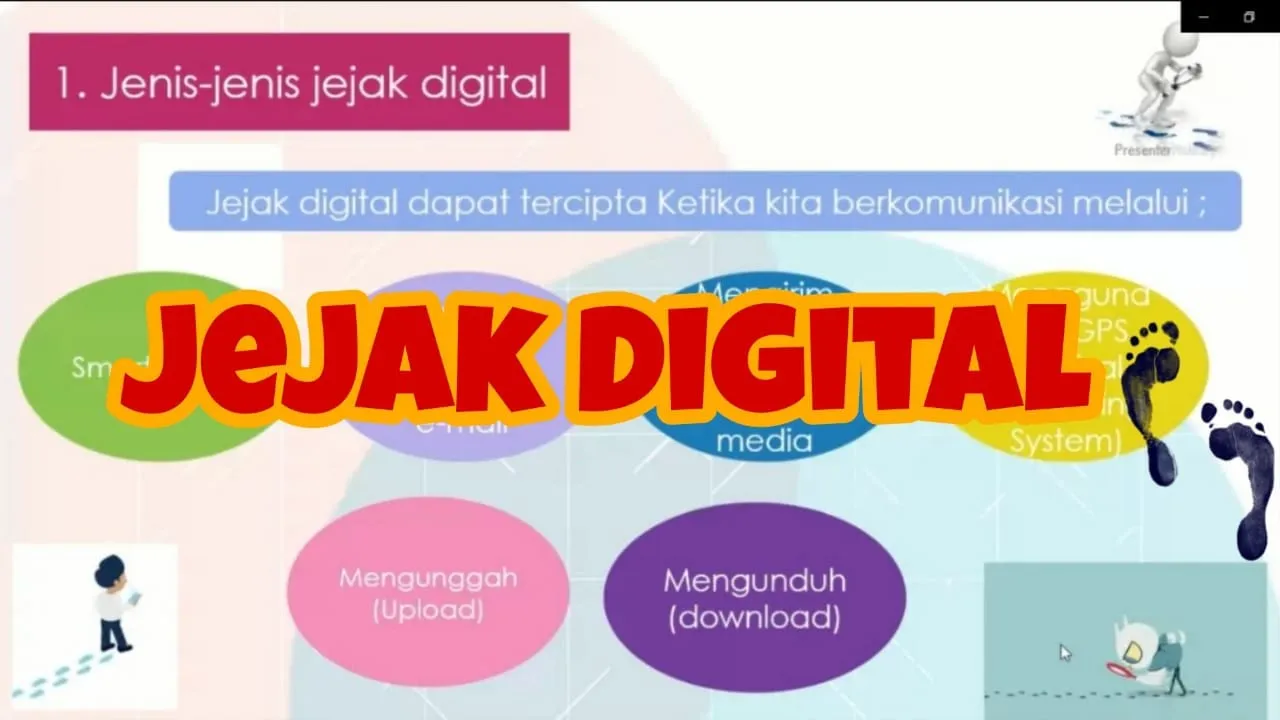
TIK KELAS 5 - JEJAK DIGITAL (Bagian.1) #BBBC
2K
Digital footprint (jejak digital) is the record of activities left behind when using the internet, which can be tracked by others and reveal important data about a person's habits and characteristics. Digital footprints are created through various online activities including communicating via smartphones, sending and receiving emails, posting or commenting on social media, using GPS, uploading content, and downloading files. They are classified into two types: (1) Passive digital footprint - data left unintentionally without awareness, such as IP address; (2) Active digital footprint - data left intentionally, such as providing information, comments, filling out website forms, sending emails, creating social media posts, writing blogs, and uploading/downloading photos or videos. IP address (Internet Protocol address) is a series of numbers that identifies a computer device connected to the internet, revealing the physical location of the device when connected to the internet.
Click to watch →
Accountability & responsibility in a digital world | Paul Davis | TEDxStMaryCSSchool
131.9K
Every online action leaves permanent digital records called trails and footprints. Digital trails include metadata such as when messages were sent/received, which devices were used, and server logs. Digital footprints are the actual content stored on devices, servers, and cloud storage. Examples include text messages (copied on recipient's device), emails (travel through multiple servers), social media posts, and cloud storage uploads. Even seemingly anonymous platforms like Ask.fm or Yik Yak can be accessed by law enforcement through subpoenas. These records never disappear and can be retrieved years later.
Click to watch →

شرح ICT مادة تكنولوجيا المعلومات #الصف_الرابع الدرس الثانى ICT# / #تكنولوجيا_المعلومات_والاتصالات
4.5K
Digital footprint (also called digital trace) is like a digital fingerprint or record of everything you do online. It works like a laboratory that records all your online activities. When you visit websites, post on social media, send emails, or upload videos, the digital footprint records all these activities. This record can be accessed through browser history and represents your online behavior. Understanding your digital footprint is essential for responsible digital citizenship.
Click to watch →
Deep Dive
An introductory grasp of geopolitics, hybrid warfare, and why nation-states utilize information operations to influence foreign populations.

Генерал Ивашов | Очередное сборище сатанистов | Утечка информации
21.8K
Hybrid warfare differs fundamentally from traditional warfare (World Wars I and II) by focusing on influencing mass consciousness of populations - both to intimidate and boost morale for battlefield operations. Another key objective is operations designed to pressure state leadership into making incorrect decisions. This creates information warfare where it becomes difficult to discern the true situation on the battlefield or within countries, as false information is deliberately disseminated to achieve strategic objectives. NATO's deployment near Russian borders is part of this hybrid approach, designed to create pressure and uncertainty rather than direct military confrontation.
Click to watch →

Валерий Соловей. Истина - это то, с чем вы согласны. Как управлять мнением.
479.2K
Hybrid warfare combines conventional military operations with information and psychological operations to achieve strategic objectives. This approach, which includes propaganda, disinformation, and social media manipulation, allows states to influence foreign populations without direct military engagement. The concept was developed in the late 20th century and has become increasingly important in modern international relations, particularly for states seeking to achieve goals through asymmetric means.
Click to watch →

Утро в Большом Городе - Выпуск 222 - 25.02.2016
303
Hybrid warfare involves simultaneous use of military forces and civilian populations in occupied territories, with psychological operations encouraging support for the aggressor. The term originated from Al-Qaeda's tactics during the Iraq War, where the military component was minimized and local populations became the primary driving force. Key characteristics include no clear front lines, the aggressor denying they are at war, and use of recruited local civilians. Information warfare operates in three zones: the aggressor's territory where the government brainwashes its population, the invaded territory where disinformation spreads, and the civilized world where distorted reality is imposed. Russia spends $1.4 billion annually on foreign propaganda, with agents commonly found in European hotels.
Click to watch →

#194. Raport CIA.Porwania dzieci w Nigerii. Chaos na Haiti. Indie walczą z Islamem.Jordania ostrzega
63.1K
Modern conflicts increasingly involve hybrid warfare combining conventional military action with information operations. States may use propaganda, disinformation, and influence operations to achieve political objectives without direct military engagement. These tactics can be more cost-effective than traditional warfare and can target democratic institutions and electoral processes. Information warfare can target democratic processes by manipulating public opinion and electoral outcomes, creating social divisions and undermining democratic institutions.
Click to watch →

Gwenda Nielen (TNO): 'De informatieoorlog in Nederland is absoluut al gaande'
362
Hybrid warfare fundamentally requires information operations as a core component of strategic influence. Hybrid warfare involves the coordinated use of all available means of influence to advance national interests, with information and persuasion being among the most powerful tools available to state actors. This approach is employed by multiple nations including Russia, Israel, Iran, Turkey, and the United States, each pursuing their own strategic objectives through information operations. The presence of such operations across multiple actors creates a comprehensive information environment where citizens must develop critical thinking skills to navigate competing narratives and identify coordinated influence campaigns.
Click to watch →
Prerequisite Knowledge
- Concept 01Basic understanding of social media algorithms, network structures, and how digital content propagates and gets amplified online.
- Concept 02The conceptual differences between misinformation, disinformation, malinformation, and state-sponsored propaganda.
- Concept 03Fundamental concepts of digital footprints, including IP addresses, metadata, and how user activity is logged on web platforms.
- Concept 04An introductory grasp of geopolitics, hybrid warfare, and why nation-states utilize information operations to influence foreign populations.
Subsequent Learning
- Step 01Advanced Open Source Intelligence (OSINT) methodologies and digital forensic tools for tracing domain registrations and network infrastructure.
- Step 02Applying machine learning and Natural Language Processing (NLP) techniques to detect Coordinated Inauthentic Behavior (CIB) at scale.
- Step 03In-depth analysis of landmark historical case studies, such as the Russian Internet Research Agency (IRA) or Chinese 'Spamouflage' operations.
- Step 04Studying the policy, legal, and ethical frameworks used by governments and social media platforms to mitigate foreign information influence operations.
Troll Farms
Tactics
Spot Check
Anonymity
Language Cues
Attack Shift
Ganging Up
Patterns
Response
Freedom
Troll Farms
0:36Playing Section
- 1
Defines troll farms as hired groups posting under false identities.
- 2
Explains their goal of polarizing debates and spreading misinformation.
The Attribution Challenge and the Risk of Misclassification
While digital forensics aims to identify state-run troll farms, many cybersecurity experts and civil liberties advocates highlight the severe limitations and political risks of attribution. First, digital traces—such as IP addresses, metadata, and behavioral patterns—can easily be spoofed or simulated by non-state actors or rival intelligence agencies conducting 'false flag' operations. Second, there is a significant risk of 'over-attribution' or false positives. Forensic models often struggle to distinguish between coordinated state-backed operations and genuine, highly active grassroots political movements (organic activism). Misclassifying organic public dissent or alternative viewpoints as foreign influence operations can delegitimize authentic domestic debate, suppress free speech, and weaponize the 'troll' label for political censorship. Consequently, critics argue that definitive attribution is rarely certain and is often prone to confirmation bias.
Deep Dive
Advanced Open Source Intelligence (OSINT) methodologies and digital forensic tools for tracing domain registrations and network infrastructure.
OSINT : Trouver n'importe quel Nom sur Internet | Episode 4
3.8K
This video provides a complete guide to Open Source Intelligence (OSINT) techniques for investigating domain names. Domain names are unique internet addresses managed by registrars accredited by ICANN. The WHOIS command retrieves creation dates, expiration dates, registrar information, and ownership details. DNS servers translate domain names to IP addresses for web resolution. Multiple OSINT tools enable comprehensive investigation: ViewDNS analyzes DNS records and hosting infrastructure; WHOIS history tracks complete ownership chains; Wayback Machine archives historical website snapshots; email discovery tools extract addresses from registration data and public websites; SSL certificate analysis reveals associated domains; and technology stack analysis identifies website infrastructure. These techniques enable investigators to uncover hidden connections, ownership histories, and infrastructure details for security research and digital investigations.
Click to watch →
Encontrando informações de um site | Desafio de Investigação Digital | Ep 01
96.2K
WHOIS lookup is a fundamental technique for discovering domain registration information. Every domain has an owner, even if the site appears offline. The WHOIS database reveals the registrar company, contact information including phone numbers, and name servers. For Brazilian domains (.br), Registro.br allows public searches. International domains may have privacy protection, but investigators can still trace through registrars or use alternative techniques to identify true registrants.
Click to watch →

OSINT (Subtítulado): Como buscar información valiosa en internet (Parte 1).
8.7K
OSINT (Open Source Intelligence) is a methodology for collecting and analyzing publicly available information from internet sources including social networks, forums, wikis, online libraries, search engines, and metadata. In information security, OSINT is used during data collection phases, audits, penetration testing, and ethical hacking to gather vital information about target individuals including their identification, work, and reputation. Key tools include SHODAN for discovering connected devices like webcams and printers, NAMECHECK for checking username availability across 150+ services, TINEYE for reverse image search, PIPL for finding people behind email addresses and social media profiles, TWOPCHARTS for Twitter management and analysis, FOCA for extracting hidden metadata from documents, and METAPICZ for extracting photo metadata including dates, cameras, and software used.
Click to watch →

OSINT FRAMEWORK #OSINT
16.9K
OSINT (Open Source Intelligence) is the practice of gathering information from publicly available sources like the internet, social media, and blogs about individuals or organizations. It serves as the first phase of ethical hacking, involving non-intrusive reconnaissance that reveals attack vectors including employee information, infrastructure photos, and public documents. The OSINT platform provides comprehensive tools for domain analysis (WHOIS lookups, subdomain discovery), network analysis (IP geolocation, network mapping), email verification and security analysis, and digital forensics (image metadata extraction, file analysis). Security professionals use these tools to identify vulnerabilities, understand attack surfaces, and conduct thorough investigations without disrupting services.
Click to watch →

L'investigation Open Source avec Maltego - Club OSINT & Veille - AEGE
21.6K
This segment demonstrates a complete methodology for investigating an online entity's infrastructure: starting from a domain name, investigators resolve associated DNS records and IP addresses to understand hosting infrastructure. The process involves checking for affiliated websites, analyzing tracking codes (like Google Analytics IDs) to identify connections between seemingly unrelated sites, and examining IP address geolocation to determine hosting providers. Investigators filter results by relevance, remove noise from unrelated domains, and focus on infrastructure patterns that suggest organizational relationships.
Click to watch →
Deep Dive
Applying machine learning and Natural Language Processing (NLP) techniques to detect Coordinated Inauthentic Behavior (CIB) at scale.

Beyond Deepfakes: AI-related risks for elections
291
Logically has developed models that can identify behaviors associated with coordinated inauthentic behavior (CIB) at scale. By looking at predefined behaviors, accounts with common patterns of suspicious coordination of messages can be identified. These behaviors include co-reposting, co-hashtags, co-mentions, and co-sharing of the same images or URLs. This was used to determine that disinformation campaigns during Argentina's election were not circulating organically but were coordinated. However, AI can only go so far as these interactions are not always harmful and can be used in fandom communities.
Click to watch →

The Fake Economy: How Lies Became a Trillion-Dollar Industry
816
To detect coordinated inauthentic behavior, researchers look at patterns at a large scale. If a small number of accounts are trying to replicate the organic diversity of a large number of accounts, there are different ways they will fail. For example, campaigns may not move like an organic campaign of people just coming online together. Sometimes campaigns with actors who didn't try to hide their identities can be detected through email addresses or IP addresses.
Click to watch →

24 Oras Livestream: July 20, 2026
376.7K
Coordinated Inauthentic Behavior (CIB) is an organized online tactic used to reinforce a message or narrative. Unlike a single fake account, CIB involves many accounts, pages, or groups acting simultaneously to make the spread of an idea seem natural or organic. The goal is to make a narrative appear popular even though it was planned from the beginning. Through CIB attacks, a narrative spreads faster because many accounts simultaneously post, comment, like, or share the same message. The coordinated activity is not necessarily false; it can be partially true, out of context, or true but amplified in an artificial way. Even factual information can be part of information manipulation if the way it is disseminated is planned. Two main types include astroturfing (creating illusion of widespread public support) and sock puppet (one person controlling multiple accounts). These tactics can affect any topic from politics to entertainment. The Department of Migrant Workers confirmed that two Filipino crew members died in the Black Sea amid drone strikes on ships, with eight more injured. The DMW has issued an advisory reminding Filipino seafarers of their rights in warlike areas, including the right to refuse sailing to high-risk zones without discrimination.
Click to watch →

Semana Dados BR - IA e Dados Abertos: Desafios e Oportunidades / Técnicas de Anonimização de Dados
1.3K
Coordinated Inauthentic Behavior (CIB) refers to organized efforts by actors to manipulate information ecosystems through automated means. This includes fake news, bot networks, and coordinated campaigns that exploit open data structures. The problem is particularly severe because it can be monetized through AI, making it cheaper to create inauthentic content than authentic content.
Click to watch →
LIVE | TikTok, Meta and X grilled by Foreign Affairs Committee
206
Platforms use a range of data and information to detect coordinated inauthentic behavior, including whether people are controlling particular things from the same device, proprietary data, other behavioral signals, and IP address elements. When all three aspects are identified, platforms publish this information transparently on a month-by-month basis, identifying where networks originated, where they were targeting, the particular narrative involved, the number of accounts and followers involved, and tracking recidivism (networks returning under slightly different guises).
Click to watch →
Deep Dive
In-depth analysis of landmark historical case studies, such as the Russian Internet Research Agency (IRA) or Chinese 'Spamouflage' operations.

Adam Hickey @ MisinfoCon DC
123
The Internet Research Agency (IRA) was indicted for federal crimes related to interfering with the 2016 presidential election. The IRA was a structured organization with a management group and multiple departments. One department, the Translator Project, focused on the U.S. population with over 80 employees. By July 2016, IRA operatives posed as politically and socially active Americans, established social media pages and groups, and purchased political advertisements. The key legal issue was not the substance of their messages but their conspiracy to defraud by lying about their identity—they were Russians on the payroll of a foreign company, not Americans expressing their own viewpoints.
Click to watch →

The Really Dark Truth About Bots
744K
The Internet Research Agency (IRA), founded by Yevgeny Prigozhin in 2013 with a $1 million monthly budget, employed approximately 300 workers producing 30,000 posts. Employees were paid $900-$1,200 monthly and hired through data entry listings before signing NDAs. They created two-tier account systems: Tier 1 purchased existing accounts; Tier 2 created supporting accounts that followed businesses, joined groups, and posted non-political content every three days. Early work focused on regional issues like Ukrainian annexation propaganda using repetitive association tactics. The IRA aggressively expanded for the 2016 U.S. elections, with documented evidence showing Americans' political memories were partially manipulated by the Russian government.
Click to watch →

La macchina della disinformazione globale: come funzionano le fabbriche di Fake News
330.3K
The Internet Research Agency (IRA) was a Russian troll farm operating between 2014-2016, employing approximately 300 people under Yevgeny Prigozhin. During the 2014 Crimea annexation, Russian trolls exploited institutional weaknesses in Ukraine to create distrust and legitimize intervention. Trolls were paid 40,000 rubles monthly for 12-hour shifts. The IRA later moved to the US, employing English speakers to create the illusion of American patriotism. They created fake pages like Blacktivist, Secured Borders, United Muslims of America, and Army of Jesus, designed to encourage protests and conflicts. The IRA funded local activist groups with $80,000 and generated discussions between pages it created.
Click to watch →
50% im NETZ existiert nicht wirklich! Wow
53.9K
The Internet Research Agency (IRA) is a Russian organization based in St. Petersburg whose mission was to destabilize the American information space. Rather than promoting specific messages, the IRA created thousands of fake accounts across Facebook, Instagram, Twitter, and YouTube, simultaneously supporting both sides of controversial issues like Black Lives Matter and opposing them. Between 2015-2017, over 30 million Americans actively shared IRA content. The IRA also organized real-world protests by funding opposing demonstrations at the same locations, creating chaos in the physical world as well as the digital one.
Click to watch →
EL INTERNET como lo conocemos está DESAPARECIENDO..❌ Reacción a Baitybait | Putupau
12.8K
The Internet Research Agency (IRA) is a Russian organization founded by Yevgeny Prigozhin, who later founded the Wagner Group. The IRA was a state-sponsored disinformation operation that sent teams to the United States to study American culture and identify polarizing issues such as immigration, race, religion, Black Lives Matter, and gun rights. Workers received instructions to comment on major American media outlets like the New York Times and Washington Post, using inflammatory language to stir controversy. They were trained using House of Cards to understand American political dynamics and received English grammar lessons to sound authentic.
Click to watch →
Deep Dive
Studying the policy, legal, and ethical frameworks used by governments and social media platforms to mitigate foreign information influence operations.

How the U.S. Combats Disinformation
693
The U.S. government distinguishes between foreign malign influence (which involves deliberate manipulation by foreign actors) and general misinformation. Rather than compelling content moderation (which would make the government arbiters of truth and raise First Amendment concerns), the approach involves inviting collaboration with social media companies. The government shares information with platforms that can then decide based on their own terms of service whether content violates their policies. This framework focuses specifically on reducing the ability of Russia, China, Iran, and others to use platforms for foreign influence campaigns, where there is mutual interest in reducing harmful activity.
Click to watch →
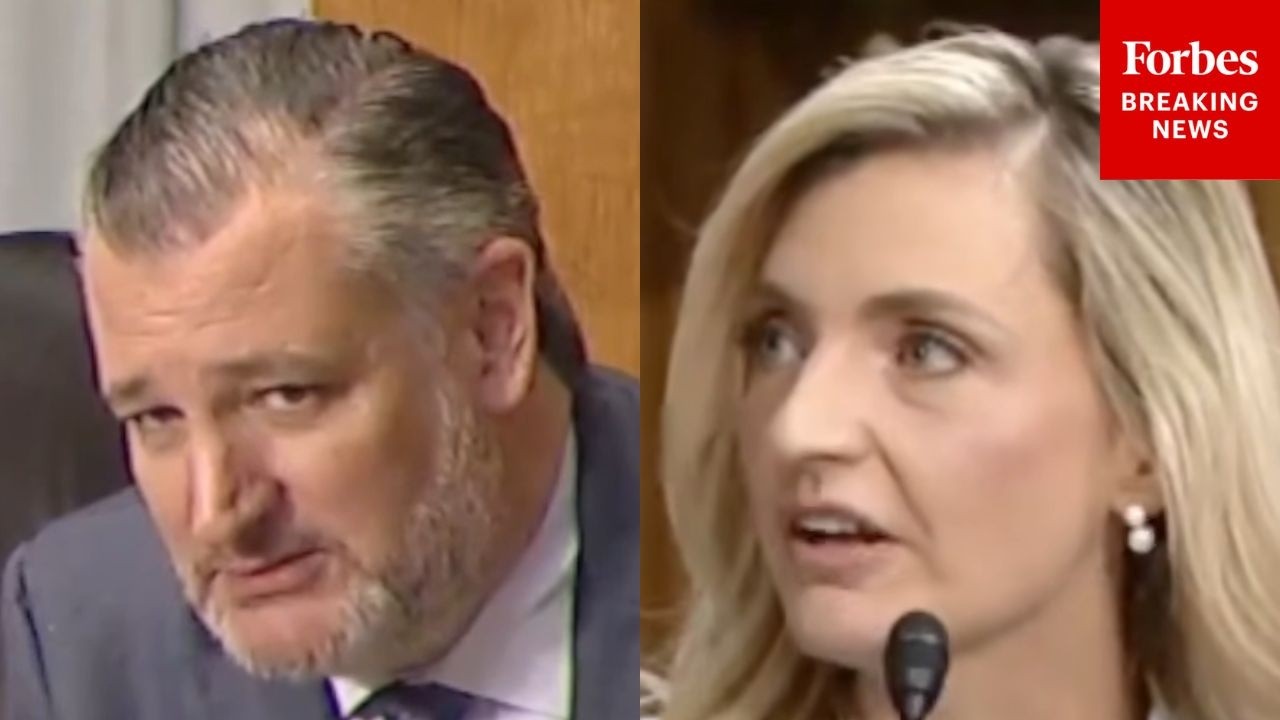
Ted Cruz Asks Nominee: How Do Foreign Influence Operations Work To Weaken Support For The US?
104
Authoritarian regimes invest enormous resources in coordinated campaigns to undermine the United States through anonymous social media accounts, automated bot farms, state-controlled media, and covert influence operations backed by effectively unlimited state resources. China alone spends approximately 40 billion dollars annually on propaganda and influence operations. These campaigns aim to constrain America's ability to confront hostile regimes like Iran by manufacturing the illusion of widespread domestic opposition to national security policies. Foreign influence operations extend into American universities, with hundreds of millions of dollars flowing from sanctioned Chinese nuclear laboratories to institutions like Harvard. United Front networks like the Singham Network and Code Pink drive anti-AI sentiment to discourage American investment in artificial intelligence. Chinese and Iranian influence operations skew toward leftist anti-colonial ideology, while Russia employs a more chaotic approach including both pro-Black Lives Matter and white nationalist posts.
Click to watch →

Panel III: Public Diplomacy and Influence Campaigns in the Internet Age
447
A useful analytical framework for understanding influence operations is the Actor-Content-Behavior (ABC) model: (1) Actor refers to who is behind the activity, whether domestic or foreign, government or non-state actors; (2) Content refers to what is being disseminated, including false information; (3) Behavior refers to the tactics, techniques, and procedures used, such as coordinated inauthentic behavior. This framework helps distinguish between different types of influence operations and informs appropriate responses, avoiding the trap of applying the same solutions to all problems.
Click to watch →

LANGKAH LICIN PRABOWO MEMBUAT AGEN ISR4EL TERPELESET, PRABOWO JADI SOROTAN DUNIA‼️
79.6K
Misinformation spreads through psychological mechanisms like the illusion of truth effect, where repeated exposure increases perceived credibility regardless of accuracy. This concept, originating from Nazi propaganda strategies, exploits human cognitive laziness. Modern social media algorithms amplify this by creating echo chambers that continuously reinforce existing beliefs. Foreign influence operations leverage educational connections, such as Koni Bakri's S3 from Tel Aviv University, to establish perceived legitimacy. These operations utilize vendor networks, including production houses, who receive payment from foreign governments to disseminate narratives across social media platforms. Under Indonesia's 1945 Constitution, Article 11 mandates that the President obtain DPR approval before making international agreements, ensuring democratic oversight. International policy decisions must balance diplomatic engagement with strict legal compliance to preserve national sovereignty and international credibility.
Click to watch →

Information Warfare and the Intelligence Community: Combating Influence Operations
979
The US intelligence community is both critical and restricted in addressing foreign disinformation. The IC consists of 16-17 separate elements, with only a few like the CIA and NSA focusing on foreign disinformation. The CIA is prohibited by statute from domestic operations, and the NSA has an exclusively foreign focus. This creates a gap between uncovering foreign disinformation and taking action. The First Amendment prohibits government from using coercion or force against social media platforms to remove content. Supreme Court cases have established that social media platforms themselves have First Amendment rights to curate, edit, and delete content. Section 230 of the Communications Decency Act immunizes platforms from liability for content they remove in good faith.
Click to watch →
Troll Farms
Tactics
Spot Check
Anonymity
Language Cues
Attack Shift
Ganging Up
Patterns
Response
Freedom
Troll Farms
0:36- 1
Defines troll farms as hired groups posting under false identities.
- 2
Explains their goal of polarizing debates and spreading misinformation.
The Attribution Challenge and the Risk of Misclassification
While digital forensics aims to identify state-run troll farms, many cybersecurity experts and civil liberties advocates highlight the severe limitations and political risks of attribution. First, digital traces—such as IP addresses, metadata, and behavioral patterns—can easily be spoofed or simulated by non-state actors or rival intelligence agencies conducting 'false flag' operations. Second, there is a significant risk of 'over-attribution' or false positives. Forensic models often struggle to distinguish between coordinated state-backed operations and genuine, highly active grassroots political movements (organic activism). Misclassifying organic public dissent or alternative viewpoints as foreign influence operations can delegitimize authentic domestic debate, suppress free speech, and weaponize the 'troll' label for political censorship. Consequently, critics argue that definitive attribution is rarely certain and is often prone to confirmation bias.
Basic understanding of social media algorithms, network structures, and how digital content propagates and gets amplified online.
The conceptual differences between misinformation, disinformation, malinformation, and state-sponsored propaganda.
Fundamental concepts of digital footprints, including IP addresses, metadata, and how user activity is logged on web platforms.
An introductory grasp of geopolitics, hybrid warfare, and why nation-states utilize information operations to influence foreign populations.
Advanced Open Source Intelligence (OSINT) methodologies and digital forensic tools for tracing domain registrations and network infrastructure.
Applying machine learning and Natural Language Processing (NLP) techniques to detect Coordinated Inauthentic Behavior (CIB) at scale.
In-depth analysis of landmark historical case studies, such as the Russian Internet Research Agency (IRA) or Chinese 'Spamouflage' operations.
Studying the policy, legal, and ethical frameworks used by governments and social media platforms to mitigate foreign information influence operations.
5.5K views155likes3:17@DWGlobalMediaForumOriginal Release: 2022-03-28
You are an idiot. You call yourself a journalist. Someone please put this man out of his misery. Well, these are just some of the negative comments I have received on social media in recent weeks. But how do I know that they are real, that certain people actually feel that way about me? After all, this is the internet. And therefore these comments might well be written by someone other than what the profile says. Today I want to tell you a few things about troll files and how to spot them. This is GMF compact.
Basically a troll farm is a group of people hired to post messages under false names. The business strategy of a troll farm is a typical divide and conquer tactic. They seek to intervene in politics, elections and public debates by polarizing people and sharing deliberate misinformation while attacking those who are fighting for the truth. They are usually financed and bankrolled by governments, who hire these keyboard armies of thousands of people, whose sole job is to just agitate others. So how can you tell whether you are reading such a fake comment and being targeted by someone working at a troll farm or whether it's just a real person throwing around their opinion?Well, here are some questions you should ask yourself. Number one - try to establish just how anonymous they are? Is this an old account with lots of history or was it opened last month and doesn't even have a proper profile picture. Number two - you should also take a look at the language they use. Can they competently communicate about a subject they appear to be so passionate about? And if so, do they seem aggressive or do they give up easily? Say, like someone who might be busy trolling a dozen other accounts at the same time. Number three - do they eventually move the conversation away from attacking your original post and try to attack you personally trying to find something that they think might be your weak spot? And finally number four - do they try to gang up on you with others and heckle you non-stop, which is easy to do in this line of business. Troll farms generally follow a pattern of quantity rather than quality. They cast a wide net in hopes of misleading as many people as they can on important social issues. Don't let them get under your skin. And if you do feel like they are singling you out and actively defaming or even threatening you, go to the police and report them and seek legal advice. Remember that above all they are part of a form of hybrid warfare whose ultimate enemy is freedom of speech.
Up Next

64:44
Urban Margins and Rights to the City: Panel 1
@iihschannel
184 views•2024-01-29

24:30
BRICS Pay and de-dollarization: A New Financial Order Emerges? | 55 chars
@DannyHaiphongYT
164.6K views•2024-10-22

7:33
Government Surveillance Methods: 10 Ways You May Be Watched
@BeAmazed
1.6M views•2017-04-09
10:19
Explaining the Saudi-Iranian Proxy Conflict in the Middle East
@Vox
18.2M views•2017-07-17
Related Study Plans & Knowledge Roadmaps
Structured learning paths in Political Science
political-science
Economic Statecraft: Sanctions & Chokepoints
01Foundations of Geoeconomics and Economic Statecraft
02The Mechanics of Weaponized Interdependence
03International Sanctions: Types, Implementation, and Efficacy
+ 2 more learning modules
12h5 modules
Explore Roadmap
political-science
Central Bank Independence: Politics & Policy
01Foundations of Central Banking and Monetary Policy
02The Time Inconsistency Problem & Inflation Bias
03The Delegation Model and Designing Independence
+ 2 more learning modules
12h5 modules
Explore Roadmap
political-science
Consociationalism: Power-Sharing & Stability
01Democratic Dilemmas in Divided Societies
02Introduction to Consociational Democracy
03The Four Pillars of Consociational Design
+ 2 more learning modules
12h5 modules
Explore Roadmap
political-science
Rebel Governance: Legitimacy, Economy & State
01Foundations of Rebel Governance and Statehood
02Establishing Political Legitimacy and the Rebel Social Contract
03Wartime Economies and Rebel Resource Management
+ 2 more learning modules
14h5 modules
Explore Roadmap