









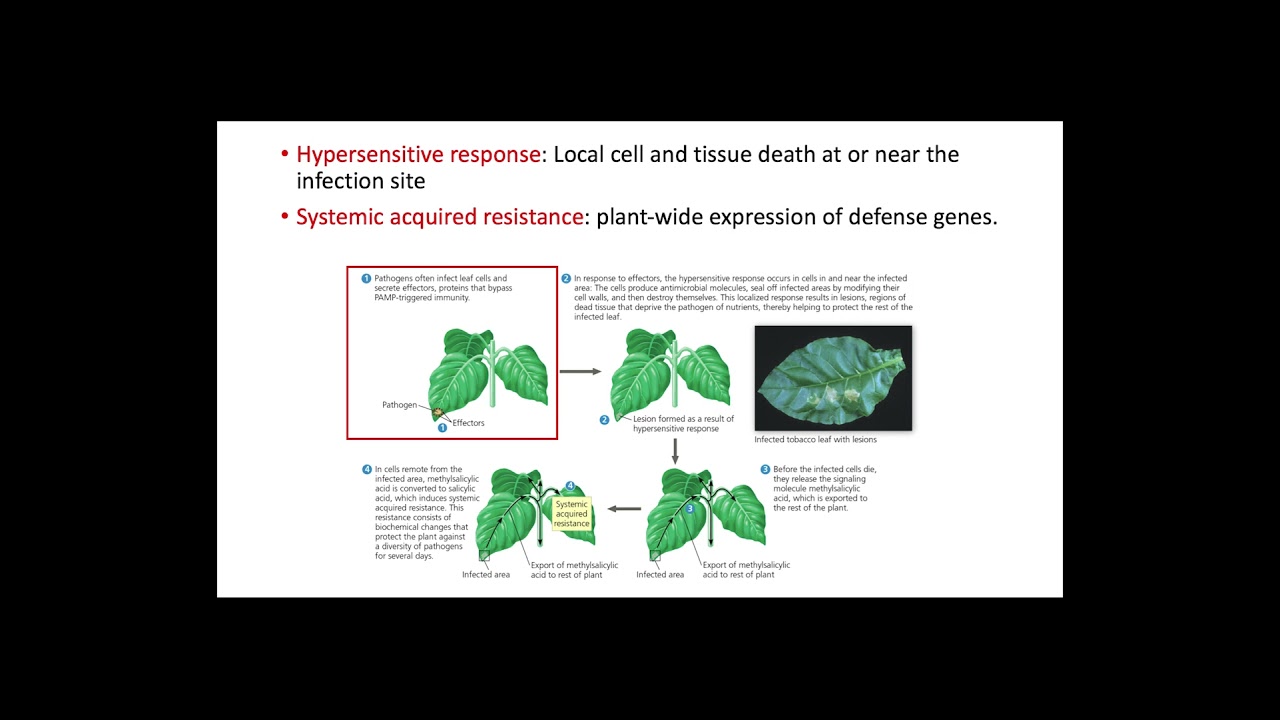






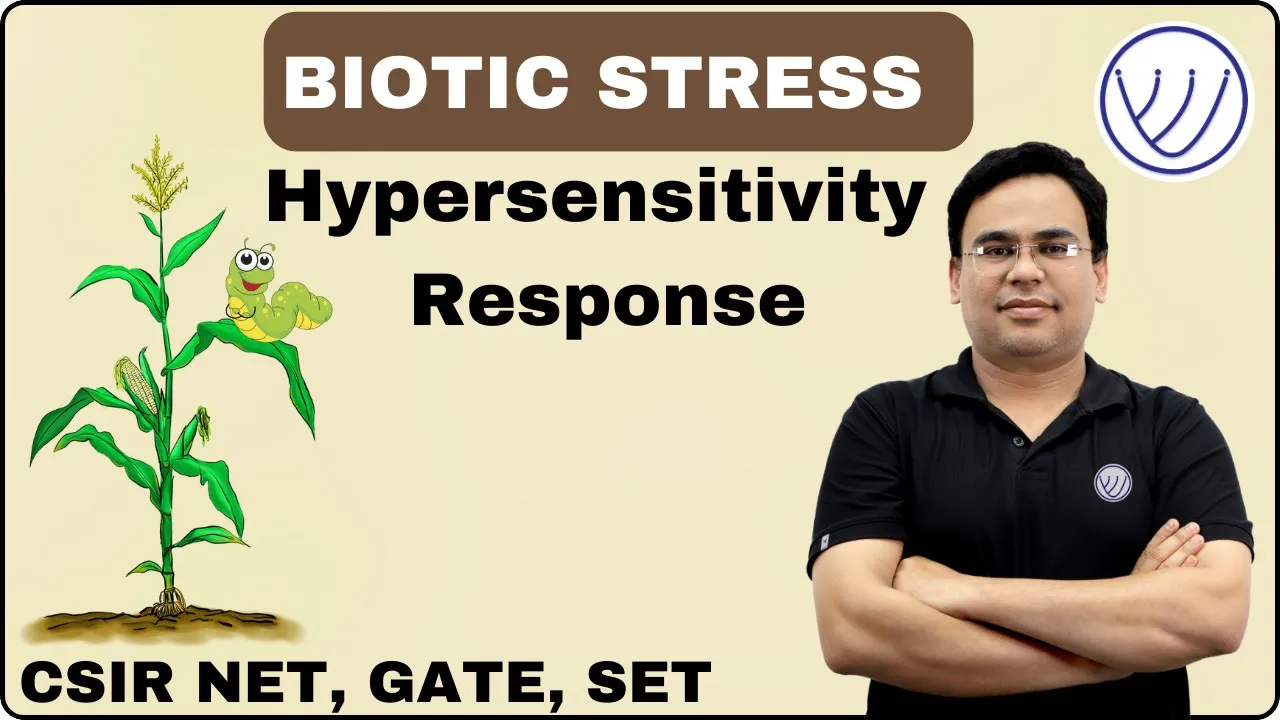

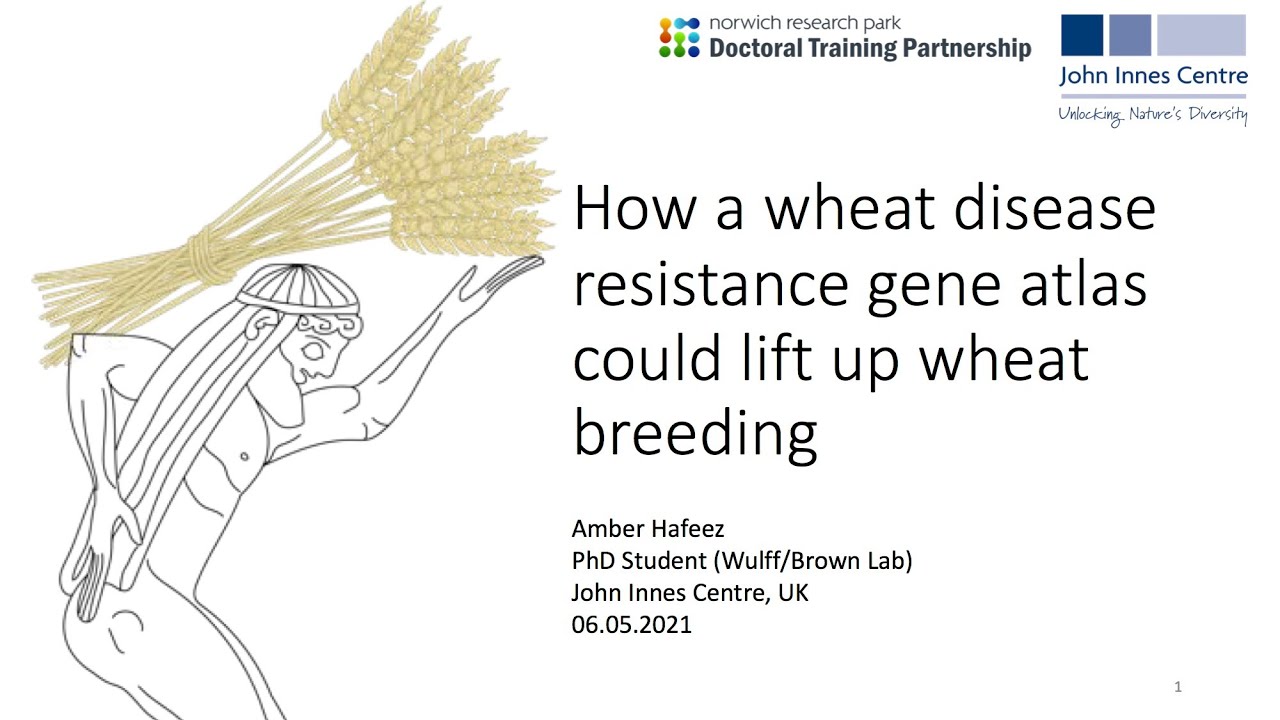


The gene-for-gene hypothesis explains that plant resistance genes produce receptors that specifically bind to pathogen effector molecules; when they match, the host triggers a hypersensitive response causing rapid cell death and halting infection (incompatible interaction), but pathogens can overcome this through mutations in their avirulence genes, leading to new disease races and the need for continuous resistance gene incorporation in breeding programs.
Gene-for-Gene Hypothesis in Plant Disease Resistance
Added:Basic concepts of Mendelian genetics, including dominant and recessive alleles, genetic loci, and gene-for-gene inheritance ratios.
Fundamentals of plant pathology, particularly host-pathogen specificity and how pathogens infect host plants.
Introduction to primary plant defense mechanisms, such as physical barriers, chemical defenses, and general pathogen-associated molecular pattern (PAMP) recognition.
The 'Zig-Zag' model of plant immunity, which conceptualizes the evolutionary arms race between plant detection systems and pathogen effectors.
The Guard and Decoy hypotheses, which explain the indirect biochemical interactions between plant Resistance (R) proteins and pathogen Avirulence (Avr) proteins.
Downstream defense signaling pathways triggered by R-Avr recognition, such as the Hypersensitive Response (HR) and Systemic Acquired Resistance (SAR).
Practical agricultural biotechnology applications, including R-gene pyramiding (stacking) and breeding strategies to prevent pathogens from overcoming crop resistance.
23.9K views134likes9:19Original Release: 2012-12-18
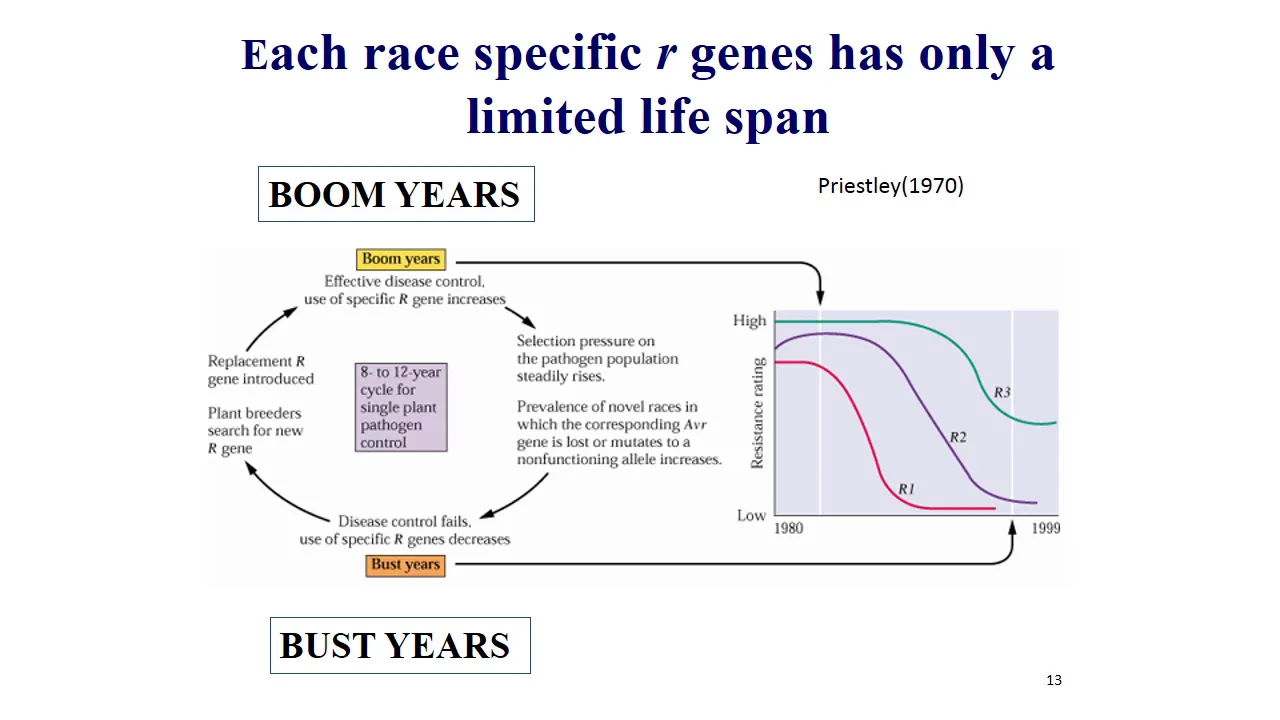
a susceptible wheat variety may contain thousands of sporulating postures of leaf rust at maturity millions of spores are released from these puls into the air via wind currents once Airborne these spor as a oculum that will infect other leaves on the same plant or the leaves of neighboring plants dispersal of these spores to new host plants is vital to the Dynamics of an epidemic spores are deposited on leaves and other surfaces in the field along a dispersal gradient that extends away from the point source of an oculum some of the spores released from an infected Leaf will be deposited by gravity or rain onto an uninfected Leaf of a nearby or distant plant after inoculation the occurrence of favorable environmental conditions will allow the Spore to begin a new cycle of infection during periods of moderate temperature and extended Leaf wet Wess the cycle begins as a germ tube emerges from the Spore growth of the hyle Strand continues across the leaf surface until it contacts the guard cells of a stomate once the guard cells are detected growth of the H stops and the fungus will use this natural opening as a means of entry into the plant at the tip of the H A specialized structure known as an appressorium begins to form the appressorium swells and once fully formed gives rise to a narrow Hyo that grows through the statal opening and into the subst modal cavity once in the cavity the hyas swells to form a large cell or vesicle from this cell the fungus begins to grow as the fungus grows and spreads it encounters cells inside the leaf prior to penetration of the cell the fungus forms a cell known as aoral Mother cell from this cell a narrow penetration Peg or Hy is produced that functions to gain entry into the cell once inside the cell the hyle tip begins to swell and a highly specialized cell known as a haustorium is produced the fungal cell wall and the cell plasma membrane are never in direct contact as a matrix is formed between the cells of the two organisms the fungal H storian produces numerous compounds some compounds or enzymes needed for food acquisition from the host plant While others called affectors or elicitors may elicit or suppress the host response to the presence of the pathogen in a susceptible response also known as a compatible interaction these effectors are not recognized by the host thus allowing the fungus to go undetected and disease to develop if this occurs the hyph of the pathogen continues to colonize the intercellular spaces in the host leaf and the infected cells remain alive since the discovery that disease resistance is a genetic trait plant breeders have attempted to find and incorporate resistance genes into plants the type of resistance often used is single Gene complete resistance a gene of interest is identified in a wild relative of the host and is introduced into the DNA of the susceptible host by conventional breeding or biotechnology no note this is not the result of a mutation in the host DNA but an actual substitution of one gene for another once this Gene is incorporated into an acceptable cultivar it codes for the production of a product called a receptor that specifically binds with specific pathogen molecules referred to as affectors or elicitors when the receptor and affector bind a Cascade of events occurs that leads to Rapid cell death this incompatible interaction is known as a hypers sensitive response this response is successful in stopping growth of the pathogen and no disease develops this incompatible interaction is very specific and occurs as a result of a gene for Gene interaction that is the interaction of a product of the host resistance Gene and a product of the pathogen a variance Gene if the pathogen is unable to overcome the effects of a resistance Gene the pathogen will not survive and the disease will cease to be a problem unfortunately many resistance genes rapidly become ineffective pathogen races arise due to mutations that naturally occur in the a variance Gene resulting in the loss of the a variance Gene product if a Spore containing a mutation in the avarian gene lands on a plant that has the corresponding resistance Gene this Spore now has a competitive advantage over all the other spores that do not have this mutation the Spore will germinate and begin growth just as the wild type isolate did on a susceptible cultivar The Germ tube will produce an appressorium and penetration will occur as before the fungus also will grow and produce the haustorium but since the DNA of the pathogen contains a mutation in the a virous gene no effector is produced in the plant cell the resistance Gene product is still being produced but since the affector from the pathogen is no longer there the specific Gene for Gene interaction does not occur and the outcome again becomes a compatible interaction and disease develops the pathogen continues to grow and obtain nutrients until growth just below the epidermis results in the production of a new set of spores that are now capable of infecting all plants that contain the newly defeated resistance Gene therefore a new epidemic is started by the new race of the pathogen and a new resistance Gene is needed to stop its progress in summary the gene for Gene hypothesis has been instrumental in explaining the basic interaction that occurs between plants and pathogens and in assisting breeders and Pathologists in developing more effective disease management strategies
Up Next

5:26
Plant Immunity: Two-Step Detection of Invaders
@SainsburyLab
3.2K views•2021-03-12

50:12
Bacterial Communication: Quorum Sensing and Biofilm Formation Explained
@JHUAAP
12.6K views•2011-06-28

5:35
Enteric Nervous System Explained: The Gut's Brain | Neurobiology Lecture
@alumniu6029
438 views•2018-09-12

7:08
Bacteriophages: Earth's Deadliest Killers and Future Antibiotics
@kurzgesagt
34.6M views•2018-05-13
Related Study Plans & Knowledge Roadmaps
Structured learning paths in Biology
biology
RNAi: Biogenesis, RISC & Gene Silencing
01Molecular Biology Foundations: DNA to Protein
02Introduction to RNA Interference (RNAi)
03Molecular Biogenesis of miRNA and siRNA
+ 2 more learning modules
10h5 modules
Explore Roadmap
biology
Mycorrhizae: Signaling, Biophysics & Ecology
01Foundations of Mycorrhizal Symbiosis
02Molecular Signaling and Root Colonization
03Biophysics and Bioenergetics of Nutrient Exchange
+ 1 more learning modules
11h4 modules
Explore Roadmap
biology
Circadian Clocks: TTFL, SCN & Periphery
01Foundations of Molecular Biology & Gene Expression
02Introduction to Chronobiology and Actograms
03The Core TTFL: Molecular Architecture of the Clock
+ 3 more learning modules
14h6 modules
Explore Roadmap
biology
Population Genetics: Math, Drift & Selection
01Genetic & Probability Foundations
02The Hardy-Weinberg Principle and Baseline Models
03Mathematical Modeling of Natural Selection
+ 3 more learning modules
18h6 modules
Explore Roadmap