














Solid state batteries represent a promising advancement in energy storage, offering theoretical advantages such as higher energy density, longer cycle life, and improved safety compared to traditional lithium-ion batteries. However, the transition from laboratory development to consumer products requires careful scrutiny of marketing claims versus actual technical specifications. When evaluating solid state battery products, consumers and researchers must consider multiple factors including energy density (measured in Wh/kg), cost per watt-hour, weight, intended use cases, and independent verification of technical specifications. The case of the Yoshino solid state battery pack illustrates how first-generation products may not fully deliver on all promised advantages, particularly when competing with established lithium-ion technologies that have optimized manufacturing processes and cost structures. Understanding these trade-offs helps consumers make informed decisions based on their specific needs, whether prioritizing portability, longevity, safety, or cost-effectiveness.
Solid State Batteries: Yoshino B330 Reality Check
Added:If there’s any doubt that solid state batteries are actually here, well … here’s your proof.
Or is it? Future Matt interjecting here. This is a republication of a video I originally published on July 16th. I’ve unlisted that video and linked to it in the description below, but this version has some additional notes I’ll be dropping in as we go in this new version. The reason? Well, shortly after I published my initial review of the Yoshino solid state battery pack I bought for myself on Amazon, some people left comments that the company, Tech Insights, had published a report saying it wasn’t solid state technology after they broke it down and tested it. However, when I looked at the free report Tech Insights made available it raised more questions than it answered, so I reached out to them to start my own investigation, as well as to Yoshino for comment. I’m going to be publishing a full follow-up video of my investigation later, but didn’t want to leave the original video up without noting the issues. I’ll be popping in again to highlight those issues, but keep all of this in mind as you watch because … there’s some potential issues with how Yoshino is marketing this battery pack. Back to the video.
You can actually buy this for yourself, like I did, and get it delivered to your door in a day or two. No, solid state batteries aren’t everywhere and definitely not mass market yet, but they also aren’t vaporware and always five years away. Just like this Yoshino battery, which I’ll get into the details in just a second, there’s other solid state batteries right on the cusp of ending up in consumer electronics devices near you. But do these early versions live up to the hype? And who is this Yoshino battery really good for?
I’m Matt Ferrell … welcome to Undecided.
This video is brought to you by Ground News, but more on that later.
I published a video a few weeks back about the progress of solid state batteries and how they’re finally here. To say I got some pushback would be an understatement. I received comments like: “Nuclear fusion has some company.” That’s really funny … not accurate, but funny. I guess I sparked quite a reaction. I really opened myself up to that point of view with how I talked about the latest developments.
Everyone has a different definition of what a product being “here,” as in now, means. Does it mean it’s mass market or just that the first cells are shipping?
It’s a bit of a charged topic. My focus on EVs didn’t help matters either.
Bottom line: I could have done a MUCH better job clearly defining what I meant by “here” and “now” in my video. I’ll amp up my clarity next time. But in a nutshell I was talking about how many companies are now producing solid state battery cells for actual use and/or testing by partners.
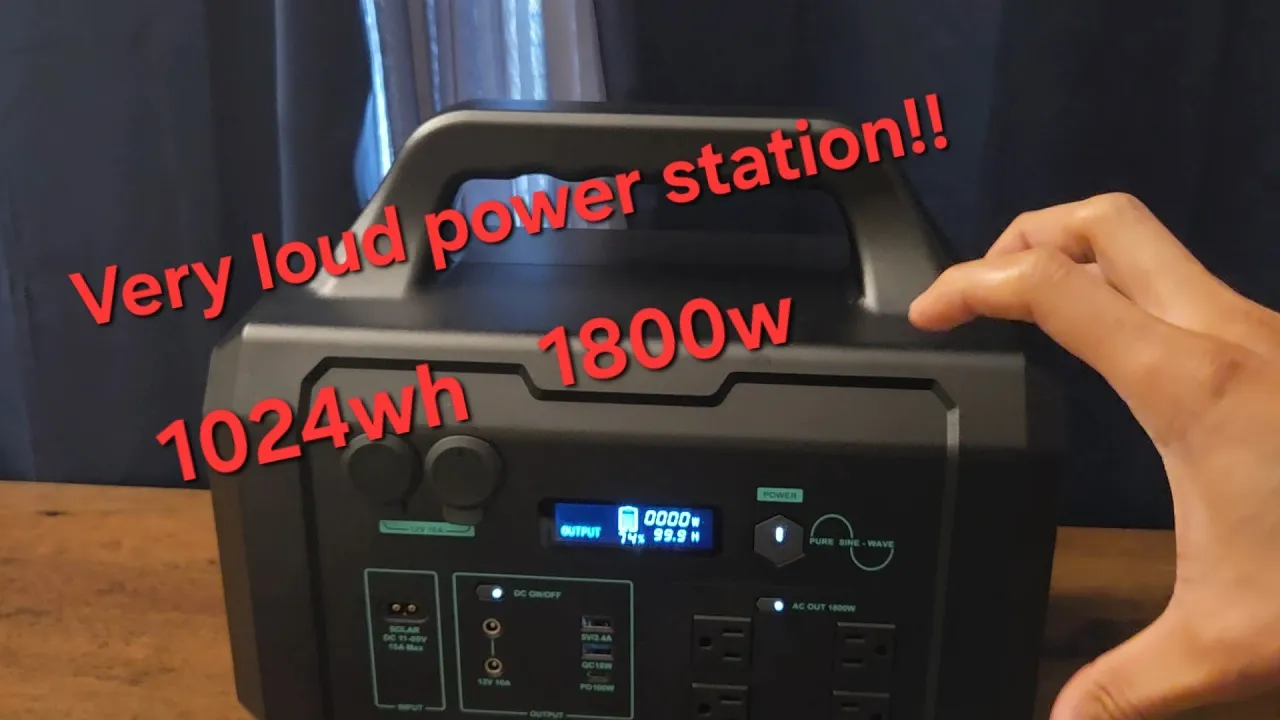
We’re officially in the manufacturing ramp-up stage, so figuring out the chemistry and if it works is in the rear view mirror in some cases. That is a major milestone and a sign that the technology has hit a turning point—definitely a positive charge. However, I should have focused on a product that you can actually get your hands on today. Or to quote another comment on that video: “Until I can order from Amazon it’s not even close; so PLEASE no SS information unless it’s in your possession.” Okay, here you go… I bought myself this Yoshino B330 solid state portable power station on Amazon and had it delivered to my house in two days. And to be clear, I have no relationship with Yoshino. This is the smallest version of their battery pack, which has 330W of continuous power and 241Wh of storage. They also have versions that scale all the way up to their B4000, which has 4,000W of continuous power and 2,611Wh of storage capacity.
In general, the reason you might want a small battery like the B330 is for going camping or reserving emergency power to charge up your phone or laptop in a blackout. The larger batteries are also great for those same uses, but are even better for running power tools at a worksite that doesn’t have power available, backing up more substantial appliances in a blackout, or even getting your entire home back online.
The little guy I have right here weighs in at 9.9 lbs and can charge in a couple of hours.
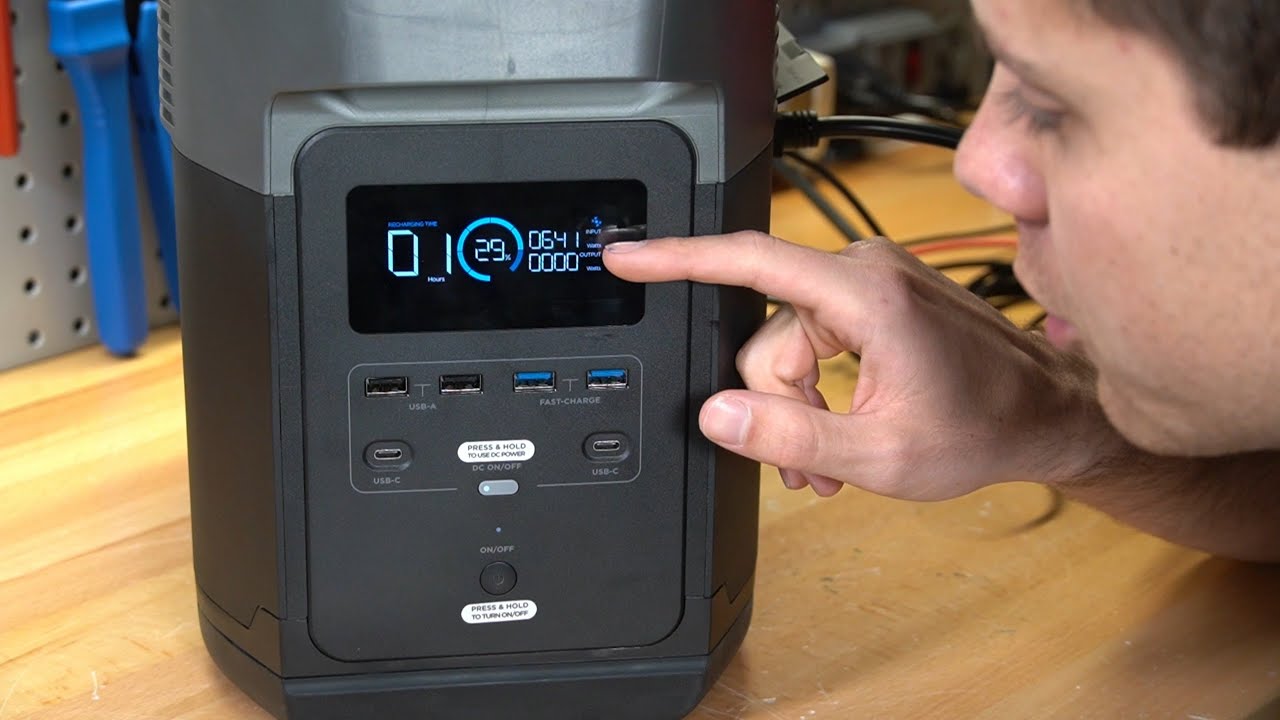
What’s nice to see on even a small unit like this is that you can charge through one of three ways: 1) the DC input on the back, 2) solar panels, and 3) USB-C power delivery on the front. You can also tandem these up to speed up the charging, so you can be charging through both the USB-C and DC or solar input on the back at the same time. There’s a couple of DC output terminals on the front, as well as 2 AC outlets, 2 USB-A, and 2 USB-C ports.
The main focus of Yoshino for this design is meant for on-the-go power, like as an emergency backup or for use during camping trips, so there’s a LED light bar that can act as a light source.
It’s not the brightest light in the world, but in a pinch it’s a nice thing to have.
And much like other battery packs in this type of product, you can also connect to it through an app via Bluetooth or wifi. This allows you to install firmware updates and to control it remotely. It’s not an earth shattering app, but is well designed and easy to navigate. It shows you what ports are currently active, the power draw, and how much time is left given the current usage. You can also monitor its charging status, which can be handy when you’ve got some solar panels plugged in.
So what’s inside this thing? Well, it’s a solid state cell that’s using an NCM (Nickel Cobalt Manganese) formula, which might sound similar to the widely used NMC (Nickel Manganese Cobalt). The reason for the different order of letters usually reflects the different ratios of those elements in the chemistry for the battery cathode. The big difference though is the use of a solid electrolyte versus a liquid or gel version. For Yoshino, they’re using an inorganic-polymer composite (IPC) for their electrolyte between the anode and cathode.
I reached out to Yoshino for some additional details on their battery and found out some interesting things. The team didn’t give me the exact formulation of their battery for obvious reasons, but did share details on the safety testing done by USA Energy Assurance Labs. Yoshino’s batteries were put through the paces for thermal runaway, nail penetrations, and short circuits, which are some of the big selling points of solid state batteries. This battery is substantially safer in those regards than a typical lithium ion battery with a liquid electrolyte.
Future Matt is back. Okay, so as I mentioned earlier, Tech Insights found a large amount of liquid inside the battery cell when they broke it open, which is the primary reason they concluded it’s not solid state (for obvious reasons). Yoshino is still standing behind their claim and points to their use of an IPC solid electrolyte. There are research papers into IPCs for solid state batteries that show it’s a viable path, but the amount of liquid that Tech Insights found raises big questions about all of Yoshino’s claims. I shared those claims with the Tech Insights team, so they’re going back to continue testing and fill in some of the gaps I raised in their initial report. In fact, by the time you’re seeing this … that test is done. I’m also working with a fellow YouTuber and friend of mine to do his own breakdown and analysis of the battery, which should be underway by the time you see this video. I’m really eager to see if we find the same exact thing Tech Insights did or not. As soon as that follow-up video is available, I’ll link to it in the description of this video. It’s taking some time to pull all of this together because I want to make sure I have as much information and facts as possible for an informed answer.
But there’s also some of the other key attributes that set this battery apart that shouldn’t be a surprise if you’re familiar with solid state. They’re more energy dense, which means you can get the same power output and storage in a smaller package.
They’re also better on the cycle life front too, so these should last longer than the competition that’s currently out there. But … how does that look in context?
Context is super important when looking at technologies like this, as well as all of your news stories. Misinformation and bias shows up in all reporting, which is why I’m excited to have Ground News as a sponsor. Created by a former NASA engineer, the Ground News app and website gathers news from over 50,000 sources into one place and allows us to compare the coverage and get context into the sources themselves. Every story comes with a breakdown of the political bias, how reliable the source’s reporting practices are – all backed by ratings from three independent news monitoring organizations. For instance, this recent story about a couple of people accused of stealing Tesla battery secrets to start their own company. You can quickly see how it’s been covered by 24 sources and their politically leaning and factual accuracy ratings.
This right source leans into the country of origin and the definitive word, “stole” as fact. While this left source doesn’t mention nationality at all and uses the word, “accused,” which means it hasn’t been settled as fact yet. I love being able to access different viewpoints to make sure I’m not living in an echo chamber. Ground News has become an essential resource for me to make sure I’m seeing the nuance in different stories and not just one source’s perspective. Go to https://ground.news/undecided or scan the QR code to give it a try. If you sign up through my link you’ll get 40% off the Vantage plan, which is what I use to get unlimited access to all features. I think Ground News is doing important work and I hope you’ll check them out. Thanks to Ground News and all of you for supporting the channel. So back to how the Yoshino battery looks like context.
This is where we should compare the Yoshino battery to comparable power stations on the market. Some of the more popular brands out there are Bluetti, Anker, and EcoFlow, so let’s take a look at some of those.
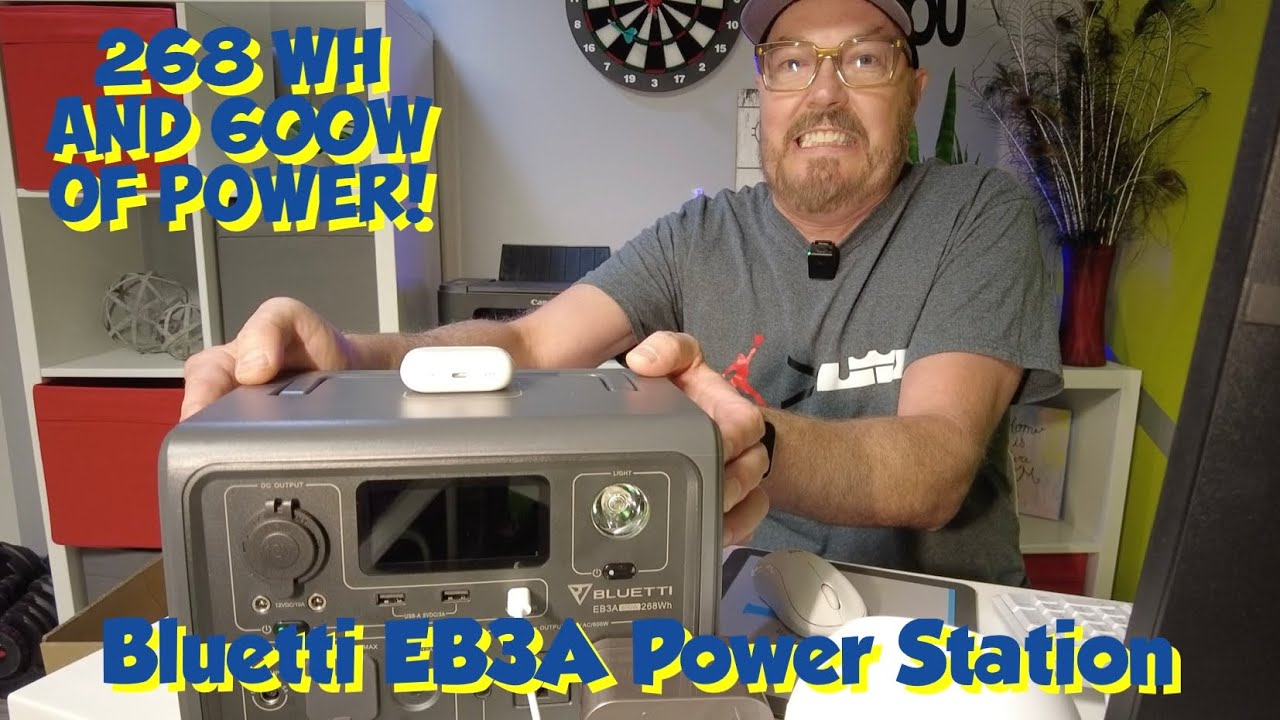
Since I have the Yoshino B330, let’s compare it to similarly sized batteries: the EcoFlow RIVER 2, Bluetti EB3A, and Anker 522.
When you look at the price, it looks like it falls right in line with the competition. However, when you divide the cost of the unit by the Wh capacity, you start to see the difference. Yoshino is roughly $1.24/Wh, while the others chime in between $0.90 - $1.12/Wh. That means Yoshino’s battery, which is a first-gen product, comes in 11-37% more costly than the competition per Wh.
However, one of the key benefits of solid state is safety, longevity, and energy density, so how does it compare to the last one? Well, not so great for the model I’ve got. Yoshino is at 53.56Wh/kg, which is just slightly lower than Bluetti, but both EcoFlow and Anker have 73 and 76Wh/kg.
What’s going on there? This made no sense to me, so I decided to expand my comparison to Yoshino’s largest battery, the B4000, to comparable batteries. I picked the EcoFlow DELTA Pro, the Bluetti AC300/B300 Combo, and Anker Solix F3800. This is where it got more perplexing.
I’m back again. A bunch of people took issue with how I broke down the wh/kg in my review.
In this video my intent was to review and look at the Yoshino battery from a user experience perspective. That means the final product you have in hand and will be picking up, tossing into the back of your car, and lugging around. The wh/kg of the actual battery cells isn’t important from that perspective. That’s why I did the wh based on product weight and product cost. I still stand by that, but wanted to call that out. In the follow-up investigation video, I’ll get into those battery cell details.
Now, these models aren’t exactly an apples to apples comparison because of how they’re intended to be used. The Bluetti AC300/B300 combo is actually two separate boxes that you have to use together. It’s more meant for a permanent or semi-permanent installation, like whole-home backup or for an RV. In terms of power output and storage, though, it is comparable, which is why I picked it.
Money-wise, the numbers across the board landed in a very similar region, at least when non-sale prices are used for comparison. The Yoshino clocked in between 21-29% more expensive than the competitors. Not shocking, but the Wh/kg was _very_ different. The Yoshino B4000 has 107Wh/kg vs. a range of 53-80Wh/kg. That makes the B4000 101% more energy-dense than the comparable Bluetti and 34% more energy-dense than the Ecoflow. This is more of what I was expecting to see when I dove into this comparison in the first place.. So why is the smaller battery, the one I’ve got, so behind in the comparison? My hunch was the physical design of the product and all the bells and whistles. Yoshino’s battery has a large and heavy metal handle that wraps around the entire box. EcoFlow’s River2, on the other hand, is all plastic with no light, which means there’s a weight savings from materials and components.
This hunch was confirmed when I reached out to Yoshino for more information. The team compromised some additional weight for the sake of additional functionality and aesthetics.
Another reason could be obvious given the controversy. If this isn’t a true solid state battery, then you’re not going to see a massive difference in wh/kg. However, it’s also worth noting that just using a solid state electrolyte doesn’t automatically double or triple your specific energy. Yoshino’s claims have been around using a solid electrolyte, but the chemistry of their anode and cathode isn’t novel (ie. not lithium metal, anodeless design like QuantumScape). If they’re telling the truth about their solid state setup, that could explain why their anode/cathode chemistry is better than the lithium iron phosphate competition, but not that different from what we normally see in a nickel manganese cobalt battery (which is what they claim they have). Again, I’ll have a full report on the breakdown coming out.
Having one in hand, I can say it’s nice to pick up and looks great, but I’d personally have preferred a plastic casing to save some weight. However, those design choices become less impactful as you scale up the battery pack size, which is why we see the B4000 come out way ahead on that front. All of that raises the big question … Well, it really comes down to your use case. Let’s start with the small battery packs. If you’re looking for the lightest weight and cheapest small battery pack to take with you on a trip, then you’re most likely looking at EcoFlow or Anker. However, if you’re looking for a battery that will last you an incredible timespan with the least degradation, is exceptionally safe, and can work in a wide range of temperatures without concern, then you’re probably looking at Yoshino. In this small size category though, it’s a tough sell.
So what about the larger battery format? Many of the same arguments hold true here, but this is where weight comes into play. If you need the largest battery that you can easily toss into the back of your truck or RV for a trip, even though the Yoshino B4000 costs more, it’s dramatically lighter weight. It’s half to one third the weight of the competition. Lugging a 53.6lb (24.3kg) battery on the back of your truck sounds way more appealing than a 100-130lb (57.7-60kg) battery. On top of that, the Yoshino will have a longer lifespan and is safer, too.
However, if you’re looking for a battery that could serve as a whole-home backup with a semi-permanent installation, Yoshino isn’t even on the table. Its current batteries are designed for that lifestyle type of brand: on-the-go uses, camping, and emergency backups.
There is an elephant in the room though. Many of the companies like Bluetti, Ecoflow, and Anker have massive sales and promotions that drive that cost even further down. If you pick up their batteries on sale, there’s no contest for the value you get. In that case, though, it’s important to remember one thing: this is the first-gen Yoshino battery. There’s no doubt they’re working on a second generation product that should be cheaper and more competitive on that front. The next crop of batteries should also be even more compelling on the energy density and performance front too.
That said, for a first-gen product, I think the Yoshino holds up surprisingly well. As I always point out when looking at any product, it all comes down to your personal use case. That will dictate what features are more important to you and could make the slight increase in cost acceptable. I’m very impressed with the build quality and performance I saw in my testing … and I’m really eager to see where Yoshino goes from here.
My final reminder … I’m going to be publishing a full report on my investigation into Tech Insights’ report, their additional testing they did based on my conversation with them, my friend’s breakdown of the battery for another point of view … all of it. So check the description for a link to that video if it’s already published or subscribe and hit the notification button so you don’t miss it when it is published. I also have to thank the folks who pointed me in the direction of Tech Insights. As rowdy as some of you guys can be in the comments (again, please be polite and debate the ideas, not the person), I learn a lot from everyone in the comments. I’m really looking forward to sharing the follow-up. If Yoshino’s solid state claims can’t be backed up … they could be pulling a fast one on all of us. I hope that’s not the case. In the meantime, I can’t recommend you get any of their products until the picture is clear. As much as I actually like the product I bought for myself, if the marketing is making false claims, that kills it right there for me. But until I complete my investigation, I’m trying to keep an open mind … or should I say, remain undecided. More to come.
But what do you think? What portable batteries are your favorite and why? And does seeing an actual solid state battery like this on the market give you any hope for the future of solid state? Jump into the comments and let me know and be sure to listen to my follow up podcast Still TBD where we’ll keep this conversation going. Thanks as always to my patrons for your continued support. I’ll see you in the next one.
Up Next
EV Battery Tech: Cylindrical, Prismatic & Pouch Cell Comparison
@MunroLive
215.4K views•2020-05-04
Ultrasonic Transducers: Resonant Frequency Measurement and Horn Design
@imajeenyus42
229.9K views•2017-02-22

Polymer Environmental Degradation: Mechanisms & Stabilization
@iit
1.8K views•2012-07-10

How a Student's Question Saved a NYC Skyscraper from Collapse
@veritasium
22.8M views•2025-04-26
Related Study Plans & Knowledge Roadmaps
Structured learning paths in Engineering