










![The Incredible Story of the Milky Way Galaxy [4K]](https://i.ytimg.com/vi_webp/sDuZiimfSQU/maxresdefault.webp)


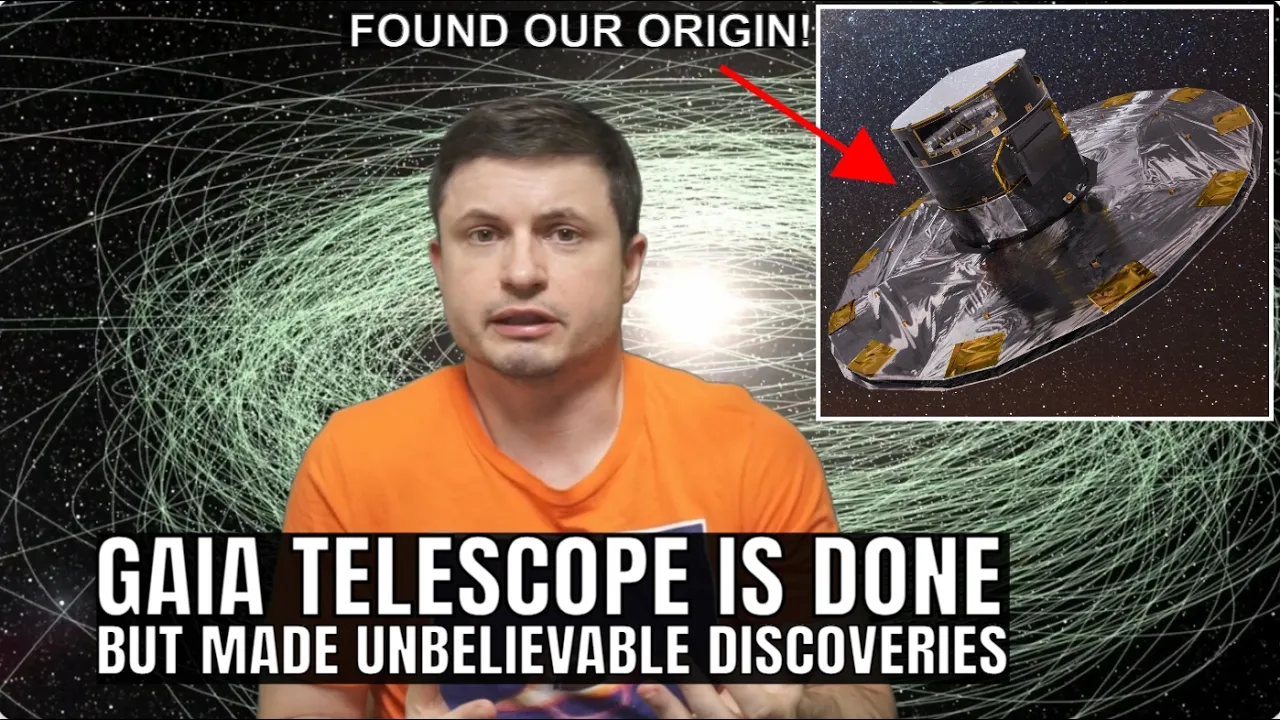





The Gaia Space Telescope has revealed that the Milky Way galaxy collided with another galaxy called the Gaia Sausage (or Enceladus) approximately 10 billion years ago, which provided dark matter and gas that contributed to the Milky Way's current mass, likely triggered the formation of spiral arms and the central bar, and initiated a major generation of star formation that included our solar system.
How Gaia Revealed the Milky Way's Ancient Collision
Added:Basic Galactic Anatomy: Understanding the structure of the Milky Way, including the disk, halo, bulge, and the distribution of stars within these components.
Astrometry and Stellar Kinematics: Knowledge of how astronomers measure the precise positions, distances, and 3D motions (proper motion and radial velocity) of stars.
Galactic Mergers and Gravitational Dynamics: The concepts of how gravity governs interactions between galaxies, leading to mergers and tidal stripping rather than direct physical collisions between stars.
Stellar Spectroscopy and Metallicity: How analyzing the chemical composition of stars allows astronomers to determine their relative age and identify stars born in different galactic environments.
The Gaia-Enceladus (Gaia-Sausage) Event: In-depth study of the specific dwarf galaxy that collided with the Milky Way and how it shaped our galaxy's inner halo.
Introduction to Galactic Archaeology: Exploring the broader field of reconstructing a galaxy's evolutionary history using fossil remnants of past star-formation and merger events.
The Milky Way-Andromeda Collision: Investigating the physics and timelines of the predicted future merger between our galaxy and its largest neighbor, Andromeda.
Mapping Dark Matter via Stellar Streams: How observations of disrupted satellite galaxies are used to trace the distribution and gravitational influence of invisible dark matter in the galactic halo.
712 views16likes48:56Original Release: 2024-01-12
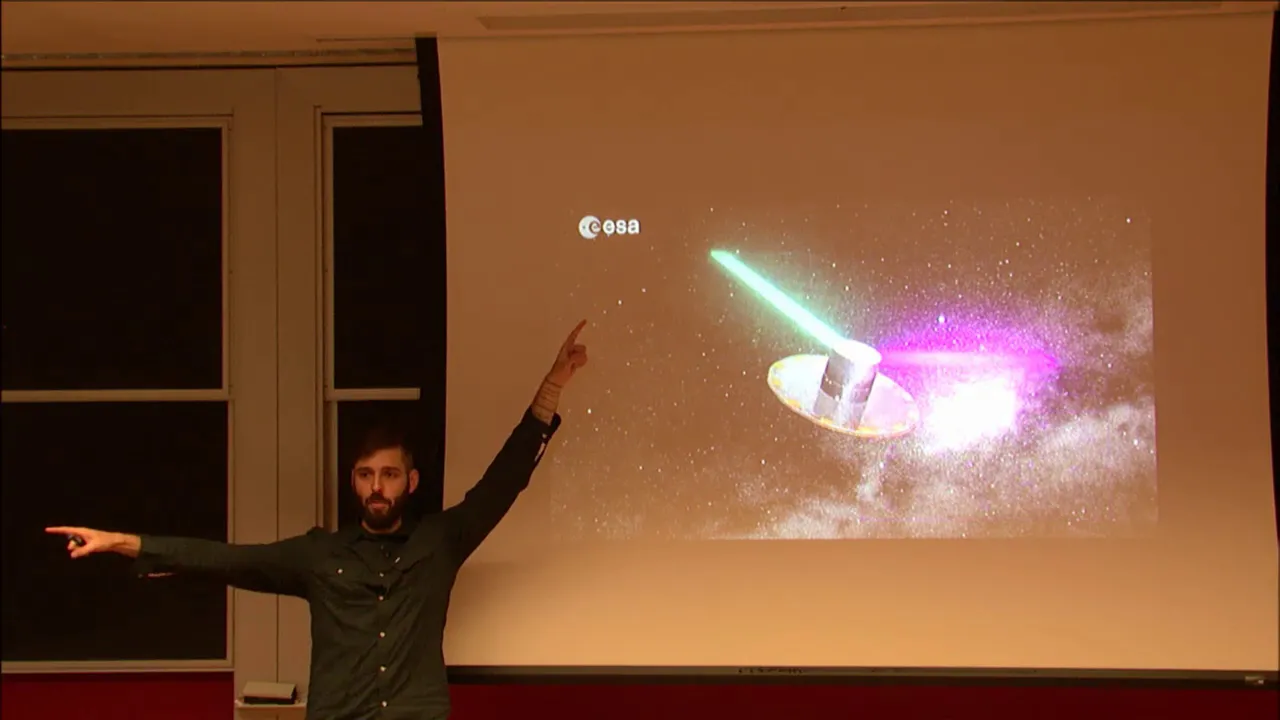
hi everybody uh Happy New Year really looking forward to getting to chat with you tonight um so I got a little bit of a word map here up on the screen to kind of kick us off um it's going to go over a few of the topics that I hope you will take away with you at the end of our time together this evening um so for us as astronomers one of the most important features of the universe are galaxies something we are have great interest in um and for me in particular and a lot of my colleagues we study galaxies in the same way that archaeologists study history and I'm going to teach you a little bit about that today and try and convince you that one of the most substantial events experienced by our galaxy The Milky Way was a major collision with another galaxy billions of years ago so I want to start off by showing you these two images these images are called the Hubble Deep Fields taken by the Hubble Space Telescope back in the 1990s really interesting idea here the telescope was tasked with staring at a supposedly empty patch of space two of them one on the left one on the right for over a week each and staring at a specific patch of space for a week allows you to collect as much light as possible to see the faintest objects and they did not expect to find anything here but in fact what they found was thousands of little bright points and these most of these bright points are oh there we go our galaxies I can count the number of stars in our own Galaxy in these images on two hands the rest of what you see here are galaxies and we'll see Hubble again tonight these little things in the top Corner these are not empty space voids they're just the way the telescope works but we could sit here and do an entire hour pondering kind of the deeper philosophical significance of these pictures and how much they reveal our universe contains but for us as astronomers interested in Galaxy it reveals to us that on the broadest scales of the universe the fundamental building blocks are galaxies themselves much near to us in kind of our own backyard we see more galaxies and this confirms that statement I made a few seconds ago and furthermore we see that Galaxies have a wide range of colors shapes sizes morphologies they've got tons of stuff going on and one of our primary quests is to figure out why they do what they do and help try and come up with theories to explain these things but before we get into galaxies I want to rewind a little bit and talk a little bit about the Big Bang the Big Bang this what you're seeing here is you can think of it like a timeline with time moving from left to right the present day being here on the right at the beginning of the universe around the time of the Big Bang there were Quantum fluctuations imparted on the matter density field of the universe now if you were here back in December you might have learned a little bit about that by a fellow grad student of mine who spoke uh at at much greater length about these things but for us astronomers who are interested in galaxies we are content with the idea that these Quantum fluctuations lead to regions of space which are slightly a little more dense a little more stuff there and regions of space with less stuff in them and those regions of space with more stuff will gravitationally collapse to form galaxies that we see today and throughout the Universe this is a diagram you may have seen before if you've been to these uh astr tourist talks before this is the cosmic pie chart of ignorance it shows the sort of total amount of stuff in the universe and about 70% of that is something we have no idea what it is we only kind of know what it does called Dark Energy about 30% of it is matter and by matter we mean stuff that exudes gravity on the universe but of that 30% about 80% is dark matter that we only know does gravity we have no idea what it is so some massive fraction of this pie chart here we have absolutely no idea what it is we only kind of know what it does um but for us again as people interested in galaxies we like the matter part we we sort of notice the dark energy part but we kind of ignore it a little bit it's not super important for what we're interested in and of the matter component there's the dark matter which will become important we'll talk about that and then the regular matter this is Barons as we call them I may use that word but this is galaxies Gap planets Stars everything that we're familiar with of our day-to-day existence so this is an image taken from a simulation of the universe so this is fake here but what we do is we put a bunch of laws of physics into a computer get a big bang going and then we produce whole universes that look like this what you're seeing here is dark matter the bright Parts is where there's lots of dark matter the dark Parts is where there's less dark matter and dark matter what you can see here is it it exists in a sort of hierarchy we like to use the word hierarchy here in astronomy what does that mean it means there are many fewer large things than there are small things there's a vastly larger number of small things in the universe when it comes to dark matter um and we'll talk a little bit about normal matter in a second these objects these dark matter objects these spherical globules these blobs that you're seeing throughout this image we call these Halos these are dark matter Halos among the fundamental units of the universe but matter is not only hierarchical um in terms of dark matter it's also hierarchical in terms of the bionic component so here you're seeing a zoom in of a simulation like what you just saw with the Dark Matter on the left and you can see that where there's a lot of dark matter there's also a lot of stars and so what we say is in astronomy Dark Matter halos host luminous galaxies they are the sort of gravitational seeds that drag in a bunch of stars and gas and dust to create the galaxies that we see scattered throughout our universe that we saw in those amazing Hubble images now not only are does the Dark Matter host the galaxies but you can also see that the Galaxy component is quote unquote hierarchical as well meaning there's many many more of these small objects around around each big object in the same way that there's many more small dark matter Halos around large Dark Matter Halos and this is reflected when we look out in our very very closest backyard this is called the local group here's the Milky Way here and this is our closest large neighbor the Galaxy Andromeda you may have seen it in the night sky around Milky Way and Andromeda is a whole host of smaller galaxies we call these dwarf galaxies and they range in size from almost as large as either the two big players the Milky Way and Andromeda all the way to very very small systems of stars only containing a few thousand stars total so again this is reinforcing the idea that there is always a spectrum of objects of different sizes and there's more small objects galaxies in the universe than there are big ones now in our universe galaxies move around there's a lot of them they often crash into one another and these are Monumental events in the lifespan of a single Galaxy um but it's the case that it's actually more likely for any one large Galaxy like our Milky Way to crash into another smaller Galaxy simply because there's so many more smaller galaxies than there are other big galaxies so here back in the simulation that we see these these two large galaxies here are much more likely to experience a collision with the small dwarf galaxies that exist in their vicinity than they are with each other so consolidating these ideas in the broad scheme of things we tend to think about the formation of galaxies in the context of merger events collisions between smaller objects to create larger ones and this schematic here sort illustrates that point if you think here being uh representative of the early Universe G smaller little galaxies what we call dwarf galaxies will merge together to form slightly larger galaxies which can merge together to form even larger galaxies finally into galaxies like our Milky Way this is not the only way that galaxies can grow and accumulate mass and gas and stars and dark matter but it's one of the principle ways that they do this so let's go into a bit of an explainer about what happens in a specific Galaxy Collision imagine here if we have a Galaxy like our Milky Way and a smaller Galaxy here that's going to come crash into it it's going to come in on a nearby trajectory what's going to happen is the gravity of this host galaxies like the Milky Way is going to gravitationally tear apart this galaxy that's coming in on a nearby path the stars are actually going to continue on pretty much the same orbit they came in on the gas though is going to crash into the gas that exists in our Milky Way and it's going to get sucked right into the center but we're going to be left with a big cloud of stars that kind of surrounds the host Galaxy after this Collision has elapsed billions of years later and that big cloud of stars is one of the relics that we can can go and investigate today that reveals to us the presence of historic collisions between other galaxies and between the Milky Way and some of the galaxies in its vicinity so let's put all these ideas that we've worked on together here and I want to show you this video which it will okay so what you're watching here is again a simulation of how the universe works you're watching galaxies moving around these are stars that you're seeing and gas and you're going to watch them evolve we kind of started the movie kind of like at the beginning of the universe or a very early time in the universe and you're going to watch these galaxies collide together and change how they shape and look in the process and I want you to pay attention to what happens to a Galaxy when it crashes into another one it really changes things otherwise galaxies like this one in the bottom corner here are pretty much content to just go about their day it's the collisions that really change a Galaxy and can turn it into something quite more than it once was see look at that so the end of this video here now we are left after all these collisions with a Galaxy sort of like what our Milky might way might look like today but it's experienced all of this upheaval through these collisions and that causes it in large part to look like how it does at the end of the video and we're going to go into that sort of thing throughout the rest of the talk here so let's really ground ourselves here and focus on the Milky Way which is our home Galaxy this is an image of the Milky Way that you could take yourself seen from Earth uh if you've ever been to somewhere with very dark skies you may have seen the Milky Way it's like a very bright band of stars that kind of arcs across the sky and we see it as a bright band of stars across the sky because we're inside the Milky Way so we see it as as it as it is from the inside out now this is sort of what the Milky Way looks like and the Milky Way is a very typical spiral Galaxy and we which is the sun here we exist in the sort of suburbs of the Milky Way the Milky Way is a very typical Galaxy and we exist in the suburbs not out in the outskirts where the crazy stars live and not in in the inner parts where the other crazy stars live very normal we are a Toyota driving spaghetti on Wednesday type of star in a in a Toyota driving kind of Galaxy okay so if we look down on a Galaxy like our Milky Way this is not a real picture this is just an artist interpretation of what our galaxy probably looks like we see if we look down on it face down so kind of from the top looking down we see these beautiful spiral arms we see in the center this kind of central spherical almost region called The Bulge but it's slightly elongated and when it does that we call it a bar we're kind of partway out if we then shifted our view and looked at it what we call Edge on we see again that we're kind of partway out to the outskirts of our galaxy The Bulge is a sort of spherical region the dis is this kind ofat plane of stuff there's a lot of gas in there and there's a lot of stars and in particular when a star is born in our own Galaxy it's going to exist in its life in the dis we were born in this galaxy and therefore we exist in the dis right here but surrounding each Galaxy you may not be able to pick it up cuz the contrast is not the greatest um is what we call the Stellar Halo this is what we chatted about a few slides back when we talked about what happens when a specific Galaxy might collide with another these are Remnant stars from ancient collisions things that have crashed into US they've left their stars in this big cloud around us while the gas ends up down in the dis of our galaxy where the other stars are okay so in astronomy and for me in particular and a lot of my colleagues our goal is to determine how the Milky Way got to where it is today why does it look like how it does and how can we use those insights of studying our Milky weight to learn more about the broader population of galaxies throughout our universe but there's a few problems with this one is that we cannot obviously see things that happened in the past if something hit us long ago or something important happened to the Milky Way in the past we cannot we have no way to access that information um directly another problem is if we say well if it happened to the Milky Way in the past it'll probably happen in the future let's just wait and be patient that's also not really that feasible because the Milky Way is very very close to being frozen in time then this is you know sort of has to do with astronomy as a whole things happen on the time scales of millions if not billions of years and so even if we go back to the earliest people that lived on planet Earth like a million years ago the Milky Way would still basically look the exact same end as it does today not much has changed and so that presents a problem how are we going to approach this and this is where this concept of archaeology comes in we are going to approach studying our galaxy in the same way that an archaeologist would approach studying like an ancient civilization so what would an archaeologist do now if any of you are archaeologist in the audience you can come up and I'll give you the mic and you can explain it but I'm going to go to go I've watched Indiana Jones so what I might do is I might come along and say something went on here um I'm going to go find like a pot and like a trinket and like maybe a building outline or something and I'm going to figure out what it's made of I'm going to figure out how deep it is in the dirt and assume that that has to do with kind of how long ago this thing was left there and do all these sorts of things and I'm going to try and piece together an understanding of something that happened very long ago with these very indirect tools so taking that approach how are we going to study the Milky Way well the first thing we're going to do is focus on all these individual structures if you're thinking back to that video that I showed and it'll come back don't worry um lots of different features of our galaxy The Stellar Halo the dis the spiral arms all these sorts of things galaxies change how they look through time as they experience collisions and grow and experience different events throughout their life time so we're going to focus on the different components of the Galaxy and to try and learn a little bit about how it once was and how it will be in the future we're also going to focus on the orbits of individual Stars so Stars which are born in the Milky Way these are you can think of these as like these yellow lines here they're going to orbit in very nice orderly planer motion they're going to stay in the disc of the Milky Way You Can imch it like a pancake and they're going to orbit in such a way that they stay very close to that pancake as they go around experiencing their lives our star is one of those however stars from the Halo they travel in these big long looping orbits that take them out into this spherical Cloud that is the Stellar Halo and that tells us something about their origin and how they got there and therefore about things experienced by our galaxy another tool we're going to use is the chemical makeup of any one individual star and this is important because stars are basically like big pressure cookers inside they undergo nuclear fusion they turn light elements into heavier elements that powers them that gives them their energy but in the process that transforms those elements essentially Forever Until another star comes along and does the same thing so you can imagine a star perhaps one like our sun fusing Light Elements into heavy elements in its core when stars die they do it kind of dramatically they tend to explode um and when they explode they scatter all of that material that they have enriched turning from Light Elements to heavy elements throughout the local little part of the Galaxy that they live in that material containing more heavy elements Than Light Elements is going to make its way into the clouds of interstellar gas that will form the next generation of stars and so as Stars Are Born die and born again they start to contain more and more different kinds of elements more heavier elements starting off with B basic things like hydrogen and helium getting all the way up to iron magnesium calcium carbon oxygen all these sorts of things that we're used to but that begs the question how would we possibly be like we're not going to go up there with a spoon and take a spoon full of a star and figure out what it's made of we have to figure out some other way so we're going to take staright with a telescope we're going to shine it through a prism and we're going to divide it up into its constituent wavelengths of light or divide it up into its colors and when we do that what we tend to find is that there's little gaps in the Spectrum parts of the spectrum of light coming from one star which are missing these are basically like the Fingerprints of individual atoms so each individual atom has its own unique fingerprint by measuring how much light is missing we infer how much of that element there is in that star so it tells us each element iron hydrogen helium carbon oxygen all these elements have a unique fingerprint in terms of locations where they cause gaps and we can piece together how much of the element is in each Star by measuring its Spectrum so we're going to go into a little bit of an exercise kind of how this works and this is kind of a primer for some of the investigative work we're going to do in a second here so if I told you here's a plot and on the x axis is the amount of iron in a star and on the y- axis is the ratio of the amount of magnesium to iron and you may say I stopped at chemistry 11 it's okay cuz I can tell you what exactly these mean this on the y- axis you can think time since the Galaxy formed for this individual star each point in this diagram is kind of like a star when there's multiple points on top of each other you color them by the number of stars that are there so if you're up here in the plot you were born when the Galaxy was younger as a star if you're down here you were born when the Galaxy was older so you're a newer you're a newer Star then iron is going to tell us how big the Galaxy was when you as a star were born less iron means you were born in a smaller Galaxy more iron you were born in a larger Galaxy so with that in mind where do you think the Milky Way is in this plot if I told you these are all stars in thek milk way yeah I would say the middle the middle that's pretty good so this stuff on the right here the Milky Way is kind of a bigger Galaxy it's bigger than a lot of the other small ones that are existing around it so these are the Milky Way Stars here and in principle we have a group up here these are our younger Galaxy Stars I.E these are actually older it's a little confusing but these were born when the Galaxy was younger so this is our older generation and our younger generation generation of star born when the Galaxy was older these over here are our Stellar Halo stars came into our galaxy from other smaller objects they were born in a Galaxy which is smaller and therefore they have less iron in them now we're not going to go into why exactly that happens you have to come back to another talk to learn about that and that's going to be next month for you but these are the SES of ways that we can investigate galaxies and our own Galaxy using these tools now the final thing that we can do is we can actually kind of get a handle on ages of stars sometimes this can be highly tenuous though so we'll come back to this briefly ages of stars but just rest for now that as a star changes throughout its life and starts to look different and it'll change its size and how bright it is and other features about it we can kind of broadly infer how old it is based on that but it's a very challenging thing to do okay so to summarize the tools we have available as Galactic archaeologists we have the distribution of stars where does it exist what does that thing look like what does the disc look like are there spiral arms or not all that kind of stuff what are the orbits of the Stars like what direction are they going and how many stars are there going on different orbits what kind of chemistry do those stars have does that like tell us something about the environment in which they were born and then finally we can kind of get a handle on ages okay so now we're going to go and actually get the data we need to do these archaeological investigations okay so we need Spectra in order to get Spectra we are going to go to this telescope called apy stands for the Apache Point Galactic Evolution experiment it's a telescope in New Mexico and pound-for-pound this is probably the most scientifically productive telescope on the planet uh or in space actually I'm going to say this it's only 2.5 M which is kind of pitiful for telescopes but this thing goes it's absolutely a total Workhorse it has probably more citations behind it than any other telescope um probably inexistence maybe Hubble the Hubble Space Telescope could compare grad students you're welcome to try and challenge me on that um okay so what apy does what this telescope does is among many things it can take Spectra of stars in our galaxy here's a map kind of looking at the plane of our galaxy you can't really see it behind all the colored points but this is Imagine looking straight at our galaxy these are all the locations where we can measure Stars the problem with getting Spectra of stars it's like a very it takes a long time to do it you have to get a telescope to point at a star for kind of a very long time before you get enough light to get this spectrum so we can't get it for every Star we can see can only get it for a small number of them so we kind of choose according to we get a bunch of scientists in a room and they all fight and then they decide on some hideous looking footprint of where to look at stars but anyways important tools okay so we get Spectra using this great telescope called apy okay the second ingredient we need is we would like please a 3D map of the Galaxy with also star motions also please okay now how are we going to go about getting that okay we we need 3D positions and velocities velocities IE movement for each star how are we going to do that okay this is where you guys all get to weigh in this is a multiple choice question answer a are we going to send out super ultra fast space probes to go out and get some sort of three-dimensional view of the Galaxy or like visit each star and try and come back and report what they saw that's option A B are we going to bounce lasers off each star bounce a laser measure its return time and use that to figure out how far away each star is this is like if you've ever been golfing this is how your Rangefinder works this is laser rang finding if you're if you're familiar with that kind of phenomenon are we going to do that are we going to measure star positions at different times of year to calculate their distance okay could we maybe measure the brightness of each star rely on some knowledge about how bright we think stars are because we're smart physicists and calculate distance knowing the fact that stars get fainter as they're further away or E false James you're never going to get a PhD this is absolutely impossible okay if oh you're supposed to guess this is how this is supposed to work you're supposed to guess all right who thinks a anybody still think a even this could be a double fake here now keep that in mind all right nobody thinks a that was wise anybody think B laser range finding laser range finding laser range finding maybe okay what about C star positions okay a couple we got a couple hands what about D measuring brightnesses okay more hands okay more hands than C and what about e James never going to get a PhD okay grad students I'm going to have a chat with your supervisor after this okay well it's not a we can't send out super fast space probes never going to work we we barely have got a space probe traveling at like 15 m a second to just leave our solar system this is never going to happen in the Life age of the universe unless we develop something cool like warp drives okay now what about B okay we could build like a fancy space station I just started thumbing away like maybe what a space station that bounces lasers off stuff could look like um it could be kind of whole group effort thing no this will not work again even lasers traveling at the speed of light takes them forever to get anywhere else and they don't bounce off Stars lasers don't work like that this is not going to work either and I'm sorry but you doubters e is also wrong and D is wrong unfortunately this is kind of a sketchy thing to do this is it's possible it was a good guess and any grad students who pick this I'm going to also have a talk with your supervisor cuz you should know better but we're going to go with actually option C here and let me show you how that works so imagine here this is the Earth as it kind of goes around the Sun obviously not to scale in a little squash but here's the sun here's the Earth here's a star we're interested in learning how far away this star is from us here's a bunch of like back ground Stars imagine these things are just like way far away okay when we look when the earth is in in January and we look at this one star we see it lying in this position among these background Stars swoop around to July 6 months later the Earth is on the other side of the sun look the Stars position appears to have shifted this is the phenomenon known as Parallax and what this means is that we've created a little right triangle it's to get m Ma and what we have here are the ingredients of a right triangle we've got this angle we just measured that that's from our images we took in January and July the distance between the Earth and the Sun we know this we can just go out into the solar system and measure this quite easily and using a little soaa action we get the distance to the star which is what we want to know and the trick is if you are making precise enough telescope measurements to see these little shifts that we just showed you between um 6 month durations you're also making accurate enough measurements to figure out how fast a star and what direction it's going through three-dimensional space so using these measurement techniques we get our six-dimensional map and it tells us where the stars are and how fast they're going okay this is where the hero of the story comes in who's the guia Space Telescope so Gaia was launched in December of 2013 from the southern hemisphere and about a month later Gaia arrived at the location where it still sits today it's out beyond the moon um and it sits there and measures parallaxes of stars uh it measures how far away they are from us and what enables Gaia what enables Gia to do that is the fact that it sits out in space quite far away from Earth beyond the moon and it sits there and it rotates in a circle and it processes so it can map out the entire galaxy guy is actually made of two telescopes and this allows it to make those Parallax measurements as it goes all the way around the sun with the Earth very accurately by looking at two different parts of the sky at the same time and it creates this 3D map where it measures carefully the positions of each Stars Waits 6 months measures the again and does that year on year out to very accurately get the distance to stars and how fast they're moving so to give you an idea of how accurate guia is in doing what it does Gaia if it were located here in Toronto the Precision with which it can measure the shift those little shifts in stars that we see as Earth moves from January to July or through over any six-month period as it moves from one side of the Sun to the other the Precision with which it makes those measurements is equivalent to it measuring something the width of a single human hair located in Halifax if we put it in Toronto so just incredibly accurately it can measure the positions of stars this is no easy task so what guy has done is basically every single star it can see in the night sky which is not all of them some of them are too faint it's created a 3D map of the Galaxy using those stars and it can tell you for each of those Stars which direction and how fast they're moving and using that information here's a cool little diagram that shows the 40,000 closest stars to us seen from Earth looking at the Galaxy and the trajectory they will take over the next 2 million years and we fast forward this for you so that you can see it but this is 2 million years of Stellar motion that we know these Stars will take now keep in mind this is only 40,000 Stars this is like 2,000 of a percent of all the data in Gaia it's a truly phenomenal telescope that's created a truly phenomenal map of the Galaxy now the question is what has it discovered well Gia has discovered a secret something that's really revolutionized our idea of the Galaxy here what you're seeing are stars close to the close to to to our sun and on the y- AIS of each of these panels I'm plotting how fast they're moving around the Galaxy and on the x-axis I'm plotting how fast they're moving either towards the Galaxy that's negative values in each of the panels or away from the Galaxy like sometimes they're just on lazy orbits that move in and a little out from the center of the Galaxy they're not leaving or anything like that each of these panels show different stars with different amounts of iron and if you recall stars with more iron probably born in our galaxy stars with less iron probably not born in our galaxy from smaller other galaxies so this is the disc of the Milky Way this is where we live the fact that it has positive rotational velocity means that we're all moving around the Milky Way together and here at the lowest amounts of iron is the Stellar Halo this is as we said stuff that's crashed into US small little galaxies that have crashed into us they're moving in a mixture of in and out orbits and round orbits they're kind of doing whatever they want but look this group of stars are moving more in in and out orbits the extent of this group is more in and out than it is around the Galaxy what the heck is that this is what we've just discovered this is one of the biggest discoveries of the guia telescope this group of stars here so just for reference to give us some context here these stars are moving in and out from the Galaxy they're on these big long loopy orbits that take them from way out in the outer outskirts of the Galaxy into the inner Galaxy they're not moving on like more circular orbits around our galaxy in the same way that we are in our in in the in the sun in our solar system moving around the Galaxy okay so the interpretation of how you get so many stars moving in and out from the Galaxy is a head-on collision with another galaxy so what happened is another galaxy probably a smaller one came and hit us and then billions of years later the Stars which were in that Galaxy think back to when we kind of went over what happens when two galaxies hit are sitting in a big cloud of stars around us but they tend to be moving more in and out then kind of in around orbits if that makes sense so when did this Collision occur was it yesterday was it way way way long ago well here what we're doing is we're going to look at a bunch of stars and remember I said that ages are a little weird a little sketchy but these very smart astronomers including one astronomer who used to work here at the University of Toronto measured the age in billions of years for a bunch of stars as a function of how much are they on radial orbits up here very radial Like These Are the In andout Stars down here these are the normal stars and then we've got amount of iron is the color but we're going to ignore iron for now you can see this group of stars these are our in andout stars that we're interested in here these are the ones ones from this head-on collision and you can see they were all born about 10 billion years ago so this Collision probably happened right as soon as the last one of them was born sort of 8 to 10 billion years ago so if we were to rewind the clock this is kind of maybe what this Collision would have looked like a smaller Galaxy like this colliding with a larger Galaxy that sort of looks like the Milky Way just for reference this is not an artist interpretation this is a real pair of galaxies out there in the cosmos but we're just showing you kind of an example of what this might have looked like so many billions of years ago all right now the question is this thing that hit us we love names in astronomy we're the best at names what is it called all right it was co-discovered by two groups of researchers one group of Dutch researchers and one group of British researchers okay and they basically had to share naming rights the Dutch researchers they went with the name Enceladus so Enceladus in Greek mythology is one of the the Giants these are the children of the Titans and they're killed by the classic Olympian Greek gods here is Athena destroying Enceladus the giant Enceladus is also the the child of the Titan Gaia so you know it's all like kind of very poetic you know it's a Galaxy that got destroyed when it hit a bigger Galaxy see named after any anyways it's all very good okay awesome name great so we call this Enceladus no the British came along and they said how about the sausage and now why do they call it the sausage they call it the sausage cuz look these group of stars is like a very long distribution of stuff it's a sausage so they were just like Simplicity it's the direction to go none of this poetic Greek crap just sausage okay okay and a British one right they could have gone with something else they could have got been the spaghetti noodle but it wasn't it was the sausage cuz they're British okay very good and I'm not kidding here like when I write papers this thing for me is Gaia sausage SL Enceladus I have to call it that so for now we're going to call it gsse I'm going to call it gsse from now on okay why was this thing important okay why do we care that some Galaxy hit us a gazillion years ago okay we're going back to that video that I showed earlier here is the Galaxy collisions forming that Galaxy like the Milky Way in the simulations that I showed and just pay attention to what happens when these galaxies when they crash into each other pay attention how the galaxies change so in particular a few of the really crucial things that guyan celus did to our galaxy one is that it probably provided a lot of the dark matter and gas that currently exists in our galaxy so looking out at you today some of you guys are undoubtedly made of material that was once in the sausage I'm sorry to tell you that but in the sausage you probably me too don't worry I'm not immune because a lot of the gas that came into our galaxy before our sun was even created came from Gia Enceladus it gave some stars to the Galaxy 2 not that many the ones that are out in the Halo in this kind of Fus Cloud it also probably created the spiral arms and the bar of our galaxy look at the Collision see how the Collision watch this watch how the spiral it's going to create some spiral arms watch them get made see them see the spiral arms emerging there so it's likely actually that our galaxy did not have spiral arms before the collision with gy Enceladus and finally it initiated the second big generation of star formation in our galaxy that we pointed out earlier on when we looked at the um magnesium and iron in stars and we are part of that second generation of stars so while gu Enceladus did not cause us directly to form our sun it probably kind of started a generational event of star formation which eventually included us okay my research here at the University of Toronto is to try and figure out more about this properties of this thing before it hit us in an effort to learn what it might have done to our galaxy one of the biggest problems that we face is incompleteness in our data so guyan celus is probably consists of like a 100 million stars we'd like to know where those stars are and how many of them there are and whatnot but combining Gaia which has a lot of stars that can look at it but apigee is kind of the limiting factor we only have about 450,000 stars because apogee just can't do that much remember the kind of incomplete bickering nonsense so anyways there is is a lot of stars we don't see that we need to infer their presence based on the data we do have this is a really challenging problem to solve we put a lot of time into creating very clever statistical models that try and account for things so that we can get at the nature of what guy Enceladus was like as its Remnant exists around our galaxy today so one of the other things I do is I use statistical models to kind of make fake groups of gyancelot stars and compare them to real data so here's real data this is again the same axes that you saw before rotation around the Galaxy and this is energy versus movement around the Galaxy energy think of it like speed plus how far away you are from the Galaxy just another way of describing orbits colored by Iron this is real data you can see all the dis stars are these kind of like higher iron stars and then the Halo stuff and it's kind of elongated that's guy Enceladus here in energy it's kind of flipped so this is Guy Enceladus here and this is our Milky Way this is the fake Galaxy we make and this is where the dis Stars would lie just we don't include them just so they don't get kind of blown out um and distract but we just show a contour for where they would be and this nice fake Galaxy and this really helps us to try and bridge the gap between our incomplete data and the underlying reality as we use these statistical models to try and bridge that Gap there with with regards to completeness one of the other things that I've worked a lot on is trying to help other scientists figure out how to pick gyancelot a Stars based on how the stars are orbiting so here again the two same quantities energy and motions around the Galaxy and in and out from the Galaxy here instead I'm coloring by how confident I am that the stars at each little Point here are actual members of guy Enceladus we can figure this out using these statistical techniques and then we then report to other astronomers where it's very likely that they are going to go find stars that are from guy Enceladus based on how the stars are orbiting which gives you these axes labels kind of combining all of these lines of analysis together one of the things that we're able to do is make a confident Claim about how big guy Enceladus was before it hit us a lot of astronomers actually think it was a very large Galaxy and that the the ratio between kind of how big G Enceladus was and how big the Milky Way was at the time they collided was closer than you might imagine so maybe guy Enceladus was half the size of the Milky Way what my research which is very carefully taking into account a lot of different effects has shown is it's actually likelier that guy Enceladus was a bit of a smaller Galaxy interestingly enough and that's forced us to kind of have to re-evaluate a lot of our theories about what we can say gu Enceladus was responsible for and what it wasn't responsible for and how the Collision took place furthermore we're able to say exactly kind of where in the three-dimensional space of the Milky Way the guyan celar here you can't really see it cuz the projector the contrast isn't good enough but gu is kind of shaped like a football you may see the dull little outline here but it's kind of an inclined football if we're here in the Milky Way and we're staring in towards the center which is how this view is shown it's kind of on an angle like this so that one end is high above the Milky Way and the other end is kind of low below the Milky Way so the geometry of how guy Enceladus looks today the distribution of where the stars from this Collision are tells us about the angle that the Galaxy hit us from in the first place a final thing that I do is I use a sim a set of simulations called illustrous TNG uh Star Trek fans in the audience it's number two of the lustrous simulations it's the uh peard of lustrous simulations we go in there and what we do is we find galaxies that look a lot like our Milky Way they have I'm sorry to say use this word again but a sausage they have a sausage we're looking for Galaxies with sausages big groups of stars on very radial orbits existing in the Stellar Halo and we go and we ask the question what happened to those galaxies were they hit by something on a head-on trajectory and typically we're finding actually that the answer is yes they were hit by something on a headon trajectory and this allows us using these simulations because we can see things happen in great detail and fast forward and Rewind it to learn a lot about what happened during the collision and what it did to our galaxy The Milky Way now looking forward there is not just groups of stars that we say this is Guy Enceladus astronomers approach this in gory detail and what we find is that when we look at stars in the Stellar Halo again this is energy thinks speed plus distance angular momentum this is a basically rotation around the Galaxy here's guy Enceladus in the very middle the sausage there's tons of other groups here that we can discern by the age of the Stars their chemical content and stuff and we're able to divide things up into these kind of regions representing probably other unique collisions that our Milky Way EXP experienced with other small galaxies that are probably just not as big a deal as Guan cell is probably a less substantial event but our real end goal here is to try and come up with some sort of timeline this is an interesting plot the top of the timeline is kind of like the early universe and time proceeds going downwards towards the present day this central line represents the Milky Way and the color is the size of the Galaxy how much stuff there is in it each of these lines is like a different big merger event that we now think happened um we have guy Enceladus oh we've got the Kraken that's a good one the Sequoia the Sagittarius and the helmy streams you will not believe who discovered the helmi streams it's somebody named hel me um anyways so wild names it's a lot of fun it's basically coming up with a brand new set of constellations and our long-term goal as astronomers now is to create basically a Chron ology of what happened to the Milky Way and how it's been evolving and Link these collisions to all these other properties of the Milky Way generations of stars as they formed the creation of spiral arms parts of the Milky Way like the Halo the Bulge the disc all these different things features of the Milky Way we think and now strongly believe as an astronomical community that they're all grounded and driven by collisions and therefore we're trying to look kind of back in time and figure out as much as we can about each of these different collisions that have impacted the Milky Way and my research is really focused on guy Enceladus and in the future we're going to be able to understand similarly more about all these other events that have happened to the Galaxy and so to return us now to our kind of big picture map we've learned about galaxies and how they're the building blocks of our universe and how we as astronomers like to approach the science of galaxies and specifically the study of our own Milky Way the same way an archaeologist does and then I hope I've managed to convince you that one of the most substantial events in the history of our own Milky Way was a collision with another large Galaxy and you get to decide if it's the Enceladus or the sausage I'll leave you with that um okay
Up Next

115:59
The True Scale of the Universe: A Cosmic Journey Explained
@CalmSpaceToSleep
91.2K views•2025-12-27
61:17
First Billion Years of the Universe with the Square Kilometre Array
@iaaudc
121 views•2022-05-26

6:25
Kepler's Laws of Planetary Motion Explained (Educational Astronomy Video)
@Peekaboo_Kidz
404.9K views•2023-02-17
6:10
Gamma-Ray Bursts: Cosmic Snipers Explained | Astronomy
@kurzgesagt
15M views•2016-07-31
Related Study Plans & Knowledge Roadmaps
Structured learning paths in Astronomy
astronomy
Reionization: Pop III Stars, IGM & 21cm Line
01Foundations of Cosmology & the Early Universe
02Population III Stars & Cosmic Dawn
03Physical Mechanisms of Reionization
+ 2 more learning modules
17h5 modules
Explore Roadmap
astronomy
Planetary Rings: Dynamics, Roche & Resonances
01Foundations of Gravity and Orbital Mechanics
02Tidal Forces and the Roche Limit
03Structure, Composition, and Collisions
+ 2 more learning modules
10h5 modules
Explore Roadmap
astronomy
Asteroseismology: Stellar Waves, Ages & Cores
01Foundations of Stellar Astrophysics & Wave Mechanics
02Stellar Oscillation Modes: P-modes and G-modes
03Mathematical Framework of Asteroseismology
+ 2 more learning modules
35h5 modules
Explore Roadmap
astronomy
Adaptive Optics: Physics, Engineering & Control
01Foundations of Wave Optics and Wavefronts
02Atmospheric Turbulence & Optical Distortion
03Wavefront Sensing Technologies
+ 3 more learning modules
35h6 modules
Explore Roadmap