








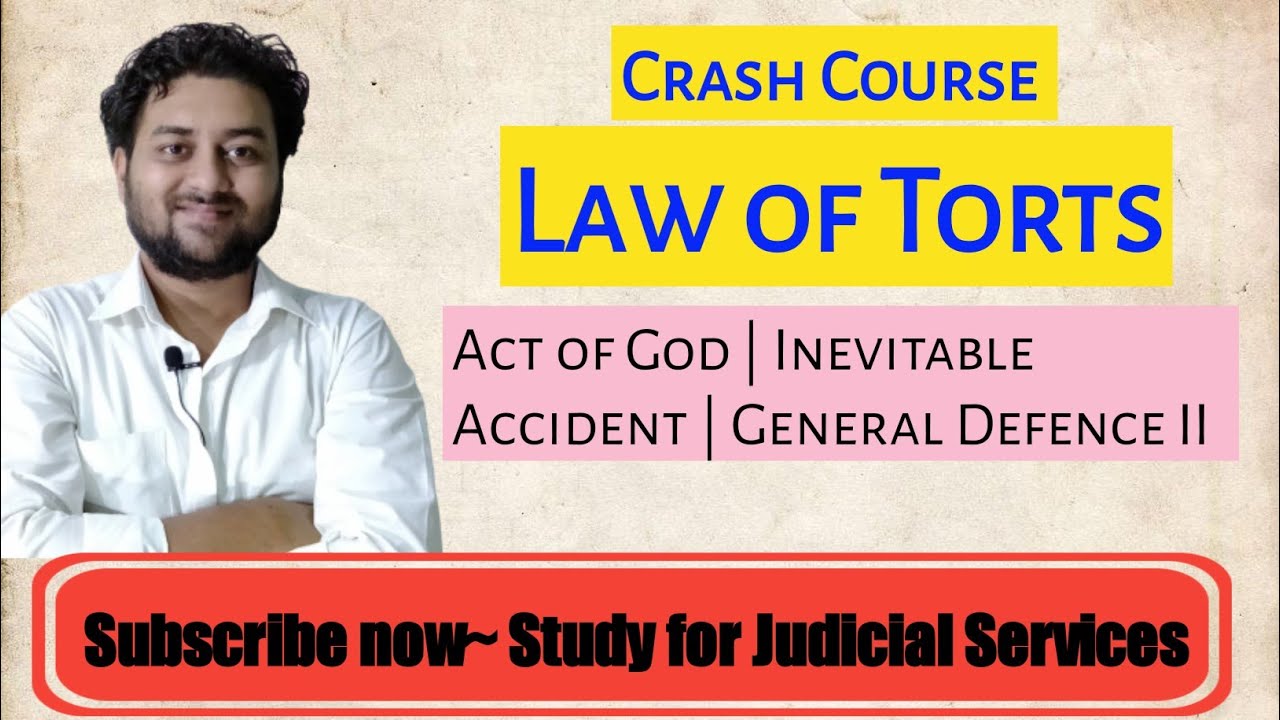
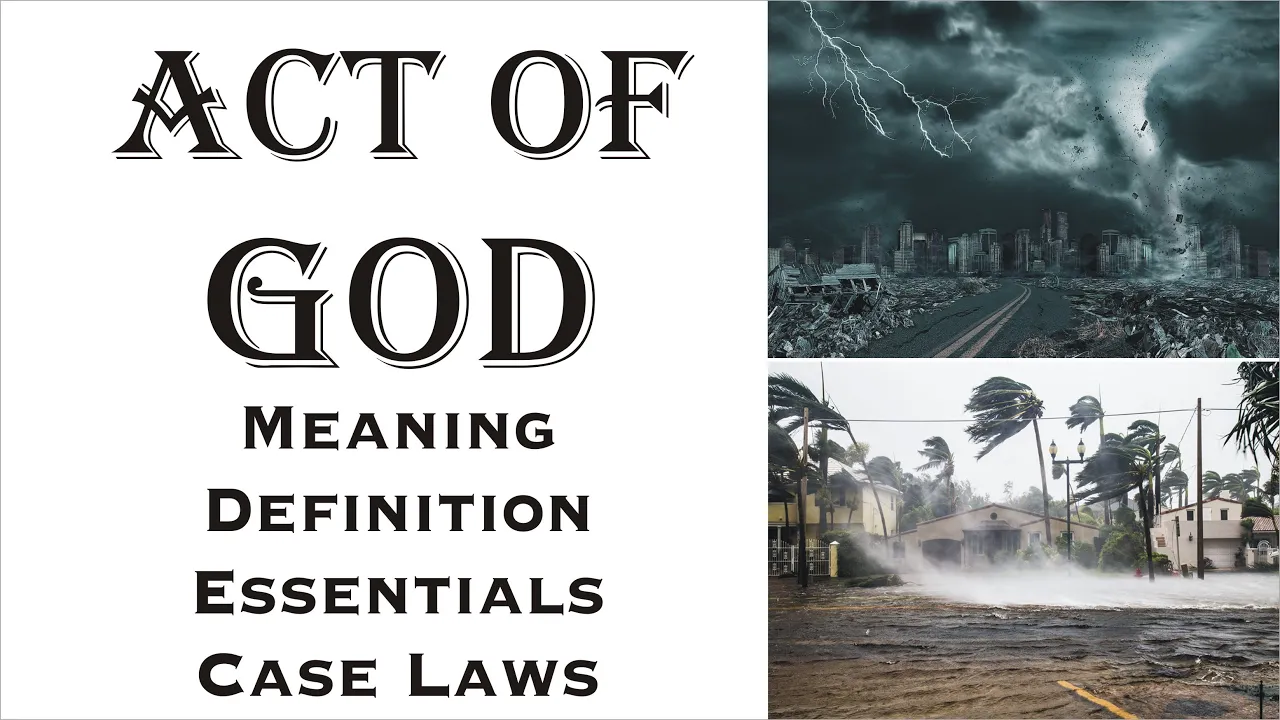
Strict liability, which holds defendants liable for harm caused by inherently dangerous activities regardless of fault, has five key exceptions that can exempt defendants from liability: (1) Plaintiff's own default, where the plaintiff's own negligence causes the injury; (2) Non-natural use of land without escape, where the dangerous substance has not escaped the defendant's property; (3) Act of God, an extraordinary natural event that could not have been anticipated or guarded against; (4) Consent of the plaintiff, where the plaintiff voluntarily consented to the harm; and (5) Act of third party, where a stranger's independent wrongful conduct causes the harm. These defenses allow defendants to be exempted from liability when specific conditions are met, balancing the strict liability principle with fairness considerations.
Strict Liability Exceptions in Law of Torts | Case Laws Explained
Added:hello friends welcome back to my channel my name is pratika gupta and topic for today is exceptions to the rule of strict liability in my previous video we have discussed all the important essentials of this rule and today we are going to discuss exceptions to it exceptions come with the head defenses which can be availed by the defendant party which means that person can be exempted from his liability provided if he avail these defenses so today we are going to discuss five differences in total first defense is plaintiff's own default this term as itself indicates the plaintiff when he himself is liable for some injury which is sustained by this person the plaintiff injury but that injury is sustained by him only because of his own negligence then that person lost his action obviously he will definitely lose his action against the defendant which means defendant will substance it if it is definitely a non-natural use of land but that thing has not escaped these are the essentials i'm discussing essentials already or his property it has intruded it has trespassed into the premises of the defendant so the best plaintiff plaintiff in person or his property may be some beast maybe some animal belonging to the plaintiff the intrusion [Laughter] beast sustains injury so yeah they are negligent they will be held liable for taught of trespass to land but this person will be exempted from his liability obviously a plaintiff on the part [Laughter] which is a non-natural use of his land but the same has not escaped it is only because of the intrusion on the part of this plaintiff either plaintiff or his property his animal intrusion kara [Laughter] which is on the part of defendant but negligence was there on the part of this plaintiff himself escaped this person plaintiff assistant injury plaintiff cannot avail the defendant can avail the defense and he cannot he loses his cause of action against the defendant will discuss the case law though this example has already been discussed in my previous video which is haunting versus knox 1849 again plaintiff that animal has intruded into the property or the premises of the defendant or defendant kill and pick poisonous trees without defending though it is a non-natural use of land extra hazardous substance dependent but the same has not escaped since whoever has escaped the defendant cannot be held in libel essentials of strict liability but on the other hand plaintiff also loses his cause of action plaintiff horse intruded into his property horse nibbled the leaves of that poisonous tree and as a result horse died the happy defendant will be exempted from his liability and plaintiff loses [Laughter] [Laughter] what is reasonable for an ordinary and uber plaintiff he was residing plaintiff had a business of brown paper he had warehoused brown papers on his land defendant business the while defendant one day was you know going through the ordinary course of his business plenty of brown papers those brown papers that dried and as a result of it their value diminished these people will not be given injunction orders your ordinary course of business what i'm trying to explain is what is reasonable for an ordinary prudent man cannot become unreasonable and actionable just because some damage is sustained by the plaintiff however substantial it's the mercy grave but that damage is sustained by that person only and only because of his over sensitiveness either in person a person a man cannot increase the liability of his neighbors what my neighbor's killability could increase by putting his property to some special use it may be for business history for example it may be for business or it may be for his own pleasure and he will [Laughter] extraordinary occurrence of a circumstance asakus which is not anticipatory which was not forcible and the same could not have been guarded against or is make important point human intervention it is only by way of working of natural forces so i'll give you an example case for discuss you will be able to understand what is meant by this defensive act of god which is also known as whis major hamarake nicholas versus martial in 1876.
there was he collected a lot of water both attack earlier one day what happened is the extraordinarily heavy rainfall rainfall and as a result of it was a water have from that artificial lake it obviously my property has been injured so i want to claim compensation since this defendant has availed the defense of fact of god so we have to look into the matrix and yes my it is an extraordinary occurrence of a circumstance courtney kahaki this was the heaviest rainfall in the entire history of mankind barishona is something which is anticipatory and every person must guard against subcopa and everyone has to take preventive measures they gave away it was an actual extraordinary it was heaviest in the history of mankind or isis you recognize kia so are you getting it is an extraordinary occurrence of a circumstance obviously it was not anticipatory he could not have guarded against the foreseeable and it was only by the working of natural forces natural forces and there was no human intervention essentially essentially the defendant was able to plead the defense of act of god and he was exempted from his liability so he essentially liability otherwise he would have been held liable for strict liability similar head to the rylands versus pleasure 1868.
opening [Laughter] side so you are able to make a differentiation so this is important of course death by electrocution all the cases of death by electrocution appointment it means here we are talking about negligence on the part of state electricity boards so for example there are two people the state electricity board was held liable i'll give i'm giving just giving you an example to make you understand and the people you know ran over it and they died they got electrocuted electricity liability you don't get electrocuted so you have to take preventive measures after automatic cut of devices which is electricity automatically cut off so those you know devices have to be installed moreover regular inspections have to be taken place it is anticipatory here it could possibly be guarded against you by taking all the preventive measures regular inspections it is inherently dangerous inherently dangerous you are dealing with an activity with an occupation with a business which is inherently dangerous and it has risky exposure and their failure to do that will make them liable so our next defense is the consent of the plaintiff this term as itself indicates consent of the plaintiff matlab the plaintiff consents to infliction of harm upon himself this defense is also known as voluntary non-fit injury when plaintiff himself has consented to infliction of some harm upon himself that is termed as plaintiff the wrongdoing that is termed as consent of the plaintiff so ismail give you an example ability to strike liability [Laughter] has himself then he has lost his cause of action and it is a defense which can be pleaded by the defendant and he can be exempted from his liability our next defense is the statutory authority statutory authority i've already explained numerous times statutory authority means statute which means law authority and i always say as long as a person is enjoying the backing of some law as long as the person is enjoying the backing of substitute that person is immune is immune from any liability on his part you can plead the defense of statutory authority provided there should be no negligence on your part negligence everything again should be going you can easily avail this defense next important is last defense is the act of third party a point to be noted before i begin a point to be noted is that independent contractor is never a third party in this difference independent contractor is a third party it is an exception previous video may explain here do go watch that video please it is because of the act of some third person some stranger the wahhabi defendant can avail this defense which means when some harm to some other person has been caused not because of any negligence on the part of this defendant but because of the negligence or cautious act on the part of some third person third person of [Laughter] he should be somebody who is not the defendant's servant neither he's a servant nor any person within his control exception is the independent contractor no exception because of the act of a wrongful conduct on the part of some third person some stranger to the plaintiff who injured here the defendant can avail this defense we'll discuss records versus lothian 1913 [Laughter] [Laughter] so as to make him liable under the rule of strict liability but again defendant has availed this defense of fact of third party third party strength [Laughter] yes it is an act of some stranger act of some third person and defendant is exempted from his liability so are you getting it defenses come get there so we have discussed five of these defenses [Laughter] and this fifth defense is a defense which is particular special to the rule of strict liability now to end with hamara passati what is the current scenario in india what is the position in india okay india mystic liability applicable hey yes my friends it is applicable in india because [Laughter] foreign and hazardous inherently dangerous risky exposure of human life they are also held reliable it means strict liability absolute liability principles scope increases examples liability a person is granted 50 000 rupees is compensation and in case of permanent disablement that person is given twenty five thousand permanent compensation uh permanent disablement insurance company they have to make the you know the victim that compensation victim was point and the point to be noted is that okay while giving this so thank you so much guys i hope our essentials or exceptions summer jaguar strict liability and we discussed earlier thank you so much guys take care keep learning and bye
Up Next

MEE Black Letter Law Review | February 2026 Bar Exam Tips
@ibisprep
289 views•2026-02-17

US Secondary Sanctions Impact on EU Businesses and Blocking Legislation
@Bureauvandijk
1.6K views•2019-03-20
Forensic Phonetics: Speaker Identification in Legal Cases
@nptel-nociitm9240
539 views•2025-03-19

Police Interrogation Tactics: False Confessions & Legal Reform
@LastWeekTonight
7M views•2022-04-18
Related Study Plans & Knowledge Roadmaps
Structured learning paths in Law