
























Social media platforms use algorithms that prioritize user engagement over truth, creating filter bubbles that show users content aligned with their existing beliefs and preferences, which can lead to increased exposure to extreme or misleading information; however, users can protect themselves by following diverse viewpoints, practicing lateral reading to verify sources, and being skeptical of information that confirms their pre-existing worldview.
How Social Media Algorithms Shape Your Reality: Evidence-Based Analysis
Added:Understanding of the 'Attention Economy' business model, where user engagement, clicks, and time-on-site are monetized through targeted advertising.
Basic cognitive psychology concepts, particularly confirmation bias (the tendency to search for and favor information that confirms prior beliefs) and cognitive dissonance.
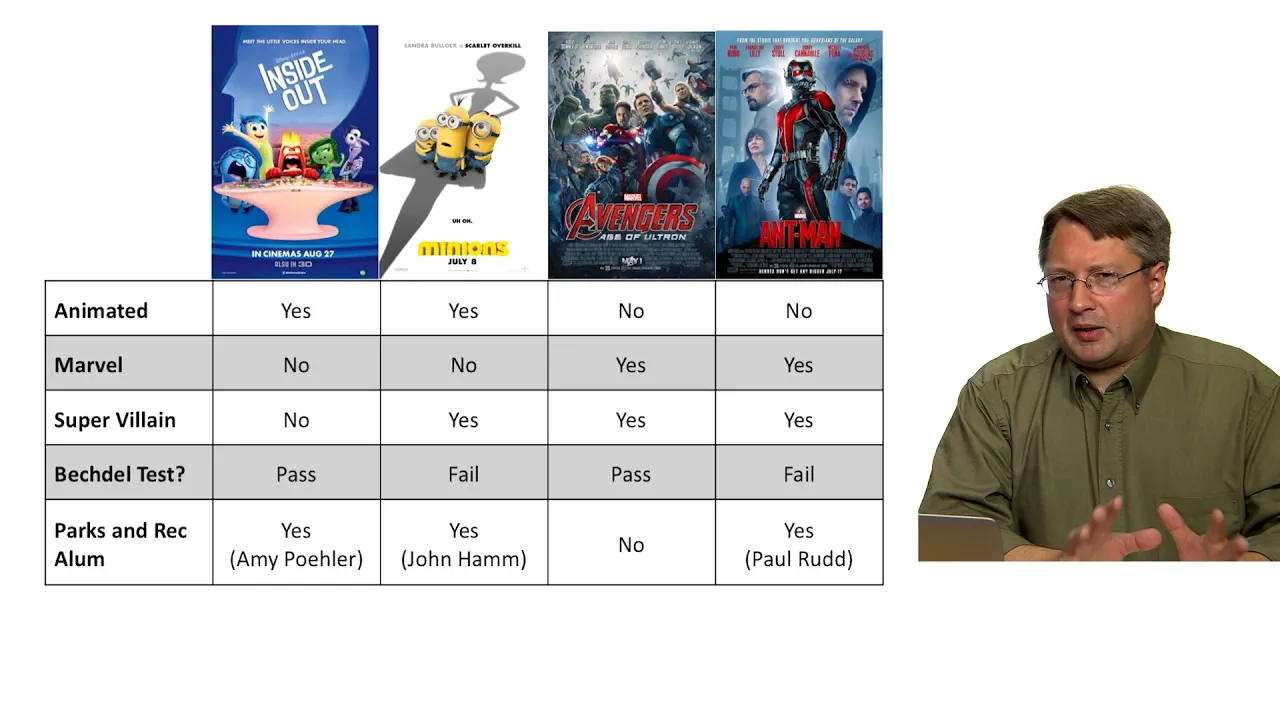
Fundamental knowledge of recommendation systems, specifically how collaborative filtering and content-based filtering algorithms predict user preferences.
Awareness of digital footprint components, such as how user interactions (likes, shares, watch time) are tracked and converted into behavioral data profiles.
Investigation of algorithmic auditing methodologies, focusing on how researchers reverse-engineer proprietary algorithms to detect bias and systemic manipulation.
Analysis of digital policy and regulatory frameworks, such as the EU's Digital Services Act (DSA) and Section 230 of the Communications Decency Act in the US.
Study of humane technology design principles, exploring alternative platform architectures (e.g., decentralized social networks) that prioritize user well-being over engagement metrics.
Application of cognitive immunology and 'prebunking' strategies (psychological inoculation) to build individual resilience against online misinformation and polarization.
338.7K views6.4Klikes16:51Original Release: 2019-03-12
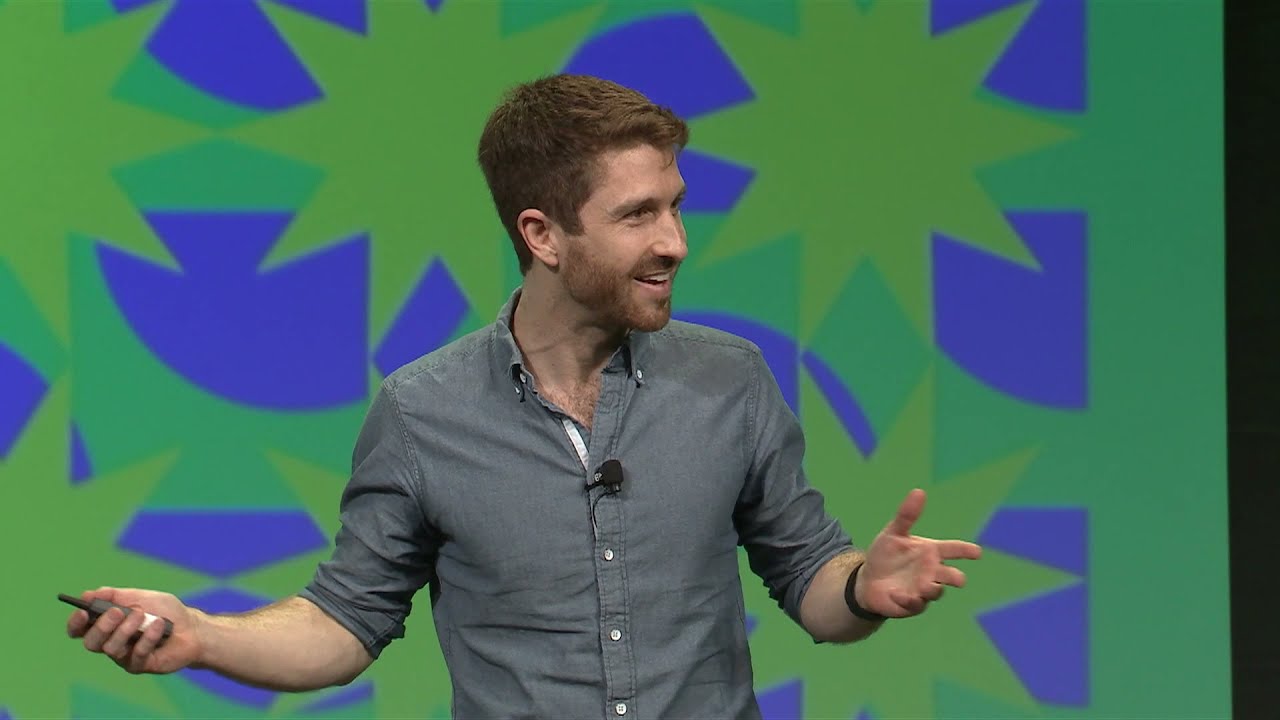
Hi, I’m John Green, and this is Crash Course: Navigating Digital Information.
So we’re going to talk about your social media feed today, but first: At the beginning of this series, I told you one of the two jokes I know, and now that we’ve reached the last episode, I’d like to tell you the other one.
So a moth walks into a podiatrist’s office, and the podiatrist says, “What seems to be the problem, moth?” And the moth answers, “Awww, doc.
If only there were only one problem.
I can’t hold down a job because I’m not good at anything.
My wife can hardly stand to look at me; we don’t even love each other anymore, worse than that, I can’t even remember if we ever loved each other.
When I look into the eyes of my children, All I see is the same emptiness and despair that I feel in my own heart, doc.” And then the podiatrist says, “Whoa, moth.
Okay.
Those are very serious problems, but it seems like you need to see a psychologist.
I’m a podiatrist.
What brought you here today?” And the moth says, “Oh.
The light was on.” We humans like to think of ourselves as extremely sophisticated animals.
Like moths may fly toward the light, but humans are endowed with free will.
We make choices.
Except a lot of the time, we just go where the light is on.
We do whatever feels like the natural thing.
We get on facebook because other people are on facebook.
We scroll through posts because the architecture of the site tells us to scroll.
We become passive.
In the past decade especially, social media has fundamentally changed us.
Like take your vocabulary, for example.
Silicon Valley rivals Shakespeare in its prolific additions to the English language.
Friend, Google, and ‘gram are all verbs now.
Snap and handle have new definitions.
Sliding into someone’s DMs is a thing.
But it’s not just how we speak -- these apps have not-so-subtly become embedded in our daily lives very quickly.
Sometimes we don’t even realize how much they impact us.
They’ve changed our perceptions and expectations of privacy and they’ve also helped to shape our offline experience.
In 2016 for instance, Russian agents organized political rallies all over the U.S. by creating fake Facebook pages for made-up grassroots communities that then had real offline rallies.
Just by posing as organizers against Donald Trump or against Hillary Clinton, they actually got real people to show up in Florida, New York, North Carolina, Washington, and Texas.
And those rally-goers didn’t know that it was a ruse.
I find that scary.
So today, for our big finale, we’re talking about the great white whale of navigating online information: your social media feed.
INTRO So quick note here at the start.
I’m not currently using a bunch of social media platforms.
Which may mean that I’m no longer an expert in them, but it’s only been six weeks and I don’t think anything has changed that much.
Also, it turns out that whether or not you participate in Twitter is irrelevant to whether Twitter effects you life because what’s shared online has offline consequences.
Like online shouting matches about politics can influence how we vote and also how we talk to our extended family at the Thanksgiving dinner table.
Unless you don’t live in the US or Canada in which case I guess you don’t have Thanksgiving and presumably you never fight with your aunts and uncles about politics.
The way we interact in social media is shaping all of our offline behaviors, from how we engage with IRL communities to how we consume goods and services.
That’s why there are so many people you don’t know, and companies and organizations using social media to try to influence your thoughts and actions.
Sometimes those who want to influence you use false identities like those with the Russian rallies.
Sometimes, and more overtly, they buy your attention with advertising.
Some just create really engaging videos about a kitten saved during a hurricane to steal your attention.
Some of these actors have relatively benign goals and act fairly, like a company sending ads into your feed for a Harry Potter mug that it turns out you actually want because you are a Hufflepuff and you are proud!
But others have terrible motives and spread disinformation, like hoax news sites which are all run by Slytherins.
Still others aren’t quite in either camp.
They might unwittingly spread inaccurate information, or misinformation.
Like your aunt who always posts about Onion articles like they’re actual news.
Or me, on the several occasions when I have failed to pause and laterally read before retweeting news that turned out to be false.
The big problem with all of that is that 68% of U.S. adults get news through some form of social media and nearly half of U.S. adults get news through Facebook.
And across the globe, people between 18 and 29 years old are more likely to get their news from social media than older adults.
When we’re this reliant on a media ecosystem full of pollution, we have to take responsibility for what we read, post and share and to do that we should fully understand how social media networks really function including the good stuff, and also the terrible stuff.
First, the good side.
For one thing, platforms like Facebook, Twitter and Instagram allow us to share information and thoughts without the help of traditional gatekeepers.
Prior to social media it was really difficult to have your voice heard in a large public forum.
And because all the posts in our feeds look more or less equal social media has allowed people to have voices in public discourse who previously would have been silenced by power structures.
That’s great!
All tweets were created equal and everybody’s faces look weird with that one square-jawed snapchat filter and we’re all in this together!
Also, social media is great for making friends and finding communities.
We can organize ourselves into these little affinity groups around special interests or organization, which makes communication much easier than it was before.
Like for example, what if a group of people who want to get together and figure out how decrease overall the worldwide level of suck.
Or, when I need to know what is eating my tomatoes, I can go to a gardening facebook group.
That example by the way is for old people alienated by my previous mention of snapchat filters.
That said there are plenty of problems with social media from cyberbullying to catfishing to scams to massive disinformation campaigns to people live tweeting shows you wanted to watch later.
And if you’re going to live partly inside these feeds I think it’s really important to understand both the kinds of information that are likely to be shared with you and the kinds of information you’re incentivised to share.
Let’s start with targeted advertising.
So you’re probably seeing an ad in this corner.. possibly this one.
I don’t have a great sense of direction when I’m inside the feed.
Or maybe you watched an ad before this video played.
Regardless, you may have noticed that something you searched for recently has been advertised to you.
Like for instance I’m trying to improve my collection of vintage cameras for the background and suddenly all I see are advertisements for vintage cameras.
Social media companies make money by selling advertisements.
That’s why you get to use those platforms for free.
But these ads are very different from billboards or ads in a local newspaper, because these ads were crafted just for you, or people like you, based on what social media companies know about you.
And they know a lot.
They can learn your interests and habits based on how you use their app, but they also track you elsewhere -- via other apps associated with that company, or by using geolocation features to figure out where you physically are.
Social media companies take all that information and present it to advertisers in one form or another so that those advertisers can target their ads based on your interests and browsing history and location and age and gender and much more.
Can you protect your privacy and your feeds from targeted advertising?
Kind of.
Sometimes.
You can check your favorite apps and disable data and location tracking where you can -- these features may fall under Ad Preferences or Security or Privacy settings.
Another potential downside to social media: how algorithms organize our feeds.
So algorithms are sets of rules or operations a computer follows to complete a task.
To put it very simply: social media sites use what they know about your habits, they combine that with their knowledge of other people and the things you’ve self-selected to follow, and funnel all that information through an algorithm.
And then the algorithm decides what to show you in your newsfeed.
Generally speaking, a newsfeed algorithm looks for what you’re most likely to engage with, by liking or sharing it.
Social media companies want you to stay engaged with their app or site for as long as possible.
So they show you stuff that you like so you won’t leave so that they can sell more of your attention.
And because the algorithms mostly show us things we are likely to like and agree with we often find ourselves in so-called filter bubbles, surrounded by voices we already know we agree with, and often unable to hear from those we don’t.
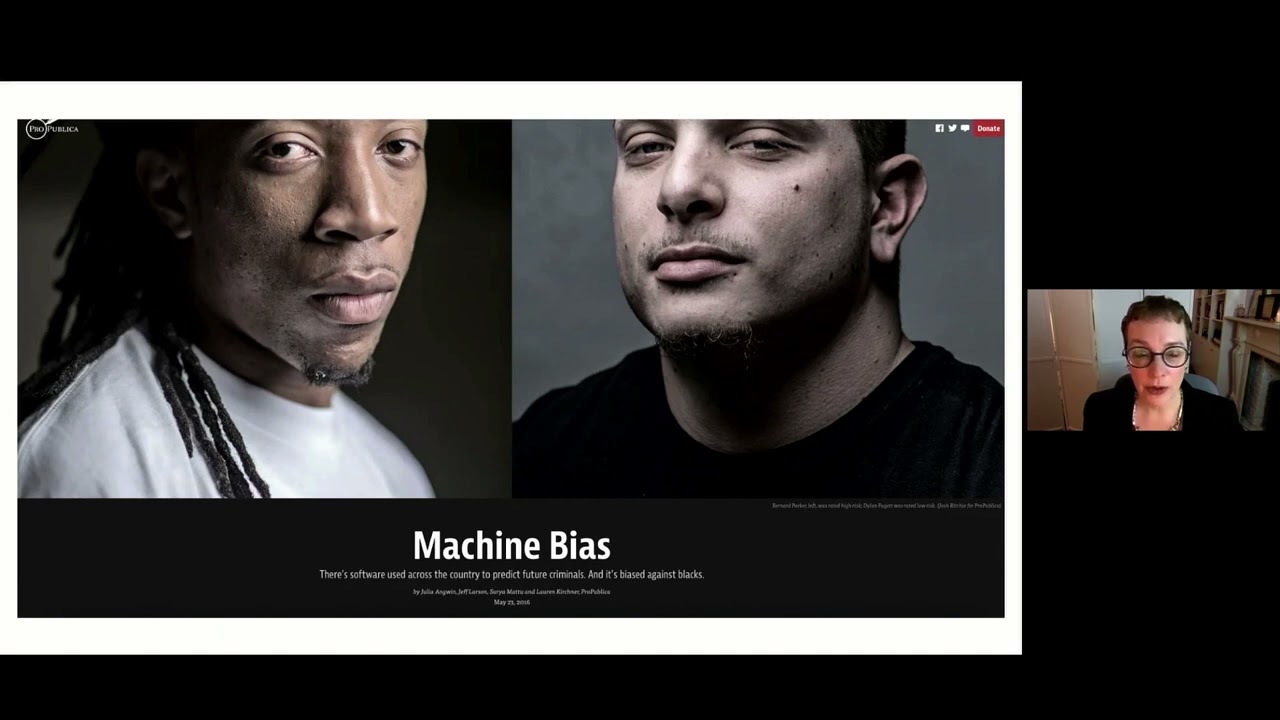
This also means that most newsfeed algorithms are skewed toward engagement rather than truth.
This is so often the case in fact that entire businesses have been successfully run on posting engaging, but false, news stories.
Many newsfeed algorithms favor outrageous and emotional content, so companies looking to make money from clicks and advertisements can use that to their advantage.
Hundreds of websites were built on false viral stories leading up to the 2016 U.S. election, and Buzzfeed later found out many were run by teenagers in Macedonia.
Valuing engagement over quality makes it harder for users to distinguish between truth and fiction.
Like humans tend to interpret information in a way that matches our pre-existing beliefs.
That’s called confirmation bias.
But even if you did somehow manage to be completely emotionally and ideologically neutral on a topic.
Research has shown that if there’s information you know is bogus, encountering it again and again means you might start to believe it.
Warding off the negative effects of algorithmic newsfeeds and filter bubbles is really hard.
But I do think you can limit these effects by A) following people and pages that have different viewpoints and perspectives than you do, to add some variety to your feed.
And B) looking for ways to turn off the “best” or “top” posts features in your favorite social apps so that they display information to you in a more neutral way.
All of these negative features of social media combine to create the feature that I personally worry about the most: extreme recommendation engines.
Social media algorithms show you more of what you’ve already indicated you like.
The way we use those apps tends to keep us surrounded by information we’re primed to believe and agree with.
And because engagement is the most important thing, and we tend to engage with what most outrages, angers, and shocks us.
The longer we hang out on some social media apps and engage with outrageous content the more likely those apps are to push outrageous content to us.
Researchers have found that YouTube’s recommendation algorithms, for instance, consistently showed users more and more extreme, far-right channels once they began watching political videos.
They called it a radical rabbit hole.
YouTube was lumping together outlets like Fox News and the channels of Republican politicians with those of known far-right conspiracy theorists and white nationalists.
They also found that far-left channels have smaller followings and were not nearly as visible via those same pathways.
Now beginning in 2017, YouTube started to update its algorithm to prioritize what they call “authoritativeness."
In part to try to stop this from happening.
But as previously noted, no algorithm is perfect or objective.
Ultimately, it’s on us as users not to fall down these rabbit holes, not to go merely where the light is on.
That’s why I think it’s so important to follow accounts with differing viewpoints and to turn off data tracking if you can, and in general to try to unwind the algorithmic web around your social media life.
And while you’re in the feed it’s important to remember to read laterally about sources you don’t recognize.
And also take a break once in a while.
Talk to actual people.
Get some fresh air.
I really think that’s valuable.
But even though I personally had to leave lots of the social Internet I do believe that social media can be an effective way to learn about news and other information--if you’re able to protect yourself.
Let’s try this in the Filter Bubble.
Oh yeah, that looks about right.
Yes, surrounded by everything I love and believe in.
Okay, that’s enough, let’s go to the Thought Bubble.
Okay, so your cousin DMed you a link headlined: Singing Creek Park Sold, Will Be Home to Monster Truck Rally.
Wow.
That is your favorite park, so that is a huge bummer.
Your first instinct, of course, is to repost it with an angry comment like “UGH we need nature WTH this is so unfair.” But wait, no.
Take a deep breath and think.
Your cousin is kind of a big deal -- he’s Blue-check verified and everything.
But blue checkmarks and verified profiles do not denote truth.
They just mean an account itself is who they claim to be.
So you click the link.
It’s from a site called localnews.co, which you’ve never heard of.
And this is where your lateral reading kicks in.
Use a search engine to look up the name of that site.
Its Wikipedia entry reveals it’s a recently founded independent news site for your area, but it’s a very short Wikipedia article - not many reputable sources have written about the site to give us a better idea of its perspective or authority.
So you search for their claim instead: singing creek park sale.
The first result is that sketchy Local News site.
Let’s peruse the entire page.
Ah, there you go -- the seventh result is from a website you do know and trust, your local TV station and they say the park was sold, but it’s actually going to be turned into a nonprofit wildflower preserve.
Which you know what sounds pretty lovely.
You could leave it at that.
But as a good citizen of the internet, you should correct this misinformation.
Tell your cousin what’s up, they won’t at all be defensive, ask them not to share it, and then post the trustworthy article yourself.
With the headline, “Condolences to monster truck enthusiasts.” Mission accomplished.
Thanks, Thought Bubble.
So during this series we’ve talked a lot about using lateral reading to check the source, look for authority and perspective, and then check the claim and its evidence.
With social media, a more flexible approach is probably best.
Like sometimes it makes sense to find out who’s behind the account you’re seeing.
Sometimes you should investigate the source of what they’re sharing.
Other times it’s best to evaluate the claim being made.
As you practice you’ll develop a better idea of how to spend your time online.
No matter where you begin, lateral reading will help you get the information you’re looking for.
When in doubt about anything you encounter online you can challenge your source and your own assumptions and see what others people have to say.
And there’s one last thing I’d add: Be suspicious of information that confirms your pre-existing worldview, especially stuff that confirms that people you believe to be evil or stupid are evil or stupid.
Read laterally not only when it comes to stuff you don’t want to be true, but also when it comes to stuff you do want to be true.
I know our current information environment can be frustrating.
Believe me, I am frustrated by it.
It is really difficult to know where to look for truth and accuracy, and I wish I could tell you there is one right way, one source you can always rely upon, but the truth is, anyone who tells you that is selling you an ideology or a product or both.
But by making a habit of following up and following through, we can be expert navigators of digital information, and maybe even go to places where the lights are not on.
Thanks so much for joining us for Crash Course: Navigating Digital Information.
And thanks to the Poynter Institute and the Stanford History Education Group for making this series possible.
MediaWise is supported by Google.
If you’re interested in learning more about MediaWise and fact-checking, a good place to start is @mediawise on Instagram.
Thanks again for watching.
Good luck out there in the wild west.
And as they say in my hometown, “don’t forget to be awesome."
Up Next
83:43
Thinking in Bets: Decision-Making Strategies with Annie Duke
@talksatgoogle
189.5K views•2018-06-21

12:54
Triumph of Orthodoxy Icon: Byzantine Art & History Explained
@BenCallan
2.1K views•2024-08-06

12:44
Healthcare Systems Explained: Models & Building Blocks
@crashcourse
130K views•2022-09-15

1:42
Game of Thrones Opening Credits: A Cinematic Analysis
@gameofthrones
46.3M views•2011-04-18
Related Study Plans & Knowledge Roadmaps
Structured learning paths in General & Interdisciplinary Studies
general-studies
Elevator Engineering: History, Physics & Cities
01From Hoists to Safety Brakes: The Dawn of Vertical Lift
02Hydraulic vs. Traction: The Engineering Physics of Elevators
03Modern Speed, Safety, and Algorithms
+ 2 more learning modules
12h5 modules
Explore Roadmap
general-studies
Rubber: Material Science, History & Geopolitics
01Origins of Natural Rubber & Mesoamerican History
02The Chemistry of Natural Rubber & Vulcanization
03The Geopolitics of the Rubber Boom & Colonization
+ 2 more learning modules
12h5 modules
Explore Roadmap
general-studies
Containerization: Evolution, Logistics & Trade
01Ancient Trade & Bulk Cargo: Amphorae to Barrels
02The Industrial Revolution & Cardboard Packaging
03The Containerization Revolution: Malcom McLean
+ 2 more learning modules
12h5 modules
Explore Roadmap
general-studies
Textile Tech: Evolution, Labor & Global Impact
01Pre-Industrial Textiles: Handloom & Cottage Industry
02Mechanization: The Spinning Jenny to the Power Loom
03The Factory System & Global Labor Transformation
+ 2 more learning modules
10h5 modules
Explore Roadmap