
![[FULL] Tóm tắt: Lịch sử thế giới cổ đại | Ai Cập - Lưỡng Hà - Hy Lạp - La Mã - Trung Quốc - Ấn Độ](https://i.ytimg.com/vi/tmti0f3sU4M/maxresdefault.jpg)






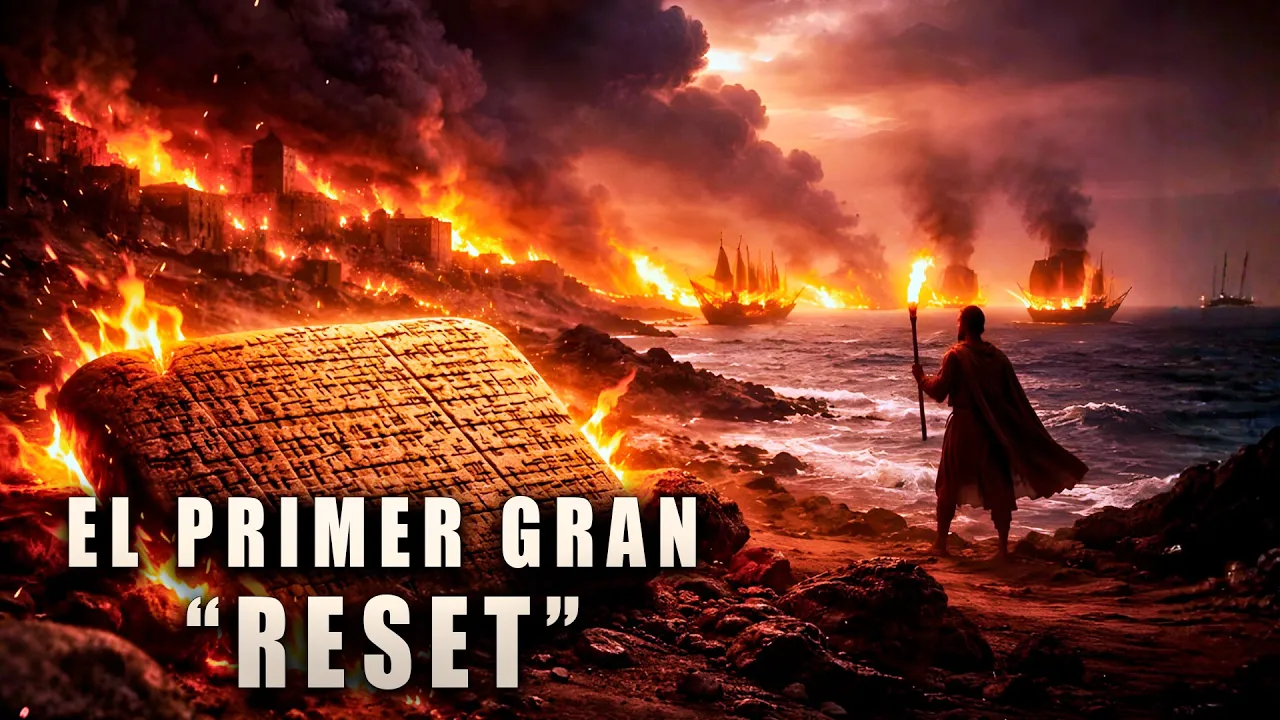










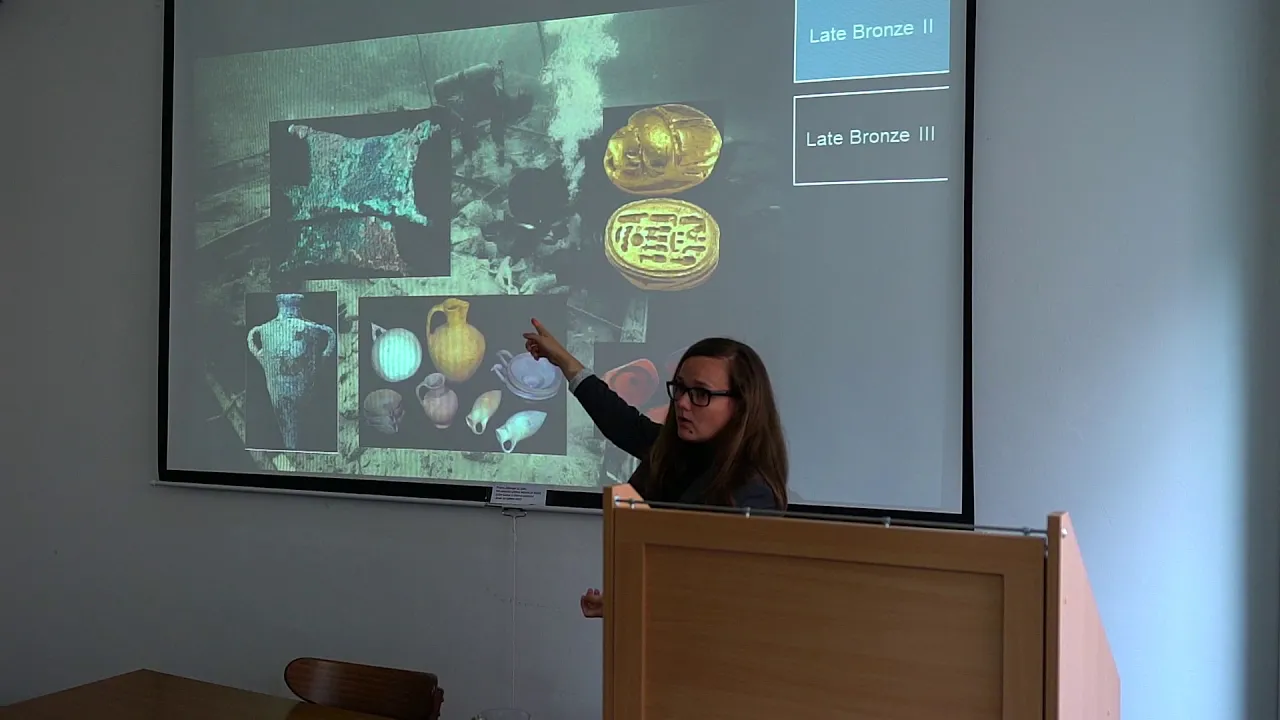




Environmental factors, particularly prolonged droughts caused by climatic phenomena like El Niño, can trigger cascading failures in complex societies by disrupting agricultural production, weakening central authority, and enabling internal rebellions or invasions that lead to the collapse of even sophisticated civilizations like the Akkadian Empire (around 2200 BCE) and the Maya civilization (around 900 CE).
The Collapse of Maya, Akkadian, and Late Bronze Age Civilizations
Added:Basic geography and timelines of the ancient world, specifically the locations of the Akkadian Empire (Mesopotamia), the Maya Civilization (Mesoamerica), and the Late Bronze Age kingdoms of the Aegean and Near East.
The defining characteristics of complex societies, including centralized political authority, social stratification, urban centers, and reliance on agriculture.
An understanding of interregional trade networks in antiquity, particularly how Bronze Age states relied on trade for essential resources like copper and tin.
The concept of environmental determinism versus societal vulnerability, recognizing how natural disasters and climate shifts impact human infrastructure.
Joseph Tainter's theory of 'systems collapse' and the economic and social costs of maintaining complexity in societies.
Paleoclimatology and archaeological methods, such as studying ice cores, sediment layers, and tree rings (dendrochronology) to reconstruct ancient climates.
The aftermath and reconstruction phase, analyzing how regions transitioned into new cultural eras (e.g., the transition from the Bronze Age to the Iron Age, or the Postclassic Maya period).
Comparative analysis of historical societal collapses with modern climate vulnerability and globalization to assess current systemic risks.
370.3K views3.4Klikes2:27:35Original Release: 2024-11-10
NARRATOR: The apocalypse.
When an entire people are destroyed.....or destroy themselves.
The end of civilisation.
For us today, as we go about our daily lives, it's barely something we consider.
We're so sure it couldn't happen to us.
But for some civilisations.....it already has.
Empire, as a form of government it has shaped our lives for millennia.
The Roman Empire.
The Mongol empire.
The British Empire.
All have dominated lands and people.....but none were the first.
In the 24th century BCE, Mesopotamia was made up of many different city states.
Each with their own king and patron god.
It was largely inhabited by two distinct ethnic groups, the Sumerians in the south and the Semitic Akkadian people in the north.
In 2334 BCE the Akkadians concur the Sumerian lands uniting the city state kingdoms here to create an entirely new form of political organisation.
Empire.
This is the first time that you had a multi cultural, multilingual group of city states all unified together under one banner.
This represents a tectonic shift in government, this is a new state of political organisation that we've never seen before.
The Akkadian Empire was the world's first empire and ruled from the Persian Gulf in the east to the Mediterranean Sea in the west.
All the way north into modern day Turkey.
We see this empire coming seemingly from nowhere and suddenly the Akkadian language rises up to then become the language across this entire region.
Under the Akkadians, life in Mesopotamia flourished.
They used their power and geographical reach to create a period of great prosperity inside the empire.
Their trade routes spanned vast distances, outside of the empire, so they were actually trading with people in India, with people in the Mediterranean who had beautiful artistry pouring into the empire.
Pearls, ivory, both elephant and hippopotamus, even live animals like monkeys.
Everything you could possibly imagine was all coming in, making the empire wealthier and more opulent.
But after only 140 years, by 2193 BCE the Akkadian empire fractured.
Entire regions were abandoned as the empire descended into chaos.
The Akkadian empire's very existence was forgotten through the passage of time.
What could cause the world's first empire to be erased from history?
The Akkadian empire wouldn't resurface until a British archaeologist made an unrelated discovery.
On the east bank of the Tigress River, Sir Austin Henry Layard uncovers something incredible.
The king's palace of the biblical city of Nineveh.
The capital of the Assyrian empire, the people who rose to power over 1,000 years after the disappearance of the Akkadians.
Layard excavates for years but it's in the last days of the dig that he makes his greatest discovery.
Layard's workers had uncovered a chamber containing 30,000 pieces of clay tablets.
All marked with Cuneiform script, the ancient writing system of the Assyrians.
What Layard had stumbled across were the remains of the greatest library ever known in the ancient world.
The library of Ashurbanipal, the king of the Assyrians.
What secrets might these tablets hold?
For the 19th century archaeologists, these Cuneiform formed texts could hold an untold wealth of information about the history of ancient Mesopotamia.
The problem is, no one can read them, they're written in an indecipherable form of Cuneiform script.
To have any hope of unlocking the secrets of the ancient middle east, they need to crack the Cuneiform code.
For the past 15 years, British archaeologist Sir Henry Rawlinson has been working on translating Cuneiform.
Cuneiform isn't actually a language it's a writing system.
A bit like in modern times the Latin alphabet can be used to write English, French, Spanish and German.
Cuneiform systems could be used to write all manner of ancient languages.
Rawlinson was obsessed with understanding how the ancient Cuneiform system of writing worked.
Henry Rawlinson was a British Army officer and he was sent on a posting to an area in what is now modern day Iran.
And he saw this huge mountain, Mount Behistun, which was along the ancient Silk Road and he saw about halfway up the cliff there was an ancient inscription.
He can tell that it's written in Cuneiform script and he also realises that the script isn't all one language.
It appears to be three different languages all written in cuneiform.
He identifies one of them, old Persian, but what on earth are the other two?
Rawlinson had already translated the old Persian cuneiform inscription.
But the other languages still remained a mystery.
When he was shown Layard's discovery he immediately saw that the cuneiform script on these tablets.....was the same as one of the unknown languages, written in Cuneiform, found on the Behistun carving.
If they could work out what this mystery language in the Behistun inscription said, they could use that as a Launchpad to start decoding what the clay tablets from the library said.
Understanding this language could be key to unlocking the secrets of ancient Mesopotamia.
He returned to the Behistun inscription.
It was assumed that the three languages all inscribed using the cuneiform writing system said the same thing.
Was the answer hidden here?
Rawlinson already understood the old Persian inscription and if he could use that, by decoding the repetitive symbols and working out what some of the words might mean, he might be able to decode the other two mystery languages.
If Rawlinson could find similarities between old Persian cuneiform and the unknown cuneiform language, he could build an alphabet for deciphering the library of Nineveh.
Old Persian uses about 43 different symbols and he realised that each of them corresponded to a letter or a number.
However, the other two languages appear to have many, many more symbols.
But this gives Rawlinson a clue.
There are too many cuneiform symbols for each one to represent an individual letter.
Instead, the language must be syllabic.
Where each symbol represents a syllable.
Rawlinson began trial and error, trying to relate symbols in the unknown cuneiform language with the symbols that he did understand in the old Persian.
And you go, "Well, if this means king or god in old Persian, "maybe that's what this means in the mystery language, does that work?"
And you try it out.
It takes almost ten years but Rawlinson cracks the code.
He can finally read the tablets from the library of Nineveh.
And what riches it held.
There were texts on medicine, there were texts on astrology and there was a huge section on history.
It was extraordinary, the scribes had not just written a history of their own people, the Assyrians, they'd written about the people who'd come before them.
There was an empire that we never knew had existed, that had been declared the greatest of all time.
Here Rawlinson found references to the world's first empire, an empire that ruled over all of Mesopotamia.
Rawlinson christens them the Akkadians.
The archaeologists were dumbfounded, who were these people?
How come we'd never heard of them?
How could a whole civilisation be destroyed in such a way that they would be entirely lost to the sands of time?
When did the Akkadians exist?
When were they wiped out?
And what caused their destruction?
Rawlinson spends years translating cuneiform tablet, after cuneiform tablet, looking for any clues.
But in 1867, nearly ten years after Rawlinson first deciphered Akkadian cuneiform, he came across a tablet.
It was the legend of Sargon of Akkad, the first king of the Akkadian empire.
Rawlinson had uncovered the first part of the Akkadian's history.
In 2334 BCE Sargon came to power as the king of Kish.
A city state in the Akkadian region of Mesopotamia.
From the very beginning, Akkadian history is steeped in violence and conflict.
Sargon fought war after war expanding his kingdom across Mesopotamia, conquering and subjugating Sumerian and Akkadian city states alike to form the Akkadian empire, the world's first empire.
To fund the administration of this new empire, Sargon demanded each city state pay their share in taxes.
Taxes are the price you pay for a civilised society.
So, what Sargon did was he required every individual to produce X amount of grain and bring it to an administrative centre.
These administrative centres were basically grain storage facilities.
And Sargon needed a lot of grain, particularly to fund an innovation of his.
The world's first standing army.
Full time, well equipped, professional soldiers, always ready to fight.
In the past, if they needed to go to war, if they needed to fight, they would bring in a conscripted army.
You've got soldiers who might be farmers, they might be herders, they are not professional fighters, they're not necessarily all that good at it.
But by the time you move over to this full time army, you've got people who know how to kill.
But it's under the rule of the Akkadian king, Naram-Sin, in 2254 BCE that the empire reached its true height.
Naram-Sin poured huge amounts of wealth into Akkadian construction projects.
Glorifying their temples and cities.
If you'd gone to one of these cities, your mind would've been blown, gold statues, you'd have seen copper statues, all shining brightly.
Through conquest Naram-Sin controlled lands from the Persian Gulf in the east, bordering the Elamite Kingdom in modern day Iran, to the Mediterranean sea in the west and northwards into modern day Turkey.
Lands that border the territory of nomadic mountain tribes known as the Gutians.
Naram-Sin crowned himself the king of the four quarters.
He ruled all the land known to the Akkadians, but even this wasn't enough.
Naram-Sin makes himself a god.
I mean, talk about the ego of the man.
There are engravings of him where he's wearing this horned helmet that only the gods wear and he's about twice the size of his soldiers.
He's so important he is a living god.
The Akkadian empire achieved something truly astonishing... so why had archaeologists never heard about them until now?
What could have caused the world's first empire to disappear?
There must be some clue behind why the Akkadian's were erased from history.
As they dig deeper into the cuneiform tablets, they uncover a disturbing legend.
The curse of Akkad.
The story goes that Naram-Sin attacks the city of Nippur and he destroys their temple, he commits this act of great sacrilege and as a result of that action he becomes cursed.
The gods were so appalled by Naram-Sin's actions that they prayed for his empire's destruction.
A snippet from the curse of Akkad reads, "May the grass grow long in your canal banked tow paths.
"Built up with canal sediment.
"In your planes, where fine grass grows, "may the reed of lamentation grow.
Akkad, my brackish water flow "where fresh water once flowed for you."
Because of Naram-Sin's hubris, the gods destroyed the Akkadian empire.
Did the empire experience a large scale collapse?
Archaeologists need to know when the Akkadian empire actually existed and when they were killed off.
Archaeologist and philanthropist Herbert Weld Blundell donates his collection of Middle Eastern artefacts and antiquities to Oxford University's Ashmolean Museum.
For the curators, one of the items is of particular interest.
A small prism covered in cuneiform inscriptions.
It's a copy of the Sumerian king list.
The Sumerian king list was written around 1800 BC, in the Sumerian language.
It lists the kings and the cities they ruled over.
It also tells us the length of each king's reign.
The Akkadian's, they're mentioned on the king list.
If you can work out when one king ruled, you can work out when all the other kings ruled too.
So, if using the Sumerian king list we can get a date, then we can date the Akkadians, we will know for the first time in modern history when the Akkadians existed.
But without a point of reference, a year to match it to, this information was useless.
They look again to the library of Nineveh.
Here were the ancient recordings of solar eclipses.
Scholars realised that if they could find a solar eclipse recorded by astronomers using a calendar that we already understood, they could use that to sync up the calendars used in the Sumerian king list.
And they found one.
A eclipse recorded by the ancient Greeks on the 15 June 763 BCE.
The rise of the Akkadian empire could finally be dated.
We know that Sargon the Great began ruling in 2334 BC.
But after the year 2193 the Sumerian king lists start to record what appears to be a chaotic breakdown of the Akkadian empire.
They have this phrase that repeats, "Who was king, who was not king?"
Kings reigned for merely a year or two years at most.
It suggests that there was unrest, that there was chaos, that there was confusion and perhaps an empire that was in the midst of fracturing.
The Sumerian King List hints that this great empire was imploding.
But it doesn't tell us why.
Archaeologist have a year for the collapse, a time of death for the Akkadian empire, but they're still no closer to knowing why the Akkadians died out.
What could have triggered the sudden collapse of the world's first empire.
They turned their attention to how the Akkadians managed to survive and thrive in the harsh climate of the Middle East.
Maybe this would offer a clue.
The Akkadians weren't the first civilisation to emerge in Mesopotamia.
Over 5,000 years ago, in 3100 BCE, the first great Sumerian cities sprung from the desert.
It's these separate city states that the Akkadians conquered and unified to create the world's first empire.
These Sumerians were among the first people to use the wheel, the plough, brew beer and develop the world's first writing system.
Early forms of cuneiform script.
The Sumerians achieved all of this because they mastered farming.
The surplus in food that farming gave, allowed them to go from nomadic hunger gatherers, to living in settlements, to then vast cities.
And two natural features of Mesopotamia were essential for allowing the world's first civilisations to flourish.
Mesopotamia is a beautiful Greek word and it means between the rivers.
So, it can be broken down into meso which is between and potami which is rivers.
And the two rivers that this word refers to are the Tigris and the Euphrates.
Rivers, particularly in ancient times, were the givers of life.
At the time of the Akkadian empire, the climate of Mesopotamia was similar to today's.
Vast desert plains with pockets of fertile land straddling the banks of these two rivers.
In a land where rainfall was scarce, the Sumerians found a way to use these rivers to turn a desert into an agricultural power house.
By building vast irrigation canals.
When the Akkadians captured and took control of the Sumerian lands, they knew just how important this irrigation network was for their survival.
But also, for their plans of expansion.
They installed a complex bureaucratic system to manage the flow of water.
The entire system of ancient Mesopotamia, of Akkadia rested on the health of these irrigation canals.
To be able to produce as much wheat as they did using irrigation they had to constantly maintain this really complex network of irrigation canals.
One of the greatest contributions that the Akkadians have given us, is bureaucracy.
Is administration, to maintain these irrigation canals, you had to have a strong centralised government and looking over the administration of this.
The problem with the Akkadians is that as they get bigger, they all seem to become victims of their own success.
As the empire is expanding, there's constantly need for more food.
There's constantly more mouths to feed.
With more and more pressure placed on Akkadian farming, how do they manage to feed an entire empire?
Archaeologists turn to their records.
Here they find evidence of Akkadian expansion into the Khabur Plains, in what is now north eastern Syria.
As you move into northern Mesopotamia, the landscape actually changes fairly radically from arid desert to plains.
What we see is, unlike the south, where there was irrigation, we find that here farming is actually primarily rain fed.
Rain fed agriculture relies solely on rainfall to water crops.
It isn't as efficient as irrigation farming, but on the Khabur Plains the Akkadians found a way to feed their empire.
Grain production here became crucial for feeding their standing army.
And Akkadian history is steeped in conflict.
The north will be an ideal target for an enemy of theirs.....and they had many.
Archaeologists looked to the north for any evidence of the Akkadian empire's collapse.
Renowned British archaeologist, Max Mallowan, excavates at the ruins of Tell, Brak.
It's a huge 7,000 year old settlement on the dry farming Khabur Plains.
Surely such a large site must hold Akkadian remains.
The problem is, where to begin digging.
Sir Mallowan turns to a cutting edge piece of technology.
Aerial photography.
In the 1920s this area was extensively photographed from the air.
This gives Mallowan a birds eye view of Tell Brak and allows him to identify much more clearly any human made features.
When Mallowan broke ground, the aerial surveys paid dividends.
What he finds is walls, and not just walls to anything.
He realises very soon that this is a palace with a grain store attached and it's also a fortress.
But this isn't all Mallowan finds.
On the bricks is the stamp of the king Naram-Sin.
So, this means that this was built at the height of the empire, but this palace, this great grain store, this fortress, is unfinished.
They've stopped building it halfway through.
What could make the Akkadians abandon the construction of a fort at such a strategically important site?
Archaeologists need to know if this area is linked to the collapse.
In the decades since, more and more Akkadian sites are uncovered across the Khabur Plains.
Archaeologists are shocked by what they find.
Site after site is abandoned by the Akkadians.
At Tell Leilan, archaeologists have uncovered unused clay balls for pressing cuneiform tablets, left in situ on the floor of the Akkadian administrative building.
Why would people leave useful artefacts?
In addition, what's visible at this site is the foundations of a new building, but it hasn't been completed.
Archaeologists even find unused bricks sat next to the unfinished building.
It's evidence the site was rapidly abandoned.
Why would the Akkadians abandon such an important region?
Was this evidence they were under attack?
If you're going to conquer an ancient empire, you have to first take out their ability to feed themselves.
In a vast empire, one of the things that you can do, is start taking out their grain production cities.
Could this explain how the Akkadians disappeared from history?
Were they wiped out?
Archaeologists need to work out if there is any evidence of war.
Marie Agnes Courty is a geologist and a specialist in soil analysis.
In 1990 she was brought in to examine sites across the Khabur Plains.
(SPEAKS IN FOREIGN LANGUAGE) Courty had found evidence of large scale burning.
Was Tell Brak destroyed by conflict?
It would explain the discarded clay balls and unfinished construction project.
If the fortress was under attack, the inhabitants may have been forced to flea and the site abandoned.
Luckily the cuneiform records provide a lot of evidence for the Akkadians at war.
Not everybody wants to be a part of the Akkadian empire.
There are constant rebellions, there's constant unrest that has to be dealt with.
And in the east, were the Gutians, nomadic mountain warriors continuously attacking the edges of the empire.
But the Akkadians were very good at fighting.
The Akkadians were able to be so powerful because they had a standing army.
The other thing that the Akkadians were able to do, was to make incredible use of the bow and arrow.
You didn't have to touch your opponent and by the time you actually engaged them hand to hand in combat, you've already won the war.
The Akkadians could hold their own and closer analysis of the burned soil layer reveals something unusual.
(SPEAKS IN FOREIGN LANGUAGE) The burn layer couldn't have been caused by invaders.
And a closer analysis of the soil, reveals something else unusual to Courty.
Tel Brak was hit from above.
Pummelled with debris, coming straight down.
(SPEAKS IN FOREIGN LANGUAGE) Courty needed to know what could cause this kind of destruction during the third millennium BCE.
Was it linked to the collapse of the Akkadian empire?
She expanded her analysis to other Akkadian sites on the Khabur plains.
Was the same pattern of destruction found across the region?
It might help explain the collapse with the Akkadian empire.
In 1991 Courty looked 50km northeast of Tell Brak to Tell Leilan.
Here she made a startling discovery.
The same flash thermal phenomenon burn layer and above this something else unusual, dust, lots of it.
(SPEAKS IN FOREIGN LANGUAGE) Analysis showed a thin layer of coarse debris and then a large layer of fine dust.
For Courty, it indicates the surface was hit with coarse debris, the impact through the local soil into the air to then settle as a layer of dust.
Something pushed this coarse debris down onto Tell Leilan with an incredible force.
But these aren't the only unexplained clues Courty found.
Buried amongst the debris at each site was small pieces of plastic.
(SPEAKS IN FOREIGN LANGUAGE) Courty began to look outside the Khabur Plains to see if there were any other archaeological sites that showed similar signatures.
300km from Tell Leilan is the palace ruin of Tell Amar.
Here archaeologists have uncovered something incredible.
(SPEAKS IN FOREIGN LANGUAGE) Decades of analysis indicate to Courty that the destruction was caused by a shockwave.
The evidence points to a great explosive force that devastated sites across northern Mesopotamia.
But Courty has no idea what it is.
Could it explain why these Akkadian sites were abandoned?
(SPEAKS IN FOREIGN LANGUAGE) In Perpignan, France, at the French National Centre for Scientific Research, Courty and a team of physicists analyse the destruction pattern.
Because the debris impacted the sites from above, they look to the sky for natural phenomena.
But what could deliver such a rapid blast of high-intensity heat?
Courty gets a clue, an accident report from emergency services who have been investigating the death of someone struck by lightning.
Incredibly, at the accident scene, the emergency workers uncovered a familiar material.
The same plastic polymers Courty found across the Khabur Plains.
(SPEAKS IN FOREIGN LANGUAGE) Industrial plastic is formed by combining and processing the by-products of crude oil.
It has a unique molecular structure, but the plastic polymers recorded at the accident scene are different.
(SPEAKS IN FOREIGN LANGUAGE) The plastic polymers found on the body of the person struck by lightning were the same as the ones Courty found in the Akkadian archaeological excavations.
Her analysis has shown that the plastic she uncovered wasn't pollution after all.
But a naturally occurring plastic polymer created by lightning.
Courty has a hunch that lightning was responsible for the destruction of the Akkadian sites across the Khabur Plains.
But how could such a large lightning storm actually form?
After decades of analysis, Courty has developed a theory that she believes explains it.
A dust bomb.
It requires a massive injection of dust, high into the atmosphere, likely from a volcanic eruption.
As this large amount of dust moves between the troposphere and the stratosphere it creates friction and the air becomes charged with static electricity.
The electric field becomes so great that it rips atoms apart and creates plasma channels.
When these channels connect, they allow the electricity to flow and lightning is formed.
As this huge amount of dust falls to earth it generates an incredibly powerful but localised lightning storm.
When it touches down the energy release is massive.
(SPEAKS IN FOREIGN LANGUAGE) The heightened dust needed for the phenomenon to occur, could explain the thick dust layer found at Tell Leilan.
Courty's analysis shows it was deposited over only a number of days.
It would also explain the soot layer found across the region.
Intense heat caused by lightning.
But it has proved impossible for Courty to date the destruction layers across each site for certain to the Akkadian period.
And without a date range connecting the sites, there's no way of linking Courty's theory to the collapse of the Akkadian empire.
But it was clear that a large amount of dust accumulated at Tell Leilan.
What else could cause this level of dust and could it be possible to date it to the collapse of the Akkadian empire?
Doctor Frank Sirocko is an ocean floor sediment specialist.
He's approached by archaeologists investigating the sudden end of the Akkadian Empire.
(SPEAKS IN FOREIGN LANGUAGE) The dust particles sink down through the water and build up in layers in the ocean floor.
Sirocko suggested they look at samples taken from the Gulf of Oman.
If there was a dust event in Mesopotamia, it would show up here.
Crucially, they might be able to date it to the Akkadian period.
Doctor Sirocko analysed the sample, looking specifically for dolomite.
A mineral signature for dust found in Mesopotamia.
(SPEAKS IN FOREIGN LANGUAGE) Incredibly the increase in dust lasted for 300 years.
Courty believes her dust bomb event occurred in the space of a few days.
But Sirocko's dusty period is much longer.
What could cause such a lengthy spike in the sediment core history?
(SPEAKS IN FOREIGN LANGUAGE) A 300-year long drought could certainly account for the collapse of the Akkadian empire.
As soon as drought takes away that agricultural base, as soon as you have too many hungry mouths to feed, your empire crumbles.
But it seems they weren't the only civilisation to experience upheaval at this point in history.
From the Egyptian old kingdom, across the region to the Indus Valley Civilisation in modern day Pakistan, civilisations collapsed and entire cities were abandoned.
A severe region-wide drought was beginning to make sense.
But did the Akkadian's leave any evidence to back up the theory?
Archaeologists turn again to the Sumerian King List.
After the year 2193, the Sumerian King List holds this very ominous phrase, "Who was king, who was not king?"
Which suggests a huge depth of confusion perhaps chaos, rulers were on the throne for just a short period of time.
The dust spike in the sediment samples taken from the Gulf of Oman show a spike around 2200 BC, which tallies perfectly with this chaotic breakdown described by the Sumerian Kings List.
Drought is looking more and more likely the cause for the collapse of the Akkadian empire.
But there's an issue with Doctor Sirocko's Oman results.
These ocean core samples can't be analysed at a high enough resolution for dating to be done exactly.
There's an inbuilt error range of 300 years.
The drought could miss the rise and fall of the Akkadian Empire entirely, without an accurate date, it's impossible to prove the drought coincided with the collapse of the world's first empire.
But then, a stroke of fortune.
In 2018, Oxford Universities paleoclimate research laboratory, collected samples of stalagmites from caves just outside Tiran in Iran.
The lab studies geology around the world and what it can tell us about ancient climate.
Stalagmites are really good climate proxies, that means they tell us something about the climate of which they're growing.
As the researchers analysed the sediment deposit history of the stalagmite samples, they came across something unexpected.
There's a spike in dust around 2200 years BC.
That lasts for about 300 years.
Where is that dust coming from?
Well if you look at the paleoenvironmental analysis, the main area that dust is travelling from is from Mesopotamia.
And because the tests were done at a high resolution, it's possible to date the dusty period accurately.
It matches the Oman samples perfectly.
What this is showing is likely drought in that region.
But what caused this drought in the first place?
A phenomenon being studied as a strong cause for drought across the world is El Nino.
Could it be responsible for a drought occurring at 2200 BCE?
El Nino occurs when tropical water in the eastern Pacific Ocean becomes unusually warm.
The effects of El Nino are unpredictable, but often cause drought around the globe.
Doctor Frank Sirocko has a hunch El Nino is responsible for the drought at 2200 BCE, but how can you work out when El Nino occurred throughout history?
Sirocko turns to what we know now.
(SPEAKS IN FOREIGN LANGUAGE) When they dated the sample, incredibly they see a spike in sediment from 2500 to 2000 BCE.
For Sirocko it indicates an intensification of El Nino activity around the period that drought hit Mesopotamia.
(SPEAKS IN FOREIGN LANGUAGE) For Sirocko, El Nino is the most likely cause for drought striking the Akkadian empire, but was there any on the ground archaeological evidence linking the drought to their collapse?
Archaeologists look again to the soil layers at Tell Leilan.
If there was drought, then surely there would be evidence.
Here they make a startling discovery.
Usually what you find in the soil at archaeological sites are the patterns of marks of activity of earthworms.
What we find at Tell Leilan is that the soil is dead, there's no evidence of earthworm activity.
The soil at Tell Leilan has become dust.
Unlike further south, where the land was watered by irrigation, the Khabur Plains were watered by rainfall.
If the rain stopped, then it would cause the soil to die.
Drought would make sense why there was such a large dust layer.
It would also make sense why the archaeologists found discarded clay balls for pressing cuneiform tablets and unfinished buildings.
Evidence that the inhabitants of Tell Leilan had left their home.
At it's most basic, drought is a really devastating event because really you need it to do incredibly fundamental things.
You need water to water your animals, you need water to water your crops.
So, if you don't have any water, how do you survive?
If the people of Tell Leilan were unable to feed themselves and there was no longer water to drink, it would explain why the site was abandoned.
When the archaeologists radio carbon dated the abandonment layer of the settlement they got the date back 2200 BC.
People only start coming back to the site around 1900 BC.
So there's a 300-year gap where people don't live there.
The hiatus dates seem to fit perfectly with the Oman and Iran samples.
The evidence points towards a 300-year drought, striking the Akkadian empire right at the point they collapse.
And it's believed the north of the empire, which relied on rainfall to survive, was hit particularly hard.
The taxes on grain grown on the Khabur Plains were crucial for supporting the Akkadian empire.
Particularly funding their standing army.
The city-states that resented being under Akkadian control took their chances and rose up against them.
When you can't feed your people, people start to think that perhaps you're not the right king.
The Akkadian Empire maintained power through having a standing professional army.
As soon as the taxes aren't coming in to pay your soldiers, what hope do you have of maintaining their loyalty and therefore what hope do you have of keeping control over this vast and varied empire that you reign over.
And it's thought the Akkadians weren't the only people hit by the drought.
As the rain dries up, the Gutian tribes move in, chasing water down into Mesopotamia.
Over time, as the Akkadian Empire becomes more and more difficult to maintain, the Gutians become more and more of a threat, until eventually the whole thing is weakened from the inside and the Gutians come swarming out of the mountains and take over the Akkadian Empire.
But they rule in Empire in name only.
With the Akkadian Empire severely weakened, it soon broke up into city-states.
Like Mesopotamia had been just 140 years before.
The world's first empire, the Akkadian Empire, was gone.
The Bronze Age.
Between 3300 and 1200 BCE, some of the greatest civilisations the world has ever seen rose to power.
The Hittites, the Mycenaeans, the all-powerful Egyptian Empire.
Up until this point in history, there had been no human beings with more power than these Pharaohs.
They controlled wealth, gold, wheat, grain, animals.
Every aspect of life along the Nile was under their control.
From North Africa, to Mesopotamia, to the Mediterranean, civilisation flourished.
But in 1200 BCE, the Bronze Age period of history collapsed.
The great civilisations imploded, and a dark age engulfed the region.
It lasted for 300 years.
The central economy goes away, the elite go away.
We get population migration.
Basically, everything that had been good and great about the previous era now disappears.
We go into a dark age.
But in the ruins of these once mighty empires lie clues behind what, and who, was to blame for the end of an entire period of history.
Evidence from archaeological sites across this region point to wave after wave of invasion from the sea.
Hordes of marauders razing entire cities to the ground.
Right at the point, the Bronze Age collapse occurred.
They've become known as 'the Sea People'.
There's a series of about eight or nine letters, which describe in increasing levels of urgency that they are frightened about raiders.
"The enemy ships are already here. They have set fire to my towns, "and have done very great damage in the country."
We asked the question - who were the Sea People, and are they responsible for the end of the Bronze Age?
In Syria's agricultural heartland, a farmer uncovers something incredible - the entrance to a tomb.
No-one could know it now, but this tomb will lead to the discovery of a previously unknown civilisation, and provide a crucial clue for investigating the collapse of the Bronze Age.
The farmer reports it to the authorities.
At the time, Syria was governed by France.
They turned to experts at the Louvre, in Paris.
Archaeologist, Claude Schaeffer is tasked to investigate.
Schaeffer was a French archaeologist - he's the curator of the Prehistoric and Gallo-Roman Museum at Strasbourg, and he's already written extensively about Bronze-Age burial mounds.
He's the obvious man for the job.
Schaeffer and his team arrive in Minet el-Beida, a port on the northwest coast of Syria, very close to where the tomb was uncovered.
They waste no time.
Under Schaeffer's supervision, the team begins excavating the tomb.
Within days it becomes clear.....they haven't just discovered a lone burial site, they've discovered a whole ancient cemetery, and it dates to the end of the Bronze Age.
The discovery of a cemetery makes it highly likely, to Schaeffer, that a significant ancient city is also close by.
It's promising news. Who knows what riches it might hold?
Could it shed light on the cause of the late Bronze Age collapse?
As Schaeffer examines the surrounding area, it becomes clear to him the most likely location for a city is a mound just a few hundred meters east, towards the coast.
When Schaeffer's team break ground, they aren't disappointed.
Slowly, they reveal the ruins of a great city, and port.
The big question for Schaeffer is why had this port been abandoned?
It's got fantastic coastal access to Asia Minor, to Egypt.
It's a gateway port for, for civilisations further inland, so what happened there?
The end of the late Bronze Age was a time of great confusion and chaos.
Was its proximity to the sea a reason?
It was thought that attacks from the sea are rife at this time in history. Was this the work of the Sea People?
Buried among the remains, he uncovers something incredible.....an inscribed clay tablet.
Could it offer a clue?
But there's a problem, it's written in a language that Schaeffer has never seen before.
They're just a bit larger than kind of palm size, and they're incised with triangular wedge-shaped signs.
It's a type of writing known as Cuneiform.
Cuneiform is not a language, but it's a way of writing language, basically a reed that's cut to form a wedge, and you take the wedge, and you push it into clay, and you make pictures, basically, you make objects.
So when you find cuneiform tablets, clay tablets with this type of writing on them, you would expect that the language that they're written in to be Akkadian, which is the language of Babylonia, but these weren't, these were written in an entirely different language.
It was something they'd never seen before.
What was the ancient port city Schaeffer had uncovered?
And what was this indecipherable language?
As more and more tablets are unearthed, it becomes clear they could be the key to understanding just what these ruins were.
Could they offer any clues for why the city was abandoned?
Had this port been destroyed by the Sea People, and was the destruction linked to the collapse of the Bronze Age?
Schaeffer has them sent to Paris.
Perhaps here, their true meaning can be realised.
In Paris, some of France's finest ancient language experts look over the Cuneiform tablets.
This script is unlike anything they've seen before.
At the time in the late Bronze Age, the lingua franca was Akkadian, and Akkadian is written in a syllabic system.
When we say it's a syllabic system, it means that there is a different sign for every syllable, and in order to render a language fully in this, you need about 200 or 300 signs.
But as they examine these tablets, they discover something shocking.
This new language is alphabetic.
It's a much more sophisticated writing style than any Cuneiform script they've seen before.
In an alphabetic system, you only need one sign for each sound, in which case you need between 20 or 30 signs.
Now if you just compare these - 200 to 300, 20 to 30 - it makes an alphabetic system of writing much easier to understand, much easier to learn.
The tablets Schaeffer unearthed are believed to be one of the earliest known alphabetic writing systems in the world.
And soon, they begin to give up their secrets.
The tablets revealed the city Schaeffer has found was called Ugarit.
This is Ugarit now.
Claude Schaeffer had uncovered a huge site of vastly significant proportions.
There were rows and rows of streets, in a very complicated grid pattern.
There were temples, there were private dwellings that were rich with artefacts, and evidence of very rich furnishings.
There was a library. There was this link to the port on the coast.
The scale of construction is clear to Schaeffer, and the discovery of one of the world's first alphabetic languages indicates the inhabitants were a highly sophisticated people.
But Schaeffer has no idea what this civilisation is, or why they disappeared.
To have any hope of answering these questions, he first needs to know when Ugarit existed.
As excavations continue, Schaeffer's team begin to uncover more and more tablets.
From these, it's possible to date the existence of Ugarit.
It rose to power as a wealthy city on the north-eastern coast of the Mediterranean, around 1450 BCE.
The tablets also provide a lot of information about how Ugarit became so rich.
The position of Ugarit, in the late Bronze Age, was something similar to Rotterdam, or Hamburg, at the end of a trade route involving big rivers.
In Ugarit's case, it was at the shortest distance from the Euphrates River to the Mediterranean Sea.
It would have brought in goods from as far away as Afghanistan to the east, things like lapis lazuli, ebony, and gold from Sudan and the South, amber, which was brought down from the Baltic states to the north.
These tablets offer archaeologists a wealth of information on the lives of Ugarit's inhabitants, particularly its wealthy merchants.
One of these was Rapanu. He lived in a very big house, and in this house, about 450 tablets were found, and these clay tablets really help us understand how these merchants ran their business.
One of the things that Rapanu did was to supply pack animals, and he also dealt in the long-distance trade of metals and other goods.
A letter in the Rapanu archive shows how merchants dealt with each other, when, when things went wrong.
A merchant in Syria had calcium copper ingots for Rapanu, but these had not arrived, so he writes to Rapanu and says, "You send the donkeys, and I'll send the copper," which is a very contemporaneous voice, really, for how one merchant would deal with another.
And the other tablets mention trade in the material that the age is named after - 'bronze'.
For Bronze Age civilisations, getting ahold of the raw minerals for smelting bronze was vital in ensuring their survival.
All of the weapons at that time were made of bronze, and it's crucial, therefore, to get the copper and the tin to make these.
It was important for them to get copper from Cyprus, but also to get tin from what is today the Badakhshan region of Afghanistan.
The tablets also reveal details of the personal lives of Ugarit's royal family.
We have stories about marriages breaking up and coming together.
We get a real sense of political machinations, back-and-forth, manoeuvring, rivalries.
It is like a late Bronze Age Game of Thrones.
And it was a throne highly sought-after.
Ugarit gained vast prosperity due to its prime location, as a trading hub sandwiched between Egypt, whose Pharaohs ruled the highly fertile Nile Delta, and the monarchs of the Hittite Empire, the two economic powerhouses of the day.
That perfect position of Ugarit meant that the merchants who lived there were brilliantly placed to exploit these trade networks in all kinds of different directions, and this was how the wealth, from all four directions of the globe, poured into the city.
The people of Ugarit experienced a period of great wealth, by taking advantage of this late Bronze Age trade network, and the effects of their prosperity can be seen in the many luxury items Claude Schaeffer uncovered.
In Paris, the Louvre Museum holds an astonishing treasure trove of beautiful objects discovered by Schaeffer.
For Claude Schaeffer, these artefacts indicate that the people of Ugarit lived a truly cosmopolitan lifestyle, but something about the position they were discovered in doesn't make sense.
These items were buried in the ground, like they had been purposefully left behind.
Why would the people of Ugarit discard such beautiful, and obviously valuable objects?
As the archaeologists expand the excavation, they uncover evidence that may give them an answer - collapsed ceilings and terraces in the city's residential quarters.
Crucially, among the broken buildings, they discover a distinct ash layer.
Ugarit experience wide-scale burning.
At Ugarit, because we find so many valuable objects in the ground, it means that there was an imminent threat, that they had to leave quickly.
The people of Ugarit were forced to flee the city's destruction.
Ugarit, this thriving, cosmopolitan, wealthy, exciting city of the late Bronze Age, is suddenly destroyed and abandoned almost overnight.
What seems to have happened is that people fled the city pretty rapidly.
They don't seem to have time to take all of their belongings with them.
We found, in a number of different parts of the city, these buried caches of treasures, where people deposited or hid their goods, and they took what they could with them and fled.
Where did the inhabitants of Ugarit go after they fled the city?
And we don't have an answer to that.
There are no tablets from any other cities that say, "Ah! The refugees from Ugarit have arrived!"
This is one of the many mysteries that accompanies this whole period.
It seems the inhabitants of Ugarit vanish at this point in history, and the discovery of the destruction layers, along with the buried caches of luxury items, indicate that whatever brought about the end of the city was sudden.
But what could have caused it?
Archaeologists scour the Cuneiform tablets for any clues.
They find one - not for the cause of the destruction, but rather when it happened.
There is one tablet that mentions a solar eclipse, and that eclipse has been dated to 21 January 1192 BC.
That means the city cannot have been destroyed before that time, so most archaeologists put its destruction somewhere between 1190 and 1185 BC.
Archaeologists have a date range for the destruction of Ugarit.
They soon realise something... Ugarit's disappearance at this particular point in history isn't unique.
Between 1200 and 1150 BCE, the great civilisations of the Hittites, the Egyptians, and the Mycenaeans also began to crumble.
It marks the end of the Bronze Age.
What, or who, could have wreaked such destruction that an entire period of human history came to an end?
Could Ugarit hold the answer?
The archaeologists look again to the clay tablets found at Ugarit.
Here, they make a startling discovery.
A letter, from Ugarit's King Ammurapi, to the king of nearby Alashiya - what is now modern-day Cyprus.
King Ammurapi's letter, on this clay tablet, it's horrible to read, because it's this man who's obviously desperate.
He's reporting that his city, his town, is surrounded by ships.
It says, "The enemy ships are already here.
"They have set fire to my towns, "and have done very great damage in the country."
He must be utterly desperate to beg other cities for help.
The letter offers a breakthrough.
Ugarit's countryside had been sacked, and the city itself was besieged from the sea.
Who were the marauding seamen who destroyed Ugarit, and were they linked to the collapse of the Bronze Age?
Archaeologists turned to other civilisations in the eastern Mediterranean.
Perhaps there was evidence of similar attacks on other empires.
And of all the civilisations in this region, the Egyptian Empire was the Bronze Age super-power.
One of the reasons why they are so well-off is they control the gold that's coming from Nubia and the Sudan.
So Egypt becomes very rich, very powerful.
The other aspect that contributed to the Egyptians' prosperity and power is the Nile.
In this very arid land, if you could manage this constant source of water, then you could grow food, and if you could grow food, then you could have a standing army, and if you could have a standing army, then you could rule this entire region.
To hold onto their power, the Egyptians needed their army, and the Egyptian pharaohs were very diligent of recording the details of their military exploits.
Ramesses III was the king of propaganda.
The temple of Medinet-Habu is a monument to the exploits of Ramesses III.
It tells of the battles he won, of the people he defeated, of all of his successful military campaigns, and they're all depicted on these reliefs across the, the whole temple.
The pharaohs in ancient Egypt were all-powerful, and were seen as living gods.
But hieroglyphs commissioned by Ramesses III show that despite all their power, and their supposed immortality, the Egyptian pharaohs were not above attack.
As the hieroglyphs were translated, they offered archaeologists a breakthrough.
These inscriptions revealed that there was a group of people that are basically attacking the pharaoh, that were attacking Egypt.
These battles have been dated between 1177 and 1174 BCE - right around the time of the late Bronze Age collapse.
Crucially, the hieroglyphs detail a previously unknown group of people arriving by sea - an Armada of marauders, unified together, and strong enough to attack the mighty Egyptians.
They are christened 'the Sea People'.
Could they be the same group who attacked Ugarit?
But who were they?
The carved reliefs of these battles offer archaeologists some clues.
They're different people - so you've got people wearing skirts with their feathered hats.
You've got other men wearing horns, and skullcaps.
They're obviously a mix of various different peoples from around the Mediterranean.
From the ancient Egyptian carvings, archaeologists identify at least nine different groups.
The individual origins of the Sea People is still a mystery.
We have a real problem in identifying the nine groups that are mentioned as making up the Sea Peoples.
I would surmise that each of the names mentioned is a different ethnicity.
If there is one ethnicity mentioned that archaeologists have a suspect for.
In the Medinet-Habu relief, they're known as the Peleset.
In the Old Testament of the Bible, they're the Philistines.
Around the time of the Egyptian attacks, the Bible details stories of another invasion, into Israelite land, by the Philistines.
Their champion warrior was Goliath.
We're pretty sure that the Peleset, of the Sea Peoples, are the Philistines mentioned in the Bible.
It looks like Ugarit, Egypt, and the Israelites, were attacked by the Sea People.
But how likely is it that these multi-ethnic groups launched coordinated assaults against the superpowers of the day?
Could their combined efforts have caused the collapse of the Bronze Age?
My view is that there were no joint chiefs of staff of Sea Peoples, or hostile invaders out there.
There's nobody sitting in the Pentagon saying, "Right, you guys go to Ashkelon. You guys go and hit Egypt."
That was not how it was.
Surely a disjointed group of sea-borne marauders couldn't have destroyed Ugarit, let alone end an entire period of history?
There must be another explanation for what caused the collapse of the Bronze Age.
For Claude Schaeffer, it's clear the Sea People didn't destroy Ugarit, but what could have?
Searching for answers, Schaeffer decides to seek help from one of the eminent archaeologists of the day.
As Schaeffer's career takes off, he manages to get in with all of the top archaeologists of his era - this includes Arthur Evans, who's famous for discovering Knossos in the island of Crete.
So Evans and Schaeffer form a bond, and they start writing to each other.
Knossos, like Ugarit, had experienced wide-scale destruction towards the end of the late Bronze Age, followed by the disappearance of the Minoan civilisation.
The natural person to have talked to would have been Arthur Evans.
Evans had already done quite a lot of careful work at the site, and his theory was that it had been destroyed by an earthquake.
Arthur Evans is a father-figure of earthquake archaeology.
He started systematically documenting both the damage and destruction layers at Knossos, and interpreting them in a context of these episodic seismic catastrophes.
Evans really brought out the fact that seismic catastrophes could have widespread effect, the bigger the earthquake, the more regional destruction you should see.
For Schaeffer, it's a tantalising thought.
An earthquake would explain the destruction of Ugarit, collapsed buildings, followed by large-scale burning, a result of fires knocked over during the quake.
And this region is riddled with earthquake fault-lines.
When Schaeffer was excavating Ugarit, he found evidence for several earthquakes.
It looks like there may have been a sequence, or a storm of earthquakes, that took place over a period of about 50 years, from about 1,225 down to 1,175 BC.
The evidence Schaeffer uncovered indicated that Ugarit had been destroyed by an earthquake, right at the point the Bronze Age collapsed.
The revelation is profound, and it leads him to draw a much wider conclusion.
He actually thought that the end of the Bronze Age had been caused by one huge, catastrophic earthquake.
Had Schaeffer revealed the culprit for Ugarit's destruction?
And did a series of earthquake storms wreak so much havoc that the entire Bronze Age collapsed?
The theory has a problem.
The reality is that when earthquakes strike, even if it completely destroys a city, the people rebuild, you know?
That's where their homes are, that's where their families are, that's where their friends and families have died.
That's where all the rubble is they can rebuild with.
Where else did they go?
It's a very rare occurrence that an earthquake would be conceived to destroy a whole civilisation.
So if Ugarit wasn't deserted after an earthquake, what caused its population to abandon the city?
And was its destruction linked to the collapse of the late Bronze Age?
Maverick American scholar, Rhys Carpenter, is invited to the University of Cambridge, to deliver the prestigious JH Grey Classics lecture.
Carpenter specialises in the ancient Greek civilisation of Mycenae.
He has a radical theory for the collapse of the late Bronze Age.
Carpenter challenges the two prevailing reasons, earthquakes or invasions.
He argues that both these possible causes are rarely catastrophic enough to bring about the total collapse of a society.
Instead, in his view, the only explanation for such a complete destruction of Mycenae, and large migration of its people, is environmental, a severe drought, followed by famine.
Rhys Carpenter, for the first time, brought climate into the debate concerning the end of the Bronze Age, and the reasons behind it.
He was well-known for being a broad thinker about problems, but this really marked, for the first time, bringing meteorology, climatology, into the archaeological debate.
It's a radical thought, a severe, region-wide drought could create a famine large enough to destabilise the late Bronze Age civilisations.
But to back up the theory, Carpenter needs scientific proof.
Here, he runs into a problem.
When Rhys Carpenter put forward this theory, there was not enough specific meteorological data available to substantiate it, in detail, for the regions that experienced destruction at the end of the late Bronze Age.
But there could be other proof.
Buried among the clay tablets found at Ugarit, archaeologists uncover a text, a letter, sent from the Hittite kings, pleading for help.
We've got a number of tablets, in Ugarit, and tablets down to Egypt, in which the Hittite kings have said that there are famines up there, that their people are starving.
I mean, imagine the proud Hittites stooping to have to ask the Egyptians, and the people of Ugarit, for assistance.
And the famine gets worse.
After we've gotten requests from the Hittites, to the people in Ugarit for help, then the people in Ugarit have to ask for help themselves from the Egyptians.
But without ancient climatological data, it's impossible to know for certain whether this crisis affected the entire eastern Mediterranean.
And without this, it's impossible to say whether drought and famine caused the collapse of the late Bronze Age.
And in the case of Ugarit, drought and famine doesn't explain one puzzling piece of evidence, why the wealthy people here buried and left behind their most treasured possessions.
So just imagine, you're living in this opulent town, you, yourself, are a rich merchant.
You have all of these tools, these rare jewels.
You abandon all of it.
Why would you do that?
The only reason that you would leave all of your worldly possessions behind, and get out, is if you had to do it in a rush.
Otherwise, you'd pack.
You'd maybe work out the best route.
None of them did this.
All they did was get out of that city as fast as they possibly could.
If we have all the inhabitants fleeing, cleaning out their goods and running, this can only mean that they were facing a significant and immediate threat.
If drought caused the people of Ugarit to abandon their city, these objects would have been taken with them.
The evidence points to the inhabitants rapidly fleeing the city.
It would be consistent with an invasion, but was there any evidence that Ugarit's destruction was at the hands of an enemy force?
Archaeologists revisit Ugarit's destruction layer.
Among the buried luxury items, collapsed structures, and wide-scale burning, they hit the jackpot.
Evidence that they believe shows the city was attacked and destroyed.
Excavations revealed arrowheads, dispersed across areas where people lived, and in streets.
There had been some kind of house-to-house fighting in the last days of Ugarit.
Tying in with texts, we do know that the people of Ugarit were concerned about incursions from the sea at this point.
Was the city's destruction caused by the Sea People after all?
According to the Medinet-Habu hieroglyphs, Egypt's battles with the Sea People took place between 1,177 and 1,174 BCE.
If archaeologists could pin a date on Ugarit's destruction, then perhaps the two attacks could be linked.
Were the same perpetrators responsible for both spates of violence?
In order to pinpoint when the attack on Ugarit took place, a team of scientists have turned to the ruin of Gibala, 35km south of Ugarit.
Here, like at Ugarit, they have uncovered evidence the site was destroyed and when archaeologists radiocarbon-dated the destruction layer, they uncovered something incredible.
The radiocarbon dates put a date on the destruction of Gibala 1,190 to 1,194 BC.
And it would seem highly likely that as it's so close to Ugarit, that that might have happened at roughly the same time as the attack on Ugarit which resulted in its final destruction.
Ugarit was destroyed only ten to 15 years before Egypt was attacked by the Sea People.
Ugarit was facing an armada of hostile ships.
It's clear that seaborne marauders were raiding cities along the eastern Mediterranean coast.
Could they be responsible for the collapse of the late Bronze Age?
As archaeologists look to other late Bronze Age civilisations, the possibility becomes much more likely.
In the Mycenaean world, the archaeological evidence is strong at this period of time, for the destruction of the palaces at Mycenae, and Tiryns, for example.
So buildings burnt, reasons behind that? Not sure.
It's unclear who the agents of destruction were, but destroyed these palaces were, at the end of the Bronze Age.
And the destruction of civilisations across this region is so complete that writing simply stops.
So in the Mycenaean world, writing was primarily in the form of record-keeping, for the state bureaucracy, keeping accounts of what kind of goods were being brought in from different parts of the realm, and what were being distributed, things that were coming in, perhaps as taxes, and things that were being paid out as wages or salaries.
In the Hittite Empire, it's largely the same, so when these state entities disappear, the need for writing disappears too.
It's impossible to know whether Mycenae was destroyed by the Sea People, but the destruction does fit the time-frame for the late Bronze Age collapse.
What is clear though, is the Sea People were a multi-ethnic group, working together to attack the great civilisations of the day and as more and more destroyed sites are uncovered, the scale of the attacks is staggering.
Most coastal cities, from Pylos in Greece, down to Gaza, were razed to the ground.
The destruction was so severe that many were abandoned.
Was there a cause for such an exceptional situation?
The societies of the late Bronze Age are extremely hierarchical.
These are highly-exploitative systems, so for the great majority of the population, who would have been in very bottom run of the social ladder, this was not necessarily a great place to be, and it probably wouldn't take very much, a couple of years of bad harvests, not being able to feed your family, not being able to meet the taxation demands that are being imposed on you.
Just something like that might be enough to push you into statelessness, to push you into wandering, raiding, that kind of extra-legal activity.
Mobile groups, moving around the landscape, behaving outside the law.
Life in the late Bronze Age Mediterranean could be volatile.
Taking to the sea, and raiding out of necessity, could make sense as a motivation for the Sea People.
Archaeologists look again to the Medinet-Habu reliefs in Egypt.
A closer examination provides a possible key clue.
On the relief of this depiction of this mighty battle, there were not just soldiers, but there were women, children, carriages, and so this isn't just simply a major battle of these Sea Peoples attacking the Egyptians, but it's an actual migration of people coming into the area.
Looking at the whole picture of the Mediterranean at this time, there was this Doric invasion into the Balkans, and then there were invasions from the Balkans into Asia Minor and then Asia Minor into Cyprus and then from Cyprus down the coast of what's modern-day Lebanon.
And it was this domino effect that had essentially started in the Aegean, and worked its way all around the eastern Mediterranean, and it was these Sea Peoples who were attacking the coast, looking for a place to live.
The theory would make sense.
It was looking like the collapse of the Bronze Age was brought about by a series of invasions, followed by a migrational crisis.
But was there any evidence to back up the theory?
Dr Philipp W Stockhammer is an archaeogenetic who specialises in analysing ancient DNA.
Stockhammer examined ancient human remains uncovered in Ashkelon, an ancient seaport in the Levant, a region that covered modern-day Israel, Syria, Lebanon, and Jordan.
Crucially, in the late Bronze Age, this region of the Levant was inhabited by a group of people know as the Philistines.
It's long been suspected that the Philistines are one of the group of ethnicities that made up the Sea People.
Could DNA analysis shed light on their ethnic makeup, and whether they had immigrated into the area?
(SPEAKS FOREIGN LANGUAGE) But when Dr Stockhammer analysed DNA from the remains of four children, buried after 1,200 BCE, the results are starkly different.
(SPEAKS FOREIGN LANGUAGE) Dr Stockhammer believes he has found evidence that the Philistines, one of the only known ethnic groups that made up the Sea People, did migrate into the Levant.
It backs up further written evidence from the late Bronze Age, documenting a mass movement of people into the eastern Mediterranean.
Crucially, this migration occurred around 1,200 BCE.
After this year, civilisations in this region began to collapse.
But what could have driven the Sea People from their homes and forced them to attack Ugarit, the Hittite and the Egyptian empires?
And were they the cause for the collapse of the Bronze Age?
To understand what could have led the Sea People to make this life-changing decision, we need to know what the eastern Mediterranean was like at this point in time.
Paleoclimatologists drew sediment core samples from the sea floor around the eastern Mediterranean.
By charting the build-up of sediment, it's possible to build up a history of ancient climate.
What we see is a change in sea temperature.
It's actually a drop of about two to four degrees, the sea gets colder, and that in itself would have a catastrophic impact on the rain patterns that people would have expected.
Colder temperatures lead to less intense rainfall, which in turn leads to drought, which in turn leads to failed harvests, and that means people starve.
Just as Rhys Carpenter proposed in 1965, it was evidence of drought leading to a famine in the eastern Mediterranean.
Now, 50 years later, we have the scientific data that Carpenter was lacking, and it looks like he was completely right, that drought was one of the factors that brought an end, not just to the Mycenaeans in Greece, but also to many of the other cultures and civilisations in the lands surrounding Greece as well.
For the people living through this drought, they would have faced dire conditions.
In the Bronze Age, people would have known about prosperous places on the coast of the Levant, and would have perhaps attempted to go there in order to access the food supplies.
Imagine living on an island in Greece, and the harvests fail, and you're hungry.
Do you watch your family slowly die, watch your neighbours turn on each other, or do you get in your boats?
For people living in the communities along the Aegean coast, sailing would have been part of everyday life.
You have young men, well-versed in military tactics, able to commandeer ships in order to try and secure crops.
It's believed these groups of people left their doomed civilisations behind, to become the multi-ethnic group we know as the Sea People.
So not bloodthirsty killers for the sake of it, but rather, people under extreme stress, looking for food, and looking to save their own people.
It's believed the Sea People unleashed a rain of opportunistic attacks and invasions against the wealthy civilisations that bordered the eastern Mediterranean.
What we call the Sea Peoples today are most likely people from the Aegean, by way of Crete, and then from there came to the eastern shore of the Mediterranean looking for new lands, and it doesn't appear that it was one quick invasion, but rather a slow migration over a period of many, many decades.
I don't think we'll ever know for sure who the Sea People are, but for me, at least part of the equation has got to be a large proportion of the population who was disaffected, dissatisfied, disenfranchised, unable to feed themselves, rootless, stateless people who are reduced to raiding, piratical behaviour, and who take out their anger and frustration in violence, in rioting, in looting, in tearing down the palaces of people who they might have seen as their oppressors.
It's thought some places were merely pillaged, but in others, the attackers found somewhere to establish a new home.
We often accuse the Sea Peoples, the Philistines, and the other groups that are there as being plunderers and people who just came in and destroyed everything in order to create their new land, but is that not what every colonising group does?
I mean, this is what colonisers have done throughout history.
And it's believed that attacks by the Sea People became increasingly more potent as conditions deteriorated around the eastern Mediterranean.
Schaeffer was not wrong.
There was an earthquake, it just wasn't the only thing that was going on at the time.
Personally I think that's how we get the perfect storm.
It wasn't just an earthquake, it wasn't just the Sea Peoples, it wasn't just the famine, it was everything.
I think what you've got is this combination of a series of events that begin to compound on one another, and that caused the major superpowers, the Hittites and the Egyptians, to basically wane, to retreat.
Great civilisation after great civilisation collapsed.
It led to the end of the Bronze Age.
In the chaos that followed, a dark age descended across the region.
This is where they've forgotten how to write, but what we in particular get are a number of smaller kingdoms and smaller city-states that reform, pick up, and continue in what is essentially a power vacuum that's been left by the collapse of the late Bronze Age kingdoms and empires.
The Sea Peoples had the audacity to attack the Egyptian Empire, the ancient Greeks and the wealthy city of Ugarit.
While we may never know their true identity, these mysterious people had a profound effect on the late Bronze Age.
I do not think that the late Bronze Age collapse would have occurred if it were not for the Sea Peoples being in the mix.
The remnants of great kingdoms, empires, civilisations span the globe.
The old Egyptian kingdom, the Roman Empire, the Sumerians.
Drought, conflict, collapse.
We know the story of their rise and also their fall.
But one of the greatest civilisations the world has ever seen still holds mysteries for archaeologists.
The Maya civilisation.
For nearly 3000 years, the Maya thrived in the rainforests of Central America.
Their civilisation evolved not as a centralised empire but a series of rival city states all with common languages, religion, and architecture.
At its peak, in 500CE, great stone cities covered the Yucatán Peninsula their heartland was in the southern lowlands of Guatemala.
WOMAN: The Maya civilisation just explodes.
You have more buildings being made, the cities are getting larger, the art is getting more intricate.
They have sport, they have stadia.
They are able to make observations and chart perfectly the movement of the stars.
They had developed an understanding of science and mathematics that far exceeded the Western world's at the time.
Their astronomy and mathematics were incredible.
They have one monument and the entire back of it is covered with the glyphs, it's a giant mathematical table.
Multiplying into the billions.
At the heart of each Maya city was a divine king.
A holy lord who they believed could communicate with the ancestors and the gods, guaranteeing their people's survival.
An offering of their own blood and the blood of others in the form of human sacrifice ensured this.
The civilisation reached a spectacular height.
But by 900CE, their great cities are abandoned.
And the Maya people all but disappear.
We ask the question what happened to the Maya civilisation?
Europeans first encountered the people of Central America in the early 16th century.
By 1519, Spanish conquistadors, led by Hernan Cortez, began their colonisation of this new world.
They were driven by its promise of great mineral wealth.
But they also found a people ripe for conversion to Christianity.
MAN: The Spanish conquistadors were driven by two things.
One was gold.
No question about it.
And the other was that they were extremely religious.
Catholic.
And they wanted to spread the word of God and the Catholic Church.
Along the edges of the Yucatán Peninsula, they encountered a disparate, small population of indigenous people known as the Maya.
The conquistadors were fanatical in the way they delivered the Bible's message.
Bishop Diego de Landa was incredibly, incredibly vicious in the way that he perpetrated his religion on the people.
He tortured them.
He burnt their books, they have wonderful books made of deerskin and tree bark that they used to write down their local myths.
He needed to destroy the culture that was in the way of them seeing the true way to Christ.
Originally, there would've been thousands of these bark paper books and he gathered up all the bark paper books that he could and he burned them in a massive bonfire.
But the Spanish found it a lot harder destroying the ruins of the massive stone cities they found across the Yucatán.
As the centuries passed and the jungles were explored, more and more of this mysterious stone cities were reported.
By the early 19th century, the first widely read account of these discoveries reached Europe.
Spanish author Antonio del Rio's report creates a sensation.
It describes abandoned cities overgrown and hidden by vegetation throughout Central America.
Among those who read it are the amateur archaeologists and explorers John Lloyd Stephens and Frederick Catherwood.
They are mesmerised by stories of a lost world consumed by the rainforest.
Who built these stone monuments reclaimed by the jungle?
Why were they abandoned?
To the archaeological establishment, it seemed impossible that the indigenous people of the region, known as the Maya, could be responsible.
The establishment at the time saw these pyramids and they saw these things which looked a lot like hieroglyphs, and they thought, "Could this be made by the ancient Egyptians "or maybe it was the Phoenicians.
"It couldn't have been the local people."
Stephens and Catherwood were dumbstruck by the establishment's view.
They knew that they couldn't possibly be anything else other than a native Central American civilisation.
For them, it's clear these ruins are the remnants of an ancient Meso-American civilisation.
They set out to prove their theory.
But why have they been left to the jungle?
Could they find any evidence for why these cities had been abandoned?
Stephens and Catherwood, armed only with a few descriptions, decide to go down and find these lost cities in the middle of the rainforest.
Central America was in the midst of civil war.
It was extremely dangerous, there was bandits. It was wild.
Stevens and Catherwood were armed to the teeth.
Their mission begins in Honduras at the base of the Yucatán Peninsula.
Each of them had two pistols, swords - they were prepared.
This was dangerous ground.
And they would soon discover just how dangerous a civil war could be for foreign travellers.
They were a little bit naive in thinking, "We'll just make our way through it.
"And keep out of the way and just go about our business."
But while sheltering in an abandoned church, drunken soldiers make it their business.
They were taken hostage and held overnight under arrest in very dicey circumstances that they didn't know they were going to get out of.
The following morning, the soldiers sober up.
Stephens and Catherwood are set free to continue on their journey.
But now their greatest threat isn't the civil war, but the terrain Of Central America.
I don't know if you've seen the mountains in this region, but they are near-cliffs.
And these guys were trekking through the heat, the rain, the insects, the discomfort.
But Stephens and Catherwood finally locate first stone ruins.
Near the Honduran town of Copan.
The two waste no time.
They employ local tribesmen to clear the dense vegetation.
And as the forest is cut back, they realise their adventure was worth the hardship.
The illustrations they had seen were nothing like what they found.
It was electrifying.
It took their breath away.
They found monuments, pyramids, temples and houses made of stone.
It was a revelation. It was astounding.
And as Stephens and Catherwood would continue their journey, it becomes clear this first site isn't unique.
Hidden beneath the rainforest, they uncover stone city after stone city.
The scale of construction is breathtaking.
And across the sites, they uncover intricate carvings - what looks to them like hieroglyphs.
This is an entire civilisation all sharing common iconography.
And not only that, they realise that none of this iconography is similar to anything they've seen before.
Yes, it might be hieroglyphs, but it's not anything like the Egyptian hieroglyphs, this is brand-new.
And this must come from the Mesoamericans themselves.
They cut, climb and scrape their way through nearly 5000km of rainforest and uncover some of the greatest Maya cities ever built.
From Kabah, and Palenque in the south, to Tulum, Uxmal, and Chichen Itza in the north of the Yucatán Peninsula.
In total, they identify 44 Maya sites.
And the similarities in architecture, art, and the carved glyphs between the separate cities show it's the work of a single people.
The Maya civilisation.
When they publish, their work creates a sensation.
The books were bestsellers. Stephens is a brilliant author.
And the illustrations, of course, just struck the popular mind.
It was a sensation.
They were the archaeological celebrities of their day.
But their findings ask more questions than they answer.
What had happened to these people?
What could cause the collapse of an entire civilisation?
And when did it happen?
(SUSTAINED NOTE) If the early archaeologists could find a way to date the Maya civilisation, they might be able to work out when it collapsed.
There could be clues in the Maya glyphs found carved into stone across the civilisation.
The problem was no one could read them.
The task of decoding the glyphs is made even harder by the actions of fanatical Spanish conquistadors centuries earlier.
Invaluable secrets to unlocking the Maya writing system went up in flames when their books were burned.
The early archaeologists trying to decode the Maya glyphs are forced to start from scratch.
Almost.
Some copies of their books did still survive.
Could they help unlock the mystery of the glyphs?
The archaeological world is incredibly lucky that Ernst Förstemann worked at the Dresden Library.
The Royal Dresden library held one of only four Maya books that had been spared from the Spanish flames.
It's known as the Dresden Codex.
When Förstemann began work on the Dresden Codex he was already building on the scholarship of others.
They already knew that the Dresden Codex dealt with the Maya view of astronomy, and their calendar.
But just how, no one was sure.
With much of their writing system indecipherable, decoding their calendar could be the crucial first step to understanding when the Maya lived and when they collapsed.
Förstemann takes up the challenge.
Förstemann worked out that some of the glyphs were representing numbers and they weren't just mathematical counting, they were actually dates.
As a mathematician, Förstemann realised that Maya dates counted as just five numbers separated by dots.
Now this measures really huge periods of time.
The right hand-most number is what the Maya call a 'K'in' and shows days.
The next one in is a 'Winal' and that represents a period of 20 days.
The next one in is a Tun and that counts years, and the next one in is a K'atun which are blocks of 20 years.
The next one in, the fifth, is a Bak'tun.
20 periods of 20 years each.
Which is 144,000 days.
Or a little less than 400 years when it started again.
It was a breakthrough.
Archaeologists finally understood not only how the Maya counted time, but also how to date their history.
In the Dresden Codex, they had marked down the dates of the occurrence of a solar eclipse.
An historical occurrence of a solar eclipse is something astronomers can calculate using our own calendar.
If you can find that date and the Maya date for the eclipse, you can sync the two.
And astronomers found a match - a solar eclipse recorded in the Dresden Codex on July 16, 790 CE.
The Maya calendar and our own were synchronised.
Archaeologists began seeing dates chiselled into stone at sites across the Maya world.
Dates were carved on the sides of monuments, on the sides of temples.
They were absolutely everywhere.
Now that archaeologists could read the Maya dates, they turned their attention to their writing system.
In one particular kind of carved monument captured their attention.
Archaeologists had long suspected that the stelae - the stone tablets that had been erected outside temples - represented some kind of history of gods or kings, some kind of important figures.
Could the Maya have recorded any clues for what caused their demise?
The problem was that although the Maya calendar had been decoded, this was only a small portion of their writing system.
The vast majority of their glyphs still remained indecipherable.
If they could just break this code, then they could understand so much about what the people who built these cities found so important that they'd carve it into stone.
For over 100 years, archaeologists were trying to fully decipher the Maya glyphs.
Over 800 individual glyphs are identified and researchers suspected the writing system was logosyllabic, a mixture of logograms where a symbol represents a separate word and syllabagrams where each symbol represents spoken sounds and are combined to enunciate whole words.
But with so many individual glyphs, the system was too complex.
The Maya code remained indecipherable.
Until in the 1980s, 15-year-old David Stewart took up the challenge.
After centuries of failure, what chance did a schoolboy have?
As a child, he'd grown up exploring Mesoamerican ruins because his father worked for the National Geographic Society.
And when new temple complexes were discovered, this kid, David, would sit down with his crayons and his sketchbook and draw the glyphs too.
And it meant that he had as in-depth an understanding of Maya writing systems as all the experts in the world did.
But like the experts before him, Stewart couldn't get past the complexity of the language.
With over 800 individual symbols, there were too many for each one to represent a spoken syllable.
But the sheer number of glyphs gives the teenager a clue.
David Stewart realised that the symbols didn't each represent a different syllable, there were multiple symbols that would represent the same syllable.
There weren't 800 individual syllables in the Maya language, just variations for writing each one.
Words could be depicted using many different forms and individual syllables written multiple ways.
The Maya code was cracked.
And as archaeologists began to translate the stelae, they were blown away.
They showed birthdates, they showed accession dates, they showed important victories and terrible defeats and when the throne was passed on to the next king.
In those tablets of stone, we have the history of ancient Maya.
Archaeologists could finally read the Maya story and what they discovered was astonishing.
In the rainforests of Mexico, Guatemala, Belize, Honduras and El Salvador, the Maya people thrived for nearly 3000 years.
As early as 2000 BCE, civilisations began to emerge in Central America.
First the Olmecs and then the Teotihuacan of Mexico.
Their traditions shaped Maya culture.
In roughly 250 CE, the Maya developed into the civilisation we know today.
Almost a thousand years before the Aztecs further north in Mexico and the great Inca empire in South America.
But it's from 500 CE in the southern lowland region of Guatemala that the Maya truly reach their stride.
It's a civilisation to rival any, but by 900 CE, at their very height, the Maya abandoned their heartland.
Remnants of the people survived along the edges of the Yucatán.
These are the people the conquistadors first encountered in the 16th century.
But there civilisation is a shadow of its former self.
And over the centuries, the cause of their exodus from the southern lowlands is forgotten.
Studying them is really kind of like the early autopsies to understand the body.
It's in ruins in the jungle. What happened?
It's one of the greatest cold cases in history.
What caused the collapse of the Maya civilisation?
But among the ruins, surely the Maya must've left some clues.
Deep in the Guatemala rainforest along the Pasión River archaeologists uncover something disturbing.
At Maya cities all along this river, they find human bones.
A vast majority of the samples showed evidence of a particular bone deformity particularly in the skull called porotic hyperostosis.
What you end up with is skulls that kind of look like sponges but they're thick, they're deformed.
Deformities in the bones like this, it's clear these people were not healthy.
As more deformed bones were discovered in adjacent towns, it became clear that were distributed along the Pasión River.
Archaeologists need to know what was causing the deformations.
They enlist the help of paleopathologist Frank Saul.
The conclusions that Saul and his team came to in the '70s was that the deformities in these bones along the Pasión River, were evidence of malnutrition.
These people had starved.
Malnutrition suggested that the Maya food chain collapsed.
Given that rainforests are notoriously difficult to farm, in many ways, over-farming made sense.
Typically, tropical rainforest soils aren't nutrient-rich, they can be exhausted very quickly.
MAN: It's really hard to sustain a large population in a rainforest where you've got thin soils where you have to constantly maintain this delicate balance between the nutrients going into the soil and the nutrients coming out of the soil through your harvesting.
The ideas that the Maya population outstripped their capacity to grow food was tantalising.
Particularly with the form of agriculture that archaeologists consider the Maya used - slash and burn.
Clearing the forest and setting it alight.
In slash-and-burn farming, for every three years or so of growing, you then need 15 years of the field to lay fallow for it to recharge its nutrients again.
If you just keep growing and growing and growing without waiting 10 or 15 years, for the soil to replenish itself, the food would just stop growing.
Did the Maya population outgrow the land?
Archaeologists needed a way to understand the true scale of their civilisation.
For centuries, archaeologists surveyed from the ground in the rainforest, it's painstakingly slow.
But then a revolutionary piece of aerial technology, LIDAR, transformed archaeology overnight.
LIDAR sends down hundreds of thousands of laser beams to the surface of the earth and it measures the speed of the laser beam bouncing back and returning and so by measuring the distance, you can calibrate those data points and build a 3D model of what the shape of the land surface is.
The amazing thing about LIDAR is that the light ray will penetrate right to the surface even through dense tree cover, so you can start to build an incredibly detailed picture of the land surface hidden deep under that vegetation.
If you suddenly see a straight line, you know that probably that isn't Mother Nature, that's the hand of humans.
You're looking for the things that stand out, the anomalies, and those are the points to investigate.
And when LIDAR recorded the areas around known Maya sites, the results were astonishing.
Out of nowhere, over 60,000 unknown Maya structures suddenly appeared.
What the lidar revealed to us wasn't that the Mayans lived in little cities surrounded by jungle, but actually all of these cities were networked.
This is massive infrastructure.
This is one of the more significant civilisations that humanity has ever seen.
Crucially, LIDAR revealed the true extent of the Maya world.
Tikal is one of the greatest ancient Maya cities.
It's been studied for more than 100 years by archaeologists and to be honest, we thought we knew quite a lot, but then they sent up the LIDAR surveyors and it was an absolute game-changer.
Scans of the Tikal show the city was four times larger than previously thought.
LIDAR analysis has forced archaeologists to radically rethink the size of the Maya population.
There was an estimate of about 5 million people but the estimate has now been raised to about 15 million people.
The Maya civilisation at that time was one of the largest and most awe-inspiring on earth.
This forces us to go back and recalculate what's called 'landscape carrying capacity'.
How many people could it have given landscape support?
Surely it would be impossible for the nutrient-poor rainforest soil to sustain that level of population.
Did their agriculture simply give out on them?
Just as archaeologists thought they had solved the mystery of the sudden Maya collapse, LIDAR analysis threw everything on its head.
The Maya were spectacularly advanced farmers they understood the limitations of agriculture in a rainforest and engineered the natural environment to maximise their farming yield.
LIDAR techniques have forced us to re-evaluate the scale of Maya ambition in terms of engineering their environment.
So much of the landscape was managed for agricultural output.
They irrigated large raised and terraced fields so that they could retain as much of the soil as possible, preventing runoff from water, preventing erosion, helping that vegetative matter stay in the soil so that it retains its ability to grow crops well.
There are these areas that are swampy - in Spanish the word is 'bajo' - and in the swampy areas, you get a lot of vegetation that rots down very slowly and it stays that gloopy, thick, dark, rich organic matter.
Now, yeah, it stinks, you don't necessarily want to fall in one, but if you dump that stuff onto your fields, it's incredible fertiliser.
These are farmers who understand their place in the system in order to maximise the agricultural output of these landscapes.
The Maya were masters of farming in the typically difficult rainforest environment.
Cultivating the land gave them a more dependable harvest, and a food surplus.
And this allowed the Maya culture to flourish.
Provided the climate remained stable.
They had learned how to walk this tightrope, they had learned how to reach this delicate balance between not over-exploiting, but exploiting enough to feed everybody.
They were amazing experts at cultivating this rainforest.
And there was something else missing, written evidence of famine.
But did the Maya leave any clues for the cause of their collapse in their glyphs?
Dr Arthur Demarest's team excavate at Dos Pilas, a Maya ruin near the Pasión river.
At the start of Dos Pilas is a staircase and it's absolutely covered in glyphs and the story the glyphs tell is one of war.
All-out, bloody, vengeful war.
Could this have been the war to end all wars?
The glyphs offer a tantalising breakthrough behind the Maya collapse.
Could one Maya group have wiped all others out?
But the translators have a problem.
The glyphs seem incomplete.
Part of the story is missing.
The dig goes from bad to worse.
Excavations at the site were halted because of the hurricane season and the excavators got a call saying that there'd been great destruction and lots of damage at the site but one of the things that had happened was that it revealed more hieroglyphs on the Dos Pilas staircase.
And this transformed everything.
The hurricanes exposed him previously undiscovered stairs.
Covered in glyphs. The missing part of the story.
The archaeologists could finally read the complete sequence.
It was the history of Dos Pilas and it was steeped in warfare.
Did the Maya destroy each other?
As Demarest's team translated the glyphs, they discover a detailed story.
In the 600s CE, two superpowers wage war, Tikal and Calakmul.
Tikal rises to ascendancy and has overlordship of a huge area and lots of other very rich and well-endowed city states.
In the 620s, one of the sons of the divine dynasty is sent to an outpost on the Pasion River to establish a new city.
We know it as Dos Pilas.
And it was important as a sort of defensive military outpost basically to ward off potential would-be attackers because they could see that there was control across the whole area.
But Calakmul wasn't deterred.
And Dos Pilas was captured and subjugated.
Analysis of the glyphs showed DOs Pilas pledged allegiance to Calakmul and fought with them.
This war didn't end in total destruction, it ended in assimilation.
In most cases, they would put somebody else on the throne or often the same king, but now they're paying tribute to the other great city.
Rival cities and their people were subjugated.
It's evidence that the result of Maya conflict was an expansion of influence, not a collapse.
Maya civilisation was war-like, but they managed to coexist.
The cause of their Apocalypse is a bigger mystery than ever.
Archaeologists return to the pattern of collapse to see if they had somehow overlooked a clue.
The collapse of the Maya cities along the Pasión River start with Dos Pilas, then all along the Yucatán Peninsula, Maya cities fall like dominoes.
The answer had to lie in this very specific region.
Dr Demarest and his team are excavating at Concuen, a Maya township located where the Pasión River meets Guatemala's volcanic mountains.
The city of Concuen was a small kingdom under Dos Pilas.
We have there the largest jade workshop in the Americas.
So the city was very important.
Here the archaeologists make a gruesome discovery.
There's a little pool, a natural little waterhole, just started digging a little hole and then it was bigger and bigger.
And then they started finding bones.
More bones. More bones.
There were 30... I think it's 31 bodies.
Archaeologists know from Maya glyphs that in times of great crisis, human sacrifices were made.
Is this what happened here?
Luckily, the Maya left behind a great deal of information about the macabre ritual.
When Maya were sacrificed, they would be brought to the top of the pyramid, they would be painted in blue, decapitated, their heart would be ripped out, so it leaves a fairly recognisable fingerprint in the archaeological record.
Were the bodies in the Cancuen pit human sacrifices?
Dr Demarest's team enlists the help of the Forensic Foundation of Guatemala.
Forensic pathologists who usually investigate war crimes.
They established that the killing wasn't in keeping with sacrificial practice.
They had jade implants in their teeth.
And then you had... also you had, well, Jaguar-claw necklaces and some canines.
Clearly these were not just warriors or something.
They were the high elite.
They could see that some were speared, a couple were bashed in the head.
Several had a spear thrust through the throats, severing the spinal cord.
The autopsies make sacrifice unlikely.
So why were these people killed?
They find another clue in Concuen.
The palaces, parts are toppled, many hundreds of tons of dirt and garbage are buried over the throne rooms and the surfaces.
We're digging, and were seeing this and, "Wow, this is really the mother load, "you know, for collapse."
They date the destruction to 800 CE.
Whatever happened at Concuen happened near the start of the Maya collapse.
Everything pointed to the deaths being linked with a distinct Maya form of worship.
Could it offer clues for the cause of their collapse?
There is almost nothing in the Maya culture which isn't a religious ceremony.
They had a holy lord at the top who is effectively a king.
And he gets his power because he is descended from the gods.
He could talk with the gods, he can convene with the gods.
MAN: They had many, many different gods for different things.
Corn god or rain god.
It was crucial for the Maya people, the common people that the gods were placated.
This meant life and death because the agricultural base of their society was very much dependent on rain.
To appease the gods, the holy lords would honour them with an elaborate ceremony.
They put on pageants before the people.
They loved red and they painted their pyramids and their temples in these vivid colours.
The king would go up these giant stairways carrying 200 pounds of headdresses in jade.
Jade was one of their most significant jewels, the very noble, the very religious, obviously the holy ruler would've had a lot of objects involving jade as a way to communicate with the gods.
Once they have the attention of the gods, they opened up a unique line of communication.
Blood was a way of communicating with the gods.
The holy lord would cut part of his body, often his genitalia, and drain his blood.
Pieces of paper or parchment would be used to soak up the blood, he would then burn that blood, and inhale the smoke.
No, this was meant to conjure a sort of intermediary of gods, a serpent who would then go and talk to the gods on behalf of the holy ruler and his people.
The visions would advise them on all aspects of Maya life but crucially, when to plant and harvest their crops and for the Maya, the city that pleased the gods best reaped the greatest rewards.
You have this competition between the holy lords of one city and another.
This is called 'status rivalry'.
But also construction, pyramid-building and then you have to do it more and rituals, they have to be bigger.
Which requires bigger and bigger stages.
There are many cities in the Maya, very intense competition.
And there is evidence that in 796 CE, the holy lord of Concuen was riding high at the epicentre of Maya trade.
In the holy lord's palace, Dr Demarest's team have uncovered a sculpture.
It shows the holy lord sitting astride a Maya water monster.
The was symbolising that he was the king of the river.
The rainforest is hell to move through.
Rivers were the big highways.
The Pasión River is the biggest river and it flows from the volcanic mountains all the way through to Mexico.
Jade was coming back.
Jade was necessary for the kings, it's very powerful, significant in terms of your social status.
By 796, the holy lord and his elites had grown wealthy from the Jade trade.
But just four years later, the city was abandoned.
It's a pattern repeated across the Maya civilisation - a city reaches the height of power, and then collapses.
They returned to the 31 bodies thrown in the pit - understanding why they were killed could be key and one very striking feature provided a clue.
The victims were buried still wearing their luxury items.
These were the remains of the holy lord and his nobles.
It seemed very strange to us but it wasn't some angry massacre.
It's not invaders.
It's not people from a distance. It's not war.
If they were killed by invaders, their bodies would've been looted.
The holy lords of Concuen were killed and their shrines desecrated by their own people.
But what triggered this sudden act of violence?
Archaeologists looked down-river to Dos Pilas the regional powerhouse and rulers of Concuen.
It's a very strange city, but it was founded for war.
But then when the wars were over, it became more controlling the trade route for jade but it ended up conquering much of the Pasión River.
The conquest didn't mean that they took over the cities, it DID mean they paid tribute, and it led to a period of great wealth in Dos Pilas.
Although financially, Dos Pilas was thriving, there were signs that the city had turned its back on its religious rites.
They were at their height in 760, in 761, they tore down a lot of the temples and palaces to build defensive walls.
There was obviously a coming attack.
But from whom?
Archaeologists looked to vassal cities under their control of Dos Pilas.
They struck gold in the ruins of Tamarindito.
When archaeologists began deciphering the stelae from Tamarindito, what they found was that the king of Tamarindito had decided to rise up and overthrow his oppressor at Dos Pilas.
With Tamarindito advancing, Dos Pilas prepare for a siege.
We dug 13km of walls.
And we found right by where the wall was breached in the centre part of the city, 13 decapitated adult male skulls, young adult male - warriors, in other words - in a pit there.
By 761 CE, the elites of Dos Pilas were dead and the city abandoned.
But the fighting didn't stop here.
When Dos Pilas was destroyed, then you start to see others fall.
There is a rapid domino effect, the population drop was very dramatic, very fast.
It seems there was a rebellion that spread throughout the southern lowland region.
The heartland of the Maya civilisation.
So what caused the Maya to revolt against the ruling elite of the cities.
We will never completely be able to know the individual ways in which this city collapsed or that city collapsed.
But it's not that important, what's important is to see the connections and then see the real causes underneath.
The system of divine kingship and the status rivalry.
You see all these things - more and more monuments because you have more nobles and the kings needed more jade, need to have more power.
And you see those things getting greater and greater and it really is greater in many ways but not for everybody.
The degree of social inequality created is hard to sustain.
Dr Arthur Demarest believes this system of divine leadership, placing all their faith in the ruling elite, is key to the collapse.
Over time, the differences in social strata, the stratification between the poor and the nobles and the rulers became greater and greater and greater.
And then this wonderful construction and the beautiful sites, everything we see the energy for that being produced by the farmers below, you begin to see the health of the farming class deteriorating.
95% of the population were farmers.
Status rivalry between city states pushed the Maya people to breaking point.
And things were only going to get worse.
In 800 CE, the Yucatán was hit by a severe drought.
It lasted for 150 years.
The Maya civilisation reached the heights it did because they mastered farming in a typically difficult rainforest environment.
The drought threatened to destroy everything.
And the Maya solution to the drought would prove just as fatal.
Whenever there was a disaster, whenever there was a drought and the holy lord was unable to convince the gods to give them rain, well, what did they do? They doubled down.
They'd be focusing on building more temples to the gods, building more monuments, a city would declare war on another city, going out and finding more jade, and at a time that your people are starving and you're going out and spending a lot of time trying to get jade, it seems really backwards.
The Maya went to war to control what little resources there were left.
Built more temples, held more ceremonies, and prayed harder hoping the gods would save them.
Their efforts proved futile.
What happens when the holy lord is unable to convince the gods make it rain?
Maybe you realise that the system is not working and if the system is not working, what do humans tend to do?
They tend to smash it up and leave.
It's believed that one by one, they gave up on their holy lords like the people of Concuen had, ritually killed them and abandoned their cities.
What happened to the Maya, compared to other civilisations, was severe.
From its height, the Roman Empire took over 350 years to collapse.
And their responses to their problems are very different to the Maya's.
The leaders of the Roman Empire were fundamentally incredibly pragmatic.
Different versions of political leadership were trialled in order to prevent civil war from breaking out.
Various emperors delineated the edges of the empire, said, "This is as far as we can go "in order to not destroy ourselves back home."
The thing about the Romans is that they tried stuff out in order to try and keep things together.
From what we know of the history of the Maya, they didn't do that.
The Maya people themselves aren't gone.
Their descendants live on in the Yucatán even today.
But it's thought that at the height of the collapse, the ancient Maya abandoned their cities and dispersed into the rainforest, reorganising into smaller, self-sufficient villages.
By 900 CE, the collapse in the Maya heartland had all but stopped.
And only Maya in the Yucatán and highlands remained.
The Maya's great temples, their palaces, their cities, were left for the rainforest.
Up Next
13:18
Why Did the Maya Civilization Collapse? | Historical Analysis
@KingsandGenerals
798.9K views•2018-08-30

33:02
The Great Schism of 1054: Causes and Consequences
@SacredCathedrals
113.5K views•2026-02-19

50:14
The Fall of the Akkadian Empire: Lessons from History's First Empire
@get.factual
1.2M views•2023-08-07

17:05
Understanding the Cold War: Superpower Conflicts and the Road to Détente
@OverSimplified
46.1M views•2019-01-24
Related Study Plans & Knowledge Roadmaps
Structured learning paths in History
history
Byzantine Iconoclasm: Theology, Art & Politics
01Foundations of Byzantium and Early Christian Images
02The First Iconoclasm: Leo III and the Crisis of Images
03Empress Irene, Nicaea II, and the Second Iconoclasm
+ 2 more learning modules
9h5 modules
Explore Roadmap
history
Iranian Revolution (Causes, Events & Legacy)
01The Pahlavi Dynasty and the Roots of Discontent
02The Spark of Rebellion and the Rise of Khomeini
031979: The Fall of the Shah and the Climax of the Revolution
+ 2 more learning modules
8h5 modules
Explore Roadmap
history
Mali Empire: Mansa Musa, Trade & Timbuktu
01Foundations of the Mali Empire
02The Trans-Saharan Gold and Salt Trade
03The Reign and Pilgrimage of Mansa Musa
+ 1 more learning modules
6h4 modules
Explore Roadmap
history
1947 Partition: Politics, Borders & Legacies
01Foundations of British India and the Divide
02The Political Negotiations and the Mountbatten Plan
03Drawing the Boundary: The Radcliffe Line
+ 2 more learning modules
8h5 modules
Explore Roadmap