
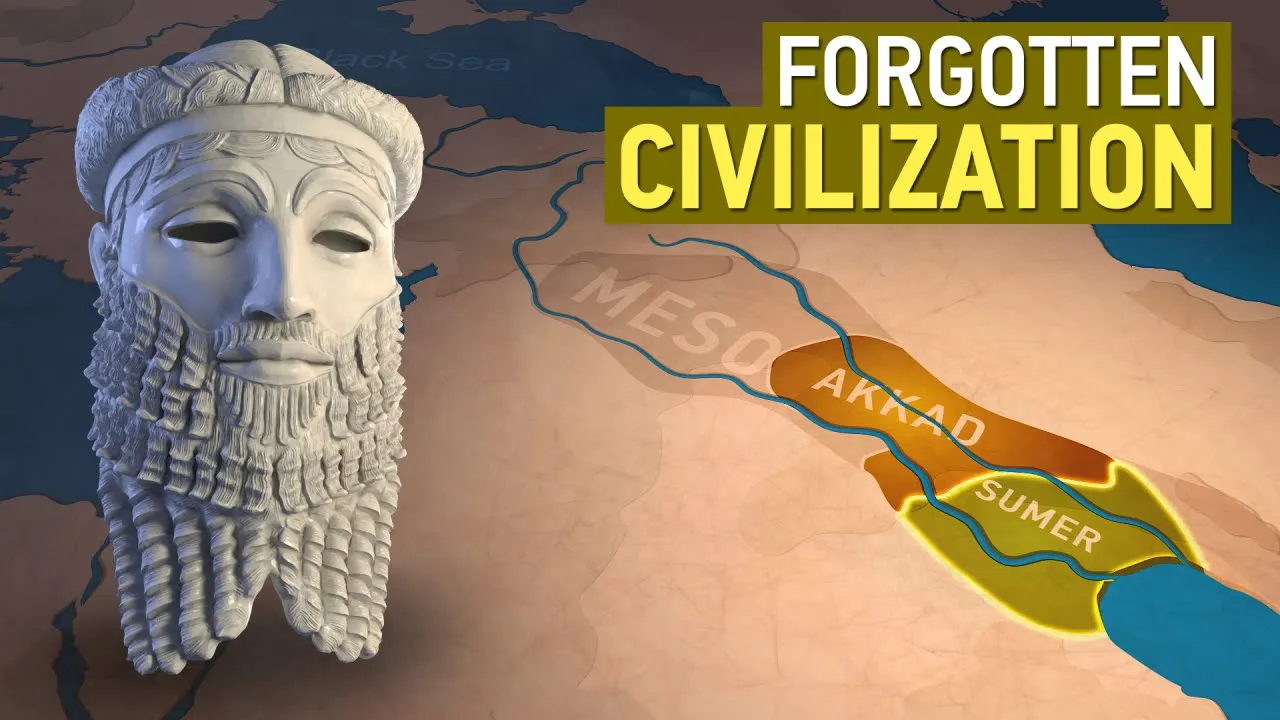





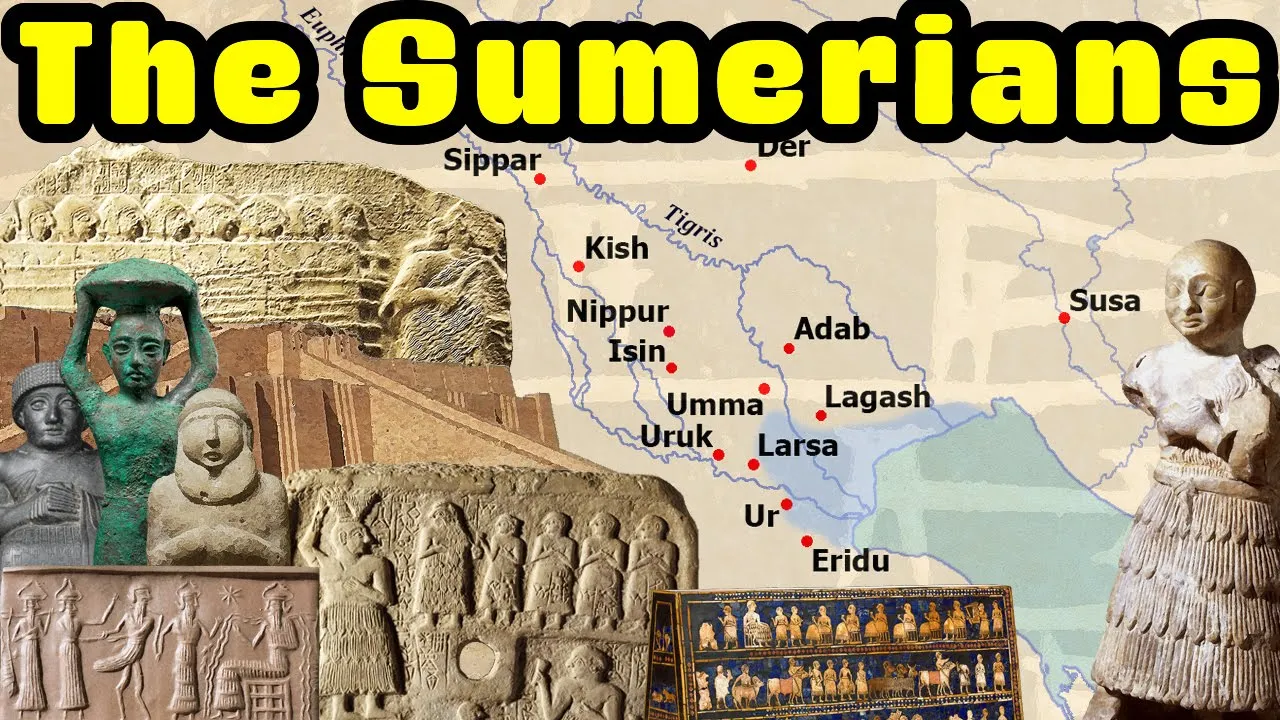


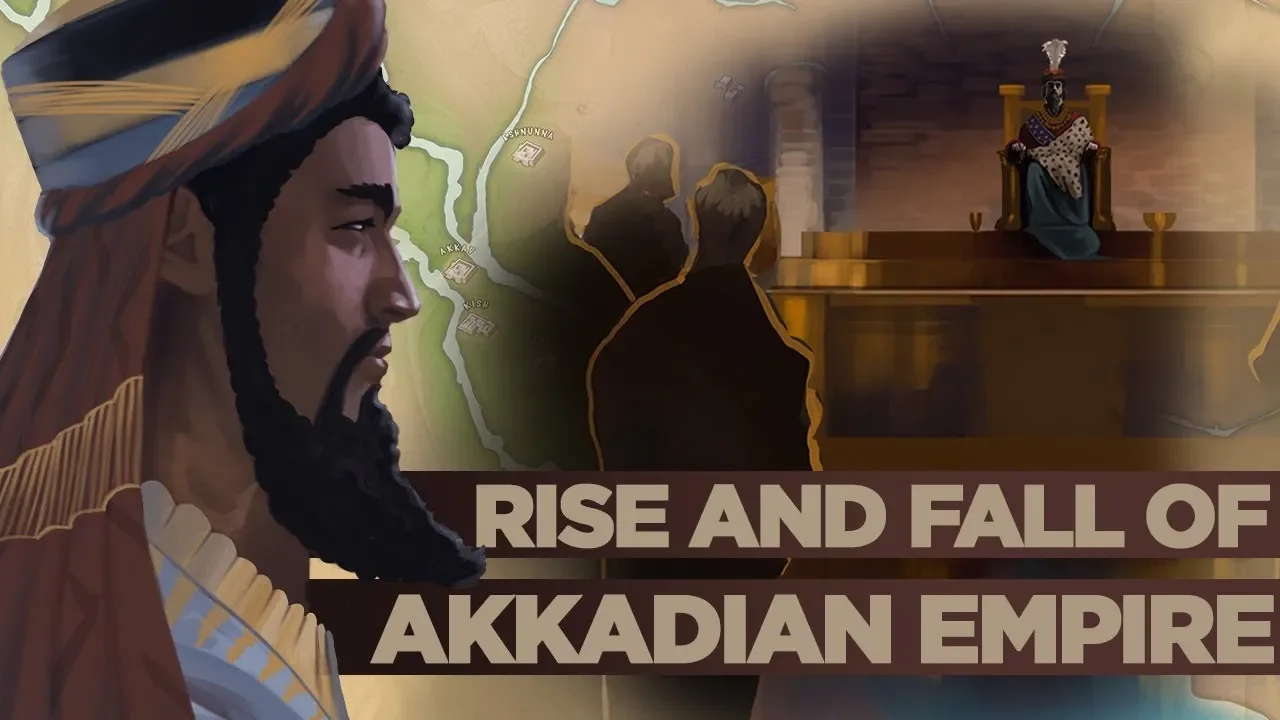













The Akkadian Empire, the world's first empire established around 2334 BCE by Sargon of Akkad, collapsed approximately 140 years later due to a combination of environmental factors and political instability. Archaeological evidence, including soil analysis showing a 300-year drought period around 2200 BCE and the Sumerian King List documenting political chaos, indicates that severe drought conditions severely impacted the empire's agricultural base, particularly in the rain-fed northern regions. This environmental stress weakened the empire's ability to fund its standing army and maintain control over conquered territories, leading to internal rebellions and external invasions by the Gutian tribes. The collapse demonstrates how environmental catastrophes can trigger cascading failures in complex political systems, causing even powerful empires to disintegrate.
The Fall of the Akkadian Empire: Lessons from History's First Empire
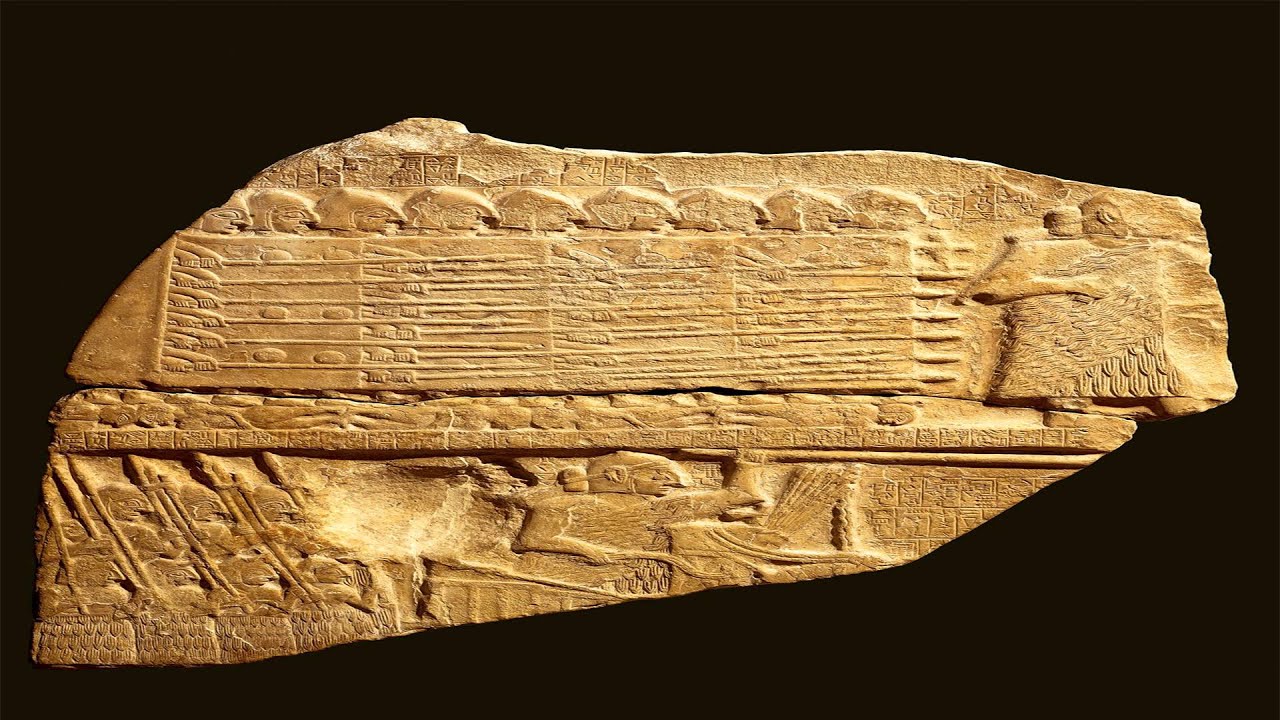
Added:foreign [Music] [Music] or destroy themselves the end of civilization for us today as we go about our daily lives it's barely something we consider we're so sure it couldn't happen to us but for some civilizations [Music] Empire as a form of government it has shaped our lives for millennia the Roman Empire the Mongol Empire British Empire all have dominated lands and people none first Century BCE Mesopotamia was made up of many different city-states with their own King Patron God it was largely inhabited by two distinct ethnic groups the Sumerians in the South and the Semitic Acadian people in the North in 2334 BCE the acadians conquered the Sumerian lands uniting the city-state kingdoms here to create an entirely new form of political organization Empire this is the first time that you had a multicultural multilingual group of city-states all unified together under one Banner this represents a tectonic shift in in government this is a new state of of political organization that we've never seen before the Acadian Empire was the world's first Empire and ruled from the Persian Gulf in the East to the Mediterranean Sea in the West All the Way North into modern day Turkey we see this Empire coming seemingly from nowhere and suddenly the Acadian language Rises up to then become the language across this entire region under the acadian's life in Mesopotamia flourished they use their power and geographical reach to create a period of great Prosperity inside the Empire the trade routes span vast distances outside of the empires they're actually trading with people in India with people in the Mediterranean who had beautiful artistries pouring into the Empire pearls Ivory both elephant and hippopotamus even live animals like monkeys everything that you could possibly imagine was all coming in making the Empire wealthier and more opulent but after only 140 years by 2193 BCE Acadian Empire fractured entire regions were abandoned as the Empire descended into chaos the Acadian Empire's very existence was forgotten through the passage of time what could cause the world's first Empire to be erased from history the Acadian Empire wouldn't resurface until a British archaeologist made an unrelated discovery on the East Bank of the Tigris River so Austin Henry layard uncovers something incredible the king's Palace of the biblical city of Nineveh the capital of the Assyrian Empire the people who Rose to power over a thousand years after The Disappearance of the acadians layard excavates for years but it's in the last days of the dig that he makes his greatest discovery lay Art's workers had uncovered a chamber containing thirty thousand pieces of clay tablets all marked with cuneiform script the ancient writing system of this of the greatest library ever known in the ancient world the library of Asha banapal the king of the Assyrians What secrets might these tablets hold for the 19th century archaeologists these cuneiform texts could hold an Untold wealth of information about the history of ancient Mesopotamia the problem is no one can read them they're written in an indecipherable form of cuneiform script to have any hope of unlocking the secrets of the ancient Middle East they need to crack the cuneiform code for the past 15 years British archaeologists Sir Henry Rawlinson has been working on translating cuneiform cuneiform isn't actually a language it's a writing system English French Spanish and German cuneiform systems could be used to write all manner of ancient languages Rawlinson was obsessed with understanding how the ancient cuneiform system of writing worked sen was a British British and he was sent on a posting to an area in what is now modern day Iran and he saw this huge mountain Mount behestan which was along the ancient Silk Road and he saw about halfway up the cliff there was an ancient inscription he can tell that it's written in cuneiform script and he also realizes that the script isn't all one language it appears to be three different languages all written in cuneiform he identifies one of them old Persian but what on Earth are the other two Rawlinson had already translated the old Persian cuneiform inscription but the other languages still remained a mystery when he was shown layard's Discovery he immediately saw that the cuneiform script on these tablets was the same as one of the unknown languages written in cuneiform found on the bear histone carving work out what this mystery language in the behestan inscription said they could use that as a launch pad to start decoding what the clay tablets from the library said understanding this language could be key to unlocking the secrets of ancient Mesopotamia he returned to the bear histone inscription it was assumed that the three languages all inscribed using the cuneiform writing system said the same thing was the answer hidden here Rawlinson already understood the old Persian inscription and if he could use that by decoding the repetitive symbols and working out what some of the words might mean he might be able to decode the other two mystery languages it finds similarities between old Persian cuneiform and the unknown cuneiform language he could build an alphabet for deciphering the library of Nineveh old Persian uses about 43 different symbols and he realized that each of them corresponded to a letter or a number however the other two languages appear to have many many more symbols but this gives Rawlinson a clue there are too many cuneiform symbols for each one to represent an individual letter instead the language must be syllabic where each symbol represents a syllable trial and error trying to relate symbols in the unknown cuneiform language with the symbols that he did understand in the old Persian and you go well if this means king or God in Old Persian maybe that's what this means in the mystery language does that work and you you try it out it takes almost 10 years but rawinson cracks the code he can finally read the tablets from the library of Nineveh and what riches it held there were texts on medicine there were texts on astrology and there was a huge section on history it was extraordinary prescribes had not just written a history of their own people the Assyrians they'd written about the people who'd come before them there was an Empire that we never knew had existed that had been declared the greatest of all time here Rawlinson found references to the world's first Empire an Empire that ruled over all of Mesopotamia Rawlinson christens them the acadians the archaeologists were dumbfounded who were these people how come we'd never heard of them how could a whole civilization be destroyed in such a way that they would be entirely lost to the sounds of time [Music] [Music] when did the acadians exist when were they wiped out and what caused their destruction Rawlinson spends years translating cuneiform tablet after cuneiform tablet and for any clues but in 1867 nearly 10 years after Rawlinson first deciphered Acadian cuneiform he came across a tablet it was the legend of Sargon of akkad the first king of the Acadian Empire Rawlinson had uncovered the first part of the acadian's history in 2334 BCE Sargon came to power as the king of Kish a city-state in the Acadian region of Mesopotamia from the very beginning Acadian history is steeped in violence and conflict Sargon fought war after War expanding his kingdom across Mesopotamia conquering and subjugating Sumerian and Acadian city-states alike form the Acadian Empire the world's first Empire to fund the administration of this new Empire Sargon demanded each city-state pay their share in taxes taxes are the price you pay for a civilized society so what Sargon did was he required every individual to produce x amount of grain and bring it to an administrative Center these administrative centers were basically grain storage facilities Sargon needed a lot of green particularly to fund an innovation of his the world's first standing army full-time well-equipped professional soldiers always ready to fight in the past if they needed to go to war if they needed a fight they would bring in a conscripted Army you soldiers who might be Farmers they might be herders they're not professional fighters they're not necessarily all that good at it but by the time you move over to this full-time Army you've got people who know how to kill but it's under the rule of the Acadian King naran's sin in 2254 BCE that the Empire reached its true height narum sin poured huge amounts of wealth into Acadian construction projects glorifying their temples and cities if you'd gone to one of these cities your mind would have been blown gold statues it is in Copper statues all shining brightly through Conquest narum sin controlled lands from the Persian Gulf in the East bordering the elamite kingdom in modern-day Iran to the Mediterranean Sea in the west and northwards into modern-day turkey lands that border the territory of nomadic Mountain tribes known as the gutier naram sin crowned himself the king of the four quarters he ruled all the land known to the acadians but even this wasn't enough makes himself a God I mean talk about the ego of the man there are Engravings of him where he's wearing this horned helmet to only the gods wear and he's about twice the size of his soldiers he's so important he is a living God the Acadian Empire achieved something truly astonishing so why had archaeologists never heard about them until now what could have caused the world's first Empire disappear there must be some clue behind why the acadians were erased from history as they dig deeper into the cuneiform tablets they uncover a disturbing Legend The Story Goes that Naran sing attacks the city of Nepal and he destroys their Temple he commits this act of great sacrilege and as a result of that action he becomes cursed the gods were so appalled by narum sin's actions that they prayed for his Empire's destruction reads grass grow long in your Canal right toe Parts built up with Canal sediment in your planes where fine Grass Grows May the Reed of lamentation grow a cad May brackish water flow where fresh water once flowed for you because of naramsin's hubris the gods destroyed the Acadian Empire did The Empire experience a large-scale collapse archaeologists need to know when the Acadian Empire actually existed and when they were killed off archaeologists and philanthropist Herbert weld Blundell donates his collection of Middle Eastern artifacts and Antiquities to Oxford University's ashmolean Museum for the curators one of the items is of particular interest a small prison covered in cuneiform inscriptions it's a copy of the Sumerian king list the Sumerian king list was written around 1800 BC in the Sumerian language they ruled over it also tells us the length of each King's Reign the acadians they're mentioned on the king list work out when one king ruled you could work out when all the other kings ruled too so if using the Sumerian king list we can get a date then we can date the acadians we will know for the first time in modern history when the acadians existed but without a point of reference a year to match it to this information was useless they look again to the library of Nineveh here were the ancient recordings of solar eclipses Scholars realize that if they could find a solar eclipse recorded by astronomers using a calendar that we already understood they could use that to sync up the calendars used in the Sumerian king list and they found one an eclipse recorded by the ancient Greeks on the 15th of June 763 BCE the rise of the Acadian Empire could finally be dated we know that Sargon the Great began ruling in 2334 BC but after the year 2193 the Sumerian king list starts to record what appears to be a chaotic breakdown of the Acadian Empire they have this phrase that repeats who was King who was not King Kings reign for merely a year or two years at most it suggests that there was unrest that there was chaos that there was confusion and perhaps an Empire that was in the midst of fracturing the Sumerian king list hints that this great Empire was imploding but it doesn't tell us why archaeologists have a year for the collapse a time of death for the Acadian Empire but they're still no closer to knowing why the acadians died out what could have triggered the sudden collapse of the world's first Empire they turn their attention to how the acadians managed to survive and thrive in the harsh climate of the Middle East maybe this would offer a clue the acadians weren't the first civilization to emerge in Mesopotamia over 5000 years ago in 3100 BCE the first great Sumerian cities sprung from the desert that the acadians conquered and unified to create the world's first Empire the Sumerians were among the first people to use the wheel the plow brew beer and develop the world's first writing system early forms of cuneiform script Sumerians achieved all of this because they mastered farming a surplus in food that farming gave allowed them to go from nomadic hunter-gatherers to living in settlements to then vast cities and two natural features of Mesopotamia were essential for allowing the world's first civilization to flourish Mesopotamia is a beautiful Greek word and it means between the rivers so it can be broken down into mezzo which is between and Pottermore which is rivers and the two rivers that this word refers to are the Tigris and the Euphrates Rivers particularly in ancient times were the givers of life at the time of the Acadian Empire the climate of Mesopotamia was similar to today's vast desert Plains with pockets of fertile land straddling the banks of these two rivers in a land where rainfall was scarce the Sumerians found a way to use these rivers to turn a desert into an agricultural Powerhouse by building vast irrigation canals when the acadians captured and took control of the Sumerian lands they knew just how important this irrigation network was for their survival but also for their plans of expansion they installed a complex bureaucratic system to manage the flow of water the entire system of ancient Mesopotamia of Acadia rested on the health of these irrigation canals to be able to to produce as much wheat as they did using irrigation they had to constantly maintain this really complex network of irrigation canals one of the the greatest contributions that the acadians have given us is bureaucracy as Administration to maintain these irrigation canals you had to have a strong centralized government and looking over the administration of these the problem with the acadians is that as they get bigger they all seem to become victims of their own success as the Empire is expanding there's constantly need for more food there's constantly more mouths to feed with more and more pressure placed on Acadian farming how did they manage to feed an entire Empire archaeologists turn to their records here they find evidence of Acadian expansion into the harbor Plains in what is now Northeastern Syria As you move into northern Mesopotamia the landscape actually changes fairly radically from arid desert to Plains what we see is unlike the South where there was irrigation we find that here farming is actually primarily rain fed rain-fed agriculture relies solely on rainfall to water crops it isn't as efficient as irrigation farming but on the Harbor Plains the acadians found a way to feed their empire grain production here became crucial for feeding their standing army and Acadian history is steeped in conflict the north will be an ideal Target for an enemy of theirs and they have many [Music] archaeologists look to the north for any evidence of the Acadian Empire's collapse renowned British archaeologist Max malawan excavates at the ruins of telbrak it's a huge 7 000 year old settlement on the dry farming Harbor Plains surely such a large site must hold Acadian remains the problem is where to begin digging turns to a cutting-edge piece of technology aerial photography [Music] in the 1920s this area was extensively photographed from the air this gives malawan a bird's eye view of tell Brach and allows him to identify much more clearly in a human-made features when malawan broke ground the aerial surveys paid dividends what he finds to not just balls to anything you rizz very soon that and it's also a fortress but this isn't all malawan finds on the bricks is the stamp of the king naramsin so means that this was built at the height of the Empire but this Palace this great grain store this Fortress Is unfinished they've stopped building it halfway through what could make the acadians abandon the construction of a fort at such a strategically important site archaeologists need to know if this area is linked to the collapse in the decades since more and more Arcadian sites are uncovered across the harbor Plains archaeologists are shocked by what they find sight after sight was abandoned by the acadians I tell Leila archaeologists have uncovered unused clay balls for pressing cuneiform tablets left in situ on the floor of the Acadian Administrative Building why would people leave useful artifacts in addition what's visible at the site is the foundations of a new building that it hasn't been completed archaeologists even find unused bricks sat next to the unfinished building it's evidence the site was rapidly abandoned yeah why would the acadians abandon such an important region is evidence they were under attack if you're going to conquer an ancient empire you have to first take out their ability to feed themselves in a vast Empire one of the things start taking their grain production cities could this explain how the acadians disappeared from history were they wiped out foreign archaeologists need to work out if there is any evidence of War Mario's Corti is a geologist and a specialist in soil analysis in 1990 she was brought into examine sites across the harbor Plains Corti had found evidence of large-scale burning was telebrac destroyed by conflict it would explain the discarded clay balls and unfinished construction project if the Fortress was under attack the inhabitants may have been forced to flee and the site abandoned luckily the cuneiform records provide a lot of evidence for the acadians at War everybody wants to be a part of the Acadian Empire there are constant rebellions there's constant unrest that has to be dealt with and in the East were the gutians nomadic Mountain Warriors continuously attacking the edges of the Empire but the acadians very good at fighting the acadians were able to be so powerful because they had a standing army the other thing that the acadians were able to do was to make Incredible use of the bow and arrow you didn't have to touch your opponent and by the time you actually engage them hand to hand in combat you've already won the war the acadians could hold their own and closer analysis of the burned soil layer reveals something unusual characteristics foreign the burn layer couldn't have been caused by Invaders and a closer analysis of the soil reveals something else unusual to Corti tell BRAC was hit from above pummeled with debris coming straight down what he needed to know what could cause this kind of Destruction during the third millennium BCE was it linked to the collapse of the Acadian Empire she expanded her analysis to other Acadian sites on the Harbor Plains [Music] was the same pattern of Destruction found across the region it might help explain the collapse of the Acadian Empire in 1991 horti looked 50 kilometers north east of telbrak to tell leilan here she made a startling Discovery the same flash thermal phenomenon burn layer and above this something else unusual dust lots of it is analysis showed a thin layer of coarse debris and then a large layer of fine dust for core T it indicates the surface was hit with coarse debris the impact through the local soil into the air to then settle as a layer of dust something pushed this course debris down onto Tel leilan with an incredible Force but these aren't the only unexplained Clues Corti found buried amongst the debris at each site were small pieces of plastic it is Corti began to look outside the harbor Plains to see if there were any other archaeological sites that showed similar signatures 300 kilometers from Tel leilan is the palace ruin of tal Amar archaeologists have uncovered nothing incredible is Decades of analysis indicate a courti obstruction was caused to a great explosive force that devastated sites across northern Mesopotamia but Corti has no idea what it is could it explain why these Acadian sites were abandoned foreign foreign France at the French national Center for scientific research Corti and a team of physicists analyzed the destruction pattern because the debris impacted the sites from above they looked to the sky for natural phenomena but what could deliver such a rapid blast of high intensity Heat courty Gets a Clue accident report from Emergency Services who have been investigating the death of someone struck by lightning incredibly at the accident scene the emergency workers uncovered a familiar material same plastic polymers Corti found across the harbor Plains contaminations industrial plastic is formed by combining and processing the byproducts of crude oil it has a unique molecular structure but the plastic polymers recorded at the accident scene are different foreign [Music] plastic polymers found on the body of the person struck by lightning with the same as the ones Corti found in the Acadian archaeological excavations her analysis has shown that the plastic she uncovered wasn't pollution after all but a naturally occurring plastic polymer created by lightning Corti has a hunch that lightning was responsible for the destruction of the Acadian sites across the harbor Plains but how could such a large lightning storm actually form after Decades of analysis Corti has developed a theory that she believes explains it dust bomb it requires a massive injection of dust High into the atmosphere likely from a volcanic eruption as this large amount of dust moves between the troposphere and the stratosphere it creates friction and the air becomes charged with static electricity the electric field becomes so great that it rips atoms apart and creates plasma channels when these channels connect they allow the electricity to flow and lightning is formed as this huge amount of dust Falls to Earth it generates an incredibly powerful but localized lightning storm when it touches down the energy release is massive characters the heightened dust needed for the phenomenon to occur could explain the thick dust layer found at Tel leilan its analysis shows it was deposited over only a number of days it would also explain the soot layer found across the region intense heat caused by lightning but it's proved impossible for Corti to date the destruction layers across each site for certain to the Acadian period and without a date range connecting the sights there's no way of linking Cortese Theory to the collapse of the Acadian Empire but it was clear that a large amount of dust accumulated at Tel Leila what else could cause this level of dust and could it be possible to date it to the collapse of the Acadian Empire Dr Frank Sirocco is an ocean floor sediment specialist he is approached by archaeologists investigating the sudden end of the Acadian Empire foreign the dust particles sink down through the water and build up in layers on the ocean floor Sirocco suggested they look at samples taken from the Gulf of Omar if there was a dust event in Mesopotamia it would show up here crucially they might be able to date it to the Acadian period Dr Sirocco analyzed the sample looking specifically for dolomite the mineral signature for dust found in Mesopotamia concentration um foreign incredibly the increase in dust lasted for 300 years courty believes her dust bomb event occurred in the space of a few days but sirocco's Dusty period is much longer what could cause such a lengthy spike in the sediment core history this is a 300 year long drought could certainly account for the collapse of the Acadian Empire as soon as drought takes away that agricultural base a soon as you have too many hungry mouths to feed your Empire crumbles seems they weren't the only civilization to experience upheaval at this point in history from the Egyptian Old Kingdom across the region to the Indus Valley Civilization in modern-day Pakistan civilizations collapsed and entire cities were abandoned a severe region-wide draft was beginning to make circadians leave any evidence to back up the theory archaeologists turn again to the Sumerian king list after the year 2193 Frank English whole very ominous phrase who was King who was not King which suggests a huge depth of confusion perhaps chaos rulers were on the throne for just a short period of time the dust spike in the sediment samples taken from the Gulf of Oman show a spike around 2200 BC which tallies perfectly with this chaotic breakdown described by the Sumerian Kings list drought is looking more and more likely the cause for the collapse of the Acadian Empire but there's an issue with Dr sirocco's Amman results these ocean core samples can't be analyzed at a high enough resolution for dating to be done exactly there's an inbuilt error range of 300 years the drought could miss the rise and fall of the Acadian Empire entirely without an accurate date it's impossible to prove that drought coincided with the collapse of the world's first Empire but then Stroke Of Fortune in 2018 Oxford University's paleo climate research laboratory collected samples of stalagmites from caves just outside Tehran in Iran the lab studies geology around the world and what it can tell us about ancient climate sulk mines are a really good climate proxies that means they tell us something about the climate of which they're growing as the researchers analyzed the sediment deposit history of the stalagmite samples they came across something unexpected there's a spike in dust around 2200 years BC that lasts about 300 years where is that dust coming from well if you look at the Paleo environmental analysis the main area that dust is traveling from is from Mesopotamia because the tests were done at a high resolution it's possible to date the dusty period accurately it matches the Oman samples perfectly what this is showing is likely drought in that region but what caused this drought in the first place a phenomenon being studied as a strong cause for Drought across the world the El Nino could it be responsible for a drought occurring at 2200 BCE El Nino occurs when tropical water in the Eastern Pacific Ocean becomes unusually warm the effects of El Nino are unpredictable often cause drought around the globe Dr Frank soroko has a hunch El Nino is responsible for the drought at 2200 BCE but how can you work out when El Nino occurred throughout history Sirocco turns to what we know now advice is foreign [Music] when they date the sample incredibly they see a spike in sediment from 2500 to 2000 BCE for Soroka it indicates an intensification of El Nino activity around the period the drought hit Mesopotamia is foreign [Music] Professor Rocco El Nino is the most likely cause for Drought striking the Acadian Empire but was there any on the ground archaeological evidence linking the drought to their collapse archaeologists look again to the soil layers if there was drought then surely there would be evidence here they make a startling discovery see what you find in the soil archaeological sites are the patterns of marks of activity of earthworms what we find at tell leilan is that the soil is dead there's no evidence of earthworm activity the soil at Tel Lai Lan has become dust unlike further south where the land was watered by irrigation the harbor Plains were watered by rainfall if the rain stopped then it would cause the soil to die drought would make sense why there was such a large dust layer it would also make sense why the archaeologists found discarded clay balls for pressing cuneiform tablets and unfinished buildings evidence that the inhabitants of Tel leilan had left their home at its most basic drought is a really devastating event because really you need it to do incredibly fundamental things you need water to water your animals you need water to water your crops so if you don't have any water how do you survive if the people of Tel Leland were unable to feed themselves and there was no longer water to drink it would explain why the site was abandoned when the archaeologists radiocarbon dated the abandonment layer of the settlement they got the date back 2200 BC people only start coming back to the site around 1900 BC so there's a 300 year Gap where people don't live there the hiata states seem to fit perfectly with the Oman and Iran samples the evidence points towards a 300-year drought striking the Acadian Empire right at the point they collapsed and it's believed the north of the Empire which relied on rainfall to survive was hit particularly hard the taxes on grain grown on the Harbor Plains were crucial for supporting the Acadian Empire particularly funding their standing army [Music] the city-states that resented being under Acadian control took their chances and Rose up against them when you can't feed your people people start to think that perhaps you're not the right King the Acadian Empire maintained power through having a standing professional Army as soon as the taxes aren't coming in to pay your soldiers what hope do you have of maintaining their loyalty and therefore what hope do you have of keeping control over this vast and varied Empire that you Reign Over and it's thought the acadians weren't the only people hit by the draft as the rain dries up the gutian tribes move in chasing water down into Mesopotamia over time as the Acadian Empire becomes more and more difficult to maintain the gutians become more and more of a threat until eventually the whole thing is weakened from the inside and the gutians come swarming out of the mountains and take over the Acadian Empire but they rule an empire in name only with the Acadian Empire severely weakened it soon broke up into city-states like Mesopotamia had been just 140 years before the world's first Empire the Acadian Empire was gone [Music] thank you [Music] foreign
Up Next

The Minoans: Europe's First Civilization | Ancient History Documentary
@ezgicihan2915
621.8K views•2016-06-10

The Great Schism of 1054: Causes and Consequences
@SacredCathedrals
113.5K views•2026-02-19
The Collapse of Maya, Akkadian, and Late Bronze Age Civilizations
@get.factual
370.3K views•2024-11-10

Understanding the Cold War: Superpower Conflicts and the Road to Détente
@OverSimplified
46.1M views•2019-01-24
Related Study Plans & Knowledge Roadmaps
Structured learning paths in History