




![What is Sign Language Music? [with Dr. Anabel Maler]](https://i.ytimg.com/vi/tUaG7_fAdgs/maxresdefault.jpg)




![CAUSAS NOBRES VIRARAM PEÇAS POLÍTICAS | POLÍTICA DOS SURDOS | Tassos Lycurgo [Lula e Michelle]](https://i.ytimg.com/vi/0cBzb2c3Hxw/maxresdefault.jpg)

![When Martha’s Vineyard Was Deaf: A History of ASL [CC]](https://i.ytimg.com/vi/VEIqDkSDkH4/maxresdefault.jpg)
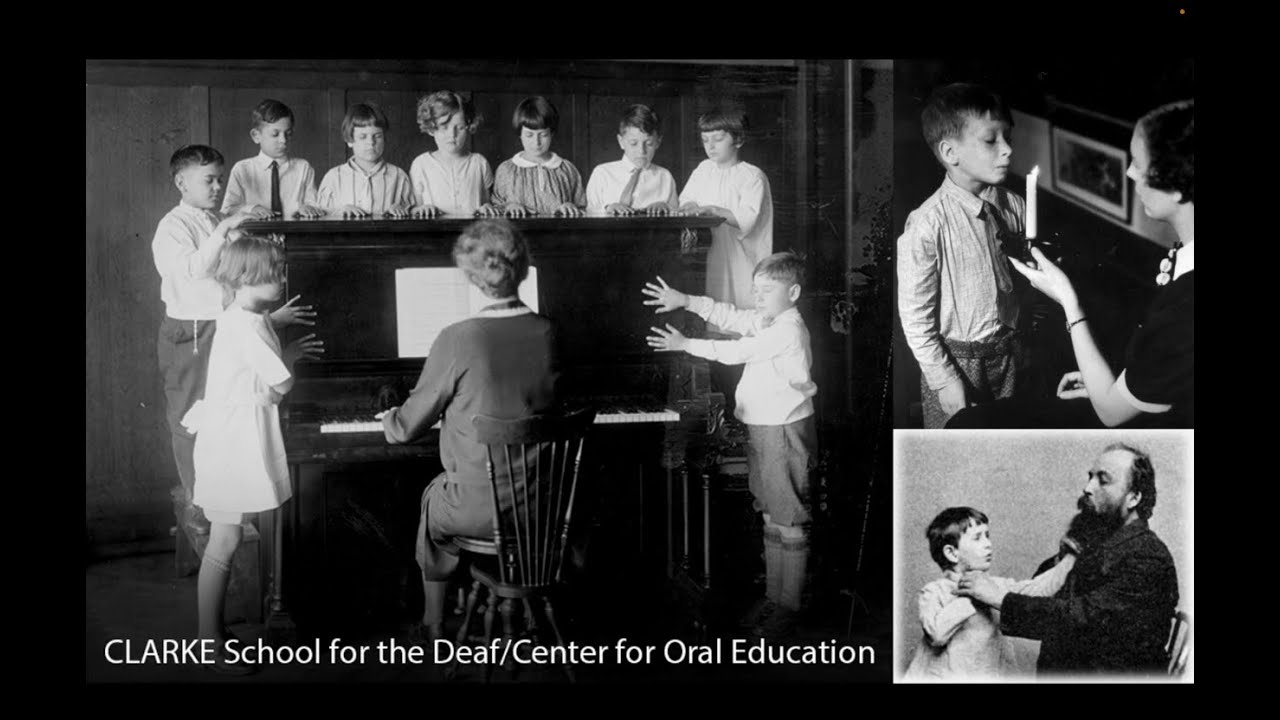
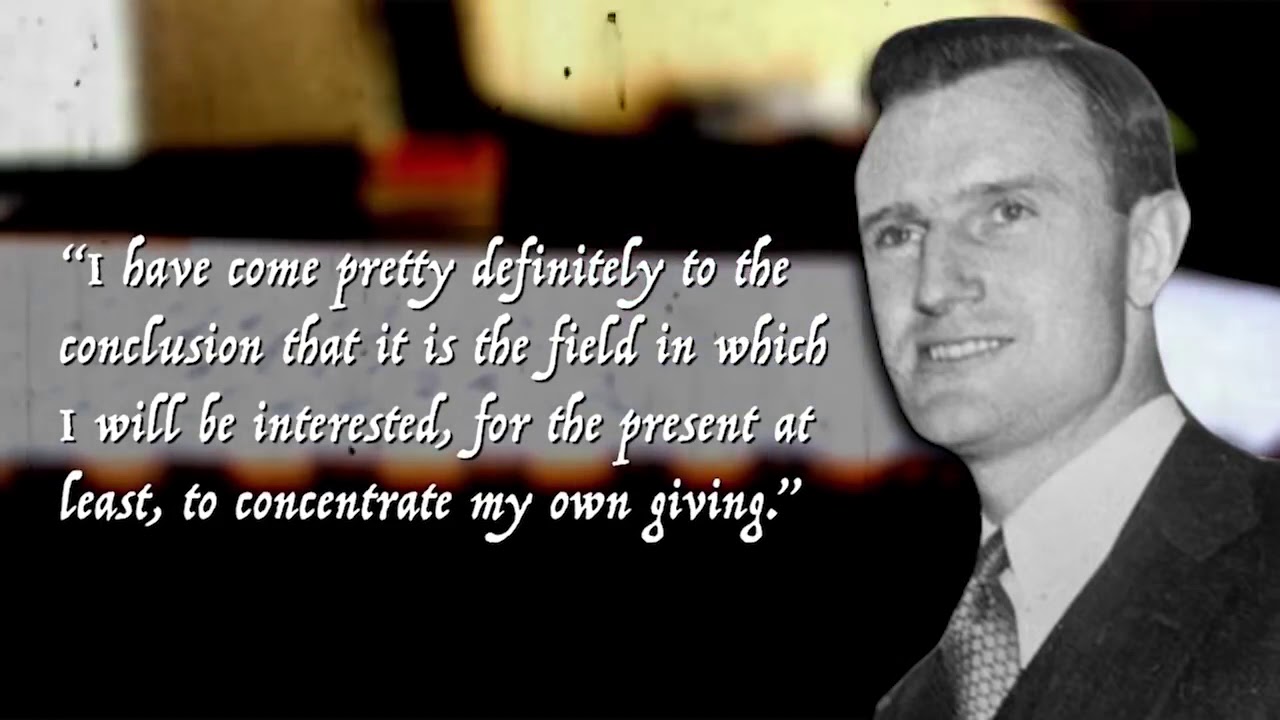






Sign languages are fully developed, linguistically valid languages with complex vocabulary, grammar, and regional variations, used by over 150 distinct communities worldwide; however, for nearly a century after the 1880 Milan Conference, Deaf people were systematically denied access to sign language education, forcing them to rely on inefficient oral methods that significantly impacted their cognitive development and brain language mapping, despite research showing that bilingual exposure to both signed and spoken languages provides cognitive advantages in memory, attention, and visual-spatial processing for all learners.
Why Sign Language Was Banned in America: A History of ASL Suppression
Added:Understanding that American Sign Language (ASL) is a distinct, natural language with its own complex grammar and syntax, completely independent of English.
The concept of Deaf culture, which views deafness not as a medical disability to be cured, but as a unique cultural and linguistic identity.
The historical distinction between manualism (the use of sign language in education) and oralism (the teaching of speech and lip-reading).
The early history of Deaf education in the United States, including the founding of the American School for the Deaf by Thomas Hopkins Gallaudet and Laurent Clerc.
In-depth study of the Second International Congress on Education of the Deaf (the Milan Conference of 1880) and its global policy implications.
The role of prominent historical figures, such as Alexander Graham Bell, and the influence of the eugenics movement on the suppression of ASL.
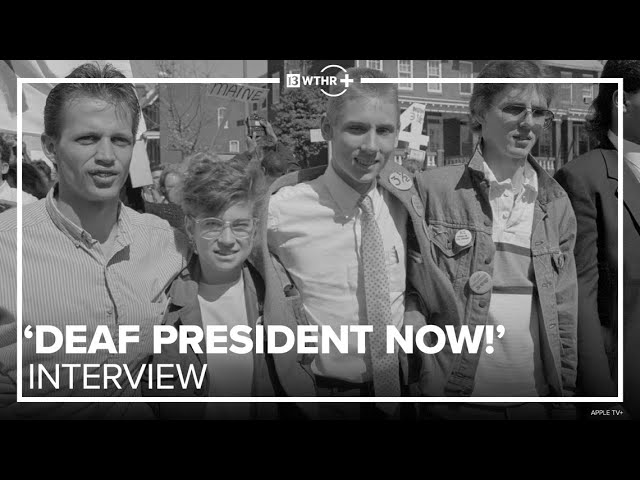
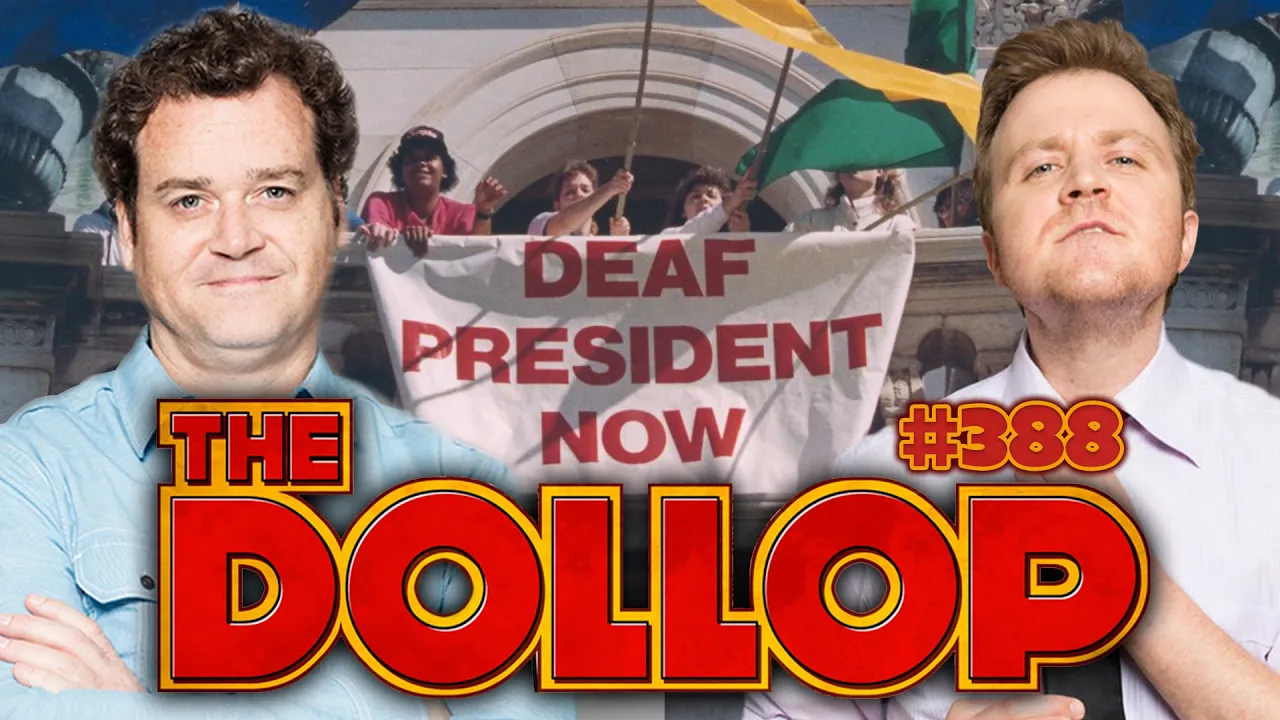
The 'Deaf President Now' (DPN) student protest at Gallaudet University in 1988 as a turning point for Deaf civil rights and self-determination.
Analysis of modern bilingual-bicultural (Bi-Bi) educational models and the ongoing legal battles for Deaf children's linguistic rights today.
671.6K views23.7Klikes12:48Original Release: 2022-10-27
Have you ever watched one of those viral videos where a baby hears their parents for the first time after getting a cochlear implant and thought, "Aw, so adorable!"
Well, what if I told you that the history leading up to that moment isn't quite so cute?
In videos like these, doctors place an electronic device near a Deaf person's ear that sends auditory signals to the brain similar to hearing.
The hope behind these implants is that they'll allow the Deaf person to participate fully in the mainstream hearing world.
But many Deaf advocates say that this process is trying to fix something that just isn't broken.
Instead, they want us to recognize that Deaf people already have a rich linguistic culture and community of sign language users with just as much validity as any other language.
And that signing needs less attempts at correction and more of our attention.
I'm Dr. Erica Brozovsky, and this is Otherwords.
Otherwords.
I interviewed Roberta Cordano, president of Gallaudet University, to discuss what many of us misunderstand about sign language.
I would say the biggest misperception is the power and importance of American Sign Language or sign language in general.
Just visual learning. Visual language.
I think too many people, especially in health care, health care professionals, really completely misunderstand how important visual language is for brain development, how important and equivalent ASL is to English.
When we try to describe what language is, a lot of people think about the shapes we make with our mouths when we speak or the sounds we hear or even the words we read.
But gestures and facial expressions are also parts of language.
Every human being, wherever you are in the world, already has about 200 gestures that are innate to them as human beings.
The brain already knows how to produce these gestures.
But the problem is instead that we have had gesturing scolded out of us.
I mean, think about it, right?
If you think about someone pointing? You're always told not to point!
That it's not polite. Right?
But imagine how efficient it is: if I point in one direction.
You look to where I pointed.
I don't have to say a single word.
Sign languages are produced with hand movements, head movements and facial expressions rather than sounds.
They have all the same structural characteristics that spoken languages do.
They have complex vocabulary, including regional variations and slang and grammatical rules, where things like the speed, direction and position of a sign can change its meaning.
And there's just as much vibrance and variety in sign languages as spoken ones.
There are more than 150 different sign languages used around the world that are distinct from each other and the spoken languages in the same places.
The only people in the world who are still creating language--not just words, but actual languages-- The only people who are still creating languages in the world are Deaf people.
Spoken languages have been static for the last 500 years.
As I understand it, the last couple of hundred years, there's no new spoken languages being developed anywhere.
But that's not true for sign language.
You know, where there are Deaf people coming together, they create new sign languages to communicate.
I mean, that's incredible.
Sign language seems pretty cool, right?
So why don't more of us sign?
That's where we get into some pretty painful history.
Until the early 1800s, most Deaf people born in the U.S.
didn't have access to education that could meet their needs.
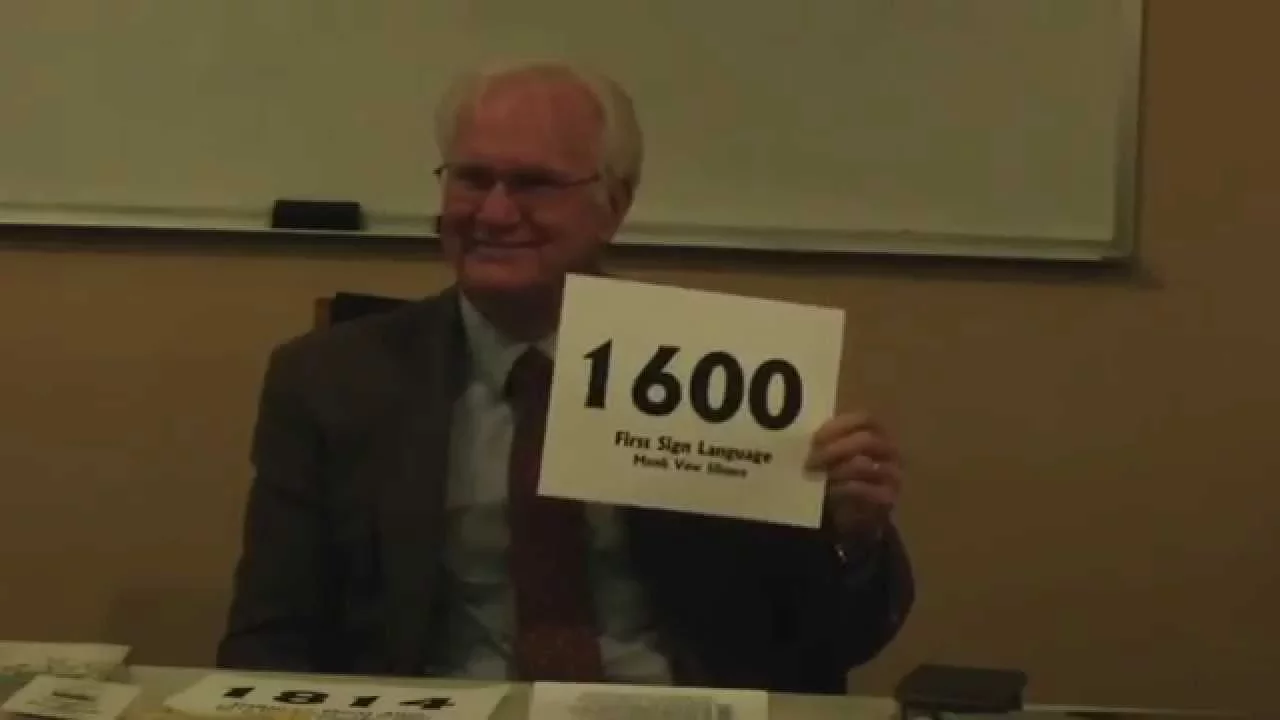
But in 1816, a collaboration between French educators and American advocates raised a bunch of money and established a school for the Deaf, where students could learn and communicate using signs instead of speech.
Finally, these students had access to education, but even more importantly, to a Deaf community where they could sign with each other.
The French sign language these teachers brought started to combine with the signs that students made up at home or in their own communities to create American Sign Language or ASL.
But not everybody liked this new model of education.
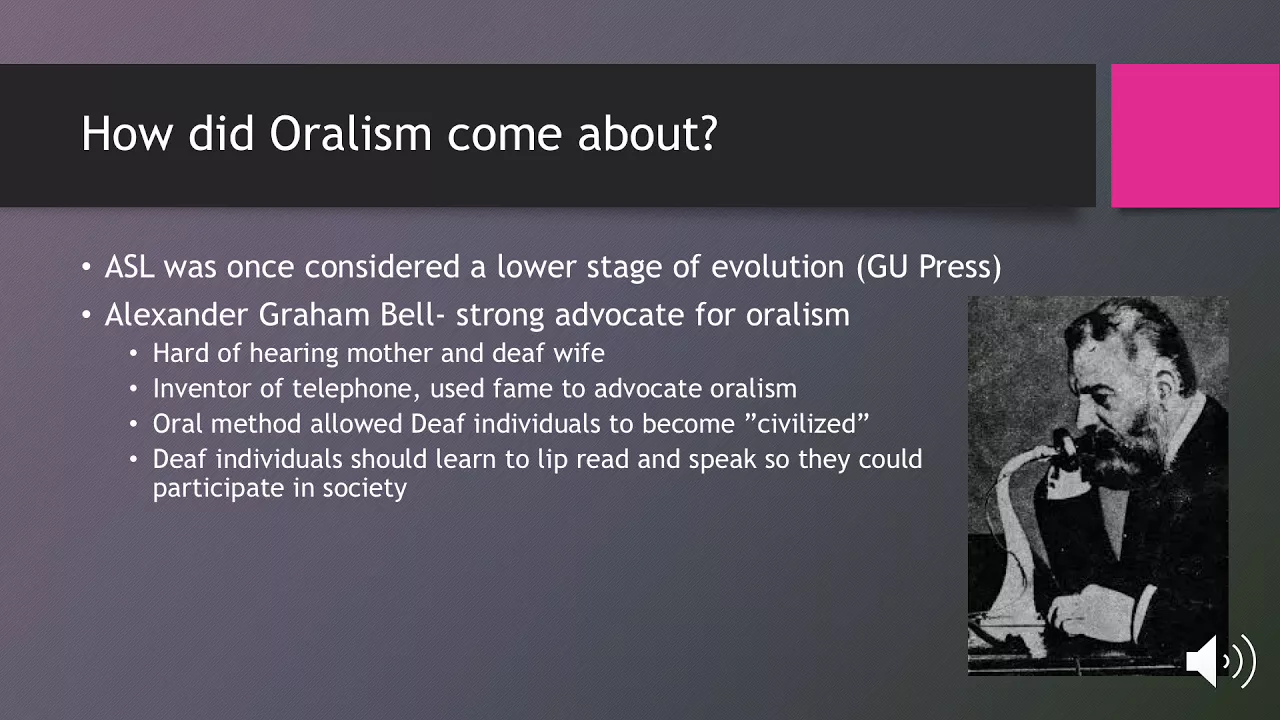
Some academic hotshots like Alexander Graham Bell-- Yes, that Alexander Graham Bell-- argued that Deaf people, including his own Deaf mother and wife, should try to integrate into mainstream speaking culture as best they could.
So in 1880, Bell and 164 other educators-- (only one of them Deaf) met at a conference to create recommendations for Deaf education in the U.S.
and Europe.
They believed that sign language was a lesser imitation of spoken language and that Deaf kids shouldn't be taught to sign in schools.
Instead, they created a system called Oralism, where Deaf children were expected to hear by lip reading and speak by imitating the mouth shapes of hearing people.
That conference was catastrophic for the Deaf community.
It ended most sign language instruction in schools until the 1960s.
That's almost 100 years where many Deaf people had little to no access to sign language education, or the ability to form communities with fellow signers.
And it was only in 2013 that there was an apology issued to the Deaf community for the Milan Conference, the declaration that spoke to banning sign language back in the 1880s.
That apology to the Deaf community that came in 2013 was one that my mother was still alive to see, and my mother suffered because of that decree during that period of time.
And my mother said, you know, I finally have lived to see this apology that happened in her lifetime, and it meant a lot to her.
The problem is, you can't just treat someone like they're not Deaf and expect them to blend in.
Even the most skilled lip readers report that they can only pick up about a third of conversations.
So that means that most Deaf people denied access to sign language are being denied access to language, period.
And that can have some serious consequences for brain development.
The most important time to expose someone to language, for them to develop fluency, and for their brain to be developed, you know, the language to be actually mapped to the language mapping center of the brain is between the ages of birth and five.
So we know that any human being who wants to acquire a language, between that window is the best opportunity for them to be able to map that language to the right area of the brain.
Research has shown that children who acquire language late, whether signed or spoken, are less likely to use the important language centers of the brain.
Instead, they process language in the visual or memory centers, a less efficient process that can still allow for a large vocabulary but might inhibit a natural grasp of the language's grammar.
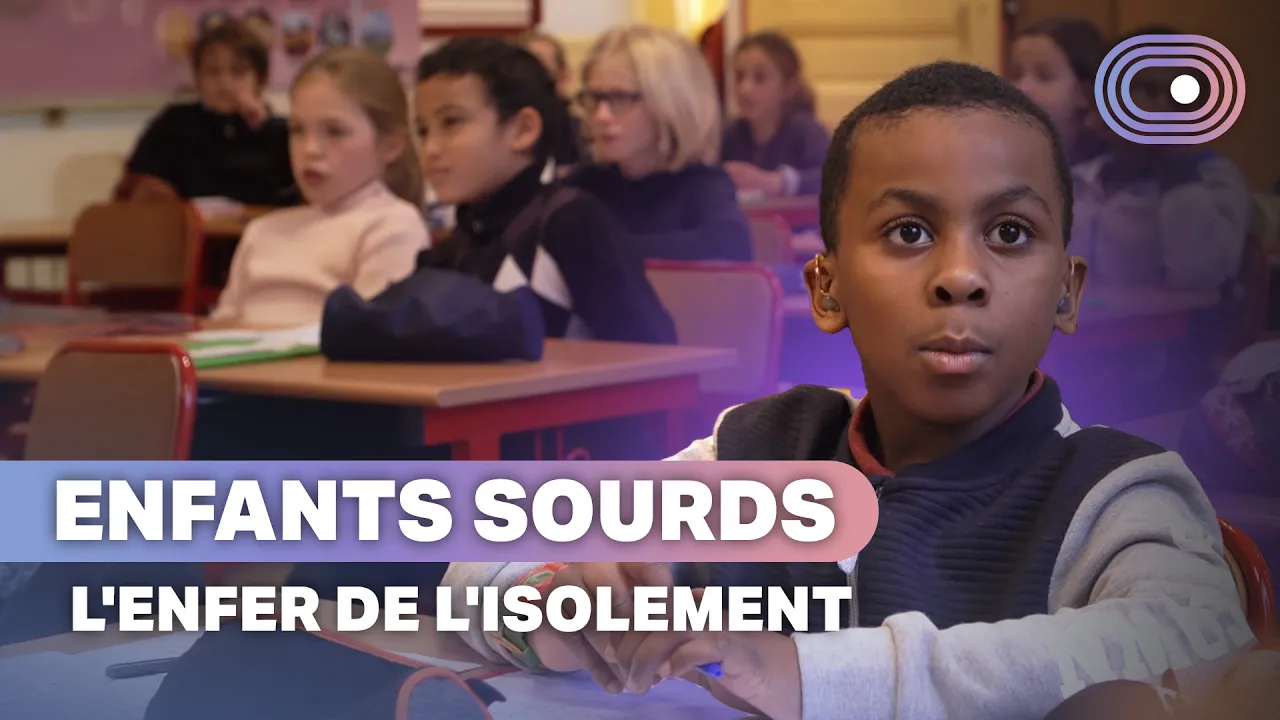
Every child who is Deaf or hard of hearing is at high risk of experiencing language delay, language deprivation.
And it’s not because the child's brain has a limited capacity, but rather it's more about the fact that they've not been able to have access to information in a stress-free environment where they can just learn freely.
When I was younger, I was the only Deaf person in the class and I had to sit there and every minute of that class, I had to watch to make sure I understood what was being said by the instructor.
Then I had to figure out what was the meaning of the message that was being shared in spoken language.
And then I had to think about, Well, what is it that I just learned?
And then I have to be ready to be called on by the teacher at any point in time.
So I was doing four separate functions every minute of every single day, all day long, and that's absolutely exhausting.
Even newer technology like hearing aids or cochlear implants don't work for all or even most Deaf people.
A majority of cochlear implant recipients still cannot pick up spoken language at a level comparable to a hearing person.
Of course, we know there are many examples of where people who are raised, what we call orally, meaning that they have hearing aids or cochlear implants.
There are many Deaf and hard of hearing people who are very successful going that route and they thrive in their careers.
I mean, in no way am I criticizing that approach and that lifestyle.
I think that's just wonderful.
And again, I'm not blaming the doctors here because we also realize that as well that in their doctor kit that they bring to the table, they're not given anything that speaks to a prescription for ASL. Right?
That's not in their tool kit.
Right. Insurances pay for cochlear implants.
They pay for hearing aids, but they sure don't pay for language support.
What I'm trying to do is to get people to realize that there's a false choice that we're setting up here, that you have to choose one way of communicating or the other. Both are needed.
Both are beneficial.
So why not do both?
Why not give the child everything to that child's disposal, to have to use whatever they need and see whatever best suits them and what they pick up.
Depriving a Deaf child of sign language in hopes they'll learn spoken language puts them at a high risk for having difficulty with any language later in life.
But the reverse is also true.
Learning to sign from birth, whether alone or alongside spoken language, has some major cognitive benefits.
If you saw our video on bilingualism, you'll remember that bilingual kids grow up with cognitive advantages in memory and attention.
The same holds true for kids who learn both ASL and English, but because sign language uses additional areas of the brain, people who speak and sign get a boost in visual and spatial processes too, like giving directions or remembering faces.
And that's true for people who are hearing or Deaf.
In fact, research will show that learning sign language for all babies, Deaf and hearing, will impact their brain in such a way that it will allow for further development of abstract thinking.
Pattern recognition is enhanced.
There's loads of benefits that visual language and visual learning provide.
It allows your brain to thrive in different ways that otherwise it couldn't.
I mean, it's just amazing what can happen when you get exposed to a spoken language and a visual language.
And that's why I encourage having both.
So even though for hundreds of years, society thought that Deaf people would miss out on language and culture if they learned to sign, this whole time, it's non signers who've been missing out on an entire dimension of language and on a vibrant community of Deaf people who use it.
So what I recognize is, is that we have been so busy trying to fix Deaf babies or Deaf hard of hearing babies by putting technologies on them and trying to fix them so that they'll be hearing and be able to access spoken language that we've completely missed out on what those Deaf babies have to offer the entire world: a lifetime experience of hearing loss.
And I think we've really got it wrong.
The babies are our teachers in this process.
They are teaching us how to live with the beauty of a visual language, how to live in a world full of visual images and visual communication.
You know, it's just a way of being that is so beneficial to everyone, if you learn sign language and use sign language.
The more of us that join the signing community, the more we can experience broader and more complex ways of thinking and more inclusive ways of communicating with each other.
Before you go!
We're looking for your feedback.
Each year, PBS Digital Studio conducts an audience survey.
It helps us understand what you like and what you want to see more of.
You also get to help PBS pick new shows.
It only takes a few minutes, but your feedback is extremely valuable to us.
There's a link in the description. Thanks in advance!
Up Next
17:02
The Accidental Invention of Purple: Chemistry & History
@bekahart
82.8K views•2024-10-21

33:02
The Great Schism of 1054: Causes and Consequences
@SacredCathedrals
113.5K views•2026-02-19
91:57
The Geopolitics of the Ukraine War and the Rise of Global Autocracy
@JordanHarbingerShow
468K views•2025-04-19
17:05
Understanding the Cold War: Superpower Conflicts and the Road to Détente
@OverSimplified
46.1M views•2019-01-24
Related Study Plans & Knowledge Roadmaps
Structured learning paths in History
history
Byzantine Iconoclasm: Theology, Art & Politics
01Foundations of Byzantium and Early Christian Images
02The First Iconoclasm: Leo III and the Crisis of Images
03Empress Irene, Nicaea II, and the Second Iconoclasm
+ 2 more learning modules
9h5 modules
Explore Roadmap
history
Iranian Revolution (Causes, Events & Legacy)
01The Pahlavi Dynasty and the Roots of Discontent
02The Spark of Rebellion and the Rise of Khomeini
031979: The Fall of the Shah and the Climax of the Revolution
+ 2 more learning modules
8h5 modules
Explore Roadmap
history
Mali Empire: Mansa Musa, Trade & Timbuktu
01Foundations of the Mali Empire
02The Trans-Saharan Gold and Salt Trade
03The Reign and Pilgrimage of Mansa Musa
+ 1 more learning modules
6h4 modules
Explore Roadmap
history
1947 Partition: Politics, Borders & Legacies
01Foundations of British India and the Divide
02The Political Negotiations and the Mountbatten Plan
03Drawing the Boundary: The Radcliffe Line
+ 2 more learning modules
8h5 modules
Explore Roadmap