





![[SPHePS] P. Maniglier, "Épistémologie non-coloniale du quinquina" (2026 02 25)](https://i.ytimg.com/vi_webp/BFIlkj4-N6k/maxresdefault.webp)







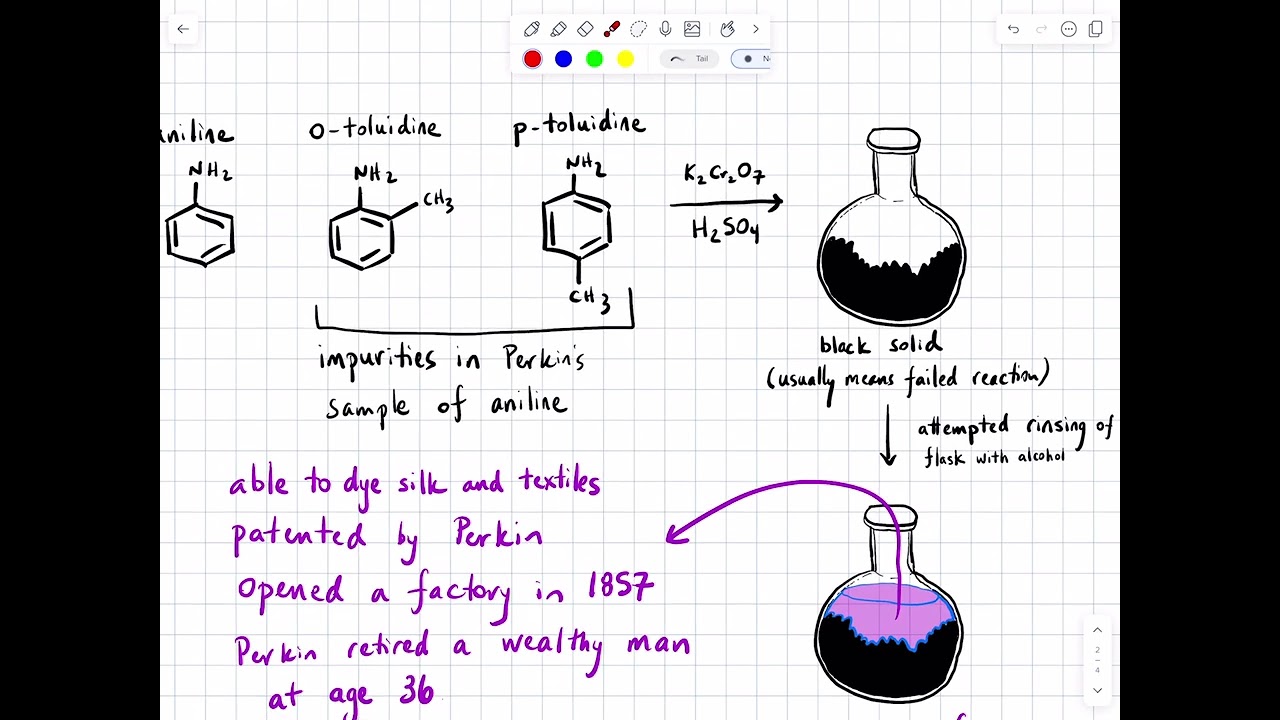





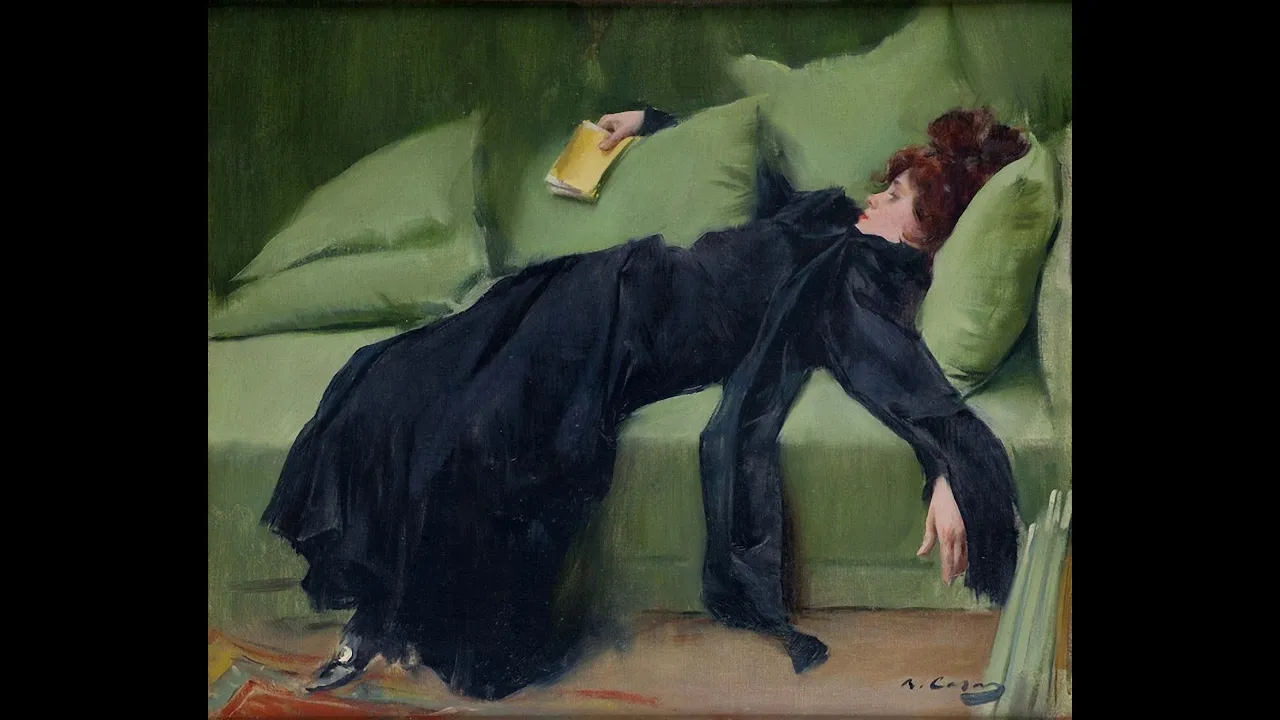
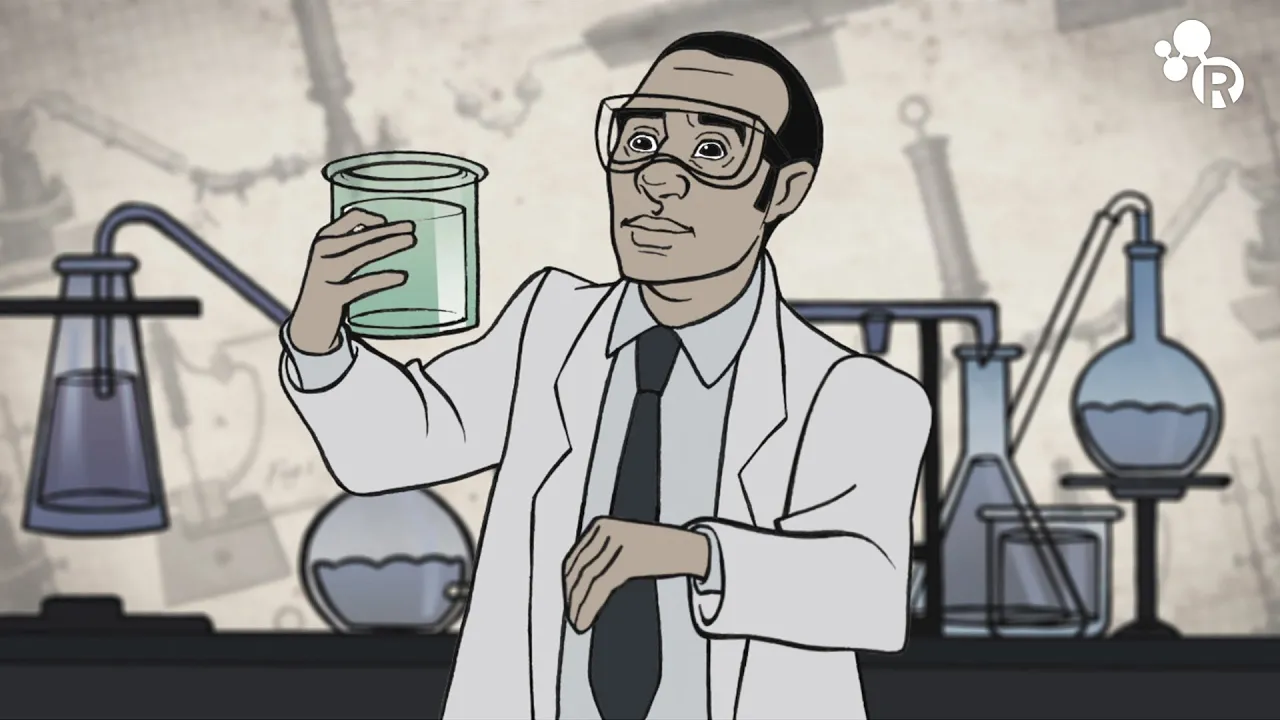

In 1856, 18-year-old chemistry student William Henry Perkin accidentally discovered mauve, the world's first artificial purple dye, while attempting to synthesize quinine from coal tar; this happy accident democratized purple from a luxury reserved for the wealthy (requiring 50,000 snails per garment) to an accessible color that transformed fashion, art, medicine, and social movements, including women's suffrage and LGBTQ+ rights advocacy.
The Accidental Invention of Purple: Chemistry & History
Added:Understanding the historical reliance on natural resources for pigments, such as extracting Tyrian purple from sea snails, and the high economic value associated with these scarce materials.
Basic knowledge of organic chemistry, specifically the structure of carbon-based molecules and hydrocarbons derived from coal tar.
The historical context of the mid-19th century Industrial Revolution, particularly the global threat of malaria and the urgent scientific search for a synthetic cure (quinine).
The concept of serendipity in scientific discovery, where accidental results in laboratory experiments lead to major breakthroughs.
The evolution of the synthetic dye industry (aniline dyes) and how it catalyzed the birth of modern industrial chemistry giants, particularly in Germany.
The direct connection between dye chemistry and the development of the pharmaceutical industry, including how synthetic dyes led to the creation of sulfa drugs, aspirin, and medical stains used to identify bacteria.
The chemistry of color, specifically how conjugated systems, chromophores, and auxochromes in organic molecules absorb and reflect light to produce visible color.
The socio-economic impact of mass-produced synthetic pigments on fashion, art, and the democratization of luxury goods in Victorian society and beyond.
82.8K views5.7Klikes17:02Original Release: 2024-10-21
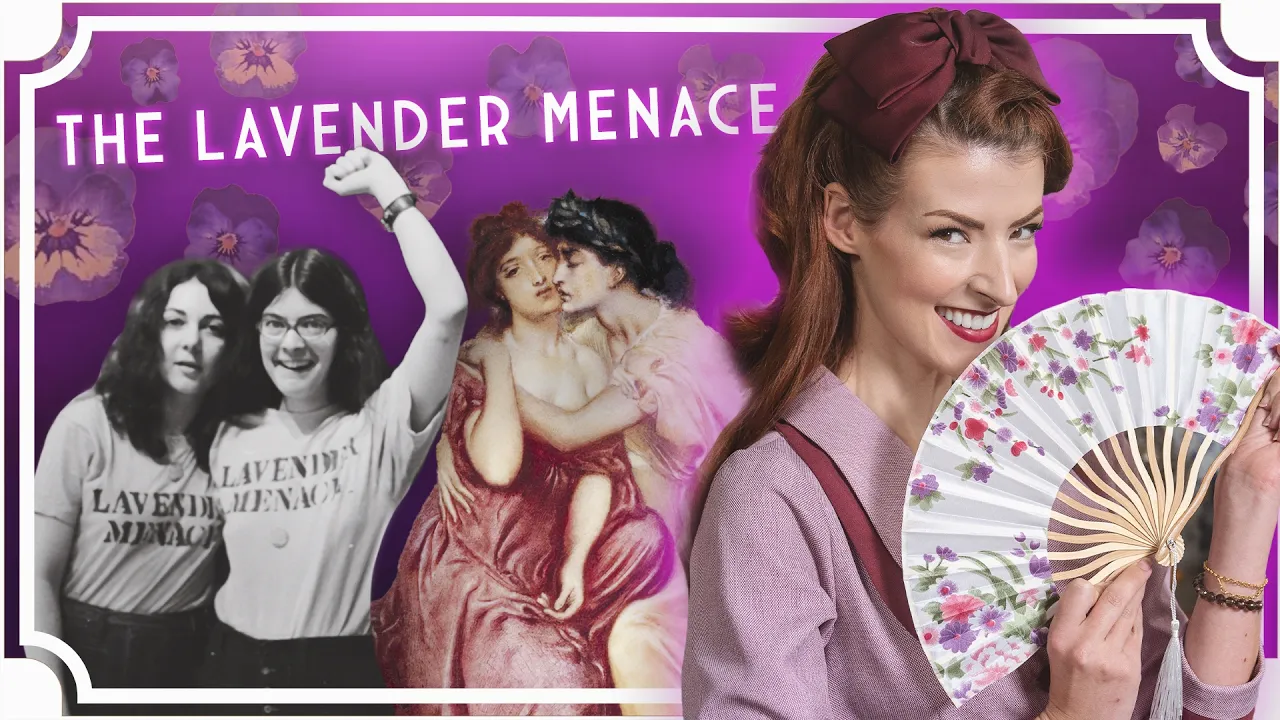
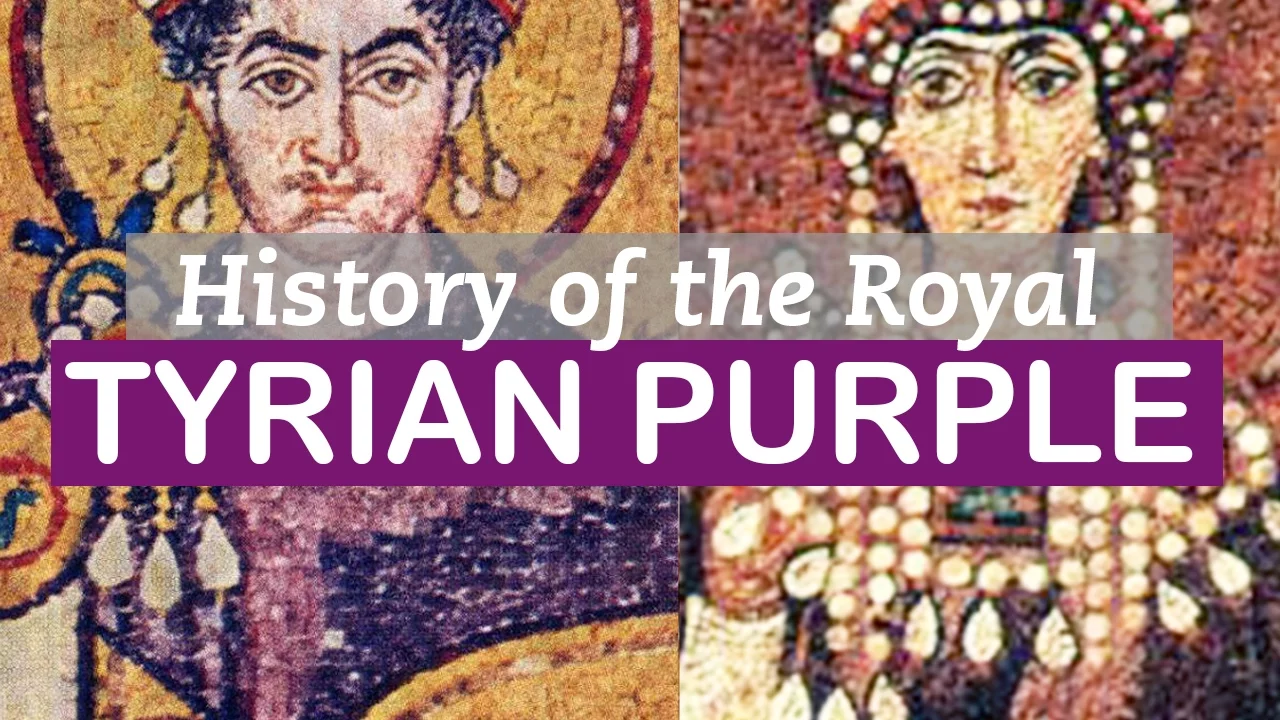
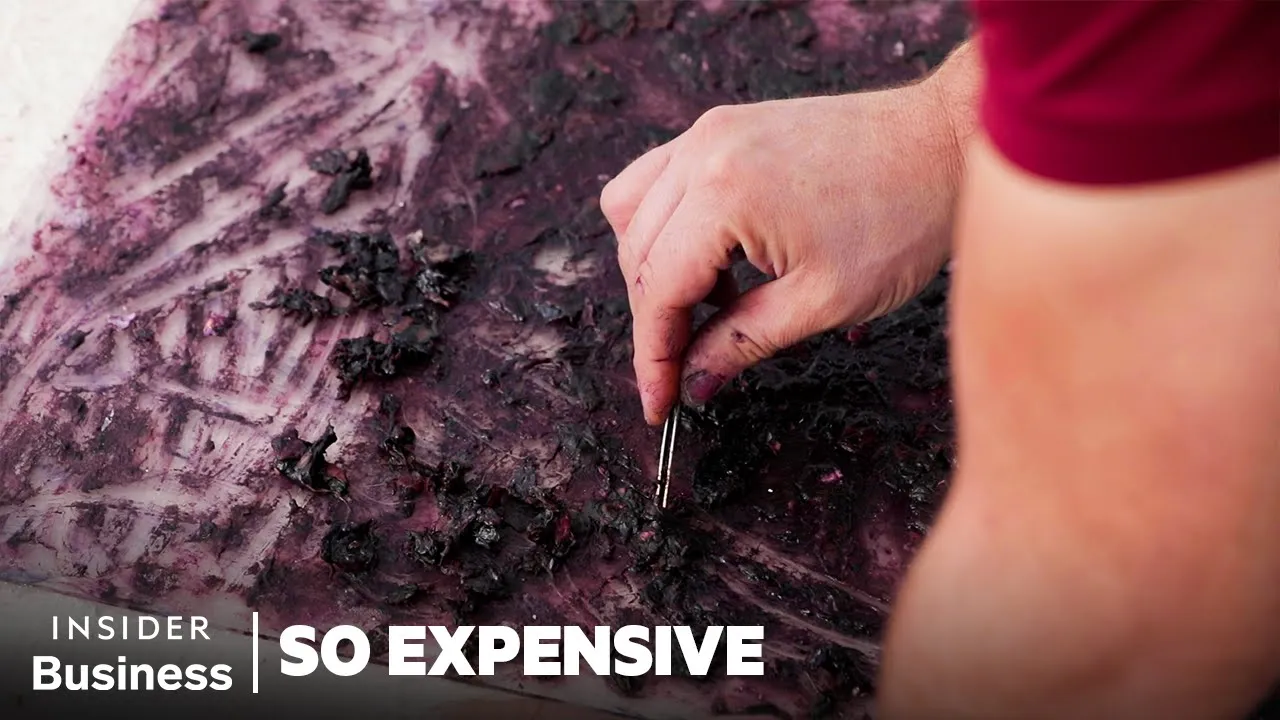
eggplants womon suffrage the Queen of England Prince all of these things have one crucial element in common and it's not just that they're all delicious snacks all of these have to do with the color purple and that's no coincidence okay sui maybe it is with eggplants but I digress purple has long been lauded as a color of luxury sexuality status and wealth but here's the thing purple wasn't really a thing in the lives of us commoners until less than 200 years ago before that the existence of purple was pretty much due entirely to the snail genocide of the Uber rich and Powerful today we will delve into how one teenager created a color that changed the course of history influencing everything from Fashion to chemistry to military power to gender equality in an explosion of purple and he did it all by accident a happy little accident on spring break actually that's right today we are talking about the invention of mauve the world's first artificial purple or was it and at the end of the video we'll be swatching some extremely old authentic mauve paint that was produced shortly after mauve was introduced in 1856 let's get into it shall we so I mentioned that purple first really became available to the public less than 200 years ago but that doesn't mean that purple didn't exist before that time obviously purple is everywhere in nature and the human use of The Color Purple has been shown to date back to the uses of manganes and hematite in neolithic art tens of thousands of years ago but here's the thing purple is notoriously ridiculously difficult to create plants and minerals that you would think would create vibrant dyes and paints are actually usually pretty awful at producing vibrant light fast colors so for most of human history although we've had thousands of gorgeous pigments stretching across almost all the colors of the rainbow purple was noticeably absent but with that being said there are a couple of exceptions to that rule the first and by far the most common was known as Phoenician purple or Tyrion purple it was invented around 16 100 BCE over 3600 years ago and it was created with and it was created with these guys mure sea snails a predatory sea snail that lives off the coast of the Mediterranean Sea and Atlantic Ocean what exactly predatory sea snails prey on I wish I could tell you but they're predatory I guess cow sea snails see people would take these snails and carefully extract a tiny little die gland from inside their squishy snail bodies they would then take these D glands and pulverize them into snail goo then leave them out in the hot Mediterranean Sun for the color to develop over a period of several weeks if you're thinking man that sure sounds kind of sad and also like a huge stanky pain just wait because here's the thing with tyri and purple let's say that it's your brother's birthday in ancient Phoenicia he's a big important High futin kind of government guy so he's one of the only people allowed to even wear this Tyrion purple you want to get him a simple heartfelt gift a tasteful purple toga to replace one of his older business casual toas you go to the die makers and you whip out your ancient Phoenician credit card only to discover that to get that glorified bed sheet it's not only going to cost you over $4,000 it's also going to take the lives of around2 200 50,000 snails that's like if you took a third of the population of snail Las Vegas Las snaus if you will and squish them into goo yikes suffice it to say that after a couple thousand years the tragic snail sludge that was tyan purple eventually went out of style in large part because it was just too expensive and took way too much effort to make actually you can still get authentic tyrian purple today and for enough to make that purple toga today it would only cost you between $250,000 to $3.5 million now the other exception to this rule is Han purple a pigment made of Manganese and barium that was invented in China over 2,000 years ago this pigment was super vibrant and light fast but unfortunately it faded Into Obscurity after only about 300 years pretty much entirely absent from the historic record after 771 BCE why well for one it was an extremely complex process to make it and two much like tyri and purple this extremely complex process to make Han purple was never written down in all fairness paper wasn't invented yet so I think we can give them a pass on this one although the method to make Han purple would eventually be rediscovered it wouldn't be until 1992 almost 3,000 years after it disappeared from the historical record basically in summary the few ancient purple pigments that existed that were actually good and recognizable as purple were ridiculously hard to make ridiculously expensive to make and weren't written down at all so it's no wonder that by the end of the Middle Ages purple was essentially non-existent anywhere but in nature now at this point in time you may be saying to yourself why didn't they just mix red and blue pigments to together to get purple uh they did they just sucked why because in order to mix a super Punchy purple you need magenta not red and a pure magenta pigment hadn't really been discovered yet either as a side side note magenta is not red and blue mixed together it's a Pure Color that can't be properly mixed come at me I have God and every printer in the universe on my side try me and so for a pretty long time people didn't really think all that much about purple and that's because with the exception of the Uber Rich who still sometimes purchased garments made with snail goop purple was functionally extinct as far as the middle class was concerned purple might as well have never existed at all outside of the occasional flower or beautiful night sky the cold our wizard an accidental Epiphany fast forward a few hundred years in the year 1856 Isaac Singer had just invented the first sewing machine a few years back racial tensions were mounting in the US and most importantly to our narrative much of Europe was embroiled in the Crimean War as British soldiers British shoulders British as British soldiers arrived in Crimea many of them fell victim to malaria and deaths by disease began to outnumber deaths from actual combat Europe was desperate for a cure at this point the only cure known for malaria was an alkaloid substance known as quinine which could only be extracted from the bark of specific trees called kinona trees the problem was that these trees only grew in South America and as my geography Buffs might know that's thousands of miles away from the Crimean Battlefield Europeans shoulders I can't say this word European soldiers needed something way better and they needed it yes yesterday enter William Henry Perkin an 18-year-old student at the Royal College of Chemistry it was the middle of spring and Perkin had just gone on break for the Easter holiday however much like other losers who choose to study educational materials in their spare time he just couldn't seem to shake the need to try and figure out a solution to this malaria problem see chemistry at this point was an extremely New Field New to the point that Williams's architect father was disappointed in him for not making something of his life and also becoming an architect guy who makes stuff not a nerd do you ever think maybe I could be both William Henry Perkins had chemicals in his soul 5 years ago when he was 13 a friend had shown him a simple chemical experiment said to involve crystals not really sure what that means or what that's about if anyone knows let let me know in the comments from that point on he was infatuated with this new scientific field that seemed like pure Alchemy the ability to take a substance of little value and extract something worth more than gold much more and that is exactly what William was trying to do there had been a lot of experimentation that had led leading chemists to try and figure out how to extract quinine the same alkaloid found in kinona trees from colar a gooey Black by product left over from the use of coal being that coal was the main source of energy and power in Victorian Europe there was a lot of this stuff just kind of laying around waiting to be experimented on so back to spring break our guy will has a small home laboratory that his dad had reluctantly helped pay for like when you have a well-meaning relative who's kind of confused about how getting an art degree could possibly give you any kind of future in this economy uh but they give you a Target gift card anyway and hope for the best during this break William spent days in his lab trying to figure out how to do the chemical equivalent of spinning straw into gold it was a miserable failure every single time finally he just kind of gave up so he began cleaning up all of the black goo that had been the sole reward of all of his efforts and was shocked when in wiping out a beaker he discovered discovered a brilliant purple residue William Henry Perkins had utterly and miserably failed in making quinine there's no arguing that but in doing so he had accidentally made the discovery of a lifetime what would later be known as Perkins mauve now we believe in happy little accidents on this channel but this accident was a little bit more like the scientific equivalent of getting off off the wrong stop on the subway and finding a rat that was dragging around a million dollars in cash it didn't take long for Perkin to realize that he had stumbled upon something incredibly valuable the million dooll cash rat if you will the pigment looked a lot like a mow flower called mauve in French and was made out of analine so naturally Perkin with the incredible naming conventions he seems to share with many scientists came up with the genius name Mau I mean hey if it works it works fast forward a couple of months and Perkin had already filed a patent and soon after he opened a factory where he could make literal tons of purple dye in less than 5 years at the age of 23 Perkin was a millionaire and mauveine or mauve had exploded across Europe by now there were already 28 die factories dedicated to Perkins creation and more were quickly spreading throughout Europe with England France and and Germany all competing to put a strangle hold on the production of the wildly popular new color with prominent figures like the Queen of England and the Empress of France Dawning mauve dresses it was as if a purple plague had erupted actually so much so that the higher-ups in society began referring to the middle class's obsession with this new purple as the mauve measles but mauve didn't just become a big deal in fashion this accidental purple ended up being used in everything from art to Warfare remaining an extremely important Discovery for centuries to come from the very beginning mauve and other analine dyes made the extravagant colors that used to be only available to the rich accessible to almost everyone which in turn helped to decrease visual differences between those in high society and working class in addition new die factories meant new jobs available bolstering the economy and helping many people make better wages but wait there's more purple also quickly gained popularity in the art scene where it made huge contributions to the works of artists like Edward mané considered by many to be the creator of the first piece of Modern Art oh yeah we went there we went to Modern Art in short purple had begun its pattern of being a color that inspired social change the symbolism of purple that of dignity loyalty purpose and Valor hadn't changed but its audience had purple was used Often by those in the lower classes as a symbol of progress and they shifted its previous symbolic meaning of honor and social status to that of honor and social change in the early 1900s purple renewed this reputation as it was one of the main colors to celebrate American women's fight for the right to vote emiline pic Lawrence editor of the weekly newspaper votes for women wrote purple as everyone knows is the Royal color it stands for the royal blood that flows in the veins of every suffrage the Instinct of freedom and dignity despite being a color still strongly associated with literal monarchs purple was also now a symbol of self-made monarchs those willing to fight for their own seed at the table purple continued to be used as a symbol of social movements throughout the 20th century being used in everything from the lgbtq plus Community to victims of domestic violence if you look around you'll still see Vivid shades of lavender mauve and violet surrounding social causes everywhere all these points don't even begin to scratch the surface of how much the invention of Mau changed the world forever for instance it was only because of William Henry Perkins artificial dieses that Walther Fleming was able to color cells and study chromosomes under a microscope where he discovered mitosis and pioneered the field of cytogenetics mauve also helped Robert coach Nobel Prize in medicine in 1905 to discover the bacteria that was responsible for tuberculosis after dying the germs from a sick patient actually he dyed the sputum which is pretty much exactly what it sounds like and I apologize for uh making you listen to that word sputum what's more the development of Perkins synthetic dieses was crucial for the studies of Paul Erick Nobel Prize in medicine in 1908 and a Pioneer in chemotherapy research one of the reasons we have chemotherapy purple how we cured tuberculosis purple how cells divide and reproduce it's purple frankly there's just too many areas to even begin to describe the impact that artificial purple has had on society so it's important to remember that all of it was made possible by one kid's response to what was by all accounts a miserable failure Perkin never figured out how to synthesize quinine sometimes that's just how things are but I hope that the next time you find yourself looking at the color purple maybe you'll be reminded about how sometimes what you first perceive as a failure could just be another open door to unexpected progress thank you so much for watching I hope that this video tickled you purple and thank you so much to the outpouring of patrons that I've gotten this past week I really can't do any of this without you guys and you make it so that I can afford more than just canned tuna in my life if you would like to support me and join my patreon there's a link in the description as well as this little link right [Music] here in the meantime if you liked this video please subscribe and comment so that the algorithm understands that you do thank you so much for watching and brushing up on art history with me and I will see you a next time [Music]
Up Next

13:59
La Malinche: The Translator Who Shaped the Aztec Conquest
@ForgottenLives
49.7K views•2021-04-20

33:02
The Great Schism of 1054: Causes and Consequences
@SacredCathedrals
113.5K views•2026-02-19
91:57
The Geopolitics of the Ukraine War and the Rise of Global Autocracy
@JordanHarbingerShow
468K views•2025-04-19
17:05
Understanding the Cold War: Superpower Conflicts and the Road to Détente
@OverSimplified
46.1M views•2019-01-24
Related Study Plans & Knowledge Roadmaps
Structured learning paths in History
history
Byzantine Iconoclasm: Theology, Art & Politics
01Foundations of Byzantium and Early Christian Images
02The First Iconoclasm: Leo III and the Crisis of Images
03Empress Irene, Nicaea II, and the Second Iconoclasm
+ 2 more learning modules
9h5 modules
Explore Roadmap
history
Iranian Revolution (Causes, Events & Legacy)
01The Pahlavi Dynasty and the Roots of Discontent
02The Spark of Rebellion and the Rise of Khomeini
031979: The Fall of the Shah and the Climax of the Revolution
+ 2 more learning modules
8h5 modules
Explore Roadmap
history
Mali Empire: Mansa Musa, Trade & Timbuktu
01Foundations of the Mali Empire
02The Trans-Saharan Gold and Salt Trade
03The Reign and Pilgrimage of Mansa Musa
+ 1 more learning modules
6h4 modules
Explore Roadmap
history
1947 Partition: Politics, Borders & Legacies
01Foundations of British India and the Divide
02The Political Negotiations and the Mountbatten Plan
03Drawing the Boundary: The Radcliffe Line
+ 2 more learning modules
8h5 modules
Explore Roadmap