





















Many groundbreaking scientific discoveries were made accidentally when researchers noticed unexpected results and recognized their potential value; examples include William Perkin's discovery of mauve dye from coal tar in 1856, Constantin Fahlberg's accidental creation of saccharin in 1878, Roy Plunkett's discovery of Teflon in the 1930s, and Bill and Bob Gore's development of Gore-Tex from stretched Teflon, all demonstrating how recognizing potential in unexpected outcomes can lead to transformative innovations.
Accidental Discoveries in Chemistry: From Mauve to Gore-Tex
Added:Basic understanding of organic chemistry, including carbon-based molecules, functional groups, and chemical synthesis.
Fundamental concepts of polymer science, specifically how monomers link to form long-chain polymers like polytetrafluoroethylene (PTFE).
An introduction to material properties, such as hydrophobicity, porosity, and thermal stability.
The concept of serendipity in scientific discovery and how experimental anomalies can lead to breakthroughs when observed by a prepared mind.
The history of coal tar chemistry and how the synthetic dye industry laid the groundwork for the modern pharmaceutical industry.
Advanced applications of fluoropolymers (like Gore-Tex and Teflon) in medical implants, aerospace engineering, and extreme-weather apparel.
The process of chemical scale-up, intellectual property, and patenting accidental laboratory discoveries for commercialization.
Modern principles of Green Chemistry and Biomimicry, shifting from accidental synthetic discoveries to intentional, sustainable material design.
463.5K views3Klikes5:38Original Release: 2014-11-10
Isaac Asimov said it best: “The most exciting phrase to hear in science, the one that heralds new discoveries, is not ‘Eureka!’ but ‘That’s funny…” Throughout the history of science, many major discoveries came accidentally.
Sometimes they came from recognizing potential in an unexpected product or even a failed recipe’s waste – turning accident into serendipity.
Other times, discovery came out of pure desperation from a seemingly dead-end experiment.
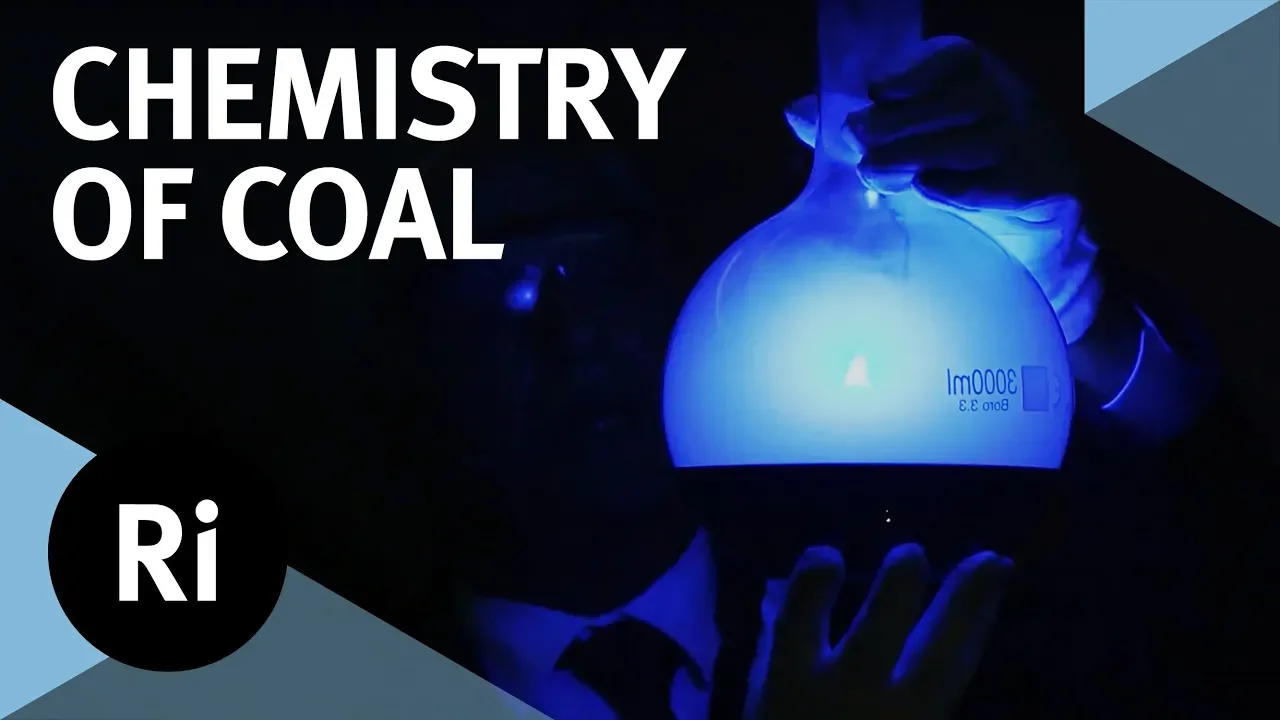
The entire modern chemical industry can be attributed to an accidental discovery that started with, well, garbage.
In the 19th century there was a new kind of waste floating around: coal tar.
This was a stinky, sticky, awful muck leftover from turning coal into gaslight.
Before others figured out they could pave roads with the stuff, it was pretty much useless.
Then the head of London’s Royal College of Chemistry had an idea.
August Wilhelm von Hoffman noticed that some of the stuff in coal tar was similar to the stuff in known medicines.
If he got the chemistry right, he thought, the world would have cheap, easy cures for disease.
So, in 1856, he assigned 18-year-old William Perkin to Team Coal Tar.
Perkin’s job was to try to turn the gunk into quinine.
Quinine was used to treat malaria, but the drug had to be extracted from tree bark, which was annoying and time-consuming.
Perkin knew that quinine and coal tar had similar chemical formulas.
So, he figured, take some of stuff in coal tar that’s similar to quinine, add some other stuff that looks like little bits of quinine, remove some useless byproducts, and voila, right?
Not so much.
Perkin’s first attempts got a reddish-black powder instead of off-white quinine crystals.
And so he made a couple changes and tried again with a different coal tar starting ingredient, thinking a more simple formula would do the trick.
But wrong again – instead of off-white he got an even blacker powder.
Oh well, wash it out with a little alcohol and start over, right?
But wait, when he added the alcohol, the black powder produced a breathtaking purple.
Perkin was inspired.
He somehow figured out this purple stuff could dye silk.
Perikin saw dollar signs.
At the time, purple-dyed fabrics were made using exotic crushed snails, so only the very wealthy could afford to wear purple.
Forget crushed snails, Perkin just made a purple dye out of garbage!
Perkin called it “mauve” after a French flower, because “ trashy purple” didn’t sound appealing.
Dreaming of broad profit margins, Perkin did what many entrepreneurs did: he quit and started perhaps the first artificial dye factory.
Within a few years, mauve had influential fashion fans: Queen Victoria and Napoleon III’s wife, Empress Eugénie.
A fashion craze known as “mauve measles” erupted – suddenly the middle class could afford a color beyond drab brown, off-white, or grey.
Perkin amassed a fortunate of over 100 million in today’s dollars and retired at ripe old age of 36.
On Perkin’s lead, chemical factories sprang up, dumpster diving nature for treasure, and this led to even more profitable accidents.
In 1878, Constantin Fahlberg brought his gunky coal tar work home with him – by not washing his hands.
At dinner one night he found his bread incredibly sweet.
Fahlberg and his labmates realized the source was a super-sweet substance derived from coal tar residue they called saccharin.
The accidental discoveries only grew in the 20th century.
In the late 1930s, Roy Plunkett at Dupont, was working with refrigerant coolants named “fluorinated-hydrocarbons”.
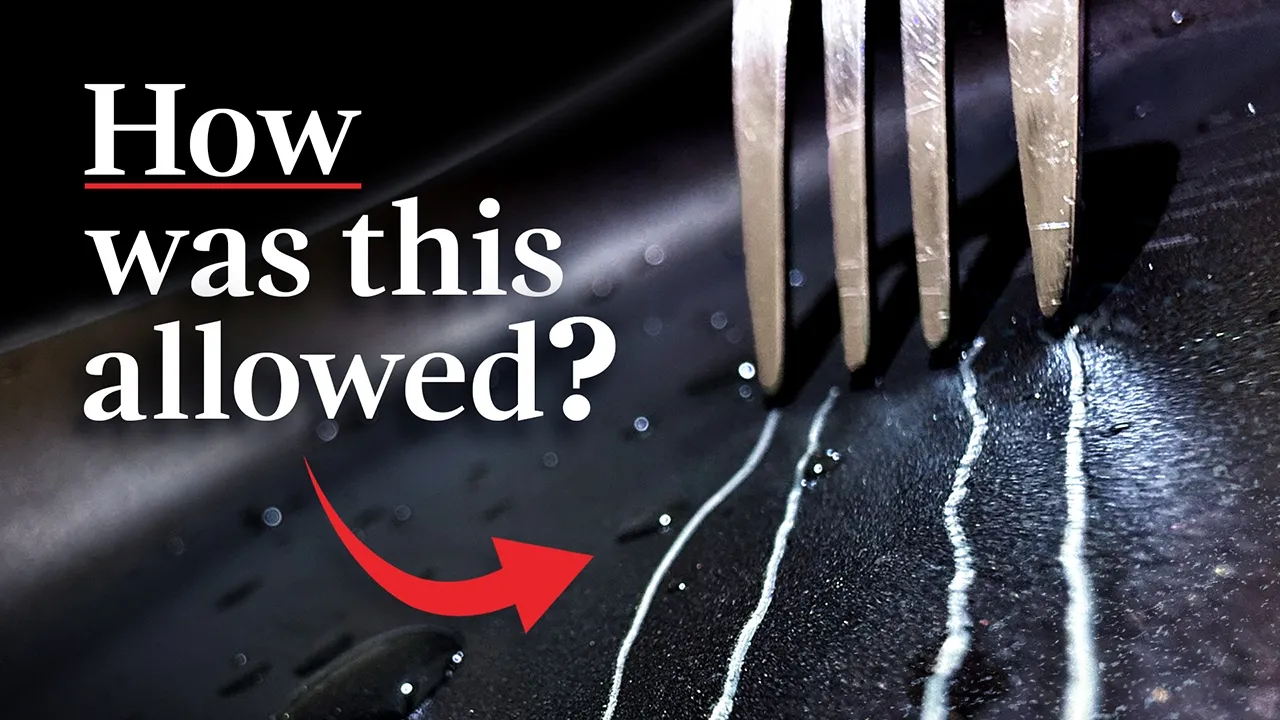
One day a new mix annoyingly solidified into a powder that made stuff so slippery.
Plunkett had stumbled upon new material called polytetrafluoroethylene, which Dupont marketed as Teflon.
Teflon was awesome: it coated metal for a no-stick surface.
Also, Teflon didn’t conduct electricity, so it was great wire coating.
This led Father and son team Bill and Bob Gore began slowly stretching Teflon to make computer cables.
Bill and Bob discovered that Teflon didn’t stretch evenly, making it hard to work with.
Frustrated, Bob yanked on a hunk of heated Teflon that suddenly expanded eight times its size.
Turns out this heated -hunk material, was over 70% air, so it could breathe easily while retaining the no-stick properties of its Teflon parent.
And if you wove this into a fabric, it proved fantastic for lightweight raincoats that don’t wrap you in your own sauna.
You know this material as Gore-Tex®.
So much of what we enjoy in the modern world came from accidental discoveries.
Be it fashion-craze-causing mauve, sweeteners, Teflon, or Gore-Tex, the chemists behind this stuff were smart enough to recognize that they accidentally stumbled onto something special.
In the process, these moments became so much more than happy accidents.
They became discoveries that changed the world.
Hey chem-heads, thanks for watching.
If you want more Sam Kean, check out a video he did for us on whether mega sharks still exists.
And if you want history, check out Five black chemists who changed the world.
And regardless, click that there subscribe button for more chemistry goodness every week.
And a big thanks to the Chemical Heritage Foundation for helping us out with this video.
Up Next

25:57
The True Story of House of the Rising Sun | Music History
@ROOTSMUSICHISTORY
284.8K views•2025-02-13

33:02
The Great Schism of 1054: Causes and Consequences
@SacredCathedrals
113.5K views•2026-02-19
91:57
The Geopolitics of the Ukraine War and the Rise of Global Autocracy
@JordanHarbingerShow
468K views•2025-04-19
17:05
Understanding the Cold War: Superpower Conflicts and the Road to Détente
@OverSimplified
46.1M views•2019-01-24
Related Study Plans & Knowledge Roadmaps
Structured learning paths in History
history
Byzantine Iconoclasm: Theology, Art & Politics
01Foundations of Byzantium and Early Christian Images
02The First Iconoclasm: Leo III and the Crisis of Images
03Empress Irene, Nicaea II, and the Second Iconoclasm
+ 2 more learning modules
9h5 modules
Explore Roadmap
history
Iranian Revolution (Causes, Events & Legacy)
01The Pahlavi Dynasty and the Roots of Discontent
02The Spark of Rebellion and the Rise of Khomeini
031979: The Fall of the Shah and the Climax of the Revolution
+ 2 more learning modules
8h5 modules
Explore Roadmap
history
Mali Empire: Mansa Musa, Trade & Timbuktu
01Foundations of the Mali Empire
02The Trans-Saharan Gold and Salt Trade
03The Reign and Pilgrimage of Mansa Musa
+ 1 more learning modules
6h4 modules
Explore Roadmap
history
1947 Partition: Politics, Borders & Legacies
01Foundations of British India and the Divide
02The Political Negotiations and the Mountbatten Plan
03Drawing the Boundary: The Radcliffe Line
+ 2 more learning modules
8h5 modules
Explore Roadmap